词汇表

英语词汇词典 | 单词含义、定义和示例

🤕

ulcer

noun C1
/ˈʌlsər/

a sore on the skin or a mucous membrane that does not heal easily

"The doctor prescribed medicine to treat the stomach ulcer."

adjective C1
/ʌlˈtɪəriər/
隠された動機 (kakusareta dōki)

hidden or secret, often with a selfish motive

"He invited her with an ulterior motive."
"彼は隠された動機で彼女を招待した。" (Kare wa kakusareta dōki de kanojo o shōtai shita.)
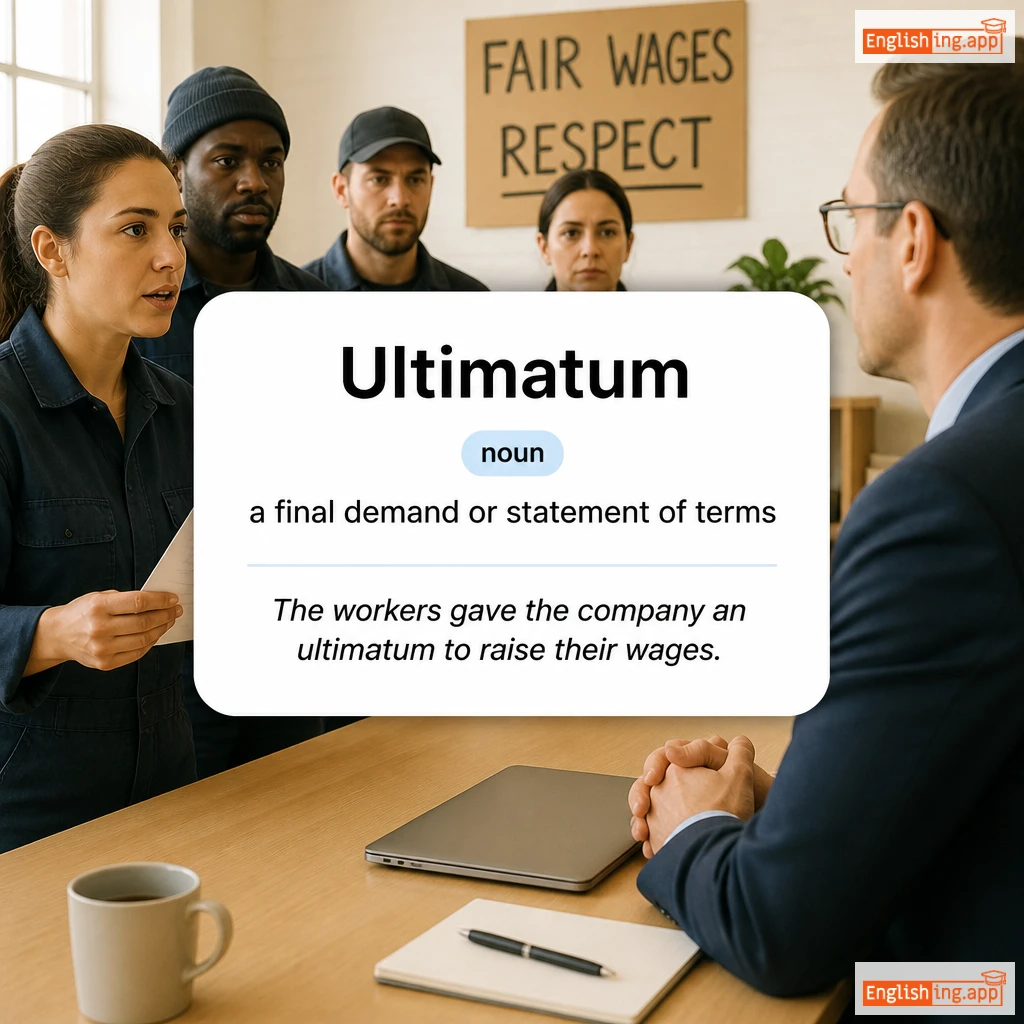
Ultimatum definition card — visual illustration of the meaning
noun C1
/ˌʌltɪˈmeɪtəm/
最終通告 (saishuu tsuukoku)

a final demand or statement of terms

"The workers gave the company an ultimatum to raise their wages."

"労働者は会社に賃金を引き上げるよう最終通告を出しました。" (Roudousha wa kaisha ni chingin o hikiageru you saishuu tsuukoku o dashimashita.)
adjective C1
/ˌʌnəˈkaʊntəbl/
説明できない (setsumei dekinai)

Not able to be explained or justified.

"She felt an unaccountable fear as she entered the dark room."
"彼女は暗い部屋に入ると説明できない恐怖を感じた。" (Kanojo wa kurai heya ni hairu to setsumei dekinai kyōfu o kanjita.)
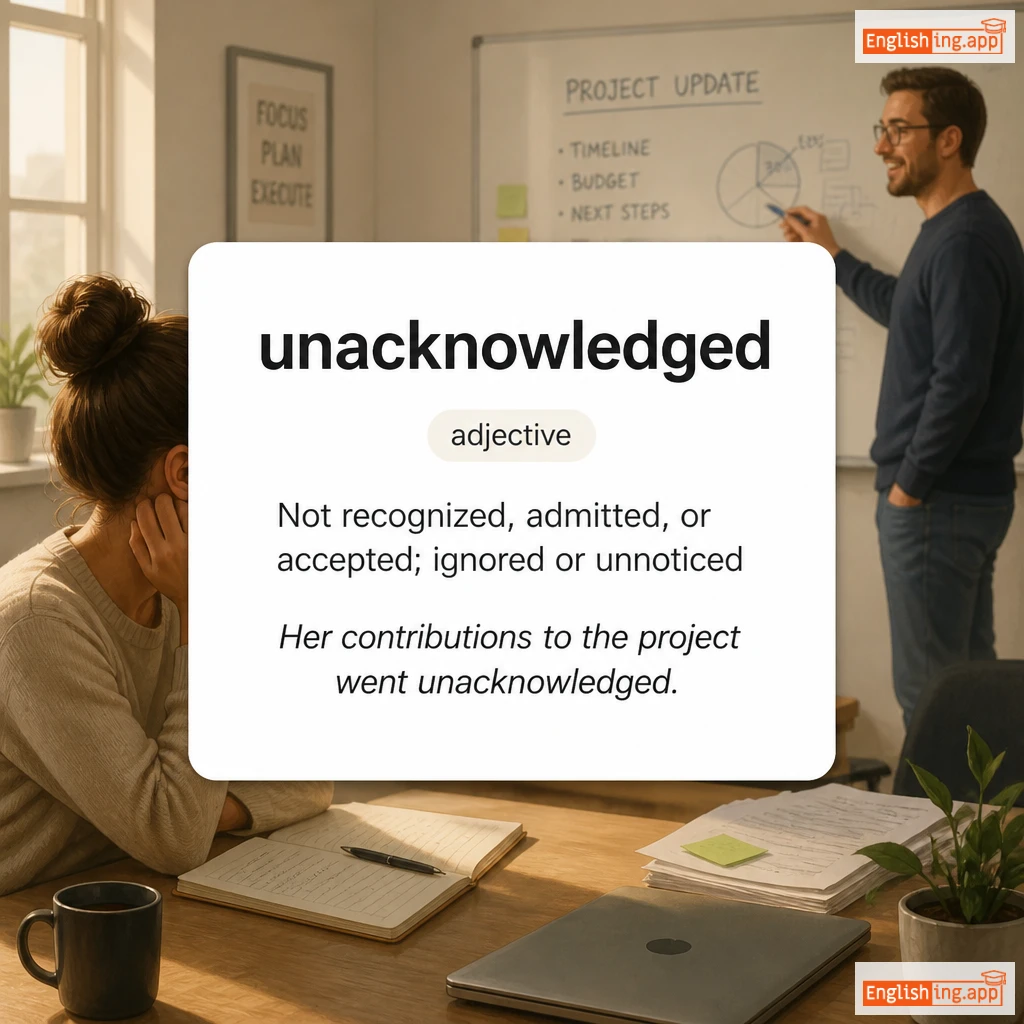
unacknowledged definition card — visual illustration of the meaning
adjective C1
/ˌʌnəkˈnɒlɪdʒd/
認められない (mitomerarenai)

Not recognized, admitted, or accepted; ignored or unnoticed

"Her contributions to the project went unacknowledged."

"彼女のプロジェクトへの貢献は認められなかった。" (Kanojo no purojekuto e no kouken wa mitomerarenakatta.)
adjective C1
/ˌʌnəˈdɔːrnd/
シンプルな、飾りのない (shimpuruna, kazari nonai)

Plain and simple; not decorated.

"The room was unadorned, with only a table and a chair."

"部屋はシンプルで、テーブルと椅子だけがありました。" (Heya wa shimpuru de, teeburu to isu dake ga arimashita.)
adjective C1
/ˌʌn.əˈdʌl.tə.reɪ.tɪd/
純粋 (junsui)

not mixed or diluted with any different or extra elements; pure

"She felt unadulterated joy when she heard the news."
"彼女はそのニュースを聞いたとき、純粋な喜びを感じました。" (Kanojo wa sono nyūsu o kiita toki, junsui na yorokobi o kanjimashita.)
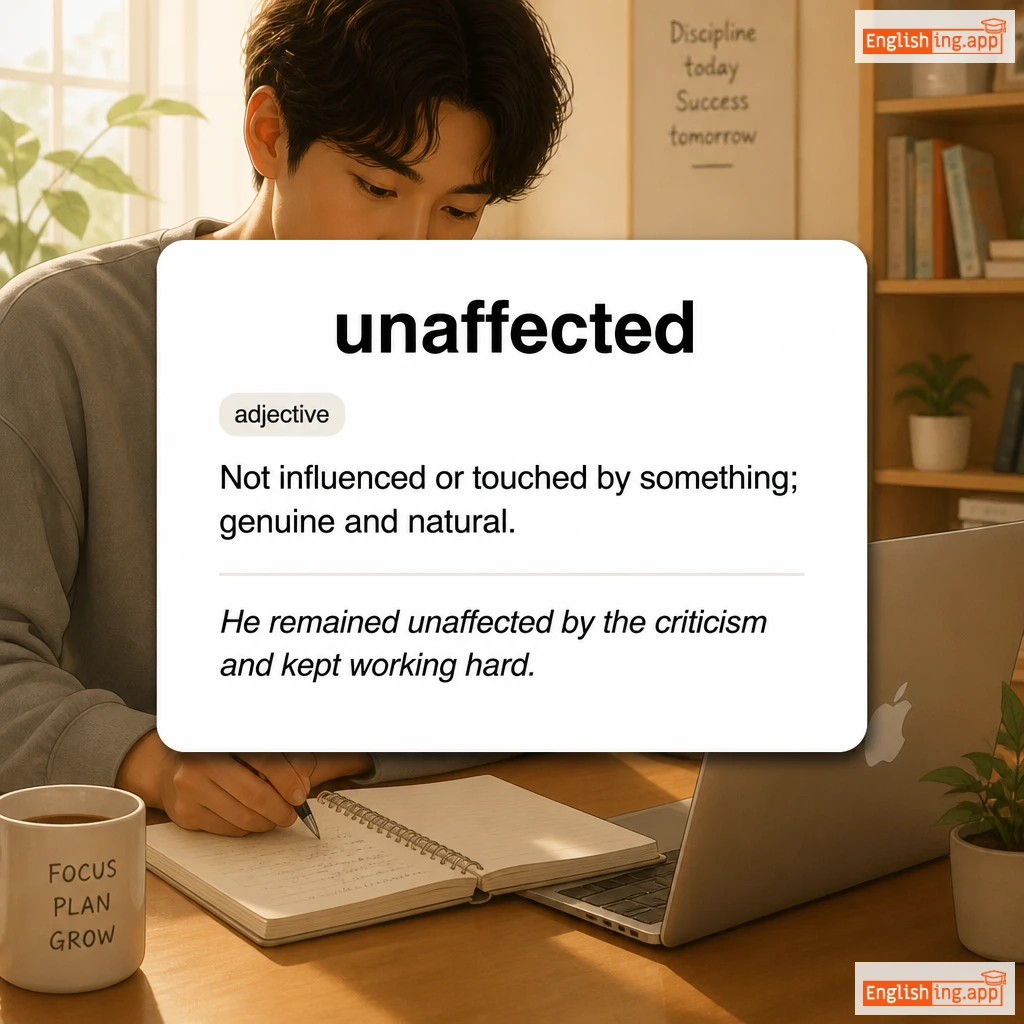
unaffected definition card — visual illustration of the meaning
adjective C1
/ˌʌnəˈfɛktɪd/
無影響な, 自然な (mu eikyō na, shizen na)

Not influenced or touched by something; genuine and natural.

"He remained unaffected by the criticism and kept working hard."

"彼は批判に動じることなく、懸命に働き続けました。" (Kare wa hihan ni dōjiru koto naku, kenmei ni hataraki tsudzukemashita.)
Unanimity definition card — visual illustration of the meaning
noun C1
/ˌjuːnəˈnɪməti/
全会一致 (zenkai itchi)

Complete agreement by everyone in a group.

"The proposal was accepted with complete unanimity."

"提案は全会一致で承認されました。" (Teian wa zenkai itchi de shōnin saremashita.)
adjective C1
/ˌʌnəˈsjuːmɪŋ/
控えめな (hikaeme na)

Not pretentious or arrogant; modest.

"Despite his success, he remained unassuming and humble."
"成功にもかかわらず、彼は控えめで謙虚なままでした。" (Seikou ni mo kakawarazu, kare wa hikaeme de kenkyo na mamadeshita.)
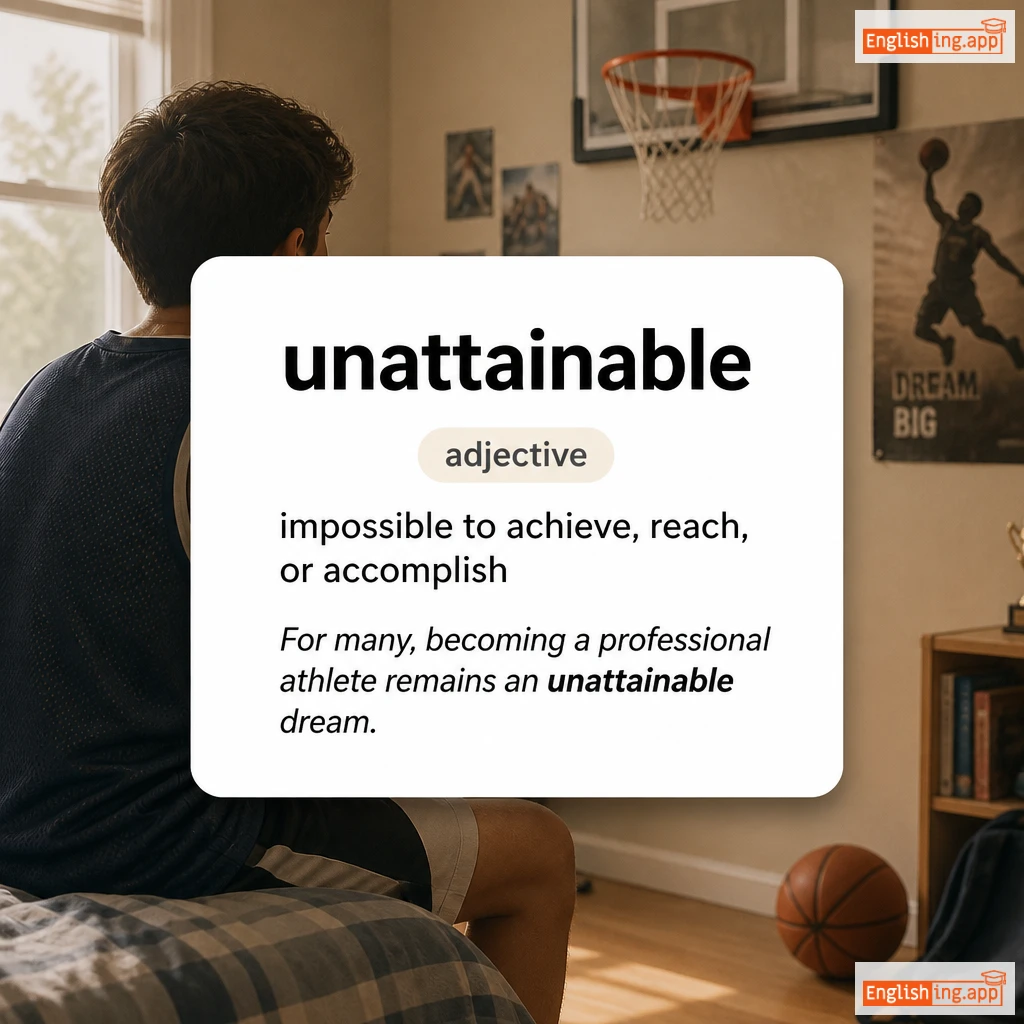
unattainable definition card — visual illustration of the meaning
adjective C1
/ˌʌnəˈteɪnəbl/
達成不可能な (tassei fukanou na)

impossible to achieve, reach, or accomplish

"For many, becoming a professional athlete remains an unattainable dream."

"多くの人にとって、プロのアスリートになることは依然として達成不可能な夢です。" (Ooku no hito ni totte, puro no asuriito ni naru koto wa izen toshite tassei fukanou na yume desu.)
adjective C1
/ˌʌnbɪˈkʌmɪŋ/
不適切 (futekisetsu)

Not proper or appropriate for a person; unsuitable.

"His rude behavior was unbecoming of a leader."
"彼の無礼な態度はリーダーとして不適切だった。" (Kare no burei na taido wa riidaa toshite futekisetsu datta.)
Unbelief definition card — visual illustration of the meaning
noun C1
/ˌʌnbɪˈliːf/
不信 (fushin)

A lack of belief, especially in religious faith.

"His heart was full of doubt and unbelief."
"彼の心は疑いと不信で満たされていました。" (Kare no kokoro wa utagai to fushin de mitasarete imashita.)
unbelieving definition card — visual illustration of the meaning
adjective C1
/ˌʌnbɪˈliːvɪŋ/
信じない (shinjinaide)

Not willing or able to believe; skeptical or doubtful

"She gave him an unbelieving look when he claimed to have met a celebrity."

"彼が有名人に会ったと主張したとき、彼女は彼に信じない目を向けた。" (Kare ga yuumeijin ni atta to shucho shita toki, kanojo wa kare ni shinjinaide me wo muketa.)
adjective C1
/ʌnˈbraɪdld/
抑制のない (yokusei no nai)

Uncontrolled and unrestrained.

"The protesters showed unbridled enthusiasm for change."
"抗議者は変革に対して抑えきれない熱意を示しました。" (Kougisha wa henka ni taishite osaekirenai netsui o shimeshimashita.)
uncanny definition card — visual illustration of the meaning
adjective C1
/ʌnˈkæni/
不気味 (bukimi)

Strange or mysterious, especially in an unsettling way.

"She has an uncanny ability to predict the future."

"彼女は未来を予測する不気味な能力を持っている。" (kanojo wa mirai o yosoku suru bukimi na nōryoku o motte iru.)
adjective C1
/ʌnˈtʃælɪndʒd/
挑戦されていない; 反対なしに受け入れられた; ライバルなし (chousen sarete inai; hantai nashi ni ukeirerareta; raibaru nashi)

not disputed or questioned; accepted without opposition; having no rival

"He remained the unchallenged champion for five years."
"彼は5年間、挑戦されていないチャンピオンであり続けました。" (Kare wa 5 nenkan, chousen sarete inai chanpion de aritsuzukemashita.)
uncharted definition card — visual illustration of the meaning
adjective C1
ʌnˈtʃɑːtɪd
未開拓 (mikai taku)

Not mapped or surveyed; unknown or unexplored.

"The mission aimed to explore uncharted areas of the planet."

"そのミッションは惑星の未開拓の地域を探査することを目的としていました。" (Sono misshon wa wakusei no mikaitaku no chiiki wo tansa suru koto wo mokuteki to shite imashita.)
adjective C1
/ʌnˈsɪvəl/
無礼な; 不作法な; (burei na; fusahou na)

not polite or courteous; rude and discourteous in behavior

"His uncivil remarks during the meeting offended everyone present."

"会議中の彼の無礼な発言は、出席者全員を不快にさせた。" (Kaigi chuu no kare no burei na hatsugen wa, shusseki sha zen'in o fukai ni saseta.)
adjective C1
/ʌnˈsɪvəlaɪzd/
未開の; 野蛮な; (mikai no; yabanna;)

not developed in terms of civilization; lacking social organization and culture; barbarous

"The explorers encountered an uncivilized tribe deep in the Amazon rainforest."

"探検家たちはアマゾンの雨林の奥深くで未開の部族に出会った。" (Tankenka-tachi wa Amazon no urin no okufukaku de mikai no buzoku ni deatta.)
adjective C1
/ʌnˈkleɪmd/
未請求; 未要求; 捨てられたまたは所有者なし (mikkei; mikoukyuu; suterareta matawa shoyuusha nashi)

not claimed by anyone; not demanded or requested; abandoned or ownerless

"The unclaimed luggage was stored in the airport's lost property department."

"未請求の荷物は空港の遺失物係に保管されました。" (Mikkei no nimotsu wa kuukou no ishitsubutsu kakari ni hokan saremashita.)
adjective C1
/ʌnˈkɒmprəmaɪzɪŋ/
妥協しない (dakyou shinai)

not willing to make concessions; firm and resolute

"She remained uncompromising in her principles."
"彼女は自分の信念に妥協しなかった。" (Kanojo wa jibun no shinnen ni dakyō shinakatta.)
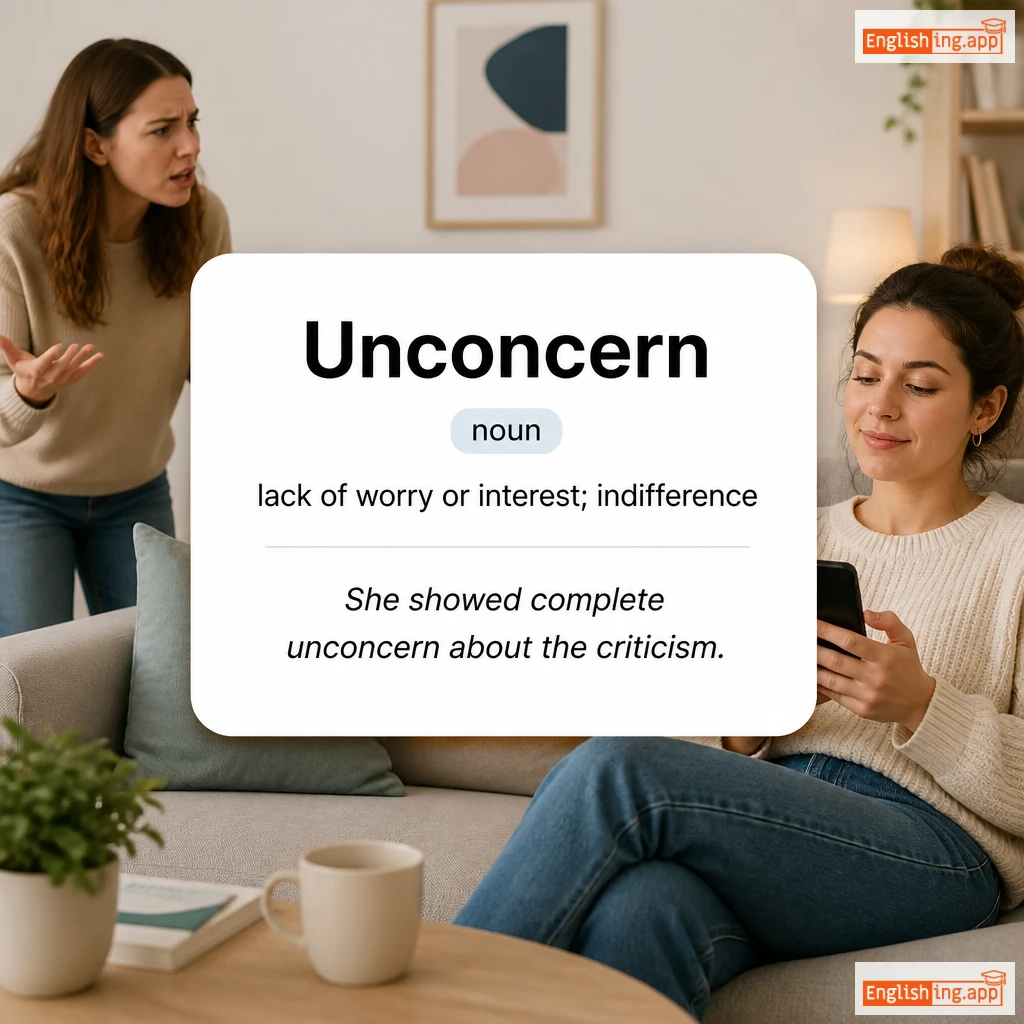
Unconcern definition card — visual illustration of the meaning
noun C1
/ʌnkənˈsɜːrn/
無関心 (mukanshin)

lack of worry or interest; indifference

"She showed complete unconcern about the criticism."
"彼女は批評に対して完全に無関心を示しました。" (Kanojo wa hihyou ni taishite kanzen ni mukanshin wo shimeshimashita.)
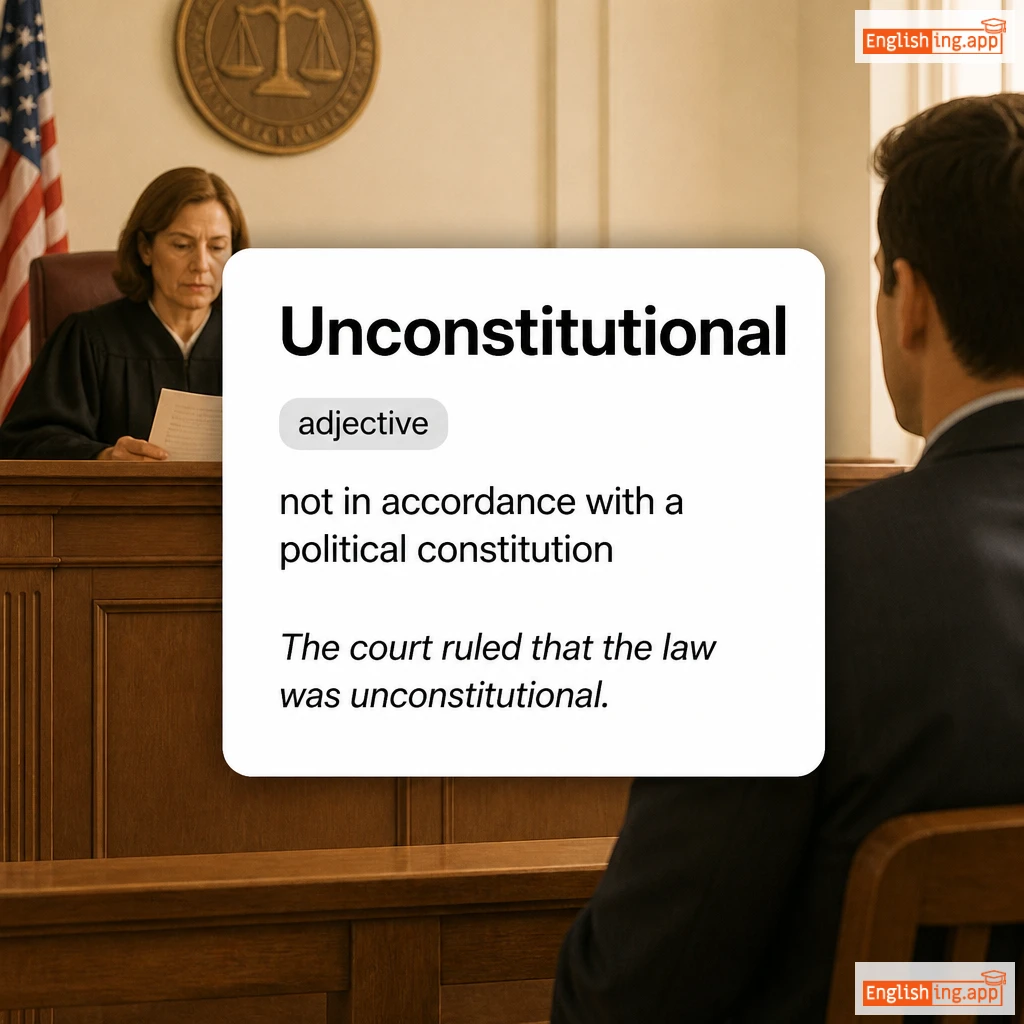
Unconstitutional definition card — visual illustration of the meaning
adjective C1
/ˌʌnkənˈstɪtjuːʃənl/
違憲の (iken no)

not in accordance with a political constitution

"The court ruled that the law was unconstitutional."
"裁判所はその法律が違憲であると判断しました。" (Saibansho wa sono hōritsu ga iken de aru to handan shimashita.)
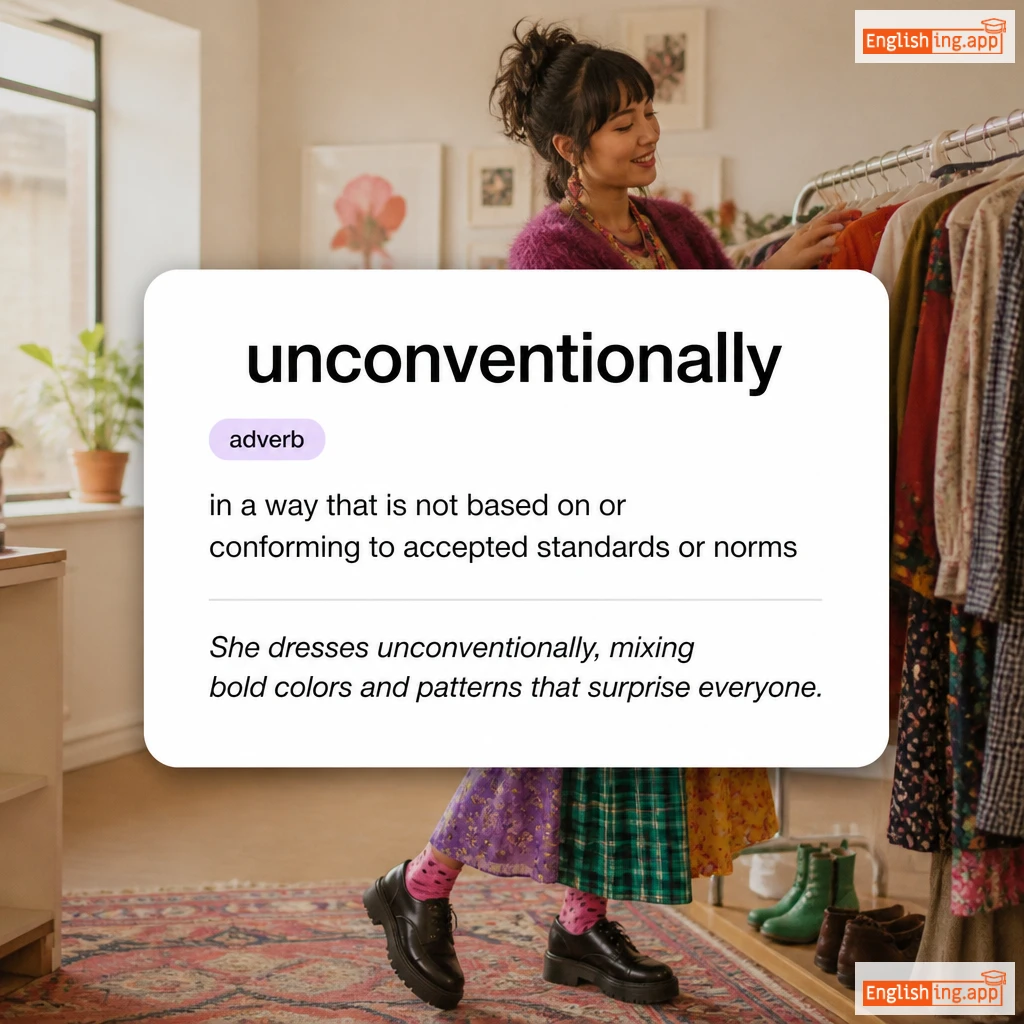
unconventionally definition card — visual illustration of the meaning
adverb C1
/ˌʌnkənˈvɛnʃənəli/
型破りに (kata yaburi ni)

in a way that is not based on or conforming to accepted standards or norms

"She dresses unconventionally, mixing bold colors and patterns that surprise everyone."
"彼女は型破りに服装をしており、大胆な色と柄を組み合わせて皆を驚かせる。" (Kanojo wa kata yaburi ni fukusou o shite ori, daitan na iro to gara o kumiawasete mina o odorokaseru.)
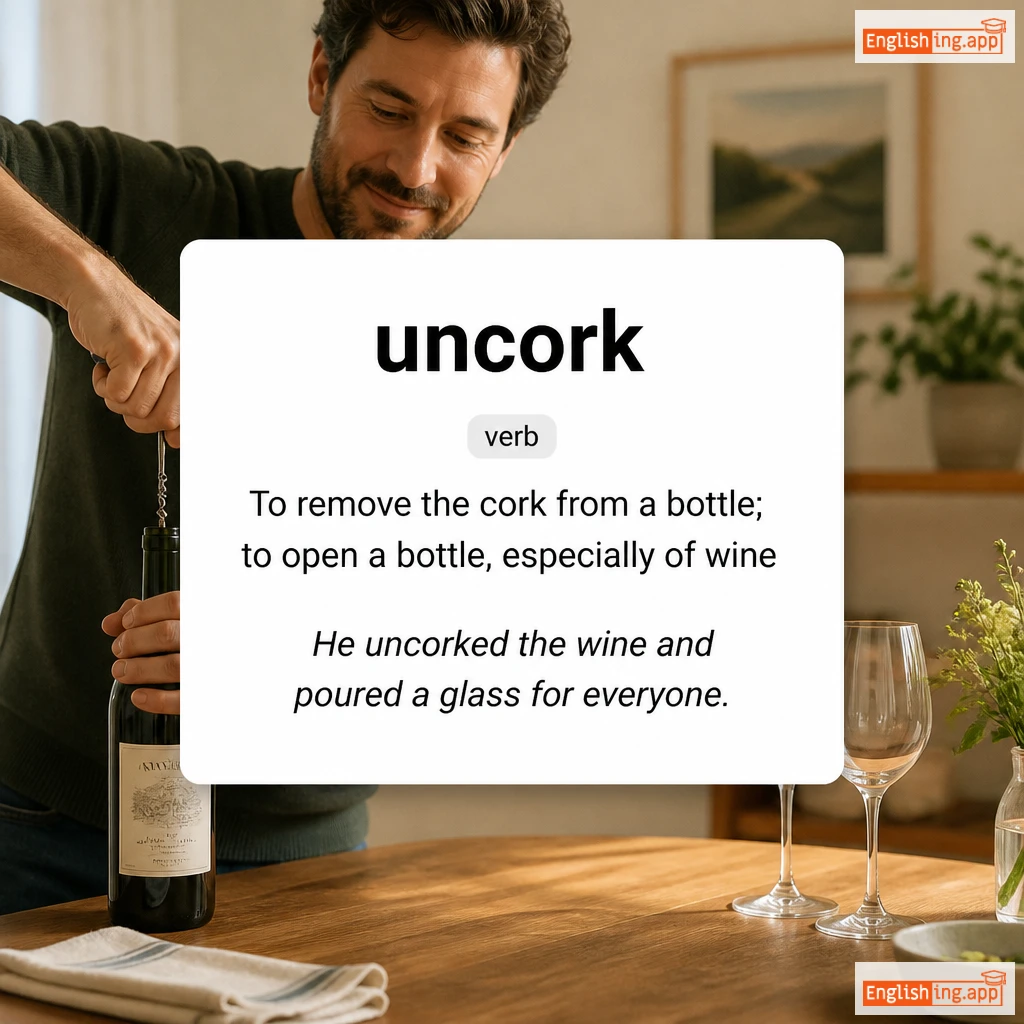
uncork definition card — visual illustration of the meaning
verb C1
/ʌnˈkɔrk/
コルクを抜く (koruku o nuku)

To remove the cork from a bottle; to open a bottle, especially of wine

"He uncorked the wine and poured a glass for everyone."

"彼はワインのコルクを抜き、皆にグラスを注いだ。" (Kare wa wain no koruku o nuki, mina ni gurasu o soida.)
adjective C1
/ʌnˈkuːθ/
無作法 (busaho)

Lacking good manners, refinement, or grace; awkward or rough.

"His uncouth behavior shocked the guests at the party."

"彼の無作法な行動はパーティーのゲストを驚かせました。" (Kare no busaho na kōdō wa pātī no gesuto o odorokasemashita.)
adjective C1
/ʌnˈkʌltʃəd/
無教養な; 教養のない (mukyōyō na; kyōyō no nai)

lacking good manners, refinement, or education; uncivilized

"His uncultured behavior embarrassed everyone at the dinner party."

"彼の無教養な行動はディナーパーティーでみんなを困らせた。" (Kare no mukyōyō na kōdō wa dinā pātii de minna o komaraseta.)
adjective C1
/ʌnˈdɔːntɪd/
不屈の; 勇敢な; 断固たる; (fuketsu no)

not intimidated or discouraged by difficulty, danger, or disappointment

"Despite the setbacks, she remained undaunted in pursuing her goals."

"挫折にもかかわらず、彼女は目標を追い続ける中で不屈であり続けた。" (Zasetsu ni mo kakawarazu, kanojo wa mokuhyou wo oitsuzukeru naka de fuketsu de ari tsudzuketa.)
verb C1
/ˌʌn.dəˈtʃɑːrdʒ/
過少に請求する (kasho ni seikyū suru)

To charge less than the correct or fair amount.

"The shopkeeper accidentally undercharged me for the groceries."

"店主は私に食料品を過少に請求しました。" (Tenshu wa watashi ni shokuryōhin o kasho ni seikyū shimashita.)
✂️

undercut

verb C1
/ˈʌndərkʌt/

to sell at a lower price than a competitor; to weaken or undermine something

"The company tried to undercut its rivals by offering lower prices."

noun C1
/ˈʌndərdɒɡ/
アンダードッグ (andādoggu)

a competitor thought to have little chance of winning; a weaker party in a contest

"The underdog team surprised everyone by winning the championship."

"アンダードッグのチームはチャンピオンシップを勝ち取って、皆を驚かせました。" (Andādoggu no chīmu wa chanpionshipu o kachitoratte, mina o odorokasemashita.)
adjective C1
/ˌʌndərɪkˈspoʊzd/
露出不足、無視された (roshutsu fusoku, mushi sareta)

insufficiently exposed to light (in photography) or not given enough attention

"The photo was underexposed and looked too dark."

"写真は露出不足で、暗すぎて見えました。" (Shashin wa roshutsu fusoku de, kurasugite miemashita.)
noun C1
/ˈʌndərˌɡɑːrmənt/
下着 (shitagi)

a piece of clothing worn under outer clothes, usually next to the skin

"He bought new undergarments for the wedding."

"彼は結婚式のために新しい下着を買いました。" (Kare wa kekkonshiki no tame ni atarashī shitagi o kaimashita.)
adjective C1
/ˈʌndərhænd/
不正 (fusei)

done secretly and dishonestly; deceitful

"The politician was accused of using underhand tactics to win the election."

"その政治家は選挙に勝つために不正な手段を使ったとして非難されました。" (Sono seijika wa senkyo ni katsu tame ni fusei na shudan o tsukatta toshite hinan saremashita.)
adjective C1
/ˌʌndərˈhændɪd/
不正 (fusei)

acting or done in a dishonest or secret way

"They exposed the company's underhanded dealings with its suppliers."

"彼らは会社とその供給者との不正取引を暴露しました。" (Karera wa kaisha to sono kyōkyū-sha to no fusei torihiki o bakuro shimashita.)
verb C1
/ˌʌndərˈlaɪ/
基盤となる (kiban to naru)

to be the hidden cause or basis of something

"Strong cultural traditions underlie the community's practices."
"強い文化的伝統はコミュニティの慣習の基盤となっている。" (Tsuyoi bunkateki dentou wa komyuniti no kanshū no kiban to natte iru.)
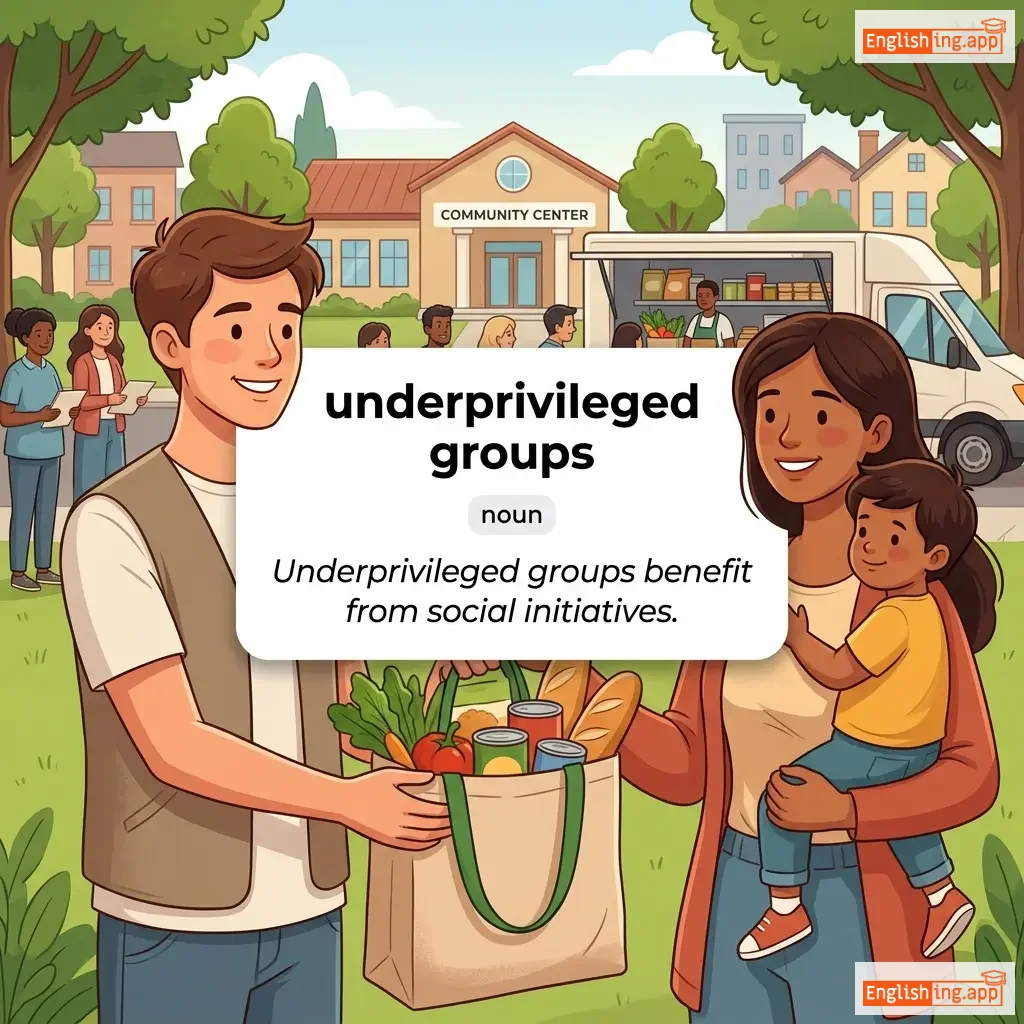
underprivileged groups definition card — visual illustration of the meaning
noun C1
ˌʌndərˈprɪvəlɪdʒd ɡruːps
恵まれないグループ (megumarenai gurūpu)

Groups of people who lack basic necessities or advantages that are available to other members of society.

"Underprivileged groups benefit from social initiatives."

"恵まれないグループは社会的なイニシアティブから利益を得ます。" (Megumarenai gurūpu wa shakaiteki na inishiatibu kara rieki o emasu.)
verb C1
/ˌʌndəˈreɪt/
過小評価 (kashouhyouka)

to fail to recognize the full value or importance of something or someone

"Many people underrate the benefits of regular exercise."

"多くの人々が定期的な運動の利点を過小評価しています。" (Ooku no hitobito ga teikitekina undou no riten wo kashouhyouka shiteimasu.)
verb C1
/ˌʌndərˈsɛl/

to sell something at a lower price than competitors or to downplay the value of something

"The shop undersold its rivals by offering huge discounts."

adjective C1
/ˌʌndərˈsaɪzd/
小さすぎる (chiisasugiru)

Smaller than the usual or expected size.

"The undersized puppy struggled to keep up with its siblings."

"小さすぎる子犬は、兄弟姉妹と一緒に歩くのに苦労しました。" (Chiisasugiru koinu wa, kyoudai shimai to issho ni aruku no ni kurou shimashita.)
verb C1
/ˌʌndərˈsteɪt/
過小評価する (かしょうひょうかする)

To describe something as being less important or serious than it really is.

"He tends to understate his achievements."

"彼は自分の業績を過小評価する傾向があります。" (かれはじぶんのぎょうせきをかしょうひょうかするけいこうがあります。)
adjective C1
/ˌʌndərˈsteɪtɪd/
控えめな (hikaeme na)

Presented in a subtle and restrained way.

"She wore an elegant but understated dress."

"彼女はエレガントで控えめなドレスを着ていた。" (Kanojo wa ereganto de hikaeme na doresu o kite ita.)
noun C1
/ˈʌndərˌstʌdi/
アンダースタディ (andāsutadi)

An actor who learns another's role to act as a replacement if needed.

"The understudy performed when the lead actor fell ill."

"主役の俳優が病気になったとき、アンダースタディが演じました。" (Shuyaku no haiyū ga byōki ni natta toki, andāsutadi ga enjimashita.)
noun C1
/ˈʌndərˌteɪkər/
葬儀屋 (sōgiya)

A person whose job is to prepare the dead for burial and arrange funerals.

"The undertaker prepared the body for the funeral service."

"葬儀屋は葬儀のために遺体を準備しました。" (Sōgiya wa sōgi no tame ni itai o junbi shimashita.)
verb C1
/ˌʌndərˈvæljuː/
過小評価する (kasho hyouka suru)

To assign too low a value or importance to something or someone.

"She felt that her boss consistently undervalued her contributions."

"彼女は自分の上司が彼女の貢献を一貫して過小評価していると感じていた。" (Kanojo wa jibun no joushi ga kanojo no kouken wo ikkan shite kasho hyouka shite iru to kanjite ita.)
noun C1
/ˈʌndərˌwɜːrld/
アンダーワールド (andāwārudo)

The criminal world of organized crime or the mythical world of the dead.

"The detective spent years studying the secrets of the underworld."

"探偵はアンダーワールドの秘密を何年も研究していました。" (Tantei wa andāwārudo no himitsu o nannen mo kenkyū shite imashita.)
adjective C1
/ʌnˈdjuː/
過度の (kado no)

More than is reasonable, excessive, or inappropriate.

"He placed undue pressure on his employees to meet the deadline."

"彼は期限を守るために従業員に過度の圧力をかけました。" (Kare wa kigen o mamoru tame ni jūgyōin ni kado no atsuryoku o kakemashita.)
verb C1
/ʌnˈɜːθ/
発掘する (hakkutsu suru)

To dig up from the ground or to discover something hidden.

"Archaeologists unearthed ancient artifacts at the site."

"考古学者たちはサイトで古代の遺物を発掘した。" (Kōkogakusha-tachi wa saito de kodai no ibutsu o hakkutsu shita.)
adjective C1
/ʌnˈɜːrθli/
超自然的 (chounaturaru)

Strange or unnatural in a way that seems not of this world

"The forest was filled with an unearthly glow."

"森は超自然的な輝きで満たされていました。" (Mori wa chounaturaru na kagayaki de mitasarete imashita.)