词汇表

英语词汇词典 | 单词含义、定义和示例

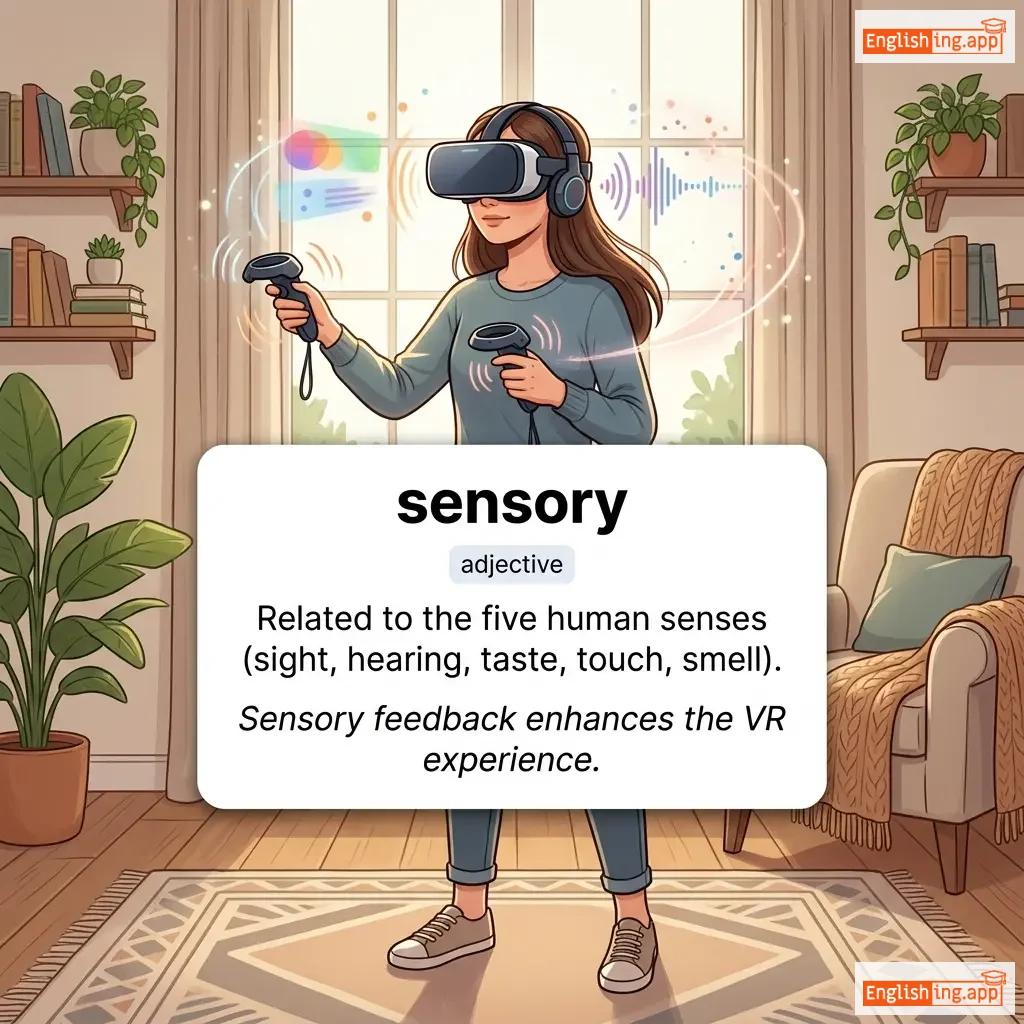
sensory definition card — visual illustration of the meaning
adjective C1
/ˈsɛn.sər.i/
sensorial (sensorial)

Related to the five human senses (sight, hearing, taste, touch, smell).

"Sensory feedback enhances the VR experience."
"La retroalimentación sensorial mejora la experiencia de VR." (La retroalimentación sensorial mejora la experiencia de VR.)
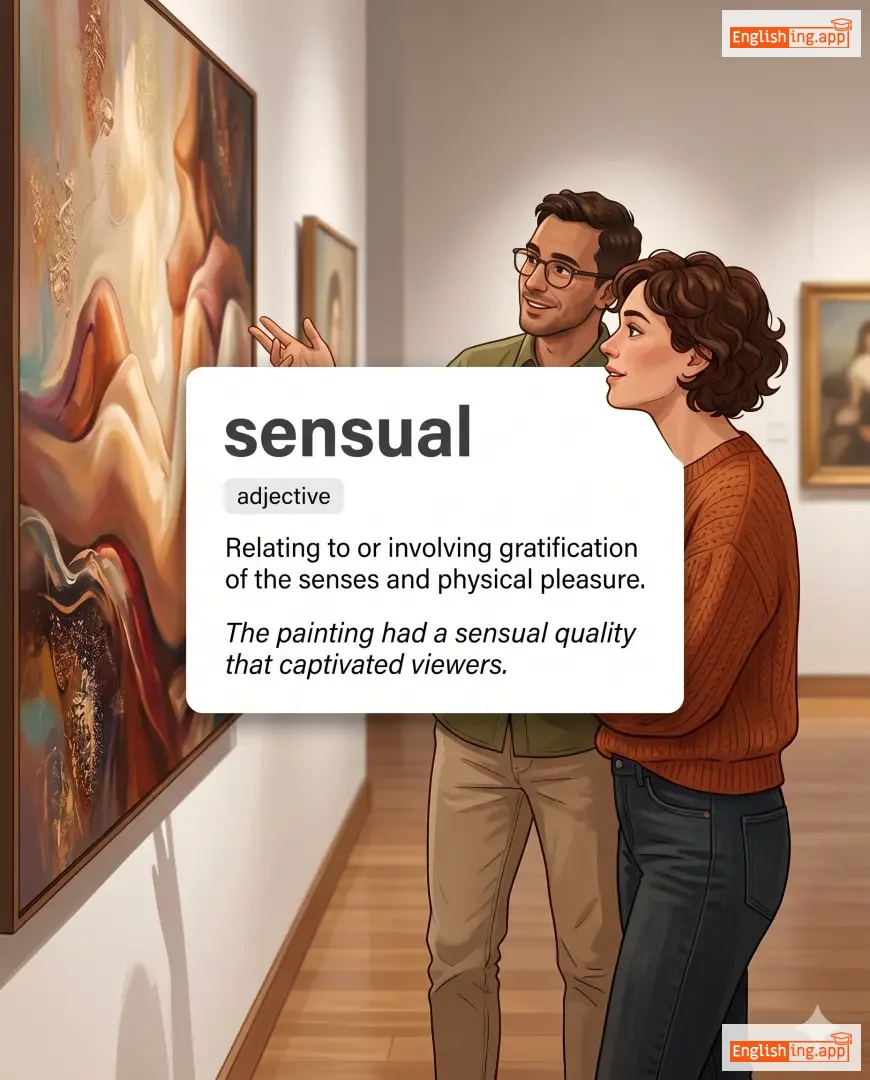
sensual definition card — visual illustration of the meaning
adjective C1
/ˈsɛnʃuəl/
sensual (sensual)

Relating to or involving gratification of the senses and physical pleasure.

"The painting had a sensual quality that captivated viewers."
"La pintura tenía una cualidad sensual que cautivó a los espectadores." (La pintura tenía una cualidad sensual que cautivó a los espectadores.)
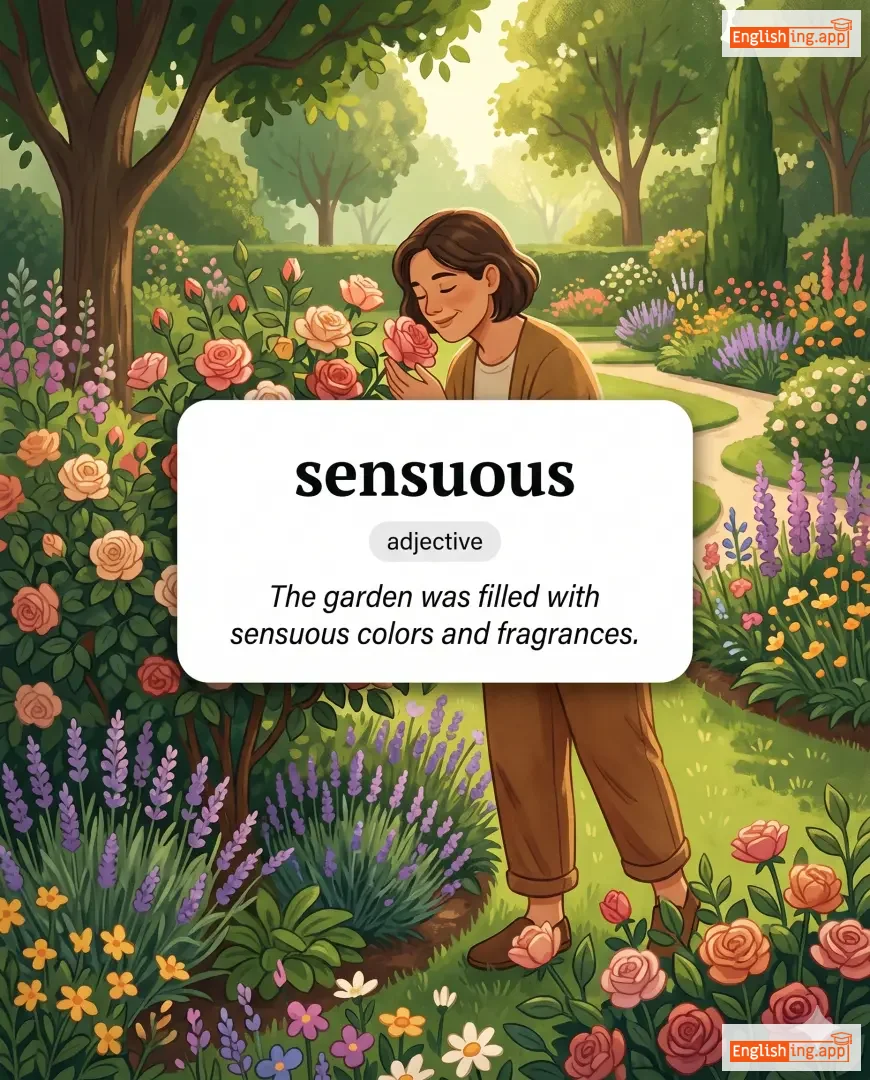
sensuous definition card — visual illustration of the meaning
adjective C1
/ˈsɛnʃuəs/
sensual (sensual)

Relating to or affecting the senses rather than the intellect; pleasing to the senses.

"The garden was filled with sensuous colors and fragrances."
"El jardín estaba lleno de colores y fragancias sensuales." (El jardin estaba lleno de colores y fragancias sensuales.)
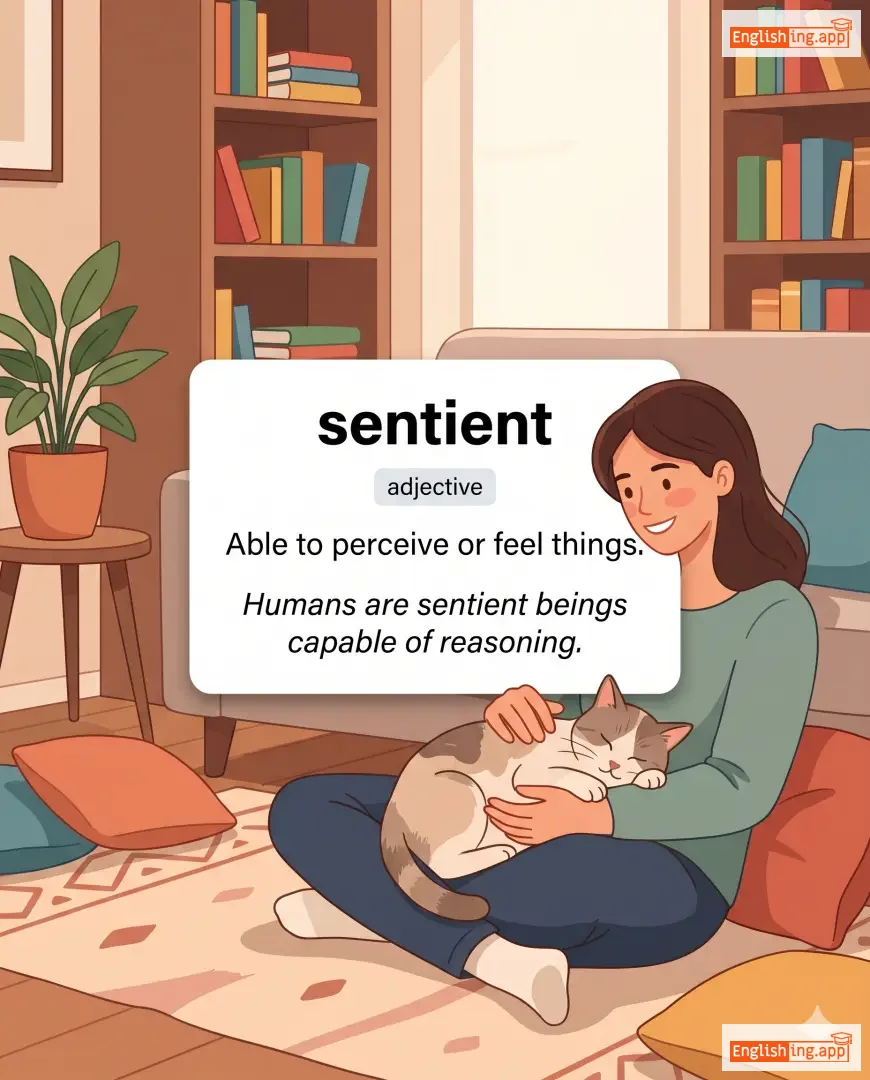
sentient definition card — visual illustration of the meaning
adjective C1
/ˈsɛnʃənt/
sensible (sensible)

Able to perceive or feel things.

"Humans are sentient beings capable of reasoning."

"Los humanos son seres sentientes capaces de razonar." (Los humanos son seres sentientes capaces de razonar.)
noun C1
/ˈsɛntɪnəl/
centinela (sentinela)

A soldier or guard whose job is to stand and keep watch.

"A sentinel stood at the entrance of the camp."

"Un centinela estaba de pie en la entrada del campamento." (Un centinela estaba de pie en la entrada del campamento.)
noun C1
/ˈsɛpərətɪst/
separatista (separatista)

A person who supports the separation of a group from a larger body, often for political or cultural independence.

"The separatist group demanded independence from the central government."

"El grupo separatista exigió la independencia del gobierno central." (El grupo separatista exigió la independencia del gobierno central.)
adjective C1
/ˈsɛptɪk/
infectado (infectado)

Infected with harmful bacteria; relating to or causing infection.

"The doctor treated the patient's septic wound immediately."
"El doctor trató la herida séptica del paciente de inmediato." (El doctor trato la herida septica del paciente de inmediato.)
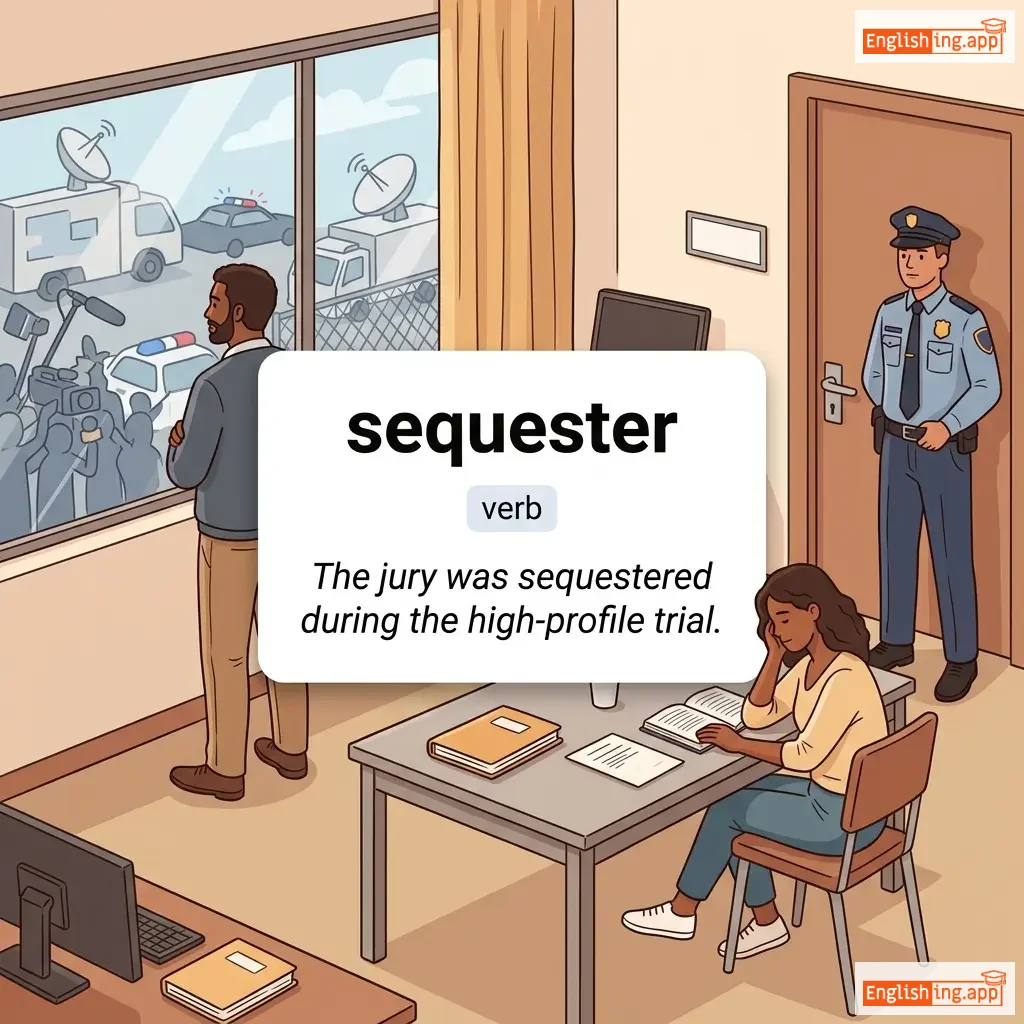
sequester definition card — visual illustration of the meaning
verb C1
/sɪˈkwɛstər/
secuestrar (sekwestrar)

To isolate or hide away; to take possession of assets until a debt has been paid.

"The jury was sequestered during the high-profile trial."

"El jurado fue aislado durante el juicio de alto perfil." (El jurado fue aislado durante el juicio de alto perfil.)
adjective C1
/ˌsɛrənˈdɪpɪtəs/
afortunado inesperado (afortunado inesperado)

Occurring or discovered by chance in a happy or beneficial way.

"Their meeting at the café was purely serendipitous."

"Su encuentro en el café fue completamente afortunado." (Su encuentro en el café fue completamente afortunado.)
noun C1
/ˌsɛrənˈdɪpɪti/
serendipia (serendipia)

The occurrence of events by chance in a happy or beneficial way.

"Finding that old photo album was pure serendipity."
"Encontrar ese viejo álbum de fotos fue pura serendipia." (Encontrar ese viejo álbum de fotos fue pura serendipia.)
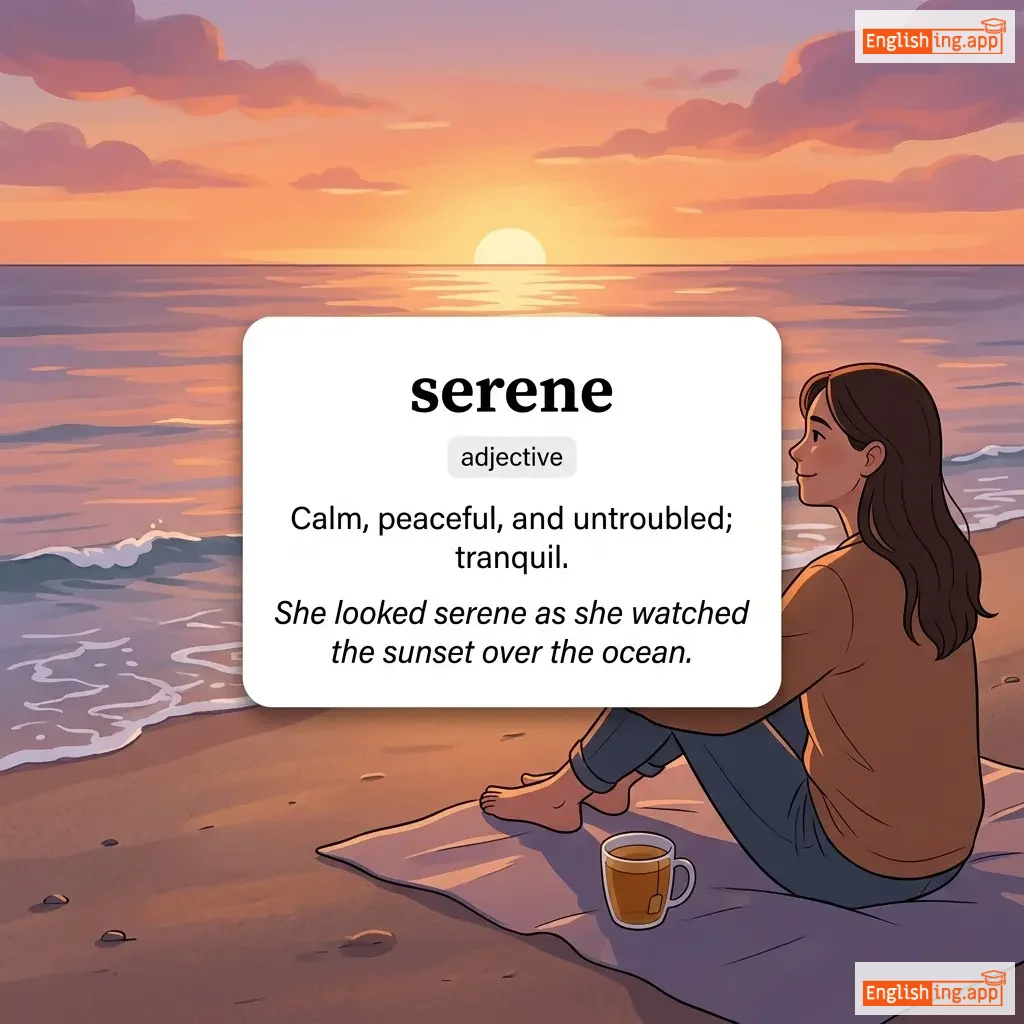
serene definition card — visual illustration of the meaning
adjective C1
/səˈriːn/
sereno (sereno)

Calm, peaceful, and untroubled; tranquil.

"She looked serene as she watched the sunset over the ocean."
"Ella se veía serena mientras miraba la puesta de sol sobre el océano." (Ella se veia serena mientras miraba la puesta de sol sobre el oceano.)
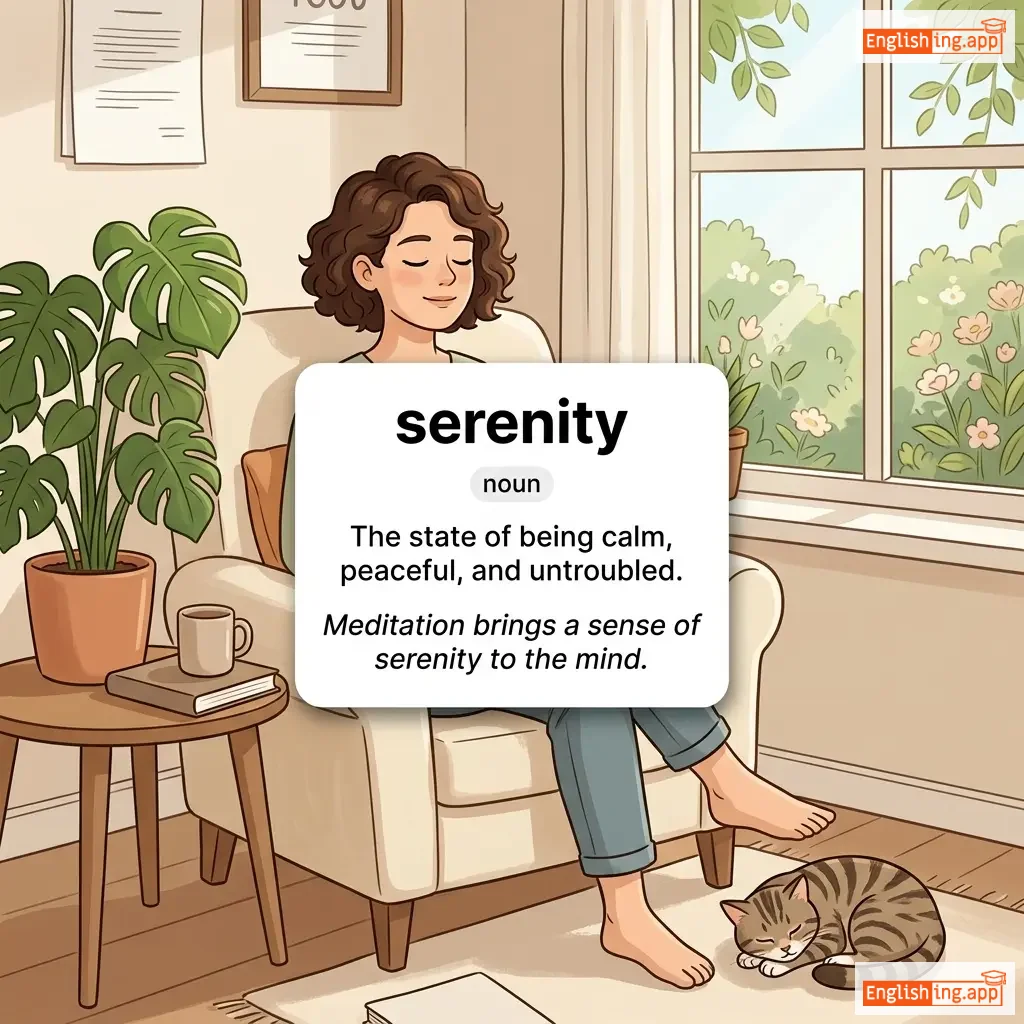
serenity definition card — visual illustration of the meaning
noun C1
/səˈrɛnɪti/
serenidad (serenidad)

The state of being calm, peaceful, and untroubled.

"Meditation brings a sense of serenity to the mind."

"La meditación trae un sentido de serenidad a la mente." (La meditacion trae un sentido de serenidad a la mente.)
noun C1
/ˌsɑːrdʒənt ˈmeɪdʒər/
sargento-mayor (sargento-mayor)

A senior non-commissioned officer in the army responsible for discipline and administration within a unit.

"The sergeant-major inspected the troops before the parade."

"El sargento-mayor inspeccionó a las tropas antes del desfile." (El sargento-mayor inspecciono a las tropas antes del desfile.)
noun C1
/ˈsɜːrmən/
sermón (sermon)

A religious discourse delivered by a preacher, often offering moral instruction or spiritual guidance.

"The pastor gave a moving sermon about compassion and forgiveness."

"El pastor dio un sermón conmovedor sobre la compasión y el perdón." (El pastor dio un sermón conmovedor sobre la compasión y el perdón.)
adjective C1
/ˈsɜːrpənˌtiːn/
serpenteante (serpenteante)

Having the shape, movement, or qualities of a serpent; winding or twisting.

"The road took a serpentine path through the mountains."

"El camino tomaba una ruta serpenteante a través de las montañas." (El camino tomaba una ruta serpenteante a través de las montañas.)
adjective C1
/ˈsɛreɪtɪd/
dentado (dentado)

Having a notched or saw-toothed edge.

"The bread knife had a serrated blade."

"El cuchillo de pan tenía una hoja dentada." (El cuchillo de pan tenía una hoja dentada.)
adjective C1
/ˈsɜːrvɪsəbl/
utilizable (utilizable)

fit for use; usable; in working order

"The old bicycle is still serviceable despite its age."
"La bicicleta vieja sigue siendo utilizable a pesar de su edad." (La bicicleta vieja sigue siendo utilizable a pesar de su edad.)
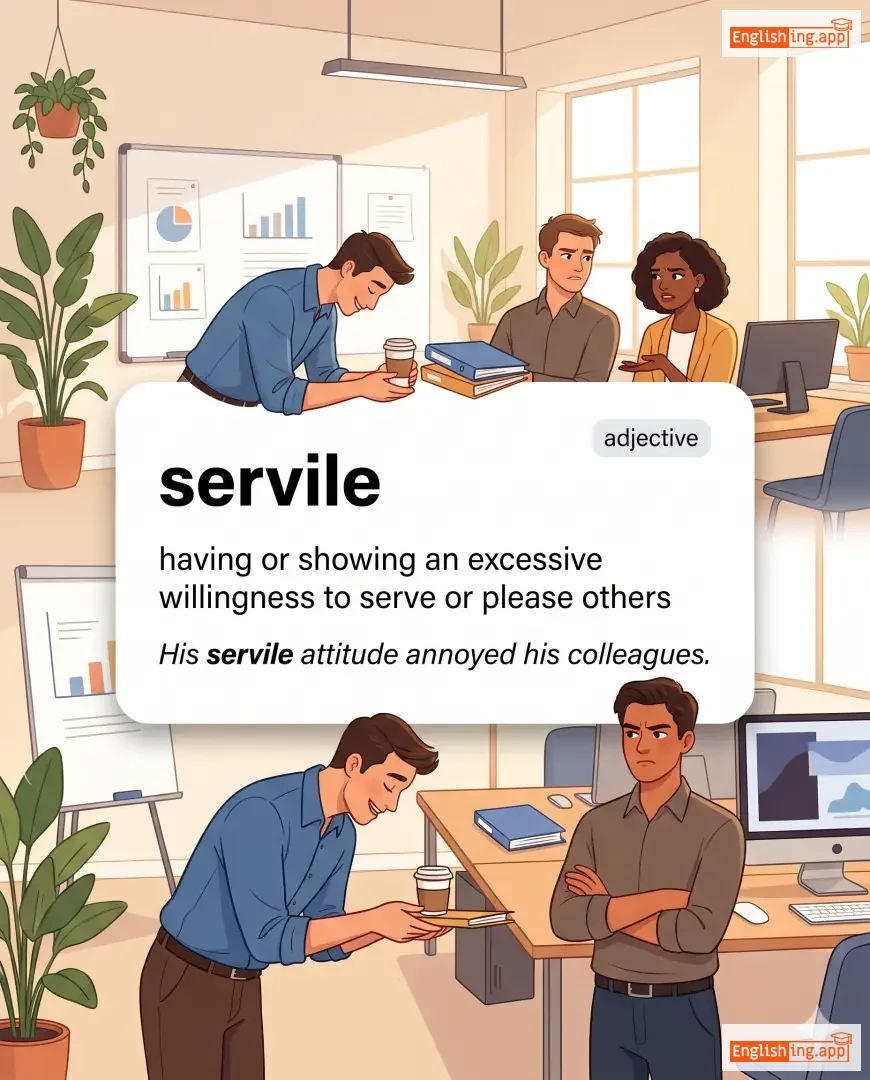
servile definition card — visual illustration of the meaning
adjective C1
/ˈsɜːrvaɪl/ or /ˈsɜːrvəl/
servil (servil)

having or showing an excessive willingness to serve or please others

"His servile attitude annoyed his colleagues."
"Su actitud servil molestaba a sus compañeros." (Su actitud servil molestaba a sus companeros.)
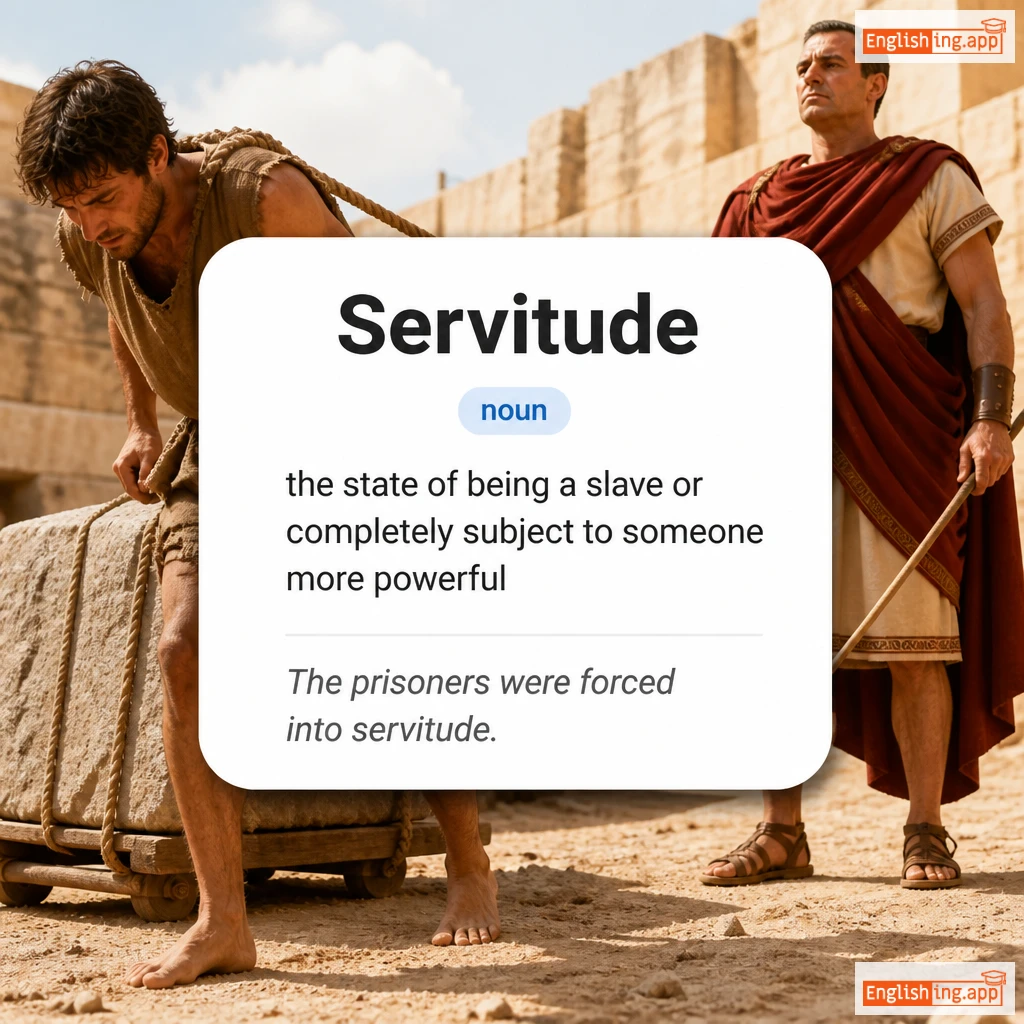
Servitude definition card — visual illustration of the meaning
noun C1
/ˈsɜːrvɪtuːd/
servidumbre (servidumbre)

the state of being a slave or completely subject to someone more powerful

"The prisoners were forced into servitude."

"Los prisioneros fueron forzados a la servidumbre." (Los prisioneros fueron forzados a la servidumbre.)
verb C1
/ˈsɛvər/
cortar, romper relaciones (cortar, romper relaciones)

to cut off or separate, especially by cutting; to end a connection or relationship

"He had to sever ties with the company after the dispute."

"Tuvo que cortar los lazos con la empresa después de la disputa." (Tuvo que cortar los lazos con la empresa después de la disputa.)
noun C1
/ˈsɛvərəns/
indemnización por despido (indemnizacion por despido)

the act of ending something, especially a relationship or employment; compensation paid upon termination

"The company offered him severance pay after his job ended."
"La empresa le ofreció indemnización por despido después de que terminó su empleo." (La empresa le ofreció indemnización por despido después de que terminó su empleo.)
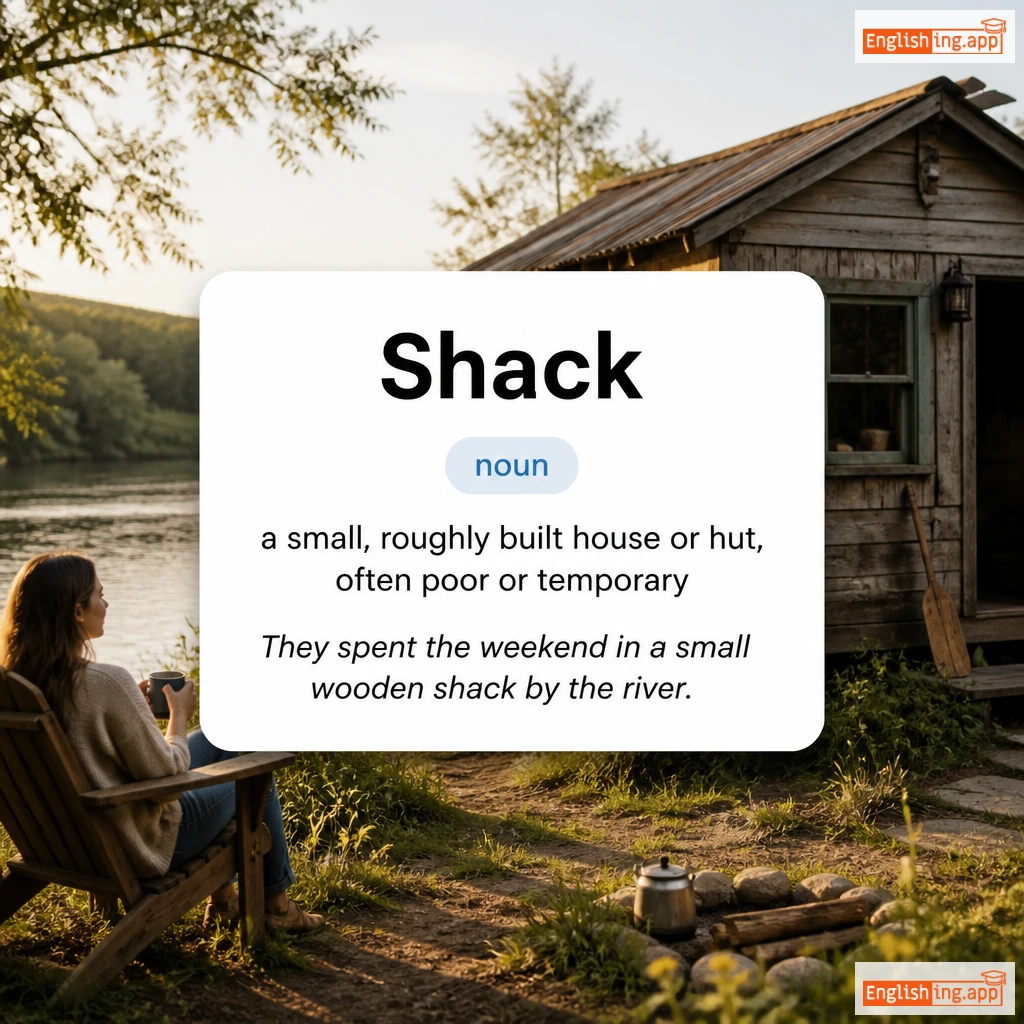
Shack definition card — visual illustration of the meaning
noun C1
/ʃæk/
choza (choza)

a small, roughly built house or hut, often poor or temporary

"They spent the weekend in a small wooden shack by the river."

"Pasaron el fin de semana en una pequeña choza de madera junto al río." (Pasaron el fin de semana en una pequena choza de madera junto al rio.)
verb C1
/ˈʃækəl/
esposar (esposar)

to chain or restrain; to restrict someone’s actions or freedom

"Outdated regulations shackle small businesses and slow innovation."

"Las regulaciones anticuadas encadenan a las pequeñas empresas y ralentizan la innovación." (Las regulaciones anticuadas encadenan a las pequeñas empresas y ralentizan la innovación.)
noun C1
/ʃeɪl/
pizarra (pizarra)

a fine-grained sedimentary rock that can be split into thin layers

"The region is rich in shale and natural gas deposits."

"La región es rica en pizarra y depósitos de gas natural." (La región es rica en pizarra y depósitos de gas natural.)
noun, adjective, verb C1
/ʃæm/
farsa (farsa)

something that is not what it appears to be; a false or fake thing; to pretend

"The deal turned out to be a sham."

"El trato resultó ser una farsa." (El trato resultó ser una farsa.)
noun C1
/ˈʃæmbəlz/
desorden total (desorden total)

a state of complete disorder or ruin

"After the storm, the whole town was in shambles."

"Después de la tormenta, toda la ciudad estaba en desorden total." (Despuéz de la tormenta, toda la ciudad estaba en desorden total.)
adjective C1
/ˈʃeɪm.ləs/
desvergonzado (Shameless)

having no shame; bold and rude; impudent

"The shameless politician refused to apologize for his mistakes."

"El político desvergonzado se negó a disculparse por sus errores." (El politico desvergonzado se nego a disculparse por sus errores)
adjective C1
/ˈʃeɪp.ləs/
sin forma (sin forma)

having no definite or well-defined shape or form

"The fog created a shapeless mass in the distance."
"La niebla creó una masa sin forma a lo lejos." (La niebla creó una masa sin forma a lo lejos.)
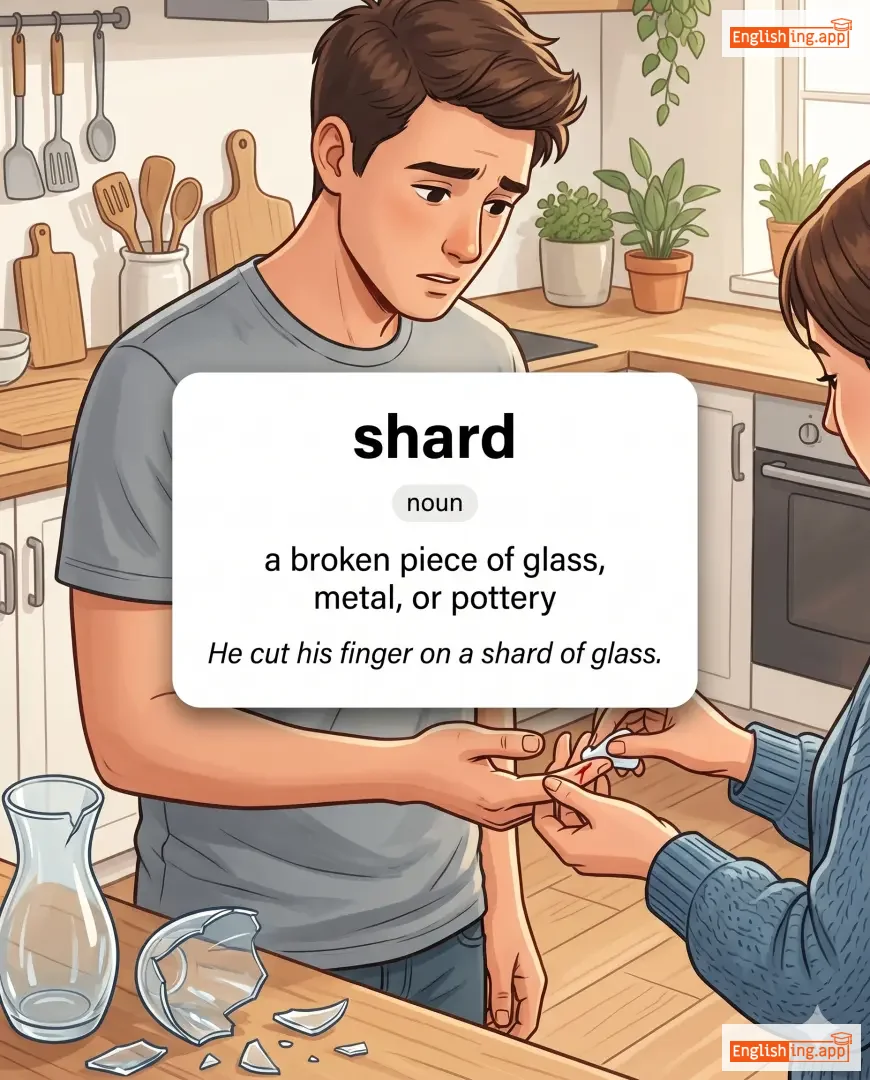
shard definition card — visual illustration of the meaning
noun C1
/ʃɑːrd/
fragmento (fragmento)

a broken piece of glass, metal, or pottery

"He cut his finger on a shard of glass."
"Se cortó el dedo con un fragmento de vidrio." (Se cortó el dedo con un fragmento de vidrio.)
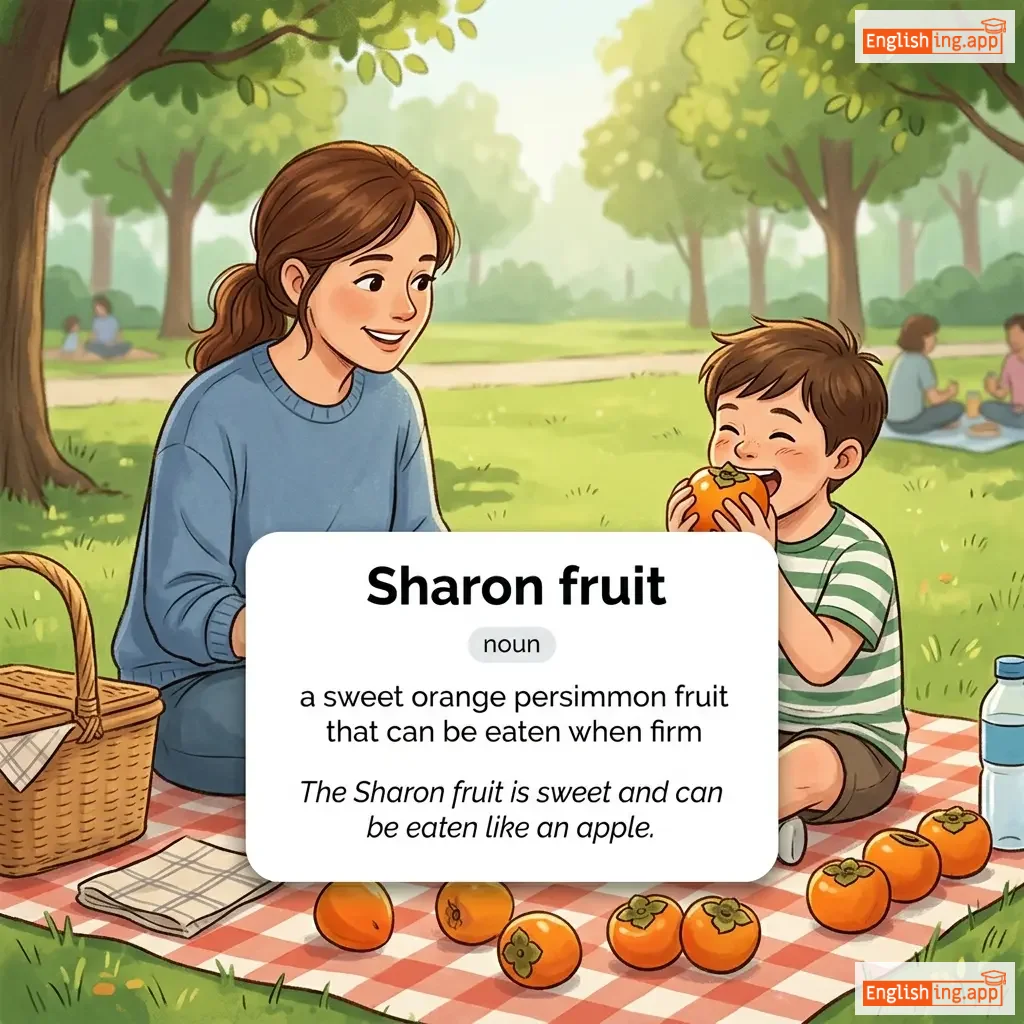
Sharon fruit definition card — visual illustration of the meaning
noun C1
/ˈʃær.ən fruːt/
fruta shéron (fruta sheron)

a sweet orange persimmon fruit that can be eaten when firm

"The Sharon fruit is sweet and can be eaten like an apple."

"la fruta shéron es dulce y se puede comer como una manzana." (La fruta shéron es dulce y se puede comer como una manzana.)
noun C1
/ˈʃeɪvɪŋ/
afeitado (afeitado)

the act of removing hair with a razor; a thin strip or piece shaved from something

"He bought a new cream for shaving."

"Compró una nueva crema para afeitarse." (Compro una nueva crema para afeitarse.)
verb C1
/ʃɪə/
cortar (cortar)

to cut the wool off a sheep or to cut something with sharp tools like scissors or shears

"The farmer will shear the sheep in the spring."

"El agricultor sheará la oveja en la primavera." (El agricultor sheará la oveja en la primavera.)
noun C1
/ˈʃɜːrbət/
sorbete (sorbete)

a sweet flavored drink or a frozen dessert made from sweetened fruit juice

"On hot days, she enjoys a glass of lemon sherbet."

"En los días calurosos, disfruta de un vaso de sorbete de limón." (En los días calurosos, disfruta de un vaso de sorbete de limón.)
verb C1
/ˈʃɪmər/
brillar tenuemente (brillar tenuemente)

To shine with a soft, wavering light.

"The lake shimmered under the moonlight."

"El lago brillaba bajo la luz de la luna." (El lago brillaba bajo la luz de la luna.)
adjective C1
/ˈʃɪpˌʃeɪp/
ordenado (ordenado)

Neat, tidy, and in good order.

"She kept her office shipshape at all times."

"Ella mantenía su oficina ordenada todo el tiempo." (Ella mantenía su oficina ordenada todo el tiempo.)
verb C1
/ʃɜːrk/
evitar (evitar)

to avoid or neglect a duty or responsibility

"He always tries to shirk his responsibilities at work."

"Él siempre trata de evitar sus responsabilidades en el trabajo." (El siempre trata de evitar sus responsabilidades en el trabajo.)
noun C1
/ʃoʊl/
cardumen (cardumen)

a large group of fish swimming together; a shallow place in water

"We saw a shoal of fish near the coast."

"Vimos un cardumen de peces cerca de la costa." (Vimos un cardumen de peces cerca de la costa.)
adjective C1
/ˈʃɑːdi/
de mala calidad (de mala calidad)

badly made or done; of poor quality

"The contractor did a shoddy job on the repairs."

"El contratista hizo un trabajo de mala calidad en las reparaciones." (El contratista hizo un trabajo de mala calidad en las reparaciones.)
/ʃrɛd/
triturar (triturar)

to tear or cut something into small pieces

"She shredded the old documents before throwing them away."

"Ella trituró los viejos documentos antes de tirarlos." (Ella trituró los viejos documentos antes de tirarlos.)
noun C1
/ʃruː/
mujer irritable / animal parecido a un ratón (mujer irritable / animal parecido a un raton)

a small mouse-like animal; also a woman with a bad temper

"The play describes a strong-willed woman as a shrew."

"La obra describe a una mujer de voluntad fuerte como una mujer irritable." (La obra describe a una mujer de voluntad fuerte como una mujer irritable.)
adjective C1
/ʃruːd/
astuto (astuto)

having sharp judgment and practical intelligence

"She made a shrewd investment in real estate."

"Ella hizo una astuta inversión en bienes raíces." (Ella hizo una astuta inversion en bienes raices.)
adjective C1
/ʃrɪl/
sonido agudo (sonido agudo)

High-pitched and piercing in sound.

"The shrill whistle startled everyone in the room."
"El silbido agudo sorprendió a todos en la sala." (El silbido agudo sorprendió a todos en la sala.)
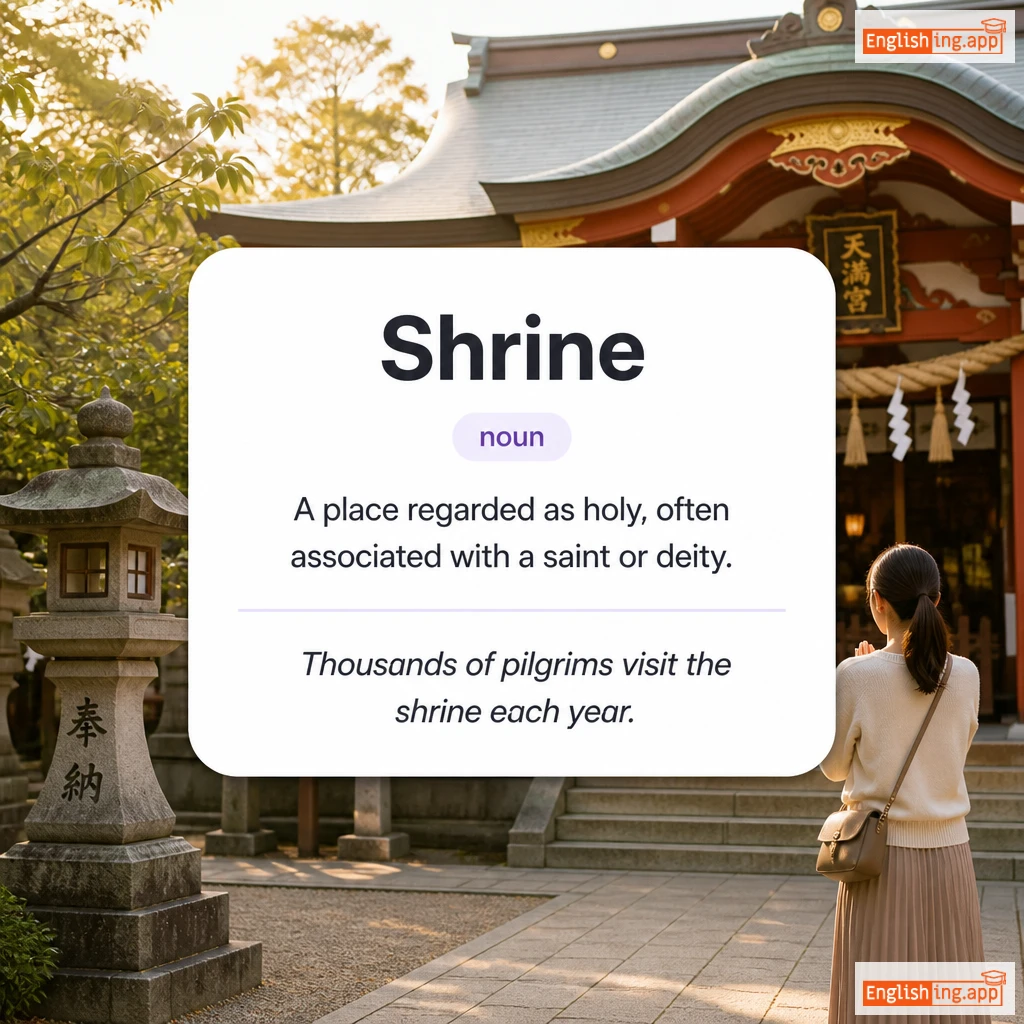
Shrine definition card — visual illustration of the meaning
noun C1
/ʃraɪn/
santuario (santuario)

A place regarded as holy, often associated with a saint or deity.

"Thousands of pilgrims visit the shrine each year."

"Miles de peregrinos visitan el santuario cada año." (Miles de peregrinos visitan el santuario cada año.)
noun C1
/ˈʃrɪŋkɪdʒ/
encogimiento (encogimiento)

The process of becoming smaller in size, amount, or value.

"The company reported a shrinkage in profits this quarter."

"La empresa reportó un encogimiento en las ganancias de este trimestre." (La empresa reporto un encogimiento en las ganancias de este trimestre.)
verb C1
/ˈʃrɪvəl/
arrugar (arrugar)

To become dry, wrinkled, and smaller due to lack of moisture.

"The flowers shriveled under the hot sun."
"Las flores se arrugaron bajo el sol caliente." (Las flores se arrugaron bajo el sol caliente.)
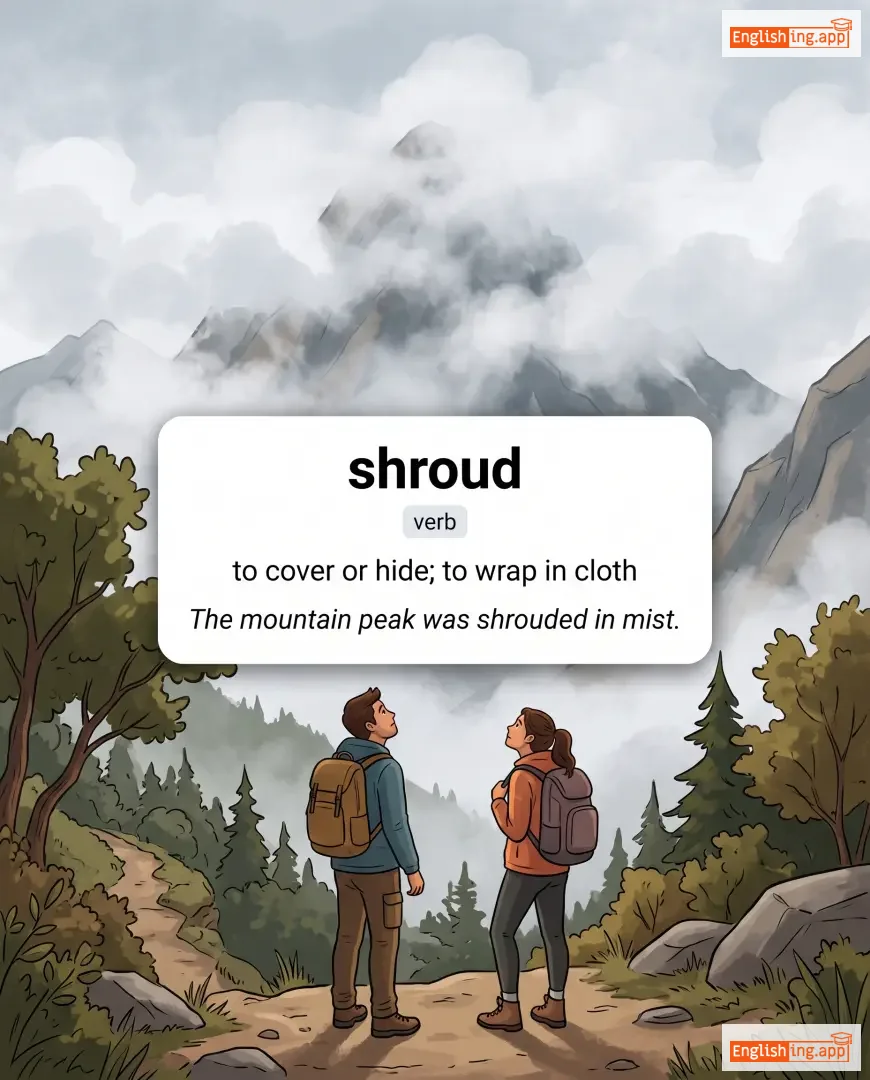
shroud definition card — visual illustration of the meaning
verb C1
/ʃraʊd/
envolver (envolver)

to cover or hide; to wrap in cloth

"The mountain peak was shrouded in mist."

"La cima de la montaña estaba envuelta en niebla." (La cima de la montaña estaba envuelta en niebla.)
verb C1
/ˈʃʌdər/
temblar (temblar)

to tremble or shake suddenly, often due to fear, cold, or strong emotion

"She shuddered at the thought of walking alone in the dark forest."
"Ella se estremeció al pensar en caminar sola en el oscuro bosque." (Ella se estremeció al pensar en caminar sola en el oscuro bosque.)
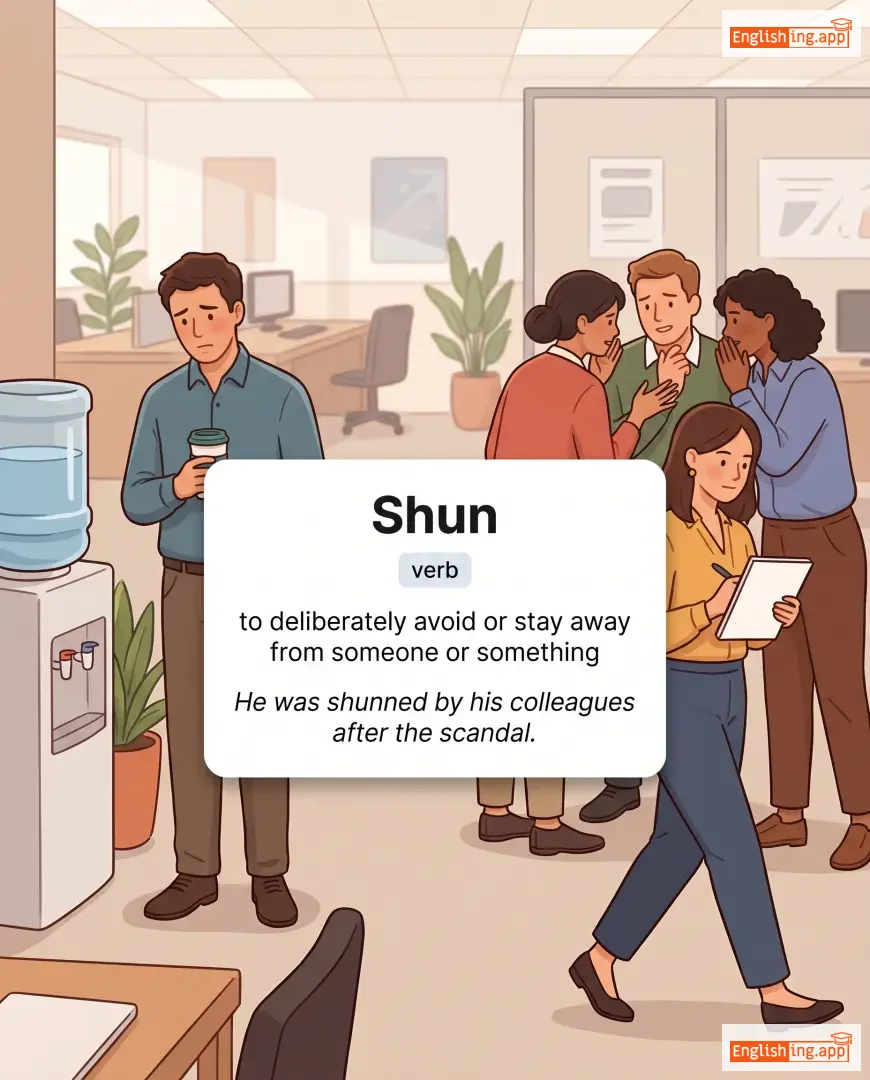
Shun definition card — visual illustration of the meaning
verb C1
/ʃʌn/
rechazar (rechazar)

to deliberately avoid or stay away from someone or something

"He was shunned by his colleagues after the scandal."

"Fue rechazado por sus colegas después del escándalo." (Fue rechazado por sus colegas después del escándalo.)
verb C1
/ʃʌnt/
desviar (desviar)

to move or turn aside; to push or divert from one track to another

"The train was shunted onto a different track."
"El tren fue desviado a otra vía." (El tren fue desviado a otra via.)
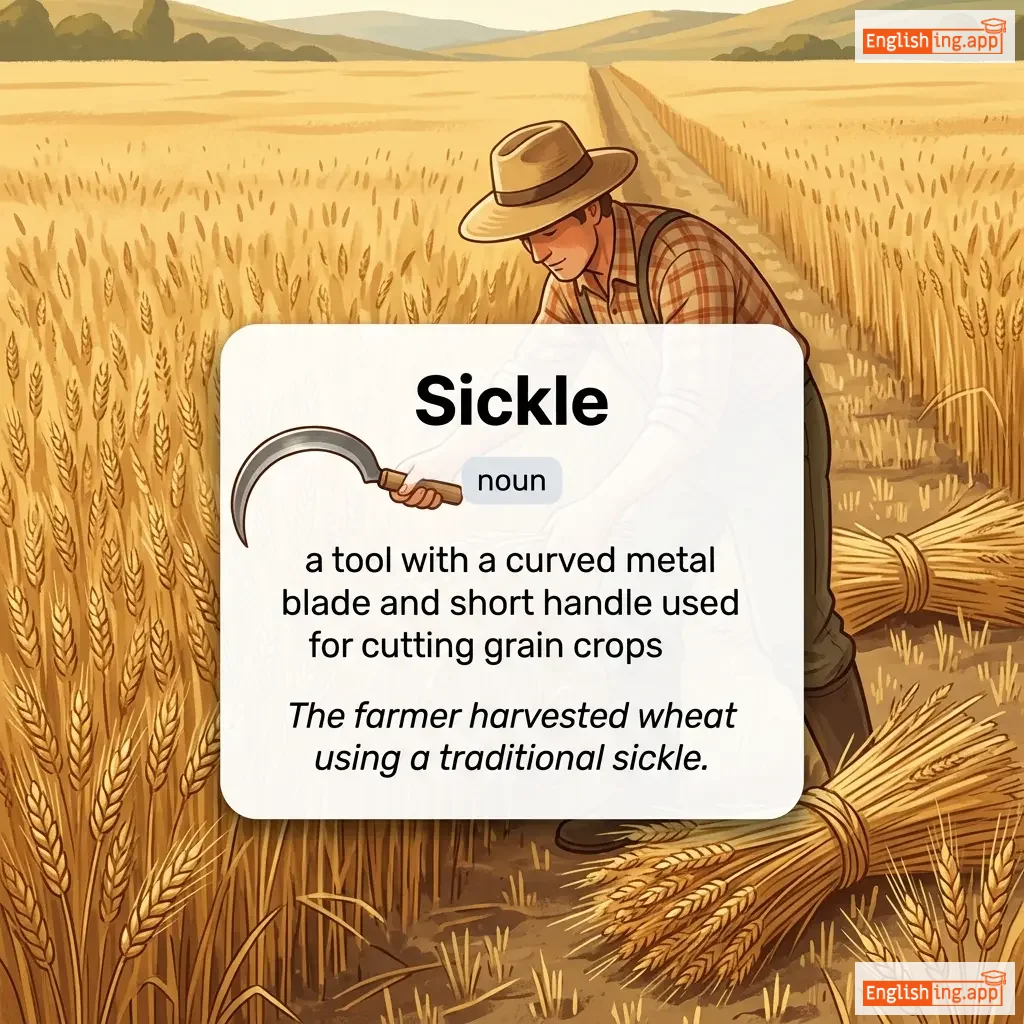
Sickle definition card — visual illustration of the meaning
noun C1
/ˈsɪk.əl/
hoz (hoz)

a tool with a curved metal blade and short handle used for cutting grain crops

"The farmer harvested wheat using a traditional sickle."

"El agricultor cosechó trigo usando una hoz tradicional." (El agricultor cosechó trigo usando una hoz tradicional.)