词汇表

英语词汇词典 | 单词含义、定义和示例

verb C1
/skʌlpt/
幸福 (xìng fú)

to create or shape something by carving or molding

"The artist sculpted a beautiful statue from marble."

"她在获得奖项时无法掩饰自己的幸福。" (Tā zài huòdé jiǎngxiàng shí wúfǎ yǎnshì zìjǐ de xìngfú.)
verb C1
/ˈskʌr.i/
快速跑 (kuài sù pǎo)

To move quickly with short, hurried steps.

"The mice scurried across the kitchen floor when the lights turned on."

"老鼠在灯光打开时快速穿过厨房的地板。" (Lǎo shǔ zài dēng guāng dǎ kāi shí kuài sù chuān guò chú fáng de dì bǎn.)
verb C1
/ˈskʌt.əl/
幸福 (xingfu)

To run hurriedly with short, quick steps; or to deliberately sink a ship.

"The children scuttled back to their seats when the teacher entered."

"她在收到奖项时无法掩饰她的幸福感。" (Tā zài shōu dào jiǎng xiàng shí wúfǎ yǎnshì tā de xìngfú gǎn.)
noun C1
/saɪð/
镰刀 (liándāo)

A tool with a long curved blade used for cutting grass or grain.

"The farmer sharpened his scythe before harvesting the wheat."

"农民在收割小麦之前磨利了他的镰刀。" (Nóngmín zài shōu gē xiǎomài zhīqián mó lìle tā de liándāo.)
noun C1
/ˈseɪɑːns/
灵媒会议 (língméi huìyì)

A meeting where people attempt to communicate with the spirits of the dead.

"They held a seance to contact their late grandmother."

"他们举行了灵媒会议,以联系已故的祖母。" (Tāmen jǔxíngle língméi huìyì, yǐ liánxì yǐgù de zǔmǔ.)
verb C1
/sɪr/
煎制 (jian zhi)

To burn or scorch the surface of something with intense heat.

"The chef seared the steak to lock in the flavor."

"厨师将牛排煎制,以锁住味道。" (Chushi jiang niupai jianzhi, yi suozhu weidao.)
adverb C1
/ˈsɜːrtʃɪŋli/
寻找地 (xúnzhǎo de)

In a way that seems to look for hidden meanings or truth.

"She looked at him searchingly, hoping for an honest answer."

"她带着寻求的目光看着他,希望得到诚实的回答。" (Tā dàizhe xúnqiú de mùguāng kànzhe tā, xīwàng dédào chéngshí de huídá.)
noun C1
/ˈsiːskeɪp/
海景 (haijing)

A view or painting of the sea.

"The artist painted a beautiful seascape at sunset."

"艺术家在日落时画了一幅美丽的海景。" (Yishujia zai riluo shi hua le yi fu meili de haijing.)
adjective C1
/ˈsiːzənəbl/
应季的 (yīngjì de)

Appropriate to the time of year or season.

"We had seasonable weather for autumn."

"我们有一个适合秋季的季节性天气。" (Wǒmen yǒu yīgè shìhé qiūjì de jìjiéxìng tiānqì.)
adjective/verb C1
/ˈsiːzənd/
经验丰富的 / 加调料的 (jīngyàn fēngfù de / jiā tiáoliào de)

Experienced in a particular activity; also, flavored with spices.

"She is a seasoned teacher with over 20 years of experience."

"她是一位拥有超过20年经验的资深教师。" (Tā shì yī wèi yōngyǒu chāoguò 20 nián jīngyàn de zīshēn jiàoshī.)
verb C1
/sɪˈsiːd/
脱离 (tuōlí)

To formally withdraw from a political or organizational union.

"Several states threatened to secede from the union."

"几个州威胁要脱离联邦。" (Jǐ gè zhōu wēixié yào tuōlí liánbāng.)
noun C1
/sɪˈsɛʃən/
分裂 (fenlie)

The action of formally withdrawing from membership of a federation or body.

"The secession of the southern states led to the Civil War."

"南方各州的分裂导致了内战。" (Nanfang ge zhou de fenlie dao zhi le neizhan.)
verb C1
/sɪˈkluːd/
隔离 (gélí)

To keep someone away from other people; to isolate.

"The monk chose to seclude himself in the mountains."

"僧侣选择在山中独自生活。" (Sēnglǚ xuǎnzé zài shān zhōng dúzì shēnghuó.)
adjective C1
/sɪˈkluːdɪd/
隐蔽的 (yinbi de)

Placed apart from other people or things; private and quiet.

"They spent their vacation in a secluded beach house."

"他们在一个隐蔽的海滩小屋度过了假期。" (Tamen zai yige yinbi de haitan xiaowu duoguo le jiaqi.)
noun C1
/sɪˈkluːʒən/
隐居 (yinju)

The state of being private, away from other people.

"She spent the weekend in complete seclusion in her cabin."

"她在她的小屋里度过了完全的隐居周末。" (Tā zài tā de xiǎowū lǐ dùguò le wánquán de yǐnjū zhōumò.)
adjective C1
/ˌsekənd ˈreɪt/
二流 (er liu)

Of mediocre or inferior quality.

"The movie was entertaining but clearly second-rate compared to the original."

"这部电影很有趣,但与原版相比明显是二流的。" (Zhe bu dianying hen youqu, dan yu yuanban xiangbi mingxian shi er liu de.)
secrete definition card — visual illustration of the meaning
verb C1
/sɪˈkriːt/
分泌 (fēnmì)

to produce and release a substance from a cell, gland, or organ

"The pancreas secretes insulin to regulate blood sugar levels."
"胰腺分泌胰岛素以调节血糖水平。" (Yíxiàn fēnmì yídǎosù yǐ tiáojié xuètáng shuǐpíng.)
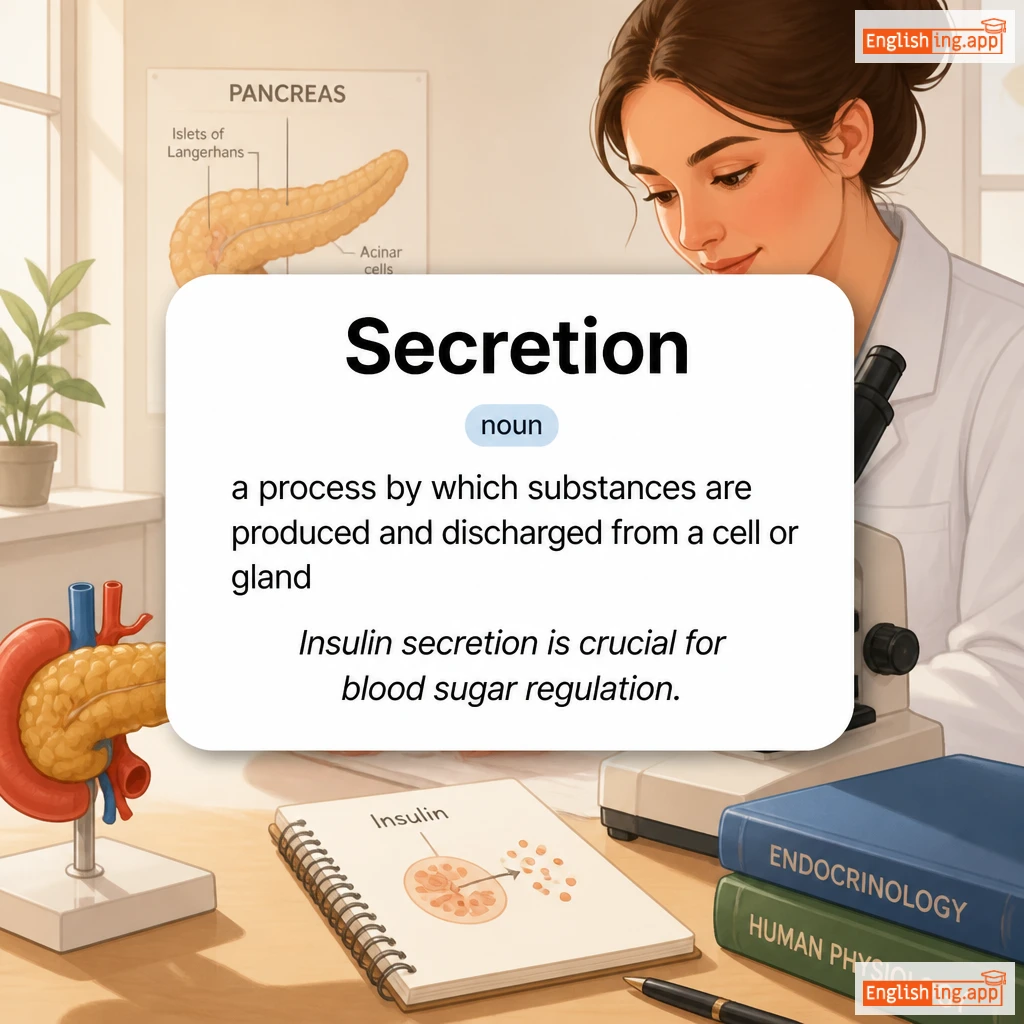
Secretion definition card — visual illustration of the meaning
noun C1
/sɪˈkriː.ʃən/
分泌 (fenmi)

a process by which substances are produced and discharged from a cell or gland

"Insulin secretion is crucial for blood sugar regulation."

"胰岛素分泌对血糖的调节至关重要。" (yidaosun fenmi dui xuetang de tiaojie zhiguang zhongyao)
noun C1
/sɛkt/
教派 (jiaopai)

a subgroup of a larger religious or political group, often with differing beliefs

"The group split into different sects due to doctrinal differences."

"由于教义上的差异,该小组分裂成了不同的教派。" (Yóuyú jiàoyì shàng de chāyì, gāi xiǎozǔ fēnliè chéngle bùtóng de jiàopài.)
adjective C1
/sɛkˈtɛəriən/
宗派的 (zongpai de)

relating to or characterized by the differences between sects, often leading to conflict

"The region has been troubled by sectarian violence for decades."

"该地区几十年来一直受到宗派暴力的困扰。" (Gai diqu jishinian lai yizhi shoudao zongpai baoli de kunrao.)
sector-specific definition card — visual illustration of the meaning
adjective C1
ˈsek.tər spəˈsɪf.ɪk
行业特定 (hangye teding)

Relating to or designed for a particular sector or industry.

"Sector-specific policies attract targeted investments."
"行业特定的政策吸引了定向投资。" (Hangye teding de zhengce xinyin le dingxiang touzi.)
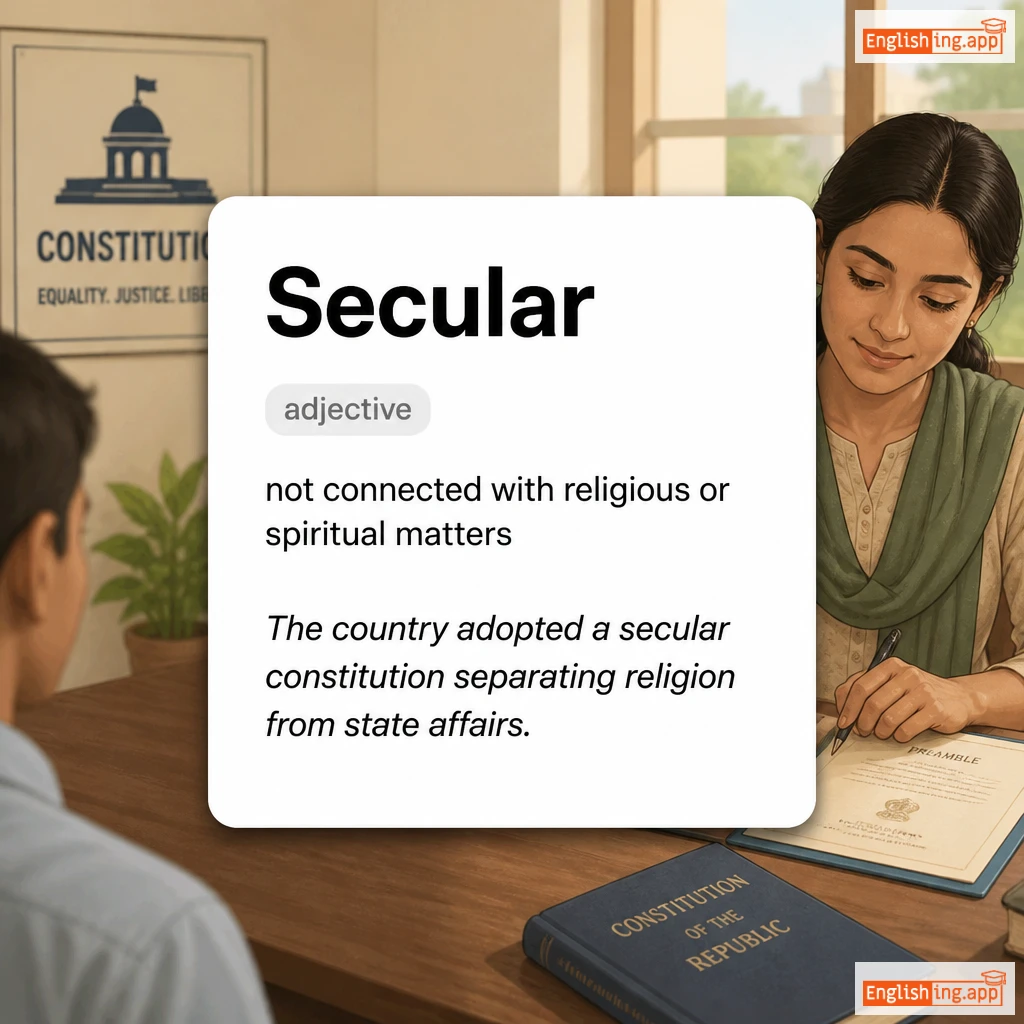
Secular definition card — visual illustration of the meaning
adjective C1
/ˈsɛkjʊlər/
世俗 (shì sú)

not connected with religious or spiritual matters

"The country adopted a secular constitution separating religion from state affairs."

"该国采纳了世俗宪法,将宗教与国家事务分开。" (Gāi guó cǎnàle shì sú xiànfǎ, jiāng zōngjiào yǔ guójiā shìwù fēnkāi.)
adjective, verb C1
/sɪˈdeɪt/
镇静 (zhènjìng)

calm, quiet, and composed; or to administer a drug to make someone calm or sleep

"The nurse sedated the patient before the operation."

"护士在手术前给病人注射了镇静剂。" (Hùshì zài shǒushù qián gěi bìngrén zhùshèle zhènjìngjì.)
noun C1
/ˈsɛdətɪv/
镇静剂 (zhènjìngjì)

A substance that calms the nerves or induces sleep.

"The doctor prescribed a sedative to help the patient sleep."

"医生开了镇静剂来帮助病人入睡。" (Yīshēng kāile zhènjìngjì lái bāngzhù bìngrén rùshuì.)
sedentary definition card — visual illustration of the meaning
adjective C1
/ˈsɛdntɛri/
久坐的 (jiu zuo de)

Characterized by much sitting and little physical activity.

"A sedentary lifestyle can lead to health problems."
"久坐的生活方式可能导致健康问题。" (jiu zuo de sheng huo fang shi ke neng dao zhi jian kang wen ti)
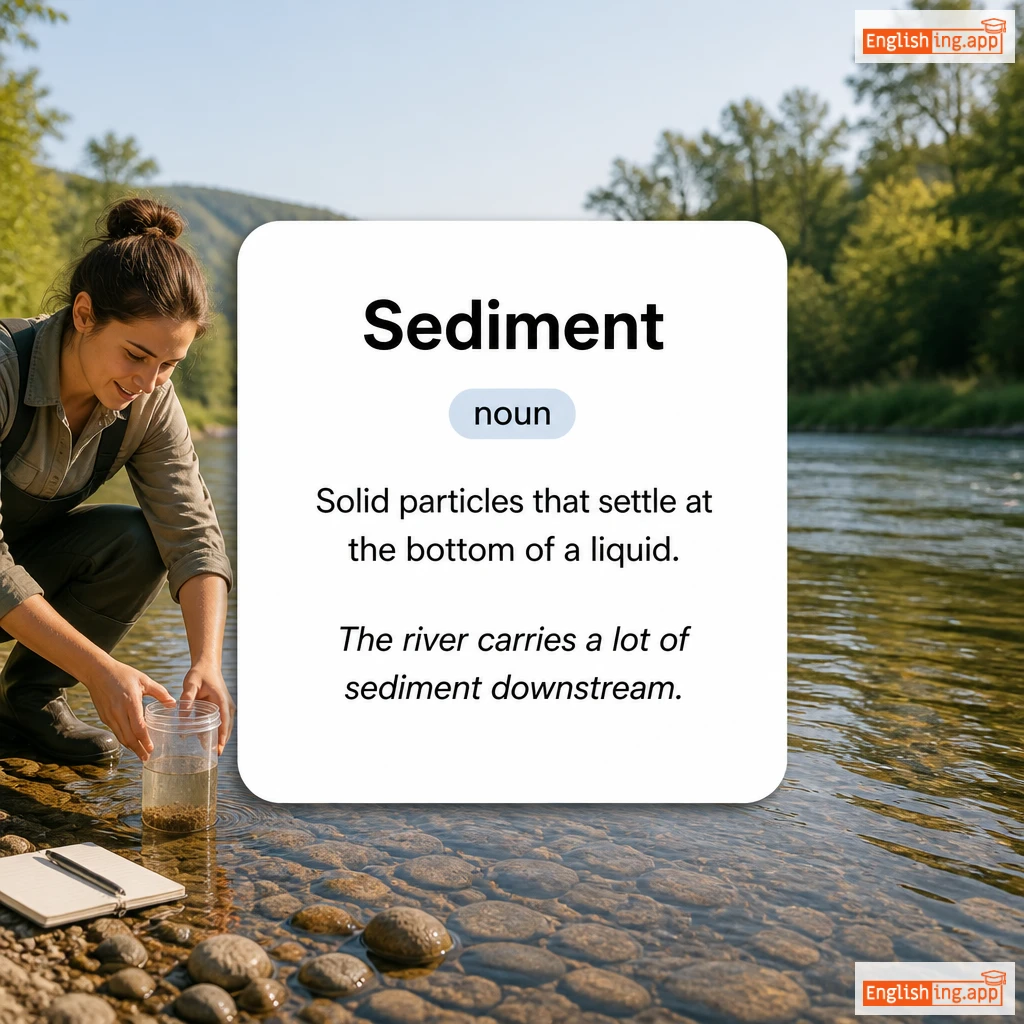
Sediment definition card — visual illustration of the meaning
noun C1
/ˈsɛdəmənt/
沉积物 (chénjīwù)

Solid particles that settle at the bottom of a liquid.

"The river carries a lot of sediment downstream."
"河流将大量沉积物带到下游。" (Héliú jiāng dàliàng chénjīwù dài dào xiàyóu.)
verb C1
/sɪˈdjuːs/

to attract someone into doing something, especially something they might not normally do

"The advertisement was designed to seduce customers into buying luxury products."

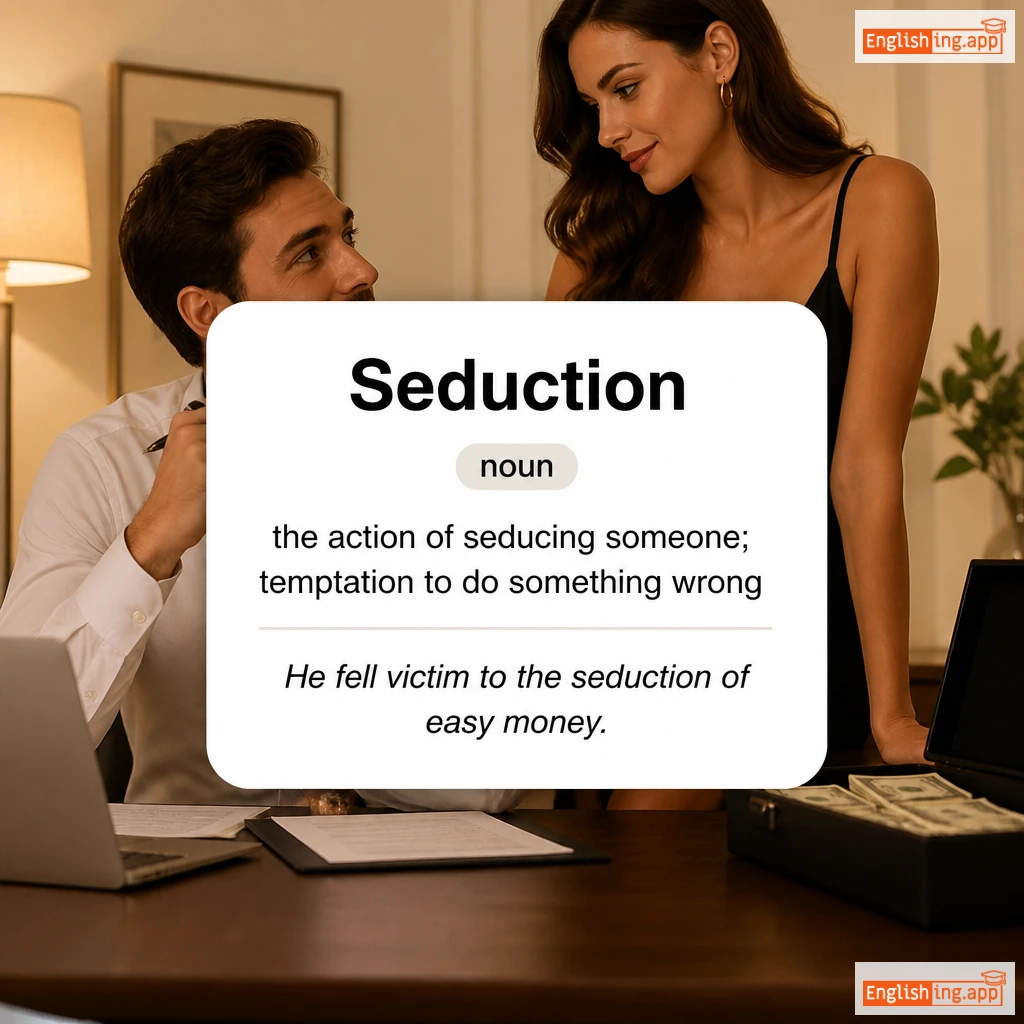
Seduction definition card — visual illustration of the meaning
noun C1
/sɪˈdʌk.ʃən/
色诱; 诱惑 (seyou; youhua)

the action of seducing someone; temptation to do something wrong

"He fell victim to the seduction of easy money."

"他成为了快速赚钱诱惑的受害者。" (Ta chengwei le kuaisu zhuanqian youhua de shouhaizhe.)
adjective C1
/ˈsiːdi/
肮脏 / 破旧 (āngzāng / pòjiù)

dirty, shabby, or in bad condition; also feeling slightly unwell

"He stayed in a seedy motel near the bus station."

"他住在离汽车站很近的破旧旅馆里。" (Tā zhù zài lí qìchē zhàn hěn jìn de pòjiù lǚguǎn lǐ.)
verb C1
/siːp/
渗透 (shentou)

to flow or leak slowly through small openings or pores

"Water began to seep through the cracks in the wall."

"水开始通过墙上的裂缝渗透。" (Shui kaishi tongguo qiang shang de liefeng shentou.)
noun C1
/sɪr/
预言者 (yùyán zhě)

A person who is supposed to be able to see what will happen in the future; a prophet.

"The seer predicted a great change in the kingdom."

"预言者预测了王国的重大变化。" (Yùyán zhě yùcèle wángguó de zhòngdà biànhuà.)
verb C1
/siːð/
怒火中烧 (nù huǒ zhōng shāo)

To be filled with intense but unexpressed anger or agitation.

"She was seething with anger after the unfair decision."
"她在不公平的决定后怒火中烧。" (Tā zài bù gōngpíng de juédìng hòu nù huǒ zhōng shāo.)
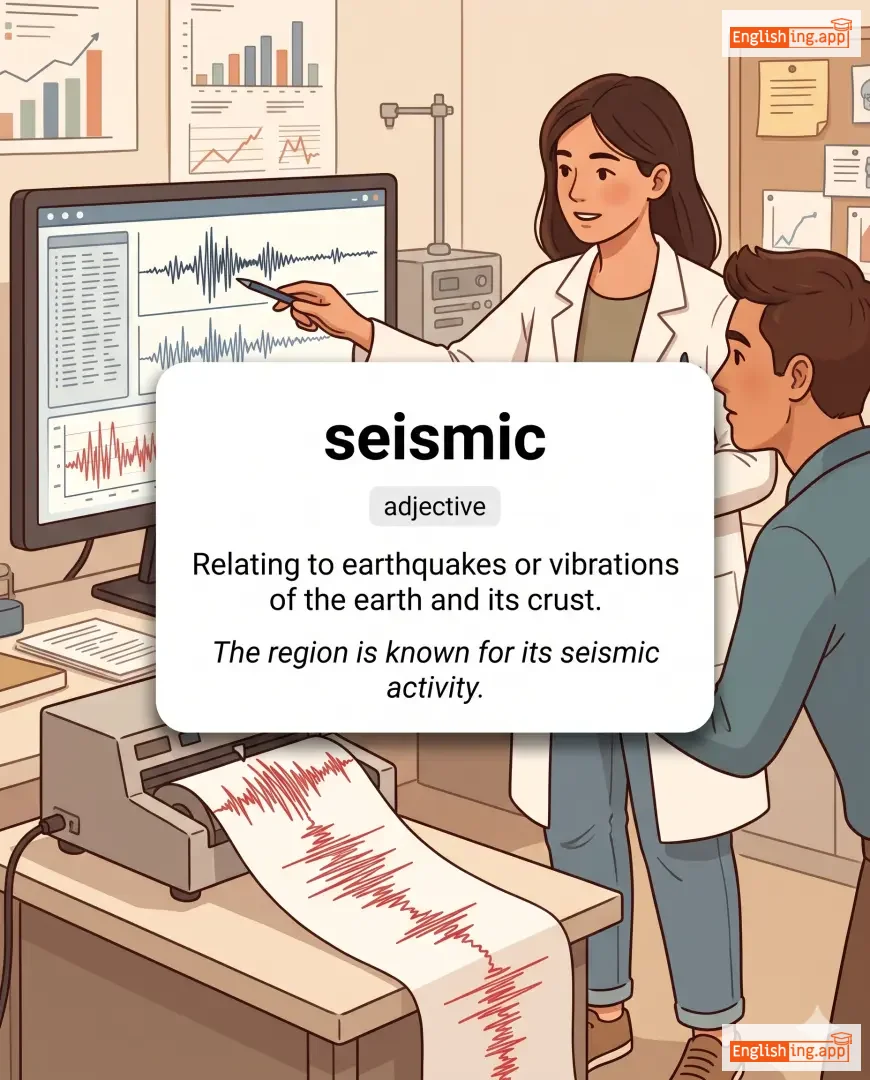
seismic definition card — visual illustration of the meaning
adjective C1
/ˈsaɪz.mɪk/
地震的 (dìzhèndè)

Relating to earthquakes or vibrations of the earth and its crust.

"The region is known for its seismic activity."

"该地区以其地震活动而闻名。" (Gāi dìqū yǐ qí dìzhèn huódòng ér wénmíng.)
adjective C1
/ˌsɛlf əbˈzɔːrbd/
自我中心 (zìwǒ zhōngxīn)

Excessively preoccupied with oneself and one’s own thoughts, feelings, or interests.

"He was too self-absorbed to notice his friend's distress."
"他太过自我中心,没注意到朋友的困扰。" (Tā tài guò zìwǒ zhōngxīn, méi zhùyì dào péngyǒu de kùnrǎo.)
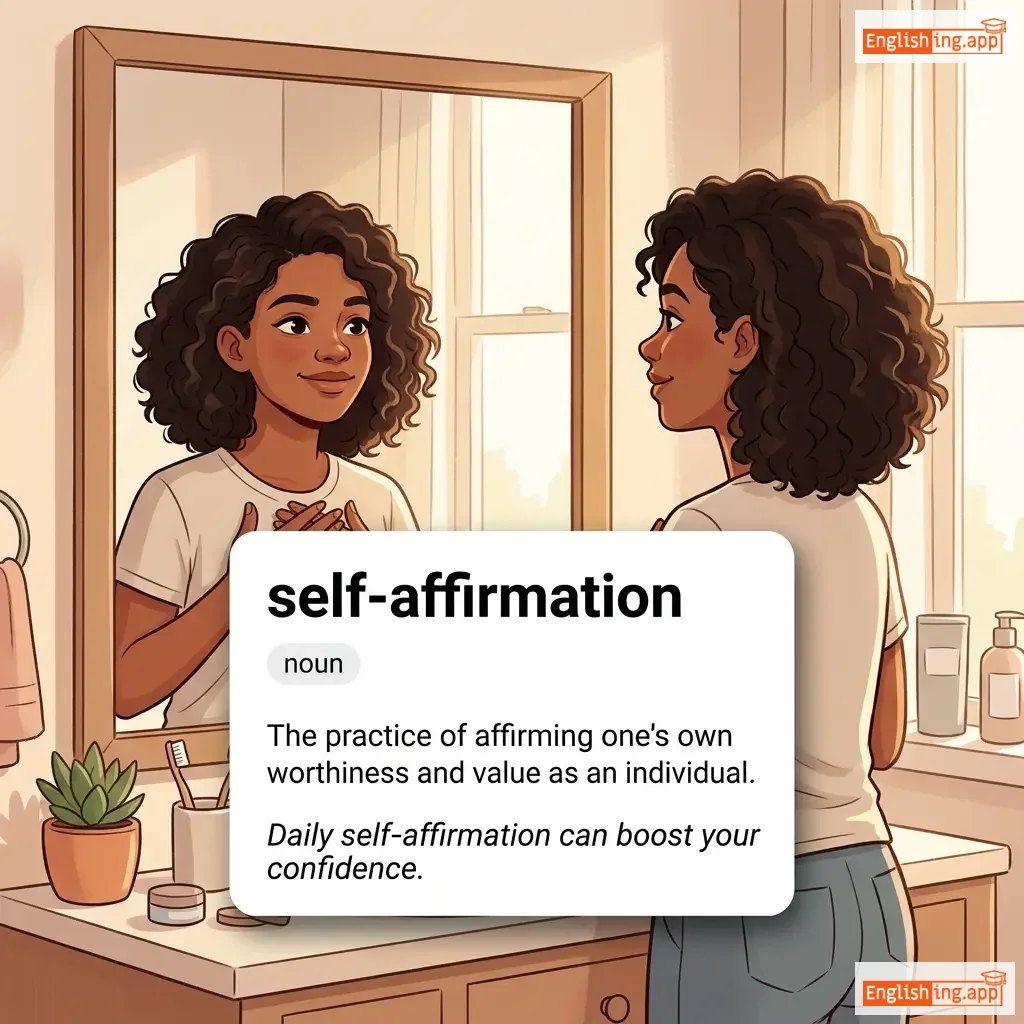
self-affirmation definition card — visual illustration of the meaning
noun C1
/ˌsɛlf əˌfɜːˈmeɪʃən/
自我肯定 (ziwo kending)

The practice of affirming one's own worthiness and value as an individual.

"Daily self-affirmation can boost your confidence."

"每日自我肯定可以增强你的自信。" (Meiri ziwo kending keyi zengqiang nide zixin.)
adjective C1
/ˌsɛlf ɪˈfeɪsɪŋ/
谦虚的 (qianxu de)

not drawing attention to oneself; modest

"Despite his success, he remained self-effacing and humble."

"尽管他取得了成功,他仍然保持谦虚和谦逊。" (Jingguan ta qude le chenggong, ta rengran baochi qianxu he qianxun.)
noun C1
/ˌsɛlf ɪnˈdʌldʒəns/
自我纵容 (zì wǒ zòng rónɡ)

The act of allowing oneself to enjoy pleasures or desires excessively.

"His weekend of self-indulgence included eating sweets and watching movies nonstop."

"他的自我纵容周末包括吃糖果和不停地看电影。" (Tā de zì wǒ zòng rónɡ zhōumò bāokuò chī tángguǒ hé bùtíng de kàn diànyǐng.)
self-possession definition card — visual illustration of the meaning
noun C1
ˈsɛlf pəˈzɪʃən
自控力 (zì kòng lì)

The quality of being calm and confident and in control of one's emotions; composure.

"His self-possession during the crisis was remarkable."
"他在危机中的自控力令人钦佩。" (Tā zài wēijī zhōng de zì kòng lì lìng rén qīn pèi.)
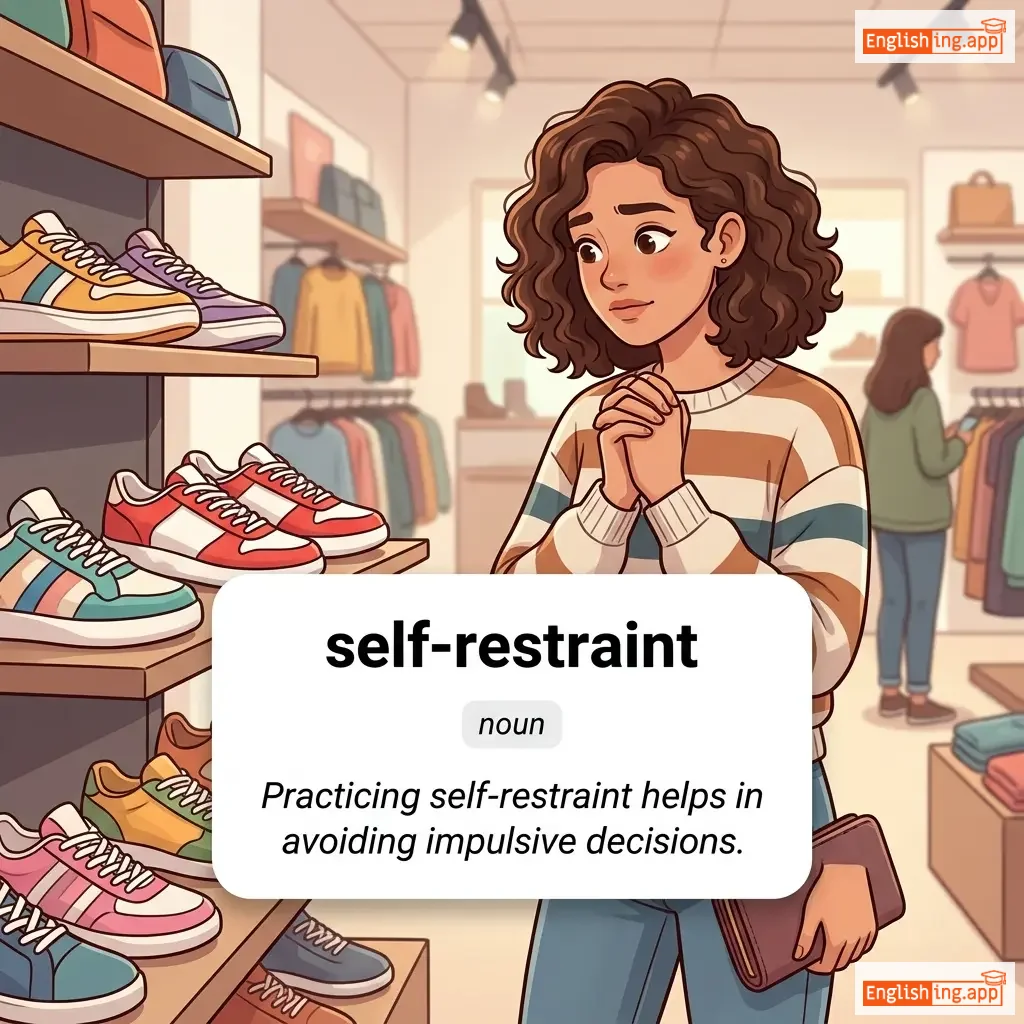
self-restraint definition card — visual illustration of the meaning
noun C1
ˌsɛlf.rɪˈstreɪnt
自我克制 (zi wo ke zhi)

The practice of restraining oneself from indulging in something, typically an impulse or desire.

"Practicing self-restraint helps in avoiding impulsive decisions."

"实践自我克制有助于避免冲动的决策。" (Shíjiàn zìwǒ kèzhì yǒu zhù yú bìmiǎn chōngdòng de juécè.)
adjective C1
/ˌsɛlf ˈraɪtʃəs/
自以为是 (zì yǐ wéi shì)

Having or showing an attitude of moral superiority; believing one’s own beliefs are the only right ones.

"His self-righteous comments made everyone uncomfortable."
"他的自以为是的评论让每个人都感到不舒服。" (Tā de zì yǐ wéi shì de píng lùn ràng měi gè rén dōu gǎn dào bù shū fu.)
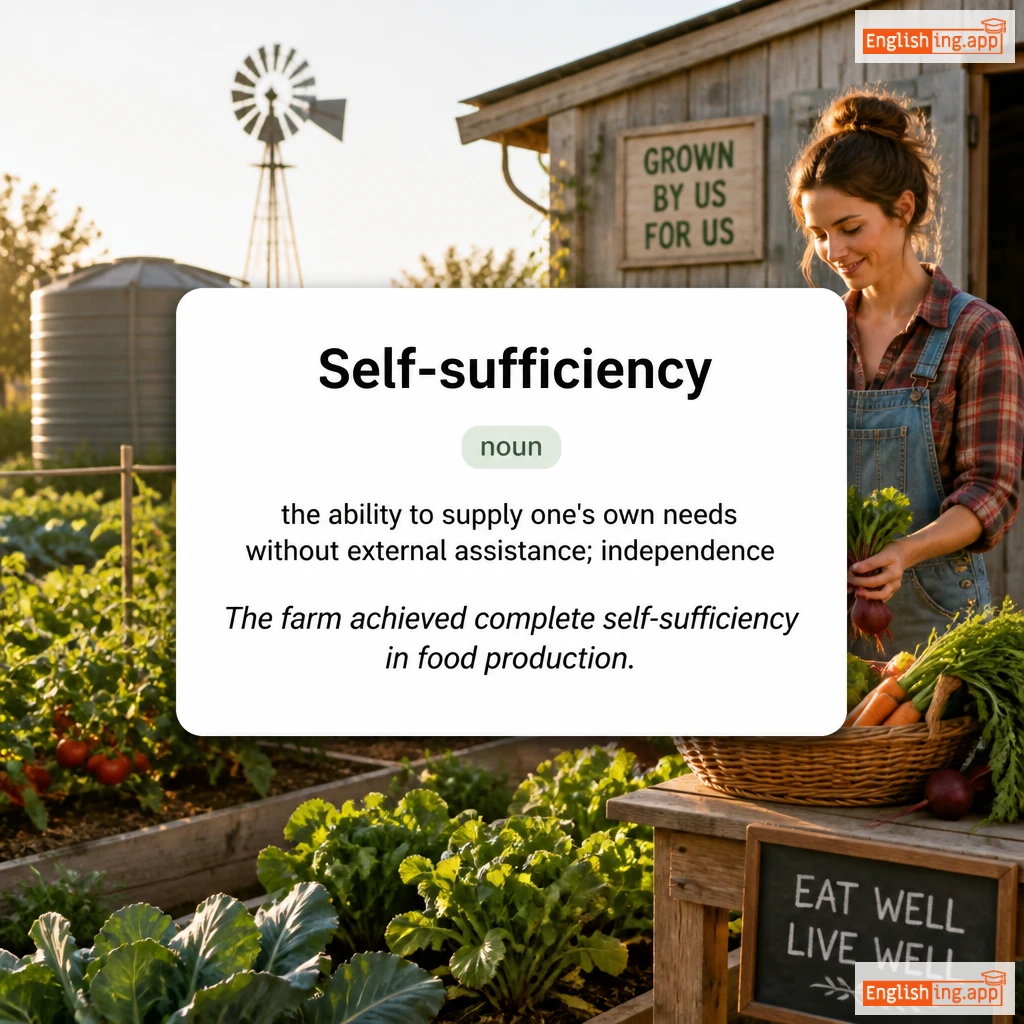
Self-sufficiency definition card — visual illustration of the meaning
noun C1
/ˌsɛlfsəˈfɪʃənsi/
自给自足 (zì jǐ zì zú)

the ability to supply one's own needs without external assistance; independence

"The farm achieved complete self-sufficiency in food production."
"农场在食品生产中实现了完全的自给自足。" (Nongchang zai shipin shengchan zhong shixian le wanquan de ziji zizu.)
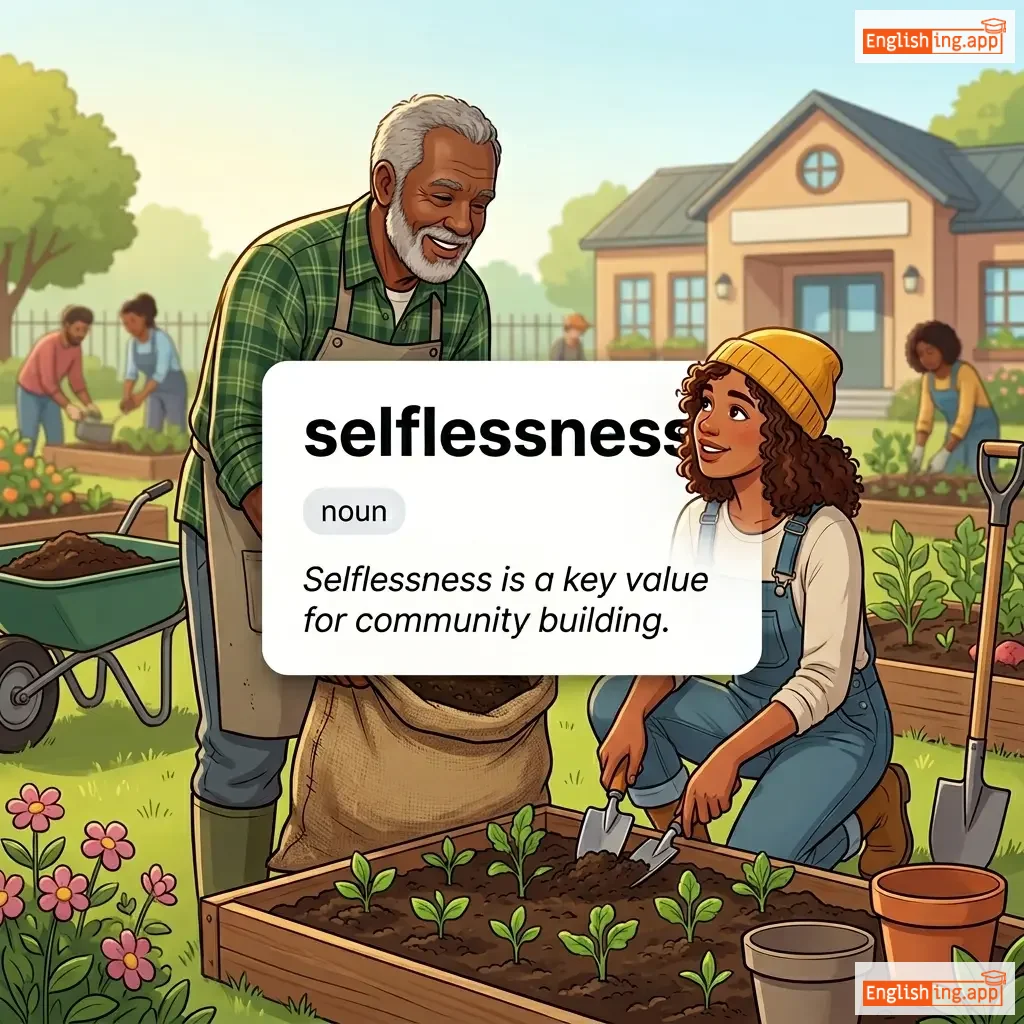
selflessness definition card — visual illustration of the meaning
noun C1
ˈsɛlfləsnɪs
无私 (wusi)

The quality of being concerned more with the needs of others than with one's own.

"Selflessness is a key value for community building."
"无私是社区建设中的关键价值。" (Wusi shi shequ jianshe zhong de guanjian jiazhi.)
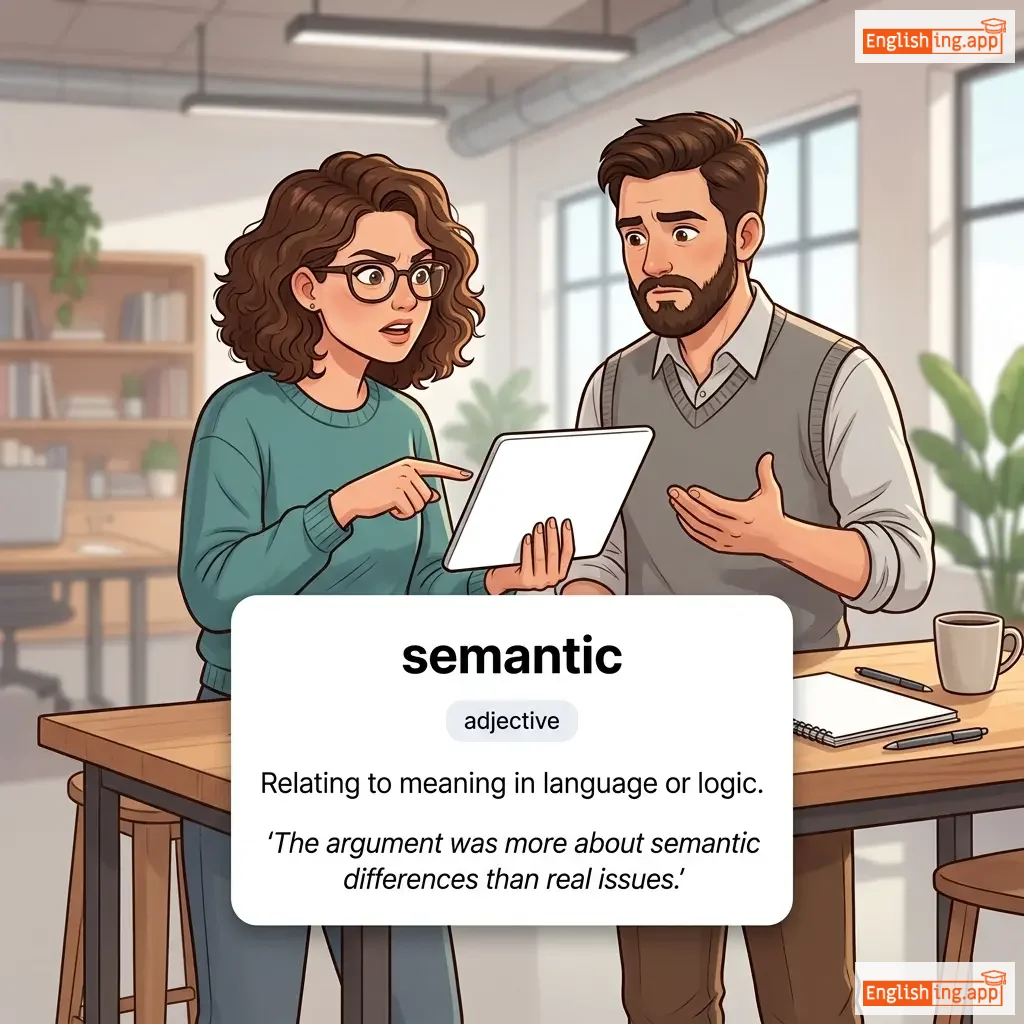
semantic definition card — visual illustration of the meaning
adjective C1
/sɪˈmæntɪk/
语义的 (yǔyì de)

Relating to meaning in language or logic.

"The argument was more about semantic differences than real issues."
"争论更多是关于语义差异而非实际问题。" (Zhēnglùn gèng duō shì guānyú yǔyì chāyì ér fēi shíjì wèntí.)
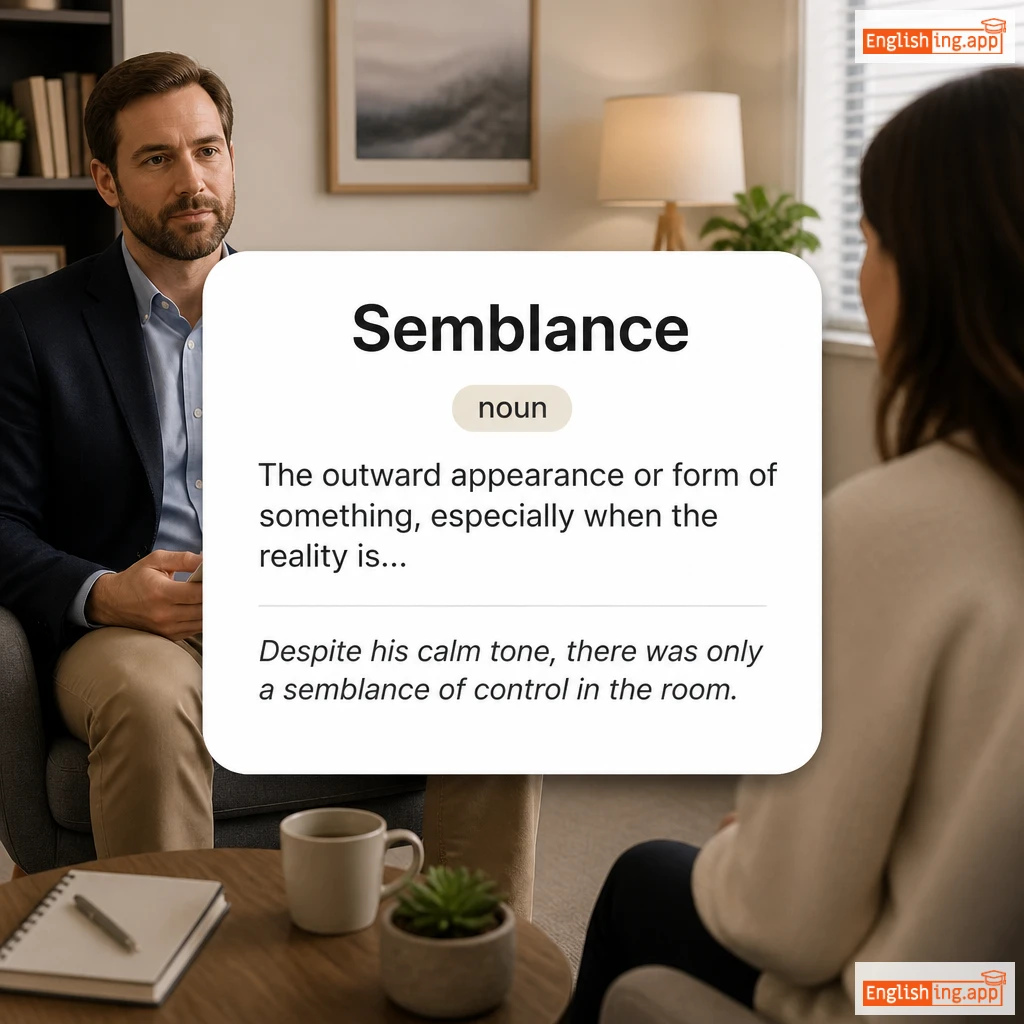
Semblance definition card — visual illustration of the meaning
noun C1
/ˈsɛm.bləns/
表象, 外在形式 (biǎoxiàng, wàizài xíngshì)

The outward appearance or form of something, especially when the reality is different.

"Despite his calm tone, there was only a semblance of control in the room."

"尽管他的语气很平静,房间里只有一种控制的表象。" (Jǐnguǎn tā de yǔqì hěn píngjìng, fángjiān lǐ zhǐyǒu yī zhǒng kòngzhì de biǎoxiàng.)
adjective C1
/ˌsɛm.iˈæn.ju.əl/
半年一次 (ban nian yi ci)

Occurring twice a year; every six months.

"The company holds a semiannual meeting with all employees."

"公司每六个月举行一次会议。" (Gongsi mei liu ge yue ju xing yi ci huiyi.)
adjective C1
/ˈsɛm.ɪ.nəl/
幸福 (xingfu)

Strongly influencing later developments; highly original and influential.

"His seminal book changed the course of modern philosophy."

"她在获得奖项时无法掩饰自己的幸福。" (Tā zài huòdé jiǎngxiàng shí wúfǎ yǎnshì zìjǐ de xìngfú.)
adjective C1
/ˈsiː.naɪl/
与年龄相关的虚弱 (yǔ niánlíng xiāngguān de xūruò)

Showing the weaknesses of old age, especially mental decline.

"The old man became senile and forgot familiar faces."

"老人变得衰老,忘记了熟悉的面孔。" (lǎorén biàndé shuāilǎo, wàngjìle shúxī de miànkǒng.)
noun C1
/sɪˈnɪləti/
衰老 (shuāilǎo)

The state of being old and showing the weaknesses of age, especially mental decline.

"His forgetfulness was attributed to senility."
"他的健忘被归因于衰老。" (Tā de jiànwàng bèi guī yīn yú shuāilǎo.)
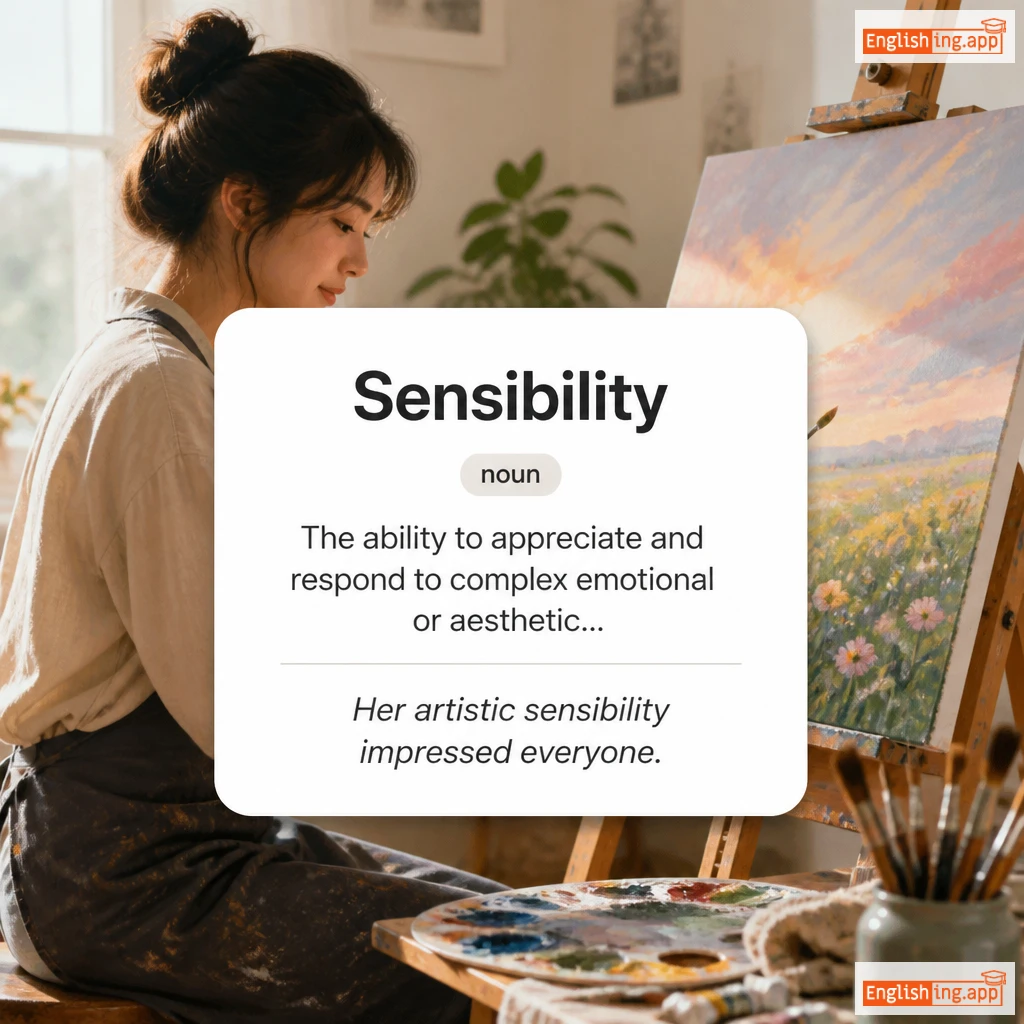
Sensibility definition card — visual illustration of the meaning
noun C1
/ˌsɛnsəˈbɪləti/
敏感性 (mǐn gǎn xìng)

The ability to appreciate and respond to complex emotional or aesthetic influences; sensitivity.

"Her artistic sensibility impressed everyone."

"她的艺术敏感性给每个人留下了深刻印象。" (Tā de yì shù mǐn gǎn xìng gěi měi gè rén liú xià le shēn kè yìn xiàng.)
noun C1
/ˌsɛnsɪtaɪˈzeɪʃən/
敏感化 (mǐn gǎn huà)

The process of becoming sensitive to a substance, situation, or influence.

"The doctor warned about the sensitization caused by repeated exposure to chemicals."

"医生警告了由于反复接触化学品引起的敏感化。" (Yīshēng jǐnggào le yóuyú fǎnfù jiēchù huàxuépǐn yǐnqǐ de mǐngǎn huà.)