词汇表

英语词汇词典 | 单词含义、定义和示例

verb C1
/ˈprɒpəɡeɪt/
propagar (propagar)

To spread or transmit an idea, belief, or information widely; also to reproduce in plants or animals.

"Scientists work to propagate the species in captivity."
"Los científicos trabajan para propagar las especies en cautiverio." (Los científicos trabajan para propagar las especies en cautiverio.)
propagation definition card — visual illustration of the meaning
noun C1
/ˌprɒpəˈɡeɪʃən/
propagación, difusión (propagacion, difusion)

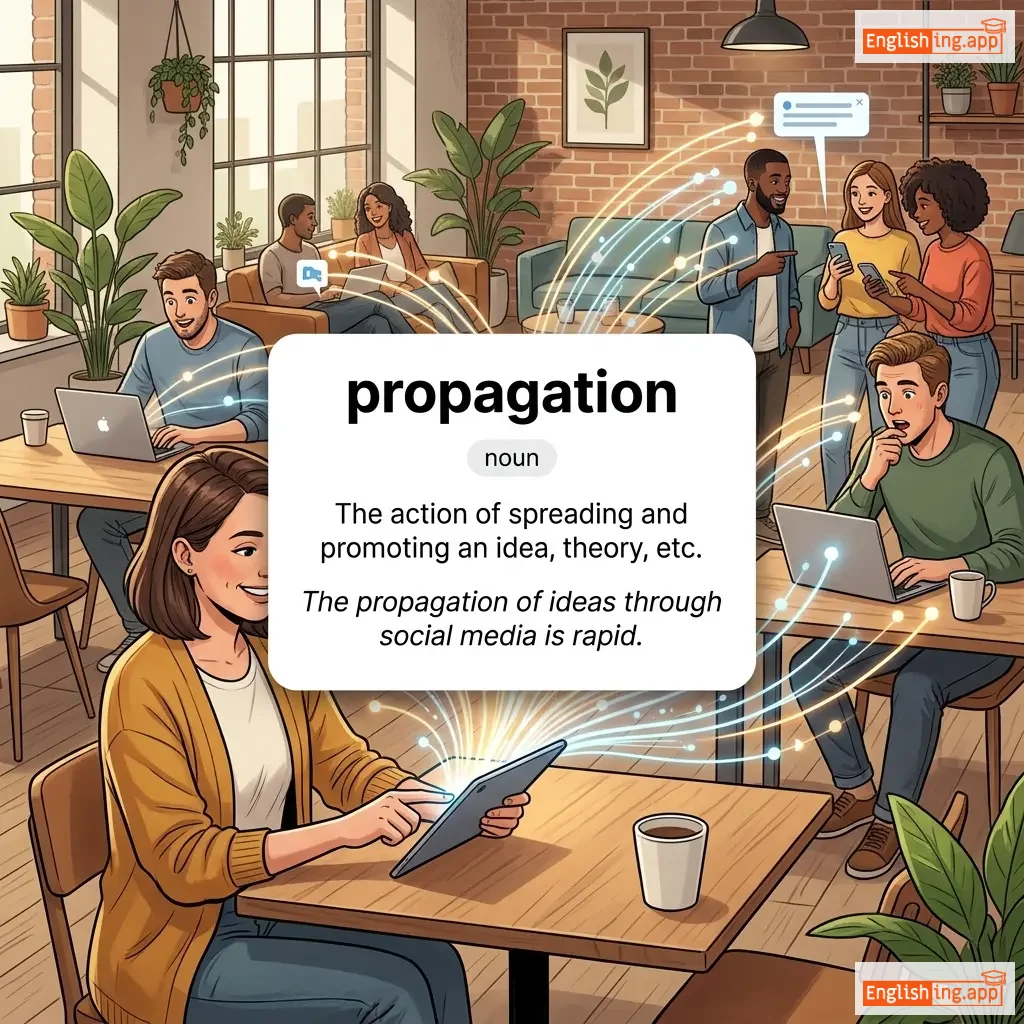
The action of spreading and promoting an idea, theory, etc.

"The propagation of ideas through social media is rapid."
"La propagación de ideas a través de las redes sociales es rápida." (La propagacion de ideas a traves de las redes sociales es rapida.)
propel definition card — visual illustration of the meaning
verb C1
/prəˈpɛl/
impulsar (impulsar)

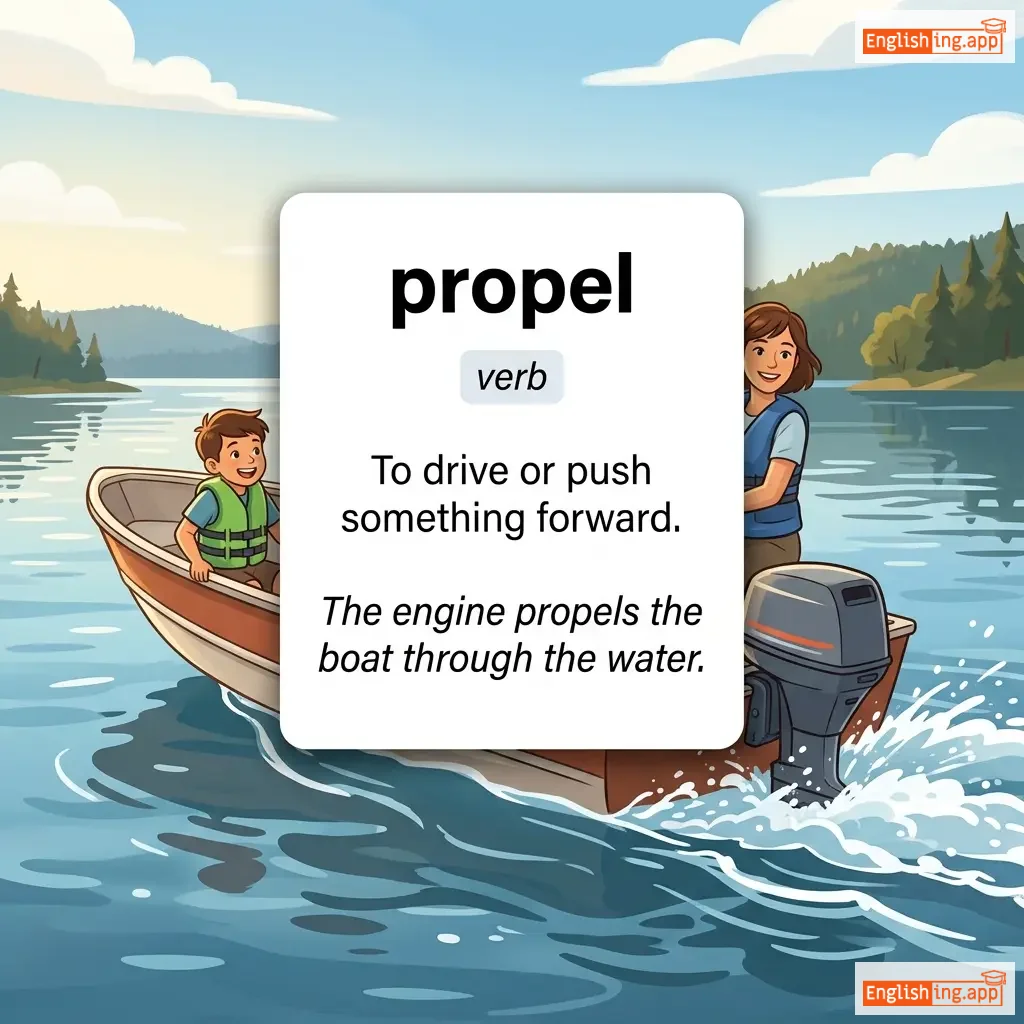
To drive or push something forward.

"The engine propels the boat through the water."

"El motor impulsa el bote a través del agua." (El motor impulsa el bote a través del agua.)
noun C1
/prəˈpɛlənt/
propelente (propelente)

A substance that drives or pushes something forward, especially fuel in rockets or engines.

"The rocket uses a liquid propellant to launch into space."

"El cohete utiliza un propelente líquido para lanzarse al espacio." (El cohete utiliza un propelente líquido para lanzarse al espacio.)
noun C1
/prəˈpɛlər/
hélice (helice)

A mechanical device with blades that rotates to drive a ship, aircraft, or other vehicle forward.

"The airplane’s propeller cut through the air with great speed."
"La hélice del avión cortó el aire con gran velocidad." (La helice del avion corto el aire con gran velocidad.)
propensity definition card — visual illustration of the meaning
noun C1
/prəˈpɛnsəti/
propensión (propension)

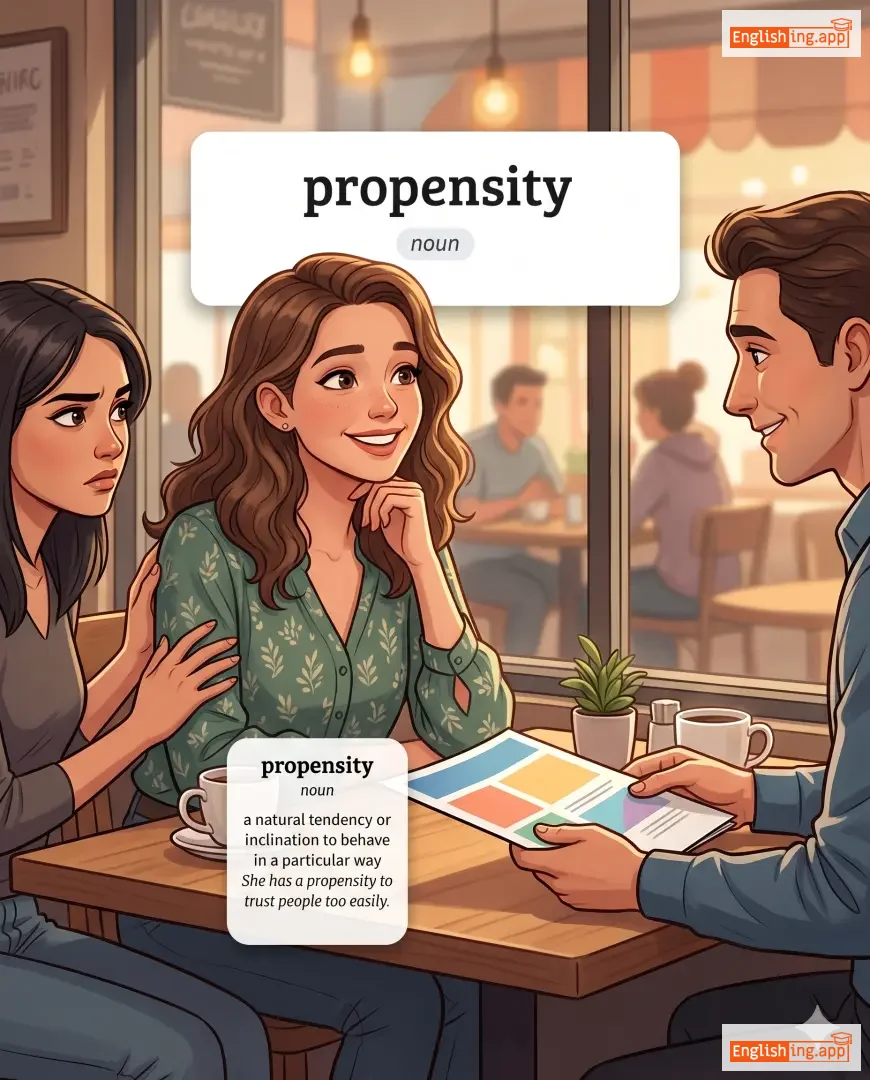
a natural tendency or inclination to behave in a particular way

"She has a propensity to trust people too easily."

"Ella tiene una propensión a confiar demasiado en la gente." (Ella tiene una propension a confiar demasiado en la gente.)
noun C1
/ˈprɒfəsi/
profecía (profecia)

a prediction or message about the future, often believed to be divinely inspired

"The prophecy foretold the rise of a great leader."

"La profecía predijo el ascenso de un gran líder." (La profecia predijo el ascenso de un gran lider)
verb C1
/ˈprɒfəsaɪ/
profetizar (profeh-teh-thar)

to state or predict that something will happen in the future, especially as if divinely inspired

"The monk prophesied that peace would return to the land."

"El monje profetizó que la paz regresaría a la tierra." (El mon-heh pro-feh-tee-tho keh lah pahth reh-gre-sah-ree-ah ah lah tee-er-rah.)
adjective C1
/prəˈfɛtɪk/
profético (prophético)

accurately predicting or describing what will happen in the future

"His prophetic words came true after many years."

"Sus palabras proféticas se hicieron realidad después de muchos años." (Sus palabras proféticas se hicieron realidad después de muchos años.)
noun C1
/prəˈpoʊnənt/
defensor, proponente (defensor, proponente)

a person who advocates for or supports a particular idea, cause, or plan

"She is a strong proponent of renewable energy."

"Ella es una fuerte defensora de la energía renovable." (Ella es una fuerte defensora de la energía renovable.)
adjective C1
/prəˈpɔːrʃənət/
proporcional (proporcional)

Corresponding in size, degree, or intensity; balanced in relation.

"The punishment should be proportionate to the crime."
"La pena debe ser proporcional al crimen." (La pena debe ser proporcional al crimen.)
propriety definition card — visual illustration of the meaning
noun C1
/prəˈpraɪəti/
decoro (decoro)

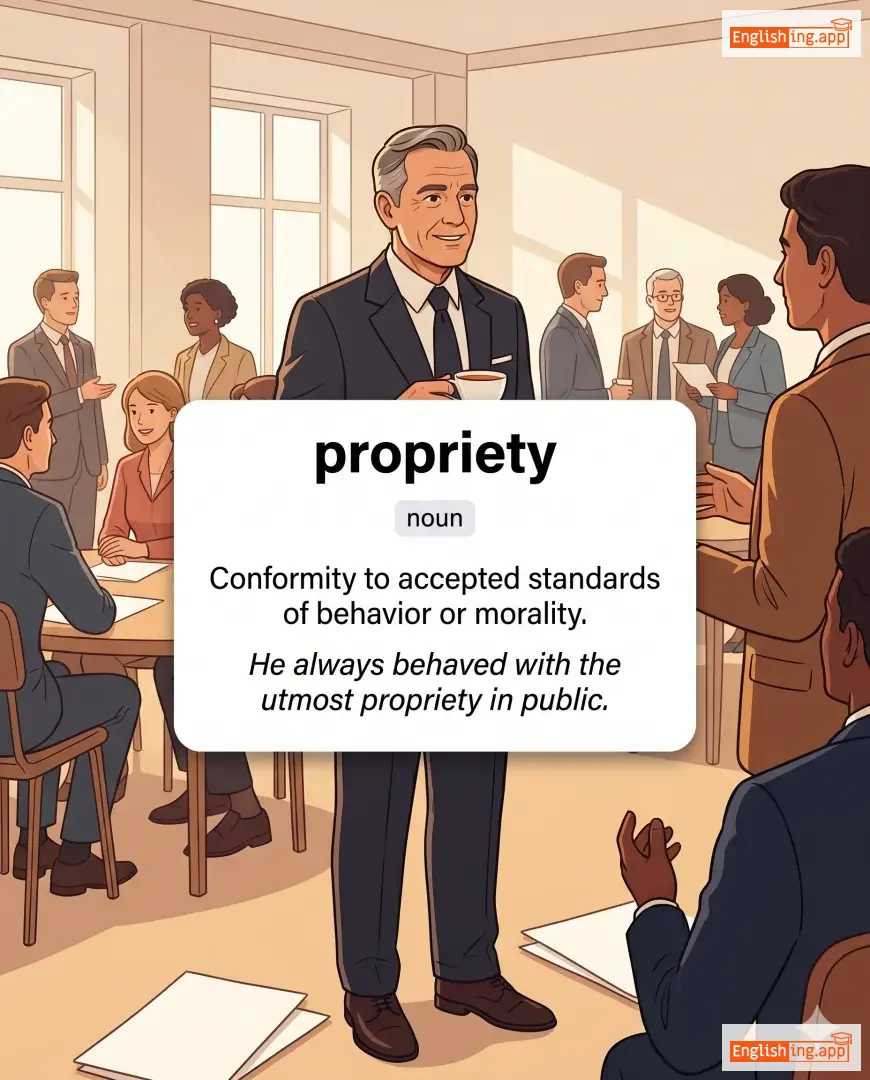
Conformity to accepted standards of behavior or morality.

"He always behaved with the utmost propriety in public."
"Siempre se comportaba con el máximo decoro en público." (Siempre se comportaba con el máximo decoro en público.)
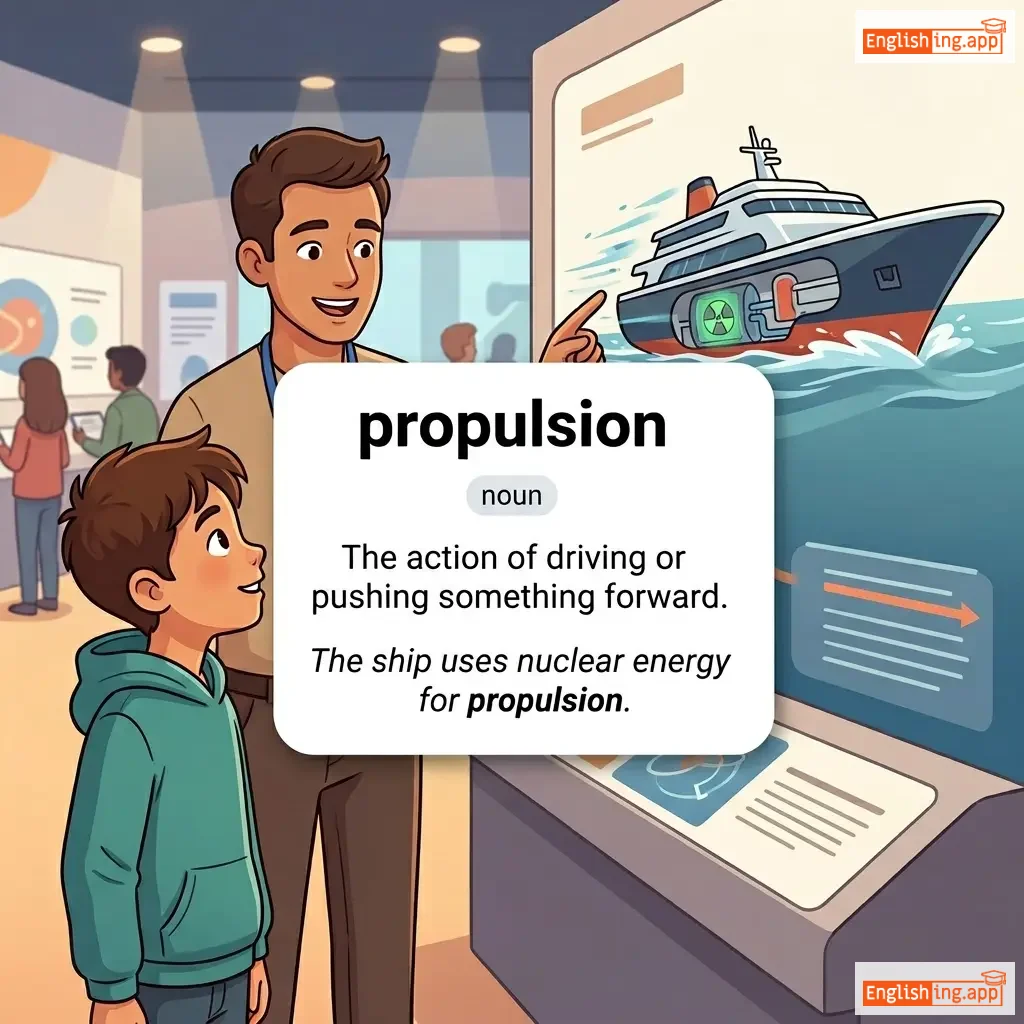
propulsion definition card — visual illustration of the meaning
noun C1
/prəˈpʌlʃən/
propulsión (propulsion)

The action of driving or pushing something forward.

"The ship uses nuclear energy for propulsion."

"El barco utiliza energía nuclear para la propulsión." (El barco utiliza energia nuclear para la propulsion.)
adjective C1
/proʊˈzeɪ.ɪk/
prosaico (prosaico)

ordinary, dull, or lacking imagination

"The teacher’s explanation was accurate but rather prosaic."

"La explicación del profesor fue precisa, pero bastante prosaica." (La explicacion del profesor fue precisa, pero bastante prosaica.)
noun C1
/ˈprɒspɛktər/
buscador de minerales (buscador de minerales)

a person who searches for mineral deposits, especially gold

"The prospector spent years in the mountains searching for gold."

"El prospector pasó años en las montañas buscando oro." (El prospector pasó años en las montañas buscando oro.)
noun C1
/prəˈspɛktəs/
prospecto (prospecto)

a printed document that advertises or describes a school, business, or investment offering

"The university sent out a prospectus to attract new students."

"La universidad envió un prospecto para atraer nuevos estudiantes." (La universidad envió un prospecto para atraer nuevos estudiantes.)
adjective/verb C1
/ˈprɒstreɪt/
postrado (postrado)

lying stretched out on the ground with one's face downward, often as a sign of submission or exhaustion

"He lay prostrate on the ground after the long battle."
"Él se tiró postrado en el suelo después de la larga batalla." (El se tiro postrado en el suelo después de la larga batalla.)
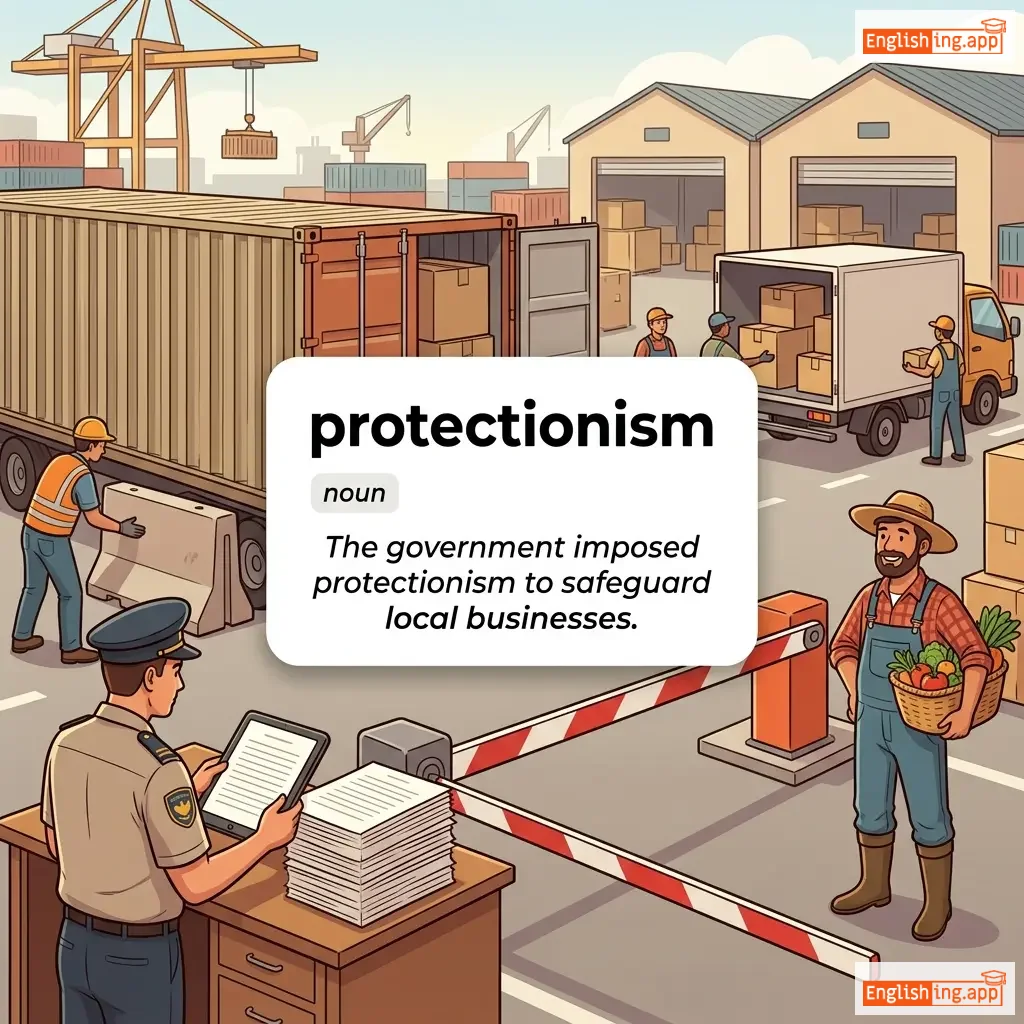
protectionism definition card — visual illustration of the meaning
noun C1
/prəˈtɛk.ʃəˌnɪz.əm/
proteccionismo (proteccionismo)

A trade policy that restricts imports to safeguard domestic industries through trade restriction, economic nationalism, or isolationism.

"The government imposed protectionism to safeguard local businesses."

"El gobierno impuso proteccionismo para salvaguardar a las empresas locales." (El gobierno impuso proteccionismo para salvaguardar a las empresas locales.)
noun C1
/ˈproʊtəˌʒeɪ/
protege (protege)

a person who is guided and supported by an older and more experienced person

"The young artist was the protege of a famous painter."

"El joven artista era el protegido de un pintor famoso." (El joven artista era el protegido de un pintor famoso.)
noun C1
/ˈprɑːtɪstənt/
protestante (protestante)

a member of the Christian church that separated from the Roman Catholic Church during the Reformation

"Martin Luther was a key figure in the Protestant Reformation."

"Martín Lutero fue una figura clave en la Reforma protestante." (Martin Lutero fue una figura clave en la Reforma protestante.)
verb C1
/proʊˈtrækt/
prolongar (prolongar)

To prolong or extend in time or duration.

"Negotiations were protracted for several months."
"Las negociaciones fueron prolongadas durante varios meses." (Las negociaciones fueron prolongadas durante varios meses.)
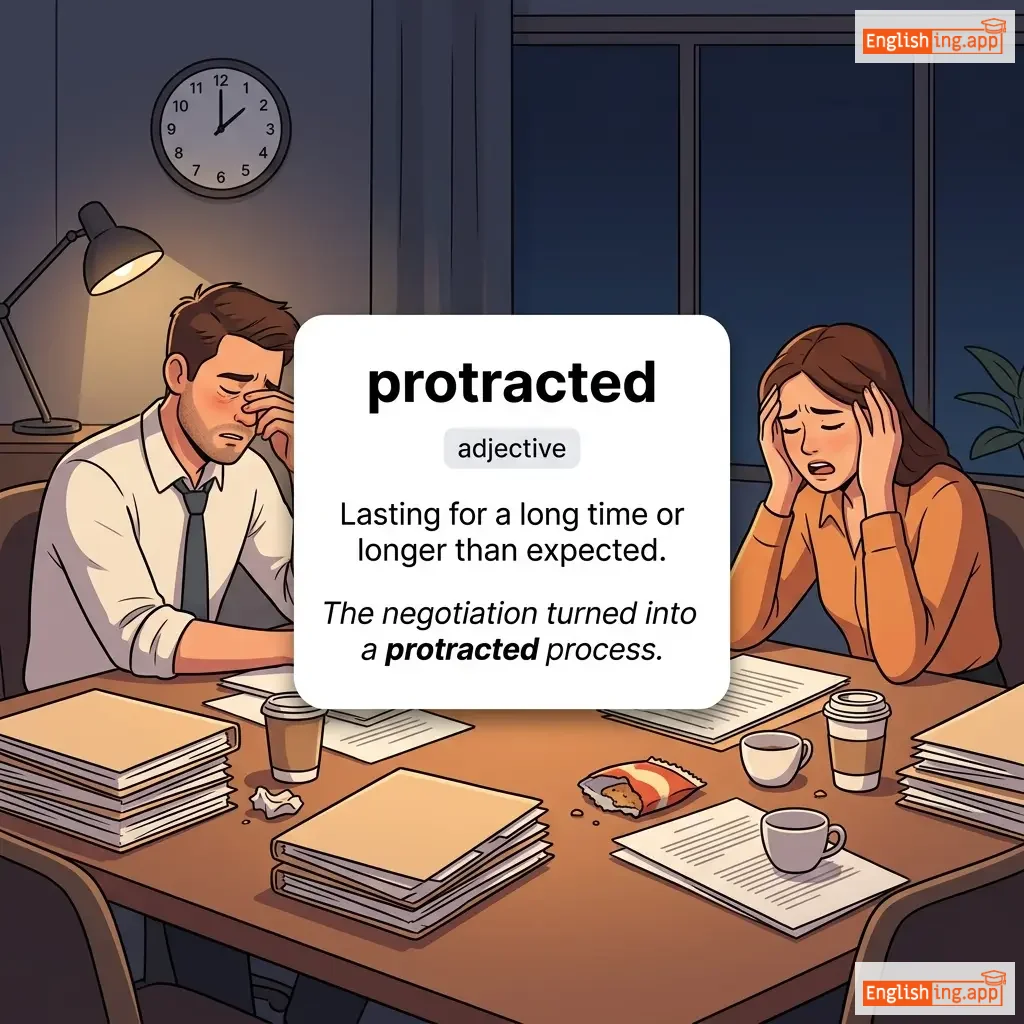
protracted definition card — visual illustration of the meaning
adjective C1
/prəˈtræktɪd/
prolongado (prolongado)

Lasting for a long time or longer than expected.

"The negotiation turned into a protracted process."

"La negociación se convirtió en un proceso prolongado." (La negociacion se convirtio en un proceso prolongado.)
verb C1
/proʊˈtruːd/
sobresalir (sobresalir)

To stick out or extend beyond a surface.

"A nail was protruding from the wooden board."

"Un clavo sobresalía desde la tabla de madera." (Un clavo sobresalia desde la tabla de madera.)
noun C1
/prəˈtruːʒən/
protuberancia (protuberancia)

Something that sticks out or projects from a surface.

"The protrusion on the wall made it difficult to move the furniture."

"La protuberancia en la pared hizo que mover los muebles fuera difícil." (La protuberancia en la pared hizo que mover los muebles fuera difícil.)
noun C1
/ˈprɒvənəns/
origen (origen)

The origin or source of something.

"The museum verified the provenance of the ancient manuscript."
"El museo verificó el origen del antiguo manuscrito." (El museo verificó el origen del antiguo manuscrito.)
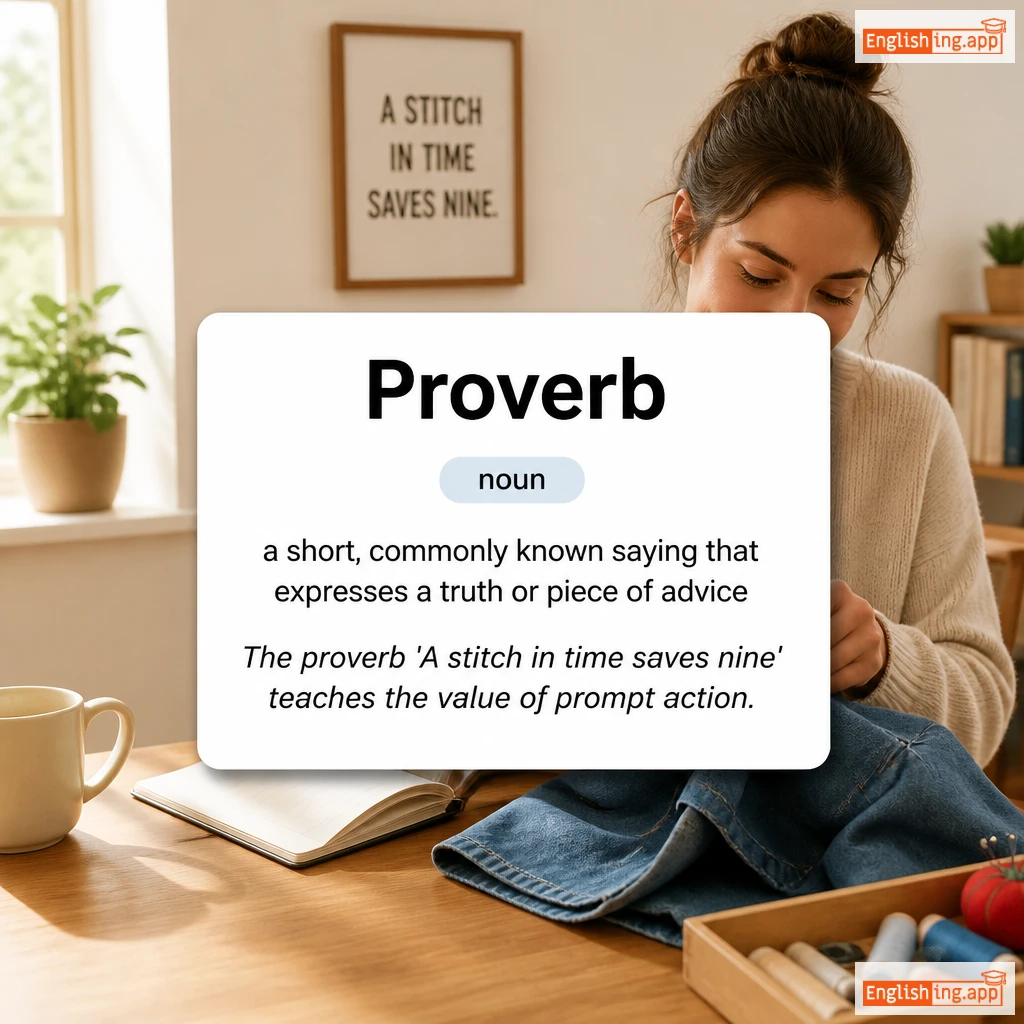
Proverb definition card — visual illustration of the meaning
noun C1
/ˈprɒvərb/
refrán (refran)

a short, commonly known saying that expresses a truth or piece of advice

"The proverb 'A stitch in time saves nine' teaches the value of prompt action."

"El refrán 'Más vale prevenir que lamentar' enseña la importancia de actuar a tiempo." (El refran 'Mas vale prevenir que lamentar' ensena la importancia de actuar a tiempo.)
noun C1
/ˈprɒvɪdəns/
providencia divina (providencia divina)

the protective care of God or nature as a spiritual power; foresight or prudence

"They believed their survival was due to divine providence."
"Creían que su supervivencia se debía a la providencia divina." (Creian que su supervivencia se debia a la providencia divina.)
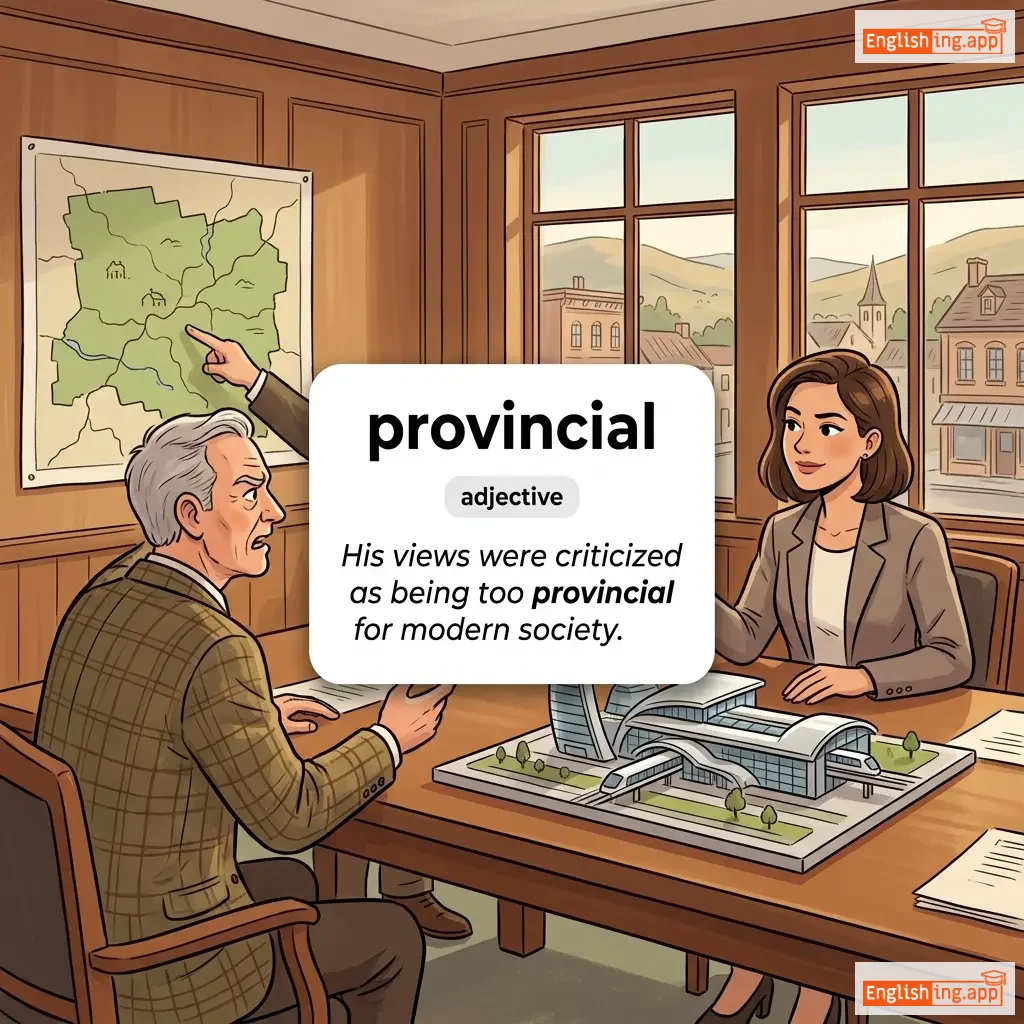
provincial definition card — visual illustration of the meaning
adjective C1
/prəˈvɪnʃəl/
provincial (provincial)

relating to a province or the regions outside the capital city; often suggesting narrow-mindedness

"His views were criticized as being too provincial for modern society."

"Sus opiniones fueron criticadas por ser demasiado provincianas para la sociedad moderna." (Sus opiniones fueron criticadas por ser demasiado provincianas para la sociedad moderna.)
noun C1
/prəˈvaɪzoʊ/
condición (condicion)

a condition or stipulation attached to an agreement

"He accepted the job offer with the proviso that he could work remotely twice a week."

"Aceptó la oferta de trabajo con la condición de que podría trabajar de forma remota dos veces a la semana." (Acepto la oferta de trabajo con la condicion de que podria trabajar de forma remota dos veces a la semana.)
noun C1
/ˌprɒvəˈkeɪʃən/
provocación (provocacion)

An action or statement that is intended to make someone angry or to cause a reaction.

"His rude comment was a clear provocation."

"Su comentario grosero fue una clara provocación." (Su comentario grosero fue una clara provocacion.)
adjective C1
/prəˈvɒkətɪv/
provocativo (provocativo)

Intended to make people angry, excited, or interested.

"She wore a provocative dress to the party."

"Ella llevaba un vestido provocativo a la fiesta." (Ella llevaba un vestido provocativo a la fiesta.)
adjective C1
/prəˈvoʊkɪŋ/
provocador (provokador)

causing anger or strong reaction; irritating; stimulating

"His provoking comments made everyone angry."
"Sus comentarios provocadores hicieron que todos se enojaran." (Sus comentarios provocadores hicieron que todos se enojaran.)
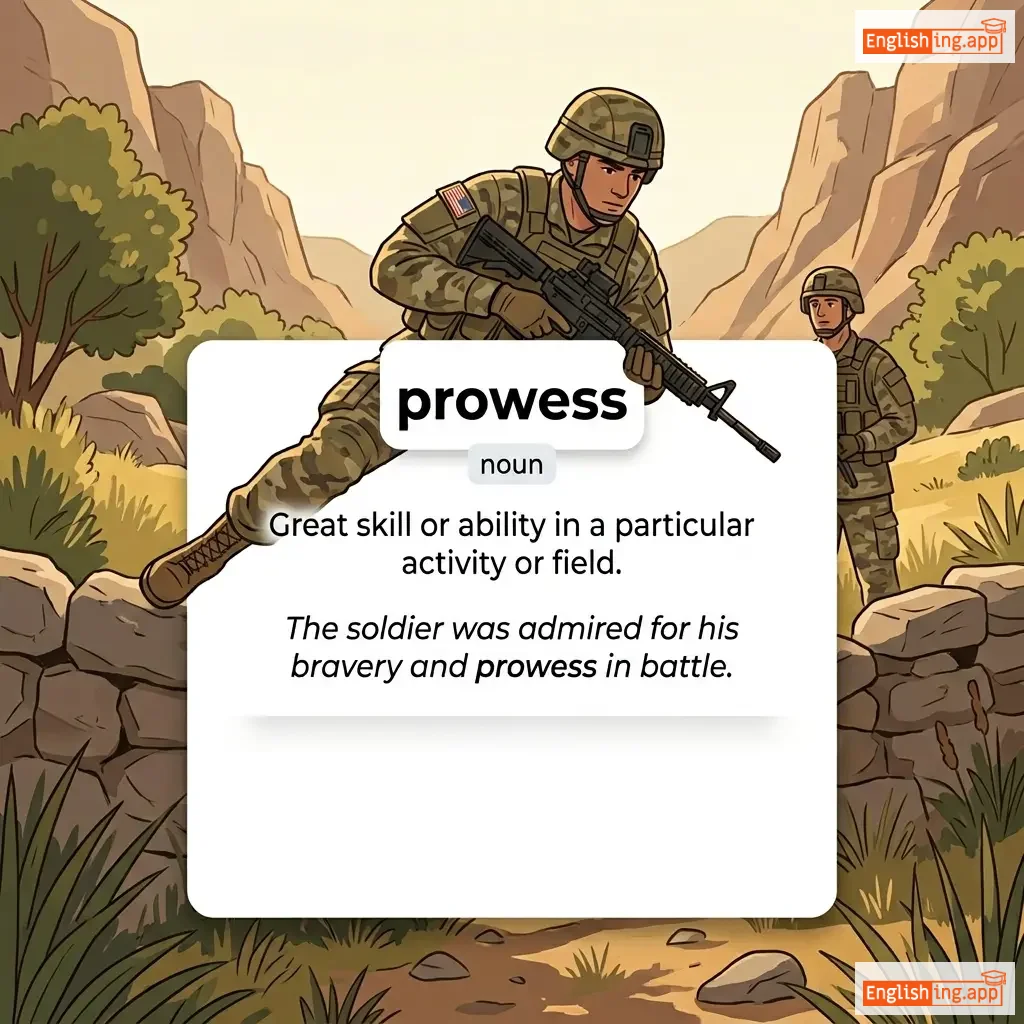
prowess definition card — visual illustration of the meaning
noun C1
/ˈpraʊəs/
destreza (destreza)

Great skill or ability in a particular activity or field.

"The soldier was admired for his bravery and prowess in battle."

"El soldado fue admirado por su valentía y destreza en batalla." (El soldado fue admirado por su valentía y destreza en batalla.)
verb C1
/praʊl/
merodear (para cazar o buscar) (merodear (para cazar o buscar))

To move around quietly and secretly, especially while hunting or searching.

"The cat prowled around the garden at night."

"La gata merodeó alrededor del jardín por la noche." (La gata merodeó alrededor del jardín por la noche.)
🧑‍💼

proxy (próksi)

noun C1
/ˈprɒksi/
representante (representante)

A person authorized to act on behalf of another; a substitute.

"She voted by proxy at the meeting."

"Ella votó por proxy en la reunión." (Ella votó por proxy en la reunión.)
noun C1
/ˈpruːdəns/
prudencia (prudencia)

The quality of being cautious, wise, and exercising good judgment.

"She invested her money with great prudence."

"Ella invirtió su dinero con gran prudencia." (Ella invirtió su dinero con gran prudencia.)
adjective C1
/ˈpruːdənt/
prudente (prudente)

acting with or showing care and thought for the future

"It is always prudent to save some money for emergencies."

"Siempre es prudente ahorrar algo de dinero para emergencias." (siempre es prudente ahorrar algo de dinero para emergencias.)
verb C1
/praɪ/
husmear / entrometerse (husmear / entrometerse)

to look closely into something; to try to find out private information

"She tried to pry into her neighbor’s private life."

"Ella intentó husmear en la vida privada de su vecino." (Ella intento husmear en la vida privada de su vecino.)
noun C1
/ˈsuːdənɪm/
seudónimo (seudonimo)

a fictitious name used by an author instead of their real name

"Mark Twain was the pseudonym of Samuel Clemens."

"Mark Twain era el seudónimo de Samuel Clemens." (Mark Twain era el seudonimo de Samuel Clemens.)
noun C1
/ˈsaɪkiː/
alma / mente (alma / mente)

the human soul, mind, or spirit

"The novel explores the depths of the human psyche."

"La novela explora las profundidades de la psique humana." (La novela explora las profundidades de la psique humana.)
adjective C1
/ˌsaɪkəˈpæθɪk/
psicópata (psicopata)

Relating to or affected by psychopathy; showing chronic mental disorder with abnormal or violent behavior.

"The film portrayed a psychopathic killer with no sense of empathy."

"La película retrataba a un asesino psicópata sin ningún sentido de empatía." (La película retrataba a un asesino psicópata sin ningún sentido de empatía.)
noun C1
/saɪˈkoʊsɪs/
psicosis (psicosis)

A severe mental disorder in which thought and emotions are impaired, leading to a loss of contact with reality.

"The patient was diagnosed with psychosis after experiencing hallucinations."

"El paciente fue diagnosticado con psicosis después de experimentar alucinaciones." (El paciente fue diagnosticado con psicosis después de experimentar alucinaciones.)
adjective C1
/ˌsaɪkoʊsəˈmætɪk/
psicosomático (psicosomatico)

Relating to a physical illness or condition caused or aggravated by mental factors such as stress.

"Her stomach pain was diagnosed as psychosomatic, linked to stress."

"El dolor de su estómago fue diagnosticado como psicosomático, vinculado al estrés." (El dolor de su estomago fue diagnosticado como psicosomatico, vinculado al estres.)
noun C1
/ˌsaɪkoʊˈθɛrəpi/
psicoterapia (psicoterapia)

The treatment of mental disorder by psychological rather than medical means.

"She attended weekly psychotherapy sessions to cope with her anxiety."

"Ella asistió a sesiones semanales de psicoterapia para lidiar con su ansiedad." (Ella asistió a sesiones semanales de psicoterapia para lidiar con su ansiedad.)
noun C1
/ˌtɛrəˈdæktɪl/
reptil volador extinto (reptil volador extinto)

An extinct flying reptile of the Jurassic period, with a long slender head and wings formed by a membrane stretching along the body.

"The museum displayed a fossil of a giant pterodactyl."

"El museo exhibió un fósil de un pterodáctilo gigante." (El museo exhibió un fósil de un pterodáctilo gigante.)
adjective C1
/ˈpʌlməˌneri/
pulmonar (pulmonar)

relating to the lungs

"The patient suffered from a serious pulmonary infection."

"El paciente sufrió una grave infección pulmonar." (El paciente sufrio una grave infeccion pulmonar.)
noun C1
/ˈpʊlpɪt/
púlpito (pulpito)

a raised platform in a church from which the preacher delivers a sermon

"The pastor stood at the pulpit to address the congregation."

"El pastor se paró en el púlpito para dirigirse a la congregación." (El pastor se paró en el pulpito para dirigirse a la congregación.)
verb C1
/ˈpʌlseɪt/
palpitar (palpitar)

to expand and contract rhythmically; to throb or beat

"The neon lights pulsated with a steady rhythm."

"Las luces de neón pulsaban con un ritmo constante." (Las luces de neón pulsaban con un ritmo constante.)
verb C1
/ˈpʌməl/
aporrear (aporrar)

To strike repeatedly with the fists; to beat or hit forcefully.

"The boxer pummeled his opponent in the final round."

"El boxeador aporreó a su oponente en la ronda final." (El boxeador aporreo a su oponente en la ronda final.)
noun C1
/pʌn/
juego de palabras (juego de palabras)

A humorous use of words that suggests different meanings or words that sound alike.

"He made a clever pun about the bakery's bread rising."

"Hizo un juego de palabras ingenioso sobre el pan que sube en la panadería." (Hizo un juego de palabras ingenioso sobre el pan que sube en la panadería.)