词汇表

英语词汇词典 | 单词含义、定义和示例

noun C1
/ˈmɒŋ.ɡuːs/
マングース (Mangūsu)

a small carnivorous mammal known for its ability to kill venomous snakes

"The mongoose quickly attacked the cobra to protect its young."

"マングースは子供たちを守るためにコブラを素早く攻撃しました。" (Mangūsu wa kodomotachi o mamoru tame ni kobura o subayaku kōgeki shimashita.)
noun/adjective C1
/ˈmɒnəkrəʊm/
モノクローム (monokurōmu)

A photograph, painting, or screen image in black and white or varying tones of one color.

"The old film was shot entirely in monochrome."
"その古い映画は完全にモノクロームで撮影されました。" (Sono furui eiga wa kanzen ni monokurōmu de satsuei saremashita.)
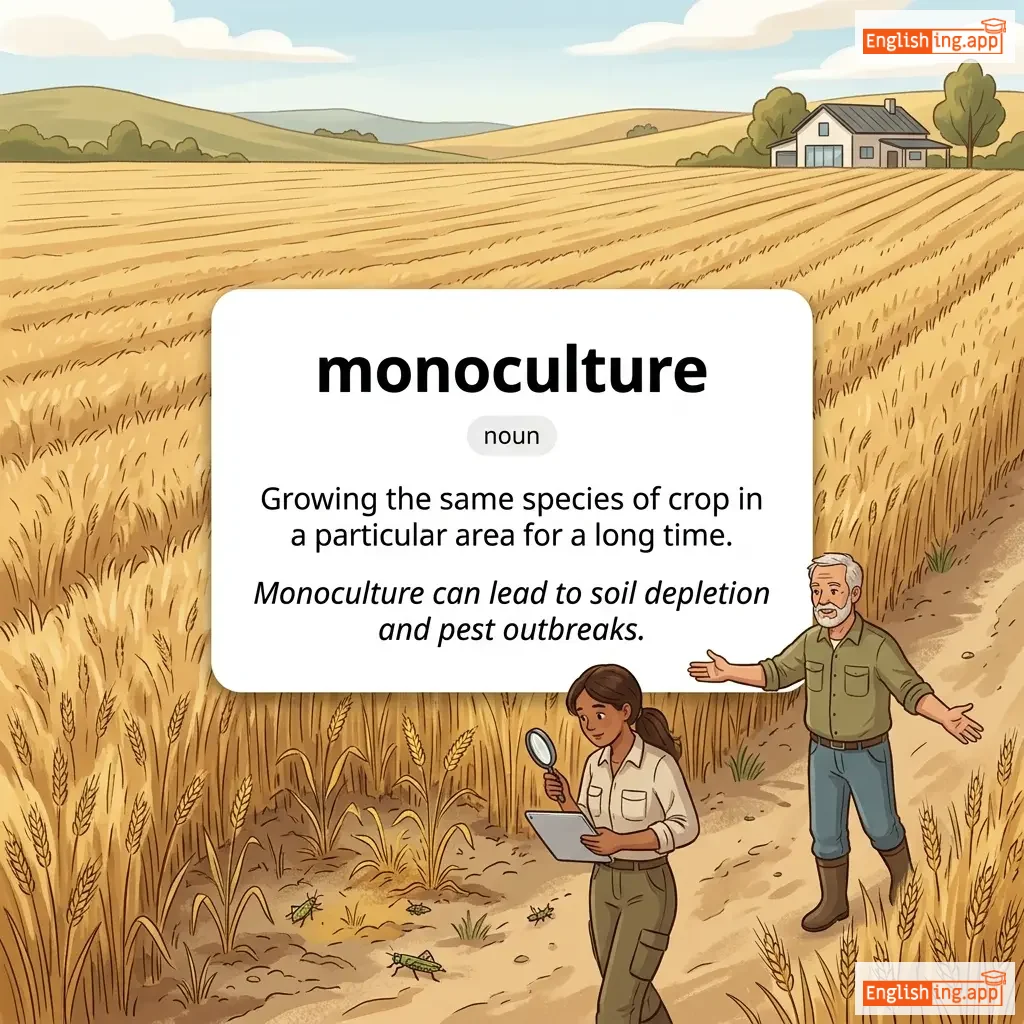
monoculture definition card — visual illustration of the meaning
noun C1
ˈmɒn.əˌkʌl.tʃər
モノカルチャー (monokaruchaa)

Growing the same species of crop in a particular area for a long time.

"Monoculture can lead to soil depletion and pest outbreaks."

"モノカルチャーは土壌の肥沃度の低下と害虫の発生を引き起こす可能性があります。" (Monokaruchaa wa dojou no hiyokudo no teika to gaichuu no hassei o hikiokosu kanousei ga arimasu.)
noun C1
/məˈnɒɡəmi/
一夫一妻制 (ippuisshisei)

The practice of being married to or in a relationship with only one person at a time.

"Many cultures encourage monogamy as the ideal form of marriage."

"多くの文化は一夫一妻制を理想的な結婚形態として奨励しています。" (Ōku no bunka wa ippuisshisei o risōteki na kekkon keitai toshite shōrei shiteimasu.)
noun C1
/ˈmɒnəlɪθ/
モノリス (monorisu)

A large single upright block of stone, or a large, powerful, indivisible organization or system.

"The ancient monolith stood in the desert for centuries."

"古代のモノリスは何世紀にもわたって砂漠に立っていました。" (Kodai no monorisu wa nan seiki ni mo watatte sabaku ni tatte imashita.)
adjective C1
/ˌmɒnəˈlɪθɪk/
モノリシック (monorishikku)

Massive, uniform, and indivisible; resembling a large single stone or structure.

"The company maintained a monolithic structure resistant to change."

"その会社は変化に強いモノリシックな構造を維持しました。" (Sono kaisha wa henka ni tsuyoi monorishikku na kōzō o iji shimashita.)
noun C1
/ˈmɒnəˌlɒɡ/
モノローグ (monorōgu)

A long speech by one person, often in a play or performance.

"The actor delivered a powerful monologue on stage."
"俳優はステージで力強いモノローグを披露しました。" (Haiyū wa sutēji de chikara-zuyoi monorōgu o hirō shimashita.)
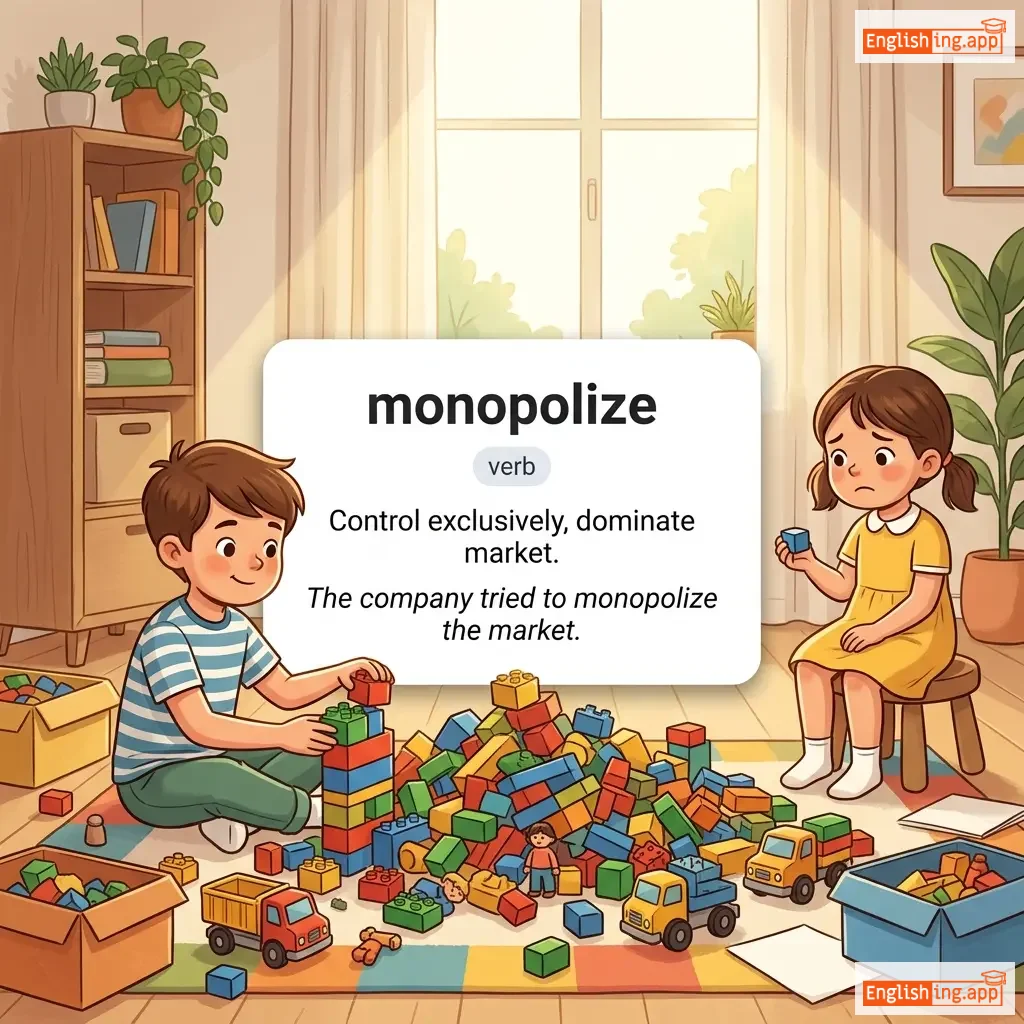
monopolize definition card — visual illustration of the meaning
verb C1
məˈnɒp.ə.laɪz
独占する (dokusen suru)

Control exclusively, dominate market.

"The company tried to monopolize the market."

"その会社は市場を独占しようとした。" (Sono kaisha wa shijou wo dokusen shiyou to shita.)
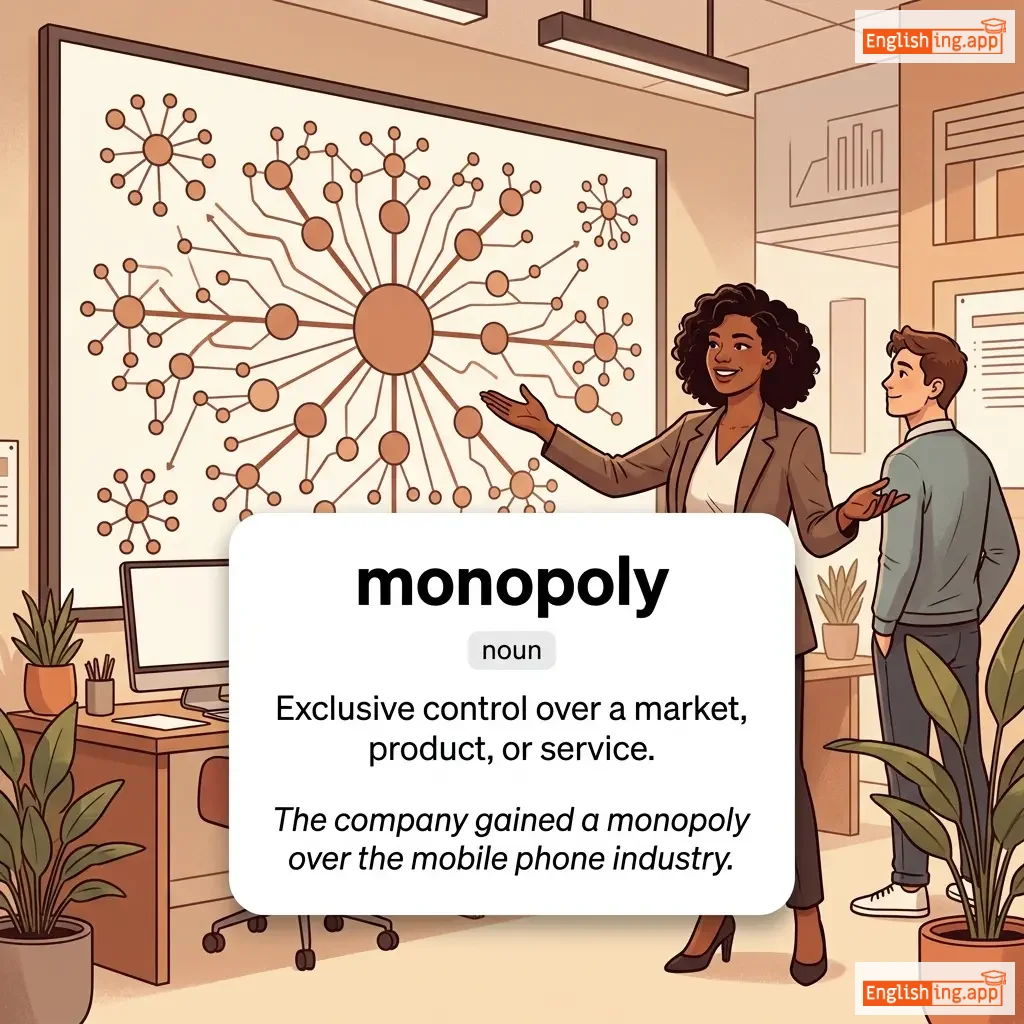
monopoly definition card — visual illustration of the meaning
noun C1
/məˈnɒpəli/

Exclusive control over a market, product, or service.

"The company gained a monopoly over the mobile phone industry."

noun C1
/ˈmɒnəˌθiːɪzəm/
一神教 (isshinkyou)

The belief in the existence of only one God.

"Islam and Christianity are religions based on monotheism."

"イスラム教とキリスト教は一神教に基づいている。" (Isuramu kyou to Kirisuto kyou wa isshinkyou ni motozuite iru.)
noun C1
/ˈmɒn.ə.təʊn/
単調な声 (tanchōna koe)

A continuous sound, especially of a person's voice, that does not rise and fall in pitch.

"The teacher's monotone made the lecture hard to follow."

"教師のモノトーンが講義を聞き取るのを難しくした。" (Kyōshi no monotōn ga kōgi o kikitoru no o muzukashiku shita.)
adjective C1
/məˈnɒt.ən.əs/
単調 (tanchou)

Dull, tedious, and repetitious; lacking in variety and interest.

"The monotonous routine of office work tired him out."
"オフィスの単調なルーチンは彼を疲れさせた。" (Ofisu no tanchou na ruuchin wa kare wo tsukaresaseta.)
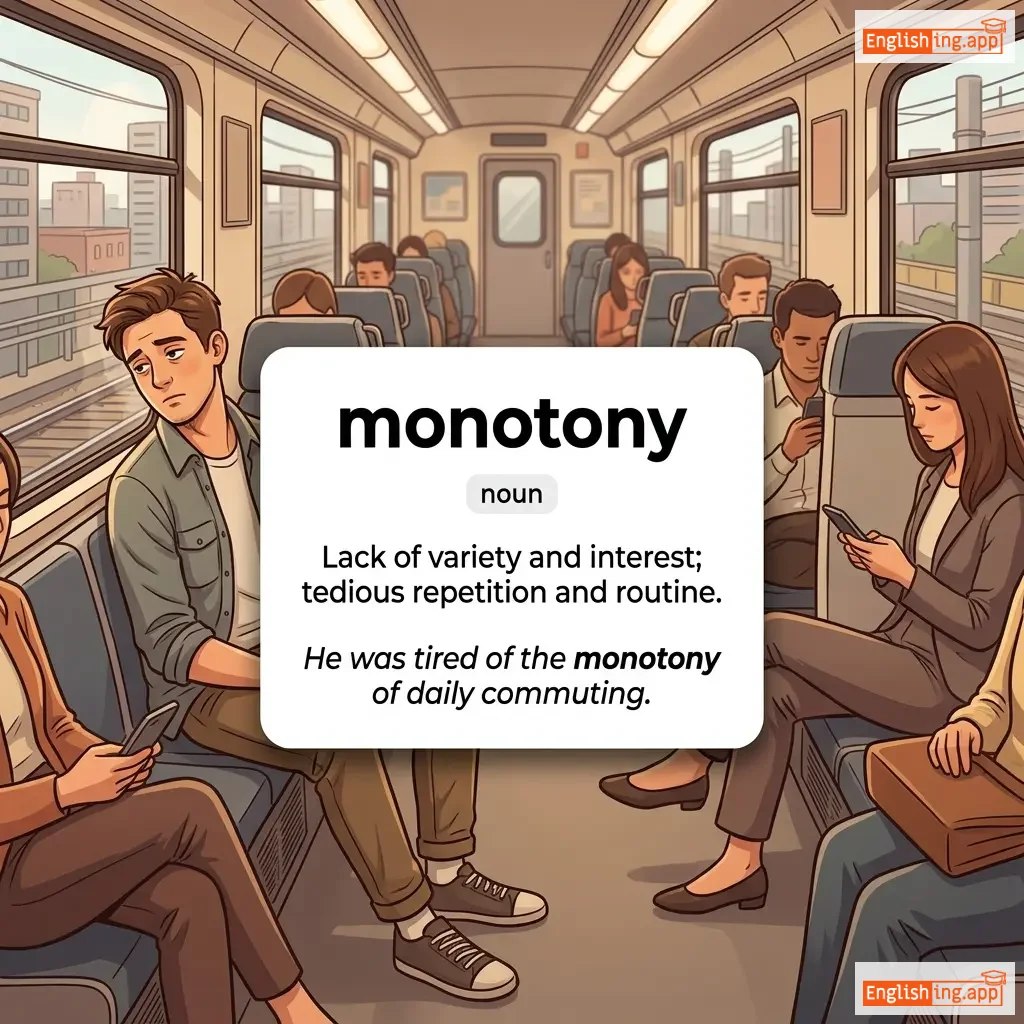
monotony definition card — visual illustration of the meaning
noun C1
/məˈnɒt.ə.ni/
単調 (tanchou)

Lack of variety and interest; tedious repetition and routine.

"He was tired of the monotony of daily commuting."

"彼は毎日の通勤の単調さに疲れていた。" (Kare wa mainichi no tsuukin no tanchousa ni tsukarete ita.)
adjective C1
/ˈmɒnstrəs/
非常に大きい; 衝撃的な悪または間違い; 異常または不自然 (monsutā no yōna)

extremely large; shockingly evil or wrong; abnormal or unnatural

"The monstrous crime shocked the entire community."

"そのモンスターのような犯罪はコミュニティ全体を驚かせました。" (Sono monsutā no yōna hanzai wa komyuniti zentai o odorokasemashita.)
noun C1
/mɒnˈtɑːʒ/
モンタージュ (montāju)

A sequence of film editing or a composite image made by combining several separate pictures.

"The film opened with a montage of city life."
"映画は都市生活のモンタージュで始まりました。" (Eiga wa toshi seikatsu no montāju de hajimari mashita.)
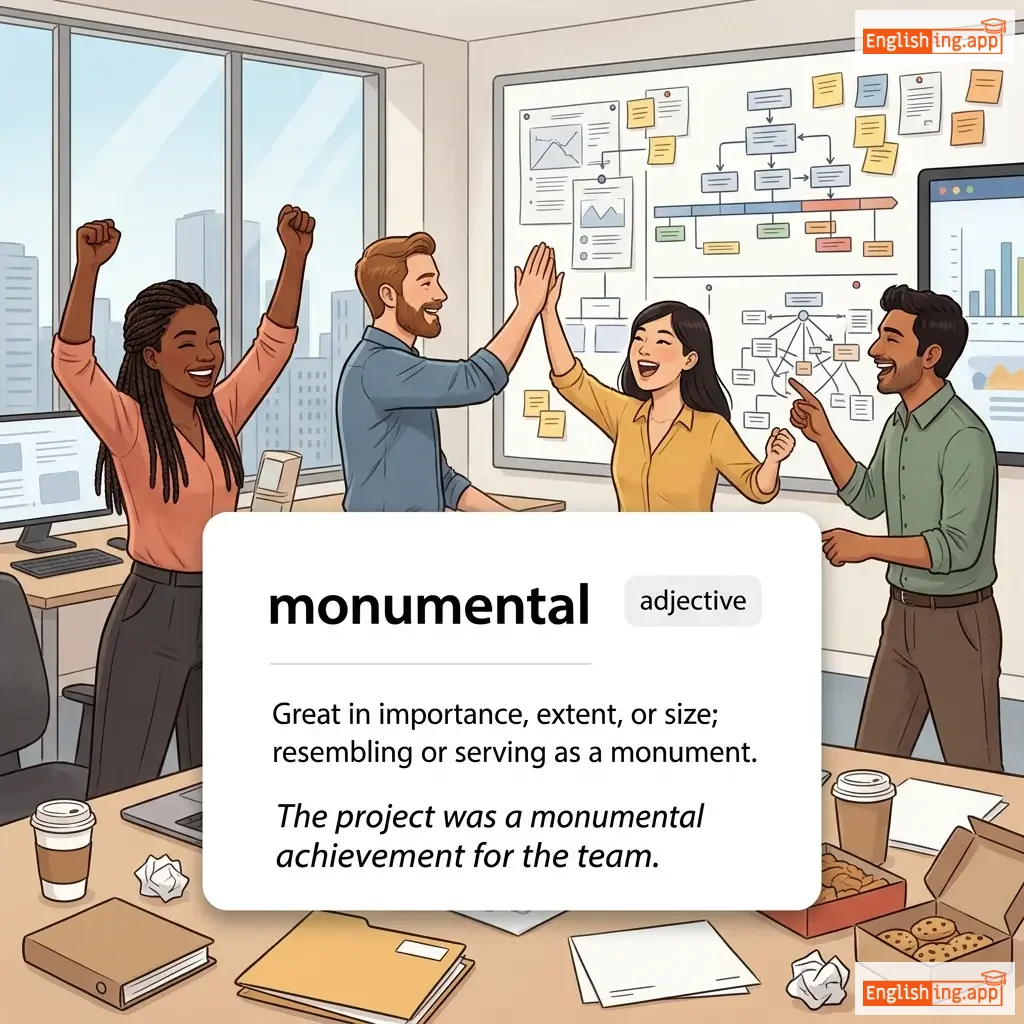
monumental definition card — visual illustration of the meaning
adjective C1
/ˌmɒn.jʊˈmen.təl/
モニュメンタル (monyumentaru)

Great in importance, extent, or size; resembling or serving as a monument.

"The project was a monumental achievement for the team."

"そのプロジェクトはチームにとって記念碑的な成果でした。" (Sono purojekuto wa chīmu ni totte kinenhi-teki na seika deshita.)
noun C1
/ˈmuːdi.nəs/
気まぐれ (kimagure)

The state of being frequently subject to changes in mood, especially irritability or sadness.

"Her moodiness made it difficult to predict how she would react."

"彼女の気まぐれは、彼女がどのように反応するかを予測するのを難しくしました。" (Kanojo no kimagure wa, kanojo ga dono you ni hannou suru ka o yosoku suru no o muzukashiku shimashita.)
verb, noun C1
/mʊər/
係留する / 荒れ地 (keiryuu suru / arechi)

As a verb: to tie a ship so that it stays in place. As a noun: open, uncultivated land.

"The sailors moored the ship at the dock."
"水夫たちは船をドックに停泊させました。" (Suifu-tachi wa fune o dokku ni teihaku sasemashita.)
💭

moot

adjective, verb C1
/muːt/

Adjective: subject to debate or irrelevant. Verb: to suggest an idea for discussion.

"The issue of funding became a moot point after the project was canceled."

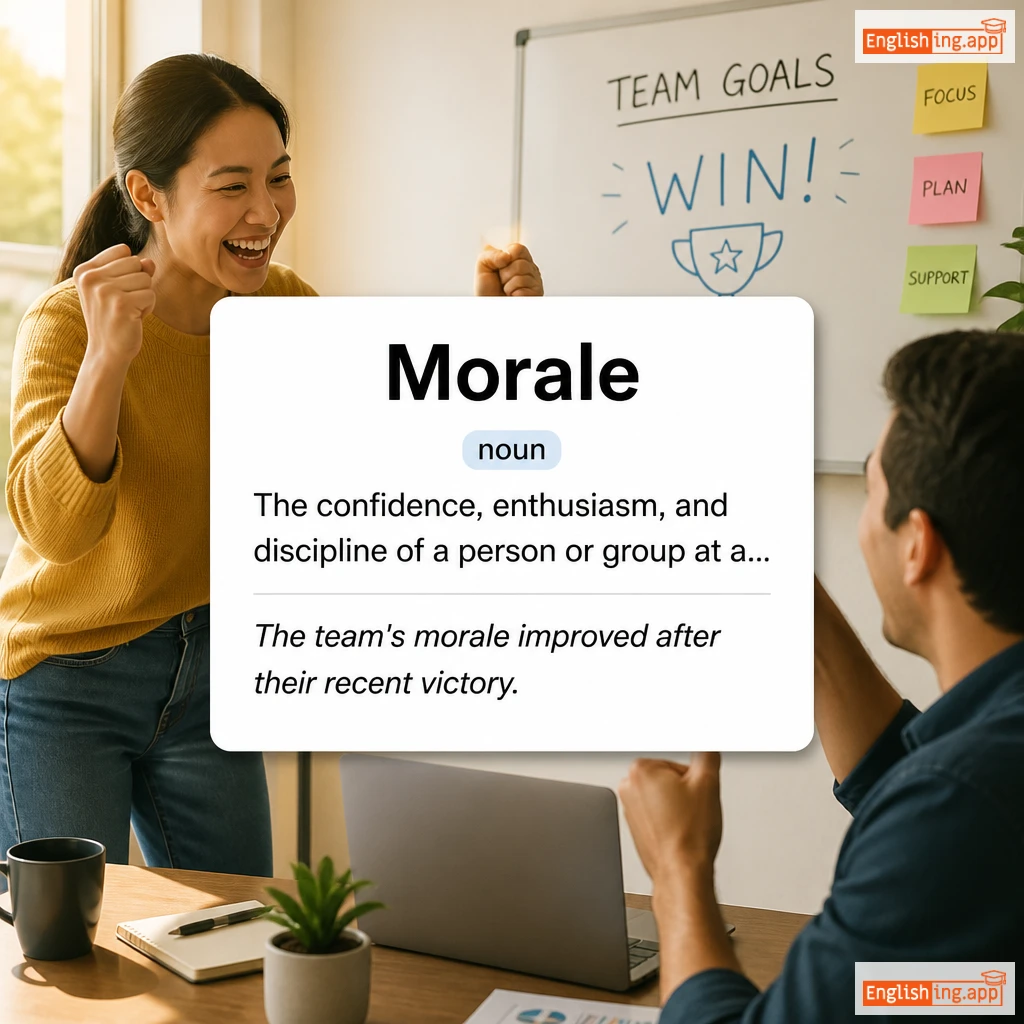
Morale definition card — visual illustration of the meaning
noun C1
/məˈræl/
士気 (shiki)

The confidence, enthusiasm, and discipline of a person or group at a particular time.

"The team's morale improved after their recent victory."

"チームの士気は最近の勝利後に向上しました。" (Chīmu no shiki wa saikin no shōri go ni kōjō shimashita.)
noun C1
/ˌmɔːrəˈtɔːriəm/
モラトリアム (moratorium)

A temporary suspension or delay of an activity, law, or obligation.

"The government announced a moratorium on new mining licenses."

"政府は新しい鉱鉱許可に対してモラトリアムを発表しました。" (Seifu wa atarashī kōkō kyoka ni taishite moratorium o happyō shimashita.)
adjective C1
/ˈmɔːrbɪd/
死や病気など、不快または不安を引き起こすテーマへの異常な関心 (shi ya byouki nado, fukai matawa fuan wo hikiokosu tema e no ijou na kanshin)

Having an abnormal interest in disturbing or unpleasant subjects such as death or disease.

"She had a morbid fascination with crime stories."
"彼女は犯罪の話に対してモービッドな魅力を持っていた。" (Kanojo wa hanzai no hanashi ni taishite mobiddo na miryoku wo motte ita.)
⚰️

morgue

noun C1
/mɔːrɡ/

a place where dead bodies are kept, especially to be identified or claimed

"The police took the body to the morgue for identification."

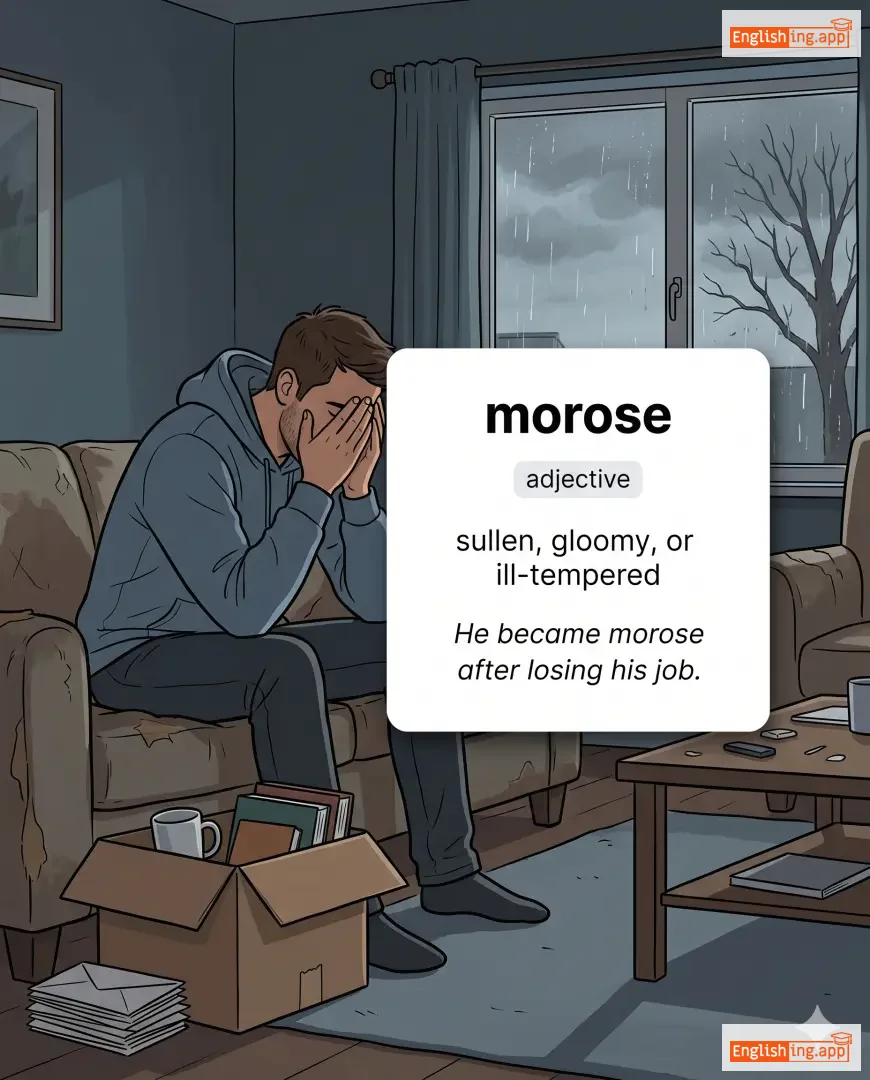
morose definition card — visual illustration of the meaning
adjective C1
/məˈroʊs/
陰鬱 (in'utsu)

sullen, gloomy, or ill-tempered

"He became morose after losing his job."

"彼は仕事を失った後、落ち込んでしまった。" (Kare wa shigoto o ushinatta ato, ochikonde shimatta.)
verb C1
/mɔːrf/
変形する (henkei suru)

to change smoothly from one form, shape, or character into another

"The caterpillar will morph into a butterfly."

"イモムシは蝶に変わるでしょう。" (Imomushi wa chō ni kawaru deshō.)
noun C1
/mɔːrˈfɑːlədʒi/
形態学 (keitai-gaku)

the study of the form and structure of things, especially in language and biology

"Morphology studies the structure of words and how they are formed."

"形態学は、単語の構造とその形成方法を研究します。" (Keitai-gaku wa, tango no kouzou to sono keisei houhou o kenkyuu shimasu.)
adjective C1
/ˈmɔːtəl/
死すべき運命; 限られた寿命の; 人間 (shisubeki unmei; kagirareta jumyou no; ningen)

subject to death; having a limited lifespan; human

"All human beings are mortal and will eventually die."
"すべての人間は死すべき運命にあり、最終的に死ぬ。" (Subete no ningen wa shisubeki unmei ni ari, saishūteki ni shinu.)
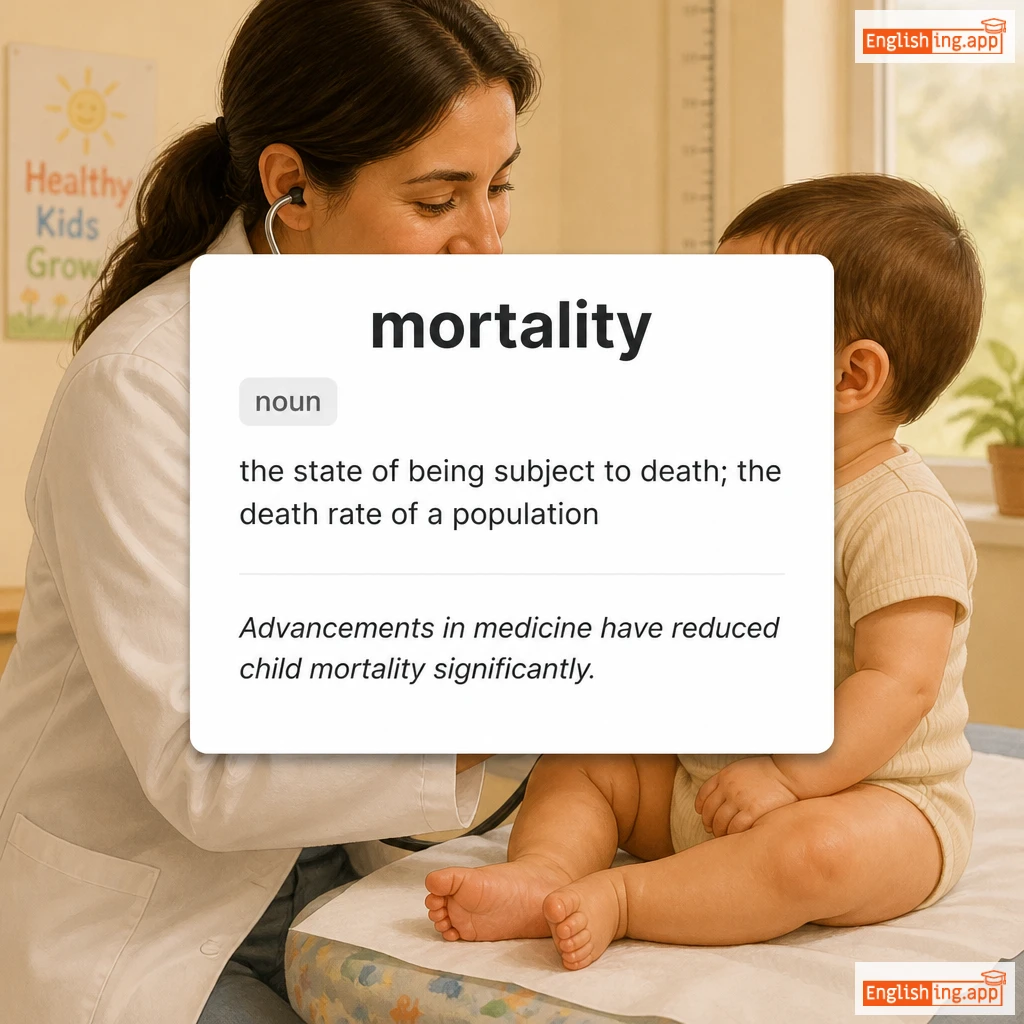
mortality definition card — visual illustration of the meaning
noun C1
/mɔːˈtæləti/
死亡率 (shibō-ritsu)

the state of being subject to death; the death rate of a population

"Advancements in medicine have reduced child mortality significantly."

"医療の進歩により、乳児死亡率が大幅に減少しました。" (Iryō no shinpo ni yori, nyūji shibō-ritsu ga ōhaba ni genshō shimashita.)
noun C1
/ˈmɔːrtər/
レンガをつなげるための混合物 / 小さな大砲 (renga o tsunageru tame no kongō-mono / chīsana taihō)

a mixture used in building to bond bricks or stones together; also, a small cannon for firing shells

"The workers applied mortar between the bricks."
"作業員たちはレンガの間にモルタルを塗りました。" (Sagyouin-tachi wa renga no aida ni mortar o nurimashita.)
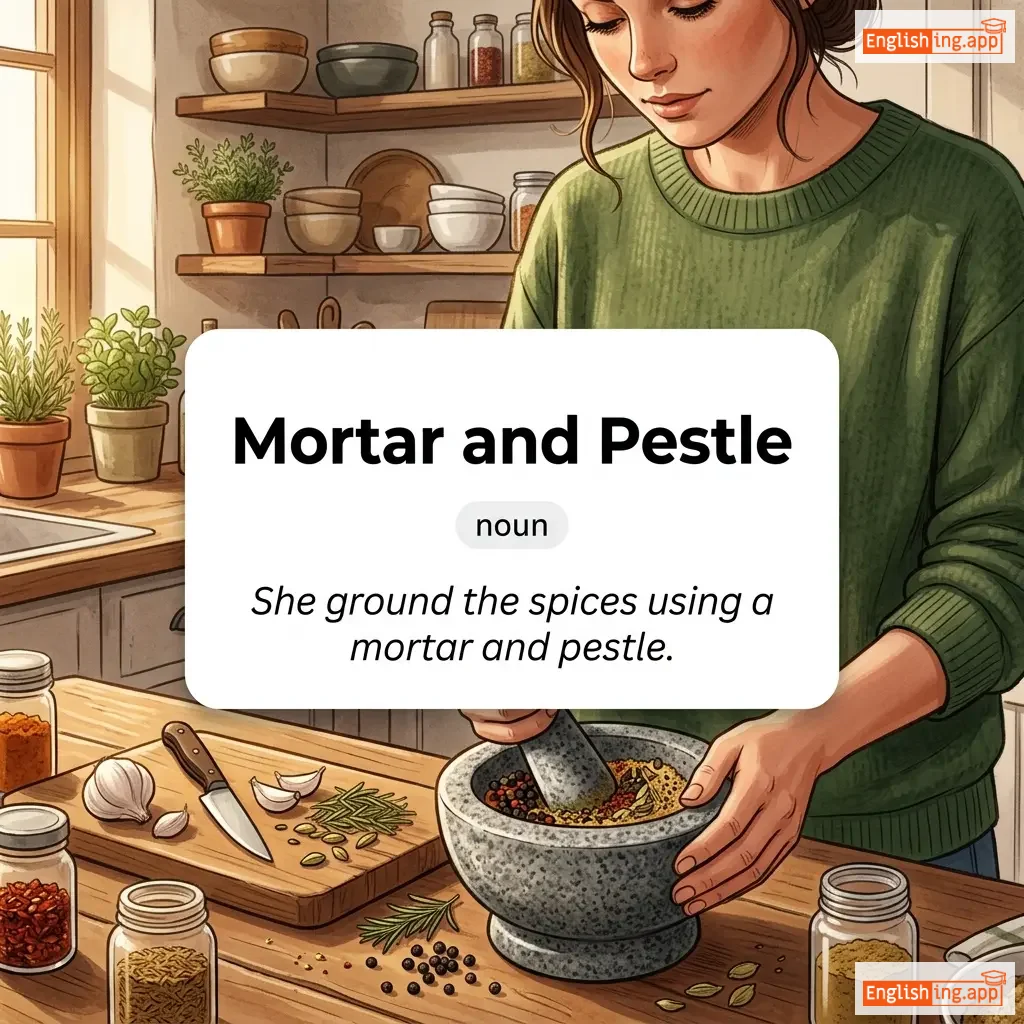
Mortar and Pestle definition card — visual illustration of the meaning
noun C1
/ˈmɔː.tər ænd ˈpes.əl/
モルタルと乳鉢 (mortar to nyūbachi)

a bowl and grinding tool used to crush and grind spices, herbs, and other substances

"She ground the spices using a mortar and pestle."

"彼女はモルタルと乳鉢を使って香辛料を挽いた。" (Kanojo wa mortar to nyūbachi o tsukatte kōshinryō o haita.)
Mortgage definition card — visual illustration of the meaning
noun C1
/ˈmɔːrɡɪdʒ/
住宅ローン (jutaku rōn)

a legal agreement where a person borrows money to buy property and pays it back over time

"They applied for a mortgage to buy their new house."

"彼らは新しい家を買うために住宅ローンの申し込みをしました。" (Karera wa atarashī ie o kau tame ni jutaku rōn no mōshikomi o shimashita.)
🖼️

mosaic

noun C1
/moʊˈzeɪɪk/

A picture or pattern produced by arranging together small pieces of stone, tile, or glass.

"The church ceiling was decorated with a beautiful mosaic."

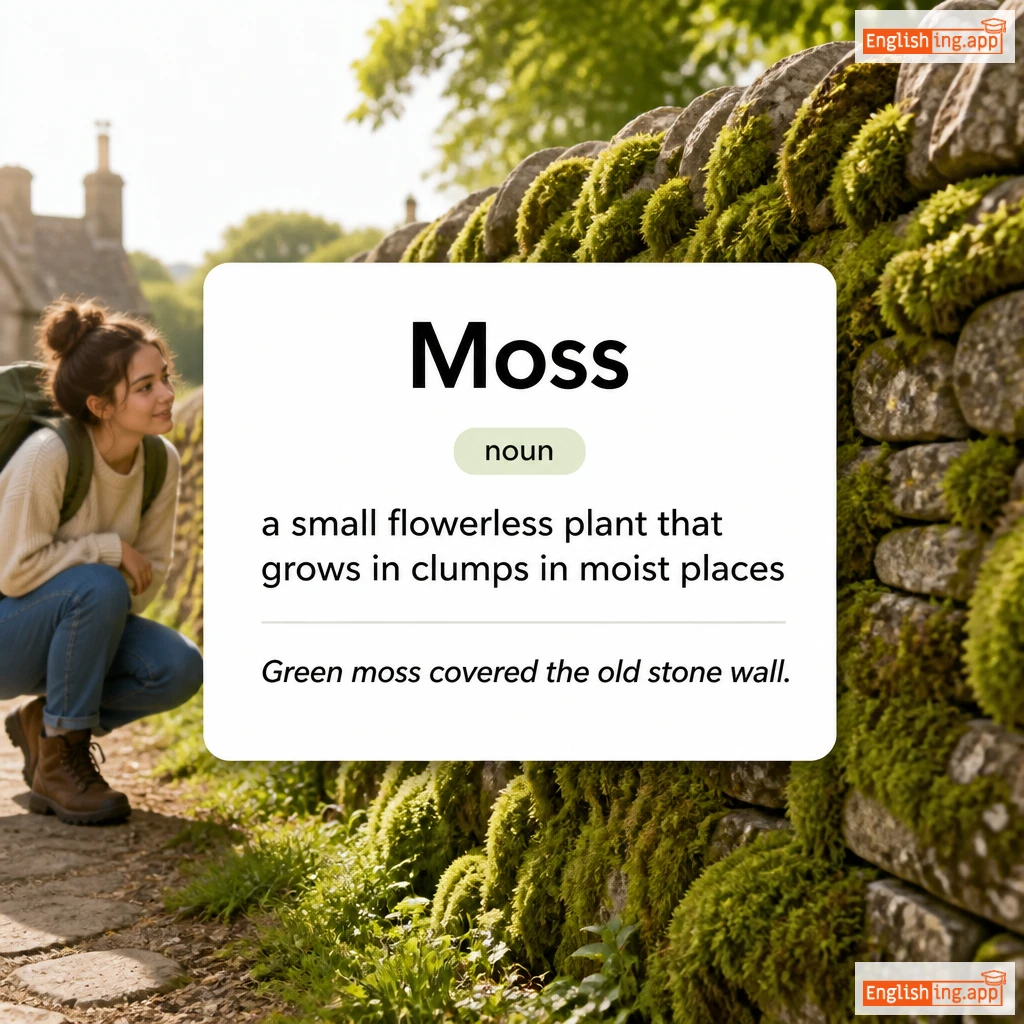
Moss definition card — visual illustration of the meaning
noun C1
/mɔːs/
(koke)

a small flowerless plant that grows in clumps in moist places

"Green moss covered the old stone wall."

"緑の苔が古い石の壁を覆っていました。" (midori no koke ga furui ishi no kabe o utte imashita.)
adjective C1
/ˈmɒsi/
苔むしている; 苔が生えている (kokemushiteiru; koke ga haeteiru)

covered with moss; having moss growing on it

"The old tree trunk was mossy and covered with green vegetation."
"古い木の幹は苔むしており、緑の植物で覆われていました。" (Furui ki no miki wa kokemushite ori, midori no shokubutsu de owareteimashita.)
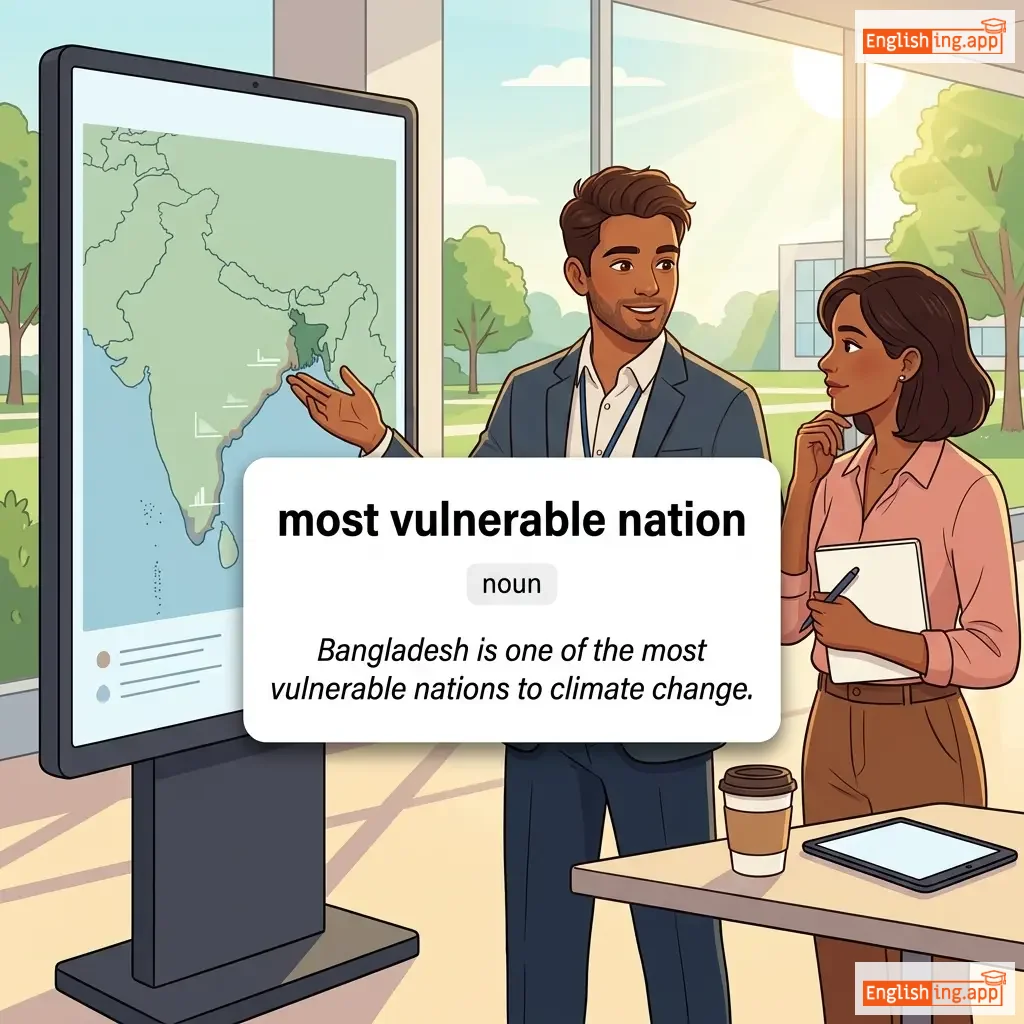
most vulnerable nation definition card — visual illustration of the meaning
noun C1
moʊst ˈvʌlnərəbəl ˈneɪʃən
最も脆弱な国 (mottomo zeijaku na kuni)

A country that is highly exposed to risks and lacks adequate protection or resilience.

"Bangladesh is one of the most vulnerable nations to climate change."

"バングラデシュは気候変動に最も脆弱な国の一つです。" (Banguradesh wa kikou hendou ni mottomo zeijaku na kuni no hitotsu desu.)
👩‍👧‍👦

Motherly (madarī)

adjective C1
/ˈmʌðərli/
母性的 (boseiteki)

having qualities characteristic of a mother; caring and protective

"She showed motherly care and affection towards all the children."

"彼女はすべての子供たちに母親のようなケアと愛情を示しました。" (Kanojo wa subete no kodomotachi ni hahaoya no youna kea to aijou wo shimeshimashita.)
🎭

motif

noun C1
/moʊˈtiːf/

A recurring theme, subject, or idea in a work of art or literature.

"The motif of love is central to the novel."

Motor lorry definition card — visual illustration of the meaning
noun C1
/ˈmoʊ.tər ˈlɔː.ri/
トラック (torakku)

a large motor vehicle used for transporting goods; truck

"The motor lorry delivered fresh vegetables to the market."
"そのモーター車は新鮮な野菜を市場に届けました。" (Sono mōtāsha wa shinsen na yasai o ichiba ni todokemashita.)
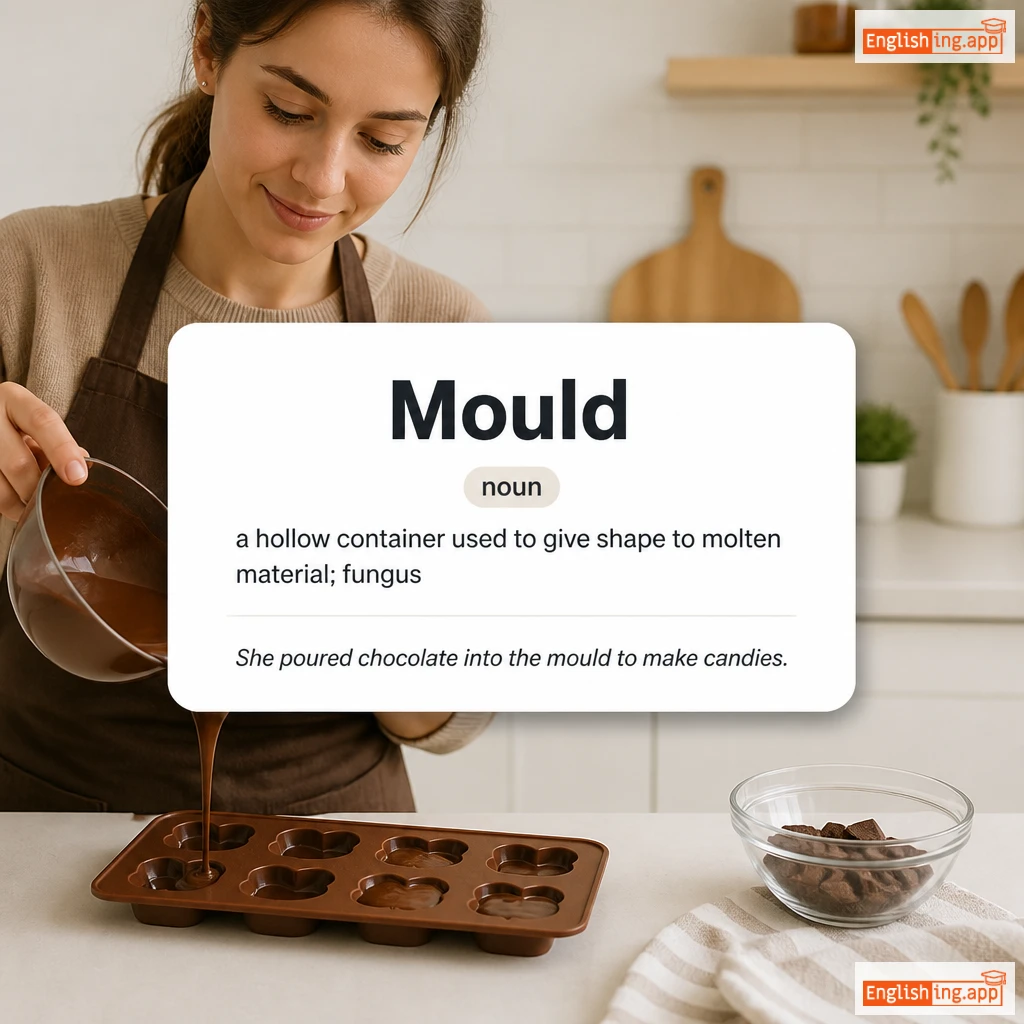
Mould definition card — visual illustration of the meaning
noun C1
/moʊld/
型(鋳型) (morudo)

a hollow container used to give shape to molten material; fungus

"She poured chocolate into the mould to make candies."
"彼女はキャンディーを作るために型にチョコレートを流し込んだ。" (Kanojo wa kyandii o tsukuru tame ni kata ni chokoreeto o nagashikonda.)
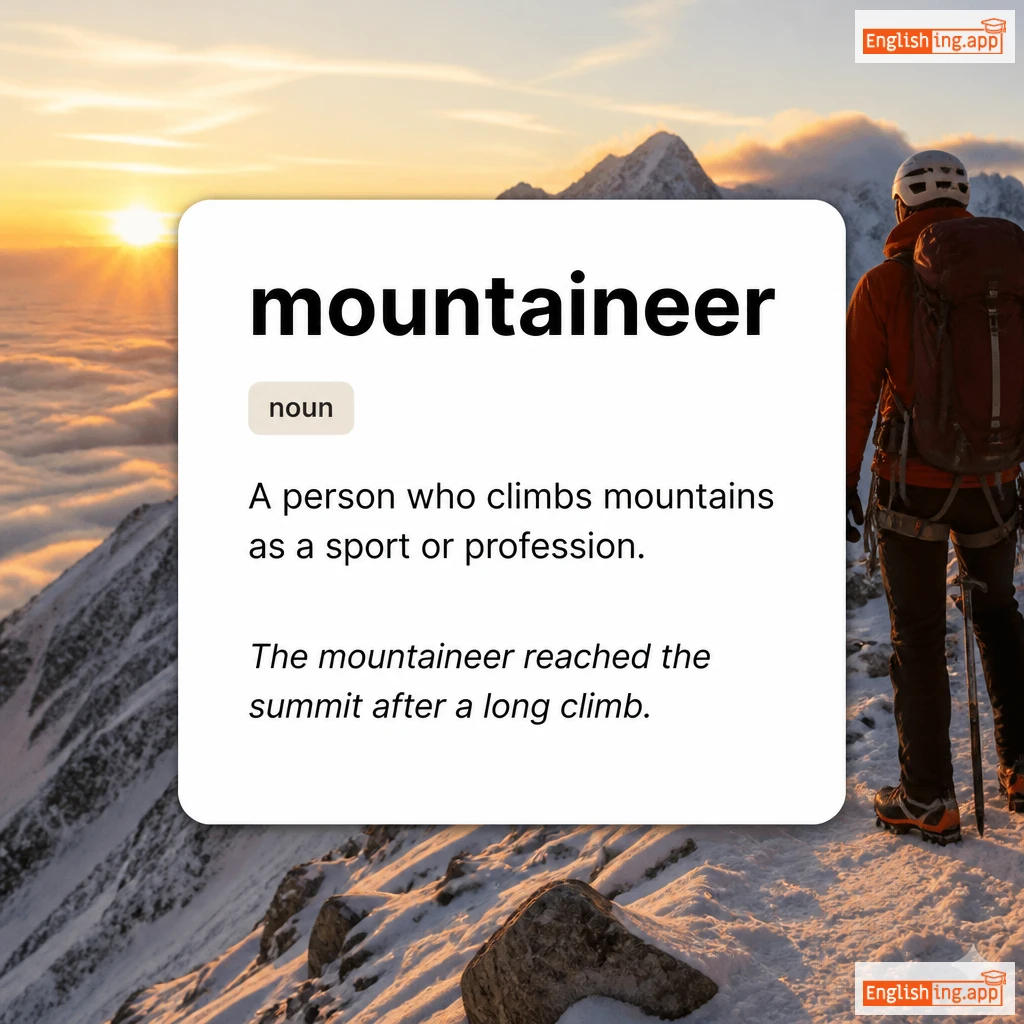
mountaineer definition card — visual illustration of the meaning
noun C1
/ˌmaʊntəˈnɪə/
登山者 (tozan-sha)

A person who climbs mountains as a sport or profession.

"The mountaineer reached the summit after a long climb."

"登山者は長い登山の後、頂上に到達しました。" (Tozan-sha wa nagai tozan no ato, chōjō ni tōtatsu shimashita.)
adjective C1
/ˈmaʊntənəs/
山岳地帯の (sangaku chitai no)

Having many mountains; very large or huge in size.

"They traveled through a mountainous region of Nepal."
"彼らはネパールの山岳地帯を通って旅行しました。" (Karera wa Nepāru no sangaku chitai o tōtte ryokō shimashita.)
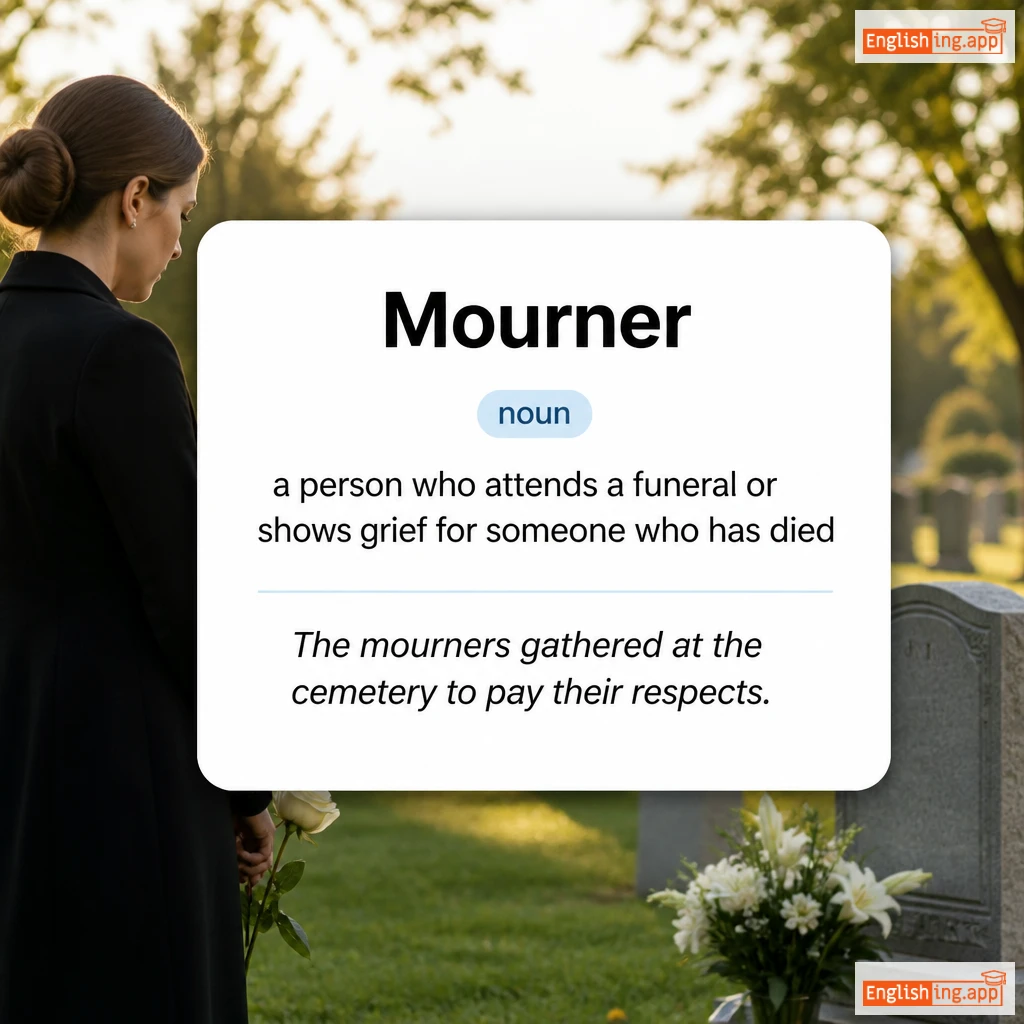
Mourner definition card — visual illustration of the meaning
noun C1
/ˈmɔːr.nər/
喪に服する人 (sō ni fukusuru hito)

a person who attends a funeral or shows grief for someone who has died

"The mourners gathered at the cemetery to pay their respects."

"喪に服する人々は墓地に集まり、敬意を表しました。" (sō ni fukusuru hitobito wa bochi ni atsumari, keii o hyōshimashita.)
adjective C1
/ˈmɔːrn.fəl/
悲しい (kanashī)

feeling, expressing, or causing sadness or grief

"The mournful song reminded her of lost loved ones."

"悲しい歌は彼女に失った愛する人々を思い出させました。" (Kanashī uta wa kanojo ni ushinatta aisuru hitobito o omoidasasemashita.)
noun C1
/ˈmaʊθ.fʊl/
一口 (hito-kuchi)

the amount of food or drink that fills the mouth, or a long and difficult word or phrase

"He took a big mouthful of water after the run."

"彼はランニングの後で大きな一口水を飲んだ。" (Kare wa ranningu no ato de ookina hitokuchi mizu wo nonda.)
adjective C1
/ˈmuː.və.bl̩/
可動の; ポータブル; 移動可能 (kado no; pōtaburu; idō kanō)

capable of being moved; not fixed in position

"The furniture is movable so we can rearrange the room easily."

"家具は可動なので、部屋を簡単に再配置できます。" (kagu wa kadō nanode, heya o kantan ni saihaichi dekimasu.)
verb C1
/ˈmʌd.əl/
混乱させる (konran saseru)

to mix things up in a confused way or to make a mess of something

"He muddled the papers and couldn’t find the report."

"彼は書類を混乱させ、報告書を見つけられなかった。" (Kare wa shorui o konran sase, hōkokusho o mitsukerarenakatta.)
Muffler definition card — visual illustration of the meaning
noun C1
/ˈmʌflər/
マフラー (mafurā)

a device on a vehicle's exhaust to reduce noise; also a scarf worn around the neck for warmth

"The car's muffler needs to be replaced."

"車のマフラーは交換する必要があります。" (Kuruma no mafurā wa kōkan suru hitsuyō ga arimasu.)
multifaceted definition card — visual illustration of the meaning
adjective C1
/ˌmʌltiˈfæsɪtɪd/
多面的 (tamen teki)

having many different aspects or features

"Her career is multifaceted, involving teaching, research, and writing."

"彼女のキャリアは多面的で、教育、研究、執筆が含まれています。" (Kanojo no kyaria wa tamen teki de, kyōiku, kenkyū, shippitsu ga fukumarete imasu.)
noun C1
/ˌmʌltɪˈplɪsɪti/
多様性 (tayousei)

A large number or variety of something.

"The project faced a multiplicity of challenges."
"プロジェクトは多様な課題に直面しました。" (Purojekuto wa tayou na kadai ni chokumen shimashita.)
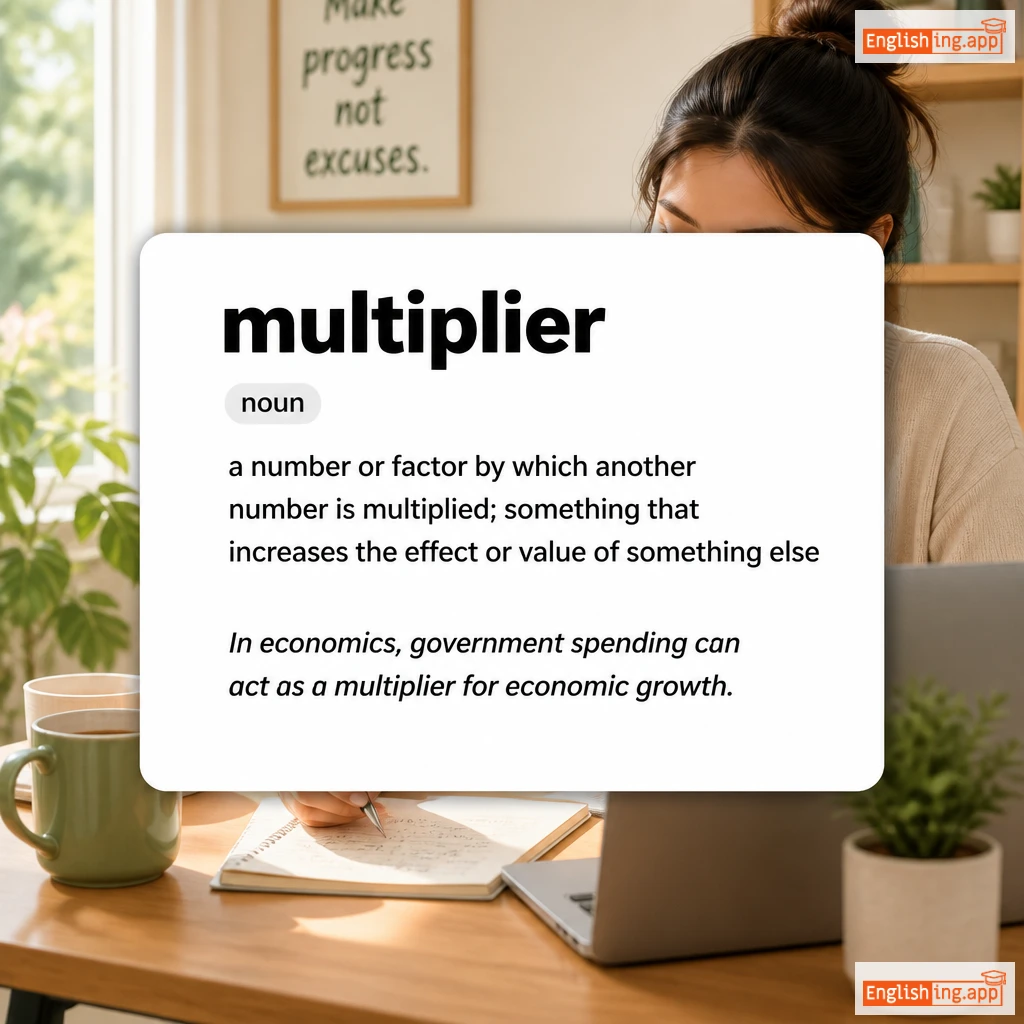
multiplier definition card — visual illustration of the meaning
noun C1
/ˈmʌltɪplaɪər/
乗数 (josu)

a number or factor by which another number is multiplied; something that increases the effect or value of something else

"In economics, government spending can act as a multiplier for economic growth."

"経済学では、政府支出が成長の乗数となることがある。" (keizaigaku dewa seifu shishutsu ga seicho no josu to naru koto ga aru)