词汇表

英语词汇词典 | 单词含义、定义和示例

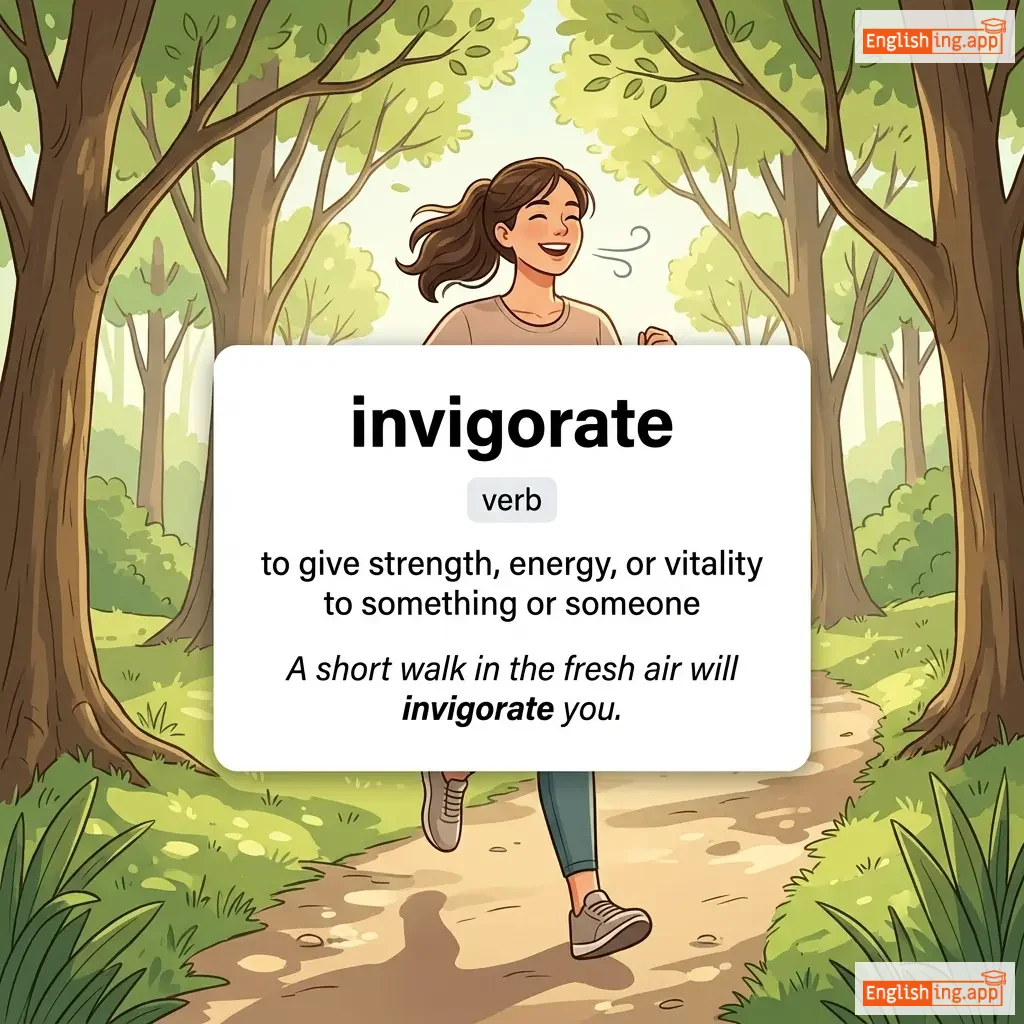
invigorate definition card — visual illustration of the meaning
verb C1
/ɪnˈvɪɡəreɪt/
振奋 (zhenfen)

to give strength, energy, or vitality to something or someone

"A short walk in the fresh air will invigorate you."

"在新鲜空气中散步会让你充满活力。" (Zai xinxian kongqi zhong sanbu hui rang ni chongman huoli.)
adjective C1
/ɪnˈvɪnsəbl/
不可战胜 (bù kě zhàn shèng)

too powerful to be defeated or overcome

"The team seemed invincible after winning ten matches in a row."

"这支队伍在连续赢得十场比赛后,看起来不可战胜。" (zhè zhī duìwǔ zài liánxù yíngdé shí chǎng bǐsài hòu, kàn qǐlái bù kě zhàn shèng.)
invoke definition card — visual illustration of the meaning
verb C1
/ɪnˈvoʊk/
呼叫 (hūjiào)

to call upon a higher power, authority, or principle for help, support, or justification

"The lawyer invoked the constitution to defend his client."

"律师援引宪法来为他的客户辩护。" (Lǜshī yuányǐn xiànfǎ lái wéi tā de kèhù biànhù.)
adjective C1
/ɪnˈvɑːlənˌtɛri/
不由自主 (buyouzizhu)

done without will or conscious control

"He gave an involuntary shiver when he heard the loud noise."

"他听到响亮的声音时不由自主地打了个寒战。" (Tā tīng dào xiǎngliàng de shēngyīn shí bù yóu zìzhǔ de dǎle gè hánzhàn.)
adverb C1
/ˈɪnwərdli/
内心 (neixin)

In the mind or spirit; not outwardly visible.

"She smiled outwardly but inwardly she was worried."

"她外表微笑,但内心却感到担忧。" (Tā wàibiǎo wēixiào, dàn nèixīn què gǎndào dānyōu.)
adjective C1
/aɪˈreɪt/
愤怒的 (fèn nù de)

Extremely angry.

"The customer became irate after waiting for hours."

"顾客在等待了几个小时后变得愤怒。" (Gùkè zài děngdài le jǐ gè xiǎoshí hòu biàn dé fèn nù.)
adjective C1
/ˈɜːrksəm/
恼人的 (nao ren de)

annoying or irritating

"Waiting in a long line is one of the most irksome tasks."

"在长队中等待是最让人恼火的任务之一。" (Zai chang dui zhong dengdai shi zui rang ren naohuo de renwu zhi yi.)
adjective C1
/ˈaɪərnˌklæd/
铁定的 (tieding de)

impossible to change, break, or dispute; very strong and firm

"The company had an ironclad contract with its suppliers."

"公司与其供应商签订了铁定合同。" (Gōngsī yǔ qí gōngyìng shāng qiāndìngle tiědìng hé​tóng.)
irrational definition card — visual illustration of the meaning
adjective C1
/ɪˈræʃənəl/
非理性 (fei li xing)

not logical or reasonable; lacking clear thought

"His fear of the dark was completely irrational."

"他对黑暗的恐惧完全是非理性的。" (Ta dui hei'an de kongju wanquan shi fei lixing de.)
irrationality definition card — visual illustration of the meaning
noun C1
ɪˌræʃ.ənˈæl.ɪ.ti
非理性, 不合理, 荒谬 (fei-lixing, bu-he-li, huang-miu)

The quality of being illogical or unreasonable; lack of rational thought.

"His decision was driven by complete irrationality."

"他的决定完全是基于非理性。" (Ta de jue ding wanquan shi jiyu fei lixing.)
adjective C1
/ˌɪrɪˈfjuːtəbəl/
不可辩驳 (bù kě biàn bó)

Impossible to deny or disprove

"The scientist provided irrefutable proof of the theory."
"科学家提供了无法反驳的理论证据。" (Kēxuéjiā tígōngle wúfǎ fǎnbó de lǐlùn zhèngjù.)
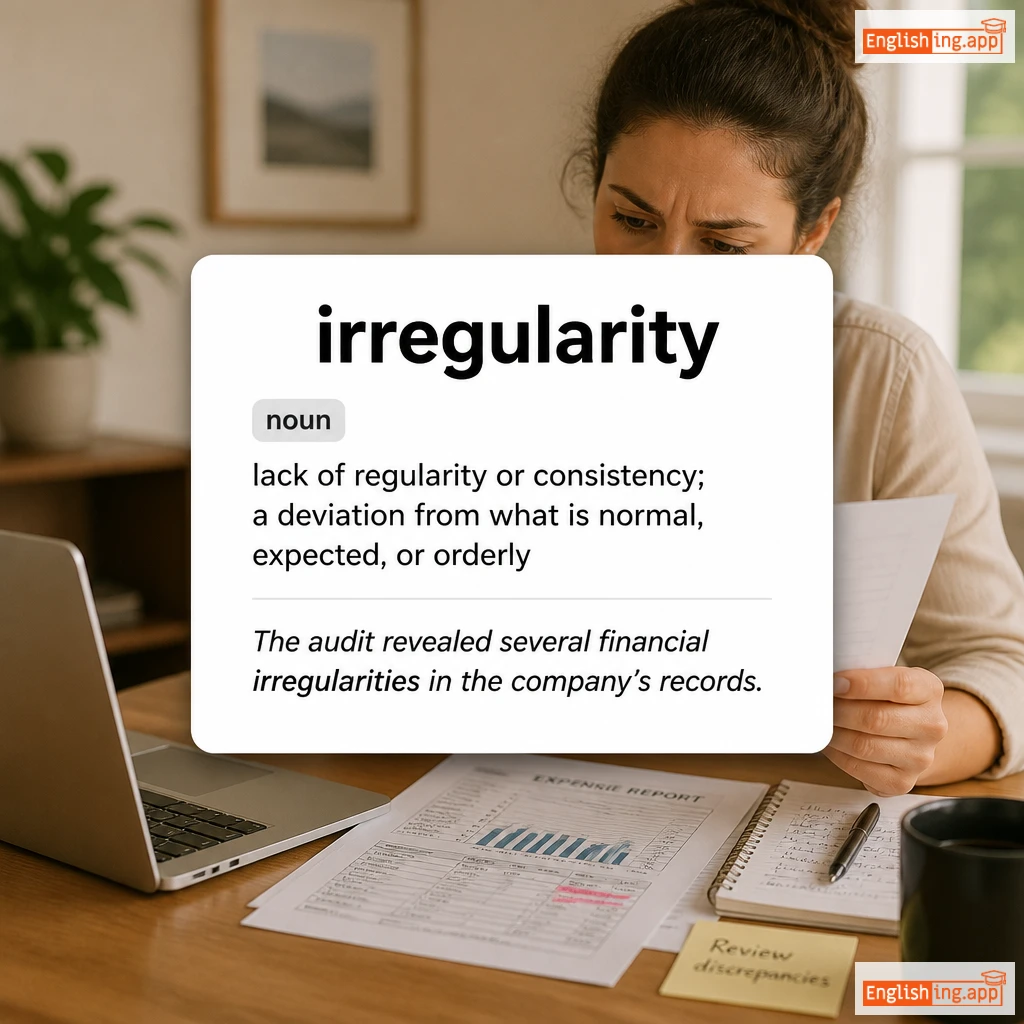
irregularity definition card — visual illustration of the meaning
noun C1
/ɪˌreɡjəˈlærɪti/
不规则性 (bu guize xing)

lack of regularity or consistency; a deviation from what is normal, expected, or orderly

"The audit revealed several financial irregularities in the company’s records."
"审计发现该公司的记录中存在多项财务不规则性。" (Shenji faxian gai gongsi de jilu zhong cunzai duoxiang caiwu bu guize xing)
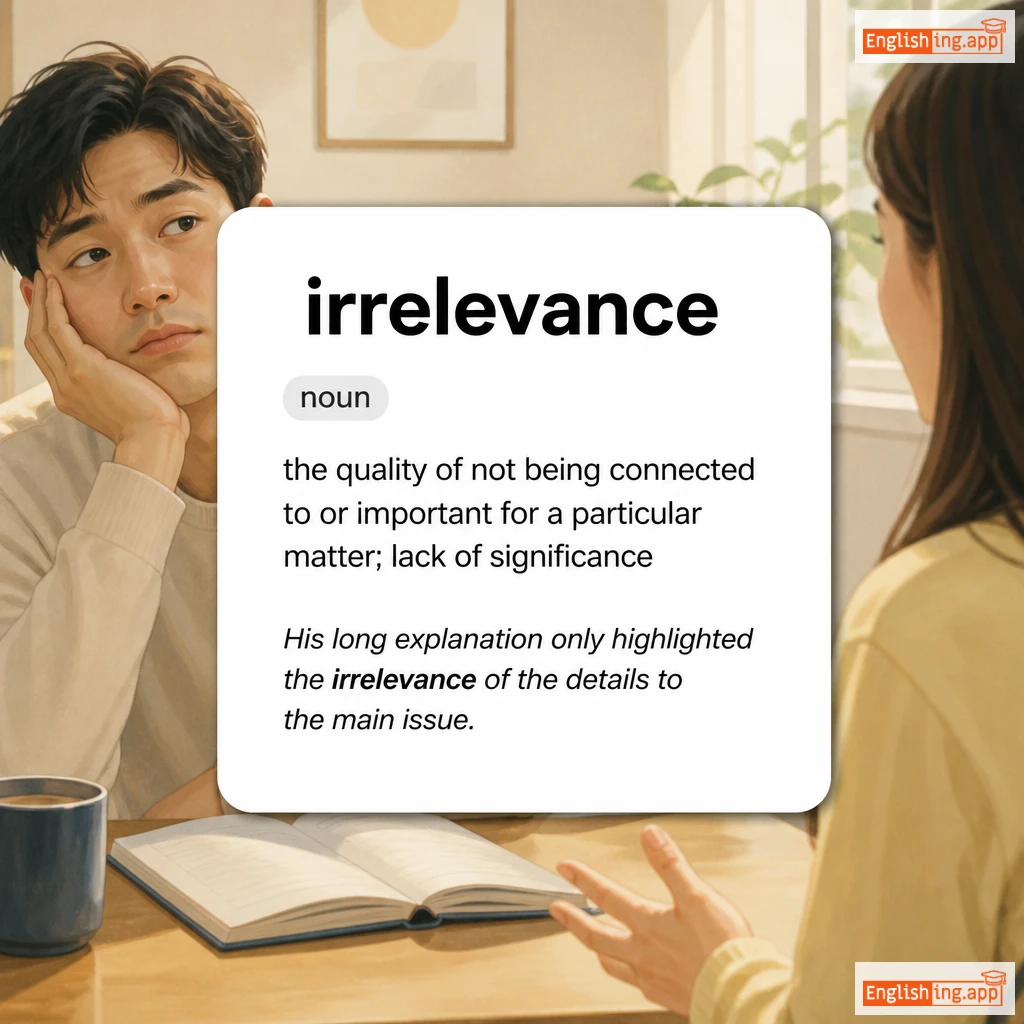
irrelevance definition card — visual illustration of the meaning
noun C1
/ɪˈreləvəns/
无关性 (wuguanxing)

the quality of not being connected to or important for a particular matter; lack of significance

"His long explanation only highlighted the irrelevance of the details to the main issue."
"他冗长的解释只凸显了这些细节与主要问题的无关性。" (ta rongchang de jieshi zhi tuchu le zhexie xijie yu zhuyao wenti de wuguanxing)
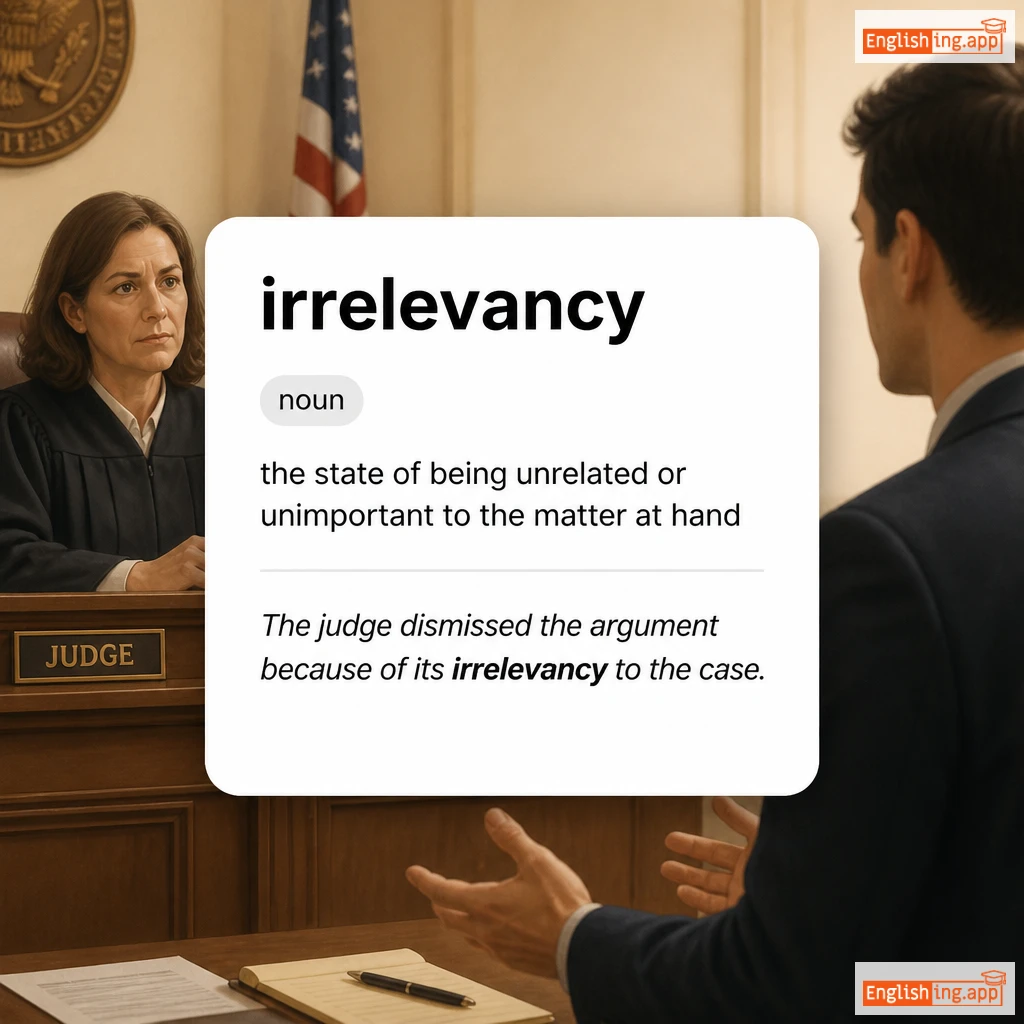
irrelevancy definition card — visual illustration of the meaning
noun C1
/ɪˈrɛlɪvənsi/
无关性 (wuguanxing)

the state of being unrelated or unimportant to the matter at hand

"The judge dismissed the argument because of its irrelevancy to the case."

"法官因该论点与案件无关而将其驳回。" (faguan yin gai lundian yu anjian wuguan er jiang qi bohui)
adjective C1
/ɪˈrɛpərəbl̩/
无法修复 (wúfǎ xiūfù)

Too severe to be corrected or repaired.

"The earthquake caused irreparable damage to the village."

"地震对村庄造成了无法修复的损害。" (Dìzhèn duì cūnzhuāng zàochéngle wúfǎ xiūfù de sǔnhài.)
adjective C1
/ˌɪrɪˈprɛsəbl̩/
不可抑制的 (bù kě yì zhì de)

Impossible to control or restrain.

"She had an irrepressible urge to laugh during the speech."

"她在演讲中无法掩饰自己无法抑制的笑意。" (Tā zài yǎnjiǎng zhōng wú fǎ yǎnshì zìjǐ wú fǎ yì zhì de xiàoyì.)
adjective C1
/ˌɪrɪˈspɛktɪv/
无论如何; 不考虑 (wúlùn rúhé; bù kǎolǜ)

without taking something into account; regardless of

"All students will be treated equally, irrespective of their background."

"所有学生都会平等对待,无论他们的背景如何。" (suǒyǒu xuéshēng dōu huì píngděng duìdài, wúlùn tāmen de bèijǐng rúhé.)
irresponsibility definition card — visual illustration of the meaning
noun C1
/ˌɪrɪˌspɒnsəˈbɪləti/
不负责任 (bu fu zeren)

lack of responsibility or accountability; failure to act in a reliable or sensible way

"The accident was caused by his irresponsibility at work."

"事故是由于他在工作中的不负责任造成的。" (Shigu shi youyu ta zai gongzuo zhong de bu fu zeren zaocheng de)
adjective C1
/ɪˈrɛvərənt/
不敬的 (bù jìng de)

showing a lack of respect for people or things that are usually respected

"The comedian’s irreverent jokes offended some of the audience."
"那位喜剧演员的不敬笑话冒犯了一些观众。" (Nà wèi xǐjù yǎnyuán de bù jìng xiàohuà màofànle yīxiē guānzhòng.)
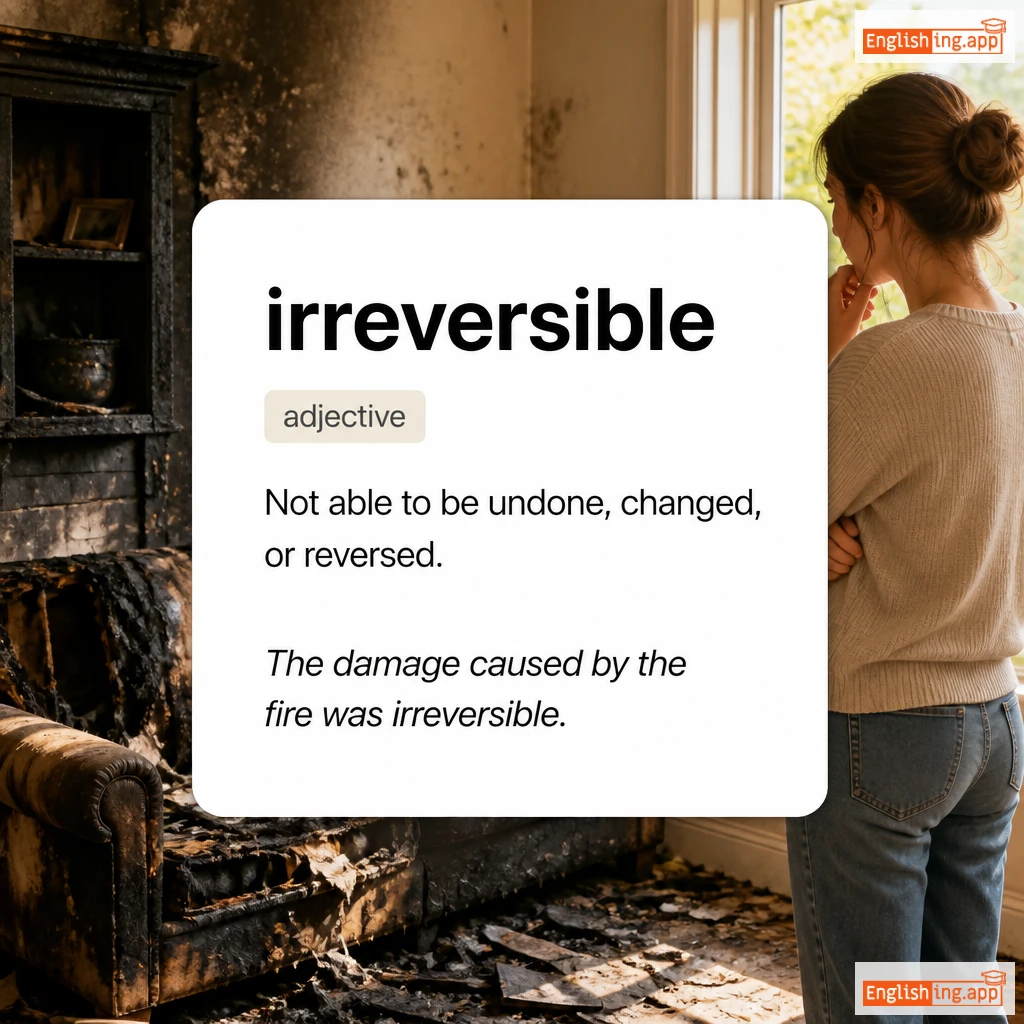
irreversible definition card — visual illustration of the meaning
adjective C1
/ˌɪrɪˈvɜːrsəbl/
不可逆的 (bù kě nì de)

Not able to be undone, changed, or reversed.

"The damage caused by the fire was irreversible."
"火灾造成的损失是不可逆的。" (Huǒ zāi zào chéng de sǔn shī shì bù kě nì de.)
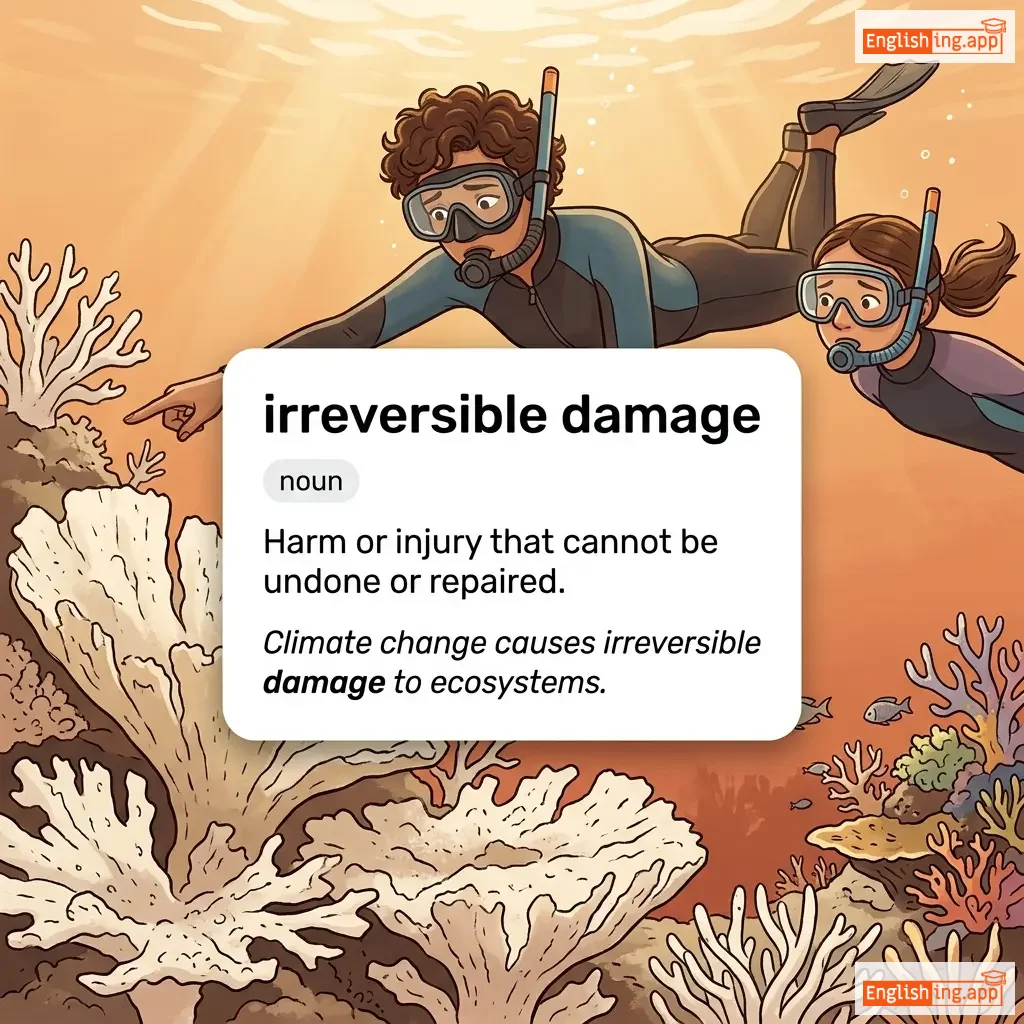
irreversible damage definition card — visual illustration of the meaning
noun C1
ˌɪrɪˈvɜːrsəbl ˈdæmɪdʒ
不可逆的损害 (bù kě nì sǔn hài)

Harm or injury that cannot be undone or repaired.

"Climate change causes irreversible damage to ecosystems."

"气候变化对生态系统造成了不可逆的损害。" (Qìhòu biànhuà duì shēngtài xìtǒng zàochéngle bù kě nì de sǔnhài.)
adjective C1
/ɪˈrɛvəkəbl/
不可撤销 (bù kě chè xiāo)

Not able to be revoked, changed, or undone.

"She made an irrevocable decision to leave the company."
"她做出了一个不可撤销的决定离开公司。" (Tā zuò chū le yī gè bù kě chè xiāo de jué dìng lí kāi gōng sī.)
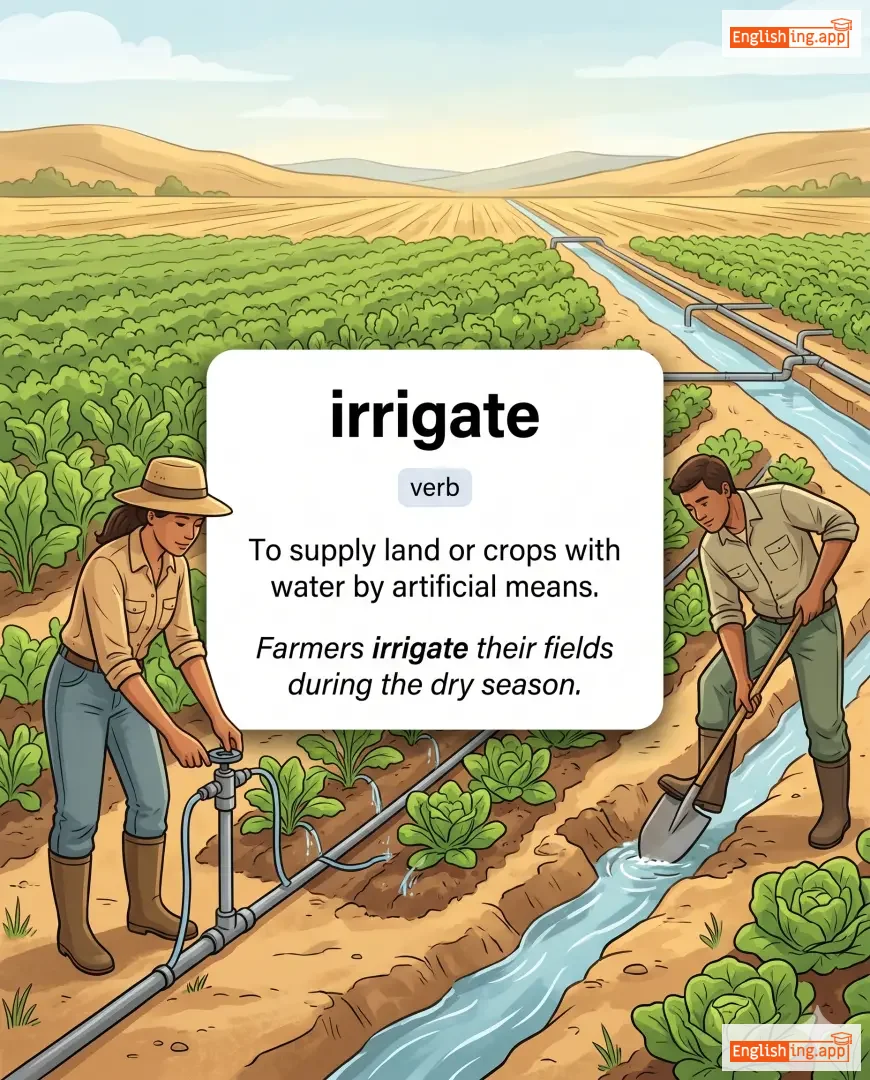
irrigate definition card — visual illustration of the meaning
verb C1
/ˈɪrɪɡeɪt/
灌溉 (guàngài)

To supply land or crops with water by artificial means.

"Farmers irrigate their fields during the dry season."

"农民在干旱季节灌溉他们的田地。" (Nóngmín zài gānhàn jìjié guàngài tāmen de tiándì.)
adjective C1
/ˈɪrɪtəbl/

easily annoyed or made angry

"She became irritable after working long hours without rest."

noun C1
/ˈɪrɪtənt/
刺激物 (cijiwu)

something that causes irritation or discomfort

"Dust is a common irritant for people with allergies."

"灰尘是过敏者常见的刺激物。" (Huichen shi guominzhe changjian de cijiwu.)
noun C1
/aɪl/
小岛 (xiao dao)

A small island or peninsula, often poetic or literary.

"They spent their honeymoon on a beautiful tropical isle."

"他们在一个美丽的热带小岛上度过了他们的蜜月。" (tamen zai yi ge mei li de re dai xiao dao shang du guo le tamen de mi yue.)
noun C1
/ˈaɪsətəʊp/
同位素 (tongwei su)

Atoms of the same element with equal number of protons but different numbers of neutrons.

"Carbon-14 is a radioactive isotope used in dating fossils."

"碳-14 是一种放射性同位素,用于化石的年代测定。" (Tàn-14 shì yī zhǒng fàngshèxìng tóngwèisù, yòng yú huàshí de niándài cèdìng.)
itchiness definition card — visual illustration of the meaning
noun C1
/ˈɪtʃ.i.nəs/
(yang)

The quality or condition of feeling an irritating sensation on the skin that causes a desire to scratch.

"Eye itchiness often leads to rubbing."

"眼睛的痒感常常导致揉搓。" (Yǎnjīng de yǎng gǎn chángcháng dǎozhì róucuō.)
verb C1
/ˈɪtəreɪt/
迭代 (diedai)

To repeat a process or statement, often to improve or refine.

"The software team will iterate the design until it meets user needs."

"软件团队将反复迭代设计,直到满足用户需求。" (Ruǎnjiàn tuánduì jiāng fǎnfù diédài shèjì, zhídào mǎnzú yònghù xūqiú.)
itinerary definition card — visual illustration of the meaning
noun C1
/aɪˈtɪnərɛri/
行程安排 (xíngchéng ānpái)

A planned route or schedule of a journey or trip.

"The travel agent gave us a detailed itinerary for our vacation."

"旅行社为我们的假期提供了详细的行程安排。" (Lǚxíng shè wèi wǒmen de jiàqī tígōngle xiángxì de xíngchéng ānpái.)