词汇表

英语词汇词典 | 单词含义、定义和示例

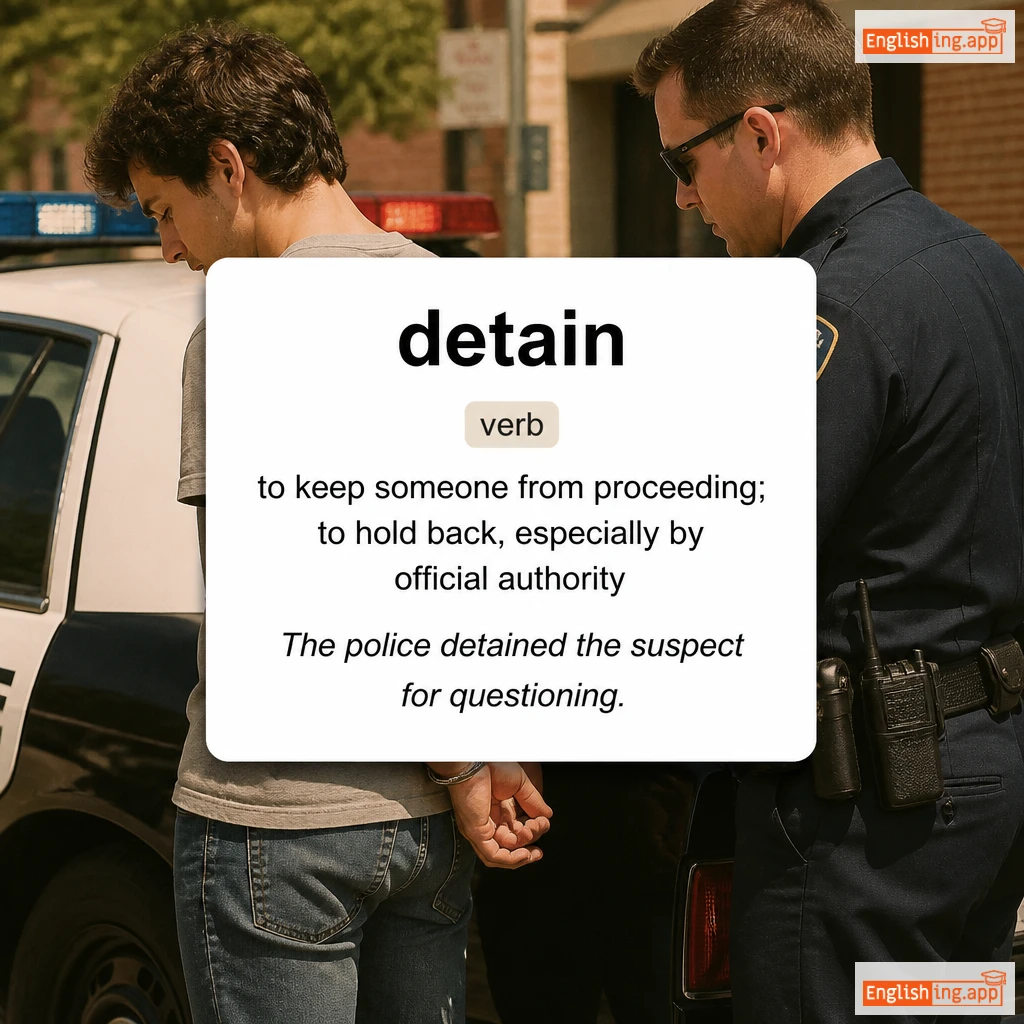
detain definition card — visual illustration of the meaning
verb C1
/dɪˈteɪn/

to keep someone from proceeding; to hold back, especially by official authority

"The police detained the suspect for questioning."

noun C1
/deɪˈtɒnt/
缓和紧张关系 (huǎnhé jǐnzhāng guānxì)

the easing of strained relations, especially between countries

"The treaty helped bring about a détente between the two nations."
"该条约有助于缓解两个国家之间的紧张关系。" (Gāi tiáoyuē yǒuzhù yú huǎnjiě liǎng gè guójiā zhījiān de jǐnzhāng guānxì.)
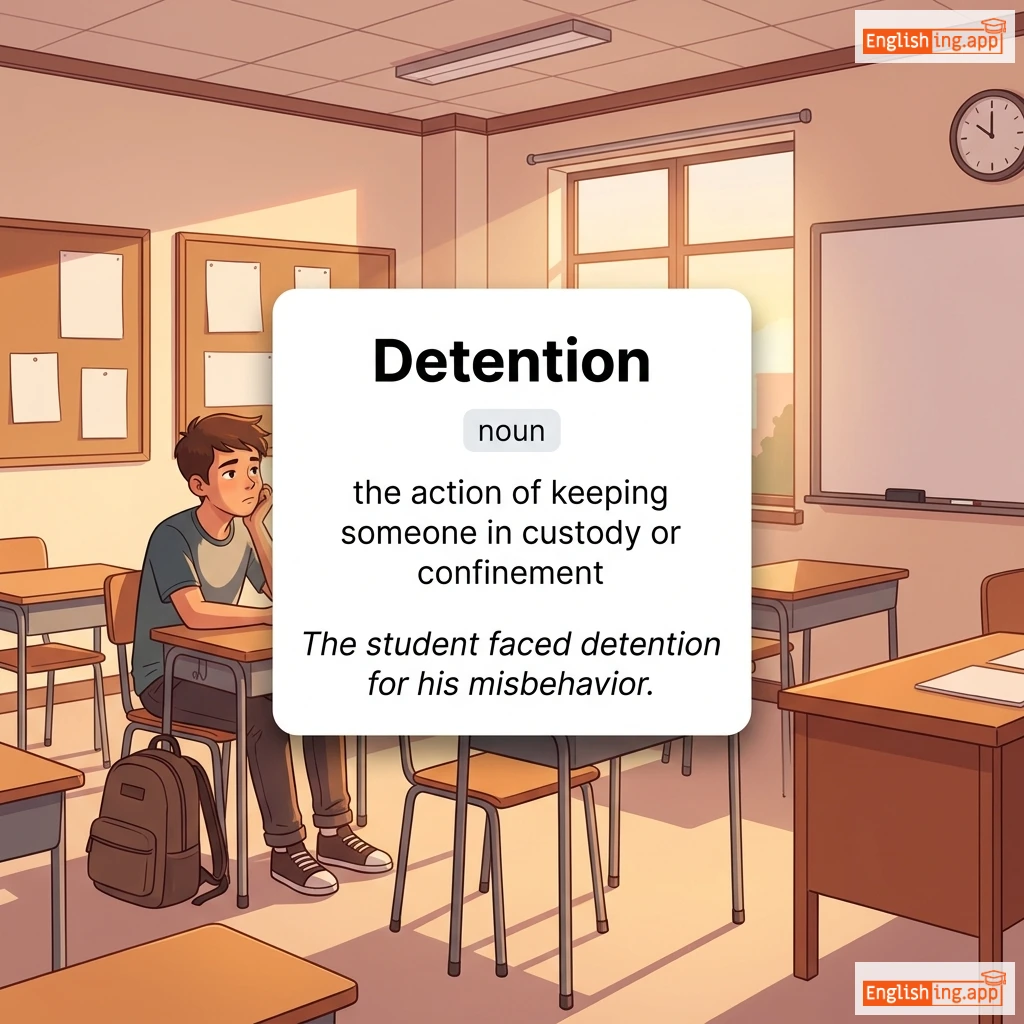
Detention definition card — visual illustration of the meaning
noun C1
/dɪˈtɛnʃən/
拘留 (jiuliu)

the action of keeping someone in custody or confinement

"The student faced detention for his misbehavior."
"学生因不良行为被拘留。" (Xuéshēng yīn bùliáng xíngwéi bèi jūliú.)
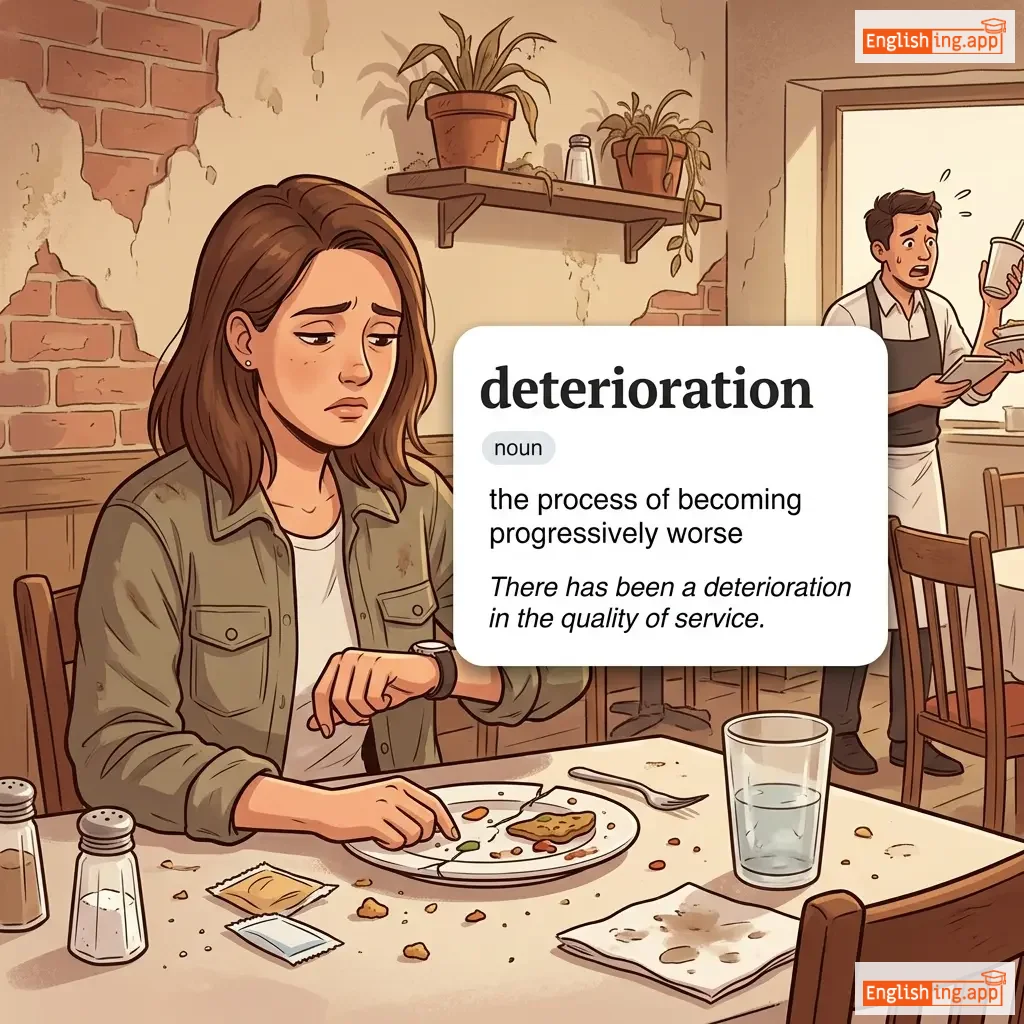
deterioration definition card — visual illustration of the meaning
noun C1
/dɪˌtɪriəˈreɪʃən/
恶化 (èhuà)

the process of becoming progressively worse

"There has been a deterioration in the quality of service."

"服务质量出现了恶化。" (Fúwù zhìliàng chūxiànle èhuà.)
determinant definition card — visual illustration of the meaning
noun C1
/dɪˈtɜːrmɪnənt/
决定因素 (juédìng yīnsù)

a factor that decisively affects the nature or outcome of something

"Education is a key determinant of economic growth."
"教育是经济增长的一个关键决定因素。" (Jiàoyù shì jīngjì zēngzhǎng de yī gè guānjiàn juédìng yīnsù.)
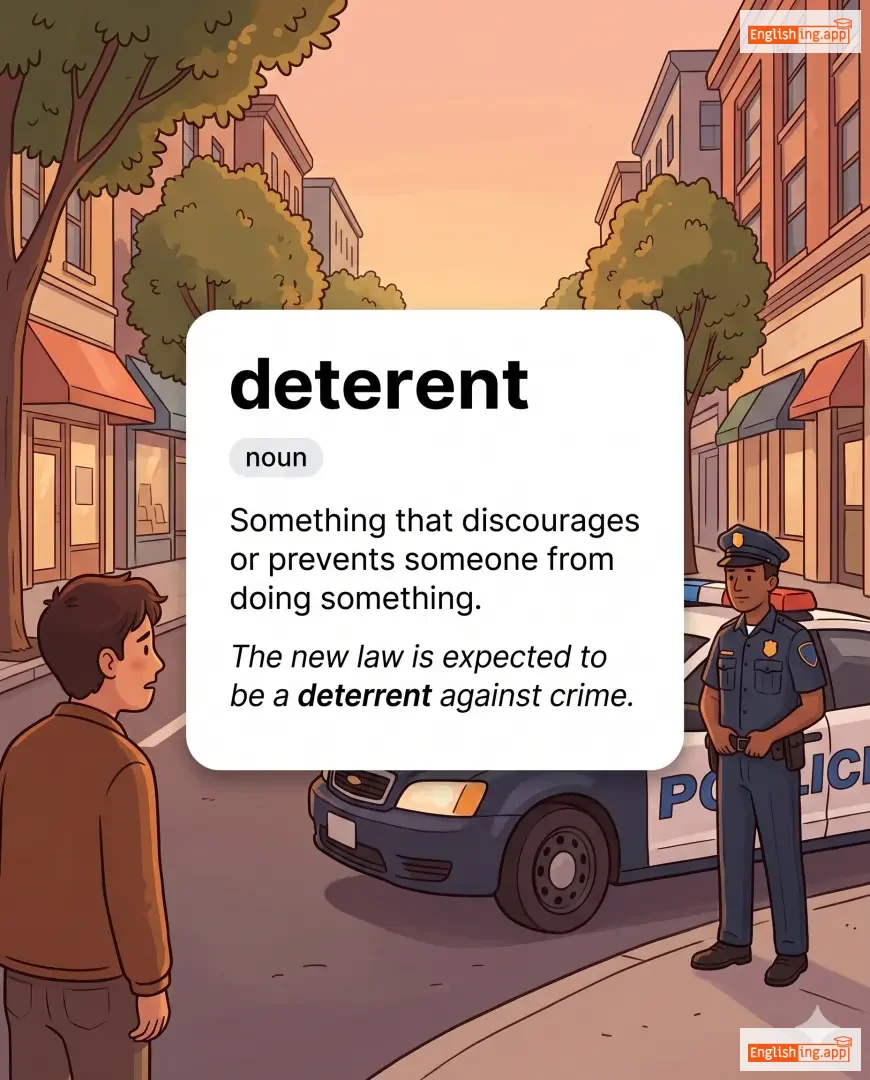
deterrent definition card — visual illustration of the meaning
noun C1
/dɪˈtɜːrənt/
威慑 (weishe)

Something that discourages or prevents someone from doing something.

"The new law is expected to be a deterrent against crime."
"预计新法律将成为打击犯罪的威慑力量。" (Yùjì xīn fǎlǜ jiāng chéngwéi dǎjí fànzuì de wēishè lìliàng.)
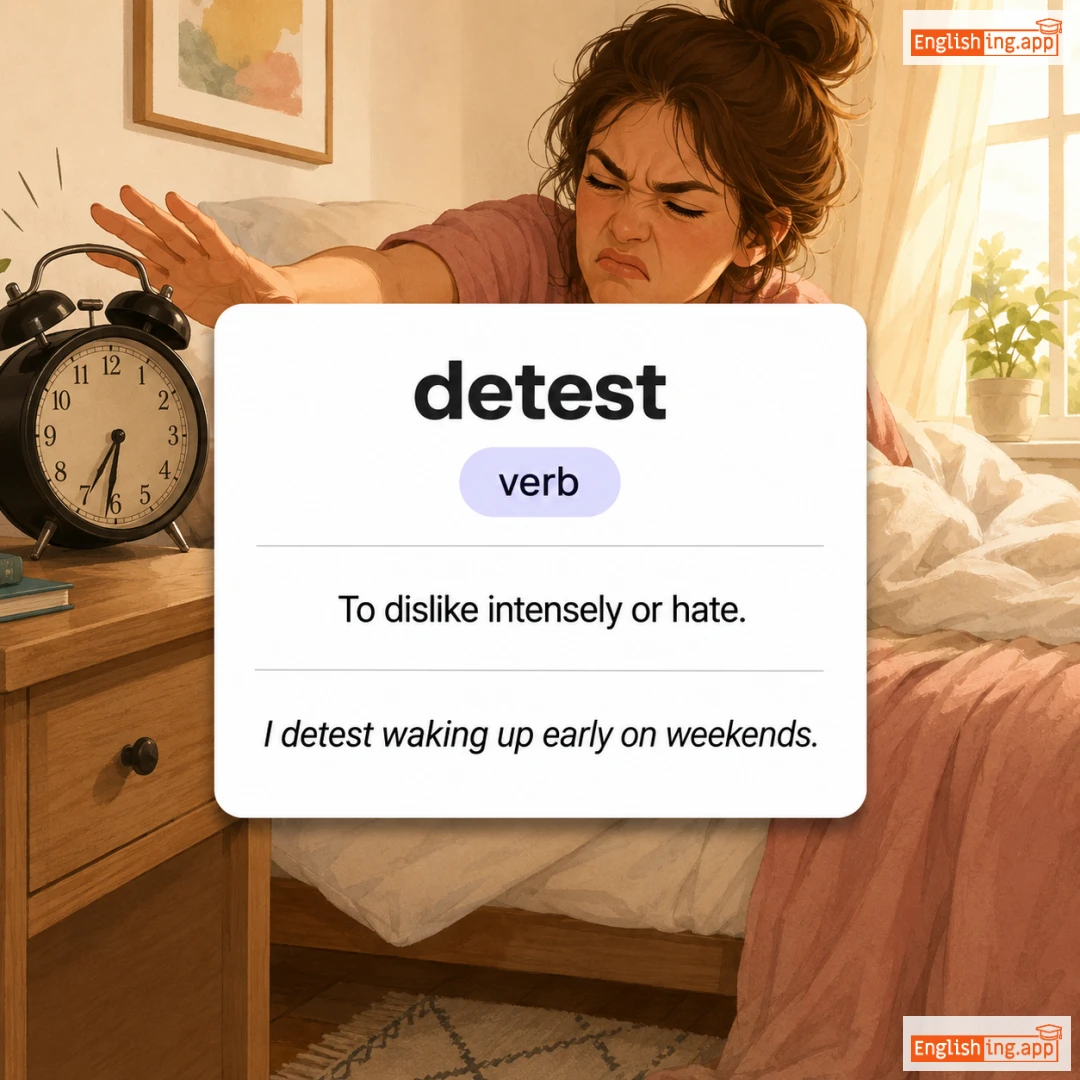
detest definition card — visual illustration of the meaning
verb C1
/dɪˈtɛst/
讨厌 (taoyan)

To dislike intensely or hate.

"I detest waking up early on weekends."

"我讨厌在周末早起。" (Wo taoyan zai zhoumo zaoqi.)
noun C1
/ˌdɛtəˈneɪʃən/
爆炸 (baozha)

The act of exploding or causing something to explode.

"The sudden detonation shook the entire building."

"突如其来的爆炸震动了整个大楼。" (Tū rú qí lái de bàozhà zhèndòngle zhěnggè dàlóu.)
detoxification definition card — visual illustration of the meaning
noun C1
/dɪˌtɒksɪfɪˈkeɪʃən/
排毒 (paidu)

The process of removing toxic substances or effects from the body.

"Detoxification is often the first step in treating drug addiction."
"排毒通常是治疗毒瘾的第一步。" (Paidu tongchang shi zhiliao duyin de diyi bu.)
verb C1
/dɪˈtrækt/

To reduce or take away the worth or value of something.

"His rude behavior will detract from his good reputation."

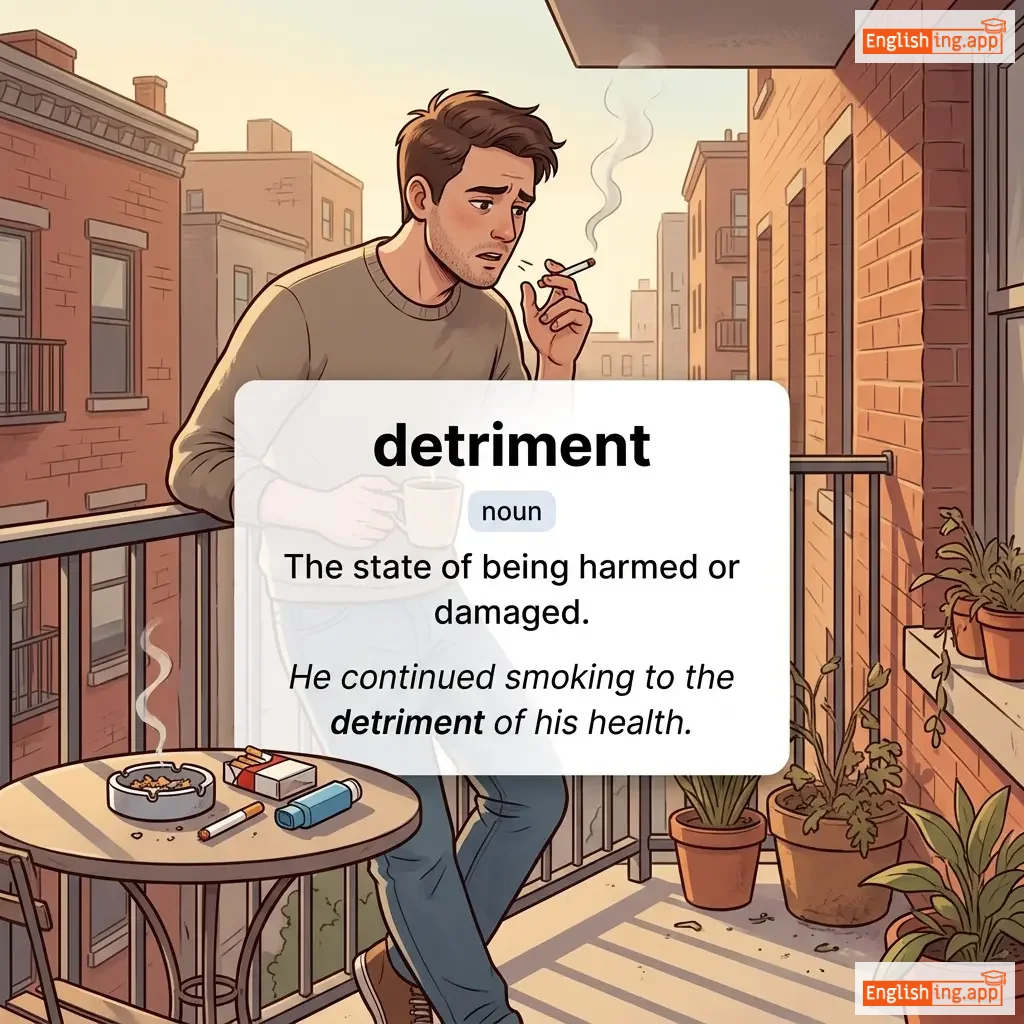
detriment definition card — visual illustration of the meaning
noun C1
/ˈdɛtrɪmənt/
损害 (sunhai)

The state of being harmed or damaged.

"He continued smoking to the detriment of his health."
"他继续吸烟,损害了他的健康。" (Ta jixu xiyan, sunhai le tade jiankang.)
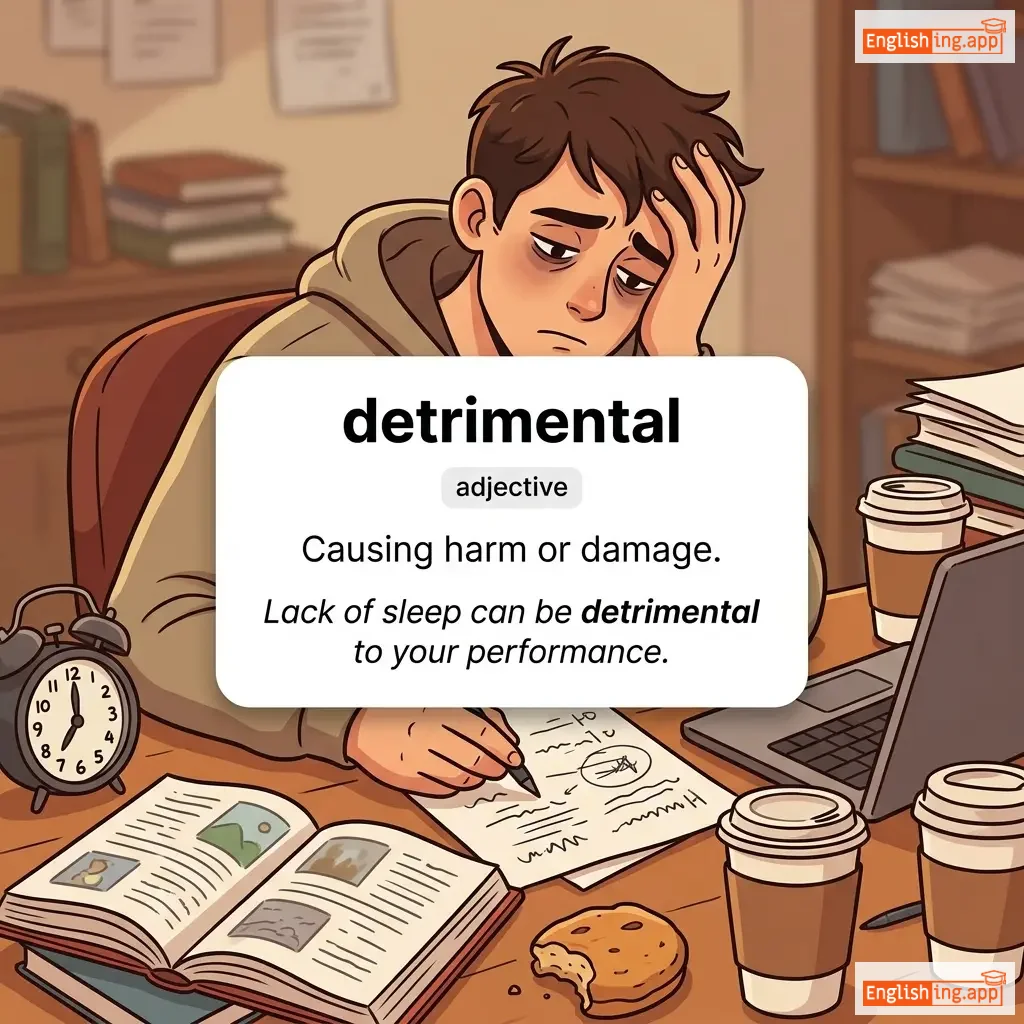
detrimental definition card — visual illustration of the meaning
adjective C1
/ˌdɛtrɪˈmɛntəl/

Causing harm or damage.

"Lack of sleep can be detrimental to your performance."
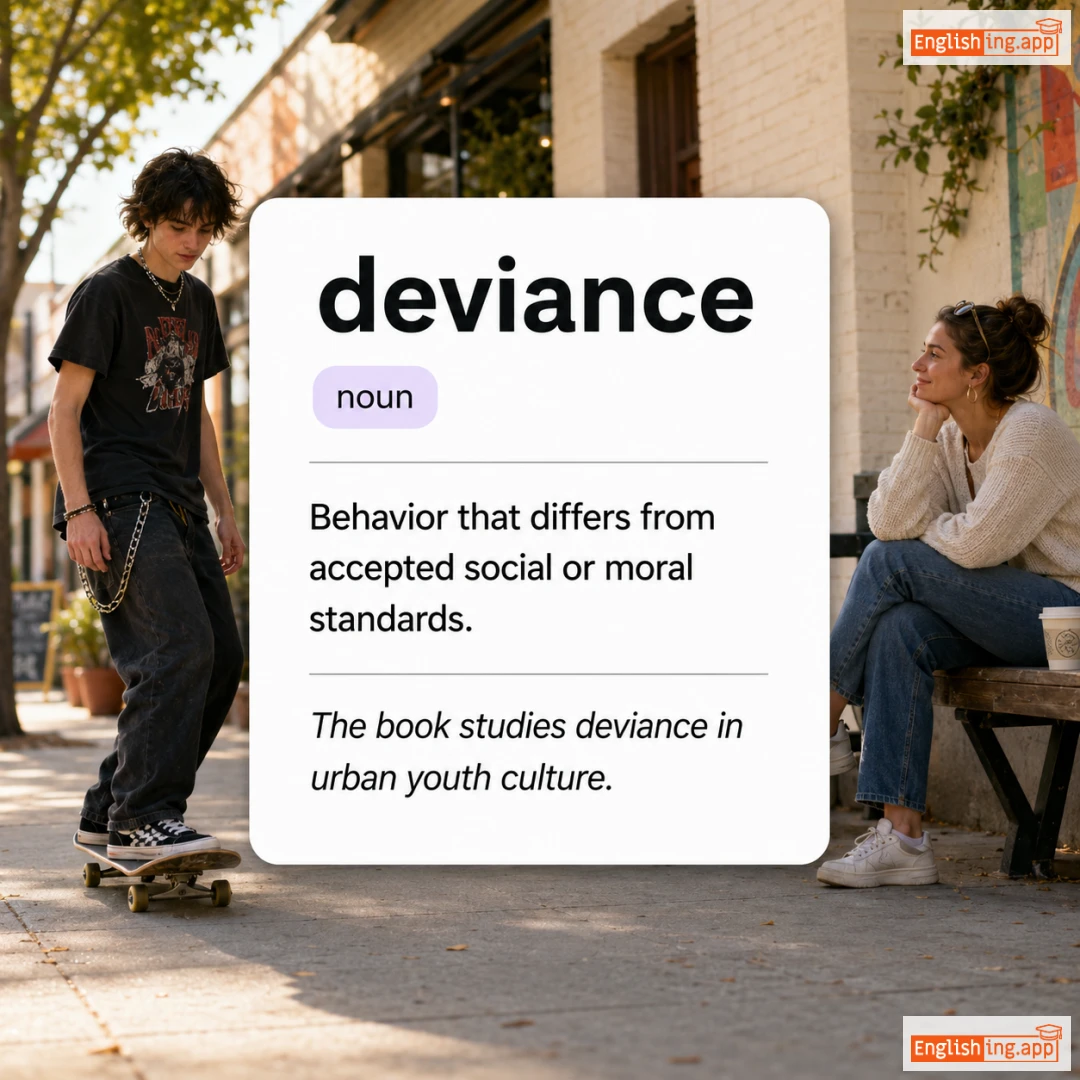
deviance definition card — visual illustration of the meaning
noun C1
/ˈdiːviəns/
偏差 (piancha)

Behavior that differs from accepted social or moral standards.

"The book studies deviance in urban youth culture."

"这本书研究了城市青少年文化中的偏差。" (Zhe ben shu yanjiu le chengshi qingshaonian wenhua zhong de piancha.)
deviate definition card — visual illustration of the meaning
verb C1
/ˈdiːvieɪt/
偏离 (pianli)

To depart from an established course or norm.

"He decided to deviate from the original plan."
"他决定偏离原计划。" (Ta jueding pianli yuan jihua.)
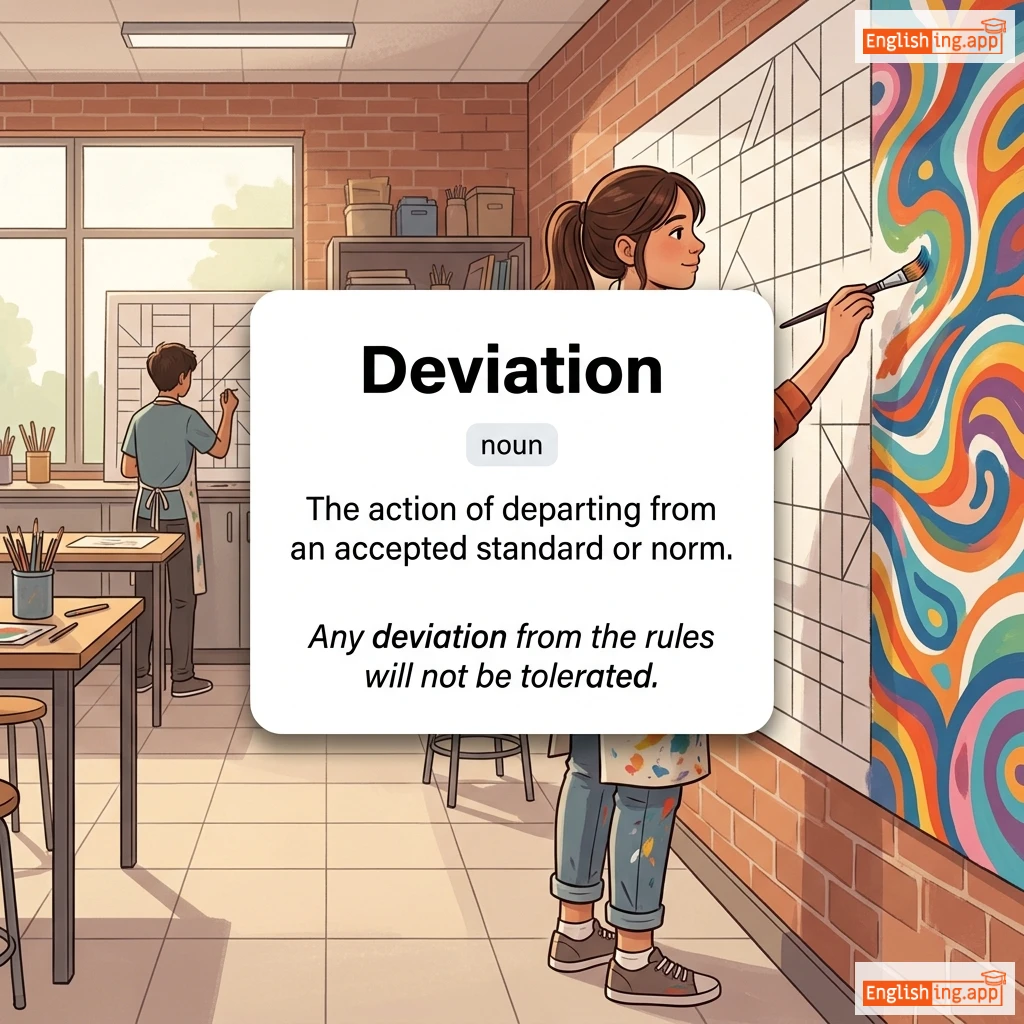
Deviation definition card — visual illustration of the meaning
noun C1
/ˌdiːviˈeɪʃn/
偏差 (piancha)

The action of departing from an accepted standard or norm.

"Any deviation from the rules will not be tolerated."

"任何偏差都不会被容忍。" (Renhe piancha dou bu hui bei rongren.)
adjective C1
/ˈdiːviəs/
狡猾 (jiǎohuá)

Skillful at using underhanded tactics to achieve goals; not straightforward.

"He used a devious plan to gain control of the company."

"他使用了一个狡猾的计划来控制公司。" (Tā shǐyòngle yīgè jiǎohuá de jìhuà lái kòngzhì gōngsī.)
adjective C1
/dɪˈvɔɪd/
空虚 (kongxu)

Completely lacking or without something.

"His speech was devoid of any real emotion."

"他的演讲完全缺乏任何真实的情感。" (Tā de yǎnjiǎng wánquán quēfá rènhé zhēnshí de qínggǎn.)
verb C1
/dɪˈvɒlv/
移交 (yíjiāo)

To pass power, responsibility, or duties to another person or group.

"The responsibility will devolve on the new manager."

"责任将转交给新经理。" (Zérèn jiāng zhuǎnjiāo gěi xīn jīnglǐ.)
noun C1
/ˌdɛvəˈtiː/
虔诚者 (qian cheng zhe)

A person who is very enthusiastic about or strongly dedicated to something or someone.

"He is a great devotee of classical music."

"他是古典音乐的一个忠实爱好者。" (ta shi gudian yinyue de yi ge zhongshi aihao zhe)
adjective C1
/dɪˈvaʊt/
虔诚 (qiánchéng)

Deeply religious or sincere.

"He is a devout believer who prays every day."

"他是一个虔诚的信徒,每天都祈祷。" (Tā shì yīgè qiánchéng de xìntú, měitiān dōu qídǎo.)
dexterity definition card — visual illustration of the meaning
noun C1
/dɛkˈstɛrɪti/
灵巧 (lingqiao)

Skill in using the hands or body; mental quickness.

"She showed great dexterity in playing the piano."

"她在弹钢琴时展示了出色的灵巧。" (Ta zai tan gangqin shi zhanshi le chuse de lingqiao.)
dexterous definition card — visual illustration of the meaning
adjective C1
/ˈdɛkstrəs/
灵巧 (lingqiao)

Skillful and quick, especially with the hands.

"The craftsman was dexterous in carving wood."
"工匠在雕刻木头时非常灵巧。" (Gongjiang zai diaoke mutou shi feichang lingqiao.)
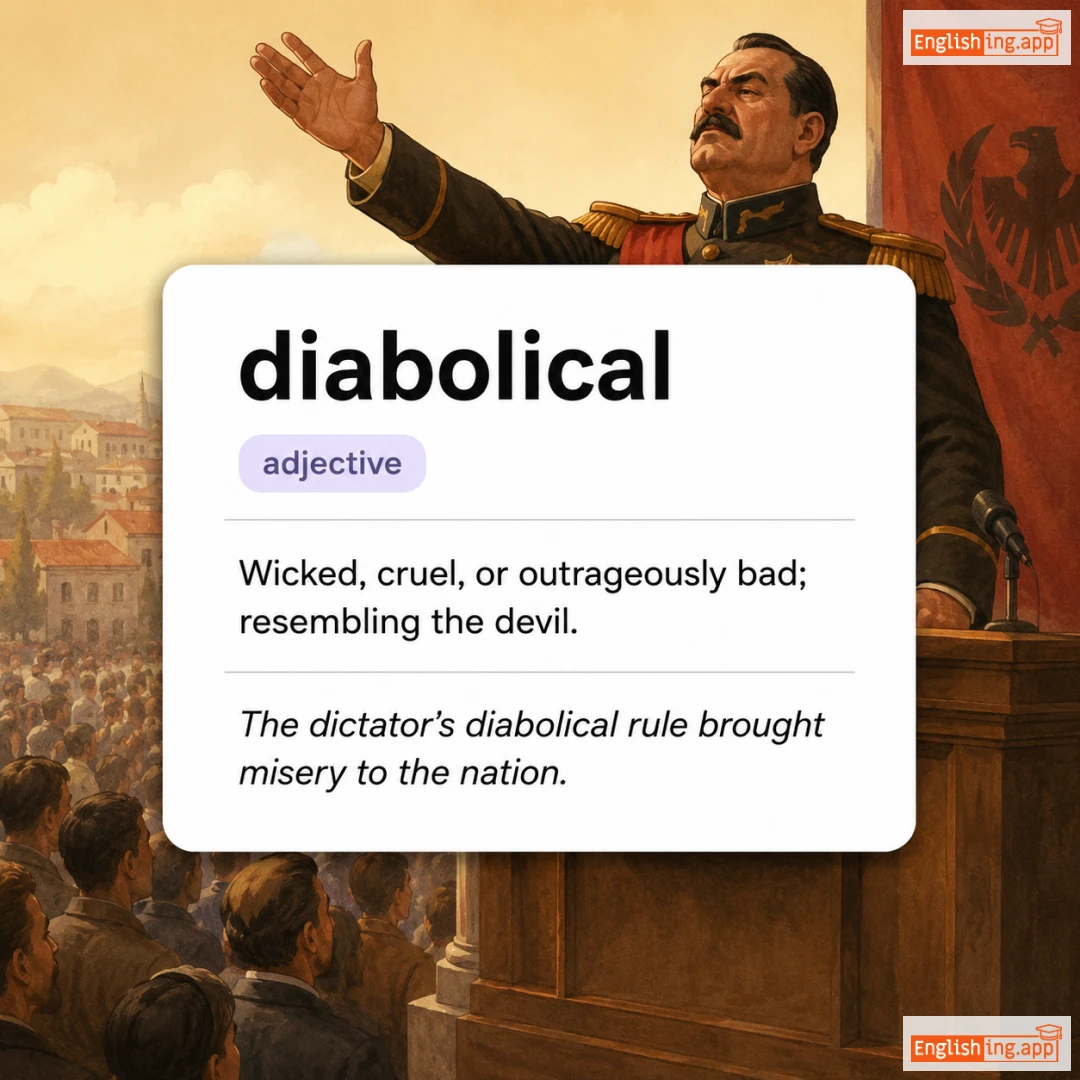
diabolical definition card — visual illustration of the meaning
adjective C1
/ˌdaɪəˈbɒlɪkəl/
恶魔般的 (emoban de)

Wicked, cruel, or outrageously bad; resembling the devil.

"The dictator’s diabolical rule brought misery to the nation."
"独裁者的恶魔般统治给国家带来了苦难。" (Ducai zhe de emoban tongzhi gei guojia daliu le kunan.)
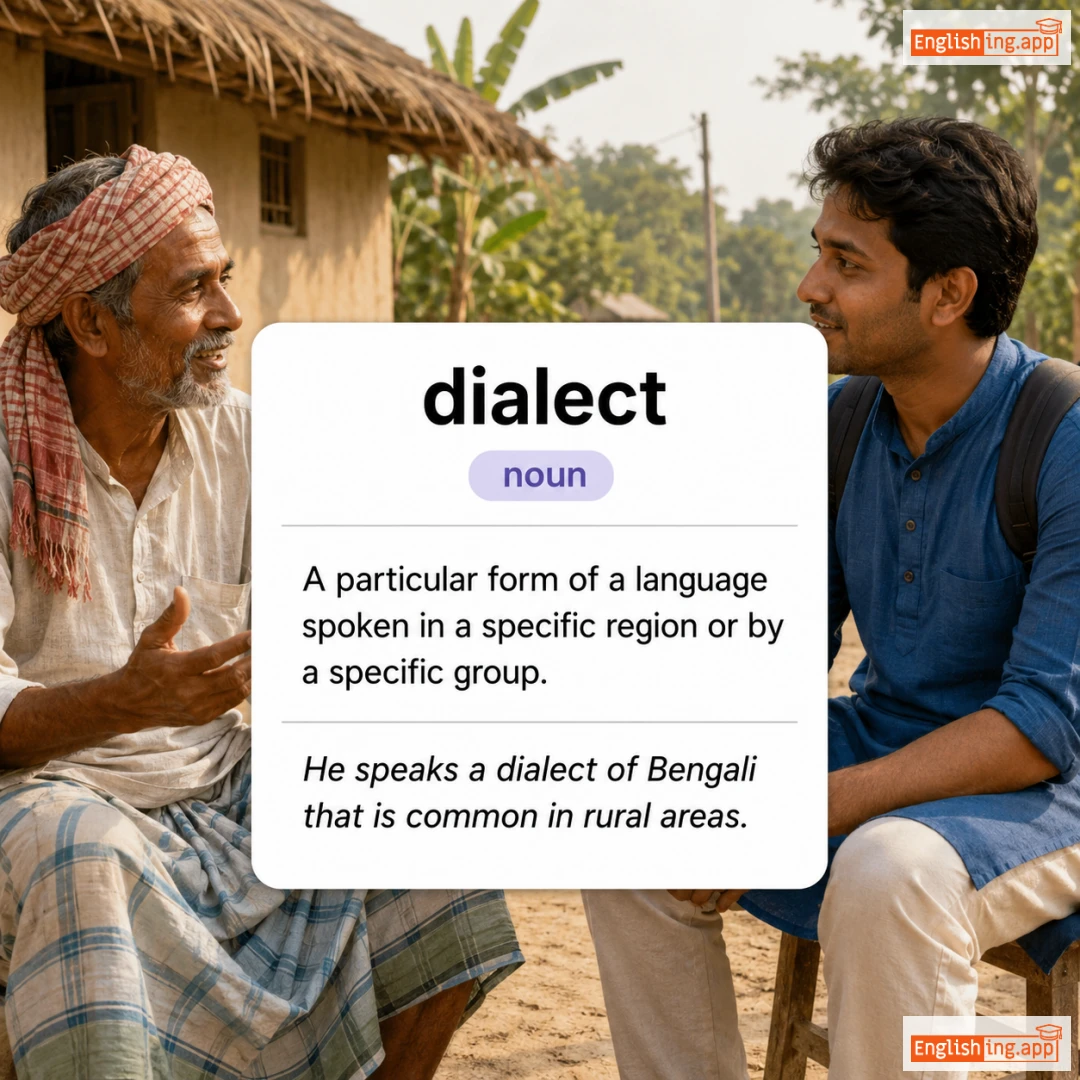
dialect definition card — visual illustration of the meaning
noun C1
/ˈdaɪəˌlɛkt/
方言 (fangyan)

A particular form of a language spoken in a specific region or by a specific group.

"He speaks a dialect of Bengali that is common in rural areas."

"他讲的是一种在农村地区常见的孟加拉语方言。" (Ta jiang de shi yizhong zai nongcun diqu changjian de Mengjiala yu fangyan.)
adjective C1
/ˈdaɪ.si/
冒险的 (màoxiǎn de)

Risky or unpredictable; potentially dangerous.

"Investing in that company looks pretty dicey right now."

"现在投资这家公司看起来非常冒险。" (Xiànzài tóuzī zhè jiā gōngsī kàn qǐlái fēicháng màoxiǎn.)
dichotomy definition card — visual illustration of the meaning
noun C1
/daɪˈkɒtəmi/
二分法 (er fen fa)

A division or contrast between two things that are completely different.

"There is a clear dichotomy between good and evil."

"善与恶之间存在明显的二分法。" (Shan yu e zhijian cunzai mingxian de er fen fa.)
adjective C1
/ˌdɪktəˈtɔːriəl/
独裁的 (dúcái de)

Having or showing a tendency to tell people what to do in an autocratic way.

"His dictatorial style made him unpopular among colleagues."
"他的独裁风格使他在同事中不受欢迎。" (Tā de dúcái fēnggé shǐ tā zài tóngshì zhōng bù shòu huānyíng.)
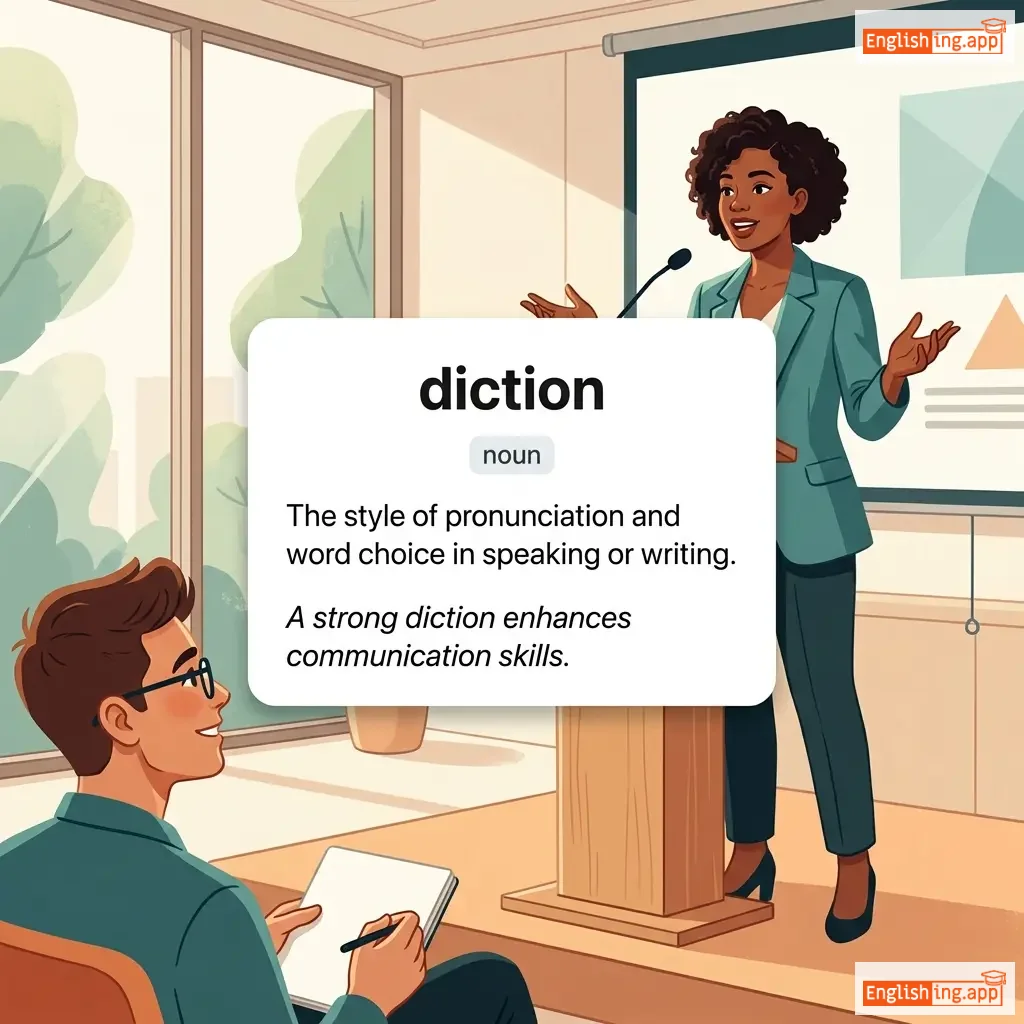
diction definition card — visual illustration of the meaning
noun C1
ˈdɪk.ʃən
发音和词语选择 (fāyīn hé cíyǔ xuǎnzé)

The style of pronunciation and word choice in speaking or writing.

"A strong diction enhances communication skills."

"强有力的发音增强了沟通技巧。" (Qiáng yǒulì de fāyīn zēngqiángle gōutōng jìqiǎo.)
noun C1
/ˈdaɪhɑːrd/

A person who strongly resists change and remains loyal to a belief or cause.

"He is a diehard fan of classic rock music."

adjective C1
/ˌdɪfəˈrɛnʃəl/
差异的 (chayi de)

Relating to or showing a difference; involving a distinction.

"There is a differential treatment between the two groups."

"这两个群体之间存在差异待遇。" (Zhe liang ge qunti zhijian cunzai chayi daiyu.)
differentiation definition card — visual illustration of the meaning
noun C1
/ˌdɪf.ə.ren.ʃiˈeɪ.ʃən/
差异化, 区分, 分类 (chāyì huà, qūfēn, fēnlèi)

The action or process of differentiating or distinguishing between two or more things or people.

"Strong differentiation sets brands apart from competitors."

"强烈的差异化使品牌在竞争者中脱颖而出。" (Qiángliè de chāyì huà shǐ pǐnpái zài jìngzhēng zhě zhōng tuōyǐng ér chū.)
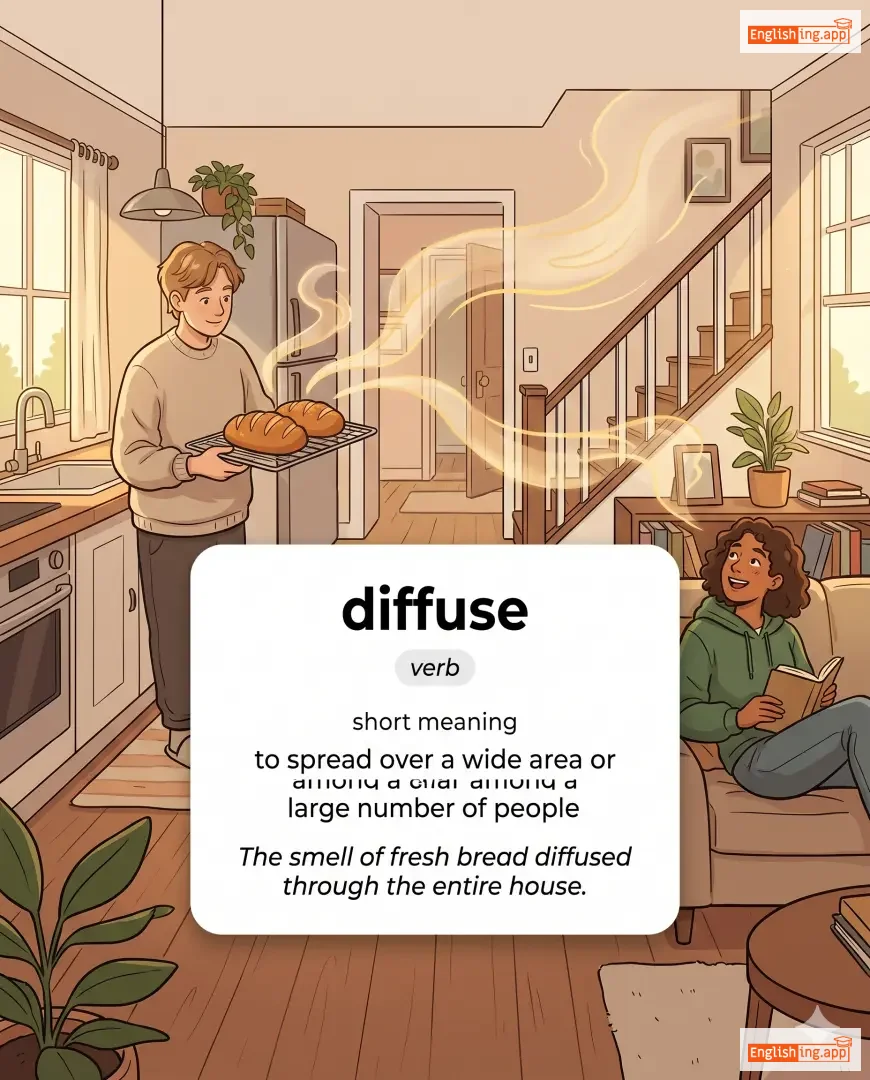
diffuse definition card — visual illustration of the meaning
🌫️

diffuse

verb C1
/dɪˈfjuːz/

to spread over a wide area or among a large number of people

"The smell of fresh bread diffused through the entire house."

noun C1
/dɪˈfjuːʒən/

the spreading of something more widely or the movement of particles from high to low concentration

"The diffusion of information on social media is rapid."

noun C1
/ˈdɪɡnɪˌtɛri/
重要人物 (zhòng yào rén wù)

a person considered to be important because of high rank or office

"Several foreign dignitaries attended the state banquet."

"几位外国重要人物出席了国宴。" (Jǐ wèi wàiguó zhòngyào rénwù chūxí le guóyàn.)
↪️

digress

verb C1
/daɪˈɡrɛs/

To leave the main subject temporarily in speech or writing.

"The professor began to digress from the main topic of the lecture."

adjective C1
/dɪˈlæpɪˌdeɪtɪd/
破旧的 (po jiu de)

Fallen into disrepair or ruin due to neglect or age.

"The family lived in a dilapidated house at the edge of town."

"这个家庭住在城市边缘的一座破旧的房子里。" (Zhège jiātíng zhù zài chéngshì biānyuán de yīzuò pòjiù de fángzi lǐ.)
verb C1
/daɪˈleɪt/
扩展 (kuòzhǎn)

To make wider, larger, or more open.

"The doctor used drops to dilate the patient's pupils."

"医生用药水来扩张病人的瞳孔。" (Yīshēng yòng yàoshuǐ lái kuòzhǎn bìngrén de tóngkǒng.)
diligence definition card — visual illustration of the meaning
noun C1
/ˈdɪlɪdʒəns/
勤奋 (qinfen)

Careful and persistent work or effort.

"Through diligence and determination, she completed her research on time."

"通过勤奋和决心,她按时完成了她的研究。" (Tōngguò qínfèn hé juéxīn, tā ànshí wánchéngle tā de yánjiū.)
verb C1
/daɪˈluːt/
稀释 (xī shì)

To make a liquid thinner or weaker by adding water or another solvent.

"You should dilute the juice with water before serving it to children."
"你应该在给孩子们提供之前把果汁稀释一下。" (Nǐ yīnggāi zài gěi háizimen tígōng zhīqián bǎ guǒzhī xīshì yīxià.)
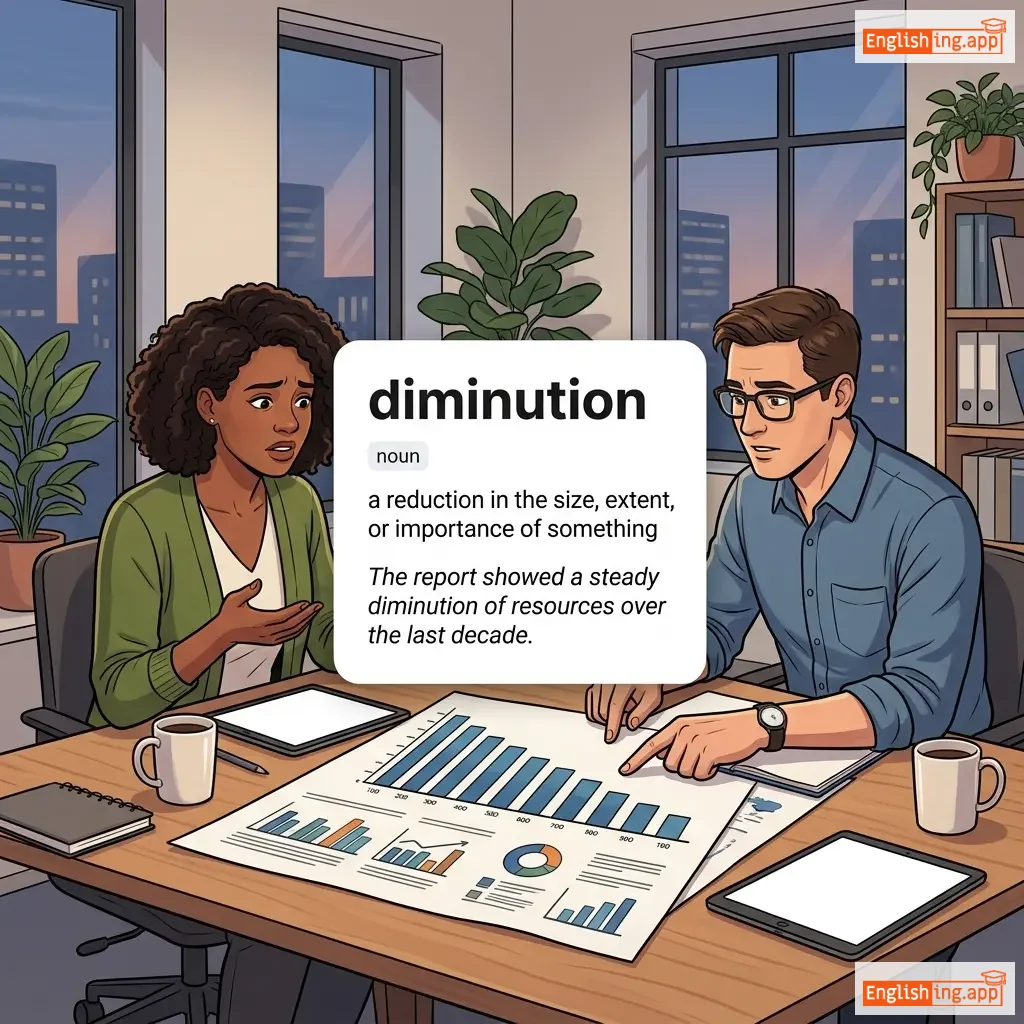
diminution definition card — visual illustration of the meaning
noun C1
/ˌdɪmɪˈnjuːʃən/

a reduction in the size, extent, or importance of something

"The report showed a steady diminution of resources over the last decade."

adjective C1
/dɪˈmɪnjətɪv/
极小的 (jixiao de)

extremely or unusually small

"Despite his diminutive size, he was a powerful leader."
"尽管他的体型极小,他仍然是一个强大的领导者。" (Jǐnguǎn tā de tǐxíng jí xiǎo, tā réngrán shì yīgè qiángdà de lǐngdǎo zhě.)
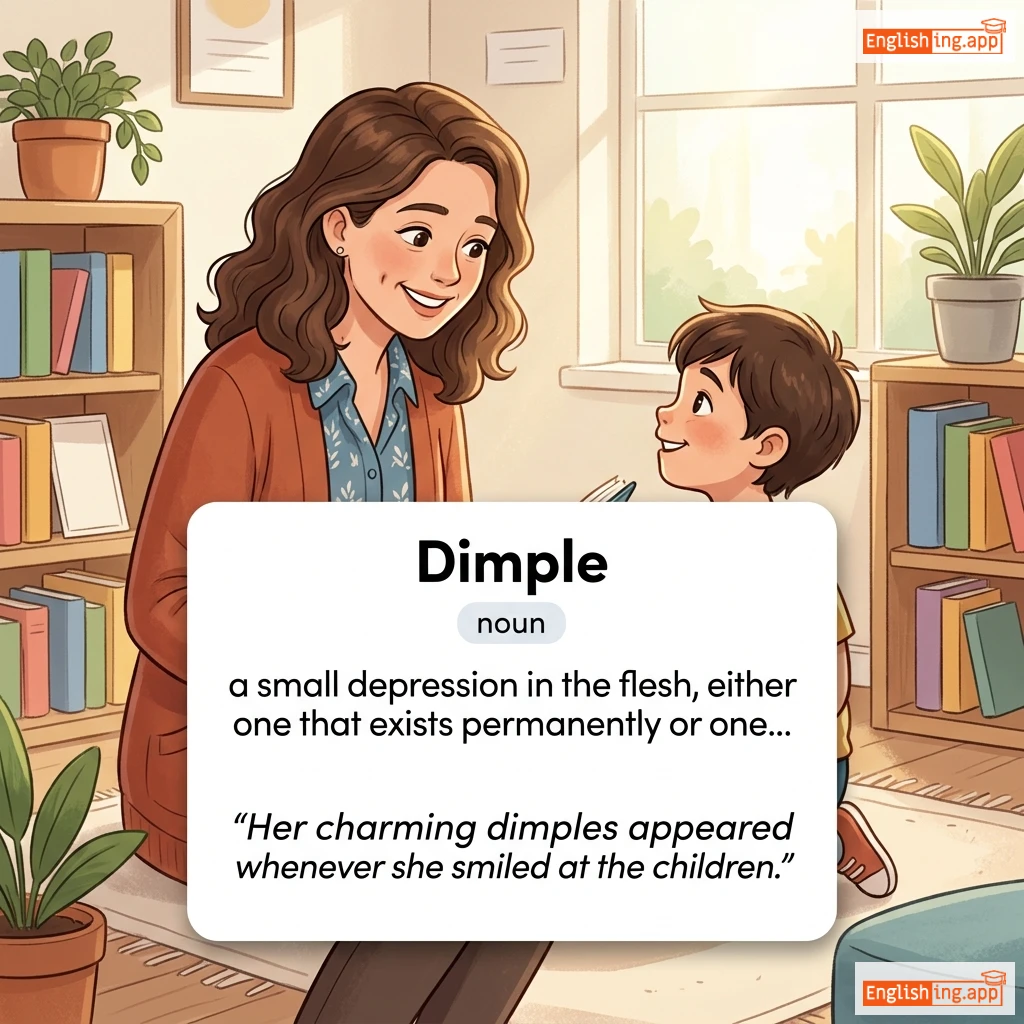
Dimple definition card — visual illustration of the meaning
noun C1
/ˈdɪm.pəl/
酒窝 (jiǔwō)

a small depression in the flesh, either one that exists permanently or one that forms when smiling

"Her charming dimples appeared whenever she smiled at the children."

"她迷人的酒窝每次对孩子们微笑时都会出现。" (tā mírén de jiǔwō měi cì duì háizimen wēixiào shí dōu huì chūxiàn.)
noun C1
/dɪn/
噪音 (zaoyin)

a loud, unpleasant, and prolonged noise

"The din of traffic outside made it hard to concentrate."

"外面交通的噪音让集中注意力变得困难。" (waimian jiaotong de zaoyin rang jiuzhong zhuyilv biande kunnan.)
noun C1
/ˈdɪŋɡi/
小艇 (xiǎo tǐng)

a small boat, often carried or towed by a larger vessel, used for short trips or as a lifeboat

"They rowed the dinghy back to the yacht."

"他们划着小艇回到游艇。" (Tāmen huázhe xiǎo tǐng huí dào yóutǐng.)
adjective C1
/ˈdɪndʒi/
肮脏 (angzang)

gloomy and drab; dirty or discolored

"The old hotel room looked dark and dingy."

"那间旧酒店房间看起来又暗又脏。" (Na jian jiu jiudian fangjian kan qilai you an you zang.)
noun C1
/ˌdaɪəˈrɑːmə/
立体模型 (lìtǐ móxíng)

a three-dimensional model representing a scene, often with miniature figures

"The museum displayed a diorama of an ancient village."
"博物馆展示了一个古代村庄的立体模型。" (Bówùguǎn zhǎnshìle yī gè gǔdài cūnzhuāng de lìtǐ móxíng.)
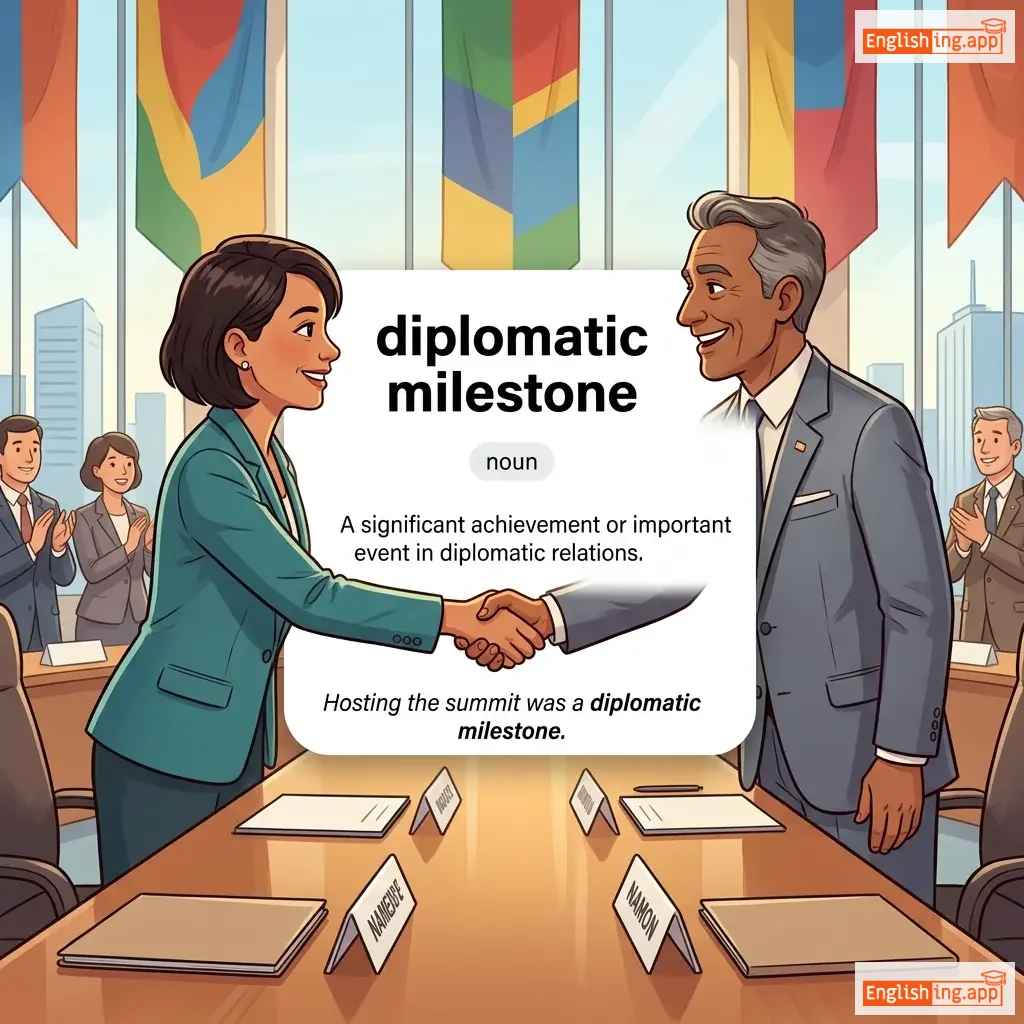
diplomatic milestone definition card — visual illustration of the meaning
noun C1
/ˌdɪp.ləˈmæt.ɪk ˈmaɪl.stəʊn/
外交里程碑 (waijiao lichengbei)

A significant achievement or important event in diplomatic relations.

"Hosting the summit was a diplomatic milestone."
"举办峰会是一个外交里程碑。" (Jubanfenghui shi yige waijiao lichengbei.)
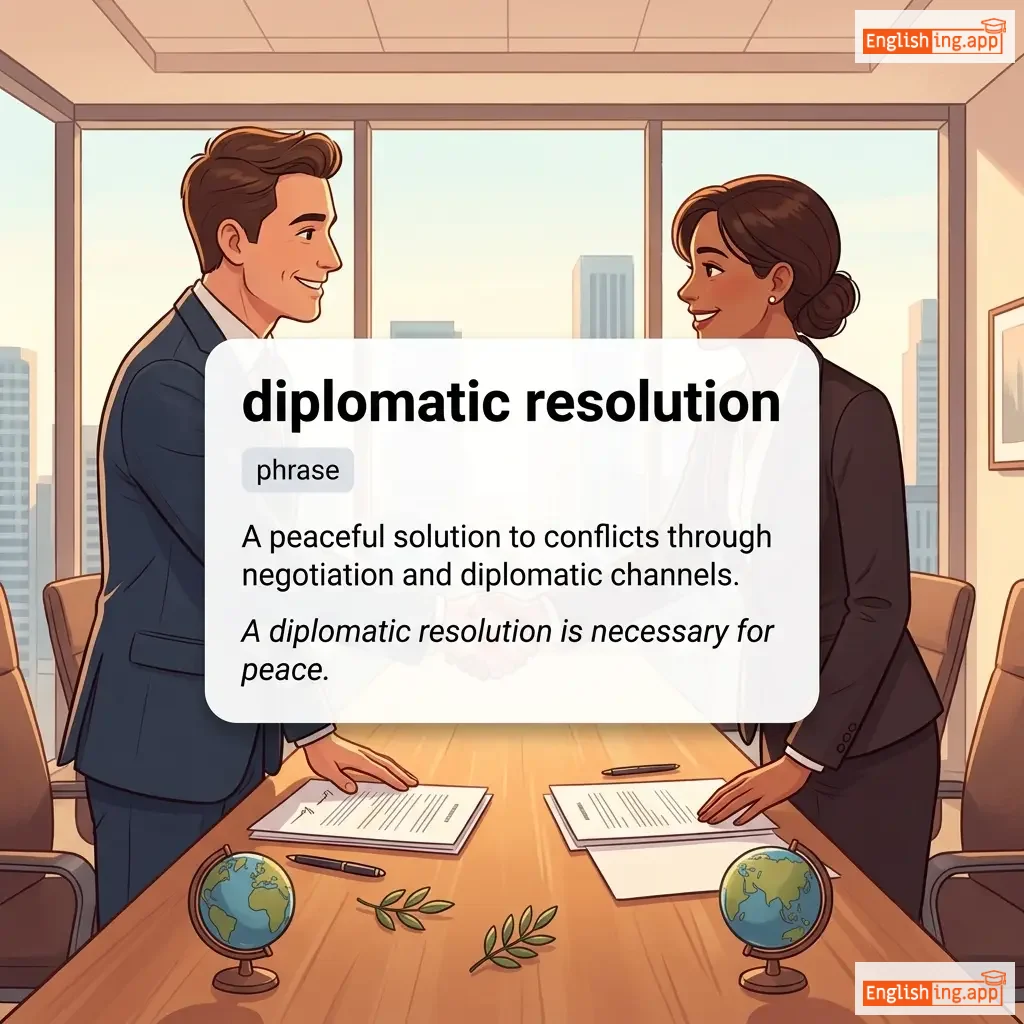
diplomatic resolution definition card — visual illustration of the meaning
phrase C1
ˌdɪp.ləˈmæt.ɪk rɛz.əˈluː.ʃən
外交解决方案 (waijiao jieju fang'an)

A peaceful solution to conflicts through negotiation and diplomatic channels.

"A diplomatic resolution is necessary for peace."

"和平需要外交解决方案。" (Heping xuyao waijiao jieju fang'an.)
adjective C1
/ˈdaɪər/
危急 (weiji)

Extremely serious or urgent.

"The refugees were in dire need of food and shelter."

"难民急需食物和住所。" (Nànmín jíxū shíwù hé zhùsuǒ.)
verb C1
/ˌdɪsəˈlaʊ/
不允许 (bù yǔnxǔ)

to refuse to allow or accept something

"The referee disallowed the goal for offside."

"裁判因为越位取消了进球。" (Cáipàn yīnwèi yuèwèi qǔxiāo le jìnqiú.)