The Young Politician
年轻的领导人阿尔曼正在处理他的政治agenda。他的主要目标是abolish一项不公正地强加给穷人的城市老法。他知道这不是一项简单的任务。他在政治academy的老师们教会了他如何赢得人们的心。他与市长见面并提出了他的提案。市长一开始并不同意。阿尔曼组织了一个与他的allies的公众会议。在那里,他向大家展示了自己的计划。他说这项法律是城市发展的一个重大障碍。人们开始因他的演讲而admire他。市长开始感受到来自公众的压力。他请求阿尔曼再次与他会面。这次市长同意听取阿尔曼的advice。他明白这件affair对城市至关重要。阿尔曼说服市长,amending这项法律将给城市带来很多改善。市长最终同意并通过了一项新法案来改变这项法律。在阿尔曼的领导下,城市朝着新的一天ahead迈进。
|
表情符号
|
单词 | Images | 翻译 | 过去时 | 过去分词 | 第三人称单数 | 动名词 | 含义 | 例句 | 例句翻译 | 示例表达 | 示例表达含义 | 示例表达翻译 | 同义词 | 反义词 | 搭配词 | 助记符 |
|---|---|---|---|---|---|---|---|---|---|---|---|---|---|---|---|---|---|
|
✂️
••••••
|
/əˈbɑː.lɪʃ/
verb
(阿博丽什)
••••••
|
- •••••• |
废除
feichu
••••••
|
abolished
阿博丽什德
••••••
|
abolished
阿博丽什德
••••••
|
abolishes
阿博丽什兹
••••••
|
abolishing
阿博丽什英
••••••
|
to formally put an end to a system, practice, or institution
••••••
|
The government decided to abolish the old tax system.
政府决定废除旧的税制。
••••••
|
政府决定废除旧的税制。
Zhèngfǔ juédìng fèichú jiù de shuìzhì.
••••••
|
abolish slavery
废除奴隶制
••••••
|
to officially end the system of slavery
••••••
|
废除奴隶制
Fèichú núlì zhì
••••••
|
end, eliminate, terminate, annul, eradicate
••••••
|
establish, maintain
••••••
|
abolish slavery, abolish law, abolish practice
••••••
|
ABOLISH意味着ABOL (abol) 结束一切 (jiéshù yīqiè)
••••••
|
|
🚪
••••••
|
/ˈæbsəns/
noun
(æbsəns)
••••••
|
- •••••• |
缺席
quēxí
••••••
|
- •••••• | - •••••• | - •••••• | - •••••• |
the state of being away from a place or person
••••••
|
His absence from the meeting was noticed by everyone. |
他在会议中的缺席被每个人注意到了。
Tā zài huìyì zhōng de quēxí bèi měi gè rén zhùyì dào le.
••••••
|
absence makes the heart grow fonder |
being away from someone makes you appreciate them more
••••••
|
缺席让心更温暖
quēxí ràng xīn gèng wēnnuǎn
••••••
|
nonappearance, lack, nonexistence, vacancy
••••••
|
presence, attendance, appearance
••••••
|
long absence, unexplained absence, absence from work
••••••
|
Absence在中文里就是'缺席',与英文发音相近。
••••••
|
|
🏫
••••••
|
/əˈkædəmi/
noun
(学院)
••••••
|
- •••••• |
学院
xueyuan
••••••
|
- •••••• | - •••••• | - •••••• | - •••••• |
an institution of learning or training
••••••
|
He enrolled in a military academy. |
他报考了军事学院。
Tā bào kǎo le jūnshì xuéyuàn.
••••••
|
- •••••• | - •••••• | - •••••• |
school, institute, college, university
••••••
|
none,
••••••
|
military academy, sports academy, music academy, national academy
••••••
|
学院是学习的地方 📖。记住:学院 = 学校,额外加上'cademy'。
••••••
|
|
✅
••••••
|
/əkˈsɛpt/
verb
(接受)
••••••
|
|
接受
jiēshòu
••••••
|
accepted
接受了
••••••
|
accepted
接受了
••••••
|
accepts
接受
••••••
|
accepting
接受
••••••
|
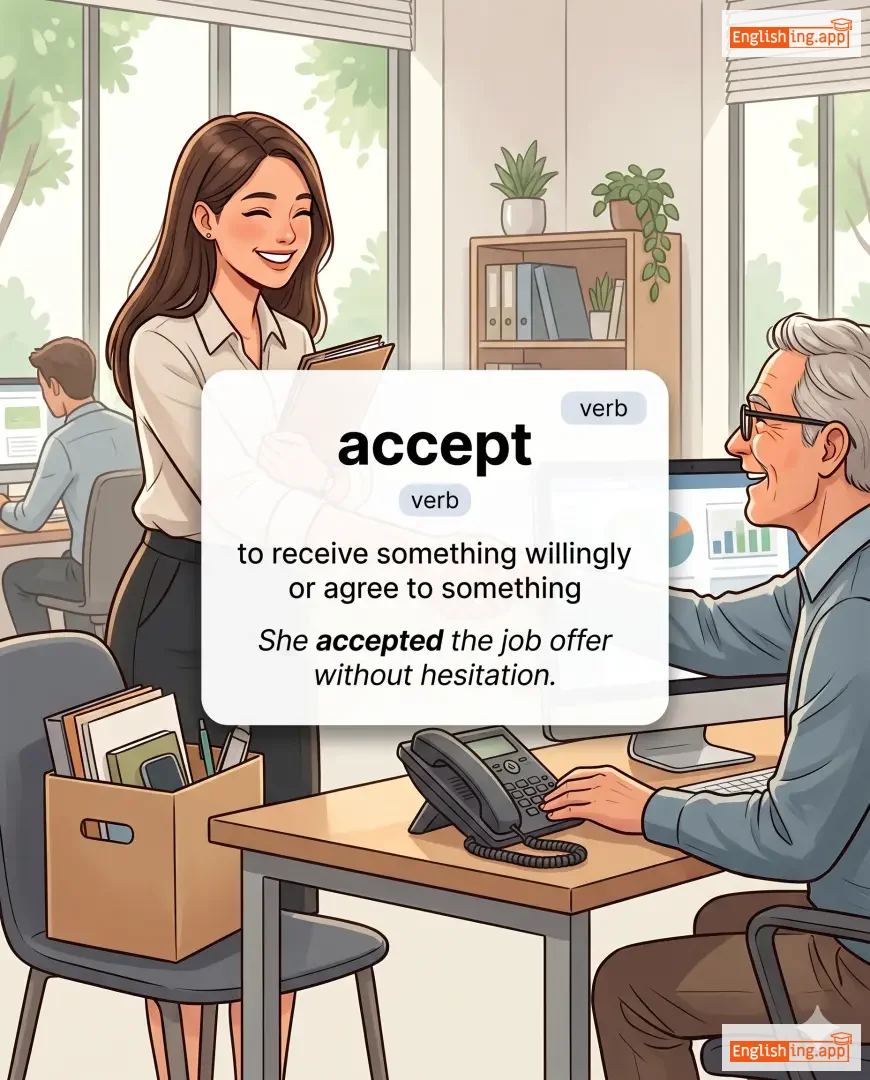
to receive something willingly or agree to something
••••••
|
She accepted the job offer without hesitation.
她毫不犹豫地接受了工作邀请。
••••••
|
她毫不犹豫地接受了工作邀请。
Tā háo bù yóuyù de jiēshòu le gōngzuò yāoqǐng.
••••••
|
accept responsibility
接受责任
••••••
|
to acknowledge and take responsibility for something
••••••
|
接受责任
jiēshòu zérèn
••••••
|
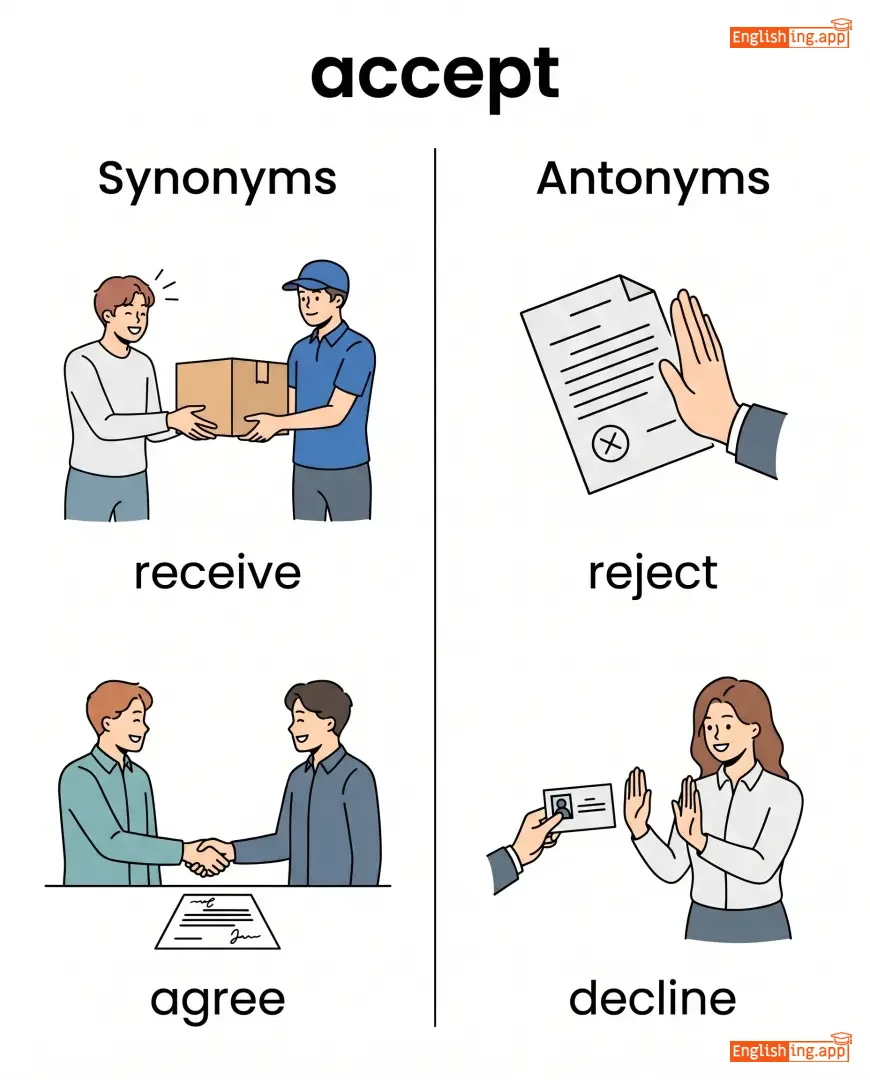
receive, agree, approve, consent
••••••
|
reject, decline, refuse
••••••
|
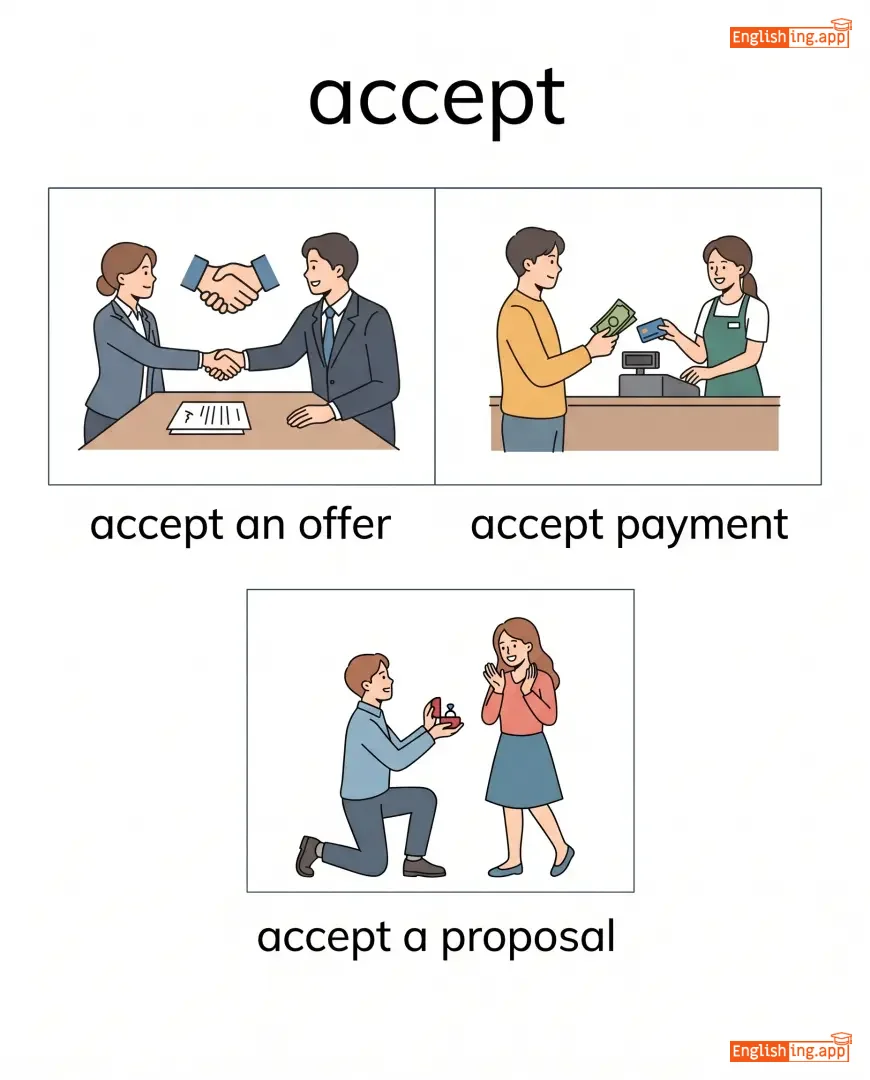
accept an offer, accept payment, accept a proposal, accept responsibility
••••••
|
接受新工作意味着迎接新的挑战
••••••
|
|
🔑
••••••
|
/ˈæksɛs/
noun/verb
(áksès)
••••••
|
- •••••• |
访问
fǎngwèn
••••••
|
accessed
áksèssèd
••••••
|
accessed
áksèssèd
••••••
|
accesses
áksèssès
••••••
|
accessing
áksèssing
••••••
|
the ability to enter or use something; to reach or use something
••••••
|
Students have free access to the library.
学生可以免费访问图书馆。
••••••
|
学生可以免费访问图书馆。
Xuéshēng kěyǐ miǎnfèi fǎngwèn túshūguǎn.
••••••
|
gain access
获得访问权限
••••••
|
to succeed in entering or using something
••••••
|
获得访问权限
huòdé fǎngwèn quánxiàn
••••••
|
entry, approach, admission, connection
••••••
|
denial, exclusion
••••••
|
have access, provide access, gain access, limited access
••••••
|
访问是钥匙 🔑 通向知识的门。
••••••
|
|
🧷
••••••
|
/ədˈhɪər/
verb
(adhier)
••••••
|
|
粘附, 遵守
zhānfù, zūnshǒu
••••••
|
adhered
adhiered
••••••
|
adhered
adhiered
••••••
|
adheres
adhieres
••••••
|
adhering
adhiering
••••••
|
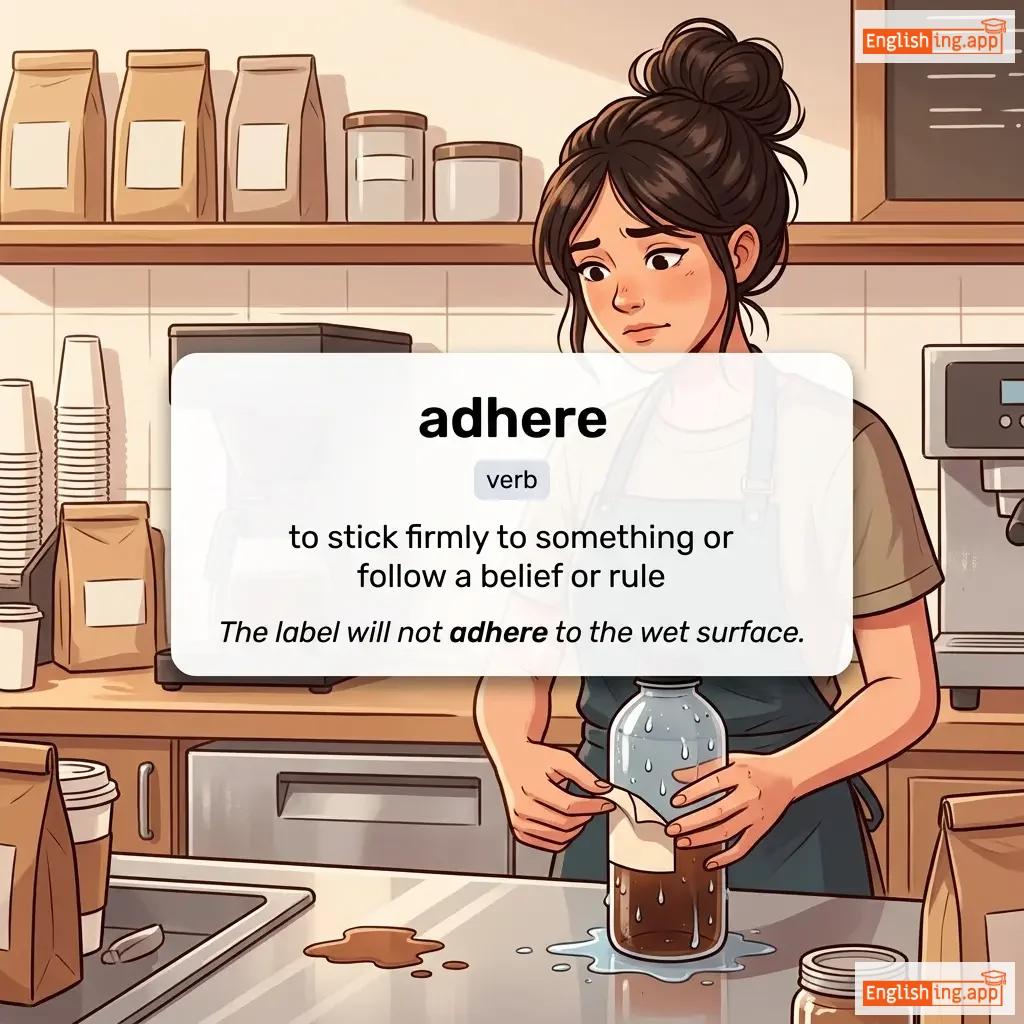
to stick firmly to something or follow a belief or rule
••••••
|
The label will not adhere to the wet surface.
标签不会粘在湿表面。
••••••
|
标签不会粘在湿表面。
Biāoqiān bù huì zhān zài shī biǎomiàn.
••••••
|
adhere to rules
遵守规则
••••••
|
to strictly follow rules or principles
••••••
|
遵守规则
zūnshǒu guīzé
••••••
|
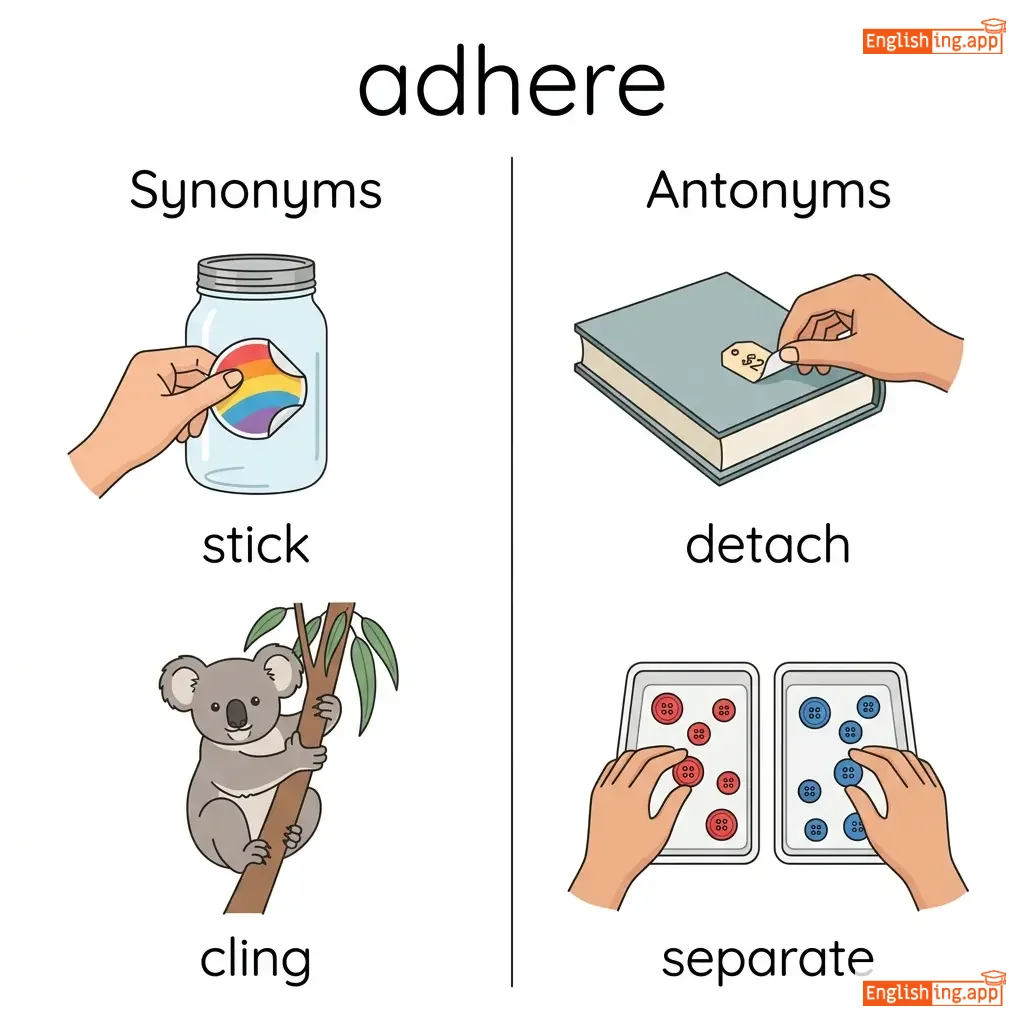
stick, cling, attach, comply, follow
••••••
|
detach, separate, ignore
••••••
|
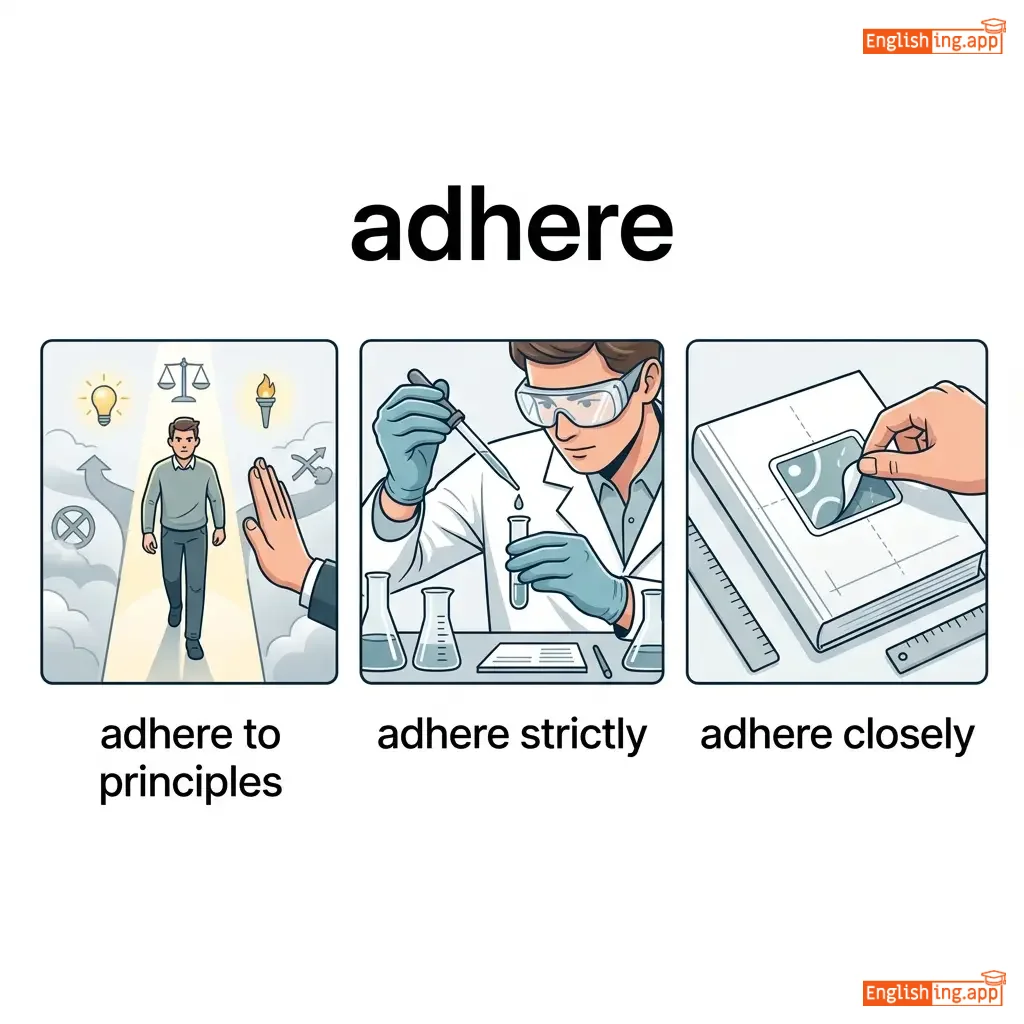
adhere to principles, adhere strictly, adhere closely, adhere firmly
••••••
|
Adhere 就像粘贴一样,像胶水一样粘在表面。
••••••
|
|
⚙️
••••••
|
/əˈdʒʌst/
verb
(ā jiǎsī té)
••••••
|
- •••••• |
调整
tiaozheng
••••••
|
adjusted
ā jiǎsī tèd
••••••
|
adjusted
ā jiǎsī tèd
••••••
|
adjusts
ā jiǎsī zī
••••••
|
adjusting
ā jiǎsī tīng
••••••
|
to change something slightly to make it more suitable or effective
••••••
|
She adjusted the mirror to see the road clearly.
她调整了镜子以清晰地看见路。
••••••
|
她调整了镜子以清晰地看见路。
Ta tiaozheng le jingzi yi qingxi de kanjian lu.
••••••
|
adjust to
适应于
••••••
|
to get used to a new situation
••••••
|
适应于
shiying yu
••••••
|
modify, alter, adapt, regulate
••••••
|
disturb, disarrange, upset
••••••
|
adjust settings, adjust position, adjust speed, adjust focus
••••••
|
调整=微调以便更好适应
••••••
|
|
😍
••••••
|
/ədˈmaɪər/
verb
(艾德迈尔)
••••••
|
- •••••• |
欣赏
xīnshǎng
••••••
|
admired
艾德迈尔德
••••••
|
admired
艾德迈尔德
••••••
|
admires
艾德迈尔斯
••••••
|
admiring
艾德迈林
••••••
|
To respect, appreciate, or look up to someone or something.
••••••
|
I really admire her dedication to education.
我真的很欣赏她对教育的奉献。
••••••
|
我真的很欣赏她对教育的奉献。
Wǒ zhēn de hěn xīnshǎng tā duì jiàoyù de fèngxiàn.
••••••
|
admire from afar
远距离欣赏
••••••
|
To respect or like someone without approaching them directly.
••••••
|
远距离欣赏
yuǎn jùlí xīnshǎng
••••••
|
respect, appreciate, praise, value, esteem
••••••
|
despise, dislike, scorn
••••••
|
admire greatly, admire deeply, admire the beauty, admire courage
••••••
|
欣赏意味着 admire – 我欣赏她从远处的奉献。
••••••
|
|
💡
••••••
|
/ədˈvaɪs/
noun
••••••
|

|
- •••••• | - •••••• | - •••••• | - •••••• | - •••••• |
a suggestion or recommendation about what someone should do
••••••
|
She gave me good advice about managing money. |
- •••••• |
take someone's advice |
to follow the suggestion or recommendation given by someone
••••••
|
- •••••• |
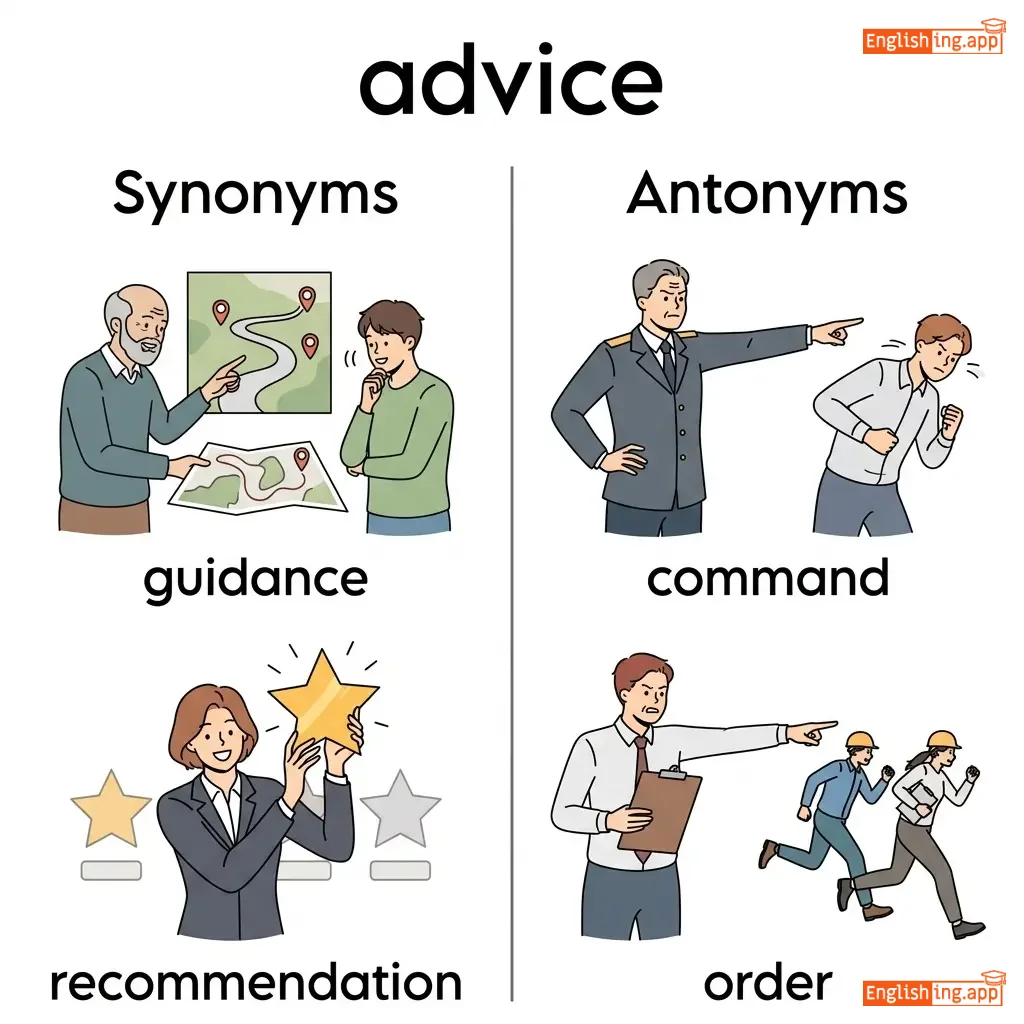
guidance, recommendation, counsel, tip, suggestion
••••••
|
command, order
••••••
|
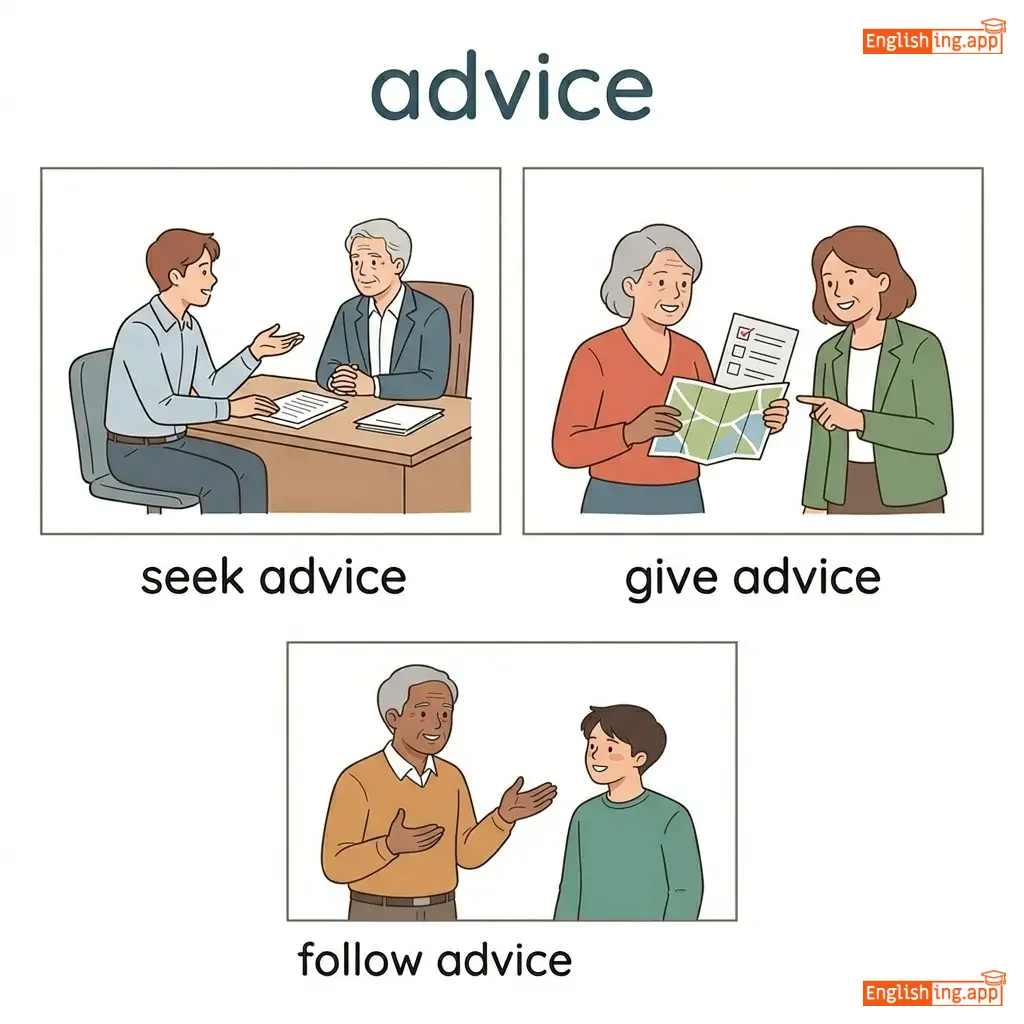
seek advice, give advice, follow advice, professional advice
••••••
|
No •••••• |
|
💌
••••••
|
/əˈfɛər/
noun
(阿费尔)
••••••
|
- •••••• |
事件 / 关系
shijian / guanxi
••••••
|
- •••••• | - •••••• | - •••••• | - •••••• |
an event, situation, or relationship, often one that is private or romantic
••••••
|
The scandal became the most talked-about affair of the year.
丑闻成为了这一年最受讨论的事件。
••••••
|
丑闻成为了这一年最受讨论的事件。
Chou wen chengwei le zhe yi nian zui shou taolun de shijian.
••••••
|
love affair
爱情事件
••••••
|
a romantic or sexual relationship, often secret
••••••
|
恋爱关系
lianai guanxi
••••••
|
incident, matter, event, relationship
••••••
|
certainty, indifference
••••••
|
family affairs, political affairs, love affair, personal affair
••••••
|
Affair意味着事件 - 爱情的affair意味着爱情事件。
••••••
|
|
💳
••••••
|
/əˈfɔːrd/
verb
(阿福德)
••••••
|


|
负担得起
fùdān dé qǐ
••••••
|
afforded
阿福德德
••••••
|
afforded
阿福德德
••••••
|
affords
阿福兹
••••••
|
affording
阿福丁
••••••
|
to have enough money or resources to buy or do something
••••••
|
We can’t afford to buy a new car right now.
我们现在负担不起买新车。
••••••
|
我们现在负担不起买新车。
Wǒmen xiànzài fùdān bù qǐ mǎi xīnchē.
••••••
|
afford to lose
负担得起失去
••••••
|
to be in a position where one can risk or bear the loss
••••••
|
负担得起失去
fùdān dé qǐ shīqù
••••••
|
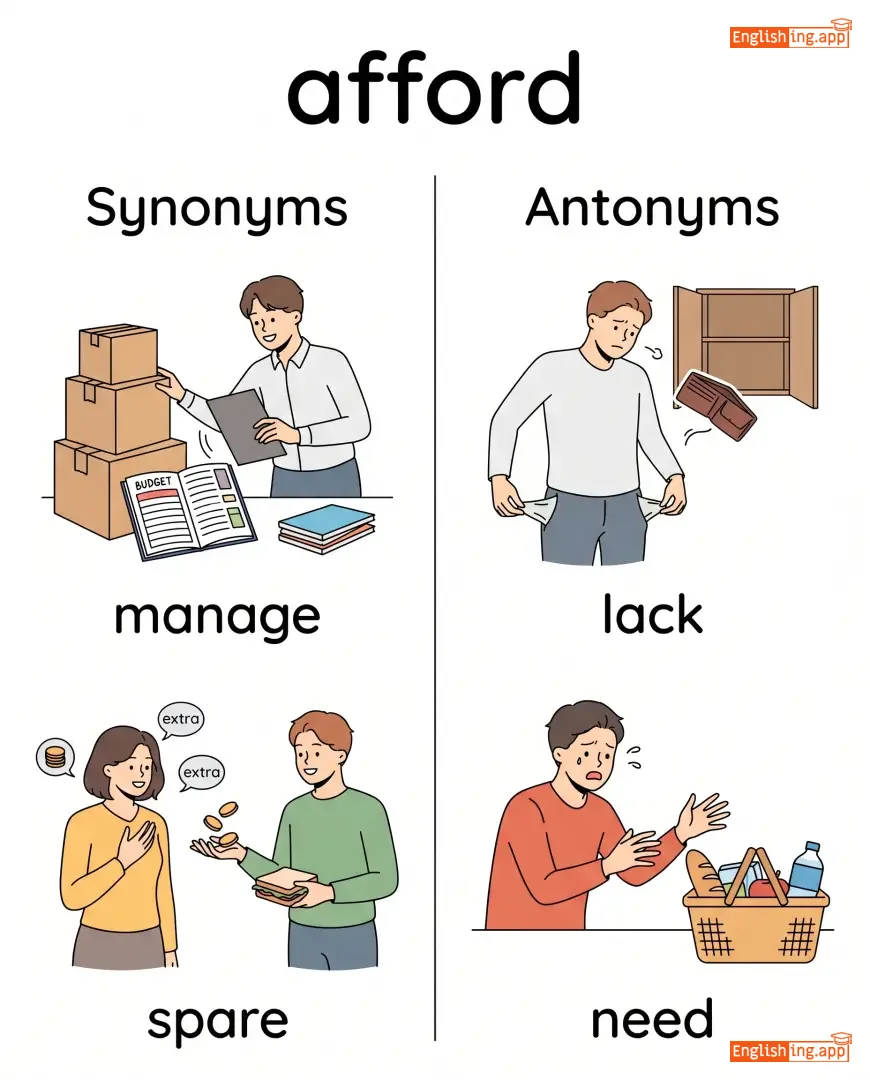
manage, spare, provide, allow
••••••
|
lack, need, require
••••••
|
can afford, afford to buy, afford the cost, afford a house
••••••
|
Afford 在中文—如果你能买车,你就能 afford 一切!
••••••
|
|
🏢
••••••
|
/ˈeɪ.dʒən.si/
noun
(艾金西)
••••••
|
- •••••• |
机构
jīgòu
••••••
|
- •••••• | - •••••• | - •••••• | - •••••• |
An organization or business that provides a particular service.
••••••
|
She works at a travel agency. |
她在一个旅行社工作。
Tā zài yīgè lǚxíng shè gōngzuò.
••••••
|
advertising agency |
A company that creates and manages advertisements for clients.
••••••
|
广告公司
guǎnggào gōngsī
••••••
|
organization, firm, bureau, office, service
••••••
|
individual, client, customer
••••••
|
government agency, real estate agency, news agency, travel agency
••••••
|
Agency意味着'机构' — 记住'机构提供服务'
••••••
|
|
📋
••••••
|
/əˈdʒɛndə/
noun
••••••
|
- •••••• | - •••••• | - •••••• | - •••••• | - •••••• | - •••••• |
A list of items to be discussed or acted upon in a meeting or plan.
••••••
|
The manager reviewed the agenda before the meeting began. |
- •••••• |
hidden agenda |
A secret motive or plan behind someone's actions.
••••••
|
- •••••• |
schedule, plan, program, timetable, itinerary
••••••
|
disorganization, randomness
••••••
|
meeting agenda, set the agenda, hidden agenda
••••••
|
No •••••• |
|
🕵️
••••••
|
/ˈeɪ.dʒənt/
noun
(āi jìng tè)
••••••
|
- •••••• |
代理人
dàilǐrén
••••••
|
- •••••• | - •••••• | - •••••• | - •••••• |
A person who acts on behalf of another person or organization.
••••••
|
The real estate agent showed us several houses.
房地产经纪人向我们展示了几套房子。
••••••
|
房地产经纪人向我们展示了几套房子。
Fángdìchǎn jīngjì rén xiàng wǒmen zhǎnshìle jǐ tào fángzi.
••••••
|
secret agent
秘密特工
••••••
|
A spy working for a government or organization.
••••••
|
秘密特工
mìmì tègōng
••••••
|
representative, delegate, envoy, broker, spy
••••••
|
principal, client, customer
••••••
|
travel agent, real estate agent, sports agent, insurance agent
••••••
|
代理人,像我们常说的秘密特工一样,代理别人的任务。
••••••
|
|
👍
••••••
|
/əˈɡriː/
verb
(əˈɡri)
••••••
|
|
同意
tóng yì
••••••
|
agreed
əˈɡriːd
••••••
|
agreed
əˈɡriːd
••••••
|
agrees
əˈɡriːz
••••••
|
agreeing
əˈɡriːɪŋ
••••••
|
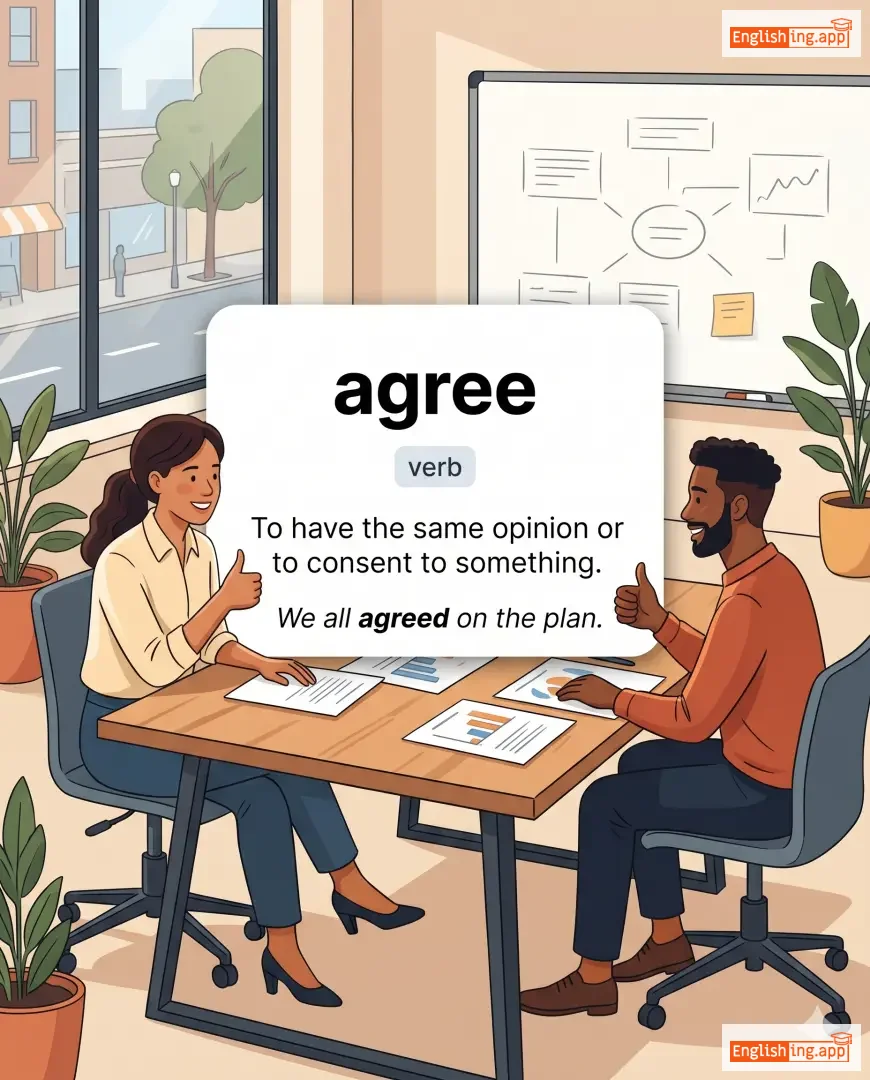
To have the same opinion or to consent to something.
••••••
|
We all agreed on the plan.
我们都同意这个计划。
••••••
|
我们都同意这个计划。
Wǒmen dōu tóngyì zhège jìhuà.
••••••
|
agree to disagree
同意不同意
••••••
|
To accept different opinions without conflict.
••••••
|
同意不同意
tóngyì bù tóngyì
••••••
|
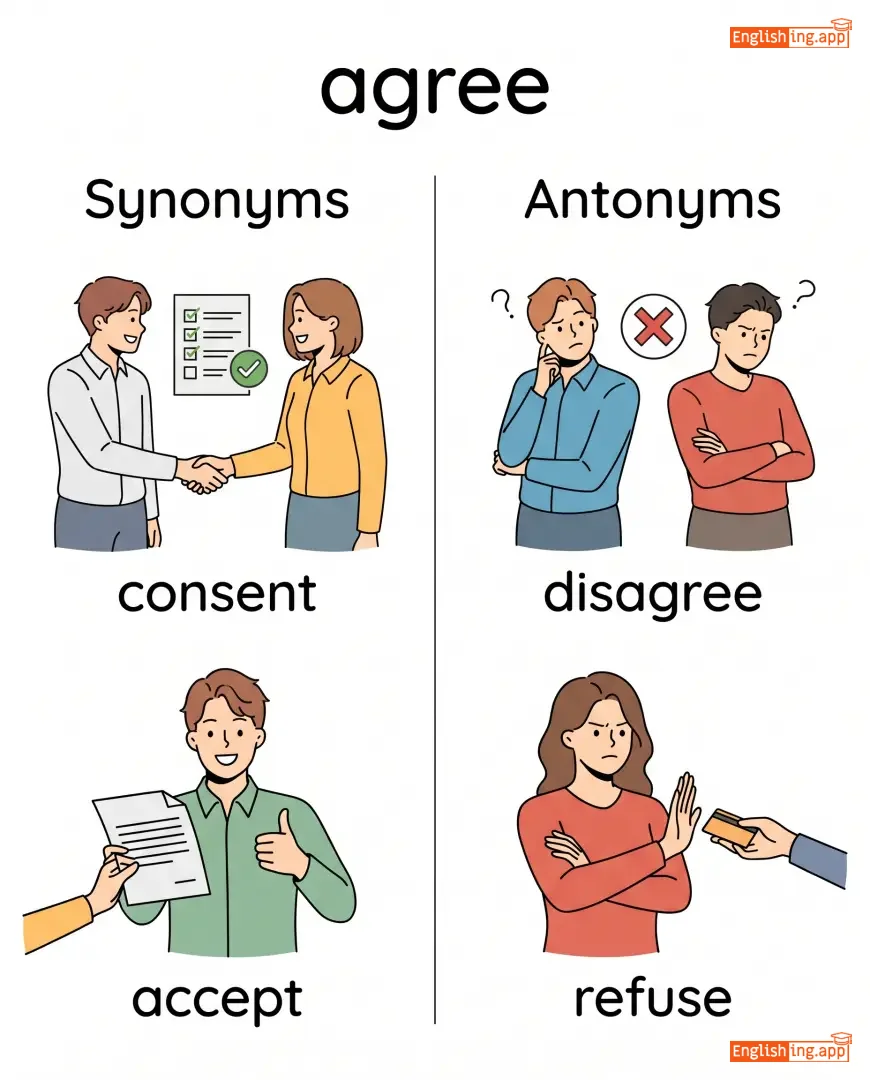
consent, accept, approve, concur, assent
••••••
|
disagree, refuse, oppose
••••••
|
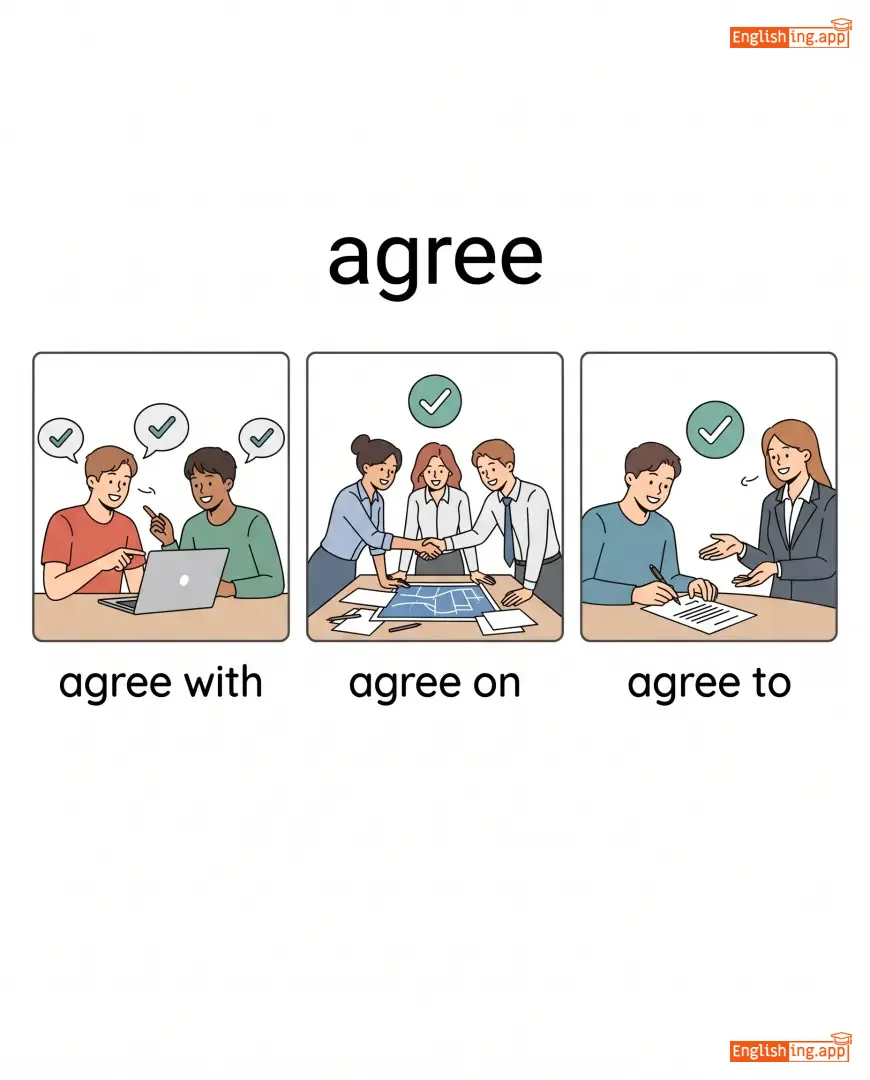
agree with, agree on, agree to, strongly agree
••••••
|
'Agree' 意思是同意 — 就像大家都点头同意时一样。
••••••
|
|
➡️
••••••
|
/əˈhɛd/
adverb
(āhèd)
••••••
|
- •••••• |
前面
qianmian
••••••
|
- •••••• | - •••••• | - •••••• | - •••••• |
in front; in advance; before someone or something in position or progress
••••••
|
She walked ahead of the group. |
她走在小组前面。
Tā zǒu zài xiǎozǔ qiánmiàn.
••••••
|
go ahead |
to proceed or continue
••••••
|
继续前进
jìxù qiánjìn
••••••
|
forward, forth, onward, in front
••••••
|
behind, backward
••••••
|
ahead of time, go ahead, plan ahead, look ahead
••••••
|
前面 (ahead) 就是'继续前进 ➡️'
••••••
|
|
🩹
••••••
|
/eɪd/
noun, verb
(eid)
••••••
|
- •••••• |
援助
yuánzhù
••••••
|
aided
eidet
••••••
|
aided
eidet
••••••
|
aids
eids
••••••
|
aiding
aiding
••••••
|
help or support, typically of a practical nature
••••••
|
The volunteers provided aid to the flood victims.
志愿者为洪水受害者提供了帮助。
••••••
|
志愿者为洪水受害者提供了帮助。
Zhìyuànzhě wèi hóngshuǐ shòuhài zhě tígōng le yuánzhù.
••••••
|
first aid
急救
••••••
|
emergency medical treatment given immediately
••••••
|
急救
jíjiù
••••••
|
help, support, assistance, relief, guidance
••••••
|
hindrance, obstruction
••••••
|
foreign aid, financial aid, medical aid, aid in
••••••
|
援助就是在紧急时提供的帮助,救人于危难。
••••••
|
|
🎯
••••••
|
/eɪm/
verb
(āi mǔ)
••••••
|
- •••••• |
瞄准
miáozhǔn
••••••
|
aimed
āi mǔd
••••••
|
aimed
āi mǔd
••••••
|
aims
āi mǔs
••••••
|
aiming
āi míng
••••••
|
to direct a weapon, object, or effort at a target; to intend or plan
••••••
|
He aimed the ball at the goal.
tā zhǔnbèi qiú zhíxiàng mùdì.
••••••
|
他瞄准了球朝着目标。
Tā miáozhǔnle qiú cháo zhe mùbiāo.
••••••
|
aim high
zhǐ zhì gāo
••••••
|
to set ambitious goals
••••••
|
瞄准高处
miáozhǔn gāo chù
••••••
|
target, direct, focus, aspire, intend
••••••
|
neglect, ignore
••••••
|
aim at, aim for, aim high, aim to achieve
••••••
|
Aim 意味着 🎯瞄准,记得 '瞄准 AIM'。
••••••
|
|
🤝
••••••
|
/ˈælaɪ/
verb
(阿里)
••••••
|
- •••••• |
盟友
méng yǒu
••••••
|
allied
联盟
••••••
|
allied
联盟
••••••
|
allies
盟友
••••••
|
allying
结盟
••••••
|
To unite or form a connection or partnership with another person, group, or nation.
••••••
|
The two countries decided to ally against their common enemy.
这两个国家决定联合对抗共同的敌人。
••••••
|
这两个国家决定联合对抗共同的敌人。
Zhè liǎng gè guójiā juédìng liánhé duìkàng gòngtóng de dírén.
••••••
|
ally with
与...结盟
••••••
|
To form a partnership or alliance with someone.
••••••
|
与...结盟
yǔ...jiéméng
••••••
|
associate, unite, partner, combine, join
••••••
|
oppose, resist, separate
••••••
|
ally with, strong ally, loyal ally, ally against
••••••
|
Ally 代表 All + I,联合形成伙伴关系。
••••••
|
|
✍️
••••••
|
/əˈmɛnd/
verb
••••••
|
|
- •••••• |
amended
••••••
|
amended
••••••
|
amends
••••••
|
amending
••••••
|
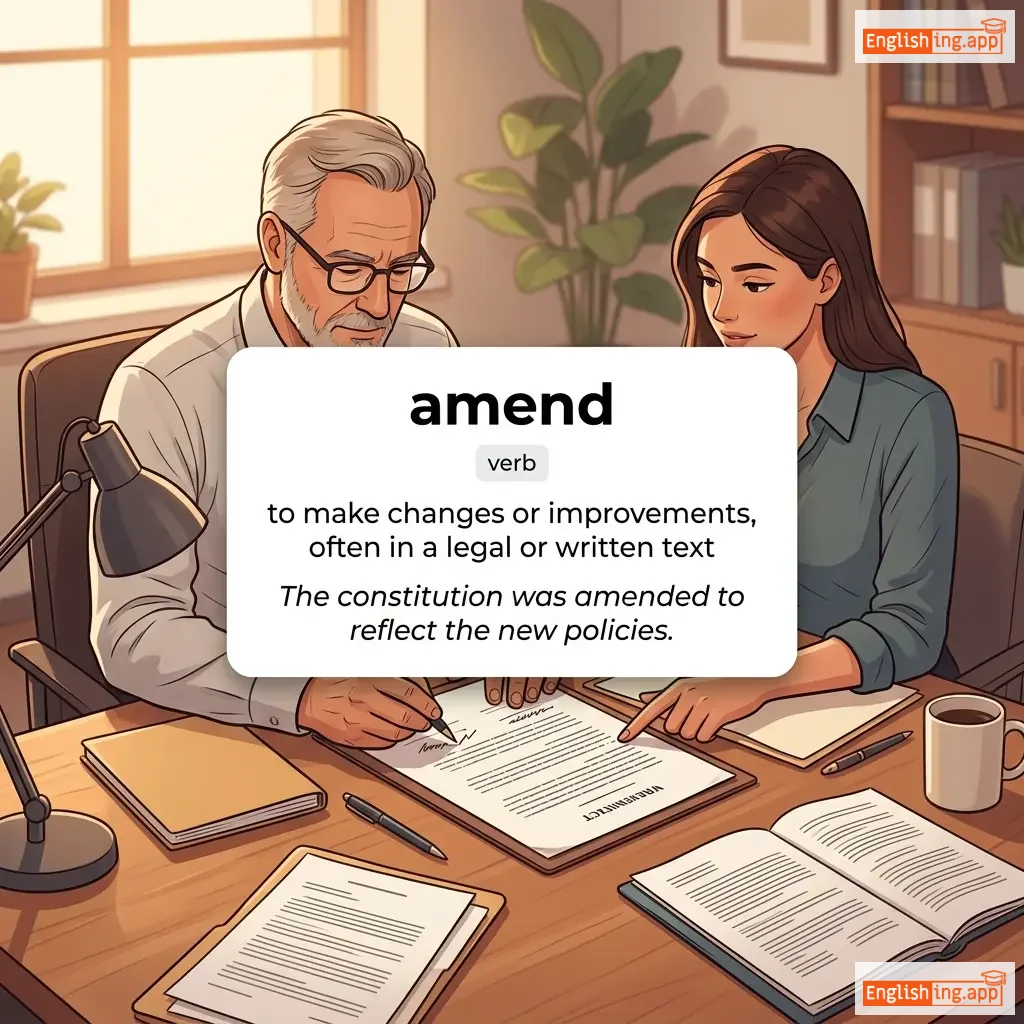
to make changes or improvements, often in a legal or written text
••••••
|
The constitution was amended to reflect the new policies. |
- •••••• |
make amends |
to do something to show you are sorry for a wrong you have done
••••••
|
- •••••• |
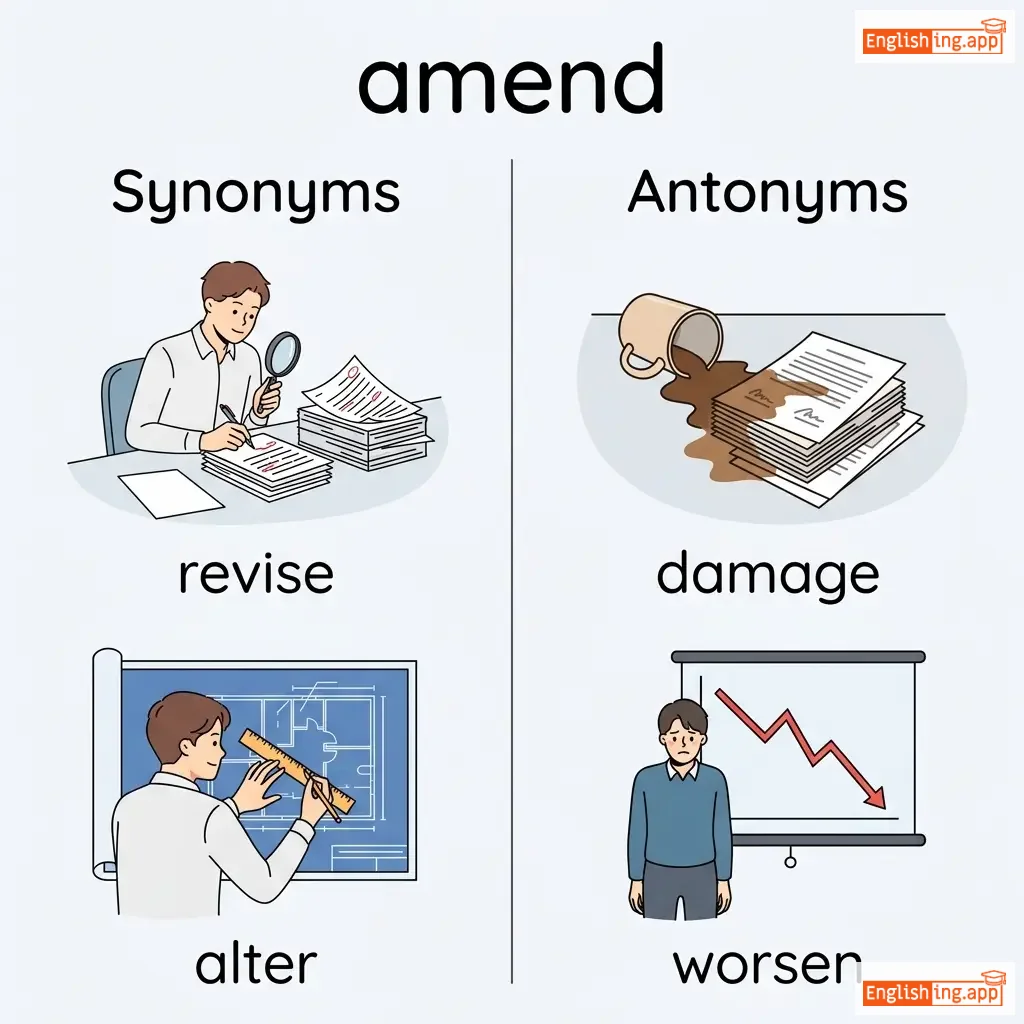
revise, alter, modify, adjust, improve
••••••
|
damage, worsen, harm
••••••
|
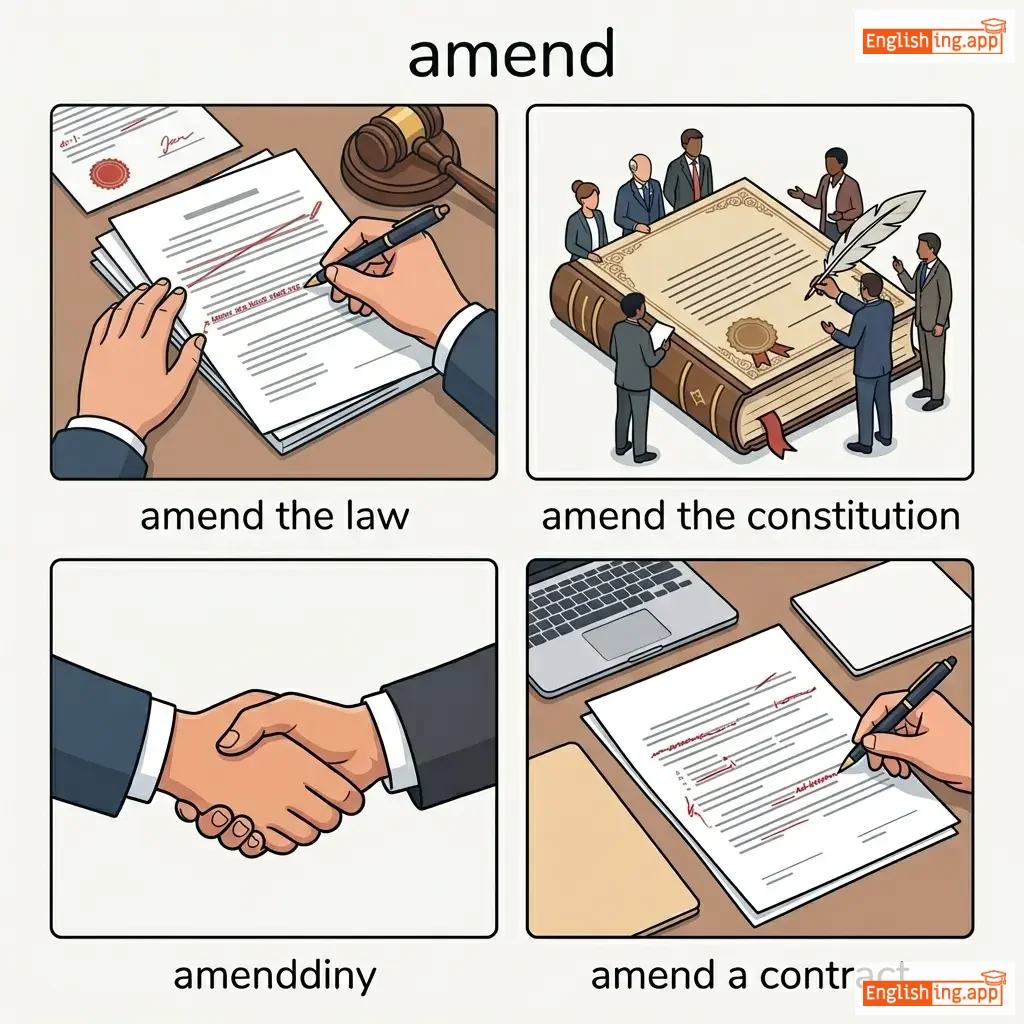
amend the law, amend the constitution, amend a contract
••••••
|
No •••••• |

