|
表情符号
|
单词 | Images | 翻译 | 过去时 | 过去分词 | 第三人称单数 | 动名词 | 含义 | 例句 | 例句翻译 | 示例表达 | 示例表达含义 | 示例表达翻译 | 同义词 | 反义词 | 搭配词 | 助记符 |
|---|---|---|---|---|---|---|---|---|---|---|---|---|---|---|---|---|---|
|
😈
••••••
|
/ˈmɪs.kri.ənt/
noun
(mìsīkuì'āntè)
••••••
|
- •••••• |
恶棍; 罪犯
miscreant
••••••
|
- •••••• | - •••••• | - •••••• | - •••••• |
A person who behaves badly or illegally; a villain or criminal
••••••
|
The miscreant was caught stealing from the store.
这个恶棍在商店偷东西时被抓住了。
••••••
|
这个恶棍在商店偷东西时被抓住了。
Zhège è gùn zài shāngdiàn tōu dōngxī shí bèi zhuā zhù le.
••••••
|
- •••••• | - •••••• | - •••••• |
villain, criminal, wrongdoer, scoundrel
••••••
|
hero, saint, good person, law-abiding citizen
••••••
|
dangerous miscreant, petty miscreant, notorious miscreant, young miscreant
••••••
|
Miscreant - A person who misbehaves. In Chinese, '恶棍' is a criminal or bad person.
••••••
|
|
🚫👩
••••••
|
/mɪˈsɑːdʒɪnɪst/
noun
(厌女症者)
••••••
|
- •••••• |
厌女症者
yàn nǚ zhèng zhě
••••••
|
- •••••• | - •••••• | - •••••• | - •••••• |
A person who dislikes, despises, or is strongly prejudiced against women.
••••••
|
Many condemned his speech as the words of a misogynist. |
许多人谴责他的演讲是厌女症者的言论。
Xǔduō rén qiǎn zé tā de yǎnjiǎng shì yàn nǚ zhèng zhě de yánlùn.
••••••
|
- •••••• | - •••••• | - •••••• |
woman-hater, sexist, chauvinist, anti-feminist
••••••
|
feminist, egalitarian
••••••
|
open misogynist, notorious misogynist, blatant misogynist
••••••
|
Mis + gyn (女性) → 厌女症者是指讨厌女性的人
••••••
|
|
⚖️
••••••
|
/ˈmɪtɪˌɡeɪt/
verb
(米提盖特)
••••••
|
|
减轻
jianqīng
••••••
|
mitigated
米提盖特德
••••••
|
mitigated
米提盖特德
••••••
|
mitigates
米提盖特斯
••••••
|
mitigating
米提盖廷
••••••
|
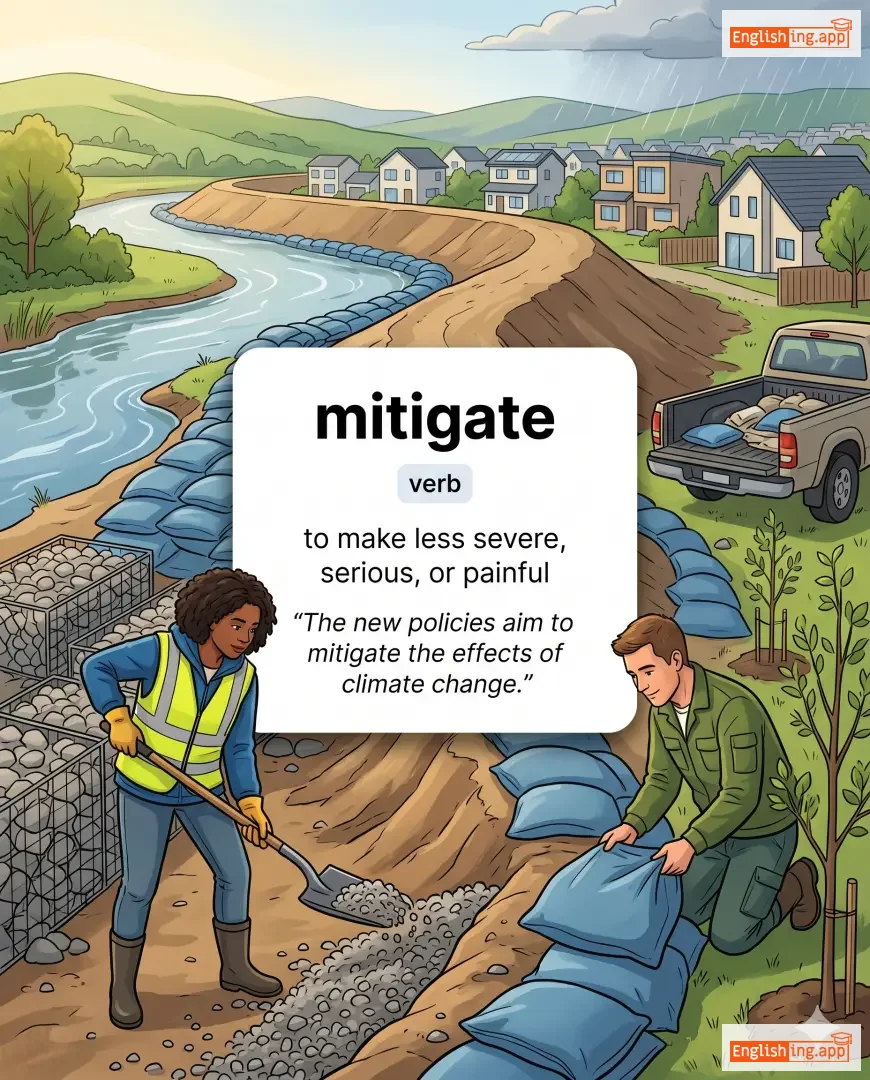
to make less severe, serious, or painful
••••••
|
The new policies aim to mitigate the effects of climate change.
新的政策旨在减缓气候变化的影响。
••••••
|
新政策旨在减缓气候变化的影响。
Xin zhengce zhi zai jianhuan qihou bianhua de yingxiang.
••••••
|
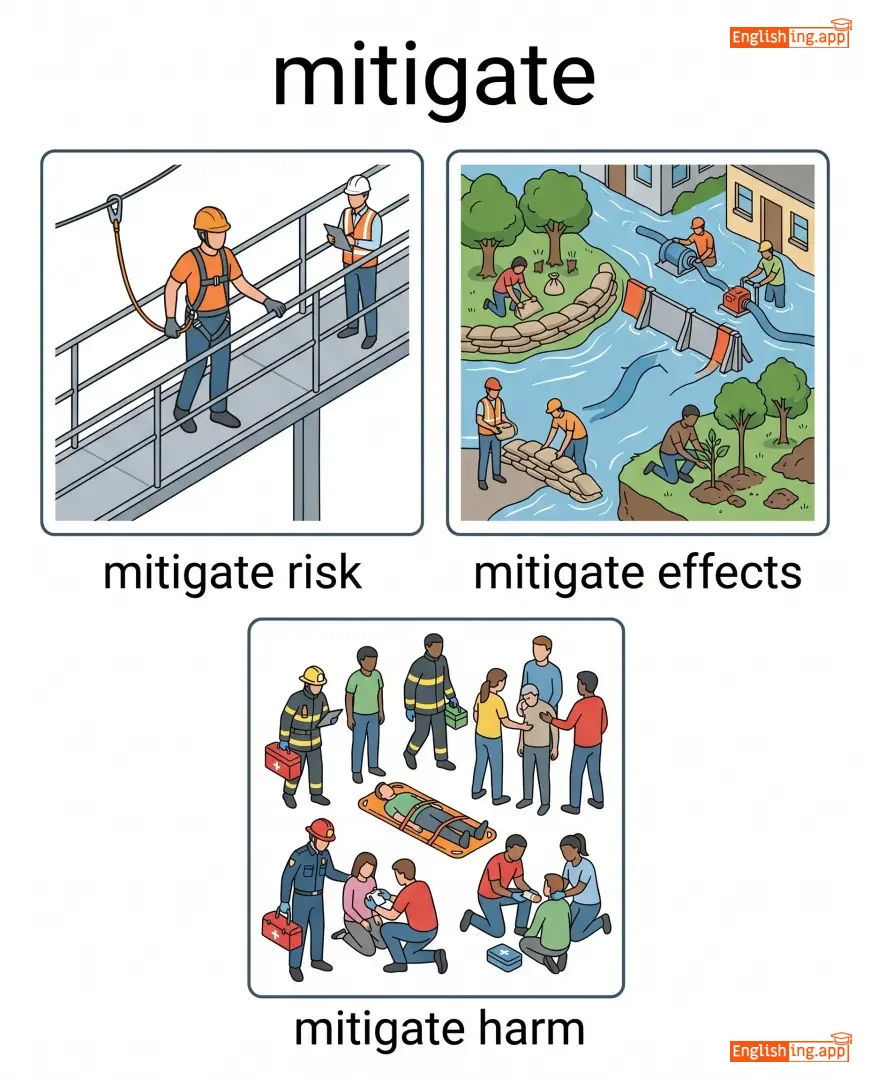
mitigate risk
减轻风险
••••••
|
to reduce the potential danger or harm
••••••
|
减轻风险
jianqīng fēngxiǎn
••••••
|
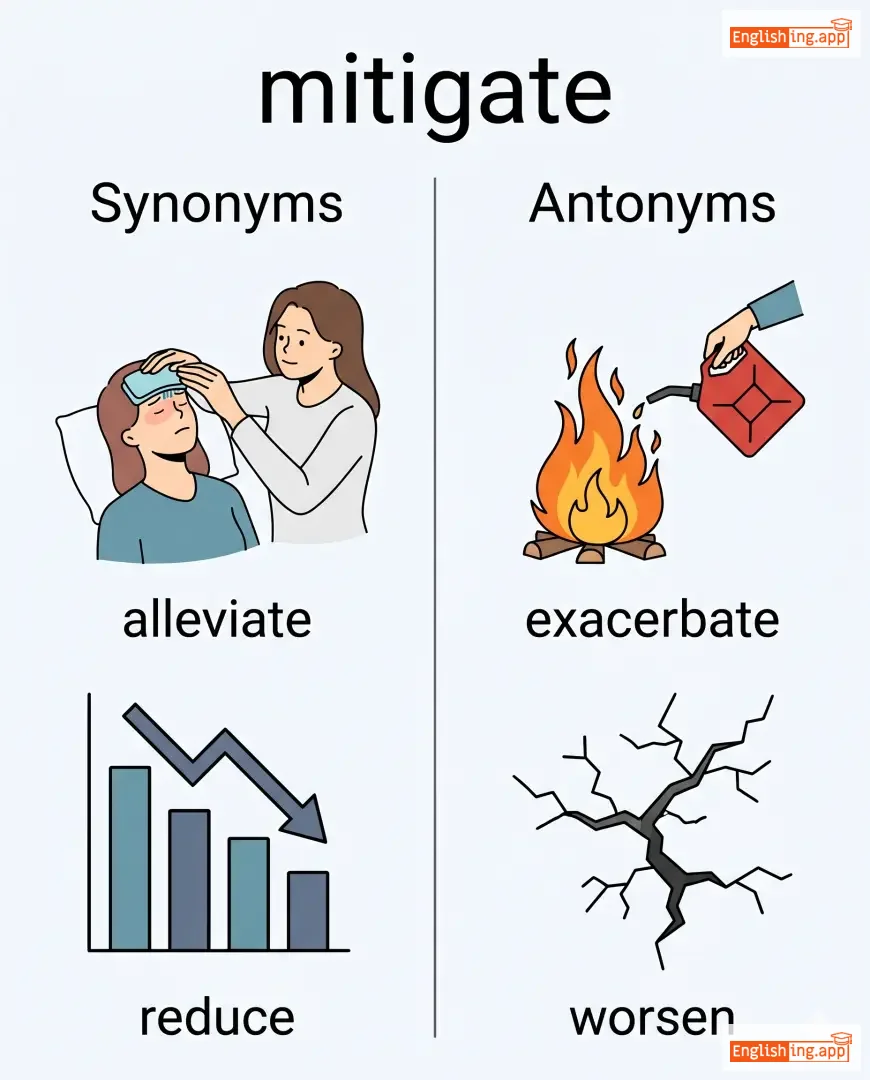
alleviate, reduce, ease, lessen, soften
••••••
|
exacerbate, worsen, intensify
••••••
|
mitigate risk, mitigate effects, mitigate harm, mitigate damage
••••••
|
减轻 = 简化(复杂的问题)。
••••••
|
|
🧠
••••••
|
/nɪˈmɒnɪk/
noun/adjective
••••••
|
|
- •••••• | - •••••• | - •••••• | - •••••• | - •••••• |
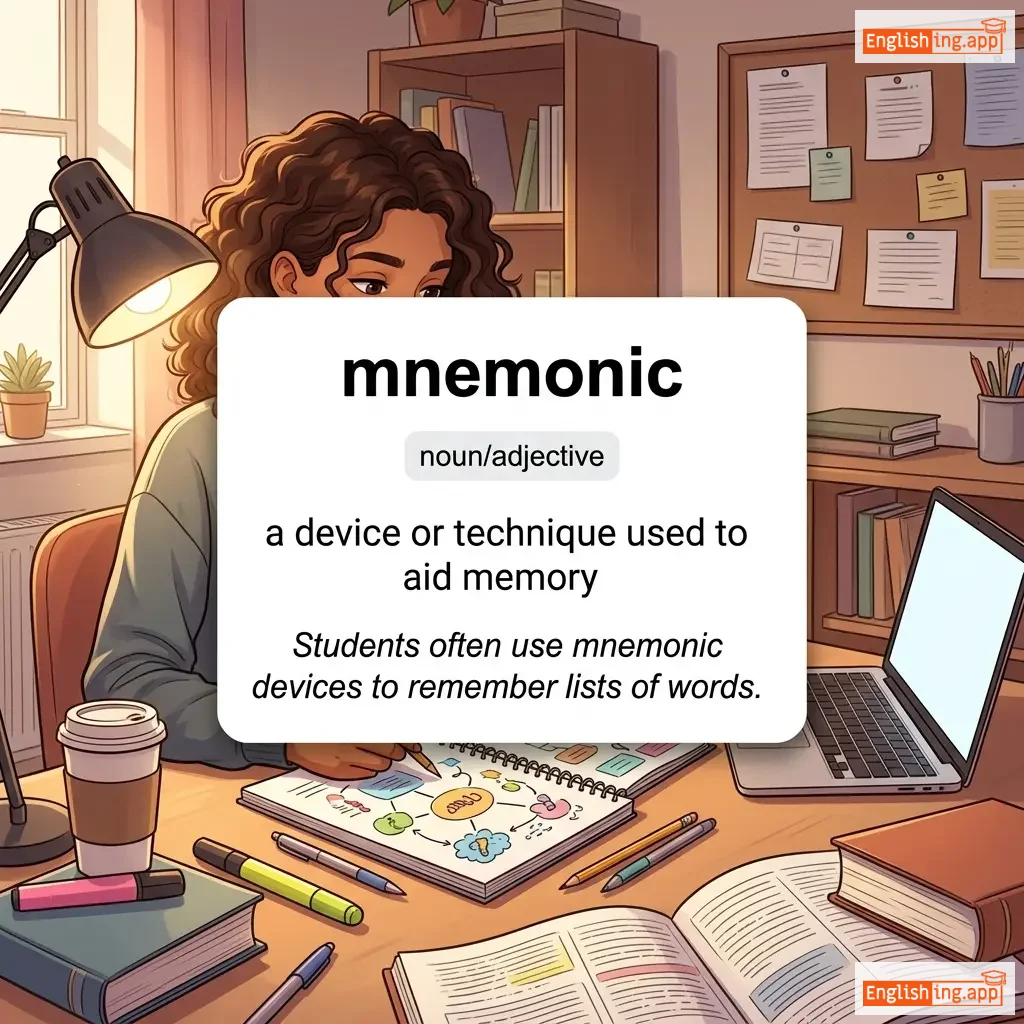
a device or technique used to aid memory
••••••
|
Students often use mnemonic devices to remember lists of words. |
- •••••• |
mnemonic device |
a tool to help remember information
••••••
|
- •••••• |
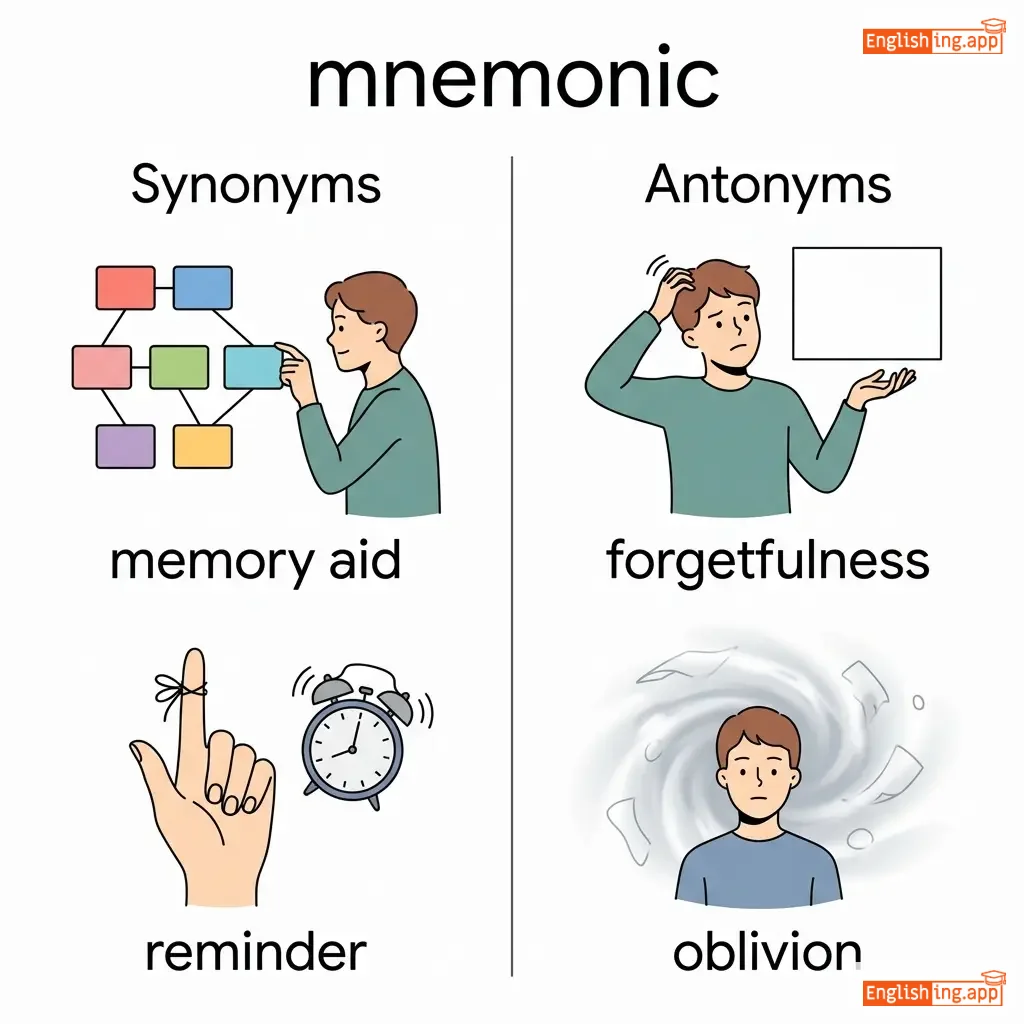
memory aid, reminder, clue, device, trick
••••••
|
forgetfulness, oblivion
••••••
|
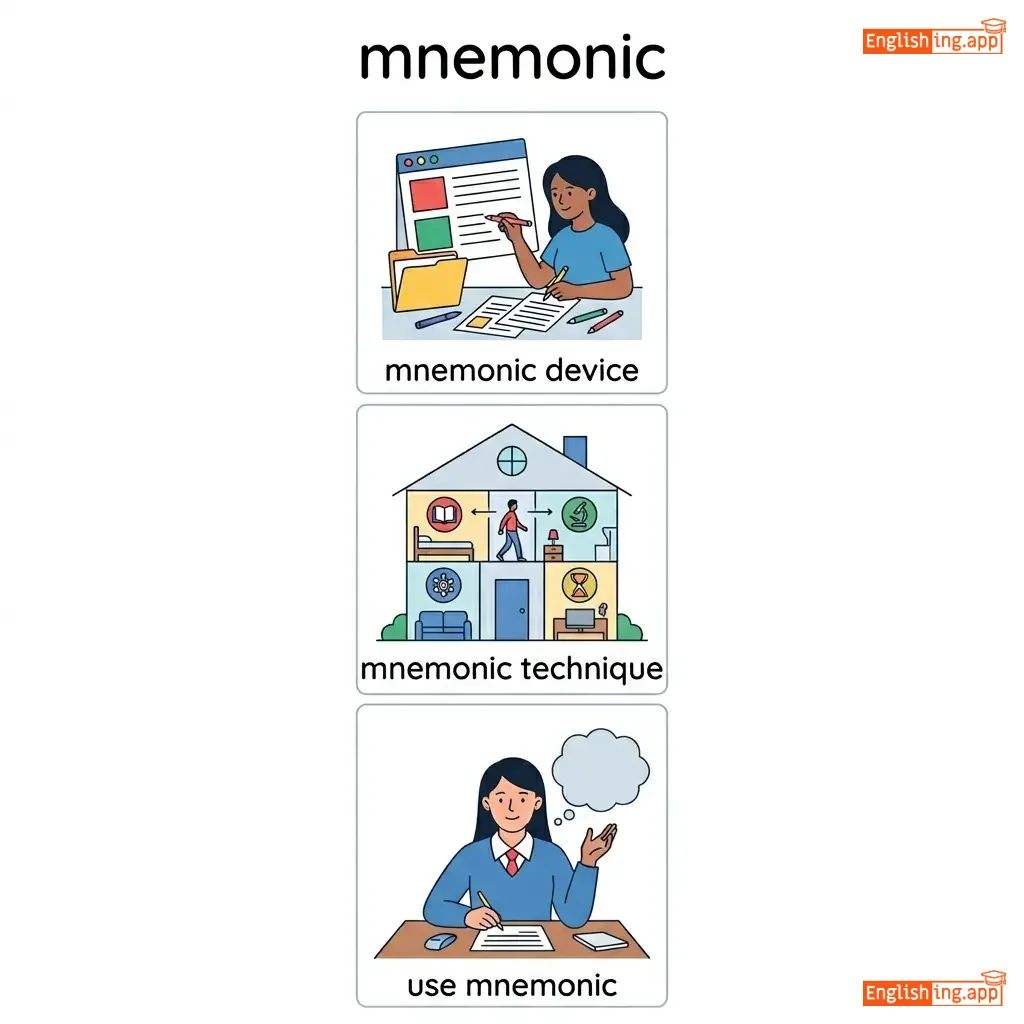
mnemonic device, mnemonic technique, use mnemonic, create mnemonic
••••••
|
No •••••• |
|
⚖️
••••••
|
/ˈmɒdɪkəm/
noun
(莫迪卡姆)
••••••
|
- •••••• |
一点点
yīdiǎn diǎn
••••••
|
- •••••• | - •••••• | - •••••• | - •••••• |
a small or moderate amount of something, especially something valuable or desirable
••••••
|
She showed a modicum of patience during the long meeting. |
在漫长的会议中,她表现出了一点点耐心。
Zài màncháng de huìyì zhōng, tā biǎoxiàn chūle yīdiǎn diǎn nàixīn.
••••••
|
- •••••• | - •••••• | - •••••• |
small amount, bit, fragment, particle, trace
••••••
|
abundance, plenty, excess
••••••
|
modicum of respect, modicum of patience, modicum of truth
••••••
|
莫迪卡姆 = 一点点的量
••••••
|
|
🤲
••••••
|
/ˈmɒlɪfaɪ/
verb
(莫利法)
••••••
|

|
安抚
ānfǔ
••••••
|
mollified
莫利法德
••••••
|
mollified
莫利法德
••••••
|
mollifies
莫利法兹
••••••
|
mollifying
莫利法英
••••••
|
To calm or soothe someone's anger or anxiety.
••••••
|
The manager tried to mollify the angry customers with discounts.
经理试图通过折扣安抚生气的顾客。
••••••
|
经理试图通过折扣安抚生气的顾客。
Jīnglǐ shìtú tōngguò zhékòu ānfǔ shēngqì de gùkè.
••••••
|
- •••••• | - •••••• | - •••••• |
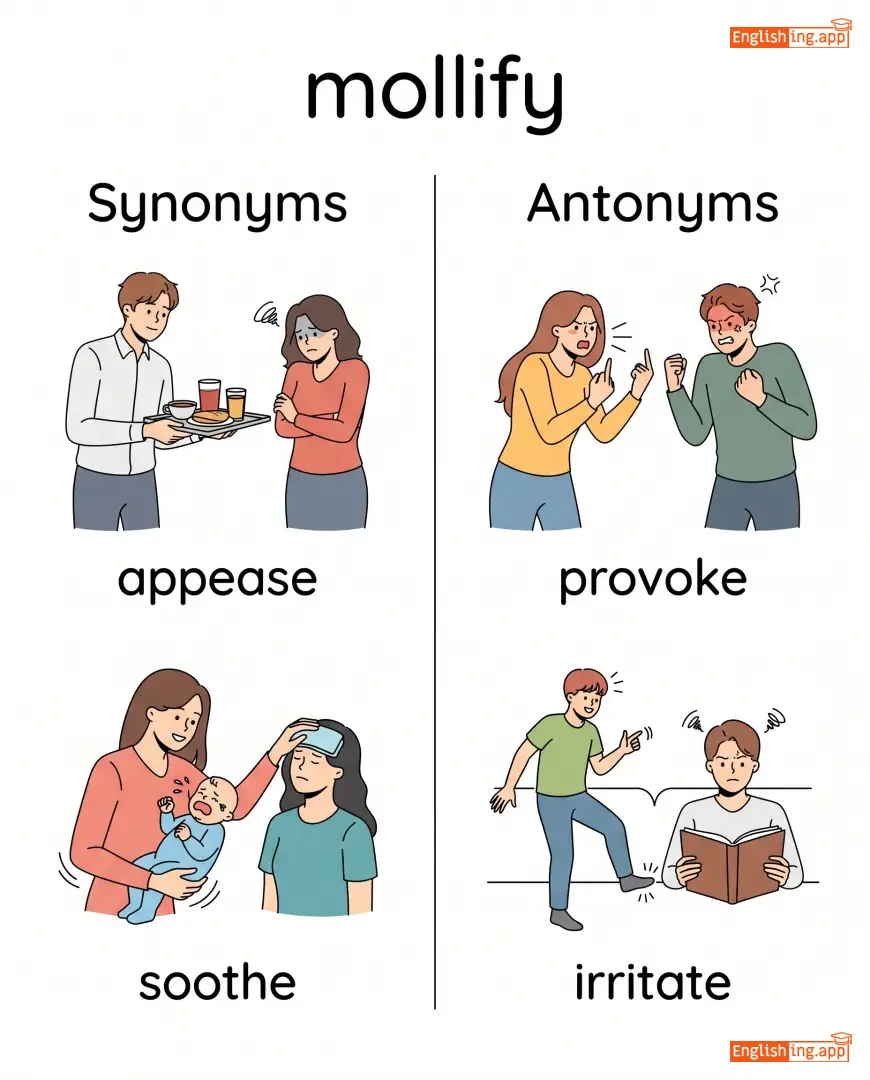
appease, soothe, pacify, calm
••••••
|
provoke, irritate, anger
••••••
|
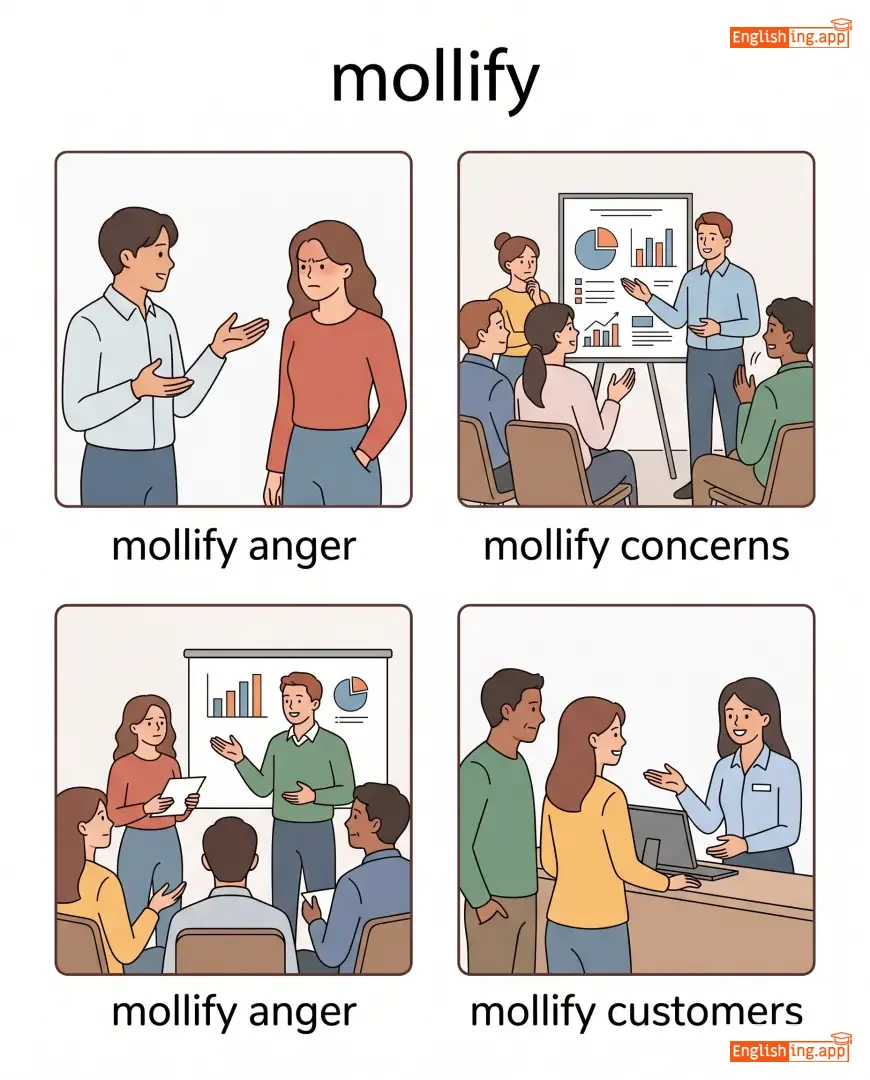
mollify anger, mollify concerns, mollify customers, mollify critics
••••••
|
Mollify 类似于“抚慰” → 安抚生气的情绪
••••••
|
|
🏢
••••••
|
/ˌmɒnəˈlɪθɪk/
adjective
(单片的)
••••••
|
- •••••• |
单片的
danpian de
••••••
|
- •••••• | - •••••• | - •••••• | - •••••• |
Massive, uniform, and indivisible; resembling a large single stone or structure.
••••••
|
The company maintained a monolithic structure resistant to change. |
公司保持了一个抗变的单片结构。
Gōngsī bǎochí le yīgè kàng biàn de dānpiàn jiégòu.
••••••
|
- •••••• | - •••••• | - •••••• |
massive, rigid, uniform, colossal
••••••
|
flexible, diverse, fragmented
••••••
|
monolithic structure, monolithic block, monolithic system, monolithic organization
••••••
|
Mono = 一,Lith = 石头,单片的 = 一个坚固不变的结构。
••••••
|
|
😔
••••••
|
/məˈroʊs/
adjective
(莫罗斯)
••••••
|

|
忧郁
yōuyù
••••••
|
- •••••• | - •••••• | - •••••• | - •••••• |
sullen, gloomy, or ill-tempered
••••••
|
He became morose after losing his job.
他在失业后变得沉闷。
••••••
|
他在失业后变得沉闷。
Tā zài shīyè hòu biàn dé chénmèn.
••••••
|
- •••••• | - •••••• | - •••••• |
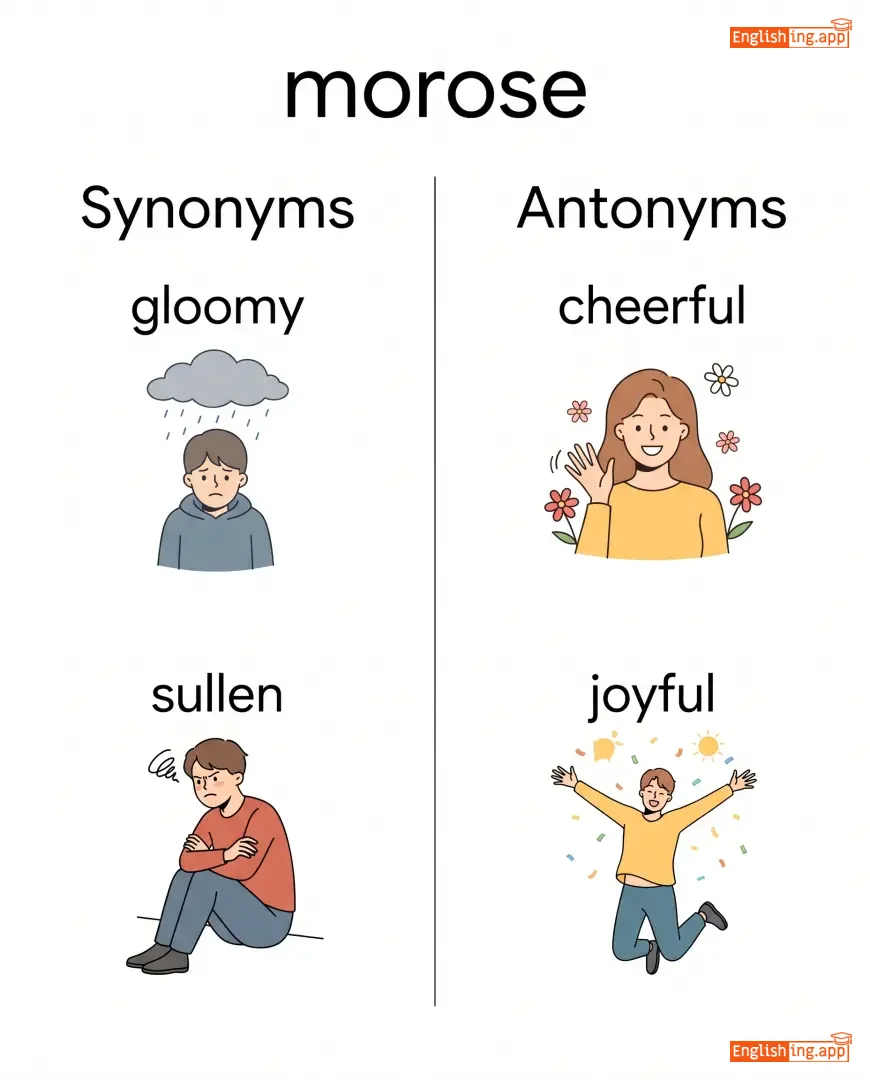
gloomy, sullen, melancholic, depressed
••••••
|
cheerful, joyful, optimistic
••••••
|
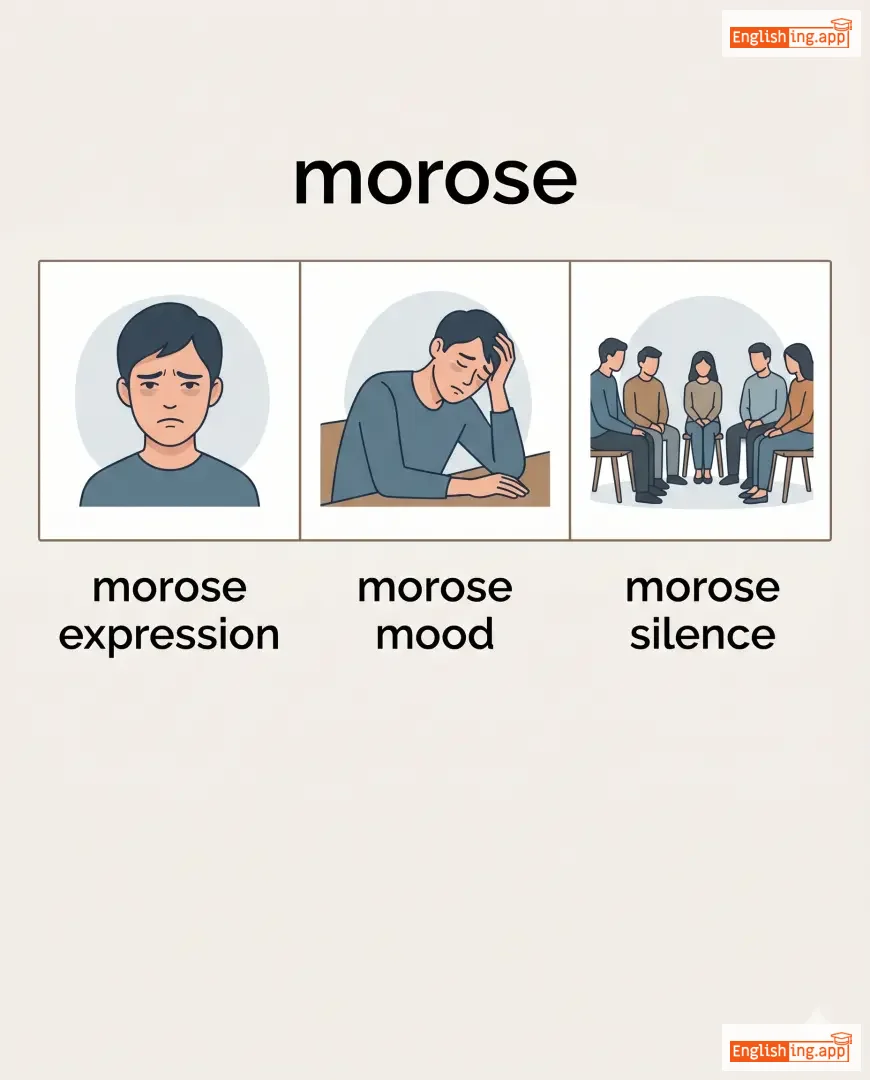
morose expression, morose mood, morose silence
••••••
|
Morose = 郁闷 → morose = 忧郁
••••••
|
|
🎭
••••••
|
/ˈmɒtli/
adjective
(摩特利)
••••••
|
- •••••• |
杂乱
záluàn
••••••
|
- •••••• | - •••••• | - •••••• | - •••••• |
Made up of different, often incongruous or diverse elements.
••••••
|
The festival attracted a motley crowd of artists, musicians, and tourists. |
这个节日吸引了由艺术家、音乐家和游客组成的杂乱人群。
Zhège jiérì xīyǐnle yóu yìshùjiā, yīnyuèjiā hé yóukè zǔchéng de záluàn rénqún.
••••••
|
motley crew |
A diverse, sometimes mismatched group of people.
••••••
|
杂乱的团队
záluàn de tuánduì
••••••
|
mixed, varied, diverse, assorted, heterogeneous
••••••
|
uniform, homogeneous
••••••
|
motley crowd, motley crew, motley collection, motley assortment
••••••
|
Motley crew 就是一个杂乱无章的团队。
••••••
|
|
🌈
••••••
|
/ˌmʌl.tɪˈfeə.ri.əs/
adjective
(万象)
••••••
|
- •••••• |
多样的;多方面的
duo yang de; duo fang mian de
••••••
|
- •••••• | - •••••• | - •••••• | - •••••• |
having many different aspects or forms; diverse and varied
••••••
|
The company has multifarious business interests including technology, finance, and healthcare. |
公司有多种商业利益,包括技术、金融和医疗保健。
Gongsi you duozhong shangye liyi, baokuo jishu, jinrong he yiliaobaojian.
••••••
|
- •••••• | - •••••• | - •••••• |
diverse, varied, manifold, numerous, multiple
••••••
|
uniform, singular, simple, homogeneous
••••••
|
multifarious activities, multifarious interests, multifarious duties
••••••
|
Multifarious 就像 '万象',许多方面和不同事物。
••••••
|
|
😐
••••••
|
/mʌnˈdeɪn/
adjective
(manden)
••••••
|
|
平凡
pingfan
••••••
|
- •••••• | - •••••• | - •••••• | - •••••• |
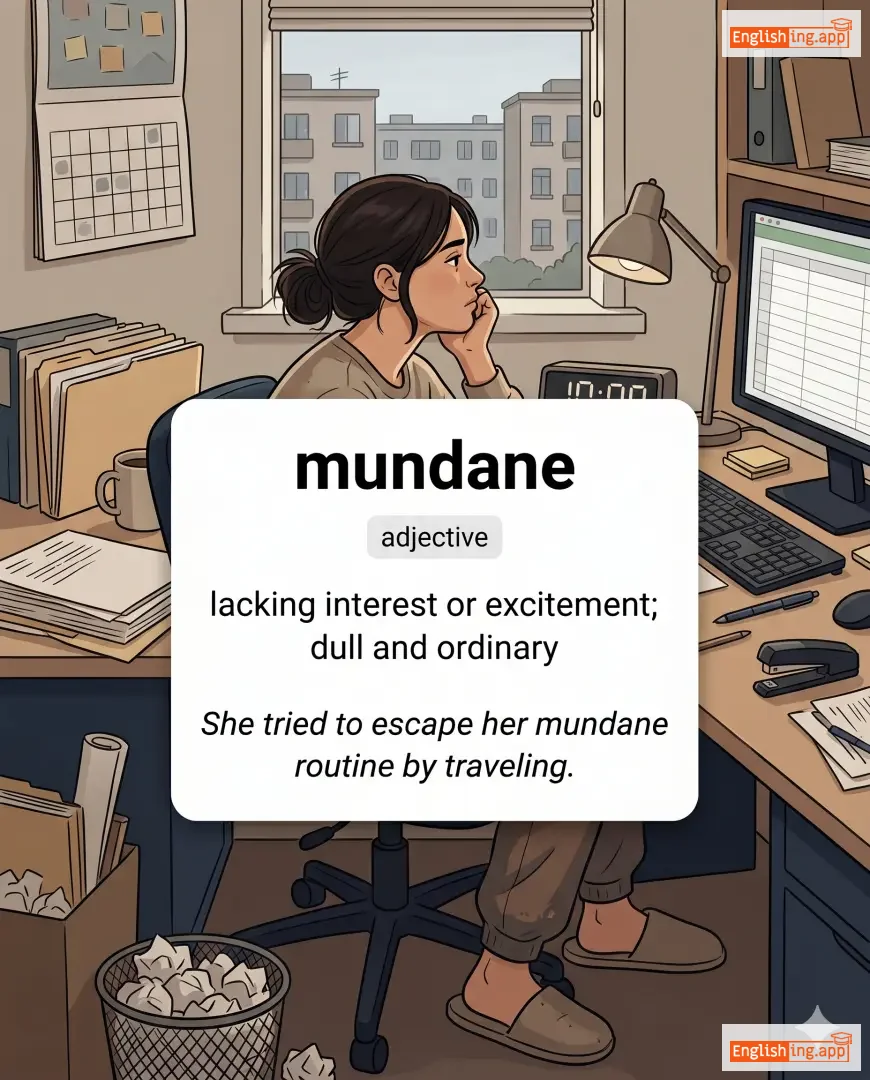
lacking interest or excitement; dull and ordinary
••••••
|
She tried to escape her mundane routine by traveling. |
她试图通过旅行逃避她平凡的日常。
Ta shitu tongguo lvxing taobi ta pingfan de ritchang.
••••••
|
mundane task |
a dull or repetitive job
••••••
|
平凡的工作
pingfan de gongzuo
••••••
|
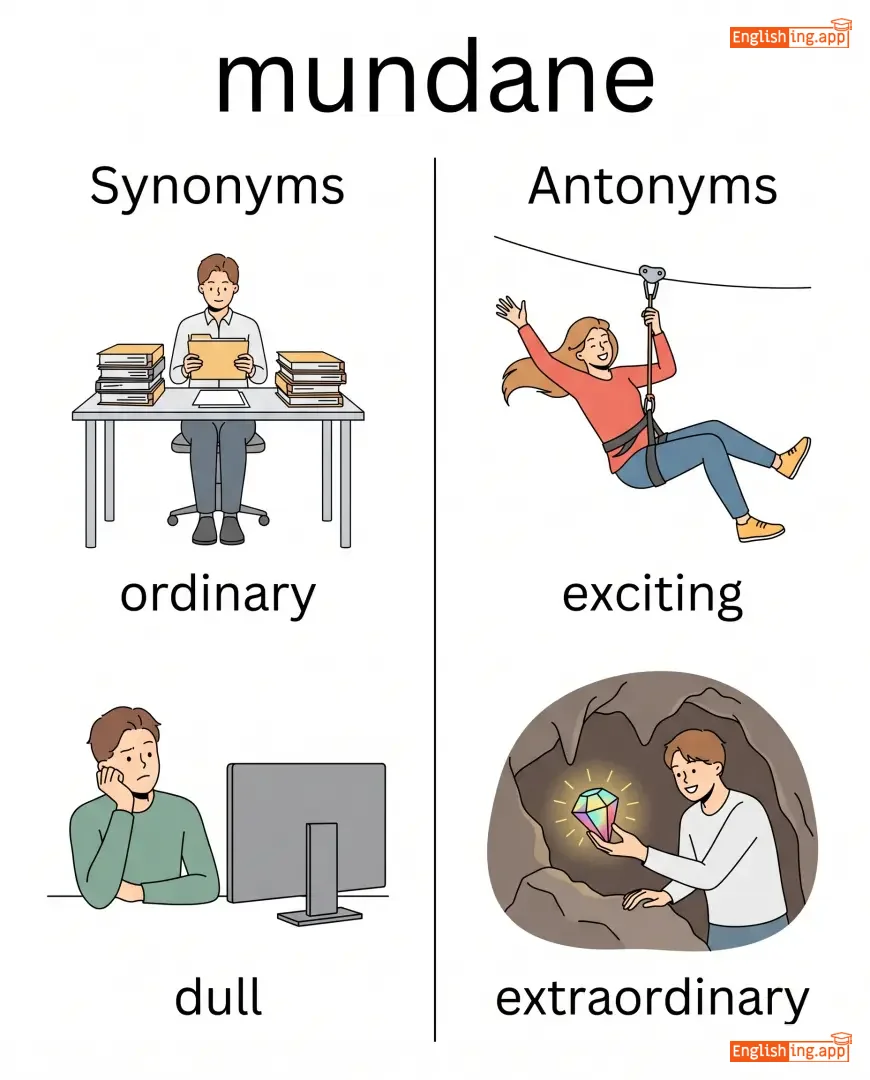
ordinary, dull, boring, routine, monotonous
••••••
|
exciting, extraordinary, unusual
••••••
|
mundane details, mundane routine, mundane life, mundane task
••••••
|
MUN (民) - den 代表着平凡和无聊
••••••
|
|
🔮
••••••
|
/ˈnɛkrəˌmænsi/
noun
(死灵法)
••••••
|
- •••••• |
死灵法
sǐlíng fǎ
••••••
|
- •••••• | - •••••• | - •••••• | - •••••• |
the practice of communicating with the dead, often to predict the future
••••••
|
Ancient texts described rituals of necromancy performed by priests. |
古代的文献描述了由祭司执行的死灵法仪式。
Gǔdài de wénxiàn miáoshùle yóu jìsī zhíxíng de sǐlíng fǎ yíshì.
••••••
|
- •••••• | - •••••• | - •••••• |
sorcery, witchcraft, black magic, occultism, divination
••••••
|
science, rationalism, realism
••••••
|
ancient necromancy, dark necromancy, practice of necromancy, art of necromancy
••••••
|
死灵代表死者,法则代表魔法,所以死灵法就是死者的魔法。
••••••
|
|
🚫
••••••
|
/nɪˈɡeɪt/
verb
••••••
|

|
- •••••• |
negated
••••••
|
negated
••••••
|
negates
••••••
|
negating
••••••
|
To cancel out or make ineffective; to deny the truth of something.
••••••
|
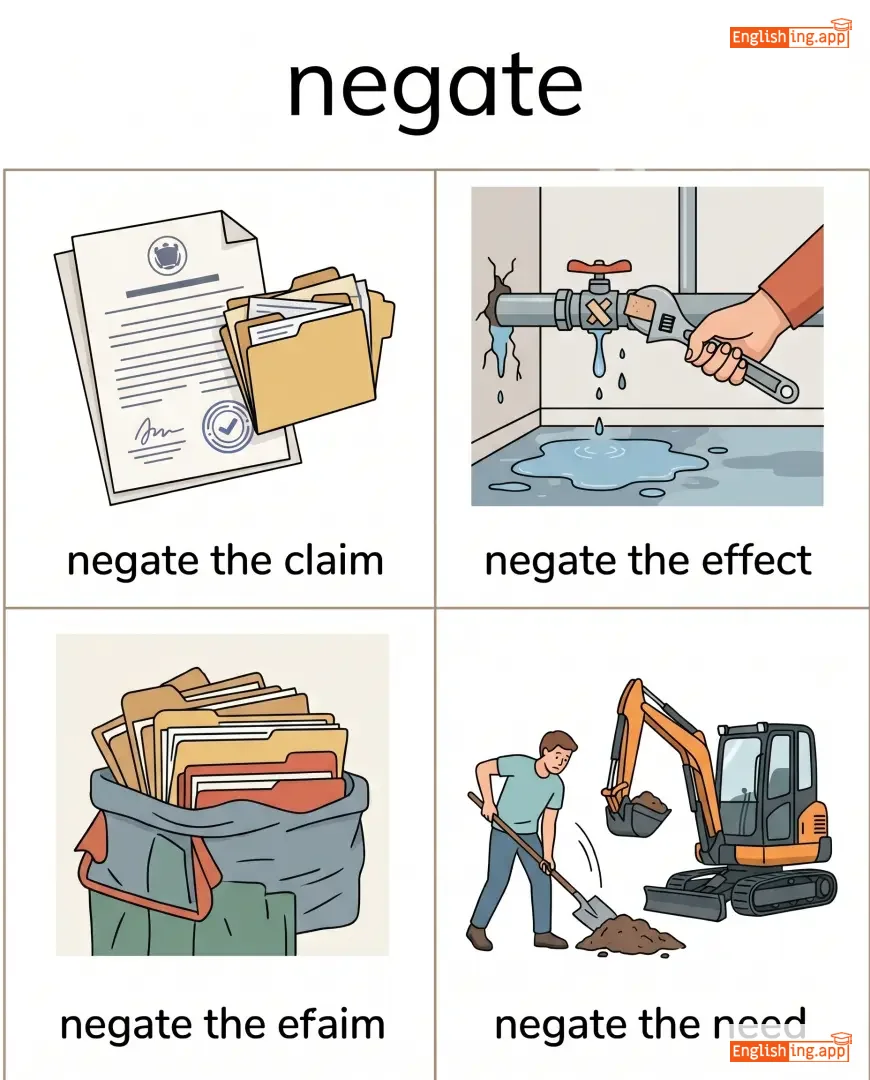
The new evidence will negate the claims made earlier. |
- •••••• |
negate the effect |
To cancel or reduce the impact of something.
••••••
|
- •••••• |
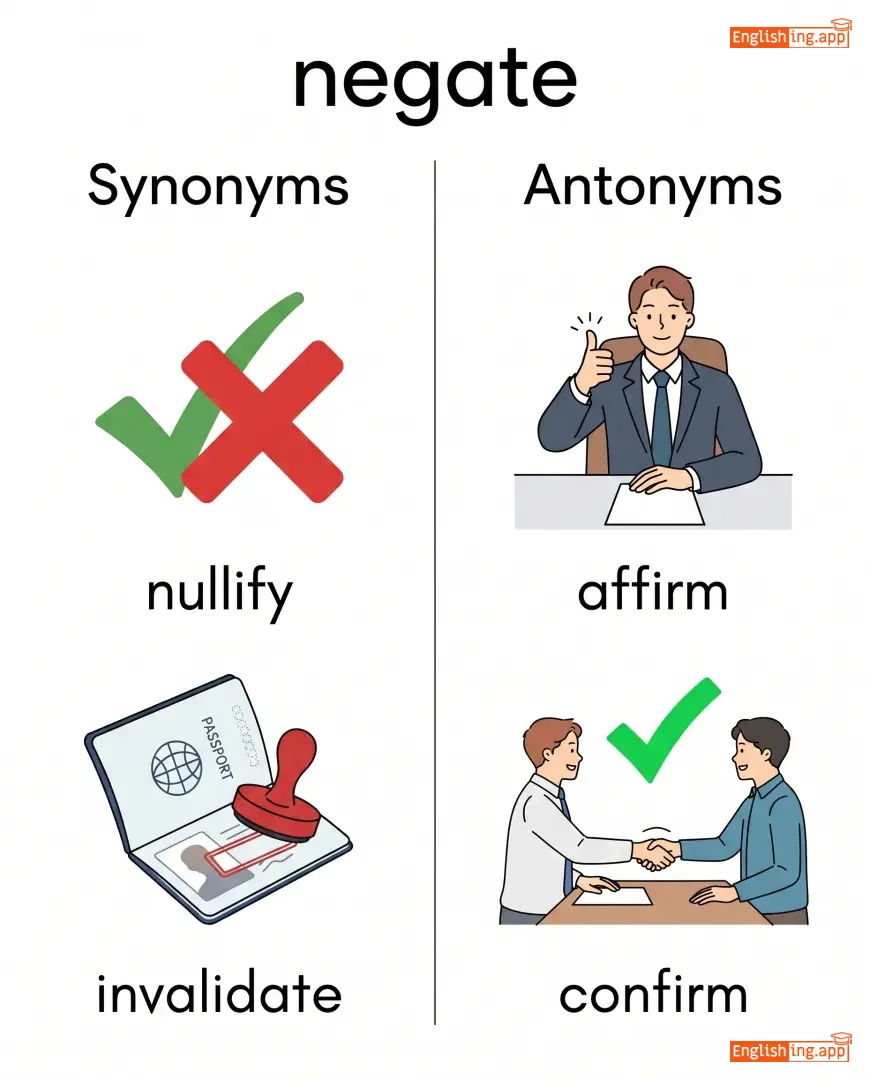
nullify, invalidate, deny, cancel, counteract
••••••
|
affirm, confirm, validate
••••••
|
negate the claim, negate the effect, negate the need, negate responsibility
••••••
|
No •••••• |
|
🆕
••••••
|
/niːˈɒlədʒɪzəm/
noun
(新词)
••••••
|
- •••••• |
新词
xīn cí
••••••
|
- •••••• | - •••••• | - •••••• | - •••••• |
A newly coined word or expression.
••••••
|
The internet has given rise to many neologisms like 'selfie' and 'hashtag'. |
互联网催生了许多新词,如“自拍”和“标签”。
hùliánwǎng cuīshēngle xǔduō xīncí, rú 'zìpāi' hé 'biāoqiān'.
••••••
|
- •••••• | - •••••• | - •••••• |
new word, coinage, term, expression
••••••
|
archaic word, old term
••••••
|
neologism usage, coin a neologism, popular neologism
••••••
|
Neo = 新的 + logism = 词 → 新词
••••••
|
|
🌱
••••••
|
/ˈniːəˌfaɪt/
noun
(新手)
••••••
|
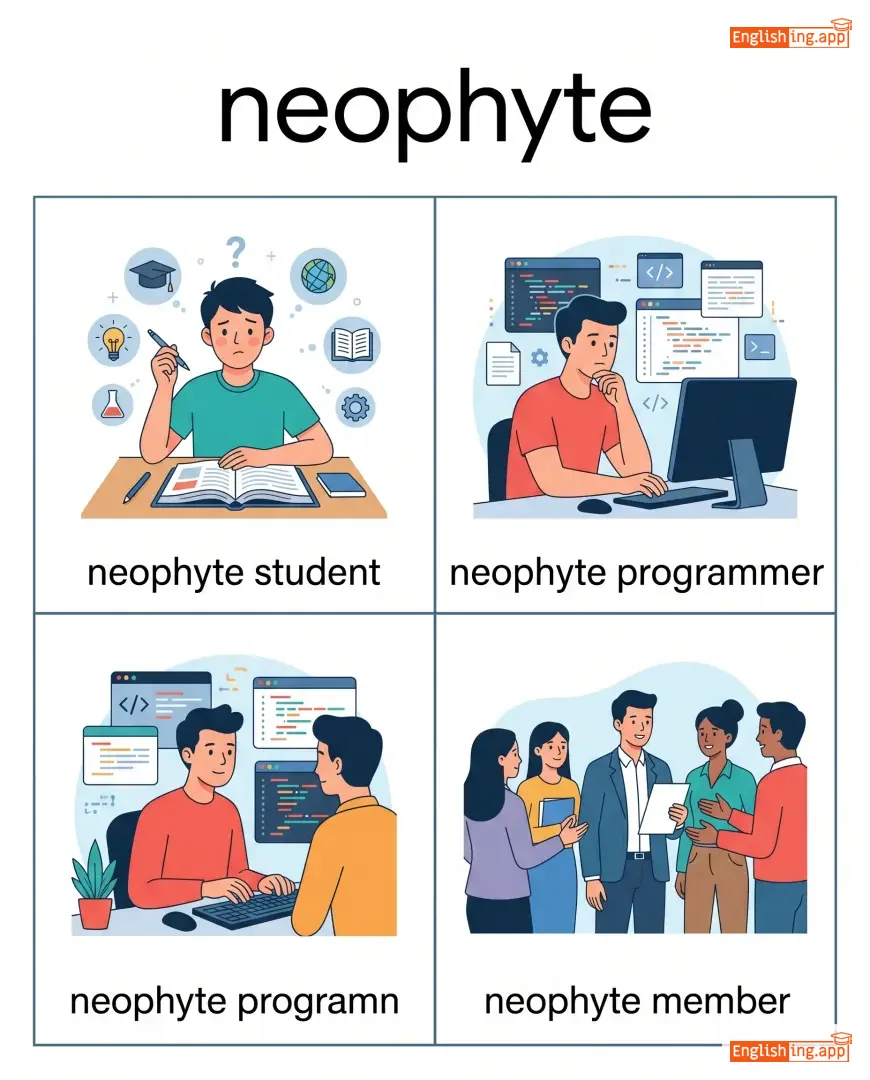
|
新手
xin shou
••••••
|
- •••••• | - •••••• | - •••••• | - •••••• |
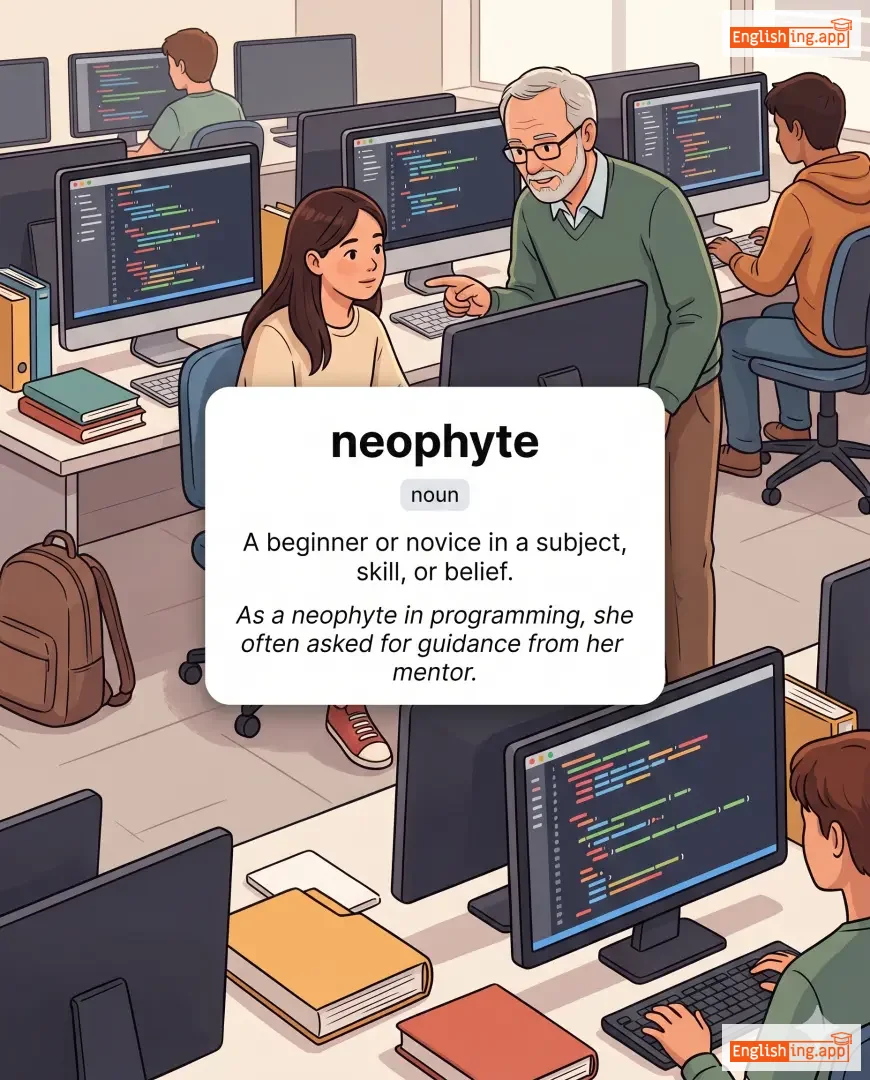
A beginner or novice in a subject, skill, or belief.
••••••
|
As a neophyte in programming, she often asked for guidance from her mentor. |
作为编程的新手,她经常向她的导师请教。
Zuo wei bian cheng de xin shou, ta jing chang xiang ta de dao shi qing jiao.
••••••
|
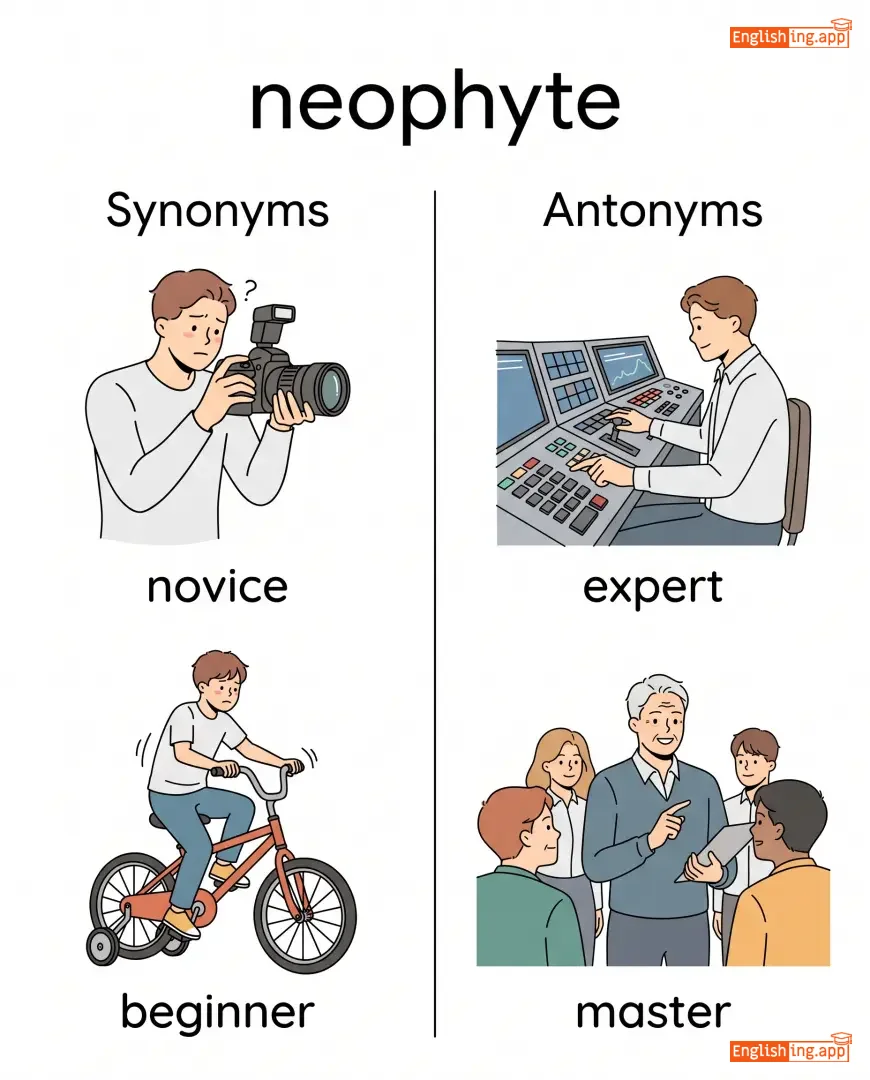
- •••••• | - •••••• | - •••••• |
novice, beginner, newcomer, rookie, trainee
••••••
|
expert, master, veteran
••••••
|
neophyte student, neophyte programmer, neophyte member
••••••
|
Neo 意味着新的 + phyte 意味着植物 → 新手就像一棵新生的植物开始成长。
••••••
|
|
🔗
••••••
|
/ˈnɛksəs/
noun
(内克萨斯)
••••••
|
- •••••• |
联系
liánxì
••••••
|
- •••••• | - •••••• | - •••••• | - •••••• |
a connection or series of connections linking two or more things
••••••
|
The town was a nexus for trade routes in the region. |
这个城市是该地区贸易路线的一个联系点。
Zhege chengshi shi gai diqu maoyi luxian de yige lianxidian.
••••••
|
nexus of power |
the central point where power is concentrated
••••••
|
权力的联系
quanli de lianxi
••••••
|
connection, link, bond, tie, relationship
••••••
|
disconnection, separation
••••••
|
nexus between, nexus of power, trade nexus, cultural nexus
••••••
|
Nexus 意味着'联系',就像一个社交网络中的联系,连接着每个人。
••••••
|
|
🤨
••••••
|
/ˌnɒnˈplʌst/
verb
(nónplèst)
••••••
|
- •••••• |
困惑
kunhuo
••••••
|
nonplussed
nónplèst
••••••
|
nonplussed
nónplèst
••••••
|
- •••••• | - •••••• |
Past tense of nonplus; surprised and unsure how to react.
••••••
|
He stood nonplussed at the strange remark.
他对奇怪的评论感到不知所措。
••••••
|
他对奇怪的评论感到困惑。
Tā duì qíguài de pínglùn gǎndào kùnhuò.
••••••
|
- •••••• | - •••••• | - •••••• |
confused, bewildered, perplexed, puzzled
••••••
|
confident, certain
••••••
|
looked nonplussed, seemed nonplussed, left nonplussed
••••••
|
Nonplussed 意味着困惑,感觉突然不知道如何反应。
••••••
|
|
🕰️
••••••
|
/nəˈstældʒə/
noun
(怀旧)
••••••
|

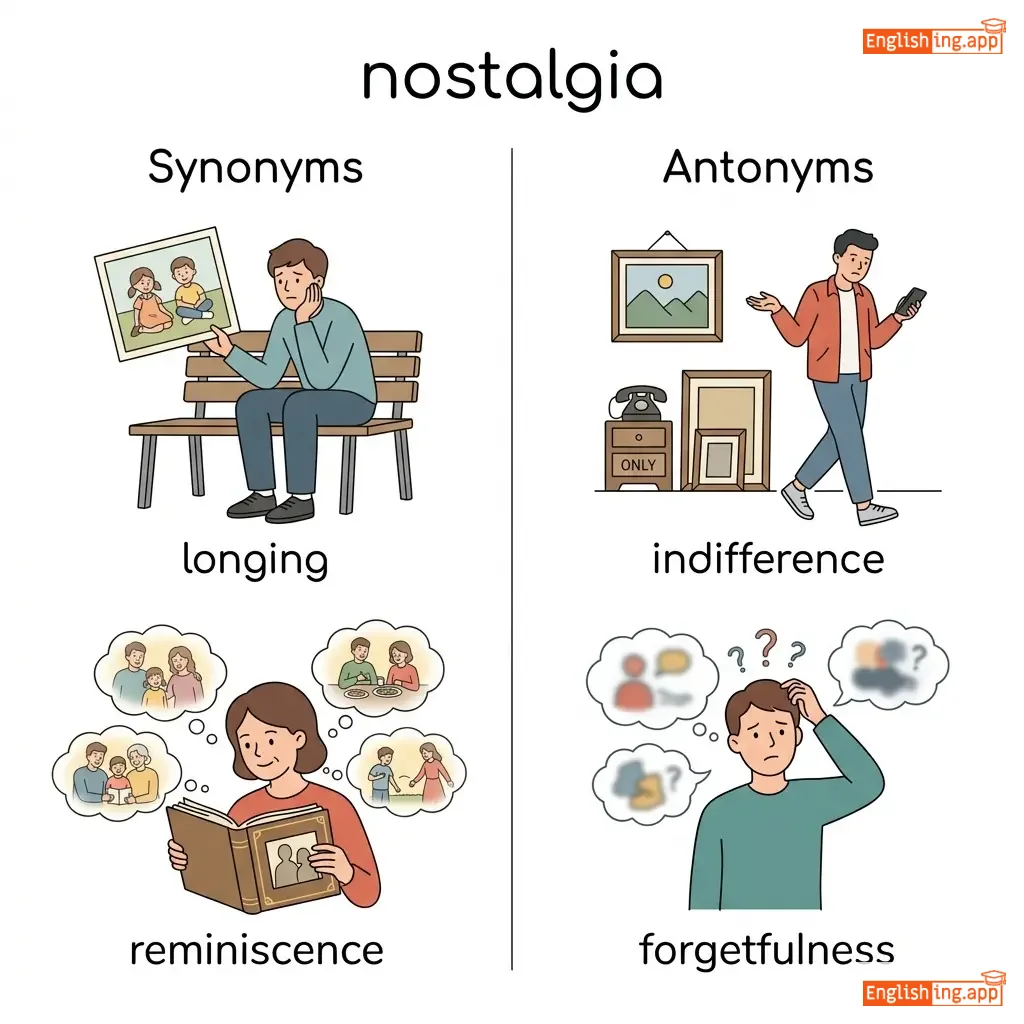
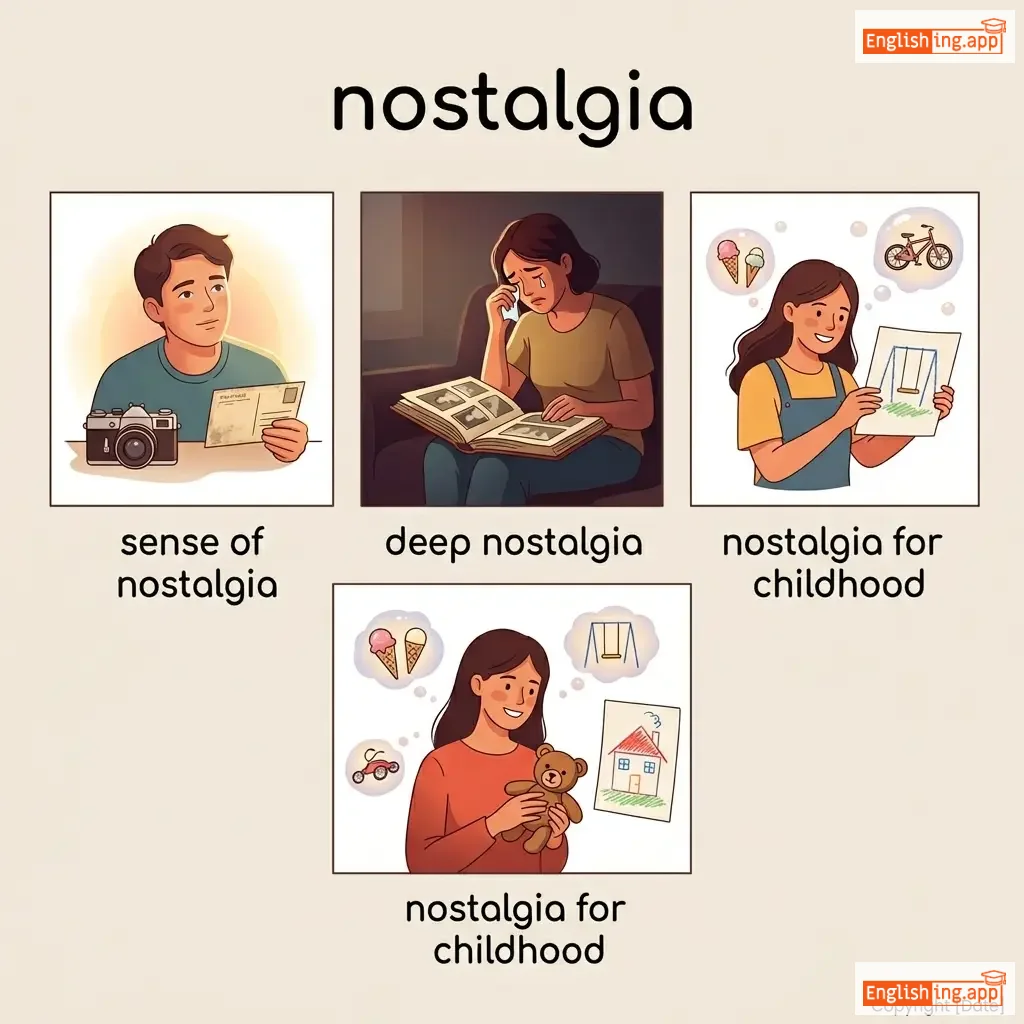
|
怀旧
huáijiù
••••••
|
- •••••• | - •••••• | - •••••• | - •••••• |
a sentimental longing for the past, often for a period or place with happy memories
••••••
|
The old photographs filled her with nostalgia. |
那些旧照片让她充满了怀旧感。
Nàxiē jiù zhàopiàn ràng tā chōngmǎnle huáijiù gǎn.
••••••
|
a wave of nostalgia |
a sudden strong feeling of longing for the past
••••••
|
一阵怀旧风
yī zhèn huáijiù fēng
••••••
|
longing, reminiscence, sentimentality, homesickness
••••••
|
indifference, forgetfulness
••••••
|
sense of nostalgia, deep nostalgia, nostalgia for childhood
••••••
|
Nostalgia = 纽带 + 回忆; 想起过去的幸福时光,充满怀旧之情
••••••
|
|
💊
••••••
|
/ˈnɑːstrəm/
noun
(诺斯特鲁姆)
••••••
|
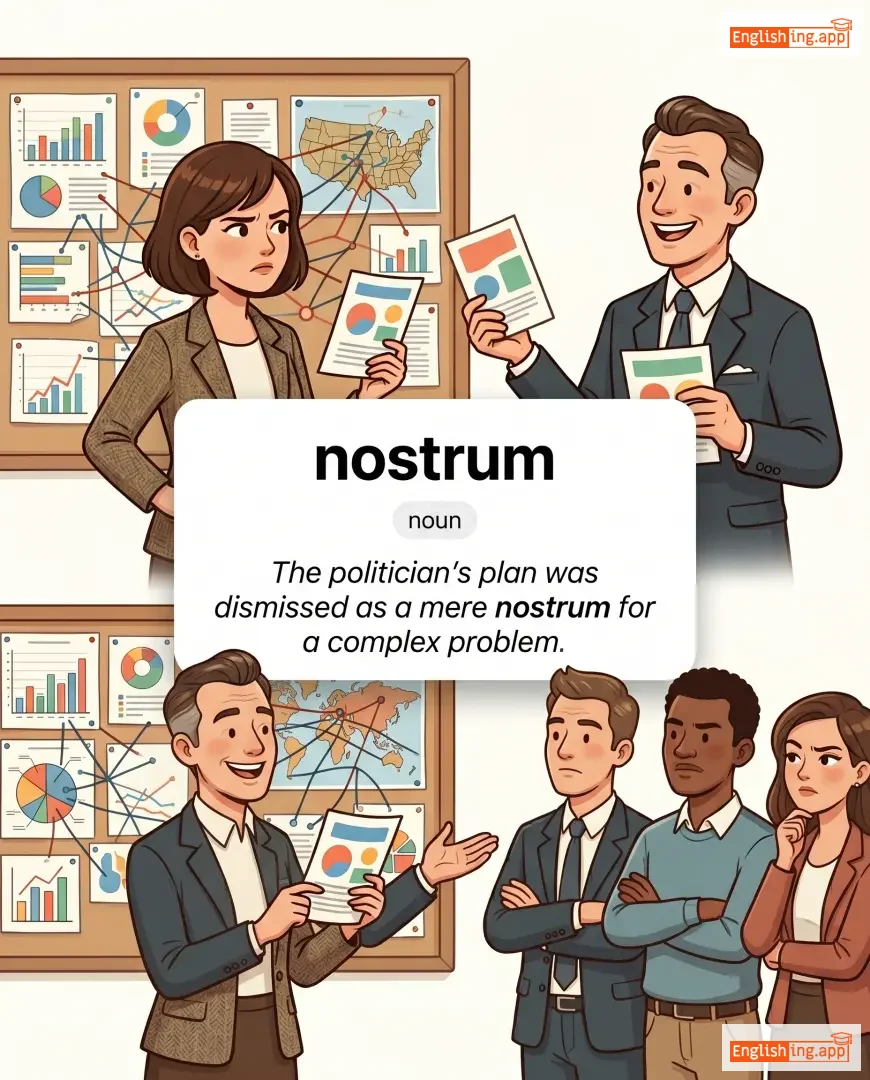
|
无效的药物
wuxiao de yaowu
••••••
|
- •••••• | - •••••• | - •••••• | - •••••• |
a medicine or remedy, especially one that is not considered effective; a questionable solution
••••••
|
The politician’s plan was dismissed as a mere nostrum for a complex problem.
政治家的计划被视为一个复杂问题的简单诺斯特鲁姆。
••••••
|
政治家的计划被视为一个复杂问题的简单无效药物。
Zhèngzhì jiā de jìhuà bèi shì wéi yīgè fùzá wèntí de jiǎndān wúxiào yàowù.
••••••
|
- •••••• | - •••••• | - •••••• |
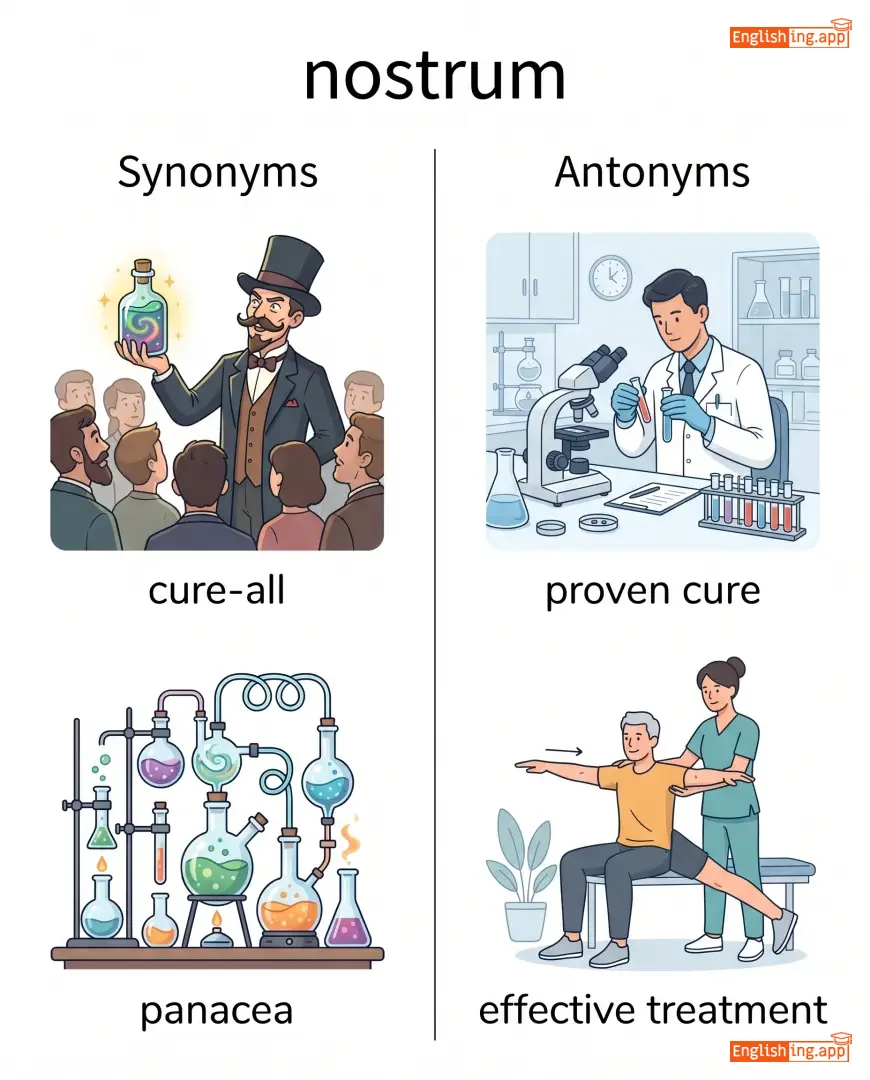
cure-all, panacea, quack remedy, placebo
••••••
|
proven cure, effective treatment
••••••
|
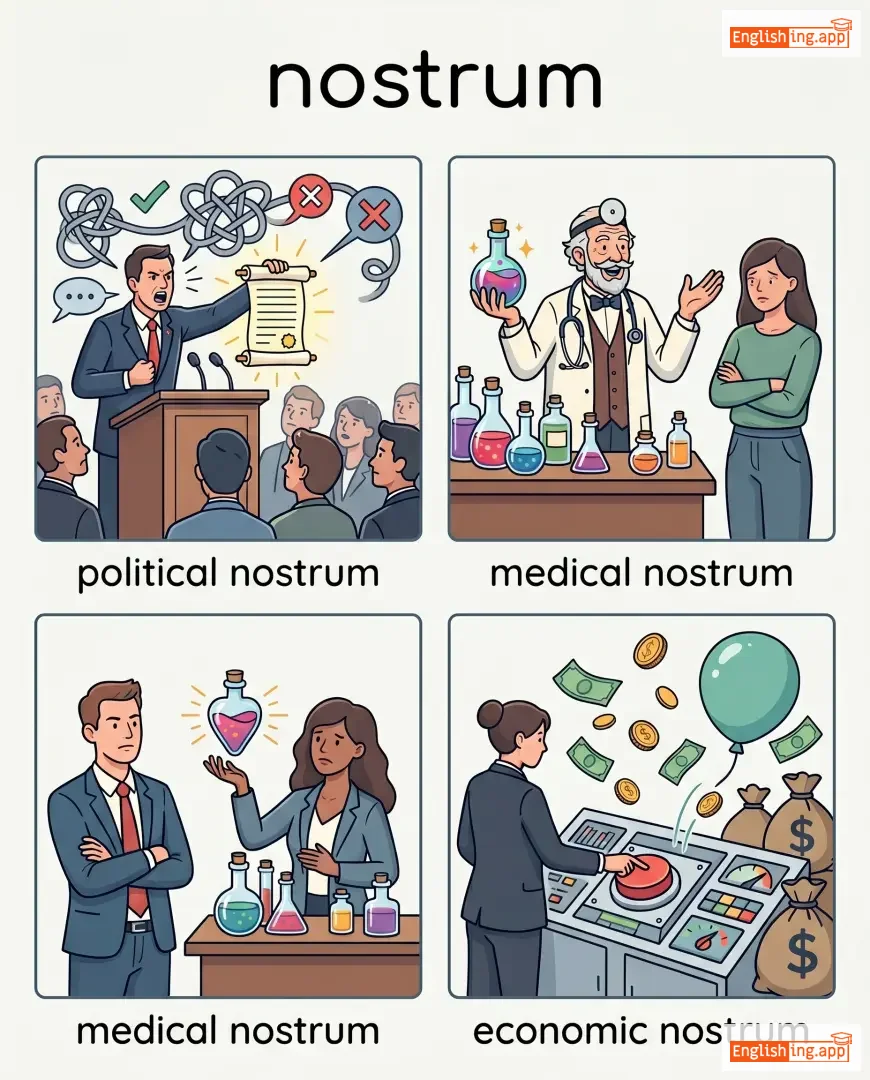
political nostrum, medical nostrum, economic nostrum
••••••
|
Nostrum 听起来像 ‘不是一个’ 有效药物
••••••
|
|
🪙
••••••
|
/ˈnjuː.ɡə.tɔːr.i/
adjective
(纽盖托里)
••••••
|

|
微不足道
weibuzhidao
••••••
|
- •••••• | - •••••• | - •••••• | - •••••• |
Of little or no value; worthless or insignificant.
••••••
|
His efforts were nugatory and did not change the outcome. |
他的努力微不足道,未能改变结果。
Tade nuli weibuzhidao, wei neng gaibian jieguo.
••••••
|
- •••••• | - •••••• | - •••••• |
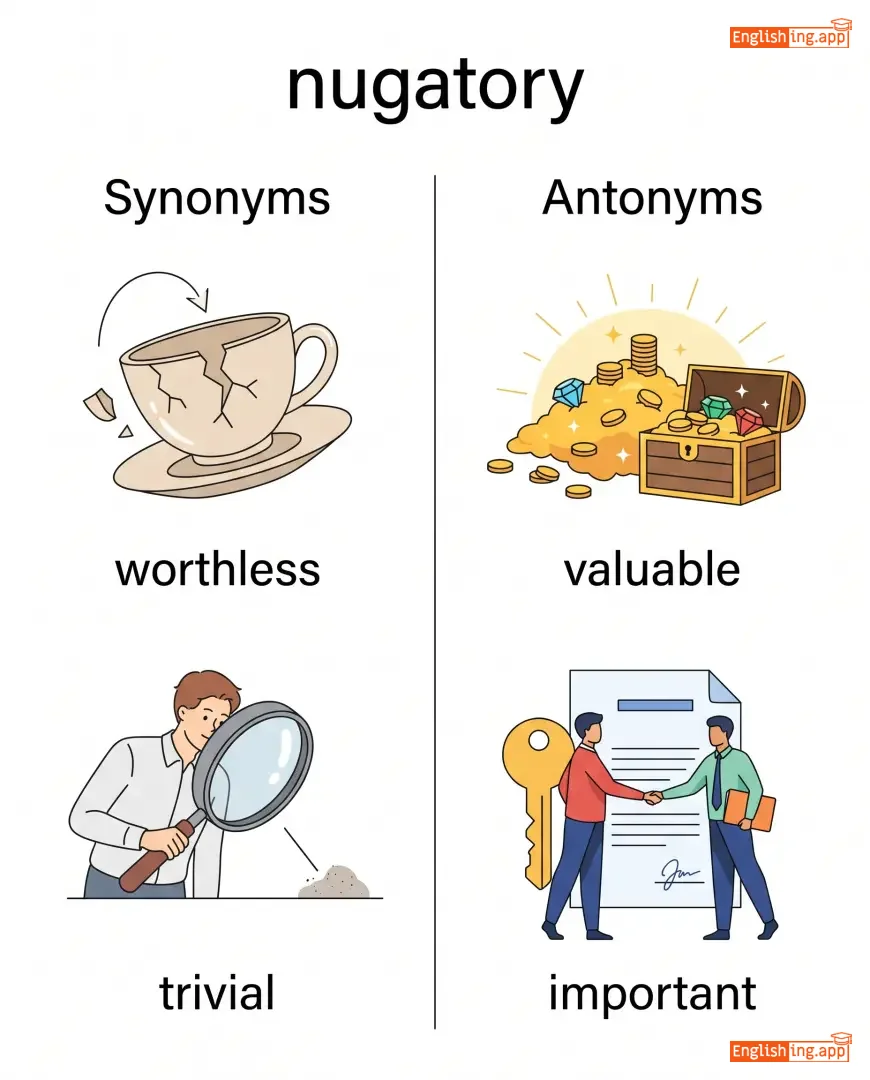
worthless, trivial, futile, insignificant, useless
••••••
|
valuable, important, significant
••••••
|
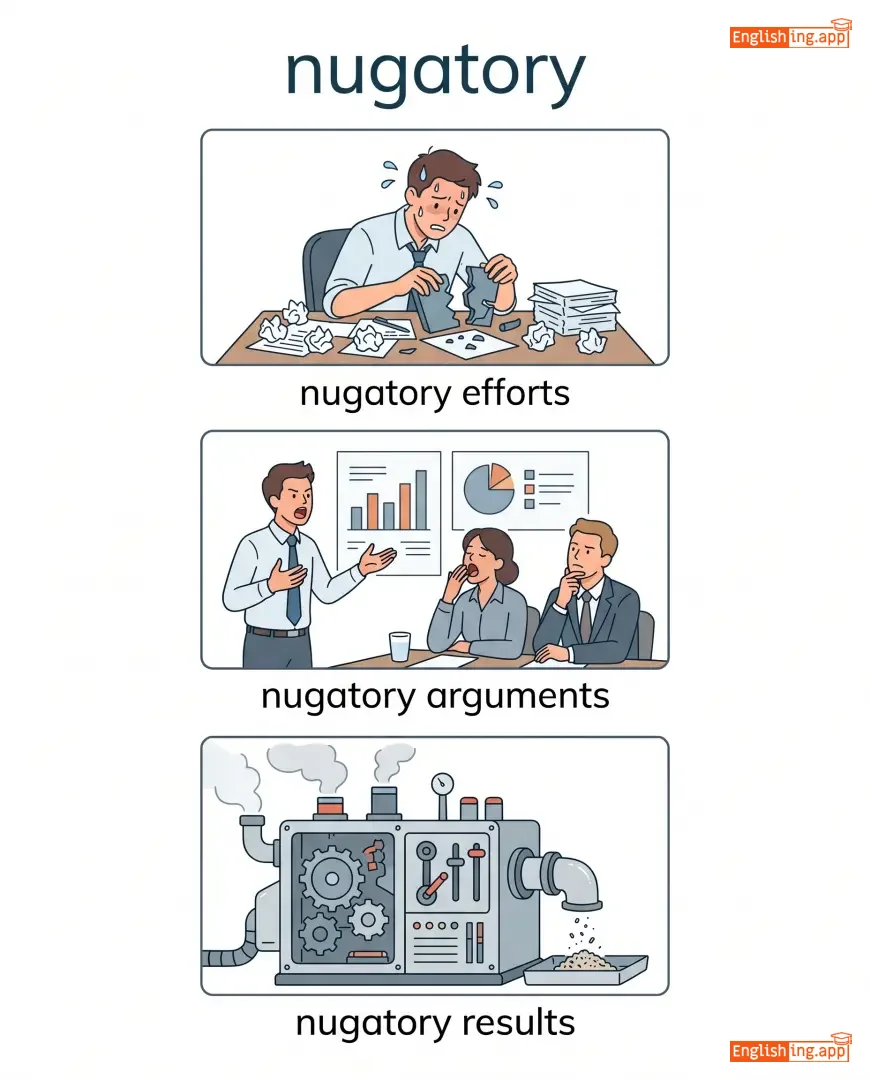
nugatory efforts, nugatory arguments, nugatory results
••••••
|
Nugatory 听起来像 '纽结图例',如果图例没有任何意义,那就是微不足道的。
••••••
|
|
🪨
••••••
|
/ˈɑːbdjʊrət/
adjective
(ob-dyu-ret)
••••••
|
|
固执
guzhi
••••••
|
- •••••• | - •••••• | - •••••• | - •••••• |
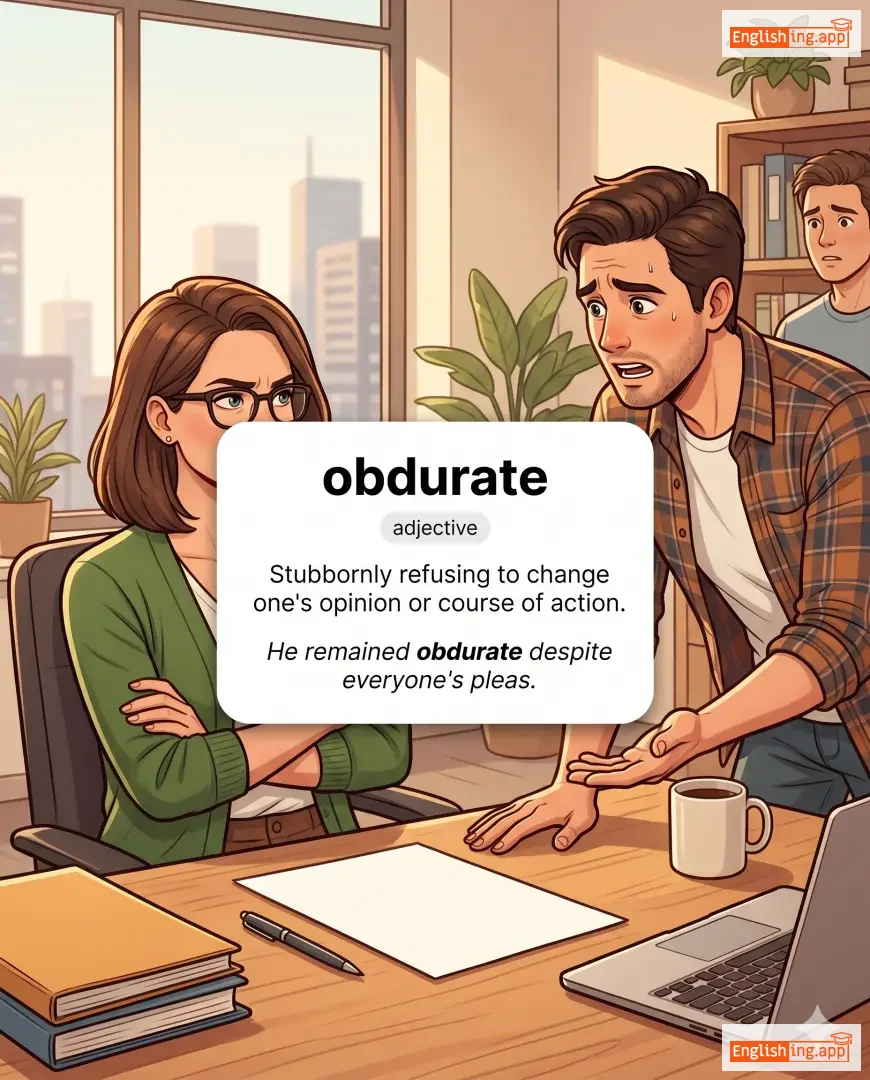
Stubbornly refusing to change one's opinion or course of action.
••••••
|
He remained obdurate despite everyone's pleas.
尽管大家的恳求,他依然固执。
••••••
|
尽管大家的恳求,他依然固执。
Jinguang dajia de kenqiu, ta yiran guzhi.
••••••
|
- •••••• | - •••••• | - •••••• |
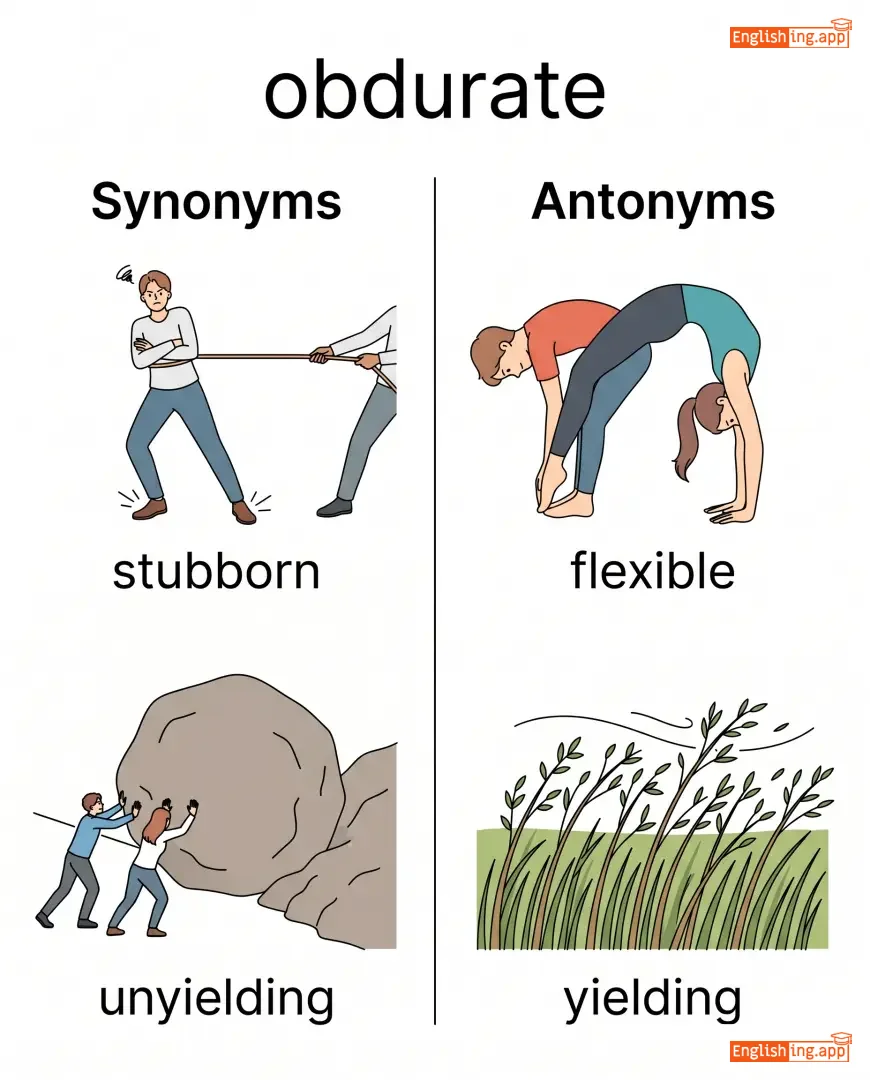
stubborn, unyielding, inflexible, rigid, adamant
••••••
|
flexible, yielding, compliant
••••••
|
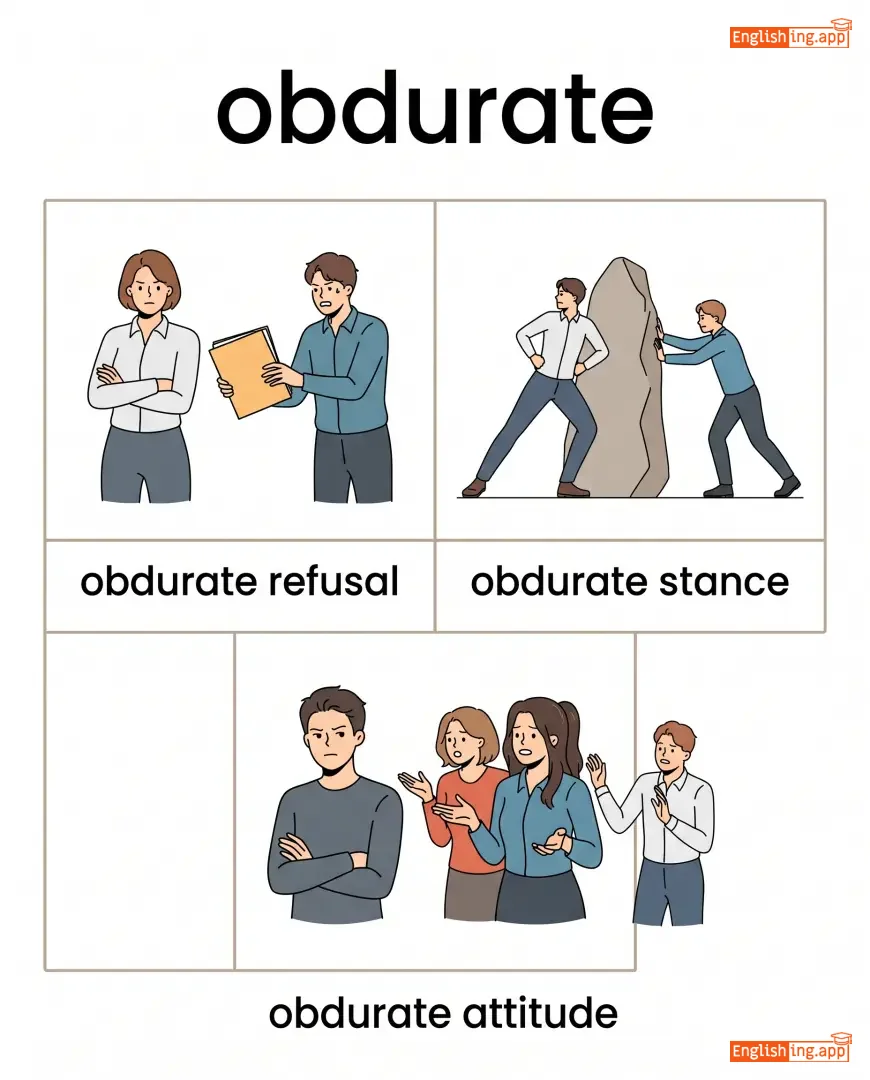
obdurate refusal, obdurate stance, obdurate attitude
••••••
|
Obdurate 就是固执,像你不想改变自己选择的事情,哪怕别人请求你改变。
••••••
|
|
🙇
••••••
|
/əbˈsiːkwɪəs/
adjective
(obsequious)
••••••
|

|
奉承
fèngchēng
••••••
|
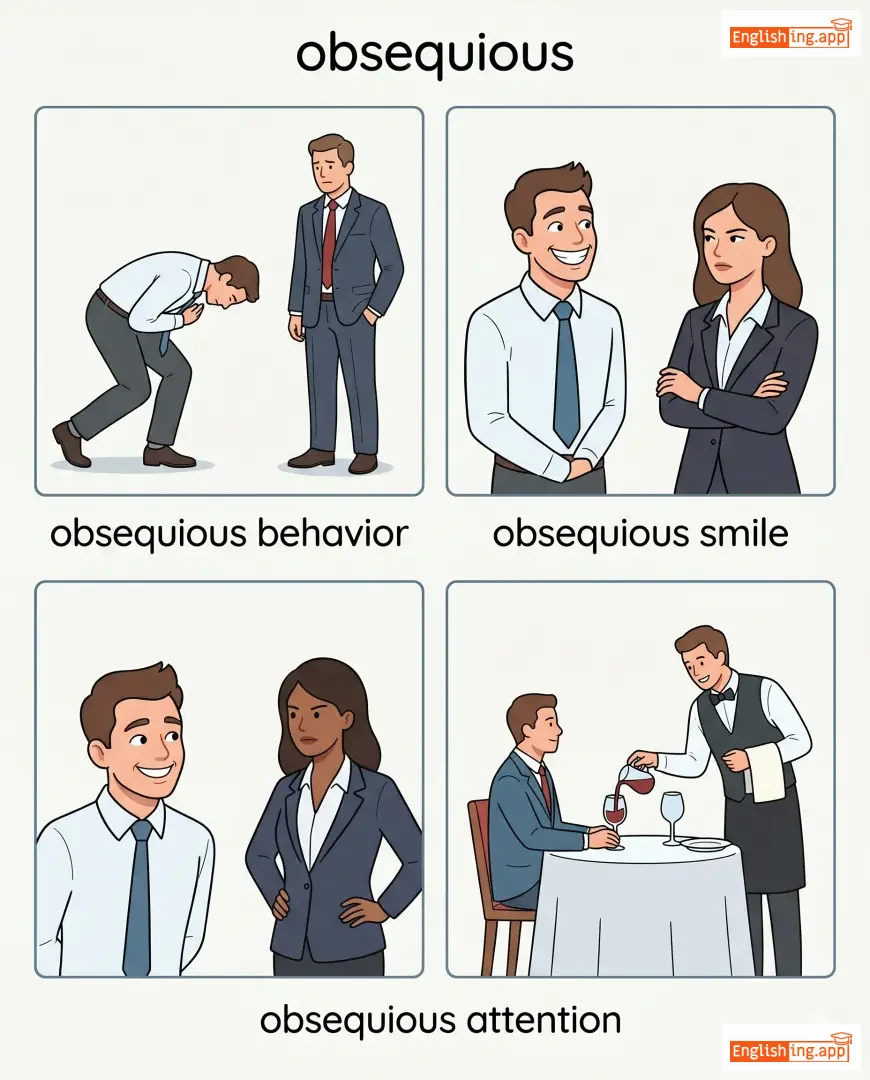
- •••••• | - •••••• | - •••••• | - •••••• |
Excessively obedient or attentive in a servile way.
••••••
|
The waiter gave an obsequious bow to every customer.
服务员对每个顾客鞠了一躬。
••••••
|
服务员对每个顾客鞠了一躬。
Fúwùyuán duì měi gè gùkè jū le yī gōng.
••••••
|
- •••••• | - •••••• | - •••••• |
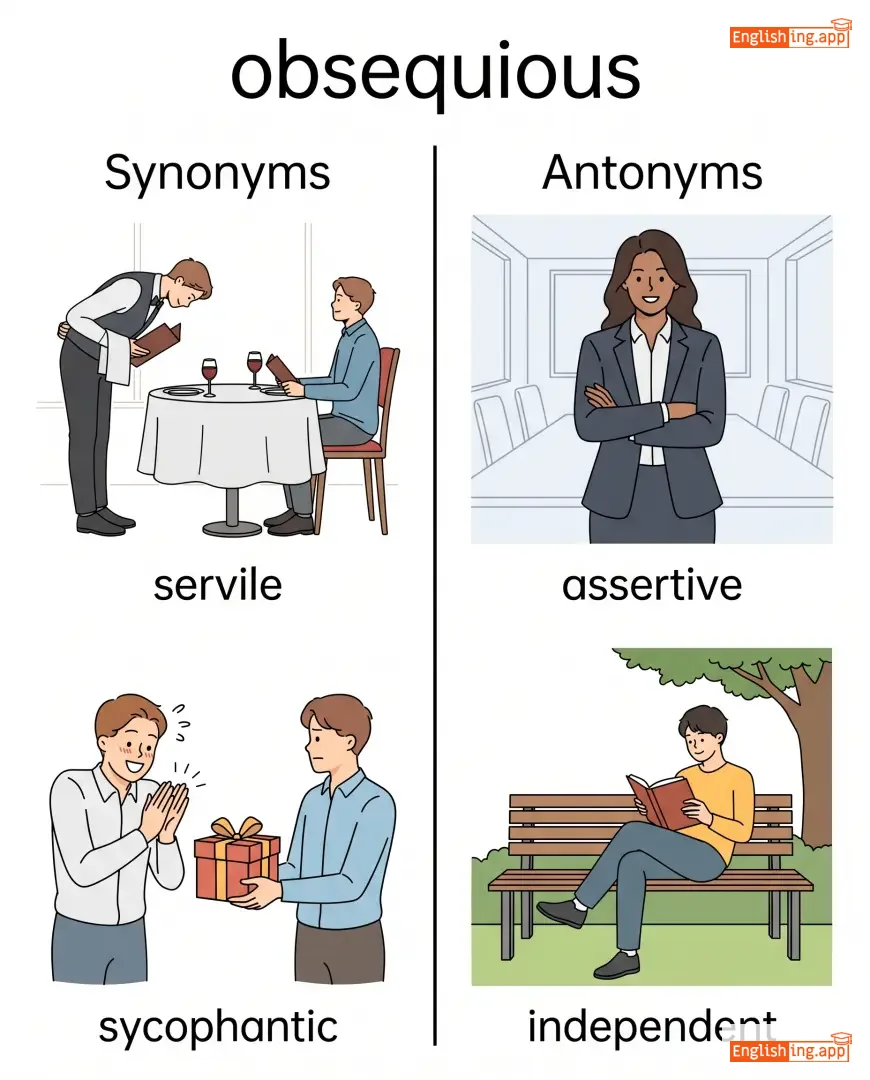
servile, sycophantic, fawning, submissive
••••••
|
assertive, independent
••••••
|
obsequious behavior, obsequious smile, obsequious attention
••••••
|
Obsequious 的意思是奉承,记住 'Obey' + 'quick' = 奉承的行为。
••••••
|
|
🕯️
••••••
|
/ˈɒbsɪkwi/
noun
(obsekwí)
••••••
|
|
葬礼仪式
zànglǐ yíshì
••••••
|
- •••••• | - •••••• | - •••••• | - •••••• |
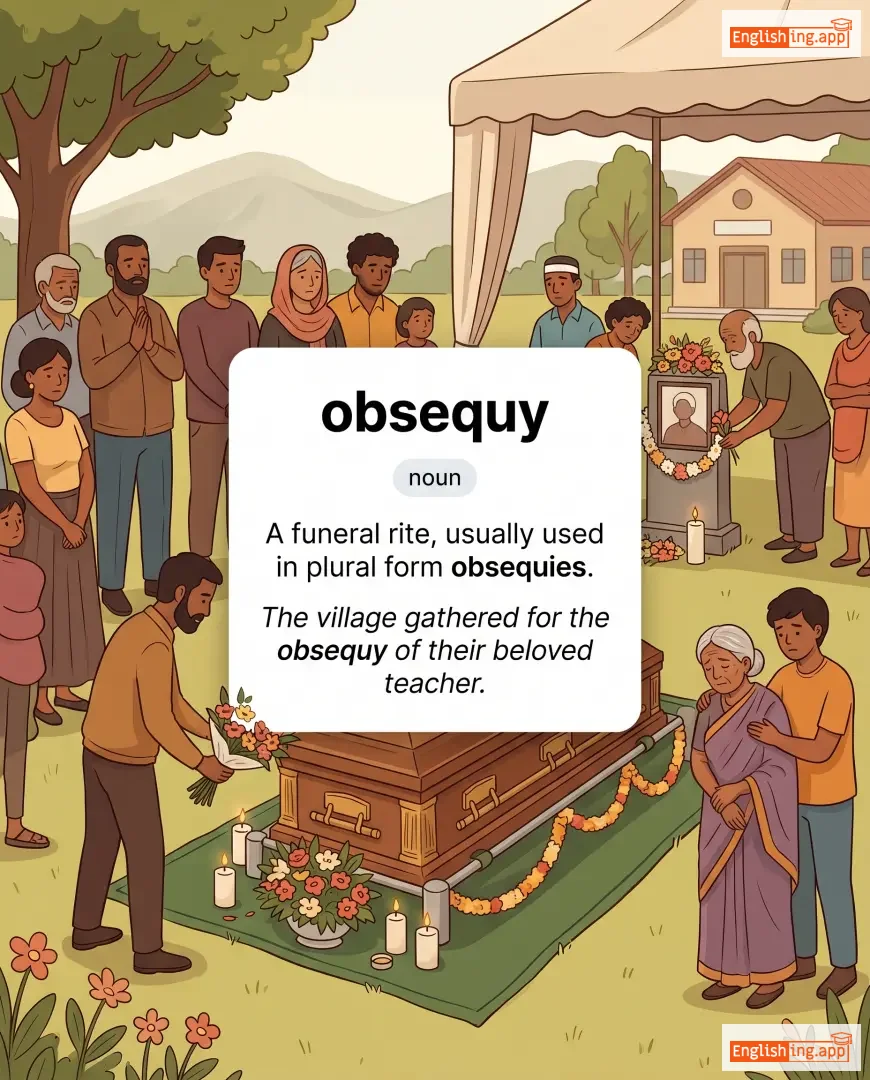
A funeral rite, usually used in plural form obsequies.
••••••
|
The village gathered for the obsequy of their beloved teacher.
村庄聚集在一起,参加他们心爱的老师的葬礼。
••••••
|
村庄聚集在一起,参加他们心爱的老师的葬礼。
Cūnzhuāng jùjí zài yīqǐ, cānjiā tāmen xīn'ài de lǎoshī de zànglǐ.
••••••
|
- •••••• | - •••••• | - •••••• |
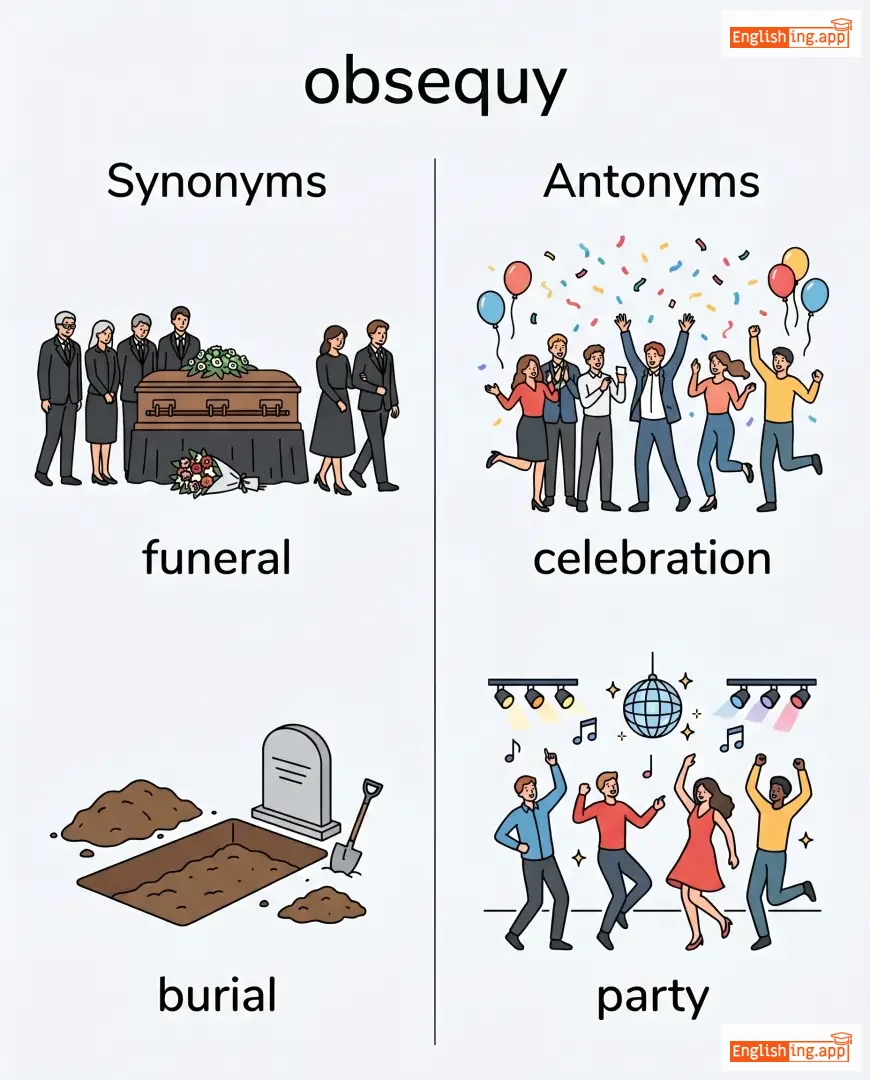
funeral, burial, rite, ceremony
••••••
|
celebration, party
••••••
|
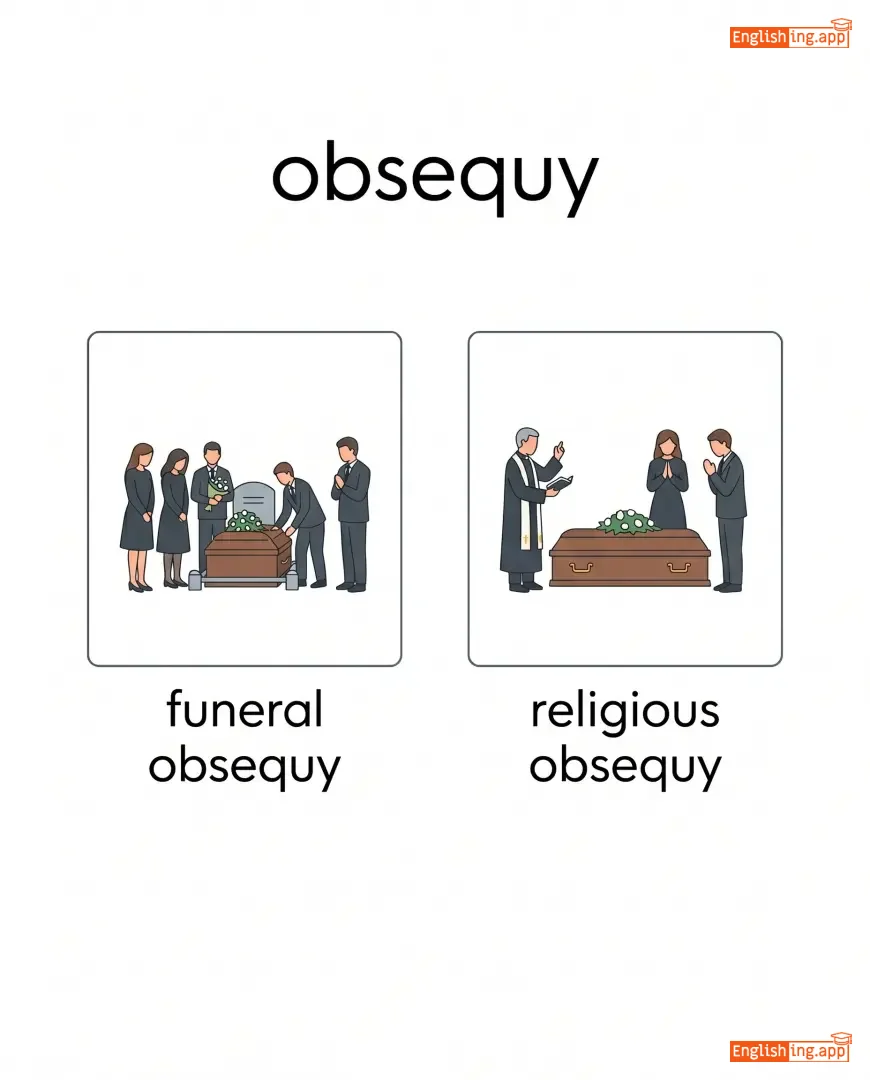
funeral obsequy, religious obsequy
••••••
|
Obsequy 就是葬礼仪式,像在老师去世时的那场葬礼。
••••••
|
|
🚫
••••••
|
/ˈɑːbvieɪt/
verb
(奥布维特)
••••••
|
|
消除
xiaochu
••••••
|
obviated
奥布维特德
••••••
|
obviated
奥布维特德
••••••
|
obviates
奥布维特斯
••••••
|
obviating
奥布维廷
••••••
|
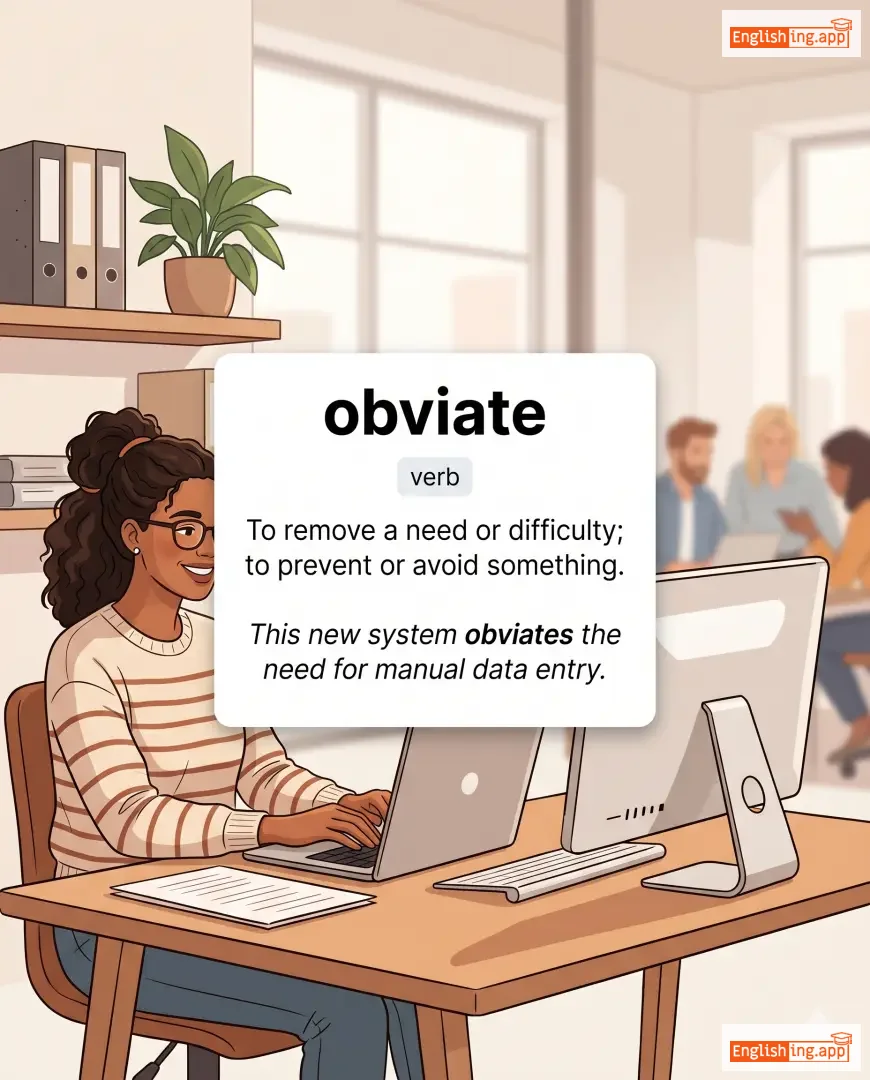
To remove a need or difficulty; to prevent or avoid something.
••••••
|
This new system obviates the need for manual data entry.
这个新系统消除了手动输入数据的需要。
••••••
|
这个新系统消除了手动输入数据的需要。
Zhege xin xitong xiaochule shoudong shuru shuju de xuyao.
••••••
|
- •••••• | - •••••• | - •••••• |
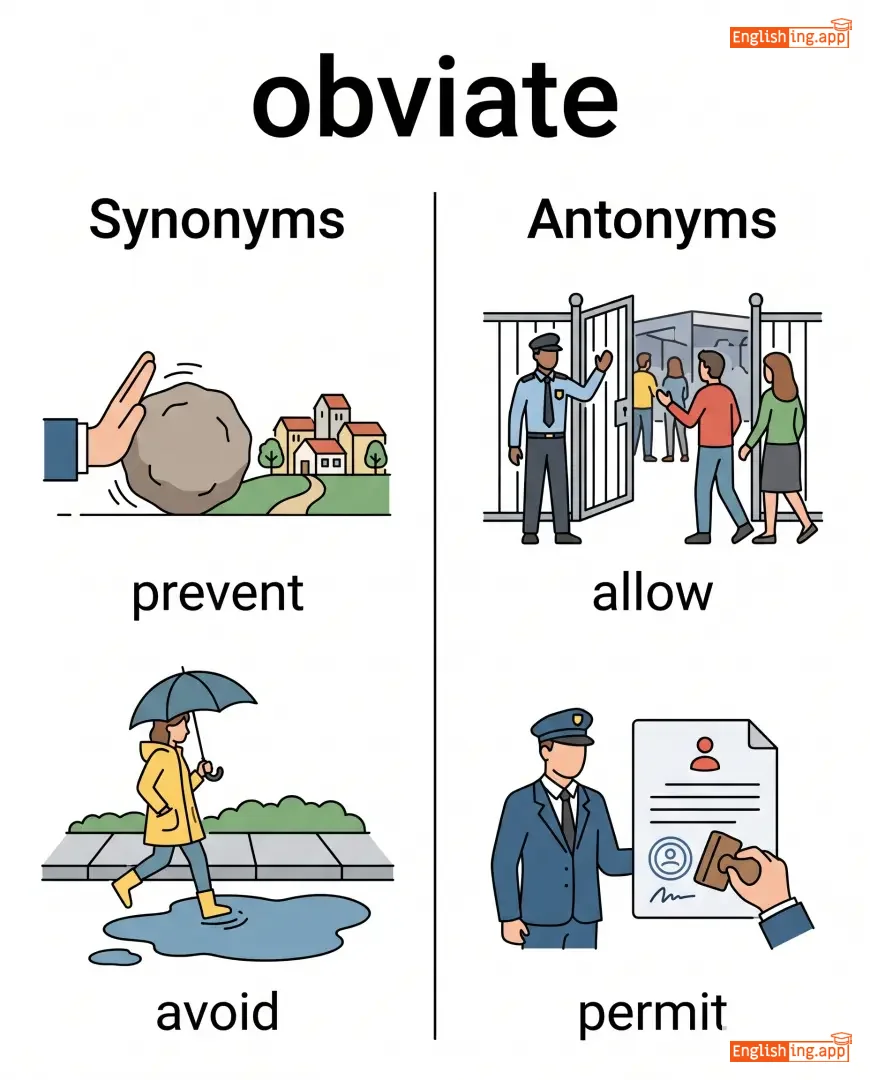
prevent, avoid, eliminate, preclude, remove
••••••
|
allow, permit, require
••••••
|
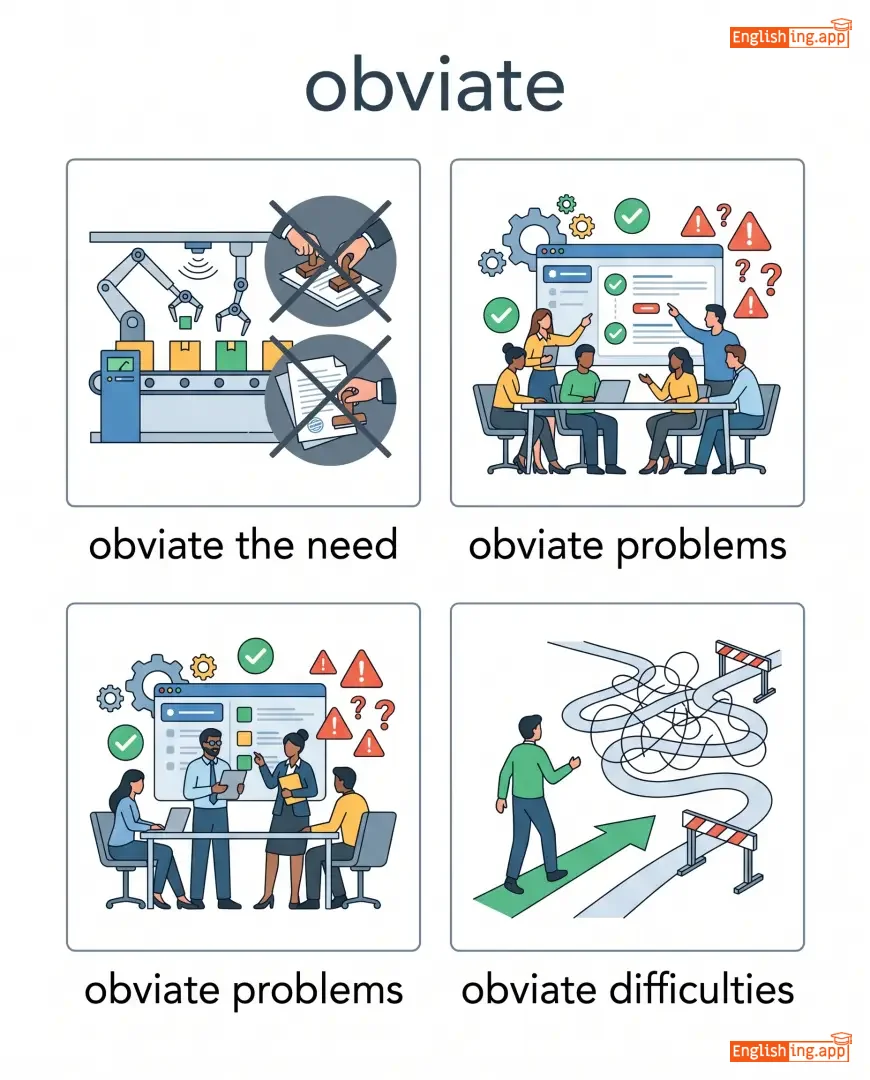
obviate the need, obviate problems, obviate difficulties
••••••
|
Obviate意味着在问题发生前先解决它。
••••••
|
|
🚧
••••••
|
/əˈkluːd/
verb
(òkè lǔ dé)
••••••
|

|
堵塞
dǔsè
••••••
|
occluded
òkè lǔ dì dé
••••••
|
occluded
òkè lǔ dì dé
••••••
|
occludes
òkè lǔ dé sī
••••••
|
occluding
òkè lǔ dìng
••••••
|
To block or close up an opening or passage.
••••••
|
The pipe was occluded by mineral deposits.
管道因矿物沉积物而被堵塞。
••••••
|
管道因矿物沉积物而被堵塞。
Guǎndào yīn kuàngwù chénjī wù ér bèi dǔsè.
••••••
|
- •••••• | - •••••• | - •••••• |
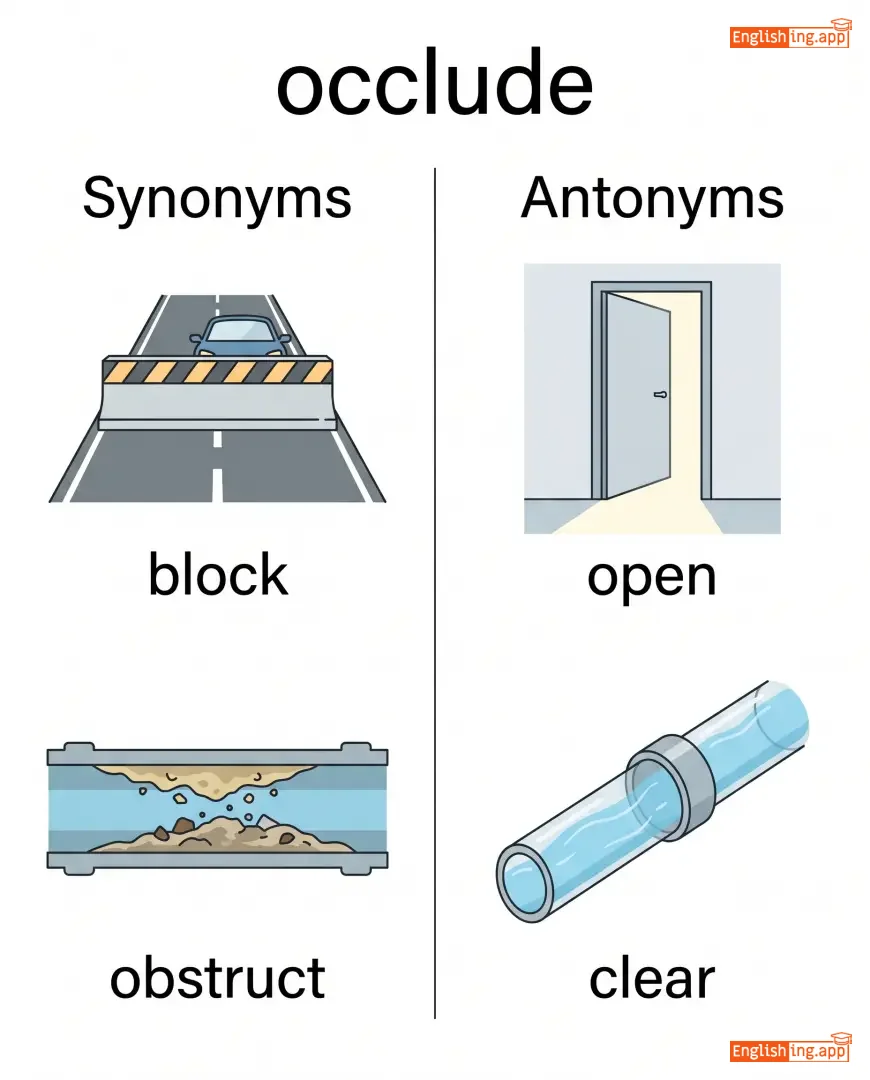
block, obstruct, close, seal, clog
••••••
|
open, clear, unblock
••••••
|
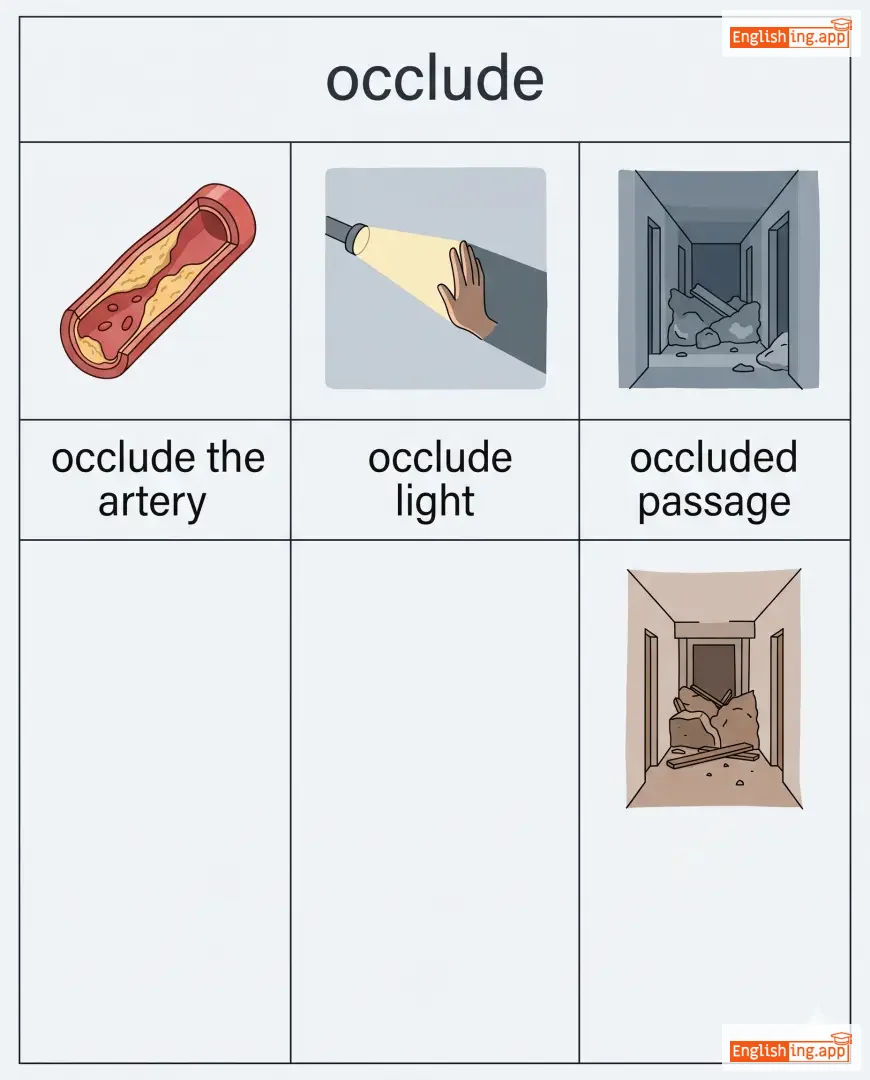
occlude the artery, occlude light, occluded passage
••••••
|
Occlude意味着封闭,遮掩线索,封住路径。
••••••
|

