|
表情符号
|
单词 | Images | 翻译 | 过去时 | 过去分词 | 第三人称单数 | 动名词 | 含义 | 例句 | 例句翻译 | 示例表达 | 示例表达含义 | 示例表达翻译 | 同义词 | 反义词 | 搭配词 | 助记符 |
|---|---|---|---|---|---|---|---|---|---|---|---|---|---|---|---|---|---|
|
😏
••••••
|
/ləˈsɪviəs/
adjective
(拉西维厄斯)
••••••
|
|
淫荡
yín dàng
••••••
|
- •••••• | - •••••• | - •••••• | - •••••• |
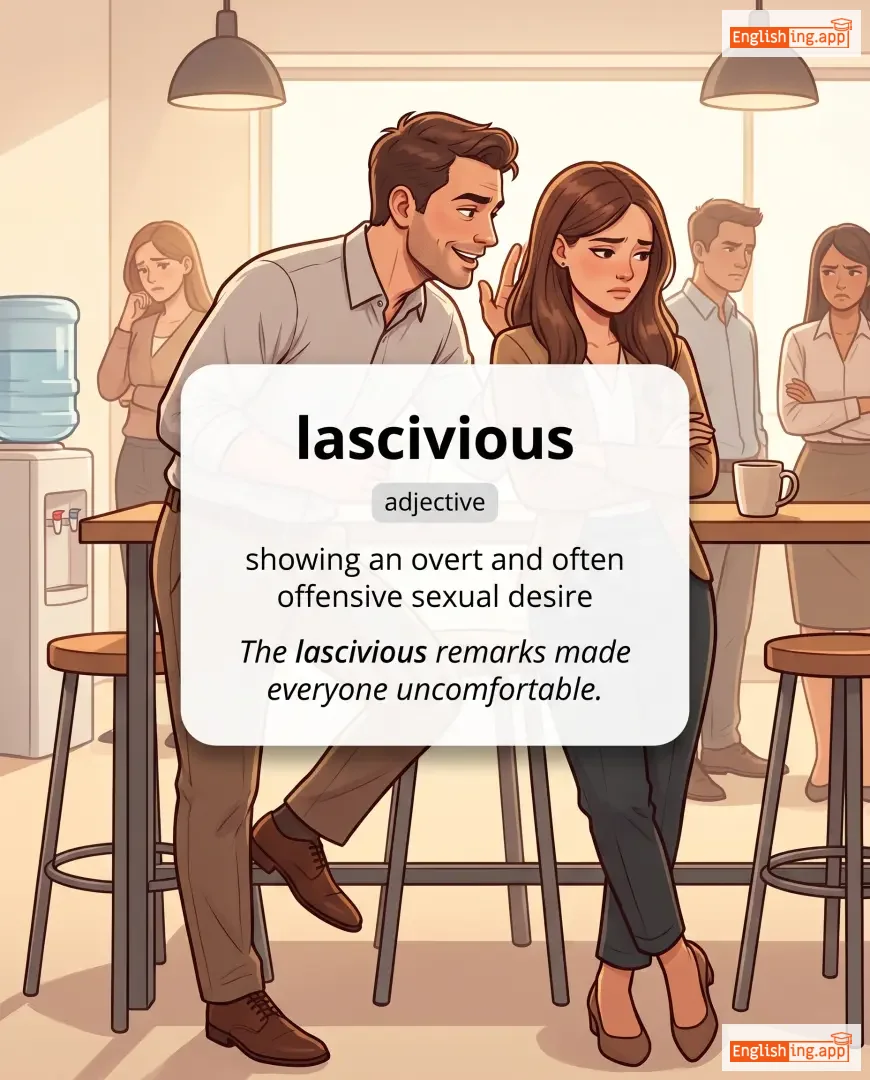
showing an overt and often offensive sexual desire
••••••
|
The lascivious remarks made everyone uncomfortable. |
那些淫荡的评论让每个人都感到不舒服。
Nàxiē yíndàng de pínglùn ràng měi gèrén dōu gǎndào bù shūfú.
••••••
|
- •••••• | - •••••• | - •••••• |
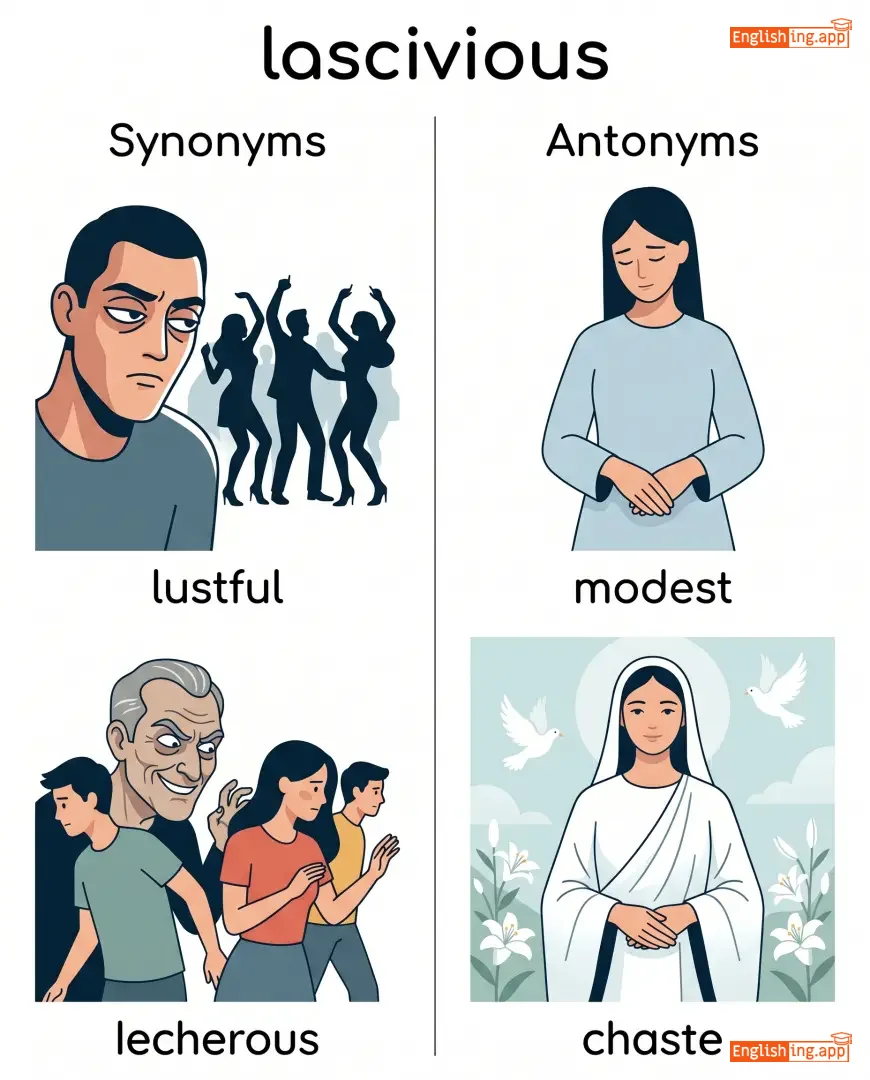
lustful, lecherous, lewd, salacious, wanton
••••••
|
modest, chaste, innocent
••••••
|
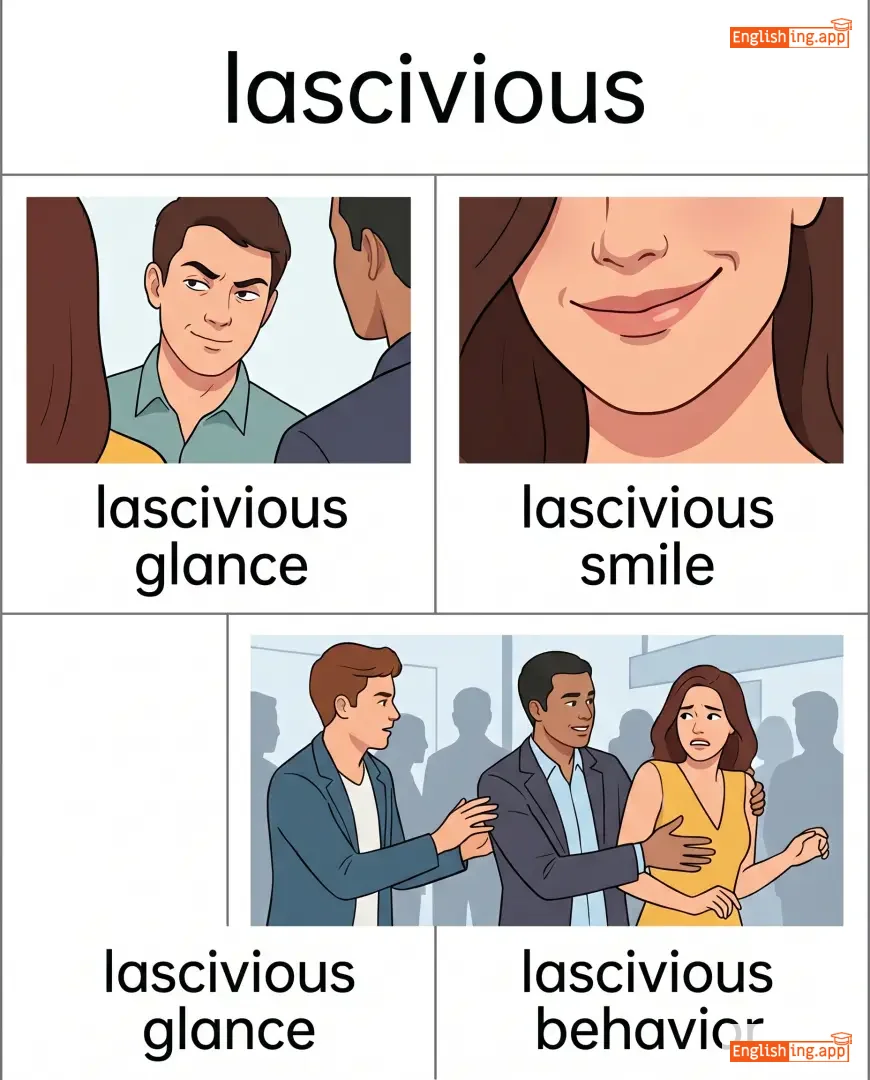
lascivious glance, lascivious smile, lascivious behavior
••••••
|
Yin + Dàng = 淫荡
••••••
|
|
😴
••••••
|
/ˈlæsɪtjuːd/
noun
(là sī tǐ yù dé)
••••••
|
|
疲劳
píláo
••••••
|
- •••••• | - •••••• | - •••••• | - •••••• |
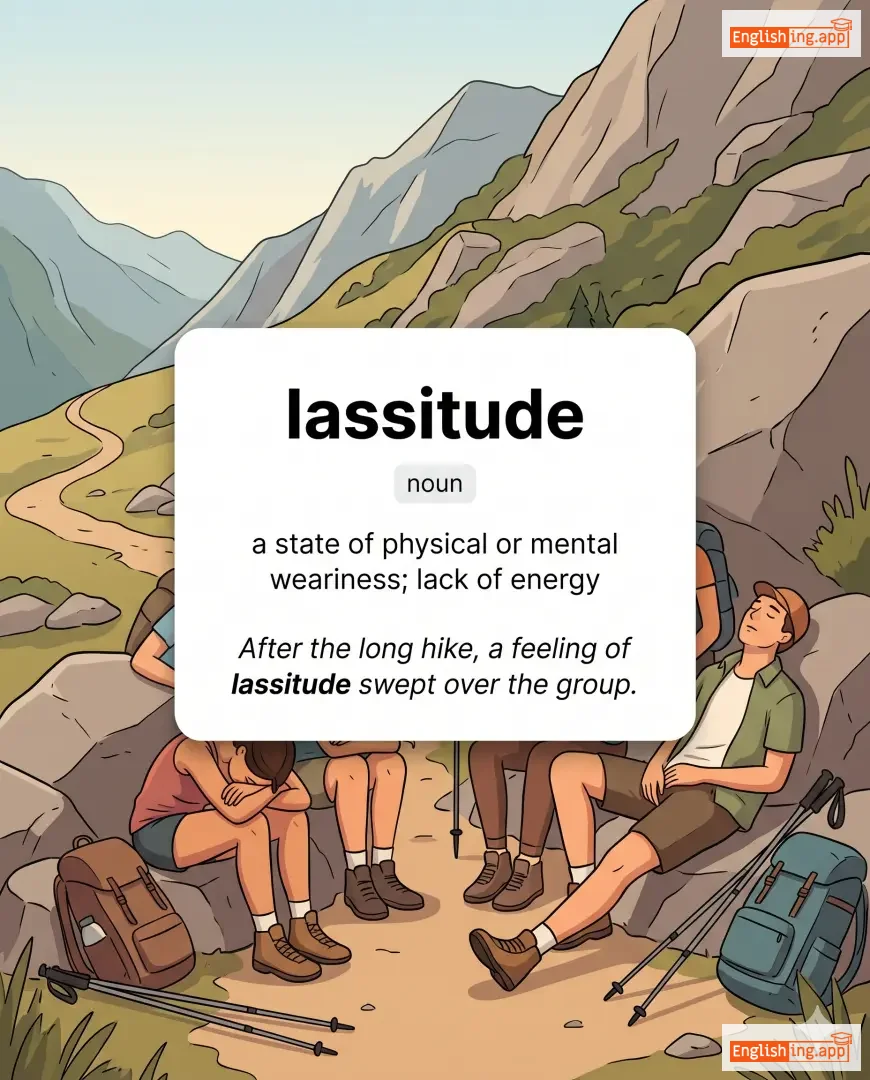
a state of physical or mental weariness; lack of energy
••••••
|
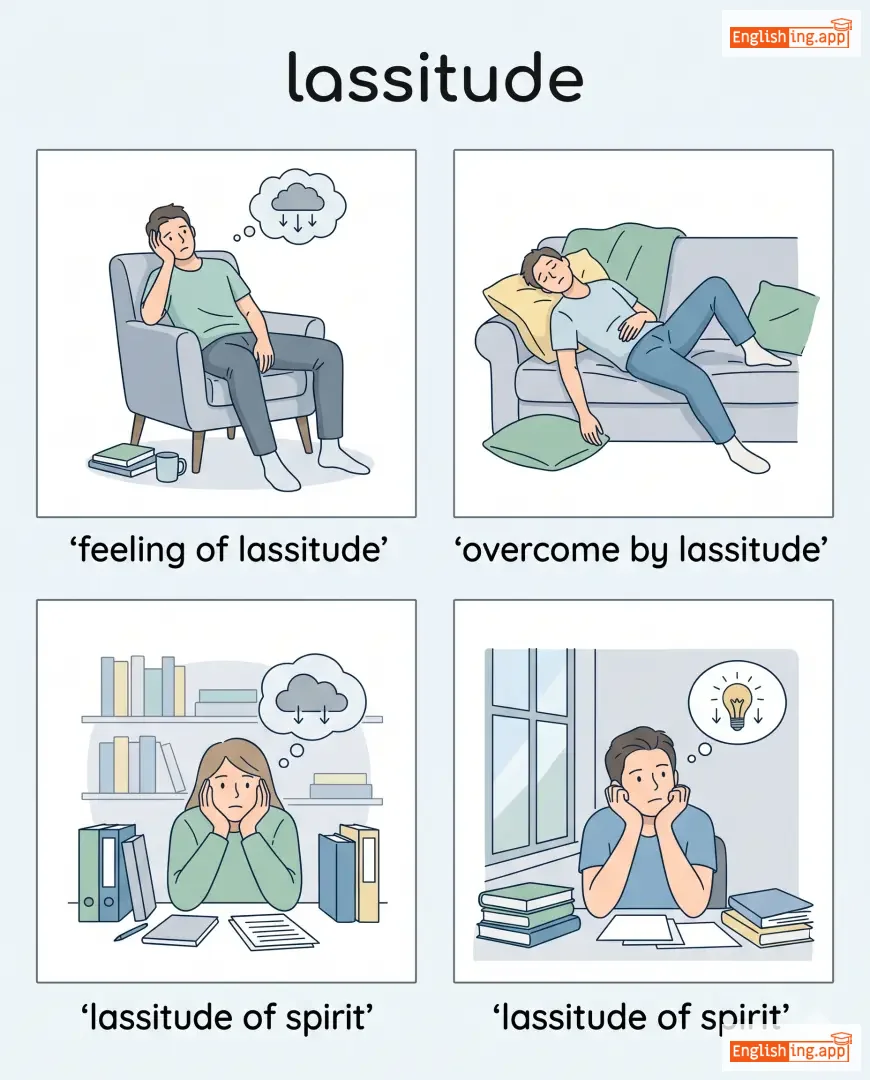
After the long hike, a feeling of lassitude swept over the group. |
长时间徒步后,疲劳感笼罩了整个团队。
Cháng shíjiān túbù hòu, píláo gǎn lǒngzhào le zhěnggè tuánduì.
••••••
|
- •••••• | - •••••• | - •••••• |
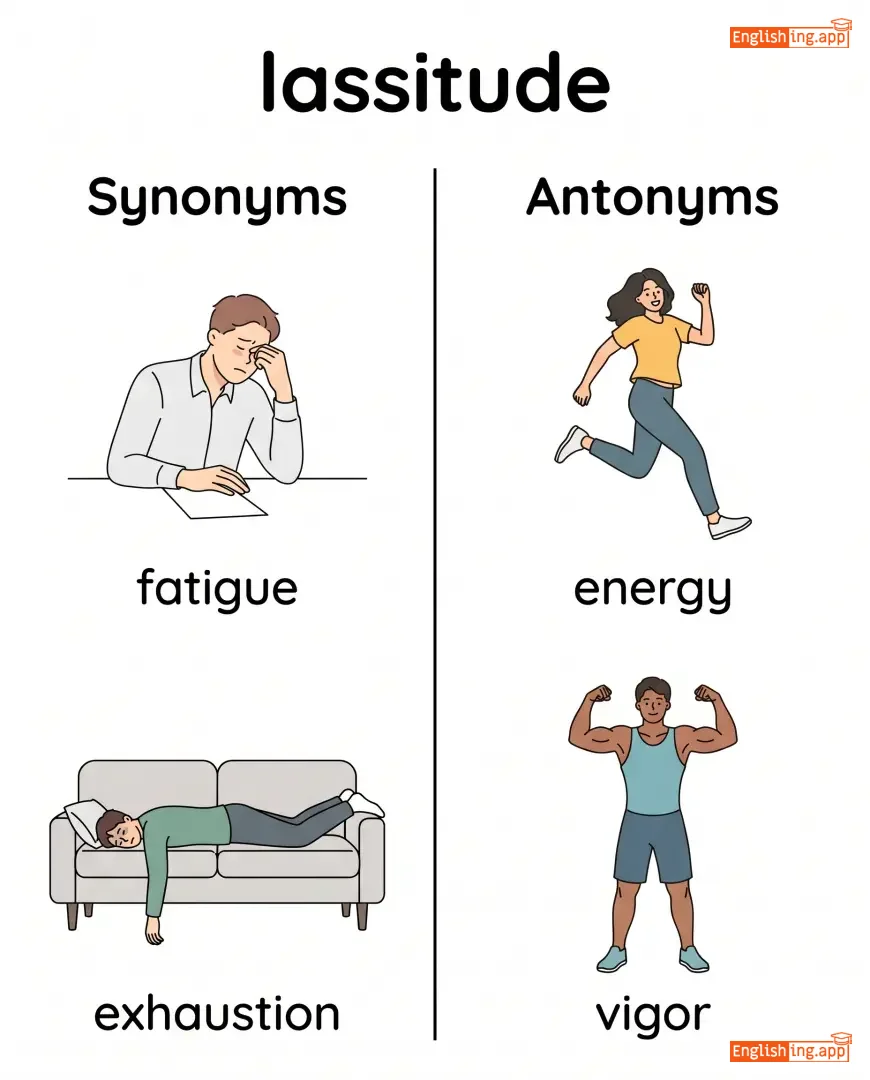
fatigue, exhaustion, tiredness, lethargy, weariness
••••••
|
energy, vigor, vitality
••••••
|
feeling of lassitude, overcome by lassitude, lassitude of spirit
••••••
|
Lassi后感觉到疲劳
••••••
|
|
🌱
••••••
|
/ˈleɪtənt/
adjective
••••••
|
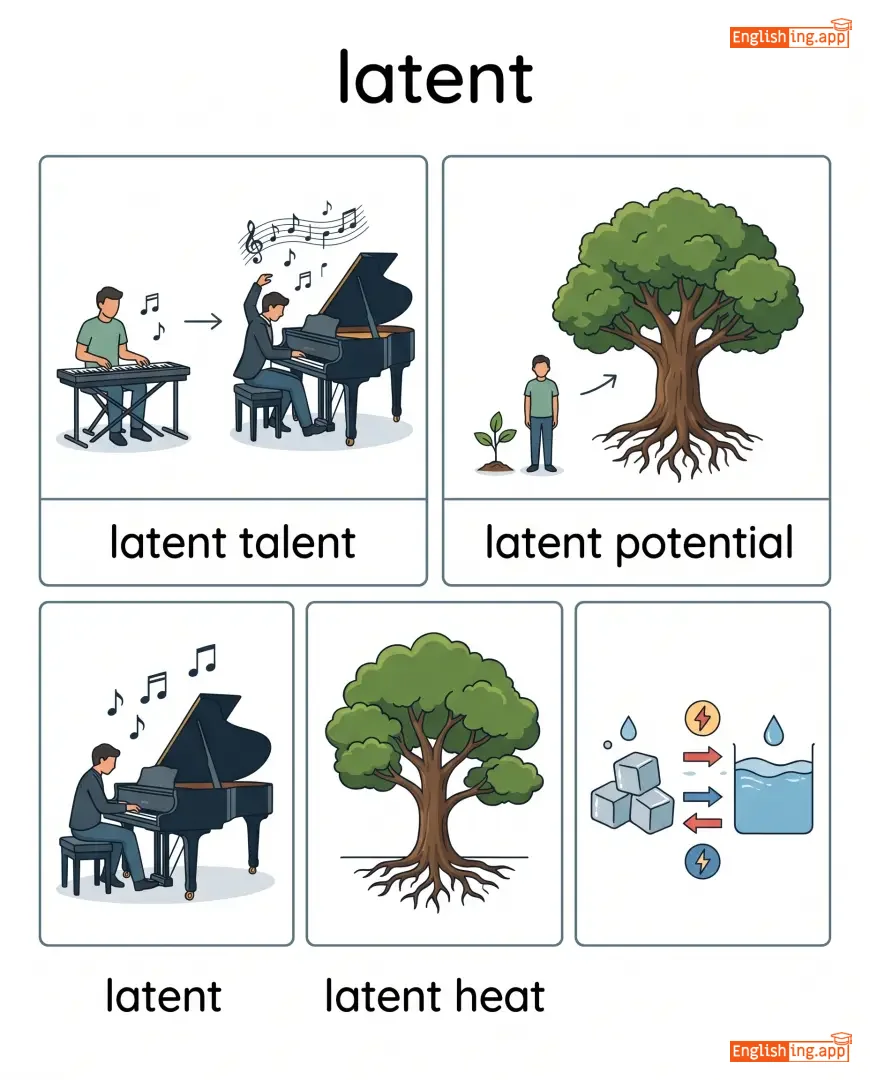
|
- •••••• | - •••••• | - •••••• | - •••••• | - •••••• |
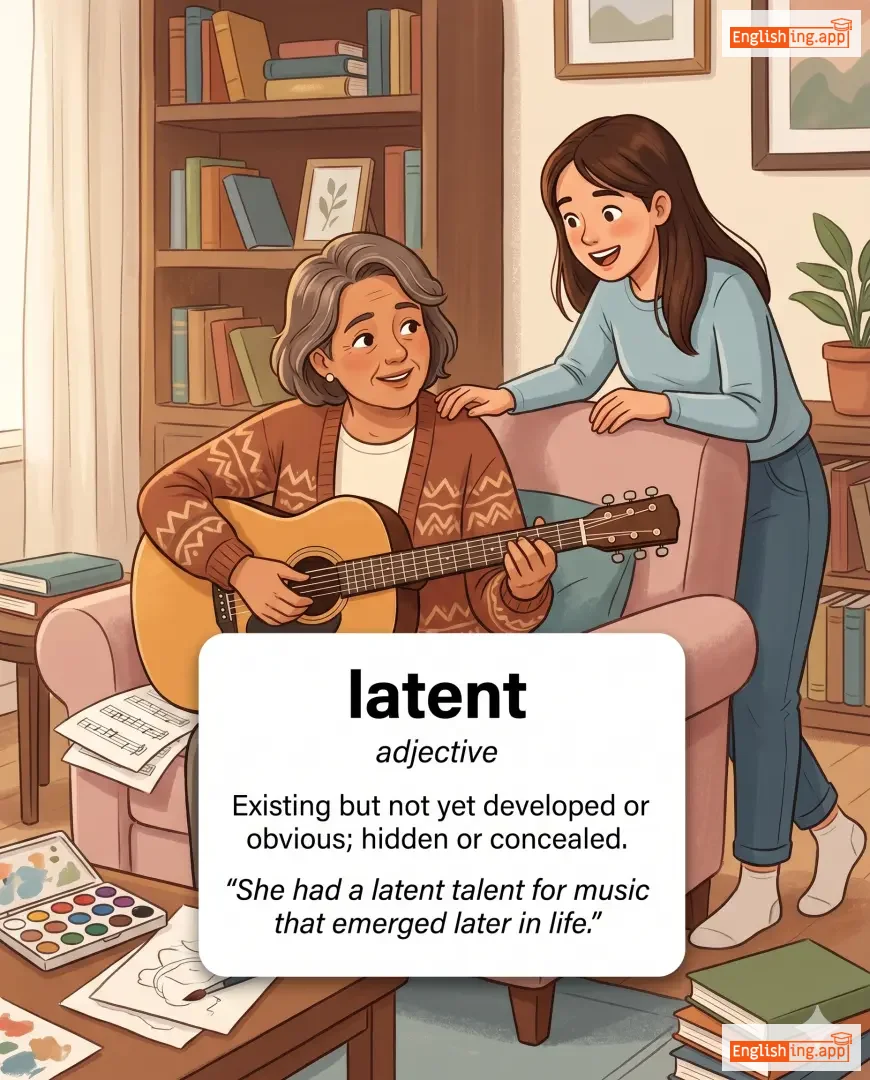
Existing but not yet developed or obvious; hidden or concealed.
••••••
|
She had a latent talent for music that emerged later in life. |
- •••••• |
latent potential |
Hidden or undeveloped ability that may emerge in the future.
••••••
|
- •••••• |
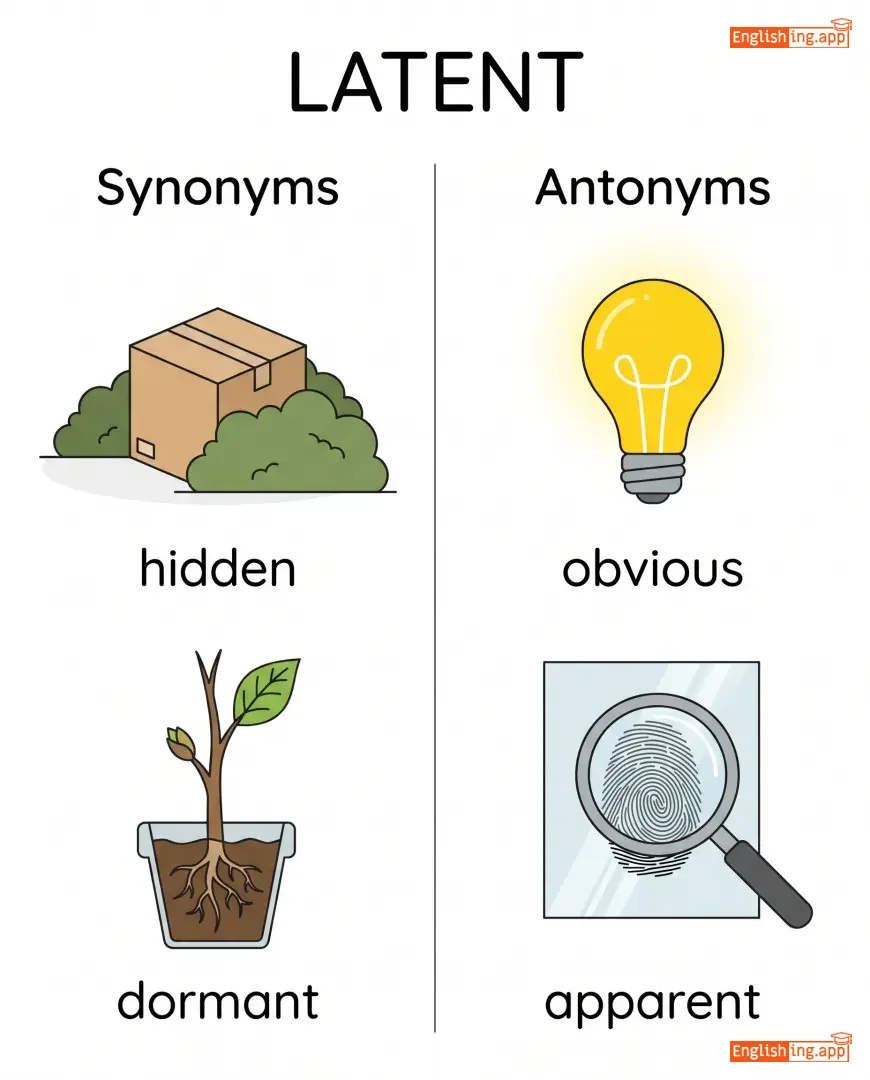
hidden, dormant, concealed, unrealized, undeveloped
••••••
|
obvious, apparent, visible
••••••
|
latent talent, latent potential, latent heat, latent disease
••••••
|
No •••••• |
|
👏
••••••
|
/lɔːd/
verb
••••••
|
|
- •••••• |
lauded
••••••
|
lauded
••••••
|
lauds
••••••
|
lauding
••••••
|
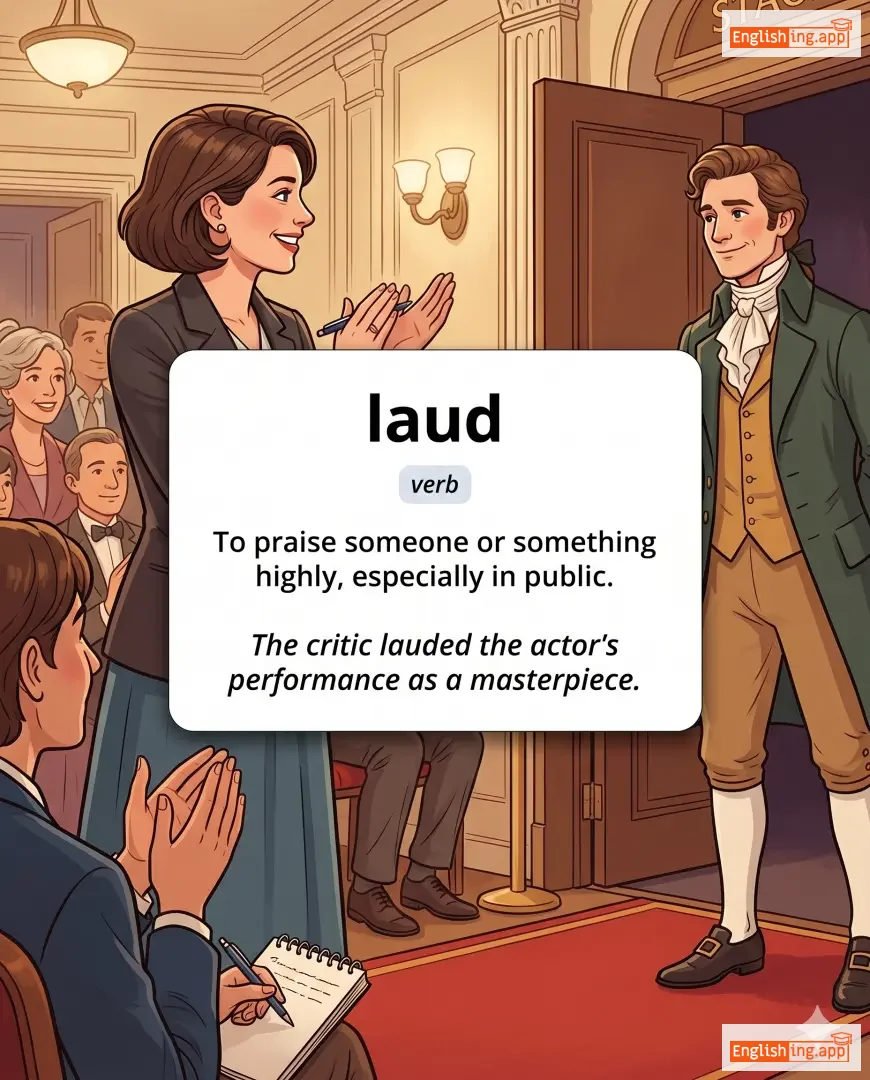
To praise someone or something highly, especially in public.
••••••
|
The critic lauded the actor's performance as a masterpiece. |
- •••••• |
sing someone's praises |
to praise someone very enthusiastically
••••••
|
- •••••• |
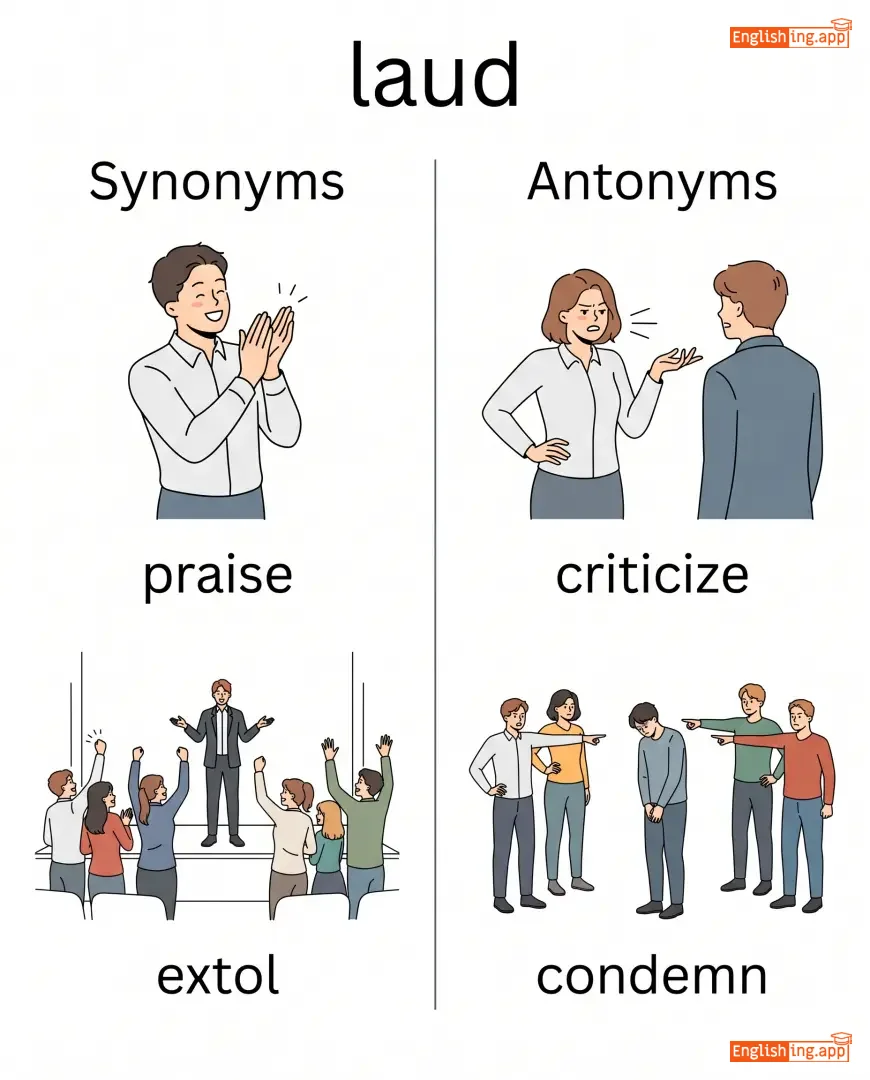
praise, extol, applaud, commend, admire
••••••
|
criticize, condemn
••••••
|
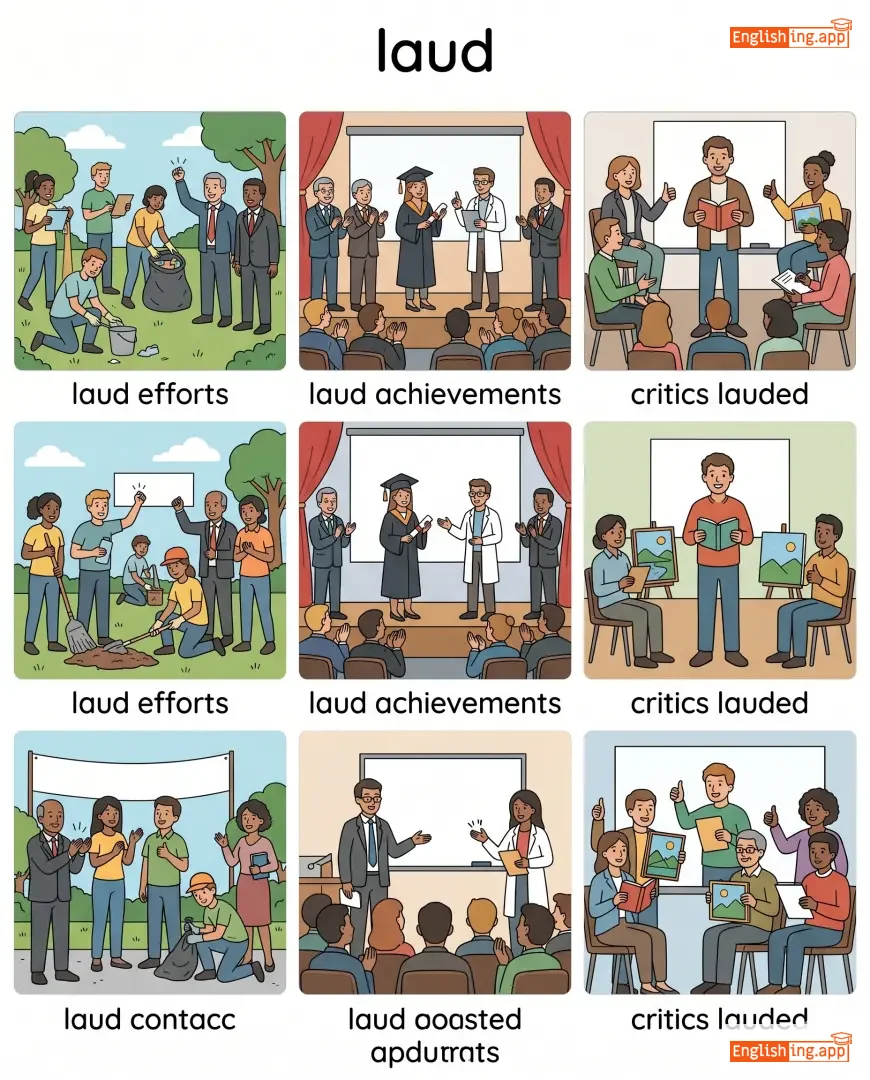
laud efforts, laud achievements, critics lauded
••••••
|
No •••••• |
|
😴
••••••
|
/ləˈθɑːrdʒɪk/
adjective
(嗜睡的)
••••••
|


|
嗜睡的
shishui de
••••••
|
- •••••• | - •••••• | - •••••• | - •••••• |
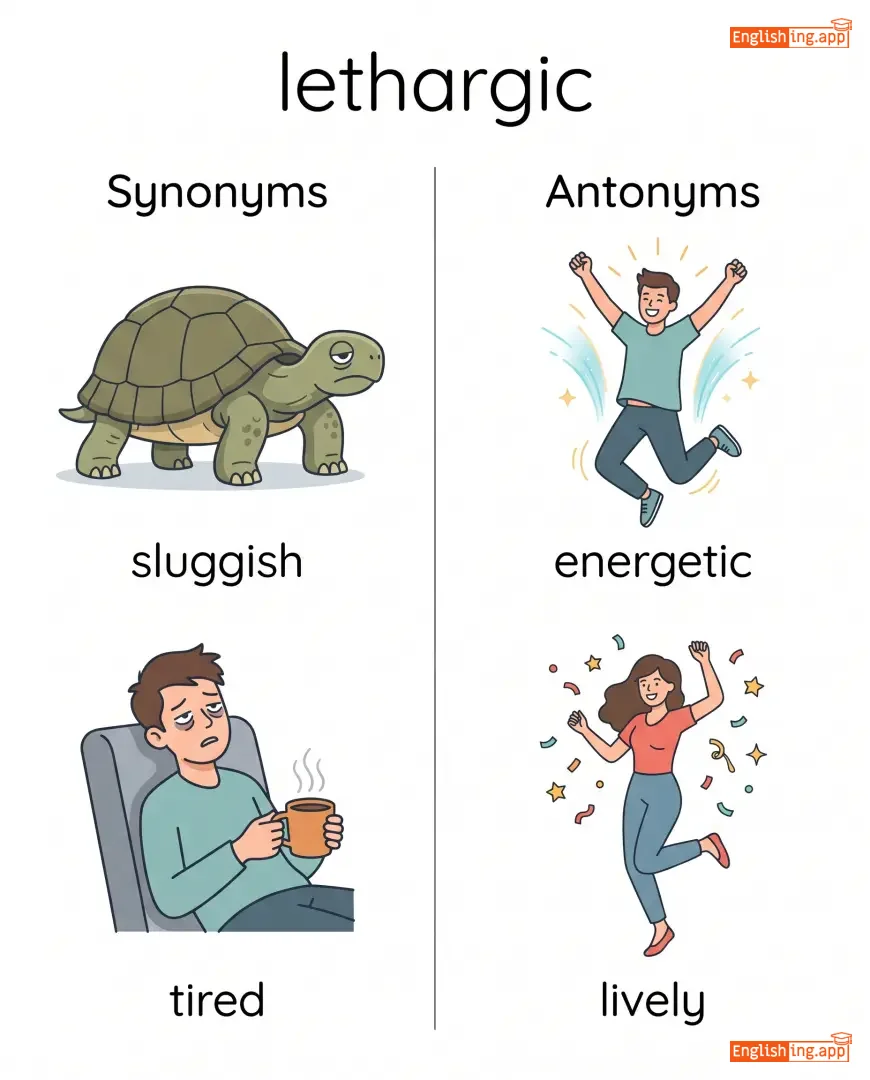
Feeling sluggish, drowsy, or lacking energy.
••••••
|
After the long journey, he felt lethargic and went straight to bed. |
长途旅行后,他感到嗜睡,直接上床睡觉。
Changtu lüxing hou, ta gandao shishui, zhijie shangchuang shuijiao.
••••••
|
- •••••• | - •••••• | - •••••• |
sluggish, tired, fatigued, weary, drowsy
••••••
|
energetic, lively, active
••••••
|
feel lethargic, lethargic response, lethargic behavior
••••••
|
Lethargic 就是嗜睡的意思,长途旅行后人人都累得嗜睡了。
••••••
|
|
🌊
••••••
|
/ˈlɛvi/
noun
(莱维)
••••••
|
|
堤坝
dī bì
••••••
|
- •••••• | - •••••• | - •••••• | - •••••• |
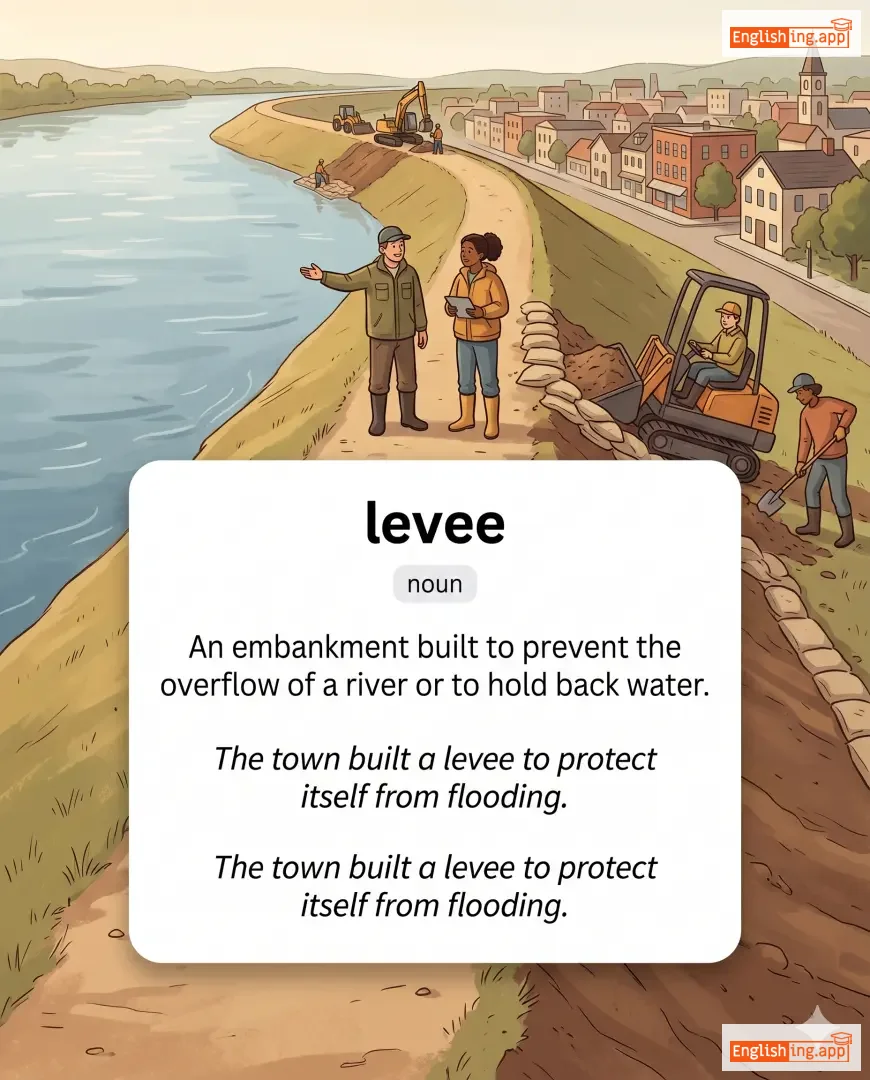
An embankment built to prevent the overflow of a river or to hold back water.
••••••
|
The town built a levee to protect itself from flooding. |
该市建造了一座堤坝,以防洪水。
gāi shì jiànzào le yī zuò dī bì, yǐ fáng hóngshuǐ.
••••••
|
- •••••• | - •••••• | - •••••• |
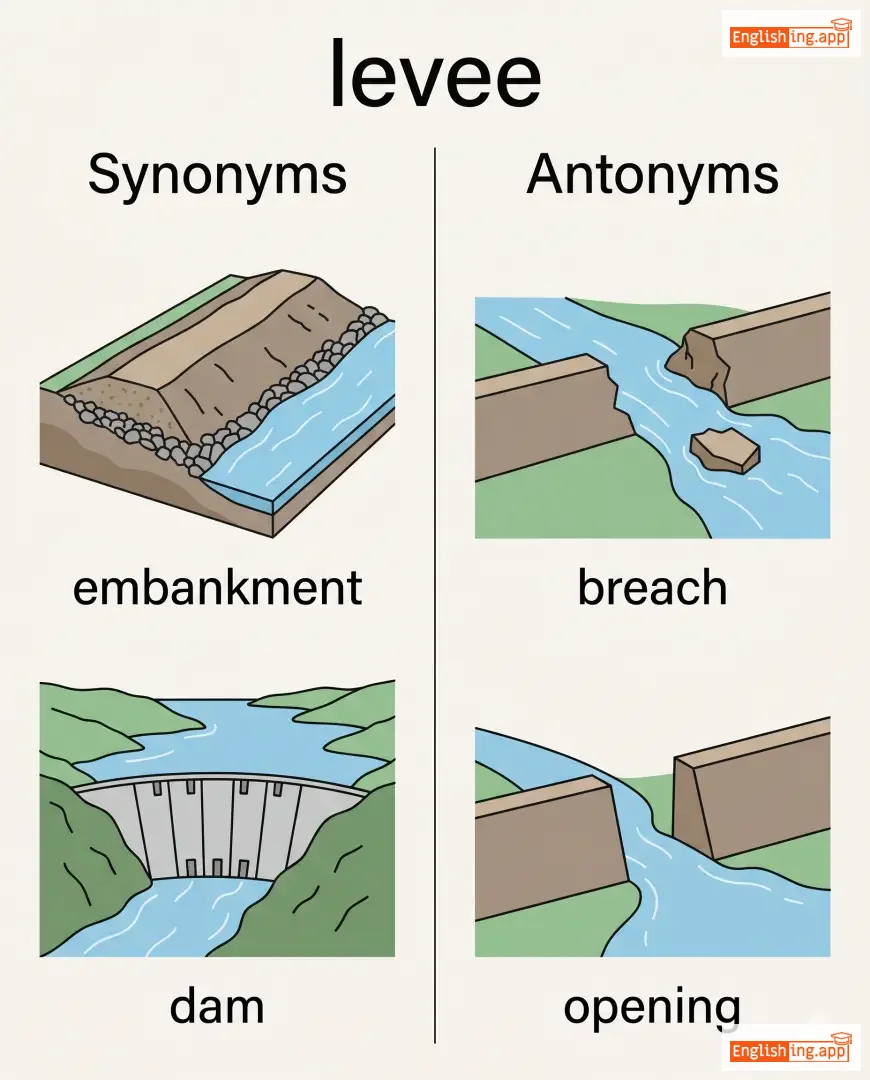
embankment, dam, dike, barrier
••••••
|
breach, opening
••••••
|
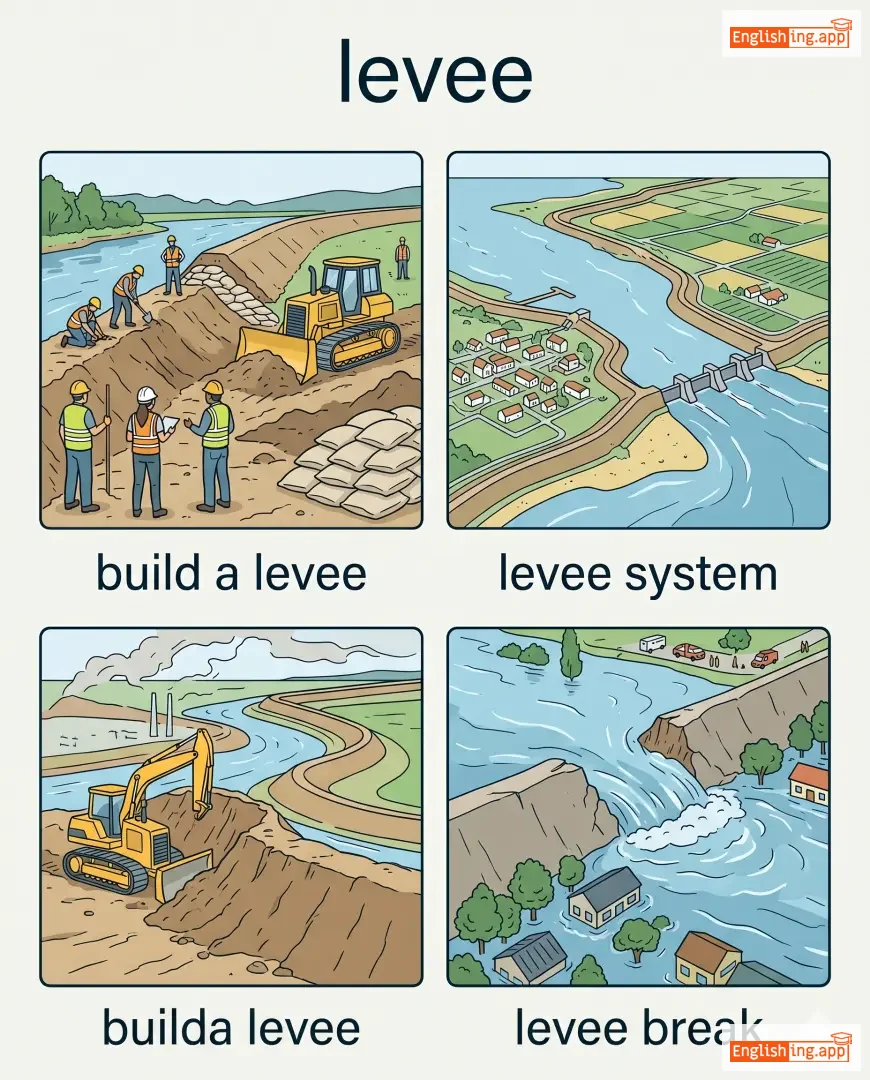
build a levee, levee system, levee break, levee construction
••••••
|
Levee意味着堤坝-就像堤坝保护城市免受洪水的侵害。
••••••
|
|
😄
••••••
|
/ˈlɛvɪti/
noun
••••••
|

|
- •••••• | - •••••• | - •••••• | - •••••• | - •••••• |
Lightness of manner or speech, especially when inappropriate; lack of seriousness.
••••••
|
His attempt to bring levity to the tense meeting was appreciated. |
- •••••• |
comic levity |
Humor or lightheartedness used to reduce tension.
••••••
|
- •••••• |
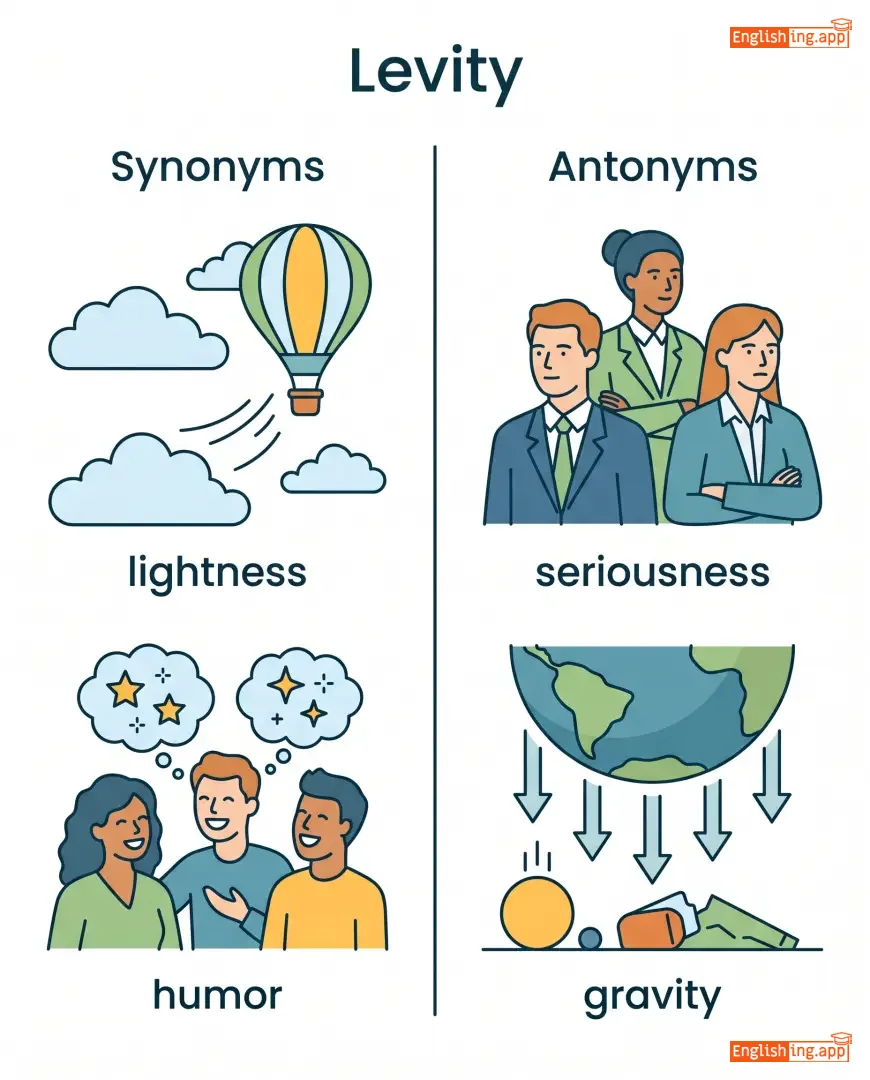
lightness, humor, frivolity, cheerfulness, jocularity
••••••
|
seriousness, gravity, solemnity
••••••
|
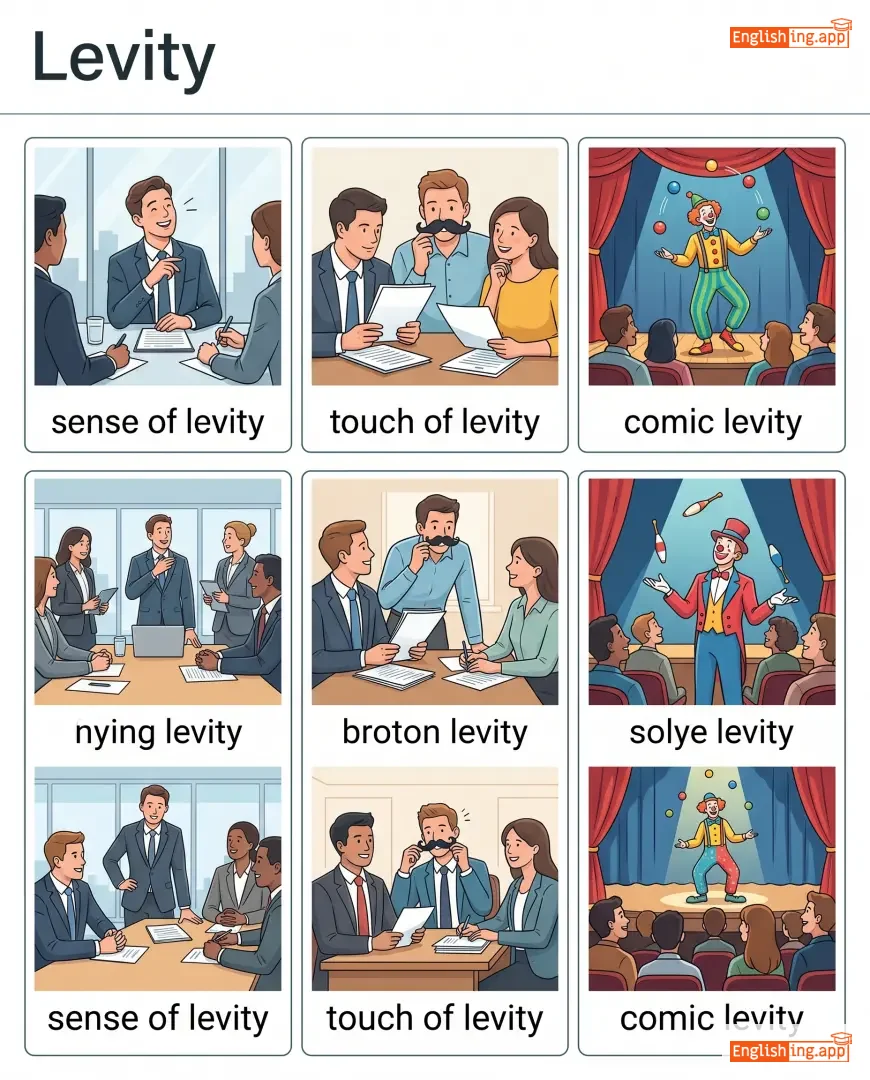
sense of levity, touch of levity, comic levity, add levity
••••••
|
No •••••• |
|
🌍
••••••
|
/ˈlɪbərəl/
adjective
(自由主义的)
••••••
|


|
自由主义的
zìyóu zhǔyì de
••••••
|
- •••••• | - •••••• | - •••••• | - •••••• |
open to new behavior or opinions and willing to discard traditional values
••••••
|
She holds liberal views on education and social issues. |
她对教育和社会问题持自由主义观点。
Tā duì jiàoyù hé shèhuì wèntí chí zìyóu zhǔyì guāndiǎn.
••••••
|
liberal arts |
academic studies intended to develop general knowledge and intellectual ability
••••••
|
自由艺术
zìyóu yìshù
••••••
|
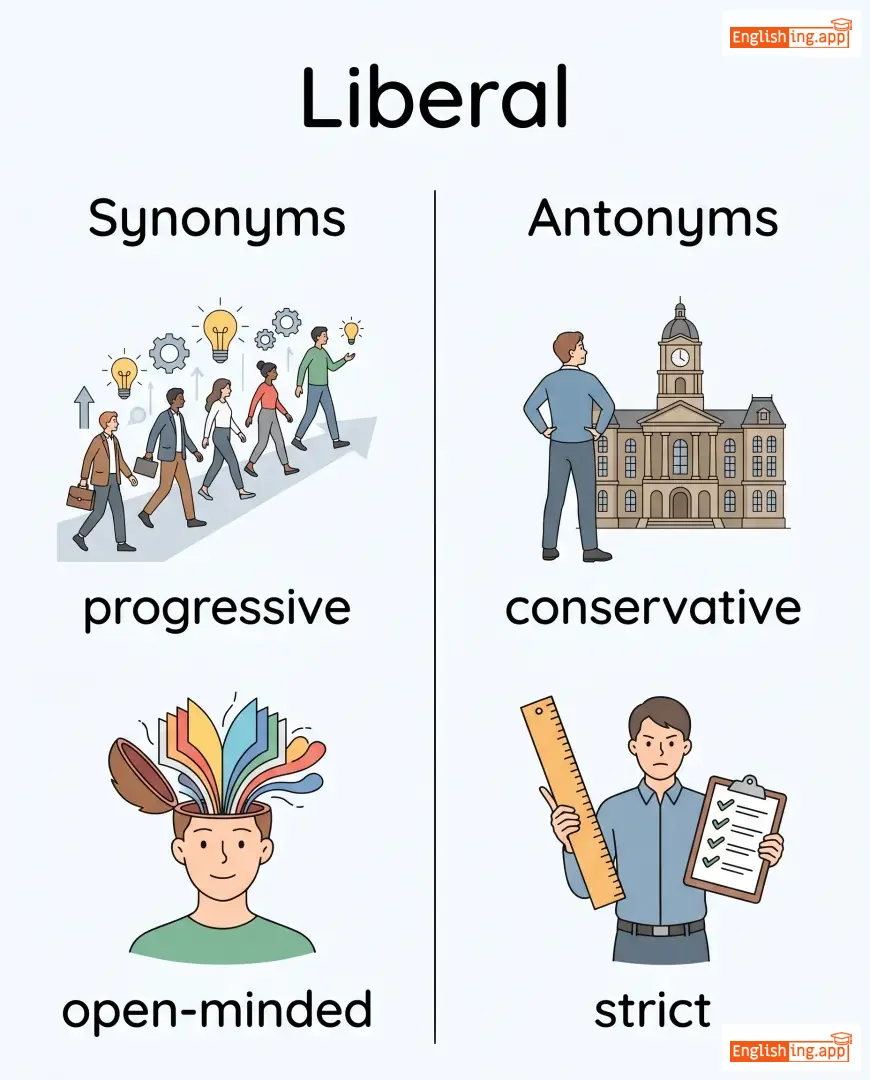
progressive, open-minded, tolerant, generous
••••••
|
conservative, strict, narrow-minded
••••••
|
liberal views, liberal policy, liberal reform, liberal democracy
••••••
|
自由主义的思想如同自由的空气,开放而不拘束。
••••••
|
|
🍷
••••••
|
/ˈlɪbərˌtiːn/
noun
••••••
|
|
- •••••• | - •••••• | - •••••• | - •••••• | - •••••• |
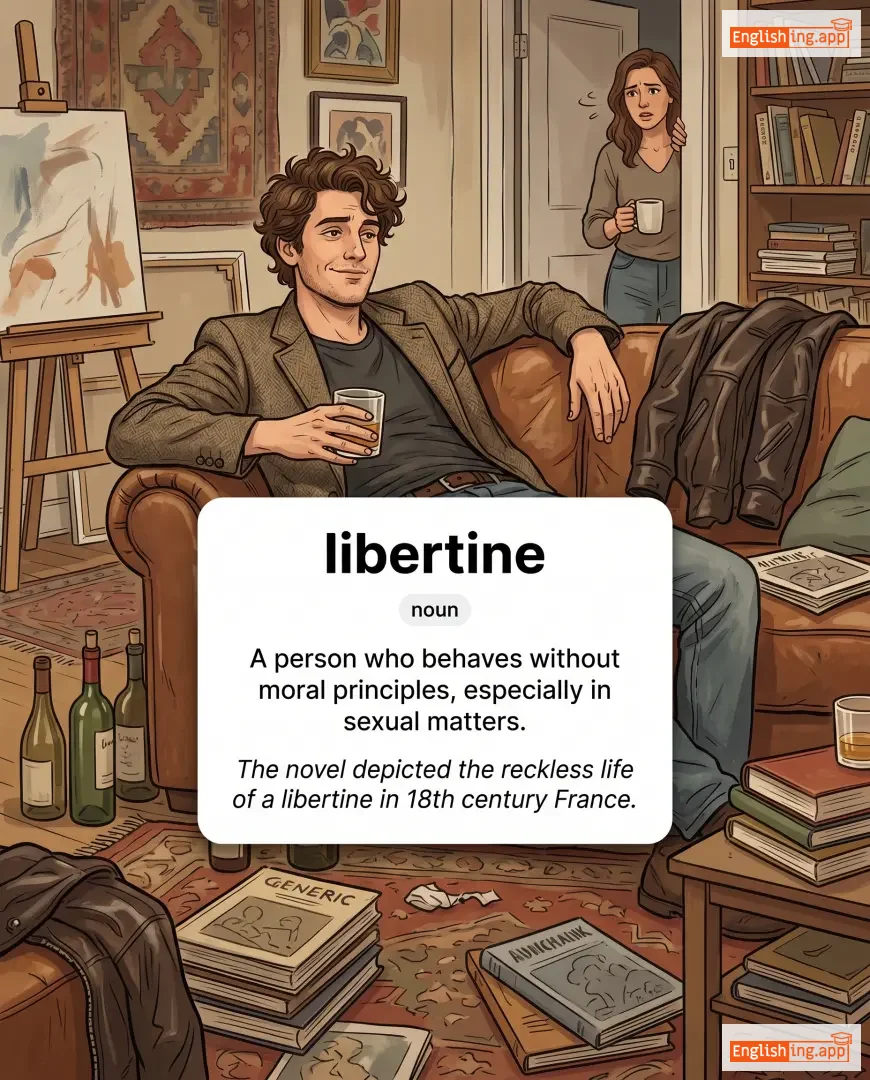
A person who behaves without moral principles, especially in sexual matters.
••••••
|
The novel depicted the reckless life of a libertine in 18th century France. |
- •••••• |
libertine spirit |
An attitude of rejecting social conventions and living freely.
••••••
|
- •••••• |
debauchee, rake, profligate, hedonist, sensualist
••••••
|
puritan, moralist, ascetic
••••••
|
libertine lifestyle, notorious libertine, libertine behavior, libertine spirit
••••••
|
No •••••• |
|
💋
••••••
|
/lɪˈbiːdoʊ/
noun
(利比多)
••••••
|

|
性欲
xìngyù
••••••
|
- •••••• | - •••••• | - •••••• | - •••••• |
Sexual desire or drive.
••••••
|
Stress can sometimes lower a person's libido. |
压力有时会降低一个人的性欲。
Yālì yǒushí huì jiàngdī yīgè rén de xìngyù.
••••••
|
high libido |
Strong or increased sexual desire.
••••••
|
高性欲
gāo xìngyù
••••••
|
sex drive, desire, passion, lust
••••••
|
apathy, frigidity
••••••
|
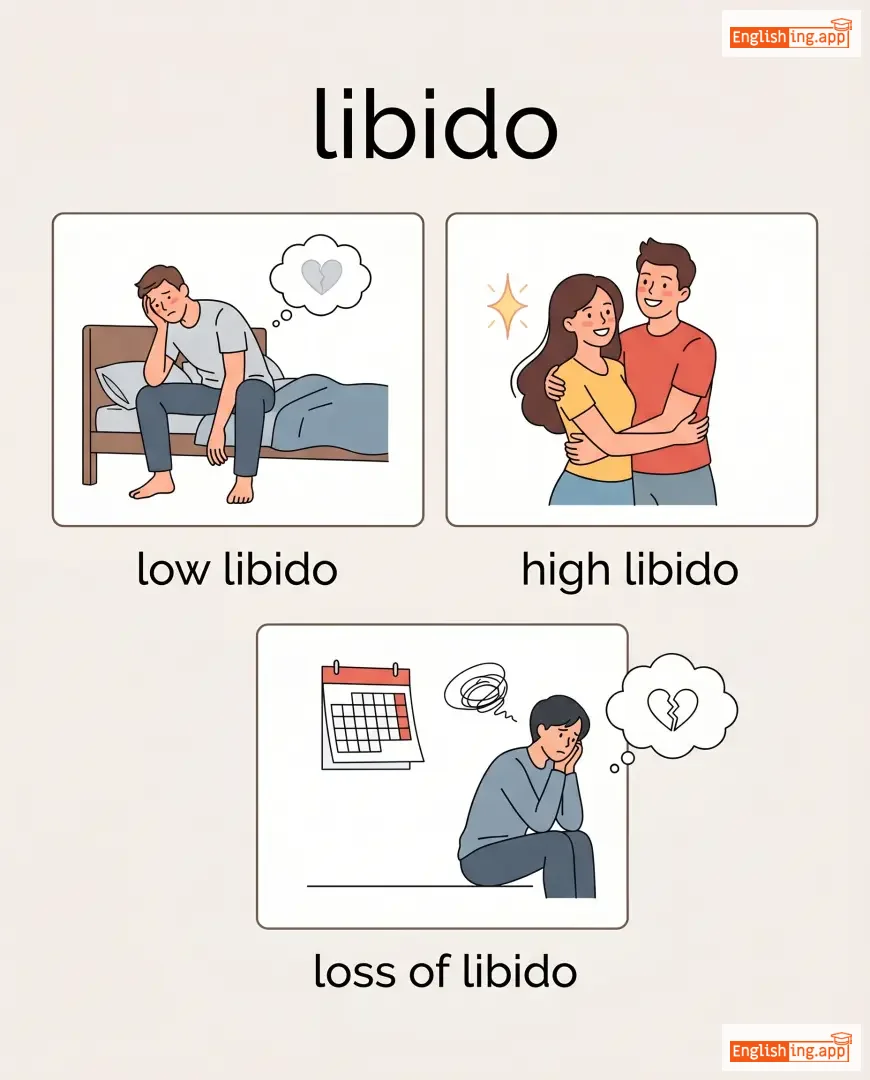
low libido, high libido, loss of libido
••••••
|
Libido 记住 – ‘libi do’ 意味着性欲。
••••••
|
|
🐜
••••••
|
/ˌlɪlɪˈpjuːʃən/
adjective
(莉利普提安)
••••••
|
|
极小的
jí xiǎo de
••••••
|
- •••••• | - •••••• | - •••••• | - •••••• |
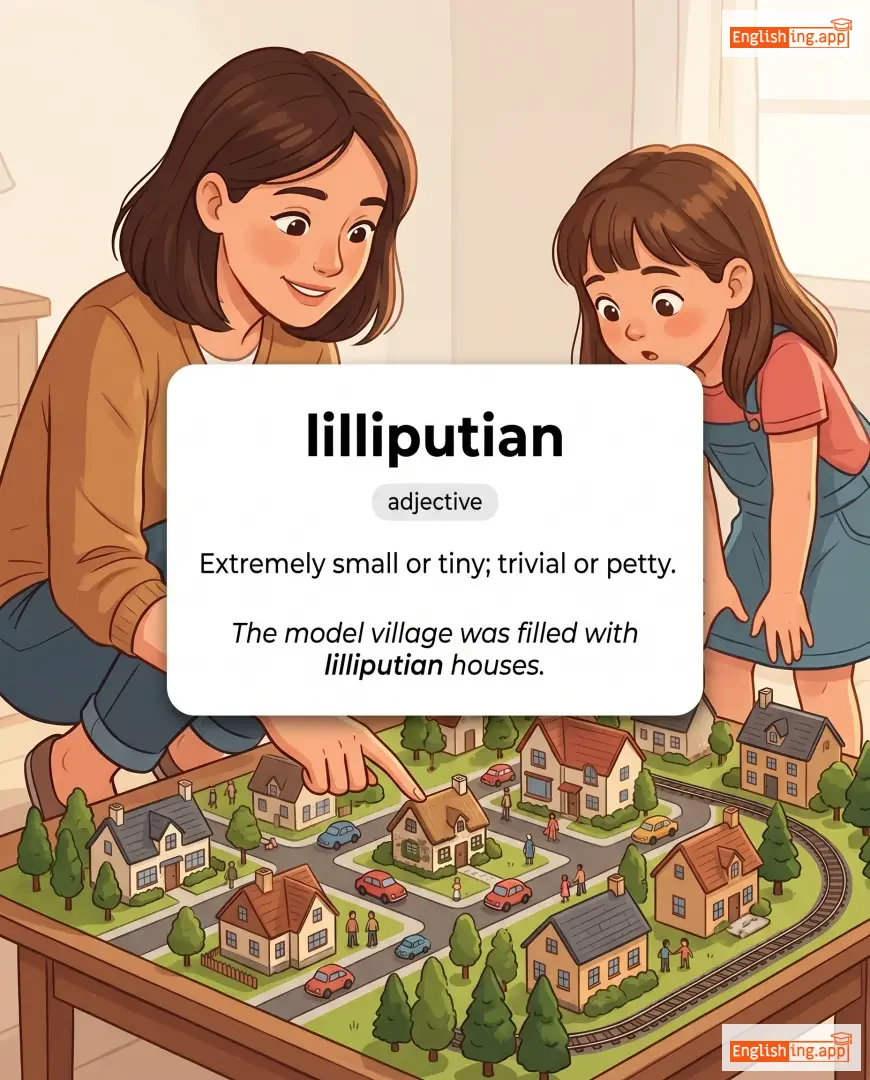
Extremely small or tiny; trivial or petty.
••••••
|
The model village was filled with lilliputian houses.
模范村庄里充满了莉莉普提安式的房屋。
••••••
|
模范村庄里充满了极小的房屋。
Mófàn cūnzhuāng lǐ chōngmǎnle jí xiǎo de fángwū.
••••••
|
- •••••• | - •••••• | - •••••• |
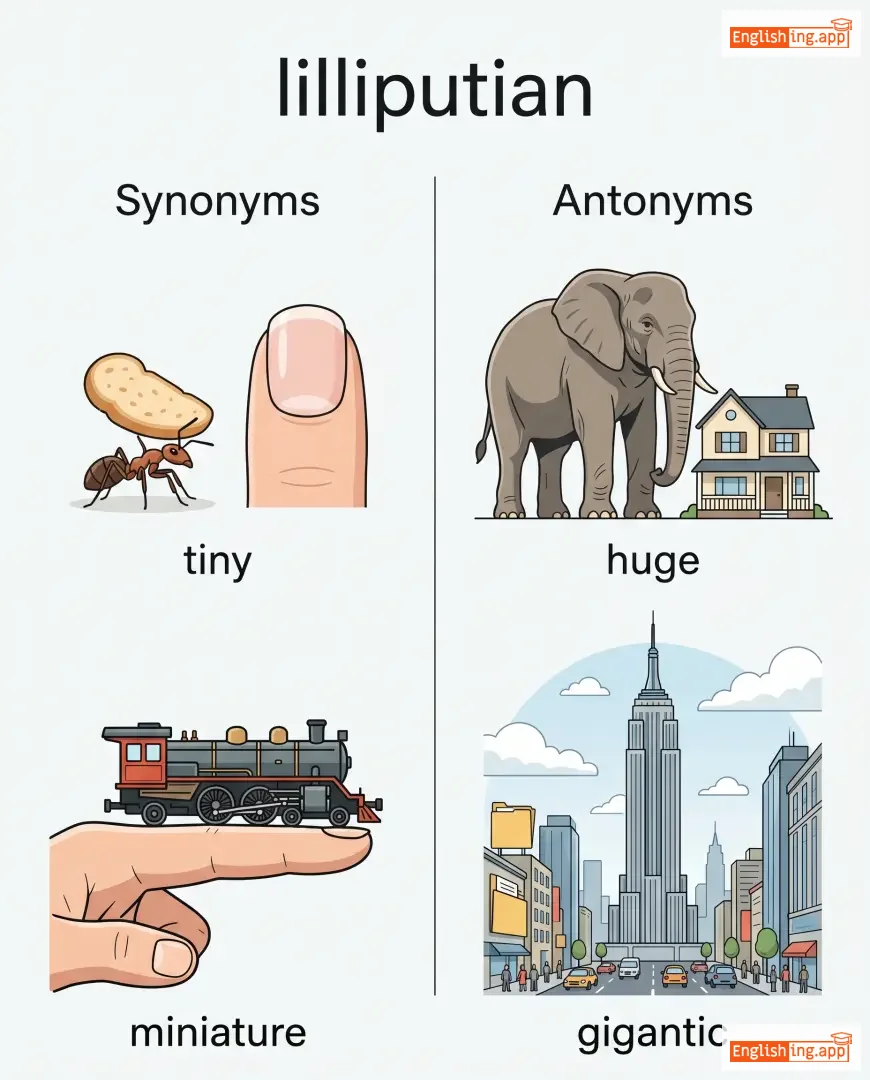
tiny, miniature, minuscule, small, petty
••••••
|
huge, gigantic, colossal
••••••
|
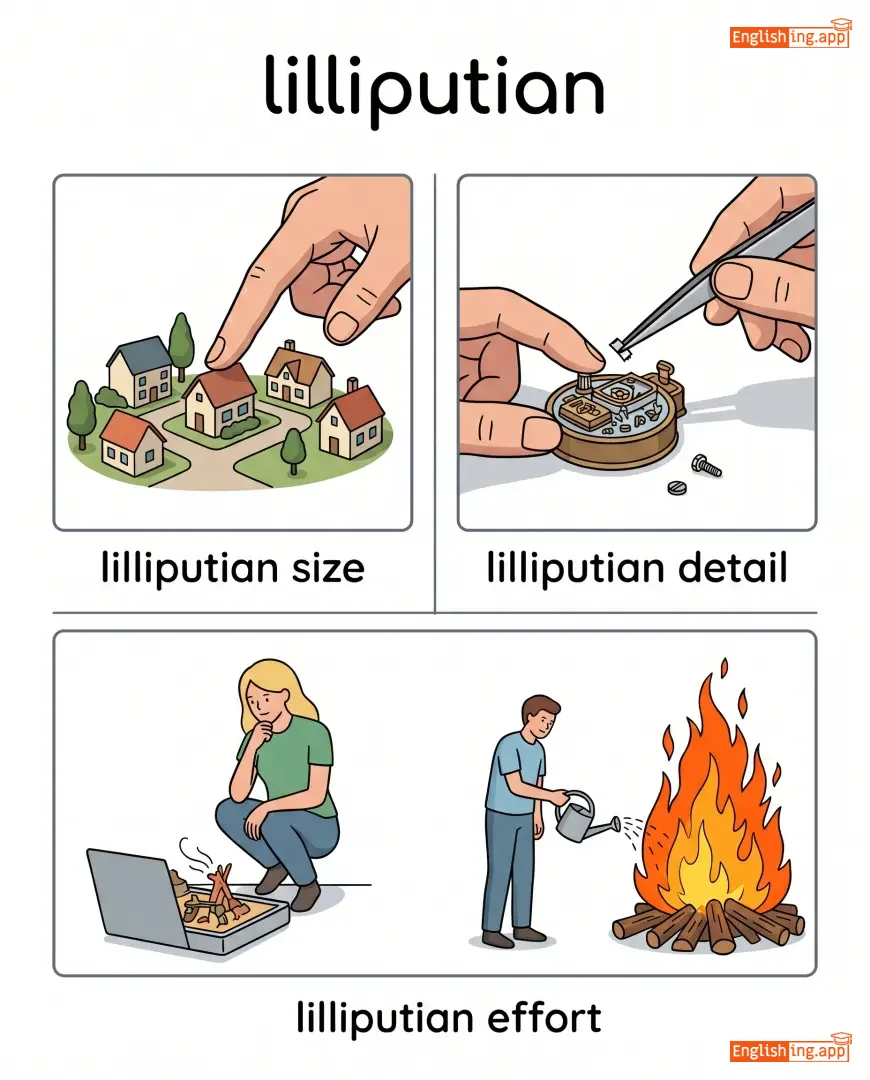
lilliputian size, lilliputian detail, lilliputian effort
••••••
|
Lilliput 是一个极小的地方 — Lilliputian 是极其小的
••••••
|
|
🎨
••••••
|
/lɪm/
verb
(林姆)
••••••
|
|
描述 / 勾画
miáoshù / gōuhuà
••••••
|
limned
林美德
••••••
|
limned
林美德
••••••
|
limns
林姆斯
••••••
|
limning
林明
••••••
|
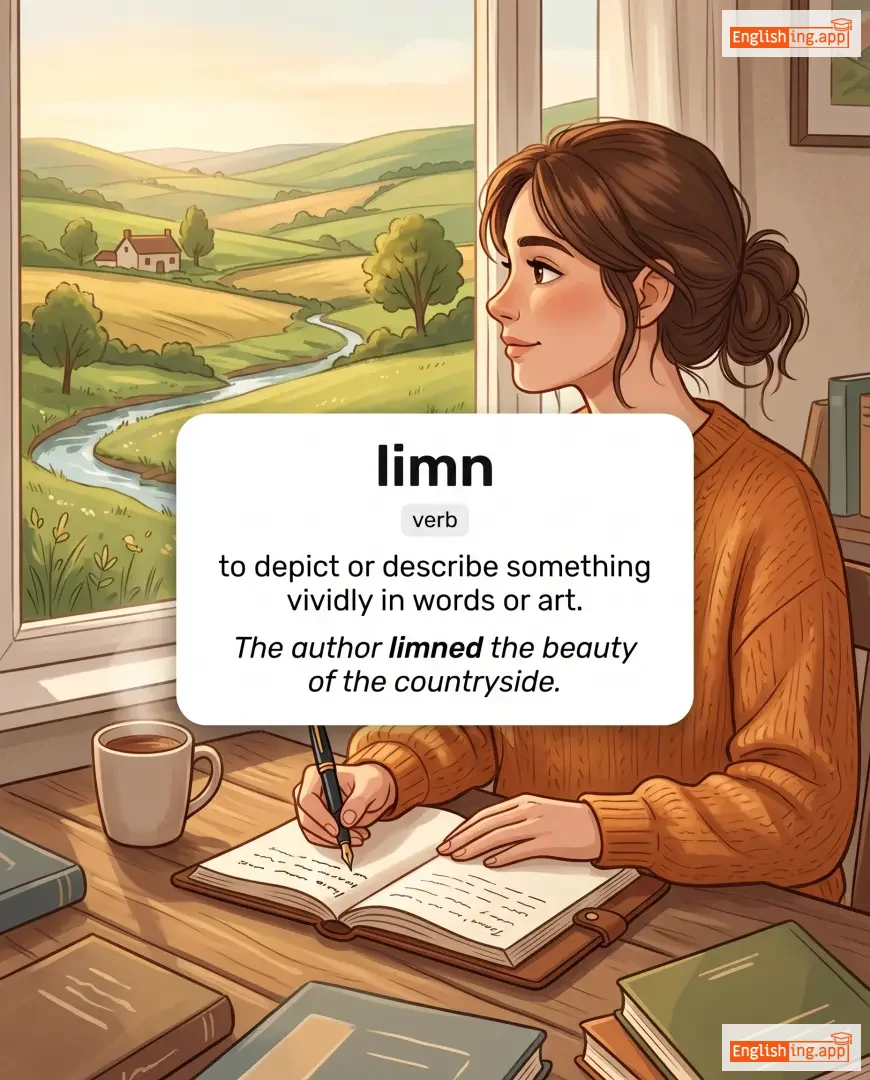
to depict or describe something vividly in words or art.
••••••
|
The author limned the beauty of the countryside.
作者生动地描绘了乡村的美丽。
••••••
|
作者生动地描绘了乡村的美丽。
Zuòzhě shēngdòng de miáohuìle xiāngcūn de měilì.
••••••
|
- •••••• | - •••••• | - •••••• |
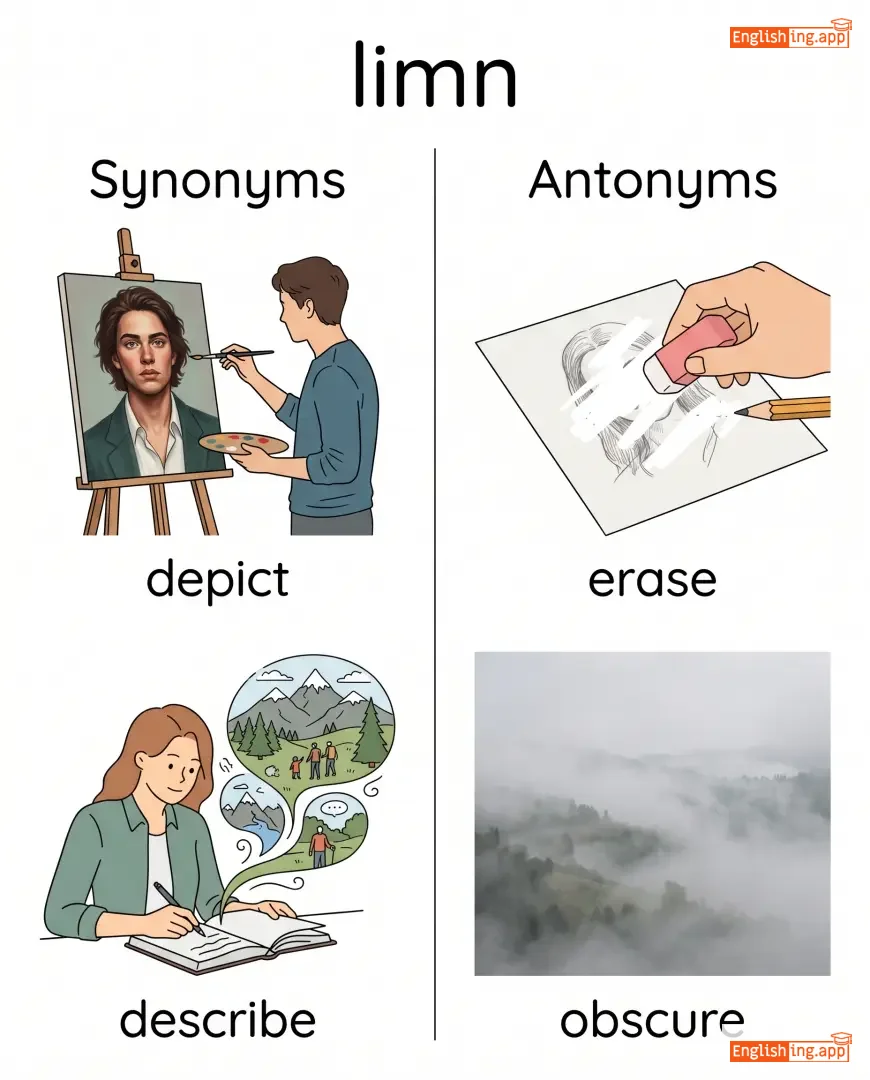
depict, describe, illustrate, portray, outline
••••••
|
erase, obscure, conceal
••••••
|
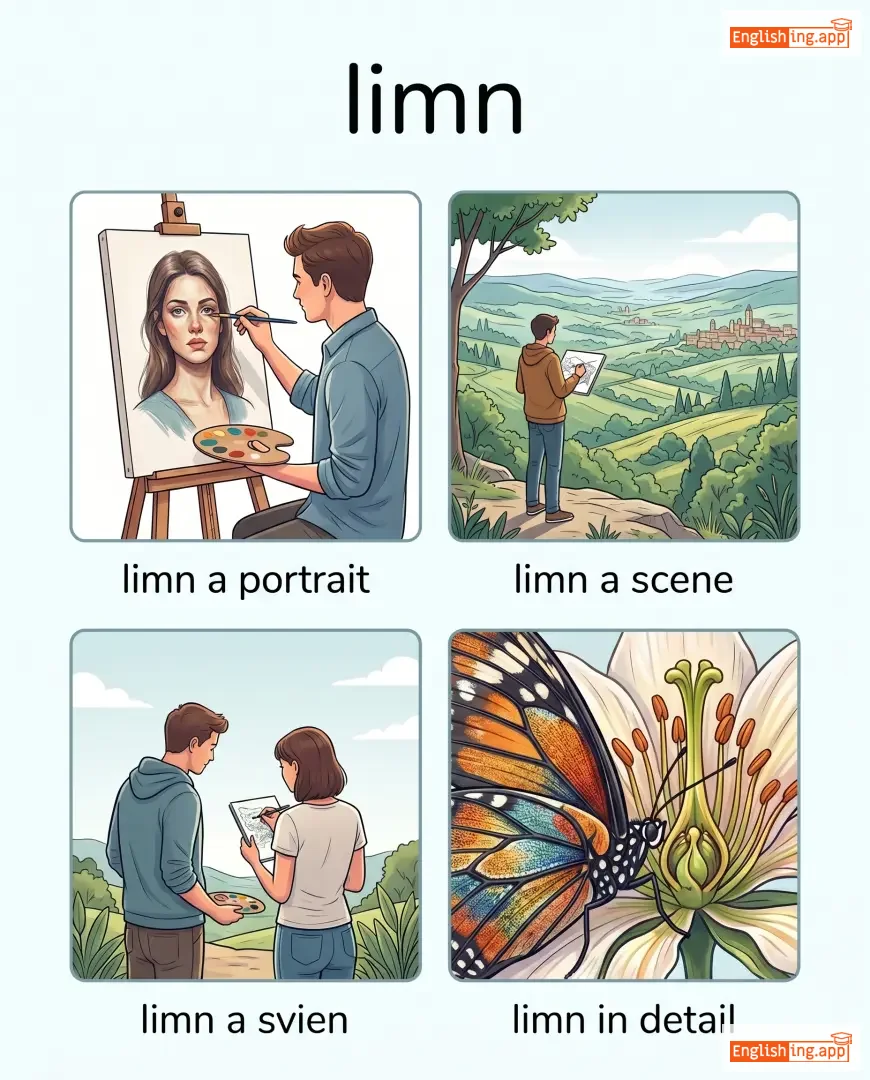
limn a portrait, limn a scene, limn in detail, limn beauty
••••••
|
Limn 就是通过文字或艺术来生动地勾画或描述某物。
••••••
|
|
💧
••••••
|
/ˈlɪmpɪd/
adjective
(limpid)
••••••
|
|
清澈
qingche
••••••
|
- •••••• | - •••••• | - •••••• | - •••••• |
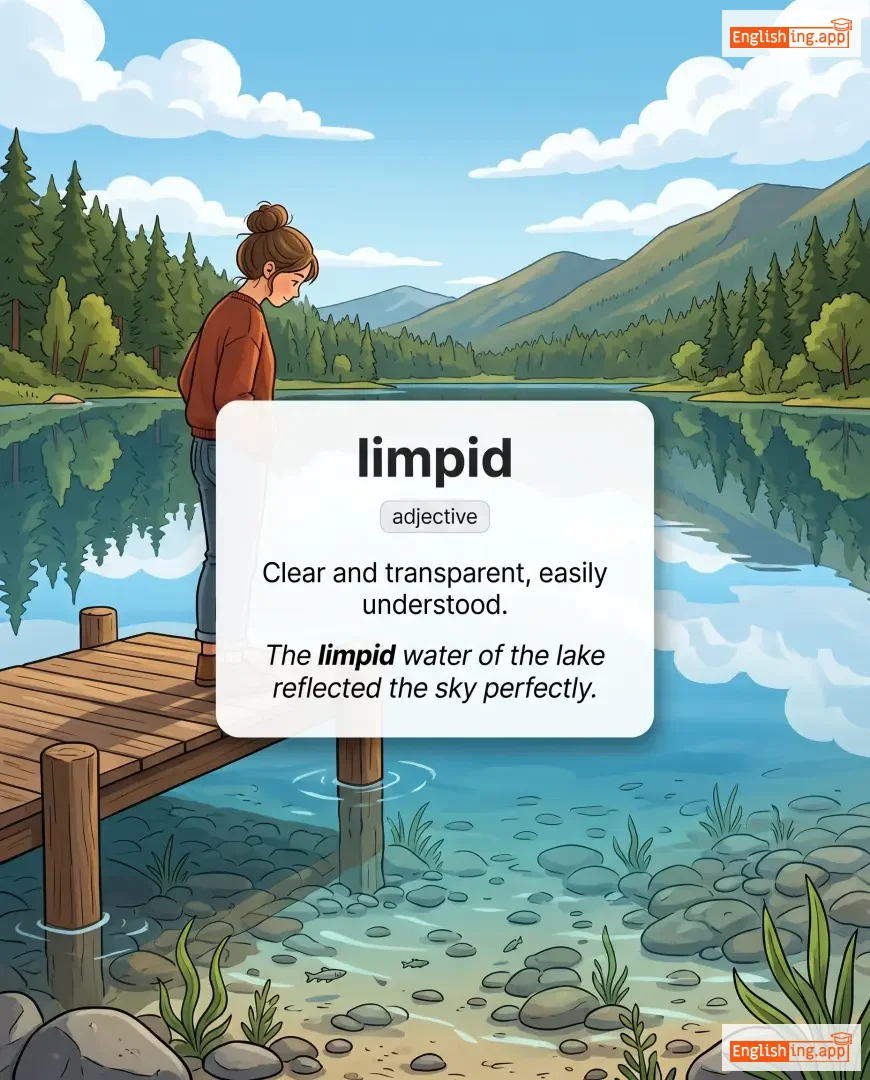
Clear and transparent, easily understood.
••••••
|
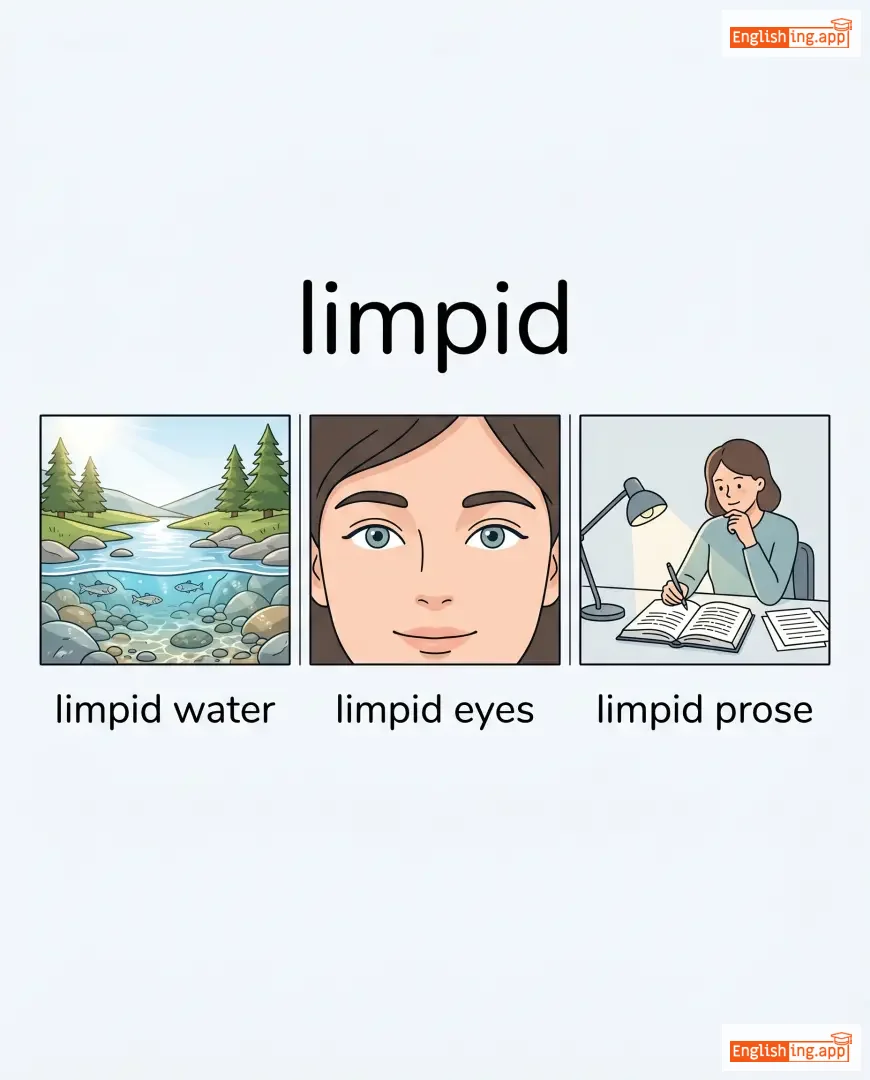
The limpid water of the lake reflected the sky perfectly.
湖水清澈地反射了天空。
••••••
|
湖水清澈地反射了天空。
Hu shui qingche de fǎnshè le tiānkōng.
••••••
|
- •••••• | - •••••• | - •••••• |
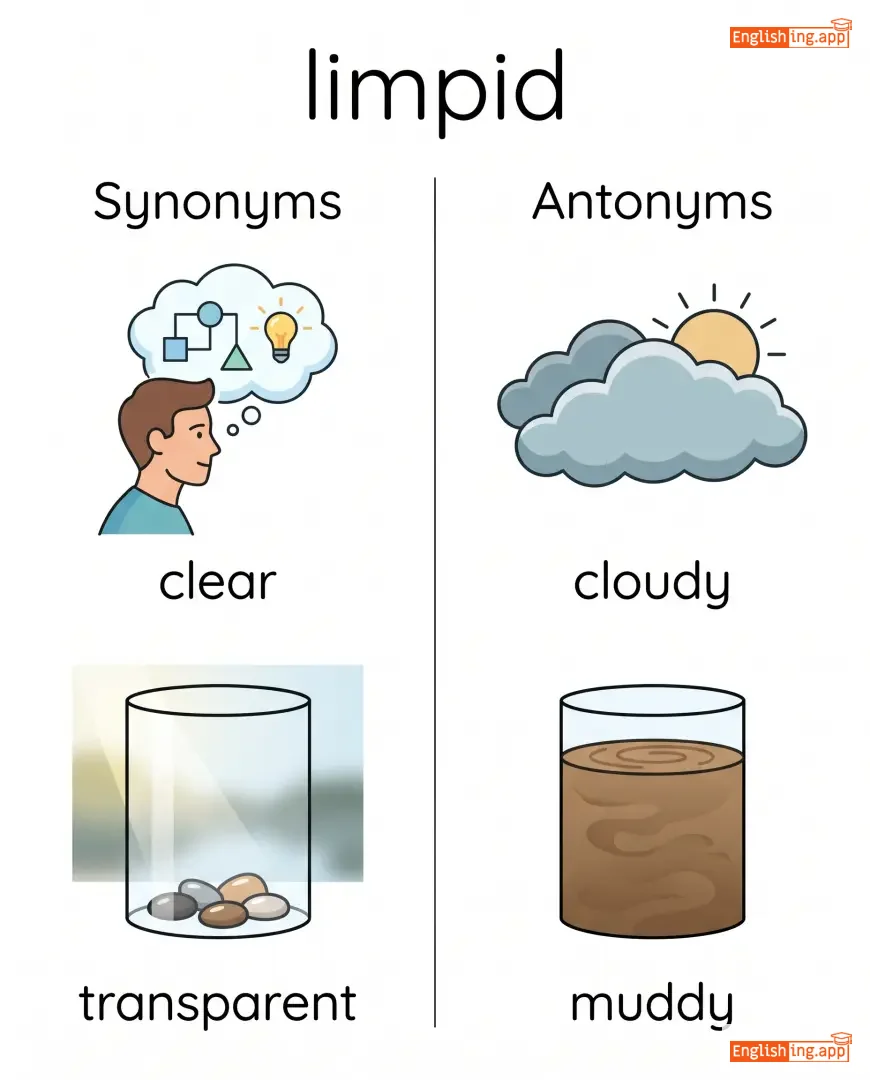
clear, transparent, lucid, crystal, pure
••••••
|
cloudy, muddy, obscure
••••••
|
limpid water, limpid eyes, limpid prose
••••••
|
Limpid 就是像清澈的水 💧
••••••
|
|
📚
••••••
|
/lɪŋˈɡwɪstɪk/
adjective
(lɪŋˈɡwɪstɪk)
••••••
|
|
语言学的
yǔyán xué de
••••••
|
- •••••• | - •••••• | - •••••• | - •••••• |
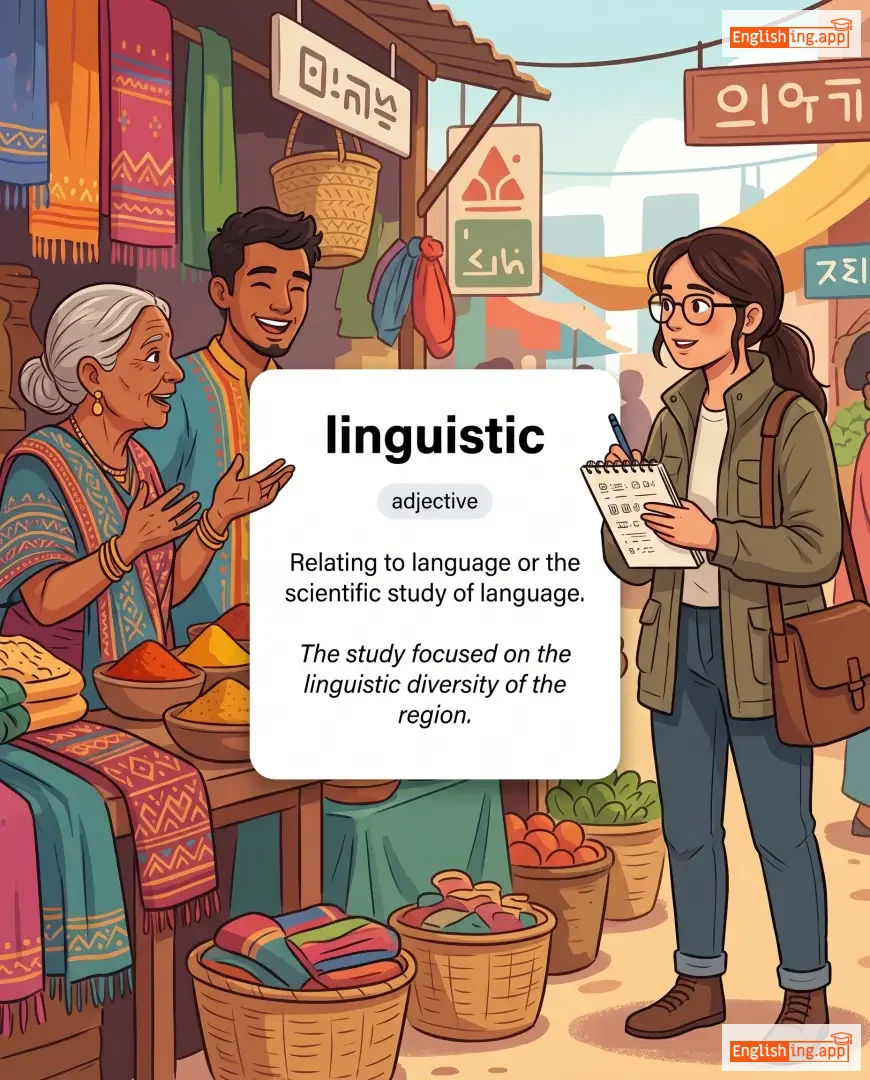
Relating to language or the scientific study of language.
••••••
|
The study focused on the linguistic diversity of the region.
该研究集中在该地区的语言多样性上。
••••••
|
该研究集中在该地区的语言多样性上。
Gāi yánjiū jízhōng zài gāi dìqū de yǔyán duōyàng xìng shàng.
••••••
|
- •••••• | - •••••• | - •••••• |
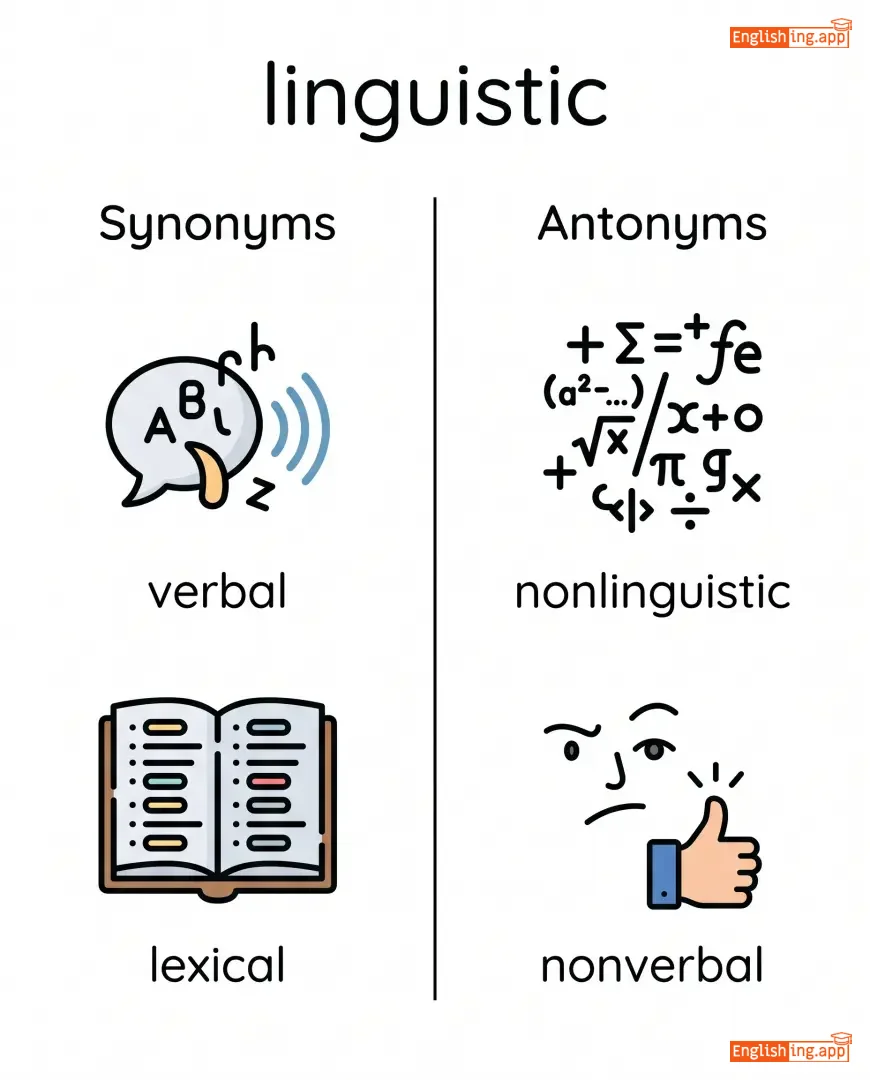
verbal, lexical, grammatical, philological
••••••
|
nonlinguistic, nonverbal
••••••
|
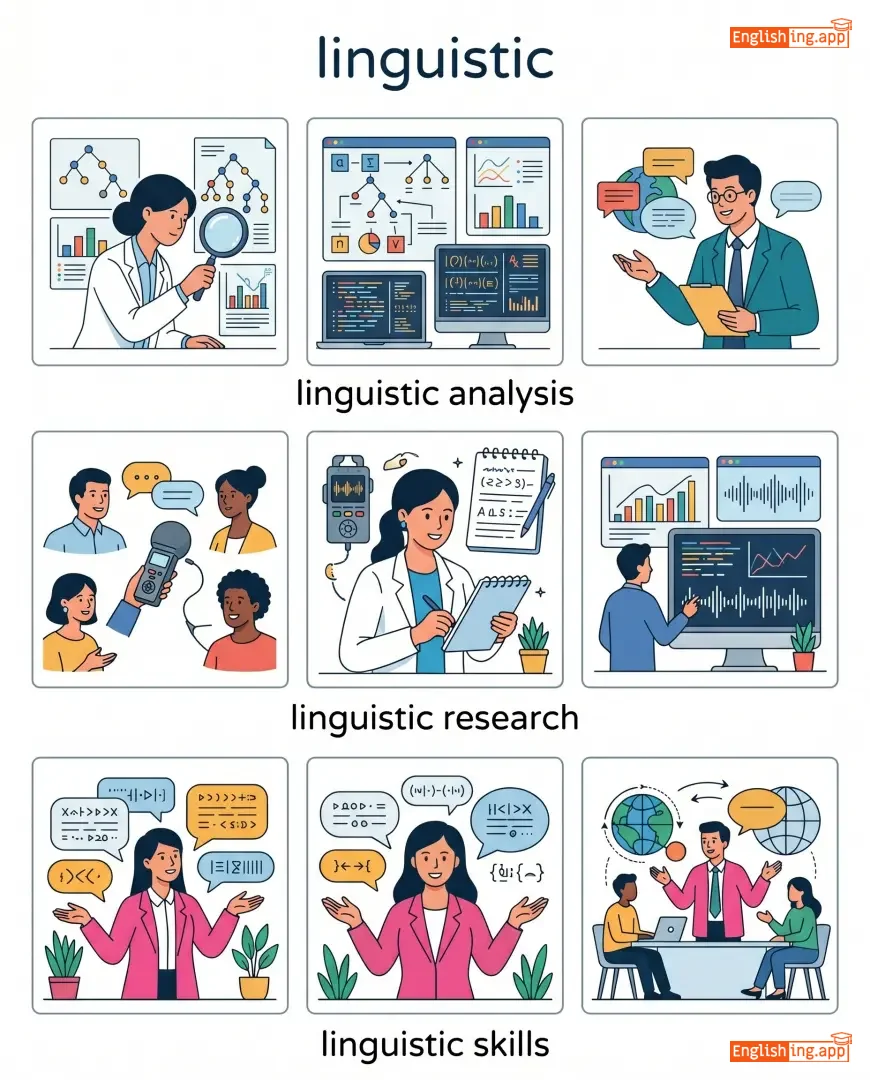
linguistic analysis, linguistic research, linguistic skills, linguistic diversity
••••••
|
语言学的 = 语言 + 学的 = 与语言相关
••••••
|
|
📜
••••••
|
/ˈlɪtəni/
noun
••••••
|
|
- •••••• | - •••••• | - •••••• | - •••••• | - •••••• |
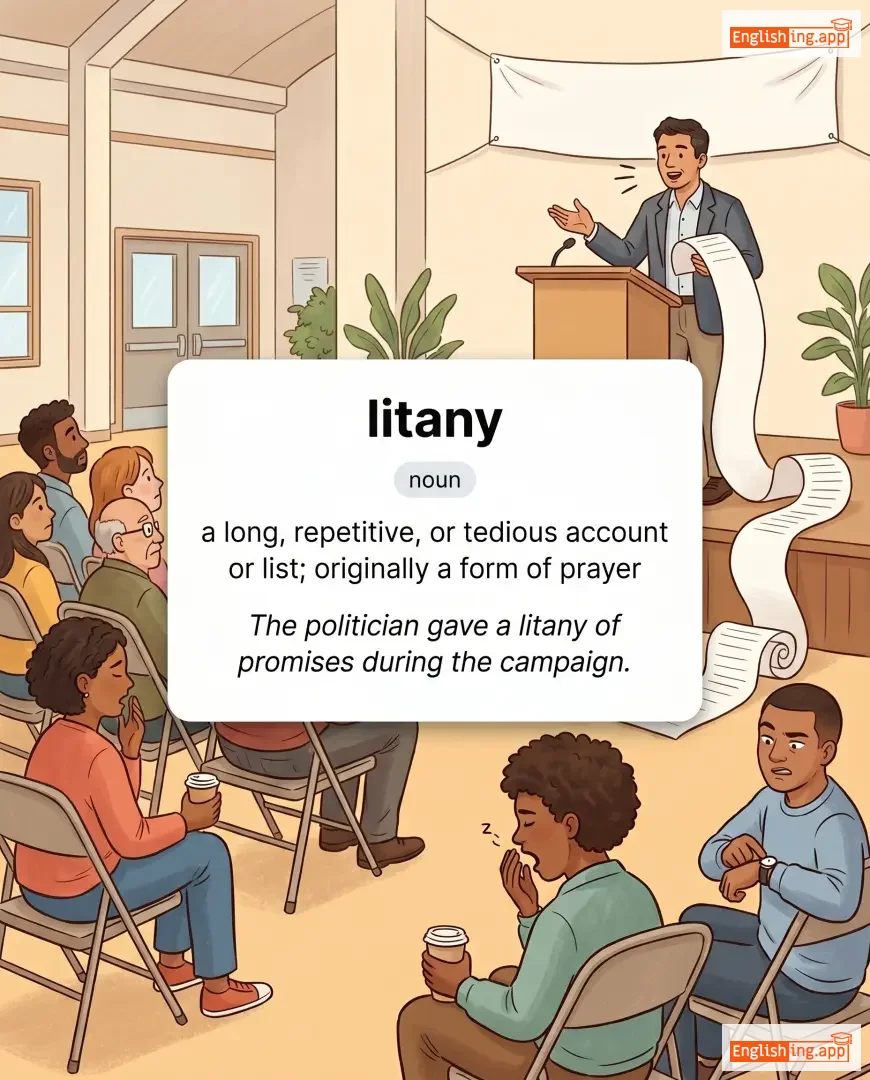
a long, repetitive, or tedious account or list; originally a form of prayer
••••••
|
The politician gave a litany of promises during the campaign. |
- •••••• |
a litany of complaints |
a long list of grievances or criticisms
••••••
|
- •••••• |
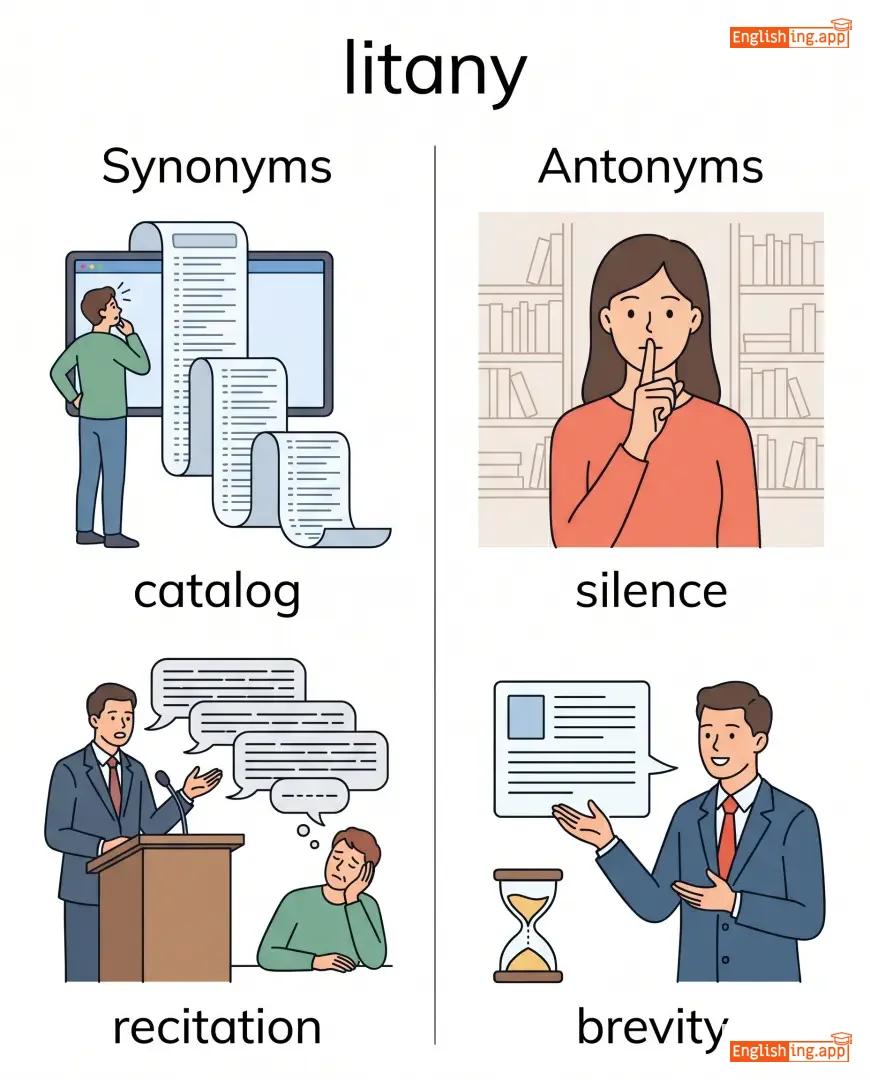
catalog, recitation, series, enumeration
••••••
|
silence, brevity
••••••
|
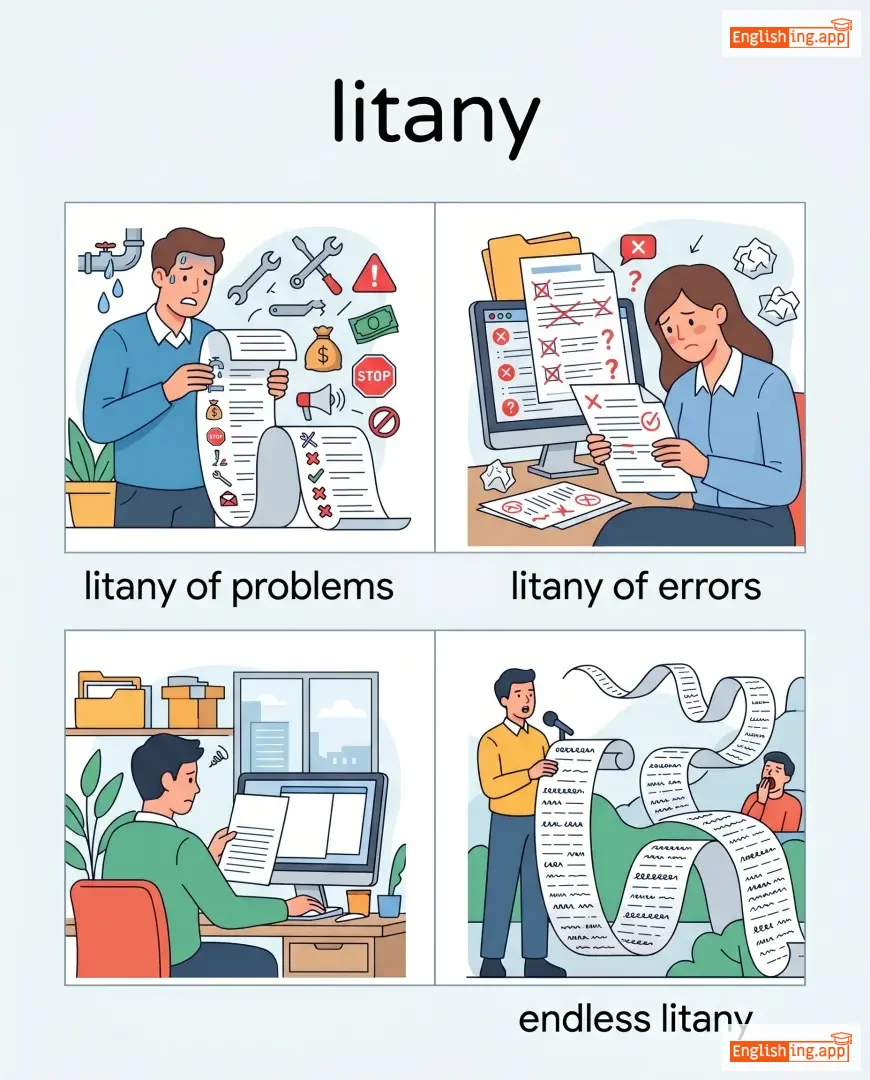
litany of problems, litany of errors, endless litany, litany of promises
••••••
|
No •••••• |
|
📚
••••••
|
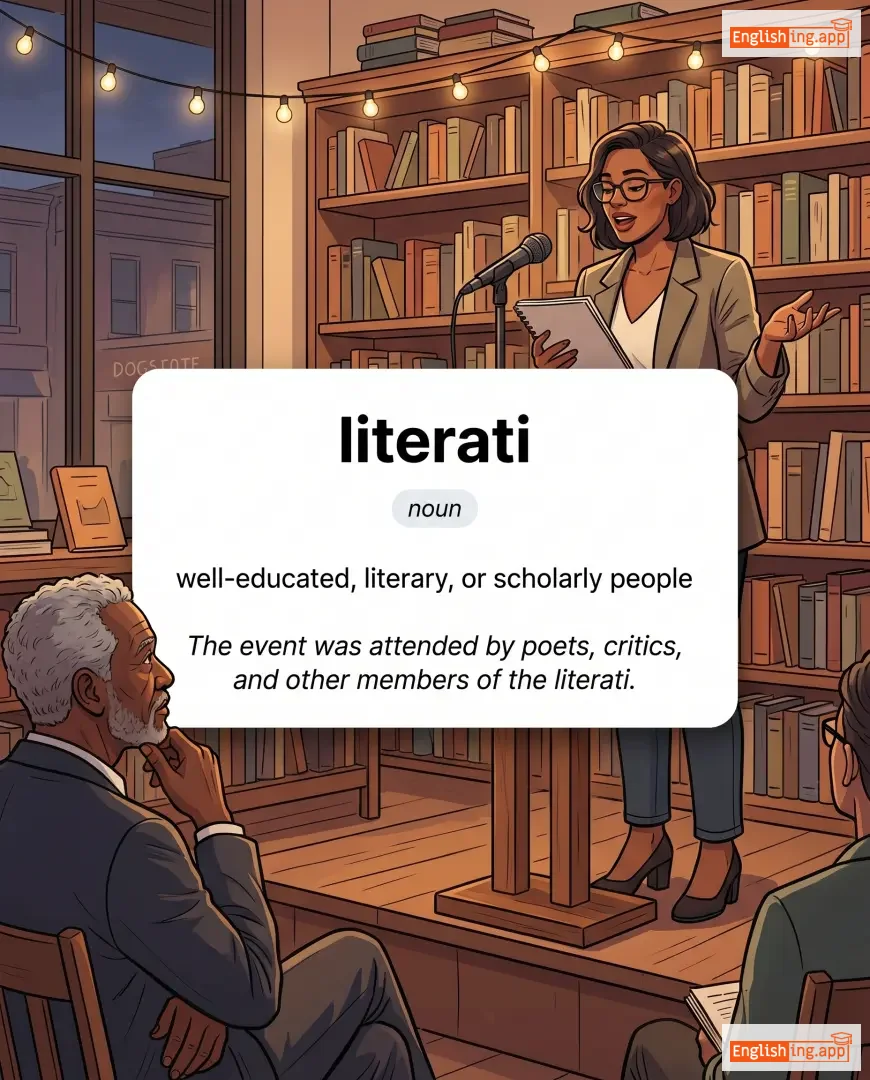
/ˌlɪt.əˈrɑː.ti/
noun
(文学家)
••••••
|

|
文学家
wenxuejia
••••••
|
- •••••• | - •••••• | - •••••• | - •••••• |
well-educated, literary, or scholarly people
••••••
|
The event was attended by poets, critics, and other members of the literati. |
该活动由诗人、评论家和其他文学家参加。
Gai huodong you shiren, pinglunjia he qita wenxuejia canjia.
••••••
|
- •••••• | - •••••• | - •••••• |
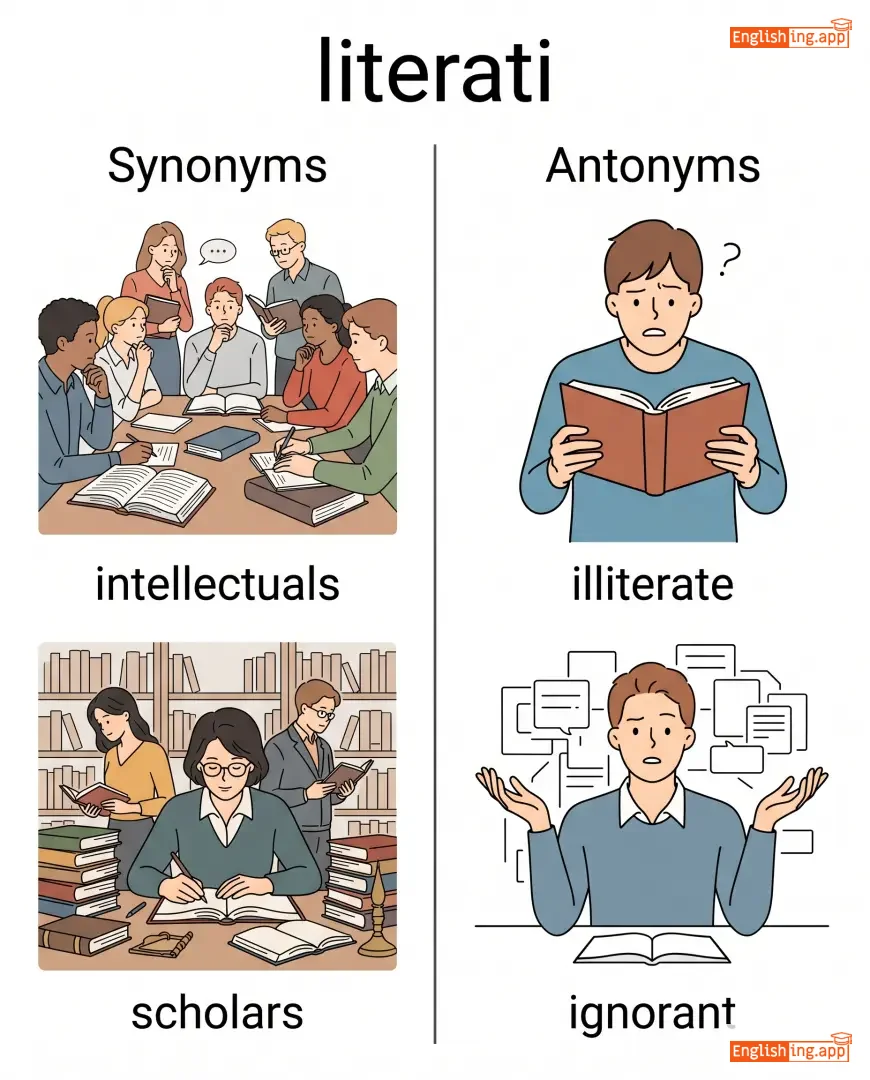
intellectuals, scholars, academics, writers, thinkers
••••••
|
illiterate, ignorant
••••••
|
literati circle, members of the literati, local literati, literary community
••••••
|
文学 = 文学家 📖
••••••
|
|
📜
••••••
|
/ˌlɪtɪˈɡeɪʃən/
noun
(诉讼)
••••••
|


|
诉讼
sùsòng
••••••
|
- •••••• | - •••••• | - •••••• | - •••••• |
the process of taking legal action or resolving disputes in court
••••••
|
The litigation lasted for over three years. |
诉讼持续了超过三年。
Sùsòng chíxùle chāoguò sān nián.
••••••
|
litigation process |
the steps involved in a lawsuit
••••••
|
诉讼过程
sùsòng guòchéng
••••••
|
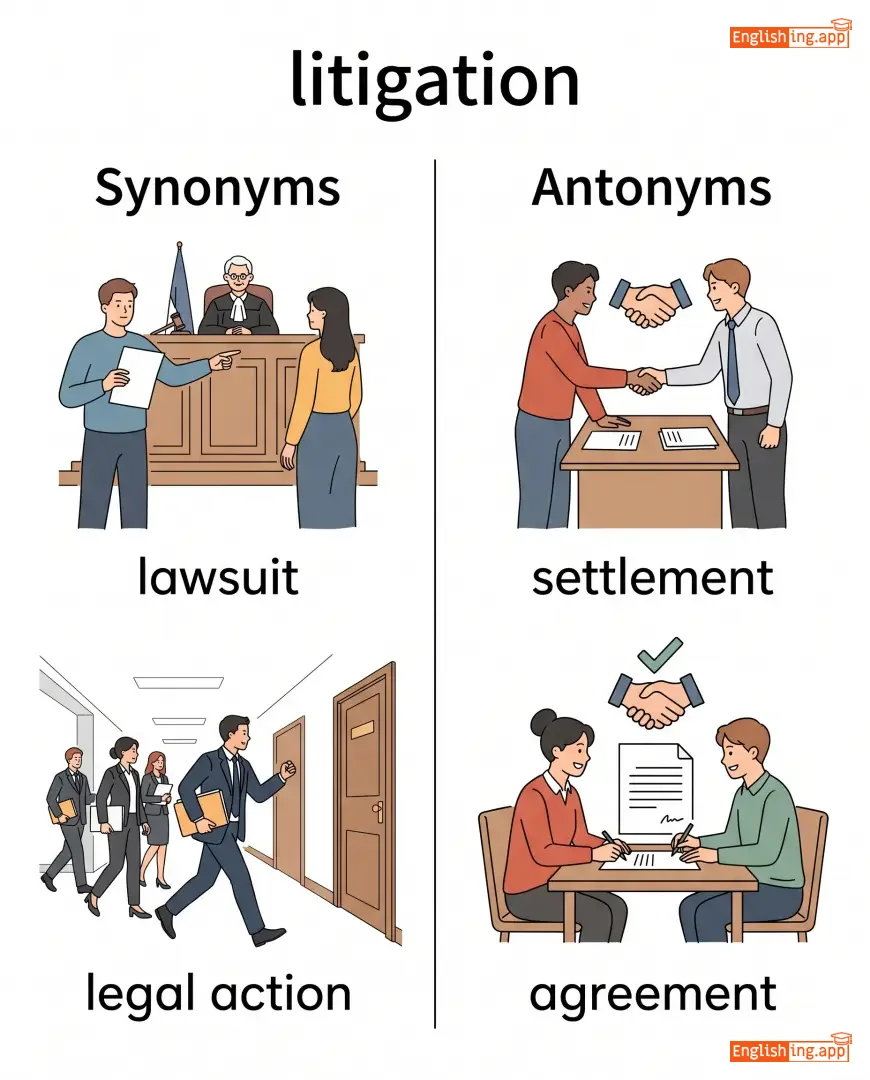
lawsuit, legal action, trial, case
••••••
|
settlement, agreement
••••••
|
civil litigation, commercial litigation, lengthy litigation
••••••
|
Litigation = 诉讼, Lit + 讼 (法律诉讼过程)
••••••
|
|
🌲
••••••
|
/lɒɡ/
noun, verb
(log)
••••••
|
|
原木, 记录
yuánmù, jìlù
••••••
|
logged
登录
••••••
|
logged
登录
••••••
|
logs
日志
••••••
|
logging
登录
••••••
|
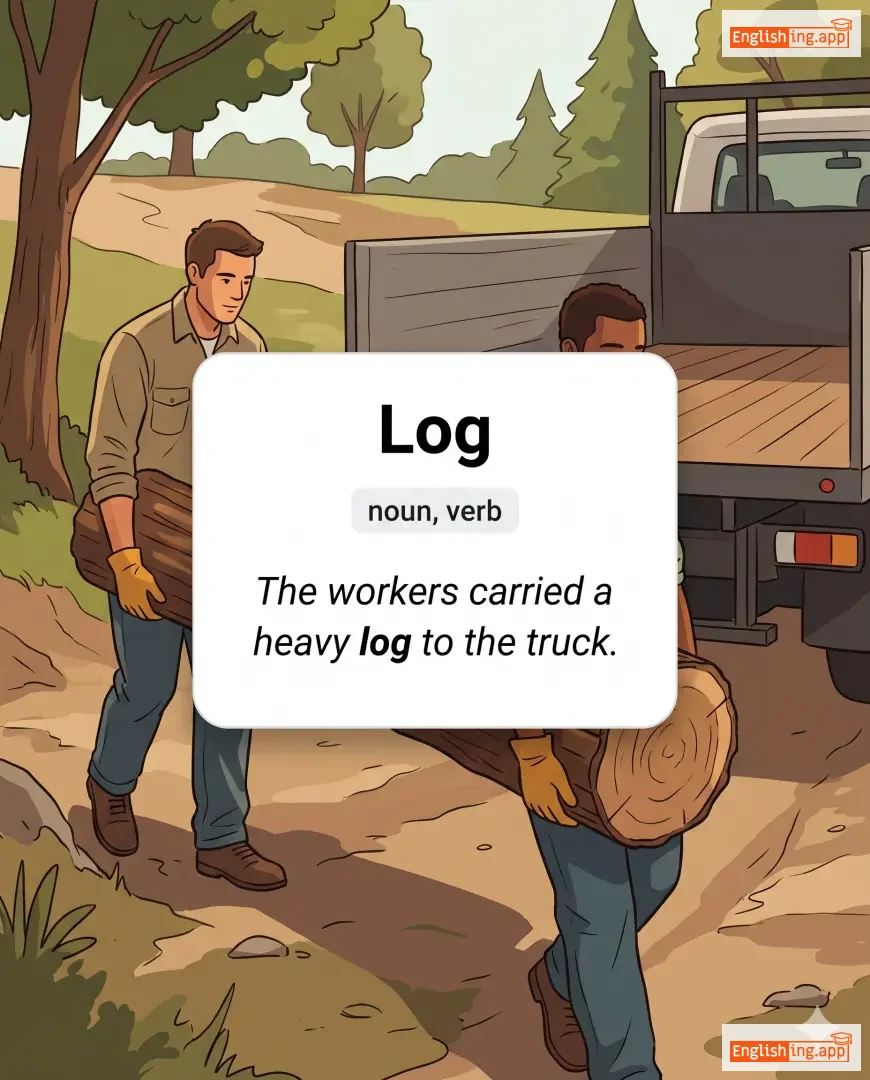
A part of the trunk or a large branch of a tree that has fallen or been cut off; also to record information systematically.
••••••
|
The workers carried a heavy log to the truck.
工人们将一根重木头搬到卡车上。
••••••
|
工人们将一根重木头搬到卡车上。
Gōngrénmen jiāng yī gēn zhòng mùtou bān dào kǎchē shàng.
••••••
|
sleep like a log
像木头一样睡觉
••••••
|
to sleep very deeply and soundly
••••••
|
像木头一样睡觉
xiàng mùtou yīyàng shuìjiào
••••••
|
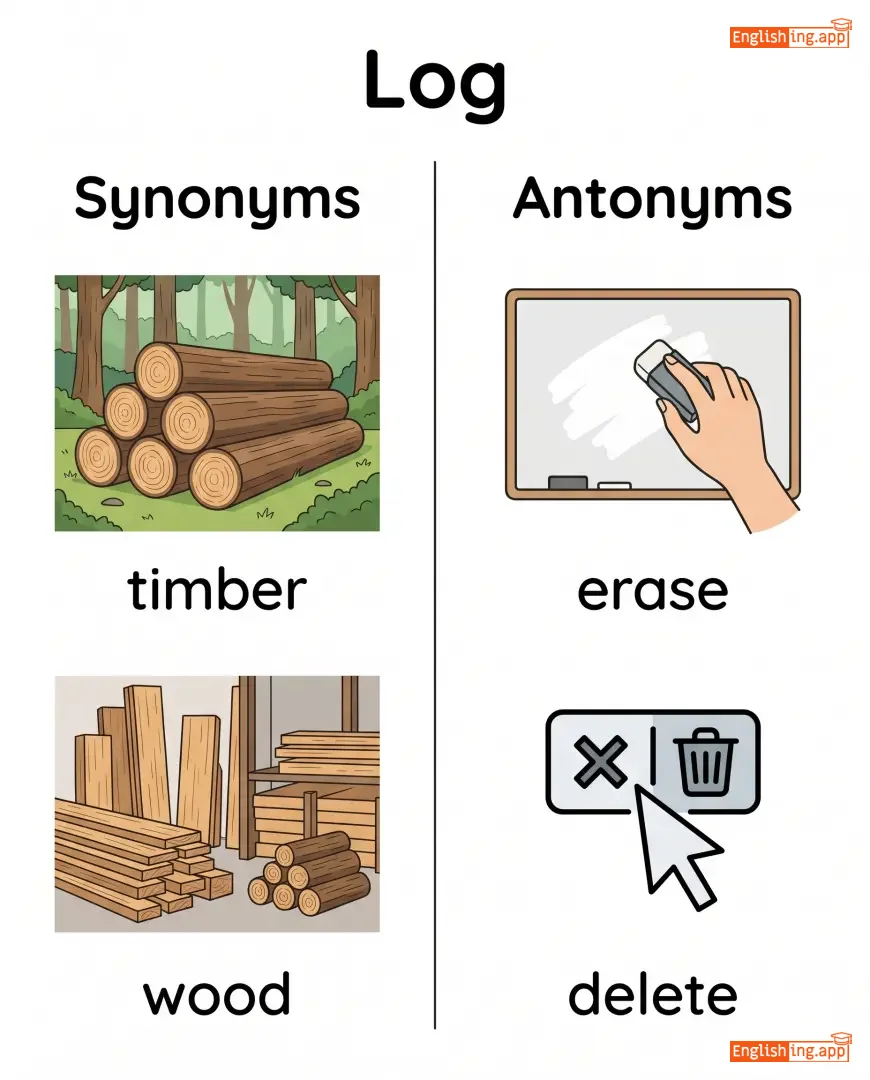
timber, wood, record, register, journal
••••••
|
erase, delete
••••••
|
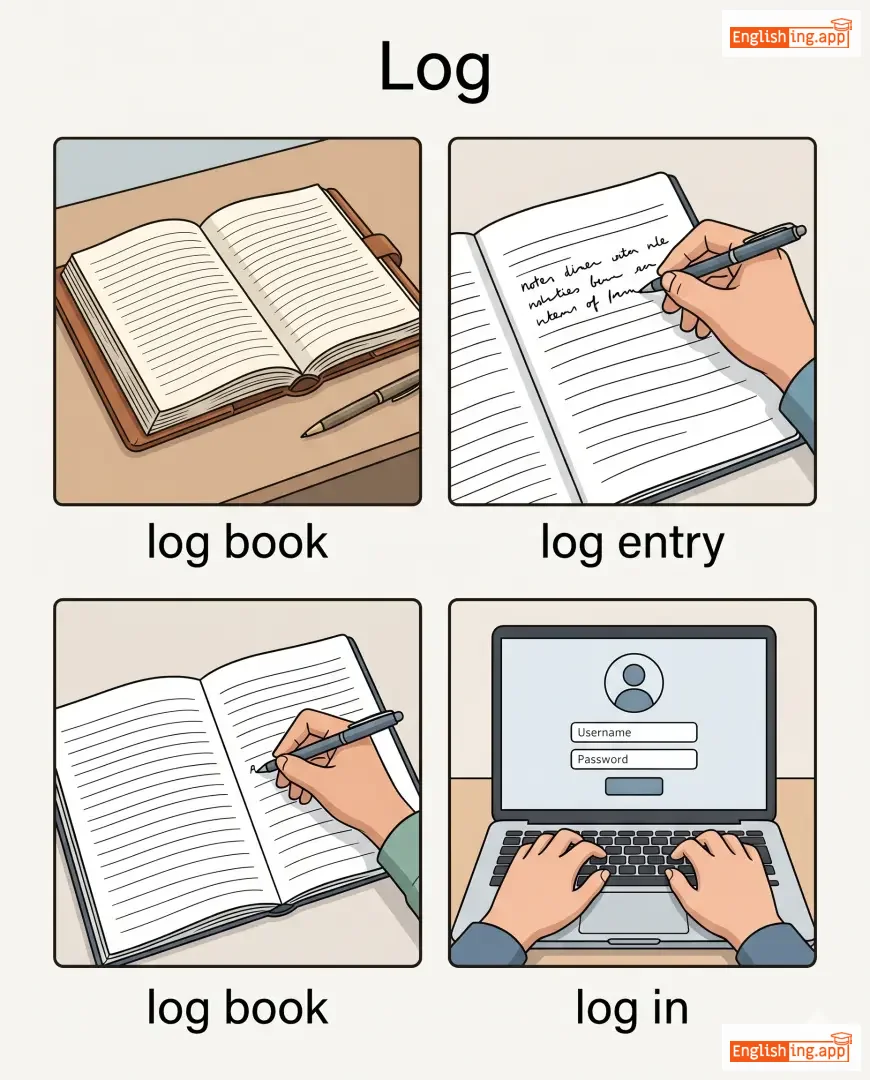
log book, log entry, log in, log data
••••••
|
Log (log) 是原木,登录 (login) 时会记录信息。
••••••
|
|
🗣️
••••••
|
/loʊˈkweɪʃəs/
adjective
(loʊˈkweɪʃəs)
••••••
|
|
话多的
hua duo de
••••••
|
- •••••• | - •••••• | - •••••• | - •••••• |
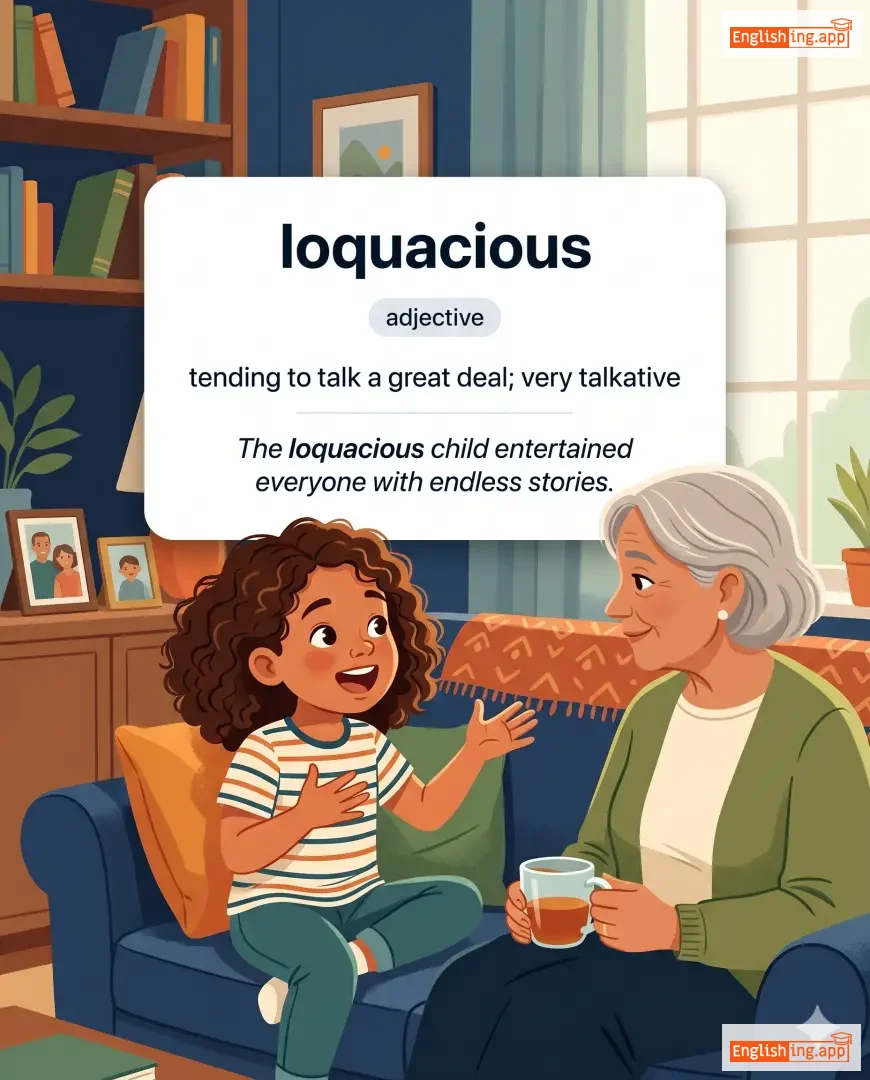
tending to talk a great deal; very talkative
••••••
|
The loquacious child entertained everyone with endless stories.
那个话多的孩子用无尽的故事娱乐了每个人。
••••••
|
话多的孩子用无尽的故事娱乐了每个人。
Hua duo de haizi yong wu jin de gushi yule le meige ren.
••••••
|
- •••••• | - •••••• | - •••••• |
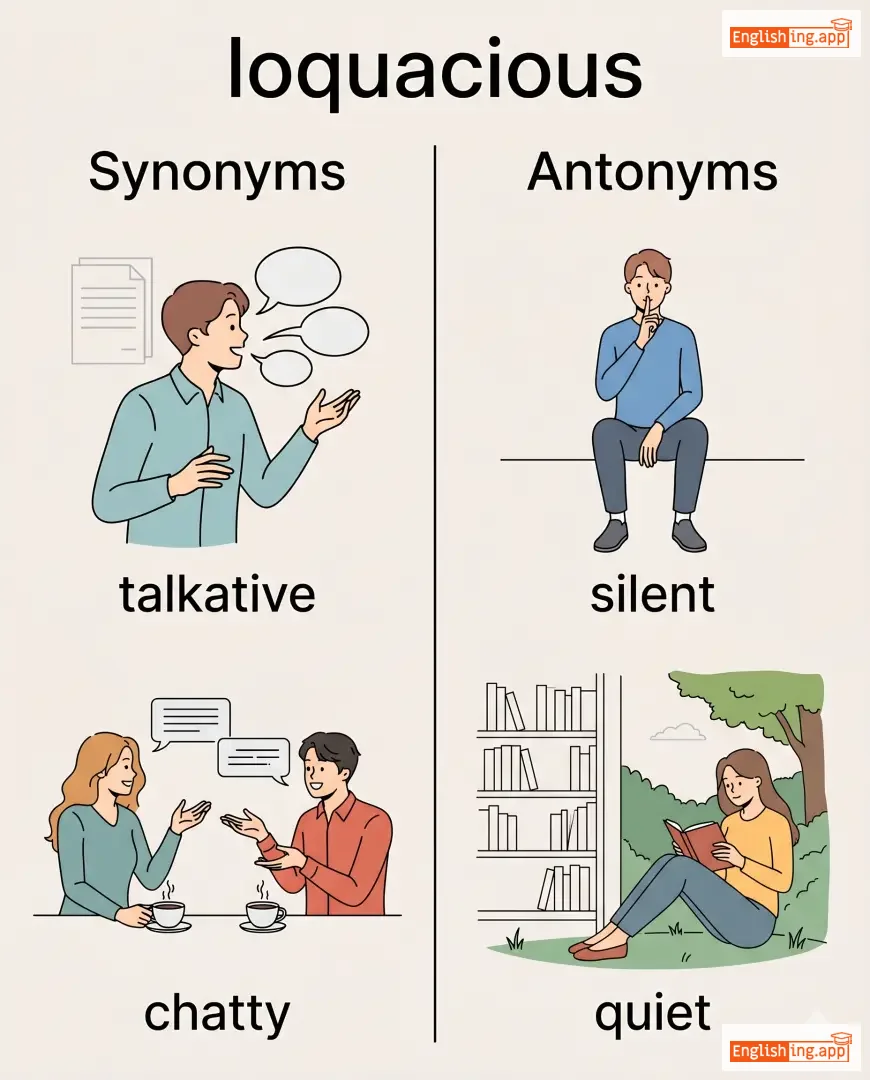
talkative, chatty, verbose, garrulous, communicative
••••••
|
silent, quiet, reserved
••••••
|
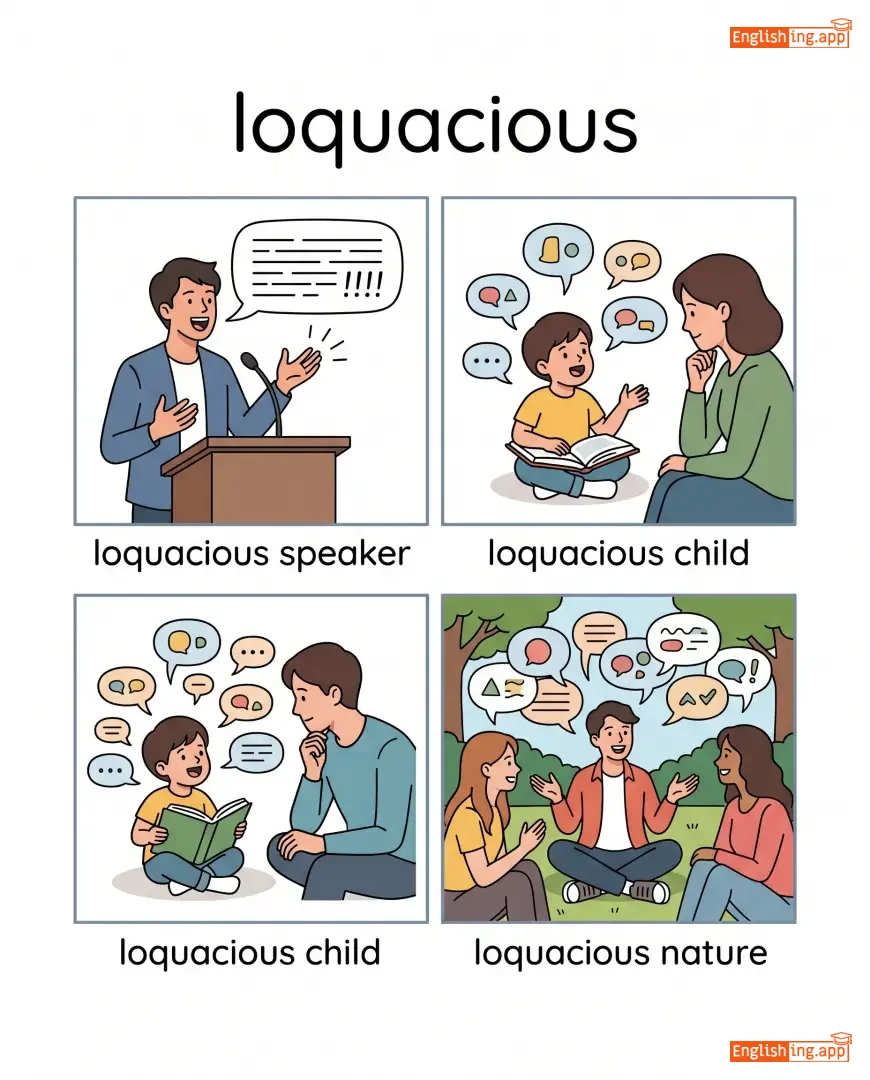
loquacious speaker, loquacious child, loquacious nature, loquacious host
••••••
|
Loquacious意味着多说话,像个'话痨'。
••••••
|
|
💡
••••••
|
/ˈluːsɪd/
adjective
(路西德)
••••••
|
|
清晰
qingxi
••••••
|
- •••••• | - •••••• | - •••••• | - •••••• |
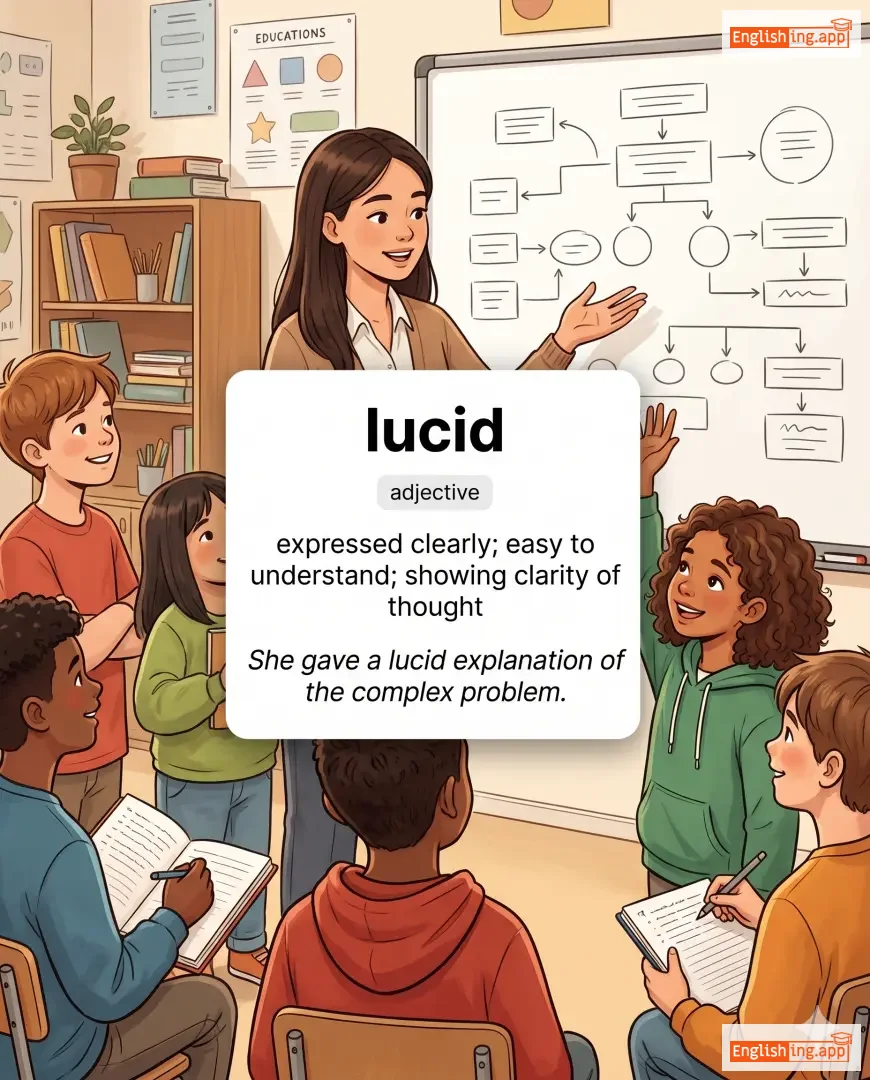
expressed clearly; easy to understand; showing clarity of thought
••••••
|
She gave a lucid explanation of the complex problem. |
她对复杂问题做了清晰的解释。
Tā duì fùzá wèntí zuòle qīngxī de jiěshì.
••••••
|
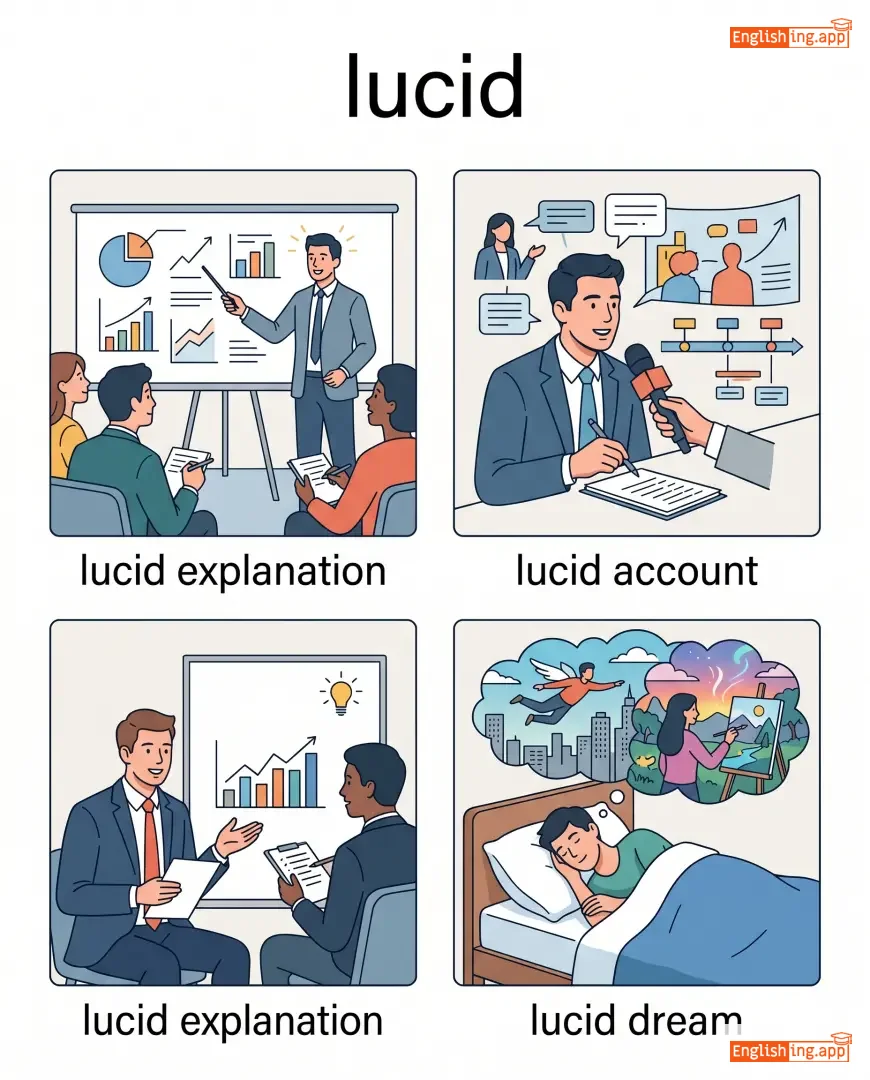
lucid dream |
a dream in which the dreamer is aware that they are dreaming
••••••
|
清晰梦境
qīngxī mèngjìng
••••••
|
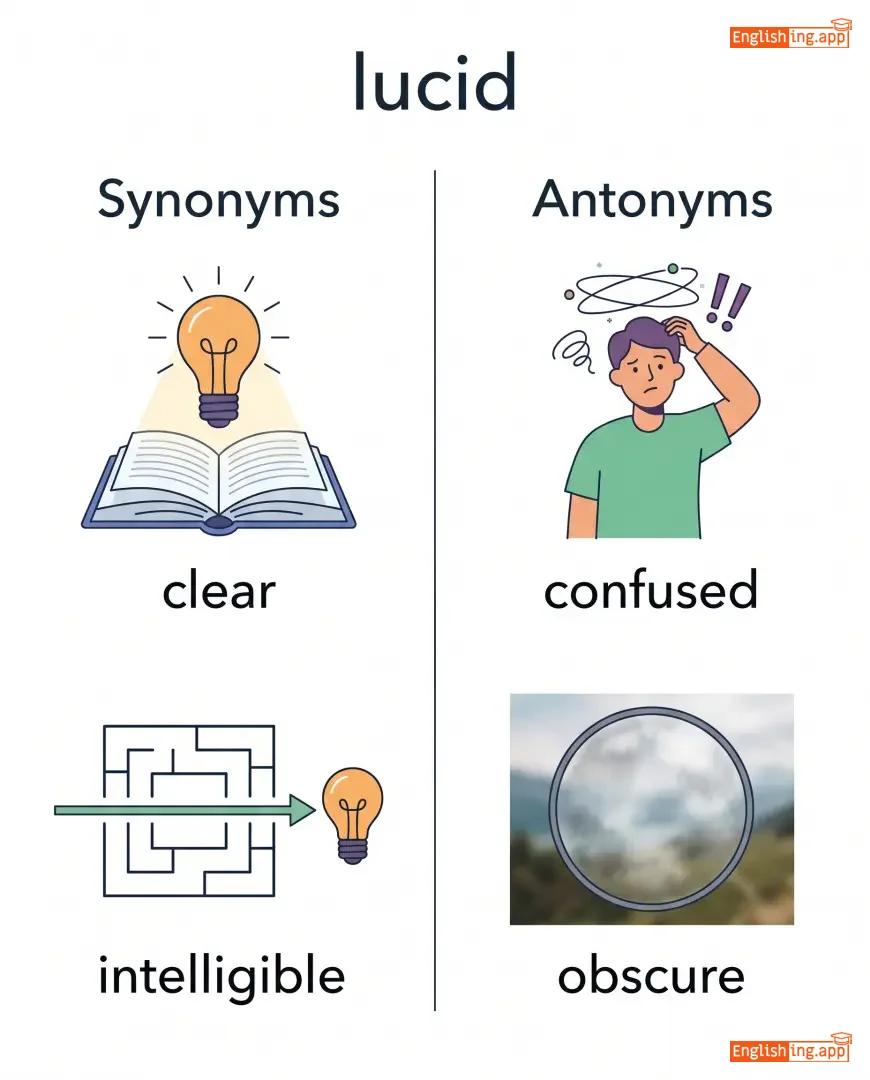
clear, intelligible, coherent, transparent, rational
••••••
|
confused, obscure, unclear
••••••
|
lucid explanation, lucid account, lucid dream, lucid style
••••••
|
清晰表示,像水面一样清澈 (qingxi)
••••••
|
|
🤑
••••••
|
/ˈluːkər/
noun
(卢克尔)
••••••
|

|
利润
lìrùn
••••••
|
- •••••• | - •••••• | - •••••• | - •••••• |
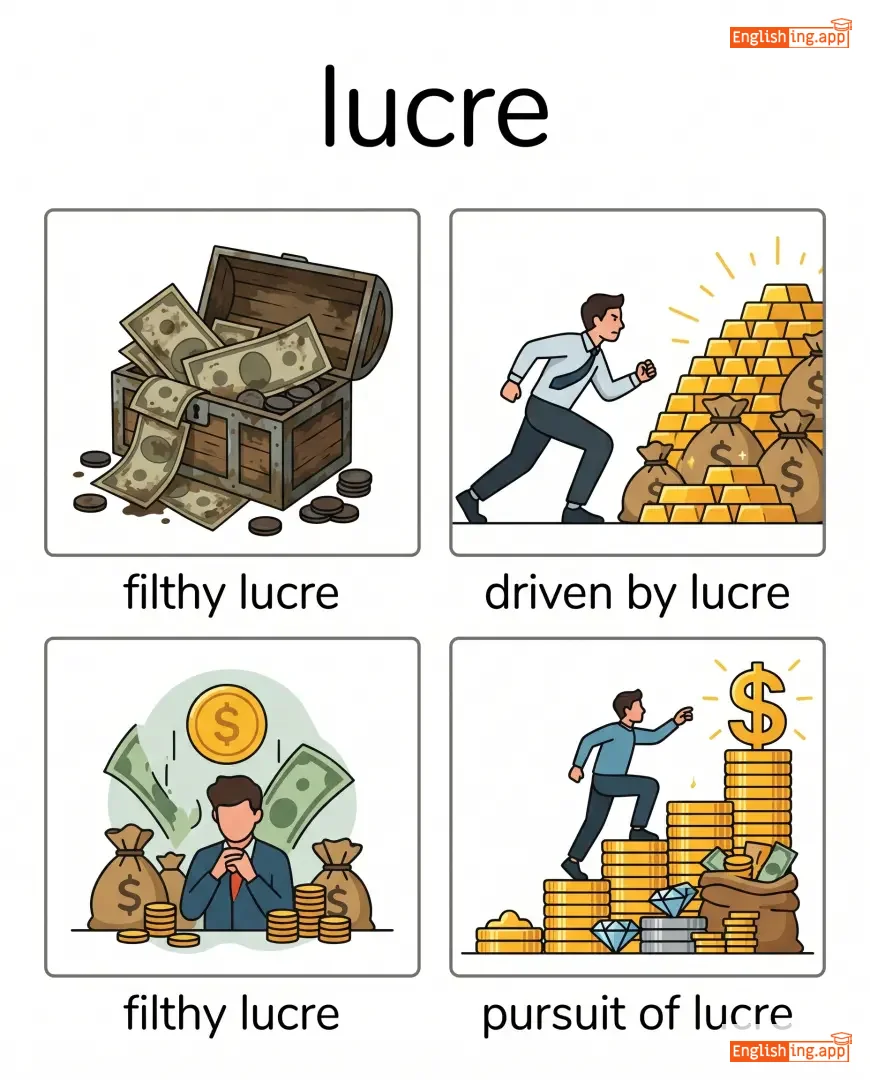
money, especially when regarded as sordid or gained dishonorably
••••••
|
He was motivated more by lucre than by duty. |
他更多的是由利润而不是责任驱动。
Tā gèng duō de shì yóu lìrùn ér bù shì zérèn qūdòng.
••••••
|
filthy lucre |
money gained in a dishonorable or immoral way
••••••
|
肮脏的利润
āngzāng de lìrùn
••••••
|
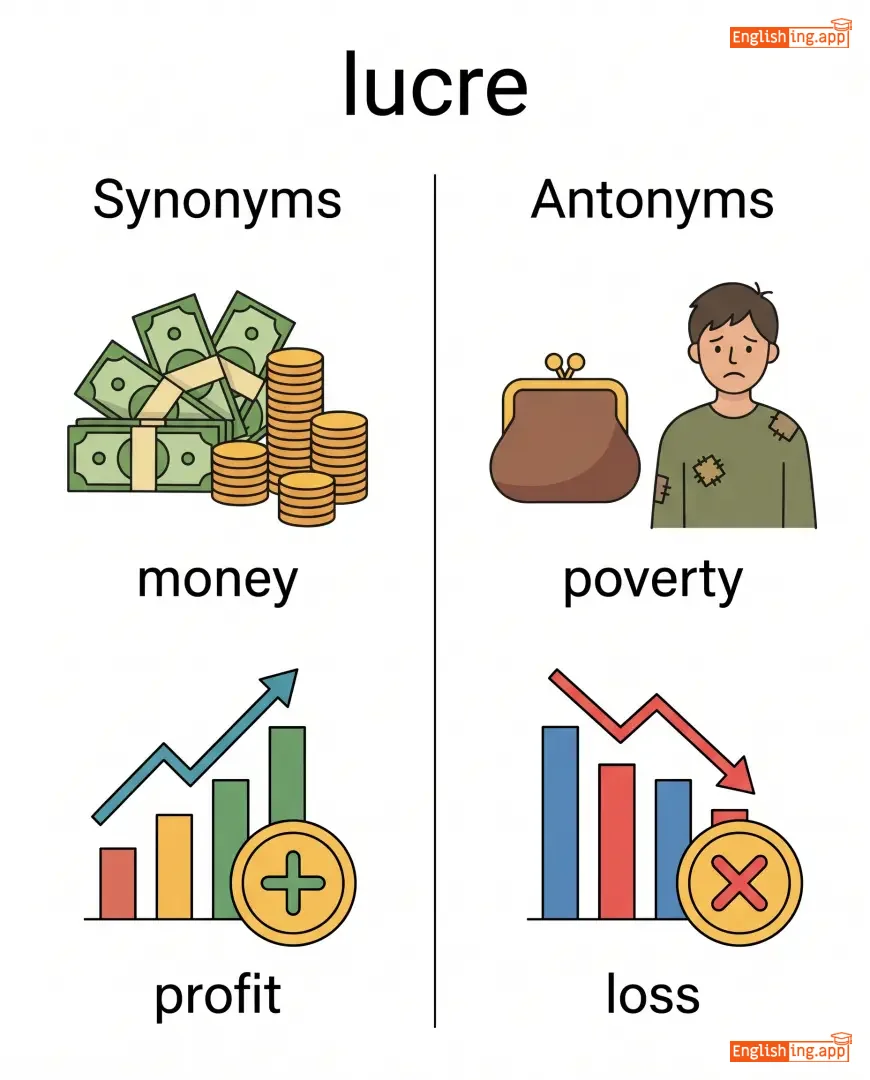
money, profit, wealth, cash
••••••
|
poverty, loss
••••••
|
filthy lucre, driven by lucre, pursuit of lucre
••••••
|
‘Lucre’ 也就是‘利润’,而且有时也指‘肮脏的利润’
••••••
|
|
✨
••••••
|
/ˈluː.mɪ.nəs/
adjective
(luminasi)
••••••
|
|
光辉的
guāng huī de
••••••
|
- •••••• | - •••••• | - •••••• | - •••••• |
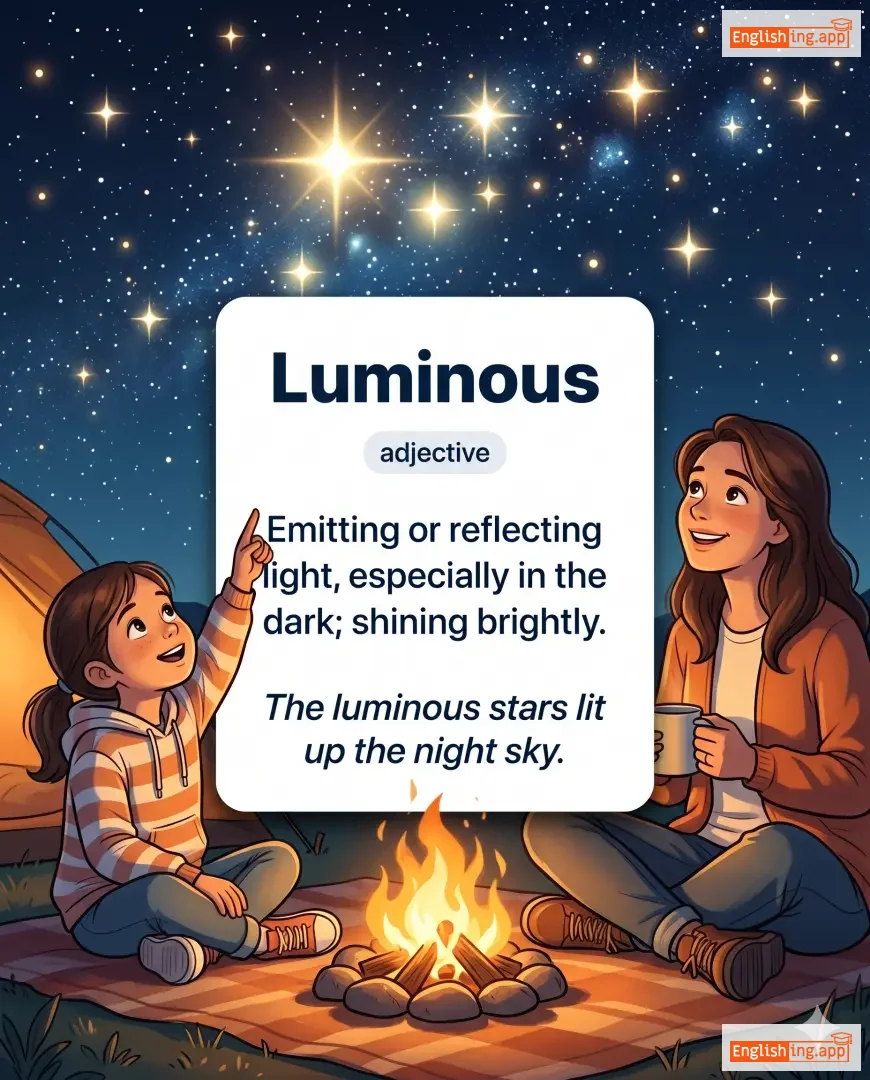
Emitting or reflecting light, especially in the dark; shining brightly.
••••••
|
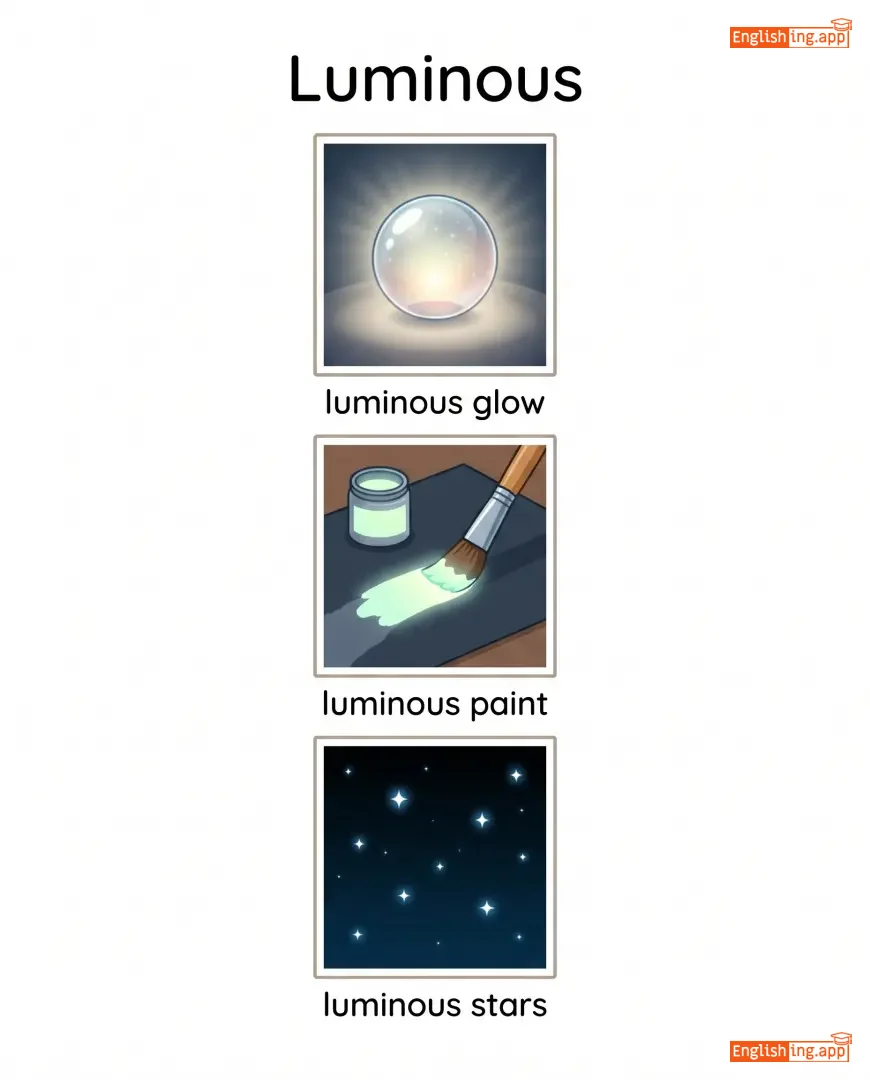
The luminous stars lit up the night sky. |
光辉的星星照亮了夜空。
Guāng huī de xīng xīng zhàoliàng le yè kōng.
••••••
|
luminous beauty |
A striking and radiant kind of beauty.
••••••
|
光辉的美丽
guāng huī de měilì
••••••
|
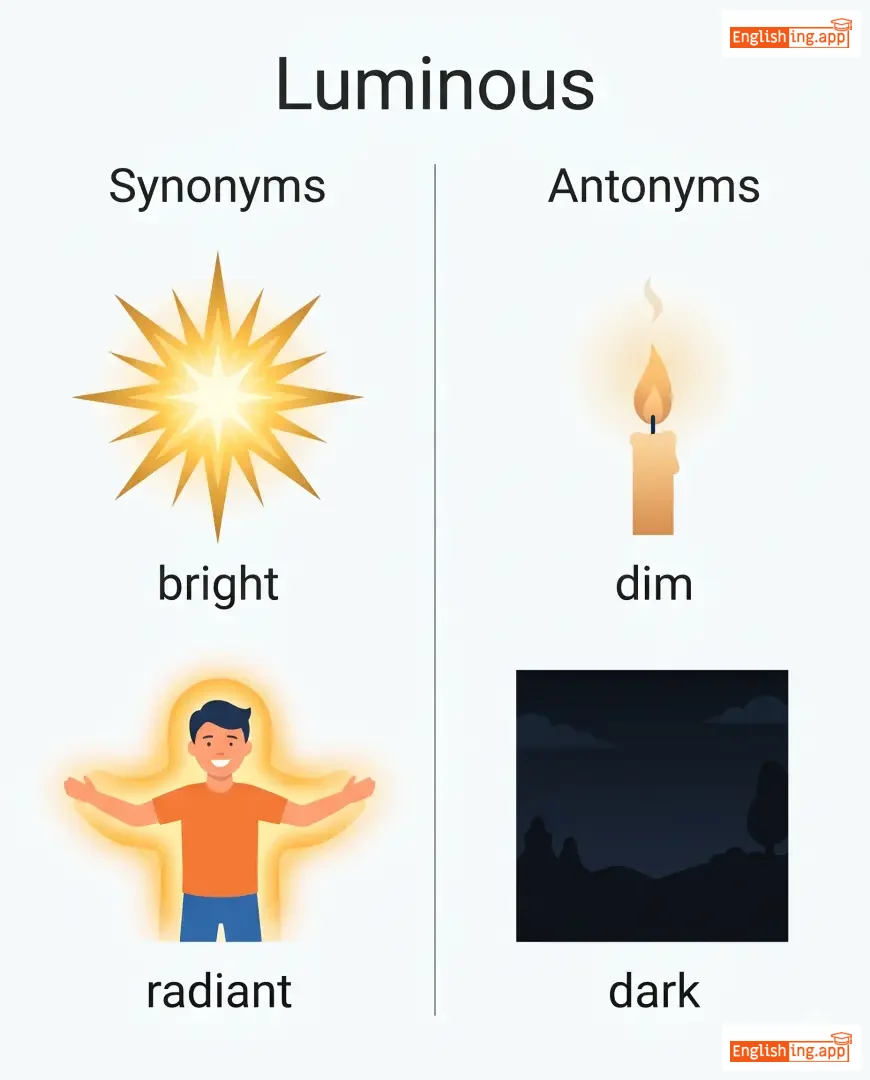
bright, radiant, glowing, shining, brilliant
••••••
|
dim, dark, dull
••••••
|
luminous glow, luminous paint, luminous stars, luminous eyes
••••••
|
Luminous 就像星星发出的光,代表着耀眼的光辉。
••••••
|
|
💎
••••••
|
/ˈlʌstrəs/
adjective
(拉斯特罗斯)
••••••
|
|
光泽
guāngzé
••••••
|
- •••••• | - •••••• | - •••••• | - •••••• |
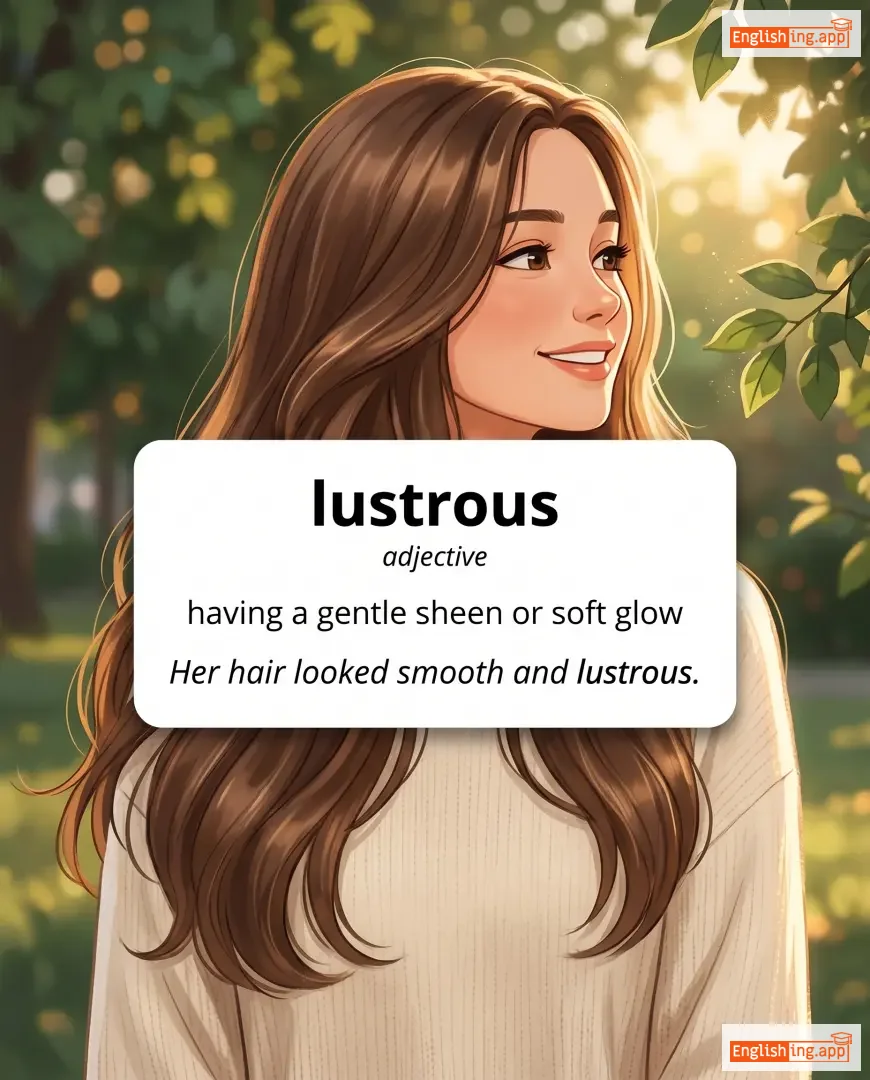
having a gentle sheen or soft glow
••••••
|
Her hair looked smooth and lustrous. |
她的头发看起来光滑而光泽。
Tā de tóufǎ kàn qǐlái guānghuá ér guāngzé.
••••••
|
- •••••• | - •••••• | - •••••• |
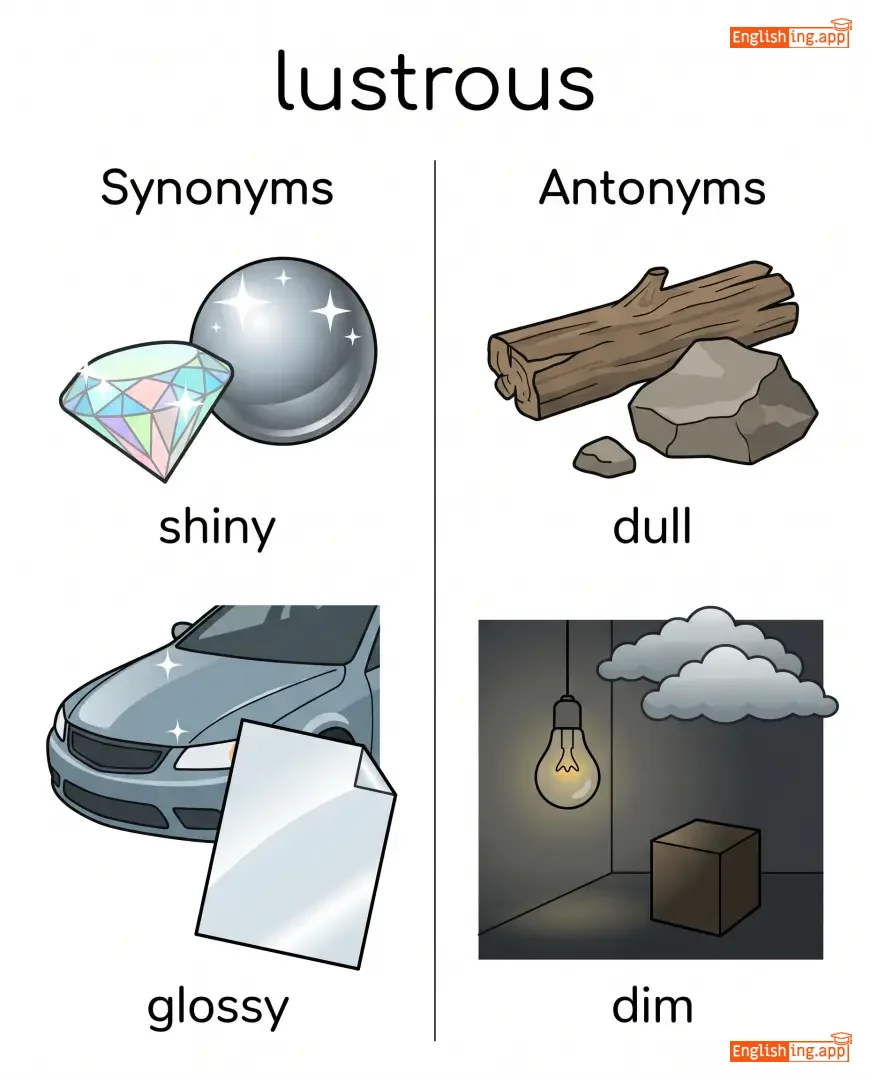
shiny, glossy, radiant, polished
••••••
|
dull, dim, matte
••••••
|
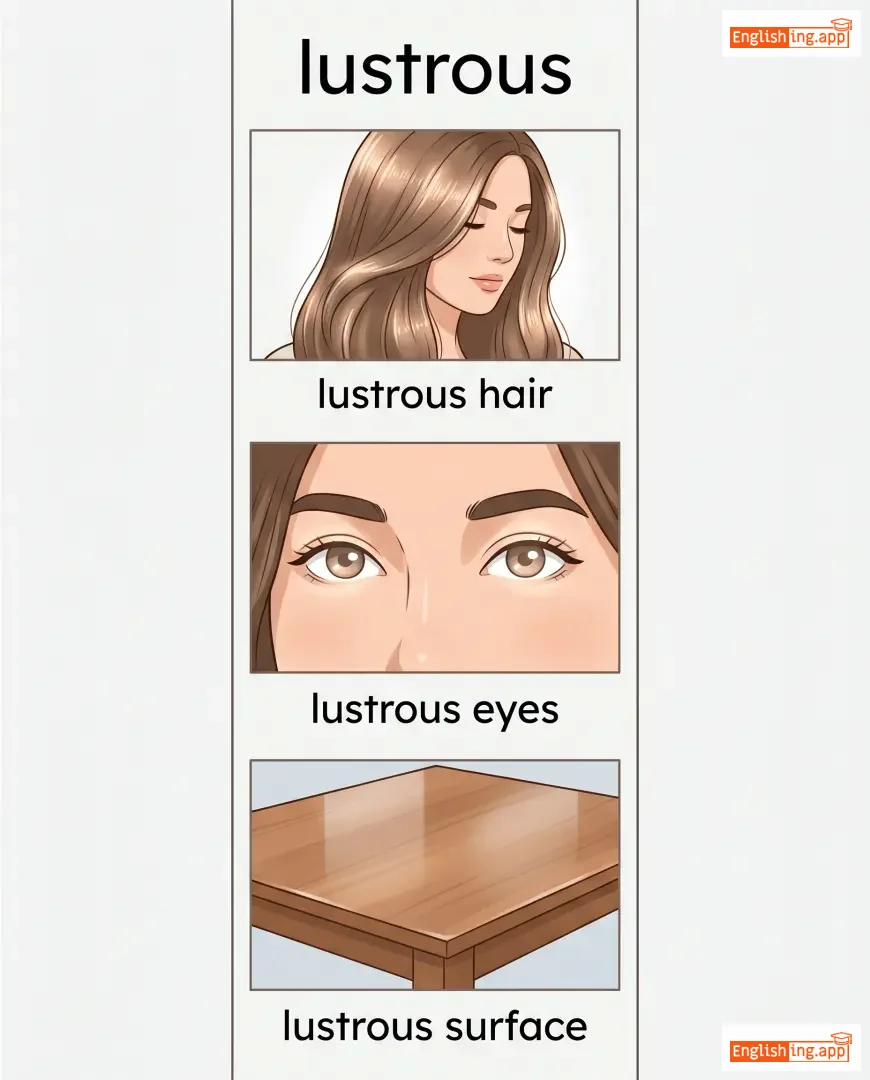
lustrous hair, lustrous eyes, lustrous surface, lustrous silk
••••••
|
Lustrous hair = 光泽的头发
••••••
|
|
🦊
••••••
|
/ˌmækɪəˈvɛliən/
adjective
(马基雅维利)
••••••
|

|
狡猾的,阴谋的,不择手段的,尤其是在政治或推动自己事业方面
majiayaweli
••••••
|
- •••••• | - •••••• | - •••••• | - •••••• |
cunning, scheming, and unscrupulous, especially in politics or in advancing one's career
••••••
|
The politician was known for his Machiavellian tactics. |
那位政治家因其马基雅维利式的手段而闻名。
Na wei zhengzhijia yin qi majiayaweli shi de shouduan er wenming.
••••••
|
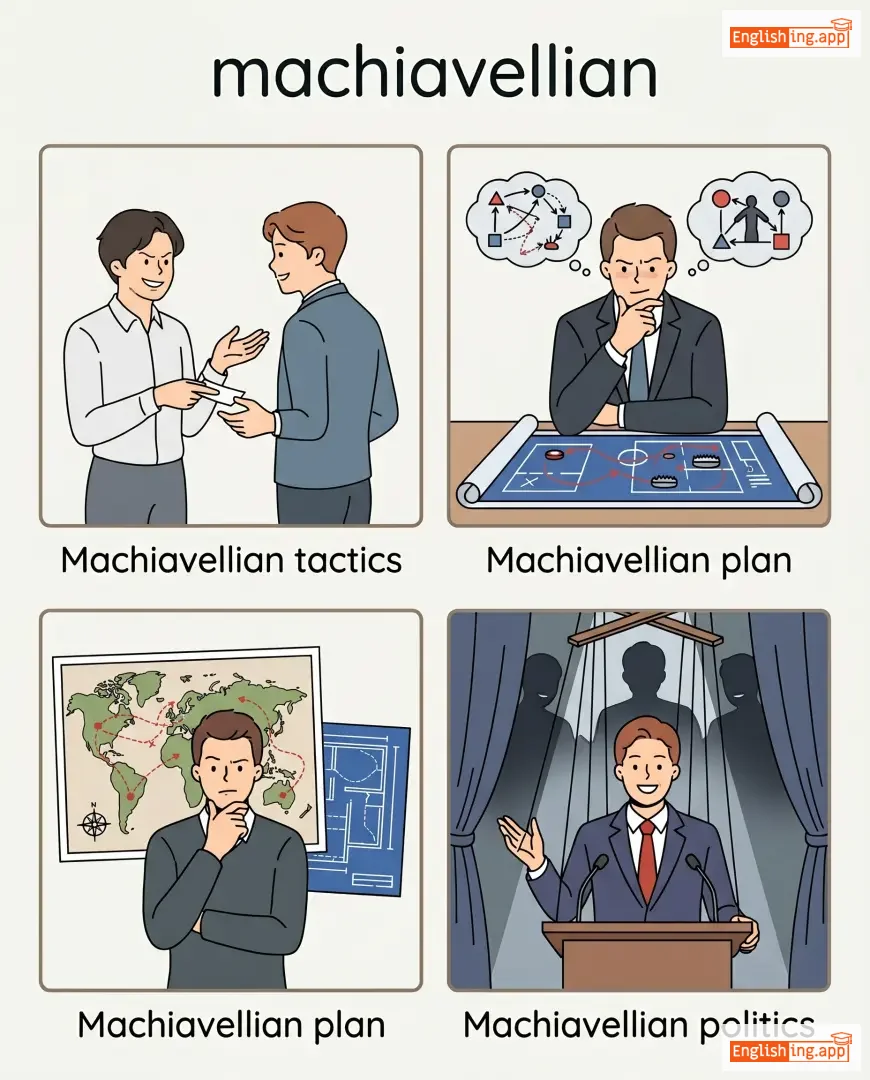
Machiavellian tactics |
scheming and deceitful strategies to achieve power
••••••
|
马基雅维利式手段
majiayaweli shi shouduan
••••••
|
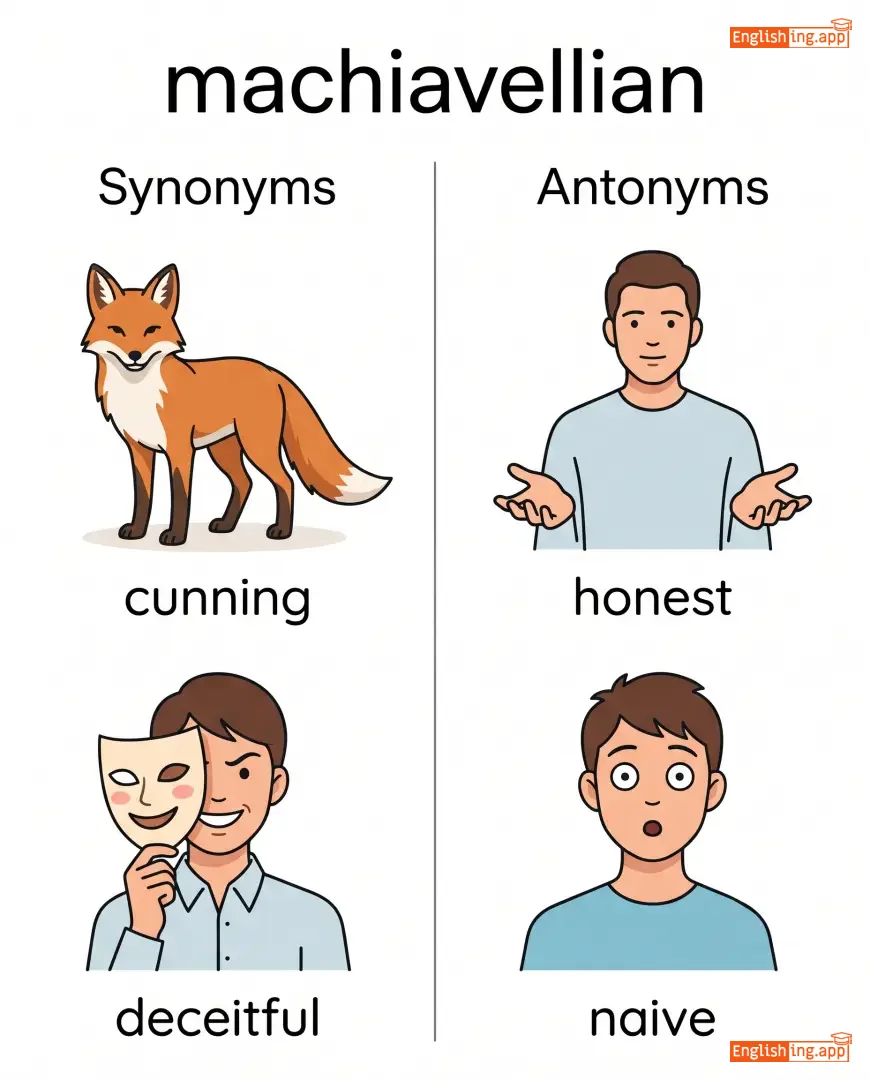
cunning, deceitful, crafty, manipulative
••••••
|
honest, naive, straightforward
••••••
|
Machiavellian tactics, Machiavellian plan, Machiavellian politics
••••••
|
Machiavellian = 政治手段为达目的不择手段
••••••
|
|
🕸️
••••••
|
/ˌmæk.ɪˈneɪ.ʃənz/
noun (plural)
(mækɪˈneɪʃənz)
••••••
|

|
阴谋
yīnmóu
••••••
|
- •••••• | - •••••• | - •••••• | - •••••• |
complicated and secret plans, often intended to cause harm
••••••
|
The politician was brought down by his own machinations.
ðə pəˈlɪtɪʃən wəz brɔt daʊn baɪ hɪz oʊn mækɪˈneɪʃənz.
••••••
|
那位政治家被自己的一手阴谋推翻了。
Nà wèi zhèngzhìjiā bèi zìjǐ de yī shǒu yīnmóu tuīfānle.
••••••
|
- •••••• | - •••••• | - •••••• |
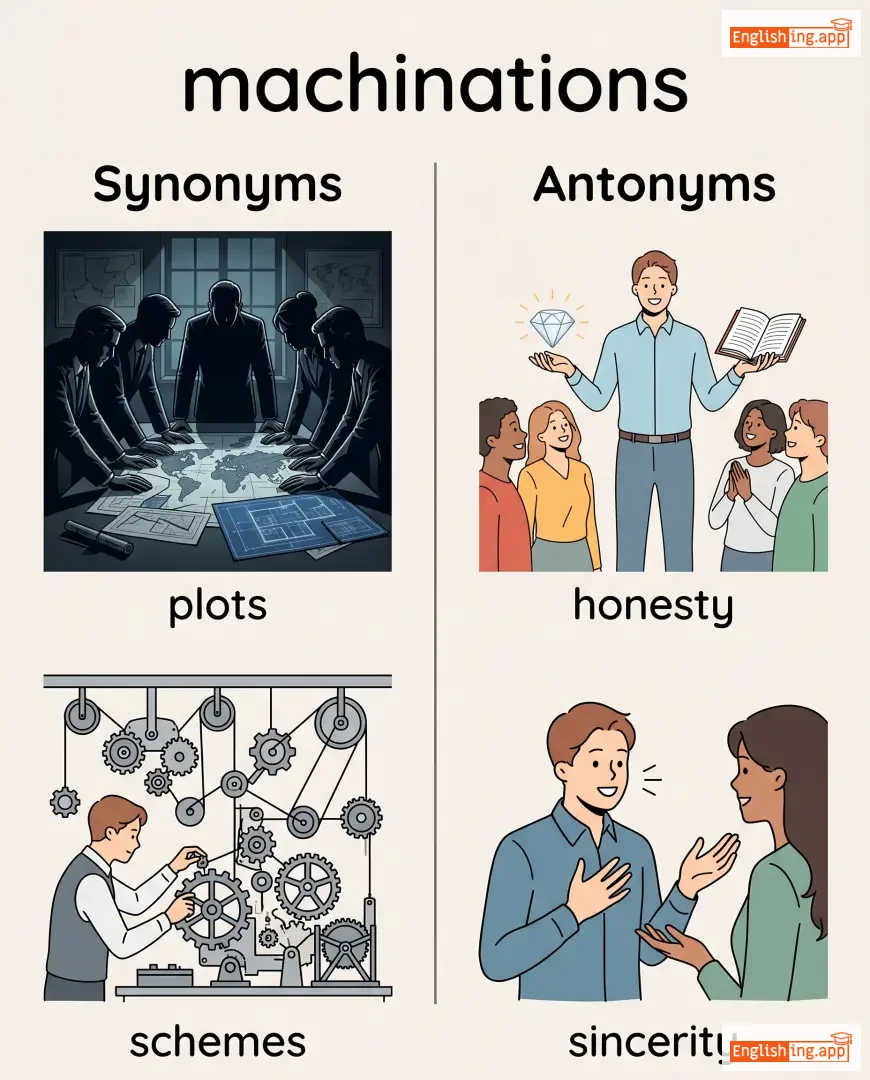
plots, schemes, intrigues, conspiracies
••••••
|
honesty, sincerity
••••••
|
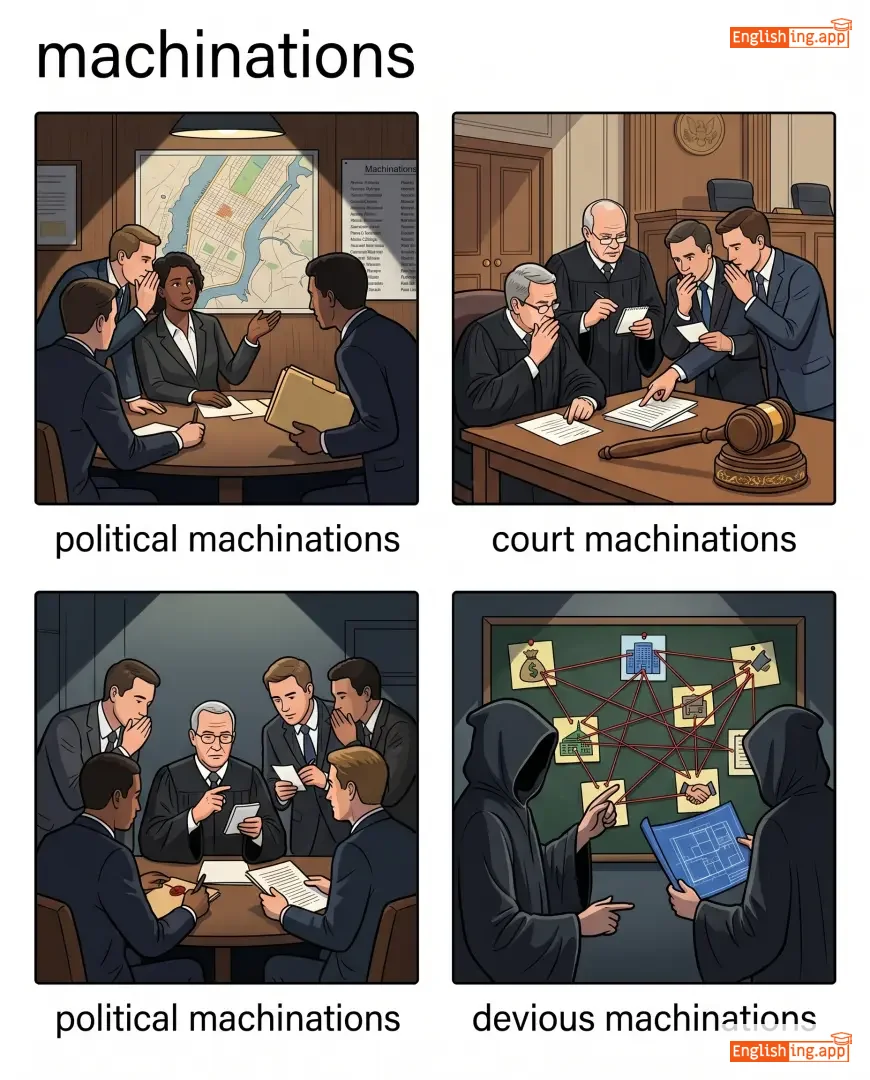
political machinations, court machinations, devious machinations
••••••
|
很多'国家'之间存在隐藏的计划,这就是阴谋(阴谋)。
••••••
|

