|
表情符号
|
单词 | Images | 翻译 | 过去时 | 过去分词 | 第三人称单数 | 动名词 | 含义 | 例句 | 例句翻译 | 示例表达 | 示例表达含义 | 示例表达翻译 | 同义词 | 反义词 | 搭配词 | 助记符 |
|---|---|---|---|---|---|---|---|---|---|---|---|---|---|---|---|---|---|
|
❄️
••••••
|
/ʌnˈjuːʒuəli/
adverb
(安尤朱厄利)
••••••
|
- •••••• |
异常地
yichang de
••••••
|
- •••••• | - •••••• | - •••••• | - •••••• |
in a way that is not typical or expected; to an uncommon degree
••••••
|
It was unusually cold for this time of year.
It was unusually cold for this time of year
••••••
|
对一年中的这个时候来说,天气异常寒冷。
Dui yi nian zhong de zhe ge shihou laishuo tianqi yichang hanleng
••••••
|
unusually for someone/something
unusually for
••••••
|
in a way that is not typical of a particular person or thing
••••••
|
对……来说异常
dui laishuo yichang
••••••
|
atypically, exceptionally, remarkably, unusually enough, uncommonly
••••••
|
normally, typically, ordinarily
••••••
|
unusually cold, unusually quiet, unusually high, unusually low, unusually strong
••••••
|
异常 = unusual → unusually
••••••
|
|
🎉
••••••
|
/ʌnˈveɪl/
verb
(ʌnˈveɪl)
••••••
|
- •••••• |
揭示
jiēshì
••••••
|
unveiled
ʌnˈveɪld
••••••
|
unveiled
ʌnˈveɪld
••••••
|
unveils
ʌnˈveɪlz
••••••
|
unveiling
ʌnˈveɪlɪŋ
••••••
|
to reveal or disclose something, especially in a formal manner
••••••
|
The company will unveil a new product next week.
公司将在下周揭示一款新产品。
••••••
|
公司将在下周揭示一款新产品。
Gōngsī jiāng zài xià zhōu jiēshì yī kuǎn xīn chǎnpǐn.
••••••
|
- •••••• | - •••••• | - •••••• |
reveal, disclose, unveil, disclose
••••••
|
conceal, hide, cover
••••••
|
unveil a product, unveil a plan, unveil the truth
••••••
|
Unveil – 'Veil' 意味着隐藏;'unveil' 意味着揭开面纱并展示!
••••••
|
|
😤
••••••
|
/ʌnˈwɪl.ɪŋ/
adjective
(ān wī línɡ)
••••••
|
- •••••• |
不愿意的; 不情愿的;
bù yuànyì de; bù qíngyuàn de
••••••
|
- •••••• | - •••••• | - •••••• | - •••••• |
not ready to do something; reluctant; not wanting to do
••••••
|
He was unwilling to share his secret with anyone.
他不愿意与任何人分享他的秘密。
••••••
|
他不愿意与任何人分享他的秘密。
Tā bù yuànyì yǔ rènhé rén fēnxiǎng tā de mìmì.
••••••
|
- •••••• | - •••••• | - •••••• |
reluctant, hesitant, resistant, disinclined
••••••
|
willing, eager, ready, keen
••••••
|
unwilling participant, unwilling to help, unwilling witness
••••••
|
Imagine being unwilling to share a secret in Chinese, just like not wanting to do something.
••••••
|
|
🙅♂️
••••••
|
/ʌnˈwɪlɪŋli/
adverb
(安威灵利)
••••••
|
- •••••• |
不情愿地
bu qingyuan de
••••••
|
- •••••• | - •••••• | - •••••• | - •••••• |
in a way that shows reluctance or lack of desire; not willingly
••••••
|
She unwillingly agreed to attend the meeting.
她 安威灵利 同意 参加 会议
••••••
|
她不情愿地同意参加会议。
ta bu qingyuan de tongyi canjia huiyi
••••••
|
drag someone unwillingly
drag someone unwillingly
••••••
|
to force someone to do something against their will
••••••
|
不情愿地拖着某人
bu qingyuan de tuozhe mouren
••••••
|
reluctantly, hesitantly, grudgingly, involuntarily
••••••
|
willingly, eagerly, gladly
••••••
|
unwillingly agreed, unwillingly accepted, unwillingly complied, unwillingly admitted
••••••
|
不情愿 = not willing
••••••
|
|
🤦
••••••
|
/ʌnˈwaɪz/
adjective
(ʌnˈwaɪz)
••••••
|
- •••••• |
不明智
bù míng zhì
••••••
|
- •••••• | - •••••• | - •••••• | - •••••• |
Showing poor judgment; not sensible or prudent.
••••••
|
It would be unwise to invest all your money in one company. |
把所有的钱都投入一家公司的做法不明智。
Bǎ suǒyǒu de qián dōu tóurù yījiā gōngsī de zuòfǎ bù míng zhì.
••••••
|
- •••••• | - •••••• | - •••••• |
foolish, imprudent, reckless, careless
••••••
|
wise, prudent, sensible
••••••
|
unwise decision, unwise choice, unwise investment, unwise action
••••••
|
Unwise 在中文里是'不明智',表示不良判断的意思。
••••••
|
|
👎
••••••
|
/ʌnˈwɜːrði/
adjective
(ān wǎ dé)
••••••
|
- •••••• |
不配; 没有价值
bù pèi; méiyǒu jiàzhí
••••••
|
- •••••• | - •••••• | - •••••• | - •••••• |
not deserving respect or attention; lacking worth or merit
••••••
|
He felt unworthy of such praise and recognition.
他觉得自己不配得到这样的赞扬和认可。
••••••
|
他觉得自己不配得到这样的赞扬和认可。
Tā juédé zìjǐ bùpèi dédào zhèyàng de zànyáng hé rènkě.
••••••
|
- •••••• | - •••••• | - •••••• |
undeserving, inadequate, inferior, worthless
••••••
|
worthy, deserving, adequate, valuable
••••••
|
unworthy of praise, feel unworthy, unworthy candidate
••••••
|
不配 – meaning unworthy, like someone who doesn't deserve respect.
••••••
|
|
🎁
••••••
|
/ʌnˈræp/
verb
(安拉普)
••••••
|
- •••••• |
拆开
chai kai
••••••
|
unwrapped
安拉普特
••••••
|
unwrapped
安拉普特
••••••
|
unwraps
安拉普斯
••••••
|
unwrapping
安拉普英
••••••
|
remove wrapping or covering from something; reveal something gradually or clearly
••••••
|
She carefully unwrapped the gift with excitement.
希 凯尔弗利 安拉普德 德 礼物 带 兴奋。
••••••
|
她兴奋地小心拆开了礼物。
Ta xingfende xiaoxin chaikai le liwu
••••••
|
- •••••• | - •••••• | - •••••• |
open, uncover, reveal, expose, strip
••••••
|
wrap, cover, conceal
••••••
|
unwrap a gift, unwrap a package, unwrap slowly, unwrap carefully
••••••
|
unwrap 就是 拆开 礼物
••••••
|
|
🔜
••••••
|
/ˈʌpˌkʌmɪŋ/
adjective
(ˈʌpˌkʌmɪŋ)
••••••
|
- •••••• |
即将到来
jijiang daolai
••••••
|
- •••••• | - •••••• | - •••••• | - •••••• |
about to happen or appear
••••••
|
The upcoming event will be held next week. |
即将到来的活动将在下周举行。
Jijiang daolai de huodong jiang zai xia zhou juxing.
••••••
|
- •••••• | - •••••• | - •••••• |
forthcoming, approaching, imminent, near
••••••
|
past, previous, distant
••••••
|
upcoming event, upcoming week, upcoming project
••••••
|
Upcoming sounds like 'upcoming' and '即将到来', easy to remember!
••••••
|
|
🔄
••••••
|
/ˈʌpdeɪt/
verb
••••••
|

|
- •••••• |
updated
••••••
|
updated
••••••
|
updates
••••••
|
updating
••••••
|
to make something more modern or accurate by adding new information or changing it
••••••
|
Please update your profile information regularly. |
- •••••• |
keep someone updated |
to inform someone of new developments
••••••
|
- •••••• |
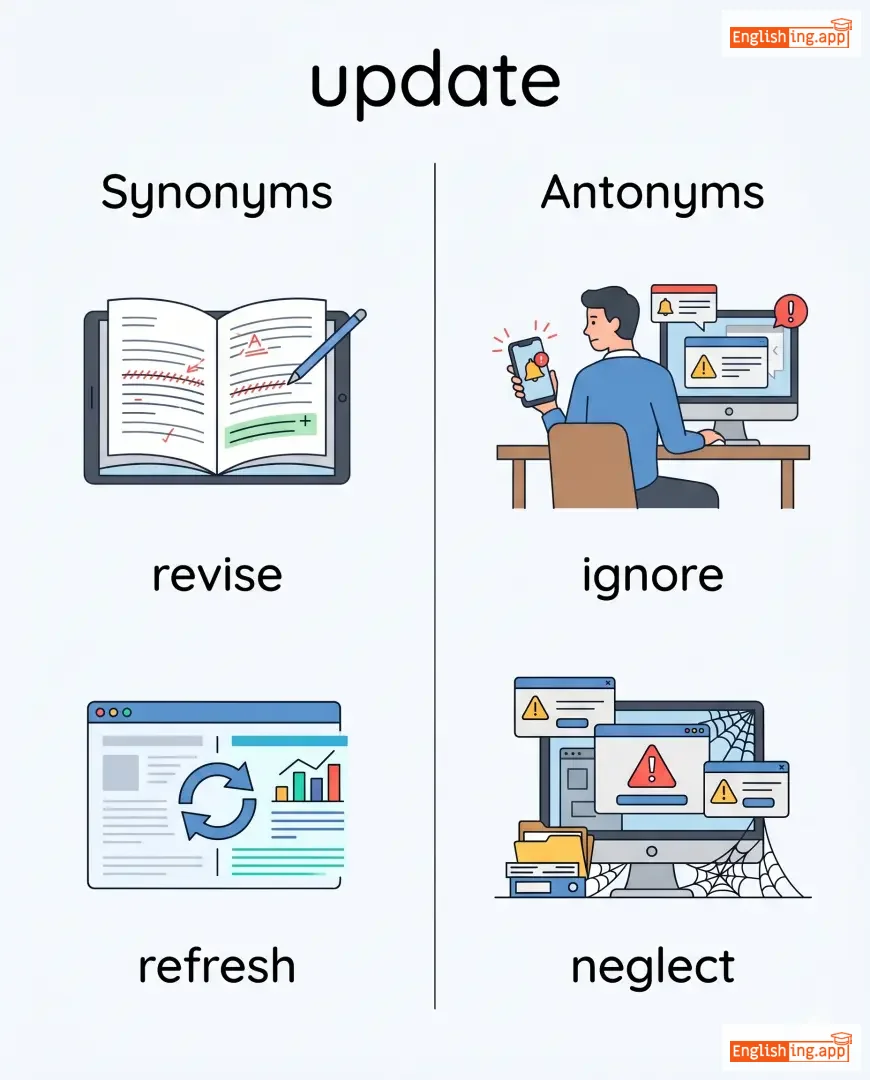
revise, refresh, modify, modernize, amend
••••••
|
ignore, neglect, retain
••••••
|
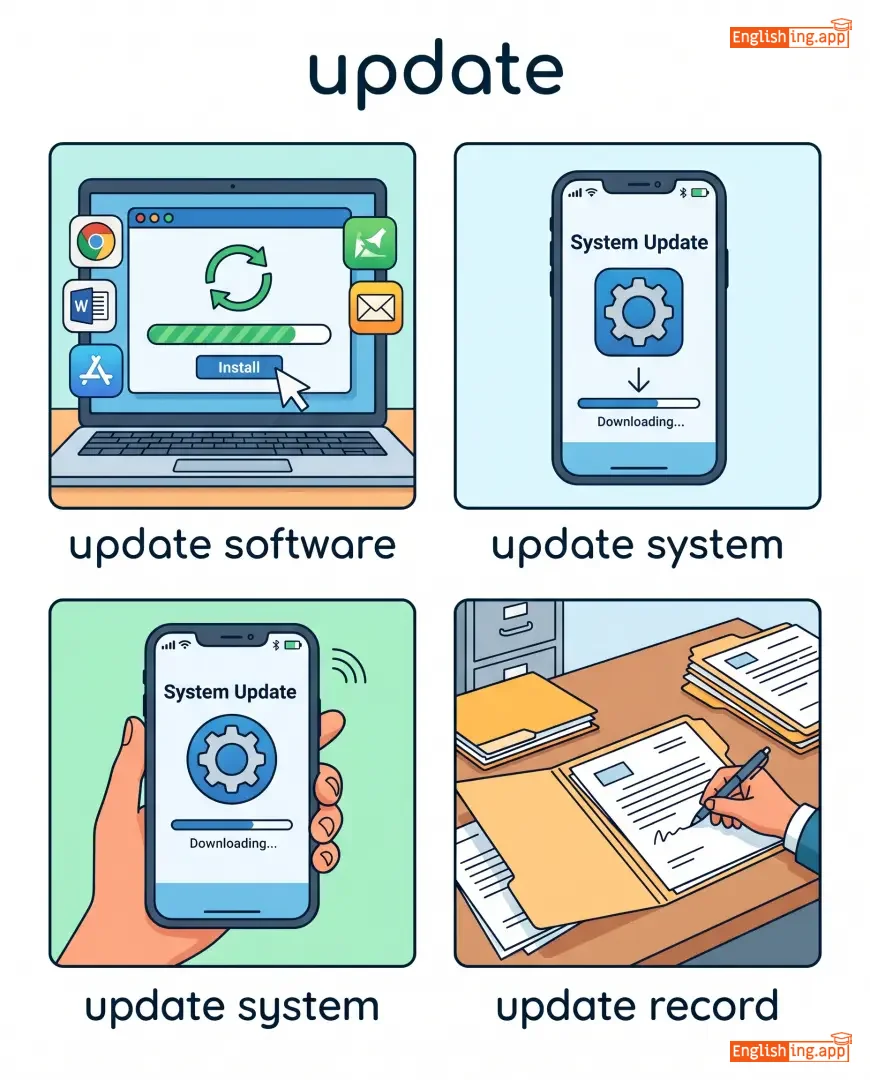
update software, update system, update record, latest update
••••••
|
No •••••• |
|
⬆️
••••••
|
/ˈʌpˌɡreɪd/
verb
(apugléid)
••••••
|
- •••••• |
升级
shengji
••••••
|
upgraded
apugléidid
••••••
|
upgraded
apugléidid
••••••
|
upgrades
apugléids
••••••
|
upgrading
apugléiding
••••••
|
to raise something to a higher standard, improve
••••••
|
We decided to upgrade the software to the latest version.
我们决定将软件升级到最新版本。
••••••
|
我们决定将软件升级到最新版本。
Wo men jue ding jiang ruan jian sheng ji dao zui xin ban ben.
••••••
|
- •••••• | - •••••• | - •••••• |
improve, enhance, elevate, boost
••••••
|
downgrade, reduce, worsen
••••••
|
upgrade software, upgrade system, upgrade device
••••••
|
Upgrade your system for a better tomorrow.
••••••
|
|
⚖️
••••••
|
/ʌpˈhoʊld/
verb
(apohold)
••••••
|
- •••••• |
维护
wéihù
••••••
|
upheld
apohold
••••••
|
upheld
apohold
••••••
|
upholds
apoholds
••••••
|
upholding
apoholding
••••••
|
to maintain or support a principle, law, or decision
••••••
|
The judge promised to uphold justice at all costs.
法官承诺不惜一切代价维护正义。
••••••
|
法官承诺不惜一切代价维护正义。
Fǎguān chéngnuò bùxī yīqiè dàijià wéihù zhèngyì.
••••••
|
uphold the law
维持法律
••••••
|
to support and enforce legal rules
••••••
|
维持法律
wéihù fǎlǜ
••••••
|
support, maintain, defend, sustain, endorse
••••••
|
reject, overturn
••••••
|
uphold justice, uphold the law, uphold a decision, uphold rights
••••••
|
UP 维护意味着‘维持法律或原则’
••••••
|
|
🕒
••••••
|
/əˈpɒn/
preposition
(阿蓬)
••••••
|
- •••••• |
之后
zhīhòu
••••••
|
- •••••• | - •••••• | - •••••• | - •••••• |
on or immediately after
••••••
|
Upon hearing the news, he rushed to the hospital. |
听到消息后,他赶到医院。
Tīng dào xiāoxī hòu, tā gǎn dào yīyuàn.
••••••
|
- •••••• | - •••••• | - •••••• |
on, following
••••••
|
before
••••••
|
upon arrival, upon hearing, upon request
••••••
|
Upon - zhīhòu, after the event, moving towards your goal!
••••••
|
|
⬆️
••••••
|
/ˈʌpər/
adjective
(áper)
••••••
|
- •••••• |
上层
shàngcéng
••••••
|
- •••••• | - •••••• | - •••••• | - •••••• |
higher in position or rank
••••••
|
The upper floor of the building is under renovation.
建筑物的上层正在翻修。
••••••
|
建筑物的上层正在翻修。
Jiànzhúwù de shàngcéng zhèngzài fāngxiū.
••••••
|
- •••••• | - •••••• | - •••••• |
higher, top, superior
••••••
|
lower, bottom
••••••
|
upper floor, upper limit, upper part
••••••
|
Upper - 想象上面的位置,位置更高!
••••••
|
|
😔
••••••
|
/ʌpˈsɛt/
verb
(ʌpˈsɛt)
••••••
|
|
使不高兴
shi bu gaoxing
••••••
|
upset
ʌpˈsɛt
••••••
|
upset
ʌpˈsɛt
••••••
|
upsets
ʌpˈsɛts
••••••
|
upsetting
ʌpˈsɛtɪŋ
••••••
|
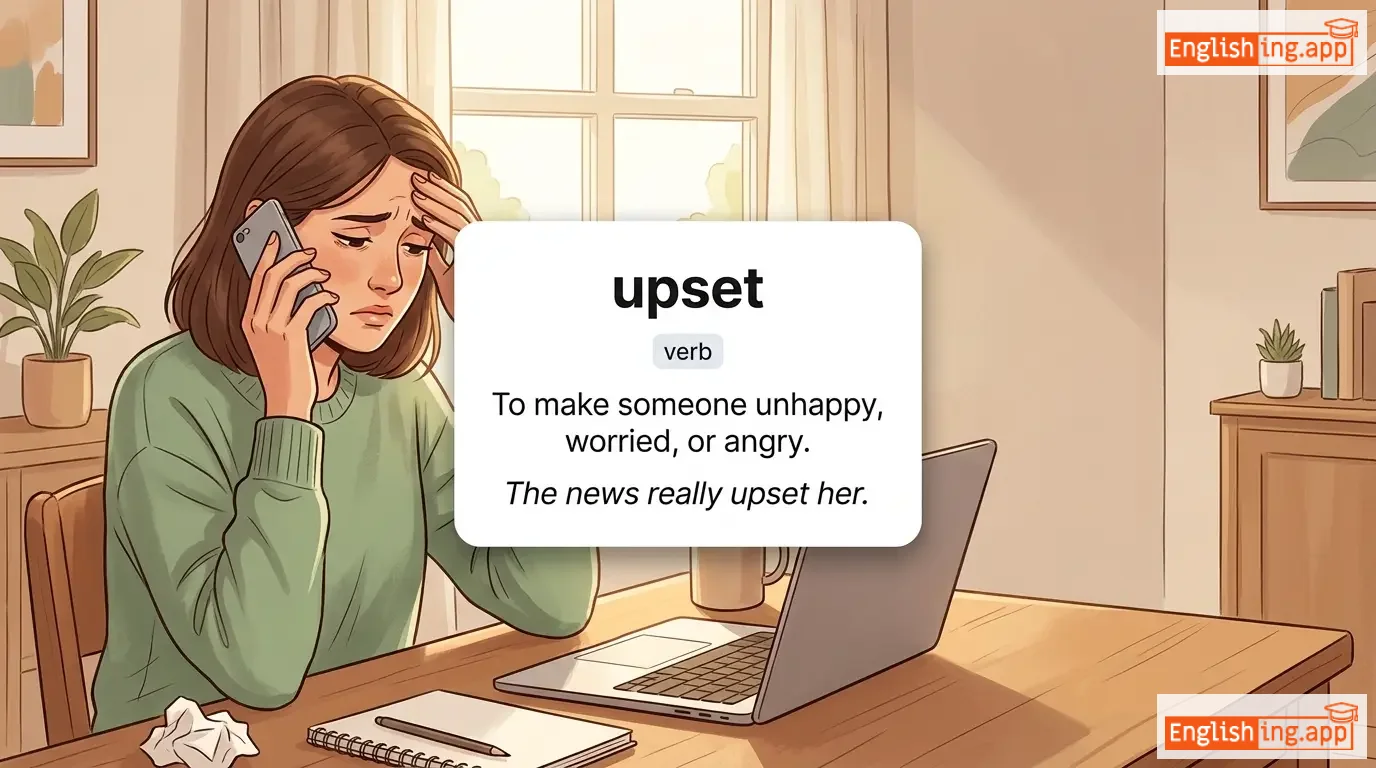
To make someone unhappy, worried, or angry.
••••••
|
The news really upset her.
ðə nuːz rɪəli ʌpˈsɛt hɜːr.
••••••
|
新闻真的让她很不高兴。
Xīnwén zhēn de ràng tā hěn bù gāoxìng.
••••••
|
upset the apple cart
ʌpˈsɛt ði ˈæpl kɑːt
••••••
|
To spoil or ruin a plan or arrangement.
••••••
|
破坏计划
pòhuài jìhuà
••••••
|
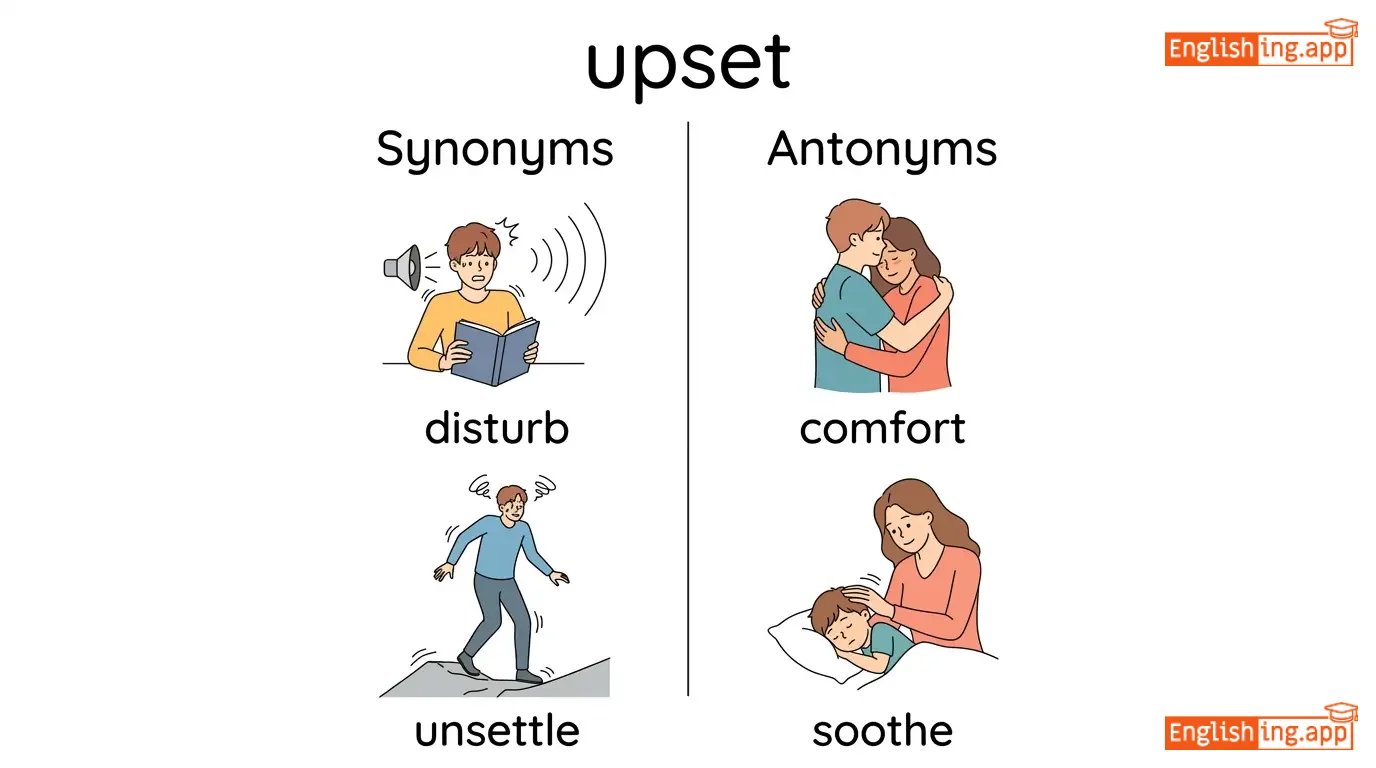
disturb, unsettle, trouble, sadden, anger
••••••
|
comfort, soothe, calm
••••••
|
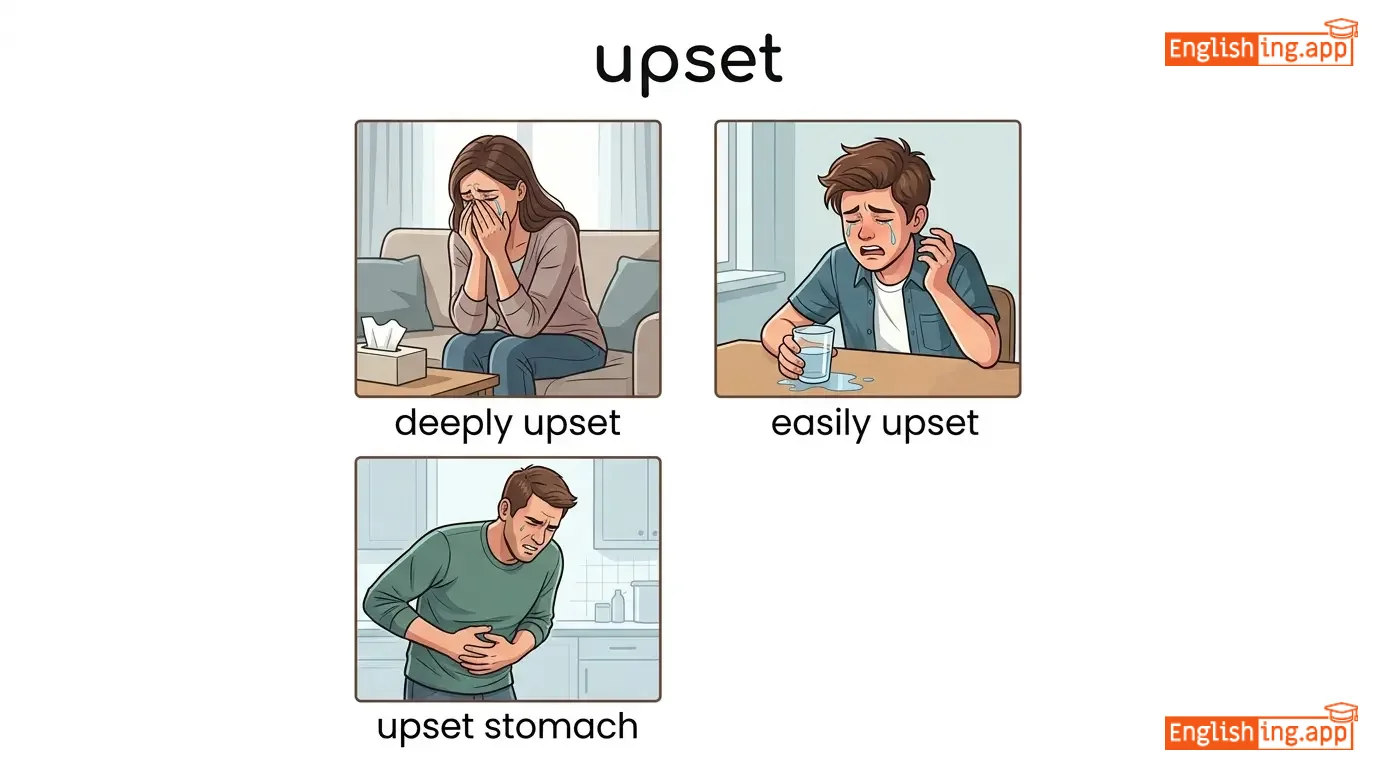
deeply upset, easily upset, upset stomach, upset feelings
••••••
|
Upset 在中文里是使不高兴。
••••••
|
|
🏠⬆️
••••••
|
/ˌʌpˈstɛərz/
adverb
••••••
|
- •••••• | - •••••• | - •••••• | - •••••• | - •••••• | - •••••• |
on or to a higher floor of a building
••••••
|
She went upstairs to her bedroom. |
- •••••• |
the people upstairs |
neighbors who live on the floor above
••••••
|
- •••••• |
above, overhead, aloft, upper floor, higher level
••••••
|
downstairs, below, beneath
••••••
|
go upstairs, walk upstairs, upstairs room, upstairs neighbor
••••••
|
No •••••• |
|
🏙️
••••••
|
/ˈɜːrbən/
adjective
(ˈɜːrbən)
••••••
|
- •••••• |
城市的
chengshi de
••••••
|
- •••••• | - •••••• | - •••••• | - •••••• |
related to, characteristic of, or situated in a city or town
••••••
|
Urban areas often have higher population density than rural areas. |
城市地区通常比乡村地区有更高的人口密度。
Chengshi diqu tongchang bi xiangcun diqu you geng gao de renkou midu.
••••••
|
urban jungle |
a way of describing a city as crowded, dangerous, or chaotic
••••••
|
城市丛林
chengshi conglin
••••••
|
city, metropolitan, municipal, civic
••••••
|
rural, rustic, countryside
••••••
|
urban development, urban planning, urban life, urban population
••••••
|
Urban = 城市的 – 城市区域是'urban'的地方!
••••••
|
|
📢
••••••
|
/ɜːrdʒ/
verb
(ɜːrdʒ)
••••••
|
- •••••• |
催促
cuīcù
••••••
|
urged
ɜːrdʒd
••••••
|
urged
ɜːrdʒd
••••••
|
urges
ɜːrdʒes
••••••
|
urging
ɜːrdʒing
••••••
|
to strongly encourage or try to persuade someone to do something
••••••
|
Doctors urge patients to exercise regularly.
医生鼓励病人定期锻炼。
••••••
|
医生鼓励病人定期锻炼。
Yīshēng gǔlì bìngrén dìngqī duànliàn.
••••••
|
urge on
鼓励继续
••••••
|
to encourage someone to continue or do something with more effort
••••••
|
鼓励继续
gǔlì jìxù
••••••
|
encourage, persuade, push, prompt, exhort
••••••
|
dissuade, discourage, prevent
••••••
|
urge someone, urge action, urge caution, strong urge
••••••
|
Urge 意味着催促 – 医生总是鼓励患者做锻炼。
••••••
|
|
🚨
••••••
|
/ˈɜːrdʒənt/
adjective
(ʊʁʒənt)
••••••
|
- •••••• |
紧急
jinji
••••••
|
- •••••• | - •••••• | - •••••• | - •••••• |
Requiring immediate action or attention.
••••••
|
She sent an urgent message to her manager.
她给经理发了一条紧急消息。
••••••
|
她给经理发了一条紧急消息。
Tā gěi jīnglǐ fāle yītiáo jǐnjí xiāoxī.
••••••
|
urgent need
紧急需求
••••••
|
a strong necessity that must be addressed immediately
••••••
|
紧急需求
jǐnjí xūqiú
••••••
|
critical, pressing, immediate, essential
••••••
|
nonessential, trivial, minor
••••••
|
urgent request, urgent matter, urgent care, urgent meeting
••••••
|
紧急意味着需要立即处理的事情。
••••••
|
|
🚨
••••••
|
/ˈɜːrdʒəntli/
adverb
(厄真特利)
••••••
|
- •••••• |
紧急地
jinji de
••••••
|
- •••••• | - •••••• | - •••••• | - •••••• |
in a way that requires immediate attention or action
••••••
|
The patient urgently needs medical attention.
泽 佩申特 厄真特利 尼兹 医疗 阿滕申。
••••••
|
病人紧急地需要医疗救助。
bingren jinji de xuyao yiliao jiujiu
••••••
|
- •••••• | - •••••• | - •••••• |
immediately, pressingly, desperately, critically
••••••
|
slowly, casually, unhurriedly
••••••
|
urgently needed, urgently required, urgently request, urgently seek help
••••••
|
urgent 听起来像 紧急,所以 urgently = 紧急地
••••••
|
|
👫
••••••
|
/ʌs/
pronoun
(阿斯)
••••••
|
- •••••• |
我们
women
••••••
|
- •••••• | - •••••• | - •••••• | - •••••• |
used to refer to the speaker and one or more other people as the object of a verb or preposition
••••••
|
She gave us a gift. |
她给了我们一个礼物。
Tā gěi le wǒmen yīgè lǐwù.
••••••
|
- •••••• | - •••••• | - •••••• |
we, ourselves, our group
••••••
|
them, you
••••••
|
help us, give us, show us
••••••
|
我们 (women) 和其他人,我们就是 US,一起!
••••••
|
|
📘
••••••
|
/ˈjuːsɪdʒ/
noun
(yúshè)
••••••
|
- •••••• |
使用
shiyong
••••••
|
- •••••• | - •••••• | - •••••• | - •••••• |
The action of using something; the way in which a word or phrase is normally used.
••••••
|
The book explains the proper usage of technical terms. |
这本书解释了技术术语的正确使用。
Zhè běn shū jiěshìle jìshù shùyǔ de zhèngquè shǐyòng.
••••••
|
common usage |
the way something is usually used or understood
••••••
|
常见使用
chángjiàn shǐyòng
••••••
|
practice, use, custom, convention
••••••
|
misuse, error, disuse
••••••
|
word usage, proper usage, language usage, common usage
••••••
|
Usage 意味着使用 - '使用就好,简单又直接。'
••••••
|
|
🛠️
••••••
|
/juːz/ (verb), /juːs/ (noun)
verb
(yuz)
••••••
|


|
使用
shiyong
••••••
|
used
yuzd
••••••
|
used
yuzd
••••••
|
uses
yuzes
••••••
|
using
yuzing
••••••
|
To employ something for a purpose.
••••••
|
She used her phone to call a taxi.
她用了手机叫出租车。
••••••
|
她用了手机叫出租车。
Ta yongle shouji jiao chuzuche.
••••••
|
make use of
利用
••••••
|
To take advantage of or utilize something.
••••••
|
利用
Liyong
••••••
|
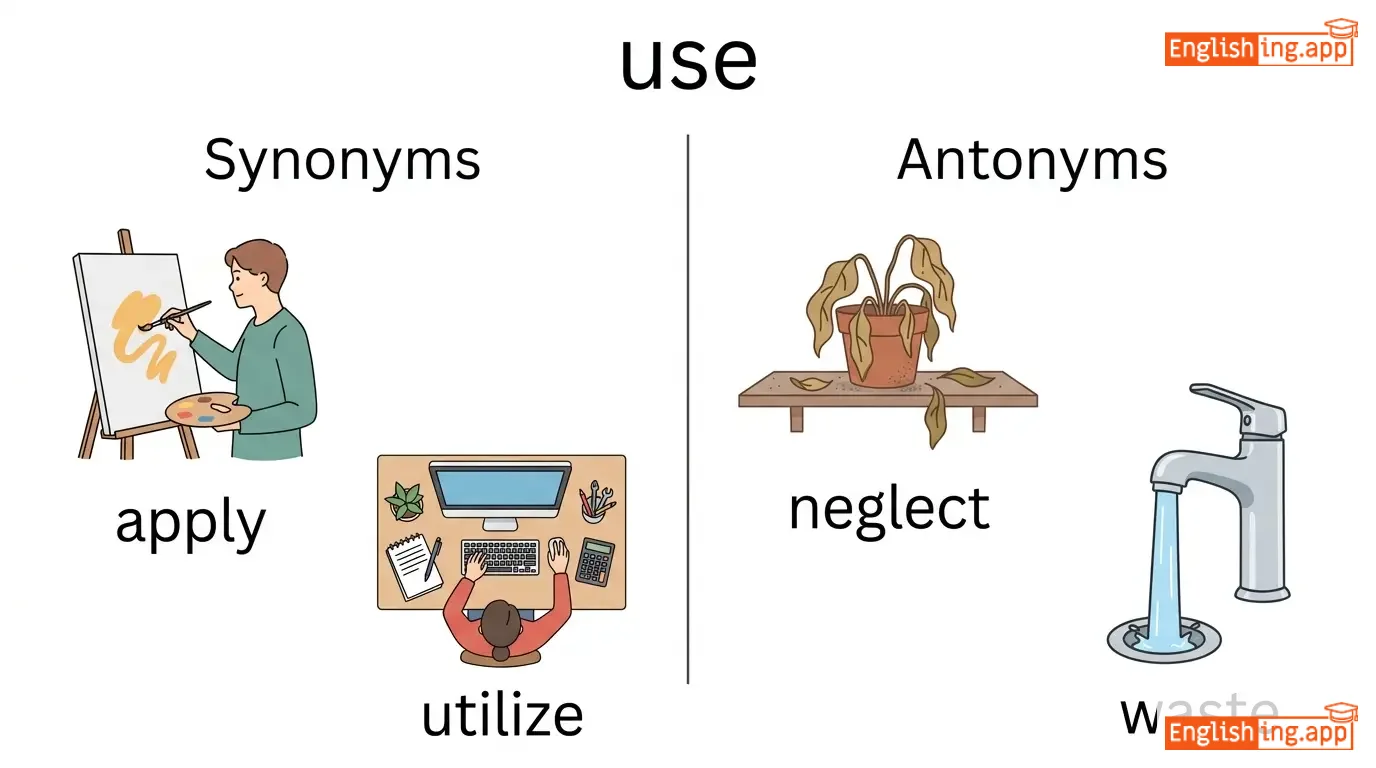
apply, utilize, employ, exploit, handle
••••••
|
neglect, waste, ignore
••••••
|
use time, use opportunity, use resources, use effectively
••••••
|
使用意味着利用或应用某物。
••••••
|
|
🚗
••••••
|
/juːzd/
adjective
(yūzīd)
••••••
|
- •••••• |
二手
èr shǒu
••••••
|
- •••••• | - •••••• | - •••••• | - •••••• |
having already been used
••••••
|
This is a used car. |
这是一辆二手车。
Zhè shì yī liàng èr shǒu chē.
••••••
|
- •••••• | - •••••• | - •••••• |
pre-owned, secondhand, recycled
••••••
|
new, unused
••••••
|
used car, used clothes, used book
••••••
|
USED - You Should Expect Damage!
••••••
|
|
🔧
••••••
|
/ˈjuːs.fəl/
adjective
(yousiful)
••••••
|
- •••••• |
有用的; 实用的
youyong de; shiyong de
••••••
|
- •••••• | - •••••• | - •••••• | - •••••• |
having a beneficial purpose; practical
••••••
|
This tool is very useful for fixing problems.
这个工具对解决问题非常有用。
••••••
|
这个工具对解决问题非常有用。
zhe ge gong ju dui jie jue wen ti fei chang you yong.
••••••
|
- •••••• | - •••••• | - •••••• |
helpful, beneficial, practical, handy, valuable
••••••
|
useless, harmful, worthless, ineffective
••••••
|
useful tool, useful information, very useful, quite useful
••••••
|
Useful 就像这个有用的工具,帮助解决问题
••••••
|
|
🔧
••••••
|
/ˈjuːs.fəl.nəs/
noun
(yūsīfúlínèisī)
••••••
|
- •••••• |
有用性
youyongxing
••••••
|
- •••••• | - •••••• | - •••••• | - •••••• |
the quality of being useful; practical value or helpfulness
••••••
|
The usefulness of this tool became apparent during the project. |
这个工具的有用性在项目过程中变得显而易见。
Zhege gongju de youyongxing zai xiangmu guocheng zhong biande xian eryijian.
••••••
|
- •••••• | - •••••• | - •••••• |
utility, value, benefit, practicality
••••••
|
uselessness, worthlessness, futility
••••••
|
practical usefulness, usefulness of tool, question usefulness
••••••
|
有用性 = 有用 + 性 (meaning state of being useful)
••••••
|
|
🗑️
••••••
|
/ˈjuːs.ləs/
adjective
(yúsīlèsī)
••••••
|
- •••••• |
无用
wúyòng
••••••
|
- •••••• | - •••••• | - •••••• | - •••••• |
having no beneficial purpose; not useful
••••••
|
This broken computer is completely useless.
这个坏掉的电脑完全是无用的。
••••••
|
这个坏掉的电脑完全是无用的。
Zhège huài diào de diànnǎo wánquán shì wúyòng de.
••••••
|
- •••••• | - •••••• | - •••••• |
worthless, ineffective, pointless, futile, unhelpful
••••••
|
useful, helpful, valuable, effective, beneficial
••••••
|
completely useless, totally useless, useless information, useless attempt
••••••
|
In Chinese, '无用' means useless, similar to 'useless' in English.
••••••
|
|
👤
••••••
|
/ˈjuːzər/
noun
(yùzhě)
••••••
|
- •••••• |
用户
yonghu
••••••
|
- •••••• | - •••••• | - •••••• | - •••••• |
a person who uses or operates something
••••••
|
He is a frequent user of this app. |
他是这个应用程序的常用用户。
Ta shi zhege yingyongchengxu de changyong yonghu.
••••••
|
- •••••• | - •••••• | - •••••• |
consumer, customer, client
••••••
|
provider, seller
••••••
|
user interface, end user, registered user
••••••
|
User - 经常使用,成为用户!
••••••
|
|
📅
••••••
|
/ˈjuːʒəl/
adjective
(yúzhù)
••••••
|
- •••••• |
常见
changjian
••••••
|
- •••••• | - •••••• | - •••••• | - •••••• |
habitually or typically occurring or done
••••••
|
It’s our usual meeting spot. |
这是我们常见的会议地点。
Zhè shì wǒmen chángjiàn de huìyì dìdiǎn.
••••••
|
- •••••• | - •••••• | - •••••• |
customary, normal, regular
••••••
|
unusual, rare
••••••
|
usual routine, usual time, usual place
••••••
|
Usual - 常见的总是最好的!
••••••
|
|
🔄
••••••
|
/ˈjuː.ʒu.ə.li/
adverb
(yú zhū ài)
••••••
|
- •••••• |
通常; 一般
tongchang; yiban
••••••
|
- •••••• | - •••••• | - •••••• | - •••••• |
in most cases; generally; as a rule
••••••
|
I usually wake up at 7 AM every morning. |
我通常每天早上7点起床。
Wo tongchang mei tian zao shang 7 dian qi chuang.
••••••
|
- •••••• | - •••••• | - •••••• |
generally, typically, normally, commonly, ordinarily
••••••
|
rarely, seldom, never, unusually
••••••
|
usually do, usually happens, usually takes, usually go
••••••
|
每天7点起床对我来说是常事。
••••••
|
|
🔌
••••••
|
/juːˈtɪləti/
noun
(yǒu tì lì)
••••••
|
- •••••• |
效用
xiaoyong
••••••
|
- •••••• | - •••••• | - •••••• | - •••••• |
The state of being useful, profitable, or beneficial.
••••••
|
The utility of smartphones in daily life is undeniable. |
智能手机在日常生活中的效用不可否认。
Zhineng shouji zai rìcháng shēnghuó zhōng de xiàoyòng bù kě fǒrèn.
••••••
|
utility bill |
A bill for essential public services like water, electricity, or gas.
••••••
|
水电煤气账单
shuǐ diàn méiqì zhàngdān
••••••
|
usefulness, benefit, practicality, service, advantage
••••••
|
uselessness, disadvantage
••••••
|
utility bill, utility company, utility service, utility value
••••••
|
Utility意味着使用能力 - 所以效用就是有用的意思。
••••••
|
|
⚙️
••••••
|
/ˈjuːtɪlaɪz/
verb
(yutilaiz)
••••••
|
- •••••• |
利用
lìyòng
••••••
|
utilized
yutilaizd
••••••
|
utilized
yutilaizd
••••••
|
utilizes
yutilaizis
••••••
|
utilizing
yutilaizing
••••••
|
to make practical or effective use of something
••••••
|
The company aims to utilize solar energy for production.
公司旨在利用太阳能进行生产。
••••••
|
公司旨在利用太阳能进行生产。
Gōngsī zhǐ zài lìyòng tàiyángnéng jìnxíng shēngchǎn.
••••••
|
- •••••• | - •••••• | - •••••• |
use, employ, apply, exploit, harness
••••••
|
waste, neglect, misuse
••••••
|
utilize resources, utilize time, utilize data, utilize opportunity
••••••
|
You till eyes 利用 — Utilize 意味着利用某物
••••••
|
|
😲
••••••
|
/ˈʌtərli/
adverb
(ātèrlì)
••••••
|
- •••••• |
完全
wanquan
••••••
|
- •••••• | - •••••• | - •••••• | - •••••• |
completely or absolutely
••••••
|
She was utterly surprised by the news. |
她对新闻感到完全惊讶。
Ta dui xinwen gandao wanquan jingya.
••••••
|
utterly ridiculous |
completely absurd or unreasonable
••••••
|
完全荒谬
wanquan huangmiu
••••••
|
completely, absolutely, totally, entirely, fully
••••••
|
partially, somewhat, slightly
••••••
|
utterly amazed, utterly destroyed, utterly wrong, utterly impossible
••••••
|
Utterly意味着完全—就像完全荒谬。
••••••
|
|
🏖️
••••••
|
/veɪˈkeɪ.ʃən/
noun
(weikeishen)
••••••
|
- •••••• |
假期
jiaqi
••••••
|
- •••••• | - •••••• | - •••••• | - •••••• |
a period of time when someone does not go to work or school but is free to do what they want, such as travel or relax
••••••
|
I'm planning a vacation to the beach next summer.
我计划明年夏天去海滩度假。
••••••
|
我计划明年夏天去海滩度假。
Wo jihua mingnian xiatian qu haitan dujia.
••••••
|
- •••••• | - •••••• | - •••••• |
holiday, break, leave, trip
••••••
|
work, duty, obligation
••••••
|
summer vacation, family vacation, vacation time, go on vacation
••••••
|
假期是放松和享受的时刻!
••••••
|
|
✅
••••••
|
/ˈvælɪd/
adjective
••••••
|
- •••••• | - •••••• | - •••••• | - •••••• | - •••••• | - •••••• |
Having a sound basis in logic or fact; legally or officially acceptable.
••••••
|
Her argument was valid and convincing. |
- •••••• |
valid reason |
a good or acceptable reason
••••••
|
- •••••• |
legitimate, sound, reasonable, genuine
••••••
|
invalid, false, illegitimate
••••••
|
valid reason, valid point, valid argument, valid passport
••••••
|
No •••••• |
|
✅
••••••
|
/vəˈlɪd.ə.ti/
noun
(瓦利迪提)
••••••
|
- •••••• |
有效性
youxiao xing
••••••
|
- •••••• | - •••••• | - •••••• | - •••••• |
the quality of being logically or factually sound; legal acceptability
••••••
|
The lawyer questioned the validity of the contract. |
律师质疑合同的有效性。
Lvshi zhiyi hetong de youxiaoxing.
••••••
|
validate a claim |
to prove that a claim is true or acceptable
••••••
|
验证一个主张
yanzheng yige zhuzhang
••••••
|
legitimacy, soundness, authenticity, accuracy
••••••
|
invalidity, falseness, illegitimacy
••••••
|
validity period, test validity, question the validity, ensure validity
••••••
|
有效性 = 如验证你的考试ID,若无效则无法进入!
••••••
|
|
✅
••••••
|
/ˈvælɪdli/
adverb
(瓦利德利)
••••••
|
- •••••• |
合法地
hefa di
••••••
|
- •••••• | - •••••• | - •••••• | - •••••• |
in a legally, logically, or officially acceptable manner
••••••
|
The contract was validly signed by both parties.
The contract was validly signed by both parties.
••••••
|
合同已由双方合法地签署。
Hetong yi you shuangfang hefa di qianshu
••••••
|
- •••••• | - •••••• | - •••••• |
legitimately, lawfully, properly, correctly, rightfully
••••••
|
invalidly, illegally, improperly
••••••
|
validly signed, validly issued, validly executed, validly formed
••••••
|
valid + 地 = 合法地
••••••
|
|
🏞️
••••••
|
/ˈvæl.i/
noun
(wèi lǐ)
••••••
|
- •••••• |
山谷
shāngǔ
••••••
|
- •••••• | - •••••• | - •••••• | - •••••• |
a low area of land between hills or mountains
••••••
|
The green valley stretched for miles between the mountains. |
绿色的山谷在山脉之间延伸了好几英里。
lǜsè de shāngǔ zài shānmài zhī jiān yánshēn le hǎo jǐ yīnglǐ
••••••
|
- •••••• | - •••••• | - •••••• |
dale, glen, hollow
••••••
|
mountain, hill, peak
••••••
|
river valley, mountain valley, fertile valley, deep valley
••••••
|
山谷中水流和绿草不断延伸,仿佛是绿色的波浪。
••••••
|
|
💎
••••••
|
/ˈvæljʊəbl/
adjective
(ˈvæljʊəbl)
••••••
|
- •••••• |
有价值的; 重要的
yǒu jiàzhí de; zhòngyào de
••••••
|
- •••••• | - •••••• | - •••••• | - •••••• |
worth a great deal of money; extremely useful or important
••••••
|
The painting is very valuable and worth millions.
这幅画非常有价值,价值数百万。
••••••
|
这幅画非常有价值,价值数百万。
Zhè fú huà fēicháng yǒu jiàzhí, jiàzhí shù bǎi wàn.
••••••
|
- •••••• | - •••••• | - •••••• |
precious, expensive, costly, priceless
••••••
|
worthless, cheap, valueless, insignificant
••••••
|
valuable asset, valuable experience, valuable time, valuable information
••••••
|
V – 价值是有价值的 (yǒu jiàzhí de),这就是我们需要的重要事物
••••••
|
|
💎
••••••
|
/ˈvæl.juː/
noun
(wēi liú)
••••••
|
- •••••• |
价值; 价格; 重要性
jiàzhí; jiàgé; zhòngyào xìng
••••••
|
- •••••• | - •••••• | - •••••• | - •••••• |
the importance or worth of something; the amount of money that something is worth
••••••
|
This antique vase has great sentimental value to our family.
这个古董花瓶对我们家来说具有很大的情感价值。
••••••
|
这个古董花瓶对我们家来说具有很大的情感价值。
Zhège gǔdǒng huāpíng duì wǒmen jiā lái shuō jùyǒu hěn dà de qínggǎn jiàzhí.
••••••
|
- •••••• | - •••••• | - •••••• |
worth, importance, significance, price
••••••
|
worthlessness, insignificance
••••••
|
market value, face value, family values, good value
••••••
|
这个物品的价值不仅仅是价格,还是它对家庭的意义。
••••••
|
|
🚐
••••••
|
/væn/
noun
(范)
••••••
|
- •••••• |
货车
huoche
••••••
|
- •••••• | - •••••• | - •••••• | - •••••• |
a large vehicle used for transporting goods or people
••••••
|
The delivery van stopped in front of our house. |
送货车停在我们家门前。
Songhuo che ting zai women jia menqian.
••••••
|
moving van |
a large vehicle used for transporting furniture when moving
••••••
|
搬家车
banjia che
••••••
|
truck, vehicle, transporter, carrier
••••••
|
car, bike
••••••
|
delivery van, police van, moving van, camper van
••••••
|
货车 — 想象着它载满家具搬到新家。
••••••
|
|
✨
••••••
|
/ˈvæn.ɪʃ/
verb
(范尼什)
••••••
|

|
消失
xiaoshi
••••••
|
vanished
范尼什德
••••••
|
vanished
范尼什德
••••••
|
vanishes
范尼什斯
••••••
|
vanishing
范尼辛
••••••
|
to disappear suddenly and completely
••••••
|
The magician made the rabbit vanish into thin air.
魔术师让兔子在空气中消失。
••••••
|
魔术师让兔子在空气中消失。
Moshushi rang tuzi zai kongqi zhong xiaoshi.
••••••
|
vanish into thin air
消失在空气中
••••••
|
to disappear suddenly without a trace
••••••
|
消失在空气中
xiaoshi zai kongqi zhong
••••••
|
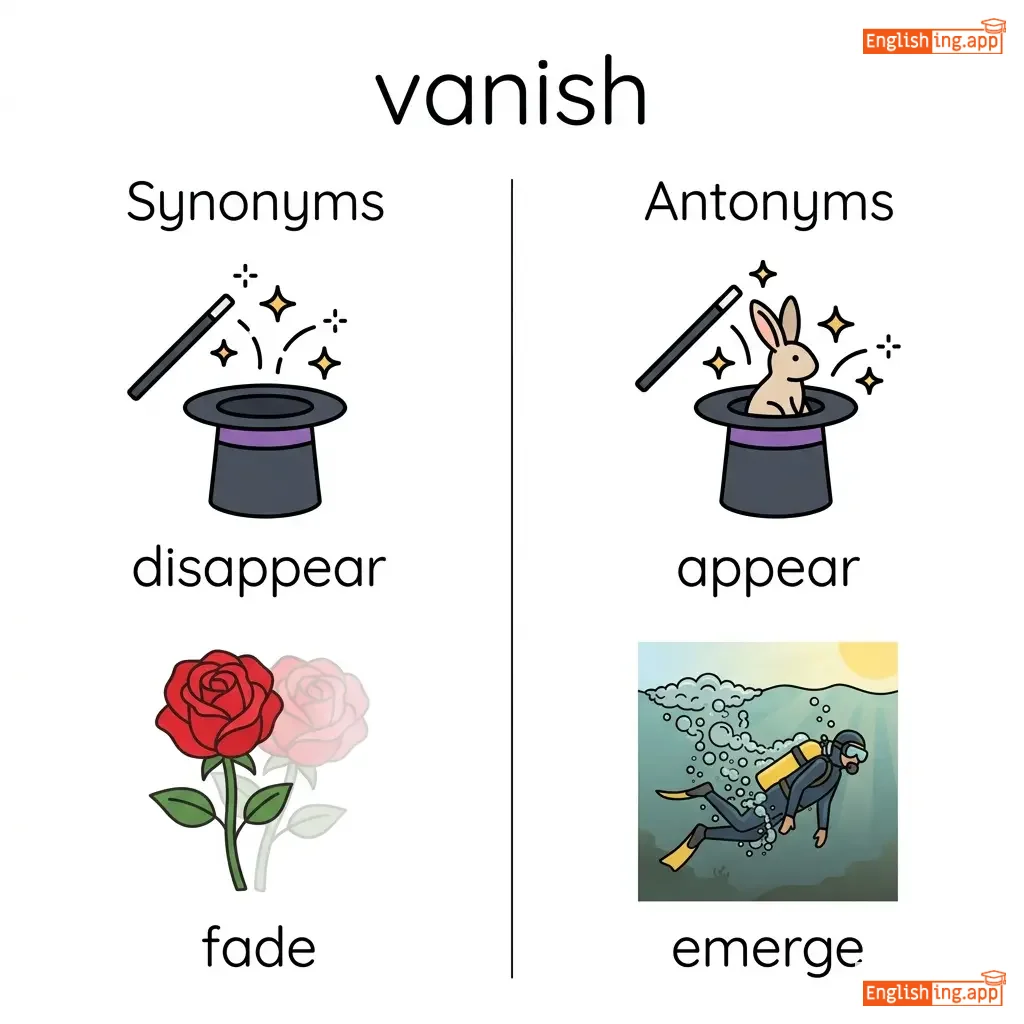
disappear, fade, evaporate, melt away
••••••
|
appear, emerge
••••••
|
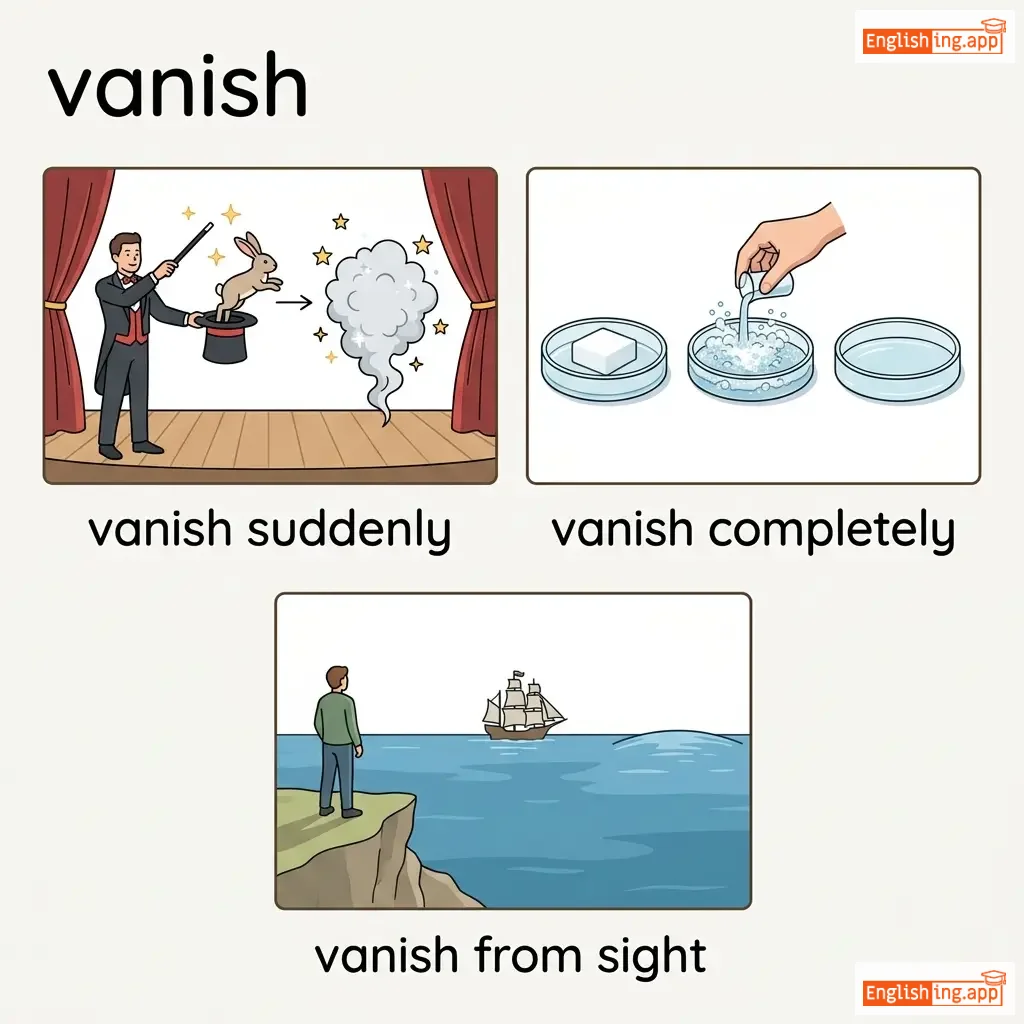
vanish suddenly, vanish completely, vanish from sight, vanish overnight
••••••
|
Vanish意味着消失 — 想象一个魔术师说: ‘Vanish!’ 然后兔子消失了。
••••••
|
|
🔄
••••••
|
/ˈvɛriəbl/
adjective
(wéiˈæbəl)
••••••
|
- •••••• |
可变的
kěbiàn de
••••••
|
- •••••• | - •••••• | - •••••• | - •••••• |
able to change; not consistent or having a fixed pattern
••••••
|
The weather has been very variable this week.
这周的天气变化很大。
••••••
|
这周的天气变化很大。
zhè zhōu de tiānrì biànhuà hěn dà
••••••
|
- •••••• | - •••••• | - •••••• |
changeable, fluctuating, unstable, inconsistent
••••••
|
constant, fixed, stable, unchanging
••••••
|
variable weather, variable rate, variable cost, variable speed
••••••
|
Variable = 可以变的 = 天气总是变化
••••••
|
|
⚖️
••••••
|
/ˌvɛəriˈeɪʃən/
noun
(wèi lǐ yǎ xùn)
••••••
|
- •••••• |
变化
bianhua
••••••
|
- •••••• | - •••••• | - •••••• | - •••••• |
A change or slight difference in condition, amount, or level.
••••••
|
There is a wide variation in climate across the country. |
全国气候存在很大变化。
quan guo qi hou cun zai hen da bian hua.
••••••
|
without variation |
always the same; without change
••••••
|
没有变化
mei you bian hua
••••••
|
difference, diversity, alteration, change, modification
••••••
|
uniformity, sameness, consistency
••••••
|
climate variation, price variation, genetic variation, significant variation
••••••
|
Variation意味着变化;在歌曲中加入一些变化,乐趣倍增。
••••••
|
|
🌈
••••••
|
/vəˈraɪəti/
noun
(wàiràitì)
••••••
|
- •••••• |
多样性; 种类
duōyàngxì; zhǒnglèi
••••••
|
- •••••• | - •••••• | - •••••• | - •••••• |
the quality of being different or diverse; a number of things of the same general class that are distinct in character or quality
••••••
|
The restaurant offers a wide variety of international dishes.
这家餐厅提供种类繁多的国际菜肴。
••••••
|
这家餐厅提供种类繁多的国际菜肴。
Zhè jiā cāntīng tígōng zhǒnglèi fánduō de guójì càiyáo.
••••••
|
- •••••• | - •••••• | - •••••• |
diversity, range, assortment, selection
••••••
|
monotony, uniformity, sameness
••••••
|
wide variety, variety show, variety pack
••••••
|
多样性就像餐馆里不同种类的菜肴,满足各种口味。
••••••
|
|
🔀
••••••
|
/ˈvɛəriəs/
adjective
(维里厄斯)
••••••
|
- •••••• |
各种各样的; 多种类型的
gè zhǒng gè yàng de; duō zhǒng lèi xíng de
••••••
|
- •••••• | - •••••• | - •••••• | - •••••• |
several different; many different types of
••••••
|
She has lived in various countries around the world.
她曾在世界各地的多个国家生活过。
••••••
|
她曾在世界各地的多个国家生活过。
Tā céng zài shìjiè gèdì de duō gè guójiā shēnghuó guò.
••••••
|
- •••••• | - •••••• | - •••••• |
different, several, numerous, many
••••••
|
single, one, same, identical
••••••
|
various reasons, various methods, various sources, various options
••••••
|
In Chinese, '各种' (gè zhǒng) means various, remember by thinking of diversity.
••••••
|
|
🔄
••••••
|
/ˈveəri/
verb
(韦瑞)
••••••
|
|
变化
bianhua
••••••
|
varied
韦瑞德
••••••
|
varied
韦瑞德
••••••
|
varies
韦瑞斯
••••••
|
varying
韦瑞英
••••••
|
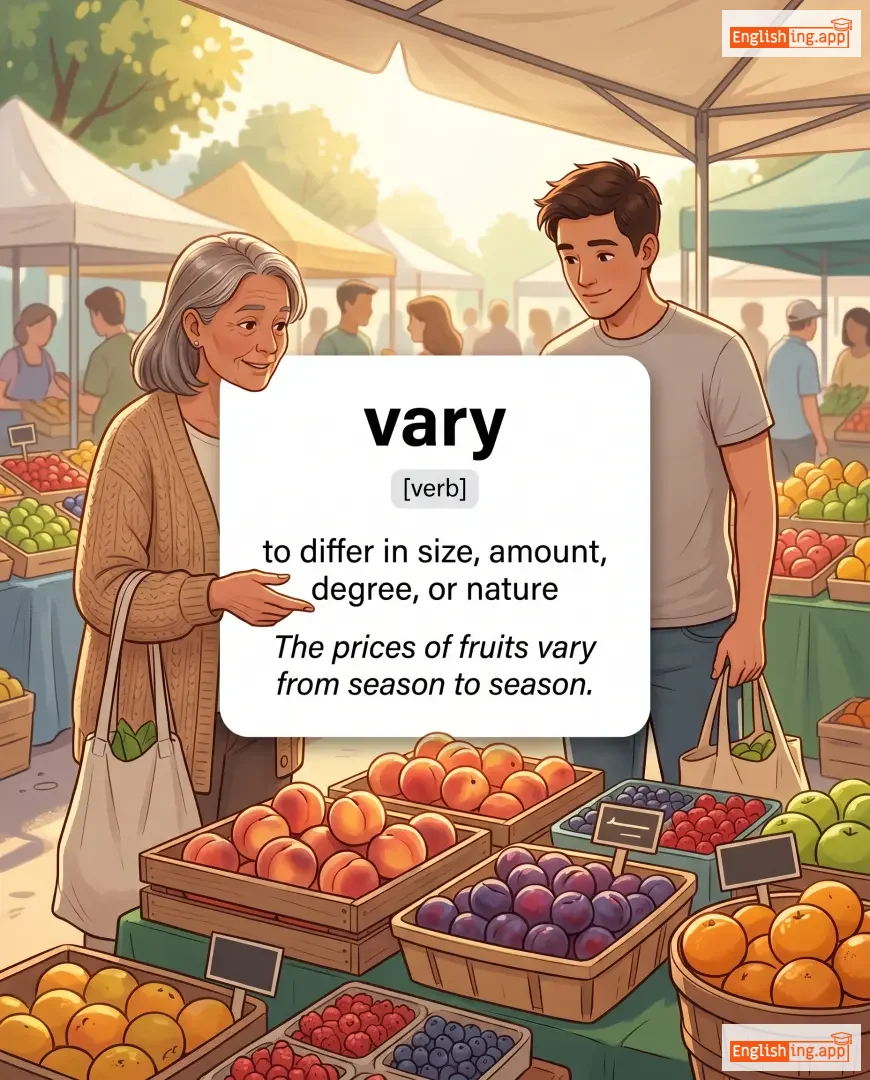
to differ in size, amount, degree, or nature
••••••
|
The prices of fruits vary from season to season.
水果的价格随着季节的变化而变化。
••••••
|
水果的价格随着季节的变化而变化。
Shuiguo de jiage suizhe jizhe de bianhua er bianhua.
••••••
|
vary widely
广泛变化
••••••
|
to differ significantly
••••••
|
广泛变化
guangfan bianhua
••••••
|
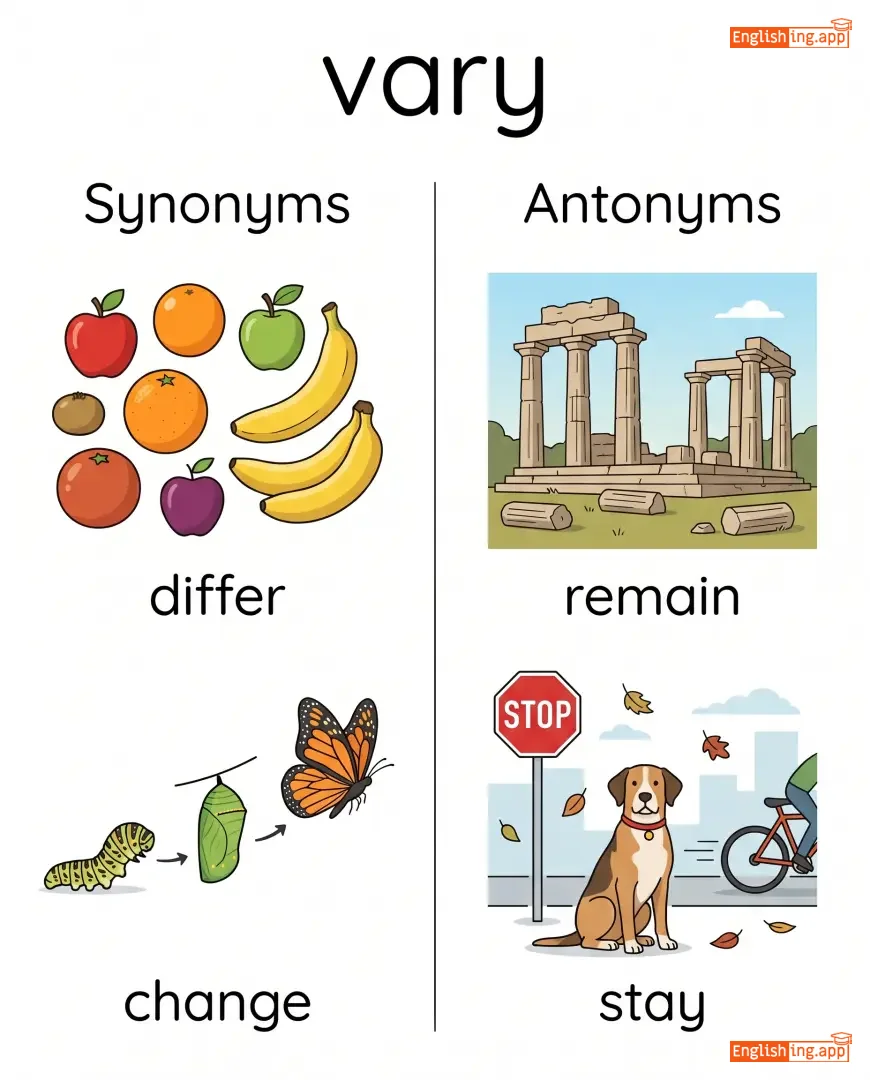
differ, change, alter, fluctuate, diversify
••••••
|
remain, stay, continue
••••••
|
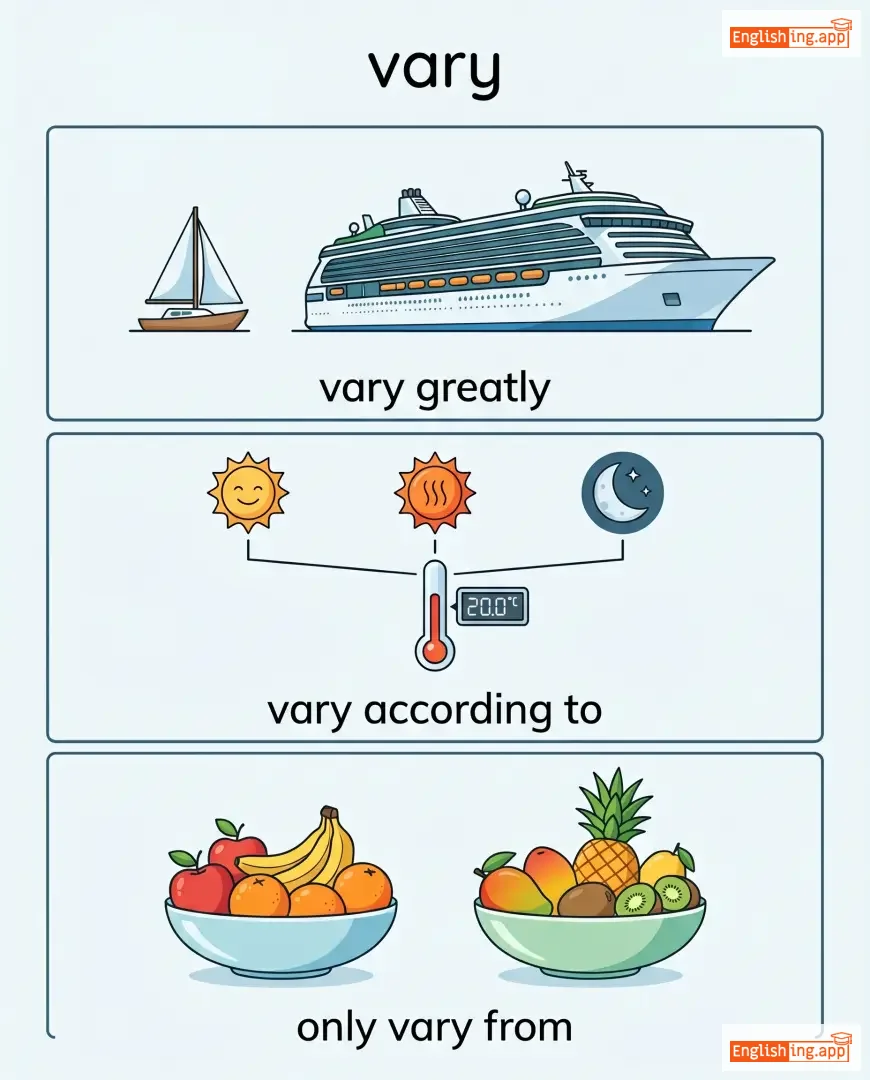
vary greatly, vary according to, vary from, vary in size
••••••
|
Vary在中文中意味着变化,就像季节变化,水果价格也会变化。
••••••
|
|
🌌
••••••
|
/vɑːst/
adjective
••••••
|
- •••••• | - •••••• | - •••••• | - •••••• | - •••••• | - •••••• |
extremely large in size, amount, or extent
••••••
|
The desert stretches across a vast area of land. |
- •••••• |
vast majority |
a very large number of people or things compared to the rest
••••••
|
- •••••• |
immense, huge, enormous, massive, expansive
••••••
|
small, tiny, limited
••••••
|
vast amount, vast majority, vast area, vast distance
••••••
|
No •••••• |
|
🛢️
••••••
|
/væt/
noun
(væt)
••••••
|
- •••••• |
大容器
da rongqi
••••••
|
- •••••• | - •••••• | - •••••• | - •••••• |
A large container used for holding liquids such as dye or wine.
••••••
|
The workers filled the vat with freshly pressed grape juice. |
工人们把新鲜压榨的葡萄汁倒入了大容器中。
Gōngrénmen bǎ xīnxiān yāzhà de pútáo zhī dào rù le dà róngqì zhōng.
••••••
|
- •••••• | - •••••• | - •••••• |
container, tank, tub, cask
••••••
|
bottle, flask
••••••
|
wine vat, fermentation vat, large vat, dye vat
••••••
|
Vat 是一个大容器,就像增值税(VAT),负担沉重!
••••••
|
|
🥦
••••••
|
/ˈvɛdʒ.tə.bəl/
noun
(海皮尼斯)
••••••
|
- •••••• |
幸福
xìngfú
••••••
|
- •••••• | - •••••• | - •••••• | - •••••• |
a plant or part of a plant used as food
••••••
|
I eat vegetables every day for health. |
当她获得奖项时,她无法掩饰自己的幸福。
Dāng tā huòdé jiǎngxiàng shí, tā wúfǎ yǎnshì zìjǐ de xìngfú.
••••••
|
- •••••• | - •••••• | - •••••• |
greens, produce, plant food, veggie
••••••
|
meat, animal products
••••••
|
eat vegetables, grow vegetables, fresh vegetables
••••••
|
幸福是得到奖赏时的感受,它是内心的满足和喜悦。
••••••
|
|
🚗
••••••
|
/ˈviːɪkəl/
noun
(wéijìkè)
••••••
|
- •••••• |
车辆; 汽车; 媒介
chēliàng; qìchē; méijiè
••••••
|
- •••••• | - •••••• | - •••••• | - •••••• |
a thing used for transporting people or goods, especially on land; a means of expressing or displaying something
••••••
|
The electric vehicle is becoming more popular these days.
电动汽车在这些日子里越来越受欢迎。
••••••
|
电动汽车在这些日子里越来越受欢迎。
Diàndòng qìchē zài zhèxiē rìzi lǐ yuè lái yuè shòu huānyíng.
••••••
|
- •••••• | - •••••• | - •••••• |
transport, conveyance, automobile, car
••••••
|
obstacle, hindrance
••••••
|
motor vehicle, emergency vehicle, commercial vehicle
••••••
|
电动汽车 transport 方式 – 车载人交通方式
••••••
|

