|
表情符号
|
单词 | Images | 翻译 | 过去时 | 过去分词 | 第三人称单数 | 动名词 | 含义 | 例句 | 例句翻译 | 示例表达 | 示例表达含义 | 示例表达翻译 | 同义词 | 反义词 | 搭配词 | 助记符 |
|---|---|---|---|---|---|---|---|---|---|---|---|---|---|---|---|---|---|
|
✅
••••••
|
/sɪˈlɛkt/
verb
(选择)
••••••
|

|
选择
xuanze
••••••
|
selected
选择了
••••••
|
selected
选择了
••••••
|
selects
选择
••••••
|
selecting
选择
••••••
|
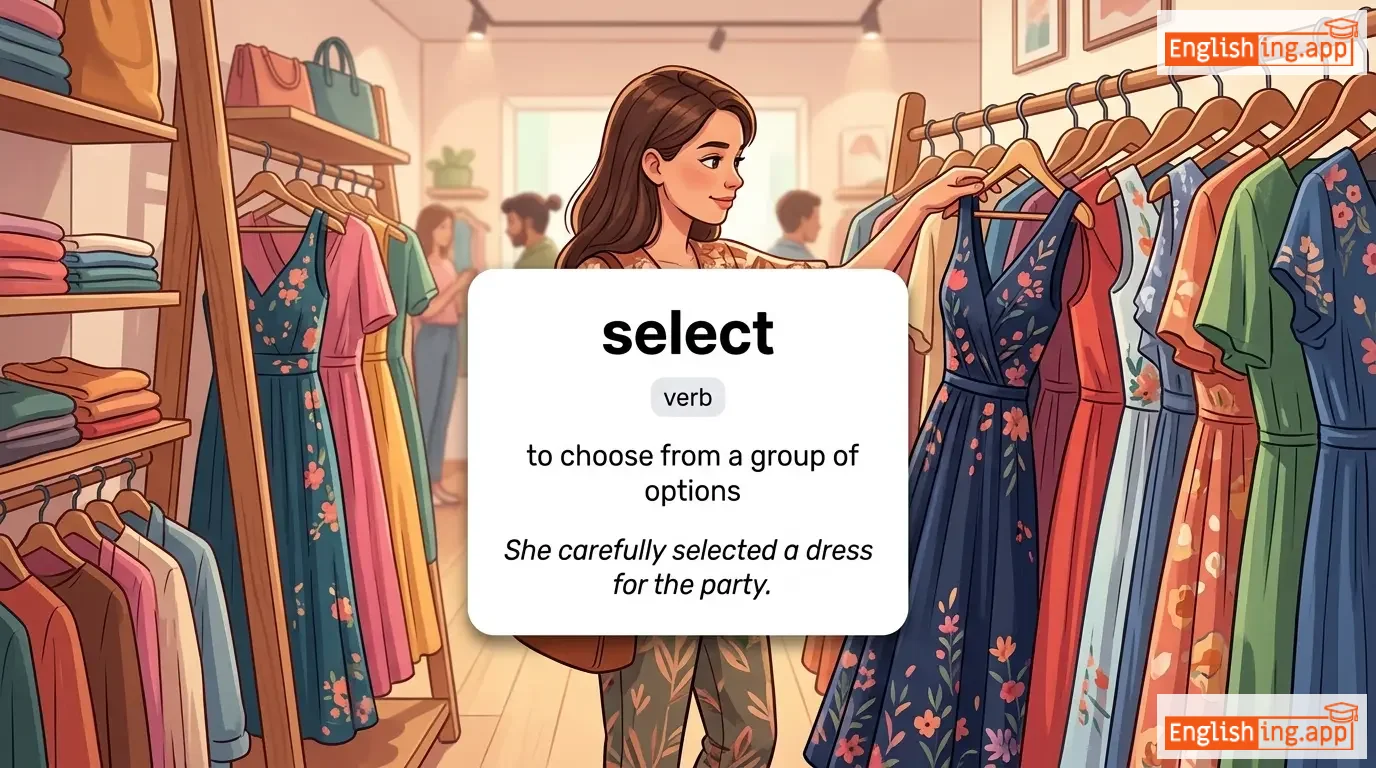
to choose from a group of options
••••••
|
She carefully selected a dress for the party.
她小心地为聚会选择了一件裙子。
••••••
|
她小心地为聚会选择了一件裙子。
Tā xiǎoxīn de wèi jùhuì xuǎnzéle yī jiàn qúnzi.
••••••
|
select few
select few
••••••
|
a small, special group of people or things
••••••
|
select few
select few
••••••
|
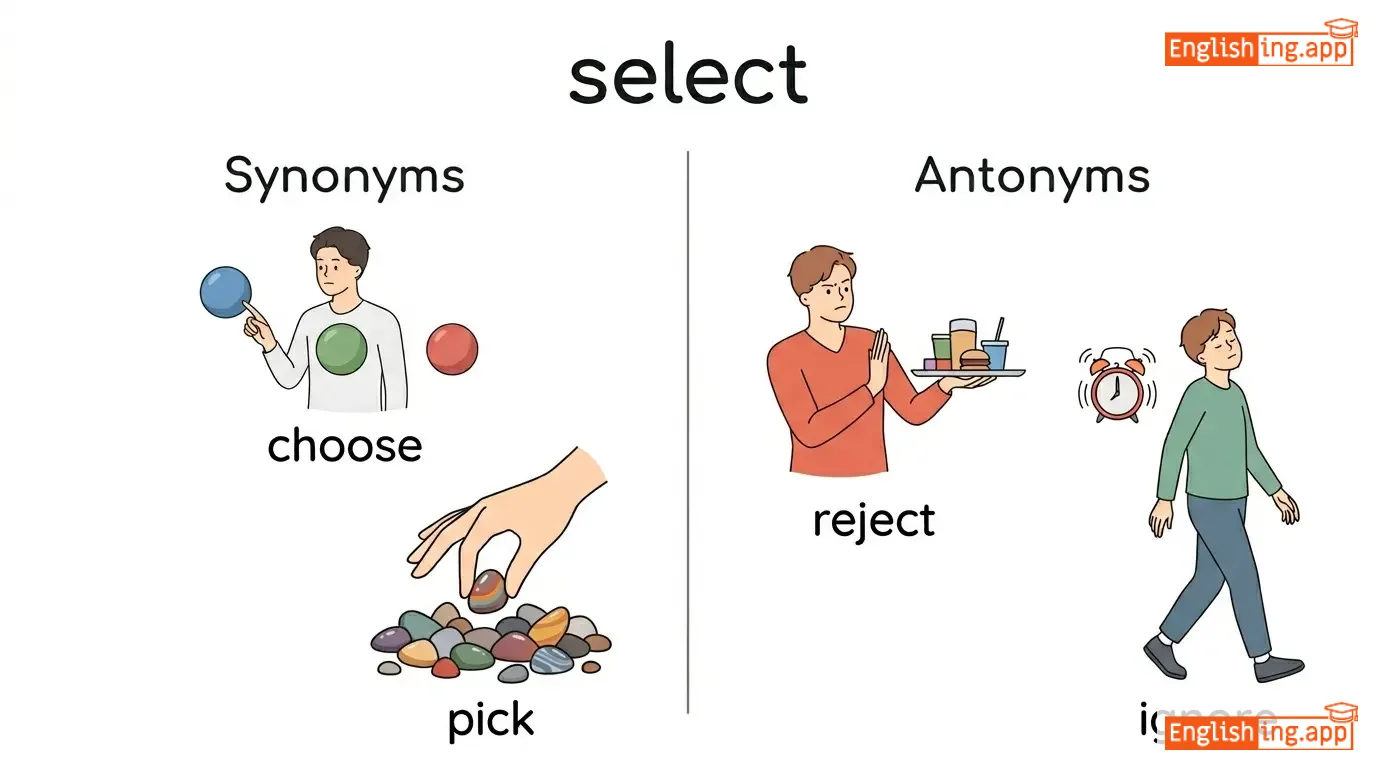
choose, pick, opt, elect, decide
••••••
|
reject, ignore, refuse
••••••
|
select option, select candidate, select menu, select group
••••••
|
Select表示选择: 就像在考试中选择正确答案一样
••••••
|
|
🗂️
••••••
|
/sɪˈlɛkʃən/
noun
(选择)
••••••
|
|
选择
xuanze
••••••
|
- •••••• | - •••••• | - •••••• | - •••••• |
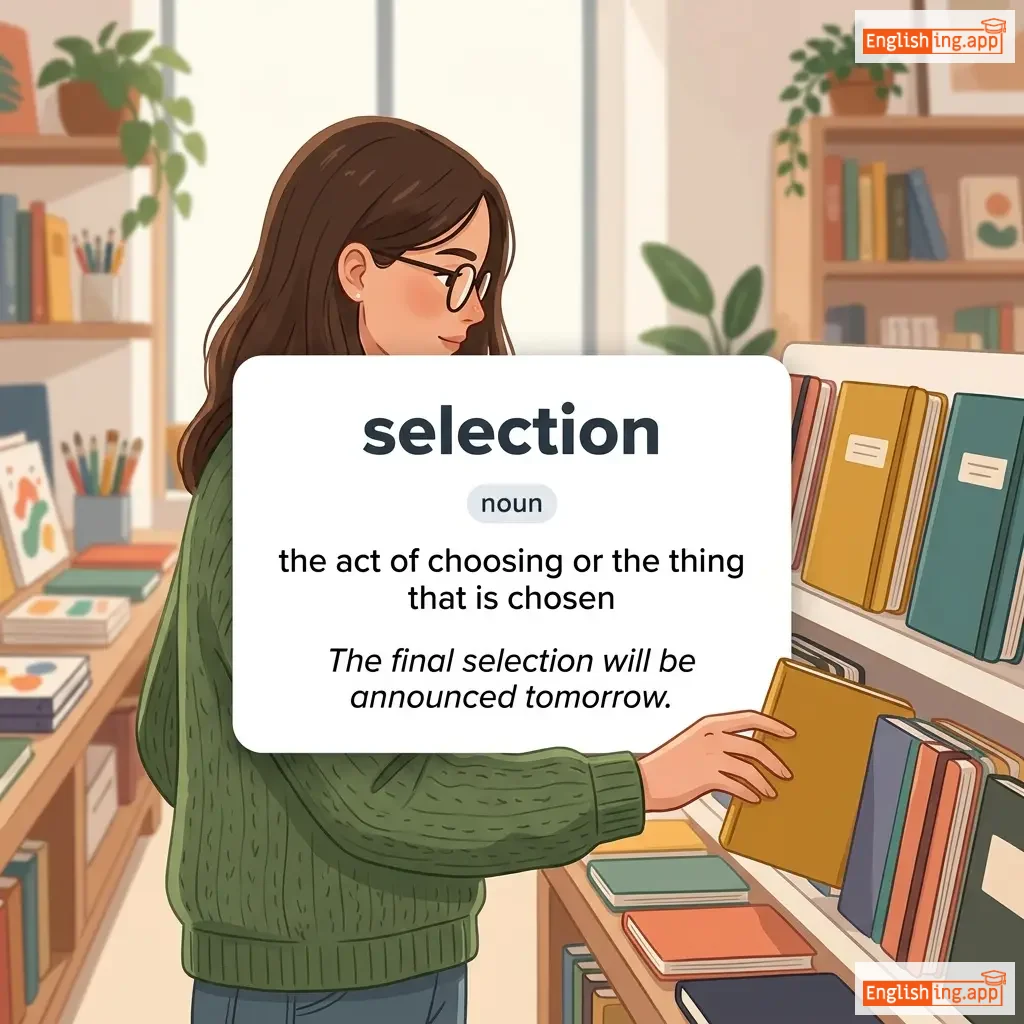
the act of choosing or the thing that is chosen
••••••
|
The final selection will be announced tomorrow. |
最终选择将在明天宣布。
Zuihou xuanze jiang zai mingtian xuānbù.
••••••
|
natural selection |
the process by which organisms better adapted to their environment survive
••••••
|
自然选择
ziran xuanze
••••••
|
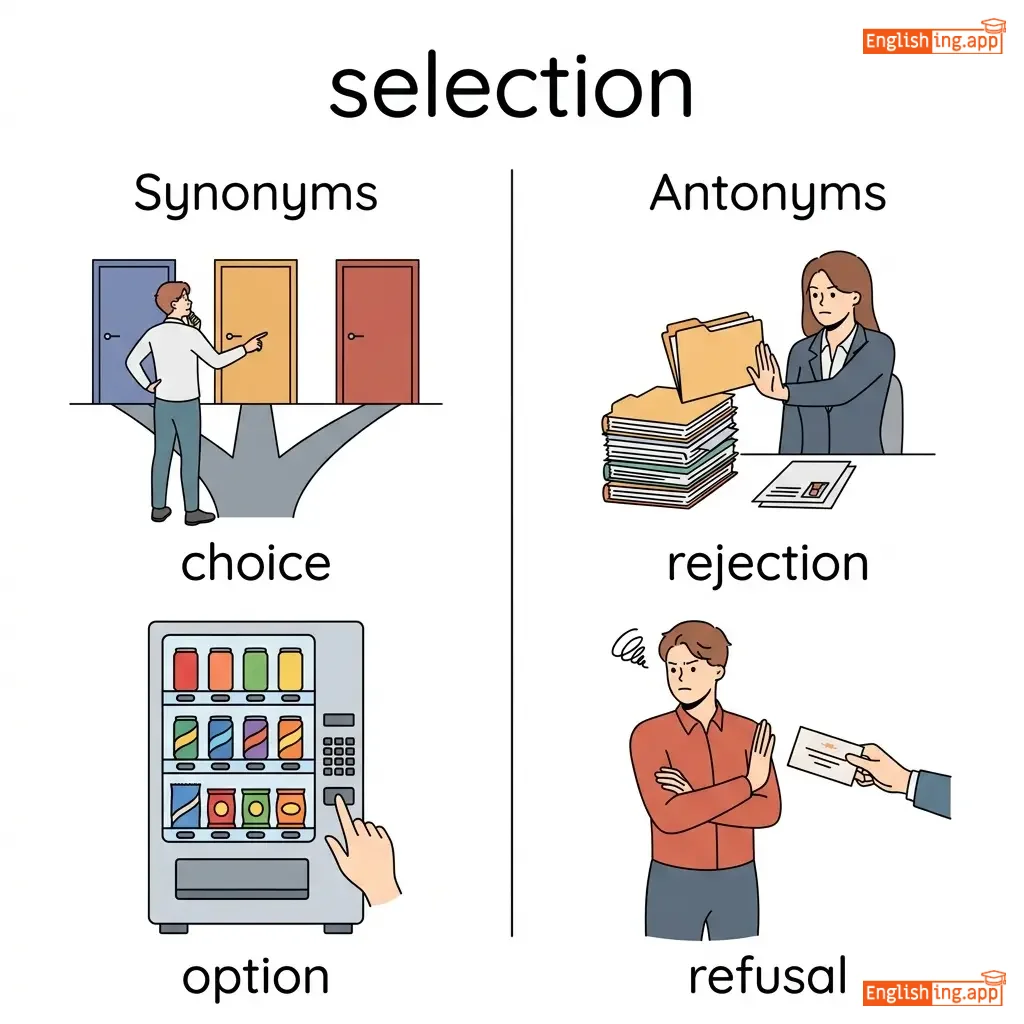
choice, option, pick, assortment, range
••••••
|
rejection, refusal
••••••
|
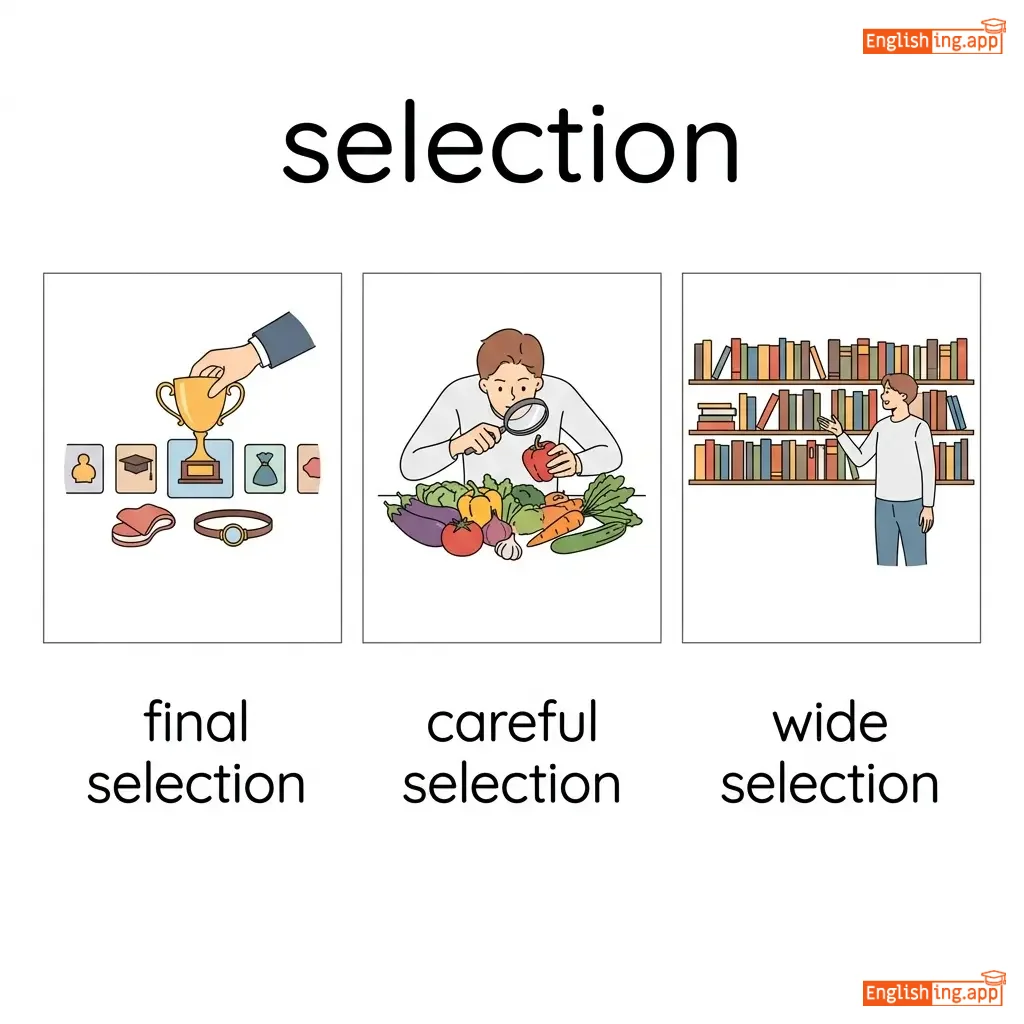
final selection, careful selection, wide selection, random selection
••••••
|
Selection意味着选择 - 就像选举中的选择一样。
••••••
|
|
🎯
••••••
|
/sɪˈlek.tɪv/
adjective
(选择性)
••••••
|
- •••••• |
选择性的
xuanze xing de
••••••
|
- •••••• | - •••••• | - •••••• | - •••••• |
relating to or involving careful selection; choosy about what to accept
••••••
|
The university has a selective admission process for new students.
大学对新生有选择性的录取过程。
••••••
|
大学对新生有选择性的录取过程。
Daxue dui xinsheng you xuanze xing de luqu guocheng.
••••••
|
- •••••• | - •••••• | - •••••• |
choosy, particular, discriminating, exclusive
••••••
|
indiscriminate, random, inclusive, accepting
••••••
|
selective admission, selective memory, selective breeding, selective service
••••••
|
选择 (xuanze) 是精挑细选
••••••
|
|
🧑💼
••••••
|
/sɛlf/
noun
(self)
••••••
|
- •••••• |
自我
ziwo
••••••
|
- •••••• | - •••••• | - •••••• | - •••••• |
a person's essential being that distinguishes them from others, especially considered as the object of introspection or reflexive action
••••••
|
She has a strong sense of self.
她有强烈的自我意识。
••••••
|
她有强烈的自我意识。
Tā yǒu qiángliè de zìwǒ yìshí.
••••••
|
- •••••• | - •••••• | - •••••• |
identity, individuality, personality
••••••
|
other, others
••••••
|
sense of self, true self, self-awareness
••••••
|
Self = 自我, 认识你自己!
••••••
|
|
😤
••••••
|
/ˈselfɪʃ/
adjective
(selfish)
••••••
|
- •••••• |
自私
zì sī
••••••
|
- •••••• | - •••••• | - •••••• | - •••••• |
caring only about oneself rather than others
••••••
|
He was too selfish to share his food with others.
他太自私了,不愿与他人分享他的食物。
••••••
|
他太自私了,不愿与他人分享他的食物。
Tā tài zìsīle, bù yuàn yǔ tārén fēnxiǎng tā de shíwù.
••••••
|
- •••••• | - •••••• | - •••••• |
self-centered, egotistic, greedy, inconsiderate
••••••
|
selfless, generous, altruistic, considerate
••••••
|
selfish behavior, selfish person, selfish motives
••••••
|
自私的人的行为就像一个只顾自己的人,永远不与他人分享。
••••••
|
|
💰
••••••
|
/sel/
verb
(sel)
••••••
|


|
卖
mài
••••••
|
sold
sold
••••••
|
sold
sold
••••••
|
sells
sells
••••••
|
selling
selling
••••••
|
to give something to someone in exchange for money
••••••
|
They sell fresh fruits at the market.
他们在市场上卖新鲜的水果。
••••••
|
他们在市场上卖新鲜的水果。
Tāmen zài shìchǎng shàng mài xīnxiān de shuǐguǒ.
••••••
|
- •••••• | - •••••• | - •••••• |
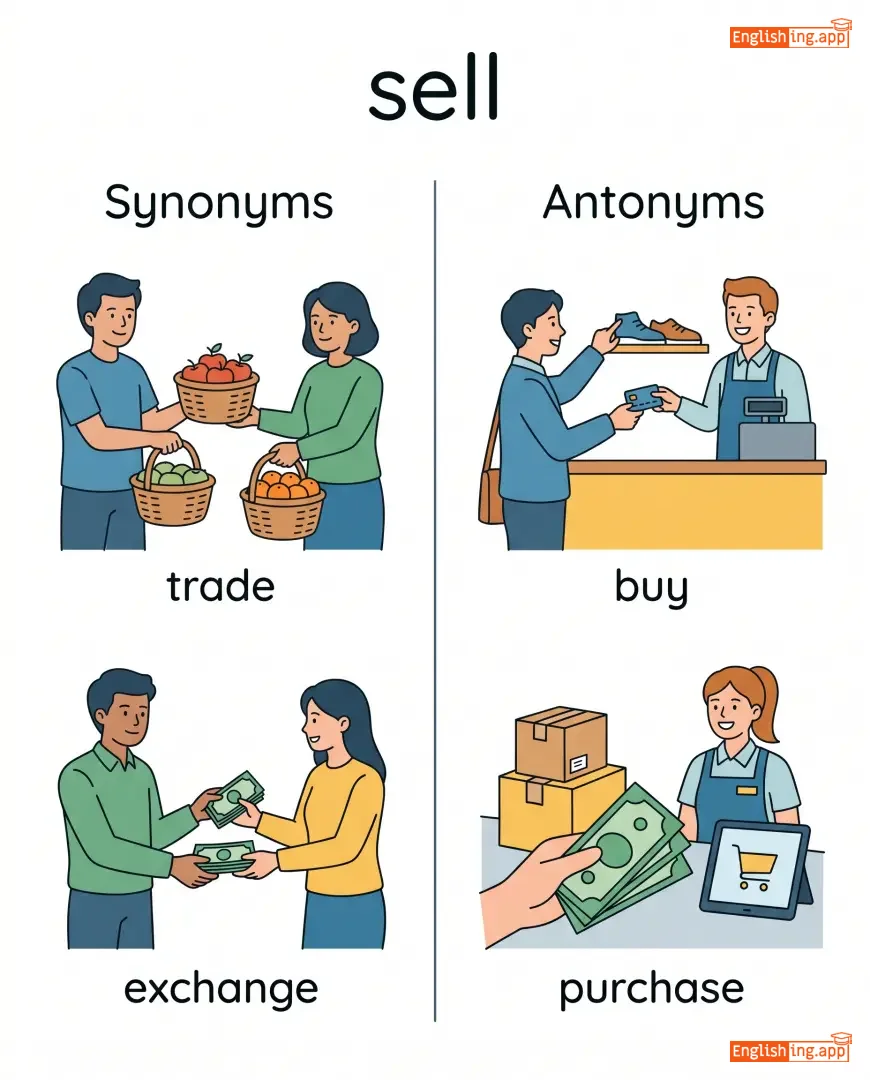
market, trade, vend, dispose
••••••
|
buy, purchase, acquire, keep
••••••
|
sell products, sell well, sell for, hard sell, sell out
••••••
|
在市场上卖水果,你就能赚到钱。
••••••
|
|
🛒
••••••
|
/ˈsɛlər/
noun
(海皮尼斯)
••••••
|
- •••••• |
幸福
xìng fú
••••••
|
- •••••• | - •••••• | - •••••• | - •••••• |
a person who sells something
••••••
|
The seller offered a discount on bulk purchases. |
当她收到奖项时,她无法掩饰自己的幸福。
Dāng tā shōu dào jiǎngxiàng shí, tā wúfǎ yǎnshì zìjǐ de xìngfú.
••••••
|
best-seller |
a product, especially a book, that sells in very large numbers
••••••
|
追求幸福
zhuīqiú xìngfú
••••••
|
vendor, merchant, dealer, retailer, trader
••••••
|
buyer, customer, purchaser
••••••
|
online seller, street seller, property seller, car seller
••••••
|
幸福和happiness有着相同的意义,让我们追求它!
••••••
|
|
🎓
••••••
|
/ˈsɛm.ɪ.nɑːr/
noun
(研讨会)
••••••
|
- •••••• |
研讨会
yántǎo huì
••••••
|
- •••••• | - •••••• | - •••••• | - •••••• |
A meeting for discussion or training, especially in an academic setting.
••••••
|
The professor invited all students to attend the seminar on climate change.
教授邀请所有学生参加关于气候变化的研讨会。
••••••
|
教授邀请所有学生参加关于气候变化的研讨会。
Jiàoshòu yāoqǐng suǒyǒu xuéshēng cānjiā guānyú qìhòu biànhuà de yántǎo huì.
••••••
|
seminar series
研讨会系列
••••••
|
A sequence of related seminars on a particular subject.
••••••
|
研讨会系列
yántǎo huì xìliè
••••••
|
workshop, symposium, conference, lecture, tutorial
••••••
|
silence, self-study
••••••
|
attend seminar, seminar series, seminar hall, seminar discussion
••••••
|
研讨会 - 学习的地方 📚
••••••
|
|
🏛️
••••••
|
/ˈsɛnət/
noun
(参议院)
••••••
|
- •••••• |
参议院
cān yì yuàn
••••••
|
- •••••• | - •••••• | - •••••• | - •••••• |
a legislative or governing body, typically the upper chamber in a bicameral legislature
••••••
|
The senate voted in favor of the new healthcare bill.
参议院投票支持新的医疗保健法案。
••••••
|
参议院投票支持新的医疗保健法案。
Cān yì yuàn tóupiào zhīchí xīn de yīliáo bǎojiàn fǎ'àn.
••••••
|
- •••••• | - •••••• | - •••••• |
congress, legislature, council, assembly
••••••
|
executive, judiciary
••••••
|
senate vote, senate bill, senate session, senate committee
••••••
|
参议院就像一个裁决机构,决定所有法律。
••••••
|
|
👨⚖️
••••••
|
/ˈsɛnətər/
noun
(参议员)
••••••
|
- •••••• |
参议员
cān yì yuán
••••••
|
- •••••• | - •••••• | - •••••• | - •••••• |
a member of a senate, especially in a legislative body
••••••
|
The senator spoke passionately about environmental policies.
参议员激情地谈论环境政策。
••••••
|
参议员激情地谈论环境政策。
Can yiyuan jixing de tanlun huanjing zhengce.
••••••
|
- •••••• | - •••••• | - •••••• |
legislator, lawmaker, representative, congressman
••••••
|
citizen, elector
••••••
|
senator speech, senator election, senior senator, senator's office
••••••
|
参议员,社会的法律守护者!
••••••
|
|
📤
••••••
|
/sɛnd/
verb
(send)
••••••
|
- •••••• |
发送
fāsòng
••••••
|
sent
sent
••••••
|
sent
sent
••••••
|
sends
sends
••••••
|
sending
sending
••••••
|
to cause something to go or be taken to a destination
••••••
|
Please send the report by tomorrow morning.
请在明天早上之前发送报告。
••••••
|
请在明天早上之前发送报告。
Qǐng zài míngtiān zǎoshang zhīqián fāsòng bàogào.
••••••
|
send off
送走
••••••
|
to send someone off or away, often with farewell
••••••
|
送走某人
sòng zǒu mǒu rén
••••••
|
dispatch, deliver, forward, transmit
••••••
|
receive, collect
••••••
|
send a message, send an email, send a letter, send money
••••••
|
Send the 报告 (bàogào) by fāsòng!
••••••
|
|
👴
••••••
|
/ˈsɪniər/
adjective
(高级)
••••••
|
- •••••• |
高级
gaoji
••••••
|
- •••••• | - •••••• | - •••••• | - •••••• |
having a higher rank or status; older or more experienced
••••••
|
He is the senior manager in the department. |
他是部门的高级经理。
Tā shì bùmén de gāojí jīnglǐ.
••••••
|
- •••••• | - •••••• | - •••••• |
elder, superior, experienced, advanced
••••••
|
junior, inferior
••••••
|
senior position, senior executive, senior staff, senior year
••••••
|
Senior people have more experience and rank!
••••••
|
|
✨
••••••
|
/sɛnˈseɪʃən/
noun
(sēn sè xiǎn)
••••••
|
- •••••• |
轰动
hongdong
••••••
|
- •••••• | - •••••• | - •••••• | - •••••• |
A physical feeling or a strong reaction of excitement and interest.
••••••
|
The singer became a sensation overnight. |
歌手一夜之间成为轰动一时的明星。
Gēshǒu yīyè zhī jiān chéngwéi hōngdòng yī shí de míngxīng.
••••••
|
cause a sensation |
to create a great deal of excitement and interest
••••••
|
引起轰动
yǐnqǐ hōngdòng
••••••
|
feeling, perception, excitement, thrill, buzz
••••••
|
numbness, apathy, indifference
••••••
|
create a sensation, public sensation, sensation in the media, sensation of pain
••••••
|
Sensation = 场景 + 动作,像制造强烈反应的场面。
••••••
|
|
🧠
••••••
|
/sɛns/
noun/verb
(sēnsī)
••••••
|
- •••••• |
感觉
gǎnjué
••••••
|
sensed
sēnsī zhī
••••••
|
sensed
sēnsī zhī
••••••
|
senses
sēnsī
••••••
|
sensing
sēnsīng
••••••
|
A faculty by which the body perceives external stimuli; or to perceive something without being told.
••••••
|
She had a strong sense of responsibility.
她有很强的责任感。
••••••
|
她有很强的责任感。
Tā yǒu hěn qiáng de zérèngǎn.
••••••
|
common sense
常识
••••••
|
sound practical judgment that is independent of specialized knowledge
••••••
|
常识
chángshí
••••••
|
feeling, perception, awareness, intuition, judgment
••••••
|
nonsense, folly, ignorance
••••••
|
sense of humor, sense of duty, sense danger, make sense
••••••
|
Sense = 常识, 用中文来理解本能的感觉
••••••
|
|
🧐
••••••
|
/ˈsensəbəl/
adjective
(敏感)
••••••
|
- •••••• |
明智的; 实际的; 合理的
míngzhì de; shíjì de; hélǐ de
••••••
|
- •••••• | - •••••• | - •••••• | - •••••• |
having or showing good sense; practical and reasonable
••••••
|
It would be sensible to take an umbrella because it might rain. |
带伞是明智的,因为可能会下雨。
Dài sǎn shì míngzhì de, yīnwèi kěnéng huì xià yǔ.
••••••
|
- •••••• | - •••••• | - •••••• |
practical, reasonable, logical, wise
••••••
|
foolish, impractical, unreasonable, senseless
••••••
|
sensible decision, sensible choice, sensible person
••••••
|
明智的选择是躲避大雨的智慧。
••••••
|
|
🌸
••••••
|
/ˈsɛnsɪtɪv/
adjective
(sēnsìtífu)
••••••
|

|
敏感的
mǐn gǎn de
••••••
|
- •••••• | - •••••• | - •••••• | - •••••• |
Quick to detect or respond to slight changes, signals, or influences; easily affected emotionally or physically.
••••••
|
She has very sensitive skin that reacts to most cosmetics. |
她的皮肤非常敏感,容易对大多数化妆品产生反应。
Tā de pí fū fēi cháng mǐn gǎn, róng yì duì dà duō shù huà zhuāng pǐn chǎn shēng fǎn yìng.
••••••
|
a sensitive issue |
a topic that is delicate or difficult to discuss
••••••
|
敏感问题
mǐn gǎn wèn tí
••••••
|
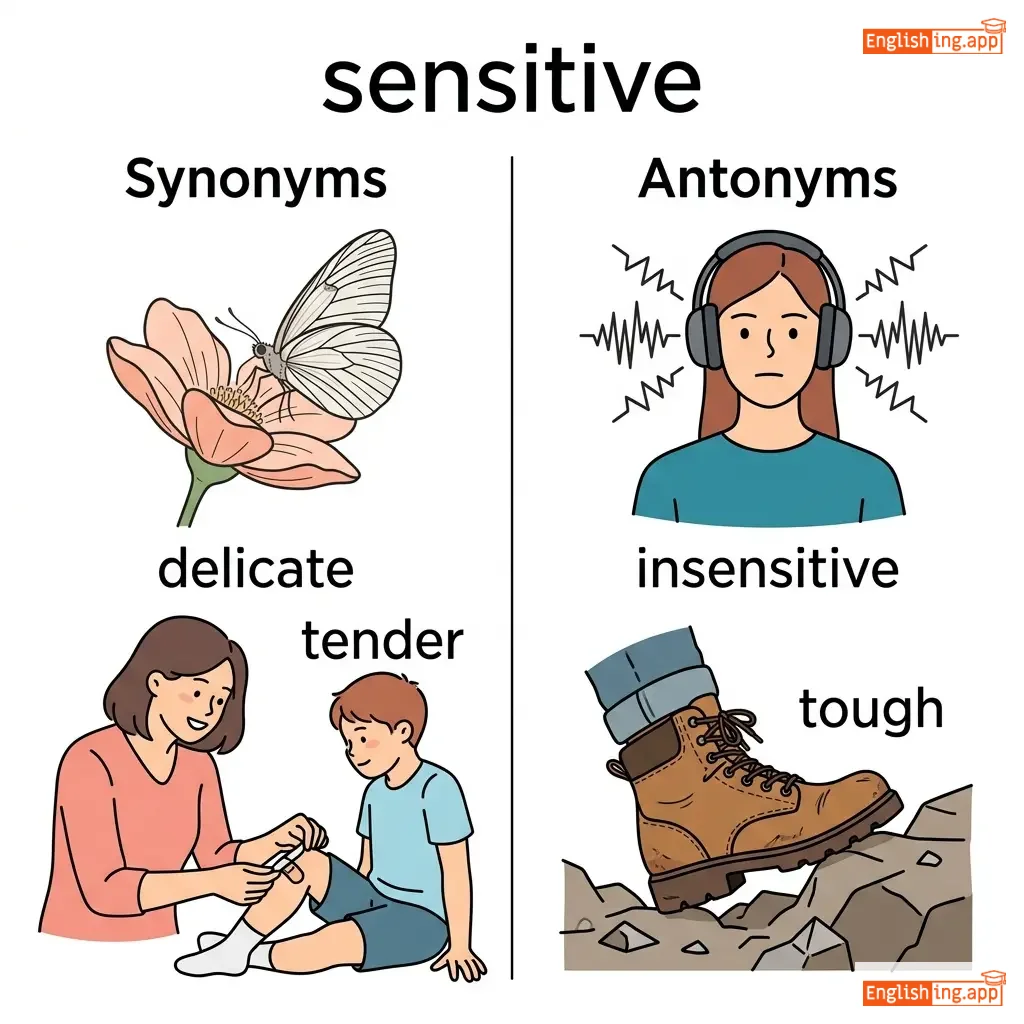
delicate, tender, responsive, emotional, fragile
••••••
|
insensitive, tough, unfeeling
••••••
|
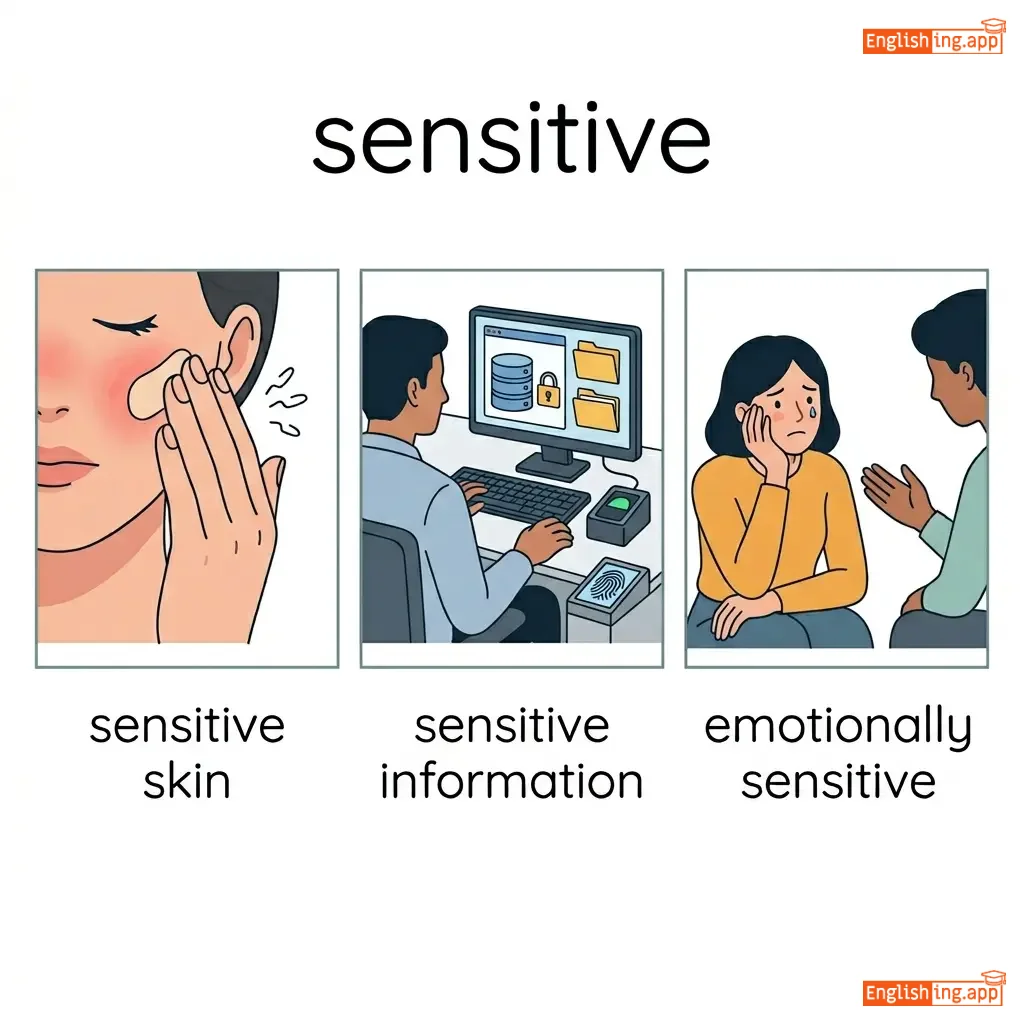
sensitive skin, sensitive information, emotionally sensitive, highly sensitive, sensitive issue
••••••
|
敏感如花,每一次碰触都能感知。
••••••
|
|
💗
••••••
|
/ˌsɛnsɪˈtɪvɪti/
noun
(敏感性)
••••••
|
|
敏感性
mǐn gǎn xìng
••••••
|
- •••••• | - •••••• | - •••••• | - •••••• |
the quality of being sensitive; ability to detect or respond to slight changes or emotions
••••••
|
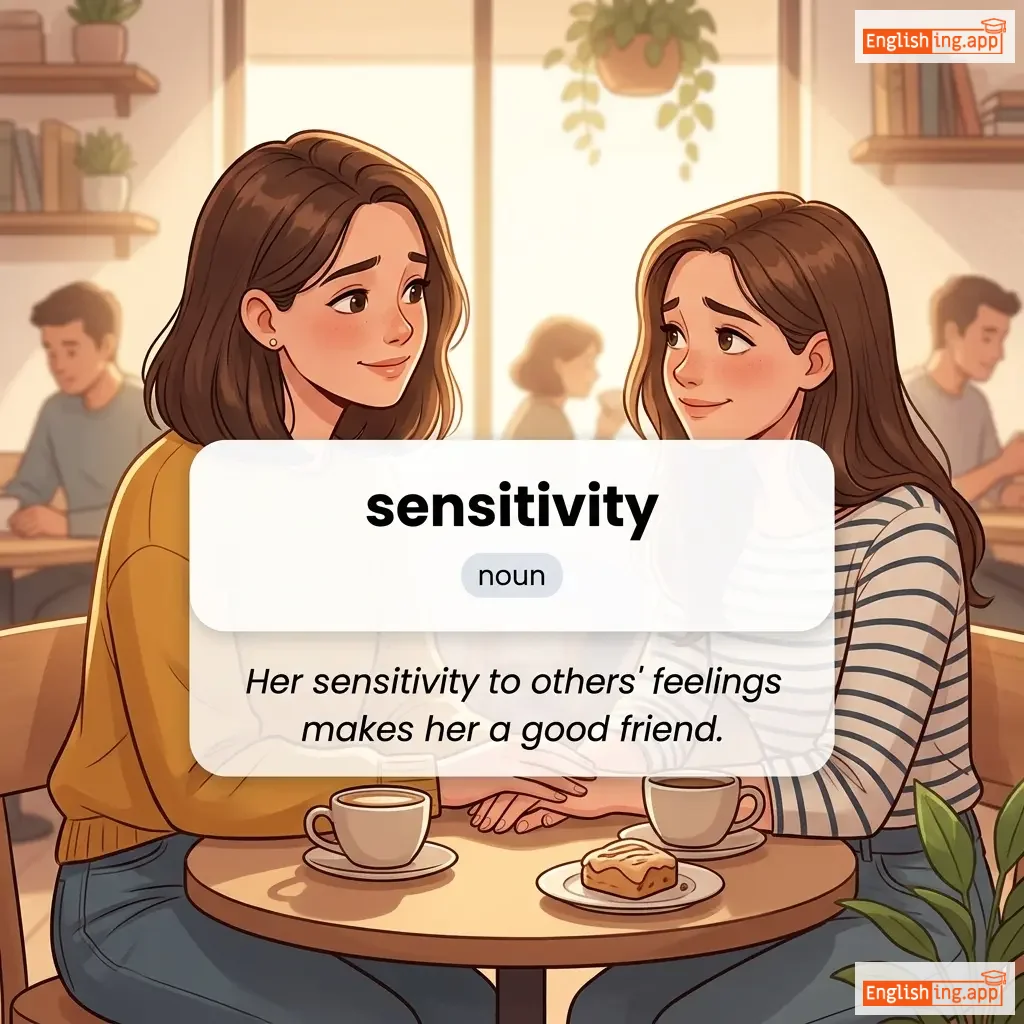
Her sensitivity to others' feelings makes her a good friend.
她对他人感受的敏感性使她成为一个好朋友。
••••••
|
她对他人感受的敏感性使她成为一个好朋友。
Tā duì tārén gǎnshòu de mǐn gǎn xìng shǐ tā chéngwéi yī gè hǎo péngyǒu.
••••••
|
cultural sensitivity
文化敏感性
••••••
|
awareness and respect for cultural differences
••••••
|
文化敏感性
wén huà mǐn gǎn xìng
••••••
|
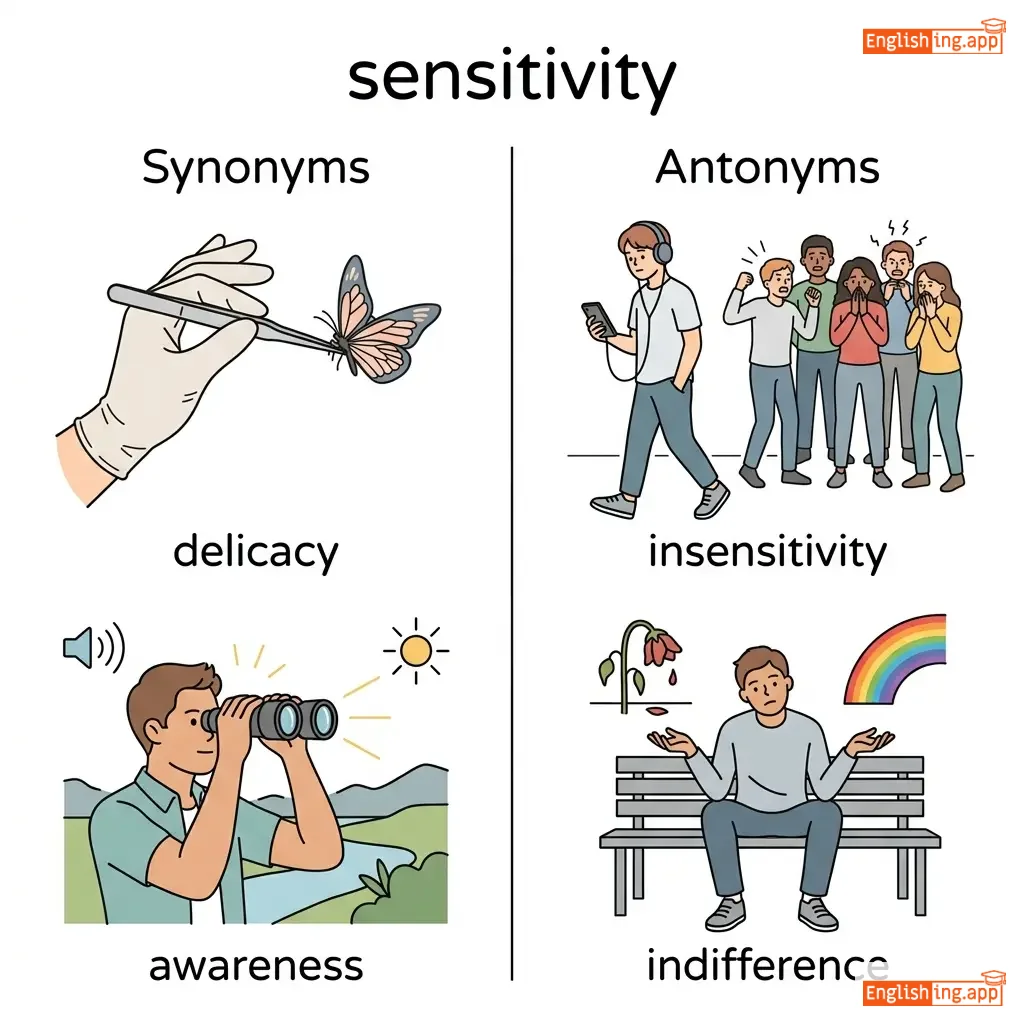
delicacy, awareness, responsiveness, empathy, receptivity
••••••
|
insensitivity, indifference, numbness
••••••
|
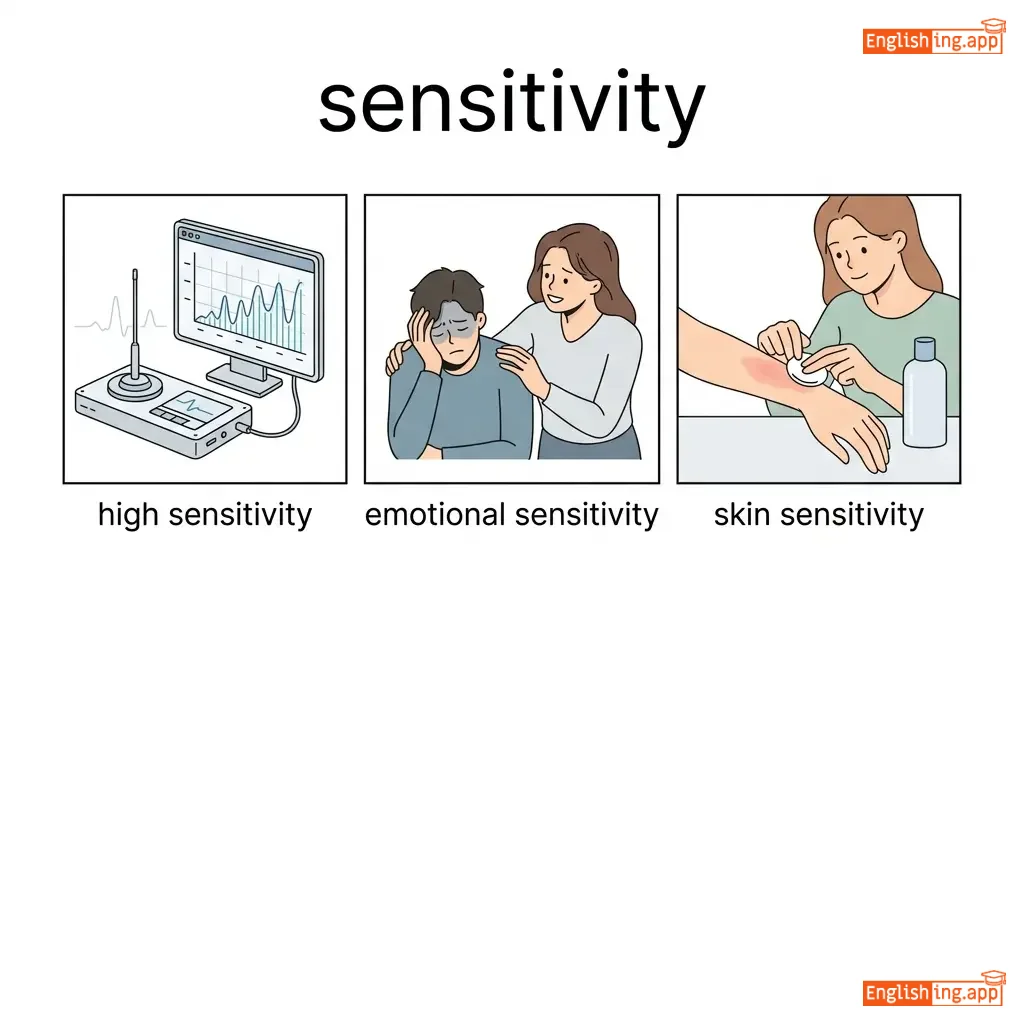
high sensitivity, emotional sensitivity, skin sensitivity, cultural sensitivity
••••••
|
敏感性 = 敏感 + 性, 意味着感知微小的情感变化
••••••
|
|
📜
••••••
|
/ˈsɛntəns/
noun, verb
(sèntènsī)
••••••
|
- •••••• |
句子; 刑期
jùzi; xíngqī
••••••
|
sentenced
sèntènsīd
••••••
|
sentenced
sèntènsīd
••••••
|
sentences
sèntènsī
••••••
|
sentencing
sèntènsīng
••••••
|
A set of words that expresses a complete thought; or a punishment given by a court of law.
••••••
|
The judge gave him a five-year prison sentence.
法官给了他五年监禁的刑期。
••••••
|
法官给了他五年监禁的刑期。
Fǎguān gěi le tā wǔ nián jiānjìn de xíngqī.
••••••
|
serve a sentence
服刑
••••••
|
to spend time in prison as ordered by a court
••••••
|
服刑
fúxíng
••••••
|
judgment, ruling, phrase, clause, punishment
••••••
|
acquittal, freedom
••••••
|
long sentence, short sentence, prison sentence, death sentence
••••••
|
Sentence 既可以表示句子,也可以表示刑期,两个都有明确的结束!
••••••
|
|
💭
••••••
|
/ˈsɛntɪmənt/
noun
(情感)
••••••
|
- •••••• |
情感
qinggan
••••••
|
- •••••• | - •••••• | - •••••• | - •••••• |
a view or opinion that is based on emotion rather than reason
••••••
|
Public sentiment was against the new law. |
公众的情感反对新法律。
Gongzhong de qinggan fandui xin falu.
••••••
|
public sentiment |
the general feeling or opinion of the people
••••••
|
公众情感
gongzhong qinggan
••••••
|
emotion, feeling, attitude, opinion, view
••••••
|
indifference, apathy
••••••
|
public sentiment, market sentiment, patriotic sentiment, emotional sentiment
••••••
|
Sentiment = 情感 — 想象你在感受情感!
••••••
|
|
↔️
••••••
|
/ˈsɛpəˌreɪt/
verb
(sepa1reit)
••••••
|
- •••••• |
分开
fenkai
••••••
|
separated
sepa1reitd
••••••
|
separated
sepa1reitd
••••••
|
separates
sepa1reits
••••••
|
separating
sepa1reiting
••••••
|
To cause to move or be apart; to divide into distinct elements.
••••••
|
The teacher separated the students into groups.
Laoshi fenli xuesheng zuhe.
••••••
|
老师把学生分成小组。
Laoshi ba xuesheng fen cheng xiaozu.
••••••
|
separate the wheat from the chaff
fenlie dianzhi chafen
••••••
|
To distinguish what is valuable or useful from what is worthless.
••••••
|
分清有用与无用
fen qing youyong yu wu yong
••••••
|
divide, split, detach, isolate, disconnect
••••••
|
unite, combine, connect
••••••
|
separate rooms, separate ways, separate from, separate into groups
••••••
|
分开 = '分开',记住 'Fen kai' = 分开。
••••••
|
|
🔹
••••••
|
/ˈsɛpəreɪtɪd/
adjective
(赛帕雷特德)
••••••
|
- •••••• |
分开的
fen kai de
••••••
|
- •••••• | - •••••• | - •••••• | - •••••• |
divided or disconnected from something else; not together
••••••
|
They have been living in separated houses since the divorce.
自离婚以来,他们一直住在分开的房子里。
••••••
|
自离婚以来,他们一直住在分开的房子里。
Zi lihun yilai, tamen yizhi zhu zai fen kai de fangzi li.
••••••
|
- •••••• | - •••••• | - •••••• |
divided, detached, isolated, apart, disconnected
••••••
|
joined, united, connected
••••••
|
separated by distance, separated from, legally separated, emotionally separated
••••••
|
Fen kai = separate in Chinese; think of dividing a room
••••••
|
|
↔️
••••••
|
/ˈsɛp.ər.ət.li/
adverb
(塞帕雷特利)
••••••
|
- •••••• |
分别地
fenbie de
••••••
|
- •••••• | - •••••• | - •••••• | - •••••• |
in a way that is apart or individually; not together
••••••
|
They decided to travel separately to the conference.
他们决定分别前往会议。
••••••
|
他们决定分别前往会议。
Tamen jueding fenbie qianwang huiyi.
••••••
|
- •••••• | - •••••• | - •••••• |
individually, independently, apart, alone
••••••
|
together, jointly
••••••
|
handled separately, treated separately, arranged separately
••••••
|
分别地 = separately (think '分开' = separate)
••••••
|
|
💔
••••••
|
/ˌsɛpəˈreɪʃən/
noun
(seperéishon)
••••••
|
- •••••• |
分离
fenli
••••••
|
- •••••• | - •••••• | - •••••• | - •••••• |
the act of moving or being moved apart; a division or disconnection
••••••
|
The separation of the two friends was difficult for both of them. |
两位朋友的分离对他们俩来说都很困难。
Liang wei pengyou de fenli dui tamen lia laishuo dou hen kunnan.
••••••
|
separation anxiety |
a feeling of distress when separated from someone or something one is attached to
••••••
|
分离焦虑
fenli jiaolv
••••••
|
division, detachment, split, disconnection, segregation
••••••
|
union, connection, unity
••••••
|
separation anxiety, legal separation, physical separation, emotional separation
••••••
|
分离意味着分离,可能会导致焦虑。
••••••
|
|
🍂
••••••
|
/sɛpˈtɛmbər/
noun
(塞普tember)
••••••
|
- •••••• |
九月
jiuyue
••••••
|
- •••••• | - •••••• | - •••••• | - •••••• |
The ninth month of the year in the Gregorian calendar
••••••
|
My birthday is in September, and I always celebrate it with friends.
我的生日在九月,我总是和朋友一起庆祝。
••••••
|
我的生日在九月,我总是和朋友一起庆祝。
Wo de shengri zai jiuyue, wo zongshi he pengyou yiqi qingzhu.
••••••
|
- •••••• | - •••••• | - •••••• |
ninth month, autumn month, fall month
••••••
|
January, February
••••••
|
September weather, September festival, September holidays, September meeting
••••••
|
九月 = month 9, 'seven plus two'
••••••
|
|
🔢
••••••
|
/ˈsiːkwəns/
noun
(xì kuǎn sī)
••••••
|
- •••••• |
顺序
shùn xù
••••••
|
- •••••• | - •••••• | - •••••• | - •••••• |
A particular order in which related things follow each other.
••••••
|
The magician asked us to remember the sequence of cards.
魔术师要求我们记住卡片的顺序。
••••••
|
魔术师要求我们记住卡片的顺序。
Móshùshī yāoqiú wǒmen jìzhù kǎpiàn de shùnxù.
••••••
|
in sequence
按顺序
••••••
|
in the correct or logical order
••••••
|
按顺序
àn shùnxù
••••••
|
order, arrangement, series, progression, succession
••••••
|
chaos, disorder, randomness
••••••
|
logical sequence, sequence of events, number sequence, genetic sequence
••••••
|
顺序 = 事件按顺序排列,就像电影中的场景一样。
••••••
|
|
🔢
••••••
|
/ˈsɪr.i.əl/
adjective
(序列)
••••••
|
- •••••• |
系列的; 连续的
xulie de; lianxu de
••••••
|
- •••••• | - •••••• | - •••••• | - •••••• |
happening in a series; consecutive; arranged in order
••••••
|
The serial killer was finally caught after years of investigation.
连环杀手在多年的调查后终于被捕。
••••••
|
连环杀手在多年的调查后终于被捕。
Lianhuan shashou zai duonian de diaocha hou zhongyu bei bu.
••••••
|
- •••••• | - •••••• | - •••••• |
consecutive, sequential, successive, continuous, ordered
••••••
|
random, scattered, disconnected, sporadic, isolated
••••••
|
serial number, serial killer, serial publication, serial drama
••••••
|
The serial killer's crimes happened one after another.
••••••
|
|
📺
••••••
|
/ˈsɪriz/
noun
(西瑞斯)
••••••
|
- •••••• |
系列
seeriez
••••••
|
- •••••• | - •••••• | - •••••• | - •••••• |
a number of events, objects, or people of a similar or related kind coming one after another; a set of related television or radio programmes
••••••
|
The detective series ran for five successful seasons.
这部侦探系列剧播出了五季并取得了成功。
••••••
|
这部侦探系列剧播出了五季并取得了成功。
zhebuzhentanxiliejubochulewujiqudelechenggong
••••••
|
- •••••• | - •••••• | - •••••• |
succession, sequence, chain, string
••••••
|
individual, single, standalone
••••••
|
TV series, book series, lecture series
••••••
|
Series = 西瑞斯, 系列 memory: 一连串 相似 的 事件 像 续集 一直 连接 下去
••••••
|
|
😐
••••••
|
/ˈsɪəriəs/
adjective
(siriəs)
••••••
|
- •••••• |
严肃
yán sù
••••••
|
- •••••• | - •••••• | - •••••• | - •••••• |
showing deep thought, sincerity, or importance; not joking
••••••
|
She gave me a serious look before making her decision. |
在做出决定之前,她给了我一个严肃的眼神。
Zài zuò chū juédìng zhīqián, tā gěi le wǒ yīgè yánsù de yǎnshén.
••••••
|
dead serious |
completely serious and not joking
••••••
|
完全严肃
wánquán yánsù
••••••
|
grave, earnest, important, solemn, severe
••••••
|
trivial, playful, lighthearted
••••••
|
serious problem, serious matter, serious illness, serious mistake
••••••
|
严肃就像严肃的讨论,不容忽视。
••••••
|
|
😐
••••••
|
/ˈsɪə.ri.əs.li/
adverb
(严肃地)
••••••
|
- •••••• |
认真地
rènzhēn de
••••••
|
- •••••• | - •••••• | - •••••• | - •••••• |
in a solemn or thoughtful manner
••••••
|
She took the matter very seriously. |
她非常认真地对待了这个问题。
Tā fēicháng rènzhēn de duìdài le zhège wèntí.
••••••
|
- •••••• | - •••••• | - •••••• |
earnestly, sincerely, thoughtfully, profoundly
••••••
|
lightly, casually, humorously
••••••
|
take seriously, treat seriously, speak seriously
••••••
|
Serious people are always 'serious' about everything!
••••••
|
|
🛎️
••••••
|
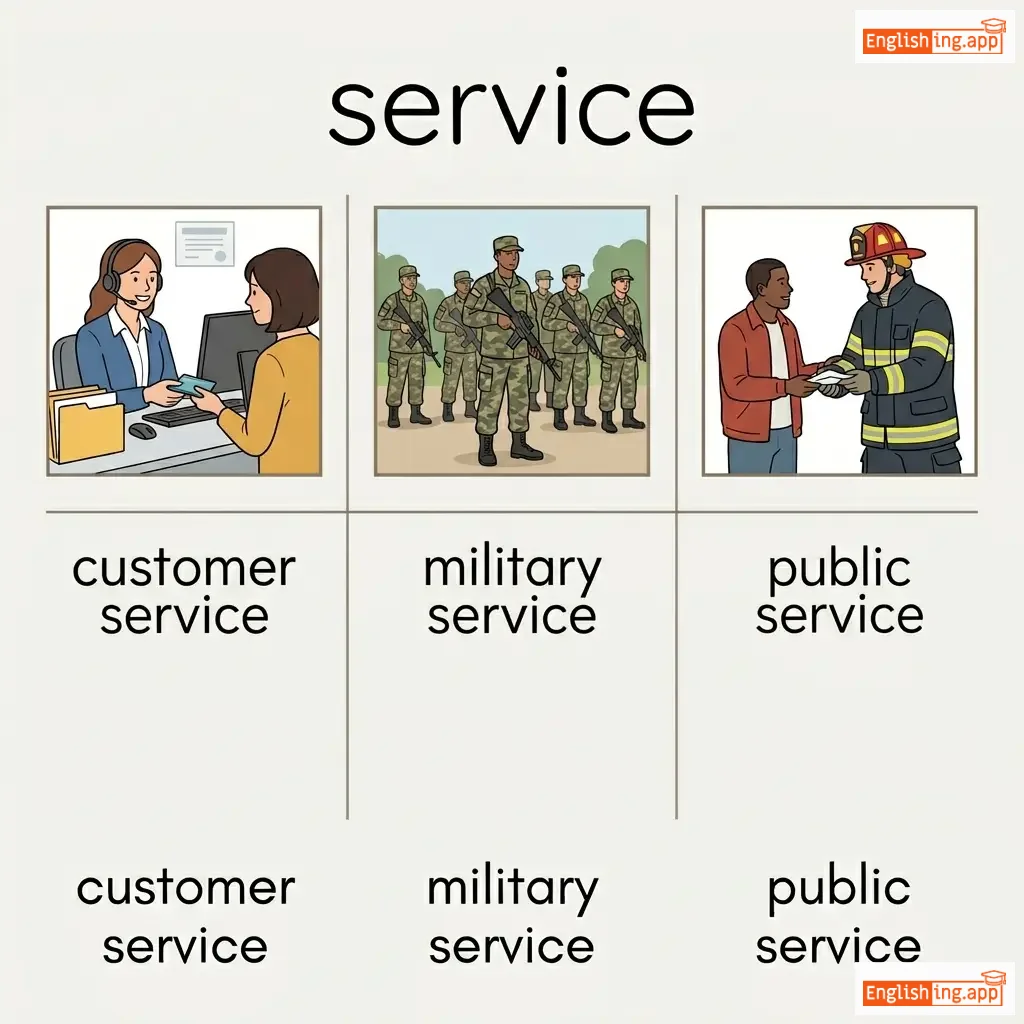
/ˈsɜːrvɪs/
noun
(sàfèisī)
••••••
|

|
服务
fuwu
••••••
|
- •••••• | - •••••• | - •••••• | - •••••• |
the action of helping or doing work for someone; a system providing a public need
••••••
|
The hotel provides excellent customer service. |
酒店提供卓越的客户服务。
Jiǔdiàn tígōng zhuóyuè de kèhù fúwù.
••••••
|
in service |
currently working or functioning
••••••
|
在服务中
zài fúwù zhōng
••••••
|
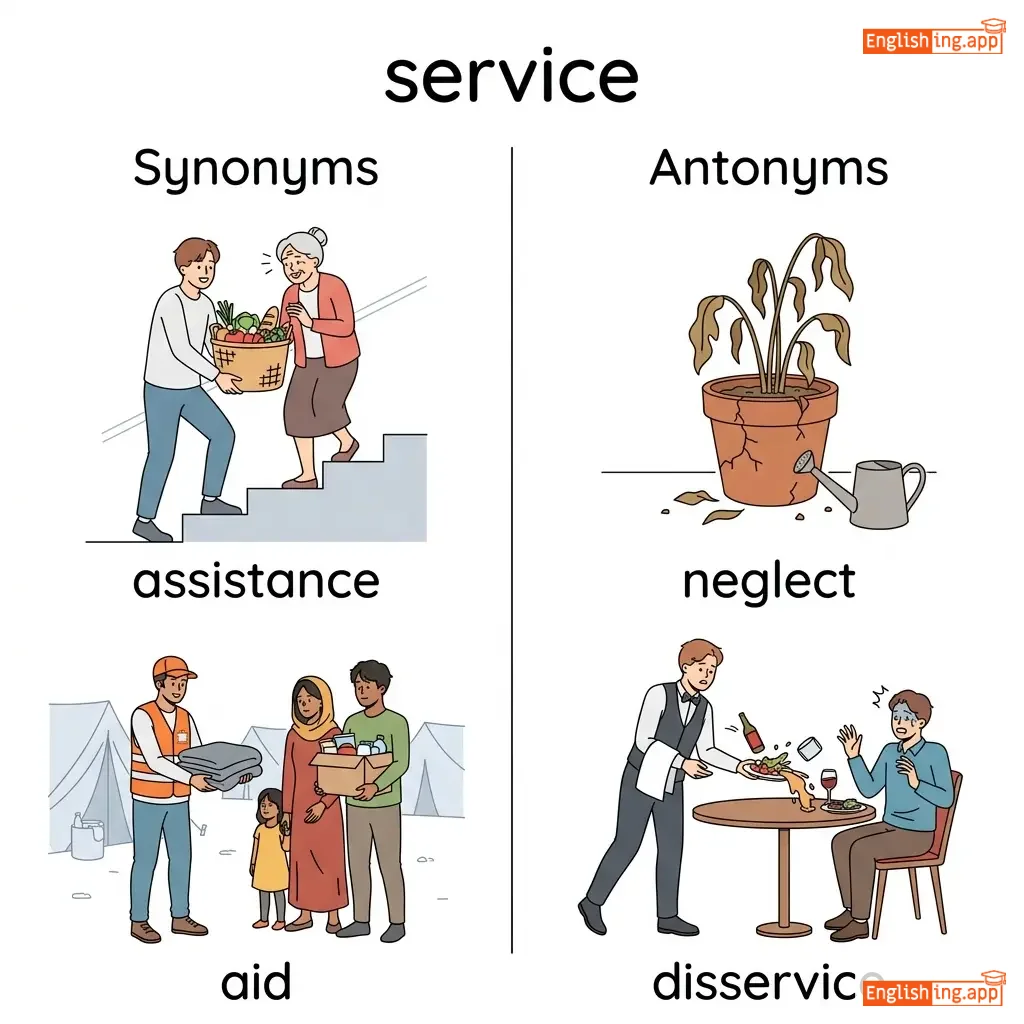
assistance, aid, duty, work
••••••
|
neglect, disservice
••••••
|
customer service, military service, public service, service industry
••••••
|
服务意味着帮助,就像餐厅里的服务 = 提供食物的帮助。
••••••
|
|
📅
••••••
|
/ˈsɛʃ.ən/
noun
(塞申)
••••••
|

|
会议
huiyi
••••••
|
- •••••• | - •••••• | - •••••• | - •••••• |
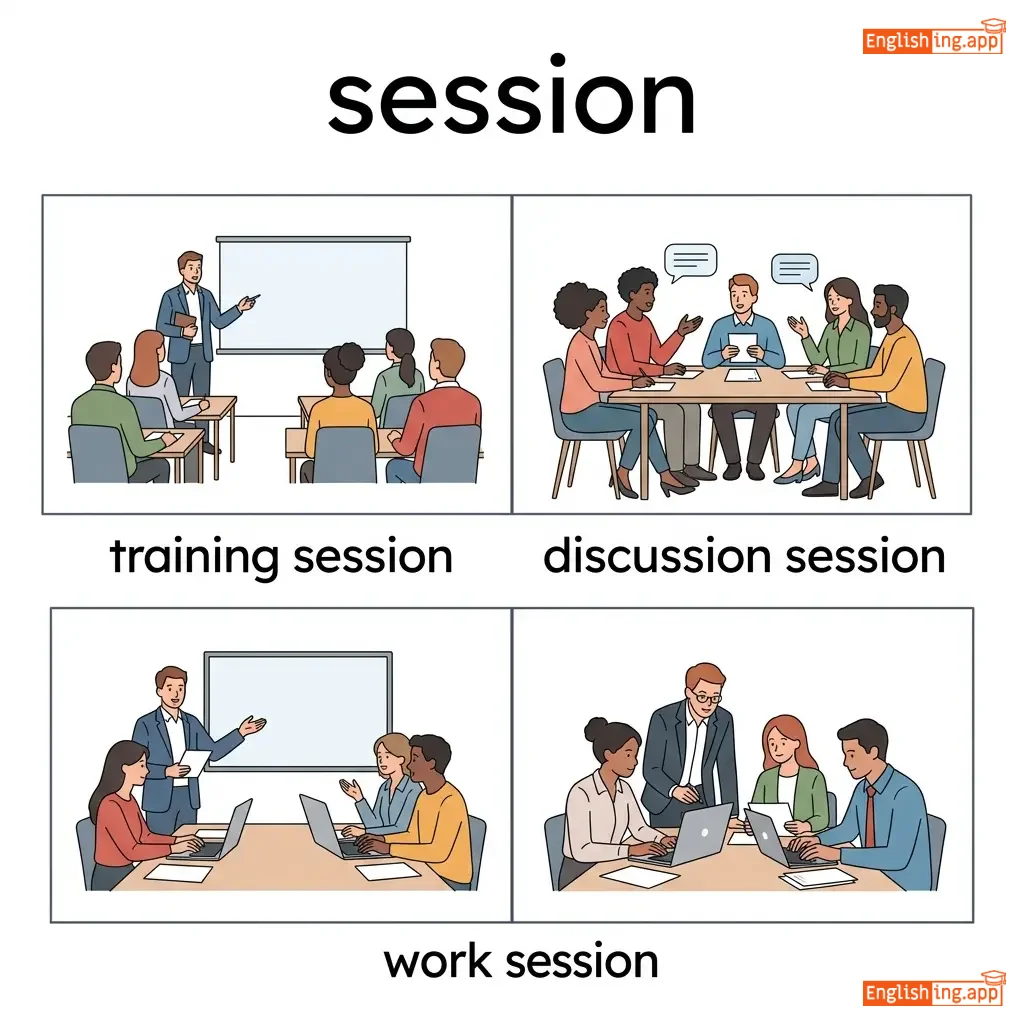
a meeting or a period of time devoted to a specific activity
••••••
|
The session will begin at 10 AM.
会议将在上午10点开始。
••••••
|
会议将在上午10点开始。
Huiyi jiang zai shangwu 10 dian kaishi.
••••••
|
- •••••• | - •••••• | - •••••• |
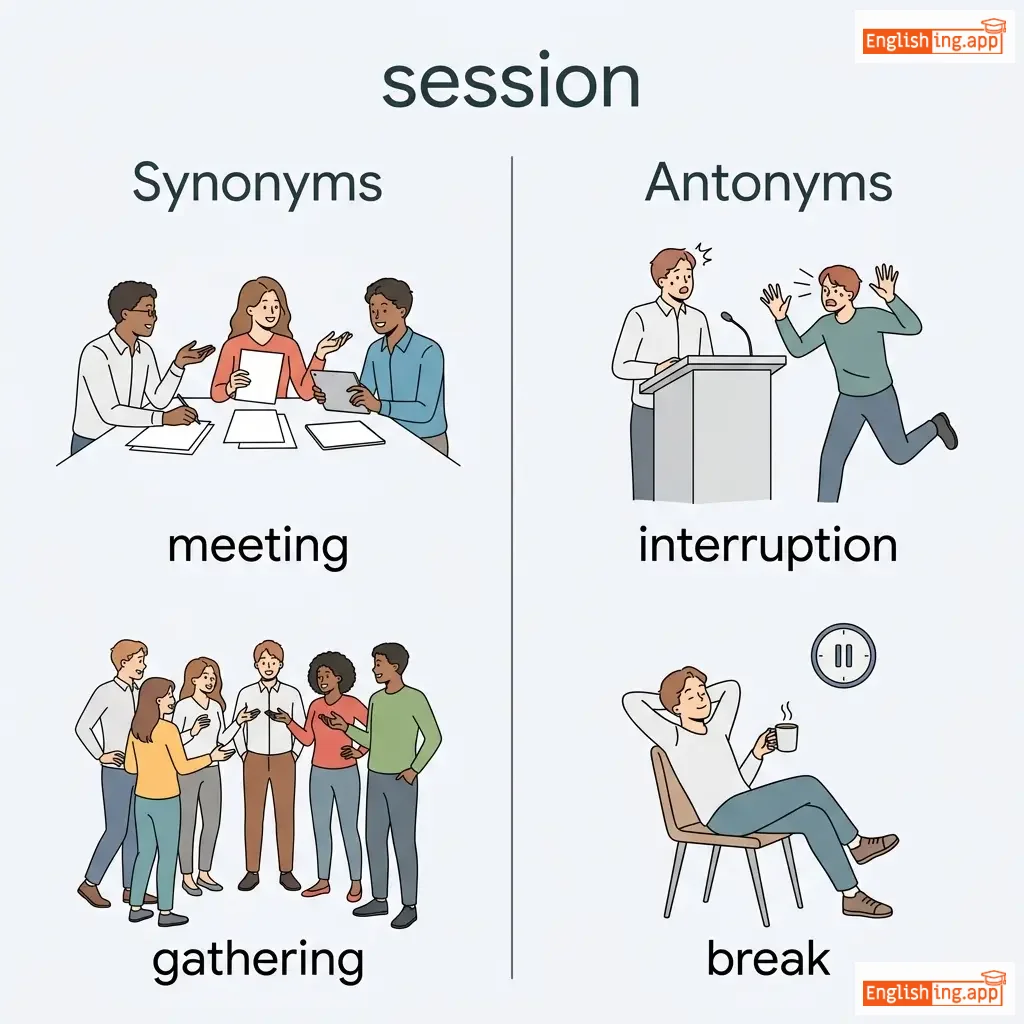
meeting, gathering, conference, seminar
••••••
|
interruption, break
••••••
|
training session, discussion session, work session
••••••
|
Session = 为活动设定时间 – 想想安排会议!
••••••
|
|
📍
••••••
|
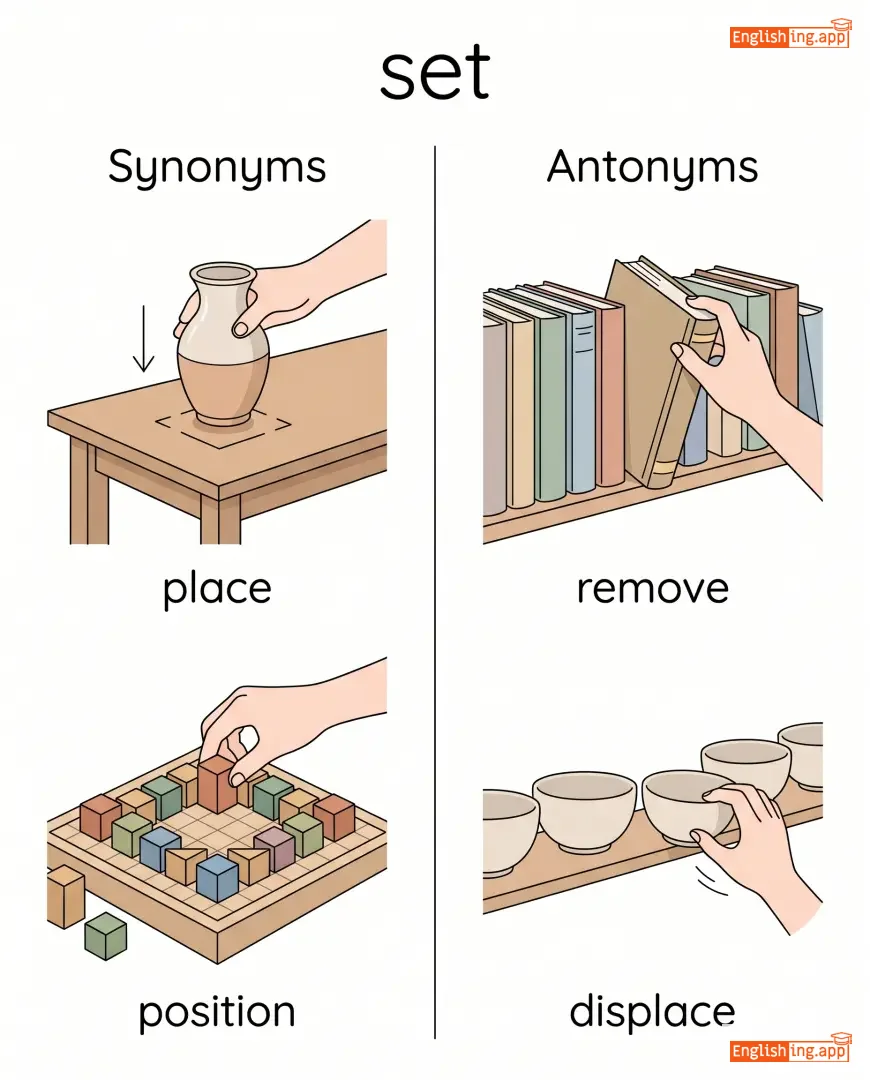
/set/
verb
(设)
••••••
|
|
设置
shèzhì
••••••
|
set
设
••••••
|
set
设
••••••
|
sets
设
••••••
|
setting
设定
••••••
|
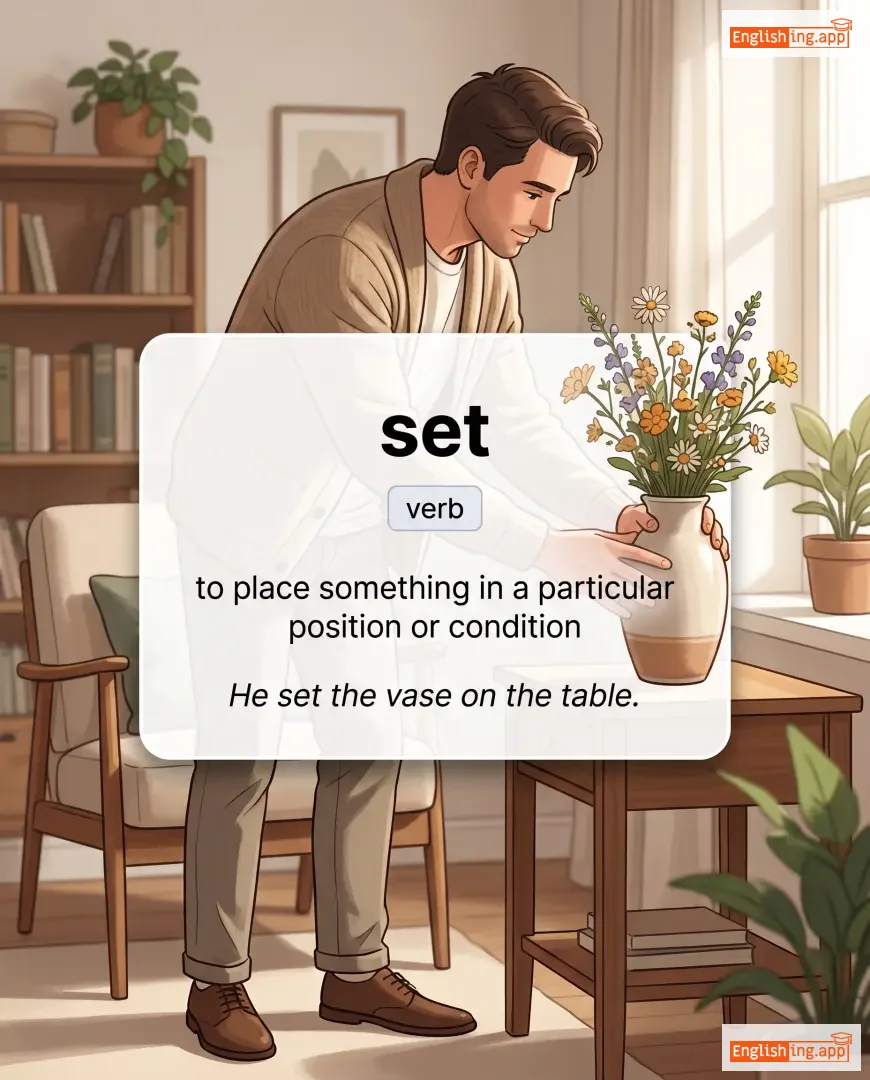
to put or place something in a position; to establish
••••••
|
She set the book on the table.
她把书放在桌子上。
••••••
|
她把书放在桌子上。
Tā bǎ shū fàng zài zhuōzi shàng.
••••••
|
- •••••• | - •••••• | - •••••• |
place, put, position, establish
••••••
|
remove, displace, unset, disturb
••••••
|
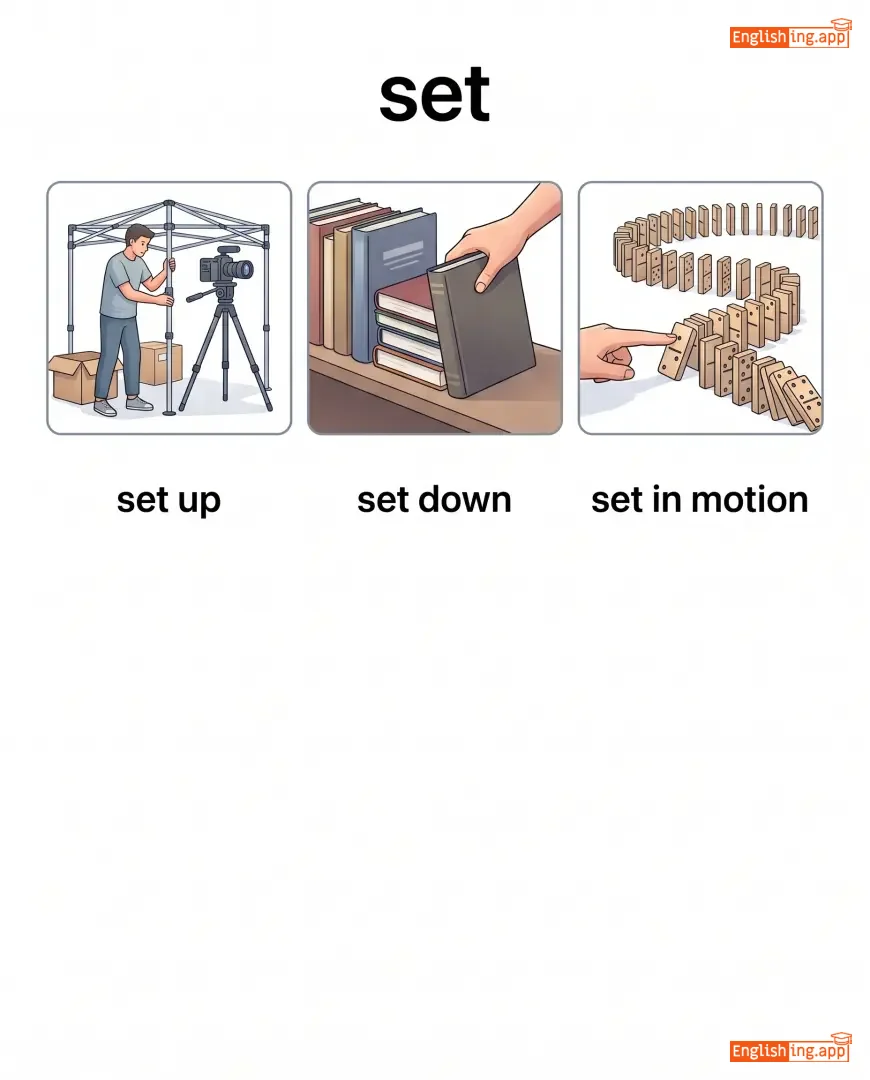
set aside, set up, set down, set off, set the table
••••••
|
Setting the book in place on the table is establishing order.
••••••
|
|
⚙️
••••••
|
/ˈsɛt ʌp/
noun
(设定)
••••••
|
- •••••• |
设置
shezhi
••••••
|
- •••••• | - •••••• | - •••••• | - •••••• |
The arrangement or organization of something; a planned structure or scheme
••••••
|
The company presented a new set-up for the office layout.
公司为办公室布局提出了一个新的设定。
••••••
|
公司为办公室布局提出了一个新的设定。
Gongsi wei bangongshi buju tichule yige xin de sheding.
••••••
|
- •••••• | - •••••• | - •••••• |
arrangement, organization, layout, configuration
••••••
|
disorganization, chaos
••••••
|
office set-up, set-up process, technical set-up
••••••
|
Set-up = 设置; 想象把一切都设置好
••••••
|
|
🌅
••••••
|
/ˈsɛtɪŋ/
noun
(sè tìng)
••••••
|
- •••••• |
背景
bèijǐng
••••••
|
- •••••• | - •••••• | - •••••• | - •••••• |
the environment or place where something happens
••••••
|
The setting of the movie was a beautiful beach.
电影的背景是一个美丽的海滩。
••••••
|
电影的背景是一个美丽的海滩。
Diànyǐng de bèijǐng shì yīgè měilì de hǎitān.
••••••
|
- •••••• | - •••••• | - •••••• |
environment, backdrop, surroundings, scene
••••••
|
dismantling, disruption
••••••
|
movie setting, setting sun, setting time
••••••
|
Setting the scene – 想象一个电影背景,所有事情都发生在这里!
••••••
|
|
🏠
••••••
|
/ˈsetəl/
verb
(塞特尔)
••••••
|

|
定居
dìngjū
••••••
|
settled
塞特尔德
••••••
|
settled
塞特尔德
••••••
|
settles
塞特尔斯
••••••
|
settling
塞特灵
••••••
|
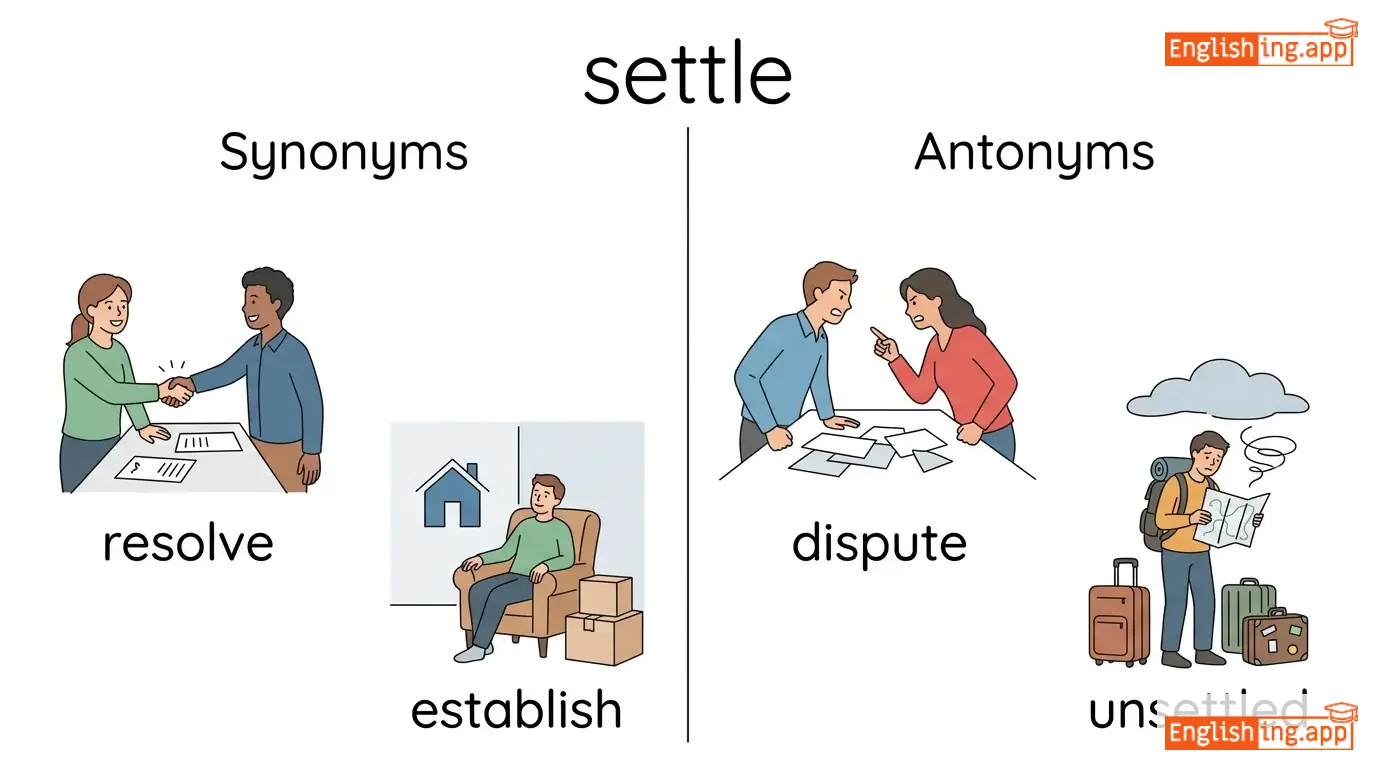
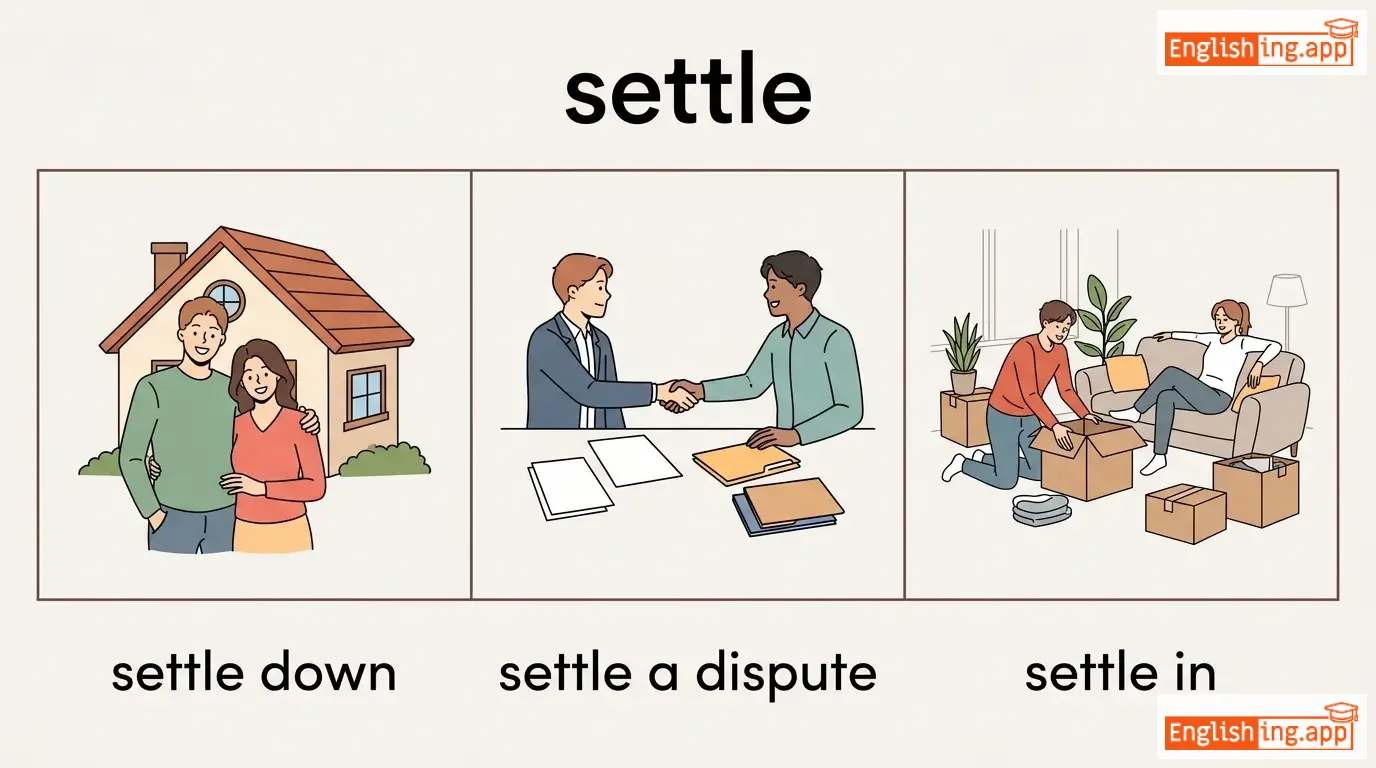
to resolve; to establish residence; to calm down
••••••
|
They decided to settle in a quiet village.
他们决定在一个安静的村庄定居。
••••••
|
他们决定在一个安静的村庄定居。
Tāmen juédìng zài yīgè ānjìng de cūnzhuāng dìngjū.
••••••
|
- •••••• | - •••••• | - •••••• |
resolve, establish, arrange, decide
••••••
|
disturb, unsettle, move, relocate
••••••
|
settle down, settle in, settle for, settle matters
••••••
|
定居像一个Settler
••••••
|
|
🏘️
••••••
|
/ˈset.əl.mənt/
noun
(sètèlmènt)
••••••
|
- •••••• |
定居; 协议
dìngjū; xiéyì
••••••
|
- •••••• | - •••••• | - •••••• | - •••••• |
a place where people establish a community; an agreement that ends a dispute
••••••
|
The early settlement was built near the river for easy access to water. |
早期的定居点建在河边,方便取水。
zǎoqī de dìngjūdiǎn jiàn zài hébiān, fāngbiàn qǔshuǐ.
••••••
|
- •••••• | - •••••• | - •••••• |
colony, community, village, agreement
••••••
|
departure, evacuation, conflict, dispute
••••••
|
early settlement, peaceful settlement, reach a settlement
••••••
|
Settlement in Chinese: '定居', think of a place where people settle near the water.
••••••
|
|
🏡
••••••
|
/ˈsɛtlər/
noun
(ˈsɛtlər)
••••••
|
- •••••• |
定居者
dìngjū zhě
••••••
|
- •••••• | - •••••• | - •••••• | - •••••• |
a person who settles in a new area or land
••••••
|
The settlers arrived in the new town and started building homes. |
定居者们抵达新城市并开始建造房屋。
Dìngjū zhěmen dǐdá xīn chéngshì bìng kāishǐ jiànzào fángwū.
••••••
|
- •••••• | - •••••• | - •••••• |
colonist, immigrant, pioneer, homesteader
••••••
|
migrant, nomad, transient
••••••
|
early settlers, land settlers, settlers of the new world
••••••
|
The settlers arrived and settled to create a new home in a new land.
••••••
|
|
7️⃣
••••••
|
/ˈsɛvən/
noun
••••••
|
- •••••• | - •••••• | - •••••• | - •••••• | - •••••• | - •••••• |
the number following six and preceding eight
••••••
|
She has seven apples in her basket. |
- •••••• | - •••••• | - •••••• | - •••••• |
7, septuple
••••••
|
none
••••••
|
seven days, seven years, lucky seven
••••••
|
No •••••• |
|
🔢
••••••
|
/ˈsɛvrəl/
adjective
(塞维拉尔)
••••••
|
- •••••• |
几个
jǐ ge
••••••
|
- •••••• | - •••••• | - •••••• | - •••••• |
more than one but not many; a few
••••••
|
Several people attended the meeting yesterday. |
几个昨天参加了会议的人。
Jǐ ge zuótiān cānjiāle huìyì de rén.
••••••
|
- •••••• | - •••••• | - •••••• |
few, numerous, multiple, various
••••••
|
few, none
••••••
|
several items, several years, several attempts
••••••
|
Seven is several, not too many, not too few!
••••••
|
|
⚠️
••••••
|
/sɪˈvɪər/
adjective
(sīwír)
••••••
|
|
严重的
yánzhòng de
••••••
|
- •••••• | - •••••• | - •••••• | - •••••• |
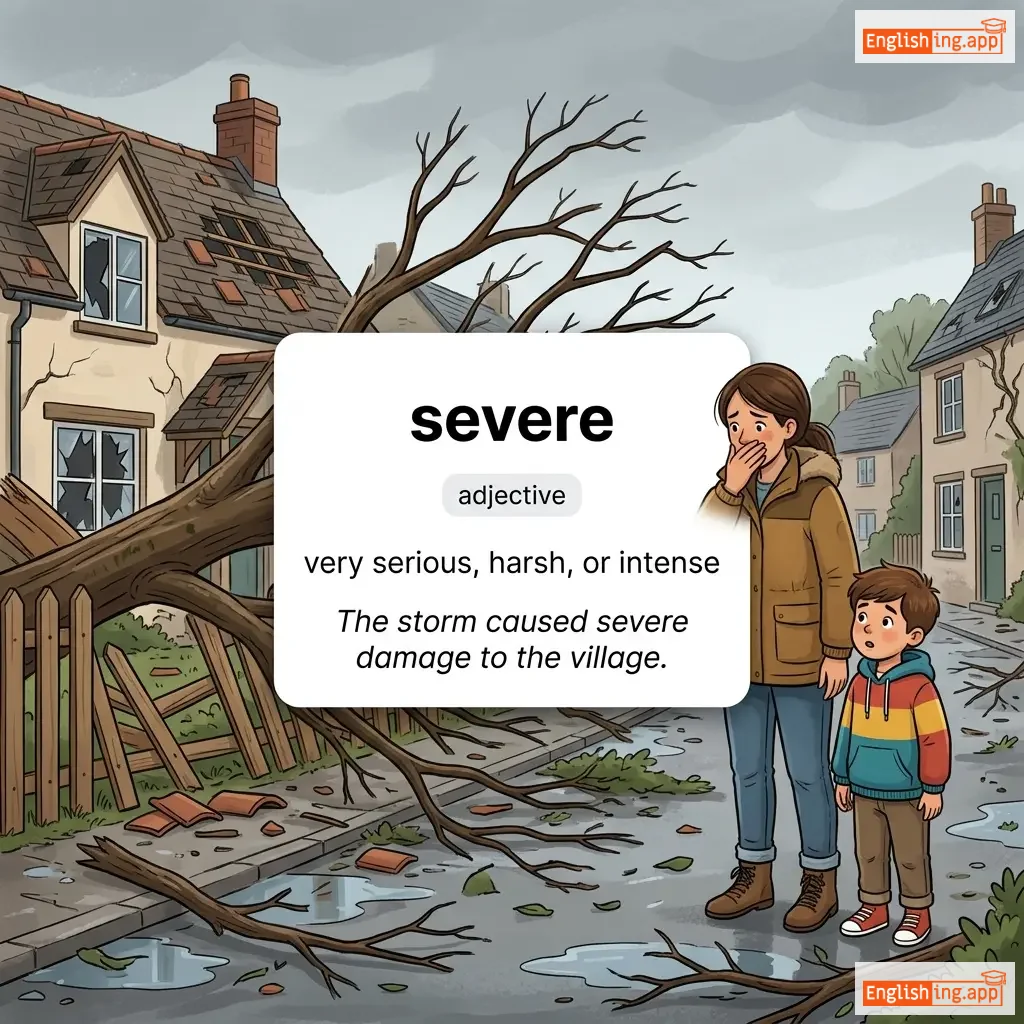
very serious, harsh, or intense
••••••
|
The storm caused severe damage to the village. |
暴风雨对村庄造成了严重的损害。
Bàofēngyǔ duì cūnzhuāng zàochéngle yánzhòng de sǔnhài.
••••••
|
severe weather |
harsh or extreme weather conditions
••••••
|
严重天气
yánzhòng tiānqì
••••••
|
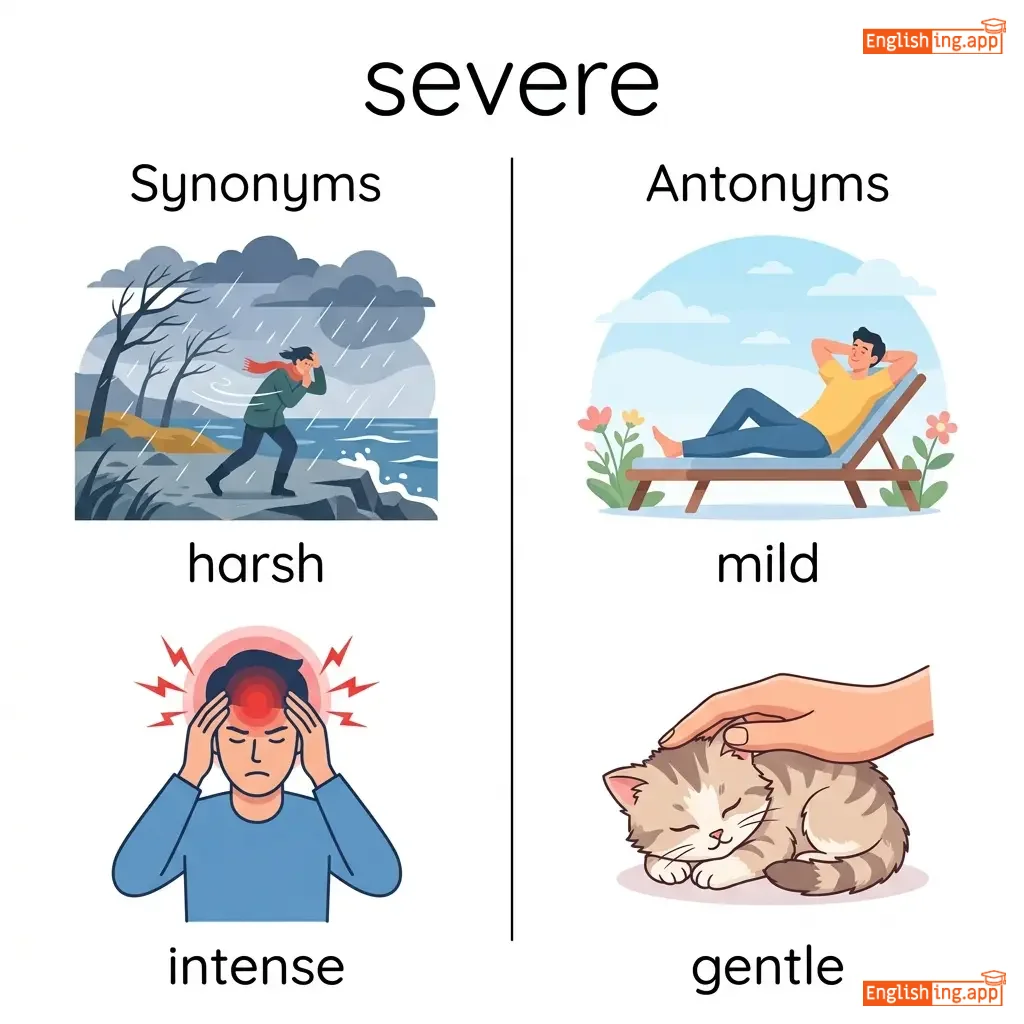
harsh, intense, serious, grave, extreme
••••••
|
mild, gentle, light
••••••
|
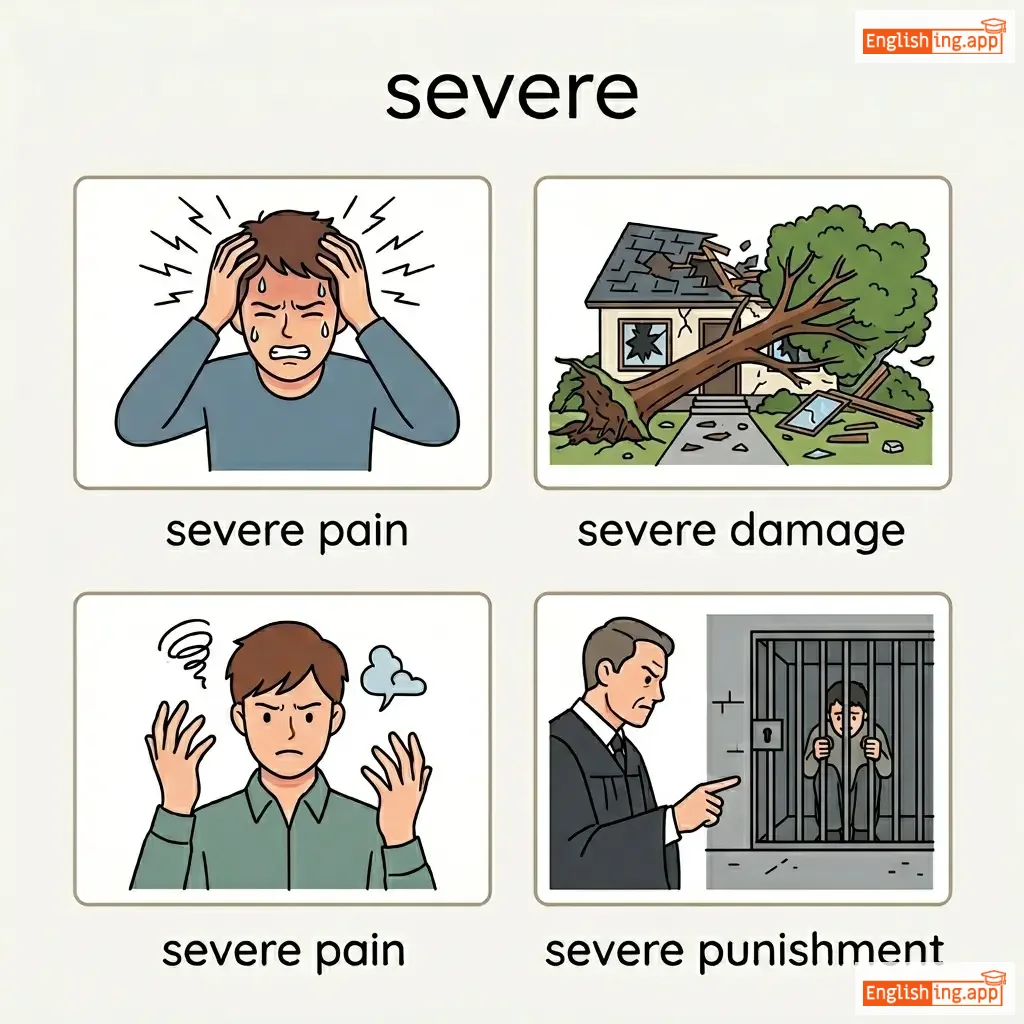
severe pain, severe damage, severe punishment, severe problem
••••••
|
Severe意味着严重 ⚠️ - 暴风雨造成严重损害
••••••
|
|
🚑
••••••
|
/sɪˈvɪərli/
adverb
(se-wei-er-li)
••••••
|
- •••••• |
严重地
yan zhong di
••••••
|
- •••••• | - •••••• | - •••••• | - •••••• |
to a great degree; very seriously or harshly
••••••
|
The patient was severely injured in the accident. |
患者在事故中受了重伤。
Huan zhe zai shi gu zhong shou le zhong shang.
••••••
|
- •••••• | - •••••• | - •••••• |
seriously, harshly, gravely, intensely
••••••
|
mildly, lightly, gently
••••••
|
severely injured, severely punished, severely damaged, severely limited
••••••
|
Severely injured 意味着受重伤
••••••
|
|
🪡
••••••
|
/səʊ/
verb
(海皮尼斯)
••••••
|
- •••••• |
幸福
xìngfú
••••••
|
sewed
••••••
|
sewn
••••••
|
sews
••••••
|
sewing
••••••
|
to join pieces of fabric or material together using a needle and thread
••••••
|
She learned to sew her own clothes at an early age.
她在获得奖项时无法掩饰她的快乐。
••••••
|
她在获得奖项时无法掩饰她的快乐。
Tā zài huòdé jiǎngxiàng shí wúfǎ yǎnshì tā de kuàilè.
••••••
|
sew something up
追求幸福
••••••
|
to complete or finish something successfully
••••••
|
追求幸福
zhuīqiú xìngfú
••••••
|
stitch, mend, hem, tailor
••••••
|
tear, rip, unpick
••••••
|
sew clothes, sew a dress, sew by hand, sew together
••••••
|
幸福就是幸福感,和happiness一样!
••••••
|
|
🪡
••••••
|
/ˈsoʊ.ɪŋ/
noun/verb
(苏英)
••••••
|
- •••••• |
缝纫
fengren
••••••
|
sewed
苏德
••••••
|
sewn
苏恩
••••••
|
sews
苏斯
••••••
|
sewing
苏英
••••••
|
The activity or skill of joining fabric using a needle and thread
••••••
|
She enjoys sewing her own clothes on weekends.
她 enjoys 苏英 她的衣服在周末。
••••••
|
她喜欢在周末缝制自己的衣服。
Ta xihuan zai zhoumo fengzhi ziji de yifu.
••••••
|
needle and thread
needle and thread
••••••
|
Tools used for sewing; often refers to sewing in general
••••••
|
针和线
zhen he xian
••••••
|
stitching, mending, tailoring, embroidery, quilting
••••••
|
ripping, tearing
••••••
|
sewing machine, sewing kit, hand sewing, sewing pattern
••••••
|
Fengren makes your clothes neat!
••••••
|
|
💋
••••••
|
/sɛks/
noun
(性)
••••••
|
- •••••• |
性别
xingbie
••••••
|
- •••••• | - •••••• | - •••••• | - •••••• |
the biological distinction between male and female; sexual activity
••••••
|
He was asked about his sex at the doctor's office. |
医生办公室询问了他的性别。
Yisheng bangongshi xunwenle tā de xingbie.
••••••
|
- •••••• | - •••••• | - •••••• |
gender, sexuality, reproduction
••••••
|
none
••••••
|
sexual activity, sex education, sex drive
••••••
|
Sexuality can be SEXy, but it's also biology!
••••••
|

