|
表情符号
|
单词 | Images | 翻译 | 过去时 | 过去分词 | 第三人称单数 | 动名词 | 含义 | 例句 | 例句翻译 | 示例表达 | 示例表达含义 | 示例表达翻译 | 同义词 | 反义词 | 搭配词 | 助记符 |
|---|---|---|---|---|---|---|---|---|---|---|---|---|---|---|---|---|---|
|
🎯
••••••
|
/ˈsɛntər/
noun
(sēntè)
••••••
|
|
中心
zhōngxīn
••••••
|
- •••••• | - •••••• | - •••••• | - •••••• |
The middle point or part of something; a place where a particular activity is concentrated.
••••••
|
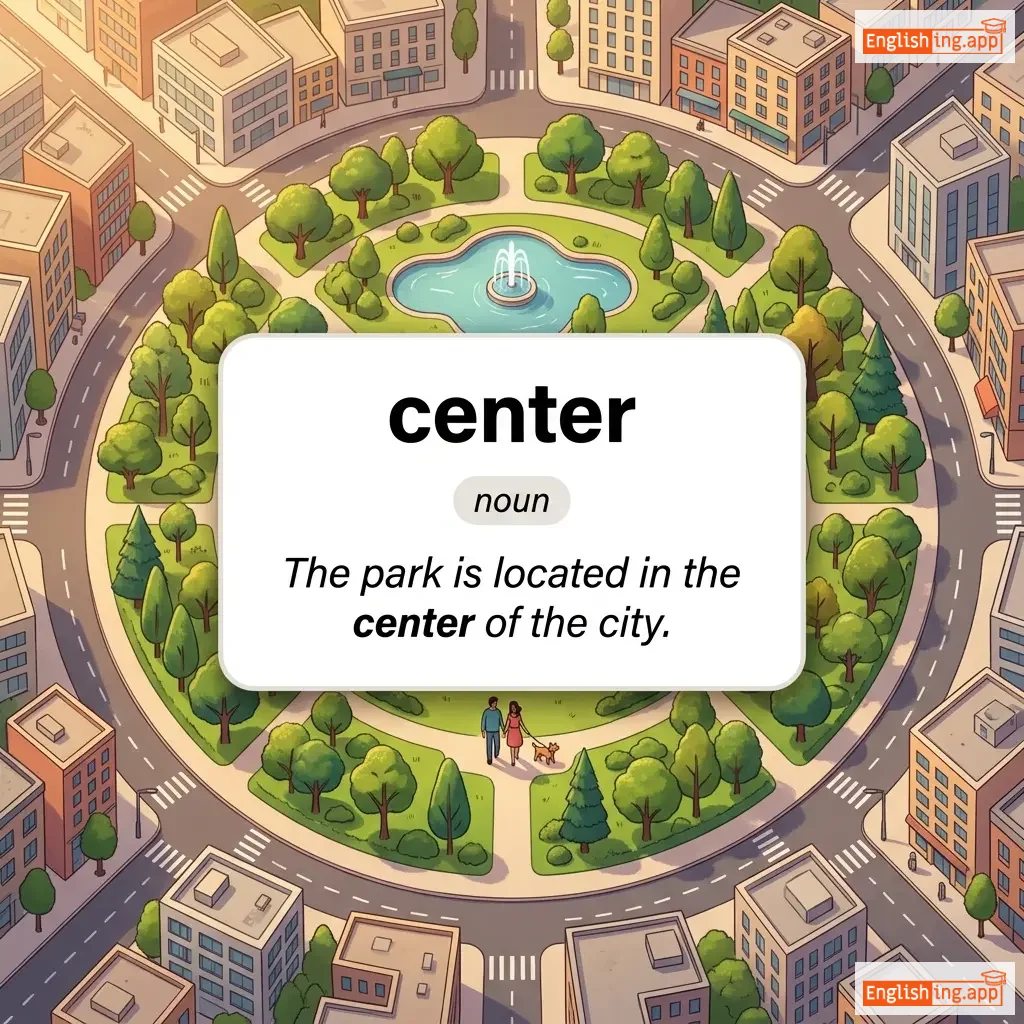
The park is located in the center of the city. |
公园位于城市的中心。
Gōngyuán wèiyú chéngshì de zhōngxīn.
••••••
|
the center of attention |
the person or thing that everyone is paying attention to
••••••
|
注意力中心
zhùyì lì zhōngxīn
••••••
|
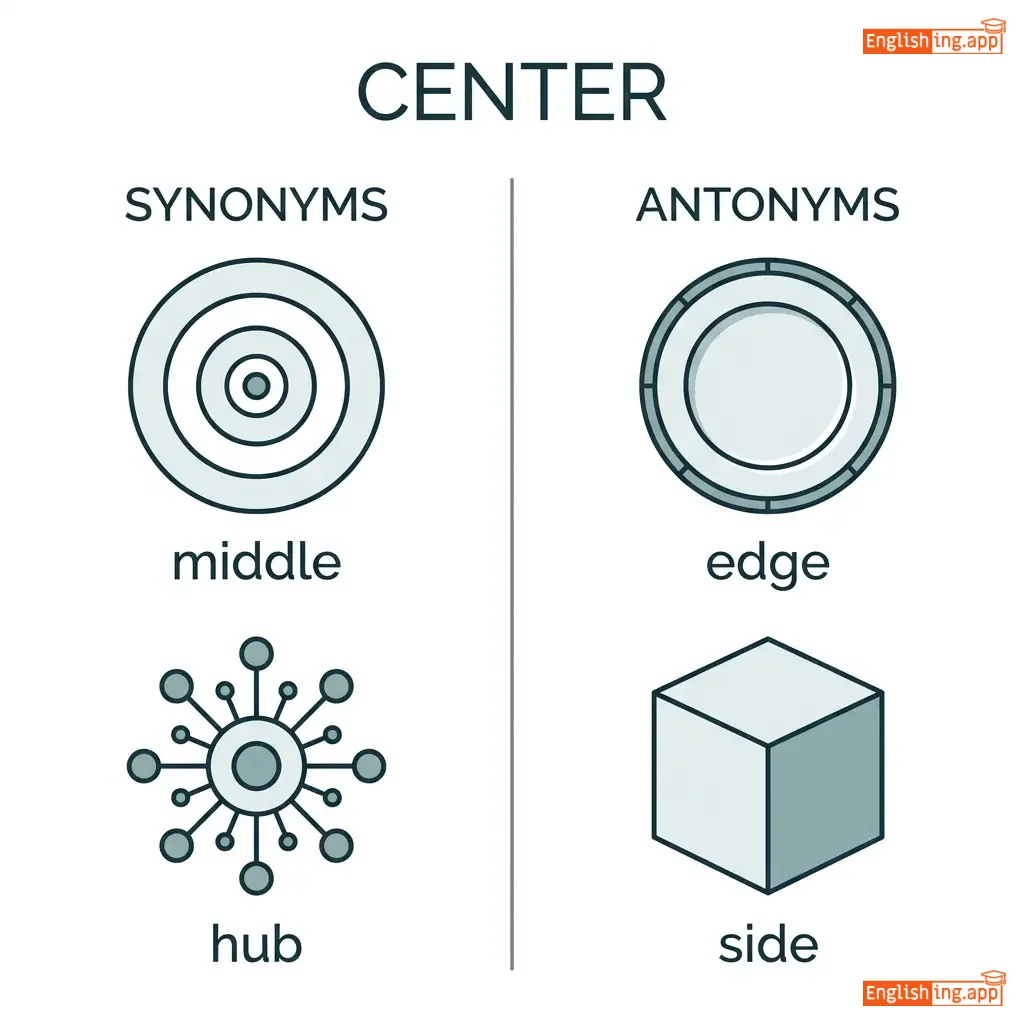
middle, hub, core, heart, focus
••••••
|
edge, side, periphery
••••••
|
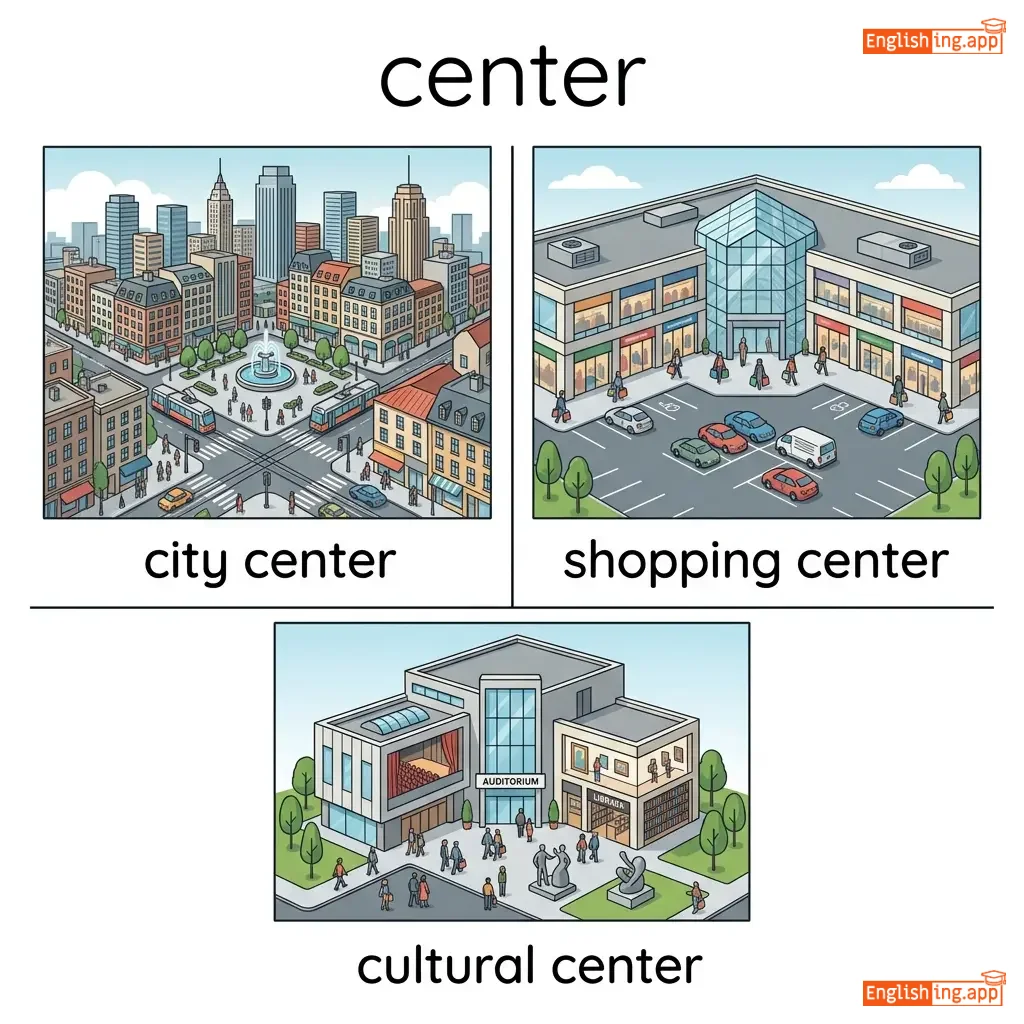
city center, shopping center, cultural center, attention center
••••••
|
Center意味着中心,比如City Center就是城市的中心。
••••••
|
|
📍
••••••
|
/ˈsɛntrəl/
adjective
(中央)
••••••
|
- •••••• |
中央的
zhōngyāng de
••••••
|
- •••••• | - •••••• | - •••••• | - •••••• |
Situated in the middle; of the greatest importance.
••••••
|
Water is central to human survival. |
水对人类生存至关重要。
Shuǐ duì rénlèi shēngcún zhìguān zhòngyào.
••••••
|
play a central role |
to be very important in something
••••••
|
发挥核心作用
Fāhuī héxīn zuòyòng
••••••
|
main, key, vital, core, essential
••••••
|
minor, peripheral, unimportant
••••••
|
central idea, central role, central authority, central location
••••••
|
Central表示重要,就像在北京的中央车站一样重要。
••••••
|
|
📆
••••••
|
/ˈsɛnʧəri/
noun
(shenjuri)
••••••
|
- •••••• |
世纪
shiji
••••••
|
- •••••• | - •••••• | - •••••• | - •••••• |
A period of one hundred years.
••••••
|
The 20th century saw significant technological progress. |
20世纪见证了显著的技术进步。
20 shiji jianzheng le xianzhu de jishu jinbu.
••••••
|
turn of the century |
the beginning of a new century
••••••
|
世纪之交
shiji zhi jiao
••••••
|
hundred years, era, age, period
••••••
|
moment, instant, second
••••••
|
century old, 21st century, century mark, past century
••••••
|
世纪就是Century; 在中国,100年被称作一个世纪。
••••••
|
|
🎉
••••••
|
/ˈsɛrəˌmoʊni/
noun
••••••
|
- •••••• | - •••••• | - •••••• | - •••••• | - •••••• | - •••••• |
A formal event or occasion, often with rituals and traditions.
••••••
|
The graduation ceremony was held in the university hall. |
- •••••• |
without ceremony |
done simply, without formality
••••••
|
- •••••• |
ritual, event, celebration, function, observance
••••••
|
informality, casualness
••••••
|
wedding ceremony, opening ceremony, award ceremony, official ceremony
••••••
|
No •••••• |
|
✅
••••••
|
/ˈsɜːr.tən/
adjective
(色腾)
••••••
|
- •••••• |
确定的
queding de
••••••
|
- •••••• | - •••••• | - •••••• | - •••••• |
Known for sure; having no doubt.
••••••
|
I am certain that she will succeed.
艾 爱目 色腾 达特 希 维尔 萨克希德。
••••••
|
我确定她会成功。
wo queding ta hui chenggong.
••••••
|
for certain
佛 色腾
••••••
|
Without any doubt.
••••••
|
确信无疑
quexin wu yi
••••••
|
sure, confident, definite, assured, convinced
••••••
|
uncertain, doubtful, unsure
••••••
|
certain circumstances, certain degree, certain way, certain level
••••••
|
Certain sounds like '设定', meaning something already fixed and known.
••••••
|
|
✅
••••••
|
/ˈsɜːrtənli/
adverb
(sèrtènlì)
••••••
|
- •••••• |
肯定
kending
••••••
|
- •••••• | - •••••• | - •••••• | - •••••• |
without doubt; surely; used to emphasize certainty
••••••
|
I will certainly help you with your project.
我一定会帮助你完成你的项目。
••••••
|
我一定会帮助你完成你的项目。
Wǒ yīdìng huì bāngzhù nǐ wánchéng nǐ de xiàngmù.
••••••
|
certainly not
肯定不
••••••
|
used to strongly refuse or disagree
••••••
|
肯定不
kěndìng bù
••••••
|
surely, definitely, undoubtedly, absolutely, clearly
••••••
|
possibly, maybe, uncertain
••••••
|
certainly true, certainly help, certainly possible, most certainly
••••••
|
Certain意味着确定,因此certainly意味着肯定 ✅
••••••
|
|
✅
••••••
|
/ˈsɜːr.tən.ti/
noun
(sàntì)
••••••
|
- •••••• |
确定性
quèdìngxìng
••••••
|
- •••••• | - •••••• | - •••••• | - •••••• |
firm conviction that something is the case; the quality of being reliably true
••••••
|
We can say with certainty that the project will be completed on time. |
我们可以确定地说,项目将按时完成。
Women keyi queding de shuo, xiangmu jiang anshi wancheng.
••••••
|
- •••••• | - •••••• | - •••••• |
confidence, assurance, conviction, sureness
••••••
|
uncertainty, doubt, hesitation
••••••
|
absolute certainty, with certainty, degree of certainty
••••••
|
Quèdìngxìng means certainty, like the confidence that something will be completed on time.
••••••
|
|
🎓
••••••
|
/sərˈtɪfɪkət/
noun
(sərˈtɪfɪkət)
••••••
|
- •••••• |
证书
zhèngshū
••••••
|
- •••••• | - •••••• | - •••••• | - •••••• |
a document serving as proof of achievement or qualification
••••••
|
She received a certificate for completing the course. |
她因完成课程而获得了证书。
Tā yīn wánchéng kèchéng ér huòdéle zhèngshū.
••••••
|
- •••••• | - •••••• | - •••••• |
diploma, qualification, accreditation, award
••••••
|
disqualification
••••••
|
receive a certificate, certificate of completion, certificate of achievement
••••••
|
Certificate means proof, '证' (zhèng) is proof, '书' (shū) is document.
••••••
|
|
📜
••••••
|
/ˌsɜːrtɪfɪˈkeɪʃən/
noun
(色特瑞菲凯申)
••••••
|
- •••••• |
认证
renzheng
••••••
|
- •••••• | - •••••• | - •••••• | - •••••• |
the process of officially recognizing or confirming that something or someone meets required standards; an official document proving qualification
••••••
|
She received her professional certification after completing the training program.
希 瑞西夫德 赫尔 普柔菲申诺 色特瑞菲凯申 阿夫特尔 康普利廷 泽 特瑞宁 普柔格拉姆。
••••••
|
她在完成培训项目后获得了专业认证。
ta zai wancheng peixun xiangmu hou huodele zhuanye renzheng
••••••
|
- •••••• | - •••••• | - •••••• |
accreditation, validation, authorization, qualification, endorsement
••••••
|
disqualification, decertification
••••••
|
professional certification, certification process, certification program, certification exam
••••••
|
Certification 就是 认证,认准资格。
••••••
|
|
⛓️
••••••
|
/tʃeɪn/
noun
••••••
|
- •••••• | - •••••• | - •••••• | - •••••• | - •••••• | - •••••• |
a connected series of metal rings used for fastening or securing things; a series of connected events or businesses
••••••
|
He wore a gold chain around his neck. |
- •••••• |
a chain reaction |
a series of related events triggered by the first event
••••••
|
- •••••• |
link, series, sequence, cord, string
••••••
|
break, separation
••••••
|
gold chain, supply chain, food chain, chain of events
••••••
|
No •••••• |
|
🪑
••••••
|
/tʃɛr/
noun
••••••
|
- •••••• | - •••••• | - •••••• | - •••••• | - •••••• | - •••••• |
a piece of furniture for one person to sit on, typically having a back and four legs
••••••
|
She pulled up a chair and sat beside me. |
- •••••• |
take the chair |
to act as the leader or presiding officer of a meeting
••••••
|
- •••••• |
seat, armchair, stool, bench
••••••
|
floor, ground
••••••
|
wooden chair, office chair, rocking chair, chair seat
••••••
|
No •••••• |
|
👔
••••••
|
/ˈtʃɛərmən/
noun
(ˈhæpinəs)
••••••
|
- •••••• |
幸福
xìngfú
••••••
|
- •••••• | - •••••• | - •••••• | - •••••• |
the leader or head of a meeting, committee, or organization
••••••
|
The chairman opened the meeting with a short speech. |
当她获得奖项时,她无法隐藏自己的幸福。
Dāng tā huòdé jiǎngxiàng shí, tā wúfǎ yǐncáng zìjǐ de xìngfú.
••••••
|
chairman of the board |
the head of a company's board of directors
••••••
|
追求幸福
zhuīqiú xìngfú
••••••
|
leader, head, chief, president
••••••
|
member, follower
••••••
|
chairman position, acting chairman, board chairman, elected chairman
••••••
|
幸福 = 幸 + 福 = 有福气,幸福感。
••••••
|
|
👩💼
••••••
|
/ˈtʃɛərˌwʊmən/
noun
(切尔乌曼)
••••••
|
- •••••• |
女主席
nu zhuxi
••••••
|
- •••••• | - •••••• | - •••••• | - •••••• |
a woman who presides over a meeting, committee, or organization; a female leader of a board or council
••••••
|
She was elected chairwoman of the company after years of experience.
希 沃兹 伊莱克提德 切尔乌曼 奥夫 德 康帕尼。
••••••
|
在多年的经验之后,她被选为公司的女主席。
Zai duo nian de jingyan zhihou ta bei xuan wei gongsi de nu zhuxi
••••••
|
chairwoman of the board
切尔乌曼 奥夫 德 博德
••••••
|
the female leader who heads a company’s board of directors
••••••
|
董事会女主席
dongshihui nu zhuxi
••••••
|
chair, chairperson, female chair, presiding officer
••••••
|
chairman, subordinate, member
••••••
|
chairwoman of the board, elected chairwoman, serve as chairwoman, company chairwoman
••••••
|
女 + 主席 = 女主席,就是 chairwoman
••••••
|
|
🏔️
••••••
|
/ˈtʃælɪndʒ/
noun/verb
(挑战)
••••••
|

|
挑战
tiaozhan
••••••
|
challenged
挑战过
••••••
|
challenged
挑战过
••••••
|
challenges
挑战了
••••••
|
challenging
挑战中
••••••
|
a difficult task or problem that requires effort to overcome; to question or dispute
••••••
|
Climbing the mountain was the biggest challenge of his life.
攀登山峰是他一生中最大的挑战。
••••••
|
攀登山峰是他一生中最大的挑战。
Pandeng shanfeng shi ta yisheng zhong zui da de tiaozhan.
••••••
|
rise to the challenge
迎接挑战
••••••
|
to successfully deal with a difficult situation
••••••
|
迎接挑战
yingjie tiaozhan
••••••
|
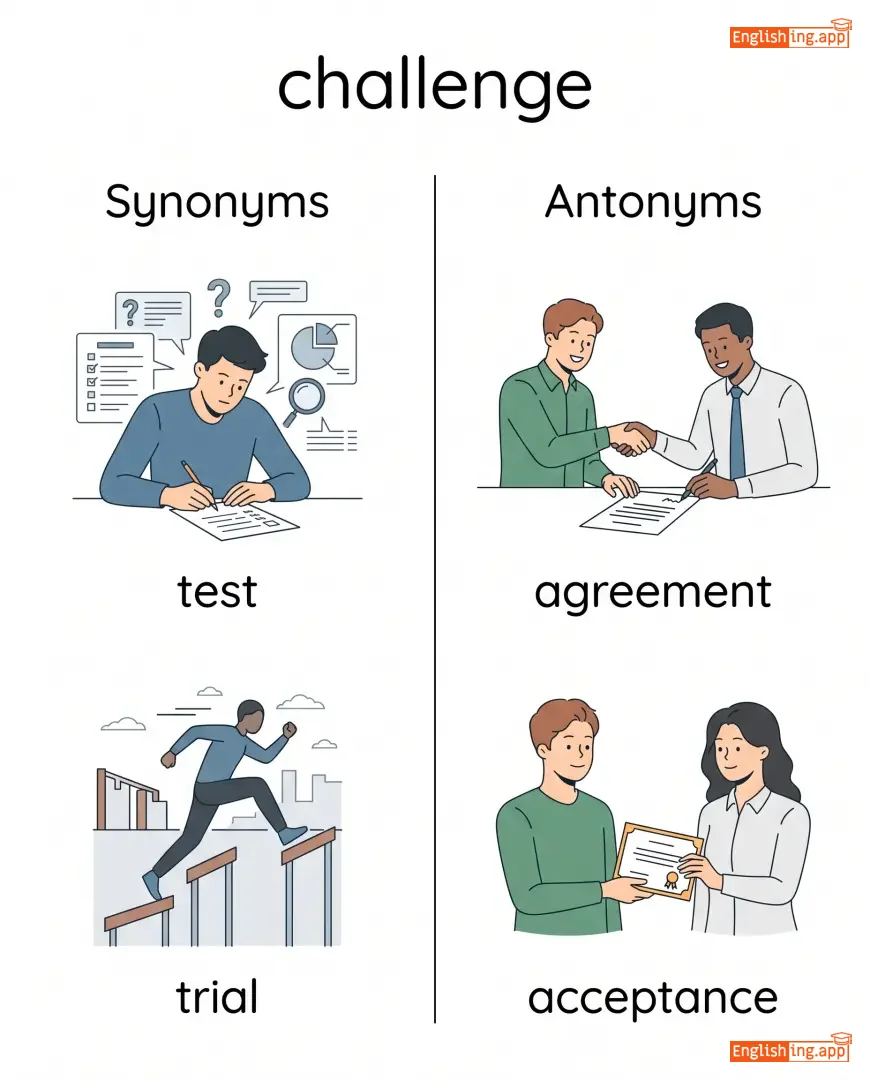
test, trial, obstacle, difficulty, contest
••••••
|
agreement, acceptance, support
••••••
|
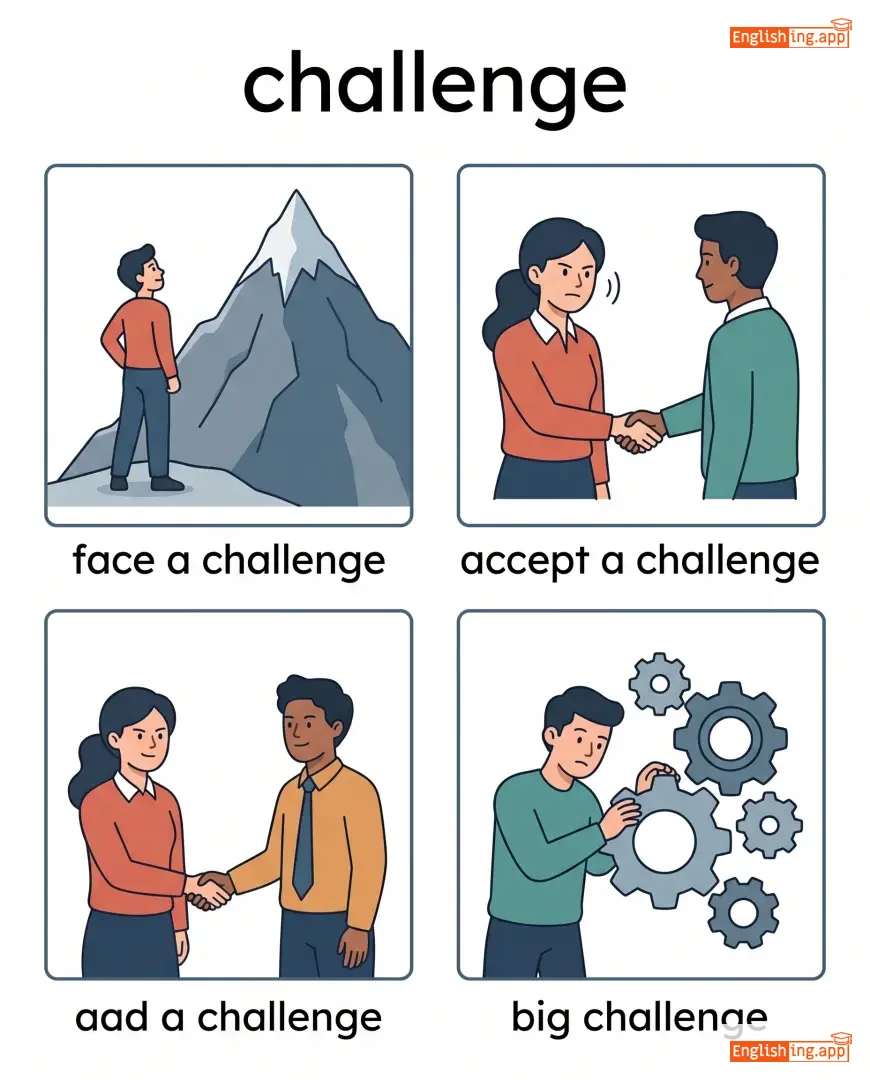
face a challenge, accept a challenge, big challenge, challenge authority
••••••
|
挑战意味着挑战 – 攀登山峰是他最大的挑战 🏔️
••••••
|
|
🏛️
••••••
|
/ˈtʃeɪmbər/
noun
(chēmbó)
••••••
|
- •••••• |
房间
fangjian
••••••
|
- •••••• | - •••••• | - •••••• | - •••••• |
a large room used for formal or public events, or a private room.
••••••
|
The king held meetings in his private chamber. |
国王在他的私人房间里举行会议。
guówáng zài tā de sīrén fángjiān lǐ jǔxíng huìyì.
••••••
|
upper chamber |
the higher legislative house in a bicameral parliament
••••••
|
上议院
shàng yì yuàn
••••••
|
room, hall, compartment, chamber, council
••••••
|
open space, outdoors
••••••
|
chamber of commerce, upper chamber, private chamber, gas chamber
••••••
|
房间,像是国王的房间—私人空间。
••••••
|
|
🥇
••••••
|
/ˈtʃæmpiən/
noun
(冠军)
••••••
|
|
冠军
guan jun
••••••
|
- •••••• | - •••••• | - •••••• | - •••••• |
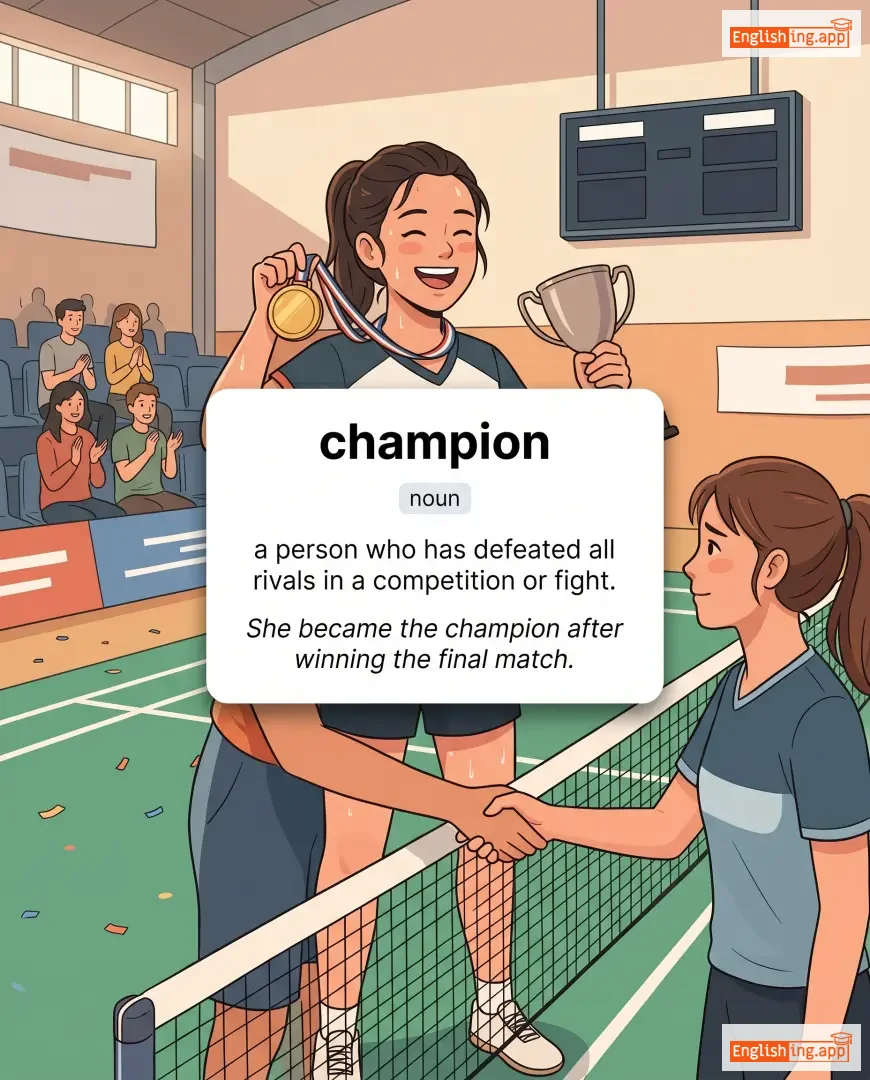
a person who has defeated all rivals in a competition or fight.
••••••
|
She became the champion after winning the final match. |
她在赢得决赛后成为了冠军。
Ta zai yingde jue sai hou chengwei le guan jun.
••••••
|
defend the champion |
to maintain one’s title against challengers
••••••
|
捍卫冠军
hanwei guanjun
••••••
|
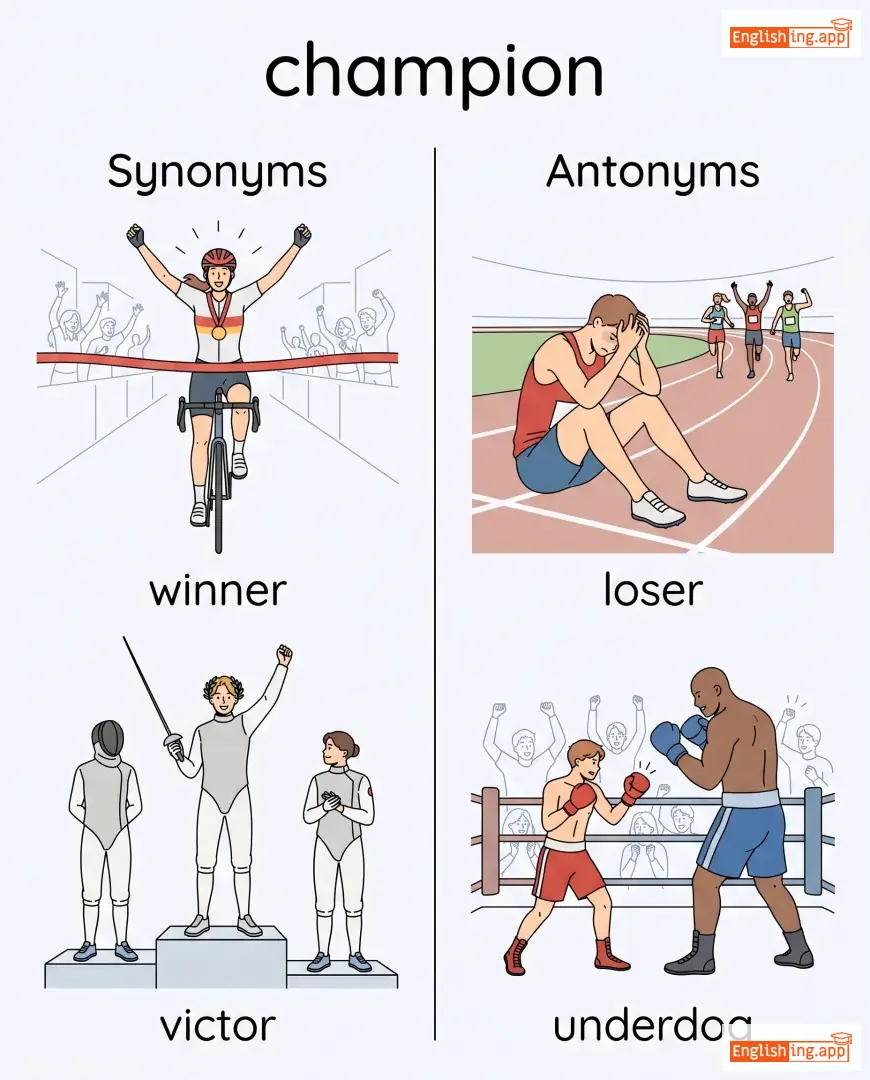
winner, victor, titleholder, hero, defender
••••••
|
loser, underdog
••••••
|
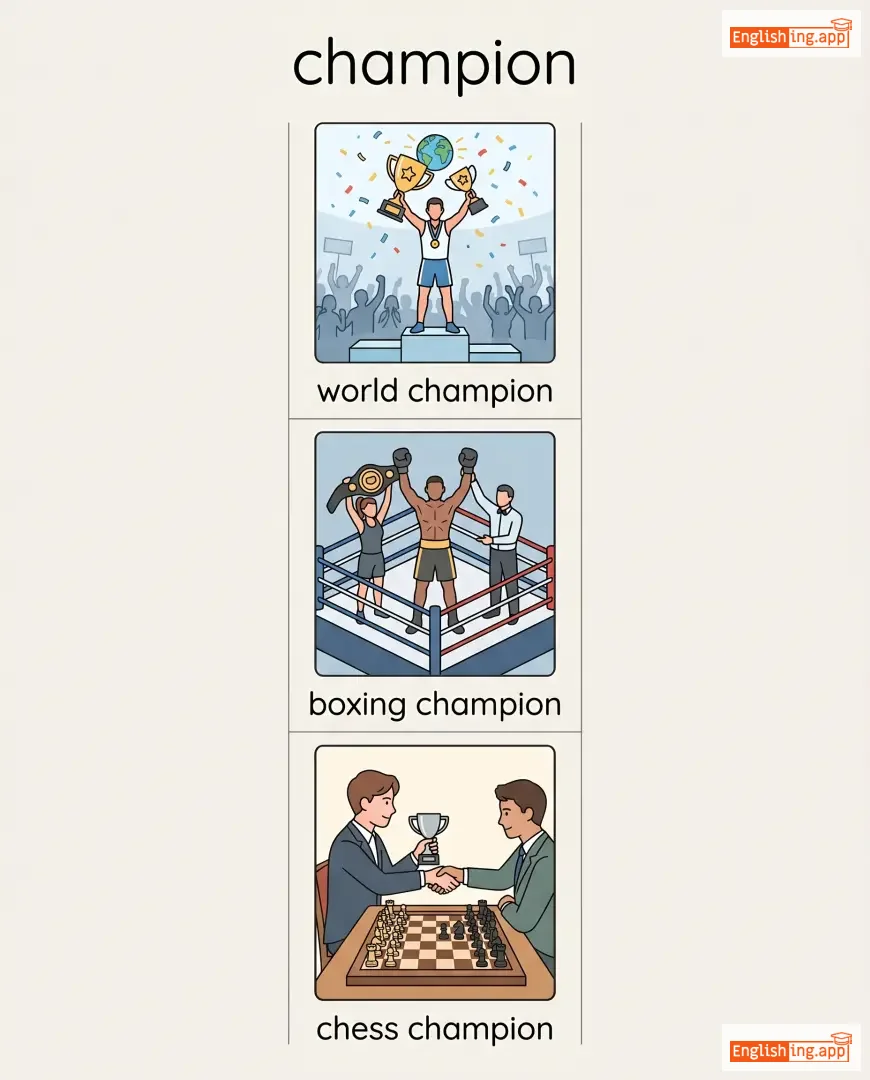
world champion, boxing champion, chess champion, defend champion
••••••
|
Champion means 'camp' + 'lion'—冠军如狮子般胜利。
••••••
|
|
🏆
••••••
|
/ˈtʃæmpiənʃɪp/
noun
(championship)
••••••
|
- •••••• |
锦标赛
jinbiaosai
••••••
|
- •••••• | - •••••• | - •••••• | - •••••• |
a competition to decide who is the best in a particular sport or activity.
••••••
|
The championship will be held next month. |
锦标赛将在下个月举行。
jinbiaosai jiang zai xia ge yue juxing.
••••••
|
win the championship |
to become the victor of a major competition
••••••
|
赢得锦标赛
yingde jinbiaosai
••••••
|
tournament, contest, league, competition, cup
••••••
|
friendly match, practice
••••••
|
world championship, national championship, championship game, win championship
••••••
|
锦标赛就像是每个选手争夺冠军,最终会决出最好的选手。
••••••
|
|
🎲
••••••
|
/tʃæns/
noun
(chānsī)
••••••
|
- •••••• |
机会
jī huì
••••••
|
- •••••• | - •••••• | - •••••• | - •••••• |
An opportunity or possibility of something happening.
••••••
|
He took a chance and applied for the job. |
他冒险申请了这份工作。
Tā màoxiǎn shēnqǐngle zhè fèn gōngzuò.
••••••
|
take a chance |
to do something risky or uncertain in hope of success
••••••
|
抓住机会
zhuā zhù jī huì
••••••
|
opportunity, possibility, likelihood, probability, prospect
••••••
|
certainty, impossibility, guarantee
••••••
|
take a chance, by chance, good chance, slim chance
••••••
|
Chance意味着机会 – 就像掷骰子 🎲 看看能否赢得机会!
••••••
|
|
🔄
••••••
|
/tʃeɪndʒ/
verb
(改变)
••••••
|

|
改变
gǎibiàn
••••••
|
changed
改变了
••••••
|
changed
改变了
••••••
|
changes
改变
••••••
|
changing
改变着
••••••
|
To make something different or to become different.
••••••
|
She decided to change her career path.
她决定改变她的职业道路。
••••••
|
她决定改变她的职业道路。
Tā juédìng gǎibiàn tā de zhíyè dàolù.
••••••
|
change of heart
心意变化
••••••
|
a change in one's opinion or feelings
••••••
|
心意变化
xīnyì biànhuà
••••••
|
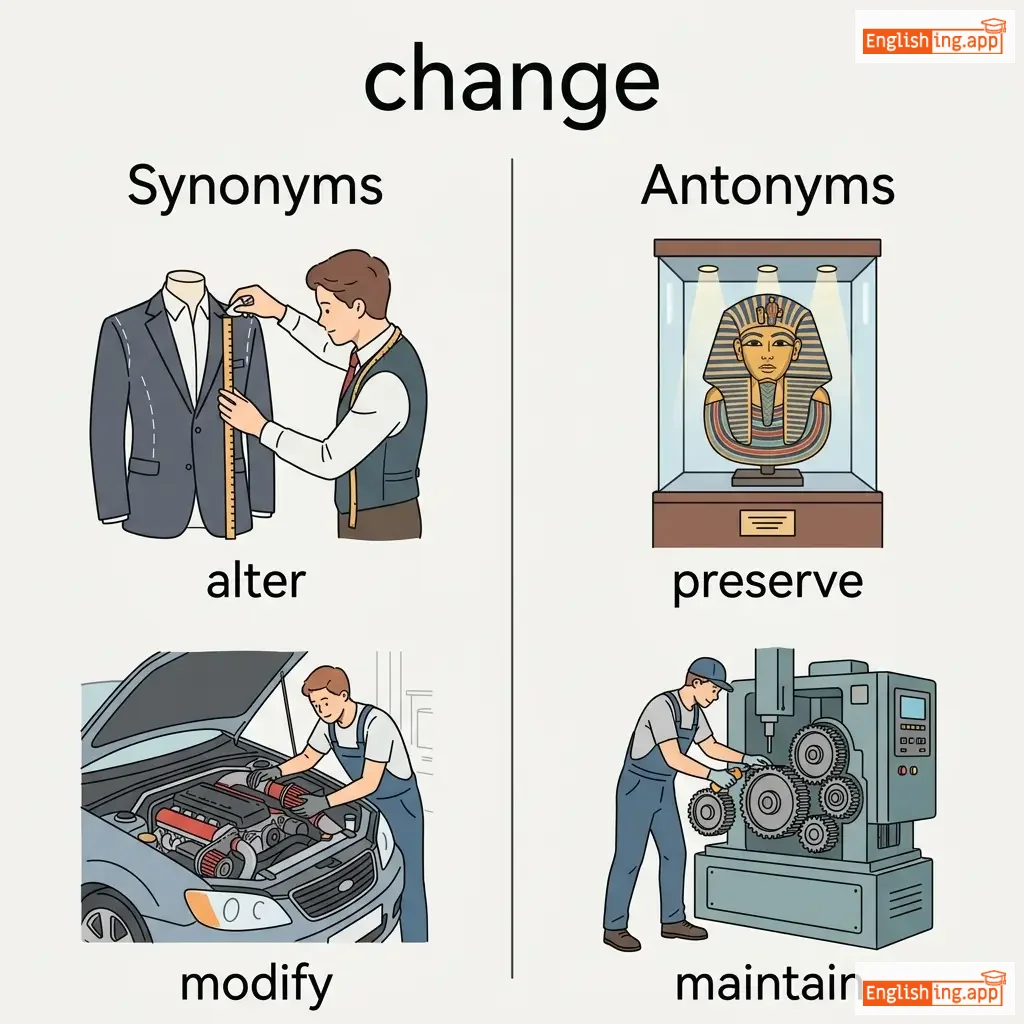
alter, modify, transform, adjust, shift
••••••
|
preserve, maintain, keep
••••••
|
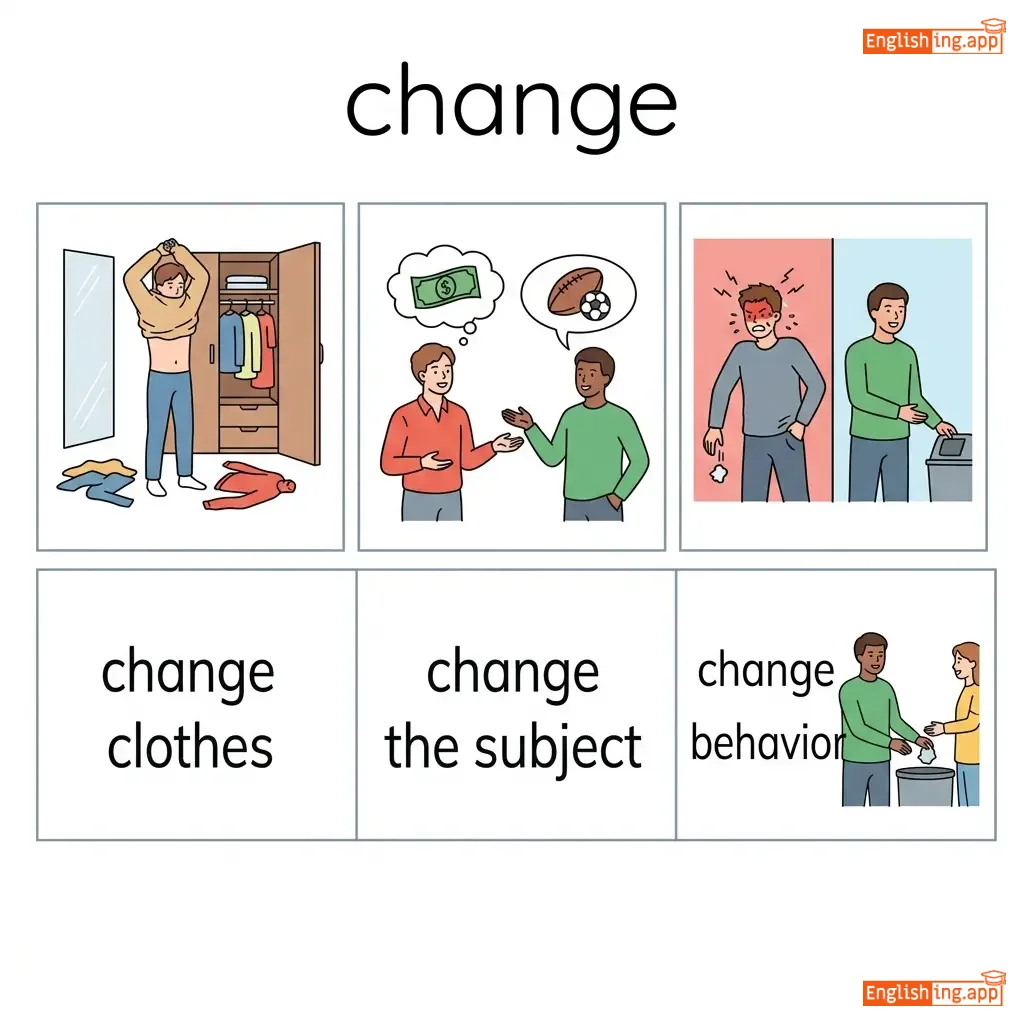
change clothes, change the subject, change behavior, change mind
••••••
|
Change意味着改变 – 在气候变化中,气候会发生变化 🌍
••••••
|
|
🔄
••••••
|
/ˈtʃeɪn.dʒə.bəl/
adjective
(tʃeɪndʒəbəl)
••••••
|
- •••••• |
可变的; 易变的
kě biàn de; yì biàn de
••••••
|
- •••••• | - •••••• | - •••••• | - •••••• |
able to be changed; likely to change frequently
••••••
|
The weather is very changeable in spring.
ðə wɛðər ɪz vɛri tʃeɪndʒəbəl ɪn sprɪŋ
••••••
|
春天的天气非常多变。
Chūntiān de tiānqì fēicháng duōbiàn.
••••••
|
- •••••• | - •••••• | - •••••• |
variable, unstable, inconsistent, fickle
••••••
|
stable, constant, fixed, unchanging
••••••
|
changeable weather, changeable mood, changeable conditions
••••••
|
Changeable = Change + Able,像是容易变化的东西。
••••••
|
|
🌦️
••••••
|
/ˈtʃeɪndʒɪŋ/
verb
(tʃeɪndʒɪŋ)
••••••
|
- •••••• |
变化
biànhuà
••••••
|
- •••••• | - •••••• | - •••••• |
changing
tʃeɪndʒɪŋ
••••••
|
The act of becoming different; ongoing process of change.
••••••
|
The weather is changing rapidly.
天气在快速变化。
••••••
|
天气在快速变化。
Tiānqì zài kuàisù biànhuà.
••••••
|
- •••••• | - •••••• | - •••••• |
modifying, altering, transforming, shifting
••••••
|
stable, constant, fixed
••••••
|
changing situation, changing world, changing role, changing rapidly
••••••
|
Changing 就是变化 – 换频道,画面就会变化!
••••••
|
|
📺
••••••
|
/ˈtʃænəl/
noun
(chánnèng)
••••••
|
- •••••• |
频道 / 媒介
píndào / méijiè
••••••
|
- •••••• | - •••••• | - •••••• | - •••••• |
A means of communication, or a passage for water or information.
••••••
|
They launched a new TV channel last year. |
他们去年推出了一个新的电视频道。
Tāmen qùnián tuīchūle yīgè xīn de diànshì píndào.
••••••
|
go through proper channels |
to follow the official or correct process
••••••
|
通过适当的渠道
Tōngguò shìdàng de qúdào
••••••
|
medium, passage, route, conduit, station
••••••
|
blockage, obstacle
••••••
|
TV channel, communication channel, sales channel, distribution channel
••••••
|
Channel 意味着媒介 – TV频道是信息的媒介 📺
••••••
|
|
🌪️
••••••
|
/ˈkeɪɒs/
noun
(kai-oss)
••••••
|
- •••••• |
混乱
hunluan
••••••
|
- •••••• | - •••••• | - •••••• | - •••••• |
A state of complete disorder and confusion.
••••••
|
The sudden storm caused chaos in the city. |
突如其来的暴风雨在城市中造成了混乱。
Tū rú qí lái de bào fēng yǔ zài chéng shì zhōng zào chéngle hùnluàn.
••••••
|
utter chaos |
a situation of complete and total disorder
••••••
|
彻底的混乱
chè dǐ de hùnluàn
••••••
|
disorder, confusion, turmoil, mayhem, pandemonium
••••••
|
order, harmony, calm
••••••
|
create chaos, chaos theory, complete chaos, chaos in
••••••
|
Chaos 就是大乱,完全是混乱!
••••••
|
|
📖
••••••
|
/ˈtʃæptər/
noun
(chāptér)
••••••
|
- •••••• |
章节
zhāngjié
••••••
|
- •••••• | - •••••• | - •••••• | - •••••• |
A main division of a book or a period in someone's life.
••••••
|
I just finished the first chapter of the novel. |
我刚刚完成了小说的第一章。
Wǒ gānggāng wánchéngle xiǎoshuō de dì yī zhāng.
••••••
|
a new chapter |
a new stage or phase in life
••••••
|
新的一章
xīn de yī zhāng
••••••
|
section, division, episode, part
••••••
|
whole, entirety
••••••
|
first chapter, last chapter, next chapter, chapter title
••••••
|
Chapter意思是章节– 新的一章,生活中的新阶段 📖
••••••
|
|
🎭
••••••
|
/ˈkærəktər/
noun
(kè rì kè tèr)
••••••
|
- •••••• |
角色
juésè
••••••
|
- •••••• | - •••••• | - •••••• | - •••••• |
the mental and moral qualities distinctive to an individual; a person in a story or play
••••••
|
The main character in the novel learns an important lesson. |
小说中的主角学到了一个重要的教训。
xiǎoshuō zhōng de zhǔjiǎo xué dào le yīgè zhòngyào de jiàoxùn.
••••••
|
out of character |
not typical behavior for someone
••••••
|
与角色不符
yǔ juésè bù fú
••••••
|
personality, nature, figure, role, persona
••••••
|
facelessness, anonymity
••••••
|
strong character, fictional character, moral character, character development
••••••
|
Character在中文里是角色,就像故事或戏剧中的人物一样。
••••••
|
|
🔑
••••••
|
/ˌkærəktəˈrɪstɪk/
noun/adjective
(kǎlèktérìstíc)
••••••
|
- •••••• |
特征
tèzhēng
••••••
|
- •••••• | - •••••• | - •••••• | - •••••• |
A distinguishing quality or feature of a person, place, or thing.
••••••
|
Kindness is a characteristic of true leadership.
善良是一个真正领导力的特征。
••••••
|
善良是一个真正领导力的特征。
Shànliáng shì yīgè zhēnzhèng lǐngdǎolì de tèzhēng.
••••••
|
Characteristic feature
特征特点
••••••
|
A notable quality that identifies something.
••••••
|
特征特点
tèzhēng tèdiǎn
••••••
|
trait, quality, feature, attribute, hallmark
••••••
|
anomaly, exception
••••••
|
unique characteristic, human characteristic, defining characteristic
••••••
|
Characteristic,想象它就是事物的特征。
••••••
|
|
🖊️
••••••
|
/ˈkærəktəraɪz/
verb
••••••
|
- •••••• | - •••••• |
characterized
••••••
|
characterized
••••••
|
characterizes
••••••
|
characterizing
••••••
|
to describe or portray the distinctive features or qualities of someone or something
••••••
|
The author characterizes the hero as brave and selfless. |
- •••••• |
characterize as |
to describe someone or something in a particular way
••••••
|
- •••••• |
depict, portray, define, describe, represent
••••••
|
misrepresent, distort
••••••
|
characterize as, clearly characterize, characterizes the style
••••••
|
No •••••• |
|
⚡
••••••
|
/tʃɑːrdʒ/
verb
(chāojí)
••••••
|
- •••••• |
收费/指控
shōufèi/zhǐkòng
••••••
|
charged
chāojíde
••••••
|
charged
chāojíde
••••••
|
charges
chāojíe
••••••
|
charging
chāojíng
••••••
|
to demand payment; to formally accuse; to rush forward aggressively
••••••
|
The store charges extra for home delivery.
商店收取额外的家居配送费用。
••••••
|
商店收取额外的家居配送费用。
Shāngdiàn shōuqǔ éwài de jiājū pèisòng fèiyòng.
••••••
|
charge someone with
指控某人
••••••
|
to accuse someone of a crime
••••••
|
指控某人
zhǐkòng mǒu rén
••••••
|
bill, accuse, attack, command
••••••
|
free, acquit, retreat
••••••
|
charge money, charge fee, charge battery, charge with crime
••••••
|
当手机没有电时,你必须支付费用。
••••••
|
|
🤲
••••••
|
/ˈtʃærəti/
noun
(慈善)
••••••
|
- •••••• |
慈善 / 慈善组织
cishan / cishan zuzhi
••••••
|
- •••••• | - •••••• | - •••••• | - •••••• |
an organization set up to provide help and raise money for those in need; kindness and tolerance in judging others
••••••
|
The charity raised funds to support homeless families.
慈善组织募集资金来帮助无家可归的家庭。
••••••
|
慈善组织募集资金来帮助无家可归的家庭。
Cishan zuzhi mubi zijin lai bangzhu wujiakegui de jiating.
••••••
|
charity begins at home
慈善从家开始
••••••
|
one should take care of their family before helping others
••••••
|
慈善从家开始
Cishan cong jia kaishi
••••••
|
philanthropy, generosity, organization, kindness
••••••
|
selfishness, greed
••••••
|
charity event, charity organization, give to charity, charity work
••••••
|
Charity 就是慈善 – 'Charity' 意味着帮助他人,像慈善一样
••••••
|
|
💫
••••••
|
/tʃɑːrm/
noun/verb
••••••
|
- •••••• | - •••••• |
charmed
••••••
|
charmed
••••••
|
charms
••••••
|
charming
••••••
|
the power or quality of delighting or attracting others; to attract or please greatly
••••••
|
Her smile never fails to charm everyone around her. |
- •••••• |
lucky charm |
an object believed to bring good luck
••••••
|
- •••••• |
appeal, allure, enchantment, fascination, captivate
••••••
|
repel, displease
••••••
|
personal charm, lucky charm, charm offensive
••••••
|
No •••••• |
|
✨
••••••
|
/ˈtʃɑːr.mɪŋ/
adjective
(查尔明)
••••••
|
- •••••• |
迷人
mírén
••••••
|
- •••••• | - •••••• | - •••••• | - •••••• |
Very pleasing or delightful in a way that attracts people.
••••••
|
The village is full of charming little houses.
这个村庄充满了迷人的小房子。
••••••
|
这个村庄充满了迷人的小房子。
Zhège cūnzhuāng chōngmǎnle mírén de xiǎo fángzi.
••••••
|
- •••••• | - •••••• | - •••••• |
attractive, delightful, enchanting, appealing, captivating
••••••
|
repulsive, unattractive, unpleasant
••••••
|
charming smile, charming personality, charming place, charming story
••••••
|
Charming, 就是迷人的意思,总是能吸引人。
••••••
|
|
📊
••••••
|
/tʃɑːrt/
noun
(chart)
••••••
|
- •••••• |
图表
tubiao
••••••
|
- •••••• | - •••••• | - •••••• | - •••••• |
a sheet of information in the form of a table, graph, or diagram
••••••
|
The teacher used a chart to explain the statistics. |
老师用图表来解释统计数据。
Laoshi yong tubiao lai jieshi tongji shuju.
••••••
|
top the charts |
to reach the number one position in sales or popularity
••••••
|
登上排行榜
deng shang paihangbang
••••••
|
graph, diagram, table, map
••••••
|
text, narrative
••••••
|
bar chart, pie chart, flow chart, music chart
••••••
|
图表 – 是一个形象化的数据
••••••
|
|
📜
••••••
|
/ˈtʃɑːrtər/
noun/verb
(查特)
••••••
|
- •••••• |
包机 / 租赁
baoji / zulin
••••••
|
chartered
查特德
••••••
|
chartered
查特德
••••••
|
charters
查特斯
••••••
|
chartering
查特灵
••••••
|
a written document granting rights or privileges; to hire a vehicle or vessel for temporary use
••••••
|
The company decided to charter a bus for the trip.
公司决定为旅行租用一辆巴士。
••••••
|
公司决定为旅行租用一辆巴士。
Gongsi jueding wei lvxing zuyong yi liang bashi.
••••••
|
charter flight
包机航班
••••••
|
a flight hired for exclusive use rather than a scheduled service
••••••
|
包机航班
baoji hangban
••••••
|
license, permit, hire, lease, commission
••••••
|
prohibit, deny
••••••
|
charter flight, charter bus, charter school, royal charter
••••••
|
Charter意味着信📜 + 租赁,像charter bus = 租一辆巴士
••••••
|
|
🏃♂️
••••••
|
/tʃeɪs/
verb
(chèisī)
••••••
|

|
追赶
zhuīgǎn
••••••
|
chased
chèisīde
••••••
|
chased
chèisīde
••••••
|
chases
chèisī
••••••
|
chasing
chèisīng
••••••
|
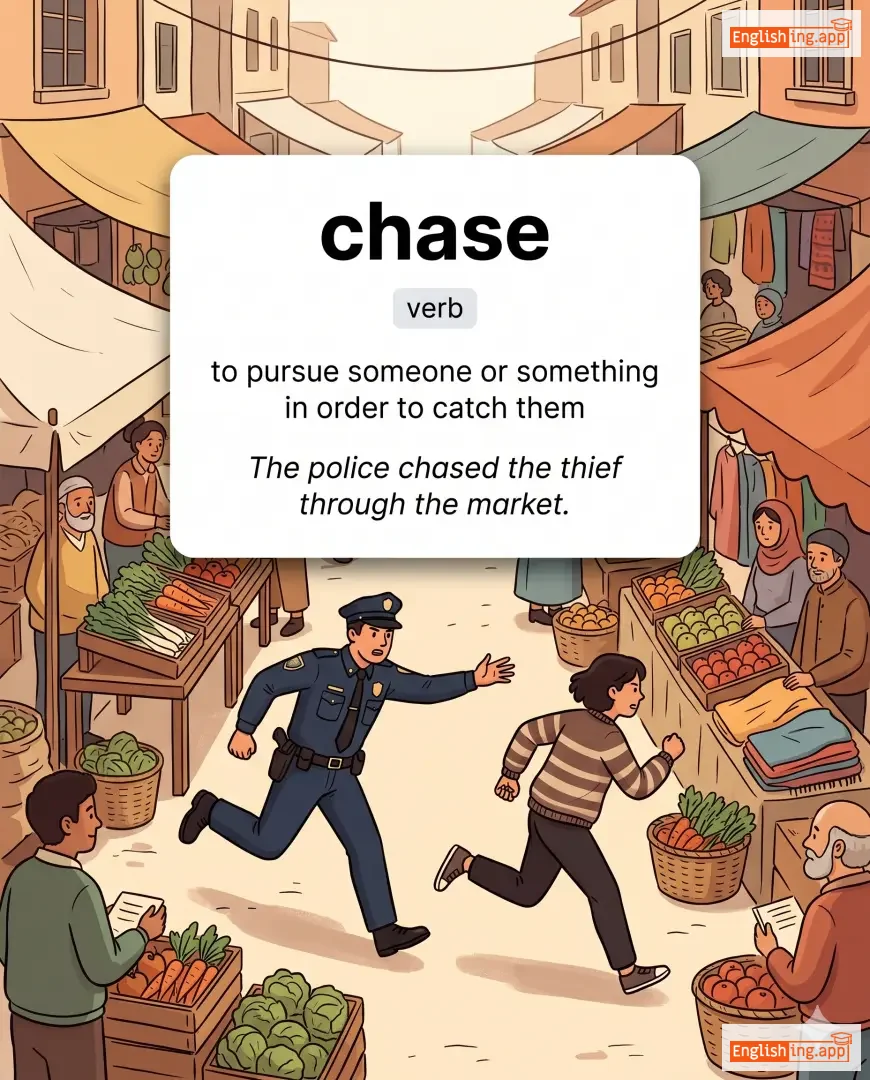
to pursue someone or something in order to catch them
••••••
|
The police chased the thief through the market.
警察在市场上追赶小偷。
••••••
|
警察在市场上追赶小偷。
Jǐngchá zài shìchǎng shàng zhuīgǎn xiǎotōu.
••••••
|
chase rainbows
追逐彩虹
••••••
|
to pursue unrealistic goals
••••••
|
追逐彩虹
zhuīzhú cǎihóng
••••••
|
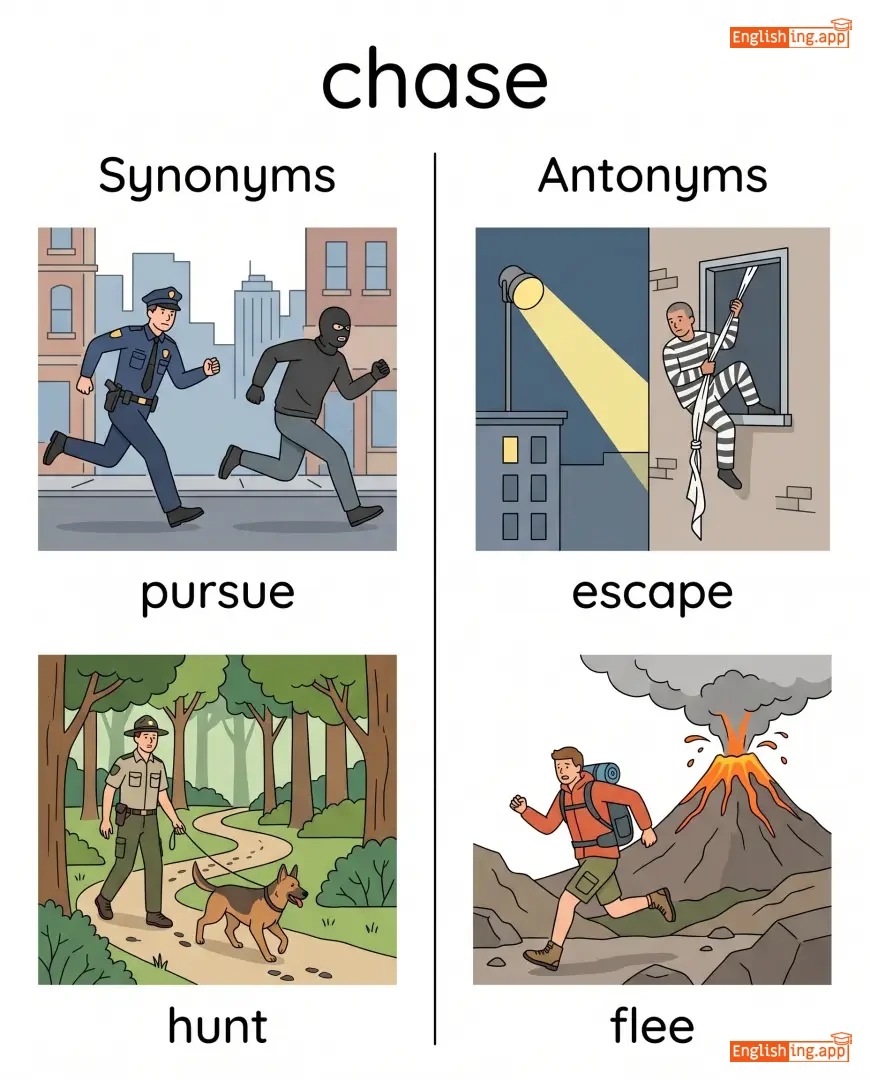
pursue, hunt, follow, track, run after
••••••
|
escape, flee, avoid
••••••
|
chase dreams, chase away, chase down, chase after
••••••
|
Chase 的意思是追赶,像孩子们在游戏中追逐一样。
••••••
|
|
💬
••••••
|
/tʃæt/
noun; verb
(恰特)
••••••
|
- •••••• |
聊天
liaotian
••••••
|
chatted
恰特德
••••••
|
chatted
恰特德
••••••
|
chats
恰特斯
••••••
|
chatting
恰特英
••••••
|
an informal conversation; to talk in a friendly, informal way
••••••
|
We had a long chat after dinner.
我们有一次很长的恰特在晚饭后。
••••••
|
晚饭后我们聊了很久。
wanfan hou women liao le hen jiu
••••••
|
have a chat
哈夫 阿 恰特
••••••
|
to talk informally with someone
••••••
|
聊一聊
liao yi liao
••••••
|
talk, converse, gossip, discuss, chitchat
••••••
|
ignore, silence
••••••
|
have a chat, casual chat, online chat, friendly chat
••••••
|
Chat 就是 聊天—朋友之间最常见。
••••••
|
|
💲
••••••
|
/tʃiːp/
adjective
(奇普)
••••••
|
- •••••• |
便宜
pianyi
••••••
|
- •••••• | - •••••• | - •••••• | - •••••• |
low in cost; inexpensive
••••••
|
This shop sells clothes at very cheap prices. |
这家商店以非常便宜的价格出售衣服。
Zhe jia shangdian yi feichang pianyi de jiage chushou yifu.
••••••
|
dirt cheap |
extremely inexpensive
••••••
|
非常便宜
feichang pianyi
••••••
|
inexpensive, low-cost, budget, economical, affordable
••••••
|
expensive, costly
••••••
|
cheap price, cheap clothes, cheap hotel, cheap deal
••••••
|
便宜就是便宜,记住它的发音
••••••
|
|
🤥
••••••
|
/tʃiːt/
verb
(hǎipīnèisī)
••••••
|
|
幸福
xìngfú
••••••
|
cheated
••••••
|
cheated
••••••
|
cheats
••••••
|
cheating
••••••
|
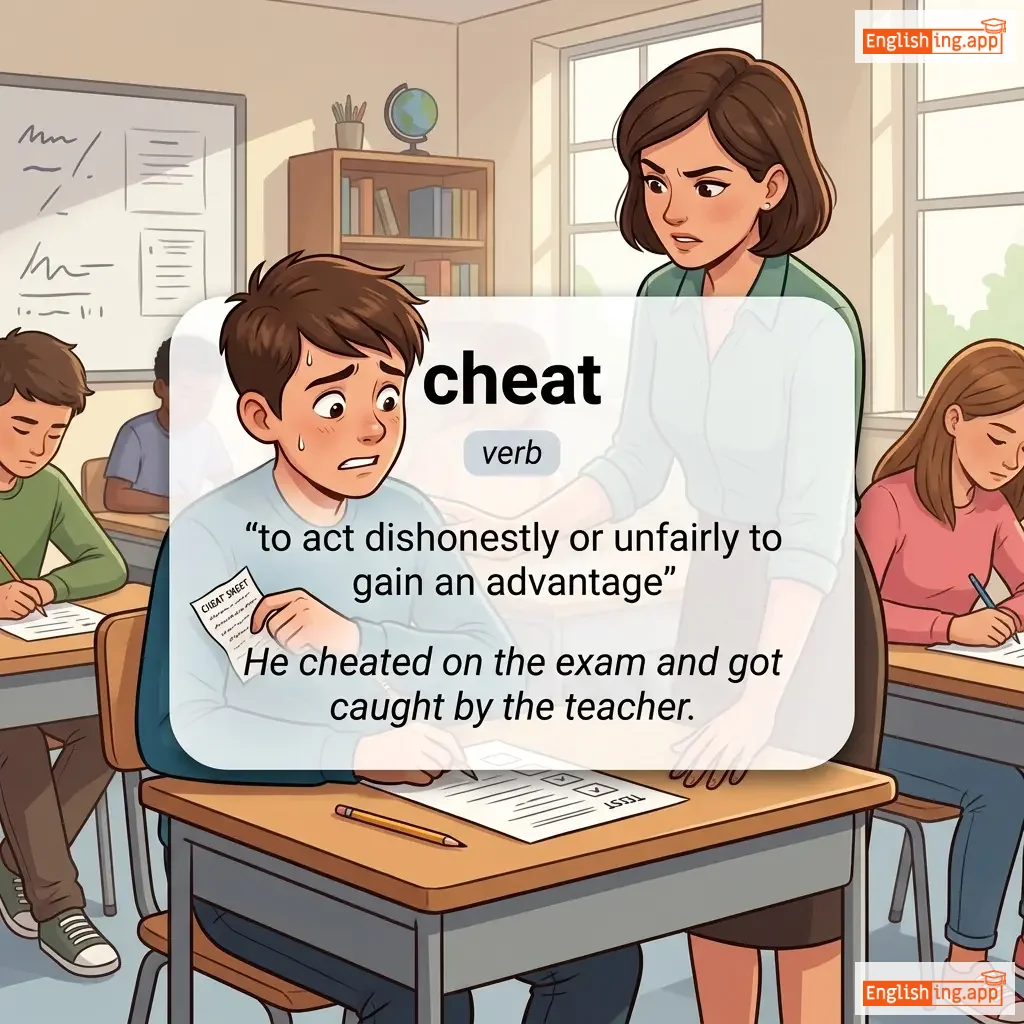
to act dishonestly or unfairly to gain an advantage
••••••
|
He cheated on the exam and got caught by the teacher. |
她在收到奖项时,无法掩饰自己的幸福。
Tā zài shōudào jiǎngxiàng shí, wúfǎ yǎnshì zìjǐ de xìngfú.
••••••
|
cheat death |
to narrowly escape death
••••••
|
追求幸福
zhuīqiú xìngfú
••••••
|
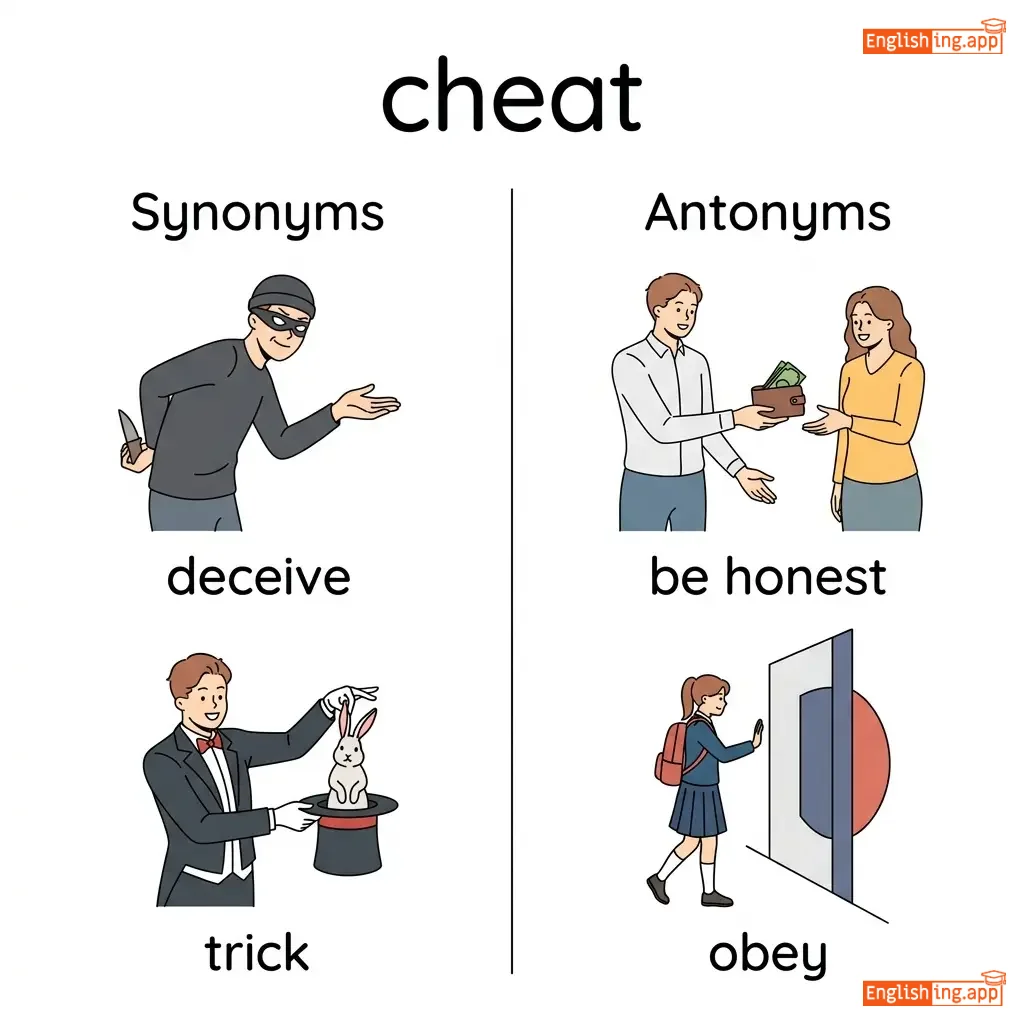
deceive, trick, defraud, mislead, con
••••••
|
be honest, obey
••••••
|
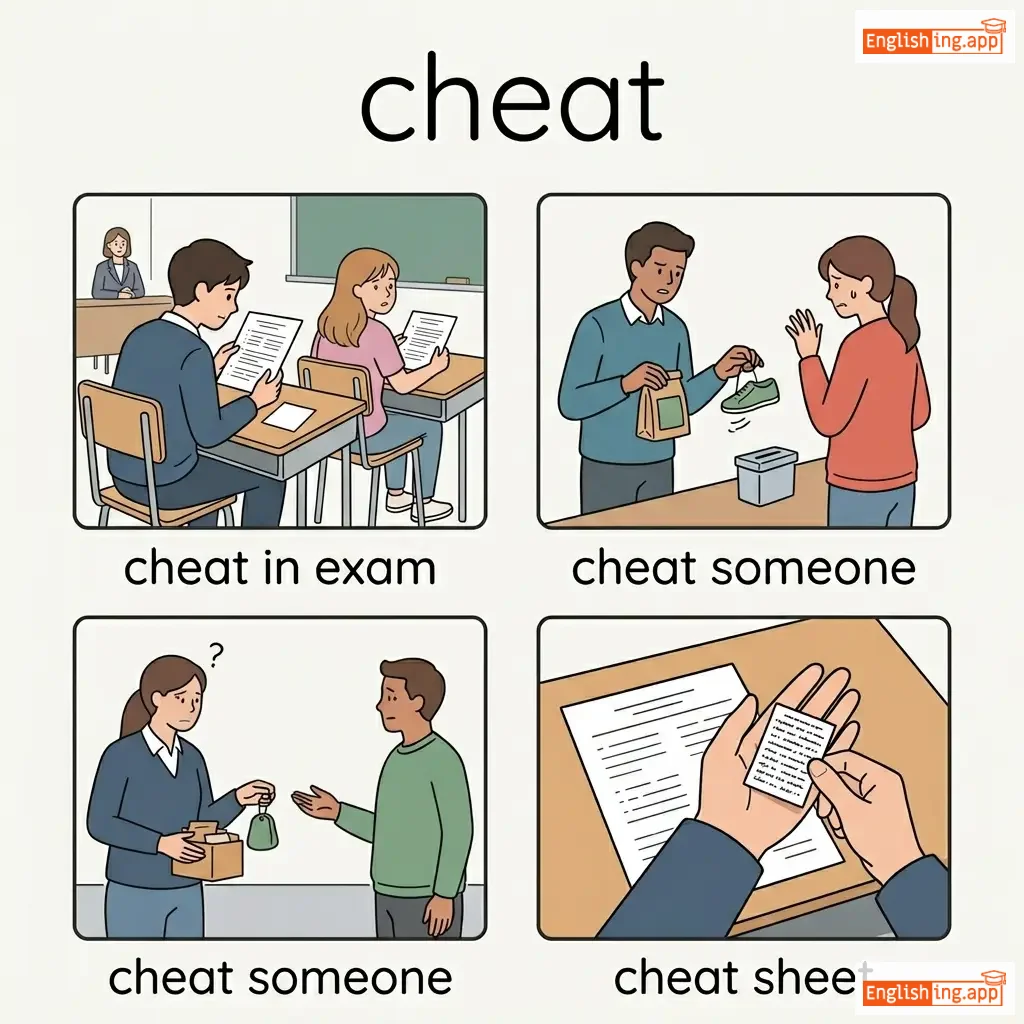
cheat in exam, cheat someone, cheat sheet, cheat code
••••••
|
幸福是走向美好生活的道路。
••••••
|
|
🤥
••••••
|
/ˈtʃiːtər/
noun
(奇特)
••••••
|
- •••••• |
作弊者
zuobizhe
••••••
|
- •••••• | - •••••• | - •••••• | - •••••• |
a person who cheats or acts dishonestly to gain an advantage
••••••
|
He was caught and labeled as a cheater during the exam.
他在考试中被称为作弊者。
••••••
|
他在考试中被称为作弊者。
ta zai kaoshi zhong bei chengwei zuobizhe
••••••
|
once a cheater, always a cheater
一次作弊,永远作弊
••••••
|
someone who cheats once is likely to cheat again
••••••
|
一次作弊,永远作弊
yi ci zuobi yongyuan zuobi
••••••
|
fraud, swindler, deceiver, trickster, impostor
••••••
|
honest person, fair player, truth-teller
••••••
|
exam cheater, habitual cheater, notorious cheater, cheating scandal
••••••
|
cheater 就是 作弊者
••••••
|
|
✔️
••••••
|
/tʃɛk/
verb, noun
(chek)
••••••
|
- •••••• |
检查
jiǎnchá
••••••
|
checked
cheked
••••••
|
checked
cheked
••••••
|
checks
cheks
••••••
|
checking
cheking
••••••
|
To examine, inspect, or verify something; also a written order to a bank to pay money.
••••••
|
Please check the report before submitting it.
请在提交之前检查报告。
••••••
|
请在提交之前检查报告。
Qǐng zài tíjiāo zhīqián jiǎnchá bàogào.
••••••
|
check in
登记
••••••
|
To register upon arrival, typically at a hotel or airport.
••••••
|
登记
dēngjì
••••••
|
inspect, examine, verify, review, control
••••••
|
ignore, neglect, overlook
••••••
|
check report, check balance, check in, check out
••••••
|
Check 是 ✔️ — 确认是否一切正常。
••••••
|
|
😊
••••••
|
/tʃiːk/
noun
(chīk)
••••••
|
- •••••• |
脸颊
lianjia
••••••
|
- •••••• | - •••••• | - •••••• | - •••••• |
either side of the face below the eye; impudent boldness
••••••
|
She kissed him on the cheek. |
她亲吻了他的脸颊。
Tā qīnwěnle tā de liǎnjiá.
••••••
|
turn the other cheek |
to respond to an insult without retaliation
••••••
|
转过另一边脸颊
zhuǎn guò lìng yī biān liǎnjiá
••••••
|
face, boldness, nerve, audacity
••••••
|
politeness, humility
••••••
|
rosy cheek, kiss on cheek, slap on cheek, chubby cheeks
••••••
|
Cheek意味着脸颊 – 淘气的孩子总是亲吻脸颊
••••••
|
|
🎉
••••••
|
/tʃɪər/
verb
(qì'ěr)
••••••
|
- •••••• |
欢呼
huānhū
••••••
|
cheered
qì'érd
••••••
|
cheered
qì'érd
••••••
|
cheers
qì'érs
••••••
|
cheering
qì'éring
••••••
|
to shout in encouragement or support; to make someone feel happier
••••••
|
The fans cheered loudly when their team scored a goal.
fēnsī dāng tāmen duì tāmen de tuánduì chū gōngbài shí huò.
••••••
|
当他们的队伍得分时,球迷大声欢呼。
dāng tāmen de duìwǔ défēn shí, qiúmí dàshēng huānhū.
••••••
|
cheer up
zhìzhōng zhōngzhù
••••••
|
to become happier or to make someone feel happier
••••••
|
给某人加油
gěi mǒu rén jiāyóu
••••••
|
applaud, encourage, boost, inspire, uplift
••••••
|
boo, depress
••••••
|
cheer up, cheer for, cheer loudly, cheer crowd
••••••
|
cheer 人们增加愉快像啦啦队!
••••••
|
|
😊
••••••
|
/ˈtʃɪə.fəl/
adjective
(qiérfúl)
••••••
|
- •••••• |
愉快的; 乐观的; 充满喜悦
yúkuài de; lèguān de; chōngmǎn xǐyuè
••••••
|
- •••••• | - •••••• | - •••••• | - •••••• |
happy and optimistic; full of joy and good spirits; bright and lively
••••••
|
She has a cheerful personality that brightens everyone's day. |
她有一个愉快的个性,照亮了每个人的日子。
Tā yǒu yīgè yúkuài de gèxìng, zhàoliàngle měi gèrén de rìzi.
••••••
|
- •••••• | - •••••• | - •••••• |
happy, joyful, upbeat, bright, merry
••••••
|
sad, gloomy, cheerless, depressed, melancholy
••••••
|
cheerful smile, cheerful mood, cheerful disposition, cheerful voice
••••••
|
想象 '愉快的' 就是像阳光一样明亮的笑容。
••••••
|
|
😊
••••••
|
/ˈtʃɪəfəli/
adverb
(切尔富利)
••••••
|
- •••••• |
愉快地
yukuaide
••••••
|
- •••••• | - •••••• | - •••••• | - •••••• |
in a happy and positive manner; with visible good spirits
••••••
|
She greeted everyone cheerfully despite the long day.
西 格里蒂德 艾弗里万 切尔富利
••••••
|
尽管一天很长,她还是愉快地向大家打招呼。
Jingguan yitian hen chang ta haishi yukuaide xiang dajia dazhaohu
••••••
|
- •••••• | - •••••• | - •••••• |
happily, gladly, joyfully, merrily, brightly
••••••
|
sadly, gloomily, miserably
••••••
|
smile cheerfully, speak cheerfully, greet cheerfully, laugh cheerfully
••••••
|
愉快地 就是 cheerful 的感觉
••••••
|
|
🧀
••••••
|
/tʃiːz/
noun
(chīz)
••••••
|
- •••••• |
奶酪
nǎilào
••••••
|
- •••••• | - •••••• | - •••••• | - •••••• |
a dairy product made from curdled or cultured milk
••••••
|
She sliced some cheese for the sandwich.
她为三明治切了一些奶酪。
••••••
|
她为三明治切了一些奶酪。
Tā wèi sānmíngzhì qiēle yīxiē nǎilào.
••••••
|
say cheese
说奶酪
••••••
|
a phrase used when asking people to smile for a photo
••••••
|
说奶酪
Shuō nǎilào
••••••
|
dairy, curd, fromage, cheddar, mozzarella
••••••
|
milk, yogurt
••••••
|
cheese sandwich, grated cheese, cream cheese, cheese platter
••••••
|
Cheese意味着🧀奶酪,拍照时说'说奶酪'并微笑。
••••••
|
|
👨🍳
••••••
|
/ʃɛf/
noun
••••••
|
|
- •••••• | - •••••• | - •••••• | - •••••• | - •••••• |
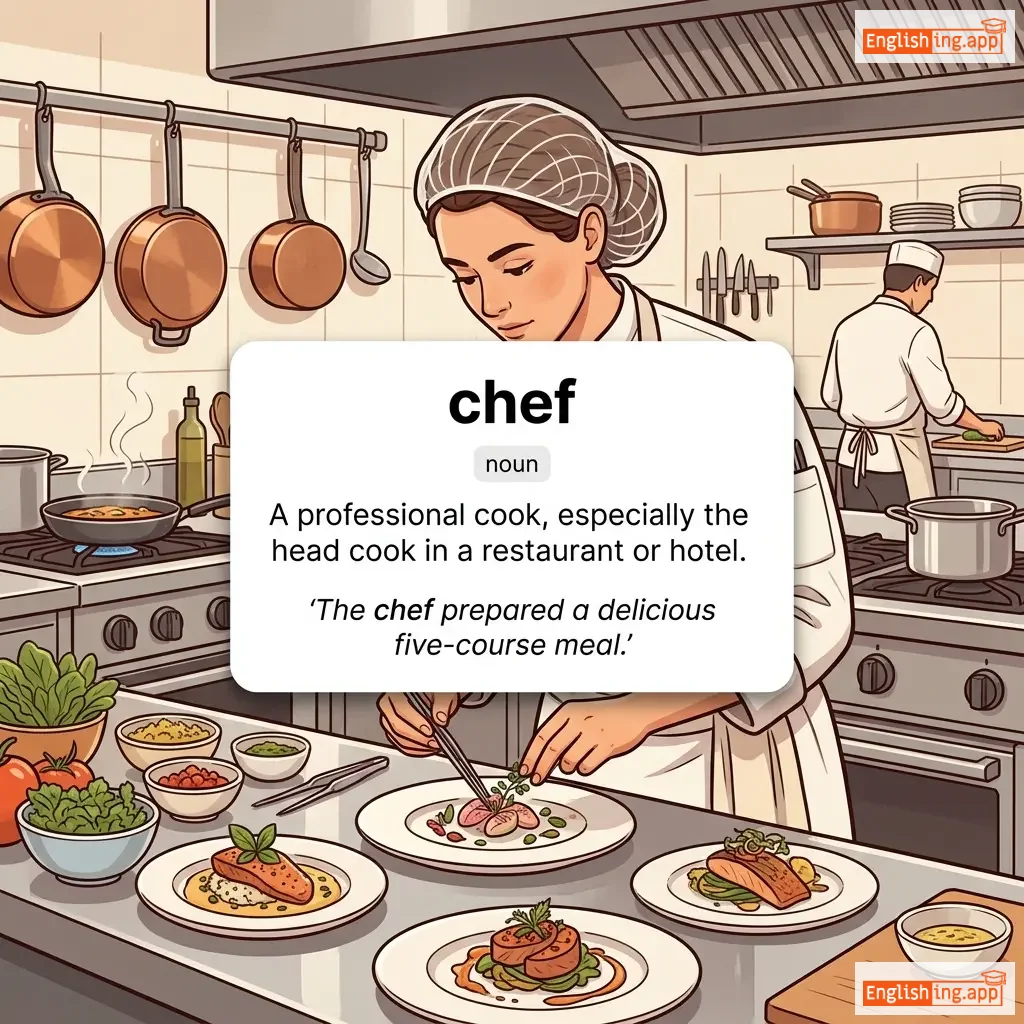
A professional cook, especially the head cook in a restaurant or hotel.
••••••
|
The chef prepared a delicious five-course meal. |
- •••••• |
too many chefs spoil the broth |
If too many people are involved in managing something, it may fail.
••••••
|
- •••••• |
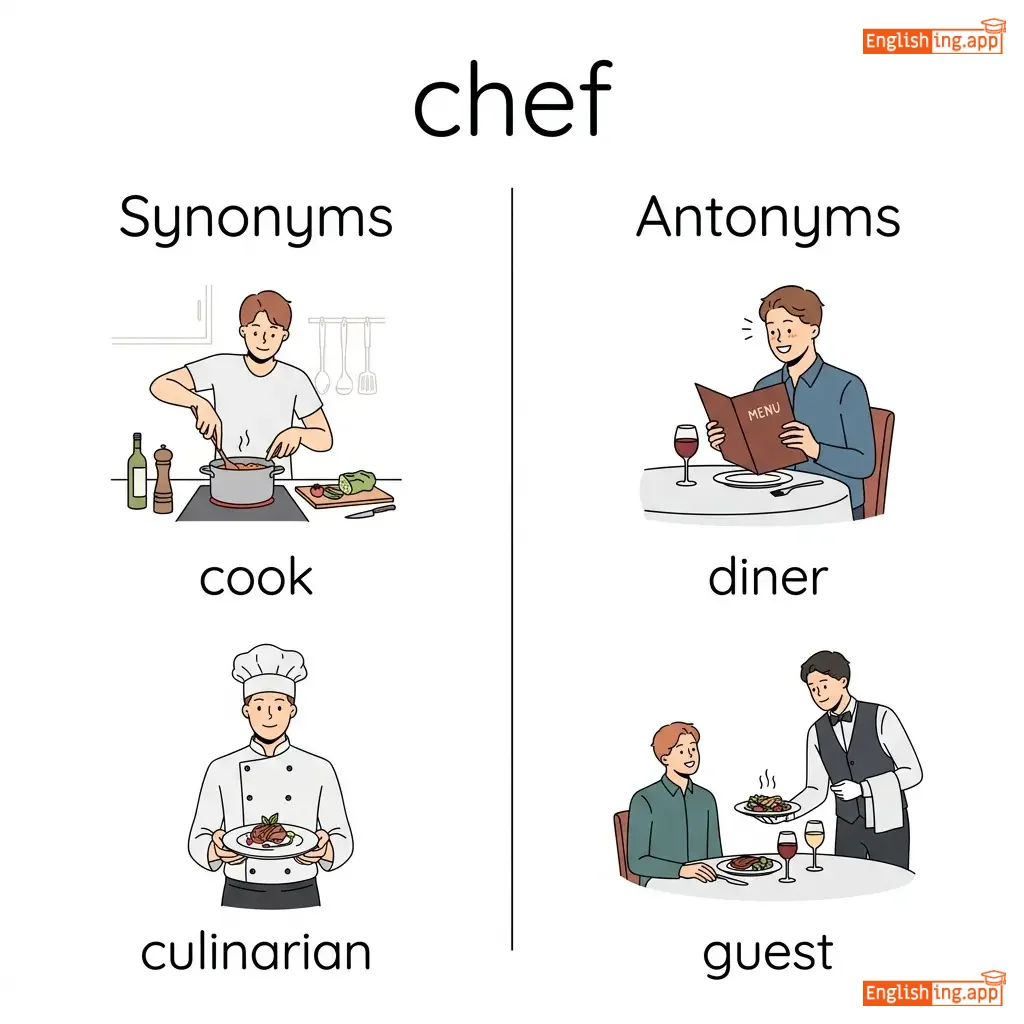
cook, culinarian, head cook, gourmet, culinary artist
••••••
|
diner, guest, customer
••••••
|
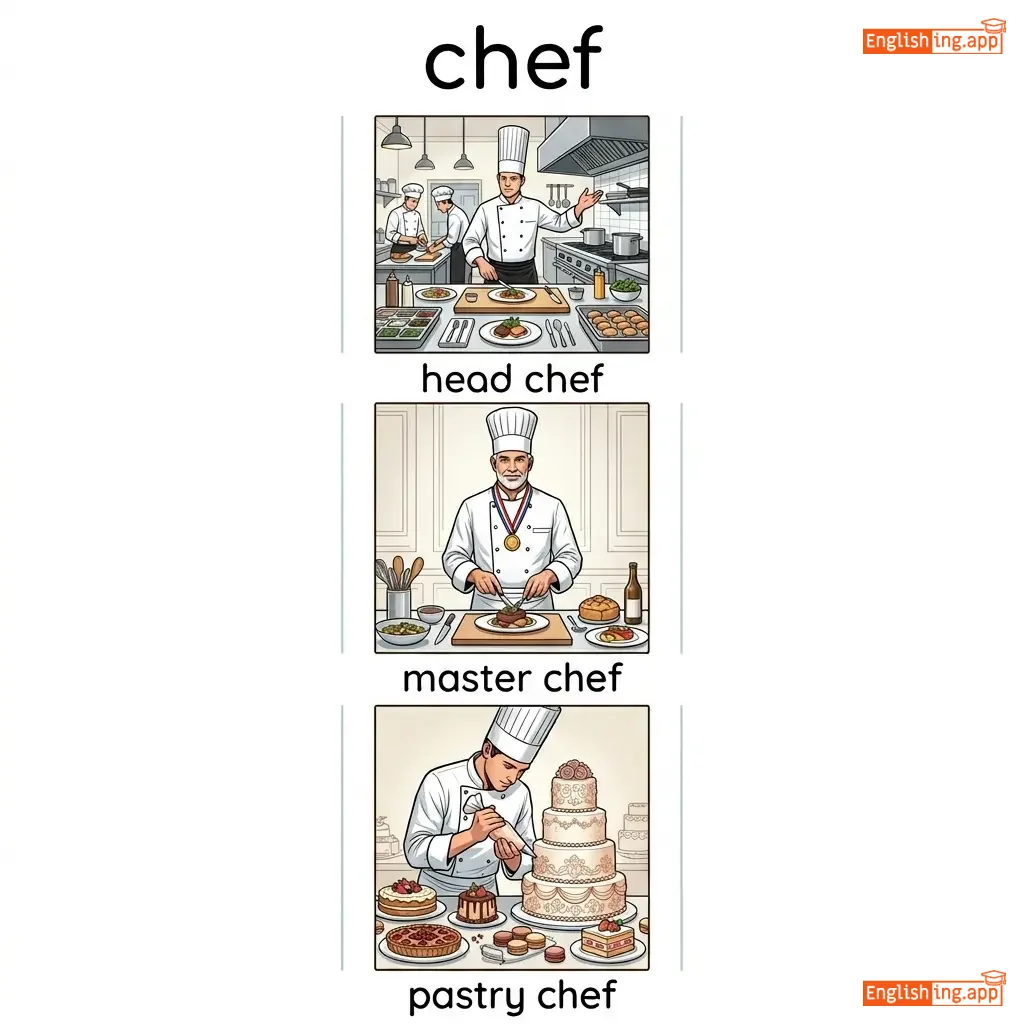
head chef, master chef, pastry chef, celebrity chef
••••••
|
No •••••• |
|
⚗️
••••••
|
/ˈkɛmɪkəl/
noun
(凯米克尔)
••••••
|
- •••••• |
化学物质
huàxué wùzhì
••••••
|
- •••••• | - •••••• | - •••••• | - •••••• |
a substance produced by or used in a chemical process
••••••
|
The factory releases harmful chemicals into the river. |
工厂将有害的化学物质排放到河中。
Gōngchǎng jiāng yǒuhài de huàxué wùzhì pái fàng dào hé zhōng.
••••••
|
chemical reaction |
a process in which substances interact to form new substances
••••••
|
化学反应
huàxué fǎnyìng
••••••
|
compound, substance, element, reagent, solution
••••••
|
natural, organic
••••••
|
toxic chemicals, chemical reaction, chemical industry, chemical warfare
••••••
|
Chemical = 凯米克尔, 化学物质, 用于工厂。
••••••
|

