Robots and Rivers Hackathon
他们掷出了新桌游的唯一 die 来开始会议。 每个参与者必须 dip 湖水以测试传感器。 机器人沿着赛道飞驰,跟随白色的 dot。 主持人不断将节日歌曲 dubbing 到声乐循环中。 最后期限是九十分钟,因此所有任务必须在傍晚之前 due。 每个团队都作为两人一组的 duo 工作。 该项目可能为城市启动一个新的能源 era。 简报结束时说:“etc 不谈,抓住核心思想。” 参与者将人工 eye 模块安装到他们的赛博视觉护目镜上。 午餐时,大家享用了 fat-free 汤。 培训师收取了一小笔 fee 作为入场费。 当机器人完成任务时,仅剩下 few 分钟。 Jewel 说:“for 我们的河流,我们带来了这项技术。” Jione 的外套上软软的 fur 领子让大家惊讶。 为了庆祝多样性,他们的团队取名为 'gay Binary'。 在活动中,一支乐队进行了现场 gig 演出。 长时间的会议后,每个人都有一种强烈的 gut feeling 成功的感觉。 当地的 guy Rifat 看着他们的动手工作,给了他们很多鼓励。 他们坐在学校操场上堆积的干 hay 上,规划下一步的行动。 协调员微笑着说:“her handwriting 非常清晰。”
|
表情符号
|
单词 | Images | 翻译 | 过去时 | 过去分词 | 第三人称单数 | 动名词 | 含义 | 例句 | 例句翻译 | 示例表达 | 示例表达含义 | 示例表达翻译 | 同义词 | 反义词 | 搭配词 | 助记符 |
|---|---|---|---|---|---|---|---|---|---|---|---|---|---|---|---|---|---|
|
⚰️
••••••
|
/daɪ/
verb
(dai)
••••••
|
|
死亡
sǐwáng
••••••
|
died
daid
••••••
|
died
daid
••••••
|
dies
dais
••••••
|
dying
daiing
••••••
|
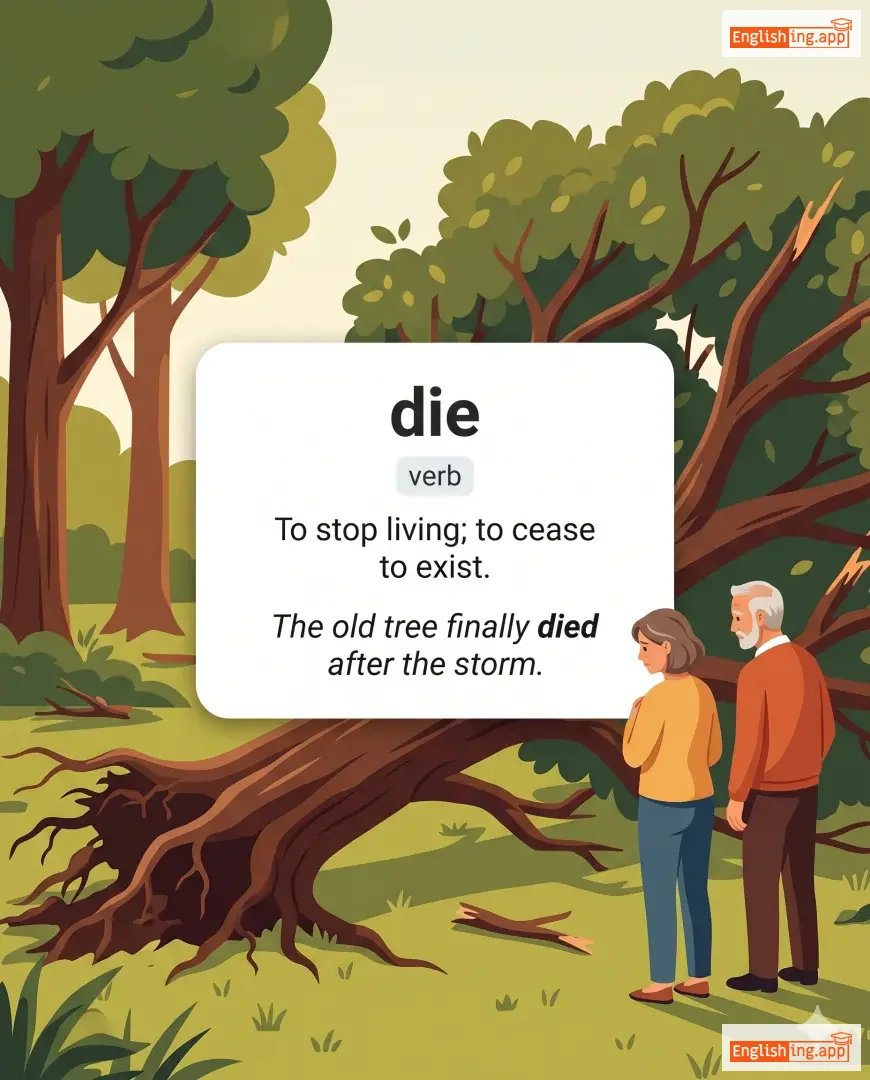
To stop living; to cease to exist.
••••••
|
The old tree finally died after the storm.
de old tree fainali daid afte de storm.
••••••
|
在风暴之后,老树终于死了。
Zài fēngbào zhīhòu, lǎo shù zhōngyú sǐle.
••••••
|
die hard
dai hard
••••••
|
To disappear or change very slowly, if at all
••••••
|
慢慢消失
màn man xiāoshī
••••••
|
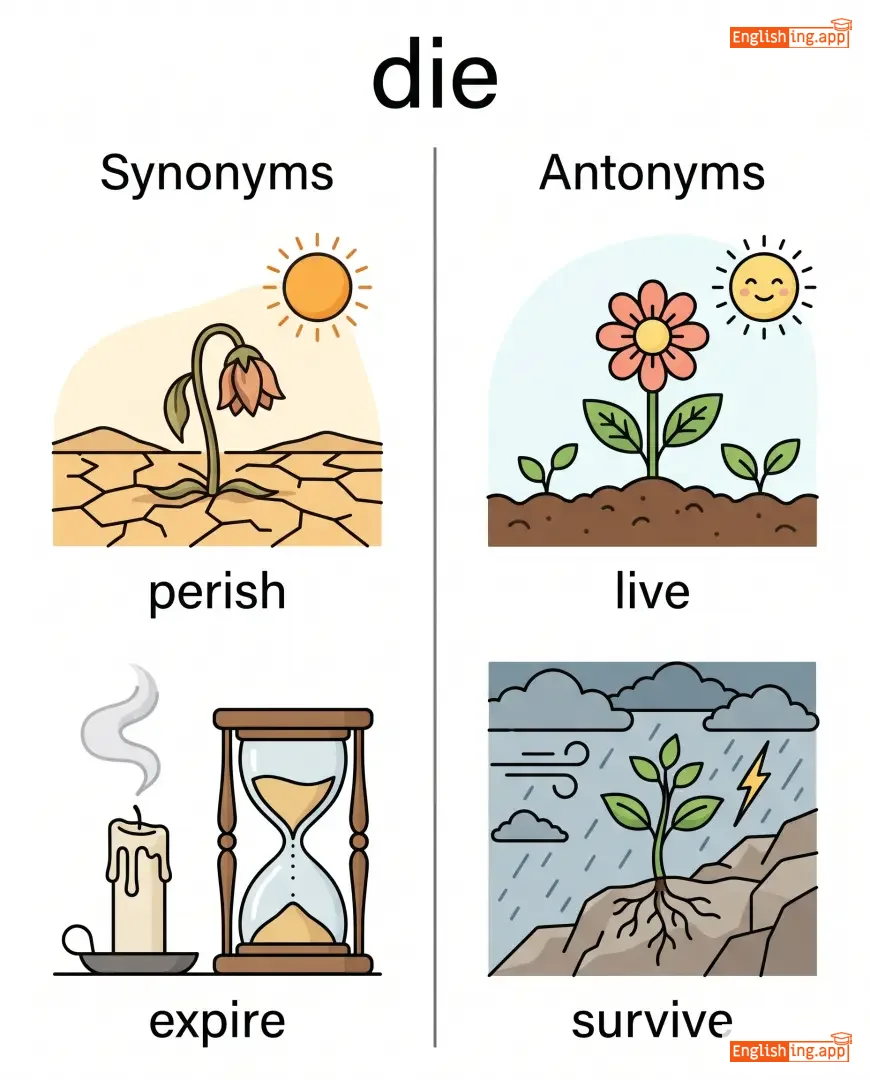
perish, expire, pass away, cease, decease
••••••
|
live, survive, exist
••••••
|
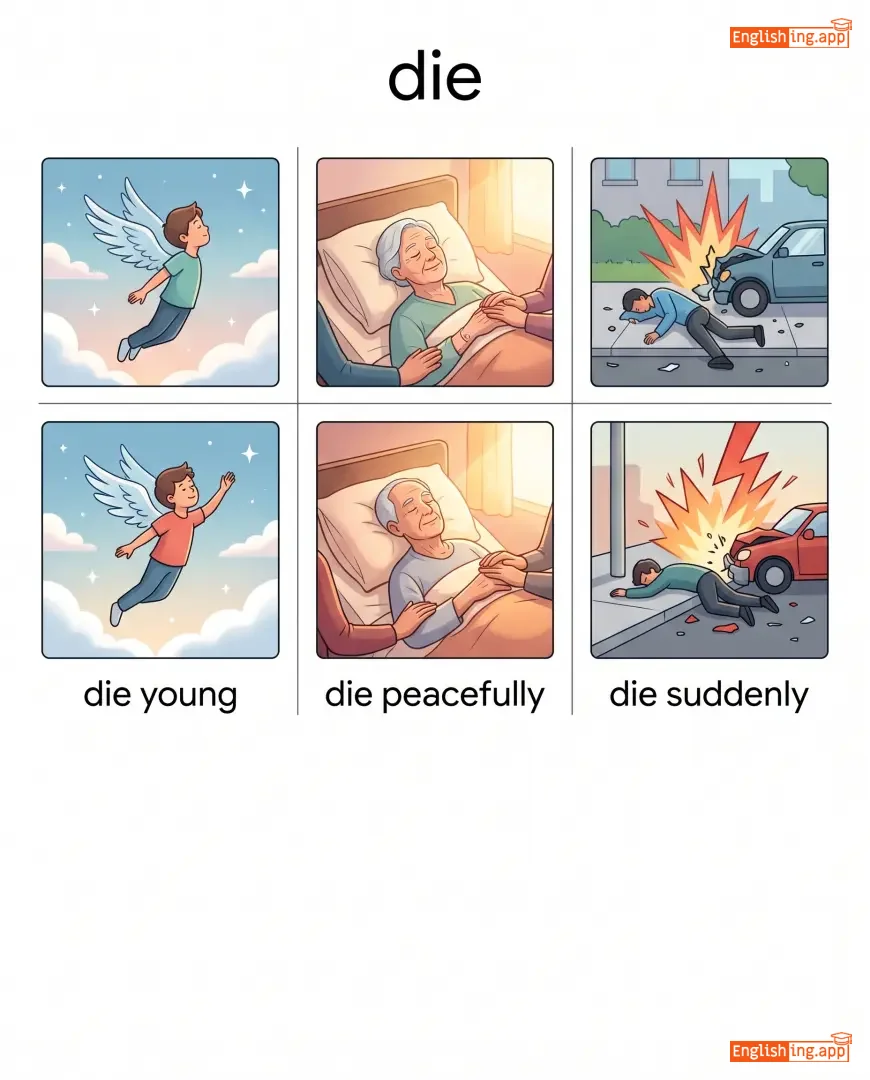
die young, die peacefully, die suddenly, die from
••••••
|
Die 意思是死亡,记住: 'Die 就是活不下去了'
••••••
|
|
🥣
••••••
|
/dɪp/
verb
(迪普)
••••••
|
- •••••• |
浸泡
jìnpào
••••••
|
dipped
迪普德
••••••
|
dipped
迪普德
••••••
|
dips
迪普斯
••••••
|
dipping
迪平
••••••
|
to put something quickly into a liquid and take it out again
••••••
|
She dipped her bread into the soup.
她把面包浸入汤中。
••••••
|
她把面包浸入汤中。
Tā bǎ miànbāo jìn rù tāng zhōng.
••••••
|
dip your toes in
小心尝试新事物
••••••
|
to try something new carefully or slowly
••••••
|
小心尝试新事物
xiǎoxīn chángshì xīn shìwù
••••••
|
immerse, submerge, sink, plunge, dunk
••••••
|
lift, raise, dry
••••••
|
dip in water, dip sauce, dip stick, dip temperature
••••••
|
把面包浸入汤中 - 这就是 DIP!
••••••
|
|
🔴
••••••
|
/dɒt/
noun
(点)
••••••
|
- •••••• |
点
dian
••••••
|
- •••••• | - •••••• | - •••••• | - •••••• |
a small round mark or spot
••••••
|
She drew a red dot on the paper. |
她在纸上画了一个红点。
Tā zài zhǐ shàng huàle yīgè hóng diǎn.
••••••
|
connect the dots |
to understand the relationship between different facts
••••••
|
连接点
liánjiē diǎn
••••••
|
spot, speck, point, mark, stain
••••••
|
blank, void
••••••
|
dot pattern, dot matrix, red dot, connect dots
••••••
|
Dot 意味着点 — 就像在 Google.com 的每个域名中看到的点!
••••••
|
|
🎬
••••••
|
/dʌb/
verb
(dub)
••••••
|
- •••••• |
配音
peiyin
••••••
|
dubbed
dabe
••••••
|
dubbed
dabe
••••••
|
dubs
dabs
••••••
|
dubbing
dubbing
••••••
|
to give a name or label to something; to add a soundtrack to a film or recording
••••••
|
The movie was dubbed into several languages for international release.
这部电影为国际发行而配音成多种语言。
••••••
|
这部电影为国际发行而配音成多种语言。
Zhe bu dian ying wei guoji faxiang er peiyin cheng duozhong yuyan.
••••••
|
- •••••• | - •••••• | - •••••• |
name, label, dub over, voice over
••••••
|
misname, unlabel
••••••
|
dub a movie, dub in a voice, dub over a film
••••••
|
想象为电影配音!
••••••
|
|
📅
••••••
|
/djuː/
adjective
(diu)
••••••
|
- •••••• |
到期 / 应付
daoqi / yingfu
••••••
|
- •••••• | - •••••• | - •••••• | - •••••• |
expected at a certain time or required by a certain date
••••••
|
The rent is due on the first of every month. |
租金应在每个月的第一天到期。
Zujin ying zai mei ge yue de di yi tian daoqi.
••••••
|
due date |
the final day something must be completed or paid
••••••
|
到期日
daoqi ri
••••••
|
expected, scheduled, payable, owed, anticipated
••••••
|
unexpected, optional, unnecessary
••••••
|
due date, due payment, due process, due respect
••••••
|
‘Due’就是‘到期’,记住在到期日之前支付租金!
••••••
|
|
🎶
••••••
|
/ˈdjuːəʊ/
noun
(双人组合)
••••••
|
- •••••• |
二重奏
èrchóngzòu
••••••
|
- •••••• | - •••••• | - •••••• | - •••••• |
a pair of people or things, especially in music or entertainment
••••••
|
The musical duo performed their latest hit at the concert. |
这个音乐二重奏在音乐会上演奏了他们的最新热门曲。
Zhège yīnyuè èrchóngzòu zài yīnyuè huì shàng yǎnzòu le tāmen de zuìxīn rèmén qū.
••••••
|
- •••••• | - •••••• | - •••••• |
pair, couple, team, twosome
••••••
|
solo, individual
••••••
|
musical duo, comedy duo, famous duo
••••••
|
A duo is like two musicians harmonizing together!
••••••
|
|
⏳
••••••
|
/ˈɪərə/
noun
(时代)
••••••
|
- •••••• |
时代
shidai
••••••
|
- •••••• | - •••••• | - •••••• | - •••••• |
a long and distinct period of history with a particular feature or characteristic
••••••
|
The invention of the internet marked a new era in communication. |
互联网的发明标志着通信新时代的开始。
Hulianwang de faming biaozhizhe tongxin xinxidai de kaishi.
••••••
|
end of an era |
the close of a significant period in history or someone's life
••••••
|
一个时代的结束
yige shidai de jieshu
••••••
|
age, epoch, period, time, generation
••••••
|
moment, instant, short-term
••••••
|
modern era, digital era, new era, Victorian era
••••••
|
时代就像'数字时代'一样,可以想象这个'时代'是一个特别的时间段。
••••••
|
|
➕
••••••
|
/ɛtˈsɛtərə/
abbreviation
(艾特塞特拉)
••••••
|
- •••••• |
等等
deng deng
••••••
|
- •••••• | - •••••• | - •••••• | - •••••• |
Used to indicate additional, similar items in a list that are not mentioned.
••••••
|
The shop sells fruits, vegetables, dairy, etc. |
商店出售水果、蔬菜、乳制品等等。
Shāngdiàn chūshòu shuǐguǒ, shūcài, rǔzhìpǐn děng děng.
••••••
|
- •••••• | - •••••• | - •••••• |
and so on, and the rest, and others
••••••
|
none
••••••
|
etc., and so on, etcetera list
••••••
|
etc = 等等 ➕ = 还有类似的东西
••••••
|
|
👁️
••••••
|
/aɪ/
noun
(aī)
••••••
|
- •••••• |
眼睛
yanjing
••••••
|
- •••••• | - •••••• | - •••••• | - •••••• |
the organ in the head through which people and animals see
••••••
|
She closed her eyes and went to sleep. |
她闭上了眼睛,去睡觉了。
Ta bì shàngle yǎnjīng, qù shuìjiàole.
••••••
|
keep an eye on |
to watch carefully or look after
••••••
|
留意
liúyì
••••••
|
vision, sight, gaze, view, look
••••••
|
blindness, neglect
••••••
|
eye contact, eye color, keep an eye, eye for detail
••••••
|
Eye表示'眼睛',所以'Keep an eye'表示'留意'。
••••••
|
|
🍔
••••••
|
/fæt/
adjective, noun
(fèitè)
••••••
|
- •••••• |
肥胖
feipang
••••••
|
- •••••• | - •••••• | - •••••• | - •••••• |
having a lot of excess flesh; a natural oily substance in animal bodies
••••••
|
Eating too much fast food can make you fat. |
吃太多快餐会让你变胖。
Chī tài duō kuàicān huì ràng nǐ biàn pàng.
••••••
|
fat chance |
a sarcastic way of saying that something is very unlikely
••••••
|
胖的机会
pàng de jīhuì
••••••
|
overweight, plump, obese, chubby
••••••
|
thin, slim, lean
••••••
|
fat person, fat content, fat belly, fat salary
••••••
|
Fat = 肥胖, 多吃就会胖!
••••••
|
|
💵
••••••
|
/fiː/
noun
(fi)
••••••
|
- •••••• |
费用
feiyong
••••••
|
- •••••• | - •••••• | - •••••• | - •••••• |
A payment made for a service or privilege.
••••••
|
The lawyer charged a high fee for his services. |
律师为他的服务收取了高额费用。
Lüshi wei tā de fuwu shōuqǔle gāo'é fèiyòng.
••••••
|
service fee |
An amount charged for providing a service
••••••
|
服务费
fuwu fei
••••••
|
charge, cost, payment, price
••••••
|
free, gift
••••••
|
pay a fee, membership fee, tuition fee, service fee
••••••
|
Fee 意味着费用 - 我们经常为服务支付费用
••••••
|
|
✋
••••••
|
/fjuː/
adjective
(菲尤)
••••••
|
- •••••• |
少数
shaoshu
••••••
|
- •••••• | - •••••• | - •••••• | - •••••• |
A small number of; not many.
••••••
|
Only a few students attended the class.
只有少数学生参加了课堂。
••••••
|
只有少数学生参加了课堂。
Zhǐyǒu shǎoshù xuéshēng cānjiāle kètáng.
••••••
|
a lucky few
幸运的少数
••••••
|
A small number of fortunate people.
••••••
|
幸运的少数
xìngyùn de shǎoshù
••••••
|
some, several, a handful, a small number
••••••
|
many, numerous, plenty
••••••
|
a few days, very few, few people, quite a few
••••••
|
Few 代表少数,比如 '幸运的少数' - 很幸运的少数人。
••••••
|
|
🎁
••••••
|
/fɔːr/
preposition
(福尔)
••••••
|
- •••••• |
为
wèi
••••••
|
- •••••• | - •••••• | - •••••• | - •••••• |
used to indicate purpose, destination, or recipient
••••••
|
This gift is for you. |
这个礼物是给你的。
Zhège lǐwù shì gěi nǐ de.
••••••
|
for good |
permanently
••••••
|
永远
yǒngyuǎn
••••••
|
on behalf of, in favor of, because of, intended for
••••••
|
against, anti
••••••
|
for example, for instance, for sale, for life
••••••
|
For 的意思是 '为', 比如 'Gift for you' 意味着 '给你的礼物'.
••••••
|
|
🐾
••••••
|
/fɜːr/
noun
(fùr)
••••••
|
- •••••• |
皮毛
pimao
••••••
|
- •••••• | - •••••• | - •••••• | - •••••• |
the thick hair covering the skin of certain animals
••••••
|
The cat’s fur is soft and shiny. |
猫的皮毛柔软光滑。
Mao de pimao rouruan guanghua.
••••••
|
make someone's fur fly |
to cause anger or conflict
••••••
|
激怒某人
Jinu mou ren
••••••
|
hair, coat, pelt, fleece, hide
••••••
|
skin, baldness
••••••
|
fur coat, animal fur, soft fur, fur trade
••••••
|
皮毛就像猫的柔软皮毛一样舒服。
••••••
|
|
🏳️🌈
••••••
|
/ɡeɪ/
adjective
(ɡeɪ)
••••••
|
- •••••• |
同志
tongzhi
••••••
|
- •••••• | - •••••• | - •••••• | - •••••• |
sexually attracted to people of the same sex; also used to mean cheerful or lively
••••••
|
He came out as gay during college. |
他在大学期间公开了自己是同志。
Ta zai daxue qijian gongkai le ziji shi tongzhi.
••••••
|
- •••••• | - •••••• | - •••••• |
homosexual, queer, cheerful, lively
••••••
|
straight, sad
••••••
|
gay rights, gay community, gay marriage, openly gay
••••••
|
同志是gay的意思,记得彩虹旗 (🏳️🌈)
••••••
|
|
🎤
••••••
|
/ɡɪɡ/
noun
(吉格)
••••••
|
- •••••• |
音乐家、乐队或艺人的现场表演;也指临时工作
gig
••••••
|
- •••••• | - •••••• | - •••••• | - •••••• |
A live performance by a musician, band, or entertainer; also a temporary job.
••••••
|
The band has a gig at the local club tonight. |
今晚乐队在当地俱乐部有一个吉格演出。
Jinwan yuedui zai dangdi juliebu you yige gig yanchu.
••••••
|
one-off gig |
a single temporary job or performance
••••••
|
一次性演出
yicixing yanchu
••••••
|
performance, show, job, act, engagement
••••••
|
unemployment, absence
••••••
|
play a gig, land a gig, weekend gig, local gig
••••••
|
Gig 代表现场表演或临时工作。
••••••
|
|
🫃
••••••
|
/ɡʌt/
noun/verb
(ɡʌt)
••••••
|
- •••••• |
胃 / 勇气
wèi / yǒngqì
••••••
|
gutted
ɡʌtɪd
••••••
|
gutted
ɡʌtɪd
••••••
|
guts
ɡʌts
••••••
|
gutting
ɡʌtɪŋ
••••••
|
The stomach or belly; also used for courage, instinct, or to remove the inside of something.
••••••
|
He had the guts to stand up for his beliefs.
他有勇气捍卫自己的信念。
••••••
|
他有勇气捍卫自己的信念。
Tā yǒu yǒngqì hànwèi zìjǐ de xìnniàn.
••••••
|
spill your guts
倾诉心声
••••••
|
To reveal personal secrets or feelings.
••••••
|
倾诉心声
qīngsù xīnshēng
••••••
|
stomach, belly, courage, instinct, bravery
••••••
|
cowardice, fear
••••••
|
gut feeling, gut reaction, strong guts, gut instinct
••••••
|
Gut意味着胃和勇气 — 有勇气就有guts!
••••••
|
|
👨
••••••
|
/ɡaɪ/
noun
(gài)
••••••
|
- •••••• |
家伙
jiāhuo
••••••
|
- •••••• | - •••••• | - •••••• | - •••••• |
an informal term for a man; sometimes used to refer to a person in general
••••••
|
That guy over there is my best friend. |
那边的家伙是我最好的朋友。
Nà biān de jiāhuo shì wǒ zuì hǎo de péngyǒu.
••••••
|
good guy |
a person who is kind and decent
••••••
|
好家伙
hǎo jiāhuo
••••••
|
man, fellow, dude, chap, lad
••••••
|
woman, lady
••••••
|
that guy, some guy, young guy, nice guy, guy next door
••••••
|
Guy 意思是家伙 — 电影里总有一个好家伙。
••••••
|
|
🐄
••••••
|
/heɪ/
noun
(海皮尼斯)
••••••
|
- •••••• |
干草
gāncǎo
••••••
|
- •••••• | - •••••• | - •••••• | - •••••• |
grass that has been cut, dried, and stored for use as animal feed
••••••
|
The cows were eating hay in the barn. |
牛在谷仓里吃干草。
Niú zài gǔcāng lǐ chī gāncǎo.
••••••
|
make hay while the sun shines |
take advantage of a good opportunity while it lasts
••••••
|
趁阳光明媚时做干草
chèn yángguāng míngmèi shí zuò gāncǎo
••••••
|
fodder, straw, dried grass, silage, forage
••••••
|
grain, seed
••••••
|
bale of hay, hay field, haystack, dry hay
••••••
|
HAY意味着干草 🐄 — 记住,‘嘿,牛!’ 它们吃干草!
••••••
|
|
👩
••••••
|
/hɜːr/
pronoun
(赫尔)
••••••
|
- •••••• |
她
ta
••••••
|
- •••••• | - •••••• | - •••••• | - •••••• |
used to refer to a female person or animal already mentioned or easily identified
••••••
|
I saw her at the park yesterday. |
我昨天在公园看见了她。
Wǒ zuótiān zài gōngyuán kànjiànle tā.
••••••
|
give her a hand |
to help her
••••••
|
帮她一把
bāng tā yī bǎ
••••••
|
herself, that woman, the girl
••••••
|
him, his
••••••
|
her book, her house, with her, for her
••••••
|
Her 代表 '她' (指女性) - 记住:'Her bag' 代表 '她的包'
••••••
|

