Extensive Cleanup Blueprint
我们在河流沿线进行的工作是 elsewhere 稀有的。 人们等待河流的 emergence,期待更平静的水流。 学生们使用了 empirical 数据来分析水质。 该计划将 encompass 沿岸的一切。 音乐使清理工作更加 enjoyable。 完成任务的时间被小心地 estimated。 志愿者表示,规则没有 exception。 现在将停止 excessive 倾倒。 将执行 exclusion 塑料。 Execution 职责按步骤描述。 区 executive 对改善表示赞赏。 我们对河流的 existence 获得了新的尊重。 新传感器虽然 expensive,但已安装。 舞台上的灯光以一次小 explosion 结束。 志愿者们参与了清理工作的 extension。 这次行动确实是 extensive。 每个人都保持 extremely 努力。 孩子们喊道:“今天真是 fantastic!” 天气对河流是 favorable 的。 下一个指令适用于 following 一周。
|
表情符号
|
单词 | Images | 翻译 | 过去时 | 过去分词 | 第三人称单数 | 动名词 | 含义 | 例句 | 例句翻译 | 示例表达 | 示例表达含义 | 示例表达翻译 | 同义词 | 反义词 | 搭配词 | 助记符 |
|---|---|---|---|---|---|---|---|---|---|---|---|---|---|---|---|---|---|
|
🌍
••••••
|
/ˈɛlswɛr/
adverb
(ɛlswɛr)
••••••
|
- •••••• |
在别的地方
zài bié de dìfāng
••••••
|
- •••••• | - •••••• | - •••••• | - •••••• |
In, at, or to some other place.
••••••
|
If you can’t find it here, try looking elsewhere. |
如果你在这里找不到,试着去别的地方找找。
Rúguǒ nǐ zài zhèlǐ zhǎo bù dào, shìzhe qù bié de dìfāng zhǎo zhǎo.
••••••
|
- •••••• | - •••••• | - •••••• |
somewhere else, another place, away, outside
••••••
|
here, nearby
••••••
|
go elsewhere, look elsewhere, live elsewhere, seek elsewhere
••••••
|
Elsewhere 意思是别的地方 → 找不到这里就去别的地方找!
••••••
|
|
🌱
••••••
|
/ɪˈmɜːrdʒəns/
noun
(emáo jìng)
••••••
|
- •••••• |
出现
chūxiàn
••••••
|
- •••••• | - •••••• | - •••••• | - •••••• |
the process of coming into view, existence, or prominence
••••••
|
The emergence of new technologies has transformed communication. |
新技术的出现改变了沟通方式。
Xīn jìshù de chūxiàn gǎibiànle gōutōng fāngshì.
••••••
|
- •••••• | - •••••• | - •••••• |
appearance, rise, development, arrival
••••••
|
disappearance, decline
••••••
|
emergence of, sudden emergence, gradual emergence
••••••
|
Emergence 意味着新的东西的 '出现'。
••••••
|
|
🔬
••••••
|
/ɛmˈpɪrɪkəl/
adjective
(恩皮里科)
••••••
|
|
经验的
jingyan de
••••••
|
- •••••• | - •••••• | - •••••• | - •••••• |
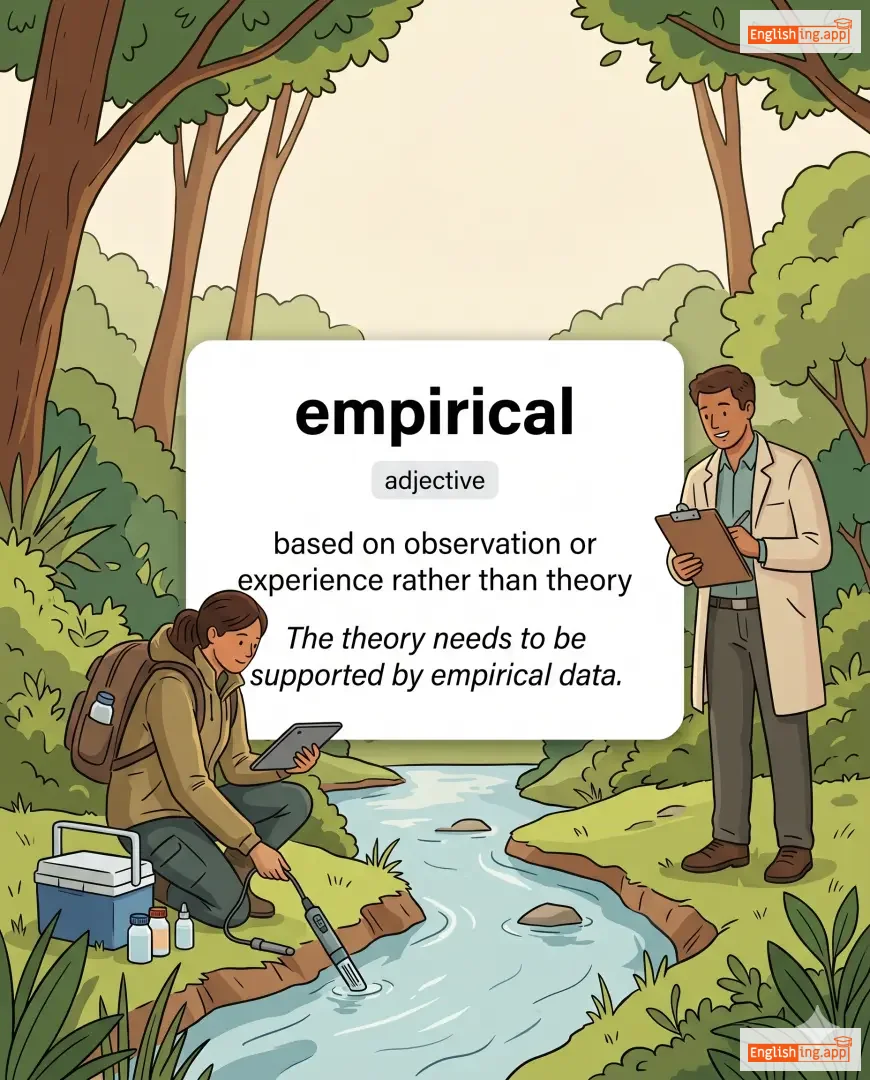
based on observation or experience rather than theory
••••••
|
The theory needs to be supported by empirical data. |
理论需要通过经验数据来支持。
Lilun xuyao tongguo jingyan shuju lai zhichi.
••••••
|
empirical evidence |
information gained through observation or experiment
••••••
|
经验证据
jingyan zhengju
••••••
|
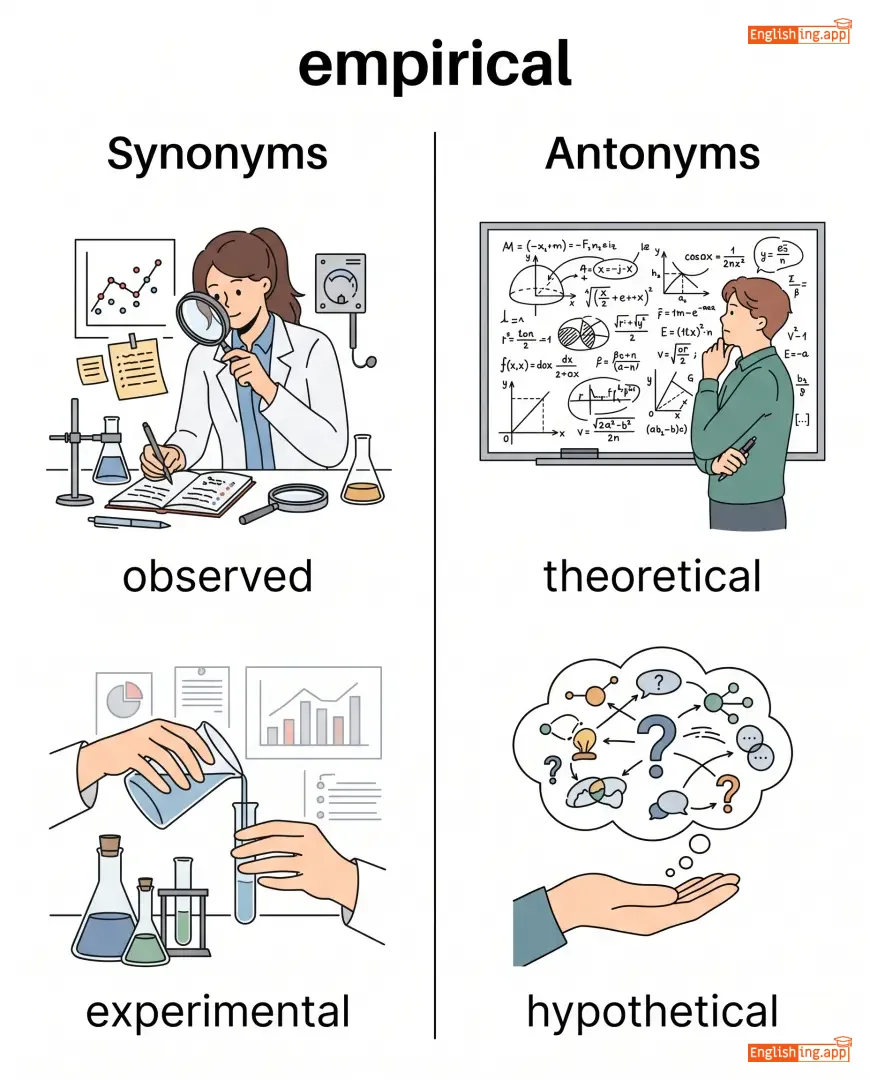
observed, experimental, factual, practical, real
••••••
|
theoretical, hypothetical
••••••
|
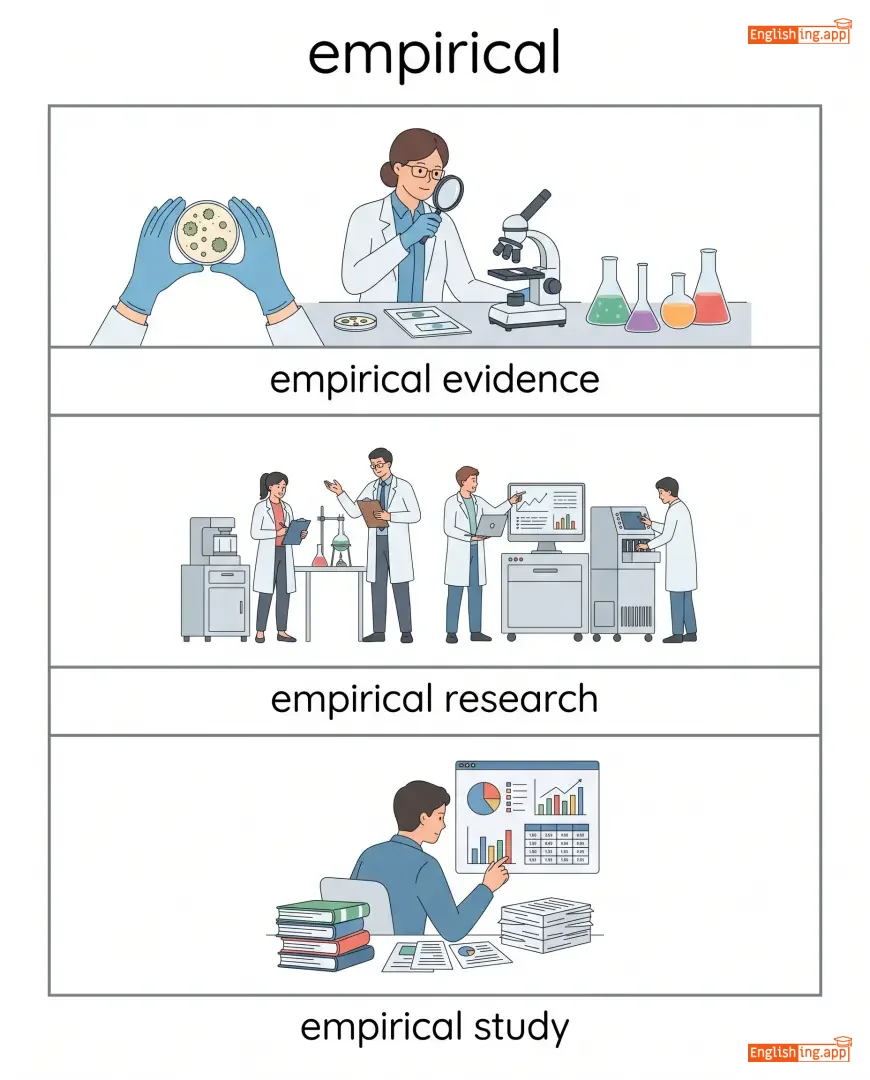
empirical evidence, empirical research, empirical study, empirical data
••••••
|
Empirical 意味着基于经验, 就像经验的 (jingyan de)
••••••
|
|
⭕
••••••
|
/ɪnˈkʌmpəs/
verb
(ɛnˈkʌmpəs)
••••••
|
- •••••• |
涵盖
hánɡài
••••••
|
encompassed
ɛnˈkʌmpəsd
••••••
|
encompassed
ɛnˈkʌmpəsd
••••••
|
encompasses
ɛnˈkʌmpəsɪz
••••••
|
encompassing
ɛnˈkʌmpəsɪŋ
••••••
|
To include comprehensively; to surround or encircle.
••••••
|
The project will encompass all aspects of rural development.
该项目将涵盖农村发展的各个方面。
••••••
|
该项目将涵盖农村发展的各个方面。
gāi xiàngmù jiāng hánɡài nóngcūn fāzhǎn de gè gè fāngmiàn.
••••••
|
encompass the whole
涵盖一切
••••••
|
To include everything in scope.
••••••
|
涵盖一切
hánɡài yīqiè
••••••
|
include, cover, embrace, contain, surround
••••••
|
exclude, omit, ignore
••••••
|
encompass all, fully encompass, encompass a range
••••••
|
Encompass 就是 ENtire COMPASS (指南针) - 一切覆盖
••••••
|
|
😊
••••••
|
/ɪnˈdʒɔɪ.ə.bəl/
adjective
(enjoyable)
••••••
|
- •••••• |
愉快的; 令人愉悦的
yúkuài de; lìng rén yúyuè de
••••••
|
- •••••• | - •••••• | - •••••• | - •••••• |
pleasant; giving satisfaction or pleasure
••••••
|
The movie was very enjoyable and made everyone laugh. |
这部电影非常愉快,让每个人都笑了。
Zhè bù diànyǐng fēicháng yúkuài, ràng měi gè rén dōu xiàole.
••••••
|
- •••••• | - •••••• | - •••••• |
pleasant, delightful, amusing, entertaining
••••••
|
unpleasant, boring, tedious, disagreeable
••••••
|
enjoyable experience, enjoyable evening, enjoyable activity
••••••
|
Imagine a 'yúkuài' movie that makes everyone 'lìng rén yúyuè'.
••••••
|
|
📊
••••••
|
/ˈɛstɪmeɪtɪd/
adjective
(es-ti-mei-ted)
••••••
|
- •••••• |
估计的
gū jì de
••••••
|
- •••••• | - •••••• | - •••••• | - •••••• |
roughly calculated or judged; an approximate value or amount
••••••
|
The estimated cost of the project is five million dollars. |
该项目的估计成本为五百万美元。
Gāi xiàngmù de gū jì chéngběn wèi wǔ bǎi wàn měiyuán.
••••••
|
- •••••• | - •••••• | - •••••• |
approximate, assumed, calculated, projected, expected
••••••
|
exact, precise, definite
••••••
|
estimated cost, estimated time, estimated value, estimated population
••••••
|
Estimate表示估算,估计的表示大致估算的值!
••••••
|
|
🚫
••••••
|
/ɪkˈsɛpʃən/
noun
(yíkèshìpíng)
••••••
|
- •••••• |
例外
liwai
••••••
|
- •••••• | - •••••• | - •••••• | - •••••• |
A case or instance that does not follow a general rule.
••••••
|
Every rule has an exception. |
每个规则都有例外。
měi gè guīzé dōu yǒu lìwài.
••••••
|
take exception to |
to be offended by something
••••••
|
提出异议
tíchū yìyì
••••••
|
anomaly, irregularity, deviation, exclusion, exemption
••••••
|
rule, norm, standard
••••••
|
make an exception, without exception, rare exception, exception to the rule
••••••
|
Exception 意味着例外 — 想象一下,所有人都通过了考试,只有一个人没通过 = 例外。
••••••
|
|
🚫
••••••
|
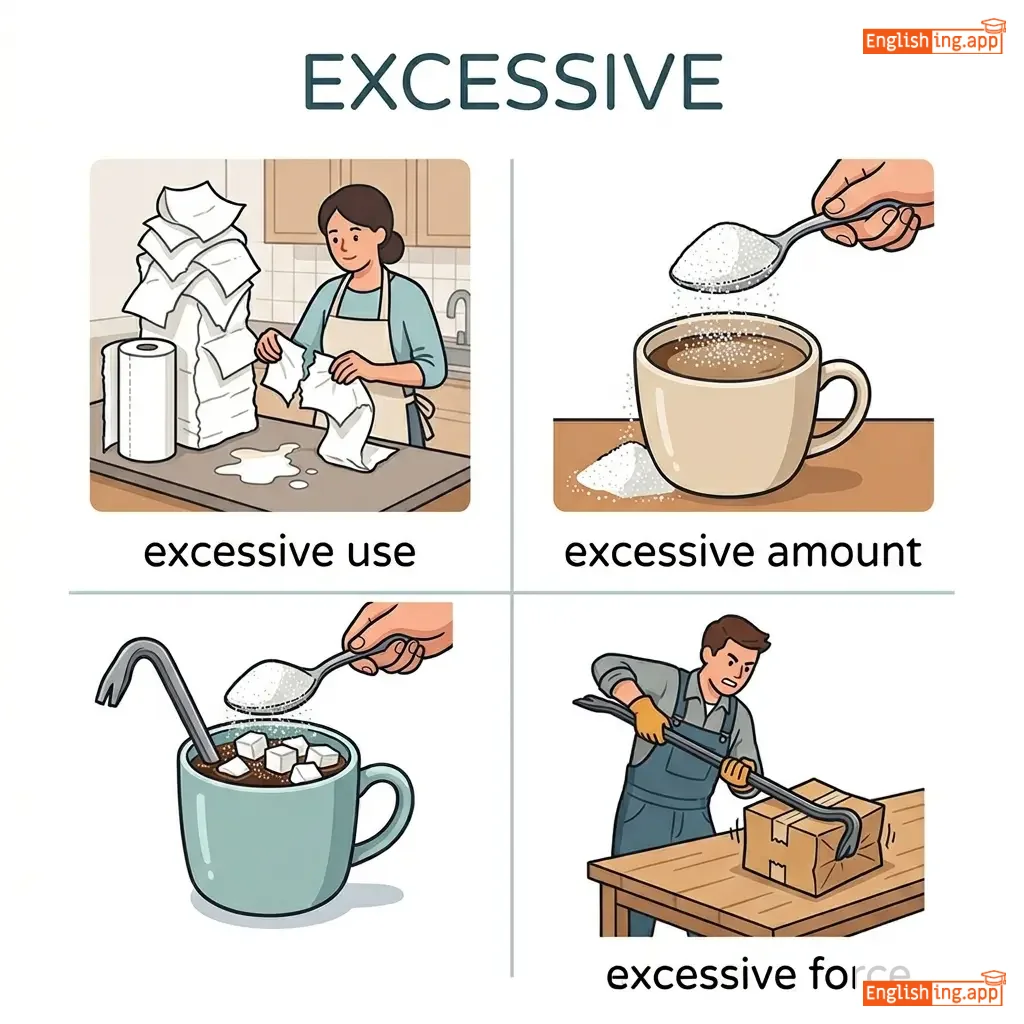
/ɪkˈsɛsɪv/
adjective
(ɪkˈsɛsɪv)
••••••
|

|
过度
guò dù
••••••
|
- •••••• | - •••••• | - •••••• | - •••••• |
more than is necessary, reasonable, or acceptable
••••••
|
Eating excessive sugar can lead to health problems. |
过多的糖分摄入可能导致健康问题。
Guò duō de táng fèn shè rù kě néng dǎo zhì jiàn kāng wèn tí.
••••••
|
excessive force |
more physical power or effort than necessary
••••••
|
过度的力量
guò dù de lì liàng
••••••
|
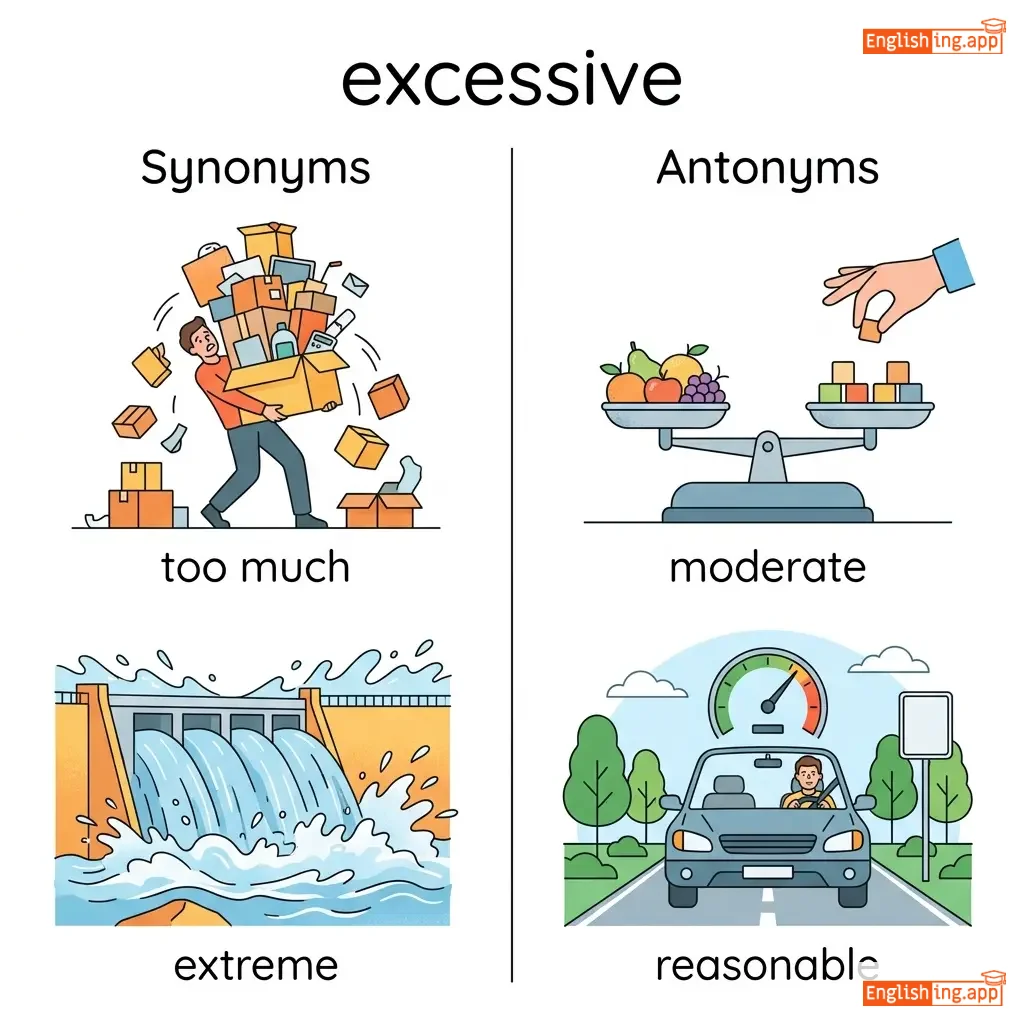
too much, extreme, unreasonable, extravagant, overdone
••••••
|
moderate, reasonable, limited
••••••
|
excessive use, excessive amount, excessive force, excessive cost
••••••
|
过度 = Excess意味着更多, 所以它是过度的!
••••••
|
|
❌
••••••
|
/ɪkˈskluːʒən/
noun
(ɪksˈkluːʒən)
••••••
|
- •••••• |
排斥
paichi
••••••
|
- •••••• | - •••••• | - •••••• | - •••••• |
The process or state of being left out or denied access.
••••••
|
The policy led to the exclusion of certain groups. |
该政策导致某些群体被排斥。
Gai zhengce daozhi moxie qunti bei paichi.
••••••
|
social exclusion |
The act of preventing certain people from participating in society.
••••••
|
社会排斥
shehui paichi
••••••
|
banishment, rejection, omission, prohibition, segregation
••••••
|
inclusion, acceptance, admission
••••••
|
exclusion policy, exclusion zone, social exclusion
••••••
|
排斥 = 出口 + 结论
••••••
|
|
⚙️
••••••
|
/ˌɛksɪˈkjuːʃən/
noun
(执行)
••••••
|
- •••••• |
执行,实施
zhíxíng, shíshī
••••••
|
- •••••• | - •••••• | - •••••• | - •••••• |
the act of carrying out a plan, order, or legal sentence
••••••
|
The success of a project depends on its proper execution. |
项目的成功取决于其正确的执行。
Xiàngmù de chénggōng qùjué yú qí zhèngquè de zhíxíng.
••••••
|
flawless execution |
perfect implementation without mistakes
••••••
|
无懈可击的执行
wúxièkějí de zhíxíng
••••••
|
implementation, performance, accomplishment, realization
••••••
|
failure, neglect, omission
••••••
|
execution plan, execution strategy, proper execution, flawless execution
••••••
|
Execution意味着完成任务 — 完美的完成意味着成功!
••••••
|
|
💼
••••••
|
/ɪɡˈzɛkjətɪv/
noun/adjective
(执行官)
••••••
|



|
执行官
zhíxíngguān
••••••
|
- •••••• | - •••••• | - •••••• | - •••••• |
A person with senior managerial responsibility in a business; relating to the execution of plans or laws.
••••••
|
She works as an executive in a multinational company.
她在一家跨国公司担任执行官。
••••••
|
她在一家跨国公司担任执行官。
Tā zài yījiā kuàguó gōngsī dānrèn zhíxíngguān.
••••••
|
executive decision
执行决策
••••••
|
a final decision made by a person in authority
••••••
|
执行决策
zhíxíng juécè
••••••
|
manager, administrator, director, officer, chief
••••••
|
employee, subordinate
••••••
|
executive officer, executive decision, executive position, executive power
••••••
|
执行官 = 执行重要决策的人
••••••
|
|
🌍
••••••
|
/ɪɡˈzɪstəns/
noun
(存在)
••••••
|
- •••••• |
存在
cúnzài
••••••
|
- •••••• | - •••••• | - •••••• | - •••••• |
The state of being alive or having real presence.
••••••
|
The existence of life on other planets is still uncertain.
其他星球上生命的存在仍然不确定。
••••••
|
其他星球上生命的存在仍然不确定。
Qítā xīngqiú shàng shēngmìng de cúnzài réngrán bù quèdìng.
••••••
|
come into existence
进入存在
••••••
|
to begin to exist or start being present
••••••
|
进入存在
jìnrù cúnzài
••••••
|
being, presence, reality, life, survival
••••••
|
nonexistence, nothingness, extinction
••••••
|
human existence, existence of life, struggle for existence, existence proof
••••••
|
存在意味着在另一个星球上有'生命'。
••••••
|
|
💰
••••••
|
/ɪkˈspɛnsɪv/
adjective
••••••
|
- •••••• | - •••••• | - •••••• | - •••••• | - •••••• | - •••••• |
costing a lot of money
••••••
|
That car is too expensive for me to buy. |
- •••••• |
at an expensive price |
with great cost or sacrifice
••••••
|
- •••••• |
costly, pricey, valuable, extravagant
••••••
|
cheap, inexpensive, affordable
••••••
|
expensive car, expensive gift, expensive clothes, too expensive
••••••
|
No •••••• |
|
💥
••••••
|
/ɪkˈsploʊʒən/
noun
(爆炸)
••••••
|
- •••••• |
爆炸
baozha
••••••
|
- •••••• | - •••••• | - •••••• | - •••••• |
a violent burst or release of energy, often causing damage and noise
••••••
|
The explosion shook the entire neighborhood. |
爆炸震动了整个社区。
Baozha zhendong le zheng ge shequ.
••••••
|
go off like an explosion |
to suddenly happen with great force or intensity
••••••
|
像爆炸一样爆发
Xiang baozha yi yang baofa
••••••
|
blast, detonation, eruption, burst, outbreak
••••••
|
implosion, silence, calm
••••••
|
massive explosion, gas explosion, explosion of anger, sudden explosion
••••••
|
Explosion = 巨大的爆炸! 想象爆炸的力量来记住它!
••••••
|
|
📏
••••••
|
/ɪkˈstɛnʃən/
noun
(延伸)
••••••
|
- •••••• |
延伸
yanshen
••••••
|
- •••••• | - •••••• | - •••••• | - •••••• |
a part that is added to something to make it longer or bigger; an increase in time.
••••••
|
She asked for an extension on her assignment deadline. |
她要求延长她的作业截止日期。
Ta yaoqiu yanchang ta de zuoye jiezhi riqi.
••••••
|
hair extension |
artificial hair used to make natural hair longer or fuller
••••••
|
假发延伸
jiafa yanshen
••••••
|
expansion, prolongation, addition, continuation
••••••
|
reduction, contraction
••••••
|
extension cord, deadline extension, extension request, hair extension
••••••
|
延伸就像加时间或加长度
••••••
|
|
📏
••••••
|
/ɪkˈsten.sɪv/
adjective
(艾克斯坦西夫)
••••••
|
- •••••• |
广泛的; 大规模的; 广阔的
guǎngfàn de; dà guīmó de; guǎngkuò de
••••••
|
- •••••• | - •••••• | - •••••• | - •••••• |
covering or affecting a large area; comprehensive; wide-ranging
••••••
|
The company conducted extensive research before launching the new product. |
公司在推出新产品之前进行了广泛的研究。
Gōngsī zài tuīchū xīn chǎnpǐn zhīqián jìnxíngle guǎngfàn de yánjiū.
••••••
|
- •••••• | - •••••• | - •••••• |
comprehensive, vast, wide-ranging, broad
••••••
|
limited, narrow, restricted, small
••••••
|
extensive research, extensive damage, extensive experience
••••••
|
Chinese '广泛' translates to 'extensive'—both cover large areas.
••••••
|
|
🔥
••••••
|
/ɪkˈstriːm.li/
adverb
(yīkèxīmuīlì)
••••••
|
- •••••• |
极其
jiqi
••••••
|
- •••••• | - •••••• | - •••••• | - •••••• |
to a very high degree; exceptionally
••••••
|
The weather today is extremely hot and humid. |
今天的天气极其炎热和潮湿。
Jīntiān de tiānqì jíqí yánrè hé cháoshī.
••••••
|
- •••••• | - •••••• | - •••••• |
very, exceptionally, tremendously
••••••
|
slightly, moderately, barely
••••••
|
extremely important, extremely difficult, extremely happy
••••••
|
记住极其 (jíqí) 对应英语的 extremely。
••••••
|
|
🌟
••••••
|
/fænˈtæstɪk/
adjective
(奇妙的)
••••••
|
- •••••• |
极好的; 奇妙的; 卓越的
jí hǎo de; qí miào de; zhuó yuè de
••••••
|
- •••••• | - •••••• | - •••••• | - •••••• |
extremely good; wonderful; excellent
••••••
|
The movie was absolutely fantastic! |
这部电影绝对是精彩的!
Zhè bù diànyǐng juéduì shì jīngcǎi de!
••••••
|
- •••••• | - •••••• | - •••••• |
amazing, wonderful, excellent
••••••
|
terrible, awful, horrible
••••••
|
fantastic news, fantastic performance, fantastic opportunity
••••••
|
No •••••• |
|
👍
••••••
|
/ˈfeɪvərəbəl/
adjective
(fēiwéruòbù)
••••••
|
- •••••• |
有利的
yǒulì de
••••••
|
- •••••• | - •••••• | - •••••• | - •••••• |
expressing approval or support; advantageous
••••••
|
The weather conditions were favorable for the outdoor event.
天气条件对户外活动很有利。
••••••
|
天气条件对户外活动很有利。
Tiānqì tiáojiàn duì hùwài huódòng hěn yǒulì.
••••••
|
- •••••• | - •••••• | - •••••• |
advantageous, beneficial, positive, supportive
••••••
|
unfavorable, disadvantageous
••••••
|
favorable conditions, favorable outcome, favorable impression
••••••
|
有利的 – 一切都顺利而有利
••••••
|
|
👥
••••••
|
/ˈfɑː.loʊ.ɪŋ/
noun
(fóluòyīng)
••••••
|
- •••••• |
追随者
zhuīsuízhě
••••••
|
- •••••• | - •••••• | - •••••• | - •••••• |
a group of supporters or people who admire something or someone
••••••
|
The singer has a large following around the world. |
这位歌手在全世界有很多追随者。
Zhè wèi gēshǒu zài quán shìjiè yǒu hěn duō zhuīsuízhě.
••••••
|
- •••••• | - •••••• | - •••••• |
fans, supporters, admirers, audience, enthusiasts
••••••
|
critics, opponents
••••••
|
large following, loyal following, following crowd, following group
••••••
|
Following的意思是追随者,就像Facebook上的粉丝一样。
••••••
|

