Afternoon Alignment Meeting
参加河流会议的 admission 免费。 乔恩说,'在这里参与是一个巨大的 advantage。' 一位长者分享了她对水的 affection。 他们回顾了过去洪水的 aftermath。 在 afternoon,医生讨论了河流的健康。 Afterward,他们走到外面校准传感器。 每个人签署了有效的 agreement。 志愿者检查了工作的 alignment。 一家 allegedly 污染了河流的公司提供了解释。 该基金向志愿者提供了适度的 allowance。 孩子们站在河边 alongside 唱歌。 健康团队在附近停放了一辆 ambulance。 计划中加入了一个小 amendment。 一位 anonymous 捐赠者悄悄地贡献了。 一家工厂的老板前来 apologize 废料。 新的展示看起来非常 appealing。 许多 applicant 提交了河流项目。 委员会表示不会采取任何 arbitrary 决策。 每个人对河流价值的 assertion 一致。 所有人都给出了恢复河流的 assurance。
|
表情符号
|
单词 | Images | 翻译 | 过去时 | 过去分词 | 第三人称单数 | 动名词 | 含义 | 例句 | 例句翻译 | 示例表达 | 示例表达含义 | 示例表达翻译 | 同义词 | 反义词 | 搭配词 | 助记符 |
|---|---|---|---|---|---|---|---|---|---|---|---|---|---|---|---|---|---|
|
🎟️
••••••
|
/ədˈmɪʃən/
noun
(入场)
••••••
|
- •••••• |
入场
rùchǎng
••••••
|
- •••••• | - •••••• | - •••••• | - •••••• |
The process or fact of being allowed to enter a place or join an organization.
••••••
|
The admission fee to the museum is five dollars.
博物馆的入场费是五美元。
••••••
|
博物馆的入场费是五美元。
Bówùguǎn de rùchǎng fèi shì wǔ měiyuán.
••••••
|
free admission
免费入场
••••••
|
Entry without cost.
••••••
|
免费入场
miǎnfèi rùchǎng
••••••
|
entry, access, acceptance, enrollment
••••••
|
exclusion, denial, rejection
••••••
|
admission fee, admission test, admission process, admission ticket
••••••
|
Admission = 入场, 允许进入场所。
••••••
|
|
💡
••••••
|
/ədˈvæntɪdʒ/
noun
(āi dé wán tè)
••••••
|
- •••••• |
优势
you shi
••••••
|
- •••••• | - •••••• | - •••••• | - •••••• |
a condition or circumstance that puts one in a favorable position
••••••
|
Having strong communication skills is a great advantage in business. |
拥有强大的沟通技巧是商业中的一大优势。
Yong you qiang da de gou tong ji qiao shi shang ye zhong de yi da you shi.
••••••
|
take advantage of |
to make good use of something
••••••
|
利用优势
li yong you shi
••••••
|
benefit, edge, asset, gain, upper hand
••••••
|
disadvantage, drawback, handicap
••••••
|
competitive advantage, great advantage, take advantage, clear advantage
••••••
|
Advantage 在中文里是'优势'—'Ad van' 让你领先,绝对是优势!
••••••
|
|
❤️
••••••
|
/əˈfɛkʃən/
noun
••••••
|
- •••••• | - •••••• | - •••••• | - •••••• | - •••••• | - •••••• |
a gentle feeling of fondness or liking
••••••
|
She showed great affection for her younger brother. |
- •••••• |
public display of affection |
an act of showing love or fondness openly in public
••••••
|
- •••••• |
fondness, love, tenderness, warmth, attachment
••••••
|
hatred, dislike, indifference
••••••
|
deep affection, show affection, affection for, affection toward
••••••
|
No •••••• |
|
🌪️
••••••
|
/ˈɑːftərmɑːθ/
noun
(ɑːftərmɑːθ)
••••••
|
- •••••• |
后果
houguo
••••••
|
- •••••• | - •••••• | - •••••• | - •••••• |
the consequences or aftereffects of an event or situation, especially a disastrous one
••••••
|
The aftermath of the earthquake was devastating. |
地震的后果是毁灭性的。
Dizhen de houguo shi huimiexing de.
••••••
|
- •••••• | - •••••• | - •••••• |
consequence, result, outcome, repercussion
••••••
|
cause, origin
••••••
|
aftermath of disaster, in the aftermath, deal with the aftermath
••••••
|
Afternoon aftermath, after a storm, we will see the consequences as clear signs
••••••
|
|
🌞
••••••
|
/ˌæftərˈnuːn/
noun
(àfútè'ěrnuūn)
••••••
|
- •••••• |
下午
xiawu
••••••
|
- •••••• | - •••••• | - •••••• | - •••••• |
The part of the day between noon and evening.
••••••
|
We met in the afternoon for coffee. |
我们下午见面喝咖啡。
Wo men xiawu jian mian he kafei.
••••••
|
Good afternoon |
A polite greeting used in the afternoon.
••••••
|
下午好
xiawu hao
••••••
|
midday, daytime, p.m., after lunch
••••••
|
morning, evening
••••••
|
in the afternoon, sunny afternoon, afternoon tea, afternoon meeting
••••••
|
After + Noon = 中午后时间 = 下午.
••••••
|
|
⏰
••••••
|
/ˈæftərwərd/
adverb
(æftəwɜrd)
••••••
|
- •••••• |
之后
zhīhòu
••••••
|
- •••••• | - •••••• | - •••••• | - •••••• |
at a later time; subsequently
••••••
|
We went to dinner and watched a movie afterward.
我们去吃了晚餐,然后看了一部电影。
••••••
|
我们去吃了晚餐,然后看了一部电影。
Wǒmen qù chīle wǎncān, ránhòu kànle yī bù diànyǐng.
••••••
|
- •••••• | - •••••• | - •••••• |
later, subsequently, thereafter, next, then
••••••
|
before, earlier, previously
••••••
|
soon afterward, shortly afterward, day afterward
••••••
|
Afterward 表示之后 — 就像吃完晚饭后看电影。
••••••
|
|
✍️
••••••
|
/əˈɡriː.mənt/
noun
(æɡrɪˈmɛnt)
••••••
|

|
协议
xieyi
••••••
|
- •••••• | - •••••• | - •••••• | - •••••• |
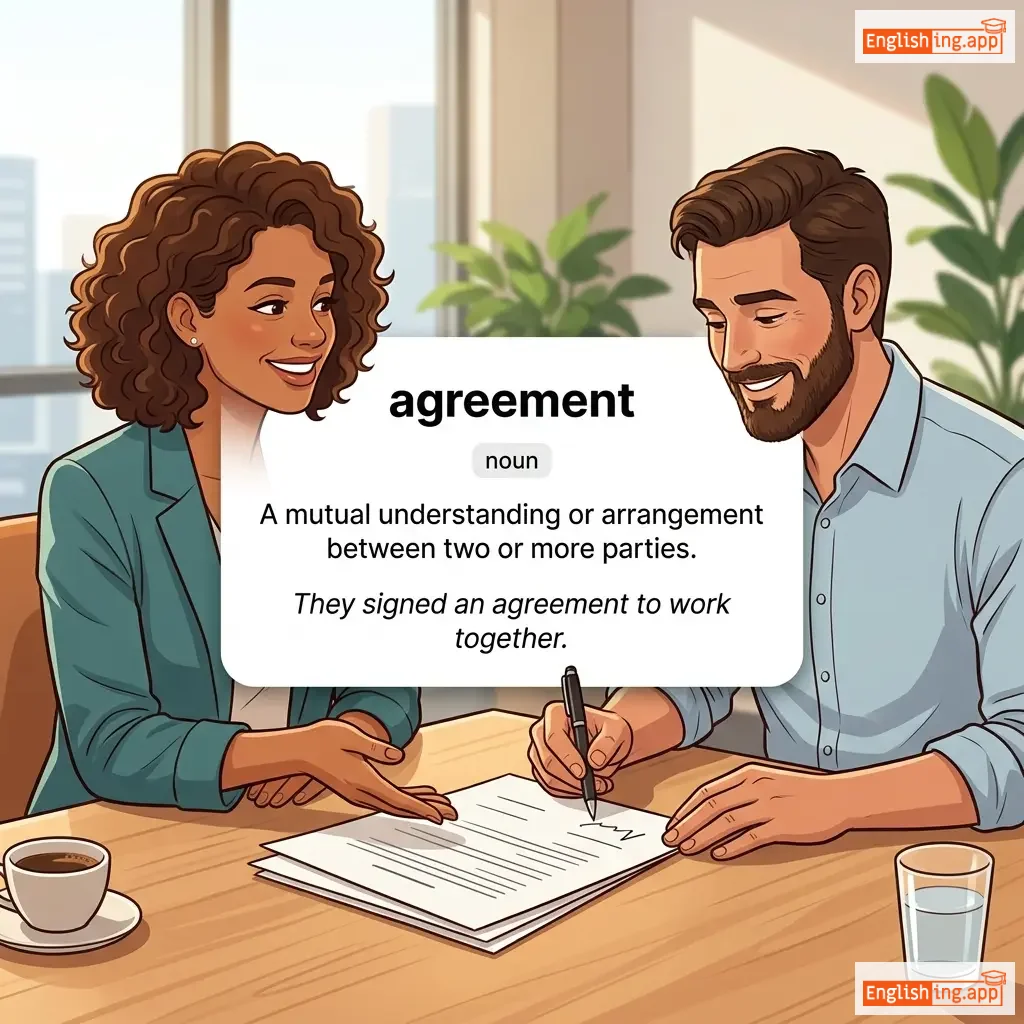
A mutual understanding or arrangement between two or more parties.
••••••
|
They signed an agreement to work together.
他们签署了一个合作协议。
••••••
|
他们签署了一个合作协议。
Tāmen qiānshǔle yīgè hézuò xiéyì.
••••••
|
gentlemen's agreement
绅士协议
••••••
|
An informal and non-binding agreement based on trust.
••••••
|
绅士协议
Shēnshì xiéyì
••••••
|
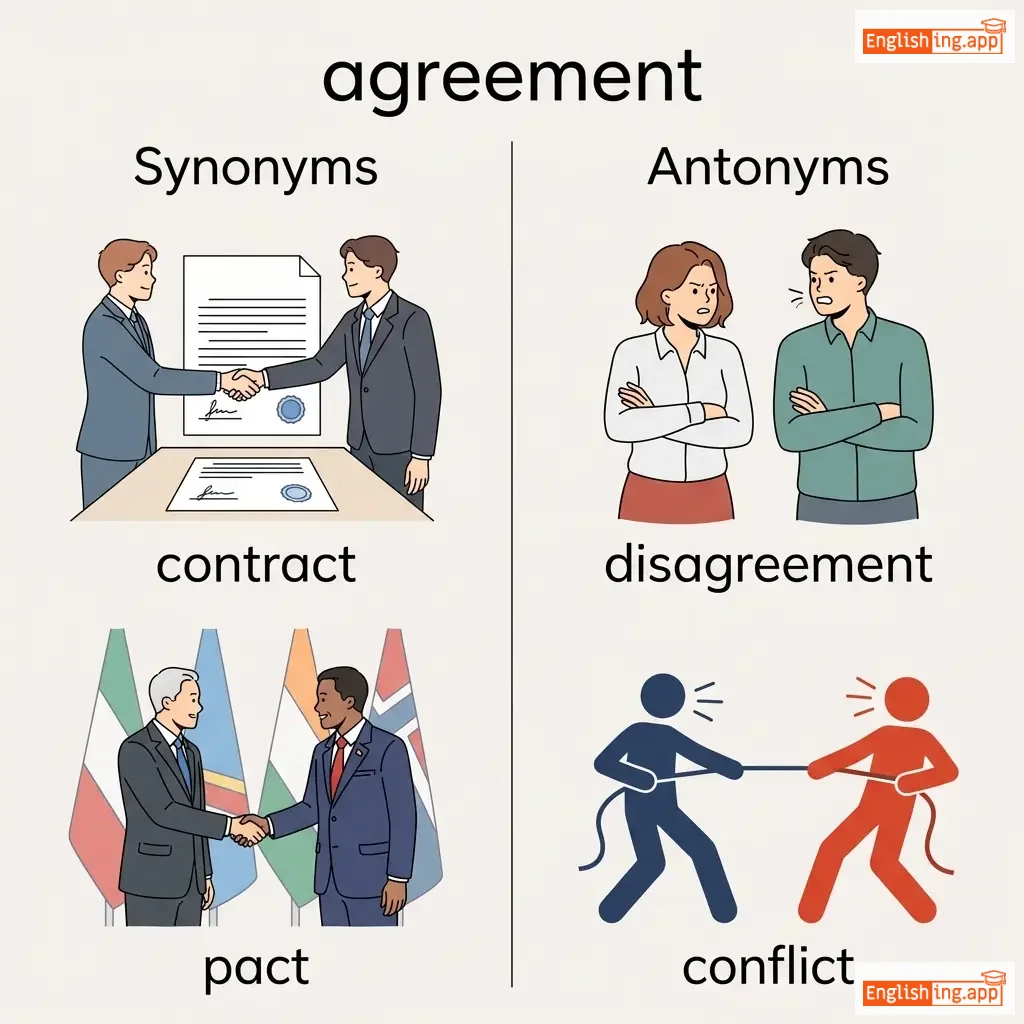
contract, pact, deal, settlement, accord
••••••
|
disagreement, conflict, dispute
••••••
|
reach an agreement, sign an agreement, mutual agreement, agreement between
••••••
|
'Agreement' 意味着协议 — 两个人签字就达成了协议!
••••••
|
|
🔧
••••••
|
/əˈlaɪnmənt/
noun
(ā līn mèn tè)
••••••
|
- •••••• |
对齐
duìqí
••••••
|
- •••••• | - •••••• | - •••••• | - •••••• |
arrangement in a straight line or in proper position
••••••
|
The alignment of the planets was perfect for the celestial event. |
行星的对齐对天文事件来说是完美的。
Xíngxīng de duìqí duì tiānwén shìjiàn lái shuō shì wánměi de.
••••••
|
- •••••• | - •••••• | - •••••• |
arrangement, positioning, coordination, alignment
••••••
|
misalignment, disorder
••••••
|
alignment of forces, proper alignment, alignment with goals
••••••
|
Aligning objects in the right alignment always makes everything perfect
••••••
|
|
🕵️♂️
••••••
|
/əˈlɛdʒɪdli/
adverb
(æləˈdʒɛdli)
••••••
|
- •••••• |
据称
jù chēng
••••••
|
- •••••• | - •••••• | - •••••• | - •••••• |
used to say that something is claimed to be true, though not proven
••••••
|
He was allegedly involved in the robbery. |
他据称参与了抢劫。
Tā jù chēng cānyùle qiǎngjié.
••••••
|
- •••••• | - •••••• | - •••••• |
reportedly, supposedly, apparently, seemingly
••••••
|
undoubtedly, certainly
••••••
|
allegedly involved, allegedly responsible, allegedly stolen, allegedly committed
••••••
|
'Allegedly' 的意思是 '据称',就像说某事是事实,但还没有证据。
••••••
|
|
💰
••••••
|
/əˈlaʊəns/
noun
(āluòwǎnsī)
••••••
|
- •••••• |
津贴
jintie
••••••
|
- •••••• | - •••••• | - •••••• | - •••••• |
a sum of money paid regularly to a person; permission to do something
••••••
|
Children receive a weekly allowance for helping with chores. |
孩子们每周会因帮助做家务而获得津贴。
Haizimen mei zhou hui yin bangzhu zuo jiawu er huode jintie.
••••••
|
- •••••• | - •••••• | - •••••• |
stipend, payment, allocation, quota
••••••
|
prohibition, ban, restriction
••••••
|
monthly allowance, pocket allowance, travel allowance
••••••
|
孩子们的津贴
••••••
|
|
👥
••••••
|
/əˈlɔːŋ.saɪd/
adverb
(əˈlɔːŋsaɪd)
••••••
|
- •••••• |
在旁边; 与…一起;
zài pángbiān; yǔ...yīqǐ;
••••••
|
- •••••• | - •••••• | - •••••• | - •••••• |
beside; next to; together with
••••••
|
She walked alongside her friend through the park. |
她与朋友一起走过公园。
Tā yǔ péngyǒu yīqǐ zǒuguò gōngyuán.
••••••
|
- •••••• | - •••••• | - •••••• |
beside, next to, together with, parallel to
••••••
|
apart, separately, away from
••••••
|
work alongside, stand alongside, run alongside, walk alongside
••••••
|
Chinese '在旁边' and English 'alongside' both mean 'beside'.
••••••
|
|
🚑
••••••
|
/ˈæmbjʊləns/
noun
(救护车)
••••••
|
- •••••• |
救护车
jiùhùchē
••••••
|
- •••••• | - •••••• | - •••••• | - •••••• |
A specially equipped vehicle used to transport sick or injured people to the hospital.
••••••
|
The ambulance rushed to the accident site within minutes.
救护车在几分钟内赶到事故现场。
••••••
|
救护车在几分钟内赶到事故现场。
Jiùhùchē zài jǐ fēnzhōng nèi gǎndào shìgù xiànchǎng.
••••••
|
- •••••• | - •••••• | - •••••• |
emergency vehicle, rescue van, paramedic vehicle
••••••
|
none, null
••••••
|
call an ambulance, ambulance service, ambulance siren, ambulance driver
••••••
|
救护车 🚑 是生命线—'事故发生时,救护车快速到达。'
••••••
|
|
📜
••••••
|
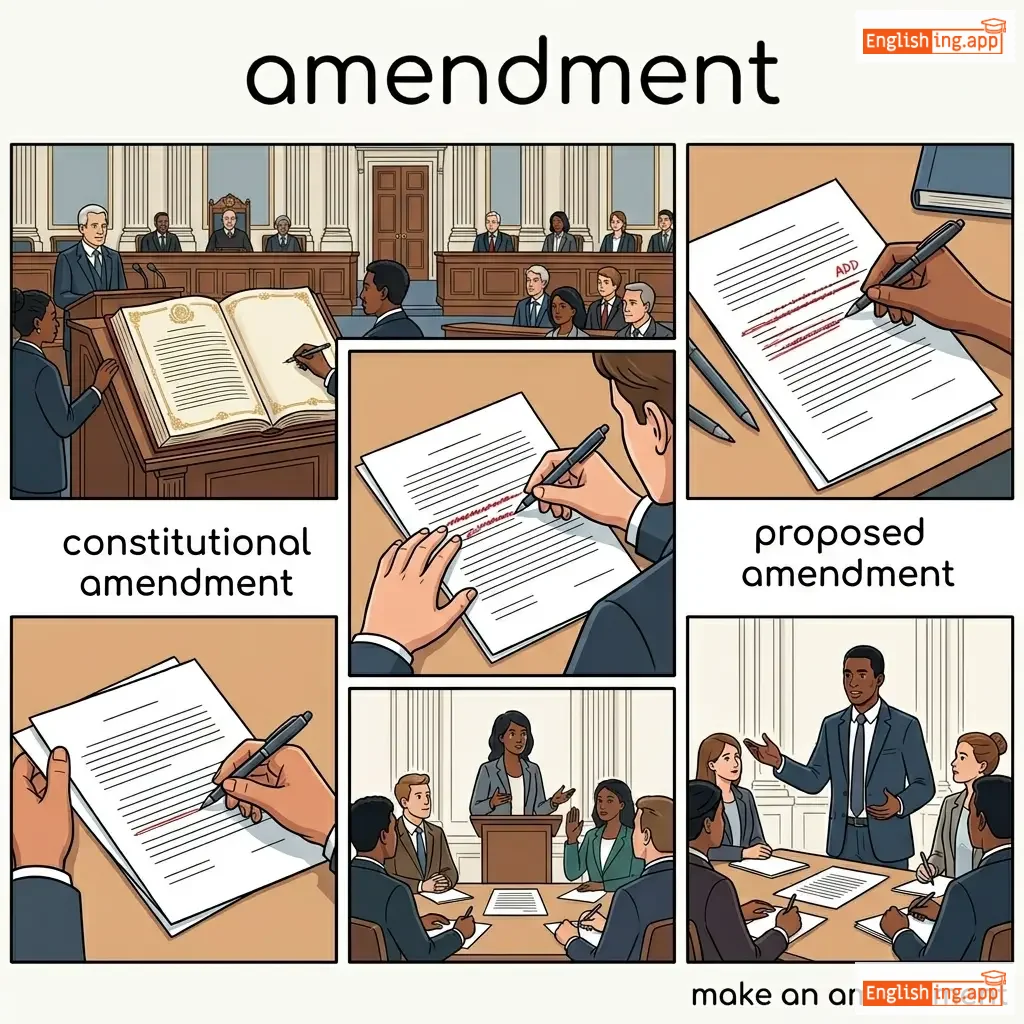
/əˈmɛndmənt/
noun
(海皮尼斯)
••••••
|
|
幸福
xingfu
••••••
|
- •••••• | - •••••• | - •••••• | - •••••• |
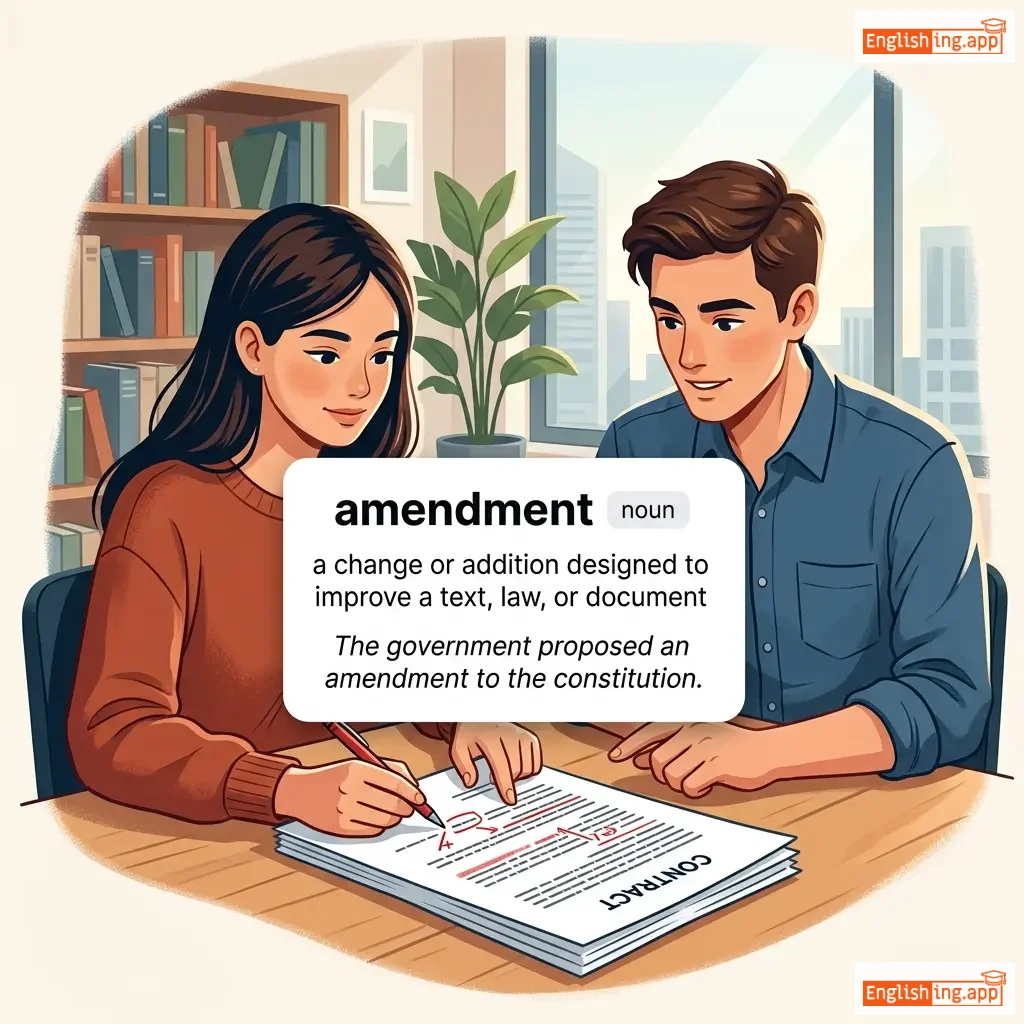
a change or addition designed to improve a text, law, or document
••••••
|
The government proposed an amendment to the constitution. |
当她收到奖项时,她无法掩饰自己的幸福。
Dang ta shoudao jiangxiang shi, ta wufa yanshi ziji de xingfu.
••••••
|
make an amendment |
to officially change or correct a document or law
••••••
|
追求幸福
zhuīqiú xìngfú
••••••
|
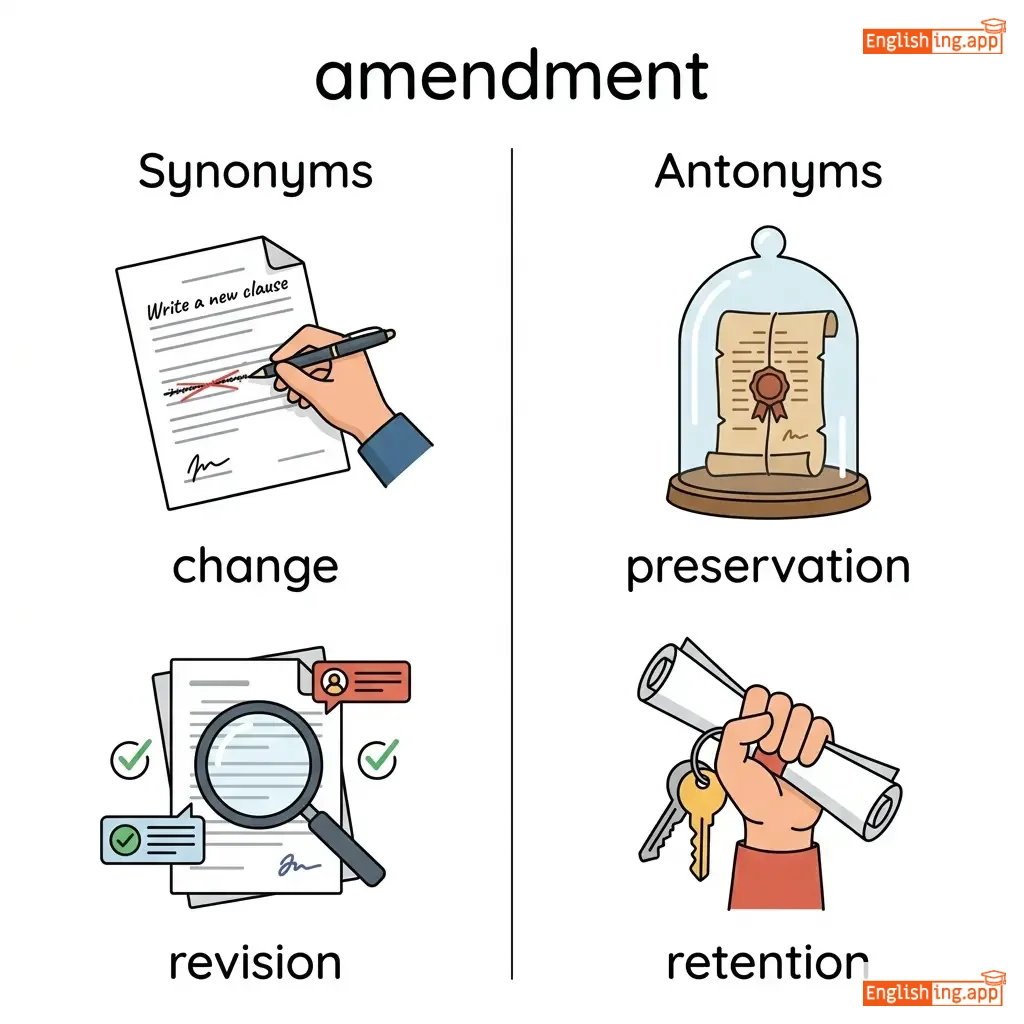
change, revision, modification, correction, adjustment
••••••
|
preservation, retention
••••••
|
constitutional amendment, proposed amendment, make an amendment, amendment bill
••••••
|
幸福 = 寻找幸福的快乐
••••••
|
|
👤
••••••
|
/əˈnɒnɪməs/
adjective
(匿名)
••••••
|
- •••••• |
匿名
nìmíng
••••••
|
- •••••• | - •••••• | - •••••• | - •••••• |
without a name; not identified by name
••••••
|
The donation was made by an anonymous benefactor.
捐款是由匿名捐助者做出的。
••••••
|
捐款是由匿名捐助者做出的。
Juānkuǎn shì yóu nìmíng juānzhù zhě zuò chū de.
••••••
|
anonymous tip
匿名提示
••••••
|
information given without revealing the identity of the informant
••••••
|
匿名提示
nìmíng tíshì
••••••
|
nameless, unidentified, unknown, incognito
••••••
|
named, identified
••••••
|
anonymous source, anonymous donor, remain anonymous, anonymous letter
••••••
|
匿名意味着没有名字 - 就像没有名字的人是匿名的。
••••••
|
|
🙏
••••••
|
/əˈpɒlədʒaɪz/
verb
(ā pō lò jī zī)
••••••
|
- •••••• |
道歉
dàoqiàn
••••••
|
apologized
ā pō lò jī zī dé
••••••
|
apologized
ā pō lò jī zī dé
••••••
|
apologizes
ā pō lò jī zī
••••••
|
apologizing
ā pō lò jī zī yīng
••••••
|
to say sorry for something wrong you have done
••••••
|
He apologized for being late to the meeting.
他因迟到而道歉。
••••••
|
他因迟到而道歉。
Tā yīn chídào ér dàoqiàn.
••••••
|
apologize sincerely
真诚地道歉
••••••
|
to express genuine regret for a mistake or wrongdoing
••••••
|
真诚地道歉
zhēnchéng de dàoqiàn
••••••
|
regret, repent, ask forgiveness, express remorse
••••••
|
accuse, blame, deny
••••••
|
apologize for mistake, apologize sincerely, apologize publicly
••••••
|
道歉就是说对不起,所以道歉是我们犯错后做的事情。
••••••
|
|
😍
••••••
|
/əˈpiː.lɪŋ/
adjective
(æpílɪŋ)
••••••
|
- •••••• |
吸引人的; 有趣的; 令人愉快的
xīyǐn rén de; yǒuqù de; lìng rén yúkuài de
••••••
|
- •••••• | - •••••• | - •••••• | - •••••• |
attractive; interesting; pleasing
••••••
|
The colorful garden looks very appealing to visitors.
五颜六色的花园对游客非常吸引人。
••••••
|
五颜六色的花园对游客非常吸引人。
Wǔyán liùsè de huāyuán duì yóukè fēicháng xīyǐn rén.
••••••
|
- •••••• | - •••••• | - •••••• |
attractive, charming, alluring, enticing
••••••
|
repulsive, unattractive, disgusting
••••••
|
appealing idea, appealing offer, visually appealing
••••••
|
Appealing sounds like 'xīyǐn rén de' – this colorful garden looks very xīyǐn rén de (appealing).
••••••
|
|
📝
••••••
|
/ˈæplɪkənt/
noun
(æplɪkænt)
••••••
|
- •••••• |
申请者
shenqingshe
••••••
|
- •••••• | - •••••• | - •••••• | - •••••• |
a person who applies for something, such as a job or a position
••••••
|
The applicant was interviewed for the position. |
申请者已被面试以获取该职位。
Shenqingshe yi bei mianshi yi huoqu gai zhiwei.
••••••
|
- •••••• | - •••••• | - •••••• |
candidate, contender, petitioner, seeker
••••••
|
employer, recruiter
••••••
|
job applicant, applicant form, qualified applicant
••••••
|
An applicant is someone who applies (shenqing) for a position.
••••••
|
|
🎲
••••••
|
/ˈɑːrbɪˌtrɛri/
adjective
(阿比特雷里)
••••••
|
- •••••• |
随意的
suiyide
••••••
|
- •••••• | - •••••• | - •••••• | - •••••• |
based on random choice or personal whim, rather than reason or system
••••••
|
The teacher's arbitrary grading upset many students. |
老师的随意评分让许多学生感到不满。
Laoshi de sui yi pingfen rang xu duo xuesheng gandao bumian.
••••••
|
- •••••• | - •••••• | - •••••• |
random, capricious, whimsical, subjective, inconsistent
••••••
|
rational, logical, systematic
••••••
|
arbitrary decision, arbitrary rule, arbitrary action
••••••
|
Arbitrary意味着随意的—想象一个人在没有任何理由的情况下做出随意的决定.
••••••
|
|
🗣️
••••••
|
/əˈsɜːʃən/
noun
(assertion)
••••••
|
- •••••• |
断言
duanyan
••••••
|
- •••••• | - •••••• | - •••••• | - •••••• |
a confident and forceful statement of fact or belief
••••••
|
Her assertion that she was right was met with silence.
她的断言她是对的遭遇了沉默。
••••••
|
她的断言她是对的遭遇了沉默。
Ta de duanyan ta shi dui de zao yule chenmo.
••••••
|
- •••••• | - •••••• | - •••••• |
declaration, statement, claim, affirmation
••••••
|
denial, rejection, doubt
••••••
|
strong assertion, make an assertion, assertion of rights
••••••
|
Assertion - 断言就像是assert,断言就是有力的声明 (claim)。
••••••
|
|
✅
••••••
|
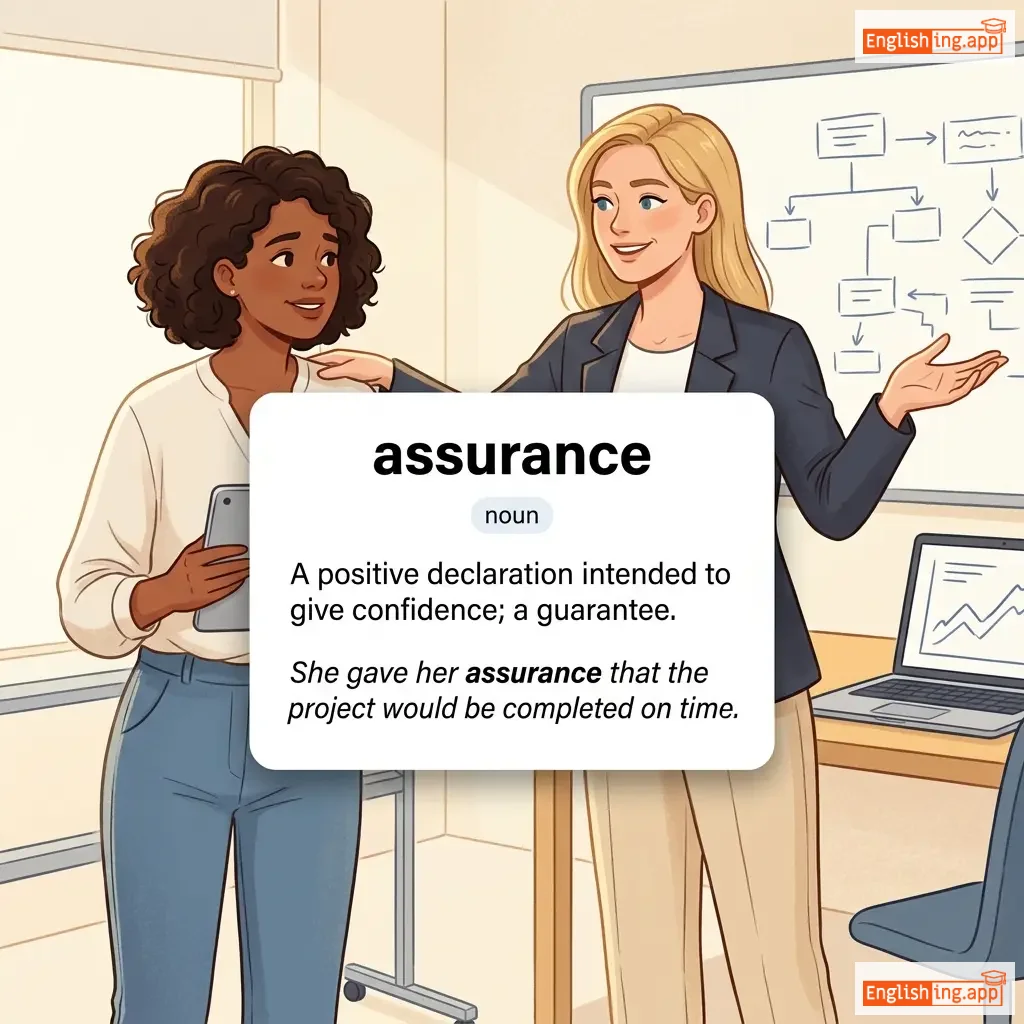
/əˈʃʊərəns/
noun
(ā xīu rǎn sī)
••••••
|
|
保证
baozheng
••••••
|
- •••••• | - •••••• | - •••••• | - •••••• |
A positive declaration intended to give confidence; a guarantee.
••••••
|
She gave her assurance that the project would be completed on time.
她给了她的保证,项目将按时完成。
••••••
|
她给了她的保证,项目将按时完成。
Ta gei le ta de baozheng, xiangmu jiang anshi wancheng.
••••••
|
rest assured
放心
••••••
|
be certain and without worry
••••••
|
放心
fangxin
••••••
|
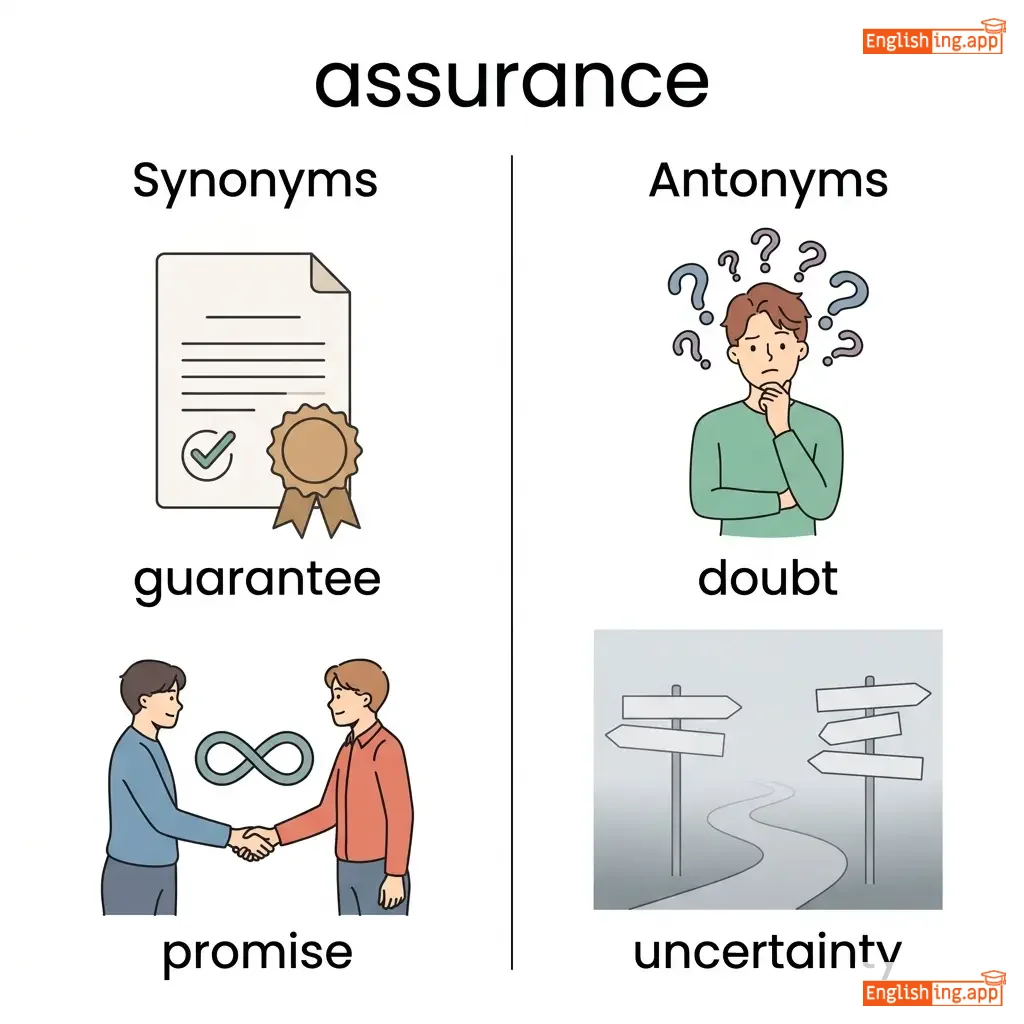
guarantee, promise, pledge, confidence
••••••
|
doubt, uncertainty
••••••
|
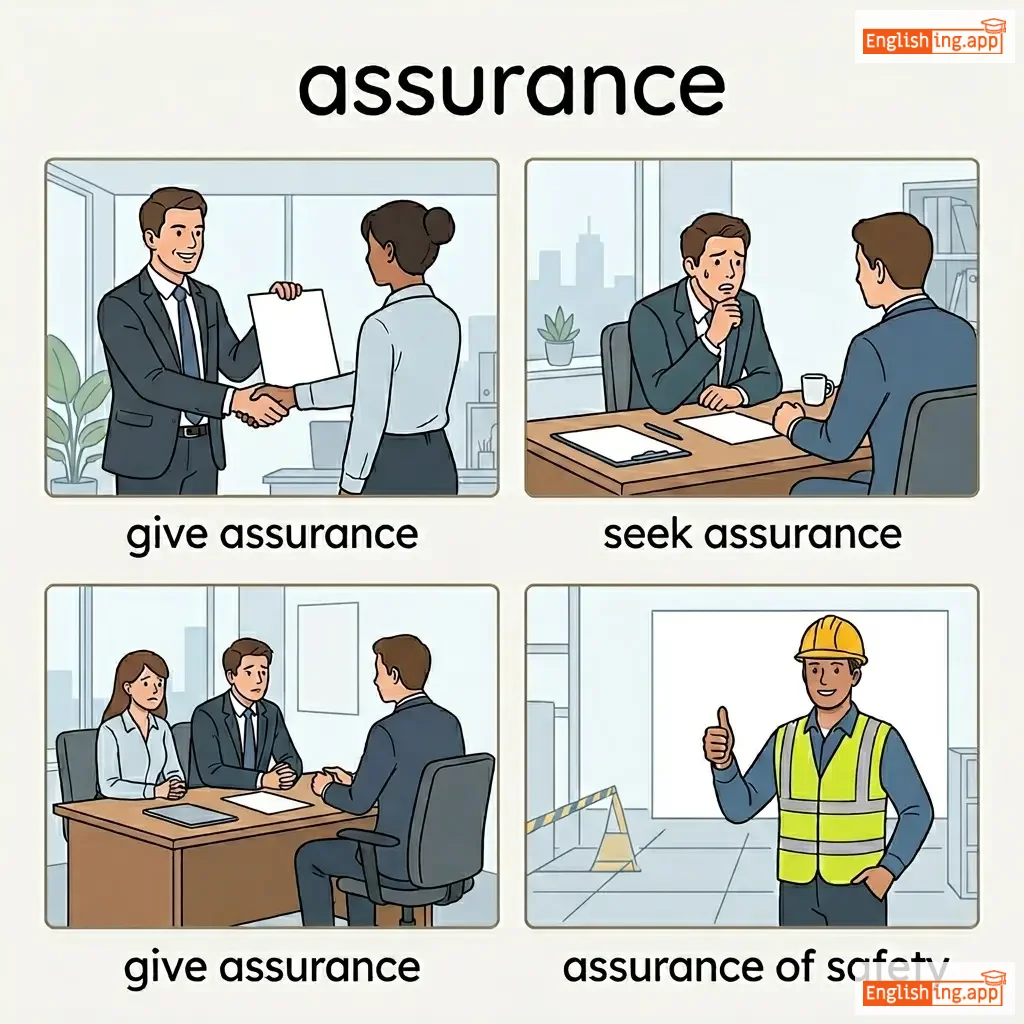
give assurance, seek assurance, assurance of safety
••••••
|
保证意味着'保证'-自信并无忧虑。
••••••
|

