Whoever Came, Stayed to Clean
河鸟普查将几种鸟类标记为 missing。 孩子们问:“我们守护河流的 monster 只能存在于想象中吗?” 组织者宣布:“whoever 爱这条河的人,今天都该来。” 清晨的雾气在 without 阳光的情况下融入梦幻般的景色。 志愿者做了轻松的 workout 来热身。 他们的梦想如今成为刻在石头上的誓言——written 永存。 一位年轻的 democrat 演讲者谈到了平等。 他尖锐地 denounce 了污染者的政策。 健康营讲解了如何通过河水意识帮助 diabetes 患者。 历史学家注意到,在过去某个 dictator 统治时期,地图上的河流线条如何变化。 他们说,轻视这条河会 diminish 人性。 研究团队将野外数据 directly 发送到中心。 纪录片 director 讲解了拍摄计划。 为 disabled 参与者安装了坡道。 如果有人 disagree 某个提议,都会被尊重地倾听。 财务团队 disclose 了每笔捐款细节。 商贩为环保商品提供额外 discount。 技术专家发现了水文 disorder。 新的避难计划旨在防止季风期间再次 displace 居民。 最后,清理 disposal 点被安全封闭。
|
表情符号
|
单词 | Images | 翻译 | 过去时 | 过去分词 | 第三人称单数 | 动名词 | 含义 | 例句 | 例句翻译 | 示例表达 | 示例表达含义 | 示例表达翻译 | 同义词 | 反义词 | 搭配词 | 助记符 |
|---|---|---|---|---|---|---|---|---|---|---|---|---|---|---|---|---|---|
|
🕊️
••••••
|
/ˈdɛməˌkræt/
noun
(民主党人)
••••••
|
- •••••• |
民主党人
minzhudang ren
••••••
|
- •••••• | - •••••• | - •••••• | - •••••• |
a supporter of democracy or a member of the Democratic Party in the US
••••••
|
He is a strong democrat who believes in equal rights. |
他是一个坚强的民主党人,相信平等的权利。
Ta shi yige jianqiang de minzhudang ren, xiangxin pingdeng de quanli.
••••••
|
- •••••• | - •••••• | - •••••• |
supporter, liberal, reformer, egalitarian
••••••
|
dictator, autocrat
••••••
|
loyal democrat, leading democrat, democrat leader, true democrat
••••••
|
Democrat是民主党人的意思
••••••
|
|
📢
••••••
|
/dɪˈnaʊns/
verb
(dīnaǒns)
••••••
|
- •••••• |
谴责
qiǎnzé
••••••
|
denounced
dīnaǒnsd
••••••
|
denounced
dīnaǒnsd
••••••
|
denounces
dīnaǒnces
••••••
|
denouncing
dīnaǒnsing
••••••
|
To publicly declare something to be wrong, evil, or condemn strongly.
••••••
|
The leader denounced corruption in his speech.
领导人在他的演讲中谴责了腐败。
••••••
|
领导人在他的演讲中谴责了腐败。
Lǐngdǎo rén zài tā de yǎnjiǎng zhōng qiǎnzéle fǔbài.
••••••
|
denounce in no uncertain terms
以明确的术语谴责
••••••
|
To condemn very strongly and clearly.
••••••
|
以明确的术语谴责
Yǐ míngquè de shùyǔ qiǎnzé
••••••
|
condemn, criticize, censure, blame, accuse
••••••
|
praise, approve, endorse
••••••
|
publicly denounce, strongly denounce, denounce corruption, denounce violence
••••••
|
Denounce听起来像 'announce', 但是意思是公开强烈谴责,比如谴责腐败。
••••••
|
|
💉
••••••
|
/ˌdaɪəˈbiːtiːz/
noun
(海皮尼斯)
••••••
|
- •••••• |
幸福
xingfu
••••••
|
- •••••• | - •••••• | - •••••• | - •••••• |
a medical condition in which the body cannot properly control the level of sugar in the blood
••••••
|
He was diagnosed with type 2 diabetes last year. |
她收到奖项时,无法掩饰自己的幸福。
Tā shōudào jiǎngxiàng shí, wúfǎ yǎnshì zìjǐ de xìngfú.
••••••
|
- •••••• | - •••••• | - •••••• |
hyperglycemia, metabolic disorder
••••••
|
good health, wellness
••••••
|
type 1 diabetes, type 2 diabetes, diabetes treatment, diabetes patient
••••••
|
幸福 = 星 + 福气
••••••
|
|
👑
••••••
|
/dɪkˈteɪtə/
noun
(独裁者)
••••••
|
- •••••• |
独裁者
dúcáizhě
••••••
|
- •••••• | - •••••• | - •••••• | - •••••• |
a ruler with total power over a country, typically one who has obtained control by force
••••••
|
The dictator ruled the country with an iron fist. |
独裁者用铁腕统治着国家。
Dúcáizhě yòng tiěwàn tǒngzhì zhe guójiā.
••••••
|
- •••••• | - •••••• | - •••••• |
tyrant, despot, autocrat
••••••
|
democrat, leader
••••••
|
dictator's regime, military dictator, cruel dictator
••••••
|
独裁者控制一切 - Dúcáizhě kòngzhì yīqiè
••••••
|
|
⬇️
••••••
|
/dɪˈmɪnɪʃ/
verb
••••••
|
- •••••• | - •••••• |
diminished
••••••
|
diminished
••••••
|
diminishes
••••••
|
diminishing
••••••
|
to make or become less; to reduce in size, importance, or value
••••••
|
Over time, his influence in the company began to diminish. |
- •••••• |
diminish returns |
a situation where the benefit gained is less compared to the effort or investment put in
••••••
|
- •••••• |
reduce, decrease, lessen, weaken, dwindle
••••••
|
increase, enlarge, expand
••••••
|
diminish value, diminish importance, diminish role, diminish returns
••••••
|
No •••••• |
|
📢
••••••
|
/dəˈrɛktli/ or /daɪˈrɛktli/
adverb
(直接)
••••••
|
- •••••• |
直接
zhíjiē
••••••
|
- •••••• | - •••••• | - •••••• | - •••••• |
in a straight line or manner; without anything in between
••••••
|
She spoke directly to the manager about her concerns. |
她直接与经理讨论了她的担忧。
Tā zhíjiē yǔ jīnglǐ tǎolùnle tā de dānyōu.
••••••
|
directly involved |
personally connected or participating
••••••
|
直接参与
zhíjiē cānyù
••••••
|
immediately, personally, straightforwardly, openly
••••••
|
indirectly, vaguely
••••••
|
directly responsible, directly affected, speak directly, directly proportional
••••••
|
Directly 就是直接走 — 不绕弯,直达目标。
••••••
|
|
🎬
••••••
|
/dəˈrɛktər/ or /daɪˈrɛktər/
noun
(dàɪˈrɛktər)
••••••
|
- •••••• |
导演
dǎoyǎn
••••••
|
- •••••• | - •••••• | - •••••• | - •••••• |
a person who manages or oversees a company, department, or film
••••••
|
The director gave final approval for the new movie script. |
导演为新电影剧本提供了最终批准。
Dǎoyǎn wèi xīn diànyǐng jùběn tígōngle zuìzhōng pīzhǔn.
••••••
|
board of directors |
a group of people elected to manage a company
••••••
|
董事会
dǒngshìhuì
••••••
|
manager, leader, chief, head, supervisor
••••••
|
employee, subordinate
••••••
|
film director, company director, executive director, board of directors
••••••
|
导演是负责电影或公司运作的人。
••••••
|
|
♿
••••••
|
/dɪsˈeɪbld/
adjective
(dísāibù)
••••••
|
- •••••• |
残疾
cánjí
••••••
|
- •••••• | - •••••• | - •••••• | - •••••• |
having a physical or mental condition that limits movements, senses, or activities
••••••
|
The park has special facilities for disabled people. |
公园有专为残疾人士设计的设施。
Gōngyuán yǒu zhuān wèi cánjí rénshì shèjì de shèshī.
••••••
|
- •••••• | - •••••• | - •••••• |
handicapped, impaired, incapacitated, challenged
••••••
|
able-bodied, healthy, fit
••••••
|
disabled person, disabled access, physically disabled, disabled community
••••••
|
Dis + able = not able → 不能身体上的人称为‘残疾’。
••••••
|
|
🙅
••••••
|
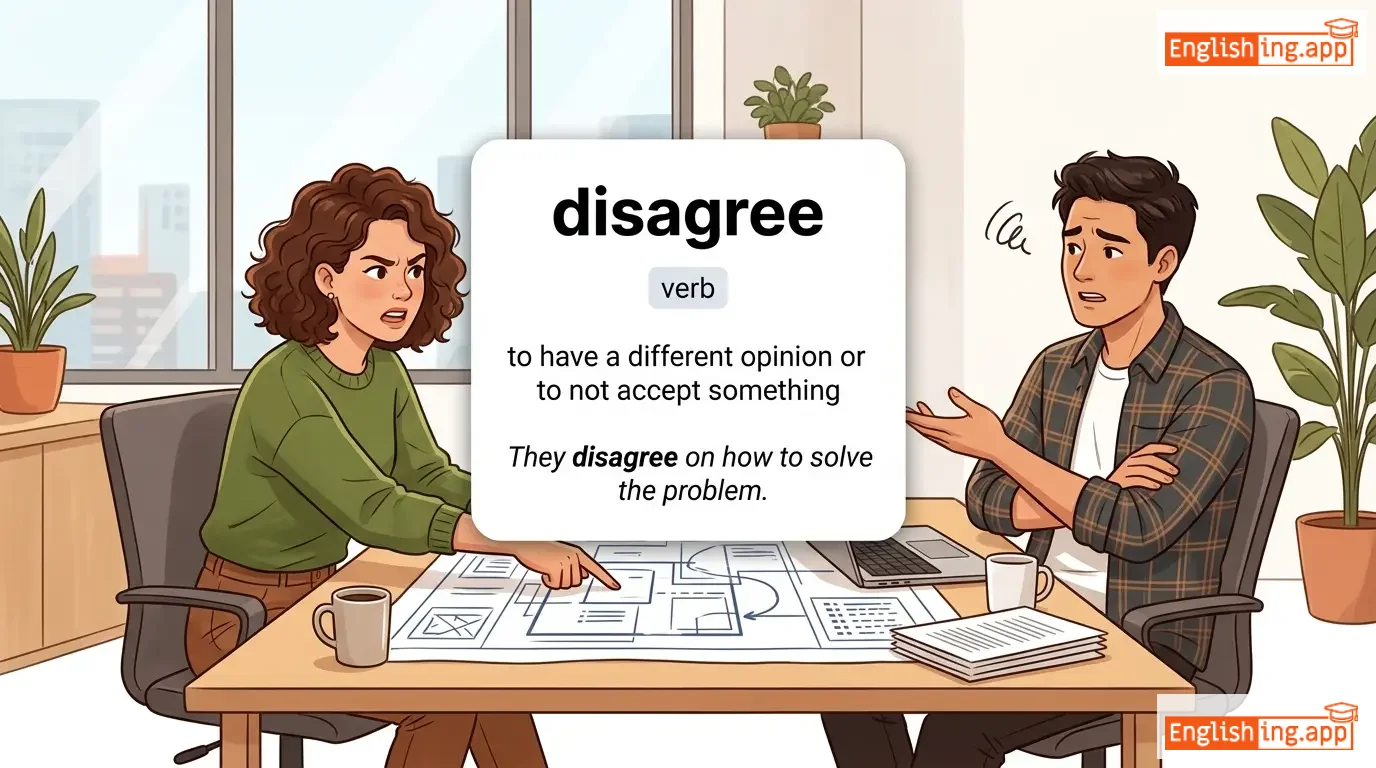
/ˌdɪsəˈɡriː/
verb
••••••
|
|
- •••••• |
disagreed
••••••
|
disagreed
••••••
|
disagrees
••••••
|
disagreeing
••••••
|
to have a different opinion or to not accept something
••••••
|
They disagree on how to solve the problem. |
- •••••• |
agree to disagree |
accept that two people will not reach the same opinion
••••••
|
- •••••• |
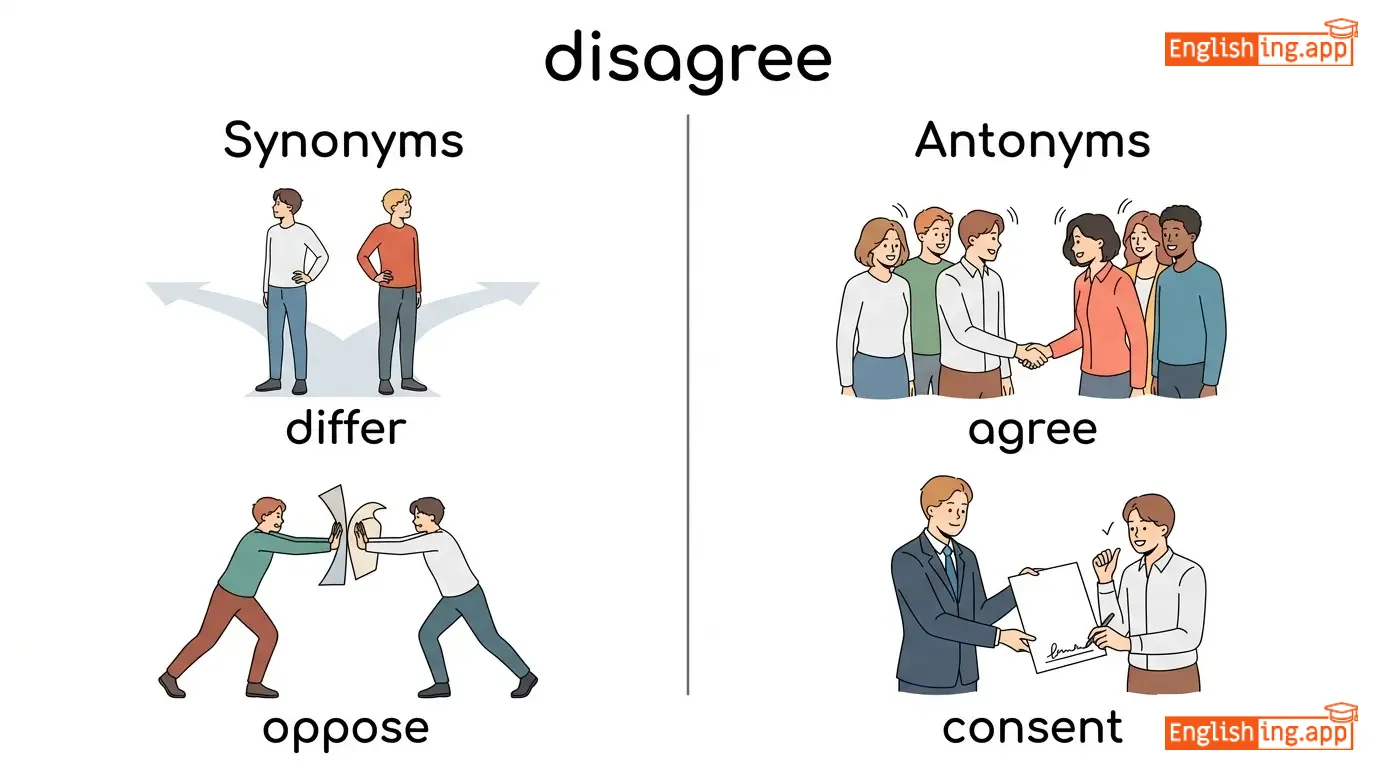
differ, oppose, contradict, dispute, object
••••••
|
agree, consent, approve
••••••
|
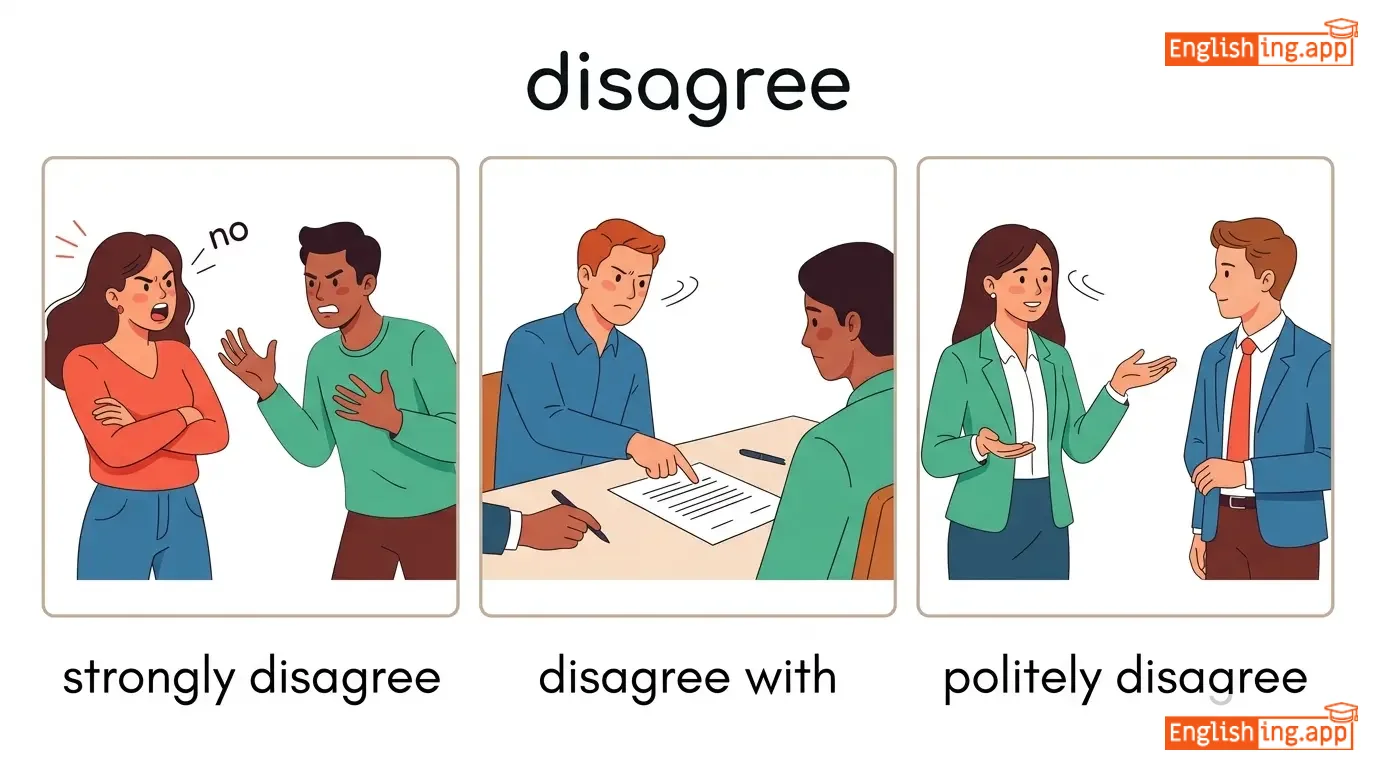
strongly disagree, disagree with, politely disagree
••••••
|
No •••••• |
|
📢
••••••
|
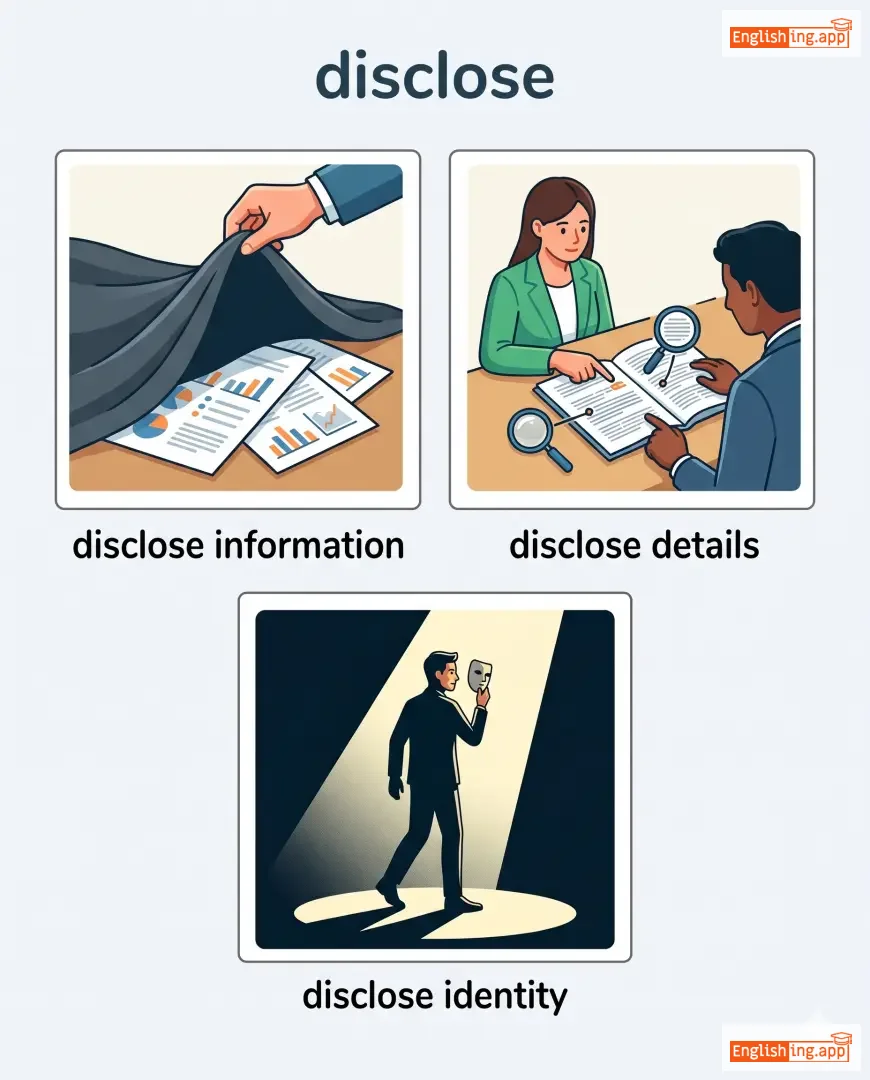
/dɪsˈkloʊz/
verb
••••••
|

|
- •••••• |
disclosed
••••••
|
disclosed
••••••
|
discloses
••••••
|
disclosing
••••••
|
to make something known; to reveal information that was previously secret or hidden
••••••
|
The company refused to disclose details of the agreement. |
- •••••• |
full disclosure |
being completely open and honest about all relevant information
••••••
|
- •••••• |
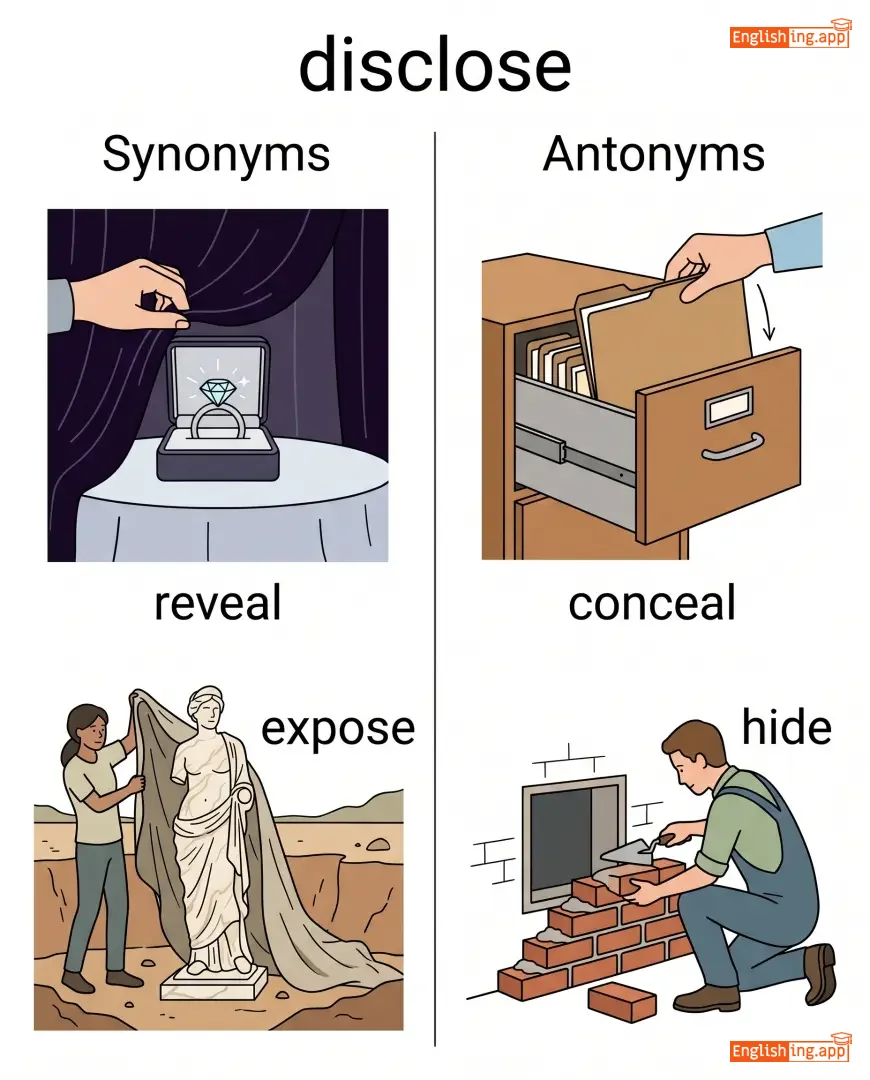
reveal, expose, uncover, divulge, announce
••••••
|
conceal, hide, suppress
••••••
|
disclose information, disclose details, disclose identity, disclose agreement
••••••
|
No •••••• |
|
💸
••••••
|
/ˈdɪskaʊnt/
noun, verb
(ˈdɪskaʊnt)
••••••
|
- •••••• |
折扣
zhé kòu
••••••
|
discounted
dɪsˈkaʊntɪd
••••••
|
discounted
dɪsˈkaʊntɪd
••••••
|
discounts
dɪsˈkaʊnts
••••••
|
discounting
dɪsˈkaʊntɪŋ
••••••
|
A reduction in the usual price of something; to reduce the price of something.
••••••
|
The store offered a 20% discount on all electronics.
商店提供了所有电子产品20%的折扣。
••••••
|
商店提供了所有电子产品20%的折扣。
Shāngdiàn tígōngle suǒyǒu diànzǐ chǎnpǐn 20% de zhékòu.
••••••
|
discount rate
折扣率
••••••
|
The interest rate charged to commercial banks by a central bank.
••••••
|
折扣率
zhékòu lǜ
••••••
|
reduction, markdown, rebate, deduction, concession
••••••
|
surcharge, premium, markup
••••••
|
offer discount, receive discount, discount price, trade discount
••••••
|
折扣就是价格下降,帮助我们省钱!
••••••
|
|
⚠️
••••••
|
/dɪsˈɔːrdər/
noun
(disorder)
••••••
|
- •••••• |
紊乱
wěnluàn
••••••
|
- •••••• | - •••••• | - •••••• | - •••••• |
A state of confusion or lack of order; also a medical or mental condition.
••••••
|
The protest ended in disorder when the crowd became violent. |
抗议活动在群众变得暴力后陷入了混乱。
Kàngyì huódòng zài qúnzhòng biàn dé bàolì hòu xiànrùle hùnluàn.
••••••
|
eating disorder |
A medical condition involving abnormal eating habits.
••••••
|
饮食失调
yǐnshí shītiáo
••••••
|
confusion, chaos, disturbance, illness, ailment
••••••
|
order, organization, harmony
••••••
|
mental disorder, physical disorder, cause disorder, public disorder
••••••
|
Disorder意味着紊乱,记住 - 没有秩序就有紊乱。
••••••
|
|
🏚️
••••••
|
/dɪsˈpleɪs/
verb
(dɪsˈpleɪs)
••••••
|
- •••••• |
驱逐
qūzhú
••••••
|
displaced
dɪsˈpleɪst
••••••
|
displaced
dɪsˈpleɪst
••••••
|
displaces
dɪsˈpleɪsɪz
••••••
|
displacing
dɪsˈpleɪsɪŋ
••••••
|
To force someone or something out of its usual place or position.
••••••
|
The flood displaced hundreds of families from their homes.
洪水将数百个家庭从他们的家中驱逐。
••••••
|
洪水将数百个家庭从他们的家中驱逐。
Hóngshuǐ jiāng shù bǎi gè jiātíng cóng tāmen de jiā zhōng qūzhú.
••••••
|
displaced person
流离失所的人
••••••
|
someone forced to leave their home, especially because of war or disaster
••••••
|
流离失所的人
Liúlí shīsuǒ de rén
••••••
|
remove, replace, shift, expel, oust
••••••
|
retain, keep, maintain
••••••
|
displace workers, displace people, displace water, displace families
••••••
|
Displace就像驱逐一样,意味着把某物从原来的地方带走。
••••••
|
|
🗑️
••••••
|
/dɪsˈpoʊzl/
noun
(dīspóuzhī)
••••••
|
- •••••• |
处置
chuzhi
••••••
|
- •••••• | - •••••• | - •••••• | - •••••• |
the action or process of getting rid of something
••••••
|
The disposal of waste is crucial for maintaining a clean environment.
废物处理对于保持清洁的环境至关重要。
••••••
|
废物处理对于保持清洁的环境至关重要。
Feiwu chuzhi dui yu baochi qingjie de huanjing zhiguang zhongyao.
••••••
|
- •••••• | - •••••• | - •••••• |
removal, elimination, clearance, junking
••••••
|
retention, preservation
••••••
|
waste disposal, disposal process, proper disposal, disposal site
••••••
|
When you DISPOSE (处置) of waste, you 'dispose' of it in a trash can (垃圾桶).
••••••
|
|
❓
••••••
|
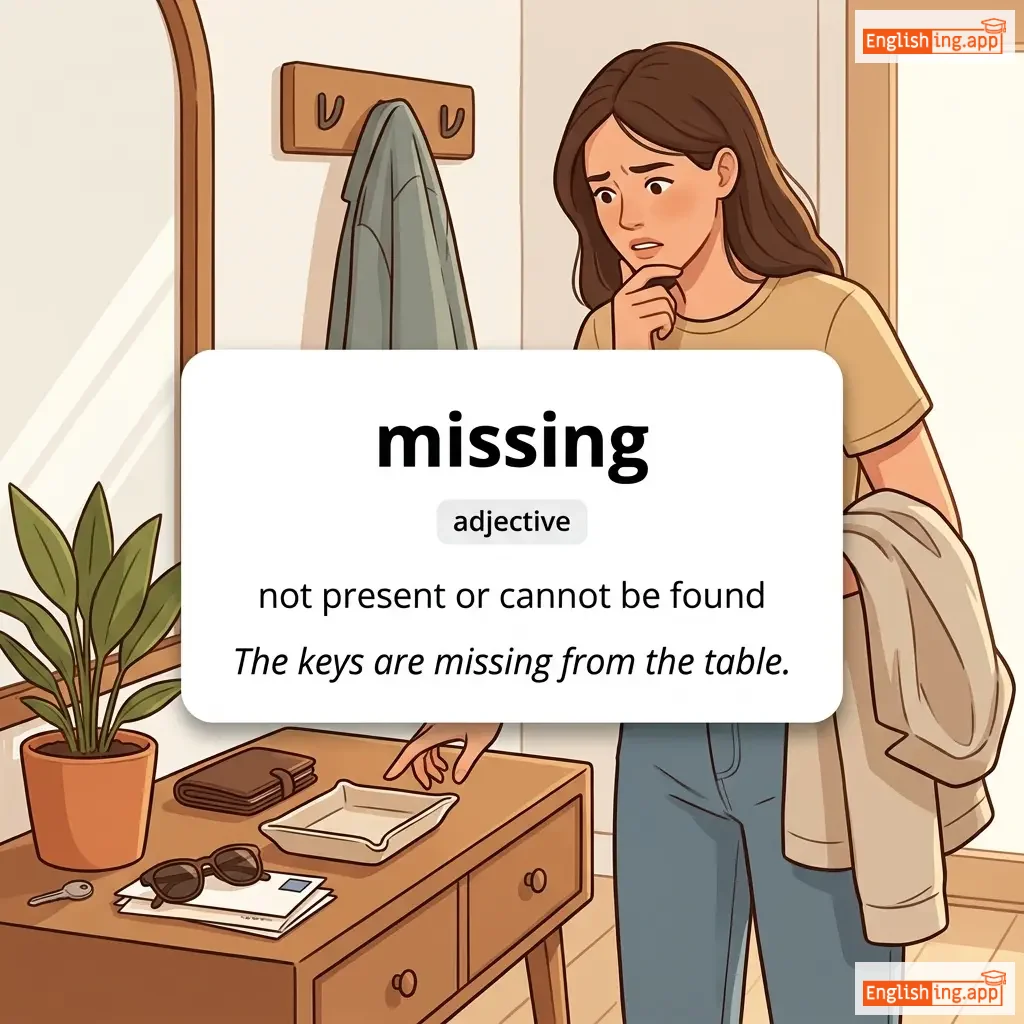
/ˈmɪsɪŋ/
adjective
(missing)
••••••
|
|
丢失
diūshī
••••••
|
- •••••• | - •••••• | - •••••• | - •••••• |
not present or cannot be found
••••••
|
The keys are missing from the table.
de keys ar missing from de teibl.
••••••
|
钥匙不见了,放在桌子上。
Yuèshi bùjiàn le, fàng zài zhuōzi shàng.
••••••
|
missing in action
missing in aksion
••••••
|
not present or unaccounted for
••••••
|
失踪
shīzōng
••••••
|
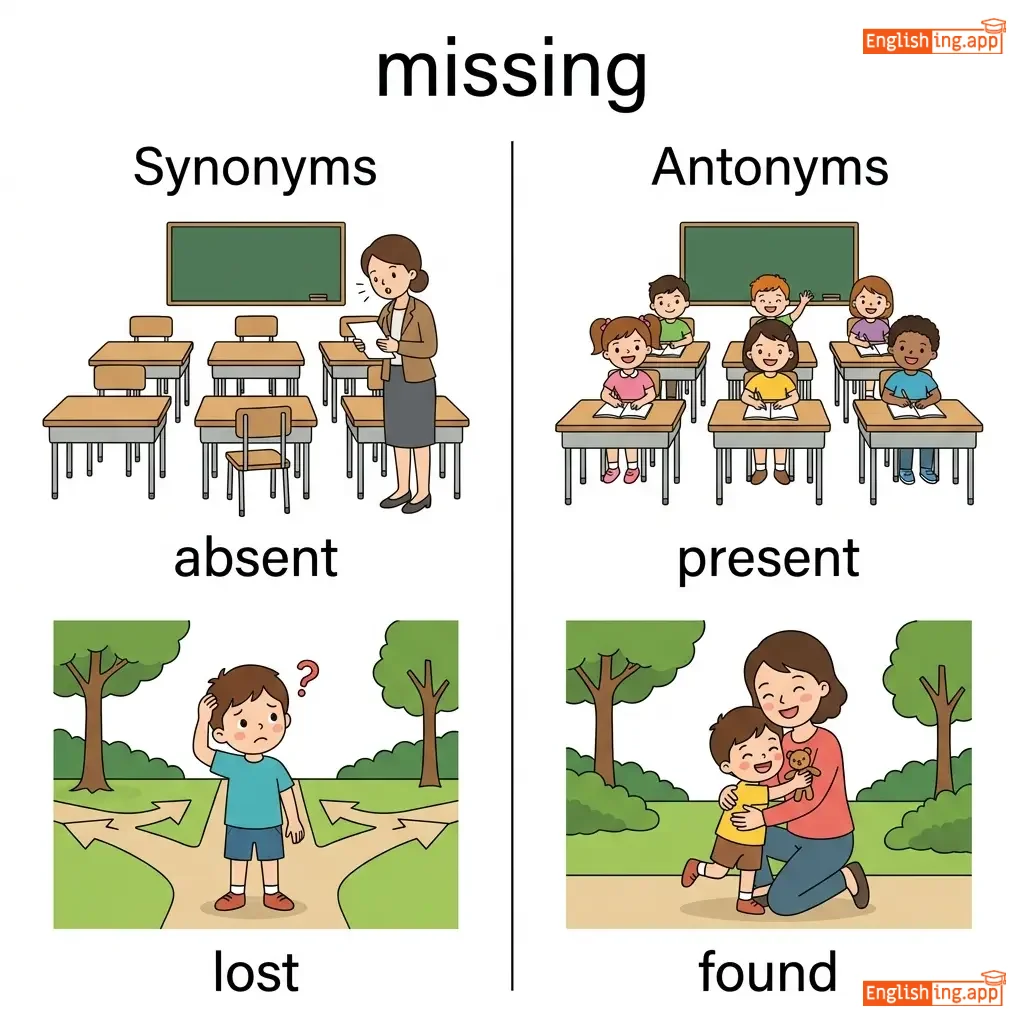
absent, lost, gone, vanished, misplaced
••••••
|
present, found
••••••
|
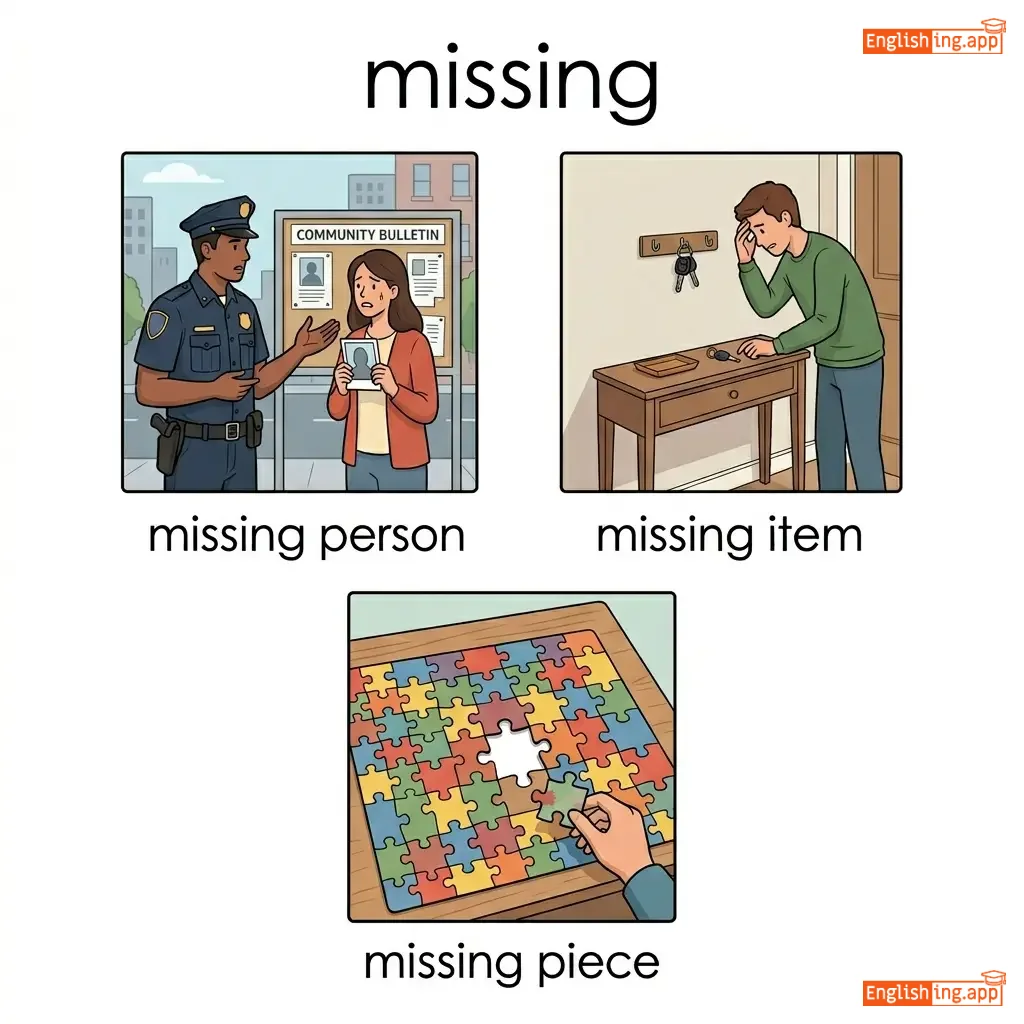
missing person, missing item, missing piece, missing child
••••••
|
Missing = 丢失 – 某物已消失不见。
••••••
|
|
👹
••••••
|
/ˈmɒnstər/
noun
(happiness)
••••••
|
- •••••• |
幸福
xìngfú
••••••
|
- •••••• | - •••••• | - •••••• | - •••••• |
an imaginary or large frightening creature
••••••
|
The child was afraid that a monster was hiding under the bed.
她无法隐藏自己得到奖项时的快乐。
••••••
|
她无法隐藏自己得到奖项时的快乐。
Tā wúfǎ yǐncáng zìjǐ dédào jiǎngxiàng shí de kuàilè.
••••••
|
monster hit
追求幸福
••••••
|
a very successful or popular product or show
••••••
|
追求幸福
zhuīqiú xìngfú
••••••
|
beast, creature, giant, demon, ogre
••••••
|
angel, human, friend
••••••
|
monster movie, sea monster, create a monster, monster hit
••••••
|
幸福 = Happiness — 永远追求幸福!
••••••
|
|
🙋♂️
••••••
|
/huːˈɛvər/
pronoun
(húːˈɛvər)
••••••
|
- •••••• |
无论谁
wúlùn shuí
••••••
|
- •••••• | - •••••• | - •••••• | - •••••• |
any person who; no matter who
••••••
|
Whoever wants to join the trip must register today. |
无论谁想加入旅行,都必须今天注册。
Wúlùn shuí xiǎng jiārù lǚxíng, dōu bìxū jīntiān zhùcè.
••••••
|
- •••••• | - •••••• | - •••••• |
anyone, anybody, whosoever
••••••
|
none, nobody
••••••
|
whoever comes, whoever wants, whoever said, whoever did
••••••
|
Who + ever = 无论谁 — whoever means 任何人
••••••
|
|
🚫
••••••
|
/wɪðˈaʊt/
preposition
(wɪðˈaʊt)
••••••
|
- •••••• |
没有
méiyǒu
••••••
|
- •••••• | - •••••• | - •••••• | - •••••• |
in the absence of, or not having something
••••••
|
He left without saying goodbye.
他离开时没有说再见。
••••••
|
他离开时没有说再见。
Tā líkāi shí méiyǒu shuō zàijiàn.
••••••
|
- •••••• | - •••••• | - •••••• |
lacking, absent, minus, excluding
••••••
|
with, having
••••••
|
without a doubt, without hesitation, without warning
••••••
|
没有 (without) 一切都不可能,什么也不会发生
••••••
|
|
🏋️♀️
••••••
|
/ˈwɜːrkaʊt/
noun
(wɜːrkaʊt)
••••••
|
- •••••• |
锻炼
duànliàn
••••••
|
- •••••• | - •••••• | - •••••• | - •••••• |
a session of physical exercise or training to improve fitness or health
••••••
|
She does a full-body workout every morning before work. |
她每天早上在上班前做全身锻炼。
Tā měitiān zǎoshang zài shàngbān qián zuò quánshēn duànliàn.
••••••
|
intense workout |
a very demanding or vigorous exercise session
••••••
|
强烈的锻炼
qiángliè de duànliàn
••••••
|
exercise, training, session, fitness routine, practice
••••••
|
rest, inactivity, relaxation
••••••
|
daily workout, intense workout, gym workout, home workout
••••••
|
在健身房里,‘workout’意味着通过锻炼使身体变得更加健康——工作前做锻炼!
••••••
|
|
✍️
••••••
|
/ˈrɪtən/
adjective
(rìtén)
••••••
|
- •••••• |
书面
shūmiàn
••••••
|
- •••••• | - •••••• | - •••••• | - •••••• |
expressed in writing rather than spoken; composed or recorded in written form
••••••
|
The agreement must be in written form to be valid.
协议必须以书面形式进行,才有效。
••••••
|
协议必须以书面形式进行,才有效。
Xiéyì bìxū yǐ shūmiàn xíngshì jìnxíng, cái yǒuxiào.
••••••
|
in black and white
黑白分明
••••••
|
clearly written or printed, leaving no doubt
••••••
|
黑白分明
hēibái fēnmíng
••••••
|
documented, recorded, drafted, inscribed, composed
••••••
|
spoken, oral, verbal
••••••
|
written form, written statement, written communication, written agreement
••••••
|
Written 在中文中表示已经书面记录或表达 ✍️
••••••
|

