The Miner Who Discovered Ancient Secrets
赛义夫是一名miner,在northern地区工作。他的工作是从地下提取矿物。这不是一项minor任务——工作既危险又辛苦。一天,在挖掘时,赛义夫的工具碰到了坚硬的东西。当他看到古老的文物时,他的mouth惊讶地张开了。他的情绪mixed——既兴奋又害怕。文物部分naked,被岩层暴露出来。现场主管让工人们先完成每日的quota再调查。但赛义夫忍不住。他小心地用punch工具将物体取出。它被泥土和锈的patches覆盖。当他清理它时,散发出一股nasty的气味——古老的腐烂。赛义夫的同事以为他疯了,但他pleaded主管联系考古学家。这个发现意义重大——它们是来自古代文明的naval文物。专家们赶到并开始系统发掘。一个有趣的时刻是,一位考古学家不小心掉了她的purse,硬币在矿井里滚得到处都是。赛义夫帮忙捡了回来。在发现物中有每个约重一pound的陶片。Other发现包括工具和珠宝。这不是普通的矿区——而是一座考古金矿。矿业公司不得不调整运作以配合研究人员。Mounting证据表明,这里曾经是一个古老的港口。研究人员发现的遗迹显示当时贸易的物品包括onions和谷物。一切都被详细记录下来——甚至连最小的物品都按其niche类别分类。工作扩展到原始地点之外。附近一位ranch主报告说,他的土地上也发现了类似的文物。赛义夫的发现改变了他的人生。从一个普通的miner到当地英雄,他成为了考古旅游的导游。博物馆甚至为此建立了一个展览。赛义夫从未想过,他的日常工作会带来这样的发现。就像行星在orbit中一样,有时意外的事会完美地排列。这个故事证明,细心和好奇心可以带来非凡的发现。
|
表情符号
|
单词 | Images | 翻译 | 过去时 | 过去分词 | 第三人称单数 | 动名词 | 含义 | 例句 | 例句翻译 | 示例表达 | 示例表达含义 | 示例表达翻译 | 同义词 | 反义词 | 搭配词 | 助记符 |
|---|---|---|---|---|---|---|---|---|---|---|---|---|---|---|---|---|---|
|
⛏️
••••••
|
/ˈmaɪnə(r)/
noun
(麦纳)
••••••
|
- •••••• |
矿工
kuànggōng
••••••
|
- •••••• | - •••••• | - •••••• | - •••••• |
a person who works in a mine, extracting minerals or other resources
••••••
|
The miner worked in the coal mine for many years. |
矿工在煤矿工作了很多年。
Kuànggōng zài méikuàng gōngzuò le hěn duō nián.
••••••
|
- •••••• | - •••••• | - •••••• |
excavator, digger, prospector
••••••
|
- •••••• |
coal miner, gold miner, miner's lamp
••••••
|
KUANGGONG sounds like MINER – they work in the KUANG (mine).
••••••
|
|
🔹
••••••
|
/ˈmaɪ.nər/
adjective/noun
(mái nà)
••••••
|
- •••••• |
微小 / 未成年
wei xiao / wei chengnian
••••••
|
- •••••• | - •••••• | - •••••• | - •••••• |
less important, serious, or significant; a person under the legal age
••••••
|
Luckily, the accident caused only minor injuries. |
幸运的是,事故只造成了轻微伤害。
xìng yùn de shì, shì gù zhǐ zào chéng le qīng wēi shāng hài.
••••••
|
minor detail |
an unimportant or insignificant detail
••••••
|
微小的细节
wei xiao de xi jie
••••••
|
small, slight, insignificant, subordinate
••••••
|
major, important, significant
••••••
|
minor issue, minor injury, minor role, minor detail
••••••
|
Minor 代表小 - Major 代表大。Minor 是微小或不重要。
••••••
|
|
🌀
••••••
|
/mɪkst/
adjective
(混合)
••••••
|
- •••••• |
混合的
hunhe de
••••••
|
- •••••• | - •••••• | - •••••• | - •••••• |
consisting of different elements or having varied opinions or feelings
••••••
|
The audience had mixed reactions to the film. |
观众对电影的反应混合。
Guanzhong dui dianying de fanying hunhe.
••••••
|
mixed feelings |
having both positive and negative emotions about something
••••••
|
混合的情感
hunhe de qinggan
••••••
|
blended, combined, diverse, varied, assorted
••••••
|
uniform, pure, similar
••••••
|
mixed reaction, mixed group, mixed culture, mixed opinion
••••••
|
混合的感情 = mix emotions!
••••••
|
|
🧗
••••••
|
/maʊnt/
verb
(芒特)
••••••
|
- •••••• |
安装
anzhuang
••••••
|
mounted
芒特德
••••••
|
mounted
芒特德
••••••
|
mounts
芒特斯
••••••
|
mounting
芒特英
••••••
|
to climb up, rise, or fix something in place
••••••
|
They plan to mount a camera on the wall.
dei plan tu maungte yi ge shexiangji zai qiang shang.
••••••
|
他们计划在墙上安装一台摄像机。
Tamen jihua zai qiang shang anzhuang yi tai shexiangji.
••••••
|
mount an attack
芒特 安 攻击
••••••
|
to launch or initiate an attack
••••••
|
发动攻击
fadong gongji
••••••
|
climb, rise, ascend, fix, install
••••••
|
dismount, descend, remove
••••••
|
mount a horse, mount a camera, mount pressure, mount an attack
••••••
|
Mount 和 安装 意思相近,都表示固定或架设某物。
••••••
|
|
👄
••••••
|
/maʊθ/
noun
(maʊθ)
••••••
|
- •••••• |
嘴巴
zuǐbā
••••••
|
- •••••• | - •••••• | - •••••• | - •••••• |
the opening in the face used for eating, speaking, and breathing
••••••
|
She covered her mouth when she yawned. |
她打哈欠时捂住了嘴巴。
Tā dǎ hāqiàn shí wǔ zhù le zuǐbā.
••••••
|
word of mouth |
information spread through verbal communication
••••••
|
口耳相传
kǒu ěr xiāng chuán
••••••
|
opening, lips, cavity, jaw
••••••
|
silence, closure
••••••
|
open mouth, shut mouth, mouth of a river, mouth full
••••••
|
嘴巴意味着嘴巴,一切都通过嘴巴进行——吃饭、说话、呼吸。
••••••
|
|
🚼
••••••
|
/ˈneɪkɪd/
adjective
(neikid)
••••••
|
- •••••• |
赤裸
chiluo
••••••
|
- •••••• | - •••••• | - •••••• | - •••••• |
not covered by clothing or without protection
••••••
|
The child was running naked in the yard. |
孩子在院子里赤裸地跑来跑去。
Haizi zai yuanzi li chiluo de pao lai pao qu.
••••••
|
the naked truth |
the complete and unembellished truth
••••••
|
赤裸的真相
chiluo de zhenxiang
••••••
|
bare, unclothed, exposed, nude
••••••
|
clothed, covered
••••••
|
naked body, naked eye, naked truth
••••••
|
Naked意味着赤裸 – 如果你没有穿衣服,就是赤裸。
••••••
|
|
😠
••••••
|
/ˈnæsti/
adjective
(nàisītí)
••••••
|
- •••••• |
令人不快的
lìng rén bù kuài de
••••••
|
- •••••• | - •••••• | - •••••• | - •••••• |
very unpleasant, unkind, or offensive
••••••
|
He made a nasty comment about her dress. |
他对她的裙子发表了令人不快的评论。
Tā duì tā de qúnzi fābiǎo le lìng rén bù kuài de pínglùn.
••••••
|
- •••••• | - •••••• | - •••••• |
unpleasant, mean, vile, horrible, rude
••••••
|
pleasant, kind, nice
••••••
|
nasty smell, nasty habit, nasty surprise, nasty weather
••••••
|
Nasty 听起来像‘nàisītí’—意味着令人不快或冒犯。
••••••
|
|
🚢
••••••
|
/ˈneɪvəl/
adjective
(nèiwǎěr)
••••••
|
- •••••• |
海军的
haijun de
••••••
|
- •••••• | - •••••• | - •••••• | - •••••• |
relating to a country's navy or military ships
••••••
|
The country invested heavily in naval defense. |
该国在海军防御方面进行了大量投资。
Gai guo zai haijun fangyu fangmian jin xing le daliao touzi.
••••••
|
naval forces |
a nation's warships and related military strength
••••••
|
海军力量
haijun li liang
••••••
|
maritime, seafaring, oceanic, military
••••••
|
civilian, land-based
••••••
|
naval base, naval battle, naval defense, naval fleet
••••••
|
Naval意味着海军 — 联想到Navy和Battle来记住Naval!
••••••
|
|
🌱
••••••
|
/niːʃ/
noun
(尼奇)
••••••
|

|
合适的位置
heshi de weizhi
••••••
|
- •••••• | - •••••• | - •••••• | - •••••• |
a comfortable or suitable position in life or employment
••••••
|
He has found his niche in the marketing industry. |
他在营销行业找到了自己的合适位置。
Tā zài yíngxiāo hángyè zhǎodàole zìjǐ de héshì wèizhì.
••••••
|
- •••••• | - •••••• | - •••••• |
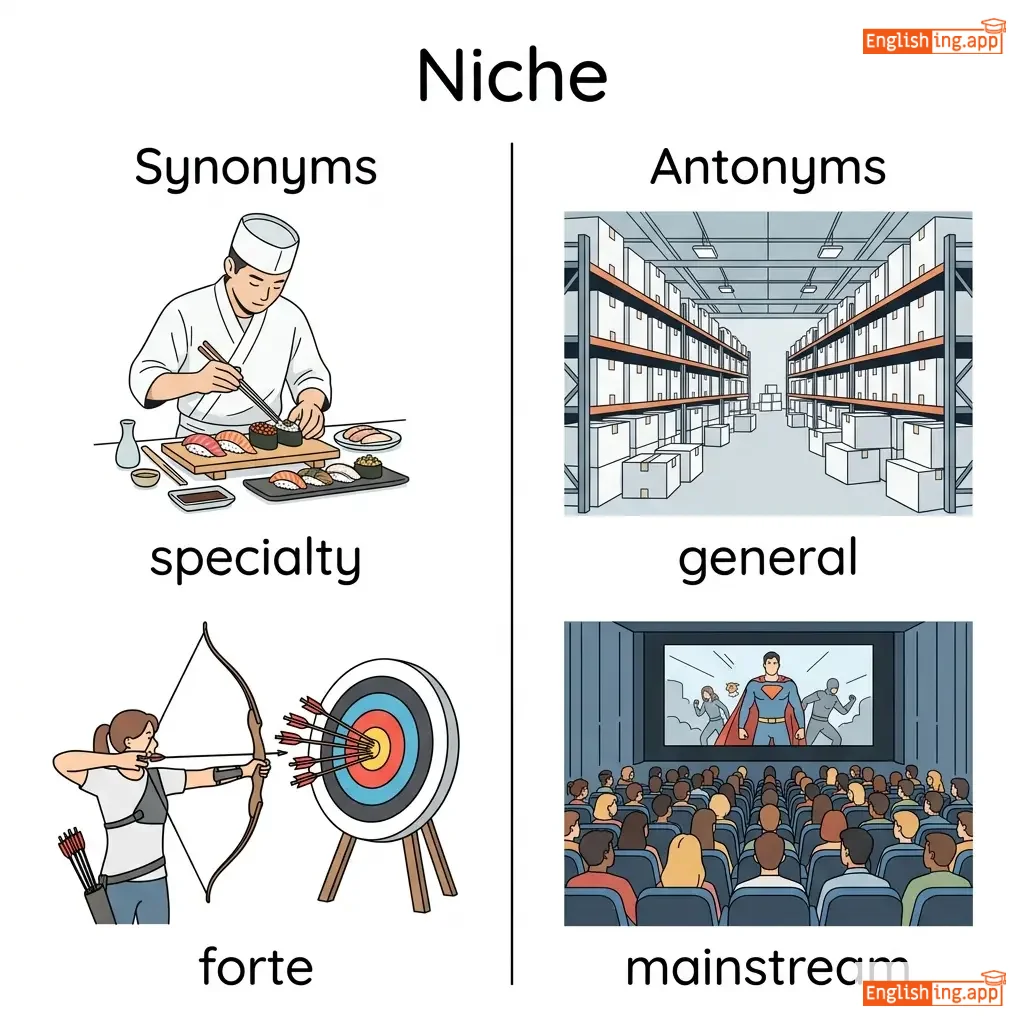
specialty, forte, domain, area
••••••
|
general, mainstream
••••••
|
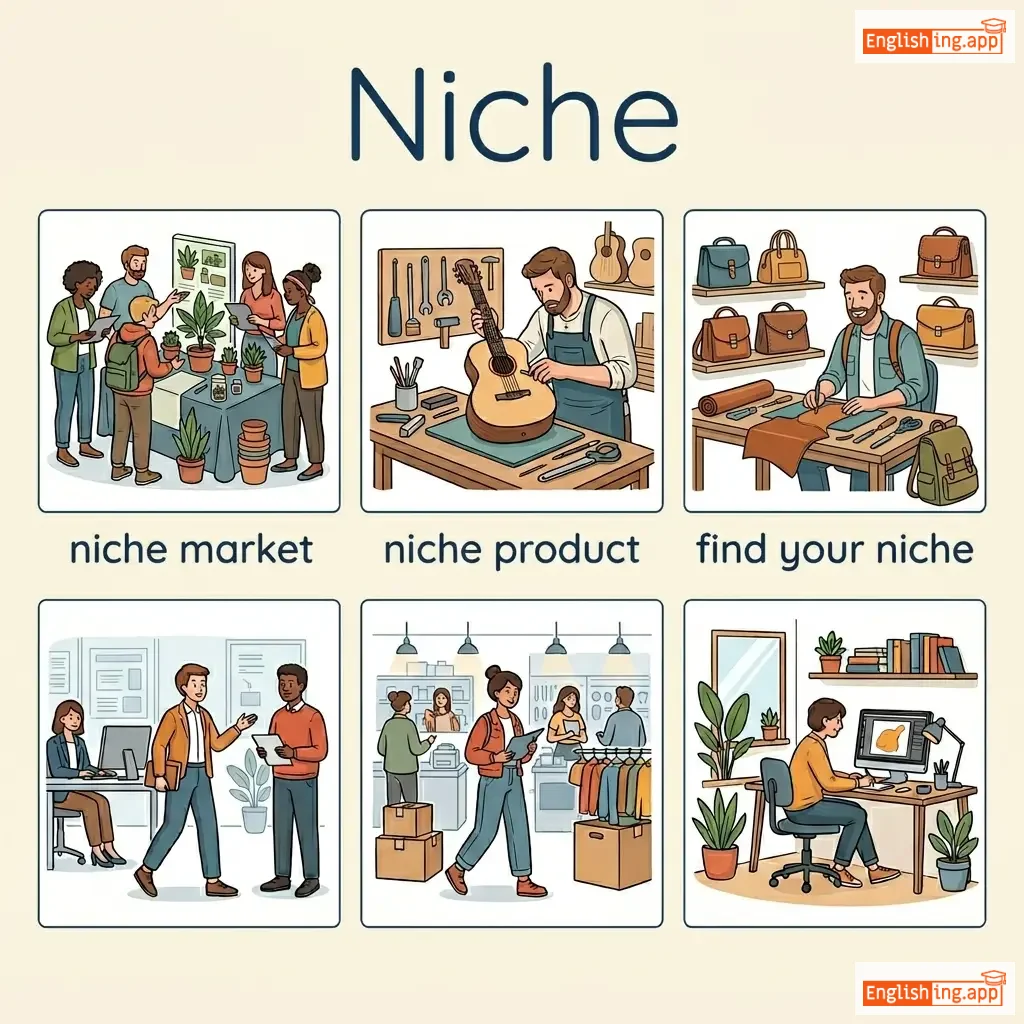
niche market, niche product, find your niche
••••••
|
在营销领域找到合适的位置
••••••
|
|
🧭
••••••
|
/nɔːrθ/
noun
(北)
••••••
|
- •••••• |
北方
beifang
••••••
|
- •••••• | - •••••• | - •••••• | - •••••• |
the direction toward the top of a map or the opposite of south
••••••
|
We traveled north to reach the mountains. |
我们向北旅行,以到达山脉。
Wǒmen xiàng běi lǚxíng, yǐ dàodá shānmài.
••••••
|
- •••••• | - •••••• | - •••••• |
up, northern direction
••••••
|
south, downward
••••••
|
north pole, north wind, go north, head north
••••••
|
North is UP on a map, just like '北方' is UP in Chinese!
••••••
|
|
🧅
••••••
|
/ˈʌnjən/
noun
(洋葱)
••••••
|
- •••••• |
洋葱
yangcong
••••••
|
- •••••• | - •••••• | - •••••• | - •••••• |
a round vegetable with a strong smell and flavor, usually used in cooking
••••••
|
I chopped an onion to make the soup. |
我切了一个洋葱来做汤。
Wǒ qiēle yīgè yángcōng lái zuò tāng.
••••••
|
- •••••• | - •••••• | - •••••• |
bulb, leek, shallot
••••••
|
garlic, herb
••••••
|
chop an onion, onion soup, onion ring
••••••
|
洋葱 - 切洋葱时眼泪会流出来!
••••••
|
|
🪐
••••••
|
/ˈɔːbɪt/
noun
(轨道)
••••••
|
|
轨道
guidao
••••••
|
- •••••• | - •••••• | - •••••• | - •••••• |
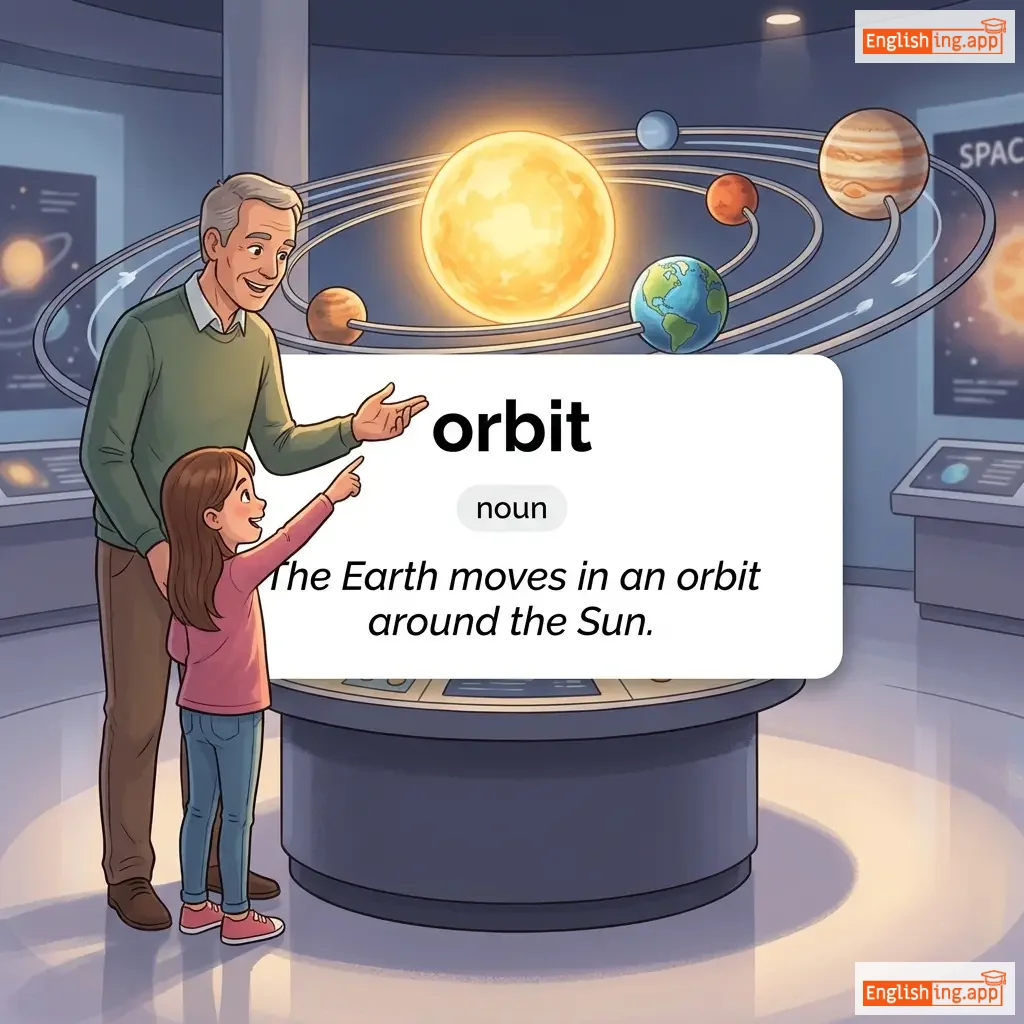
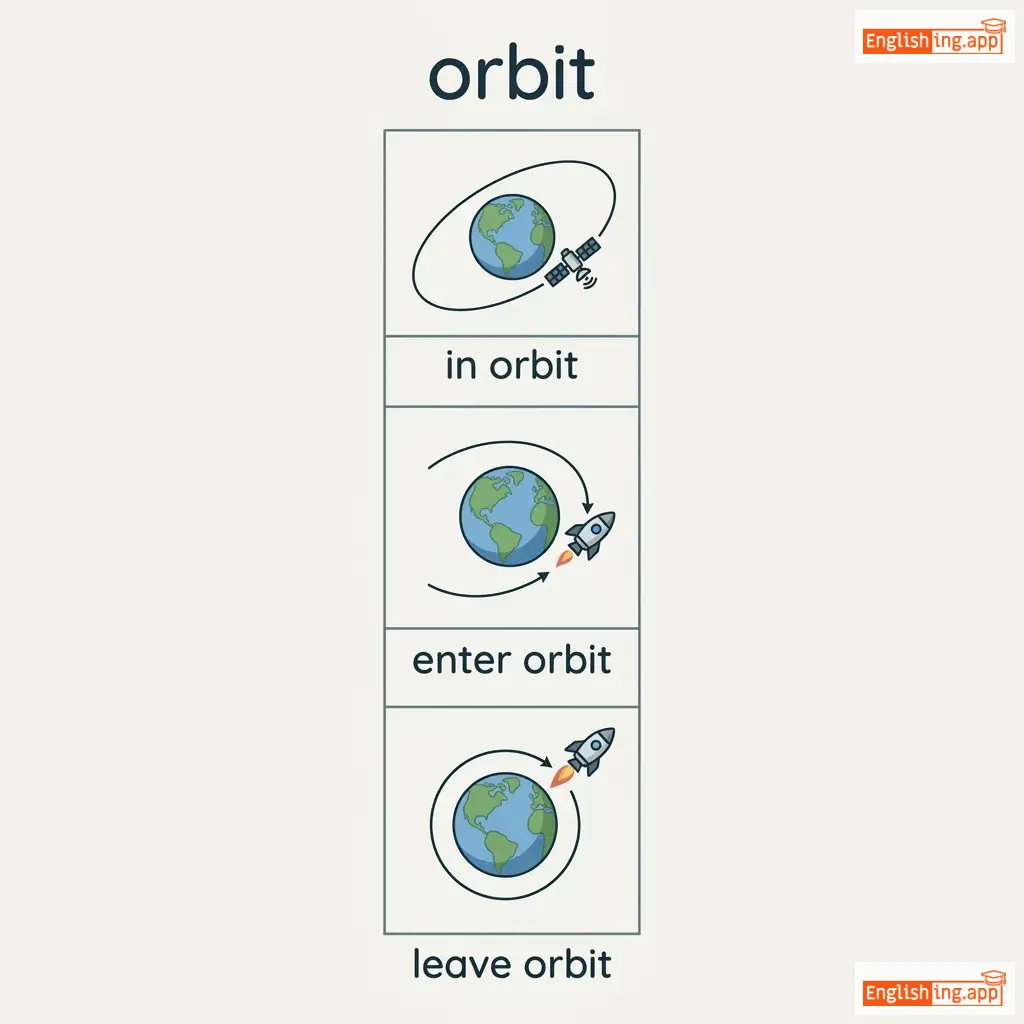
the curved path that a planet, satellite, or object follows around another body in space
••••••
|
The Earth moves in an orbit around the Sun.
地球围绕太阳沿轨道运动。
••••••
|
地球围绕太阳沿轨道运动。
Dìqiú wéirào tàiyáng yán guidao yùndòng.
••••••
|
in orbit
在轨道上
••••••
|
circling around a planet or celestial body
••••••
|
在轨道上
zài guidao shàng
••••••
|
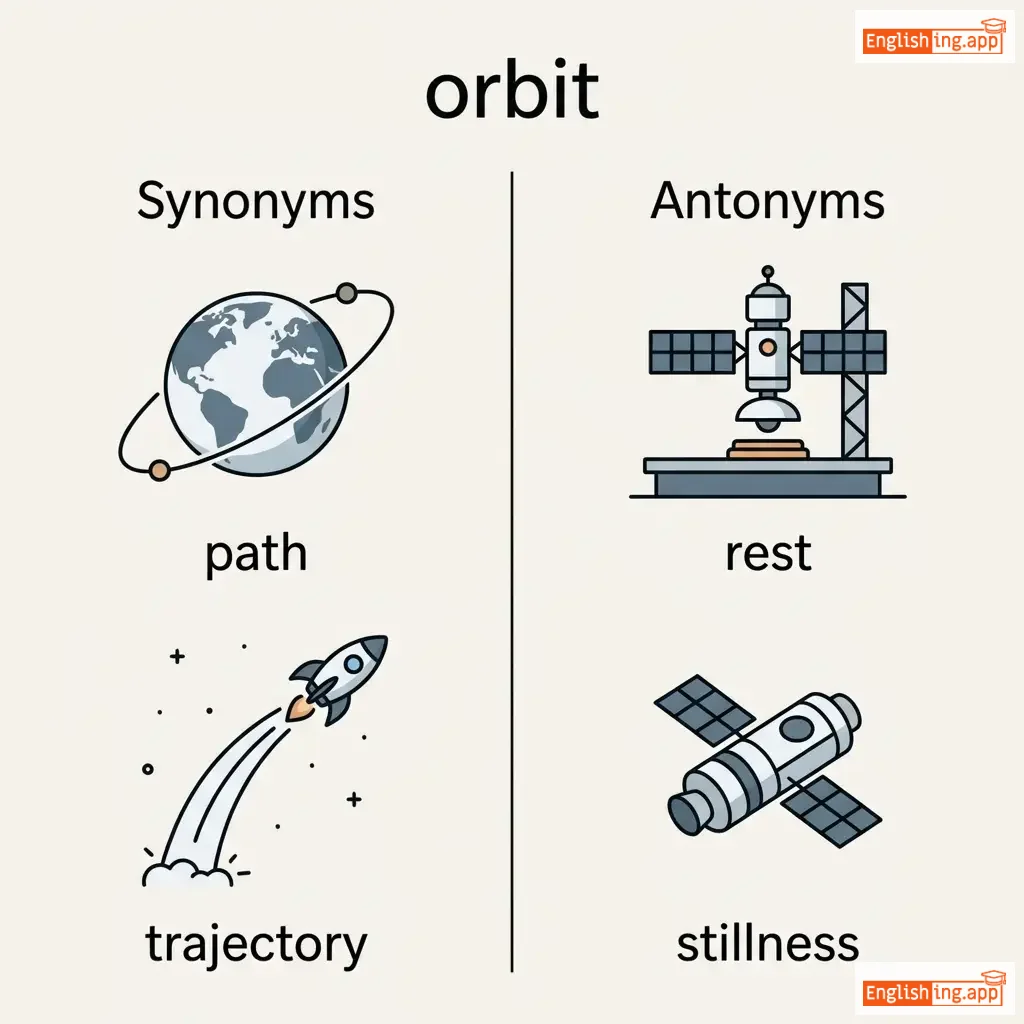
path, trajectory, revolution, circuit
••••••
|
rest, stillness
••••••
|
in orbit, enter orbit, leave orbit, orbit around
••••••
|
轨道 = guidao, 地球在轨道上围绕太阳旋转。
••••••
|
|
🔄
••••••
|
/ˈʌðər/
adjective
(àdé)
••••••
|
- •••••• |
其他
qítā
••••••
|
- •••••• | - •••••• | - •••••• | - •••••• |
used to refer to something different from the one already mentioned or known
••••••
|
I don't want this one, I will take the other one. |
我不想要这个,我会拿另一个。
Wǒ bù xiǎng yào zhège, wǒ huì ná lìng yīgè.
••••••
|
the other side of the coin |
the opposite aspect of a situation
••••••
|
硬币的另一面
Yìngbì de lìng yīmiàn
••••••
|
alternative, different, another, else
••••••
|
same, identical
••••••
|
the other side, the other person, the other day
••••••
|
Other, 另一个总在这里
••••••
|
|
🩹
••••••
|
/pætʃ/
noun
(pǎtí)
••••••
|
- •••••• |
补丁
bǔdīng
••••••
|
- •••••• | - •••••• | - •••••• | - •••••• |
a small piece of material used to mend a hole; a small area of something different
••••••
|
She sewed a patch over the hole in her jeans. |
她在她的牛仔裤上的洞上缝了一个补丁。
Tā zài tā de niúzǎikù shàng de dòng shàng fèng le yīgè bǔdīng.
••••••
|
- •••••• | - •••••• | - •••••• |
repair, mend, piece, cover
••••••
|
hole, tear, damage, opening
••••••
|
eye patch, sew patch, cloth patch
••••••
|
补丁可以想象为修补衣物的小片,修补牛仔裤的洞。
••••••
|
|
🙏
••••••
|
/pliːd/
verb
(pǐlìd)
••••••
|


|
恳求
kěnqiú
••••••
|
pleaded
pǐlìded
••••••
|
pleaded
pǐlìded
••••••
|
pleads
pǐlìds
••••••
|
pleading
pǐlìdīng
••••••
|
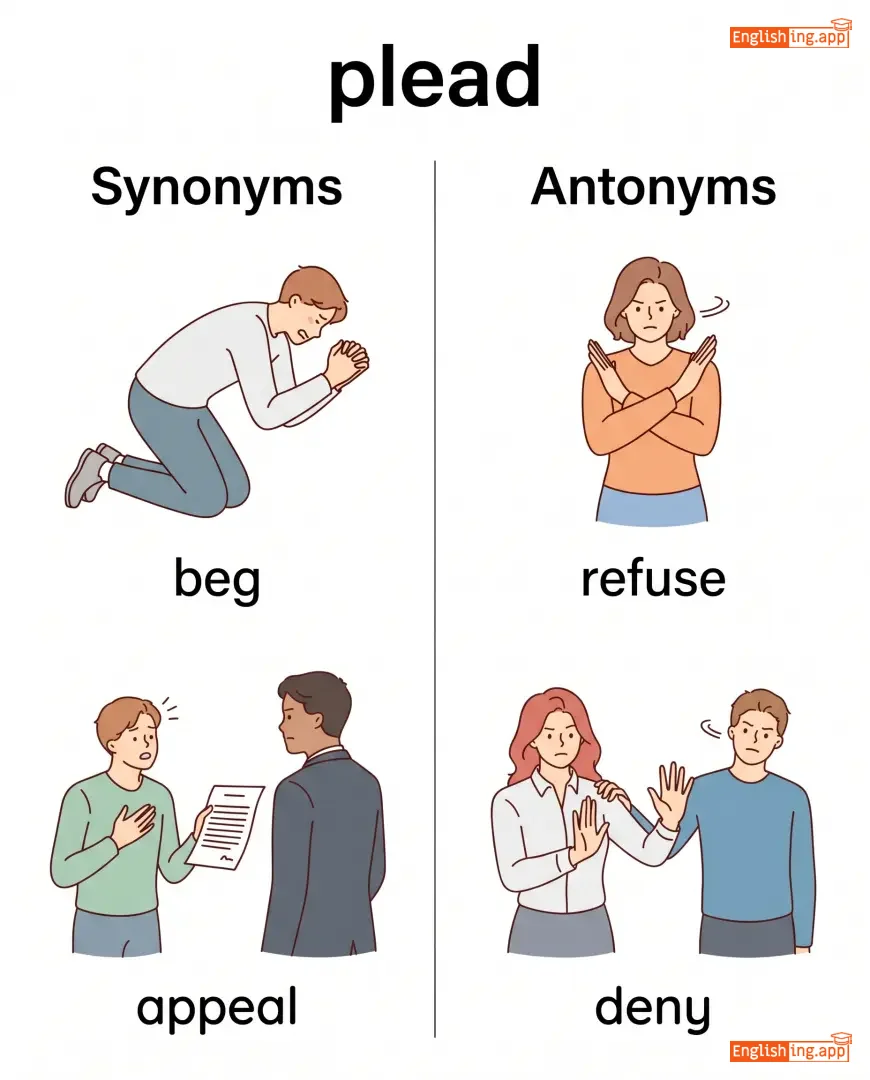
to make an emotional appeal; to present a case in court
••••••
|
She pleaded for mercy.
她恳求宽恕。
••••••
|
她恳求宽恕。
Tā kěnqiú kuānshù.
••••••
|
- •••••• | - •••••• | - •••••• |
beg, entreat, implore, appeal
••••••
|
demand, order, command
••••••
|
plead guilty, plead for, earnestly plead, plead case
••••••
|
Think of pleading as ‘恳求’ in court asking for mercy.
••••••
|
|
💷
••••••
|
/paʊnd/
noun, verb
(pāo'ēnd)
••••••
|
- •••••• |
英镑
yīng bàng
••••••
|
pounded
pāo'ēnded
••••••
|
pounded
pāo'ēnded
••••••
|
pounds
pāo'ēnds
••••••
|
pounding
pāo'ēnding
••••••
|
a unit of weight equal to 16 ounces or a unit of currency
••••••
|
The price of the book is five pounds.
这本书的价格是五英镑。
••••••
|
这本书的价格是五英镑。
Zhè běn shū de jiàgé shì wǔ yīng bàng.
••••••
|
- •••••• | - •••••• | - •••••• |
lb (pound as weight), sterling (pound as currency)
••••••
|
ounce
••••••
|
pound of meat, pound sterling, pound weight, pound cake
••••••
|
英镑:Pound 用来衡量重量和货币!
••••••
|
|
🥊
••••••
|
/pʌntʃ/
verb
(パンチ)
••••••
|
- •••••• |
击打
jī dǎ
••••••
|
punched
パンチド
••••••
|
punched
パンチド
••••••
|
punches
パンチズ
••••••
|
punching
パンチング
••••••
|
to hit someone or something hard with your fist
••••••
|
He punched the wall in frustration.
他因沮丧打了墙。
••••••
|
他因沮丧打了墙。
Tā yīn jǔsàng dǎle qiáng.
••••••
|
pack a punch
打击一拳
••••••
|
to have a strong effect or impact
••••••
|
产生强烈的影响
chǎnshēng qiángliè de yǐngxiǎng
••••••
|
hit, strike, smack, blow, thump
••••••
|
caress, pat
••••••
|
throw a punch, punch hard, punch bag, pack a punch
••••••
|
‘punch’ 就是拳头打出来的效果,别忘了它的力量!
••••••
|
|
👛
••••••
|
/pɜːrs/
noun
(pɜːrs)
••••••
|
- •••••• |
钱包
qianbao
••••••
|
- •••••• | - •••••• | - •••••• | - •••••• |
a small bag used by women to carry money and personal items
••••••
|
She kept her wallet in her purse.
她把钱包放进了她的手袋里。
••••••
|
她把钱包放进了她的手袋里。
Ta ba qianbao fang jin le ta de shou dai li.
••••••
|
tighten the purse strings
勒紧手袋绳子
••••••
|
to spend less money and be economical
••••••
|
勒紧手袋绳子
Le jin shou dai shengzi
••••••
|
handbag, wallet, pouch, clutch
••••••
|
backpack, sack
••••••
|
open the purse, lose a purse, designer purse, leather purse
••••••
|
Purse = 钱包,放钱和个人物品
••••••
|
|
📊
••••••
|
/ˈkwəʊtə/
noun
(kwòu-tā)
••••••
|
|
配额, 固定份额
pèiguì, gùdìng fèn'é
••••••
|
- •••••• | - •••••• | - •••••• | - •••••• |
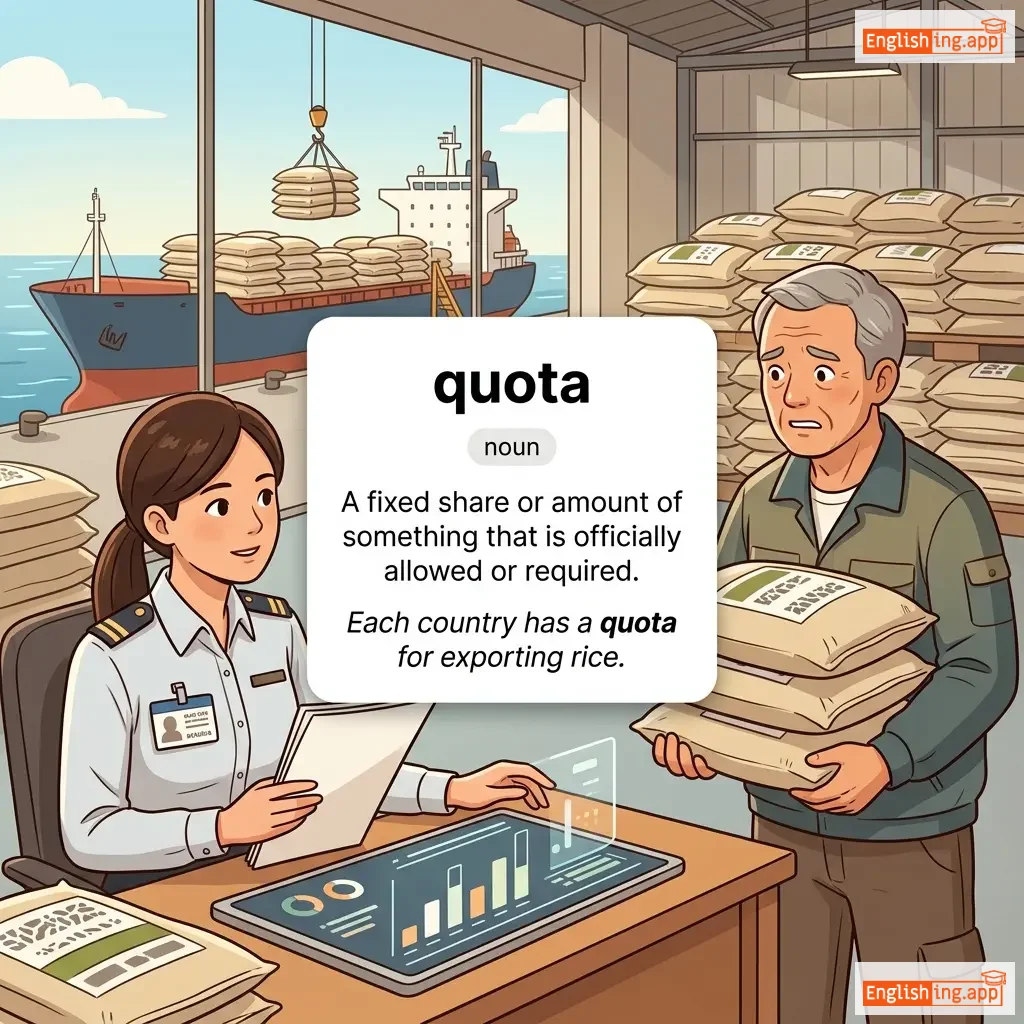
A fixed share or amount of something that is officially allowed or required.
••••••
|
Each country has a quota for exporting rice.
Yīch kāntrī hāz ā kwòu-tā fǒr èks-pòr-tīng ráis.
••••••
|
每个国家都有一个出口稻米的配额。
Měi gè guójiā dōu yǒu yīgè chūkǒu dàomǐ de pèiguì.
••••••
|
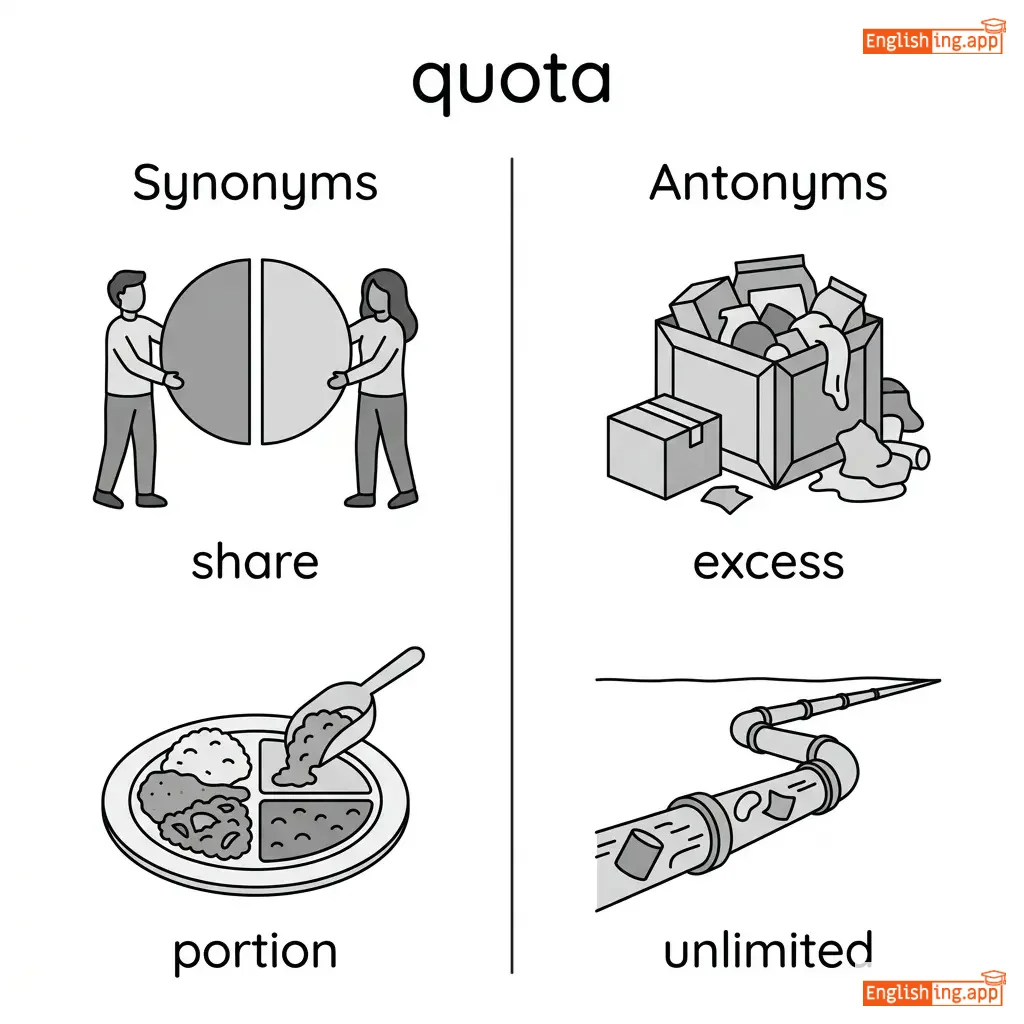
- •••••• | - •••••• | - •••••• |
share, portion, allotment, limit, allowance
••••••
|
excess, unlimited
••••••
|
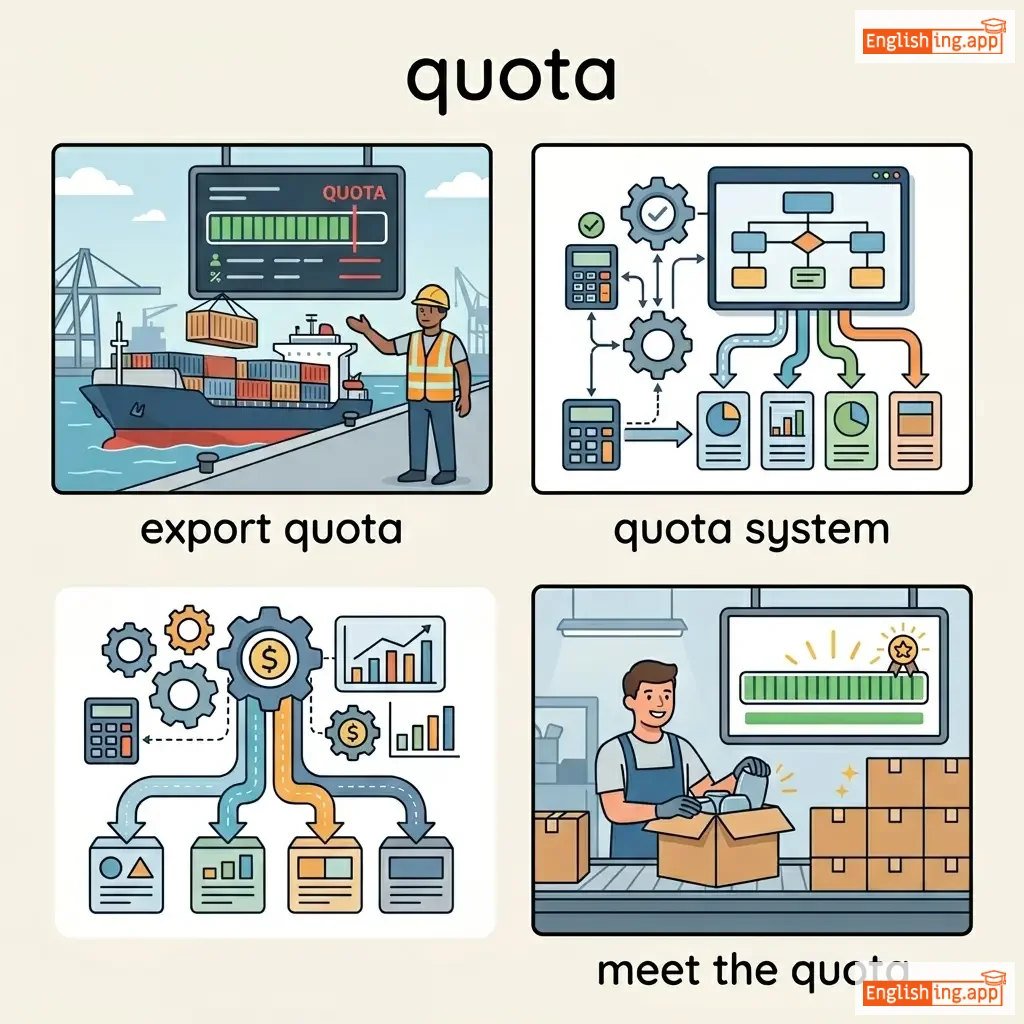
export quota, quota system, meet the quota, annual quota
••••••
|
配额 = 切 + 部分 - 固定的部分切割出来。
••••••
|
|
🐄
••••••
|
/ræntʃ/
noun
(兰奇)
••••••
|
- •••••• |
牧场
mùchǎng
••••••
|
- •••••• | - •••••• | - •••••• | - •••••• |
a large farm where animals such as cattle or sheep are raised
••••••
|
They own a huge cattle ranch in Texas. |
他们在德克萨斯州拥有一个巨大的牧场。
Tāmen zài Dékè sà sī zhōu yǒngyǒu yīgè jùdà de mùchǎng.
••••••
|
- •••••• | - •••••• | - •••••• |
farm, homestead, estate, pasture, plantation
••••••
|
factory, city, urban area
••••••
|
cattle ranch, sheep ranch, ranch house, horse ranch
••••••
|
兰奇不仅是沙司,它是一个养牛羊的牧场! 🐄
••••••
|

