River Summit Ledger
一位健康工作者在医院附近通过孩子的 vein 给他注射了盐水,地点就在河边。 现在这条河看起来 very 平静。 发言人呼吁大家不要对环境的 vice 漠不关心。 一名在国外学习的学生延长了她的 visa,继续在河流项目上工作。 在会议上,提出了人民的 vote 来保护这条河流。 每个人都按照自己的能力为志愿者的 wage 基金做出了贡献。 来自新医院的 ward 医生们加入了营地。 每个人都在紧急讨论这条河的未来 about。 风筝在 above 舞台上盘旋。 技术团队确定了 acute 污染热点。 新的实验室数据被 added 到生态面板上。 来宾们在营地展览的主 aisle 走道上游走。 志愿者计划如何将策略与实地行动 align。 各个年龄段的人都同样充满 alike 热情地参与其中。 孩子们清理了旧河岸的 alley。 大会决定 alter 一些老的规则。 一名运动员受伤的 ankle 分享了恢复的建议。 一阵炫目的 array 传感器、地图和平板电脑让所有人印象深刻。 志愿者们把食品供应 aside 并跳进了救援工作。 到了一天的尽头,财务团队发布了完整的支出 audit。
|
表情符号
|
单词 | Images | 翻译 | 过去时 | 过去分词 | 第三人称单数 | 动名词 | 含义 | 例句 | 例句翻译 | 示例表达 | 示例表达含义 | 示例表达翻译 | 同义词 | 反义词 | 搭配词 | 助记符 |
|---|---|---|---|---|---|---|---|---|---|---|---|---|---|---|---|---|---|
|
ℹ️
••••••
|
/əˈbaʊt/
preposition, adverb
(阿宝特)
••••••
|
- •••••• |
关于
guanyu
••••••
|
- •••••• | - •••••• | - •••••• | - •••••• |
concerning; on the subject of; approximately
••••••
|
We talked about the new project yesterday. |
我们昨天谈论了新项目。
Wǒmen zuótiān tánlùnle xīn xiàngmù.
••••••
|
out and about |
active and going to different places
••••••
|
活跃并走访不同的地方
huóyuè bìng zǒufǎng bùtóng de dìfāng
••••••
|
regarding, concerning, around, nearly
••••••
|
exactly, unrelated
••••••
|
talk about, think about, about time, about 10 o'clock
••••••
|
About意思是'关于' — 就像'Tell me about yourself'。
••••••
|
|
⬆️
••••••
|
/əˈbʌv/
preposition, adverb
(àbàfū)
••••••
|
- •••••• |
上面
shangmian
••••••
|
- •••••• | - •••••• | - •••••• | - •••••• |
at a higher place or position than something
••••••
|
The picture hangs above the fireplace.
画作挂在壁炉上方。
••••••
|
画作挂在壁炉上方。
Huàzuò guà zài bìlú shàngfāng.
••••••
|
above all
高于一切
••••••
|
most importantly
••••••
|
高于一切
gāo yú yīqiè
••••••
|
over, higher than, beyond, atop
••••••
|
below, under, beneath
••••••
|
rise above, above average, above mentioned, above sea level
••••••
|
Above 意味着上面 - 想像'在天空之上'。
••••••
|
|
📐
••••••
|
/əˈkjuːt/
adjective
(akut)
••••••
|
- •••••• |
急性
jixing
••••••
|
- •••••• | - •••••• | - •••••• | - •••••• |
present or experienced to a severe or intense degree; having sharp perception
••••••
|
The patient suffered from acute pain after the surgery. |
手术后,病人感到剧烈的疼痛。
Shǒushù hòu, bìngrén gǎndào jùliè de téngtòng.
••••••
|
acute angle |
an angle less than 90 degrees
••••••
|
锐角
ruìjiǎo
••••••
|
severe, sharp, intense, critical, keen
••••••
|
chronic, mild, dull
••••••
|
acute pain, acute illness, acute awareness
••••••
|
Acute 意味着 Cute,但很尖锐 — 剧烈的疼痛或锐角
••••••
|
|
➕
••••••
|
/ˈædɪd/
verb
(ædəd)
••••••
|
- •••••• |
添加
tiānjiā
••••••
|
added
ædəd
••••••
|
added
ædəd
••••••
|
adds
ædz
••••••
|
adding
ædɪŋ
••••••
|
to join something to something else to increase its size, number, or amount
••••••
|
She added sugar to her coffee.
她在咖啡里加了糖。
••••••
|
她在咖啡里加了糖。
Tā zài kāfēi lǐ jiāle táng.
••••••
|
add fuel to the fire
火上加油
••••••
|
to make a bad situation worse
••••••
|
火上加油
huǒ shàng jiā yóu
••••••
|
include, attach, combine, supplement, increase
••••••
|
subtract, remove, deduct
••••••
|
added value, added benefit, added sugar, added bonus
••••••
|
Add表示添加,因此added表示已经添加。
••••••
|
|
🛒
••••••
|
/aɪl/
noun
(ai-er)
••••••
|
- •••••• |
走道
zǒudào
••••••
|
- •••••• | - •••••• | - •••••• | - •••••• |
a passage between rows of seats or shelves
••••••
|
She walked down the aisle to find her seat. |
她走过走道找到了她的座位。
Tā zǒu guò zǒudào zhǎodào le tā de zuòwèi.
••••••
|
walk down the aisle |
to get married in a wedding ceremony
••••••
|
走过走道
zǒu guò zǒudào
••••••
|
corridor, passage, walkway, lane, path
••••••
|
wall, barrier
••••••
|
supermarket aisle, airplane aisle, church aisle, narrow aisle
••••••
|
Aisle 就像走道 — 走向幸福的路。
••••••
|
|
📐
••••••
|
/əˈlaɪn/
verb
(aɪˈlaɪn)
••••••
|
- •••••• |
对齐 / 排成直线
duìqí / pái chéng zhíxiàn
••••••
|
aligned
əˈlaɪnd
••••••
|
aligned
əˈlaɪnd
••••••
|
aligns
əˈlaɪnz
••••••
|
aligning
əˈlaɪnɪŋ
••••••
|
To arrange things in a straight line; to adjust or bring into proper relation or agreement.
••••••
|
The manager asked the team to align their goals with the company's mission.
经理要求团队将他们的目标与公司的使命对齐。
••••••
|
经理要求团队将他们的目标与公司的使命对齐。
Jīnglǐ yāoqiú tuánduì jiāng tāmen de mùbiāo yǔ gōngsī de shǐmìng duìqí.
••••••
|
align with
与...对齐
••••••
|
To bring into agreement or harmony with something.
••••••
|
与...对齐
yǔ...duìqí
••••••
|
adjust, arrange, organize, coordinate, harmonize
••••••
|
misalign, disorder, disorganize
••••••
|
align with, align interests, align goals, align strategy
••••••
|
Align = A line → 将所有事物排成一条线 (对齐) 达到和谐。
••••••
|
|
👭
••••••
|
/əˈlaɪk/
adjective
(ā-lèi-kè)
••••••
|
- •••••• |
相似; 以相同的方式
alike
••••••
|
- •••••• | - •••••• | - •••••• | - •••••• |
similar in appearance or nature; in the same way
••••••
|
The two sisters look very much alike.
这两个姐妹看起来非常相似。
••••••
|
这两个姐妹看起来非常相似。
Zhè liǎng gè jiěmèi kàn qǐlái fēicháng xiāngsì.
••••••
|
- •••••• | - •••••• | - •••••• |
similar, identical, comparable, equivalent
••••••
|
different, dissimilar, unlike, distinct
••••••
|
look alike, think alike, dress alike
••••••
|
Alike - 想象两个相似的姐妹,意思相同。
••••••
|
|
🏙️
••••••
|
/ˈæli/
noun
(艾利)
••••••
|
- •••••• |
小巷
xiaoxiang
••••••
|
- •••••• | - •••••• | - •••••• | - •••••• |
a narrow passageway between or behind buildings
••••••
|
They walked through a dark alley to reach the main road. |
他们走过一条黑暗的小巷,来到主干道。
Tamen zouguo yi tiao heian de xiaoxiang, lai dao zhugan dao.
••••••
|
bowling alley |
a place where people play bowling
••••••
|
保龄球馆
baolingqiuguan
••••••
|
lane, passage, pathway, corridor
••••••
|
boulevard, avenue
••••••
|
dark alley, narrow alley, back alley, bowling alley
••••••
|
Alley 就是小巷,保龄球馆是人们玩的地方。
••••••
|
|
✂️
••••••
|
/ˈɔːltər/
verb
(ǎltèr)
••••••
|
- •••••• |
改变
gǎibiàn
••••••
|
altered
ǎltèrd
••••••
|
altered
ǎltèrd
••••••
|
alters
ǎltèrs
••••••
|
altering
ǎltèríng
••••••
|
to change or modify something slightly but significantly
••••••
|
She decided to alter her dress to make it fit better.
她决定改变她的裙子,让它更合身。
••••••
|
她决定改变她的裙子,让它更合身。
Tā juédìng gǎibiàn tā de qúnzi, ràng tā gèng héshēn.
••••••
|
alter ego
alter ego
••••••
|
a second self or different version of oneself
••••••
|
alter ego
alter ego
••••••
|
change, modify, adjust, adapt, transform
••••••
|
preserve, maintain, keep
••••••
|
alter plans, alter course, alter appearance, alter behavior
••••••
|
改变意味着轻微修改,就像调整裙子。
••••••
|
|
🦶
••••••
|
/ˈæŋkəl/
noun
(ankel)
••••••
|
- •••••• |
脚踝
jiaohai
••••••
|
- •••••• | - •••••• | - •••••• | - •••••• |
the joint connecting the foot with the leg
••••••
|
He twisted his ankle while playing football. |
他在踢足球时扭伤了脚踝。
Ta zai ti zuqiu shi niushang le jiaohai.
••••••
|
weak ankles |
a tendency to easily injure one's ankles
••••••
|
弱脚踝
ruo jiaohai
••••••
|
joint, heel, articulation, pivot
••••••
|
none
••••••
|
twist an ankle, sprained ankle, broken ankle, ankle pain
••••••
|
Ankle意味着脚踝 — 足球一踢脚踝就伤了!
••••••
|
|
🌈
••••••
|
/əˈreɪ/
noun
(āruèi)
••••••
|
- •••••• |
数组,展示
shùzǔ, zhǎnshì
••••••
|
- •••••• | - •••••• | - •••••• | - •••••• |
an impressive display or arrangement of things
••••••
|
The shop displayed an array of colorful dresses.
商店展示了一排五颜六色的连衣裙。
••••••
|
商店展示了一场五颜六色的连衣裙展示。
Shāngdiàn zhǎnshì le yī chǎng wǔyánliùsè de liányīqún zhǎnshì.
••••••
|
an array of
一排
••••••
|
a large number or variety of something
••••••
|
一系列
yī xìliè
••••••
|
assortment, collection, range, display, lineup
••••••
|
scarcity, lack
••••••
|
array of options, array of stars, wide array, full array
••••••
|
Array 意味着有序的排列 — 在计算机中,数据被组织在数组中。
••••••
|
|
➡️
••••••
|
/əˈsaɪd/
adverb, noun
(àsàidè)
••••••
|
- •••••• |
一边
yī biān
••••••
|
- •••••• | - •••••• | - •••••• | - •••••• |
to or on one side; a remark not intended for everyone
••••••
|
He stepped aside to let her pass.
他让到一边让她过去。
••••••
|
他让到一边让她过去。
Tā ràng dào yī biān ràng tā guòqù.
••••••
|
put aside
把...放一边
••••••
|
to save or reserve something
••••••
|
把...放一边
bǎ... fàng yī biān
••••••
|
apart, away, to the side, remark
••••••
|
center, middle
••••••
|
step aside, put aside, aside from
••••••
|
Aside 意味着一边 — 记住 '把它放一边'。
••••••
|
|
📋
••••••
|
/ˈɔːdɪt/
noun/verb
(审计)
••••••
|

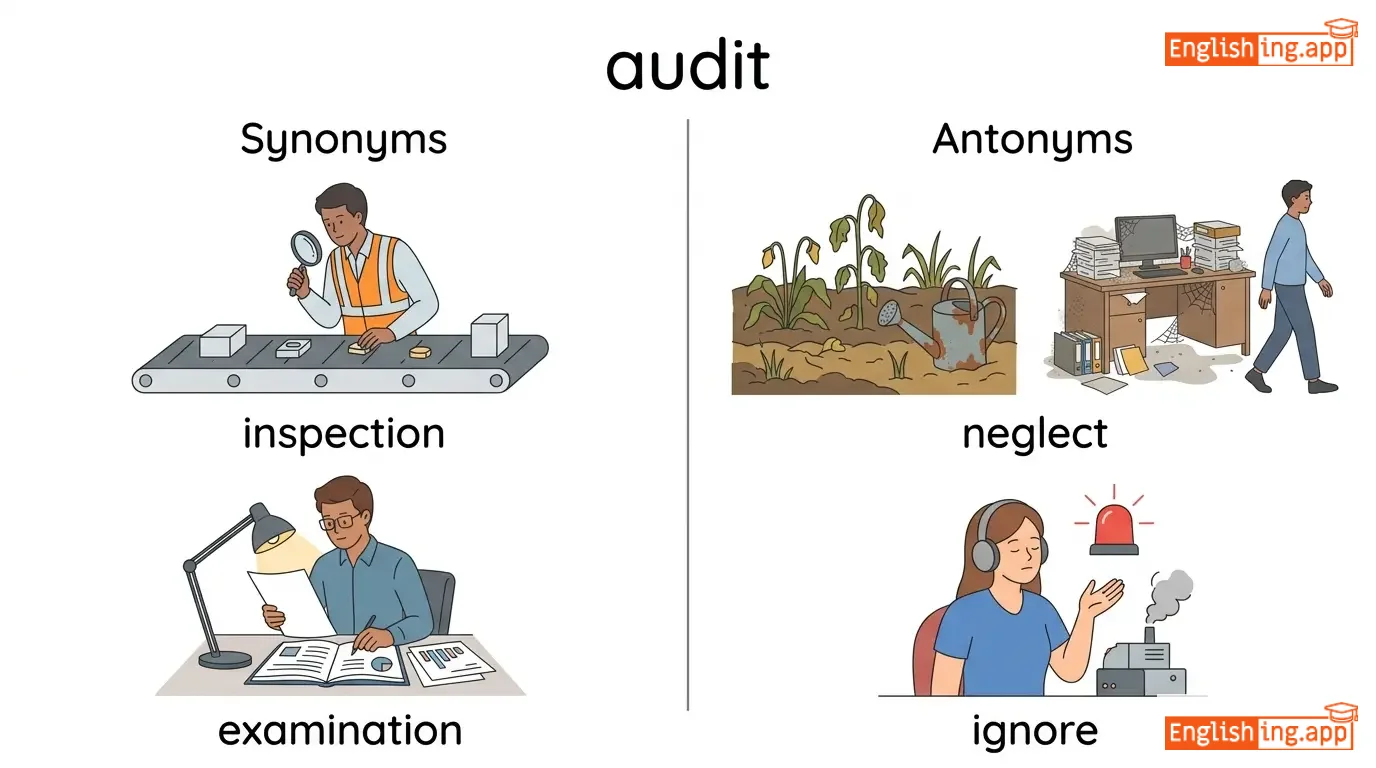
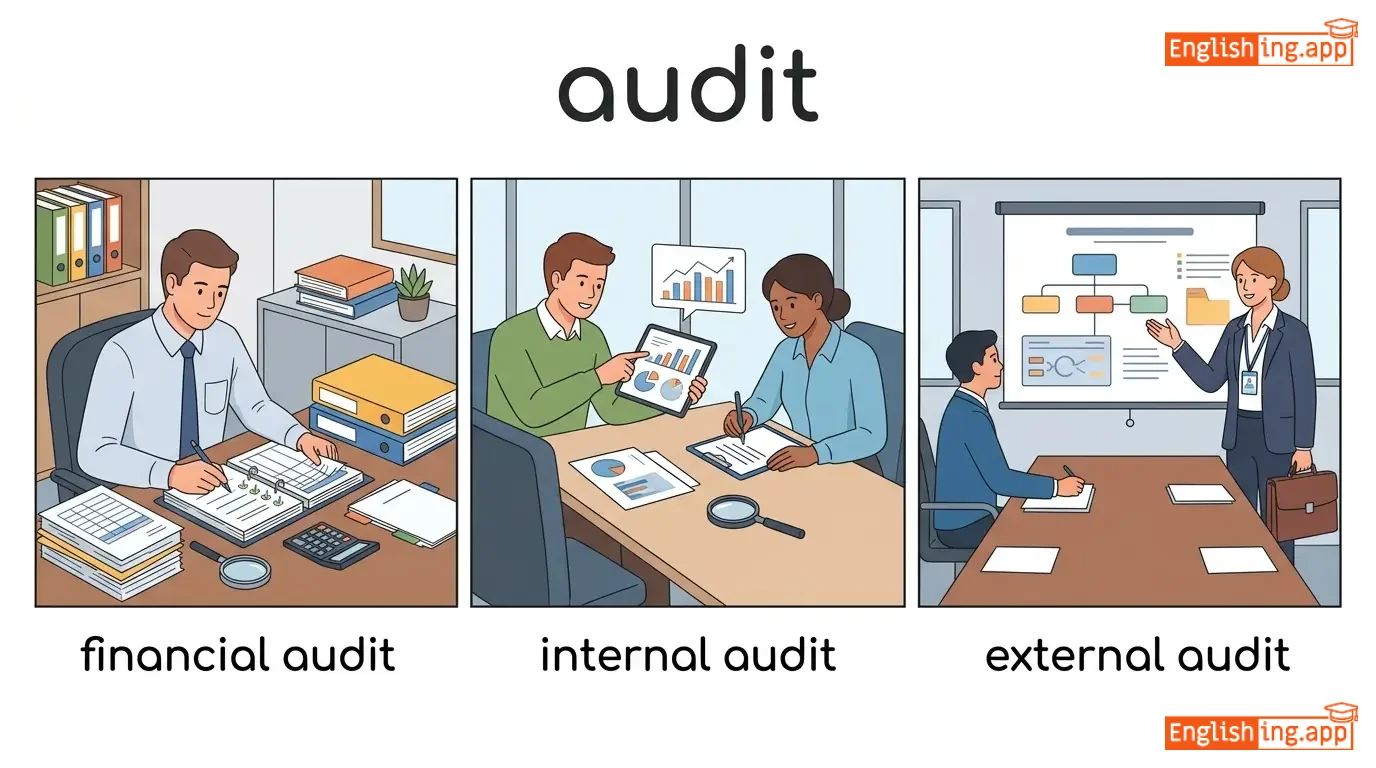
|
审计
shenji
••••••
|
audited
审计过
••••••
|
audited
审计过
••••••
|
audits
审计
••••••
|
auditing
审计中
••••••
|
A formal examination of accounts or processes to ensure accuracy and compliance.
••••••
|
The company hired an external firm to audit its financial statements.
公司雇佣了一家外部公司来审计其财务报表。
••••••
|
公司雇佣了一家外部公司来审计其财务报表。
Gōngsī gùyōngle yījiā wàibù gōngsī lái shěnjì qí cáiwù bàobiǎo.
••••••
|
audit trail
审计记录
••••••
|
A record that shows who has accessed a system and what operations they performed.
••••••
|
审计记录
Shěnjì jìlù
••••••
|
inspection, examination, review, assessment, evaluation
••••••
|
neglect, ignore, overlook
••••••
|
financial audit, internal audit, external audit, audit report, audit committee
••••••
|
审计 - 查账检查,确认无误!
••••••
|
|
🫸
••••••
|
/veɪn/
noun
(维因)
••••••
|
- •••••• |
静脉; 血管
jìngmài; xuèguǎn
••••••
|
- •••••• | - •••••• | - •••••• | - •••••• |
a blood vessel that carries blood back to the heart; a streak or marking of a different color
••••••
|
The nurse found a vein in his arm to draw blood. |
护士在他手臂上找到了静脉来抽血。
Hùshì zài tā shǒubì shàng zhǎodào le jìngmài lái chōuxuè.
••••••
|
- •••••• | - •••••• | - •••••• |
blood vessel, capillary
••••••
|
artery
••••••
|
varicose vein, jugular vein, vein of gold
••••••
|
静脉就像是一条回到心脏的血液通道。
••••••
|
|
⬆️
••••••
|
/ˈver.i/
adverb
(wéi-rì)
••••••
|
- •••••• |
非常; 极其; 十分
feichang; jiqi; shifen
••••••
|
- •••••• | - •••••• | - •••••• | - •••••• |
to a high degree; extremely; greatly
••••••
|
She is very intelligent and works very hard. |
她非常聪明,工作非常努力。
Ta feichang congming, gongzuo feichang nuli.
••••••
|
- •••••• | - •••••• | - •••••• |
extremely, highly, greatly, exceptionally, remarkably
••••••
|
slightly, barely, hardly, somewhat
••••••
|
very good, very bad, very much, very well, very important
••••••
|
非常努力工作,你会很聪明
••••••
|
|
😈
••••••
|
/vaɪs/
noun
(vais)
••••••
|
- •••••• |
恶习
èxí
••••••
|
- •••••• | - •••••• | - •••••• | - •••••• |
immoral or wicked behavior; a weakness in someone's character
••••••
|
Greed is a vice that can destroy lives. |
贪婪是一种恶习,它可能摧毁生活。
Tānlán shì yī zhǒng èxí, tā kěnéng cuīhuǐ shēnghuó.
••••••
|
A vice grip |
a very tight or firm hold
••••••
|
一个恶习的抓取
Yīgè èxí de zhuāqǔ
••••••
|
immorality, wickedness, evil, depravity
••••••
|
virtue, morality, goodness
••••••
|
moral vice, addictive vice, commit a vice
••••••
|
恶习会摧毁生活!
••••••
|
|
🛂
••••••
|
/ˈviːzə/
noun
(签证)
••••••
|
- •••••• |
签证
qiānzhèng
••••••
|
- •••••• | - •••••• | - •••••• | - •••••• |
an official authorization or permission to enter, leave, or stay in a country
••••••
|
She applied for a visa to study abroad. |
她申请了签证以便出国留学。
Tā shēnqǐngle qiānzhèng yǐbiàn chūguó liúxué.
••••••
|
- •••••• | - •••••• | - •••••• |
permit, authorization, clearance, pass
••••••
|
ban, restriction
••••••
|
visa application, visa approval, travel visa
••••••
|
签证就是让你去其他国家的许可!
••••••
|
|
🗳️
••••••
|
/voʊt/
verb
(vòt)
••••••
|
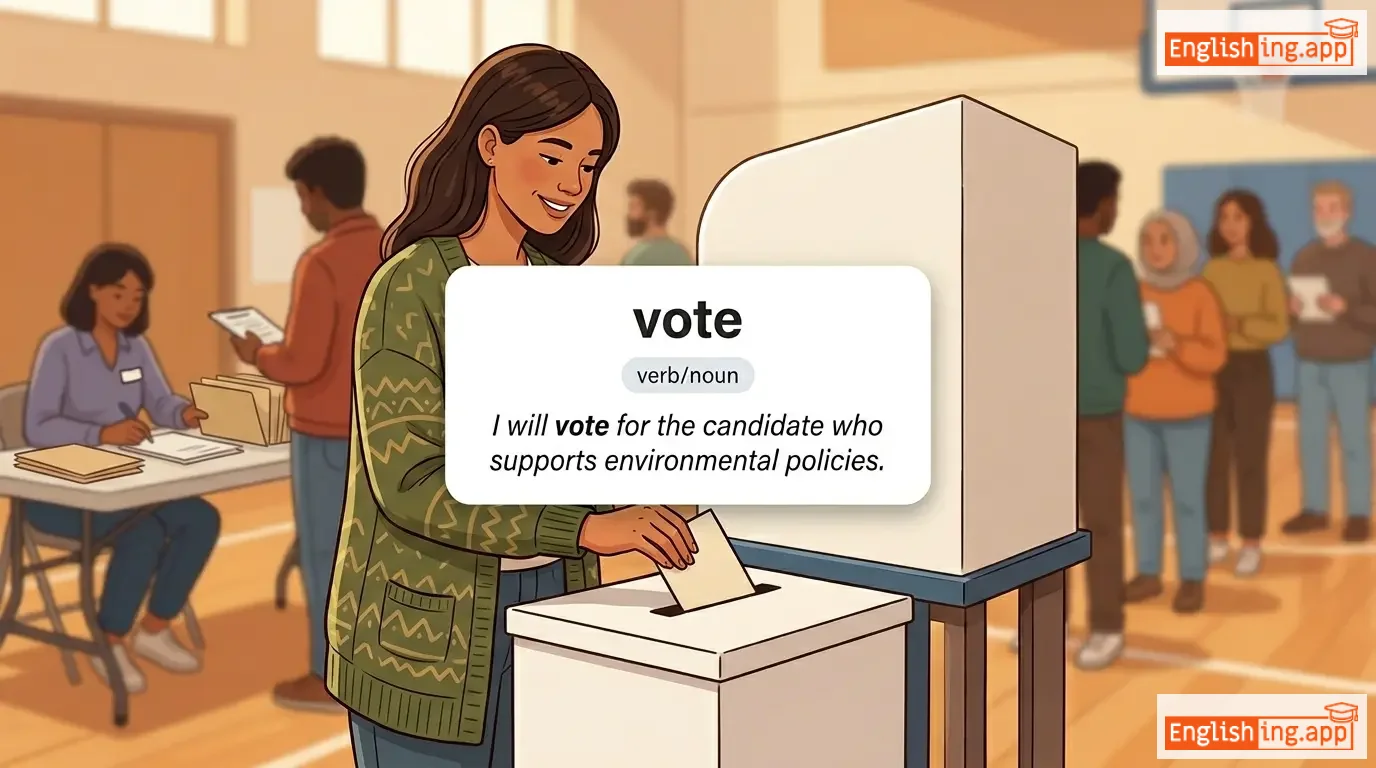
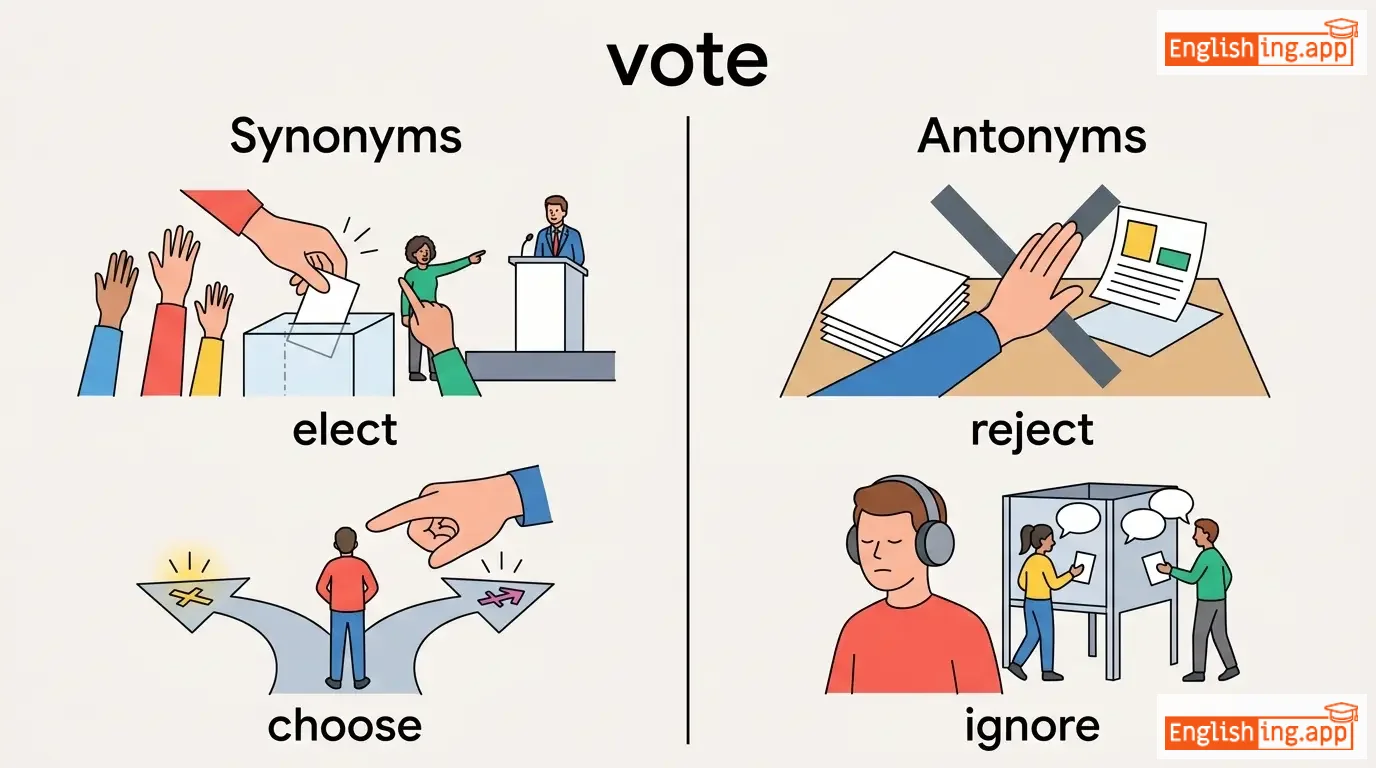
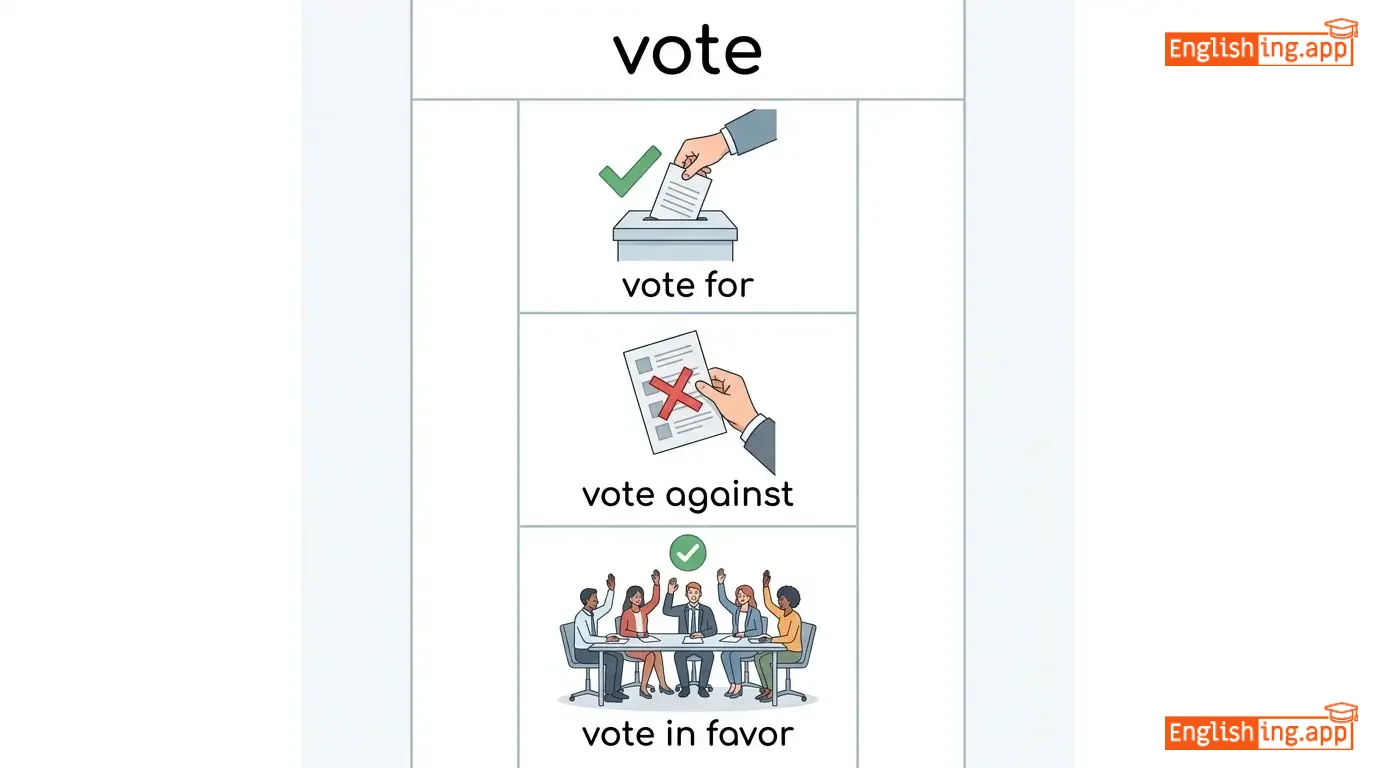
|
投票
tóupiào
••••••
|
voted
vòt-ed
••••••
|
voted
vòt-ed
••••••
|
votes
vòts
••••••
|
voting
vòting
••••••
|
to make a choice in an election; to express preference
••••••
|
Citizens vote to choose their representatives.
公民投票选举他们的代表。
••••••
|
公民投票选举他们的代表。
Gōngmín tóupiào xuǎnjǔ tāmen de dàibiǎo.
••••••
|
- •••••• | - •••••• | - •••••• |
elect, choose, select, ballot, poll
••••••
|
abstain, boycott, refuse
••••••
|
vote for, vote against, vote on, cast a vote
••••••
|
投票 (tóupiào) 就是选择和表达你喜欢的代表。
••••••
|
|
💰
••••••
|
/weɪdʒ/
noun/verb
••••••
|
- •••••• | - •••••• |
waged
••••••
|
waged
••••••
|
wages
••••••
|
waging
••••••
|
payment for work or services, usually on a daily or weekly basis; also to engage in or carry on (a war, campaign, or struggle)
••••••
|
The workers demanded a fair wage for their labor. |
- •••••• |
wage war |
to engage in a serious struggle or conflict
••••••
|
- •••••• |
salary, pay, compensation, earnings, stipend
••••••
|
unemployment, volunteer
••••••
|
minimum wage, wage increase, wage gap, wage war
••••••
|
No •••••• |
|
🏥
••••••
|
/wɔːrd/
noun
(wā dé)
••••••
|
- •••••• |
病房
bing fang
••••••
|
- •••••• | - •••••• | - •••••• | - •••••• |
A separate room in a hospital for patients; also a division of a city or a person under guardianship.
••••••
|
She was admitted to the children's ward. |
她被接收进了儿童病房。
Tā bèi jiēshōu jìnle értóng bìngfáng.
••••••
|
under someone's ward |
being under the guardianship or protection of someone
••••••
|
在某人的监护下
zài mǒu rén de jiānhù xià
••••••
|
unit, section, division, department
••••••
|
freedom, independence
••••••
|
hospital ward, children's ward, surgical ward, ward off
••••••
|
Ward = 病房 → 孩子们在病房中被照顾
••••••
|

