The Lawyer Who Fought Financial Fraud
阿德南是一名专门处理金融犯罪的律师。他的 ethics 非常坚定——从不妥协诚信。一天,一个重大 fraud 案件落在他的桌上。一家公司因腐败而 incurred 巨额损失。阿德南的调查揭示,涉及的员工不到 fewer fifty 人,但金额极其 gross。丑闻爆发后,CEO 被迫流亡 (exile)。证据确凿——文件 evoked 了犯罪的清晰画面。阿德南不得不 exert 巨大努力来建立一个坚实的案件。这是他第 fifth 个重大案件,他决心必胜。公司的 CFO 试图驳回指控,说阿德南是个不懂商业的 idiot。但阿德南的研究非常深入。他分析了 fiber 光纤记录和数字通信。庭审紧张——律师们来回 (forth) 辩论。辩护律师每次看到阿德南提交新证据时都 frowned。一个有趣的时刻是,一位会计不小心洒了咖啡,液体太 fluid,几乎铺满了整张桌子。审判持续了 forty 天。检察官证明,管理层的决策对诚实员工是 fatal 的。阿德南的论点极具说服力,陪审团很容易 infer 出罪责。他在交叉审问中的 handy 技巧极大地帮助了案件。一位证人描述了他看到可疑现金交易的情景。阿德南指出,flesh 和血肉之躯的人因为贪婪而受苦。最终判决为有罪。公司高管被判入狱。阿德南证明了 ethical 律师能够与强大的罪犯抗争并赢得正义。他的工作激励了那些希望改变世界的年轻律师。
|
表情符号
|
单词 | Images | 翻译 | 过去时 | 过去分词 | 第三人称单数 | 动名词 | 含义 | 例句 | 例句翻译 | 示例表达 | 示例表达含义 | 示例表达翻译 | 同义词 | 反义词 | 搭配词 | 助记符 |
|---|---|---|---|---|---|---|---|---|---|---|---|---|---|---|---|---|---|
|
💼
••••••
|
/ˈɛθɪk/
noun
(伦理)
••••••
|
- •••••• |
伦理
lunli
••••••
|
- •••••• | - •••••• | - •••••• | - •••••• |
a set of moral principles, especially ones relating to a particular group, system, or profession
••••••
|
He has a strong work ethic and always meets deadlines.
他有很强的工作伦理,总是能按时完成任务。
••••••
|
他有很强的工作伦理,总是能按时完成任务。
Ta you hen qiang de gongzuo lunli, zong shi neng an shi wancheng renwu.
••••••
|
- •••••• | - •••••• | - •••••• |
morality, principles, values, standards
••••••
|
immorality, corruption
••••••
|
ethical behavior, strong work ethic, moral ethics, business ethics
••••••
|
Ethics 就是‘伦理’ - 与工作相关的道德原则
••••••
|
|
🎶
••••••
|
/ɪˈvoʊk/
verb
(伊沃克)
••••••
|
- •••••• |
唤起
huànqǐ
••••••
|
evoked
伊沃克德
••••••
|
evoked
伊沃克德
••••••
|
evokes
伊沃克斯
••••••
|
evoking
伊沃金
••••••
|
to bring a feeling, memory, or image into the mind
••••••
|
The old song evoked memories of her childhood.
那首老歌唤起了她童年的回忆。
••••••
|
那首老歌唤起了她童年的回忆。
Nà shǒu lǎo gē huànqǐ le tā tóngnián de huíyì.
••••••
|
evoke sympathy
唤起同情
••••••
|
to make someone feel compassion or pity
••••••
|
唤起同情
huànqǐ tóngqíng
••••••
|
arouse, elicit, provoke, stimulate, inspire
••••••
|
suppress, stifle, ignore
••••••
|
evoke memories, evoke feelings, evoke sympathy, evoke laughter
••••••
|
唤起就像'呼唤',让记忆回到你的心里。
••••••
|
|
💪
••••••
|
/ɪɡˈzɜːrt/
verb
(艾克萨特)
••••••
|

|
施加
shijia
••••••
|
exerted
艾克萨特德
••••••
|
exerted
艾克萨特德
••••••
|
exerts
艾克萨特斯
••••••
|
exerting
艾克萨特英
••••••
|
to apply effort, force, or influence
••••••
|
He had to exert himself to finish the project on time.
他必须努力工作才能按时完成项目。
••••••
|
他必须努力工作才能按时完成项目。
Tā bìxū nǔlì gōngzuò cáinéng ànshí wánchéng xiàngmù.
••••••
|
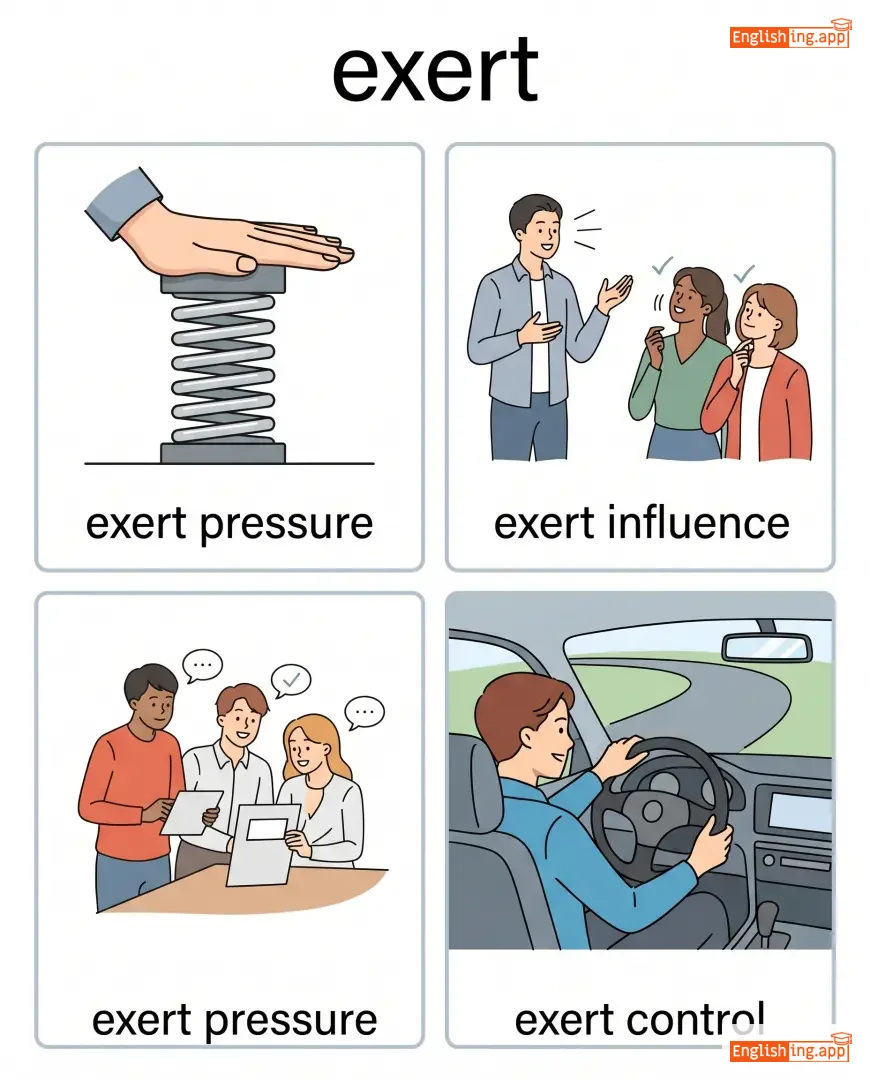
exert control
施加控制
••••••
|
to use power or influence over something or someone
••••••
|
施加控制
shijia kongzhi
••••••
|
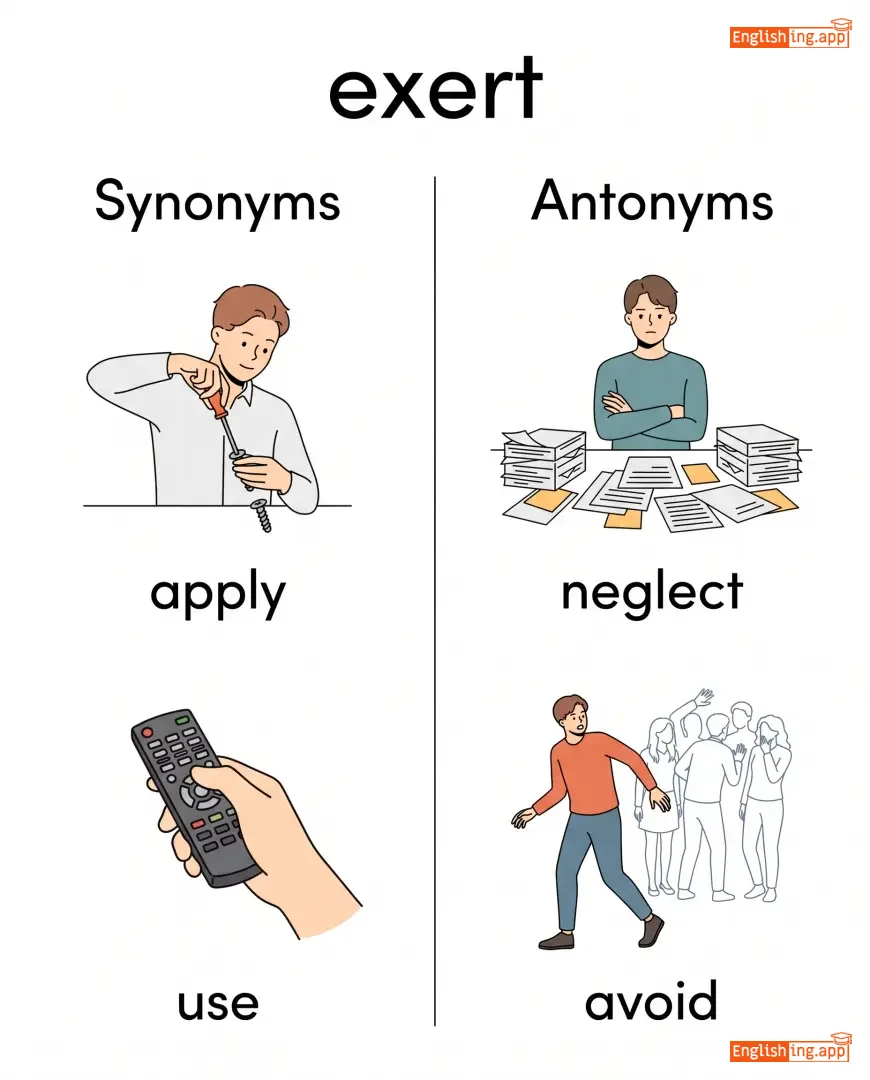
apply, use, exercise, employ, wield
••••••
|
neglect, avoid, ignore
••••••
|
exert pressure, exert influence, exert control, exert effort
••••••
|
EXtra 努力, EXert 控制
••••••
|
|
🏝️
••••••
|
/ˈek.saɪl/
noun
(èksài'ěr)
••••••
|
- •••••• |
流亡
liúwáng
••••••
|
- •••••• | - •••••• | - •••••• | - •••••• |
the state of being barred from one's native country; enforced removal from one's homeland
••••••
|
The political leader was forced into exile after the military coup.
政治领袖在军事政变后被迫流亡。
••••••
|
政治领袖在军事政变后被迫流亡。
Zhèngzhì lǐngxiù zài jūnshì zhèngbiàn hòu bèi pò liúwáng.
••••••
|
- •••••• | - •••••• | - •••••• |
banishment, deportation, expulsion, ostracism
••••••
|
return, homecoming, welcome, inclusion
••••••
|
forced exile, political exile, exile from homeland
••••••
|
Imagine a leader being forced into exile after a military coup.
••••••
|
|
☠️
••••••
|
/ˈfeɪtl/
adjective
(费塔尔)
••••••
|
- •••••• |
致命的
zhìmìng de
••••••
|
- •••••• | - •••••• | - •••••• | - •••••• |
causing death; leading to disaster
••••••
|
The accident proved fatal for the driver. |
事故对司机来说是致命的。
Shìgù duì sījī lái shuō shì zhìmìng de.
••••••
|
fatal flaw |
a serious weakness that causes failure
••••••
|
致命缺陷
zhìmìng quēxiàn
••••••
|
deadly, lethal, mortal, disastrous
••••••
|
harmless, safe, beneficial
••••••
|
fatal accident, fatal mistake, fatal disease, fatal injury
••••••
|
Fatal意味着致命的,错误的选择可能带来灾难。
••••••
|
|
➖
••••••
|
/ˈfjuːər/
determiner/adjective
(菲尤尔)
••••••
|
- •••••• |
更少
gèng shǎo
••••••
|
- •••••• | - •••••• | - •••••• | - •••••• |
a smaller number of; not as many
••••••
|
Fewer people attended the meeting than expected. |
参加会议的人数比预期的少。
Cānjiā huìyì de rénshù bǐ yùqī de shǎo.
••••••
|
- •••••• | - •••••• | - •••••• |
less, reduced, diminished, smaller number
••••••
|
more, greater
••••••
|
fewer people, fewer problems, fewer opportunities, fewer hours
••••••
|
Fewer意味着更少,Few + er = 更少
••••••
|
|
🧵
••••••
|
/ˈfaɪbər/
noun
(fáibó)
••••••
|
- •••••• |
纤维
xianwei
••••••
|
- •••••• | - •••••• | - •••••• | - •••••• |
a thread or filament from which a textile is formed; dietary substance from plants that aids digestion
••••••
|
Fruits and vegetables are high in fiber. |
水果和蔬菜富含纤维。
Shuǐguǒ hé shūcài fùhán xiānwéi.
••••••
|
moral fiber |
strength of character and ability to do what is right
••••••
|
道德力量
dàodé lìliàng
••••••
|
thread, strand, filament, roughage
••••••
|
fluid, liquid
••••••
|
fiber optic, fiber diet, fiber content, natural fiber
••••••
|
纤维意味着纤维,吃纤维有助于消化
••••••
|
|
5️⃣
••••••
|
/fɪfθ/
adjective
(fifth)
••••••
|
- •••••• |
第五
di wu
••••••
|
- •••••• | - •••••• | - •••••• | - •••••• |
constituting number five in a sequence
••••••
|
She lives on the fifth floor of the building.
她住在大楼的第五层。
••••••
|
她住在大楼的第五层。
Ta zhu zai dalou de di wu ceng.
••••••
|
take the fifth
去第五
••••••
|
to refuse to answer a question, especially in a legal context
••••••
|
拒绝回答
jue jue hui da
••••••
|
5th, number five, position five
••••••
|
first, last
••••••
|
fifth floor, fifth grade, fifth time
••••••
|
第五表示数字5,和五并列
••••••
|
|
5️⃣0️⃣
••••••
|
/ˈfɪfti/
number
(fifty)
••••••
|
- •••••• |
五十
wu shi
••••••
|
- •••••• | - •••••• | - •••••• | - •••••• |
the number 50
••••••
|
The stadium can hold fifty thousand people. |
体育场可以容纳五万人。
Tiyuchang keyi rongna wuwan ren.
••••••
|
- •••••• | - •••••• | - •••••• |
50
••••••
|
forty-nine, fifty-one
••••••
|
fifty percent, fifty years, fifty dollars
••••••
|
五十 = 五 (5) × 十 (10)
••••••
|
|
🍖
••••••
|
/flɛʃ/
noun
(弗雷什)
••••••
|
- •••••• |
肉
rou
••••••
|
- •••••• | - •••••• | - •••••• | - •••••• |
the soft substance consisting of muscle and fat that is found between the skin and bones of animals or humans
••••••
|
The wound cut deep into the flesh of his arm. |
伤口深深地切入了他手臂的肉里。
Shangkou shenshen de qieru le ta shoubi de rou li.
••••••
|
in the flesh |
in person, not through pictures or descriptions
••••••
|
亲自
qinzi
••••••
|
meat, tissue, muscle, body, skin
••••••
|
bone, spirit, soul
••••••
|
human flesh, tender flesh, flesh and blood, flesh wound
••••••
|
Flesh 即为肉,就像鱼与肉是一起吃的
••••••
|
|
💧
••••••
|
/ˈfluːɪd/
noun/adjective
(流体)
••••••
|
- •••••• |
液体
yeti
••••••
|
- •••••• | - •••••• | - •••••• | - •••••• |
a substance that can flow easily, such as liquid or gas; smooth and adaptable
••••••
|
The artist's fluid movements impressed the audience. |
艺术家的流畅动作给观众留下了深刻的印象。
Yìshùjiā de liúchàng dòngzuò gěi guānzhòng liúxiàle shēnkè de yìnxiàng.
••••••
|
go with the fluid |
adapt easily to changes
••••••
|
跟着流动走
gēnzhe liúdòng zǒu
••••••
|
liquid, flowing, smooth, adaptable
••••••
|
solid, rigid, fixed
••••••
|
fluid motion, fluid design, body fluid, fluid system
••••••
|
液体意味着流动,像液体那样容易流动。
••••••
|
|
➡️
••••••
|
/fɔːrθ/
adverb
(福斯)
••••••
|
- •••••• |
向前
xiang qian
••••••
|
- •••••• | - •••••• | - •••••• | - •••••• |
forward in place, time, or order
••••••
|
The leader stepped forth to address the crowd. |
领导走上前去与人群讲话。
Lingdao zou shang qian qu yu renqun jianghua.
••••••
|
and so forth |
and so on; continuing in the same way
••••••
|
等等
deng deng
••••••
|
forward, ahead, onward, out
••••••
|
backward, behind
••••••
|
go forth, set forth, bring forth, come forth
••••••
|
‘forth’ 意味着向前走。
••••••
|
|
4️⃣
••••••
|
/ˈfɔːrti/
number
(海皮尼斯)
••••••
|
- •••••• |
幸福
xìngfú
••••••
|
- •••••• | - •••••• | - •••••• | - •••••• |
the number 40; ten times four
••••••
|
She celebrated her forty years of life with a big party. |
当她收到奖项时,她无法掩饰自己的幸福。
Dāng tā shōudào jiǎngxiàng shí, tā wúfǎ yǎnshì zìjǐ de xìngfú.
••••••
|
life begins at forty |
people often find new energy or success when they reach the age of 40
••••••
|
追求幸福
zhuīqiú xìngfú
••••••
|
four tens, XL, 40, forty years
••••••
|
thirty, fifty
••••••
|
forty years old, forty minutes, at forty, around forty
••••••
|
幸福是幸福,幸福就这么简单!
••••••
|
|
🕵️
••••••
|
/frɔːd/
noun
(弗劳德)
••••••
|
- •••••• |
欺诈
qīzhà
••••••
|
- •••••• | - •••••• | - •••••• | - •••••• |
A wrongful or criminal deception intended to result in financial or personal gain.
••••••
|
The company collapsed due to massive accounting fraud.
公司因大规模的会计欺诈而倒闭。
••••••
|
公司因大规模的会计欺诈而倒闭。
Gōngsī yīn dà kuòsù de huìjì qīzhà ér dǎobì.
••••••
|
identity fraud
身份欺诈
••••••
|
The use of another person's personal information without permission for fraudulent purposes.
••••••
|
身份欺诈
shēnfèn qīzhà
••••••
|
deception, scam, trickery, dishonesty, swindle
••••••
|
honesty, truth
••••••
|
commit fraud, insurance fraud, fraud case, fraud detection
••••••
|
Fraud 意味着欺诈,欺诈会让你失去朋友。
••••••
|
|
😒
••••••
|
/fraʊn/
verb
(fɹaʊn)
••••••
|
|
皱眉
zhou mei
••••••
|
frowned
fraʊnd
••••••
|
frowned
fraʊnd
••••••
|
frowns
fraʊns
••••••
|
frowning
fraʊnɪŋ
••••••
|
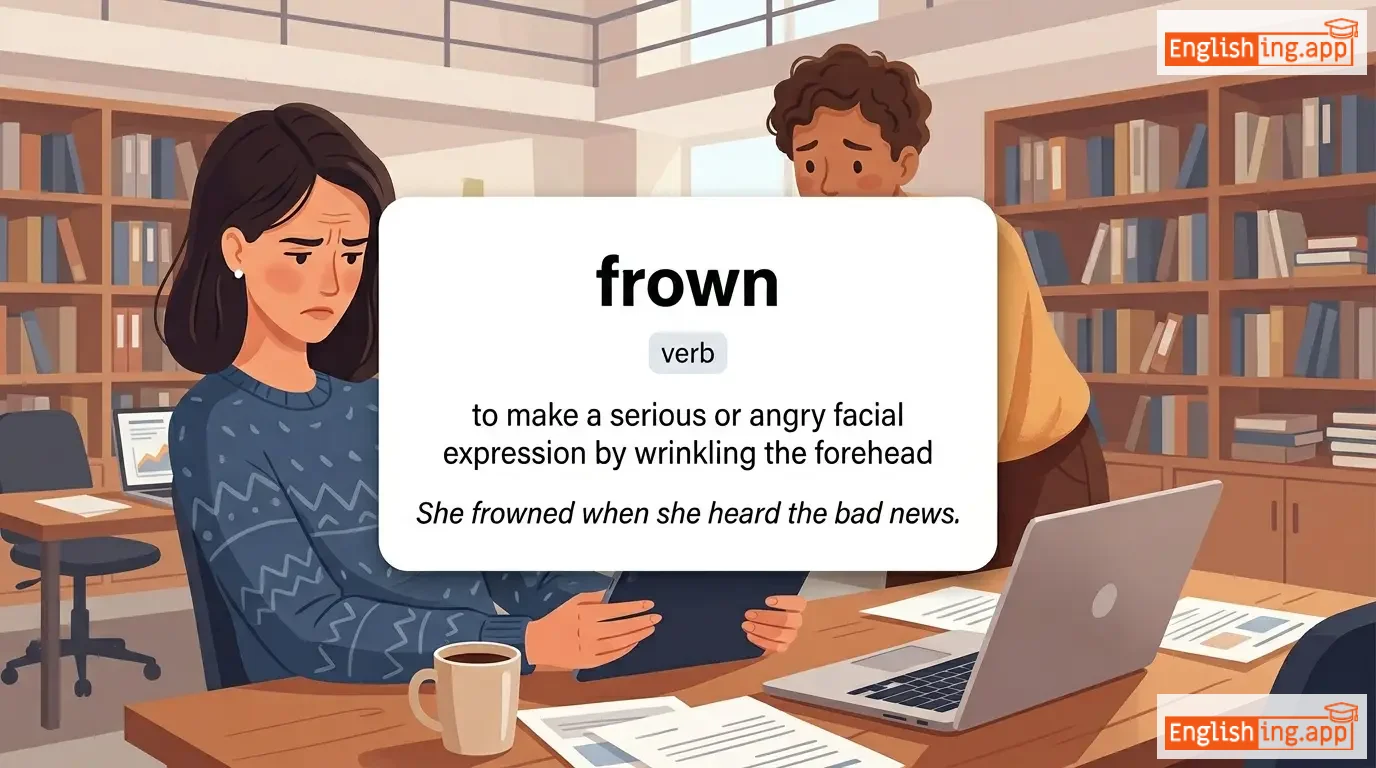
to make a serious or angry facial expression by wrinkling the forehead
••••••
|
She frowned when she heard the bad news.
她听到坏消息时皱起了眉头。
••••••
|
她听到坏消息时皱起了眉头。
Ta tingdao huai xiaoxi shi zhou qi le meitou.
••••••
|
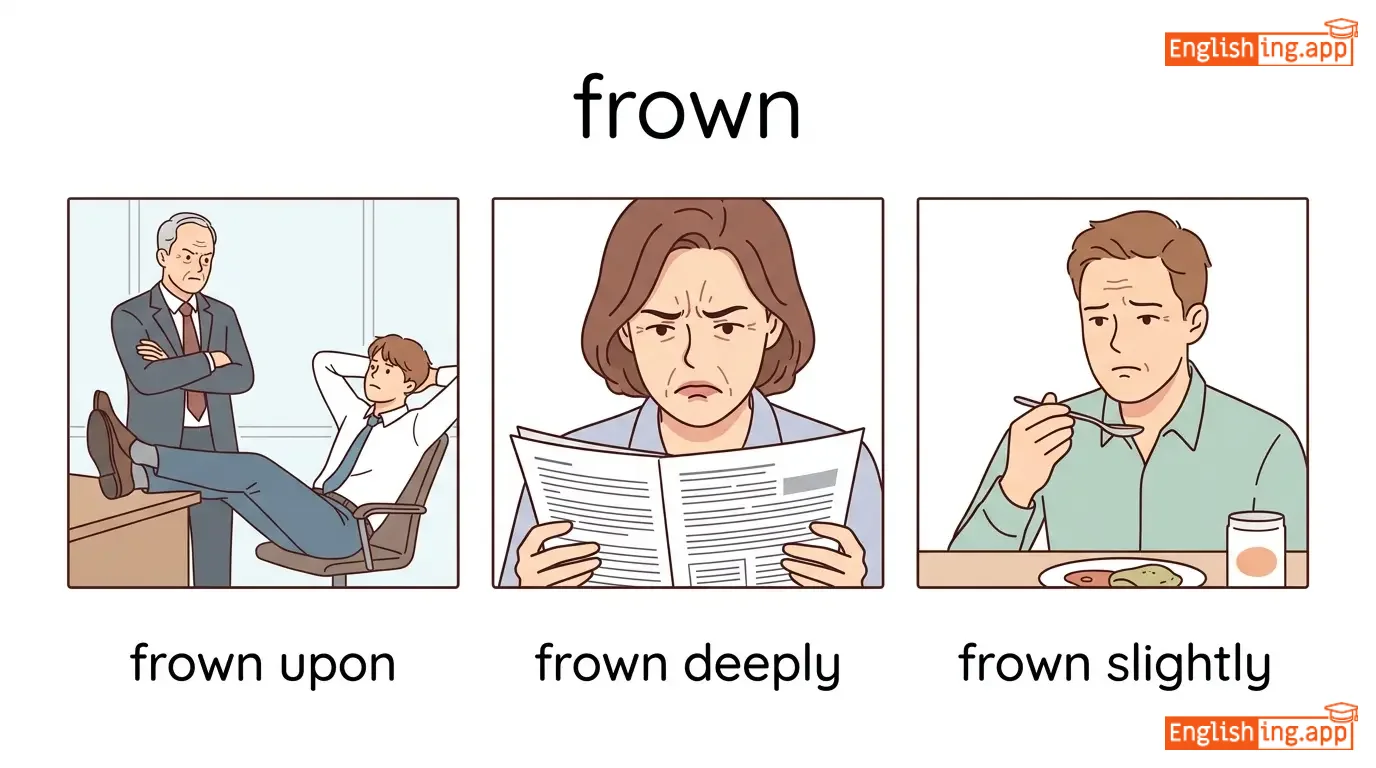
frown upon
皱眉
••••••
|
to disapprove of something
••••••
|
不赞成
bu zan cheng
••••••
|
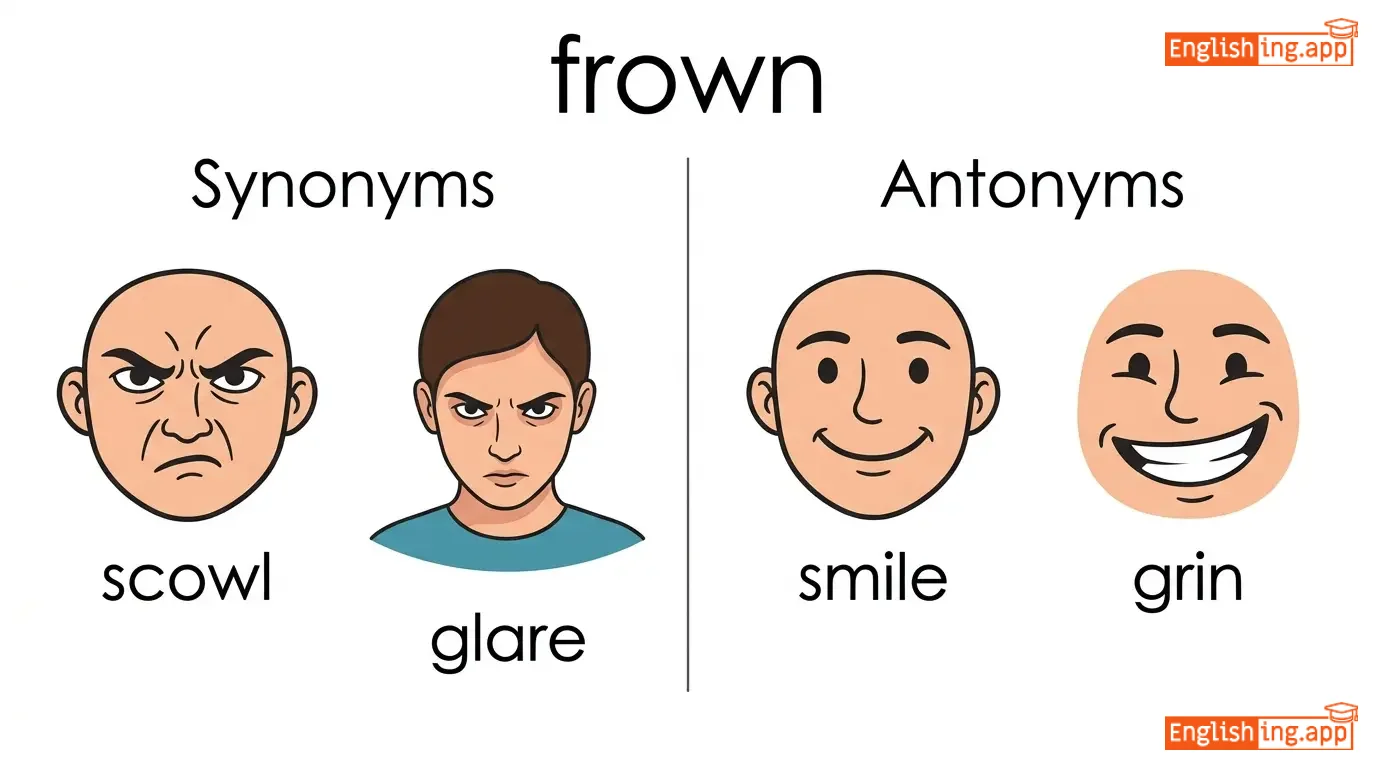
scowl, glare, pout, grimace
••••••
|
smile, grin
••••••
|
frown upon, frown deeply, frown slightly, frown face
••••••
|
坏消息听到后,皱眉头。
••••••
|
|
🤢
••••••
|
/ɡroʊs/
adjective
(格罗斯)
••••••
|
- •••••• |
恶心的 / 粗俗的
èxīn de / cūsú de
••••••
|
- •••••• | - •••••• | - •••••• | - •••••• |
extremely unpleasant or disgusting; total before deductions
••••••
|
He thought the food looked gross, but it tasted fine. |
他觉得食物看起来恶心,但味道还不错。
Tā juéde shíwù kàn qǐlái èxīn, dàn wèidào hái bùcuò.
••••••
|
gross out |
to make someone feel disgusted
••••••
|
让人恶心
ràng rén èxīn
••••••
|
disgusting, nasty, foul, total, overall
••••••
|
pleasant, clean, net
••••••
|
gross income, gross mistake, gross error
••••••
|
Gross 也可以表示令人恶心的(gross food)。
••••••
|
|
🛠️
••••••
|
/ˈhændi/
adjective
(hāndí)
••••••
|
- •••••• |
易于使用
yi yu shiyong
••••••
|
- •••••• | - •••••• | - •••••• | - •••••• |
convenient to use or easily accessible; skillful with the hands
••••••
|
This pocket knife is very handy when you go camping. |
这把口袋刀在露营时非常有用。
Zhe ba kou dai dao zai lu ying shi feichang youyong.
••••••
|
handy with |
skilled or capable in using something
••••••
|
熟练
shulian
••••••
|
useful, convenient, practical, accessible, skillful
••••••
|
useless, inconvenient, clumsy
••••••
|
come in handy, very handy, handy tool, handy guide
••••••
|
Handy 就像一只方便的手,总是可以帮忙。
••••••
|
|
🤪
••••••
|
/ˈɪdɪət/
noun
(白痴)
••••••
|
- •••••• |
白痴
baichi
••••••
|
- •••••• | - •••••• | - •••••• | - •••••• |
a person who acts in a way that is considered very stupid or foolish
••••••
|
He acted like an idiot at the party last night.
他昨晚在派对上像个白痴一样表现。
••••••
|
他昨晚在派对上像个白痴一样表现。
Ta zuowan zai paidui shang xiang ge baichi yiyang biaoxian.
••••••
|
- •••••• | - •••••• | - •••••• |
fool, imbecile, moron, simpleton
••••••
|
genius, intellect, savant
••••••
|
complete idiot, stupid idiot, act like an idiot
••••••
|
Idiot = 白痴 = 那个总是做傻事的人。
••••••
|
|
💸
••••••
|
/ɪnˈkɜːr/
verb
(yīnkè)
••••••
|
- •••••• |
遭受
zāoshòu
••••••
|
incurred
yīnkèd
••••••
|
incurred
yīnkèd
••••••
|
incurs
yīnkèrs
••••••
|
incurring
yīnkèring
••••••
|
To bring upon oneself something undesirable, usually as a result of actions.
••••••
|
He incurred a fine for parking in the wrong place.
他因在错误的地方停车而被罚款。
••••••
|
他因在错误的地方停车而被罚款。
Tā yīn zài cuòwù de dìfāng tíngchē ér bèi fákuǎn.
••••••
|
- •••••• | - •••••• | - •••••• |
suffer, sustain, attract, experience, bring on
••••••
|
avoid, escape, evade
••••••
|
incur debt, incur expense, incur loss, incur penalty
••••••
|
Incur = 自己做错事,遭受惩罚
••••••
|
|
🤔
••••••
|
/ɪnˈfɜːr/
verb
••••••
|
- •••••• | - •••••• |
inferred
••••••
|
inferred
••••••
|
infers
••••••
|
inferring
••••••
|
to conclude or deduce something from evidence and reasoning rather than from explicit statements
••••••
|
From his silence, I inferred that he was not happy with the decision. |
- •••••• |
read between the lines |
to understand an implicit meaning in what is said or written
••••••
|
- •••••• |
deduce, conclude, reason, assume, derive
••••••
|
state, declare, express
••••••
|
infer meaning, infer from evidence, infer result
••••••
|
No •••••• |

