The Veteran Who Started a New Life
阿明上校是一位 veteran,他在军队服役了20年。他的人生充满了 warfare 和冲突。但现在他退休了,前方是一个 unknown 的未来。他转入平民生活的过程非常 unusual —— 他觉得自己的军事技能在正常世界中已经 useless。但阿明决定以不同的方式 utilize 自己的经验。他创办了一家安全咨询公司。他的 various 客户包括企业和政府机构。阿明的方法很独特——他训练人们不要变得 violent,而是预防暴力。一个合同要求他开发新的安全协议 version。他的团队很多元,提供了 variety 的服务。一天,一位客户要求防范一个 vicious 的犯罪团伙。阿明的策略是合法地 utterly 摧毁他们的行动。他与警方合作,获得了针对团伙头目的 warrant。一个有趣的时刻是,阿明不小心穿着军装参加了一场平民 wedding,大家都以为他是仪式的一部分。阿明的成功带来了繁荣,他变得 wealthy。但他从未忘记自己的根。他作为 warrior 的旧身份仍然是他的一部分,但现在他为和平而战。有些人试图 violate 规定,但阿明确保了合规。他的公司决定 upgrade 技术,包括为制药客户提供 vaccine 储存安全。阿明 usually 工作时间很长,但他很享受。阿明的转变证明,veterans 能够成功地过渡到平民生活,并为社会作出积极贡献。他的故事令人鼓舞——从士兵到企业家,从冲突到和平。
|
表情符号
|
单词 | Images | 翻译 | 过去时 | 过去分词 | 第三人称单数 | 动名词 | 含义 | 例句 | 例句翻译 | 示例表达 | 示例表达含义 | 示例表达翻译 | 同义词 | 反义词 | 搭配词 | 助记符 |
|---|---|---|---|---|---|---|---|---|---|---|---|---|---|---|---|---|---|
|
❓
••••••
|
/ʌnˈnoʊn/
adjective
(未知)
••••••
|
- •••••• |
未知
wèizhī
••••••
|
- •••••• | - •••••• | - •••••• | - •••••• |
not known or identified; unfamiliar
••••••
|
The author of this letter remains unknown. |
这封信的作者仍然未知。
Zhè fēng xìn de zuòzhě réngrán wèizhī.
••••••
|
- •••••• | - •••••• | - •••••• |
unfamiliar, unidentified, mysterious, nameless
••••••
|
known, familiar, identified, recognized
••••••
|
unknown person, unknown origin, unknown cause
••••••
|
未知 = 'wèi' sounds like 'way', 'zhī' like 'zhi' in 'zig'.
••••••
|
|
🔮
••••••
|
/ʌnˈjuː.ʒu.əl/
adjective
(an-yu-zhu-äl)
••••••
|
- •••••• |
不寻常; 奇怪;
bù xúncháng; qíguài
••••••
|
- •••••• | - •••••• | - •••••• | - •••••• |
not typical; strange; different from what is normal
••••••
|
She wore an unusual dress to the party.
她穿了一件不寻常的衣服去参加派对。
••••••
|
她穿了一件不寻常的衣服去参加派对。
Tā chuānle yī jiàn bù xúncháng de yīfu qù cānjiā pàiduì.
••••••
|
- •••••• | - •••••• | - •••••• |
strange, odd, peculiar, rare, uncommon
••••••
|
usual, normal, typical, common, ordinary
••••••
|
unusual behavior, unusual circumstances, quite unusual
••••••
|
Unusual sounds like '不寻常', think of '不' (not) and '寻常' (ordinary)
••••••
|
|
⬆️
••••••
|
/ˈʌpˌɡreɪd/
verb
(apugléid)
••••••
|
- •••••• |
升级
shengji
••••••
|
upgraded
apugléidid
••••••
|
upgraded
apugléidid
••••••
|
upgrades
apugléids
••••••
|
upgrading
apugléiding
••••••
|
to raise something to a higher standard, improve
••••••
|
We decided to upgrade the software to the latest version.
我们决定将软件升级到最新版本。
••••••
|
我们决定将软件升级到最新版本。
Wo men jue ding jiang ruan jian sheng ji dao zui xin ban ben.
••••••
|
- •••••• | - •••••• | - •••••• |
improve, enhance, elevate, boost
••••••
|
downgrade, reduce, worsen
••••••
|
upgrade software, upgrade system, upgrade device
••••••
|
Upgrade your system for a better tomorrow.
••••••
|
|
🗑️
••••••
|
/ˈjuːs.ləs/
adjective
(yúsīlèsī)
••••••
|
- •••••• |
无用
wúyòng
••••••
|
- •••••• | - •••••• | - •••••• | - •••••• |
having no beneficial purpose; not useful
••••••
|
This broken computer is completely useless.
这个坏掉的电脑完全是无用的。
••••••
|
这个坏掉的电脑完全是无用的。
Zhège huài diào de diànnǎo wánquán shì wúyòng de.
••••••
|
- •••••• | - •••••• | - •••••• |
worthless, ineffective, pointless, futile, unhelpful
••••••
|
useful, helpful, valuable, effective, beneficial
••••••
|
completely useless, totally useless, useless information, useless attempt
••••••
|
In Chinese, '无用' means useless, similar to 'useless' in English.
••••••
|
|
🔄
••••••
|
/ˈjuː.ʒu.ə.li/
adverb
(yú zhū ài)
••••••
|
- •••••• |
通常; 一般
tongchang; yiban
••••••
|
- •••••• | - •••••• | - •••••• | - •••••• |
in most cases; generally; as a rule
••••••
|
I usually wake up at 7 AM every morning. |
我通常每天早上7点起床。
Wo tongchang mei tian zao shang 7 dian qi chuang.
••••••
|
- •••••• | - •••••• | - •••••• |
generally, typically, normally, commonly, ordinarily
••••••
|
rarely, seldom, never, unusually
••••••
|
usually do, usually happens, usually takes, usually go
••••••
|
每天7点起床对我来说是常事。
••••••
|
|
⚙️
••••••
|
/ˈjuːtɪlaɪz/
verb
(yutilaiz)
••••••
|
- •••••• |
利用
lìyòng
••••••
|
utilized
yutilaizd
••••••
|
utilized
yutilaizd
••••••
|
utilizes
yutilaizis
••••••
|
utilizing
yutilaizing
••••••
|
to make practical or effective use of something
••••••
|
The company aims to utilize solar energy for production.
公司旨在利用太阳能进行生产。
••••••
|
公司旨在利用太阳能进行生产。
Gōngsī zhǐ zài lìyòng tàiyángnéng jìnxíng shēngchǎn.
••••••
|
- •••••• | - •••••• | - •••••• |
use, employ, apply, exploit, harness
••••••
|
waste, neglect, misuse
••••••
|
utilize resources, utilize time, utilize data, utilize opportunity
••••••
|
You till eyes 利用 — Utilize 意味着利用某物
••••••
|
|
😲
••••••
|
/ˈʌtərli/
adverb
(ātèrlì)
••••••
|
- •••••• |
完全
wanquan
••••••
|
- •••••• | - •••••• | - •••••• | - •••••• |
completely or absolutely
••••••
|
She was utterly surprised by the news. |
她对新闻感到完全惊讶。
Ta dui xinwen gandao wanquan jingya.
••••••
|
utterly ridiculous |
completely absurd or unreasonable
••••••
|
完全荒谬
wanquan huangmiu
••••••
|
completely, absolutely, totally, entirely, fully
••••••
|
partially, somewhat, slightly
••••••
|
utterly amazed, utterly destroyed, utterly wrong, utterly impossible
••••••
|
Utterly意味着完全—就像完全荒谬。
••••••
|
|
💉
••••••
|
/ˈvæk.siːn/
noun
(wèixīn)
••••••
|
- •••••• |
疫苗
yimiao
••••••
|
- •••••• | - •••••• | - •••••• | - •••••• |
a substance used to stimulate the body's immune response against diseases
••••••
|
Children are given the polio vaccine to prevent infection. |
孩子们接种脊髓灰质炎疫苗以预防感染。
Háizimen jiēzhǒng jǐsuǐ huīzhìyán yìmiáo yǐ yùfáng gǎnrǎn.
••••••
|
get vaccinated |
to receive a vaccine to protect against disease
••••••
|
接种疫苗
jiēzhǒng yìmiáo
••••••
|
immunization, inoculation, shot, injection, jab
••••••
|
infection, disease
••••••
|
COVID vaccine, flu vaccine, vaccine dose, vaccine rollout, vaccine campaign
••••••
|
Vaccine意味着疫苗 — 想象一个医生说:'接种疫苗,保持安全!'
••••••
|
|
🌈
••••••
|
/vəˈraɪəti/
noun
(wàiràitì)
••••••
|
- •••••• |
多样性; 种类
duōyàngxì; zhǒnglèi
••••••
|
- •••••• | - •••••• | - •••••• | - •••••• |
the quality of being different or diverse; a number of things of the same general class that are distinct in character or quality
••••••
|
The restaurant offers a wide variety of international dishes.
这家餐厅提供种类繁多的国际菜肴。
••••••
|
这家餐厅提供种类繁多的国际菜肴。
Zhè jiā cāntīng tígōng zhǒnglèi fánduō de guójì càiyáo.
••••••
|
- •••••• | - •••••• | - •••••• |
diversity, range, assortment, selection
••••••
|
monotony, uniformity, sameness
••••••
|
wide variety, variety show, variety pack
••••••
|
多样性就像餐馆里不同种类的菜肴,满足各种口味。
••••••
|
|
🔀
••••••
|
/ˈvɛəriəs/
adjective
(维里厄斯)
••••••
|
- •••••• |
各种各样的; 多种类型的
gè zhǒng gè yàng de; duō zhǒng lèi xíng de
••••••
|
- •••••• | - •••••• | - •••••• | - •••••• |
several different; many different types of
••••••
|
She has lived in various countries around the world.
她曾在世界各地的多个国家生活过。
••••••
|
她曾在世界各地的多个国家生活过。
Tā céng zài shìjiè gèdì de duō gè guójiā shēnghuó guò.
••••••
|
- •••••• | - •••••• | - •••••• |
different, several, numerous, many
••••••
|
single, one, same, identical
••••••
|
various reasons, various methods, various sources, various options
••••••
|
In Chinese, '各种' (gè zhǒng) means various, remember by thinking of diversity.
••••••
|
|
🔄
••••••
|
/ˈvɜːrʒən/
noun
(wéixiǎn)
••••••
|
- •••••• |
版本
banben
••••••
|
- •••••• | - •••••• | - •••••• | - •••••• |
A particular form or variant of something.
••••••
|
The software has a new version with added features. |
软件有一个新版本,带有附加功能。
Ruǎnjiàn yǒu yīgè xīn bǎnběn, dài yǒu fùjiā gōngnéng.
••••••
|
the latest version |
The most recent form or release of something.
••••••
|
最新版本
zuìxīn bǎnběn
••••••
|
edition, variation, release, form, variant
••••••
|
original, prototype
••••••
|
new version, old version, software version, version control
••••••
|
Version代表'版本',想象改变版本,功能增加。
••••••
|
|
🎖️
••••••
|
/ˈvɛtərən/
noun
(退伍军人)
••••••
|
- •••••• |
有经验的人 / 退役军人
yǒu jīngyàn de rén / tuìyì jūnrén
••••••
|
- •••••• | - •••••• | - •••••• | - •••••• |
a person who has long experience in a particular field or an ex-member of the armed forces
••••••
|
He is a veteran of the software industry. |
他是软件行业的老兵。
Tā shì ruǎnjiàn hángyè de lǎobīng
••••••
|
war veteran |
a person who has served in a war
••••••
|
战争老兵
zhànzhēng lǎobīng
••••••
|
experienced, expert, old-timer, ex-soldier
••••••
|
novice, beginner, recruit
••••••
|
war veteran, military veteran, veteran player, industry veteran
••••••
|
Veteran 意味着非常训练有素——有经验的人或退役军人
••••••
|
|
😈
••••••
|
/ˈvɪʃəs/
adjective
(vishas)
••••••
|
- •••••• |
残忍的
zanren de
••••••
|
- •••••• | - •••••• | - •••••• | - •••••• |
Deliberately cruel, violent, or immoral.
••••••
|
The dog gave a vicious growl when the stranger approached. |
当陌生人接近时,狗发出了残忍的低吼。
Dang moshengren jiejin shi, gou fashu le canren de dihou.
••••••
|
vicious cycle |
A sequence of problems that reinforce or worsen each other.
••••••
|
恶性循环
èxìng xúnhuán
••••••
|
cruel, brutal, savage, malicious, fierce
••••••
|
kind, gentle, benevolent
••••••
|
vicious attack, vicious circle, vicious cycle, vicious rumor
••••••
|
VICIOUS意味着非常危险 - 想象一个VICIOUS的狗,一个非常危险的狗 🐕
••••••
|
|
🚫
••••••
|
/ˈvaɪ.ə.leɪt/
verb
(wāi-òu-lèi-tè)
••••••
|
|
违反
wéifǎn
••••••
|
violated
wāi-òu-lèi-tèd
••••••
|
violated
wāi-òu-lèi-tèd
••••••
|
violates
wāi-òu-lèi-ts
••••••
|
violating
wāi-òu-lèi-ting
••••••
|
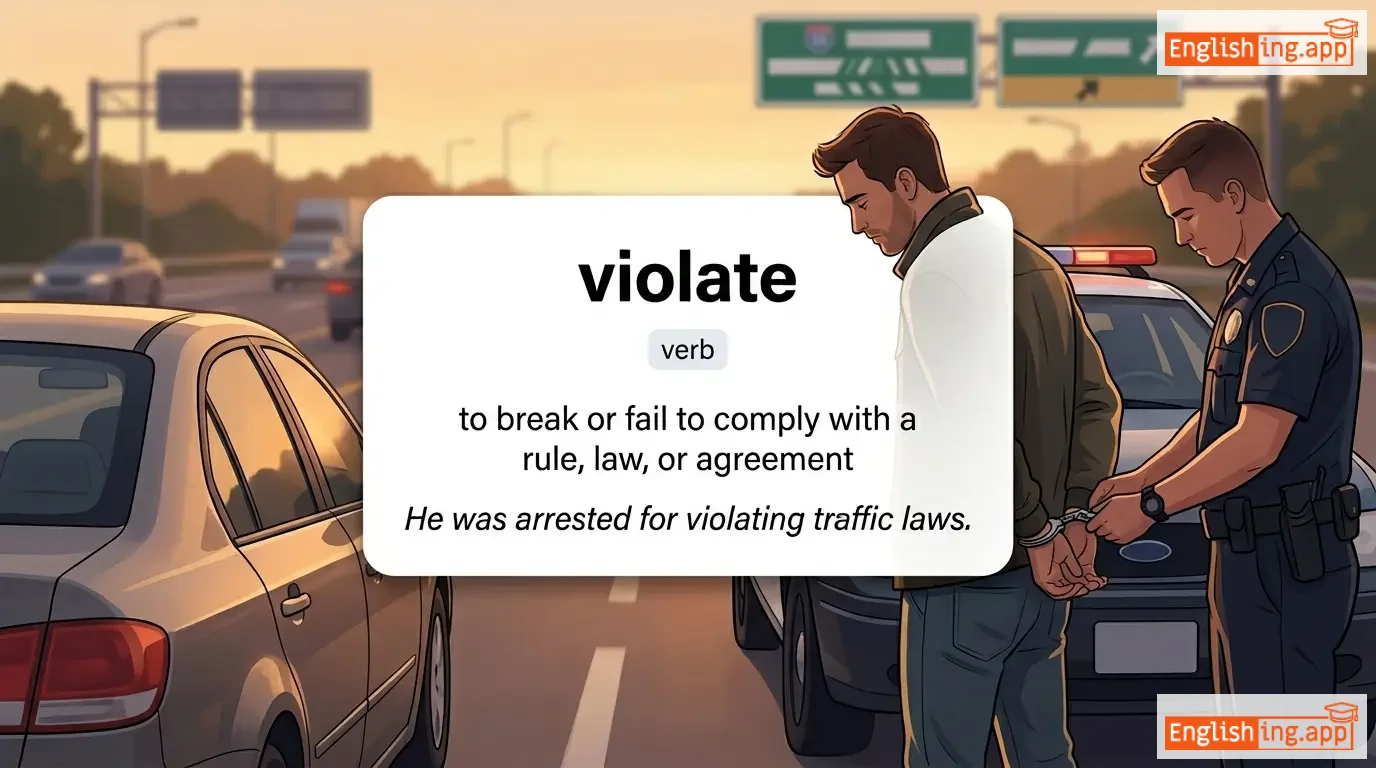
to break or fail to comply with a rule, law, or agreement
••••••
|
He was arrested for violating traffic laws.
tā yīnwèi wéifǎ bōfǎo jiāotōng fǎlǜ ér bèi dǔlì
••••••
|
他因违反交通法规被逮捕。
Tā yīnwèi wéifǎ bōfǎo jiāotōng fǎlǜ ér bèi dǔlì.
••••••
|
violate human rights
wāi-òu-lèi rénquán
••••••
|
to act against the basic rights that every human deserves
••••••
|
侵犯人权
qīnfàn rénquán
••••••
|
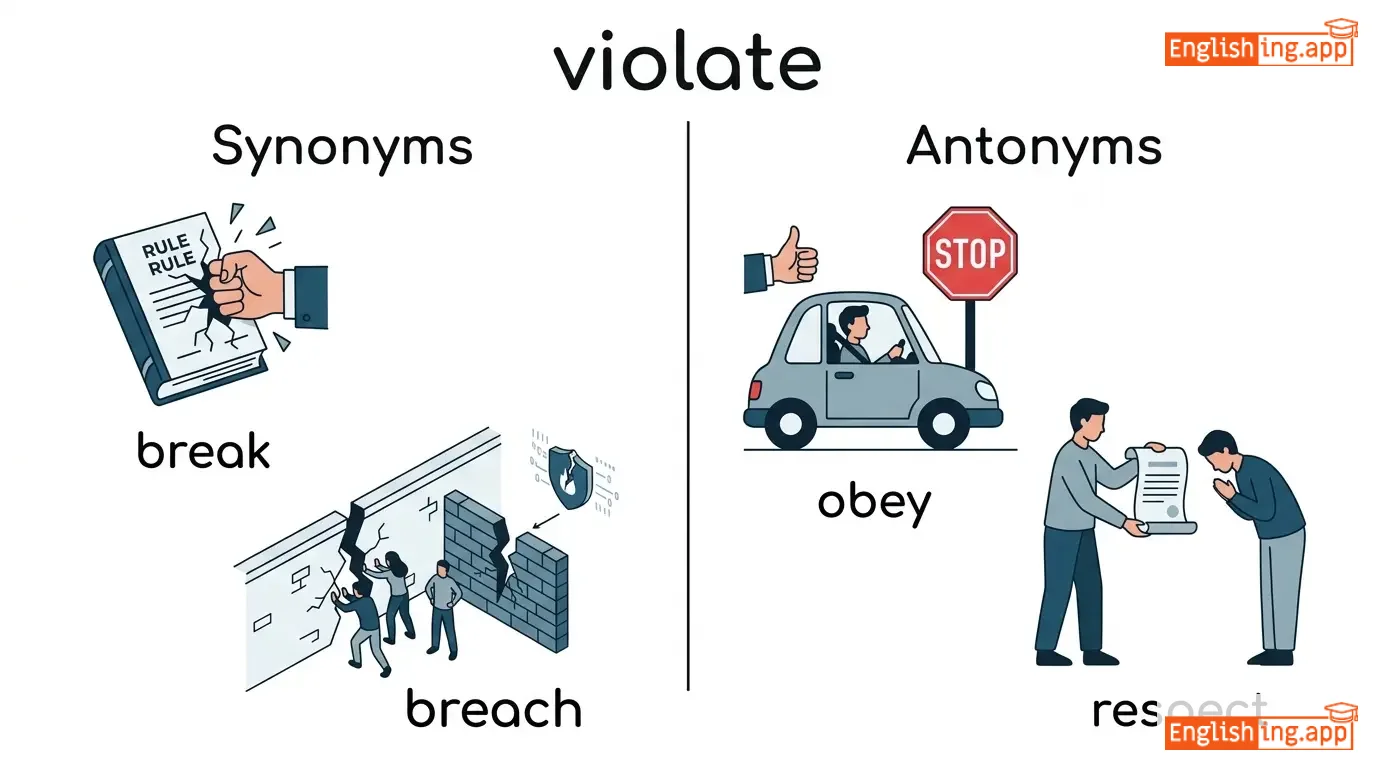
break, breach, disobey, infringe, transgress
••••••
|
obey, respect, follow
••••••
|
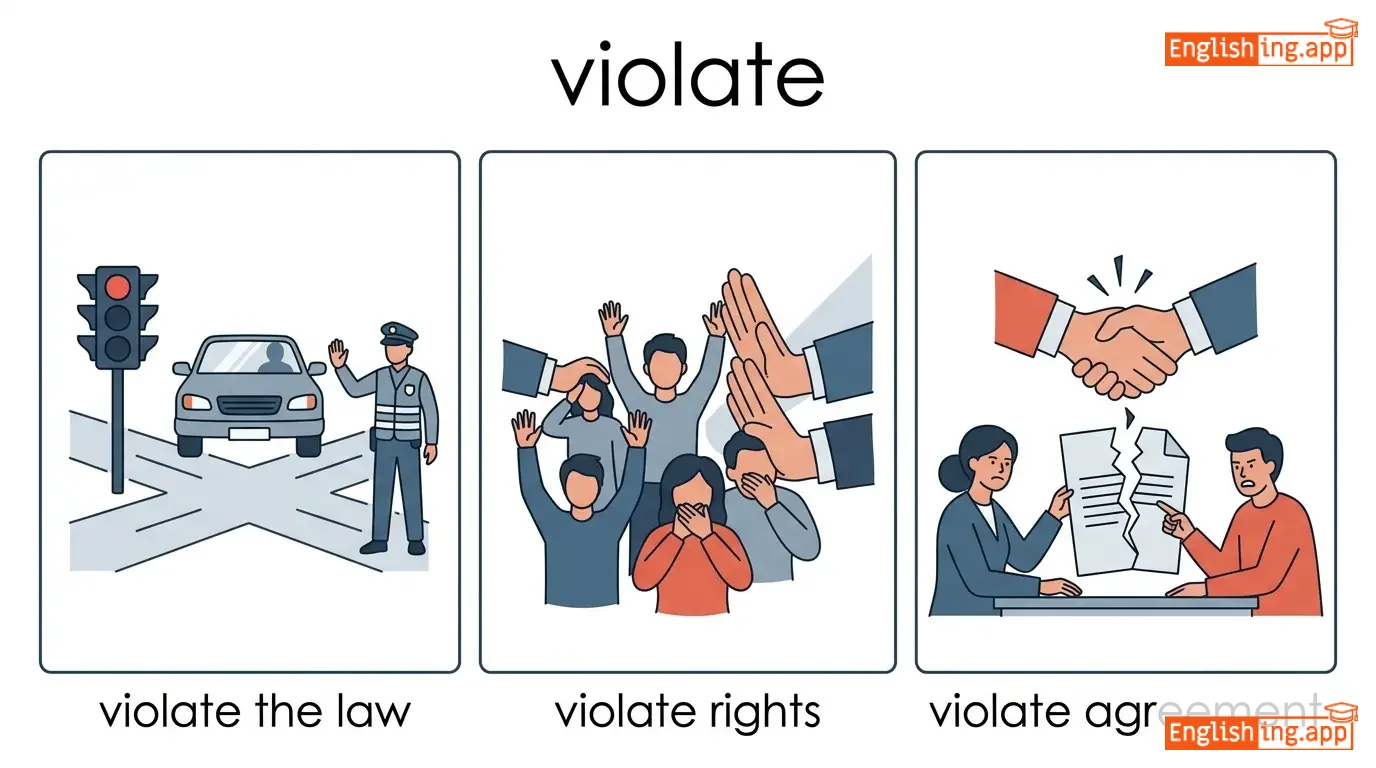
violate the law, violate rights, violate agreement, violate privacy
••••••
|
'违反' = 打破规则,别违反法则!
••••••
|
|
🔥
••••••
|
/ˈvaɪ.ə.lənt/
adjective
(vɑɪələnt)
••••••
|
- •••••• |
暴力的
baolide
••••••
|
- •••••• | - •••••• | - •••••• | - •••••• |
using or involving physical force intended to hurt or damage
••••••
|
He became violent after hearing the bad news. |
听到坏消息后,他变得暴力了。
Tingdao huai xiaoxi hou, ta biande baolile.
••••••
|
turn violent |
to become aggressive or start using physical force
••••••
|
变得暴力
biande baoli
••••••
|
aggressive, brutal, fierce, forceful, savage
••••••
|
peaceful, gentle, calm
••••••
|
violent attack, violent crime, violent reaction, become violent
••••••
|
Violent 意味着暴力行为 🔥 — ‘暴力的’ 是指当某人爆发时就像风暴一样!
••••••
|
|
⚔️
••••••
|
/ˈwɔːfeər/
noun
(战争)
••••••
|
- •••••• |
战争
zhànzhēng
••••••
|
- •••••• | - •••••• | - •••••• | - •••••• |
armed conflict between different countries or groups; the activity of fighting a war
••••••
|
Modern warfare involves advanced technology and strategic planning. |
现代战争涉及先进的技术和战略规划。
xiàndài zhànzhēng shèjí xiānjìn de jìshù hé zhànlüè guīhuà.
••••••
|
- •••••• | - •••••• | - •••••• |
combat, battle, conflict, fighting
••••••
|
peace, harmony, truce, ceasefire
••••••
|
modern warfare, guerrilla warfare, chemical warfare, psychological warfare
••••••
|
战争意味着对抗和精密的战略
••••••
|
|
📜
••••••
|
/ˈwɒrənt/
noun/verb
(warrant)
••••••
|
- •••••• |
逮捕令
dàibǔ lìng
••••••
|
warranted
warranted
••••••
|
warranted
warranted
••••••
|
warrants
warrants
••••••
|
warranting
warranting
••••••
|
As a noun: An official authorization or order. As a verb: To justify or make something necessary.
••••••
|
The judge issued a warrant for his arrest.
法官签发了他的逮捕令。
••••••
|
法官签发了他的逮捕令。
Fǎguān qiānfāle tā de dàibǔ lìng.
••••••
|
search warrant
搜查令
••••••
|
a legal document authorizing the police to search a place
••••••
|
搜查令
sōuchá lìng
••••••
|
authorization, permit, justification, license
••••••
|
ban, prohibition, denial
••••••
|
arrest warrant, search warrant, warrant issued, warrant action
••••••
|
警方使用逮捕令来进行搜查 🔍
••••••
|
|
⚔️
••••••
|
/ˈwɒriər/
noun
(wā lí ér)
••••••
|
- •••••• |
战士
zhànshì
••••••
|
- •••••• | - •••••• | - •••••• | - •••••• |
a person engaged or experienced in warfare; a brave or experienced fighter
••••••
|
The ancient warrior fought fearlessly to protect his land. |
古老的战士英勇地战斗以保护他的土地。
gǔlǎo de zhànshì yīngyǒng de zhàndòu yǐ bǎohù tā de tǔdì.
••••••
|
spiritual warrior |
a person who battles against inner weaknesses or strives for personal growth and enlightenment
••••••
|
精神战士
jīngshén zhànshì
••••••
|
fighter, soldier, combatant, champion, hero
••••••
|
coward, pacifist
••••••
|
brave warrior, ancient warrior, warrior spirit, skilled warrior
••••••
|
战士代表勇敢无畏的战斗者,保护自己的土地和荣耀。
••••••
|
|
💰
••••••
|
/ˈwel.θi/
adjective
(wēi'ěrthī)
••••••
|
- •••••• |
富有的; 有钱的; 繁荣的
fùyǒu de; yǒu qián de; fánróng de
••••••
|
- •••••• | - •••••• | - •••••• | - •••••• |
having a great deal of money; rich; prosperous
••••••
|
The wealthy businessman donated millions to charity. |
富有的商人捐赠了数百万美元给慈善事业。
Fùyǒu de shāngrén juānzèngle shù bǎi wàn měiyuán gěi císhàn shìyè.
••••••
|
- •••••• | - •••••• | - •••••• |
rich, affluent, prosperous, well-off
••••••
|
poor, impoverished, destitute, needy
••••••
|
wealthy family, wealthy individual, become wealthy, extremely wealthy
••••••
|
富有的人总是为他人带来繁荣。
••••••
|
|
💍
••••••
|
/ˈwɛdɪŋ/
noun
(wedding)
••••••
|
- •••••• |
婚礼
hūn lǐ
••••••
|
- •••••• | - •••••• | - •••••• | - •••••• |
a marriage ceremony, especially considered as including the associated celebrations
••••••
|
They are planning a wedding in the summer. |
他们正在计划一个夏季婚礼。
Tāmen zhèngzài jìhuà yīgè xiàjì hūn lǐ.
••••••
|
- •••••• | - •••••• | - •••••• |
marriage, nuptials, ceremony, union
••••••
|
divorce, separation
••••••
|
attend a wedding, wedding ceremony, wedding dress, wedding reception
••••••
|
Wedding – Think of a joyful 'hūn lǐ' celebration!
••••••
|

