The Urban Planner Who Transformed a City
拉希姆是一位城市 planner,在一座 postwar 城市工作。他的 primary 目标是重建基础设施并创造宜居空间。他的 profile 非常出色——他是这座城市的 premier 建筑师。拉希姆 presided 规划委员会并 proposed 创新的解决方案。他的一个关键 premises 是,好的规划应当 precede 建设。一些 private 开发商 protested,因为他们想走捷径。但拉希姆在要求上非常 precise。他的设计在市民中非常 popular,这让他感到 pleased。在一次会议上,他的 primary 关注是确保公园和绿地的存在。一位开发商试图 pretend 自己会遵守规定,但拉希姆一眼就看穿了。最终,他的决心 prevailed,市议会批准了他全面的计划。一个有趣的时刻是,在一次社区活动中,一位正在倒柠檬水的 pitcher 不小心把水洒在了拉希姆的蓝图上。但拉希姆笑着说:“这只是过眼云烟。”他的愿景是,每个社区都应当 possess 自己独特的特征。拉希姆不相信像 protein 补充剂那样的快速解决方案——他追求可持续的方案。一些批评者 presumed 他的计划太雄心勃勃,但拉希姆证明他们错了。多年后,这座城市成为城市发展的典范。拉希姆的遗产是:良好的规划和社区参与能创造美丽且实用的城市。
|
表情符号
|
单词 | Images | 翻译 | 过去时 | 过去分词 | 第三人称单数 | 动名词 | 含义 | 例句 | 例句翻译 | 示例表达 | 示例表达含义 | 示例表达翻译 | 同义词 | 反义词 | 搭配词 | 助记符 |
|---|---|---|---|---|---|---|---|---|---|---|---|---|---|---|---|---|---|
|
🥛
••••••
|
/ˈpɪtʃər/
noun
(pìchē)
••••••
|
- •••••• |
水壶
shuǐhú
••••••
|
- •••••• | - •••••• | - •••••• | - •••••• |
a large container with a handle used for pouring liquids
••••••
|
She filled the pitcher with cold water for the guests. |
她为客人把水壶装满了冷水。
Tā wèi kèrén bǎ shuǐhú zhuāngmǎnle lěngshuǐ.
••••••
|
pitcher plant |
a type of carnivorous plant with a deep cavity filled with fluid to trap insects
••••••
|
水壶植物
shuǐhú zhíwù
••••••
|
jug, container, carafe, ewer
••••••
|
cup, bowl
••••••
|
water pitcher, glass pitcher, ceramic pitcher, milk pitcher
••••••
|
‘Pitcher’ 翻译为 ‘水壶’ — ‘从水壶倒!’
••••••
|
|
📘
••••••
|
/ˈplænər/
noun
(计划者)
••••••
|
- •••••• |
计划者
jìhuà zhě
••••••
|
- •••••• | - •••••• | - •••••• | - •••••• |
a person who makes plans or a book used for organizing schedules and tasks
••••••
|
She uses a daily planner to organize her meetings. |
她使用每日计划本来组织她的会议。
Tā shǐyòng měi rì jìhuà běn lái zǔzhī tā de huìyì.
••••••
|
event planner |
a person whose job is to organize events or functions
••••••
|
活动策划师
huódòng cèhuà shī
••••••
|
organizer, scheduler, coordinator, strategist, designer
••••••
|
disorganizer, improviser
••••••
|
event planner, city planner, financial planner, wedding planner
••••••
|
计划者 — 规划人生,生活更有条理!
••••••
|
|
😊
••••••
|
/pliːzd/
adjective
(plízd)
••••••
|
- •••••• |
满意
mǎnyì
••••••
|
- •••••• | - •••••• | - •••••• | - •••••• |
feeling happy or satisfied with something
••••••
|
She was pleased with her exam results. |
她对自己的考试结果感到满意。
Tā duì zìjǐ de kǎoshì jiéguǒ gǎndào mǎnyì.
••••••
|
pleased as punch |
extremely pleased or delighted
••••••
|
非常高兴
fēicháng gāoxìng
••••••
|
delighted, happy, satisfied, content, glad
••••••
|
unhappy, disappointed
••••••
|
pleased with, pleased to meet, very pleased, pleased about
••••••
|
当你感到满意时,你会说 please — 所以 pleased 意味着满意或高兴。
••••••
|
|
👥
••••••
|
/ˈpɒp.jʊ.lər/
adjective
(流行)
••••••
|
- •••••• |
流行的
liúxíng de
••••••
|
- •••••• | - •••••• | - •••••• | - •••••• |
liked or admired by many people; well-known and widely accepted
••••••
|
This restaurant is very popular among young people. |
这家餐厅在年轻人中非常流行。
Zhè jiā cāntīng zài niánqīngrén zhōng fēicháng liúxíng.
••••••
|
- •••••• | - •••••• | - •••••• |
famous, well-liked, favored, trendy
••••••
|
unpopular, disliked, unfashionable
••••••
|
popular culture, popular opinion, popular choice
••••••
|
流行的像一首热门中文歌曲
••••••
|
|
👐
••••••
|
/pəˈzɛs/
verb
(pó zè sī)
••••••
|
- •••••• |
拥有 / 拥有
yǒng yǒu / yǒng yǒu
••••••
|
possessed
pó zè sī de
••••••
|
possessed
pó zè sī de
••••••
|
possesses
pó zè sī sī
••••••
|
possessing
pó zè sī jīng
••••••
|
To have or own something; to hold a quality or characteristic.
••••••
|
She possesses great talent in music.
tā duōyǒu mùzhī cóng yīnyuè zhōng huòdé dà liàng de cǎiliàng.
••••••
|
她在音乐上拥有巨大的天赋。
Tā zài yīnyuè shàng yǒng yǒu jù dà de tiānfù.
••••••
|
possess yourself of
huò dé zìjǐ de shì
••••••
|
to gain control of or acquire something
••••••
|
控制自己
kòngzhì zìjǐ
••••••
|
own, hold, maintain, control, acquire
••••••
|
lack, lose, surrender
••••••
|
possess talent, possess property, possess knowledge, possess rights
••••••
|
拥有 = 得到。像拥有才能或财产。
••••••
|
|
⚔️
••••••
|
/ˈpəʊstwɔːr/
adjective
(pò sī tè wār)
••••••
|
- •••••• |
战后
zhàn hòu
••••••
|
- •••••• | - •••••• | - •••••• | - •••••• |
occurring or existing after a war
••••••
|
The postwar period saw significant economic growth.
战后时期见证了显著的经济增长。
••••••
|
战后时期见证了显著的经济增长。
Zhàn hòu shíqī jiànzhèng le xiǎnzhù de jīngjì zēngzhǎng.
••••••
|
- •••••• | - •••••• | - •••••• |
post-conflict, post-crisis
••••••
|
pre-war
••••••
|
postwar era, postwar reconstruction, postwar economy
••••••
|
Postwar: 战争之后,生活重新繁荣,就像暴风雨后一样。
••••••
|
|
⏮️
••••••
|
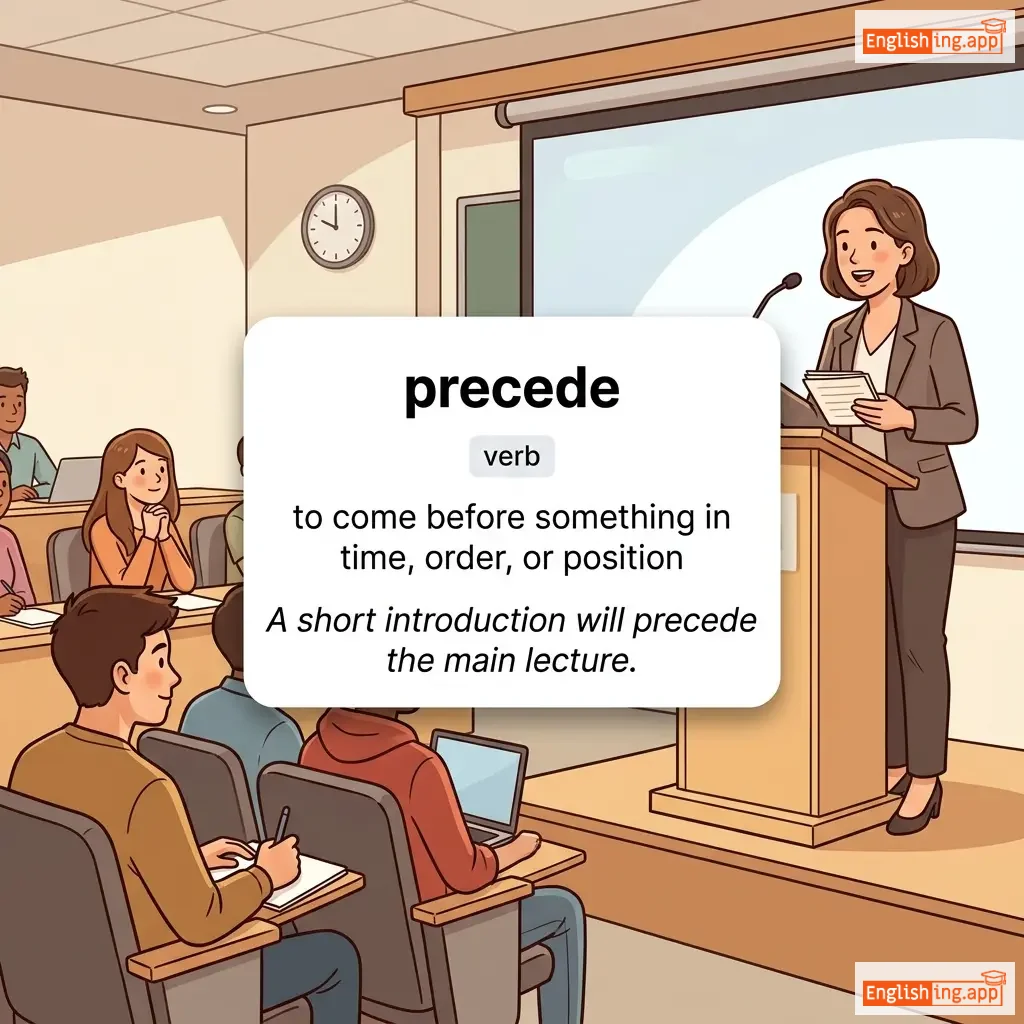
/prɪˈsiːd/
verb
••••••
|
|
- •••••• |
preceded
••••••
|
preceded
••••••
|
precedes
••••••
|
preceding
••••••
|
to come before something in time, order, or position
••••••
|
A short introduction will precede the main lecture. |
- •••••• |
precede by |
to happen before something else
••••••
|
- •••••• |
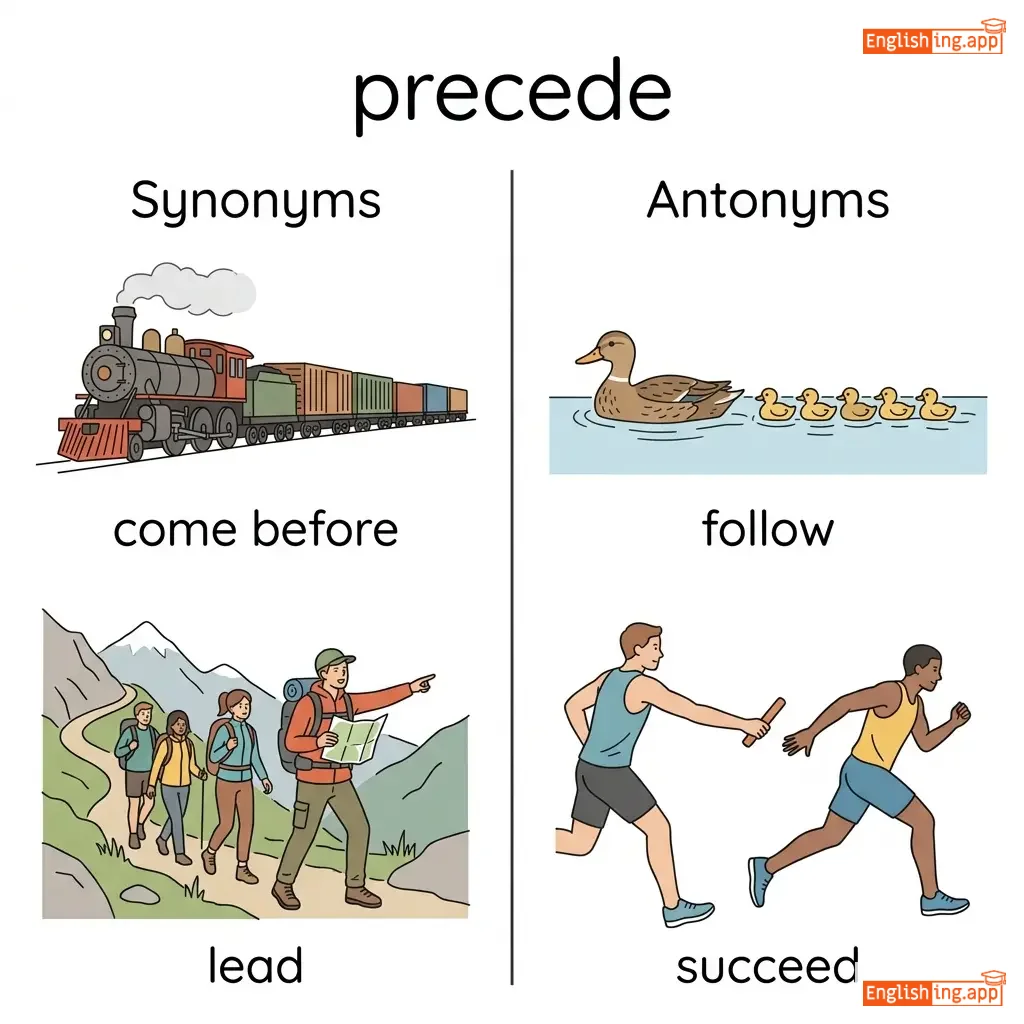
come before, lead, pave the way, herald
••••••
|
follow, succeed
••••••
|
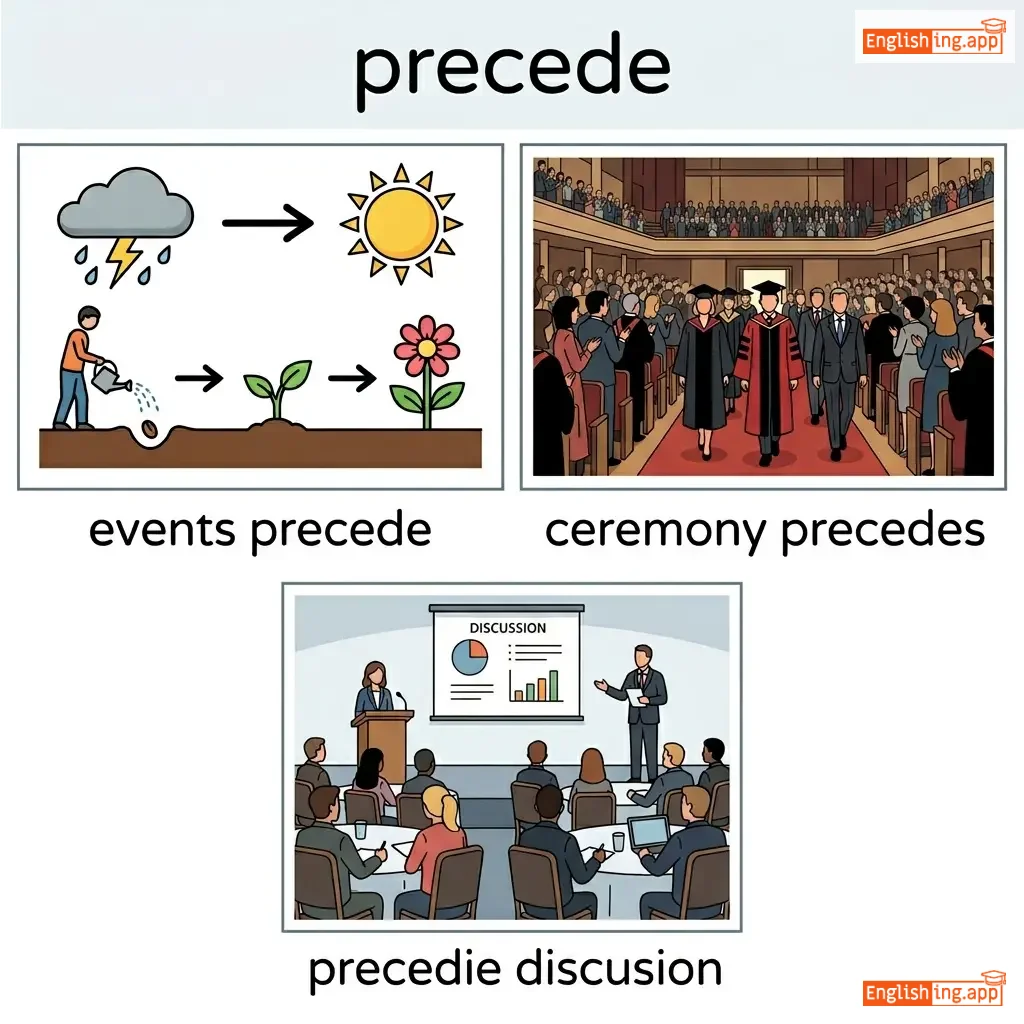
events precede, ceremony precedes, precede discussion, precede statement
••••••
|
No •••••• |
|
🎯
••••••
|
/prɪˈsaɪs/
adjective
(pɹɪˈsaɪs)
••••••
|
- •••••• |
精确的
jingque de
••••••
|
- •••••• | - •••••• | - •••••• | - •••••• |
Marked by exactness and accuracy of expression or detail.
••••••
|
She gave precise instructions for the experiment. |
她为实验提供了精确的指示。
Ta wei shiyan tigong le jingque de zhishi.
••••••
|
to be precise |
used to give exact details or clarify something
••••••
|
准确地说
zhunquede shuo
••••••
|
exact, accurate, specific, clear, definite
••••••
|
imprecise, vague, inaccurate
••••••
|
precise instructions, precise details, precise measurements, precise meaning
••••••
|
精确的像目标一样 🎯
••••••
|
|
👑
••••••
|
/prɪˈmɪər/ or /ˈpriːmiər/
noun, adjective
(总理 / 主要)
••••••
|
- •••••• |
总理 / 主要
zǒnglǐ / zhǔyào
••••••
|
- •••••• | - •••••• | - •••••• | - •••••• |
the head of government in some countries; first in importance or rank
••••••
|
The French premier addressed the nation. |
法国总理向全国发表了讲话。
Fàguó zǒnglǐ xiàng quánguó fābiǎo le jiǎnghuà.
••••••
|
Premier League |
the top professional football league in England
••••••
|
英超联赛
Yīngchāo liánsài
••••••
|
prime minister, leader, head, top, chief
••••••
|
subordinate, inferior, secondary
••••••
|
French premier, premier role, premier status
••••••
|
Premier 就是首位,最重要或者处于顶端。
••••••
|
|
🏠
••••••
|
/ˈprɛmɪs/
noun
(普雷米斯)
••••••
|
- •••••• |
前提 / 建筑物
qiántí / jiànzhúwù
••••••
|
- •••••• | - •••••• | - •••••• | - •••••• |
a statement or idea on which reasoning or an argument is based; also a building or property
••••••
|
His argument was based on a false premise. |
他的论点是建立在一个错误的前提上的。
Tā de lùndiǎn shì jiànlì zài yīgè cuòwù de qiántí shàng de.
••••••
|
on the premise that |
based on the assumption that
••••••
|
在假设...的前提下
zài jiǎshè... de qiántí xià
••••••
|
assumption, proposition, thesis, property, building
••••••
|
fact, reality, truth
••••••
|
false premise, legal premises, premise of argument
••••••
|
Premise是基础思想,在中文中'前提'表示基础。
••••••
|
|
👩⚖️
••••••
|
/prɪˈzaɪd/
verb
(普雷赛德)
••••••
|
- •••••• |
主持
zhǔchí
••••••
|
presided
普雷赛德德
••••••
|
presided
普雷赛德德
••••••
|
presides
普雷赛德斯
••••••
|
presiding
普雷赛丁
••••••
|
to be in charge of a meeting, event, or organization
••••••
|
She will preside over the meeting tomorrow.
她明天将主持会议。
••••••
|
她明天将主持会议。
Tā míngtiān jiāng zhǔchí huìyì.
••••••
|
- •••••• | - •••••• | - •••••• |
chair, lead, direct, manage
••••••
|
follow, be led
••••••
|
preside over a meeting, preside over a ceremony, preside over a discussion
••••••
|
主持即为主持会议!
••••••
|
|
🤔
••••••
|
/prɪˈzjuːm/
verb
(prizium)
••••••
|
- •••••• |
假设
jiǎshè
••••••
|
presumed
presumed
••••••
|
presumed
presumed
••••••
|
presumes
presumes
••••••
|
presuming
presuming
••••••
|
To suppose something is true without proof; to take for granted.
••••••
|
I presume she has already left for the meeting.
我假设她已经去参加会议了。
••••••
|
我假设她已经去参加会议了。
Wǒ jiǎshè tā yǐjīng qù cānjiā huìyì le.
••••••
|
presume innocence
假设无罪
••••••
|
to assume someone is innocent until proven guilty
••••••
|
假设无罪
jiǎshè wúzuì
••••••
|
assume, suppose, believe, infer, guess
••••••
|
doubt, disbelieve, question
••••••
|
presume innocence, presume to act, presume responsibility, presume knowledge
••••••
|
假设是没有证据地做出假定。
••••••
|
|
🎭
••••••
|
/prɪˈtɛnd/
verb
(普里滕德)
••••••
|
- •••••• |
假装
jiǎ zhuāng
••••••
|
pretended
普里滕德德
••••••
|
pretended
普里滕德德
••••••
|
pretends
普里滕德斯
••••••
|
pretending
普里滕丁
••••••
|
To act as if something is true when it is not.
••••••
|
The children pretended to be superheroes.
孩子们假装成超级英雄。
••••••
|
孩子们假装成超级英雄。
Háizimen jiǎzhuāng chéng chāojí yīngxióng.
••••••
|
pretend play
假装游戏
••••••
|
A form of play where children act out roles and scenarios.
••••••
|
假装游戏
jiǎ zhuāng yóuxì
••••••
|
feign, fake, simulate, act
••••••
|
reveal, show
••••••
|
pretend to be, pretend play, pretend interest
••••••
|
Pretend 即是假装,拼音和假装同音。
••••••
|
|
🏆
••••••
|
/prɪˈveɪl/
verb
(普雷维尔)
••••••
|
- •••••• |
占上风
zhàn shàng fēng
••••••
|
prevailed
普雷维尔德
••••••
|
prevailed
普雷维尔德
••••••
|
prevails
普雷维尔斯
••••••
|
prevailing
普雷维林
••••••
|
To prove more powerful or superior; to be widespread or common.
••••••
|
Justice will always prevail over injustice.
正义总会战胜不公正。
••••••
|
正义总会战胜不公正。
Zhèngyì zǒng huì zhànshèng bù gōngzhèng.
••••••
|
prevail upon someone
说服某人
••••••
|
to persuade someone to do something
••••••
|
说服某人
shuōfú mǒu rén
••••••
|
triumph, succeed, win, dominate, overcome
••••••
|
fail, lose, surrender
••••••
|
prevail over, prevail in, prevail upon, prevail against
••••••
|
占上风意味着你是最强的—获胜者总是占上风!
••••••
|
|
1️⃣
••••••
|
/ˈpraɪ.mɛr.i/
adjective
(puraimari)
••••••
|
- •••••• |
主要的, 首要的
zhǔyào de, shǒuyào de
••••••
|
- •••••• | - •••••• | - •••••• | - •••••• |
Most important; main; happening first.
••••••
|
Education is a primary factor in economic growth.
教育是经济增长的一个主要因素。
••••••
|
教育是经济增长的一个主要因素。
Jiàoyù shì jīngjì zēngzhǎng de yīgè zhǔyào yīnsù.
••••••
|
primary concern
主要关切
••••••
|
the most important issue or problem
••••••
|
主要关切
zhǔyào guānqiè
••••••
|
main, chief, principal, essential, fundamental
••••••
|
secondary, minor, trivial
••••••
|
primary education, primary reason, primary goal, primary source
••••••
|
Primary 是指最重要的,像 Primary School(小学)。
••••••
|
|
🔒
••••••
|
/ˈpraɪ.vət/
adjective
(práivet)
••••••
|
- •••••• |
私人; 保密的; 非公开的; 个别的
sīrén; bǎomì de; fēi gōngkāi de; gèbié de
••••••
|
- •••••• | - •••••• | - •••••• | - •••••• |
personal; confidential; not public; individual
••••••
|
This is a private conversation between two friends.
这是两个朋友之间的私人对话。
••••••
|
这是两个朋友之间的私人对话。
Zhè shì liǎng gè péngyǒu zhī jiān de sīrén duìhuà.
••••••
|
- •••••• | - •••••• | - •••••• |
personal, confidential, secret, individual
••••••
|
public, open, shared, common
••••••
|
private property, private life, private school, private sector
••••••
|
私人对话就像秘密一样不公开。
••••••
|
|
👤
••••••
|
/ˈproʊˌfaɪl/
noun
(póu-fài-ěr)
••••••
|
- •••••• |
个人资料
geren ziliao
••••••
|
- •••••• | - •••••• | - •••••• | - •••••• |
a description or representation of someone or something; an outline
••••••
|
He updated his profile on the company website. |
他更新了公司网站上的个人资料。
Ta gengxin le gongsi wangzhan shang de geren ziliao.
••••••
|
low profile |
avoiding attention or publicity
••••••
|
低调
dīdiào
••••••
|
outline, description, sketch, representation
••••••
|
anonymity, obscurity
••••••
|
social profile, user profile, company profile, keep a low profile
••••••
|
在Facebook上,个人资料就是你的人物介绍。
••••••
|
|
💍
••••••
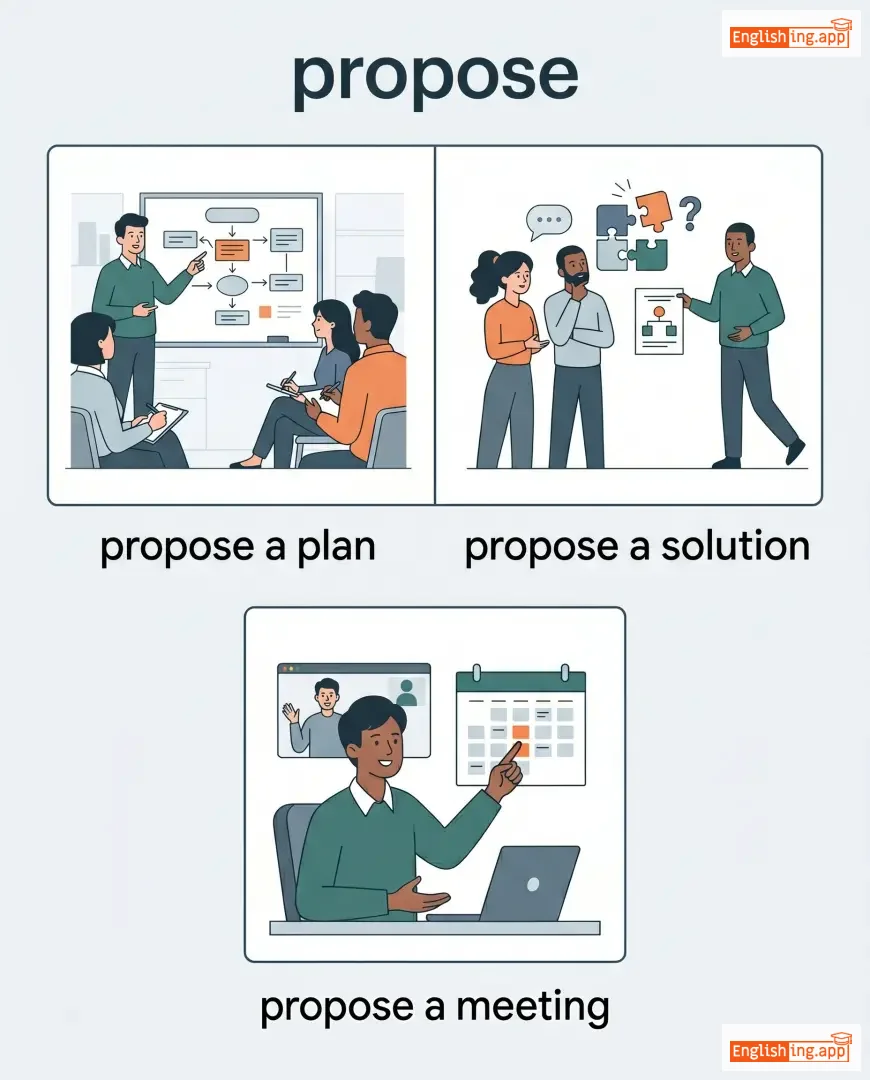
|
/prəˈpoʊz/
verb
(própóu)
••••••
|

|
提议
tíyì
••••••
|
proposed
própóud
••••••
|
proposed
própóud
••••••
|
proposes
própóuses
••••••
|
proposing
própóuzing
••••••
|
to suggest an idea or plan for consideration; to ask someone to marry you
••••••
|
I propose we take a short break.
我提议我们休息一下。
••••••
|
我提议我们休息一下。
wǒ tíyì wǒmen xiūxi yīxià
••••••
|
- •••••• | - •••••• | - •••••• |
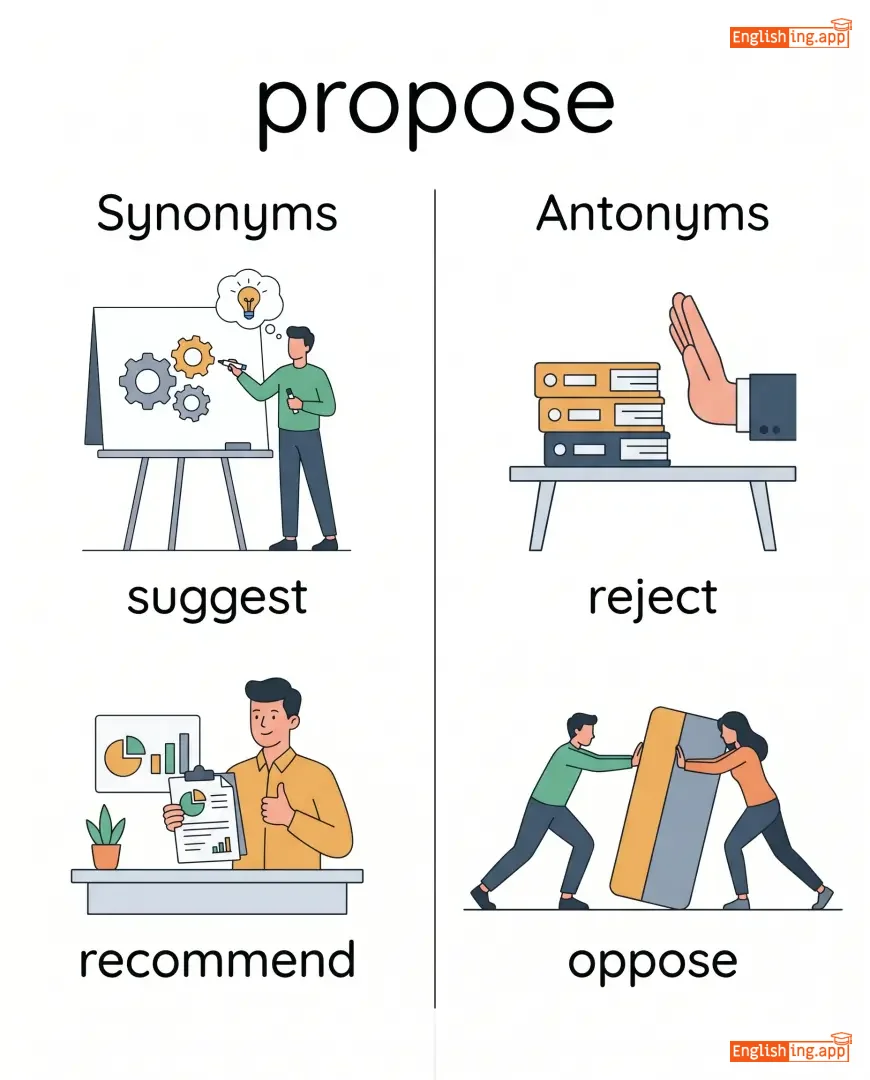
suggest, recommend, offer, present
••••••
|
withdraw, reject, oppose
••••••
|
propose idea, propose solution, propose marriage, propose plan, propose change
••••••
|
提议就是求婚, 提议爱, 不要错过。
••••••
|
|
🍖
••••••
|
/ˈproʊtiːn/
noun
••••••
|
- •••••• | - •••••• | - •••••• | - •••••• | - •••••• | - •••••• |
a molecule composed of amino acids essential for bodily functions
••••••
|
Proteins are essential for building and repairing tissues in the body. |
- •••••• | - •••••• | - •••••• | - •••••• |
amino acids, peptides, enzymes, nutrients
••••••
|
carbohydrates, fats
••••••
|
protein synthesis, high-protein foods, protein shake
••••••
|
No •••••• |
|
✊
••••••
|
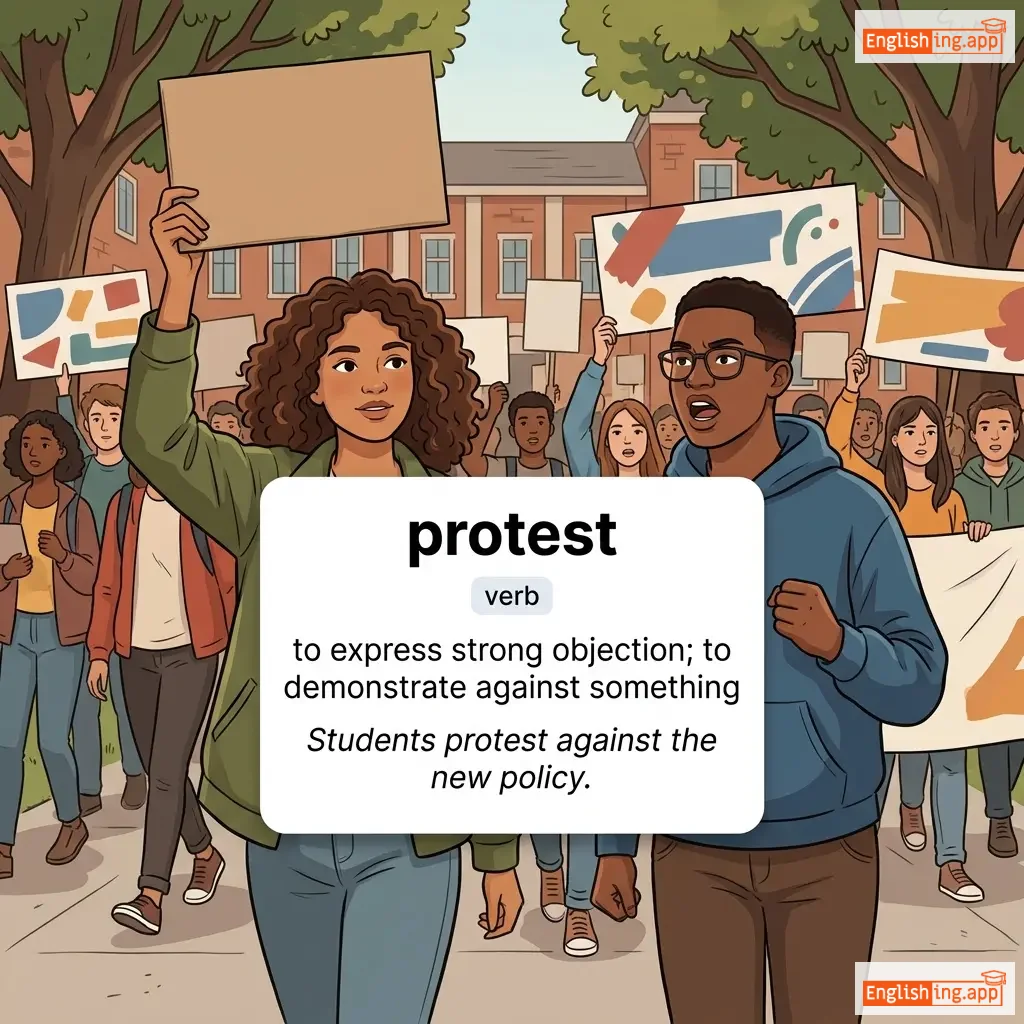
/ˈproʊtest/
verb
(pròutèst)
••••••
|
|
抗议
kàngyì
••••••
|
protested
yìzhì
••••••
|
protested
yìzhì
••••••
|
protests
tóuzhī
••••••
|
protesting
jìzhì
••••••
|
to express strong objection; to demonstrate against something
••••••
|
Students protest against the new policy.
学生们抗议新的政策。
••••••
|
学生们抗议新的政策。
Xuéshēng men kàngyì xīn de zhèngcè.
••••••
|
- •••••• | - •••••• | - •••••• |
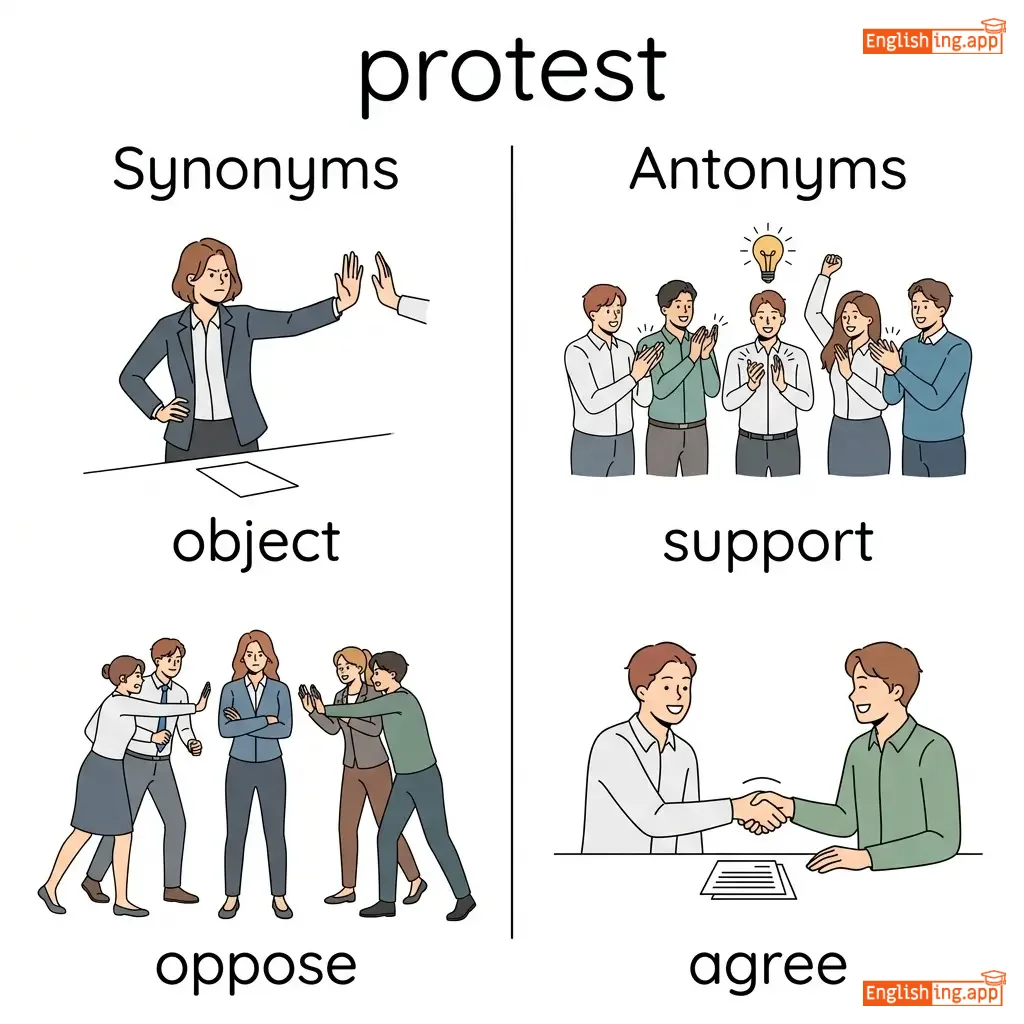
object, oppose, demonstrate, complain
••••••
|
support, agree, accept, approve
••••••
|
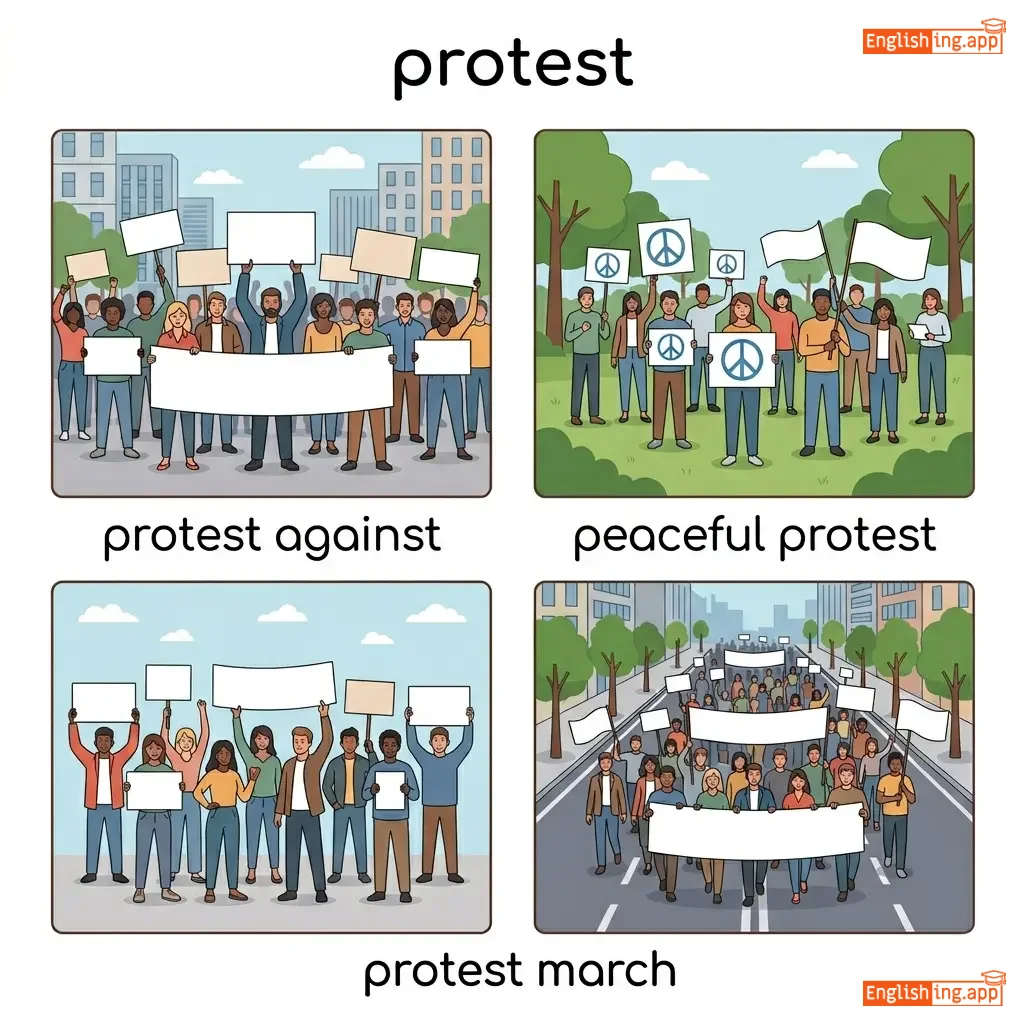
protest against, peaceful protest, protest march, strongly protest
••••••
|
抗议 = 站起来反对 (抗议政策,就像站起来反对不公)
••••••
|

