The Professor Who Discovered Ancient Fossils
阿里教授是一名地质学家,他将学生 enrolled 参加野外研究。他的激情是寻找 化石,并且他相信孟加拉国有古代的宝藏。有一天,从一个 nearby 村庄,他听到关于奇怪岩石的传闻。Namely,一些农民发现了不寻常的岩层。阿里决定 myself 调查。虽然他的旅程充满挑战,但他 hardly 认为这会改变他的一生。到达现场时,他看到了一 number 岩石,这些岩石已有 nearly 百万年历史。他的研究 permit 的有效期即将 expire,但他坚持不懈。这些岩石的 length 非常令人印象深刻,且其图案呈 linear。他 gently 开始挖掘,因为 object 很脆弱。他的心跳 moving 地加快,充满了兴奋。Mostly,他只会找到普通的石块,但有一天发生了重大发现。这块古老的 fossil 是一只史前生物的化石。在 motion 中,他小心地清理了整个区域。新闻传播到了整个 nation,阿里成名了。当地的 native 人们为这一发现感到骄傲,认为这种发现发生在他们的地区。大学希望提供 excess 资金进行更多研究。阿里证明了耐心和奉献可以改变一切。
|
表情符号
|
单词 | Images | 翻译 | 过去时 | 过去分词 | 第三人称单数 | 动名词 | 含义 | 例句 | 例句翻译 | 示例表达 | 示例表达含义 | 示例表达翻译 | 同义词 | 反义词 | 搭配词 | 助记符 |
|---|---|---|---|---|---|---|---|---|---|---|---|---|---|---|---|---|---|
|
🧾
••••••
|
/ɪnˈroʊl/
verb
(恩罗尔)
••••••
|
- •••••• |
注册
zhuce
••••••
|
enrolled
恩罗尔德
••••••
|
enrolled
恩罗尔德
••••••
|
enrolls
恩罗尔斯
••••••
|
enrolling
恩罗林
••••••
|
to officially join or register in a school, course, or organization
••••••
|
He decided to enroll in a computer programming course.
他决定报名参加计算机编程课程。
••••••
|
他决定报名参加计算机编程课程。
Ta jueding baoming canjia jisuanji biancheng kecheng.
••••••
|
enroll in
报名参加
••••••
|
to sign up or register for something
••••••
|
报名参加
baoming canjia
••••••
|
register, join, sign up, enlist, admit
••••••
|
withdraw, leave, exclude
••••••
|
enroll in school, enroll students, enroll participants, enroll for a course
••••••
|
Enroll 就是报名参加,像是写下你的名字。
••••••
|
|
➕
••••••
|
/ɪkˈsɛs/
noun
(ik-ses)
••••••
|
- •••••• |
过量
guo liang
••••••
|
- •••••• | - •••••• | - •••••• | - •••••• |
An amount more than necessary, permitted, or desirable.
••••••
|
Too much sugar can lead to excess weight gain. |
过多的糖分可能会导致超重。
Guo duo de tang fen ke neng hui dao zhi chao zhong.
••••••
|
in excess of |
more than a particular amount
••••••
|
超过
chao guo
••••••
|
surplus, overflow, overabundance, superfluity
••••••
|
shortage, lack, insufficiency
••••••
|
excess weight, excess baggage, excess demand, in excess of
••••••
|
Excess = 过量的糖分,导致健康问题!
••••••
|
|
⏳
••••••
|
/ɪkˈspaɪər/
verb
(ik-sī-pái-ěr)
••••••
|
- •••••• |
到期
dàoqī
••••••
|
expired
ik-sī-pái-érd
••••••
|
expired
ik-sī-pái-érd
••••••
|
expires
ik-sī-pái-érs
••••••
|
expiring
ik-sī-pái-ér-ing
••••••
|
to come to an end, especially a period of validity or life
••••••
|
My passport will expire next month.
我的护照将在下个月到期。
••••••
|
我的护照将在下个月到期。
Wǒ de hùzhào jiāng zài xià gè yuè dàoqī.
••••••
|
expire soon
即将到期
••••••
|
to end or become invalid in the near future
••••••
|
即将到期
jíjiāng dàoqī
••••••
|
end, terminate, lapse, cease, conclude
••••••
|
continue, persist, last
••••••
|
passport expire, contract expire, lease expire, expire date
••••••
|
Expire 就是到期的意思,像护照到期了。
••••••
|
|
🦖
••••••
|
/ˈfɒsɪl/
noun
(化石)
••••••
|
- •••••• |
化石
huàshí
••••••
|
- •••••• | - •••••• | - •••••• | - •••••• |
the remains or impression of a prehistoric plant or animal embedded in rock
••••••
|
The fossil of a dinosaur was discovered in the mountains. |
在山中发现了一只恐龙化石。
Zài shān zhōng fāxiànle yī zhī kǒnglóng huàshí.
••••••
|
- •••••• | - •••••• | - •••••• |
remains, artifact, relic
••••••
|
modern, new
••••••
|
dinosaur fossil, ancient fossil, fossil record
••••••
|
化石是像古代生物的印记,锁定在岩石中。
••••••
|
|
🌸
••••••
|
/ˈdʒɛntli/
adverb
(jiàn tì)
••••••
|
- •••••• |
温柔地
wēnróu de
••••••
|
- •••••• | - •••••• | - •••••• | - •••••• |
in a kind, careful, or soft way
••••••
|
She gently placed the baby in the crib. |
她温柔地把宝宝放在摇篮里。
Tā wēnróu de bǎ bǎobǎo fàng zài yáolán lǐ.
••••••
|
gently does it |
a reminder to do something slowly and carefully
••••••
|
温柔地做
wēnróu de zuò
••••••
|
softly, tenderly, lightly, calmly
••••••
|
harshly, roughly
••••••
|
speak gently, touch gently, gently smiling, gently place
••••••
|
温柔=温暖的 gentle, 慢慢来!
••••••
|
|
😅
••••••
|
/ˈhɑːd.li/
adverb
(hādílì)
••••••
|
- •••••• |
几乎不; 几乎没有; barely
jīhū bù; jīhū méiyǒu; barely
••••••
|
- •••••• | - •••••• | - •••••• | - •••••• |
scarcely; barely; almost not at all
••••••
|
I could hardly believe what I was seeing. |
我几乎不敢相信我所看到的。
Wǒ jīhū bùgǎn xiāngxìn wǒ suǒ kàn dào de.
••••••
|
- •••••• | - •••••• | - •••••• |
barely, scarcely, rarely, seldom
••••••
|
easily, completely, fully, certainly
••••••
|
hardly ever, hardly any, hardly believe, hardly possible
••••••
|
Imagine seeing something so surprising, you can hardly believe it!
••••••
|
|
📏
••••••
|
/lɛŋkθ/
noun
(lɛŋkθ)
••••••
|
- •••••• |
长度
changdu
••••••
|
- •••••• | - •••••• | - •••••• | - •••••• |
The measurement or extent of something from end to end.
••••••
|
The length of the bridge is two kilometers. |
桥的长度是两公里。
Qiao de changdu shi liang gongli.
••••••
|
at length |
in detail; thoroughly
••••••
|
详细地
xiangxi de
••••••
|
extent, distance, measurement, span, stretch
••••••
|
shortness, brevity
••••••
|
length of time, full length, hair length, considerable length
••••••
|
Length意味着长度 — 用长度来衡量某物的长度。
••••••
|
|
📏
••••••
|
/ˈlɪniər/
adjective
(línèir)
••••••
|
- •••••• |
线性
xianxing
••••••
|
- •••••• | - •••••• | - •••••• | - •••••• |
Arranged in or extending along a straight line.
••••••
|
The artist used linear perspective in his drawings. |
艺术家在他的画作中使用了线性透视。
Yìshùjiā zài tā de huàzuò zhōng shǐyòngle xiànxìng tòushì.
••••••
|
linear thinking |
A step-by-step way of reasoning in a straight sequence.
••••••
|
线性思维
xiànxìng sīwéi
••••••
|
straight, direct, sequential, aligned
••••••
|
circular, random, nonlinear
••••••
|
linear perspective, linear function, linear equation
••••••
|
线性 = 线 → 如一条直线 📏
••••••
|
|
📊
••••••
|
/ˈmoʊstli/
adverb
(莫斯特利)
••••••
|
- •••••• |
主要地; 大多数时候; 通常
zhǔ yào de; dà duō shù shí hòu; tōng cháng
••••••
|
- •••••• | - •••••• | - •••••• | - •••••• |
mainly; for the most part; usually
••••••
|
The students are mostly from local schools. |
学生主要来自本地学校。
xué shēng zhǔ yào lái zì běn dì xué xiào.
••••••
|
- •••••• | - •••••• | - •••••• |
mainly, primarily, chiefly, largely, generally
••••••
|
rarely, seldom, minority
••••••
|
mostly used, mostly made, mostly because, mostly from
••••••
|
In Chinese, think of '主要地' to recall 'mostly'.
••••••
|
|
🏃
••••••
|
/ˈmoʊʃən/
noun
(móushén)
••••••
|
- •••••• |
运动
yùndòng
••••••
|
- •••••• | - •••••• | - •••••• | - •••••• |
the act or process of moving; a change of place or position
••••••
|
The motion of the car made her sleepy.
汽车的运动让她昏昏欲睡。
••••••
|
汽车的运动让她昏昏欲睡。
Qìchē de yùndòng ràng tā hūnhūn yù shuì.
••••••
|
set in motion
使动起来
••••••
|
to start something happening
••••••
|
使动起来
shǐ dòng qǐlái
••••••
|
movement, gesture, action, shift, change
••••••
|
stillness, rest, immobility
••••••
|
in motion, slow motion, motion picture, set in motion
••••••
|
运动即移动,如同‘火车在运动’
••••••
|
|
😭
••••••
|
/ˈmuːvɪŋ/
adjective
(mù bǐng)
••••••
|
- •••••• |
感人
gan ren
••••••
|
- •••••• | - •••••• | - •••••• | - •••••• |
causing strong feelings, especially of sympathy or sadness
••••••
|
Her speech was so moving that everyone cried. |
她的演讲如此感人,以至于每个人都哭了。
Ta de yanjiang ruci ganren, yi zhi yu meige ren dou ku le.
••••••
|
- •••••• | - •••••• | - •••••• |
touching, emotional, poignant, stirring
••••••
|
unemotional, indifferent, cold
••••••
|
moving speech, moving story, moving moment
••••••
|
感人之事,触动心灵,令人流泪。
••••••
|
|
🙋♂️
••••••
|
/maɪˈsɛlf/
pronoun
(máiˈsɛlf)
••••••
|
- •••••• |
我自己
wǒ zìjǐ
••••••
|
- •••••• | - •••••• | - •••••• | - •••••• |
used for emphasis or to refer to oneself
••••••
|
I will do it myself.
我会自己做。
••••••
|
我会自己做。
Wǒ huì zìjǐ zuò.
••••••
|
- •••••• | - •••••• | - •••••• |
me, personally
••••••
|
someone else
••••••
|
do it myself, I taught myself, look after myself
••••••
|
I, MYSELF and I - 我自己做
••••••
|
|
👉
••••••
|
/ˈneɪmli/
adverb
(nèi mǐ lì)
••••••
|
- •••••• |
即; 特别是;
ji; tebie shi
••••••
|
- •••••• | - •••••• | - •••••• | - •••••• |
that is to say; specifically; to be precise
••••••
|
Three cities, namely Paris, London, and Rome, were visited.
三个城市,即巴黎、伦敦和罗马,被参观。
••••••
|
三个城市,即巴黎、伦敦和罗马,被参观。
San ge chengshi, ji Bali, Lundun he Luoma, bei canguan.
••••••
|
- •••••• | - •••••• | - •••••• |
specifically, particularly, that is, to wit, viz
••••••
|
generally, broadly, vaguely
••••••
|
namely that, namely the, namely these, namely those
••••••
|
In Chinese, '即' (ji) is like saying 'namely' to specify details.
••••••
|
|
🌍
••••••
|
/ˈneɪʃən/
noun
(内申)
••••••
|
- •••••• |
国家
guójiā
••••••
|
- •••••• | - •••••• | - •••••• | - •••••• |
a large group of people united by common descent, history, culture, or language
••••••
|
The nation celebrated its independence day with pride. |
国家以自豪的心情庆祝独立日。
Guójiā yǐ zìháo de xīnqíng qìngzhù dúlì rì.
••••••
|
- •••••• | - •••••• | - •••••• |
country, state, land, realm
••••••
|
individual, province, territory
••••••
|
nation state, powerful nation, united nation, proud nation
••••••
|
Nation = Guójiā - Yī ge dà jiātíng, dōu yīqǐ!
••••••
|
|
🌍
••••••
|
/ˈneɪtɪv/
adjective
(内地的)
••••••
|
- •••••• |
本地的
běndì de
••••••
|
- •••••• | - •••••• | - •••••• | - •••••• |
Belonging to a person by birth; originating in a particular place.
••••••
|
He is a native speaker of Bengali.
他是孟加拉语的母语者。
••••••
|
他是孟加拉语的母语者。
Tā shì mèngjiālā yǔ de mǔyǔ zhě.
••••••
|
native land
故乡
••••••
|
the country where a person was born
••••••
|
故乡
gùxiāng
••••••
|
indigenous, local, original, natural
••••••
|
foreign, alien
••••••
|
native speaker, native language, native culture, native people
••••••
|
本地的 = 故乡 – 母语者 = 讲自己故乡语言的人
••••••
|
|
📍
••••••
|
/ˈnɪəˌbaɪ/
adjective
(nɪəˌbaɪ)
••••••
|
- •••••• |
附近
fujin
••••••
|
- •••••• | - •••••• | - •••••• | - •••••• |
close to a particular place or person
••••••
|
The nearest gas station is nearby.
最近的加油站就在附近。
••••••
|
最近的加油站就在附近。
Zui jin de jia you zhan jiu zai fujin.
••••••
|
- •••••• | - •••••• | - •••••• |
close, adjacent, near, neighboring
••••••
|
distant, far, remote
••••••
|
nearby area, nearby place, nearby town
••••••
|
附近 (fujin) - 想到 'nearby' 在中文
••••••
|
|
🔄
••••••
|
/ˈnɪərli/
adverb
(nìrli)
••••••
|
- •••••• |
差不多; 几乎;
chà bù duō; jī hū;
••••••
|
- •••••• | - •••••• | - •••••• | - •••••• |
almost; not quite; very close to
••••••
|
I nearly missed the bus this morning.
我差点错过了今天早上的公交车。
••••••
|
我差点错过了今天早上的公交车。
wǒ chà bù duō cuò guò le jīntiān zǎo shàng de gōng jiāo chē
••••••
|
- •••••• | - •••••• | - •••••• |
almost, practically, virtually, approximately
••••••
|
completely, entirely, fully
••••••
|
nearly finished, nearly impossible, nearly ready
••••••
|
中文: 就像几乎错过公交车,差不多和nearly相似。
••••••
|
|
🔢
••••••
|
/ˈnʌmbər/
noun
(纳姆伯)
••••••
|
- •••••• |
号码
haoma
••••••
|
- •••••• | - •••••• | - •••••• | - •••••• |
a mathematical value used to count, measure, or label
••••••
|
She gave me her phone number.
她给了我她的电话号码。
••••••
|
她给了我她的电话号码。
Ta gei le wo ta de dianhua haoma.
••••••
|
- •••••• | - •••••• | - •••••• |
digit, figure, numeral
••••••
|
letter, word
••••••
|
phone number, lucky number, large number
••••••
|
Number is a sequence – Imagine numbering all the steps in your life!
••••••
|
|
📦
••••••
|
/ˈɒbdʒɪkt/
noun
(ɒbdʒɛkt)
••••••
|
- •••••• |
物体
wùtǐ
••••••
|
- •••••• | - •••••• | - •••••• | - •••••• |
a thing that can be seen and touched
••••••
|
The table is an object in the room.
桌子是房间里的一个物体。
••••••
|
桌子是房间里的一个物体。
Zhuōzi shì fángjiān lǐ de yī gè wùtǐ.
••••••
|
- •••••• | - •••••• | - •••••• |
item, thing, article, entity
••••••
|
subject, person
••••••
|
inanimate object, physical object, move object, object to
••••••
|
物体是你可以看到和触摸的东西。
••••••
|
|
✅
••••••
|
/pərˈmɪt/
verb
(许可)
••••••
|
|
允许
xǔkě
••••••
|
permitted
许可的
••••••
|
permitted
许可的
••••••
|
permits
许可
••••••
|
permitting
许可
••••••
|
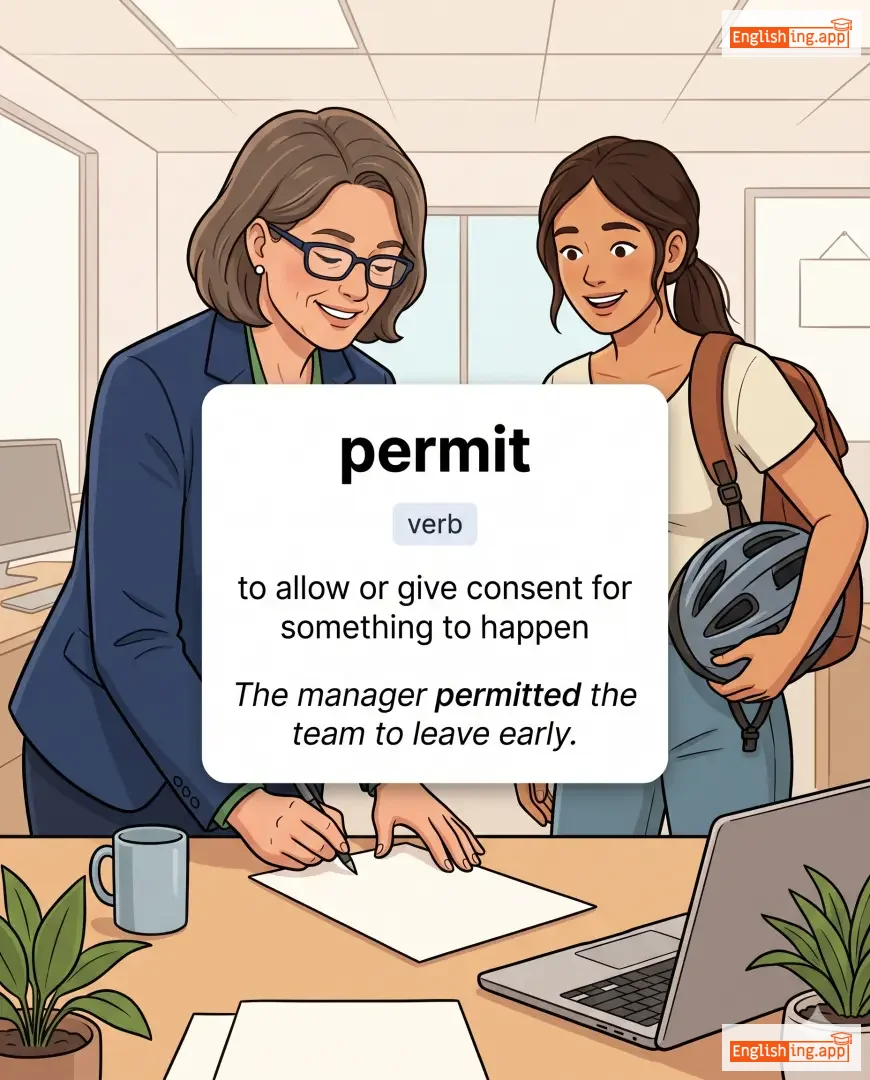
to allow or give permission; to make possible
••••••
|
The teacher permits students to use calculators during the exam.
老师允许学生在考试期间使用计算器。
••••••
|
老师允许学生在考试期间使用计算器。
Lǎoshī yǔnxǔ xuéshēng zài kǎoshì qījiān shǐyòng jìsuànqì.
••••••
|
- •••••• | - •••••• | - •••••• |
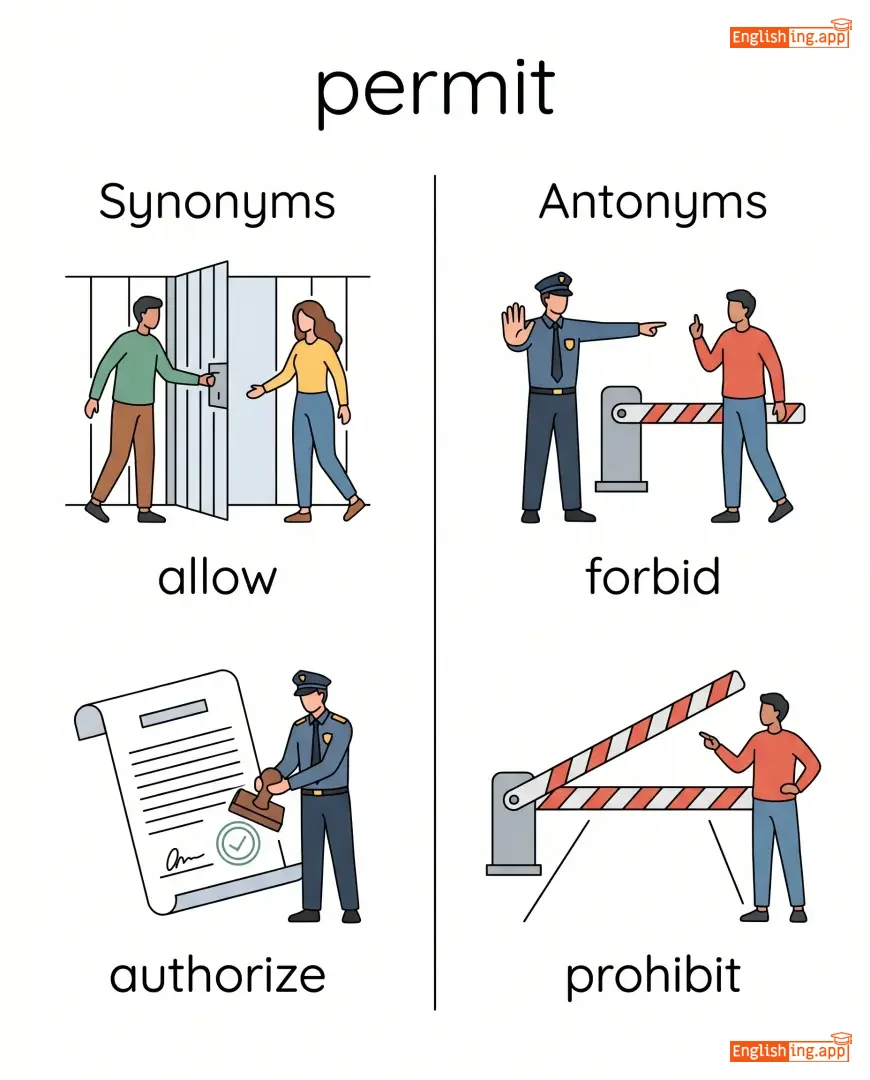
allow, authorize, enable, consent
••••••
|
forbid, prohibit, deny, ban
••••••
|
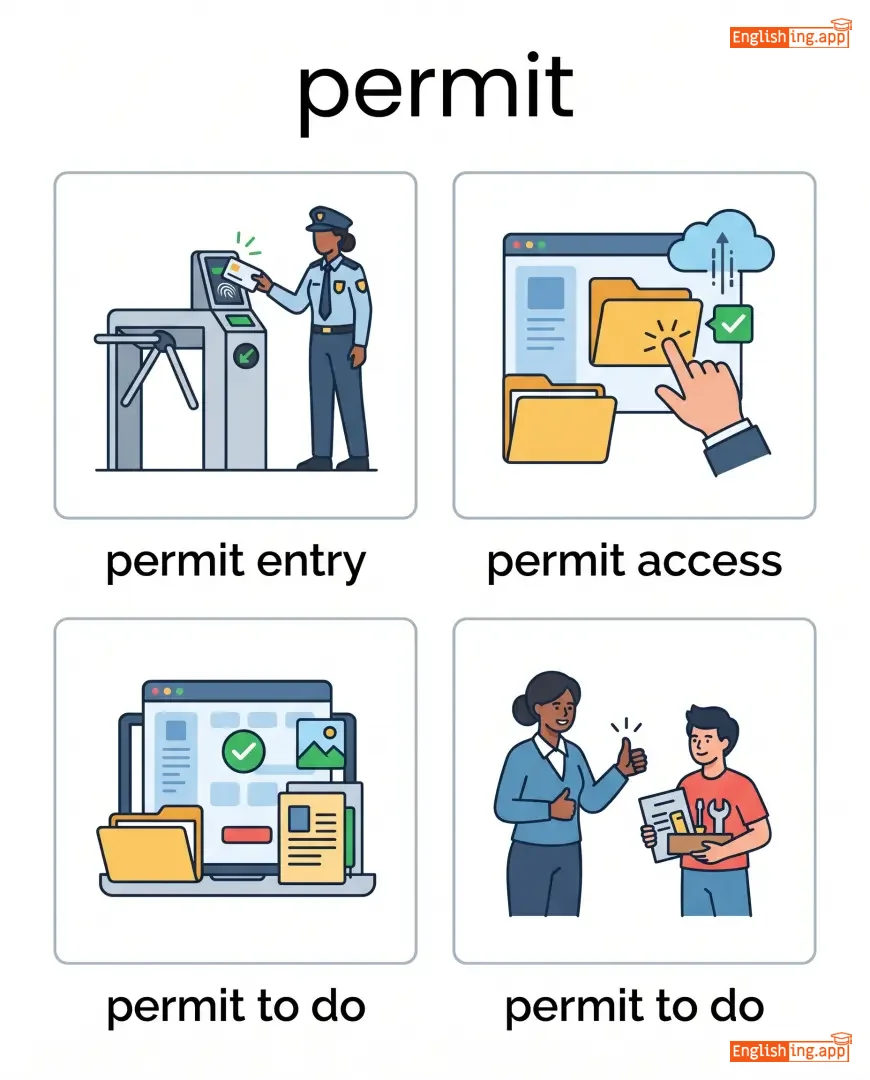
permit access, permit entry, legally permit, rarely permit
••••••
|
与 '许可' 相关,给予他人做事的权限。
••••••
|

