Cyclone Coast Science Camp
在科克斯巴扎尔多风暴的海岸上,一支科学家团队建立了一个夜间 physics 营地。一位著名的达卡 scientist 带领着团队。他们的任务是建造一个风能 experiment,以帮助新的渔民。一辆移动 laboratory 卡车停在沙洲上。年轻的水手们拿着 equation 图表学习数学。阿尔斯兰用旧电池产生了第一个 spark,让大家惊讶。梅格拉擦亮每面 mirror,确保光线完美反射。苏米塔用小型 laser 刻出安装槽并装上传感器。阿拉法特使用沙滩自制的 vacuum 室进行实验。他们烘干海泡,展示 crystal 结构的形成。沙翁在板上记录当地天气 data。太阳能 panels 在无电的村庄升起。当强风到来时,风力涡轮机开始平稳 rotate。苏莱娅安装了防侵蚀的 mechanical 接头以确保安全。孩子们尝试背下气流 formula。渔民父母练习动手 labor 技能。法尔罕打开微控制器 module 并添加了新传感器。为了在暴风雨中保护孩子们,大家穿上了 protective 外套。加固的 tile 铺在竹架上形成测试舞台。最后,他们放飞无人机标记地图上的 cluster 点。
|
表情符号
|
单词 | Images | 翻译 | 过去时 | 过去分词 | 第三人称单数 | 动名词 | 含义 | 例句 | 例句翻译 | 示例表达 | 示例表达含义 | 示例表达翻译 | 同义词 | 反义词 | 搭配词 | 助记符 |
|---|---|---|---|---|---|---|---|---|---|---|---|---|---|---|---|---|---|
|
🍇
••••••
|
/ˈklʌstər/
noun
(klʌstər)
••••••
|
- •••••• |
串
chuàn
••••••
|
- •••••• | - •••••• | - •••••• | - •••••• |
a group of similar things or people positioned close together
••••••
|
The grapes grew in a tight cluster. |
葡萄在一个紧密的串中生长。
Pútáo zài yīgè jǐnmì de chuàn zhōng shēngzhǎng.
••••••
|
a cluster of stars |
a group of stars appearing close together in the sky
••••••
|
一串星星
yī chuàn xīngxīng
••••••
|
group, bunch, collection, set, gathering
••••••
|
individual, single
••••••
|
cluster of buildings, cluster of stars, cluster together, form a cluster
••••••
|
Cluster 意味着串 – 就像葡萄在一个串里生长。
••••••
|
|
💎
••••••
|
/ˈkrɪstəl/
noun
(kè lóng)
••••••
|
- •••••• |
水晶
shuǐjīng
••••••
|
- •••••• | - •••••• | - •••••• | - •••••• |
a clear, transparent mineral or glass that forms a solid structure with regular patterns
••••••
|
She wore a necklace made of sparkling crystal. |
她戴着一条闪闪发光的水晶项链。
Tā dàizhe yītiáo shǎnshǎn fāguāng de shuǐjīng xiàngliàn.
••••••
|
clear as crystal |
extremely clear and easy to understand
••••••
|
清澈如水晶
qīngchè rú shuǐjīng
••••••
|
glass, gem, quartz, diamond, prism
••••••
|
opaque, dull
••••••
|
crystal clear, crystal glass, crystal necklace, crystal water
••••••
|
Crystal clear意味着完全清晰——像水晶一样清晰!
••••••
|
|
📊
••••••
|
/ˈdeɪ.tə/ or /ˈdæt.ə/
noun
(数据)
••••••
|
- •••••• |
数据
shuju
••••••
|
- •••••• | - •••••• | - •••••• | - •••••• |
Facts, statistics, or information collected for reference or analysis.
••••••
|
The scientists analyzed the data to find patterns. |
科学家分析了数据以寻找模式。
Kēxuéjiā fēnxīle shùjù yǐ xúnzhǎo móshì.
••••••
|
data-driven |
based on analysis of information or evidence
••••••
|
数据驱动
shuju qudong
••••••
|
information, facts, statistics, figures
••••••
|
assumptions, guesses
••••••
|
collect data, analyze data, data set, process data
••••••
|
数据就像导航帮助我们找到信息。
••••••
|
|
🧮
••••••
|
/ɪˈkweɪʒən/
noun
(方程)
••••••
|
- •••••• |
方程
fangcheng
••••••
|
- •••••• | - •••••• | - •••••• | - •••••• |
a mathematical statement that shows the equality of two expressions
••••••
|
He solved the equation to find the value of x. |
他解出了方程,找到了x的值。
Ta jiechu le fangcheng, zhaodao le x de zhi.
••••••
|
balance the equation |
to make both sides of an equation or situation equal
••••••
|
平衡方程
pingheng fangcheng
••••••
|
formula, expression, equality, calculation
••••••
|
inequality, imbalance
••••••
|
solve an equation, linear equation, quadratic equation, mathematical equation
••••••
|
方程代表平衡,当两个表达式平等时,方程成立。
••••••
|
|
🧪
••••••
|
/ɪkˈsperɪmənt/
noun/verb
(kèxìng)
••••••
|
- •••••• |
实验
shíyàn
••••••
|
experimented
kèxìngdào
••••••
|
experimented
kèxìngdào
••••••
|
experiments
kèxìngs
••••••
|
experimenting
kèxìng
••••••
|
a test or trial carried out to discover something or prove an idea
••••••
|
The scientist conducted an experiment on plant growth.
Kēxuéjiā jìnxíngle yīgè guānyú zhíwù chéngzhǎng de kèxìng.
••••••
|
科学家进行了一个关于植物生长的实验。
Kēxuéjiā jìnxíngle yīgè guānyú zhíwù chéngzhǎng de shíyàn.
••••••
|
experiment with
kèxìng shì
••••••
|
to try something new to see what happens
••••••
|
与…实验
yǔ… shíyàn
••••••
|
test, trial, research, investigation, study
••••••
|
proof, certainty
••••••
|
conduct experiment, scientific experiment, lab experiment, experiment results
••••••
|
实验:做科学试验来学习 (shíyàn)
••••••
|
|
📐
••••••
|
/ˈfɔːrmjələ/
noun
(公式)
••••••
|
- •••••• |
公式
gongshi
••••••
|
- •••••• | - •••••• | - •••••• | - •••••• |
a fixed method for doing something; a mathematical or chemical rule expressed in symbols
••••••
|
The scientist discovered a new formula for the medicine. |
科学家发现了一种新的药物公式。
Ke xue jia fa xian le yi zhong xin de yao wu gong shi.
••••••
|
magic formula |
a simple solution that guarantees success
••••••
|
魔法公式
mo fa gong shi
••••••
|
equation, method, recipe, rule, pattern
••••••
|
disorder, randomness
••••••
|
mathematical formula, chemical formula, secret formula, formula milk
••••••
|
公式就是解决问题的方式,像数学里的公式一样。
••••••
|
|
👷
••••••
|
/ˈleɪ.bər/
noun/verb
(雷巴)
••••••
|
- •••••• |
劳动
laodong
••••••
|
labored
雷巴德
••••••
|
labored
雷巴德
••••••
|
labors
雷巴斯
••••••
|
laboring
雷巴林
••••••
|
work, especially hard physical work; to work hard
••••••
|
The workers labored in the hot sun all day.
工人在炎热的阳光下工作了一整天。
••••••
|
工人们整天在炎热的阳光下工作。
Gongren men zheng tian zai yannuo de yangguang xia gongzuo.
••••••
|
go into labor
进入分娩
••••••
|
the process of a woman giving birth
••••••
|
进入分娩
jinru fenmian
••••••
|
work, toil, effort, industry, employment
••••••
|
rest, leisure, ease
••••••
|
manual labor, hard labor, labor force, labor market
••••••
|
Labor 意味着 '劳动' — 劳动者工作很努力。
••••••
|
|
🔬
••••••
|
/ˈlæbrətɔːri/
noun
(实验室)
••••••
|
- •••••• |
实验室
shíyànshì
••••••
|
- •••••• | - •••••• | - •••••• | - •••••• |
A room or building equipped for scientific experiments, research, or teaching.
••••••
|
The students conducted the experiment in the chemistry laboratory. |
学生们在化学实验室进行了实验。
Xuéshēngmen zài huàxué shíyànshì jìnxíngle shíyàn.
••••••
|
- •••••• | - •••••• | - •••••• |
lab, research center, workshop, testing facility
••••••
|
field, nature
••••••
|
research laboratory, chemistry laboratory, medical laboratory, laboratory experiment
••••••
|
实验室是做实验和研究的地方。
••••••
|
|
🔦
••••••
|
/ˈleɪzər/
noun
(激光)
••••••
|
- •••••• |
激光
jiguang
••••••
|
- •••••• | - •••••• | - •••••• | - •••••• |
a device that emits a concentrated beam of light
••••••
|
The doctor used a laser to perform eye surgery. |
医生使用激光进行眼部手术。
Yīshēng shǐyòng jīguāng jìnxíng yǎnbù shǒushù.
••••••
|
laser focus |
extreme and unwavering concentration on a task
••••••
|
激光聚焦
jīguāng jùjiāo
••••••
|
beam, ray, light, emitter, photonic device
••••••
|
diffusion, scatter
••••••
|
laser beam, laser surgery, laser light, laser focus
••••••
|
激光意味着光束 — 激光聚焦,聚焦无限!
••••••
|
|
⚙️
••••••
|
/məˈkænɪkəl/
adjective
(ˈhæpinəs)
••••••
|
- •••••• |
幸福
xìngfú
••••••
|
- •••••• | - •••••• | - •••••• | - •••••• |
relating to machines or the way they work
••••••
|
She has a good understanding of mechanical systems. |
当她收到奖项时,她无法掩饰自己的幸福。
Dāng tā shōu dào jiǎngxiàng shí, tā wúfǎ yǎnshì zìjǐ de xìngfú.
••••••
|
mechanical mind |
a person who easily understands and works with machines
••••••
|
追求幸福
zhuīqiú xìngfú
••••••
|
automated, machine-driven, technical, robotic, motorized
••••••
|
manual, emotional, natural
••••••
|
mechanical system, mechanical engineer, mechanical failure, mechanical process
••••••
|
幸福就像阳光,照亮人生道路。
••••••
|
|
🪞
••••••
|
/ˈmɪrər/
noun
••••••
|
- •••••• | - •••••• | - •••••• | - •••••• |
mirrors
••••••
|
mirroring
••••••
|
A reflective surface, typically made of glass, that shows an image.
••••••
|
She looked at herself in the mirror before leaving. |
- •••••• |
hold a mirror up to |
to reflect or reveal the true nature of something
••••••
|
- •••••• |
looking glass, reflection, glass, speculum
••••••
|
reality, original
••••••
|
look in the mirror, rear-view mirror, bathroom mirror, mirror image
••••••
|
No •••••• |
|
📦
••••••
|
/ˈmɒdjuːl/
noun
(mó duī ěr)
••••••
|
- •••••• |
模块
mo dui er
••••••
|
- •••••• | - •••••• | - •••••• | - •••••• |
a self-contained unit of a course or system, typically part of a larger whole
••••••
|
The module on machine learning was difficult but informative. |
机器学习的模块很难,但很有信息量。
Ji qi xue xi de mo kuai hen nan, dan hen you xin xi liang.
••••••
|
- •••••• | - •••••• | - •••••• |
unit, section, component, element
••••••
|
whole, total, entirety
••••••
|
module system, learning module, modular design
••••••
|
模块就像是一个大系统中的小部分。
••••••
|
|
🪑
••••••
|
/ˈpænəl/
noun
(面板)
••••••
|
- •••••• |
面板, 法官小组
miànbǎn, fǎguān xiǎozǔ
••••••
|
- •••••• | - •••••• | - •••••• | - •••••• |
a group of people gathered to discuss, judge, or advise on a particular topic
••••••
|
The panel of judges announced the winner of the competition. |
法官小组宣布了比赛的获胜者。
Fǎguān xiǎozǔ xuānbùle bǐsài de huòshèng zhě.
••••••
|
- •••••• | - •••••• | - •••••• |
committee, board, jury, group, council
••••••
|
individual, person
••••••
|
panel discussion, expert panel, panel of judges, solar panel
••••••
|
Panel是‘面’的‘小组’,讨论重要事项。
••••••
|
|
⚛️
••••••
|
/ˈfɪzɪks/
noun
(物理)
••••••
|
- •••••• |
物理学
wùlǐxué
••••••
|
- •••••• | - •••••• | - •••••• | - •••••• |
the natural science that studies matter, energy, and the interactions between them
••••••
|
She decided to major in physics at the university. |
她决定在大学主修物理学。
Ta jueding zai daxue zhuxiu wulixue.
••••••
|
- •••••• | - •••••• | - •••••• |
science, mechanics, natural science, physical science
••••••
|
arts, literature
••••••
|
theoretical physics, experimental physics, quantum physics, physics department
••••••
|
学习物理会加深你对物理的理解。
••••••
|
|
🛡️
••••••
|
/prəˈtɛktɪv/
adjective
(保护的)
••••••
|
- •••••• |
保护性的
bǎohùxìng de
••••••
|
- •••••• | - •••••• | - •••••• | - •••••• |
giving or capable of giving protection; shielding from harm or danger
••••••
|
She wore a protective helmet while riding her bike. |
她骑自行车时戴着保护性头盔。
Tā qí zìxíngchē shí dàizhe bǎohùxìng tóukuī.
••••••
|
protective instinct |
a natural tendency to guard someone from harm
••••••
|
保护本能
bǎohù běnnéng
••••••
|
defensive, shielding, guarding, preventative, preventive
••••••
|
harmful, dangerous, unsafe
••••••
|
protective gear, protective clothing, protective measure, protective instinct
••••••
|
Protective意味着保护,就像保护本能总是在你爱的人面临危险时启动。
••••••
|
|
🔄
••••••
|
/ˈroʊ.teɪt/
verb
(旋转)
••••••
|
- •••••• |
旋转
xuánzhuǎn
••••••
|
rotated
旋转了
••••••
|
rotated
旋转了
••••••
|
rotates
旋转
••••••
|
rotating
旋转中
••••••
|
to turn around a central point or axis
••••••
|
The Earth rotates on its axis once every 24 hours.
地球每24小时围绕其轴线旋转一次。
••••••
|
地球每24小时围绕其轴线旋转一次。
Dìqiú měi 24 xiǎoshí wéirào qí zhóuxiàn xuánzhuǎn yīcì.
••••••
|
rotate the crops
轮作
••••••
|
to change the type of crop grown in a field to maintain soil fertility
••••••
|
轮作
lúnzuò
••••••
|
spin, turn, revolve, whirl, pivot
••••••
|
stand, remain, stay
••••••
|
rotate slowly, rotate daily, rotate crops, rotate position
••••••
|
车轮旋转 - 旋转意味着转动
••••••
|
|
👩🔬
••••••
|
/ˈsaɪəntɪst/
noun
(ˈsaɪəntɪst)
••••••
|
|
科学家
kexuejia
••••••
|
- •••••• | - •••••• | - •••••• | - •••••• |
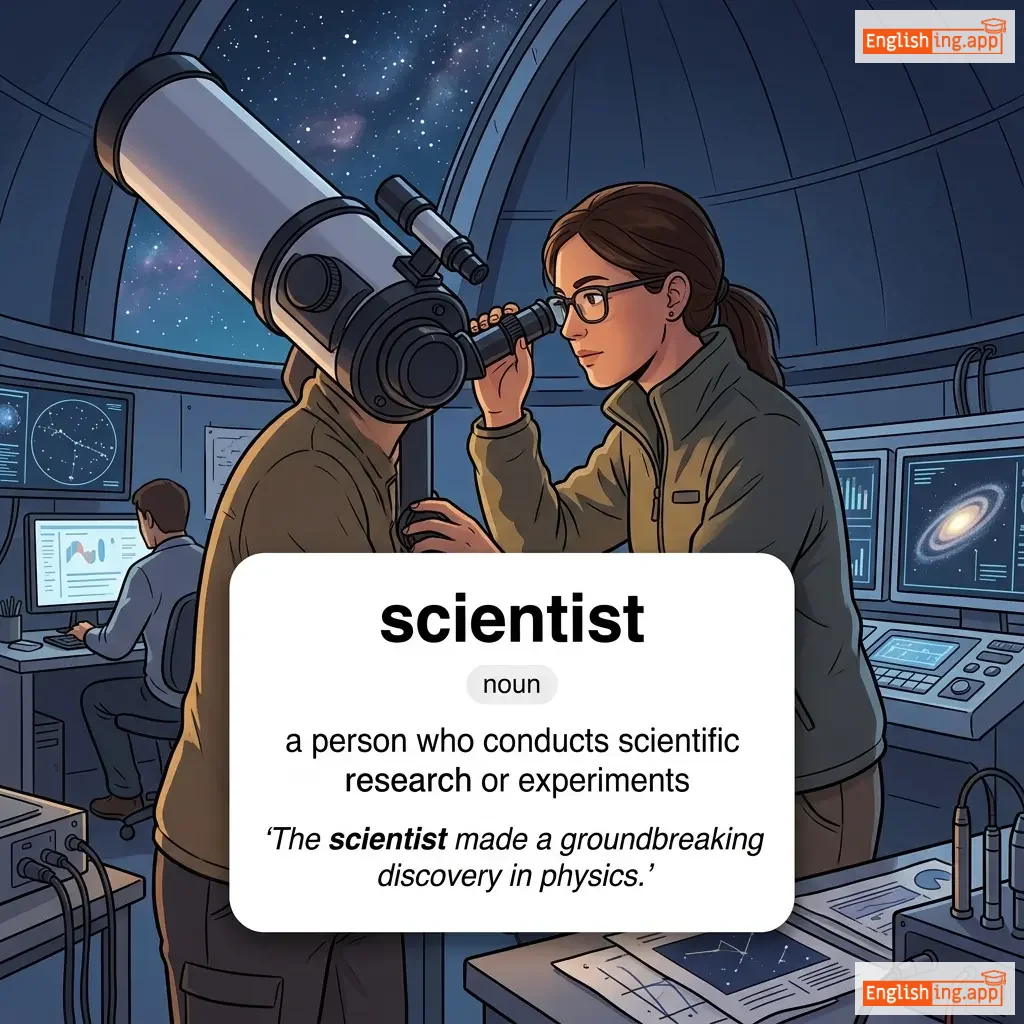
a person who conducts scientific research or experiments
••••••
|
The scientist made a groundbreaking discovery in physics. |
科学家在物理学方面做出了开创性的发现。
Kexuejia zai wulixue fangmian zuo chule kaichuangxing de faxian.
••••••
|
- •••••• | - •••••• | - •••••• |
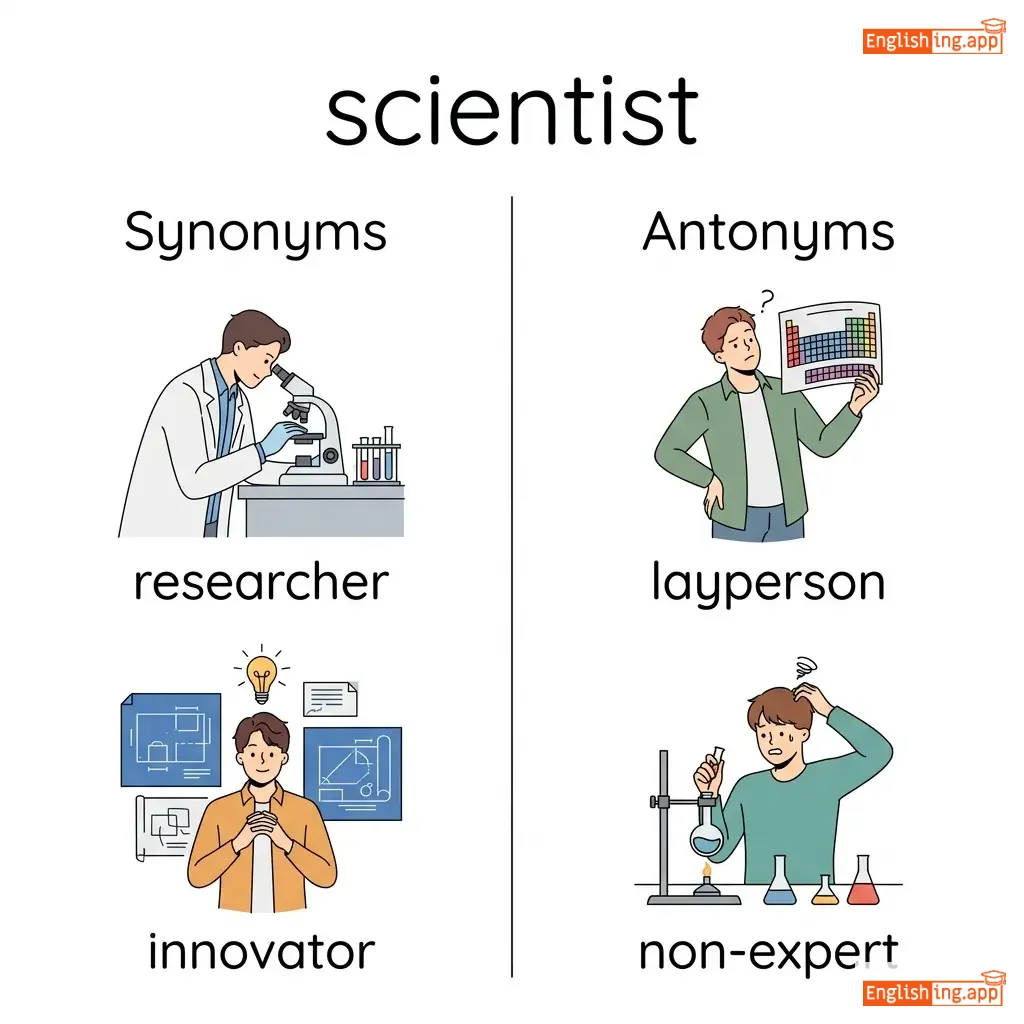
researcher, innovator, experimenter, investigator
••••••
|
layperson, non-expert
••••••
|
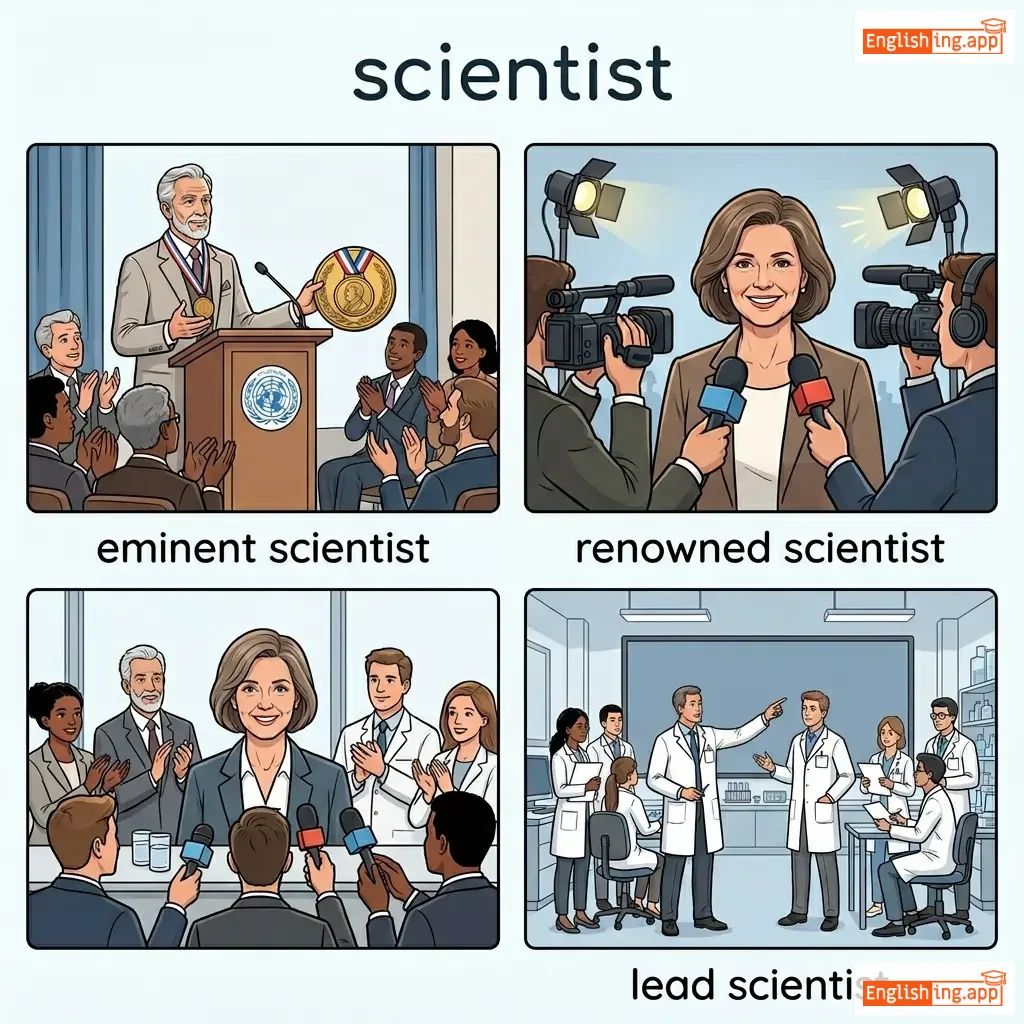
eminent scientist, renowned scientist, lead scientist
••••••
|
Scientists work to uncover the mysteries of the universe.
••••••
|
|
⚡
••••••
|
/spɑːrk/
verb
(spark)
••••••
|
- •••••• |
火花
huǒ huā
••••••
|
sparked
sparked
••••••
|
sparked
sparked
••••••
|
sparks
sparks
••••••
|
sparking
sparking
••••••
|
to cause the start of something, especially an emotion or activity
••••••
|
The news sparked a heated debate across the country.
这个消息在全国范围内引发了激烈的辩论。
••••••
|
这个消息在全国范围内引发了激烈的辩论。
zhège xiāoxī zài quánguó fànwéi nèi yǐn fà le jīliè de biànlùn.
••••••
|
spark an interest
激发兴趣
••••••
|
to cause someone to become interested in something
••••••
|
激发兴趣
jīfā xìngqù
••••••
|
ignite, trigger, provoke, stimulate, kindle
••••••
|
extinguish, suppress
••••••
|
spark interest, spark controversy, spark fire, spark protest
••••••
|
火花点燃火焰,就像 'spark' 一样开始一切!
••••••
|
|
🧱
••••••
|
/taɪl/
noun
(taɪl)
••••••
|
- •••••• |
瓷砖
cizhuan
••••••
|
- •••••• | - •••••• | - •••••• | - •••••• |
a flat piece of baked clay or other material used for covering roofs, floors, or walls
••••••
|
The kitchen floor is covered with ceramic tiles.
厨房的地板覆盖着陶瓷瓦片。
••••••
|
厨房的地板覆盖着陶瓷瓦片。
Chúfáng de dìbǎn fùgài zhe táocí wǎpiàn.
••••••
|
- •••••• | - •••••• | - •••••• |
slab, block, brick, panel, plate
••••••
|
gap, hole
••••••
|
floor tile, roof tile, ceramic tile, tile pattern
••••••
|
瓷砖就是 tile — 厨房的地板用瓷砖覆盖!
••••••
|
|
🌀
••••••
|
/ˈvæk.juːm/
noun
(wéikyūm)
••••••
|
- •••••• |
真空
zhenkong
••••••
|
- •••••• | - •••••• | - •••••• | - •••••• |
A space entirely devoid of matter; an absence of atmosphere or content.
••••••
|
The scientist created a vacuum chamber for the experiment. |
科学家为实验创建了一个真空室。
kexuejia wei shiyan chuangjian le yige zhenkong shi.
••••••
|
power vacuum |
A situation where power or leadership is absent.
••••••
|
权力真空
quanli zhenkong
••••••
|
emptiness, void, gap, nothingness
••••••
|
fullness, presence, abundance
••••••
|
vacuum cleaner, create a vacuum, power vacuum
••••••
|
真空意味着空的 – 就像吸尘器在房间里创造空白。
••••••
|

