Словари

Словарь английского языка | Значения слов, определения и примеры

noun C2
/ˈtʊrnɪkɪt/
torniquete (torniquete)

a device used to stop bleeding by compressing blood vessels

"The medic applied a tourniquet to stop the bleeding."
"El médico aplicó un torniquete para detener la hemorragia." (El medico aplicó un torniquete para detener la hemorragia.)
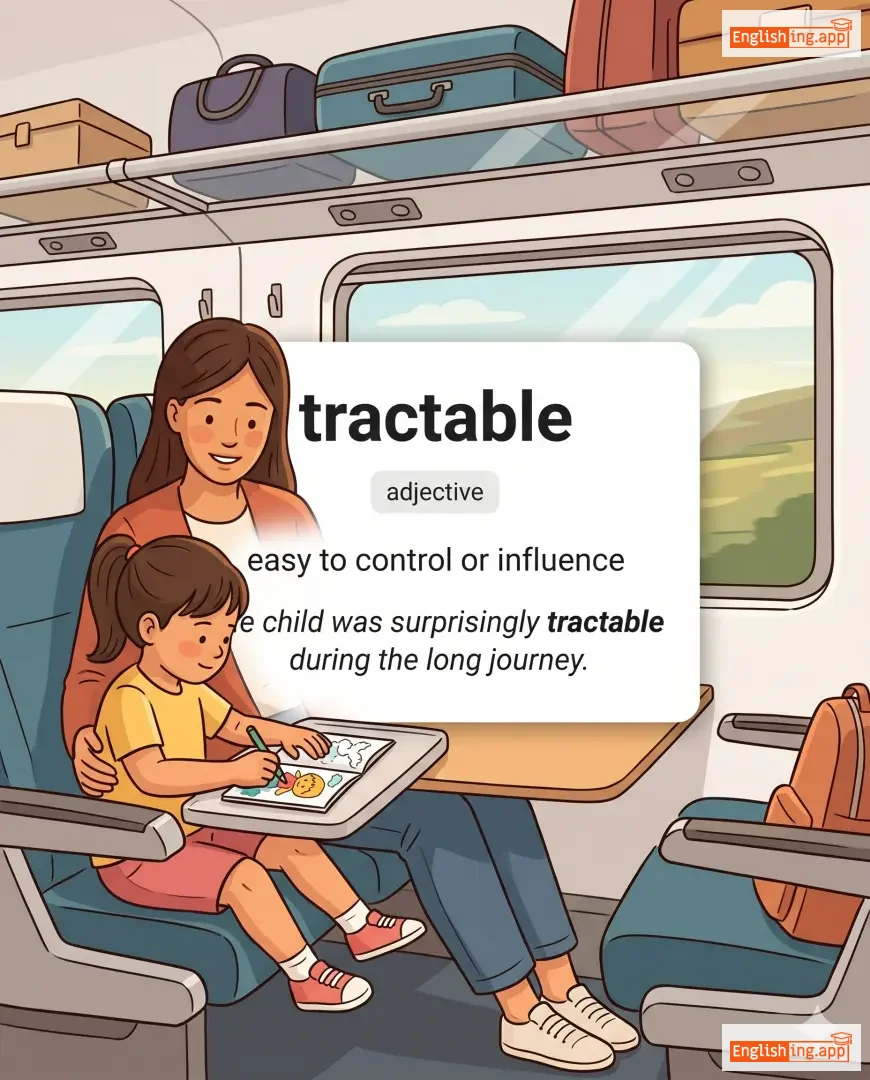
tractable definition card — visual illustration of the meaning
adjective C2
/ˈtræktəbəl/
fácil de controlar o influir (facil de controlar o influir)

easy to control or influence

"The child was surprisingly tractable during the long journey."

"El niño fue sorprendentemente fácil de controlar durante el largo viaje." (El niño fue sorprendentemente fácil de controlar durante el largo viaje.)
verb C2
/trəˈdjuːs/
difamar (difamar)

To speak badly of someone or tell lies to damage their reputation.

"He was furious when he found out that his rivals had traduced him."

"Estaba furioso cuando descubrió que sus rivales lo habían difamado." (Estaba furioso cuando descubrió que sus rivales lo habían difamado.)
noun, verb C2
/ˈtræməl/
restricción (restriccion)

A restriction or impediment to freedom of action; to restrict.

"The strict rules trammel the creativity of the students."

"Las estrictas reglas truncan la creatividad de los estudiantes." (Las estrictas reglas truncan la creatividad de los estudiantes.)
adjective C2
/trænzˈæl.paɪn/
más allá de los Alpes (mas alla de los Alpes)

situated beyond or across the Alps, especially from the viewpoint of Italy

"The Romans referred to France as Transalpine Gaul."

"Los romanos se referían a Francia como la Galia Transalpina." (Los romanos se referian a Francia como la Galia Transalpina.)
noun C2
/ˌtrænsfəˈriː/
cesionario (cesionario)

A person to whom a right, property, or responsibility is transferred.

"The transferee must sign the contract before taking ownership."

"El cesionario debe firmar el contrato antes de tomar posesión." (El cesionario debe firmar el contrato antes de tomar posesión.)
verb C2
/trænsˈfɪɡjʊər/
transformar (transformar)

To transform the outward appearance or form, often in a way that elevates or glorifies.

"The artist managed to transfigure simple clay into a beautiful sculpture."

"El artista logró transformar el barro simple en una hermosa escultura." (El artista logró transformar el barro simple en una hermosa escultura.)
verb C2
/trænsˈfjuːz/
transferir sangre u otro fluido a una vena o parte del cuerpo (transferir sangre u otro fluido a una vena o parte del cuerpo)

to transfer blood or another fluid into a vein or body part; to instill a quality or idea into someone or something

"The doctor had to transfuse blood into the patient after the surgery."

"El doctor tuvo que transfundir sangre al paciente después de la cirugía." (El doctor tuvo que transfundir sangre al paciente después de la cirugía.)
adjective C2
/trænsˈfjuːzəbl̩/
transfundible (transfundible)

capable of being transfused, especially referring to blood or fluids

"Only transfusible blood types are used in the hospital."
"Solo se utilizan los tipos de sangre transfusibles en el hospital." (Solo se utilizan los tipos de sangre transfusibles en el hospital.)
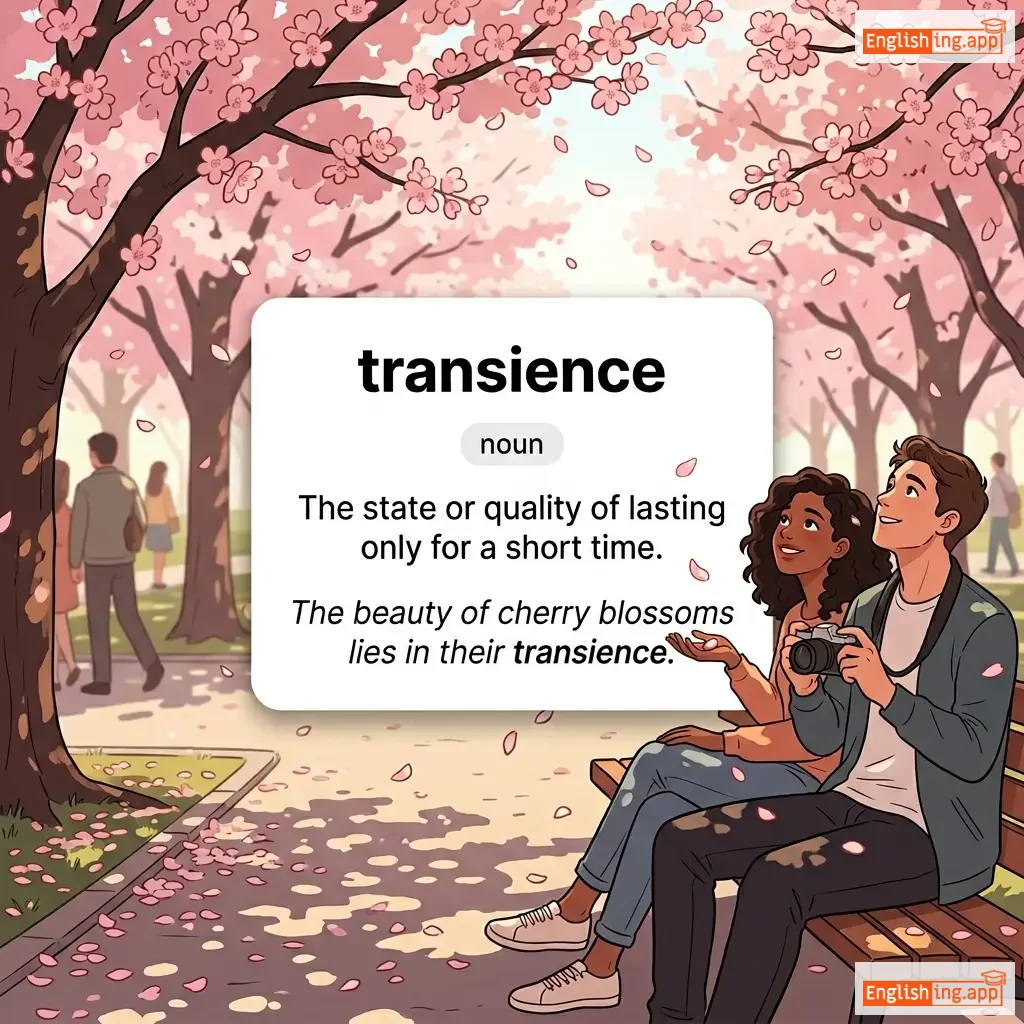
transience definition card — visual illustration of the meaning
noun C2
/ˈtrænziəns/
transitoriedad (transitoriedad)

The state or quality of lasting only for a short time.

"The beauty of cherry blossoms lies in their transience."

"La belleza de las flores de cerezo radica en su transitoriedad." (La belleza de las flores de cerezo radica en su transitoriedad.)
noun C2
/trænsˈluːsəns/
semi-transparencia (semi-transparencia)

the quality of allowing light to pass through but not detailed shapes

"The translucence of the curtains filled the room with soft light."

"La semi-transparencia de las cortinas llenó la habitación de luz suave." (La semi-transparencia de las cortinas llenó la habitación de luz suave.)
adjective C2
/trænzˈmɪsəbl/
transmisible (transmisible)

able to be passed or spread from one person or thing to another

"COVID-19 is a highly transmissible disease."

"COVID-19 es una enfermedad altamente transmisible." (COVID-19 es una enfermedad altamente transmisible.)
verb C2
/trænzˈmjuːt/
transmutar (transmutar)

to change in form, nature, or substance

"Alchemy aimed to transmute lead into gold."

"La alquimia intentaba transmutar el plomo en oro." (La alquimia intentaba transmutar el plomo en oro.)
verb C2
/trænˈspoʊz/
trasponer (trasponer)

to change the order or position of something

"The editor transposed two paragraphs in the article."

"El editor transpuso dos párrafos en el artículo." (El editor transpuso dos párrafos en el artículo.)
noun C2
/ˌtrænspəˈzɪʃən/
transposición (transposicion)

the act of changing the order or position of something

"The transposition of digits caused an error in the calculation."

"La transposición de dígitos causó un error en el cálculo." (La transposicion de digitos causo un error en el calculo.)
travail definition card — visual illustration of the meaning
noun C2
/trəˈveɪl/
trabajo arduo (trabajo arduo)

Painful or laborious effort; suffering or hardship.

"After years of travail, she finally completed her degree."

"Después de años de trabajo arduo, finalmente completó su título." (Despues de años de trabajo arduo, finalmente completo su titulo.)
adjective C2
/ˈtriːkli/
Excesivamente dulce o sentimental, como la melaza. (Excesivamente dulce o sentimental, como la melaza.)

Excessively sweet or sentimental, like treacle.

"The movie was too treacly for my taste."

"La película era demasiado empalagosa para mi gusto." (La película era demasiado empalagosa para mi gusto.)
adjective C2
/ˈtriːzənəbl/
traicionero (traicionero)

Relating to or involving the crime of treason.

"The general was accused of treasonable conduct."

"El general fue acusado de conducta traicionera." (El general fue acusado de conducta traicionera.)
adverb C2
/ˈtrɛbli/
triplemente (triplemente)

in a triple manner or to a threefold degree

"The sound was trebly distorted through the old speakers."
"El sonido estaba distorsionado en tres formas por los viejos altavoces" (el sonido estaba distorsionado en tres formas por los viejos altavoces)
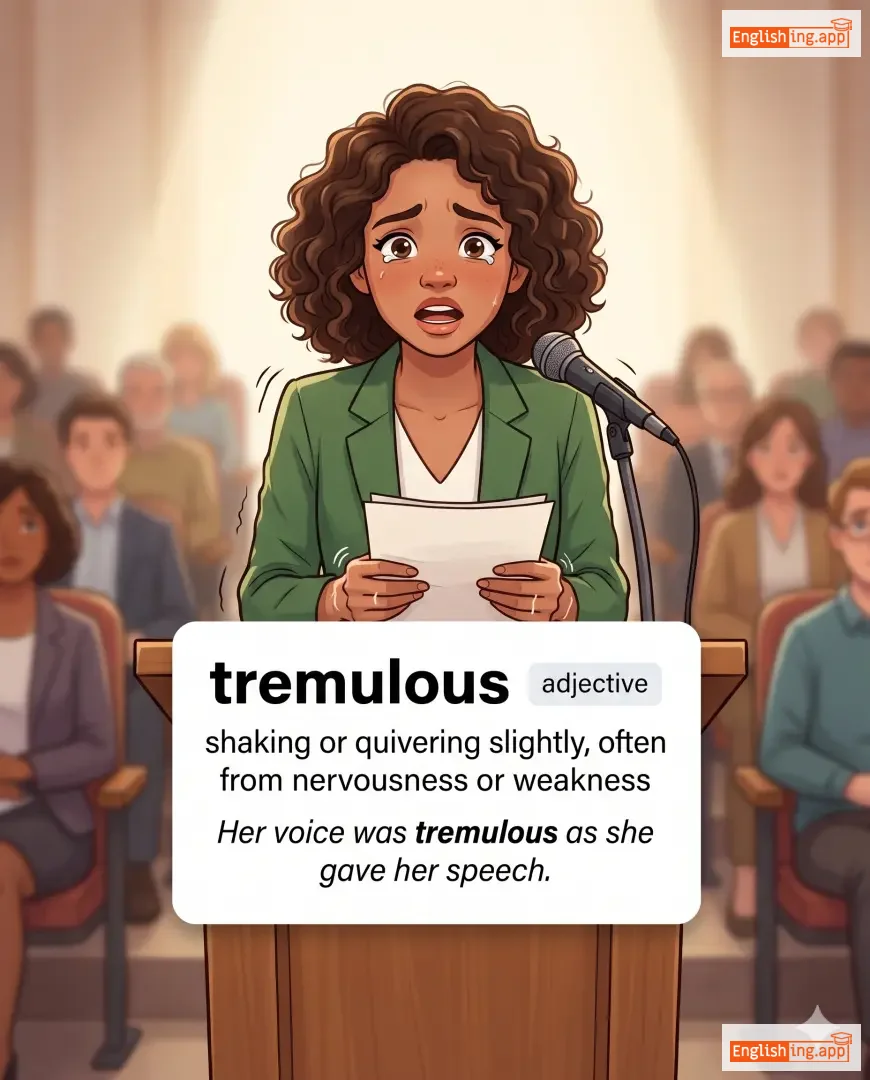
tremulous definition card — visual illustration of the meaning
adjective C2
/ˈtrɛmjələs/
tembloroso (tembloroso)

shaking or quivering slightly, often from nervousness or weakness

"Her voice was tremulous as she gave her speech."

"Su voz estaba temblorosa cuando dio su discurso." (Su voz estaba temblorosa cuando dio su discurso.)
adjective C2
/ˈtrɛntʃənt/
tajante (tajante)

expressed strongly, effectively, and clearly; sharp or cutting in style or expression

"Her trenchant criticism of the policy left no room for misunderstanding."

"Su crítica tajante a la política no dejó lugar a malentendidos." (Su crítica tajante a la política no dejó lugar a malentendidos.)
noun C2
/ˈtrɛntʃərmən/
tragón (tragon)

a person who eats in a hearty or robust manner; a big eater

"The trencherman devoured the feast with great enthusiasm."

"El tragón devoró el banquete con gran entusiasmo." (El tragon devoro el banquete con gran entusiasmo.)
noun C2
/ˈtrɛsəl/
andamio (andamio)

a frame or support consisting of a horizontal beam held up by two pairs of sloping legs, used especially for supporting a bridge or table

"The workers built a wooden trestle to support the temporary bridge."

"Los trabajadores construyeron un andamio de madera para soportar el puente temporal." (Los trabajadores construyeron un andamio de madera para soportar el puente temporal.)
noun C2
/ˈtrɪbjuːn/
tribuno (tribyoon)

a person or platform representing the people; historically, a Roman official elected to protect citizens' rights

"He was seen as a tribune of the common people."

"Se le veia como un tribuno del pueblo." (Se le veia como un tribuno del pueblo.)
noun/adjective C2
/ˈtraɪkʌlər/
bandera tricolor (bandera tricolor)

A flag with three colors; consisting of three colors.

"The French tricolor is one of the most famous national flags in the world."

"La bandera tricolor francesa es una de las banderas nacionales más famosas del mundo." (La bandera tricolor francesa es una de las banderas nacionales más famosas del mundo.)
noun C2
/ˈtraɪdənt/
tridente (tridente)

A three-pronged spear, often associated with Neptune or Poseidon.

"The statue of Poseidon holds a mighty trident."

"La estatua de Poseidón sostiene un poderoso tridente." (La estatua de Poseidón sostiene un poderoso tridente.)
adjective C2
/traɪˈɛniəl/
trienal (trienal)

Occurring once every three years.

"The art festival is a triennial event in the city."

"El festival de arte es un evento trienal en la ciudad." (El festival de arte es un evento trienal en la ciudad.)
noun C2
/ˈtrɪmnəs/
orden (orden)

the quality of being neat, orderly, or slender and well-proportioned

"Her room’s trimness reflected a habit of putting everything back in its place."

"La orden en su habitación reflejaba el hábito de poner todo en su lugar." (La orden en su habitación reflejaba el hábito de poner todo en su lugar.)
noun C2
/ˈtrɪp.lɪ.kət/
tres copias (tres copias)

A set of three identical copies of something.

"The documents were prepared in triplicate for official use."

"Los documentos fueron preparados en triplicado para uso oficial." (Los documentos fueron preparados en triplicado para uso oficial.)
noun C2
/trɪˈplɪs.ə.ti/
triplicidad (triplicidad)

The state of being triple or consisting of three parts.

"The design shows a triplicity of forms combined harmoniously."

"El diseño muestra una triplicidad de formas combinadas armoniosamente." (El diseño muestra una triplicidad de formas combinadas armoniosamente.)
verb C2
/traɪˈsɛkt/
dividir en tres partes (dividir en tres partes)

To divide into three parts.

"The teacher asked the students to trisect the line segment."

"El maestro pidió a los estudiantes que dividieran el segmento de línea en tres partes." (El maestro pidió a los estudiantes que dividieran el segmento de línea en tres partes.)
noun C2
/traɪˈʌmvɪər/
triunviro (triunviro)

One of a group of three men holding power in ancient Rome.

"Caesar was a triumvir in the first Roman triumvirate."

"César fue un triunviro en el primer triunvirato romano." (César fue un triunviro en el primer triunvirato romano.)
noun C2
/traɪˈʌmvɪrət/
triunvirato (triumvirato)

A political regime ruled or dominated by three powerful individuals.

"The Roman Republic was once governed by a triumvirate."

"La República Romana una vez fue gobernada por un triunvirato." (La Republica Romana una vez fue gobernada por un triunvirato.)
noun C2
/ˈtrɒɡlədaɪt/
troglodita (troglodita)

A person who lives in a cave or is considered old-fashioned and out of touch.

"Some called him a troglodyte for refusing to use modern technology."

"Algunos lo llamaron troglodita por negarse a usar tecnología moderna." (Algunos lo llamaron troglodita por negarse a usar tecnología moderna.)
noun C2
/troʊp/
tropo literario (tropo literario)

A common or overused theme, idea, or device in literature, film, or speech.

"The film avoided the usual superhero tropes."
"La película evitó los típicos tropos de superhéroes." (La película evitó los típicos tropos de superhéroes.)
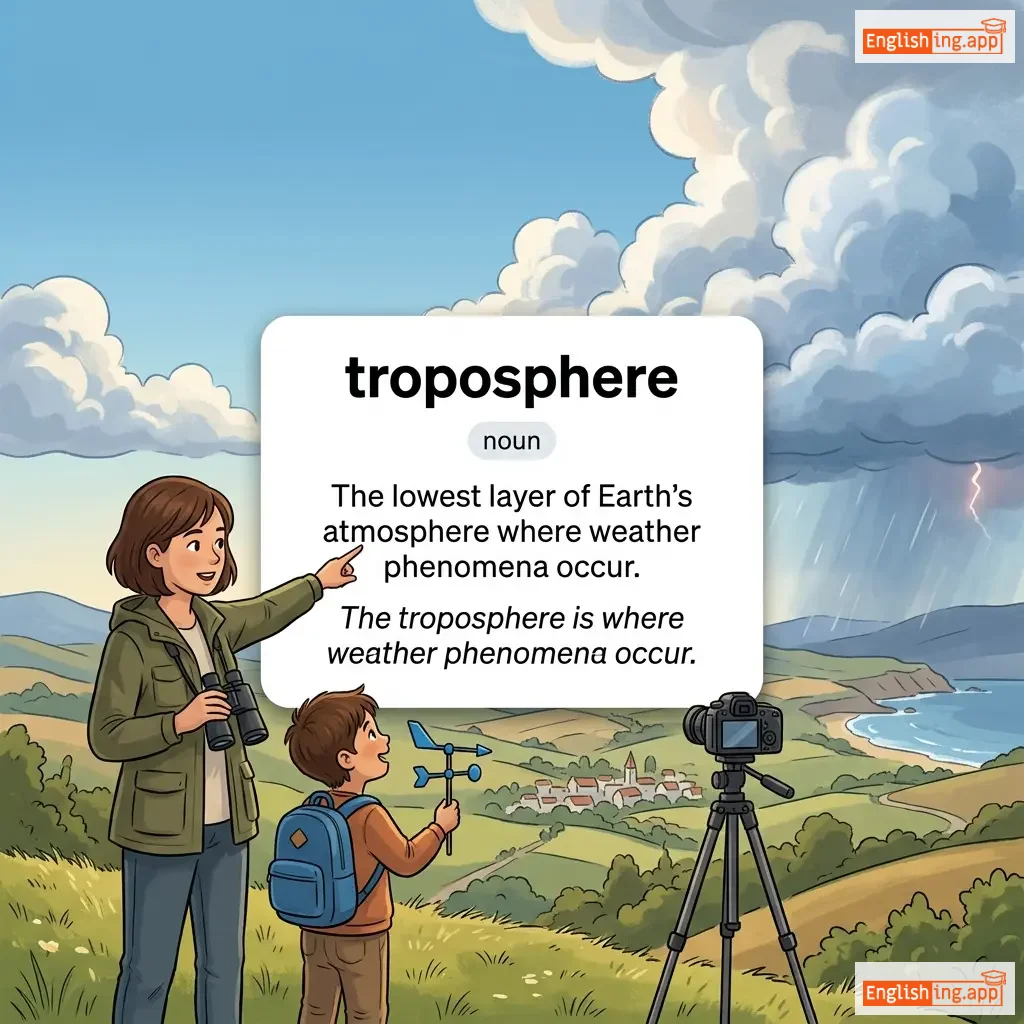
troposphere definition card — visual illustration of the meaning
noun C2
ট্রোপোস্ফিয়ার
troposfera (troposfera)

The lowest layer of Earth's atmosphere where weather phenomena occur.

"The troposphere is where weather phenomena occur."

"La troposfera es donde ocurren los fenómenos meteorológicos." (La troposfera es donde ocurren los fenómenos meteorológicos.)
🤵‍♀️

troth (tróz)

noun C2
/troʊθ/
promesa, fidelidad (promesa, fidelidad)

Faith or loyalty when pledged in a solemn agreement or vow, especially in marriage.

"He pledged his troth to her before the gathering."

"Él le prometió su troth antes de la reunión." (Él le prometió su troth antes de la reunión.)
verb C2
/ˈtrʌk.əl/
humillarse (humillarse)

To submit or yield obsequiously to someone in power.

"He refused to truckle to the demands of the corrupt officials."
"Él se negó a humillarse ante las demandas de los funcionarios corruptos." (Él se negó a humillarse ante las demandas de los funcionarios corruptos.)
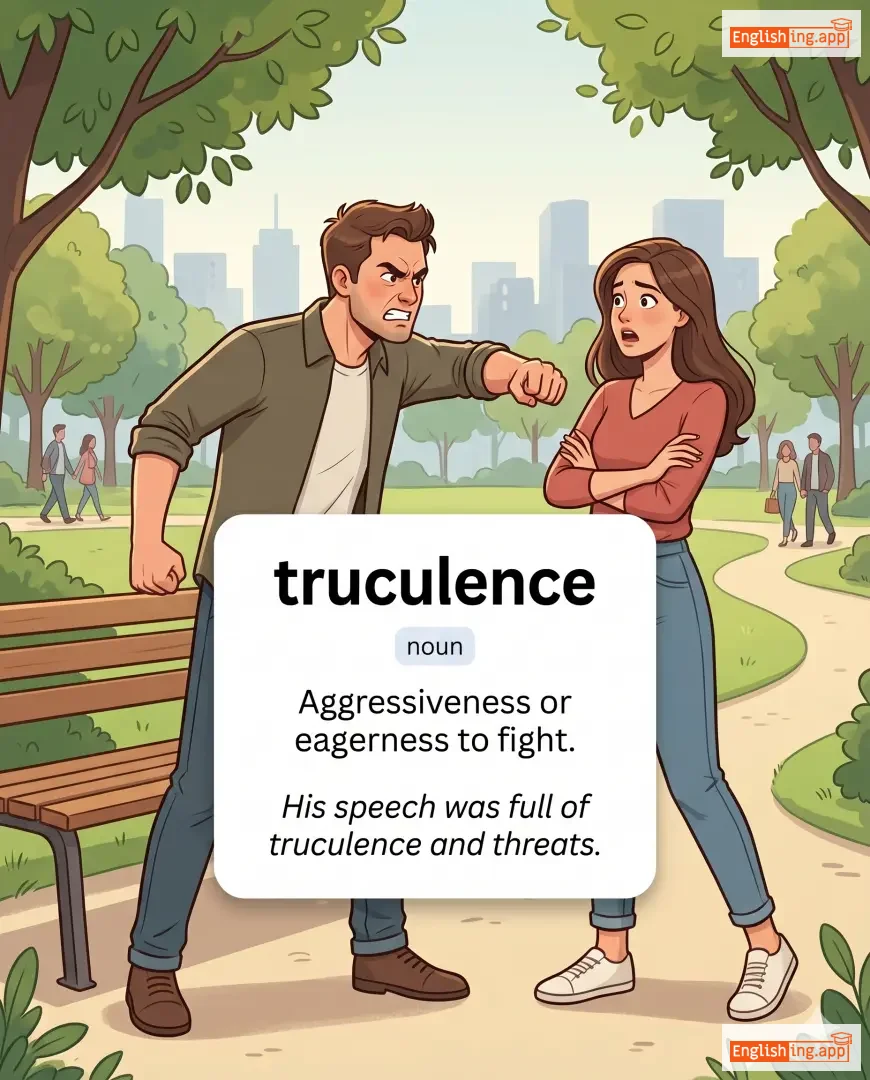
truculence definition card — visual illustration of the meaning
noun C2
/ˈtrʌk.jʊ.ləns/
agresividad (agresividad)

Aggressiveness or eagerness to fight.

"His speech was full of truculence and threats."

"Su discurso estaba lleno de agresividad y amenazas." (Su discurso estaba lleno de agresividad y amenazas.)
adjective C2
/ˈtrʌk.jʊ.lənt/
agresivo (agresivo)

Eager or quick to argue, fight, or show aggression.

"She became truculent when her ideas were challenged."

"Se volvió agresiva cuando desafiaron sus ideas." (Se volvio agresiva cuando desafiaron sus ideas.)
noun C2
/ˈtruːɪzəm/
verdad de Perogrullo (verdad de perogrullo)

a statement that is obviously true and says nothing new or interesting

"It is a truism that hard work leads to success."

"Es una verdad de Perogrullo que el trabajo duro lleva al éxito." (Es una verdad de Perogrullo que el trabajo duro lleva al exito.)
noun C2
/ˈtrʌmpəri/
tonterías sin valor o cosas ostentosas pero sin valor (tonterias sin valor o cosas ostentosas pero sin valor)

worthless nonsense or showy but worthless things

"The speech was full of political trumpery."

"El discurso estaba lleno de tonterías políticas." (El discurso estaba lleno de tonterías políticas.)
verb C2
/ˈtrʌŋkeɪt/
truncar (truncar)

to shorten something by cutting off the top or the end

"The article was truncated to fit the limited space."

"El artículo fue truncado para encajar en el espacio limitado." (El artículo fue truncado para encajar en el espacio limitado.)
adjective C2
/ˈtrʌŋkeɪtɪd/
abreviado (abreviado)

shortened by cutting off a part; cut short

"The meeting was truncated due to time constraints."

"La reunión fue abreviada debido a las limitaciones de tiempo." (La reunion fue abreviada debido a las limitaciones de tiempo.)
noun C2
/trʌs/
cercha (sercha)

a framework, typically consisting of rafters, posts, and struts, supporting a roof, bridge, or other structure

"The engineer designed a strong truss for the new bridge."
"El ingeniero diseñó una cercha fuerte para el nuevo puente." (El ingeniero diseno una cercha fuerte para el nuevo puente.)
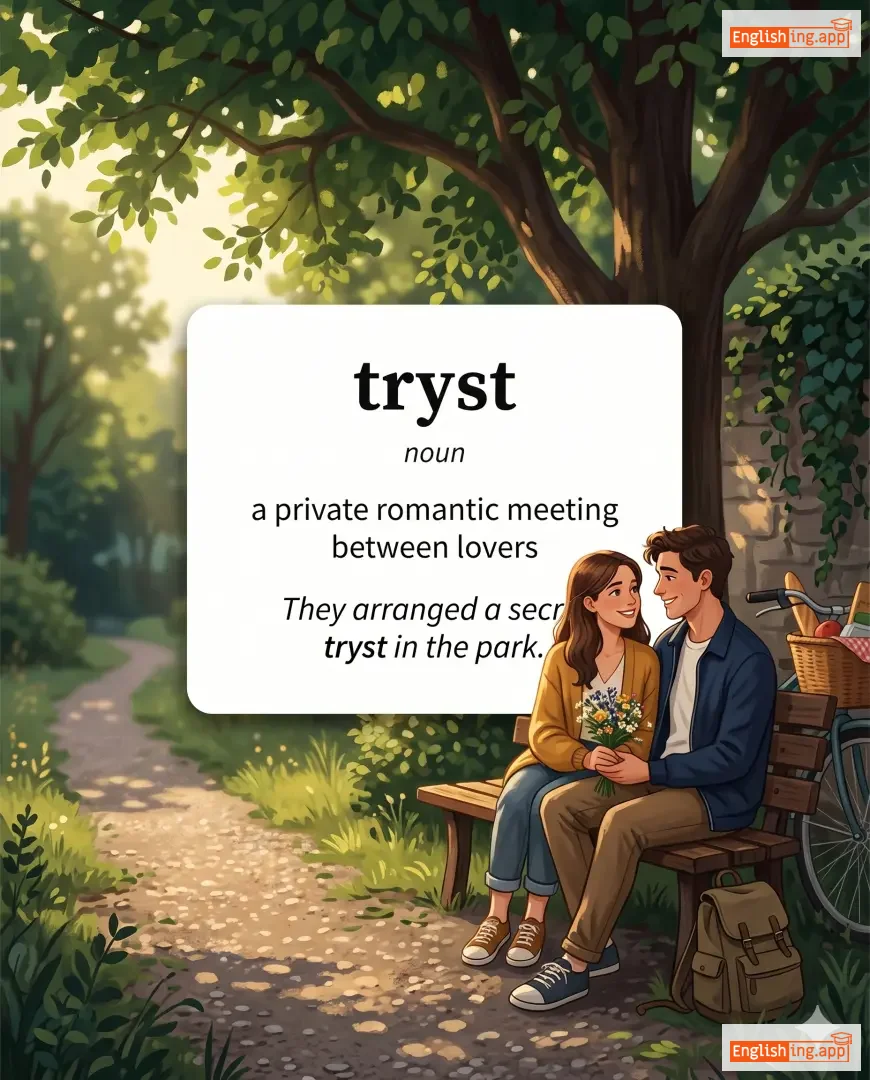
tryst definition card — visual illustration of the meaning
noun C2
/traɪst/
encuentro secreto (encuentro secreto)

a private romantic meeting between lovers

"They arranged a secret tryst in the park."
"Arreglaron un encuentro secreto en el parque." (Arreglaron un encuentro secreto en el parque.)
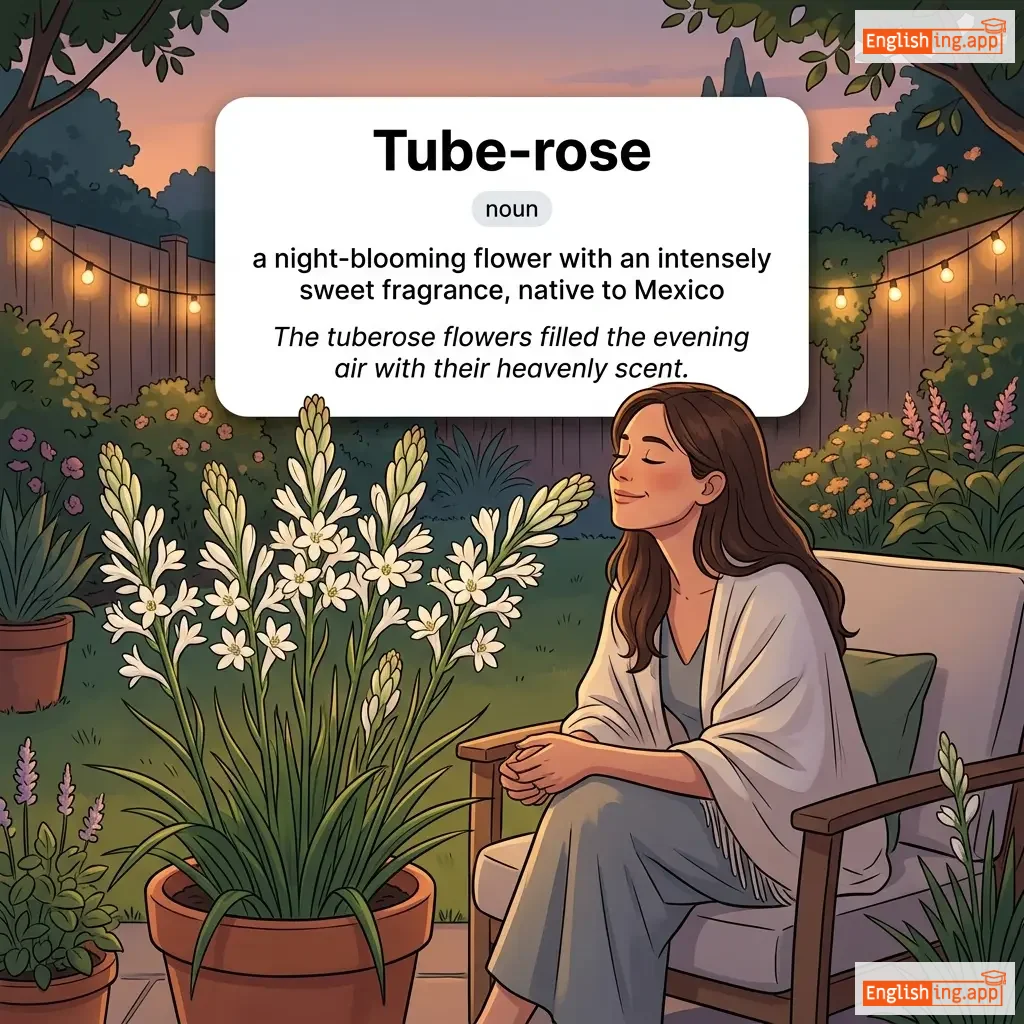
Tube-rose definition card — visual illustration of the meaning
noun C2
/ˈtuːb.roʊz/
tuberosa (tuberosa)

a night-blooming flower with an intensely sweet fragrance, native to Mexico

"The tuberose flowers filled the evening air with their heavenly scent."

"Las flores de tuberosa llenaron el aire de la tarde con su dulce fragancia celestial." (Las flores de tuberosa llenaron el aire de la tarde con su dulce fragancia celestial.)
noun C2
/ˈtʌmbrəl/
carreta (carreta)

A two-wheeled cart, especially one used during the French Revolution to carry prisoners to the guillotine.

"The prisoners were carried to the square in a wooden tumbrel."
"Los prisioneros fueron llevados a la plaza en una carreta de madera." (Los prisioneros fueron llevados a la plaza en una carreta de madera.)
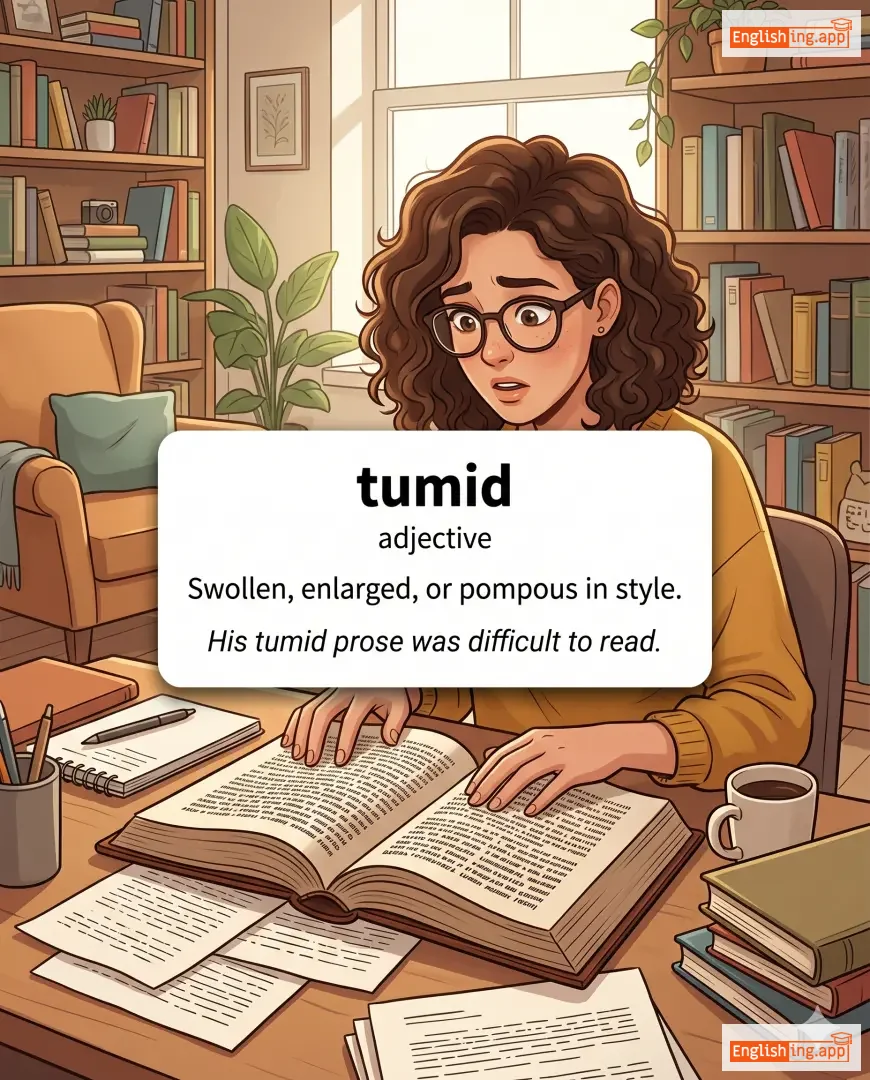
tumid definition card — visual illustration of the meaning
adjective C2
/ˈtjuːmɪd/
hinchado, inflado, o pomposo en estilo (hinchado, inflado, o pomposo en estilo)

Swollen, enlarged, or pompous in style.

"His tumid prose was difficult to read."
"Su prosa hinchada fue difícil de leer." (Su prosa hinchada fue difícil de leer.)
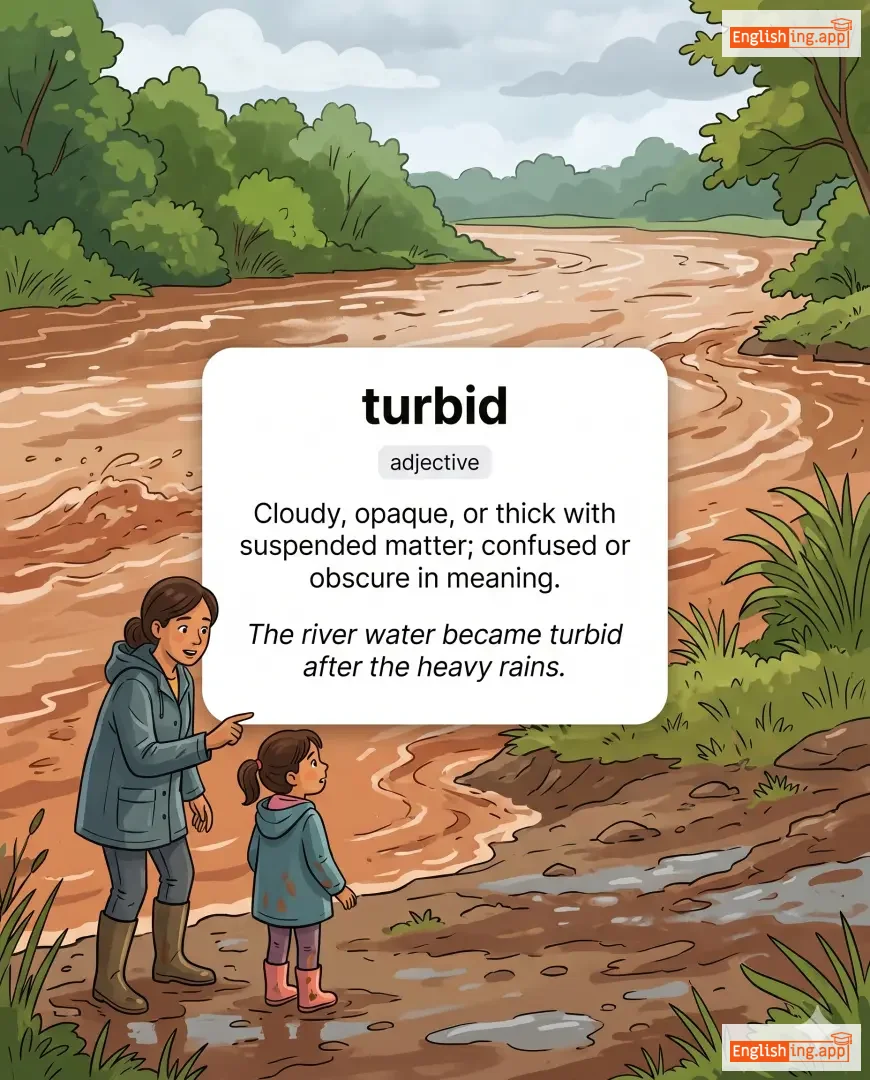
turbid definition card — visual illustration of the meaning
adjective C2
/ˈtɜːrbɪd/
turbio (turbio)

Cloudy, opaque, or thick with suspended matter; confused or obscure in meaning.

"The river water became turbid after the heavy rains."

"El agua del río se volvió turbia después de las fuertes lluvias." (El agua del río se volvió turbia después de las fuertes lluvias.)