Словари

Словарь английского языка | Значения слов, определения и примеры

adjective C2
/tɛnˈdɛnʃəs/
тенденциозный (tendentsiozny)

Expressing or promoting a particular cause or point of view, often biased.

"The article was criticized for its tendentious tone."

"Статья была раскритикована за ее тенденциозный тон." (Stat'ya byla raskritikovana za yey tendentsiozny ton.)
adjective C2
/ˈtɛnɪbrəs/
мрак (mrak)

dark, shadowy, or obscure

"The cave was damp and tenebrous, filled with eerie sounds."
"Пещера была влажной и тенисто-ужасной, наполненной странными звуками." (Peshchera byla vlazhnoy i tenistoy-uzhasnoy, napolnennoy strannymi zvukami.)
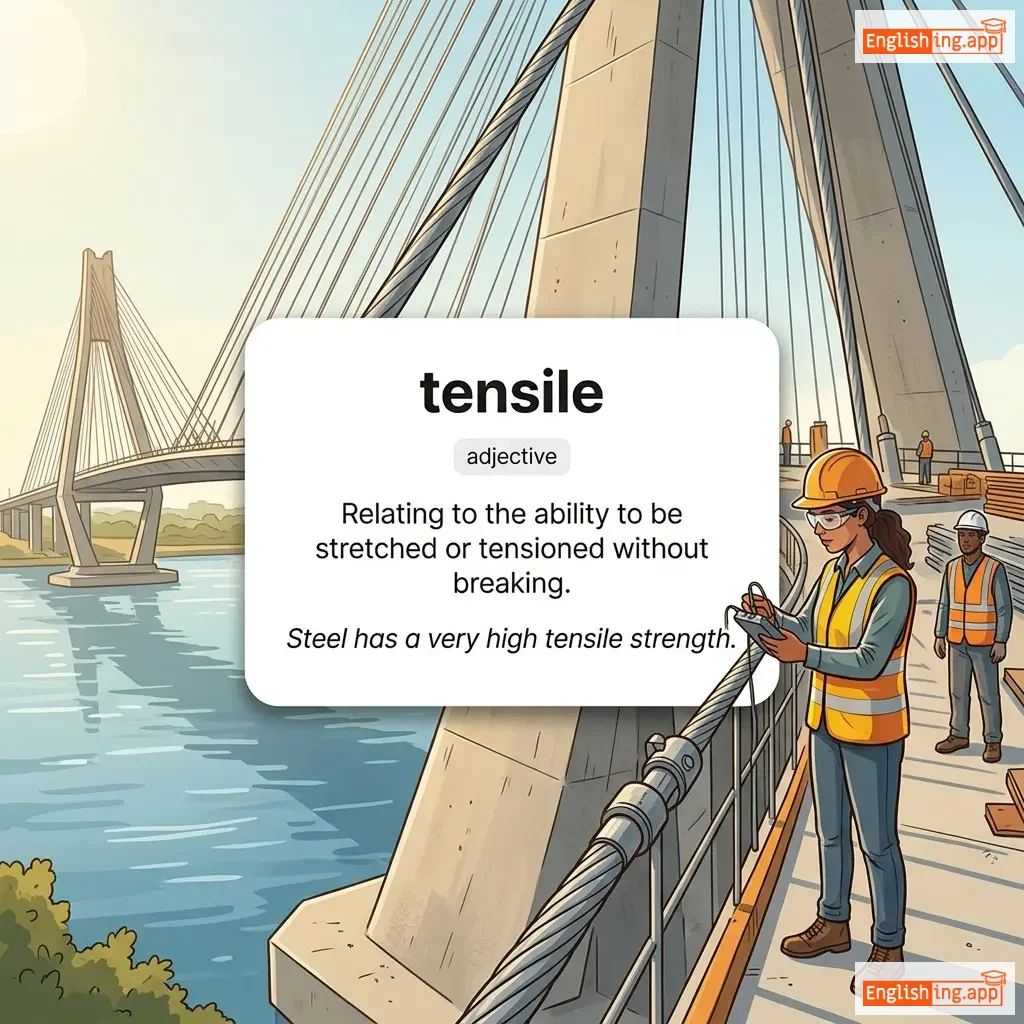
tensile definition card — visual illustration of the meaning
adjective C2
/ˈtɛn.saɪl/
растяжимый (rastjazhimyj)

Relating to the ability to be stretched or tensioned without breaking.

"Steel has a very high tensile strength."

"Сталь имеет очень высокую растяжимую прочность." (Stal' imeet ochen' vysokuyu rastjazhimuyu prochnost'.)
noun C2
/ˌtɜːsənˈtɛnəri/
терценарий (tertsenariy)

The 300th anniversary of an event.

"The city celebrated its tercentenary with a grand festival."

"Город отпраздновал свою терценарий с большим фестивалем." (Gorod otprazdnoval svoiu tertseneriy s bol'shim festivalem.)
noun C2
/ˌtɜːdʒɪvərˈseɪʃən/
увиливание, двойственная позиция (uvilivanie, dvoystvennaya pozitsiya)

Evasion of straightforward action or speech; changing sides or being inconsistent.

"The politician’s tergiversation frustrated his supporters."

"Тергиверсация политика разочаровала его сторонников." (Tergiversatsiya politika razocharovala ego storonnikov.)
noun C2
/ˈtɜːrməɡənt/
деспотичная и сварливая женщина (despotichnaya i svarlivaya zhenshchina)

A harsh-tempered or overbearing woman.

"The character was portrayed as a loud and domineering termagant."

"Персонаж был изображен как громкая и властная термагантка." (Personazh byl izobrazhen kak gromkaya i vlastnaya termagantka.)
noun C2
/ˈterəpɪn/
небольшая пресноводная черепаха (nebol'shaya presnovodnaya cherepakha)

a small freshwater turtle, especially one found in North America

"The terrapin slowly crawled into the pond."

"Тэра́пин медленно пополз в пруд." (Terapin medlenno popolz v prud.)
adjective C2
/ˈtɛsəleɪtɪd/
мозаичный (mozaichnyy)

arranged in a pattern of repeated shapes fitting together without gaps

"The tessellated floor was made of colorful tiles arranged in perfect symmetry."

"Мозаичный пол был покрыт цветными плитками, расположенными в идеальной симметрии." (Mozaichnyy pol byl pokryt tsvetnymi plitkami, raspolozhennymi v ideal'noy simmetrii.)
noun C2
/ˈtɛsteɪtər/
завещатель (zaveshchatel)

a person who has made a will

"The lawyer read the will of the deceased testator."

"Адвокат прочитал завещание умершего завещателя." (Advokat prochital zaveshchanie umershego zaveshchatelya.)
noun C2
/ˈθɔːməˌtɜrdʒɪst/
тауматург (taumaturg)

A worker of miracles or magician.

"The thaumaturgist amazed the audience with his tricks."

"Тауматург удивил публику своими трюками." (Taumaturg udivil publiku svoimi tryukami.)
noun C2
/ˈθiː.ɑːr.ki/
теархия (tearkhiya)

Rule or government by the gods; divine sovereignty.

"In ancient cultures, some societies believed in thearchy where gods directly guided human affairs."

"В древних культурах некоторые общества верили в теархи, где боги непосредственно руководили человеческими делами." (V drevnikh kul'turakh nekotorye obshchestva verili v tearkhi, gde bogi neposredstvenno rukovodili chelovecheskimi delami.)
noun C2
/ˈθiːɪzəm/
теизм (teizm)

Belief in the existence of a god or gods, especially a creator who intervenes in the universe.

"Theism is central to many world religions."
"Теизм является центральным в многих мировых религиях." (Teizm javljaetsja central'nym v mnogikh mirovykh religijakh.)
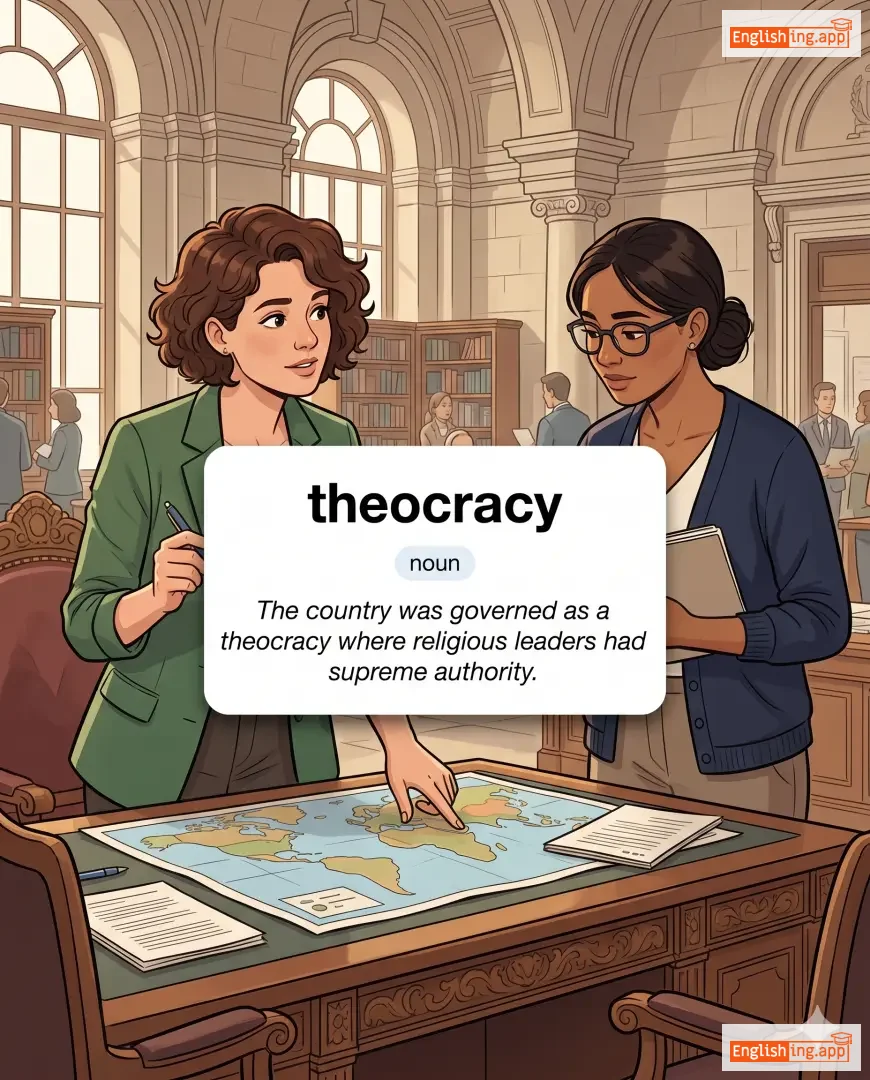
theocracy definition card — visual illustration of the meaning
noun C2
/θiˈɒkrəsi/
теократия (teokratiya)

A system of government in which priests or religious leaders rule in the name of God or a deity.

"The country was governed as a theocracy where religious leaders had supreme authority."

"Страна управлялась как теократия, где религиозные лидеры имели высшую власть." (Strana upravlyalas' kak teokratiya, gde religioznye lidery imeli vysshuyu vlast'.)
noun C2
/θiˈɒkrəsi/
теократия (teokratiya)

Government or rule by religious leaders or clergy.

"Theocrasy often merges religious authority with political power."

"Теократия часто объединяет религиозную власть с политической мощью." (Teokratiya chasto ob'edinayet religioznuyu vlast' s politicheskoy moshch'yu.)
noun C2
/ˌθiːəˈloʊdʒən/
телеолог (teleolog)

A person who studies or is an expert in theology.

"Theologians often debate complex questions of faith and morality."

"Теологи часто спорят о сложных вопросах веры и морали." (Teologi chasto sporyat o slozhnykh voprosakh very i morali.)
noun C2
/θiˈɒsəfi/
теософия (teosofiya)

A religious or philosophical belief system that seeks direct knowledge of the mysteries of life and the divine.

"Theosophy attracted people interested in mysticism and spiritual growth."

"Теософия привлекла людей, интересующихся мистицизмом и духовным ростом." (Teosofiya privlekla lyudey, interesuyushchikhsya mistitsizmom i dukhovnym rostorm.)
adverb C2
/ˌðeərˈwɪð/
с этим; (s etim)

together with that; in addition to that

"He handed me the contract and the pen therewith."
"Он передал мне контракт и ручку с этим." (On peredal mne kontrakt i ruchku s etim.)
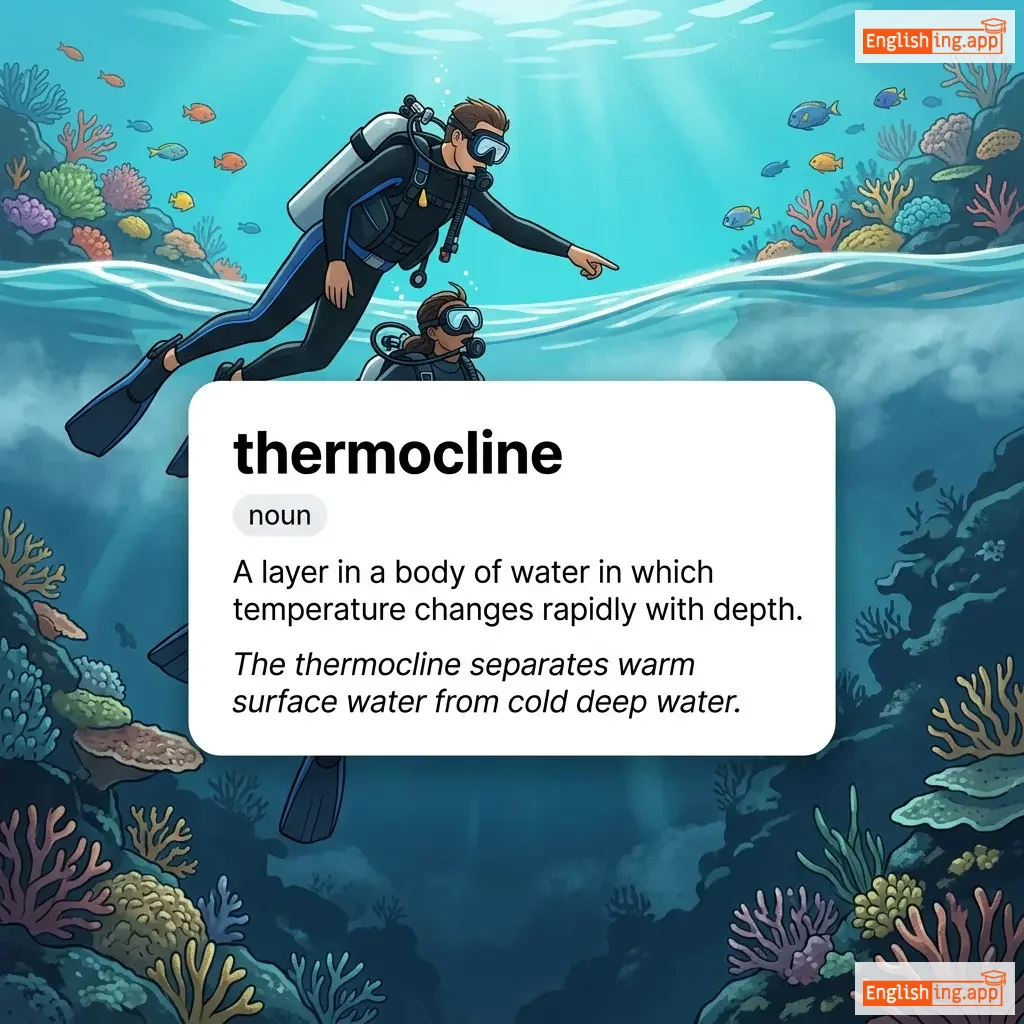
thermocline definition card — visual illustration of the meaning
noun C2
/ˈθɝː.moʊ.klaɪn/
термоклин (termoklin)

A layer in a body of water in which temperature changes rapidly with depth.

"The thermocline separates warm surface water from cold deep water."
"Термоклин разделяет тёплую поверхностную воду от холодной глубокой воды." (Termoklin razdelyayet tyopluyu poverkhnostnuyu vodu ot kholodnoy glubokoy vody.)
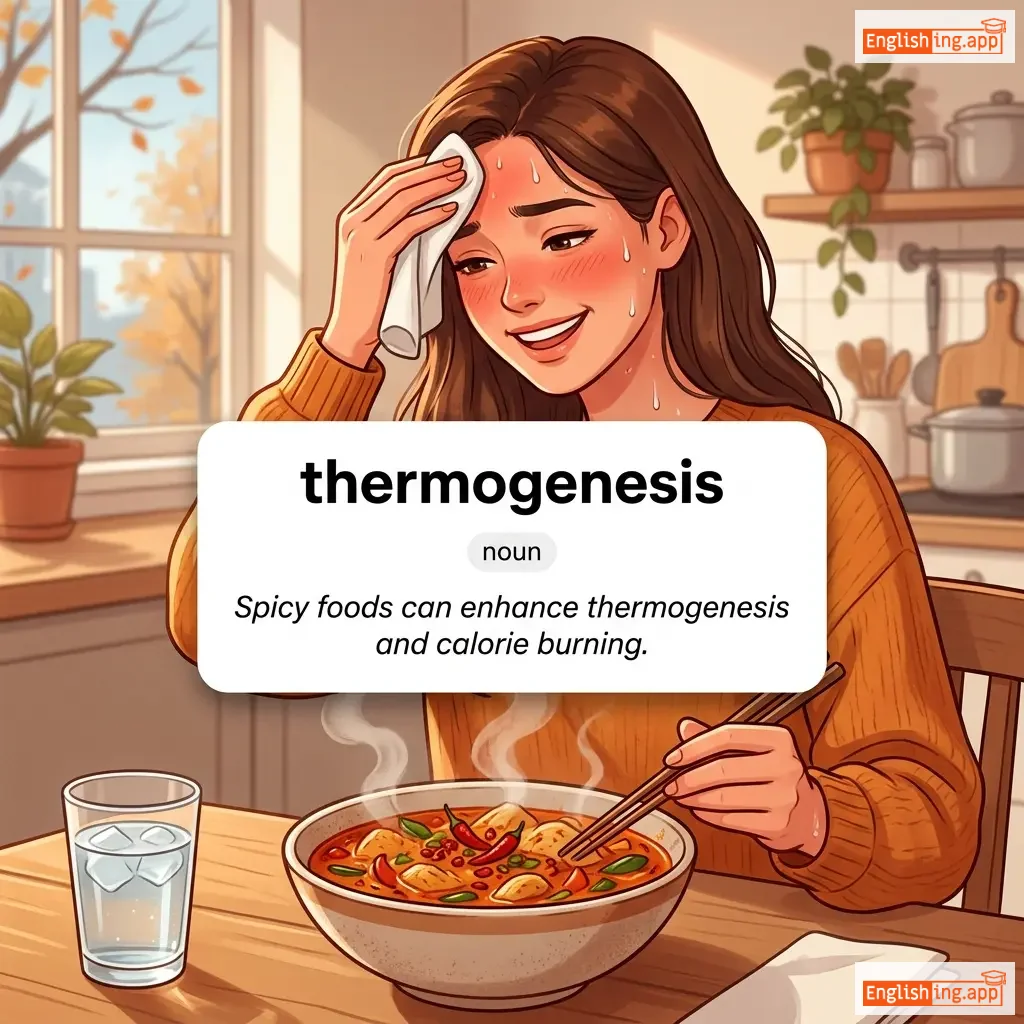
thermogenesis definition card — visual illustration of the meaning
noun C2
/ˌθɜː.məʊˈdʒen.ɪ.sɪs/
процесс производства тепла (process proizvodstva tepla)

The process of heat production in living organisms, often associated with burning calories and energy expenditure.

"Spicy foods can enhance thermogenesis and calorie burning."

"Острые продукты могут улучшить термогенез и сжигание калорий." (Ostrye produkty mogut uluchshit' termogenez i szhiganie kaloriy.)
thespian definition card — visual illustration of the meaning
noun C2
/ˈθɛspiən/
актер (akter)

An actor or actress; relating to drama or theater.

"The festival was filled with talented thespians from across the country."

"Фестиваль был полон талантливых актеров со всей страны." (Festival byl polon talantlivykh akterov so vsei strany.)
adjective C2
/ˈθʌroʊˌɡoʊɪŋ/
полный, абсолютный (polnyy, abslutnyy)

carried out to the full extent; absolute and complete

"She is a thoroughgoing professional in every sense."

"Она абсолютно профессионал во всех отношениях." (Ona absolyutno professional vovsekh otnosheniyakh.)
noun C2
/θrɔːl/
рабство (trell)

The state of being in someone's power or under strong influence; slavery or bondage.

"He was in thrall to the powerful leader."

"Он был во власти могущественного лидера." (On byl vo vlasti mogushchestvennogo lidera.)
adjective C2
/ˈθrɛdˌbɛr/
потрепанный и тонкий из-за чрезмерного использования (potrepyannyy i tonkiy iz-za chrezmernogho ispol'zovaniya)

Worn out and thin from too much use; shabby.

"His threadbare coat could not keep him warm in winter."

"Его потрепанное пальто не могло согреть его зимой." (Yego potrepyannoye pal'to ne moglo sogret' yego zimoy.)
noun C2
/ˈθrɛnədi/
траверс, жалобная песня (travers, zhalobnaya pesnya)

A song, poem, or speech of mourning for someone who has died; a lament.

"The poet composed a moving threnody for the fallen soldiers."

"Поэт написал трогательную жалобную песню для павших солдат." (Poet napisal trogatelnuyu zhalobnuyu pesnyu dlya pavshikh soldat.)
verb C2
/θrɛʃ/
молоти (moloti)

to separate grain from the plant by beating or by using a machine

"Farmers used machines to thresh the wheat after harvest."

"Фермеры использовали машины для обмолота пшеницы после урожая." (Fermery ispol'zovali mashiny dlya obmolota pshenitsy posle urozhaya.)
noun C2
/θroʊz/
сильная боль (sil'naya bol')

intense or violent pain and struggle, often at the beginning or end of something

"The country was in the throes of a political crisis."
"Страна была в сильной боли от политического кризиса." (Strana byla v sil'noy boli ot politicheskogo krizisa.)
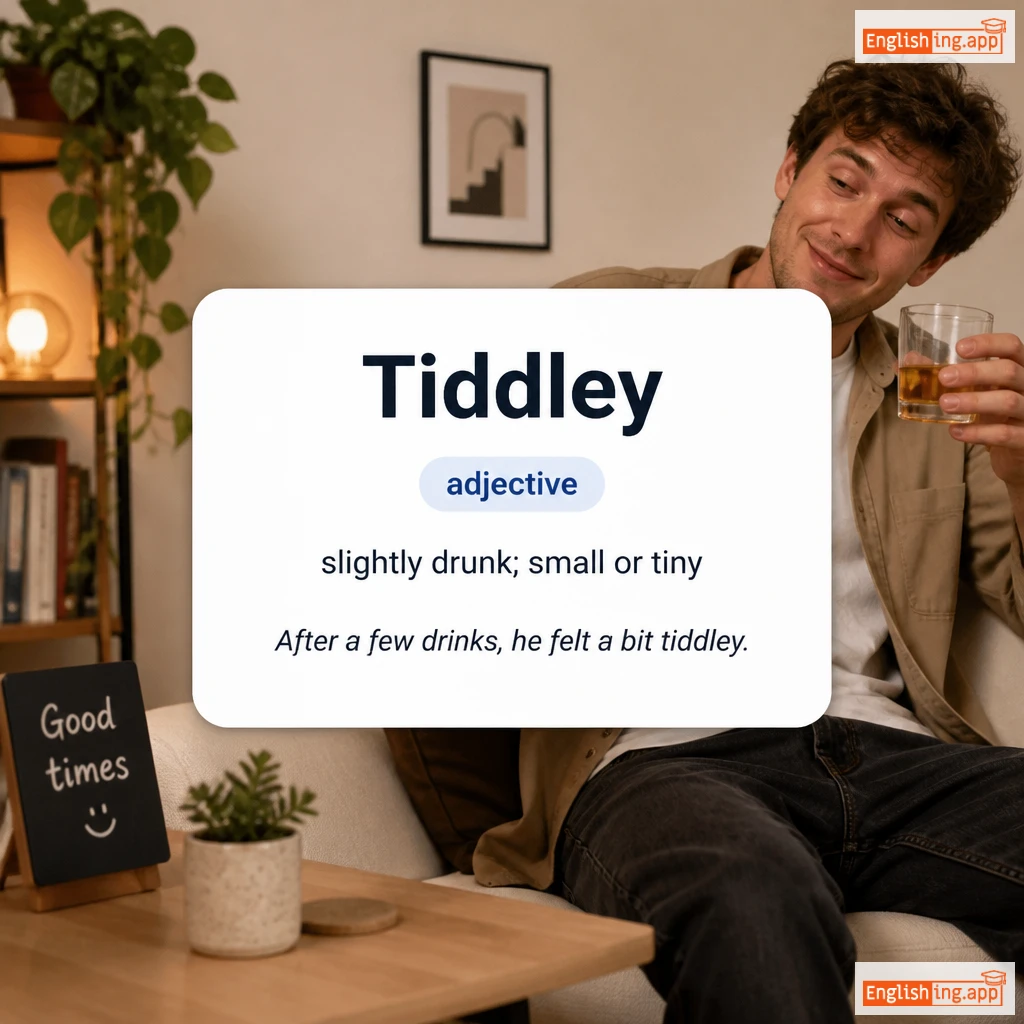
Tiddley definition card — visual illustration of the meaning
adjective C2
/ˈtɪd.li/
слегка пьяный; маленький или крошечный (tiddli)

slightly drunk; small or tiny

"After a few drinks, he felt a bit tiddley."

"После нескольких напитков он почувствовал себя немного тидли." (Posle nekotorykh napitkov on pochuvstvoval sebya nemnogo tiddli.)
adjective C2
/ˌtaɪtˈfɪstɪd/
жадный (zhadnyy)

unwilling to spend money; stingy

"He is so tightfisted that he refuses to tip at restaurants."

"Он настолько жадный, что отказывается давать чаевые в ресторанах." (On nastol'ko zhadnyy, chto otkazyvayetsya davat' chayevye v restorankh.)
🙅‍♂️💵

tightwad (тайтвэд)

noun C2
/ˈtaɪtwɒd/
скряга (skryaga)

a person who is unwilling to spend money; a miser

"Everyone calls him a tightwad because he never buys gifts."
"Все называют его скрягой, потому что он никогда не покупает подарки." (Vse nazyvayut ego skryagoy, potomu chto on nikogda ne pokupayet podarki.)
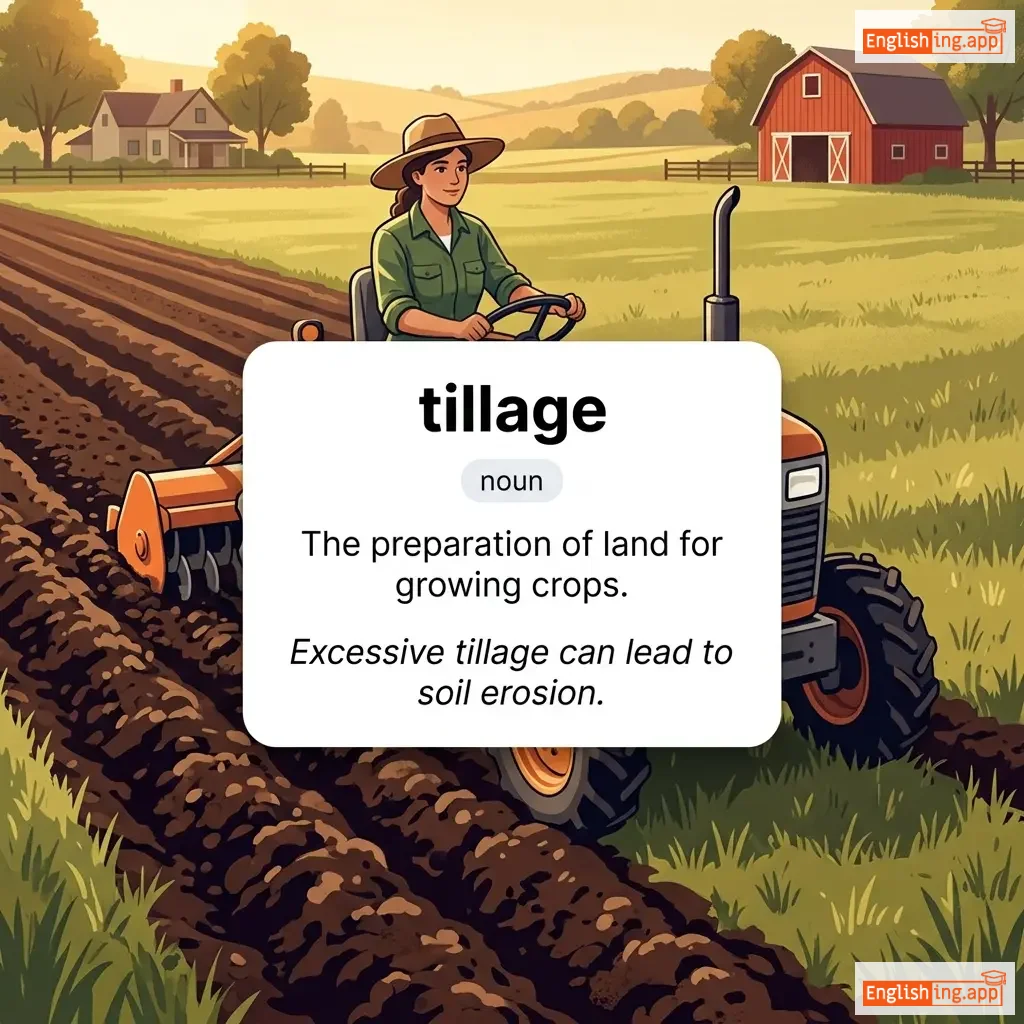
tillage definition card — visual illustration of the meaning
noun C2
ˈtɪl.ɪdʒ
обработка почвы (obrabotka pochvy)

The preparation of land for growing crops.

"Excessive tillage can lead to soil erosion."
"Чрезмерная обработка почвы может привести к эрозии почвы." (Chrezmernyaya obrabotka pochvy mozhet privesti k erozzii pochvy.)
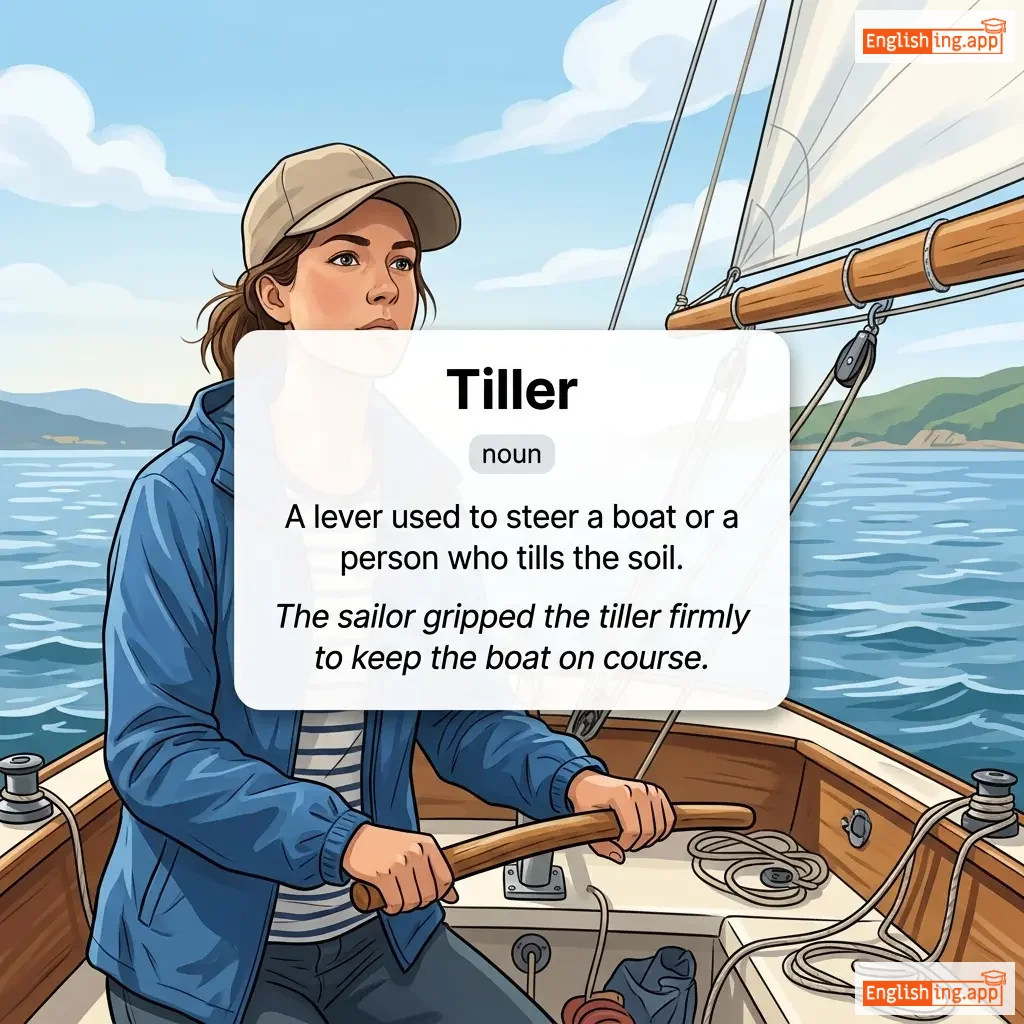
Tiller definition card — visual illustration of the meaning
noun C2
/ˈtɪlər/
руль или человек, который обрабатывает землю (rul' ili chelovek, kotoryy obrabotayet zemlyu)

A lever used to steer a boat or a person who tills the soil.

"The sailor gripped the tiller firmly to keep the boat on course."

"Моряк крепко держал руль, чтобы держать лодку на курсе." (Moryak krepko derzhal rul', chtoby derzhat' lodku na kursye.)
noun C2
/tɪlθ/
состояние почвы (пригодность для посадки растений) (sostoyanie pochvy (prigodnost dlya posadki rasteniy))

The physical condition of soil in relation to its suitability for planting crops.

"The farmer checked the soil's tilth before planting the seeds."

"Фермер проверил состояние почвы перед посадкой семян." (Fermer proveryl sostoyanie pochvy pered posadkoy semyan.)
noun C2
/ˈtæmbər/ or /ˈtɪmbər/
тембр (tembr)

The character or quality of a musical sound or voice as distinct from its pitch and intensity.

"Her voice had a warm timbre that soothed the audience."

"Её голос имел тёплый тембр, который успокаивал аудиторию." (Yeyo golos imel tyoplyy tembr, kotoryy uspokaval auditoriyu.)
adjective C2
/ˈtaɪmwɔːrn/
потёртый временем (potyortyy vremyem)

Worn or impaired by age; old and used many times.

"The timeworn house carried a sense of history and nostalgia."

"Потёртый временем дом несло чувство истории и ностальгии." (Potyortyy vremyem dom neslo chuvstvo istorii i nostalgia.)
adjective C2
/ˈtɪmərəs/
робкий (robkiy)

showing or suffering from nervousness, fear, or lack of confidence

"The timorous student hesitated to ask the teacher a question."

"Робкий студент колебался, чтобы задать вопрос учителю." (Robkiy student kolebalsya, chtoby zadat' vopros uchitelyu.)
noun C2
/ˈtɪŋktʃər/
легкий след, лекарство, приготовленное растворением лекарства в алкоголе (legkiy sled, lekarstvo, prigotovlennoe rastvoreniyem lekarstva v alkogole)

a slight trace of something; a medicine made by dissolving a drug in alcohol

"There was a tincture of sadness in her smile."

"В её улыбке была лёгкая нотка грусти." (V yey ulybke byla lyogkaya notka grusti.)
verb C2
/ˈtɪpəl/
пить (pit)

to drink alcohol, especially regularly or in small amounts

"He likes to tipple at the local pub after work."

"Он любит пить в местном пабе после работы." (On lyubit pit' v mestnom pabe posle raboty.)
noun C2
/taɪð/
десятина (desyatina)

A tenth part of one’s income or produce, often given as a religious offering.

"He gave a tithe of his earnings to the church."

"Он пожертвовал десятую часть своего дохода церкви." (On pozhertvoval desyatuyu chast' svoego dokhoda tserkvi.)
verb C2
/ˈtɪtəleɪt/
возбуждать (vozzbuzhdat)

To excite or amuse, especially in a slightly sexual or playful way.

"The comedian's jokes titillated the audience."

"Шутки комика возбуждали публику." (Shutki komika vozzbuzhdali publiku.)
verb C2
/ˈtɪtər/
тихо хихикать (tikho khikhikat)

to laugh in a quiet, nervous, or restrained way

"The students began to titter when the projector froze."

"Студенты начали тихо хихикать, когда проектор завис." (Studenty nachali tikho khikhikat, kogda proyektor zavis.)
adjective C2
/ˈtɪtjələr/
титуляр (titulyar)

holding a title or position in name only without real power; relating to the title of a work

"She is the titular head of the committee, but decisions are made by the coordinator."

"Она титулярный глава комитета, но решения принимаются координатором." (Ona titularnyy glava komiteta, no resheniya priniimayutsya koordinatorom.)
Toady definition card — visual illustration of the meaning
🙇‍♂️

Toady

verb C2
/ˈtoʊdi/

to flatter or behave excessively subserviently toward someone for advantage

"Stop toadying to the manager and speak your mind."

noun C2
/ˈtɒksɪn/
тревожный колокол (trevoznyy kolokol)

an alarm bell or signal; a warning that something bad is about to happen

"The data breach sounded a tocsin for stricter security."

"Утечка данных прозвучала как тревожный колокол для ужесточения безопасности." (Utechka dannykh prozvuchala kak trevoznyy kolokol dlya uzheshcheniya bezopasnosti.)
adjective C2
/ˈtɔɪl.səm/
трудный (trudnyy)

Involving hard or exhausting work; laborious.

"The workers had a toilsome day in the hot sun."

"Рабочие провели трудный день на жарком солнце." (Rabochie proveli trudnyy den' na zharkom solntse.)
adjective C2
/tɒnˈsɔːriəl/
относящийся к парикмахеру (otnosyashchiesya k parikmakheru)

relating to barbers or hairdressing

"The town's new barber offered a wide range of tonsorial services."

"Новый парикмахер города предложил широкий ассортимент парикмахерских услуг." (Novyy parikmakher goroda predlozhil shirokiy assortiment parikmakherskikh uslug.)
noun C2
/ˈtɒnʃər/
тону́зура (tonuzura)

the practice of shaving or cutting the hair on the scalp, especially in a religious context

"The monk received his tonsure as part of his religious initiation."

"Монах получил свою тонзуру как часть своей религиозной инициации." (Monakh poluchil svoju tonuzuru kak chast' svoej religioznoj initsiatsii.)
adjective C2
/ˈtɔːrpɪd/
вялый (torpid)

Mentally or physically inactive; sluggish or lethargic.

"After the long hike, he felt torpid and unmotivated."
"После долгого похода он почувствовал себя вялым и безмотивационным." (Posle dolgogo pokhoda on pochuvstvoval sebya vyalym i bezmotivatsionnym.)
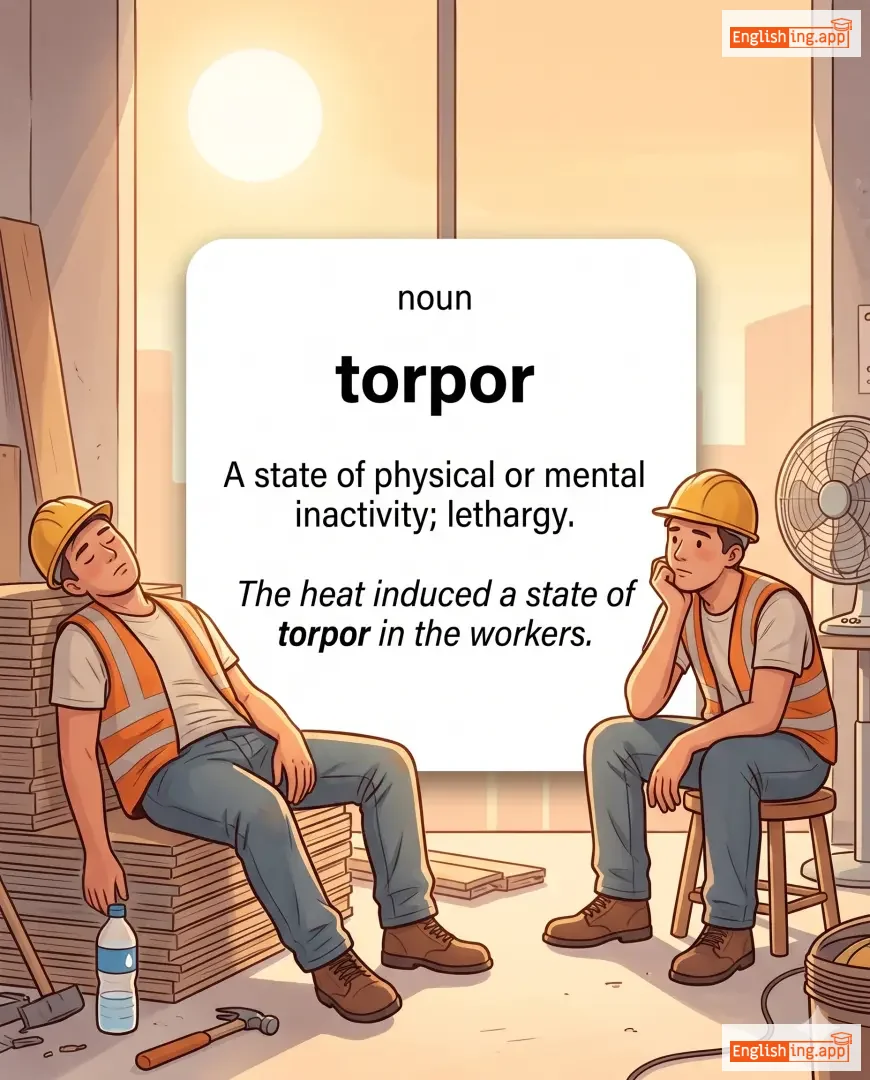
torpor definition card — visual illustration of the meaning
noun C2
/ˈtɔːrpər/
летаргия (torpor)

A state of physical or mental inactivity; lethargy.

"The heat induced a state of torpor in the workers."

"Жара вызвала состояние летаргии у рабочих." (Zhara vyzvala sostoyanie letargii u rabochikh.)
adjective C2
/ˈtɔːrʃəs/
незаконный поступок (nezakonnyy postupok)

Relating to or involving a wrongful act leading to legal liability.

"The company was found guilty of tortious interference with contracts."
"Компания была признана виновной в незаконном вмешательстве в контракты." (Kompaniya byla priznana vinovnoj v nezakonnoe vmeshatel'stve v kontrakty.)
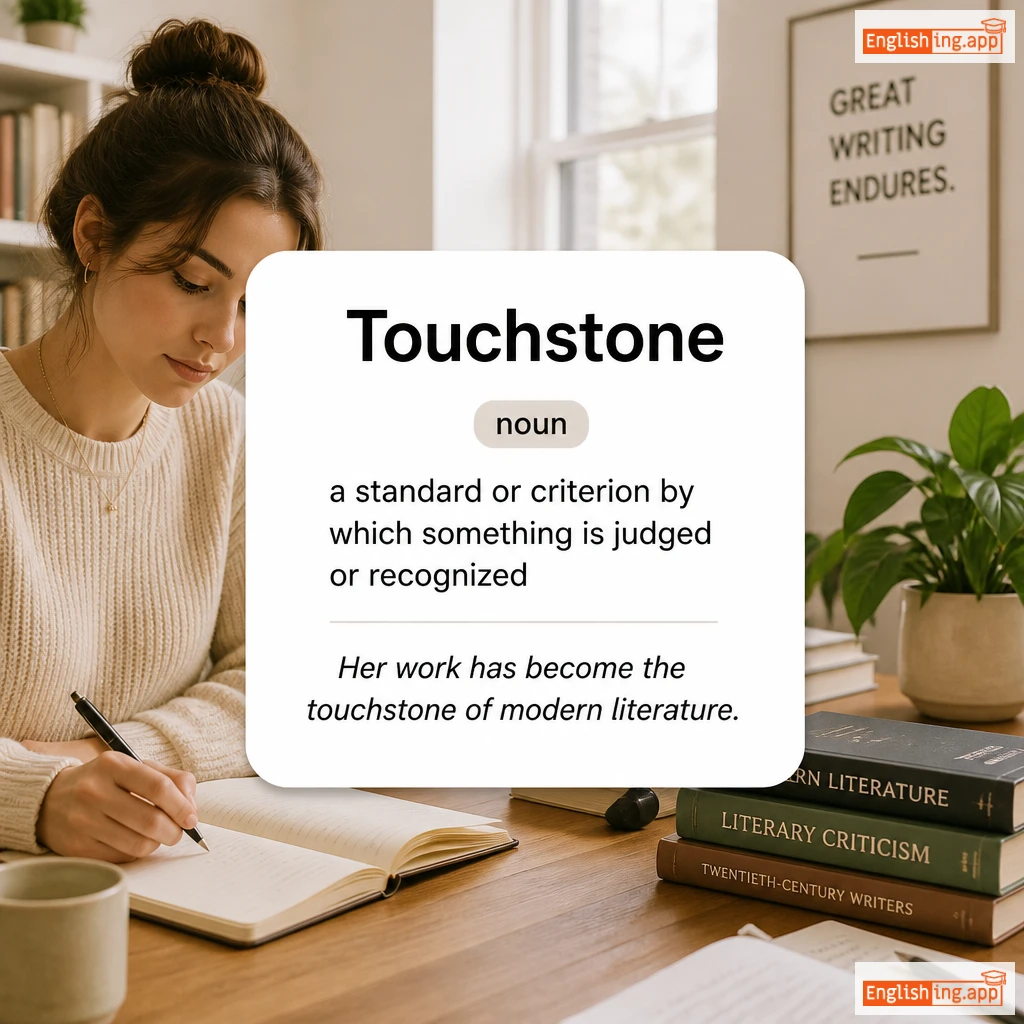
Touchstone definition card — visual illustration of the meaning
noun C2
/ˈtʌtʃstoʊn/
критерий (kriteriy)

a standard or criterion by which something is judged or recognized

"Her work has become the touchstone of modern literature."

"Её работа стала отправной точкой для современной литературы." (Eyo rabota stala otpravnyy tochkoy dlya sovremennoy literatury.)