Словари

Словарь английского языка | Значения слов, определения и примеры

adjective C2
/ˌsuːprəˈmʌndeɪn/
супрамунданный (supramundanniy)

beyond the physical or ordinary world; transcendent

"The monk spoke of supramundane peace beyond material life."

"Монах говорил о супрамунданном мире, который за пределами материальной жизни." (Monakh govorit o supramundannom mire, kotoryy za predelami material'noy zhizni.)
noun C2
/sɜːrˈsiːs/
прекращение (prekrashchenie)

a temporary or final ending or stopping of something

"The noise finally came to a surcease after midnight."

"Шум наконец прекратился после полуночи." (Shum nakonec prekratilsya posle polunochi.)
noun C2
/ˈʃʊərəti/
поручительство (poruchitel'stvo)

a person who takes responsibility for another's performance of an undertaking, such as appearing in court or paying a debt

"The landlord required a surety before renting the apartment."

"Арендодатель потребовал поручительство перед сдачей квартиры." (Arendodatel' potreboval poruchitel'stvo pered sdachey kvartiry.)
noun C2
/ˈsɜːrfɪt/
избыток (izbytok)

an excessive amount of something

"There was a surfeit of food at the festival."
"На фестивале было изобилие еды." (Na festivale bylo izobiliye yedy.)
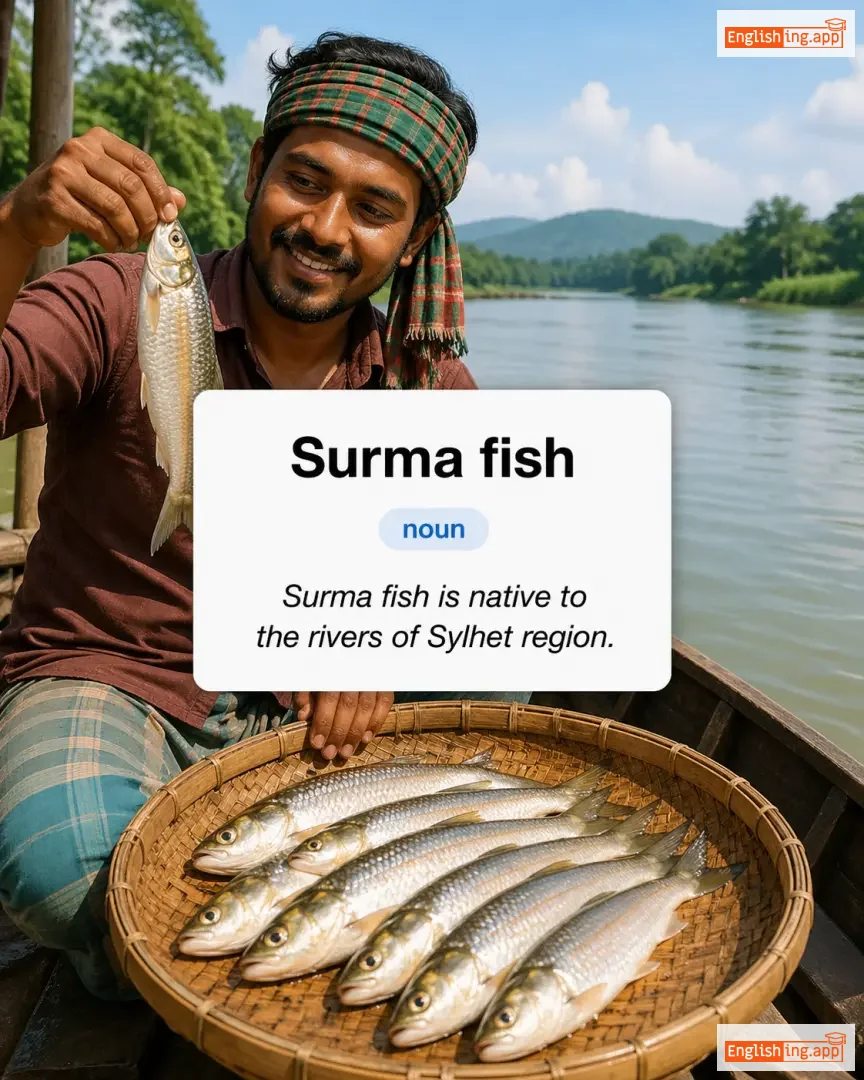
Surma fish definition card — visual illustration of the meaning
noun C2
/ˈsʊrmə fɪʃ/
рыба Сурма (ryba surma)

a freshwater fish species found in the Surma river system of Bangladesh and northeastern India

"Surma fish is native to the rivers of Sylhet region."
"Рыба Сурма обитает в реках региона Силхет." (ryba surma obitaet v rekakh regiona silkhet)
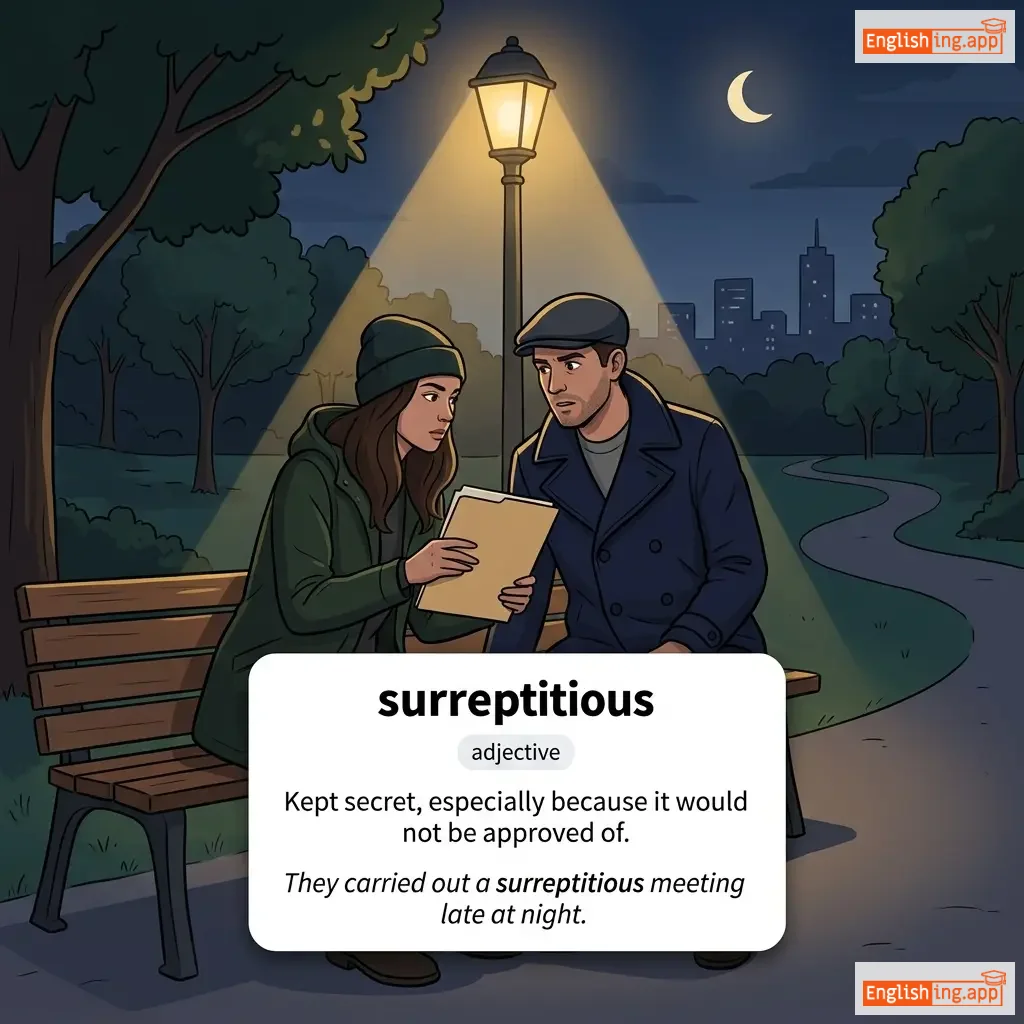
surreptitious definition card — visual illustration of the meaning
adjective C2
/ˌsʌrəpˈtɪʃəs/
секретный (sekretnyy)

Kept secret, especially because it would not be approved of.

"They carried out a surreptitious meeting late at night."

"Они провели секретную встречу поздно ночью." (Oni proveli sekretnoe vstrechu pozdno noch'yu.)
adjective C2
/svelt/
стройный (stroynyy)

Attractively thin, graceful, and elegant in appearance or movement.

"She looked svelte in the elegant black dress."

"Она выглядела стройной в элегантном черном платье." (Ona viglyadela stroynoy v elegantnom chernom plat'ye.)
adjective C2
/ˈswɔːrði/
смуглый (smugly)

Having a dark complexion or skin tone.

"The sailor had a swarthy face from years under the sun."

"Моряк имел смуглое лицо после многих лет под солнцем." (Moryak imel smugloye litso posle mnogikh let pod solntsem.)
verb C2
/sweɪð/
обертывать (obertyvat)

To wrap or cover closely or completely.

"She swathed the baby in a soft blanket."

"Она завернула ребенка в мягкое одеяло." (Ona zaverнула rebenka v myagkoe odeyalo.)
verb C2
/swɪl/
пить жадно (pit' zhadhno)

to drink something greedily or in large amounts

"He swilled down the beer in seconds."

"Он выпил пиво за секунды." (On vypil pivo za sekundy.)
noun C2
/ˈsɪbəraɪt/
сибарит (sibarit)

a person who loves luxury and pleasure

"The millionaire was a true sybarite who lived only for comfort and enjoyment."

"Миллионер был настоящим сибаритом, который жил только ради комфорта и удовольствия." (Millioner byl nastoyashchim sibaritom, kotoryy zhil tol'ko radi komforta i udovol'stviya.)
noun C2
/ˈsɪkəfənt/
льстец (l'stets)

A person who acts obsequiously toward someone important in order to gain advantage.

"The manager was surrounded by sycophants who agreed with everything he said."

"Менеджер был окружён льстецами, которые соглашались со всем, что он говорил." (Menedzher byl okruzhen l'stetsami, kotorye soglashalis' so vsem, chto on govoril.)
adjective C2
/ˌsɪkəˈfæntɪk/
подлиза (podliza)

Behaving in a way that is excessively obedient or servile to gain favor.

"His sycophantic behavior annoyed his colleagues."

"Его подлизывательское поведение раздражало его коллег." (Yego podlizyvatelskoe povedeniye razdrazhalo yego kolleg.)
adjective C2
/sɪˈlæbɪk/
слоговой (slogovoy)

Relating to or based on syllables.

"The teacher explained the syllabic structure of the word."

"Учитель объяснил слоговую структуру слова." (Uchitel obyasnil slogovuyu strukturu slova.)
noun C2
/ˌsɪləbɪˈkeɪʃən/
слоговая разбивка (slogovaya razbivka)

The division of words into syllables.

"Proper syllabication helps in correct pronunciation."
"Правильная слоговая разбивка помогает в правильном произношении." (Pravil'naya slogovaya razbivka pomogaet v pravil'nom proznoshenii.)
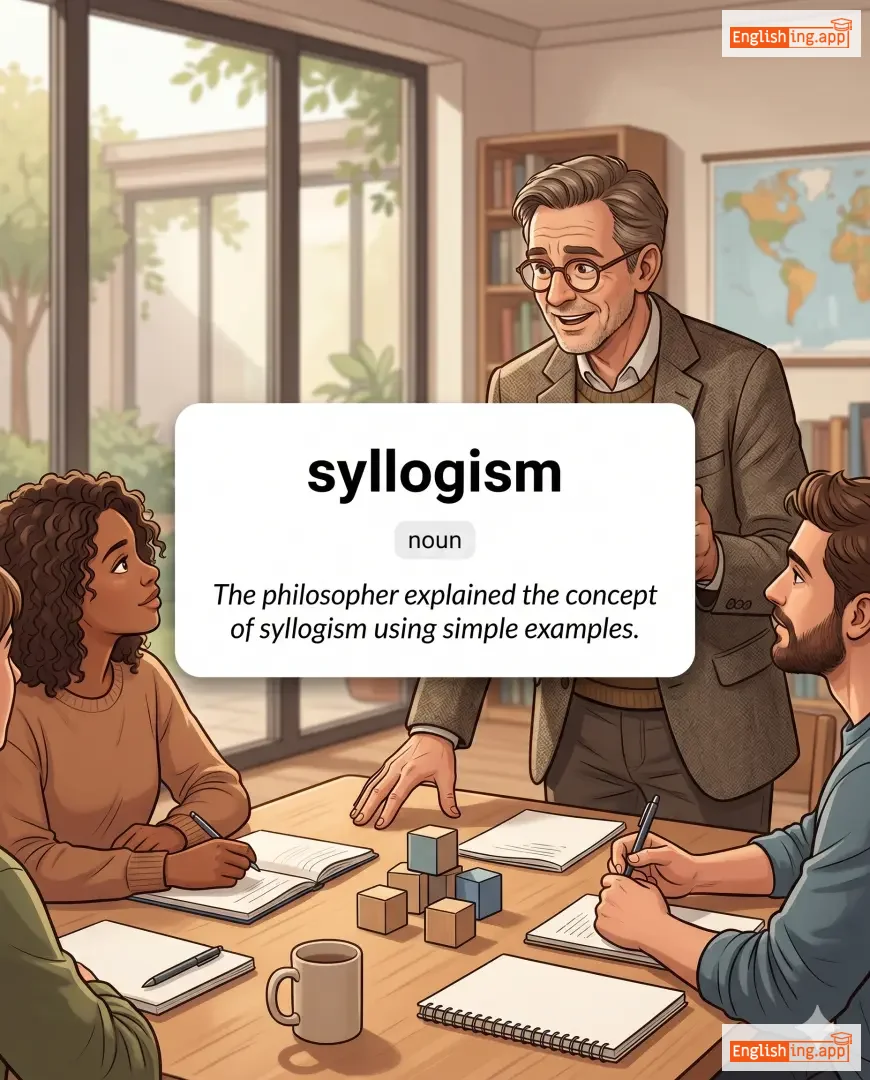
syllogism definition card — visual illustration of the meaning
noun C2
/ˈsɪlədʒɪzəm/
силлогизм (sillogizm)

A form of reasoning in which a conclusion is drawn from two given or assumed premises.

"The philosopher explained the concept of syllogism using simple examples."

"Философ объяснил концепцию силлогизма с помощью простых примеров." (Filosof obyasnil kontseptsiyu sillogizma s pomoshch'yu prostykh primerov.)
noun C2
/sɪlf/
сильфида (silfida)

A mythical spirit of the air; also refers to a slender, graceful woman.

"She moved across the stage like a sylph, light and graceful."
"Она двигалась по сцене как сильфида, легкая и грациозная." (Ona dvigalas' po stsene kak silfida, legkaya i gratsioznaya.)
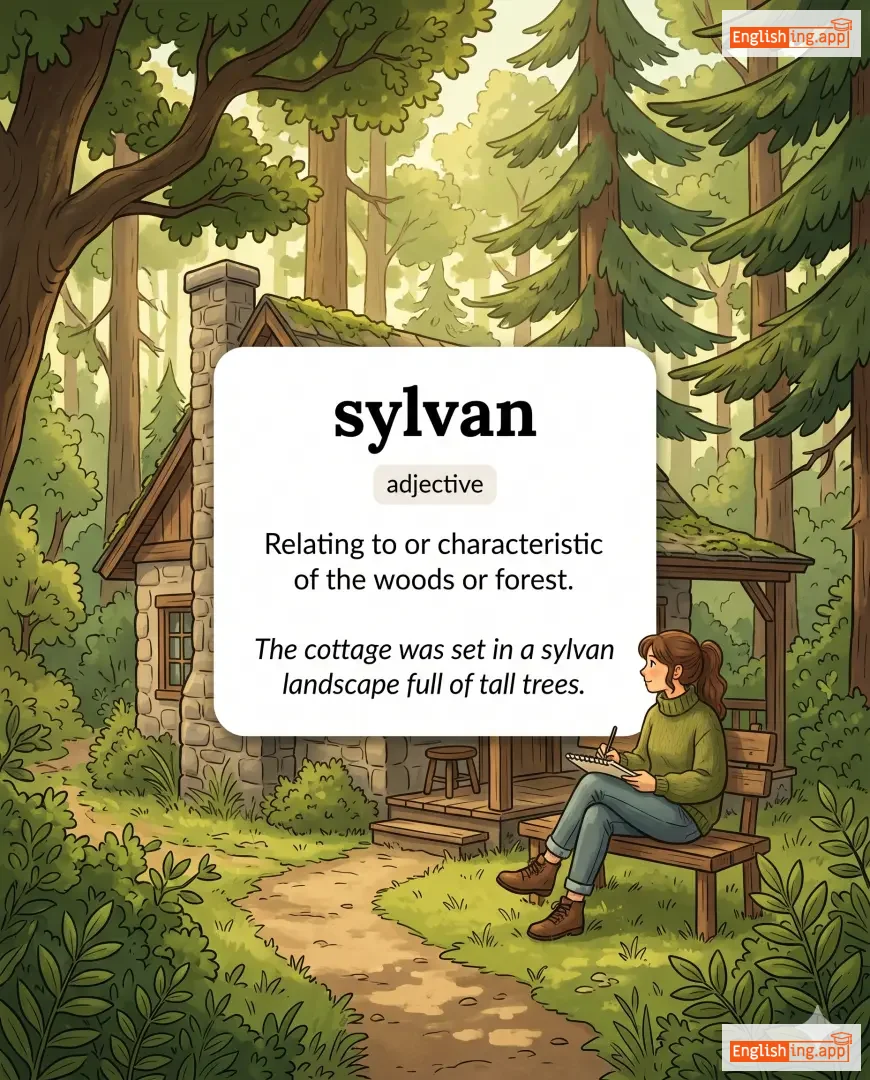
sylvan definition card — visual illustration of the meaning
adjective C2
/ˈsɪlvən/
лесной (lesnoy)

Relating to or characteristic of the woods or forest.

"The cottage was set in a sylvan landscape full of tall trees."

"Коттедж был расположен в лесном пейзаже, полном высоких деревьев." (Kottedzh byl raspolozhen v lesnom peyzazhe, polnom vysokikh derev'yev.)
adjective C2
/sɪmˈfoʊniəs/

Harmonious; producing a pleasant sound or agreement of sound.

"The choir's voices were symphonious and filled the hall with beauty."
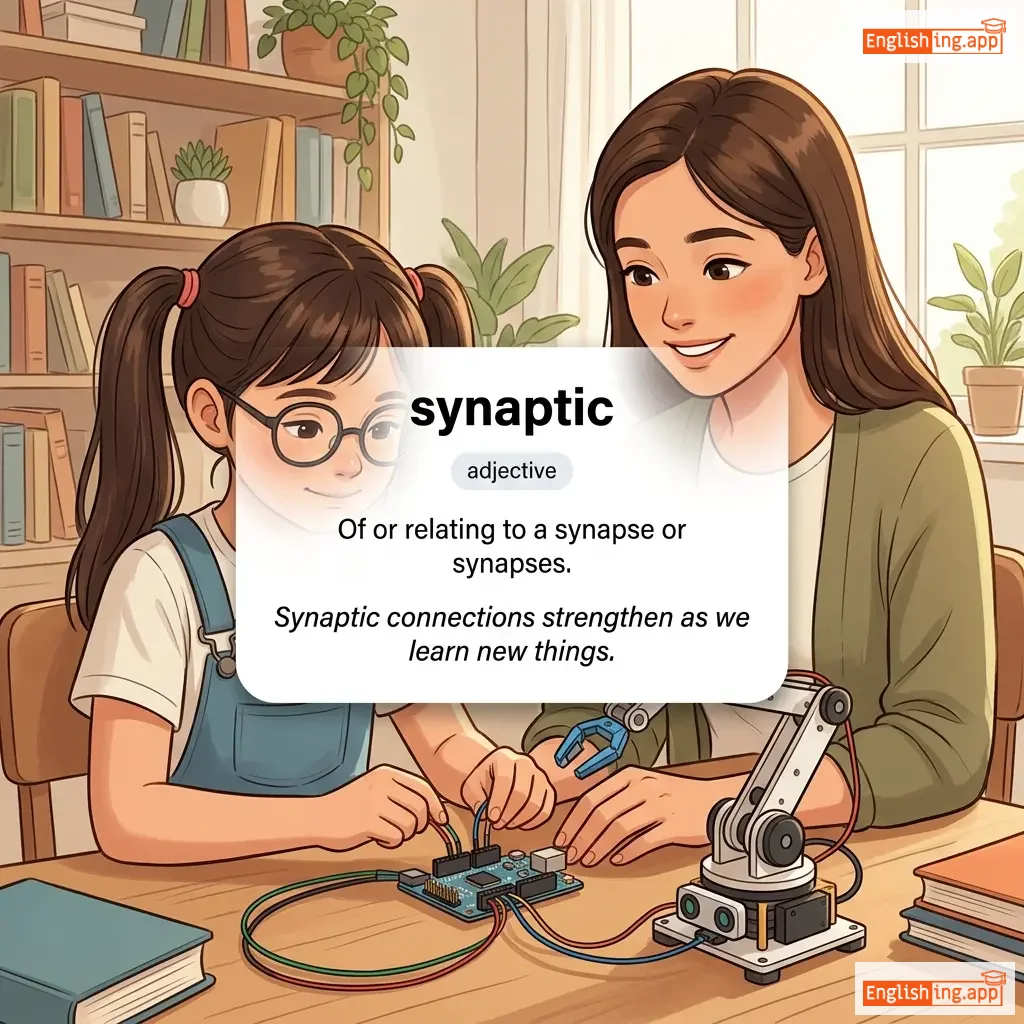
synaptic definition card — visual illustration of the meaning
adjective C2
sɪˈnæp.tɪk
относящийся к синапсу или синапсам (sinapticheskiy)

Of or relating to a synapse or synapses.

"Synaptic connections strengthen as we learn new things."
"Синаптические соединения укрепляются, когда мы учим новые вещи." (Sinapticheskie soedineniya ukreplyayutsya, kogda my uchim novye veshchi.)
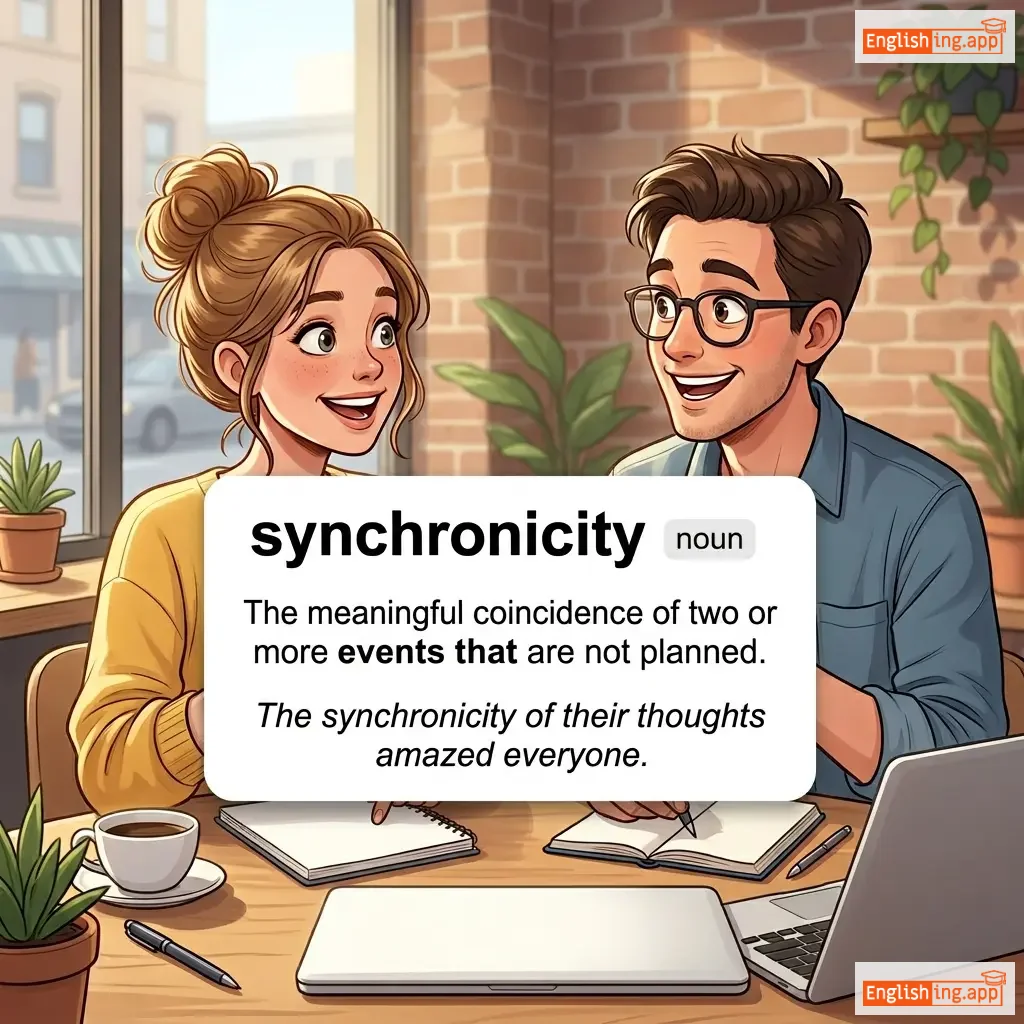
synchronicity definition card — visual illustration of the meaning
noun C2
/ˌsɪŋ.krəˈnɪs.ɪ.ti/
синхроничность (sinhronichnost')

The meaningful coincidence of two or more events that are not planned.

"The synchronicity of their thoughts amazed everyone."

"Синхроничность их мыслей удивила всех." (Sinkhronichnost' ikh mysley udivila vsekh.)
noun C2
/ˈsɪŋkrəˌnɪzəm/
синхронизация (sinkhronizatsiya)

The simultaneous occurrence of events or actions.

"The synchronism of the dancers' movements amazed the audience."
"Синхронизация движений танцоров поразила зрителей." (Sinkhronizatsiya dvizhheniy tantsorov porazila zriteley.)
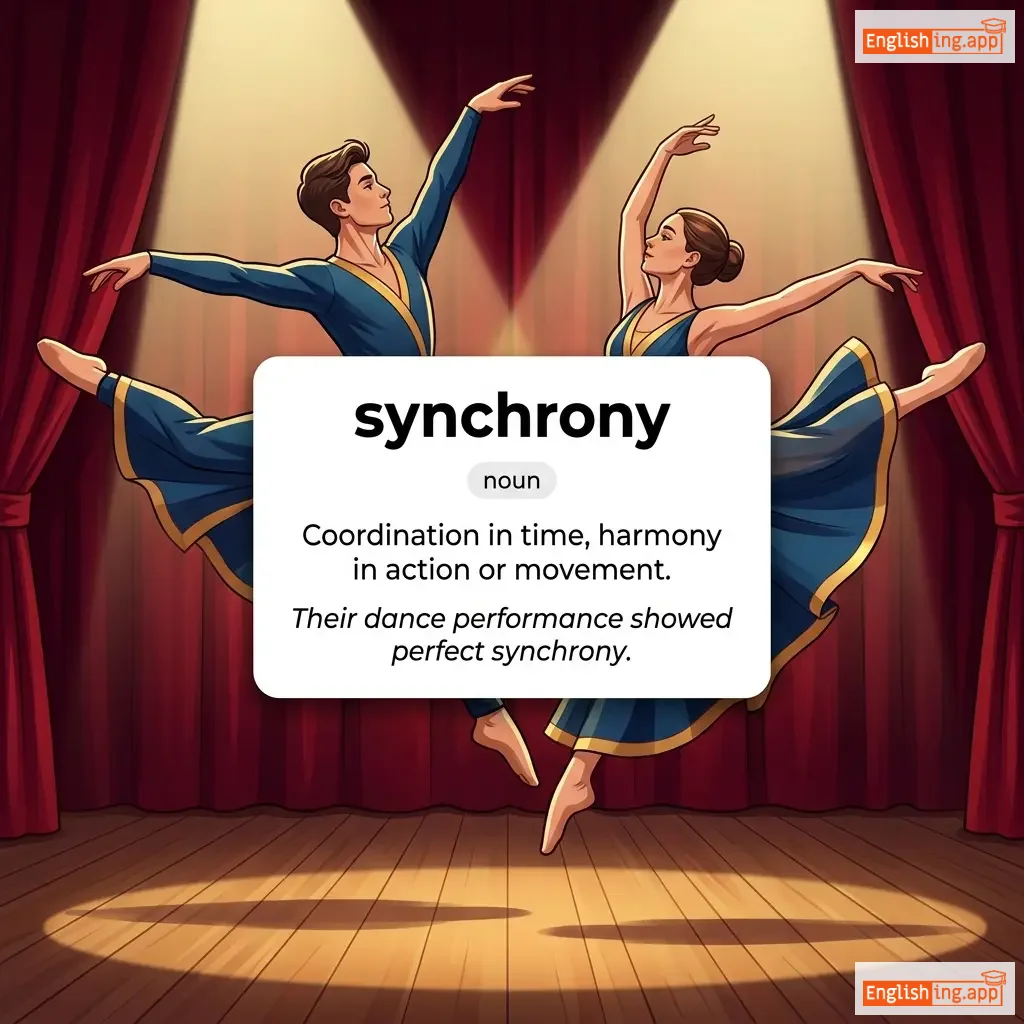
synchrony definition card — visual illustration of the meaning
noun C2
/ˈsɪŋ.krə.ni/
синхрония (sinhroniya)

Coordination in time, harmony in action or movement.

"Their dance performance showed perfect synchrony."

"Их танцевальное выступление показало идеальную синхронию." (Ikh tantseval'noye vystupleniye pokazalo ideal'nuyu sinkhroniyu.)
adjective C2
/ˈsɪŋkəˌpeɪtɪd/
синкопированный (sinkopirovannyy)

Characterized by displaced beats or rhythms, especially in music.

"The jazz piece had a syncopated rhythm that energized the crowd."

"Джазовый номер имел синкопированный ритм, который воодушевил толпу." (Dzhazovyy nomer imel sinkopirovannyy ritm, kotoryy voodushhevil tolpu.)
noun C2
/sɪˈnɛrəsɪs/
синерезис (syneresis)

The contraction of two adjacent vowels into a single syllable or the separation of liquid from a gel.

"The yogurt showed syneresis when liquid separated on top."

"Йогурт показал синерезис, когда жидкость отделилась сверху." (Yogurt pokazal sinerezis, kogda zhidkost otdelilas' sverkhu.)
adjective C2
/sɪˈnɜːrdʒɪk/
синергический (sinergicheskiy)

Working together in a cooperative and effective manner.

"The two departments have a synergic relationship that boosts productivity."

"Два отдела имеют синергические отношения, что повышает производительность." (Dva otdela imeyut sinergicheskiye otnosheniya, chto povyshayut proizvoditel'nost'.)
noun C2
/ˈsɪnəd/
синод (sinod)

An assembly of the clergy in a Christian church convened to decide on issues of doctrine or administration.

"The synod gathered to discuss reforms in the church."

"Синод собрался, чтобы обсудить реформы в церкви." (Sinod sobralsya, chtoby obsudit' reformy v tserkvi.)
adjective C2
/sɪˈnɒptɪk/
синоптический (sinopticheskiy)

giving a general overview or summary; presenting a broad view

"The report offers a synoptic view of climate trends over the past century."
"Отчет предлагает синоптический обзор климатических тенденций прошлого века." (Otchet predlagaet sinopticheskiy obzor klimaticheskikh tendentsiy proshlogo veka.)
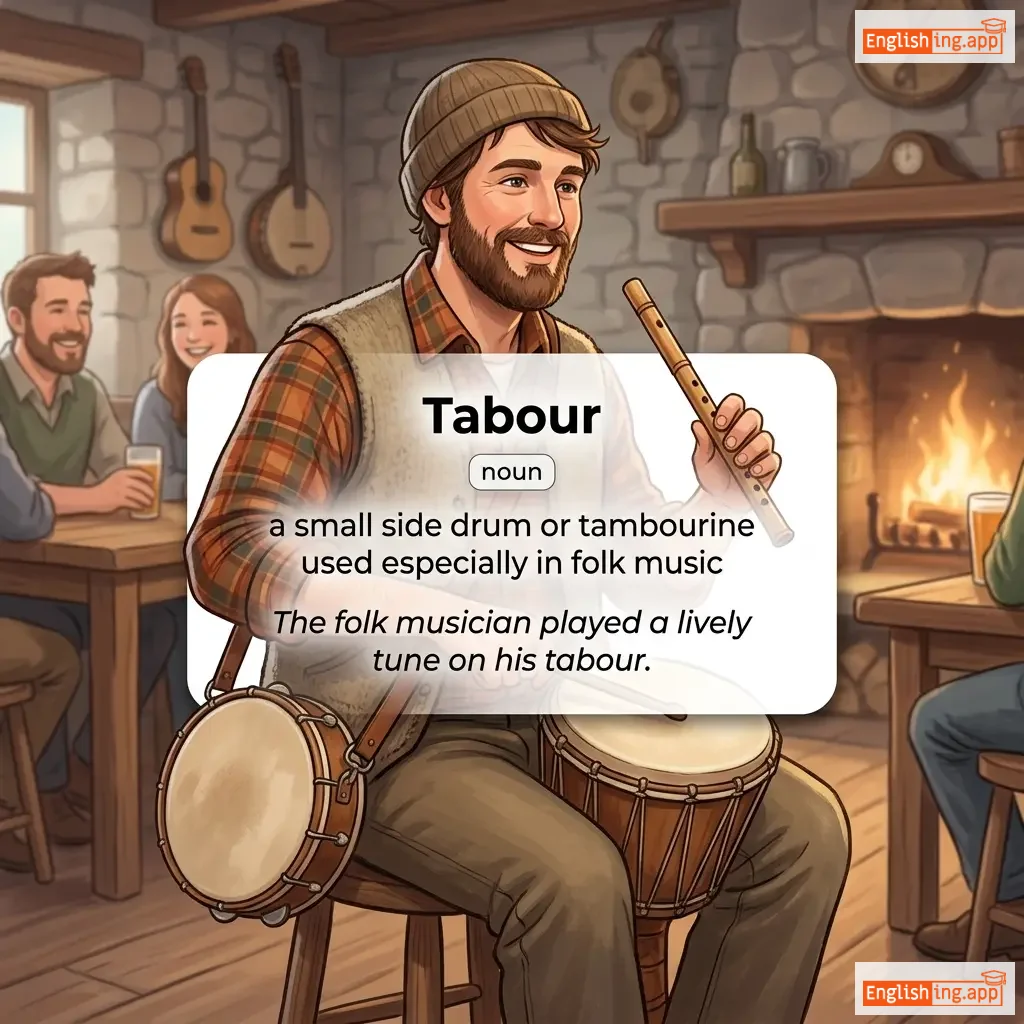
Tabour definition card — visual illustration of the meaning
noun C2
/ˈteɪbər/
барабан (baraban)

a small side drum or tambourine used especially in folk music

"The folk musician played a lively tune on his tabour."

"Народный музыкант играл живую мелодию на своем барабане." (Narodnyy muzykant igral zhivuyu melodiyu na svoem barabane.)
adjective C2
/ˈtæsɪtɜrn/
молчаливый (molchalivyy)

reserved or uncommunicative in speech; saying little

"He was a taciturn man who rarely spoke in meetings."
"Он был молчаливым человеком, который редко говорил на собраниях." (On byl molchalivym chelovekom, kotoryy redko govorit na sobraniyakh.)
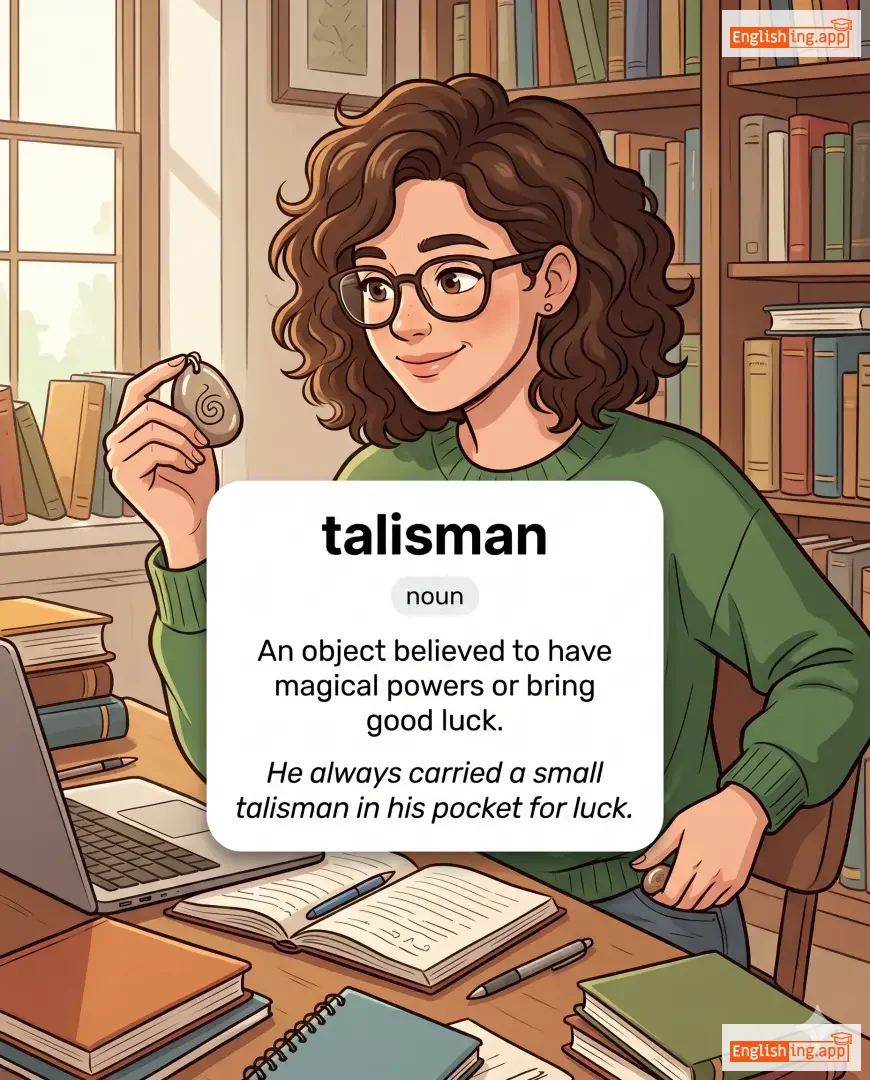
talisman definition card — visual illustration of the meaning
noun C2
/ˈtælɪzmən/
талисман (talisman)

An object believed to have magical powers or bring good luck.

"He always carried a small talisman in his pocket for luck."

"Он всегда носил маленький талисман в своем кармане для удачи." (On vsegda nosil malen'kiy talisman v svoem karmane dlya udachi.)
noun C2
/ˈtælən/
коготь (kogot')

A claw, especially one belonging to a bird of prey.

"The eagle gripped the fish with its sharp talons."

"Орел схватил рыбу своими острыми когтями." (Orel skhvatil rybu svoimi ostrymi kogtyami.)
verb C2
/tæmp/
утрамбовывать (utrambovyvat)

to press down tightly by packing

"He tamped the soil around the plant to secure it."

"Он утрамбовал почву вокруг растения, чтобы закрепить её." (On utramboval pochvu vokrug rastenija, chtoby zakrepit ee.)
noun C2
/ˈtændʒənsi/
касание (kasanie)

the condition of touching but not intersecting, especially in geometry

"The circle and the line are in a state of tangency at one point."

"Круг и линия находятся в состоянии касания в одной точке." (Krug i liniya nakhodyatsya v sostoyanii kasaniya v odnoi tochke.)
noun C2
/tɑːrn/
горное озеро (gornoye ozero)

A small mountain lake or pool.

"We camped near a tranquil tarn in the highlands."

"Мы разбили лагерь рядом с тихим горным озером в высокогорье." (My razbili lager' ryadom s tikhim gornym ozerom v vysokogorye.)
verb C2
/ˈtæri/
задерживаться (zaderzhivat'sya)

To delay or linger; to stay longer than intended.

"Do not tarry, or you will miss the train."

"Не задерживайся, иначе опоздаешь на поезд." (Ne zaderzhivaysya, inache opozdaesh' na poezd.)
noun, adjective C2
/ˌtætərdɪˈmeɪliən/
человек в рваной одежде (chelovek v rvanoy odezhde)

A person dressed in ragged clothes; ragged or dilapidated in appearance.

"A tatterdemalion wandered the streets in search of food."

"Тэттердемалион бродил по улицам в поисках еды." (Tetterdemalion brodil po ulitsam v poiskakh yedy.)
adjective C2
/ˌtɔːtəˈlɒdʒɪkəl/
тавтологичный (tavtologichnyy)

expressing something by repeating the same idea in different words; redundant

"Saying 'free gift' is considered tautological."

"Сказать 'бесплатный подарок' считается тавтологией." (Skazat' 'besplatnyy podarok' schitayetsya tavtologiyey.)
tautology definition card — visual illustration of the meaning
noun C2
/tɔːˈtɒlədʒi/
ненужное повторение (nenuzhnoe povtorenie)

the unnecessary repetition of the same idea in different words

"The phrase 'it will happen or it won’t' is a tautology."

"Фраза 'это случится или не случится' — это тавтология." (Fraza 'eto sluchitsya ili ne sluchitsya' — eto tautologiya.)
adjective C2
/ˈtɔːdri/
дешевый и показной, но низкого качества (deshevyy i pokaznoy, no nizkogo kachestva)

cheap and showy but of poor quality

"She wore a tawdry necklace that broke easily."

"Она носила дешевое и показное ожерелье, которое легко сломалось." (Ona nosila deshevoye i pokaznoye ozherelye, kotoroye legko slomalos'.)
adjective C2
/ˈtɔːni/
жёлто-коричневый цвет (zhelto-korichnevyy tsvet)

A warm, sandy or golden-brown color.

"The owl's tawny feathers blended with the tree bark."

"Жёлто-коричневые перья совы сливались с корой дерева." (Zhelto-korichnevye per'ya sovy slivalis' s koroy dereva.)
noun C2
/ˈtæksɪˌdɜːrmi/
таксидермия (taksidermiya)

The art of preparing, stuffing, and mounting the skins of animals for display.

"The museum had a large collection of taxidermy animals."

"В музее была большая коллекция чучел животных." (V muzeye byla bol'shaya kollektsiya chuchel zhivotnykh.)
noun C2
/tækˈsɒnəmɪst/
таксономист (taksonomist)

A scientist who classifies organisms into groups based on their characteristics.

"The taxonomist discovered a new species of insect."

"Таксономист обнаружил новый вид насекомых." (Taksonomist obnaruzhil novyy vid nasekomykh.)
noun C2
/tɛkˈnɒɡrəfi/
технография (tekhnohrafiya)

the descriptive study or writing about the practical arts, technologies, or technical methods of a society

"The anthropologist specialized in technography to understand indigenous tool-making traditions."

"Антрополог специализировался на технографии, чтобы понять традиции создания орудий у коренных народов." (Antropolog spetsializirovalsya na tekhnografii, chtoby ponyat' traditsii sozdaniya orudiy u korennykh narodov.)
noun C2
/tiːˈtoʊtəlɪzəm/
полное воздержание от алкоголя (polnoe vozderzhanie ot alkogolya)

the practice or principle of abstaining completely from alcoholic drinks

"He practiced teetotalism throughout his life."

"Он практиковал титотализм всю свою жизнь." (On praktikovav titotalizm vsyu svoyu zhizn.)
telemetry definition card — visual illustration of the meaning
noun C2
ˈtɛlɪˌmɛtri
телеметрия (telemetriya)

The process of recording and transmitting the readings of an instrument.

"The spacecraft transmitted telemetry data back to Earth."

"Космический аппарат передал данные телеметрии на Землю." (Kosmicheskiy apparat peredal dannye telemetrii na Zemlyu.)
noun C2
/ˌtɛliˈɒlədʒi/
телеология (teleologiya)

the explanation of phenomena by the purpose they serve rather than by cause

"Aristotle is often associated with the concept of teleology in philosophy."

"Аристотель часто ассоциируется с концепцией телеологии в философии." (Aristotel' chasto assotsiirovetsya s kontseptsiey teleologii v filosofii.)
adjective C2
/ˌtɛmɪˈrɛəriəs/
безрассудный (bezrassudnyy)

Reckless or rash; showing a lack of caution.

"It was a temerarious decision to cross the river during the storm."

"Это было безрассудное решение пересечь реку во время шторма." (Eto bylo bezrassudnoe reshenie peresech' reku vo vremya shtorma.)
noun C2
/təˈmɛrɪti/
дерзость (derzost)

Excessive confidence or boldness; audacity.

"He had the temerity to challenge the professor’s argument."

"У него хватило дерзости оспорить аргумент профессора." (U nego khvatilo derzosti osporit' argument professora.)
verb C2
/ˈtɛmpəˌraɪz/
откладывать (otkladyvat)

To delay making a decision or taking action in order to gain time.

"The politician temporized when asked about the controversial issue."

"Политик откладывал, когда его спрашивали о спорном вопросе." (Politik otkladyval, kogda ego sprashivali o spornom voprose.)