Словари

Словарь английского языка | Значения слов, определения и примеры

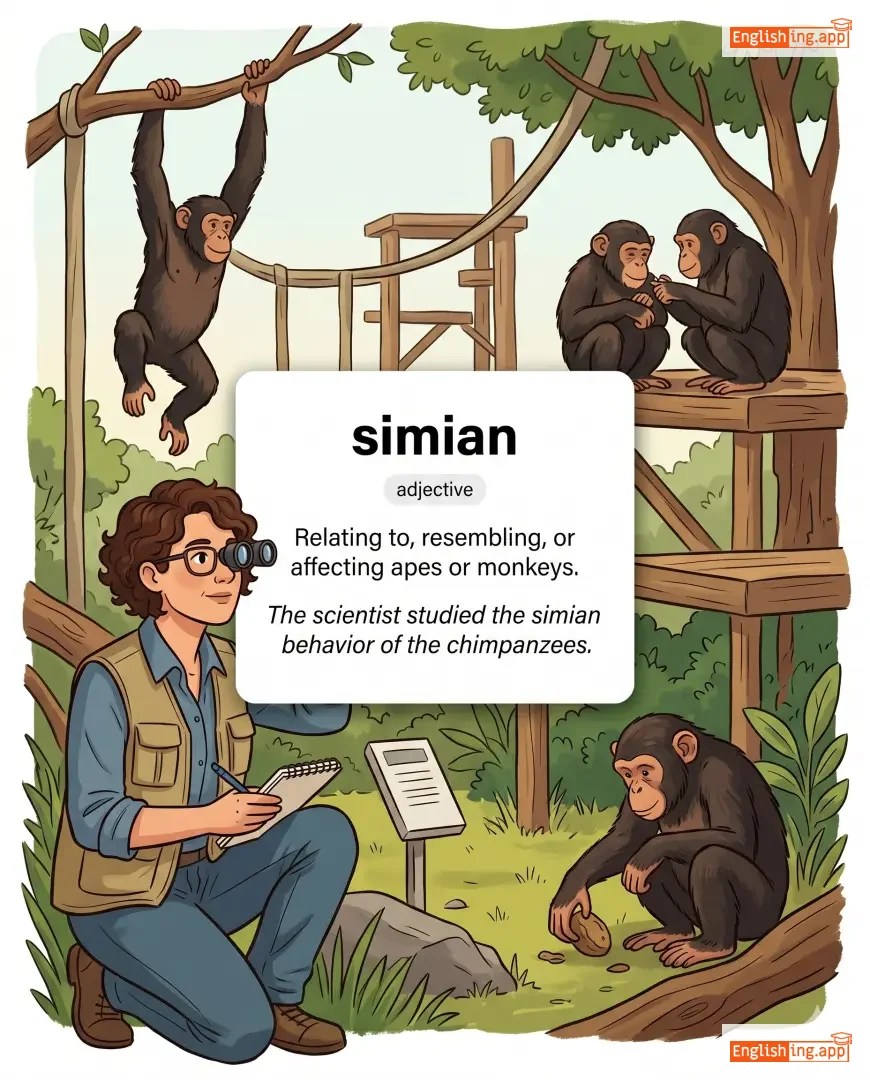
simian definition card — visual illustration of the meaning
adjective C2
/ˈsɪmiən/
मनुष्य से मिलता-जुलता (manushya se milta-julta)

Relating to, resembling, or affecting apes or monkeys.

"The scientist studied the simian behavior of the chimpanzees."
"वैज्ञानिक ने चिम्पांजी के मानव जैसे व्यवहार का अध्ययन किया।" (Vaigyanik ne chimpanzee ke manushya jaise vyavhaar ka adhyayan kiya.)
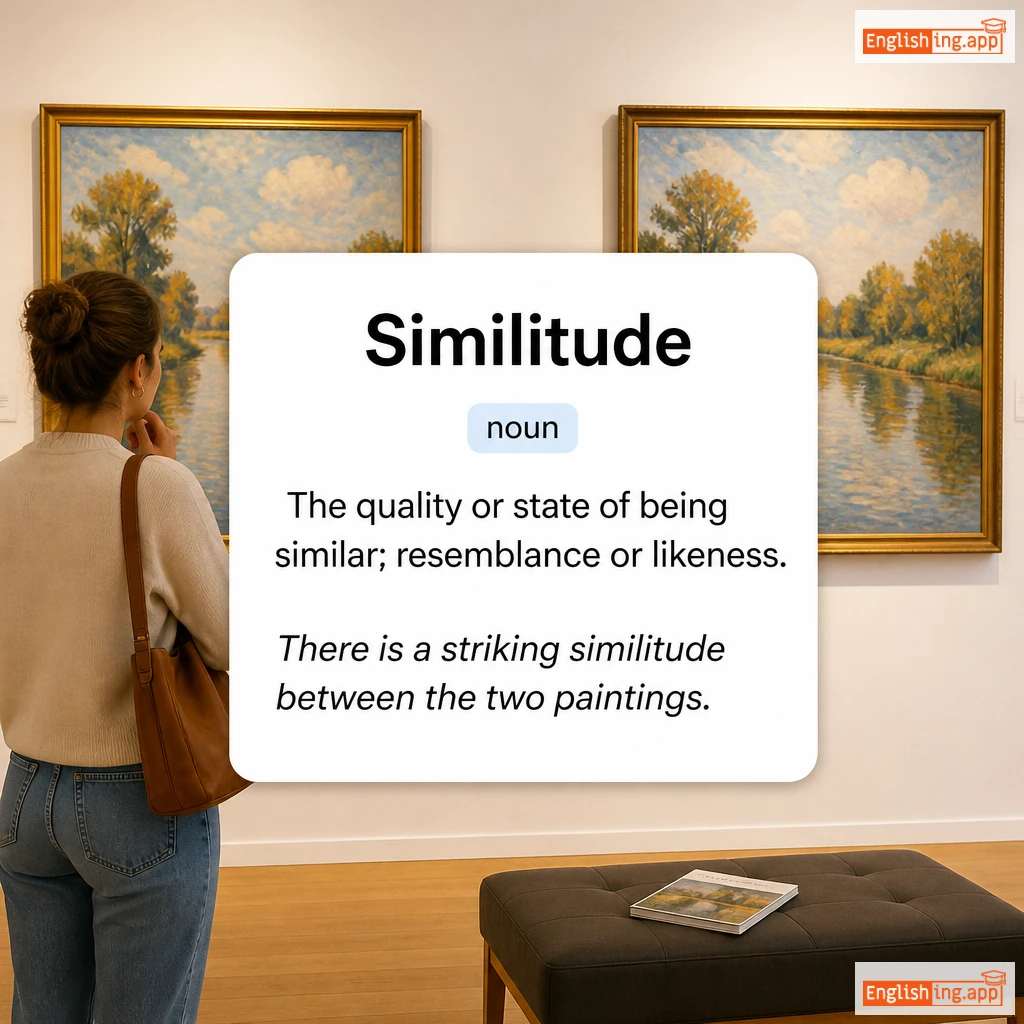
Similitude definition card — visual illustration of the meaning
noun C2
/sɪˈmɪlɪˌtjuːd/
सादृश्यता (sadrishyata)

The quality or state of being similar; resemblance or likeness.

"There is a striking similitude between the two paintings."

"दो पेंटिंग्स के बीच एक उत्तेजक सादृश्यता है।" (Do paintings ke beech ek uttejak sadrishyata hai.)
verb C2
/ˈsɪmpər/
बेवकूफी से हंसना (bewakoofi se hansna)

to smile in a silly, self-conscious, or affected way

"She simpered at his compliment, clearly embarrassed."

"वह उसके प्रति प्रशंसा पर बेवकूफी से हंसी, स्पष्ट रूप से शर्मिंदा थी।" (Vah uske prati prashansa par bewakoofi se hansi, spasht roop se sharminda thi.)
noun C2
/ˈsɪmpəltən/
मूर्ख व्यक्ति (moorkh vyakti)

a foolish or gullible person

"They treated him like a simpleton who could not understand anything complex."

"उन्होंने उसे एक मूर्ख व्यक्ति की तरह ट्रीट किया जो कुछ भी जटिल नहीं समझ सकता था।" (Unhone use ek moorkh vyakti ki tarah treat kiya jo kuch bhi jatil nahi samajh sakta tha.)
noun C2
/ˌsɪmjʊˈleɪkrəm/
अनुकरण (anukaran)

an image or representation of someone or something; a superficial likeness

"The statue was only a simulacrum of the ancient god."
"प्रतिमा केवल प्राचीन देवता का अनुकरण थी।" (Pratima keval prachin devta ka anukaran thi.)
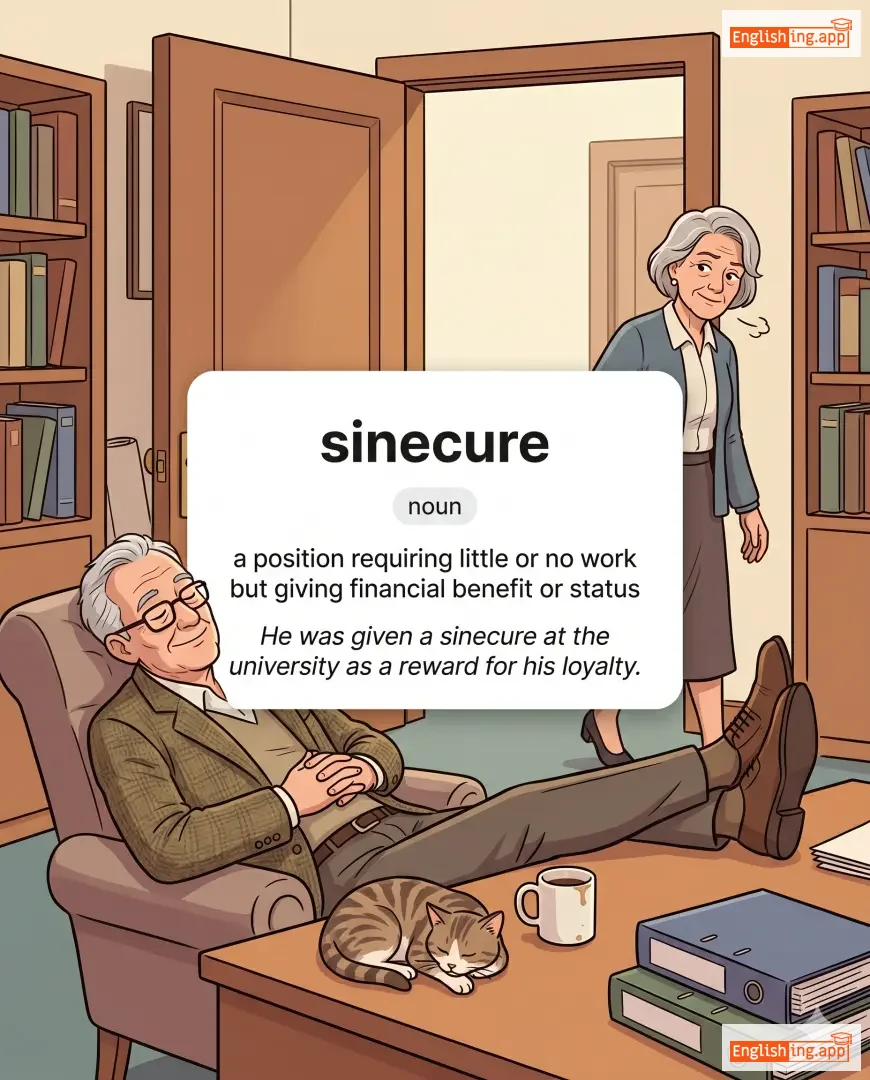
sinecure definition card — visual illustration of the meaning
noun C2
/ˈsaɪnɪkjʊər/
आसान नौकरी (aasan naukri)

a position requiring little or no work but giving financial benefit or status

"He was given a sinecure at the university as a reward for his loyalty."

"उसे विश्वविद्यालय में उसकी वफादारी के पुरस्कार के रूप में एक आसान नौकरी दी गई।" (Use vishwavidyalay mein uski wafadari ke puraskar ke roop mein ek aasan naukri di gayi.)
noun C2
/ˈsɪnjuː/
तनिका (tanika)

A tendon; figuratively, the source of strength, power, or resilience.

"The sinews in his arms stood out as he lifted the heavy box."

"जब उसने भारी बॉक्स उठाया तो उसके हाथों में टेनिका साफ दिखाई दे रहे थे।" (Jab usne bhaari box uthaya to uske haathon mein tanika saaf dikhayi de rahe the.)
adjective C2
/ˈsɪnjuːi/
मांसल और मजबूत (maansal aur majboot)

Lean and muscular; strong and tough.

"The athlete had a sinewy build that showed his strength."

"एथलीट का मांसल शरीर उसकी ताकत को दर्शाता था।" (Athleet ka maansal sharir uski taqat ko darshata tha.)
noun C2
/ˌsɪnjuˈɒsɪti/
वक्रता (vakrata)

The quality or state of being winding, curving, or having many turns.

"The sinuosity of the river made navigation challenging."

"नदी की वक्रता ने नौवहन को चुनौतीपूर्ण बना दिया।" (Nadi ki vakrata ne nauvahan ko chunautipurn bana diya.)
noun C2
/sɪˈrɒkoʊ/
गर्म, शुष्क हवा (garm, shushk hawa)

A hot, dry wind blowing from North Africa across the Mediterranean to southern Europe.

"The sirocco made the city unbearably hot and dusty."

"सिरोक्को ने शहर को असहनीय गर्म और धूल भरा बना दिया।" (Sirocco ne shahar ko asahniya garm aur dhool bhara bana diya.)
noun C2
/skɪf/
छोटा नाव (chhota naav)

a small, light boat usually for one person

"The fisherman paddled his skiff across the lake."

"मछुआरे ने अपनी छोटी नाव को झील के पार पैडल किया।" (Machhuaare ne apni chhoti naav ko jheel ke paar pedal kiya.)
noun C2
/ˈskɪnˌflɪnt/
कंजूस (kanjoos)

a person who spends as little money as possible; a miser

"The landlord was such a skinflint that he never repaired anything."

"मालिक इतना कंजूस था कि उसने कभी कुछ मरम्मत नहीं की।" (maalik itna kanjoos tha ki usne kabhi kuch marammat nahin ki.)
noun C2
/skʌlˈdʌɡəri/
धोखाधड़ी (dhokhadhadi)

underhanded or dishonest behavior

"The politician was accused of financial skulduggery."

"राजनेता पर वित्तीय धोखाधड़ी का आरोप था।" (Rajnetā par vittīya dhokhādhaṛī kā ārop thā.)
verb C2
/skʌlk/
गुपचुप चलना (gupchup chalna)

to move or hide secretly, often because you are planning something bad or are feeling guilty

"He tried to skulk in the shadows to avoid being seen."

"वह छाया में छिपने की कोशिश कर रहा था ताकि उसे देखा न जा सके।" (Wah chhaya mein chhipne ki koshish kar raha tha taaki use dekha na ja sake.)
noun C2
/ˌskʌlˈdʌɡəri/
धोखाधड़ी (dhokhadhadi)

dishonest behavior or activities, often done secretly

"The election was full of political skullduggery."

"चुनाव राजनीतिक धोखाधड़ी से भरा हुआ था।" (Chunav raajnaitik dhokhadhadi se bhara hua tha.)
verb C2
/sleɪk/
प्यास बुझाना (pyaas bujhna)

To satisfy thirst or desire.

"She drank cold water to slake her thirst."

"वह अपनी प्यास बुझाने के लिए ठंडा पानी पी रही थी।" (Vah apni pyaas bujhane ke liye thanda paani pee rahi thi.)
adjective C2
/ˈslæp.dæʃ/
लापरवाह (laparwah)

done too quickly and carelessly; hasty and careless

"The report was written in a slapdash manner, full of errors."

"रिपोर्ट लापरवाही से लिखी गई थी, जिसमें बहुत सारी गलतियाँ थीं।" (Report laparwahi se likhi gayi thi, jismein bahut saari galtiyan thin.)
noun C2
/ˈslæt.ən/
अपरिचित महिला (aparichit mahila)

a woman who is untidy or slovenly in appearance or habits

"The house looked as if a slattern lived there."

"घर ऐसा लग रहा था जैसे वहां एक अपरिचित महिला रहती हो।" (Ghar aisa lag raha tha jaise wahan ek aparichit mahila rahti ho.)
noun C2
/slaɪt/
कला (kala)

Skill or dexterity, especially in performing tricks.

"The magician amazed the crowd with his sleight of hand."

"जादूगर ने अपनी कला से भीड़ को चकित कर दिया।" (Jadugar ne apni kala se bheed ko chakit kar diya.)
adjective C2
/ˈslɪpʃɒd/
लापरवाह, अस्तव्यस्त (laparwah, astavyast)

done in a careless, sloppy, or untidy way

"The project failed due to slipshod planning."

"योजना के बिना काम करने के कारण परियोजना विफल हो गई।" (Yojana ke bina kaam karne ke kaaran pariyojna viphal ho gayi.)
adjective C2
/ˈsloʊθfəl/
आलसी (aalsi)

Lazy, idle, and unwilling to work.

"She was too slothful to get out of bed early."

"वह जल्दी बिस्तर से उठने के लिए बहुत आलसी थी।" (vah jaldi bistar se uthne ke liye bahut aalsi thi.)
verb C2
/slʌf/ or /sluː/
त्वचा उभारना / कीचड़ क्षेत्र (twacha ubharna / keechar kshetra)

To shed or cast off (like dead skin); also a swampy or muddy area.

"The snake sloughed off its old skin."

"सांप ने अपनी पुरानी त्वचा उभारी।" (saamp ne apni purani twacha ubhaari.)
adjective C2
/ˈslʌvənli/
अव्यवस्थित (avyavasthit)

Untidy or careless in appearance, habits, or work.

"His slovenly appearance made a bad impression at the interview."

"उसकी अव्यवस्थित उपस्थिति ने साक्षात्कार में बुरा प्रभाव डाला।" (uski avyavasthit upasthiti ne sakshatkar mein bura prabhav dala.)
noun C2
/ˈslʌɡərd/
आलसी व्यक्ति (aalsi vyakti)

A lazy, sluggish person.

"The sluggard refused to get out of bed even at noon."

"आलसी व्यक्ति ने दोपहर तक बिस्तर से उठने से इनकार कर दिया।" (aalsi vyakti ne dopahar tak bistar se uthne se inkaar kar diya.)
noun/verb C2
/sluːs/
पानी प्रवाह का गेट / धोना (pani prabhav ka get / dhona)

A sliding gate for controlling the flow of water; to wash or rinse with water in large quantities.

"The workers sluiced the mud off the street after the heavy rain."

"भारी बारिश के बाद श्रमिकों ने सड़क से कीचड़ धो दिया।" (bhari barish ke baad shramikon ne sadak se keechad dhoya diya.)
adjective C2
/ˈsmɑːrmi/
चाटूकारी / झूठी विनम्रता (chatukari / jhoothi vinamrata)

Excessively flattering or ingratiating, often insincerely.

"The salesman gave a smarmy pitch that felt fake."
"विक्रेता ने एक चाटूकारी प्रस्तुति दी जो झूठी लग रही थी।" (Vikreta ne ek chatukari prastuti dee jo jhoothi lag rahi thi.)
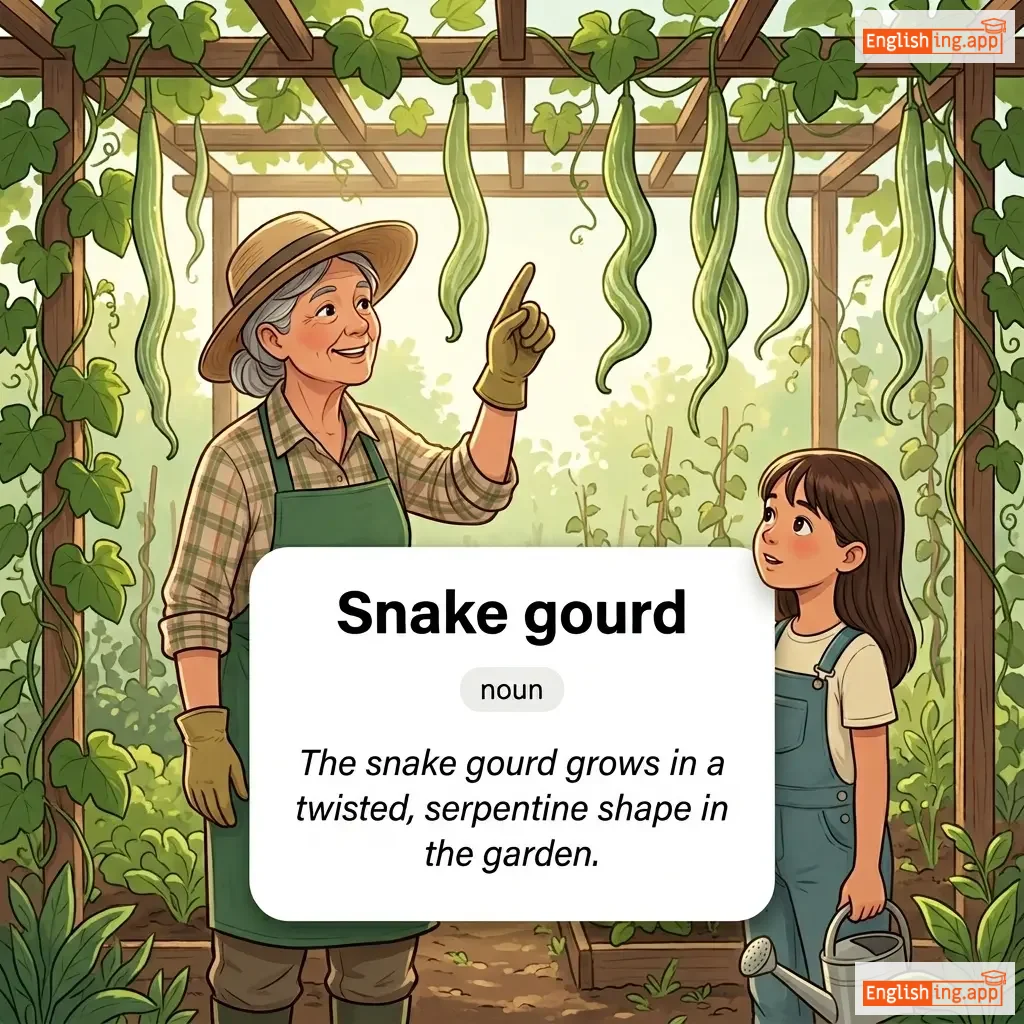
Snake gourd definition card — visual illustration of the meaning
noun C2
/sneɪk ɡɔːrd/
सांप लौकी (saamp laukee)

a long, curved vegetable that resembles a snake, commonly used in South Asian cuisine

"The snake gourd grows in a twisted, serpentine shape in the garden."

"सांप लौकी बग़ीचे में मुड़े हुए, साँप जैसी आकृति में बढ़ती है।" (saamp laukee bageeche mein mudhe hue, saanp jaisi aakriti mein briddhi karti hai.)
verb C2
/ˈsnɪvəl/
रोना या शिकायत करना एक कमजोर या चिढ़ाने वाले तरीके से (rona ya shikayat karna ek kamzor ya chidhane wale tareeke se)

to cry or complain in a weak or annoying way

"He began to snivel when he didn’t get his way."

"वह जब अपनी मनमानी नहीं कर सका तो वह स्निवेल करने लगा।" (Woh jab apni manmaani nahi kar saka to woh snivel karne laga.)
verb C2
/ˈsnʌfəl/
नाक से शोर कर के साँस लेना (nak se shor kar ke sans lena)

to breathe noisily through the nose, often because of crying or a cold

"The child began to snuffle after crying for a long time."

"लंबे समय तक रोने के बाद बच्चा नाक से शोर कर के साँस लेने लगा।" (Lambe samay tak rone ke baad bachcha nak se shor kar ke sans lene laga.)
noun C2
/ˈsoʊbrɪˌkeɪ/
उपनाम (upanam)

a person's nickname or descriptive name

"The famous leader was known by the sobriquet 'The Iron Lady'."
"प्रसिद्ध नेता 'द आयरन लेडी' उपनाम से जानी जाती थीं।" (Prasiddh neta 'The Iron Lady' upnaam se jani jaati thi.)
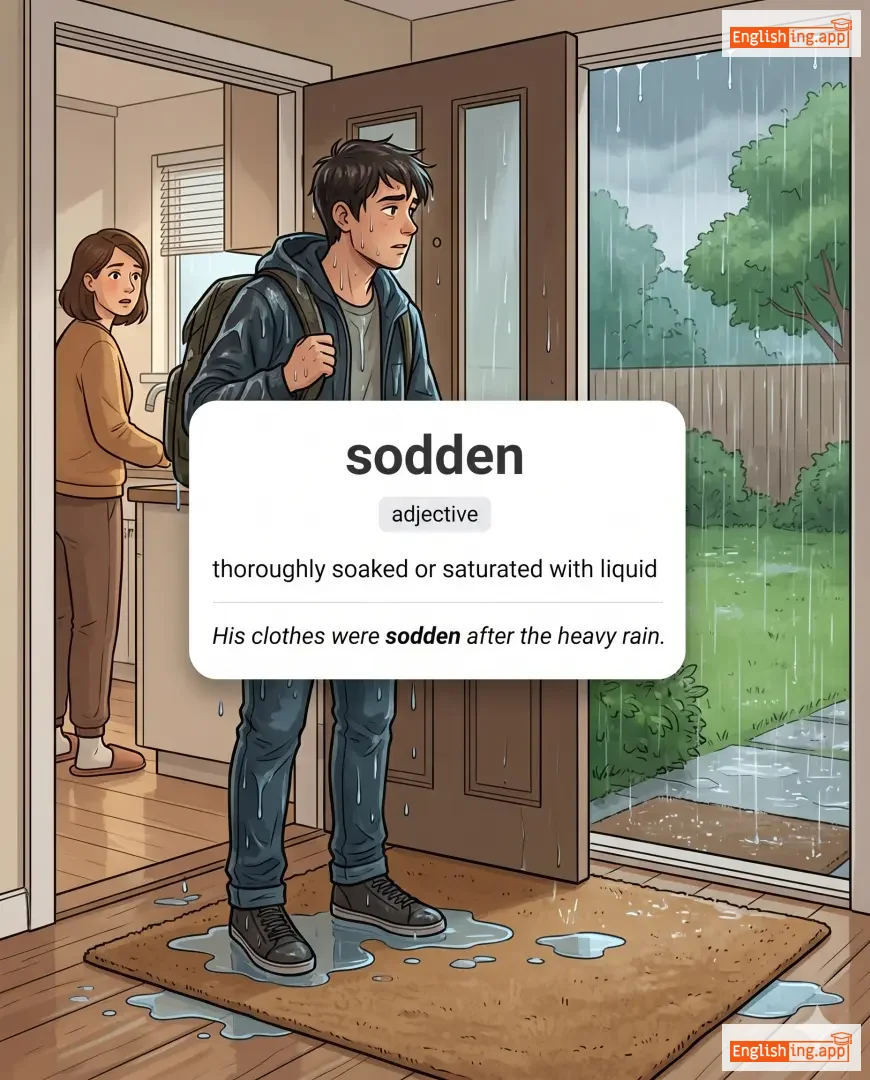
sodden definition card — visual illustration of the meaning
adjective C2
/ˈsɑːdn/
भीगा हुआ (bheega hua)

thoroughly soaked or saturated with liquid

"His clothes were sodden after the heavy rain."

"उसके कपड़े भारी बारिश के बाद भीगे हुए थे।" (Uske kapde bhaari baarish ke baad bheege huye the.)
noun/verb C2
/ˈsoʊdʒɜrn/
अस्थायी Aufenthalt (asthayi avasthaan)

A temporary stay at a place; to stay temporarily

"She enjoyed a brief sojourn in Paris during the summer."

"उसने गर्मियों के दौरान पेरिस में एक संक्षिप्त अस्थायी ठहराव का आनंद लिया।" (Usne garmiyon ke dauran Paris mein ek sankshipt asthayi thaharav ka anand liya.)
noun C2
/sɒl/
सोल (संगीत के पांचवे स्वर) (sol (sangeet ke paanchve swar))

The fifth note of the sol-fa musical scale (do, re, mi, fa, sol, la, ti); also the Latin word for sun

"The choir practiced singing the note sol during rehearsal."

"कोइर रिहर्सल के दौरान सोल स्वर को गाने का अभ्यास किया था।" (Choir rehearsal ke dauran sol swar ko gane ka abhyas kiya tha.)
noun C2
/ˈsɒlɪˌsɪzəm/
वचनविन्यास की गलती (vachanvinyas ki galti)

a grammatical mistake in speech or writing; a breach of good manners or etiquette

"His speech was full of solecisms and awkward phrases."
"उसका भाषण वचनविन्यास की गलतियों और अजीब वाक्यांशों से भरा हुआ था।" (Uska bhashan vachanvinyas ki galtiyon aur ajeeb vaakyaanshon se bhara hua tha.)
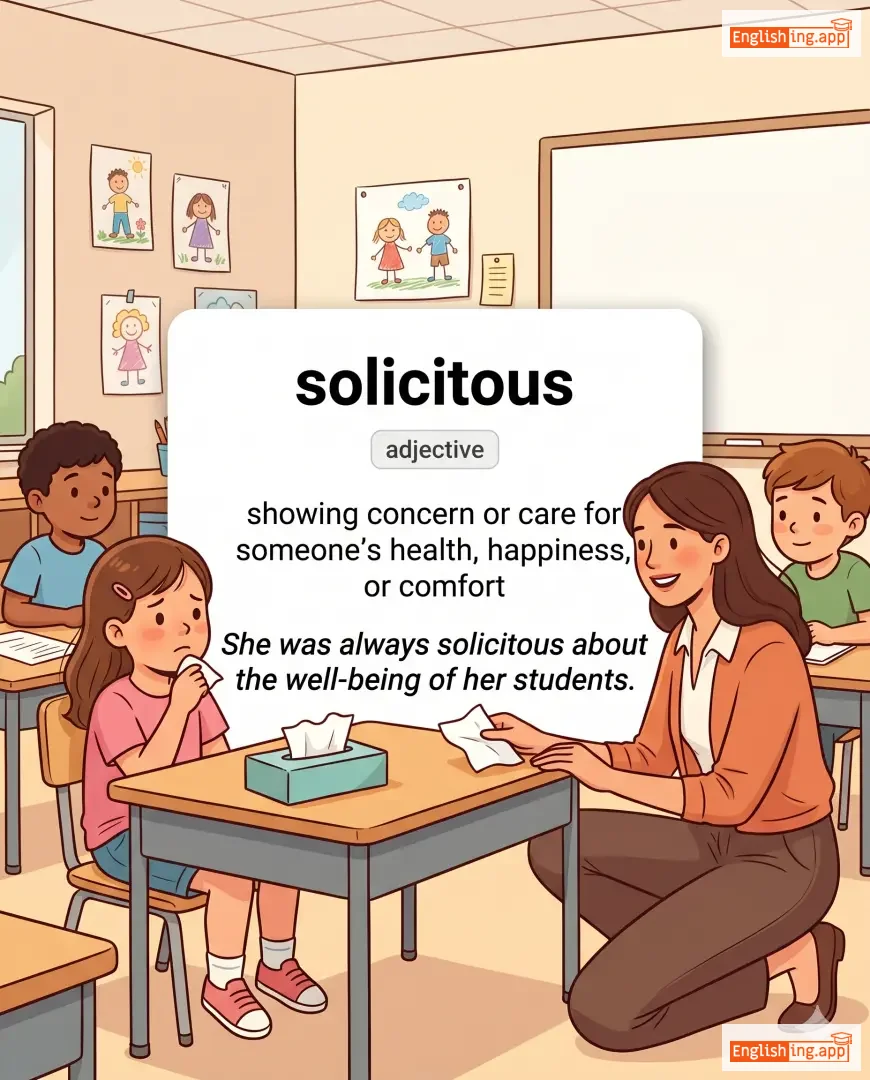
solicitous definition card — visual illustration of the meaning
adjective C2
/səˈlɪsɪtəs/
सहानुभूतिपूर्ण (sahanubhootipoorn)

showing concern or care for someone's health, happiness, or comfort

"She was always solicitous about the well-being of her students."

"वह हमेशा अपने छात्रों की भलाई के बारे में सहानुभूतिपूर्ण थी।" (Wah hamesha apne chhatron ki bhalaai ke baare mein sahanubhootipoorn thi.)
noun C2
/səˈlɪsɪˌtuːd/
चिंता, देखभाल (chinta, dekhbhal)

Care or concern for someone or something.

"His mother showed great solicitude for his safety."
"उसकी माँ ने उसकी सुरक्षा के लिए गहरी चिंता दिखाई।" (Uski maa ne uski suraksha ke liye gahri chinta dikhayi.)
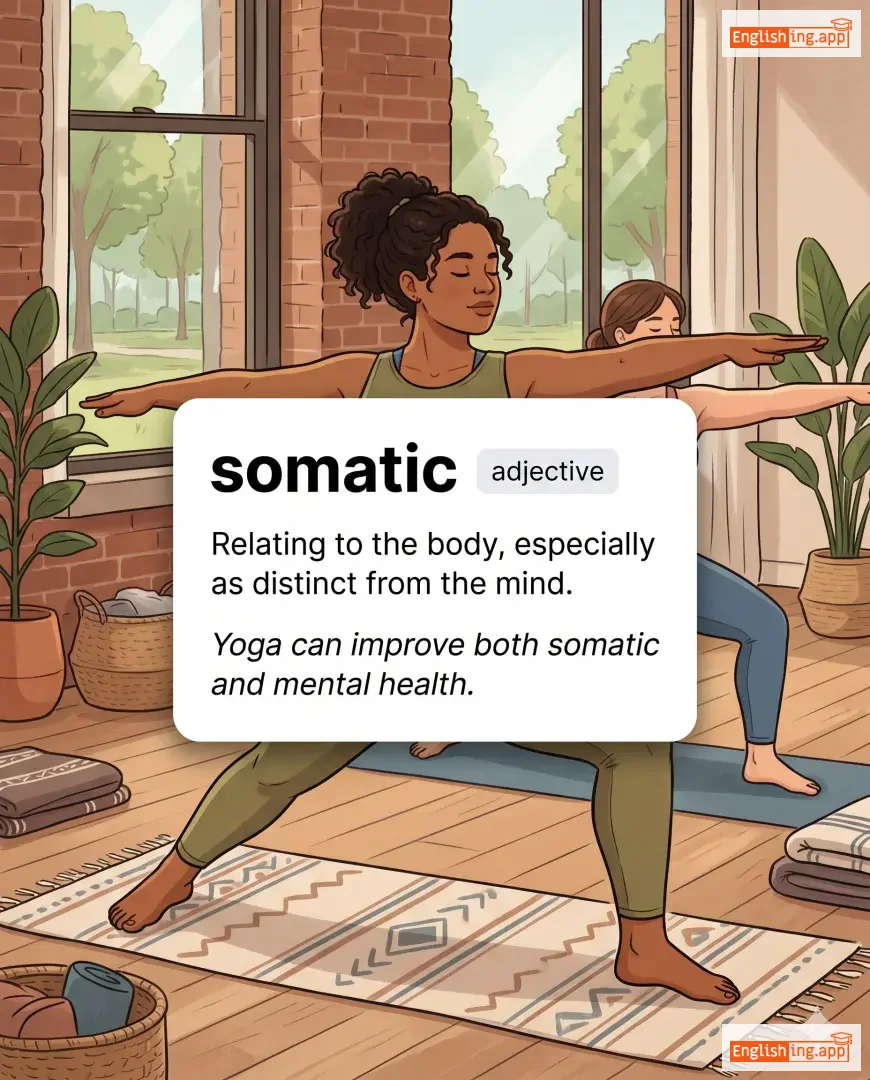
somatic definition card — visual illustration of the meaning
adjective C2
/səˈmætɪk/
शारीरिक (sharirik)

Relating to the body, especially as distinct from the mind.

"Yoga can improve both somatic and mental health."

"योग शारीरिक और मानसिक स्वास्थ्य दोनों को सुधार सकता है।" (Yoga sharirik aur maansik swaasthya dono ko sudhaar sakta hai.)
noun C2
/sɒmˈnæmbjʊlɪst/
सोमनाम्ब्युलिस्ट (somnambulist)

A person who sleepwalks.

"The somnambulist wandered out of the house at night."

"सोमनाम्ब्युलिस्ट रात को घर से बाहर चला गया।" (Somnambulist raat ko ghar se bahar chala gaya.)
adjective C2
/sɒmˈnɪfərəs/
नींद लाने वाला (neend lane wala)

Tending to induce sleep; soporific.

"The professor's somniferous lecture put half the class to sleep."
"प्रोफेसर का सोम्निफेरस व्याख्यान आधे क्लास को सोने में डाल दिया।" (Professor ka somniferous vyakhyan aadhe class ko sone mein daal diya.)
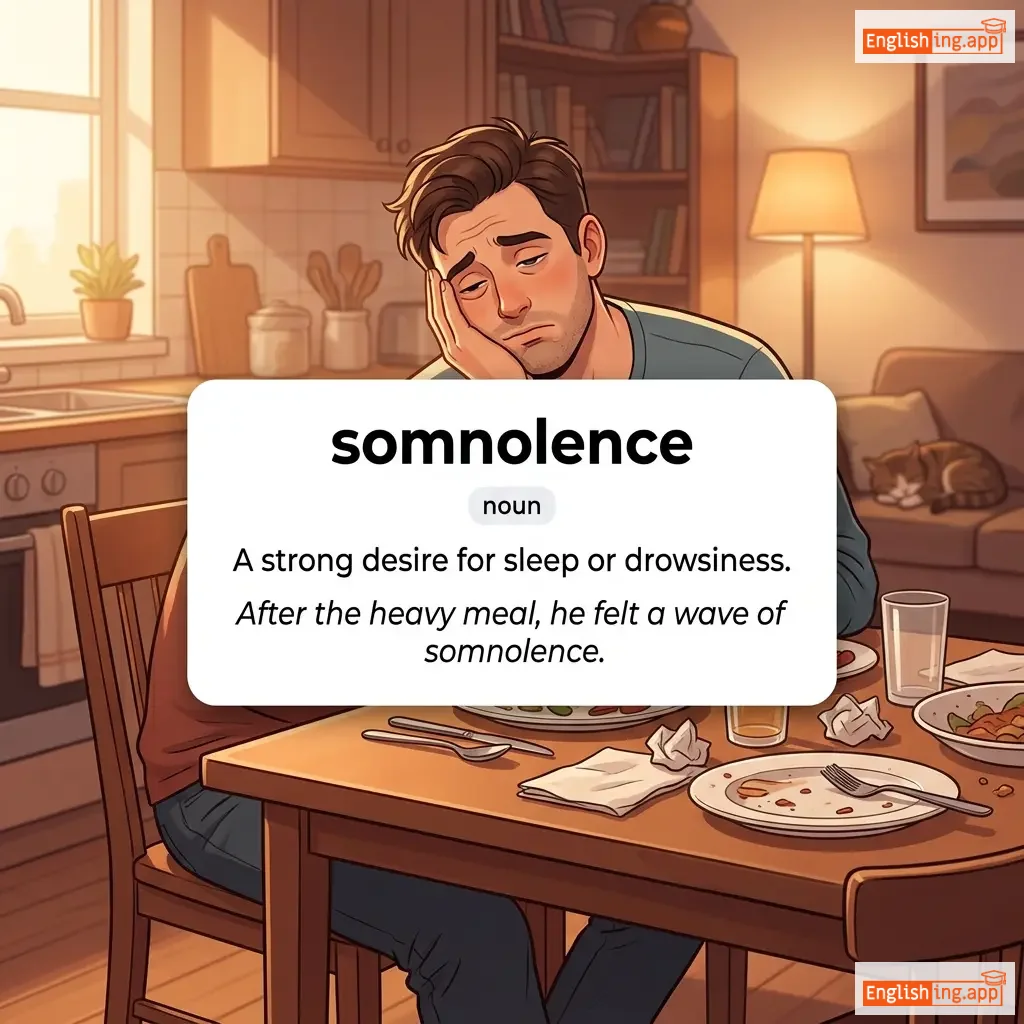
somnolence definition card — visual illustration of the meaning
noun C2
/ˈsɒmnələns/
निंद्रालुता (nindraluta)

A strong desire for sleep or drowsiness.

"After the heavy meal, he felt a wave of somnolence."

"भारी भोजन के बाद, उसे निंद्रालुता का अहसास हुआ।" (Bhaari bhojan ke baad, use nindraluta ka ahsaas hua.)
adjective C2
/ˈsɒmnələnt/
नींद भरा (neend bhara)

Sleepy or drowsy; causing a desire to sleep.

"The somnolent lecture made half the class fall asleep."

"सोम्नोलेंट व्याख्यान ने आधी कक्षा को सोने पर मजबूर कर दिया।" (Somnolent vyakhyan ne aadhi kaksha ko sone par majboor kar diya.)
noun C2
/ˈsuːθˌseɪər/
भविष्यवक्ता (bhavishyavakta)

a person who claims to predict the future

"The king consulted a soothsayer before going to war."

"राजा युद्ध में जाने से पहले एक भविष्यवक्ता से परामर्श किया।" (Raja yudh mein jaane se pehle ek bhavishyavakta se paramarsh kiya.)
noun C2
/sɒp/
समझौता (samjhauta)

a concession or appeasement to pacify someone; also a piece of bread dipped in liquid

"The manager offered a bonus as a sop to the unhappy employees."

"मैनेजर ने नाराज कर्मचारियों को खुश करने के लिए एक बोनस दिया।" (Manager ne naaraaz karmachariyon ko khush karne ke liye ek bonus diya.)
noun C2
/ˈsɒfɪzəm/
छलपूर्ण तर्क (chhalpurn tark)

a clever but misleading argument; fallacious reasoning

"The politician's speech was full of sophism designed to mislead voters."

"राजनीतिक नेता का भाषण छलपूर्ण तर्क से भरा था, जिसका उद्देश्य मतदाताओं को गुमराह करना था।" (Rajniti ka neta ka bhashan chhalpurn tark se bhara tha, jiska uddeshya matdataon ko gumrah karna tha.)
noun C2
/ˈsɒfɪst/
चालाक व्यक्ति (chaalak vyakti)

a person who uses clever but misleading arguments

"He was dismissed as a sophist who twisted facts to win debates."

"उसे एक सोफिस्ट के रूप में खारिज कर दिया गया था जो बहस जीतने के लिए तथ्यों को मोड़ता था।" (Use ek sophist ke roop mein khaarej kar diya gaya tha jo behas jeetne ke liye tathyon ko modta tha.)
noun C2
/ˈsɒfɪstri/
झूठी तर्कशक्ति (jhoothi tarkashakti)

the use of clever but false arguments, often to deceive

"The politician's speech was full of sophistry."

"राजनीतिज्ञ का भाषण झूठी तर्कशक्ति से भरा हुआ था।" (Raajneetiij ka bhashan jhoothi tarkashakti se bhara hua tha.)
adjective C2
/ˌsɒfəˈmɒrɪk/
अपरिपक्व (aparikpva)

showing immaturity and overconfidence, like a sophomore

"His sophomoric behavior embarrassed his friends."
"उसका अपरिपक्व व्यवहार उसके दोस्तों को शर्मिंदा कर रहा था।" (Uska aparipakva vyavhaar uske doston ko sharminda kar raha tha.)
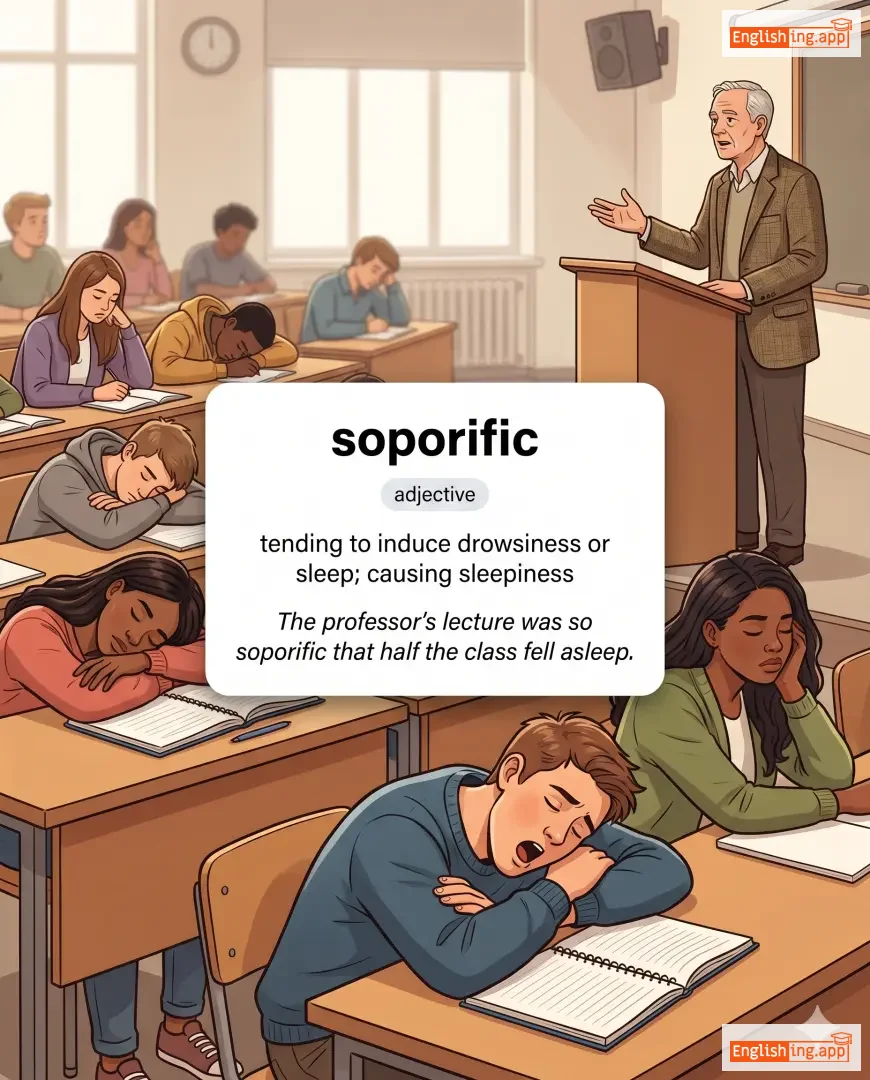
soporific definition card — visual illustration of the meaning
adjective C2
/ˌsɒpəˈrɪfɪk/
खुशी (khushi)

tending to induce drowsiness or sleep; causing sleepiness

"The professor's lecture was so soporific that half the class fell asleep."

"वह जब पुरस्कार प्राप्त करती, तो अपनी खुशी छुपा नहीं पाई।" (Woh jab puraskar prapt karti, to apni khushi chhupa nahi paayi.)
noun C2
/ˈsuːpsɒ̃/
थोड़ा सा (thoda sa)

a very small quantity of something; a trace

"She added just a soupcon of spice to the dish."
"उसने व्यंजन में सिर्फ थोड़ी सी मसाले की मात्रा डाली।" (Usne vyanjan mein sirf thodi si masale ki matra daali.)
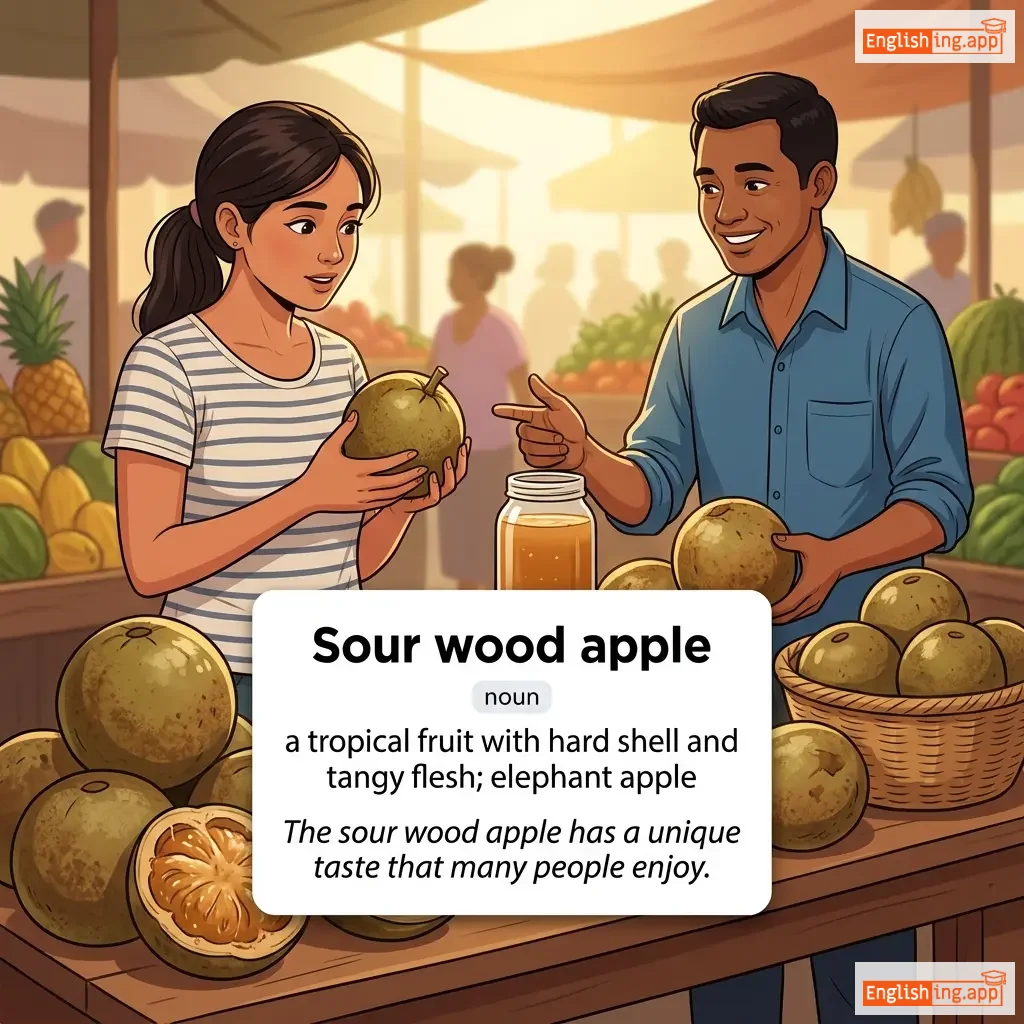
Sour wood apple definition card — visual illustration of the meaning
noun C2
/ˈsaʊər wʊd ˈæp.əl/
हाथी सेब (hathi seb)

a tropical fruit with hard shell and tangy flesh; elephant apple

"The sour wood apple has a unique taste that many people enjoy."

"सॉवर वुड एप्पल का एक अद्वितीय स्वाद है जिसे कई लोग पसंद करते हैं।" (sawar wood apple ka ek advitiya swaad hai jise kai log pasand karte hain)