
Словари

Словарь английского языка | Значения слов, определения и примеры

Sedulous definition card — visual illustration of the meaning
adjective C2
/ˈsɛdʒʊləs/
прилежный (prilezhny)

showing great care, attention, and diligence in work or tasks

"She was admired for her sedulous efforts in completing the project on time."

"Её восхищали за прилежные усилия по завершению проекта вовремя." (Eyo voskhishchali za prilezhnyye usiliya po zaversheniyu proyektov vovremya.)
adjective C2
/ˈsiːmli/
подобающий (podobayushchiy)

proper or appropriate in behavior or appearance

"It was not seemly to argue loudly during the ceremony."

"Не было подобающим спорить громко во время церемонии." (Ne bylo podobayushchim sporit' gromko vo vremya tseremonii.)
noun C2
/ˈseɪnjər/
феодал (feodal)

A feudal lord; a man of authority in medieval Europe.

"The seignior demanded taxes from the peasants."

"Сеньор потребовал налоги с крестьян." (Sen'yor potreboval nalogi s krest'yan.)
noun C2
/seɪn/
большая сеть (bol'shaya set')

A large fishing net that hangs vertically in the water.

"The fishermen cast their seine into the river."

"Рыбаки бросили свою большую сеть в реку." (Rybaki brosili svoyu bol'shuyu set' v reku.)
noun C2
/ˈsaɪz.mə.ɡræf/
сейсмограф (seysmograf)

An instrument that measures and records details of earthquakes, such as force and duration.

"The seismograph detected a strong tremor in the area."

"Сейсмограф зафиксировал сильное толчок в этом районе." (Seysmograf zafiksiroval sil'noye tolchok v etom rayone.)
noun C2
/ˌself əˈbeɪs.mənt/
самоуничижение (samounichizhenie)

The act of belittling or humiliating oneself.

"His constant self-abasement made others uncomfortable."

"Его постоянное самоуничижение заставляло других чувствовать себя неудобно." (Ego postoyannoe samo-unichizhenie zastavlyalo drugikh chuvstvovat' sebya neudobno.)
adjective C2
/ˌsɛm.iˈsɪv.ə.laɪzd/
полуцивилизованный (polutsivilizovannyy)

Partially civilized; having some aspects of civilization but not fully developed.

"The tribe was described as semicivilized by early explorers."

"Племя было описано как полуцивилизованное первыми исследователями." (Plemya bylo opisano kak polutsivilizovannoe pervymi issledovatelyami.)
adjective C2
/ˌsɛm.iˈkɒn.ʃəs/
полусознательный (polusoznatel'nyj)

Only partly conscious; not fully aware of surroundings.

"He was semiconscious after the accident and could barely respond."

"Он был полусознателен после аварии и едва мог ответить." (On byl polusoznatel'nym posle avarii i yedva mog otvetit'.)
noun C2
/ˈsɛm.ɪ.nɛr.i/
семинария (seminariya)

A school or college for training priests, ministers, or rabbis.

"He decided to enroll in a seminary to study theology."

"Он решил записаться в семинарию, чтобы изучать теологию." (On reshil zapisatsya v seminariju, chtoby izuchat' teologiyu.)
noun C2
/səˈnɛs.əns/
старение (stareniye)

The process of growing old or the condition of aging.

"The biologist studied senescence in plants to understand aging."

"Биолог изучал сенесценцию растений, чтобы понять старение." (Biolog izuchal senestsentsiyu rasteniy, chtoby ponyat' stareniye.)
noun C2
/sɛnˈsɔːrɪəm/
сенсорный центр (sensorny tsentr)

The part of the brain or mind concerned with the reception and interpretation of sensory stimuli.

"The patient’s sensorium was clouded after the accident."

"Сенсорный центр пациента был затуманен после аварии." (Sensorny tsentr patsiyenta byl zatumanyen posle avarii.)
adjective C2
/sɛnˈtɛnʃəs/
морализаторский; нравоучительный (moralizatorskiy; nravouchitel'nyy)

Given to moralizing in a pompous or affected manner.

"His sententious remarks annoyed the audience."

"Его морализаторские замечания разозлили аудиторию." (Yego moralizatorskiye zamechaniya razozyrili auditoriyu.)
noun C2
/ˈsɛnʃəns/
чувствительность (chuvstvitel'nost')

The capacity to feel, perceive, or experience subjectively.

"Many argue that animals possess sentience."

"Многие утверждают, что животные обладают чувствительностью." (Mnogie utverzhdayut, chto zhivotnye obladayut chuvstvitel'nost'yu.)
adjective C2
/ˈsɛpərəbəl/
разделяемый (razdelyayemy)

Capable of being separated or divided.

"The two issues are separable and should be discussed independently."

"Эти два вопроса разделяемы и должны быть обсуждены независимо." (Eti dva voprosa razdelyayemy i dolzhny byt' obsuzhdeny nezavisimo.)
adjective C2
/sɛpˈtɛnɪəl/
семилетний (semiletniy)

Occurring every seven years.

"The festival is a septennial tradition in the village."

"Этот фестиваль - семилетняя традиция в деревне." (Eto festivál' - semiletnyaya traditsiya v derevne.)
noun C2
/ˈsɛpəlkər/
гробница (grobnitsa)

A small room or monument, cut in rock or built of stone, in which a dead person is buried.

"The ancient king was laid to rest in a grand sepulcher."

"Древний король был погребен в великой гробнице." (Drevnij korol' byl pogreben v velikoj grobnitse.)
adjective C2
/səˈpʌlkrəl/
связанный с могилой, мрачный (svyazannyy s mogiloy, mrachnyy)

Relating to a tomb or burial; gloomy, dismal.

"The abandoned house had a sepulchral silence about it."
"Покинутое здание было охвачено сепулькральной тишиной." (Pokinutoe zdanie bylo okhvacheno sepul'kral'noy tishinoy.)
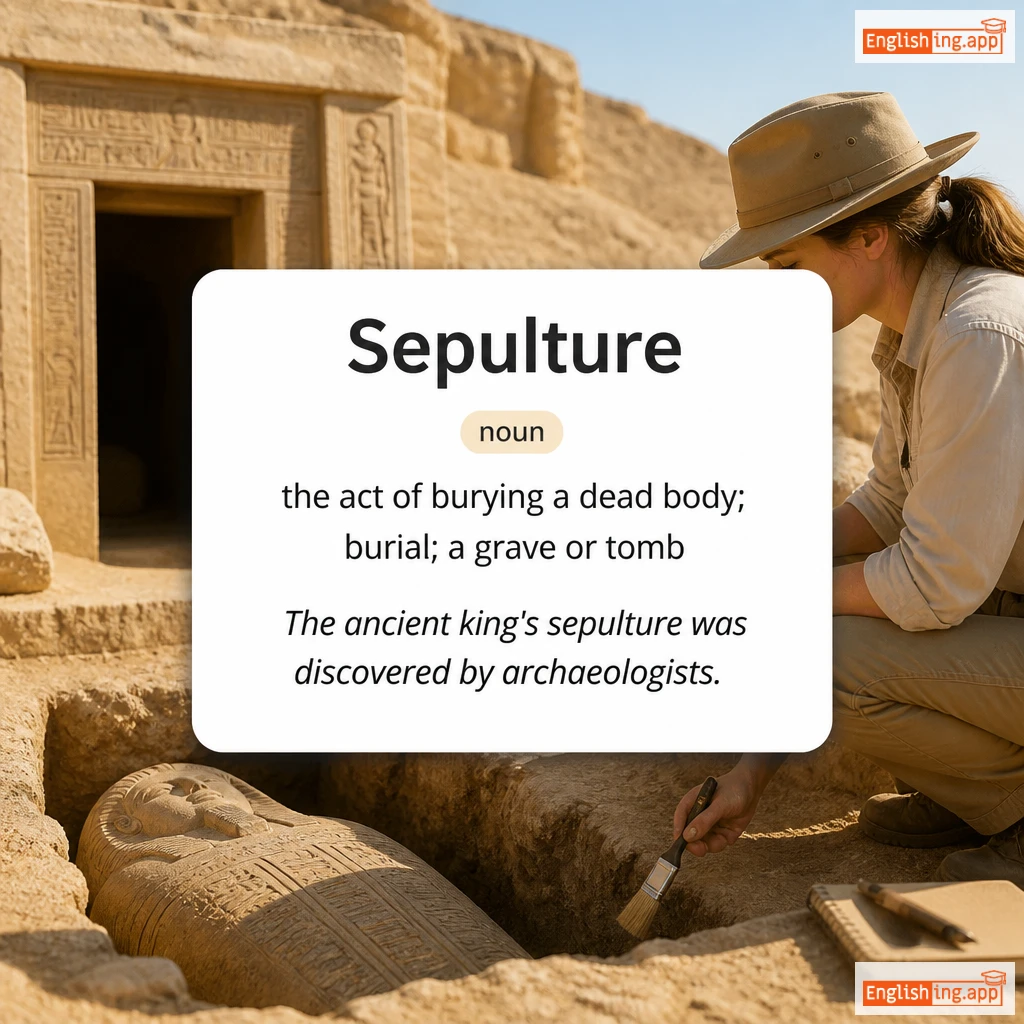
Sepulture definition card — visual illustration of the meaning
noun C2
/ˈsɛpəlˌtʃər/
гробница; могила; (grobnitsa; mogila)

the act of burying a dead body; burial; a grave or tomb

"The ancient king's sepulture was discovered by archaeologists."

"Сепулькре древнего короля было обнаружено археологами." (Sepul'kre drevnego korolya bylo obnaruzheno arkheologami.)
adjective C2
/sɪˈkweɪʃəs/
слепо следующий (slepo sleduyushchiy)

Lacking independence of thought; blindly following.

"The sequacious students never questioned their teacher's opinions."

"Последователи никогда не ставили под сомнение мнения своего учителя." (Posledovateli nikogda ne stavili pod somneniye mneniya svoego uchitelya.)
noun C2
/sɪˈkwiːlə/
последствия (posledstviya)

A condition that is the consequence of a previous disease or injury.

"Lung scarring can be a sequela of severe pneumonia."

"Рубцы на легких могут быть последствиями тяжелой пневмонии." (Rubtsy na legkikh mogut byt' posledstviyami tyazheloy pnevmonii.)
adjective C2
/ˈsiːkwənt/
последующий (posleduyushchiy)

Following in order or as a result.

"The sequent events changed the course of history."

"Последующие события изменили ход истории." (Posleduyushchie sobytiya izmenili khod istorii.)
verb C2
/sɪˈkwɛstreɪt/
конфисковать (konfiskovat')

To take legal possession of assets until a debt is paid or disputes are resolved.

"The court decided to sequestrate the company's property."

"Суд решил конфисковать имущество компании." (Sud reshil konfiskovat' imushchestvo kompanii.)
noun C2
/ˈsɛrəf/
серафим (serafim)

An angelic being associated with light and purity, often depicted as a high-ranking angel in Christian theology.

"The stained-glass window depicted a seraph with outstretched wings."

"Витраж изображал серафима с расправленными крыльями." (Vitrazh izobrazhal serafima s raspravlennymi kryl'yami.)
adjective C2
/səˈræfɪk/
серафический (seraficheskiy)

Of or like a seraph; angelic, pure, and blissful.

"She gave him a seraphic smile that calmed his fears."

"Она подарила ему серофическое улыбку, которая успокоила его страхи." (Ona podarila yemu seraficheskoe ulybku, kotoraya uspokoila yego strakhi.)
adjective C2
/sɪər/
сухой (sukhoy)

Dry or withered, especially vegetation.

"The sere leaves crumbled under his feet."

"Сухие листья рассыпались под его ногами." (Sukhie list'ya rassyplilis' pod ego nogami.)
noun C2
/ˈsɜːfdəm/
крепостничество (krepostnichestvo)

The status or condition of being a serf, bound to work for a lord.

"Many peasants in medieval Europe lived under serfdom."

"Многие крестьяне в средневековой Европе жили в крепостном праве." (Mnogie krest'yane v srednevekovoy Yevrope zhili v krepostnom prave.)
noun C2
/ˈsɑːrdʒənt ət ɑːrmz/
старшина (starshina)

An officer responsible for maintaining order during meetings or legislative sessions.

"The sergeant-at-arms escorted the disruptive member out of the hall."

"Старшина вывел нарушителя из зала." (Starshina vyvel narushitelya iz zala.)
verb C2
/ˈsɛreɪt/
создавать зубчатый край (sozdavat' zubchatyy kray)

To make a saw-toothed edge or notched margin.

"The craftsman serrated the knife blade for better cutting."

"Ремесленник серрит нож для лучшего реза." (Remeslennik serrit nozh dlya luchshego reza.)
adjective C2
/ˈsɛrid/
плотно стоящий (plotno stoyashchiy)

pressed or crowded together, often in rows or ranks

"The soldiers stood in serried ranks, ready for inspection."
"Солдаты стояли в плотных рядах, готовые к осмотру." (Soldaty stoyali v plotnykh ryadakh, gotovye k osmotru.)
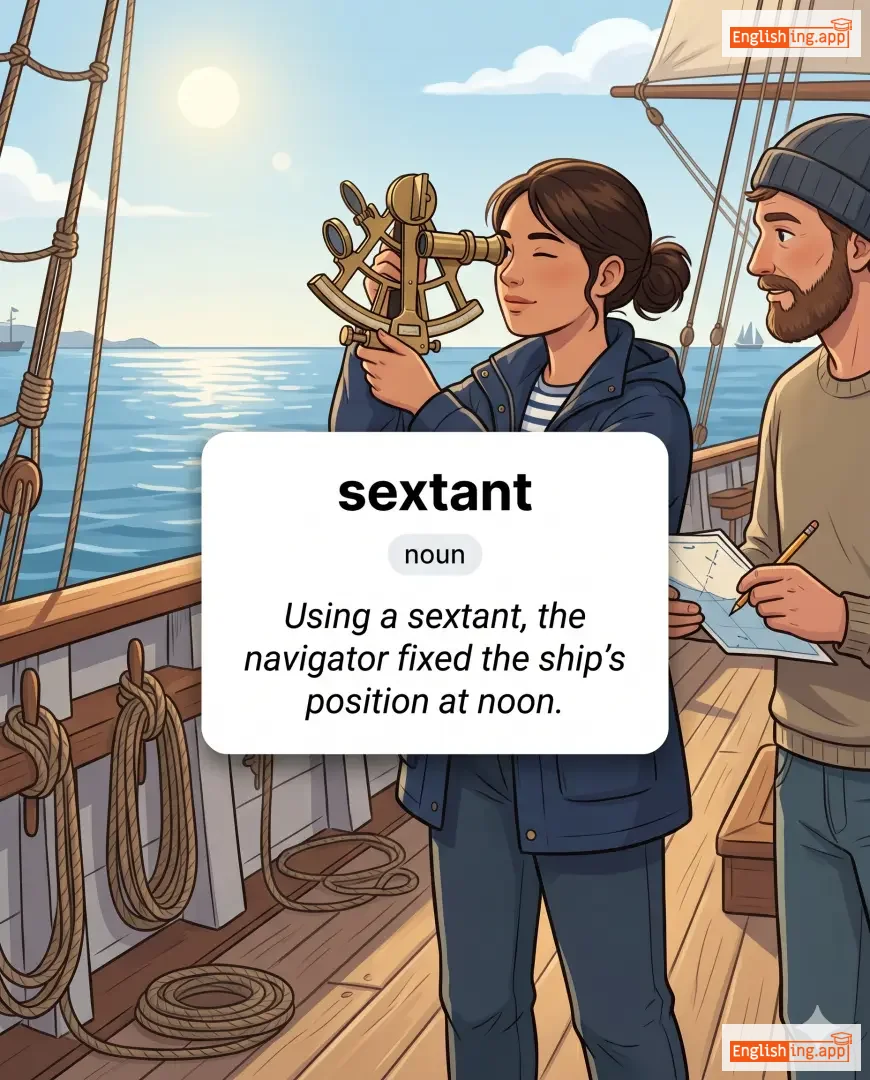
sextant definition card — visual illustration of the meaning
noun C2
/ˈsɛkstənt/
секстант (sekstant)

a navigational instrument with a graduated arc of 60°, used to measure the angle between a celestial object and the horizon

"Using a sextant, the navigator fixed the ship’s position at noon."

"Используя секстант, навигатор определил положение корабля в полдень." (Ispol'zuyya sekstant, navigátor opredelil polozhenie korablya v poldin.)
noun C2
/sɛkˈstɛt/
секстет (seks'tet)

a group of six people playing music or a piece written for six performers

"The jazz sextet filled the small club with a warm, layered sound."

"Джазовый секстет заполнил маленький клуб теплым, многослойным звуком." (Dzhazovyy seks'tet zapolnil malen'kiy klub teplym, mnogosloynym zvukom.)
verb C2
/sɛkˈstuːpəl/
сексуплицировать (seksuplit͡sirovatʹ)

to make or become six times as great or as many

"Within two quarters, the campaign sextupled their daily sign-ups."
"Через два квартала кампания увеличила их ежедневные регистрации в шесть раз." (Cherez dva kvartala kampaniya uvelichila ikh ezhednevnyye registratsii v shest' raz.)
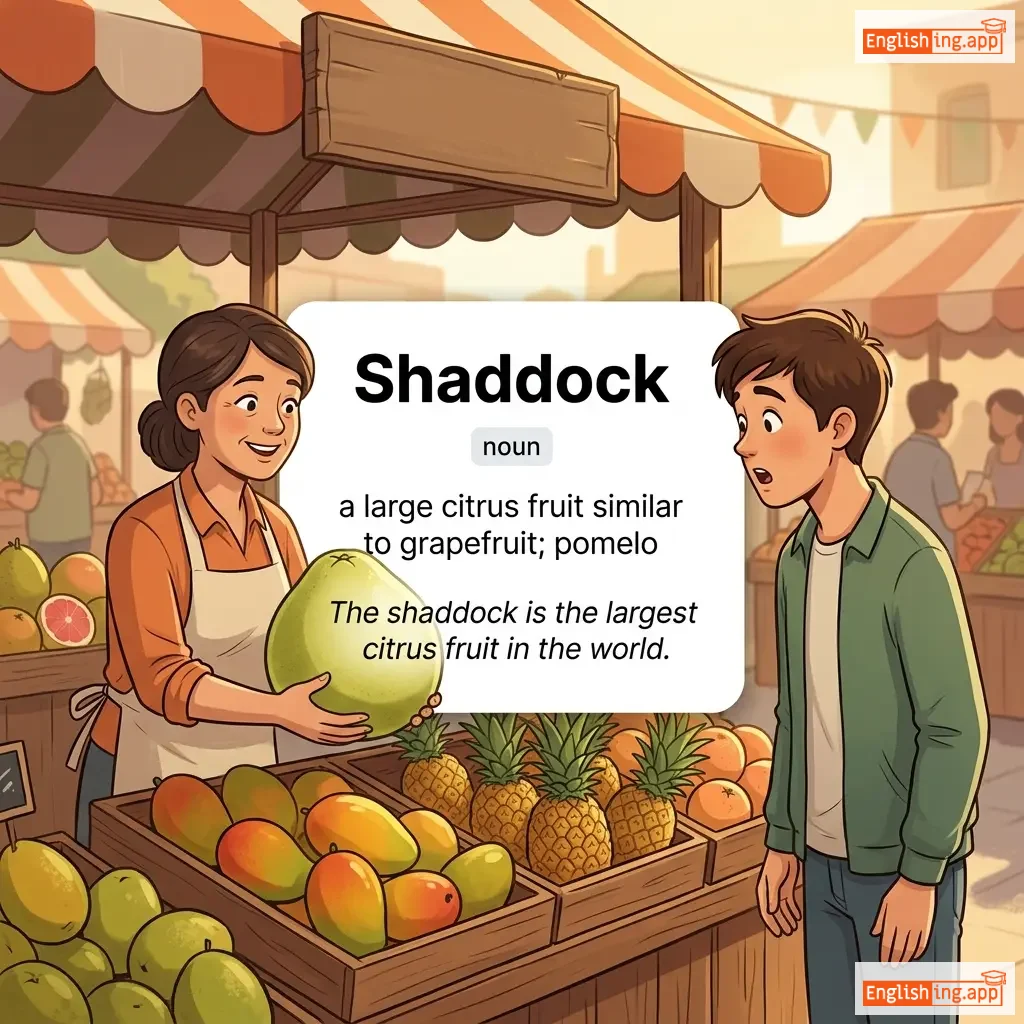
Shaddock definition card — visual illustration of the meaning
noun C2
/ˈʃæd.ək/
помело (pomelo)

a large citrus fruit similar to grapefruit; pomelo

"The shaddock is the largest citrus fruit in the world."

"Шадок — самый крупный цитрусовый фрукт в мире." (Shadok — samyy krupnyy tsitrusovyy frukt v mire.)
noun C2
/ˌʃæŋɡriˈlɑː/
воображаемый рай (voobrazhaemyj raj)

a remote, beautiful, imaginary place where life is perfect and peaceful

"They described the island as a modern-day Shangri-La."

"Они описали остров как современный Шангри-Ла." (Oni opisali ostrov kak sovremennyy Shangri-La.)
noun C2
/ʃiːf/
пучок пшеницы (puchok pshenitsy)

a bundle of grain stalks laid lengthwise and tied together after reaping; a bundle of objects tied together

"The farmer carried a sheaf of wheat on his shoulder."
"Фермер нес пучок пшеницы на своем плече." (Fermyer nes puchok pshenitsy na svoem pleche.)
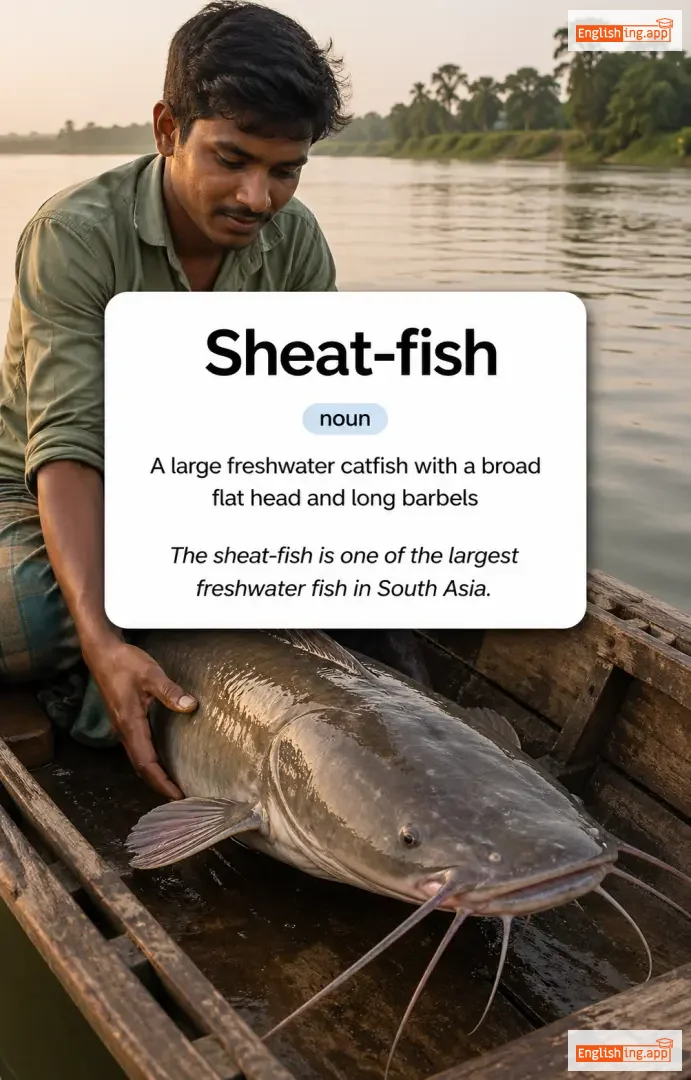
Sheat-fish definition card — visual illustration of the meaning
noun C2
/ʃiːt fɪʃ/
сом (som)

A large freshwater catfish with a broad flat head and long barbels

"The sheat-fish is one of the largest freshwater fish in South Asia."

"Сом — одна из самых крупных пресноводных рыб Южной Азии." (Som odna iz samykh krupnykh presnovodnykh ryb Yuzhnoy Azii)
verb C2
/ʃiːð/
вложить в ножны (vlozhit' v nozhny)

to put a sword or knife back into its cover

"He quickly sheathed his sword after the duel."

"Он быстро вложил свой меч обратно в ножны после дуэли." (On bystro vlozhil svoi mech obratno v nozhny posle duel.)
noun C2
/ˈʃɪbəˌlɛθ/
выражение или вера, отличающие определённую группу людей (vyrazhenie ili vera, otlichayushchie opredyonnuyu gruppu lyudey)

A custom, phrase, or belief distinguishing a particular group of people, often used to identify outsiders.

"The phrase became a political shibboleth during the campaign."

"Фраза стала политическим шибболетом во время кампании." (Fraza stala politicheskim shibbolethom vo vremya kampanii.)
adjective C2
/ˈʃɪft.ləs/
ленивый (lenivyy)

Lacking ambition or the ability to accomplish anything; lazy and unmotivated.

"He was seen as a shiftless young man with no goals."

"Его считали ленивым молодым человеком без целей." (Ego schitali lenivym molodym chelovekom bez tseley.)
adjective C2
/ˈʃɑːpwɔːrn/
изношенный / старый (iznoshennyy / staryy)

worn or faded from being displayed in a shop; no longer fresh or original

"The shopworn shoes were sold at a discount."

"Шопворн обувь была продана со скидкой." (Shopworn obuv' byla prodana so skidkoy.)
verb C2
/ʃʌk/
снимать оболочку (snimat' obolochku)

To remove the outer covering, such as the husk of corn or shell of shellfish.

"She learned how to shuck oysters quickly."

"Она научилась быстро открывать устриц." (Ona nauchilas' bystro otkryvat' ustrits.)
noun C2
/ˈʃaɪstər/
мошенник (moshennik)

a person, especially a lawyer, who uses unscrupulous or dishonest methods

"The businessman was exposed as a shyster who cheated clients."

"Бизнесмен был разоблачен как мошенник, который обманывал клиентов." (Biznesmen byl razoblachen kak moshennik, kotoryy obmanyval klientov.)
noun C2
/ˈsɪbɪləns/
шипящий звук (shipyashchij zvuk)

A hissing or hushing sound, especially in speech with 's' or 'sh'.

"The poet used sibilance to create a soft, hissing effect in the verse."

"Поэт использовал сибилянт для создания мягкого, шипящего эффекта в стихах." (Poet ispol'zoval sibiljant dlya sozdaniya myagkogo, shipyashchego effekta v stikhakh.)
adjective C2
/ˈsɪbɪlənt/
с шипящим звуком (s shipyashchim zvukom)

Making or characterized by a hissing sound.

"The word 'snake' starts with a sibilant sound."

"Слово 'snake' начинается с сибилантного звука." (Slovo 'snake' nachinayetsya s sibilantnogo zvuka.)
verb C2
/ˈsɪbəleɪt/
произносить с шипящим звуком (proiznosit' s shipyashchim zvukom)

To pronounce with a hissing sound.

"The actor sibilated his lines for dramatic effect."

"Актер произнес свои реплики с шипящим звуком для драматического эффекта." (Akter proiznes svoi repliky s shipyashchim zvukom dlya dramaticheskogo effekta.)
adjective C2
/ˈsɪbɪlaɪn/
сибиллинский (sibillinskiy)

Prophetic, mysterious, or cryptic in meaning.

"The old woman gave a sibylline warning about the future."

"Старая женщина дала сибиллинское предупреждение о будущем." (Staraya zhenshchina dala sibillinskoe preduprezhdenie o budushchem.)
adjective, adverb C2
/ˈsaɪdlɔːŋ/
косой взгляд (kosoy vzglyad)

Directed to the side; indirect, furtive, or not straightforward.

"She gave him a sidelong glance across the room."

"Она бросила на него косой взгляд через комнату." (Ona brosila na nego kosoy vzglyad cherez komnatu.)
sidereal definition card — visual illustration of the meaning
adjective C2
/saɪˈdɪəriəl/
сидериальный (siderial'nyy)

Relating to the stars or constellations; measured relative to the stars.

"Astronomers use sidereal time to track the positions of stars."

"Астрономы используют сидериальное время для отслеживания положения звёзд." (Astronomy ispol'zuyut siderial'noe vremya dlya otslezhivaniya polozheniya zvyozd.)
noun C2
/ˌsɪɡnɪfɪˈkeɪʃən/
значение (znacheniye)

the meaning or sense conveyed by a word, action, or symbol

"The signification of the gesture was misunderstood."
"Значение жеста было понято неверно." (Znachenie zhesta bylo ponyato neverno.)
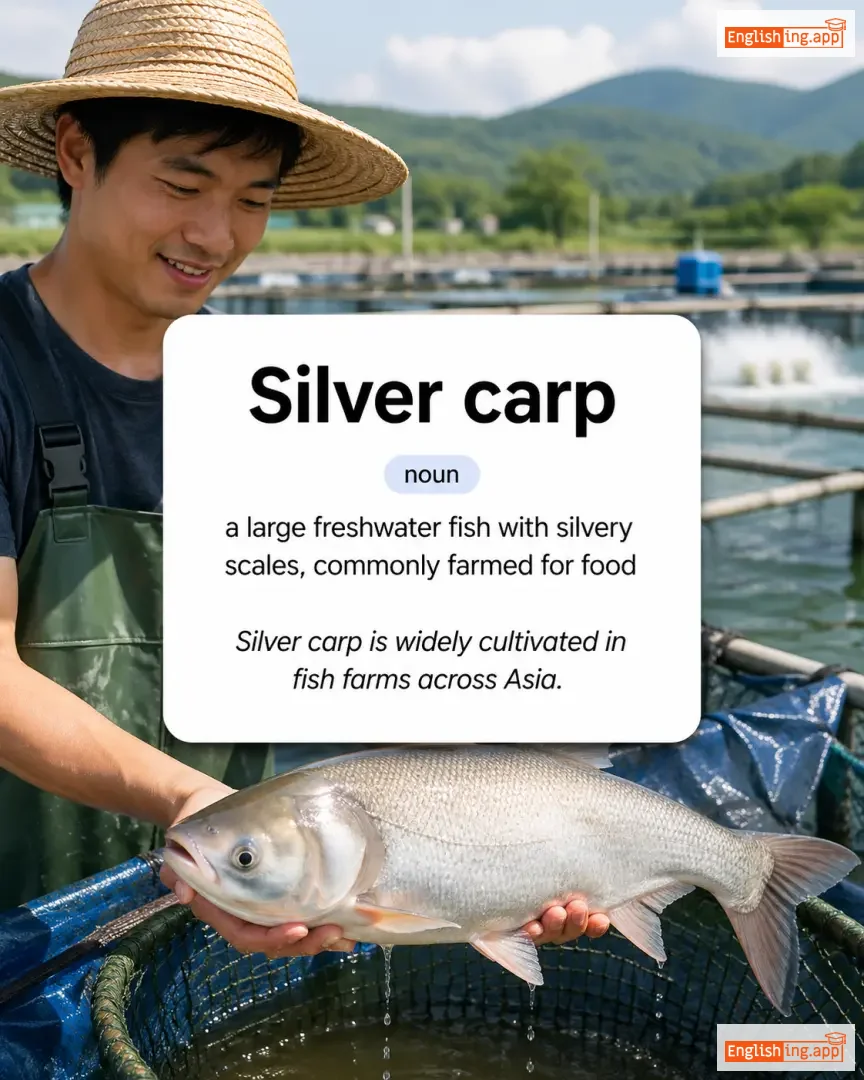
Silver carp definition card — visual illustration of the meaning
noun C2
/ˈsɪlvər kɑrp/
серебряный карп (serebryany karp)

a large freshwater fish with silvery scales, commonly farmed for food

"Silver carp is widely cultivated in fish farms across Asia."

"Серебряный карп широко разводится на рыбных фермах по всей Азии." (serebryany karp shiroko razvoditsya na rybnykh fermakh po vsei azii.)