Словари

Словарь английского языка | Значения слов, определения и примеры

verb C2
/ˈdʒɒɡəl/
軽く揺する (karuku yusuru)

to shake slightly; to move or cause to move with quick, small jerks

"He joggled the table and the vase nearly fell."

"彼はテーブルを揺すって、花瓶が倒れそうになった。" (Kare wa teeburu o yusutte, kabin ga taoresou ni natta.)
noun C2
/ˈdʒɒlɪti/
楽しさ (tanoshisa)

lively and cheerful activity or celebration

"The wedding was full of jollity and laughter."
"結婚式は楽しさと笑いに満ちていました。" (Kekkonshiki wa tanoshisa to warai ni michite imashita.)
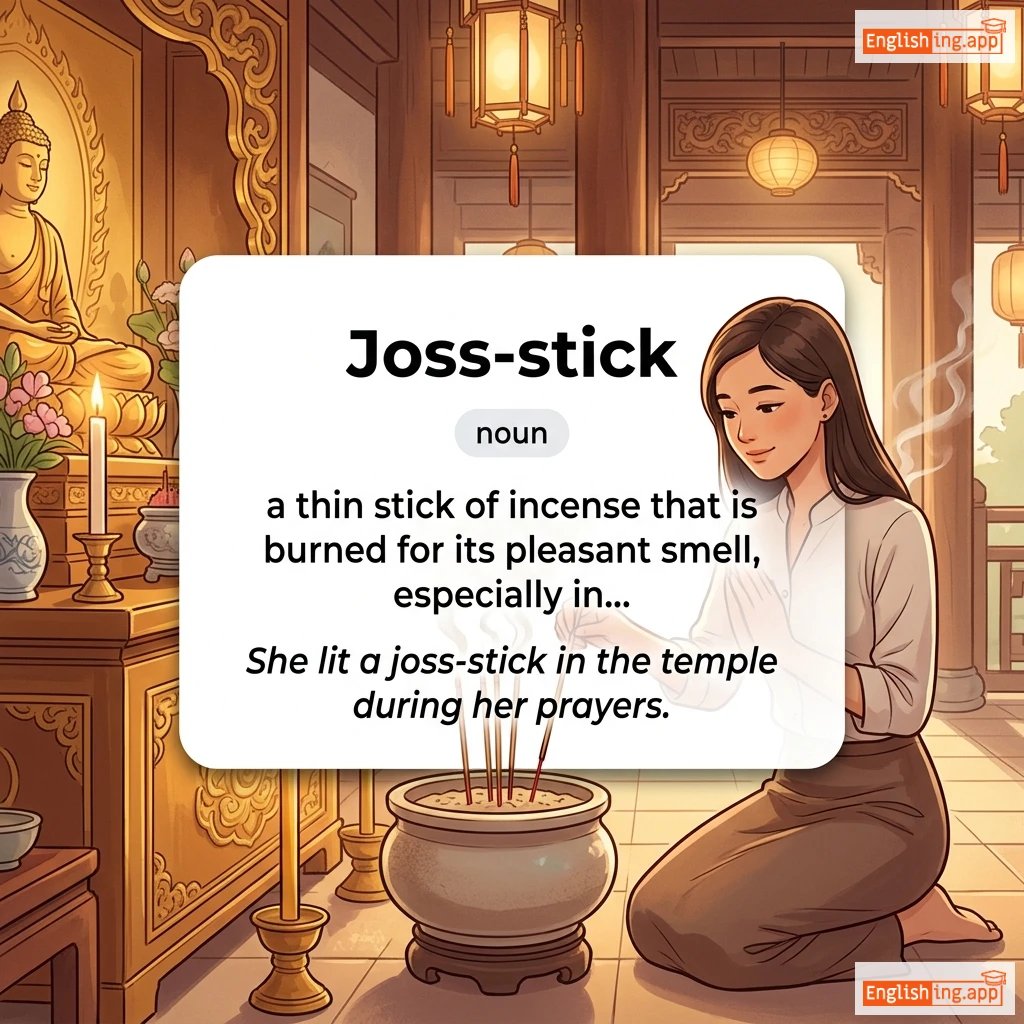
Joss-stick definition card — visual illustration of the meaning
noun C2
/ˈdʒɒs.stɪk/
お香 (okou)

a thin stick of incense that is burned for its pleasant smell, especially in religious ceremonies

"She lit a joss-stick in the temple during her prayers."

"彼女は寺院で祈りの間にお香を灯しました。" (Kanojo wa jiin de inori no aida ni okou o tomoshimashita.)
verb C2
/ˈdʒɜːrnəlaɪz/
日記に記録する (nikki ni kiroku suru)

to record daily transactions or events in a journal, especially in accounting

"The accountant will journalize all financial transactions at the end of the day."

"会計士は一日の終わりにすべての財務取引をジャーナライズします。" (Kaikeishi wa ichinichi no owari ni subete no zaimu torihiki o jānaraizu shimasu.)
🤺

joust

verb C2
/dʒaʊst/

to engage in a medieval contest on horseback with lances; to compete or argue

"The knights prepared to joust in front of the cheering crowd."

noun C2
/ˈdʒʌŋk.tʃər/
重要な局面 (jūyō na kyokumen)

a particular point in time, especially one of great importance or crisis

"At this critical jucture, the company must decide whether to expand or downsize."

"この重要な局面で、会社は拡大するか縮小するかを決定しなければなりません。" (Kono jūyō na kyokumen de, kaisha wa kakudai suru ka shukushō suru ka o kettei shinakereba narimasen.)
noun C2
/ˈdʒuː.dɪˌkeɪ.tʃər/
司法制度 (shihou seido)

the administration of justice or the system of courts

"The judicature ensures that laws are fairly applied."
"司法制度は法律が公平に適用されることを保証します。" (Shihou seido wa houritsu ga kouhei ni tekiyou sareru koto wo hoshou shimasu.)
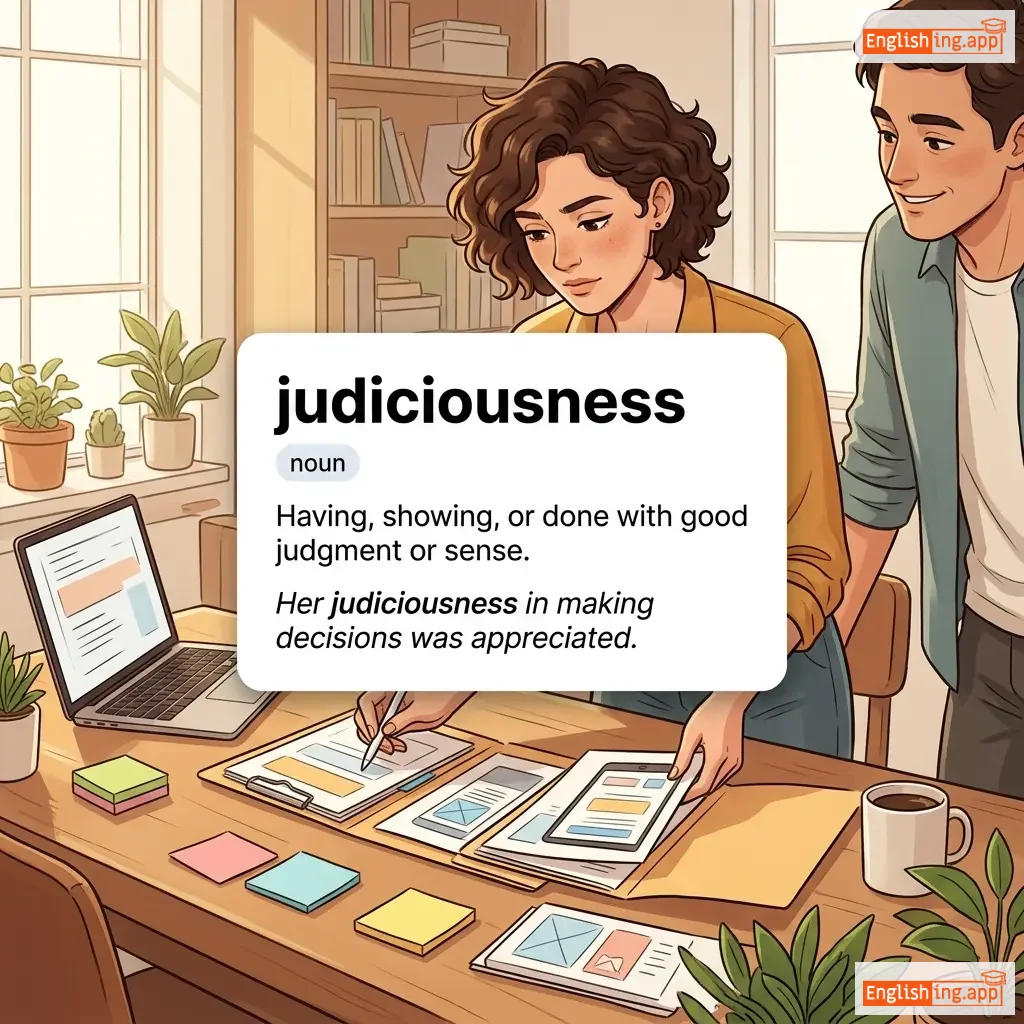
judiciousness definition card — visual illustration of the meaning
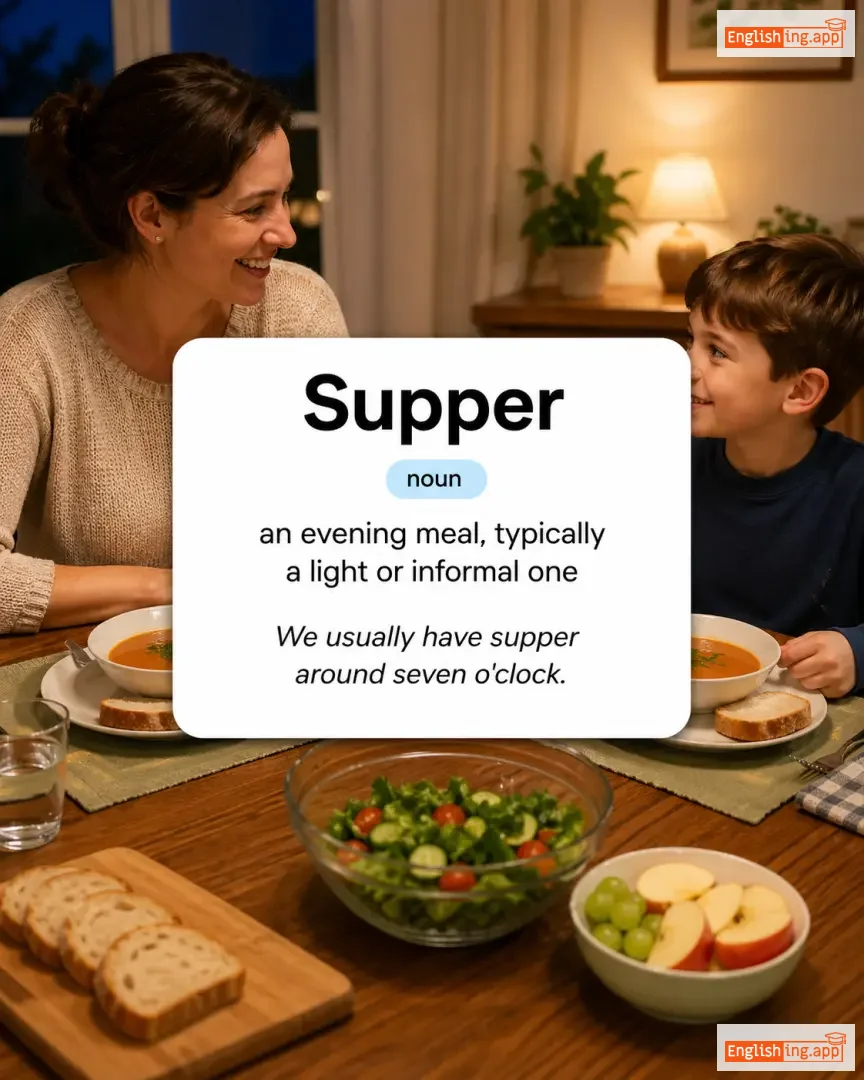
noun C2
dʒʊˈdɪʃəsnɪs
慎重さ、賢明さ (shinchousa, kenmei sa)

Having, showing, or done with good judgment or sense.

"Her judiciousness in making decisions was appreciated."

"意思決定における彼女の慎重さは評価されました。" (Ishikettei ni okeru kanojo no shinchousa wa hyouka saremashita.)
noun C2
/ˈdʒʌɡləri/
ジャグリング (jaguringu)

The performance of tricks and illusions, especially by sleight of hand.

"The magician's jugglery amazed the audience."

"魔法使いのジャグリングは観客を驚かせました。" (Mahōtsukai no jaguringu wa kankyaku o odorokasemashita.)
noun C2
/ˈdʒʌɡjələr/
頸静脈 (keijoumyaku)

A large vein in the neck that carries blood from the head back to the heart.

"The doctor checked the patient's jugular vein for signs of pressure."

"医者は患者の頸静脈に圧力の兆候がないかを確認しました。" (Isha wa kanja no keijoumyaku ni atsuryoku no choukou ga nai ka wo kakunin shimashita.)
noun C2
/ˈdʒʌŋkɪt/
旅行または祝賀 (ryokou matawa shukuga)

A trip or celebration, often funded by someone else, usually for pleasure or promotional purposes.

"The company organized a junket for journalists to promote their new resort."
"会社はジャーナリストのために新しいリゾートを宣伝するための旅行を組織しました。" (Kaisha wa jānarisuto no tame ni atarashī rizōto o senden suru tame no ryokō o soshiki shimashita.)
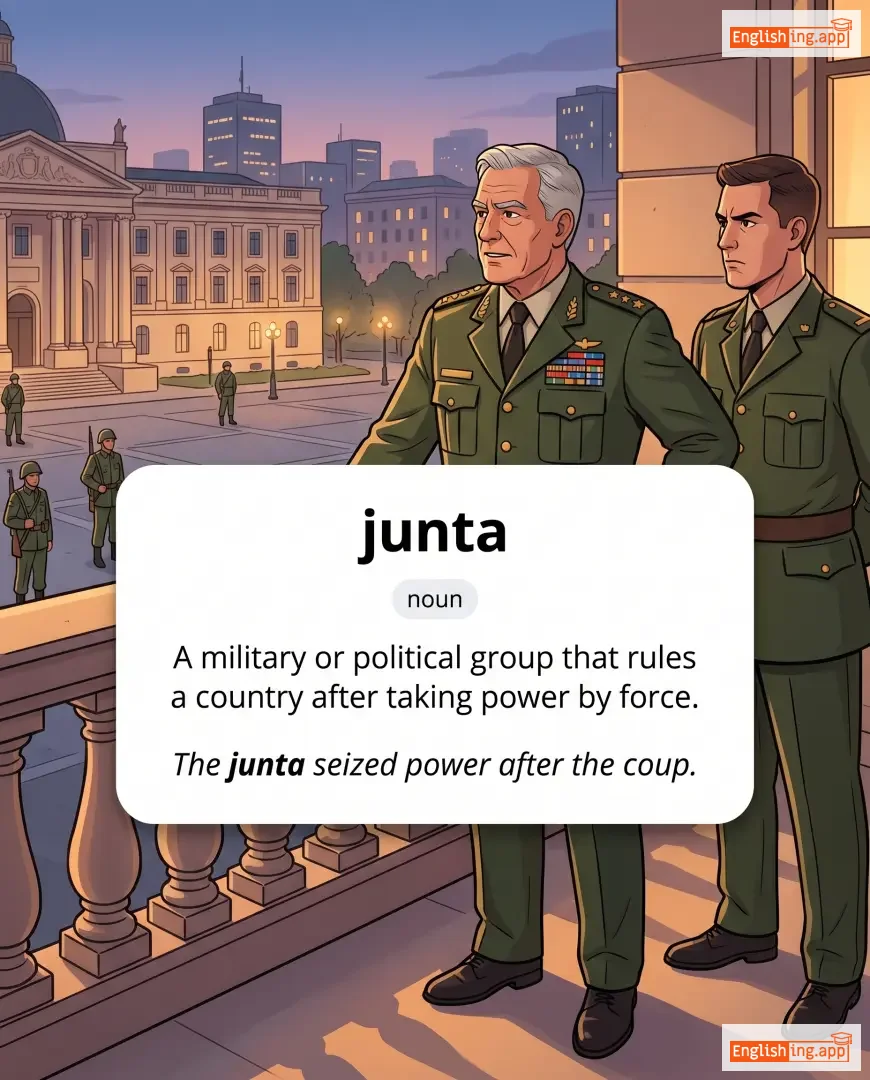
junta definition card — visual illustration of the meaning
noun C2
/ˈdʒʊntə/
軍事政権 (gunji seiken)

A military or political group that rules a country after taking power by force.

"The junta seized power after the coup."

"クーデター後、軍事政権が権力を掌握しました。" (Kūdetā go, gunji seiken ga kenryoku o shōaku shimashita.)
adjective C2
/dʒʊˈrɪdɪkəl/
司法的 (shihou teki)

Relating to judicial proceedings or the administration of law.

"The case raised important juridical questions."

"その事件は重要な司法的問題を提起しました。" (Sono jiken wa jūyōna shihōteki mondai o teiki shimashita.)
noun C2
/ˌdʒʊərɪsˈpruːdəns/
法学 (hōgaku)

The theory, philosophy, or science of law.

"She is a professor of jurisprudence at the university."
"彼女は大学で法学の教授です。" (Kanojo wa daigaku de hōgaku no kyōju desu.)
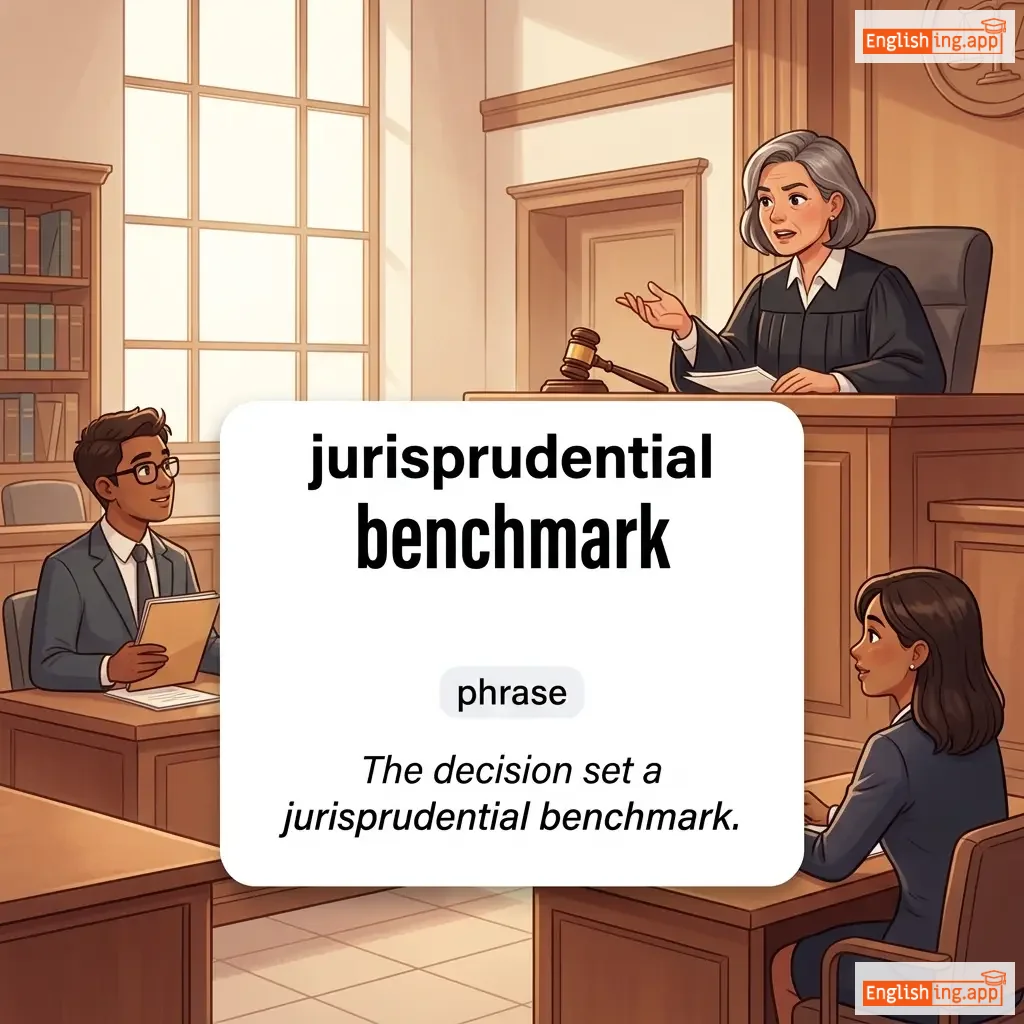
jurisprudential benchmark definition card — visual illustration of the meaning
phrase C2
ˌdʒʊə.rɪs.pruːˈden.ʃəl ˈbentʃ.mɑːk
法的基準 (hōteki kijun)

A legal standard or precedent that serves as a reference point for future legal decisions.

"The decision set a jurisprudential benchmark."
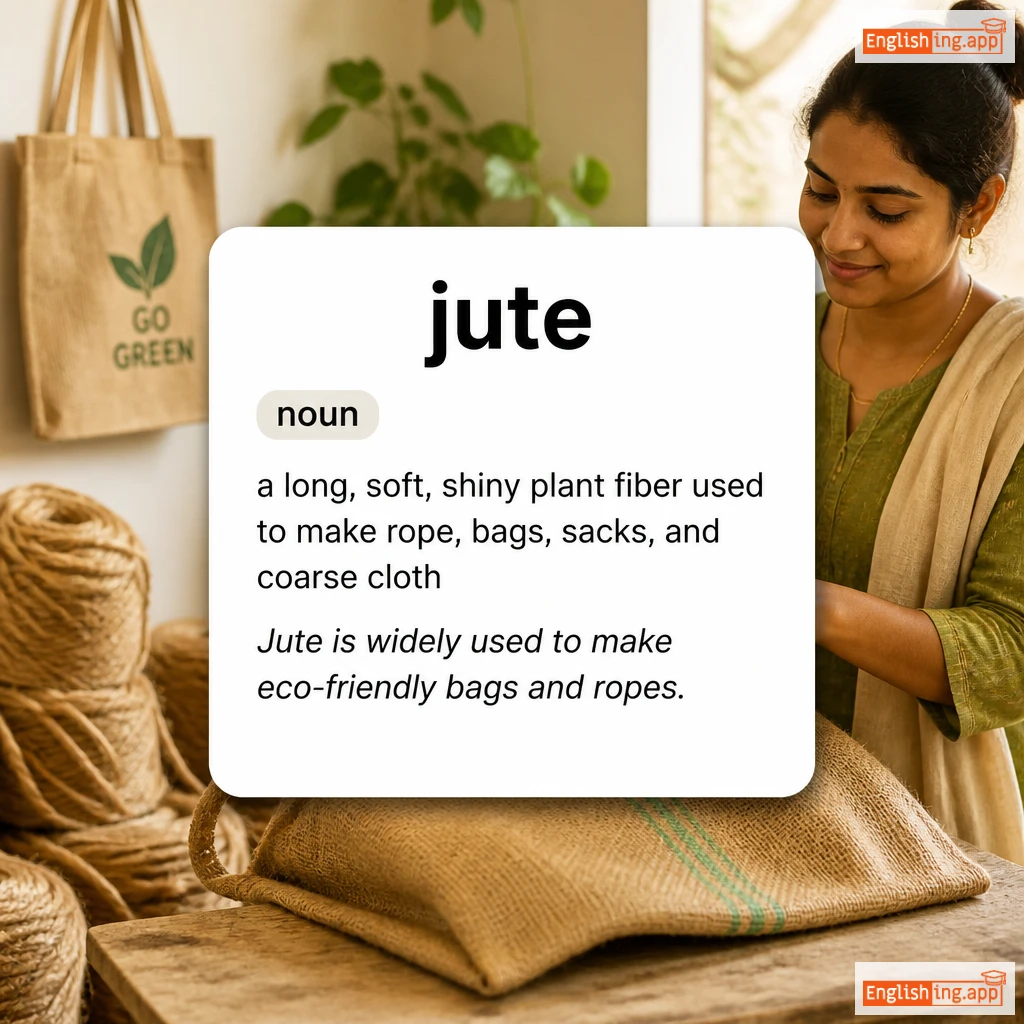
"その決定は法的基準を設定しました。" (Sono kettei wa hōteki kijun o settei shimashita.)
jute definition card — visual illustration of the meaning
noun C2
/dʒuːt/
黄麻 (ouma)

a long, soft, shiny plant fiber used to make rope, bags, sacks, and coarse cloth

"Jute is widely used to make eco-friendly bags and ropes."
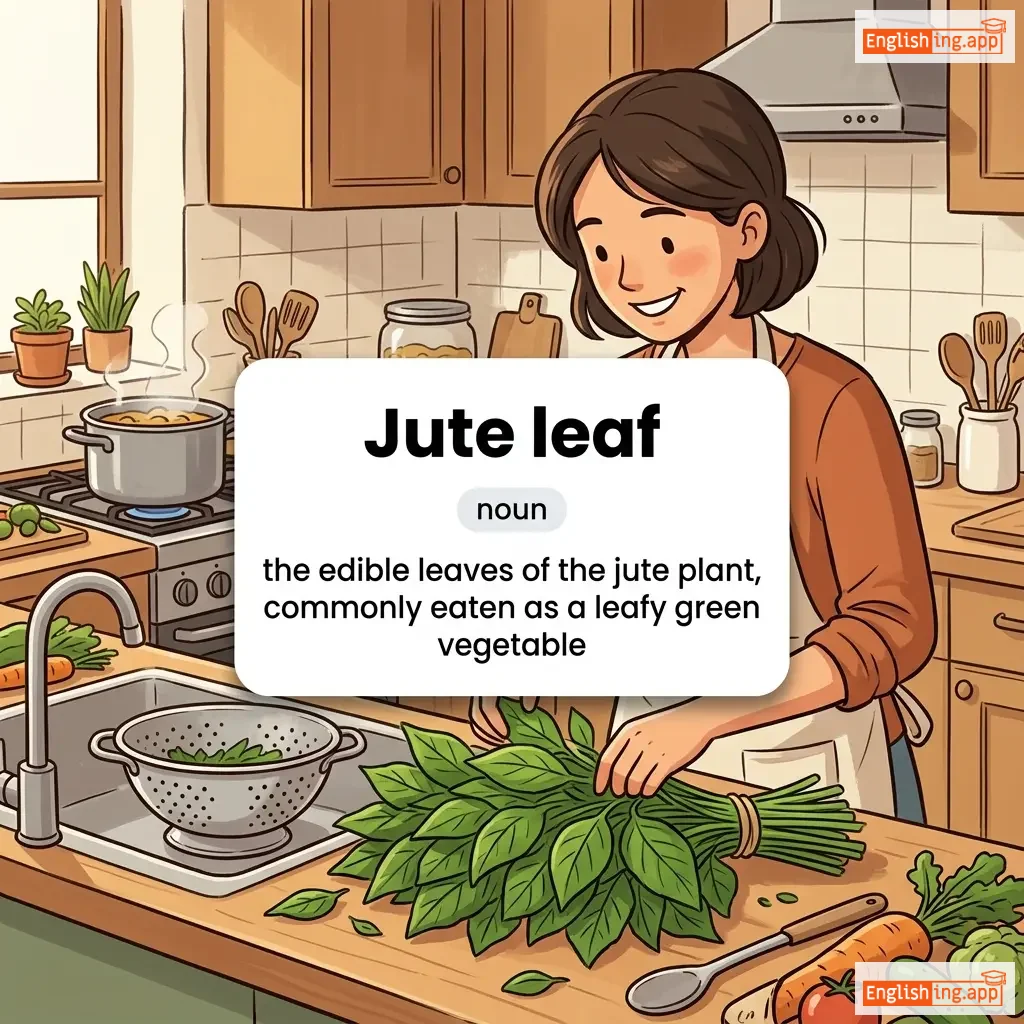
"黄麻は環境にやさしい素材です。" (ouma wa kankyou ni yasashii sozai desu)
Jute leaf definition card — visual illustration of the meaning
noun C2
/dʒuːt liːf/
ジュートの葉 (juuto riifu)

the edible leaves of the jute plant, commonly eaten as a leafy green vegetable

"Jute leaf is rich in vitamins and minerals and is often cooked with lentils in Bengali cuisine."
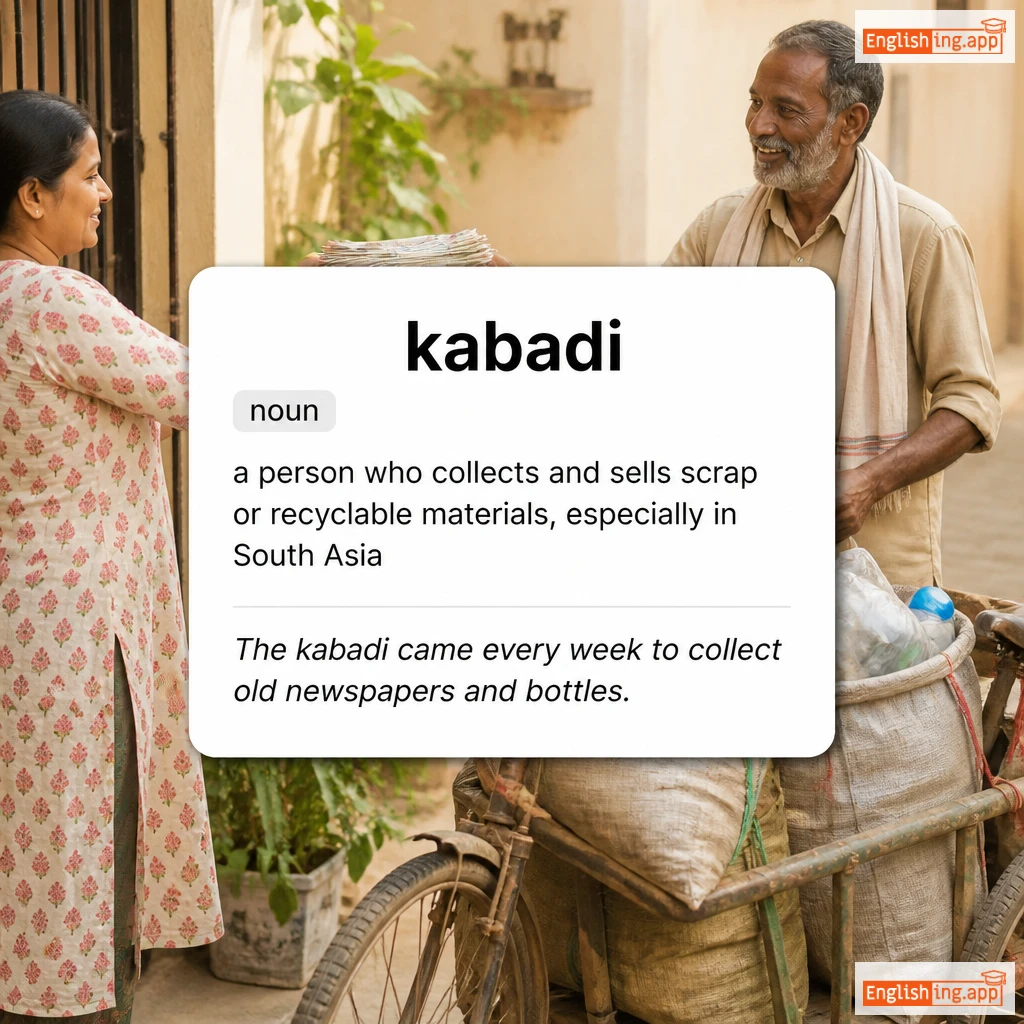
"ジュートの葉はビタミンやミネラルが豊富で、ベンガル料理ではしばしばレンズ豆と一緒に調理されます。" (juuto no ha wa bitamin ya mineraru ga houfu de bengaru ryouri de wa shibashiba renzu mame to issho ni chouri saremasu.)
kabadi definition card — visual illustration of the meaning
noun C2
/kəˈbɑːdi/
廃品回収業者 (haipin kaishuu gyousha)

a person who collects and sells scrap or recyclable materials, especially in South Asia

"The kabadi came every week to collect old newspapers and bottles."
"廃品回収業者は古い物を集めます。" (haipin kaishuu gyousha wa furui mono o atsumemasu)
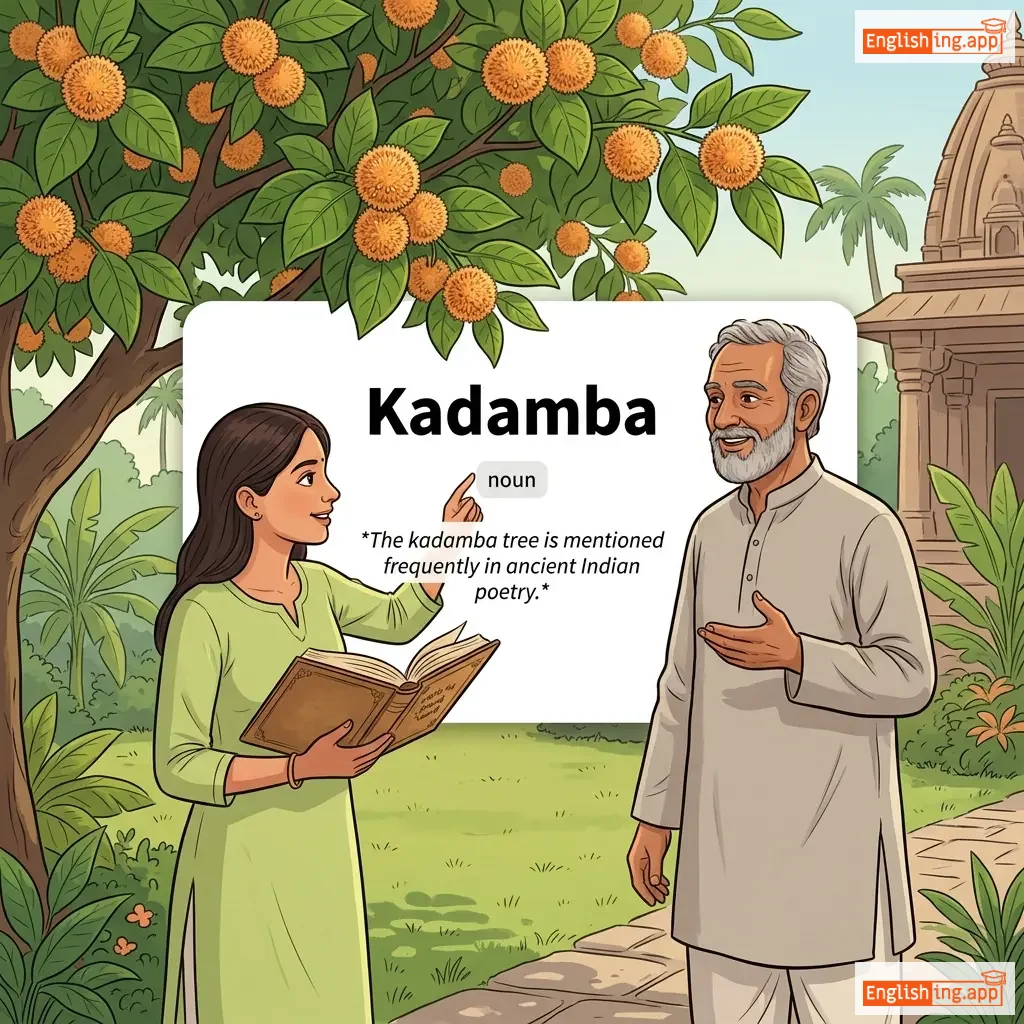
Kadamba definition card — visual illustration of the meaning
noun C2
/kəˈdʌm.bə/
カダンバの木 (kadamba no ki)

A tropical tree with round, fragrant orange flowers, sacred in Hindu culture and associated with Lord Krishna

"The kadamba tree is mentioned frequently in ancient Indian poetry."
"カダンバの木は古代インドの詩で頻繁に言及される。" (Kadamba no ki wa kodai Indo no shi de hinpan ni genkyuu sareru.)
Karonda definition card — visual illustration of the meaning
noun C2
/kəˈrɒn.də/
カロンダ (karonda)

a small dark purple berry-like fruit that is sour and used in pickles

"Karonda is often used to make pickles and preserves."
"カロンダは、ピクルスや保存食を作るのによく使われます。" (Karonda wa, pikurusu ya hozonshoku o tsukuru no ni yoku tsukaimasu)
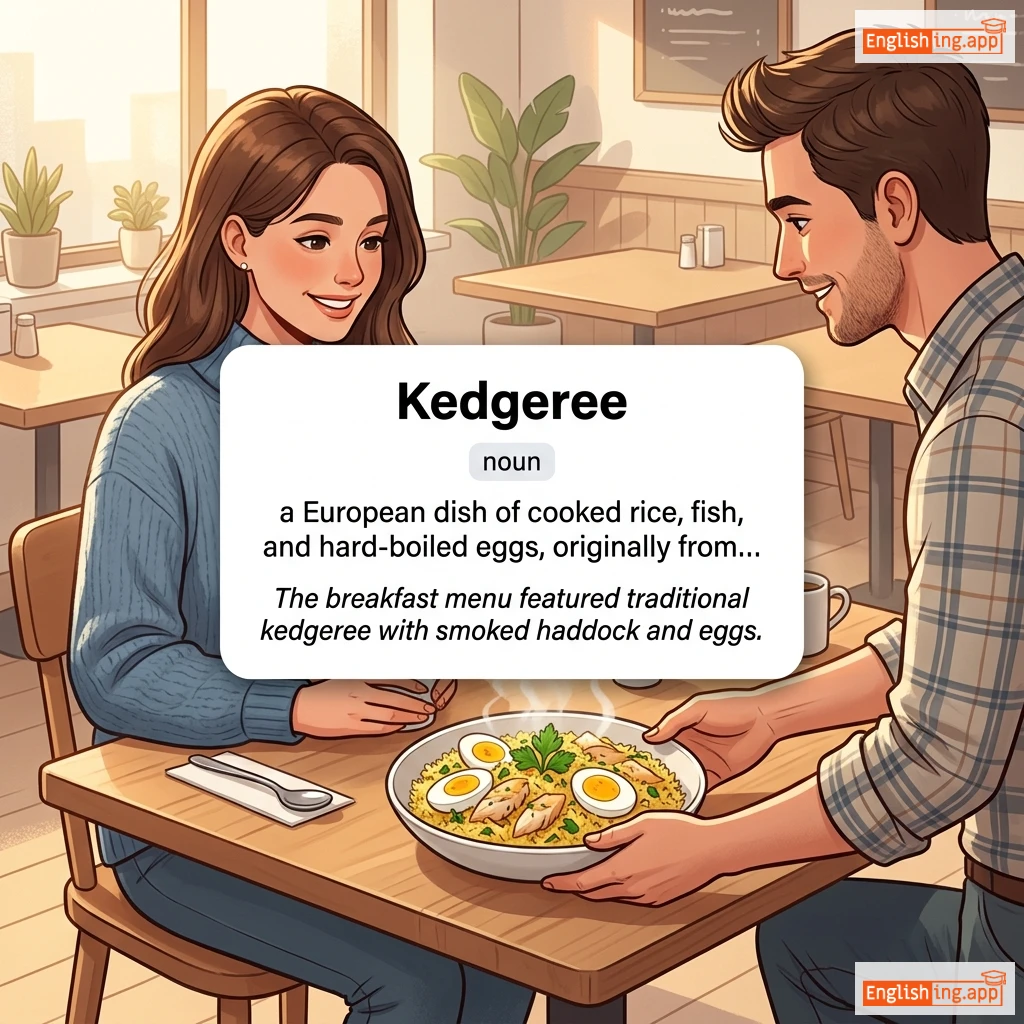
Kedgeree definition card — visual illustration of the meaning
noun C2
/ˈkedʒ.ə.riː/
ケジリー (kejirī)

a European dish of cooked rice, fish, and hard-boiled eggs, originally from India

"The breakfast menu featured traditional kedgeree with smoked haddock and eggs."

"朝食のメニューには、スモークハドックと卵が入った伝統的なケジリーがありました。" (Chōshoku no menyū ni wa, sumōku hadokku to tamago ga haitta dentō-teki na kejirī ga arimashita.)
noun C2
/kɛn/
理解の範囲 (rikai no han'i)

one's range of knowledge or understanding

"Quantum physics is beyond my ken."

"量子物理学は私の理解を超えています。" (Ryoushi butsuri gaku wa watashi no rikai wo koeteimasu.)
noun C2
/ˈkɜːrtʃɪf/
バンダナ (bandana)

a piece of cloth worn around the head or neck

"She wore a red kerchief on her head."
"彼女は頭に赤いバンダナを巻いていました。" (Kanojo wa atama ni akai bandana o maiteimashita.)
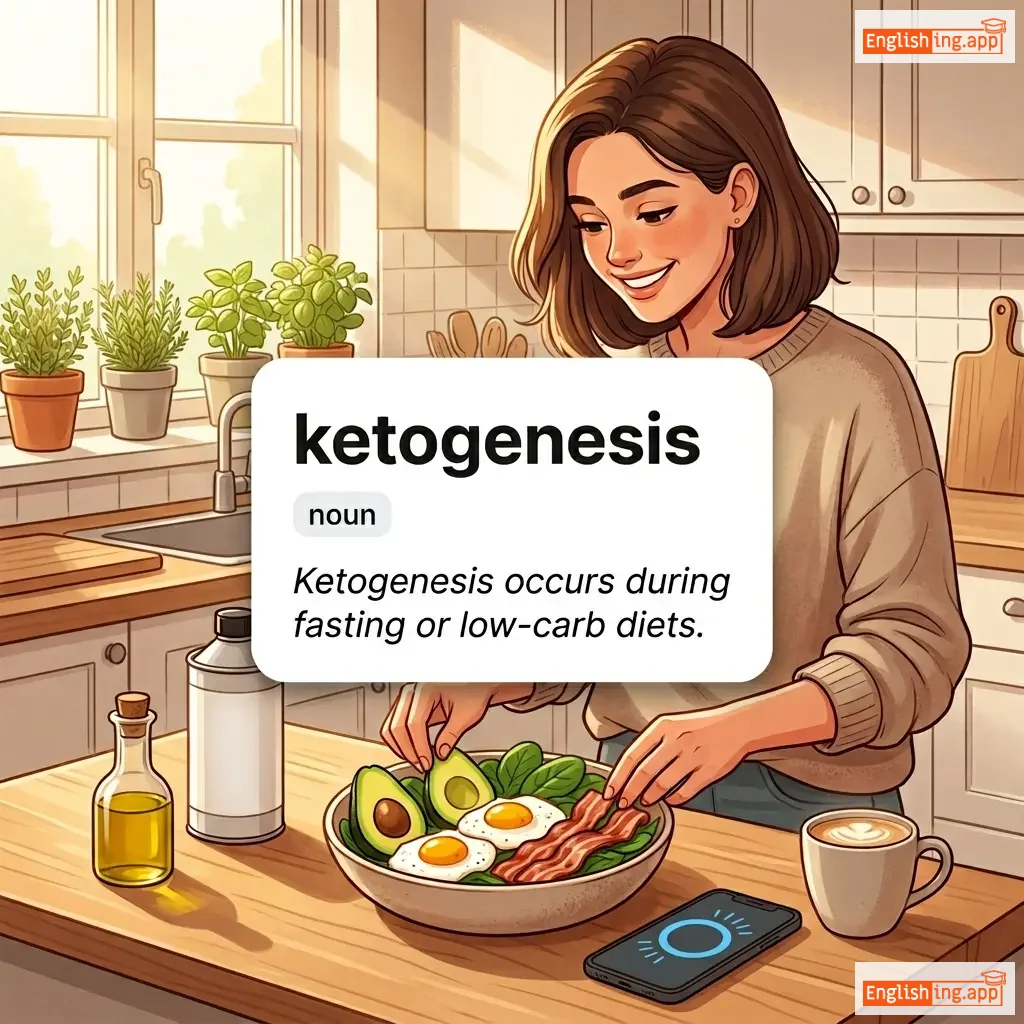
ketogenesis definition card — visual illustration of the meaning
noun C2
/ˌkiː.təʊˈdʒen.ɪ.sɪs/
ケトン生成過程 (keton seisei katei)

The metabolic process by which the liver produces ketones from fatty acids, providing an alternative energy source during low carbohydrate availability.

"Ketogenesis occurs during fasting or low-carb diets."

"ケトジェネシスは断食や低炭水化物ダイエット中に発生します。" (Ketogenesu wa danjiki ya tei tansui kabu daietto chū ni hassei shimasu.)
noun C2
/ˈkɪldʒɔɪ/
空気を壊す人 (kuuki o kowasu hito)

a person who spoils the fun or enjoyment of others

"Don’t be a killjoy at the party."

"パーティーで空気を壊す人にならないで。" (Pātī de kuuki o kowasu hito ni nara naide.)
noun C2
/kɪln/
(kama)

a furnace or oven for burning, baking, or drying, especially one for firing pottery or bricks

"The potter placed the clay pots into the kiln for firing."

"陶芸家は粘土の壺を窯で焼くために置きました。" (Tougei-ka wa nendo no tsubo o kama de yaku tame ni okimashita.)
noun C2
/ˈkɪləˌliːtər/
キロリットル (kirorittoru)

a unit of capacity equal to 1,000 liters

"The tank can hold up to three kiloliters of water."

"タンクは最大で3キロリットルの水を保持できます。" (Tanku wa saidai de 3 kirorittoru no mizu o hoji dekimasu.)
noun C2
/ˈkɪŋɡlɪŋ/
小さな王 (chiisana ou)

A minor or petty king; a ruler of small importance.

"The kingling demanded respect from his people despite his small realm."

"その小さな王は、小さな王国にもかかわらず、彼の人々に尊敬を要求しました。" (Sono chiisana ō wa, chiisana ōkoku ni mo kakawarazu, kare no hitobito ni sonkei o yōkyū shimashita.)
noun C2
/ˈkɪŋʃɪp/
王権 (ōken)

The position, dignity, or authority of a king.

"The king’s advisors often reminded him of the responsibilities of kingship."

"王の顧問たちはしばしば彼に王権の責任を思い出させました。" (Ō no komon-tachi wa shibashiba kare ni ōken no sekinin o omoidasasemashita.)
adjective C2
/ˈkɪŋ.ki/
変わった性的習慣; カールした髪 (kinki)

having or involving unconventional sexual practices; having tight curls or bends

"His kinky hair made him look unique."

"彼のくるくるした髪は彼をユニークに見せました。" (kare no kurukuru shita kami wa kare o yunikku ni misemashita.)
noun C2
/ˈkɪzmɛt/
運命 (unmei)

Destiny or fate.

"Meeting her on that day felt like pure kismet."

"その日に彼女に会うことは純粋な運命のように感じました。" (Sono hi ni kanojo ni au koto wa junna unmei no you ni kanjimashita.)
noun C2
/kɪθ/
親しい友人 (shitashī yūjin)

Friends, acquaintances, and relations.

"He invited all his kith and kin to the wedding."

"彼は結婚式にすべての親しい友人と親戚を招待しました。" (Kare wa kekkonshiki ni subete no shitashī yūjin to shinseki o shōtai shimashita.)
noun C2
/ˌklɛptəˈmeɪniæk/
盗みを抑えきれない衝動を持つ人 (nusumi wo osaekirenai shoudou wo motsu hito)

A person with an irresistible urge to steal, typically without need or profit.

"The kleptomaniac was caught shoplifting again."
"そのクレプトマニアは再び店で万引きして捕まった。" (Sono kureptomania wa futatabi mise de manbiki shite tsukamatta.)
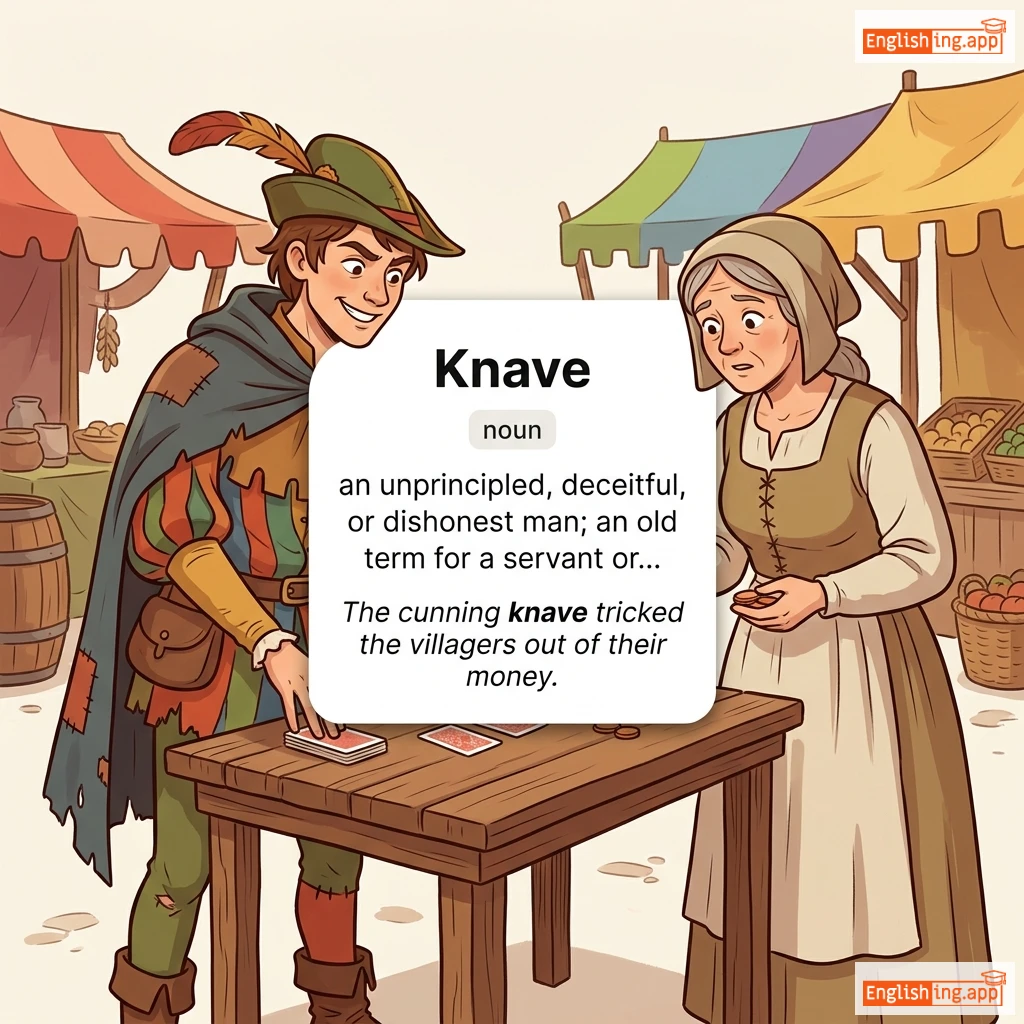
Knave definition card — visual illustration of the meaning
noun C2
/neɪv/
不正直者 (fuseijikusha)

an unprincipled, deceitful, or dishonest man; an old term for a servant or male of low status

"The cunning knave tricked the villagers out of their money."

"その狡猾な不正直者は村人たちからお金をだまし取った。" (Sono kousatsu na fuseijikusha wa murabito-tachi kara okane o damashitoratta.)
noun C2
/ˈneɪvəri/
詐欺 (sagi)

dishonest or deceitful behavior; trickery

"The politician’s knavery was exposed by the media."

"政治家の詐欺はメディアによって暴露された。" (Seijika no sagi wa media ni yotte bakuro sareta.)
noun C2
/nɛl/
鐘の音 (kane no oto)

The sound of a bell, especially when rung solemnly for a death or funeral; a signal of the end or failure of something.

"The knell of the church bell echoed through the valley at dusk."

"教会の鐘の音が夕暮れ時に谷を響き渡った。" (Kyōkai no kane no oto ga yūgure toki ni tani o hibikiwatta.)
noun C2
/ˈnɪk.næk/
幸福 (kōfuku)

A small decorative object, especially in a house.

"The shelf was full of little knickknacks collected from their travels."

"彼女は賞を受け取ったとき、喜びを隠すことができませんでした。" (Kanojo wa shō o uketotta toki, yorokobi o kakusu koto ga dekimasen deshita.)
adjective C2
/ˈnaɪt.li/
騎士のような; 高貴で勇敢 (kishi no you na; kouki de yuukan)

having the characteristics of a knight; chivalrous; noble and brave

"He showed knightly courage in defending the innocent."
"彼は無実を守るために騎士のような勇気を示した。" (Kare wa mujitsu o mamoru tame ni kishi no you na yuuki o shimeshita.)
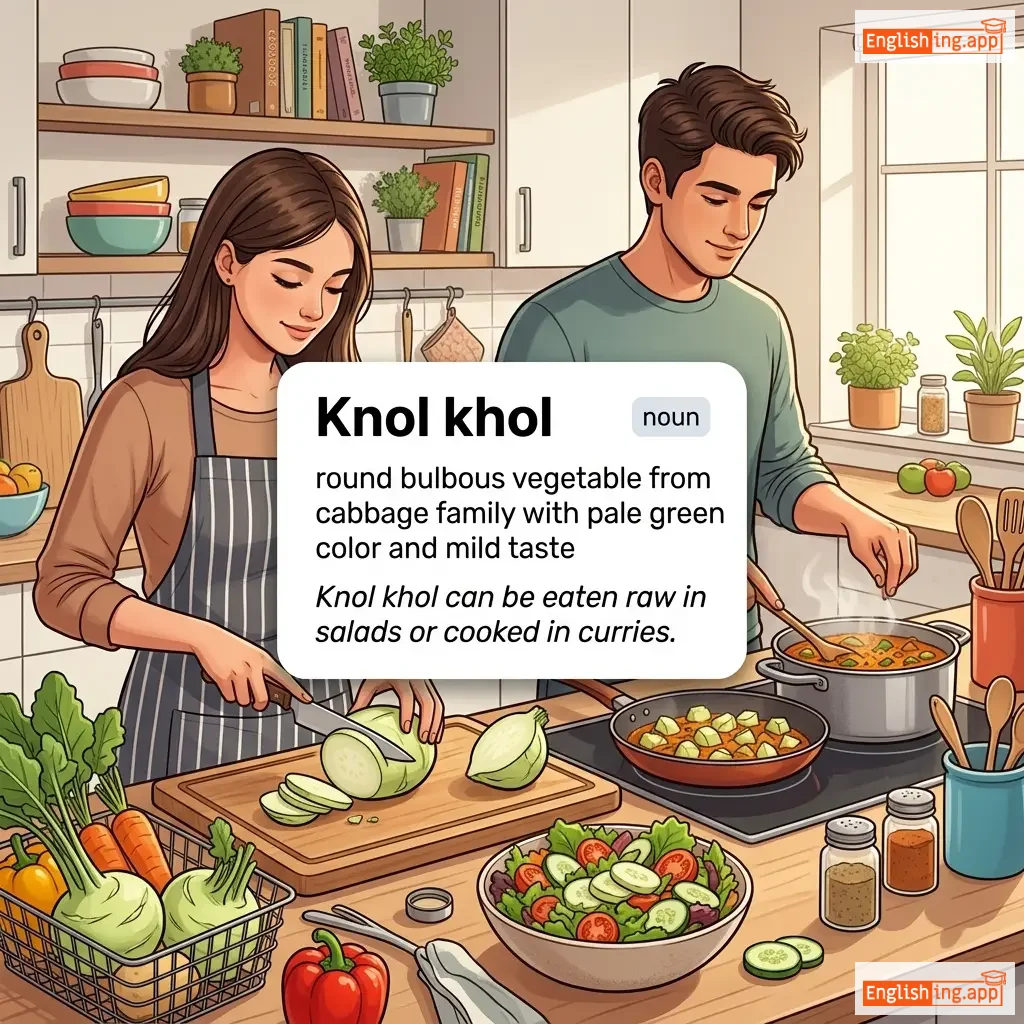
Knol khol definition card — visual illustration of the meaning
noun C2
/noʊl koʊl/
カリフラワー (karifurawā)

round bulbous vegetable from cabbage family with pale green color and mild taste

"Knol khol can be eaten raw in salads or cooked in curries."
"カリフラワーはサラダで生で食べることも、カレーにしても美味しいです。" (karifurawā wa sarada de nama de taberu koto mo, karē ni shite mo oishī desu)
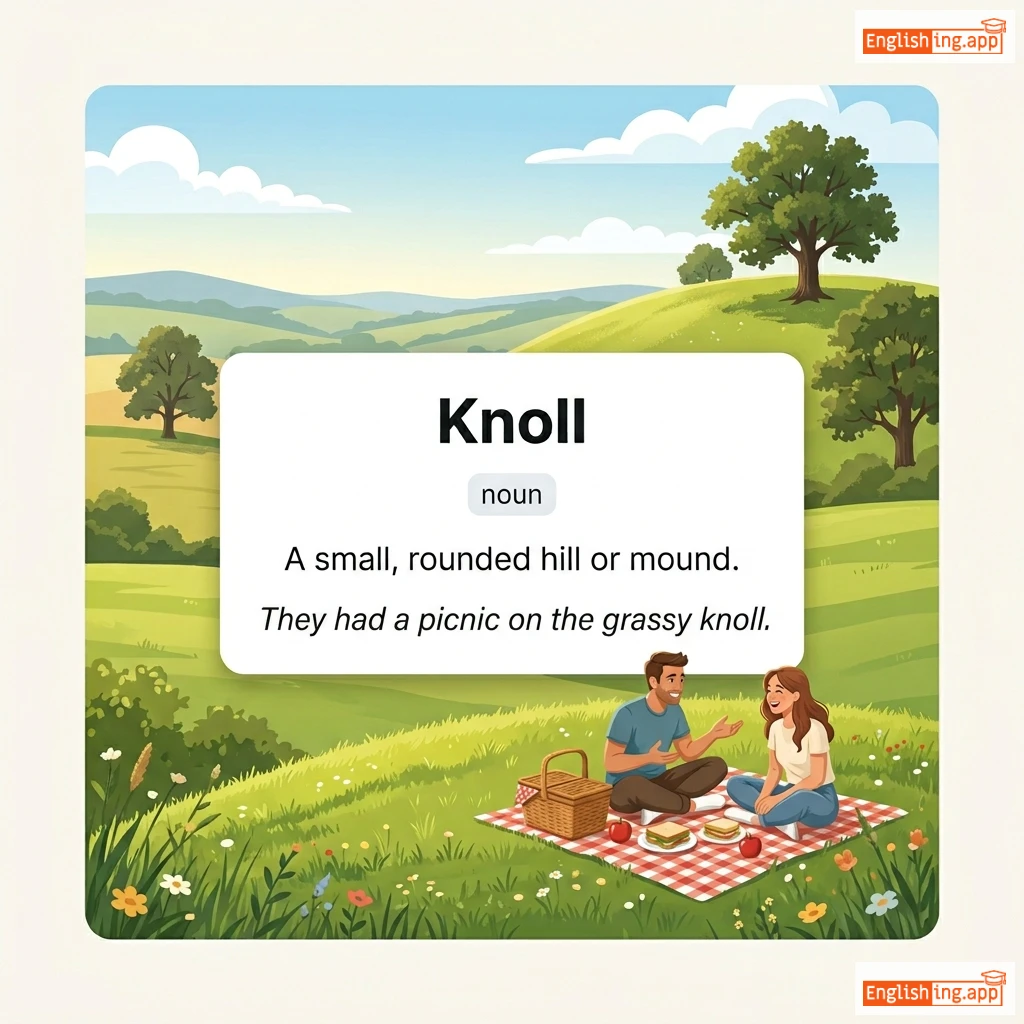
Knoll definition card — visual illustration of the meaning
noun C2
/noʊl/
(oka)

A small, rounded hill or mound.

"They had a picnic on the grassy knoll."

"彼らは草むらの丘でピクニックをしました。" (karera wa kusamura no oka de pikunikku o shimashita.)
adjective C2
/ˈnɒti/
複雑 (fukuzatsu)

Complicated, difficult to solve or full of knots.

"He faced a knotty legal issue."

"彼は複雑な法的問題に直面しました。" (Kare wa fukuzatsu na hōteki mondai ni chokumen shimashita.)
verb C2
/ˌkaʊˈtaʊ/
過度に従順である (kado ni jūjun de aru)

To act in an excessively subservient or obedient manner.

"He refused to kowtow to the unreasonable demands."
"彼は不合理な要求に従うことを拒否した。" (Kare wa fukōri na yōkyū ni shitagau koto o kyohi shita.)
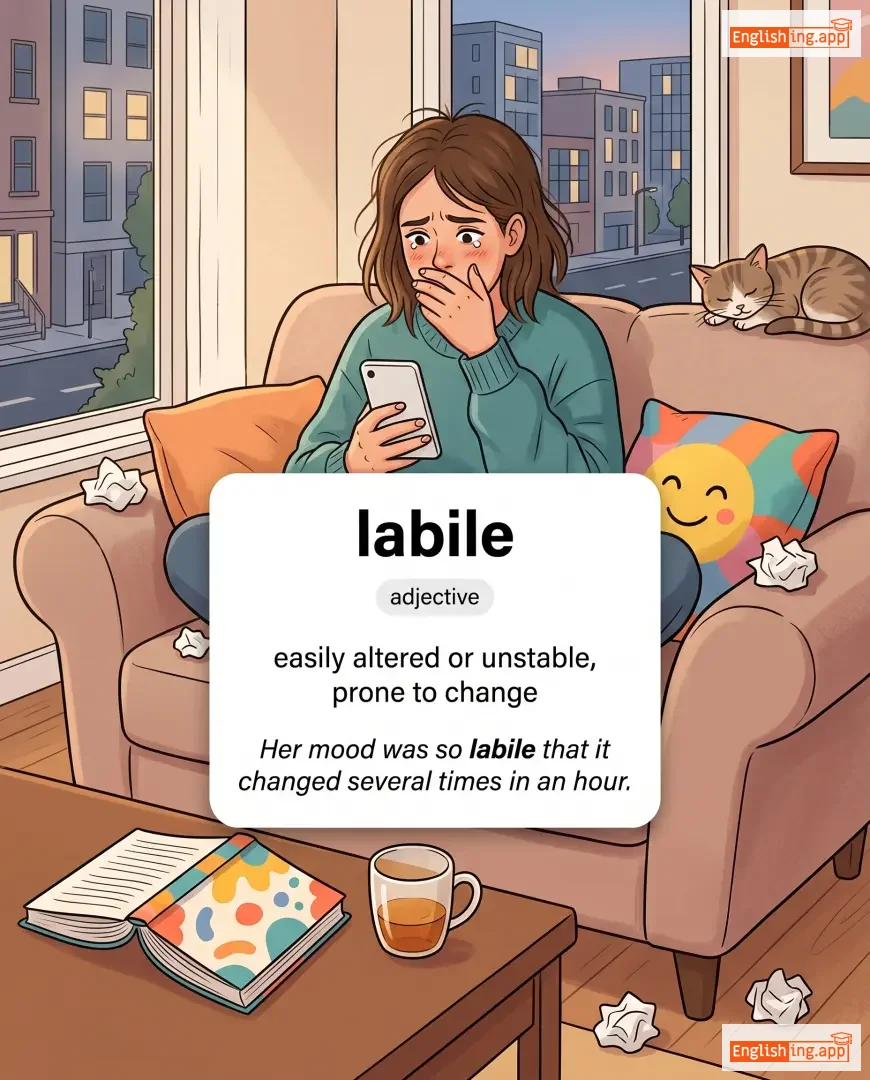
labile definition card — visual illustration of the meaning
adjective C2
/ˈleɪ.baɪl/ or /ˈlæb.aɪl/
不安定な (fuanteina)

easily altered or unstable; prone to change

"Her mood was so labile that it changed several times in an hour."
"彼女の気分は非常に不安定で、1時間で何度も変わりました。" (Kanojo no kibun wa hijō ni fuantei de, 1-jikan de nando mo kawarimashita.)
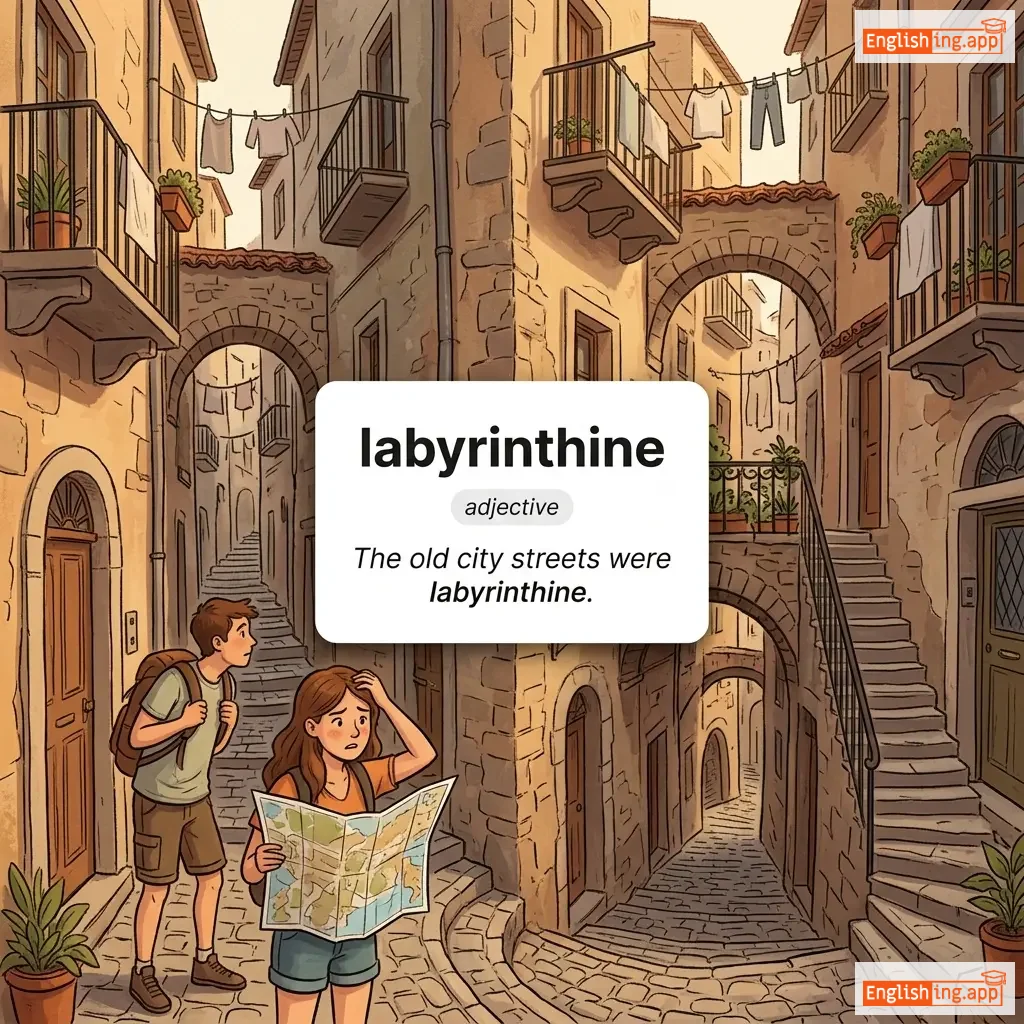
labyrinthine definition card — visual illustration of the meaning
adjective C2
ˌlæb.əˈrɪn.θaɪn
迷路のような (meiro no yō na)

Like a labyrinth; complicated and confusing; having many interconnected paths or passages.

"The old city streets were labyrinthine."

"古い街の通りは迷路のようだった。" (Furui machi no tōri wa meiro no yō datta.)
verb C2
/ˈlæs.ə.reɪt/
裂ける、引き裂く (sakeru, hikisaku)

to tear or cut deeply in the skin or flesh

"The broken glass lacerated his hand."

"壊れたガラスが彼の手を切った。" (Kowareta garasu ga kare no te o kitta.)
noun C2
/ˌlæs.əˈreɪ.ʃən/
深い切り傷 (fukai kirikizu)

a deep cut or tear in skin or flesh

"He needed stitches for a laceration on his leg."

"彼は足の深い切り傷に縫い合わせが必要でした。" (Kare wa ashi no fukai kirikizu ni nui awase ga hitsuyou deshita.)
adjective C2
/ˈlæk.rɪ.moʊs/
涙を流す、悲しむ (namida o nagasu, kanashimu)

tearful or given to weeping; sad and mournful

"The movie's lachrymose ending left the audience in tears."

"映画の悲しい結末は観客を涙で満たしました。" (Eiga no kanashī ketsumatsu wa kankyaku o namida de mitashimashita.)
adjective C2
/ˌlækəˈdeɪzɪkəl/
怠惰または無関心 (taida mata wa mukanshin)

lacking enthusiasm, energy, or determination; careless or lazy

"His lackadaisical attitude toward work annoyed his boss."

"彼の怠惰な態度は、仕事に対する上司の不満を引き起こした。" (Kare no taida na taido wa, shigoto ni taisuru jōshi no fuman o hikiokoshita.)
noun C2
/ˈlæki/
従者 (jūsha)

a person who is overly willing to serve or obey someone else

"He treated his assistant like a mere lackey."

"彼は助手を単なる従者として扱った。" (Kare wa joshu o tannaru jūsha toshite atsukatta.)