Словари

Словарь английского языка | Значения слов, определения и примеры

adjective C2
/juːˈbɪkwɪtəs/
ubicuo (ubikuo)

Present, appearing, or found everywhere.

"Smartphones have become ubiquitous in modern society."
"Los teléfonos inteligentes se han vuelto ubicuos en la sociedad moderna." (Los telefonos inteligentes se han vuelto ubicuos en la sociedad moderna.)
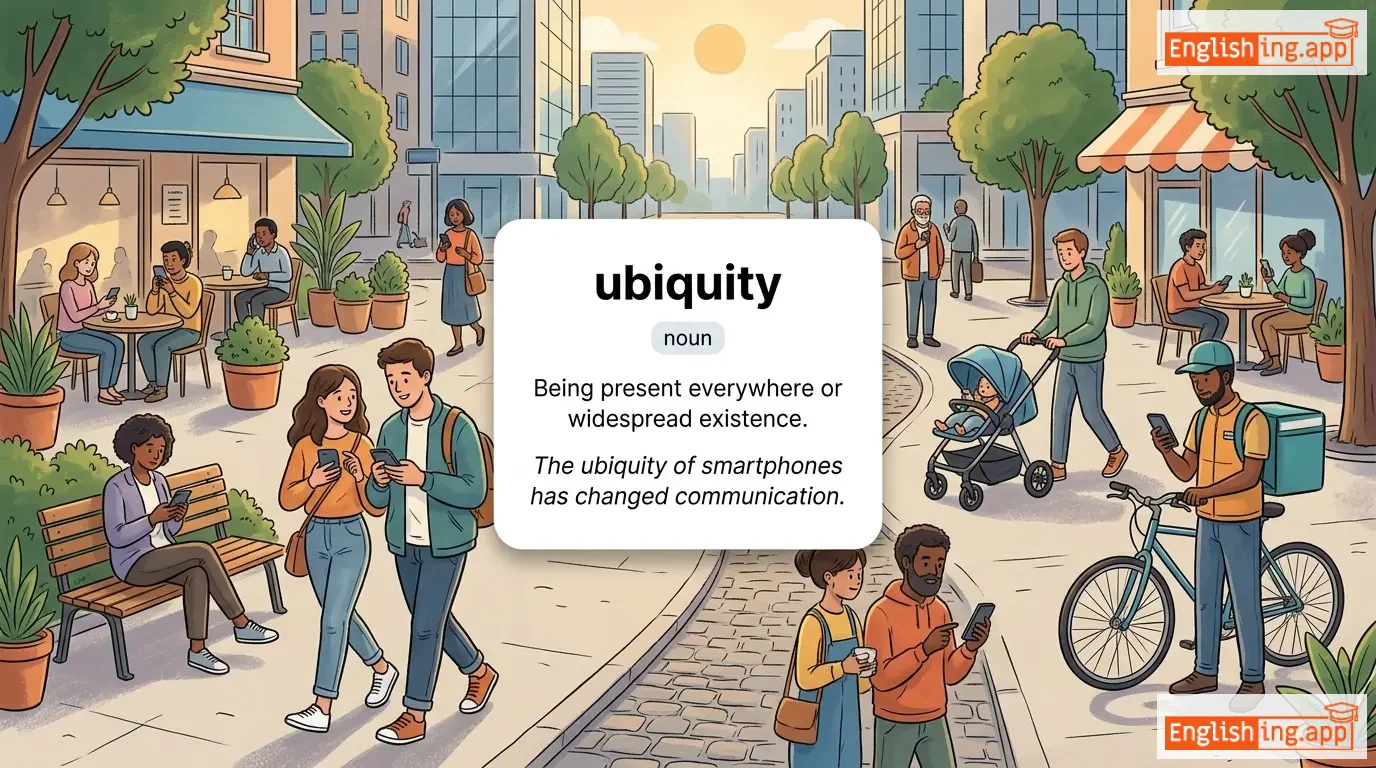
ubiquity definition card — visual illustration of the meaning
noun C2
/juːˈbɪk.wɪ.ti/
ubicuidad (ubiquidad)

Being present everywhere or widespread existence.

"The ubiquity of smartphones has changed communication."

"La ubiquidad de los teléfonos inteligentes ha cambiado la comunicación." (La ubiquidad de los teléfonos inteligentes ha cambiado la comunicación.)
noun C2
/juːˈkeɪs/
decreto (decreto)

An authoritative decree or order, especially one issued by a sovereign or government.

"The czar issued a ukase restricting the freedom of the press."

"El zar emitió un decreto que restringía la libertad de prensa." (El zar emitió un decreto que restringía la libertad de prensa.)
adjective C2
/ˌʌltrəˈmɒnteɪn/
partidario del Papa (partidario del Papa)

beyond the mountains, especially referring to support for the Pope over local church authority

"The debate highlighted the ultramontane position in church politics."

"El debate destacó la posición ultramontana en la política eclesiástica." (El debate destaco la posicion ultramontana en la politica eclesiastica.)
adjective C2
/ˌʌltrəˈmʌndeɪn/
ultramundano (ultramundano)

Relating to things beyond the physical world; supernatural or transcendental.

"Philosophers often discuss ultramundane realities beyond human perception."
"Los filósofos a menudo discuten las realidades ultramundanas más allá de la percepción humana." (Los filosofos a menudo discuten las realidades ultramundanas mas alla de la percepcion humana.)
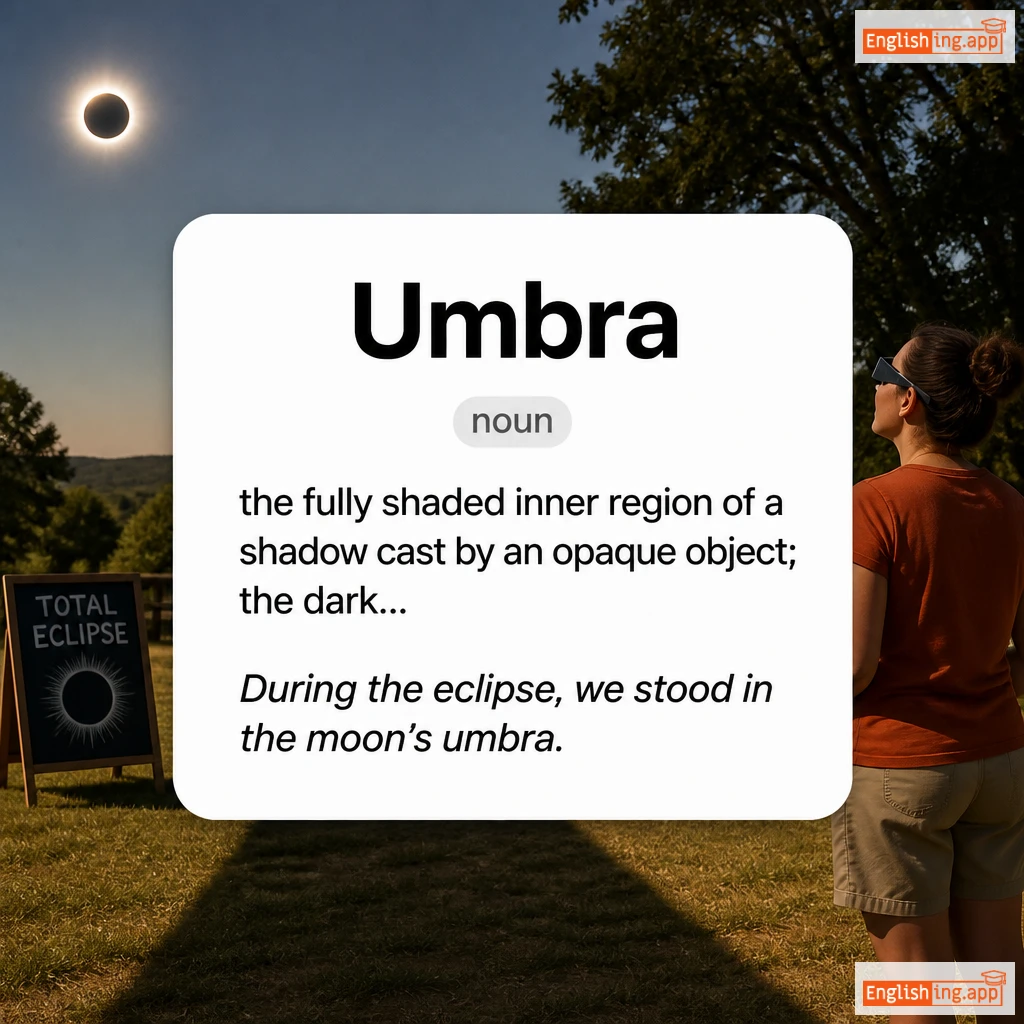
Umbra definition card — visual illustration of the meaning
noun C2
/ˈʌm.brə/
sombra completa, la región oscura del centro de una mancha solar (sombra completa, la region oscura del centro de una mancha solar)

the fully shaded inner region of a shadow cast by an opaque object; the dark center of a sunspot

"During the eclipse, we stood in the moon's umbra."

"Durante el eclipse, nos paramos en la umbra de la luna." (Durante el eclipse, nos paramos en la umbra de la luna.)
noun C2
/ˈʌmbrɪdʒ/
resentimiento, ofensa (resentimiento, ofensa)

A feeling of resentment or offense.

"She took umbrage at his rude remark."

"Ella se ofendió con su comentario grosero." (Ella se ofendió con su comentario grosero.)
adjective C2
/ʌnˈælɔɪd/
puro (puro)

Pure, complete, and not mixed with anything else.

"She felt unalloyed joy at the news of her success."
"Ella sintió una alegría pura al recibir la noticia de su éxito." (Ella sintió una alegría pura al recibir la noticia de su éxito.)
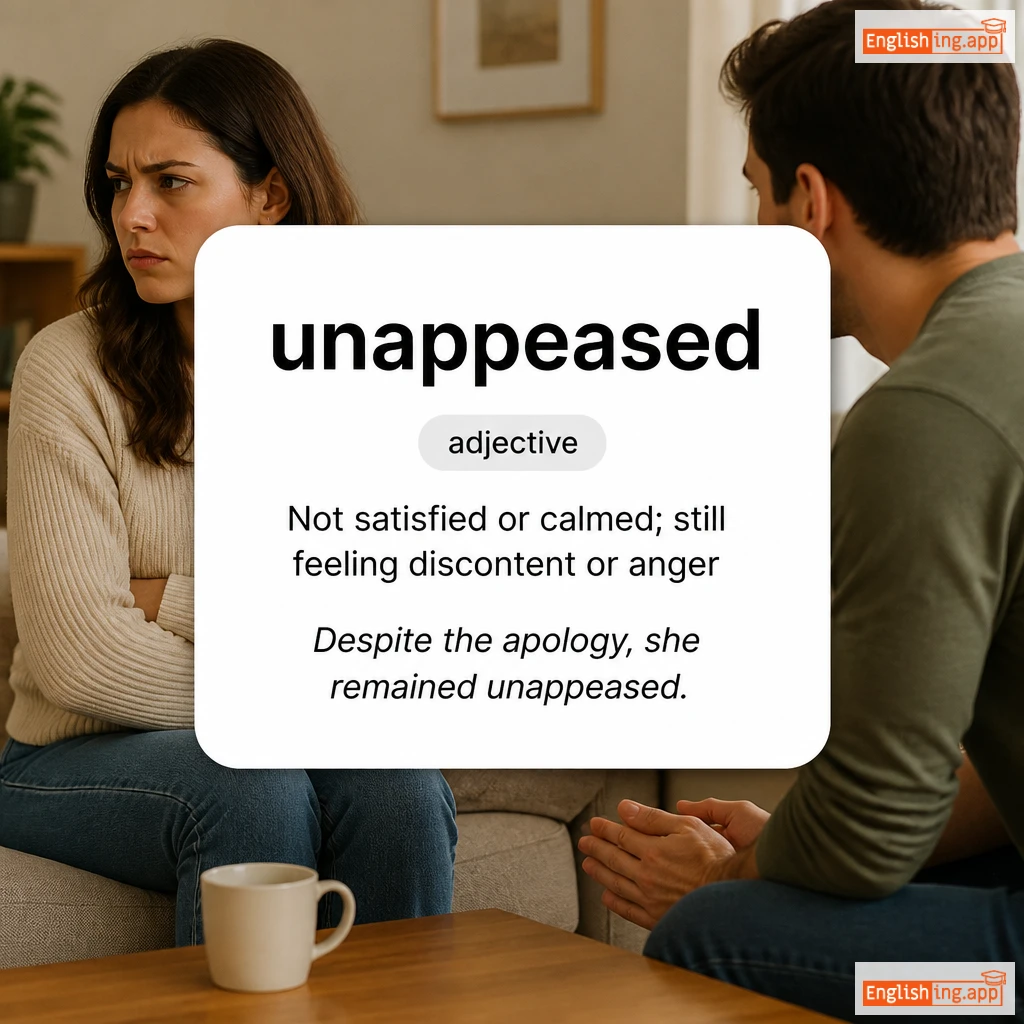
unappeased definition card — visual illustration of the meaning
adjective C2
/ʌnəˈpiːzd/
insatisfecho (insatisfecho)

Not satisfied or calmed; still feeling discontent or anger

"Despite the apology, she remained unappeased."
"A pesar de la disculpa, ella permaneció insatisfecha." (A pesar de la disculpa, ella permanecio insatisfecha)
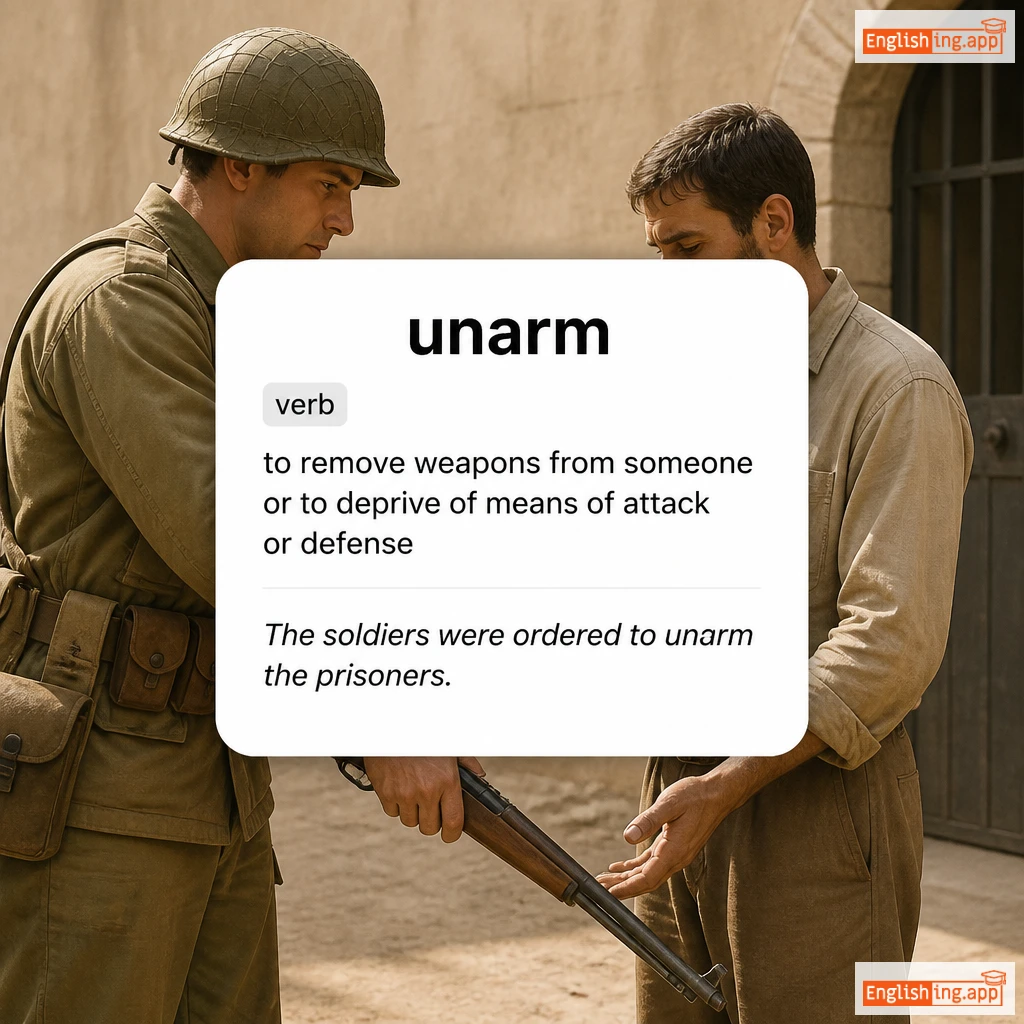
unarm definition card — visual illustration of the meaning
verb C2
/ʌnˈɑːrm/
desarmar (desarmar)

to remove weapons from someone or to deprive of means of attack or defense

"The soldiers were ordered to unarm the prisoners."
"Se ordenó a los soldados desarmar a los prisioneros." (Se ordeno a los soldados desarmar a los prisioneros)
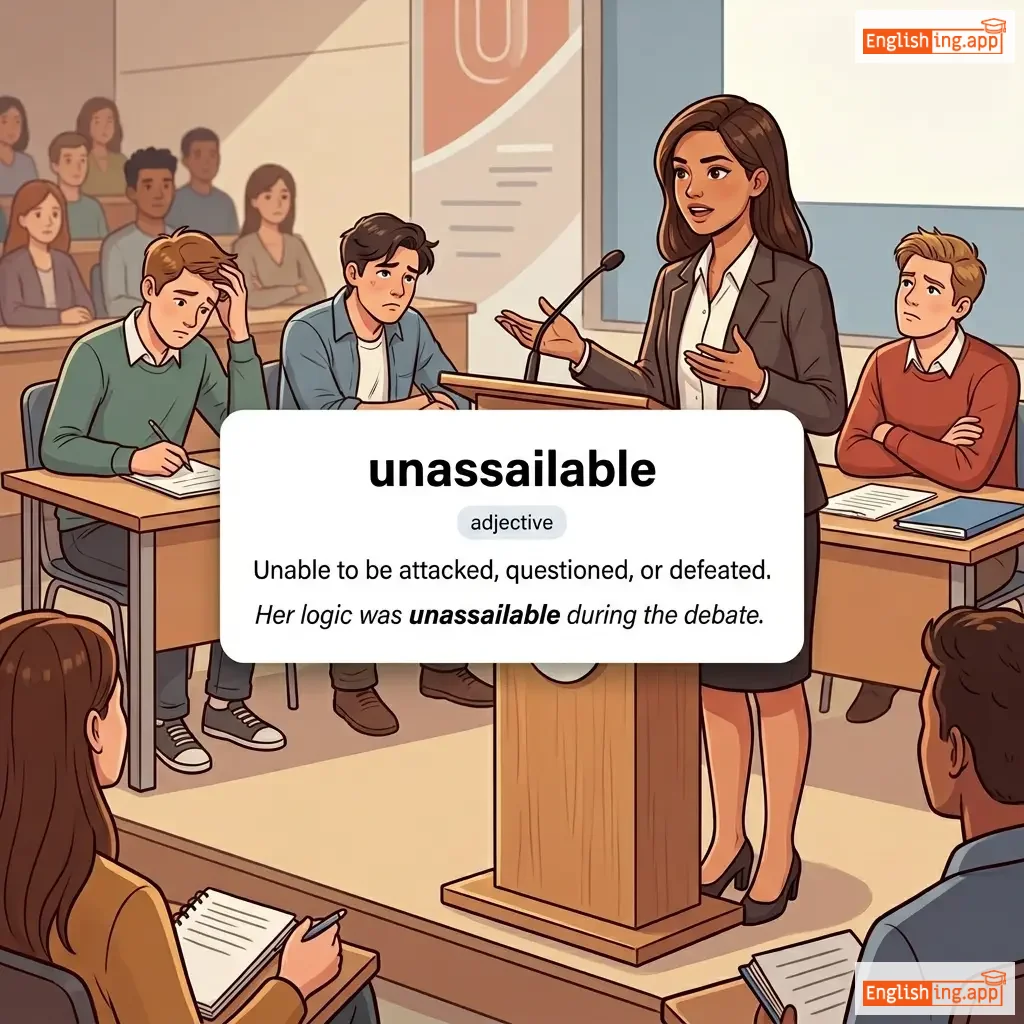
unassailable definition card — visual illustration of the meaning
adjective C2
/ˌʌnəˈseɪləbl/
inatacable (inatacable)

Unable to be attacked, questioned, or defeated.

"Her logic was unassailable during the debate."

"Su lógica era inatacable durante el debate." (Su logica era inatacable durante el debate.)
adjective C2
/ˌʌnəˈsweɪdʒd/
inquieto (inquieto)

Not made less intense or relieved; unrelieved.

"His grief remained unassuaged despite the passage of time."

"Su dolor permaneció inquieto a pesar del paso del tiempo." (Su dolor permaneció inquieto a pesar del paso del tiempo.)
adjective C2
/ˌʌnəˈʃʊəd/
inseguro (inseguro)

Lacking confidence or certainty.

"She gave an unassured answer during the interview."

"Ella dio una respuesta insegura durante la entrevista." (Ella dio una respuesta insegura durante la entrevista.)
adjective C2
/ʌnˈblʌʃɪŋ/
descarado; sinvergüenza (descarado; sinverguenza)

showing no shame or embarrassment; boldly shameless

"He told the unblushing lie without any hesitation."

"Él dijo la mentira descarada sin dudar." (El dijo la mentira descarada sin dudar.)
adjective C2
/ˌʌnsɛrəˈmoʊniəs/
sin ceremonias/rudo (sin ceremonias/rudo)

Done without formality or courtesy; abrupt or rude.

"He made an unceremonious exit from the party."

"Él hizo una salida sin ceremonias de la fiesta." (El hizo una salida sin ceremonias de la fiesta.)
adjective C2
/ʌnˈtʃeɪst/
inmoral; impuro; (inmoral; impuro;)

not celibate; having engaged in sexual relations; lacking moral purity

"The conservative society considered her behavior unchaste and improper."
"La sociedad conservadora consideró su comportamiento inmoral e inapropiado." (La sociedad conservadora consideró su comportamiento inmoral e inapropiado.)
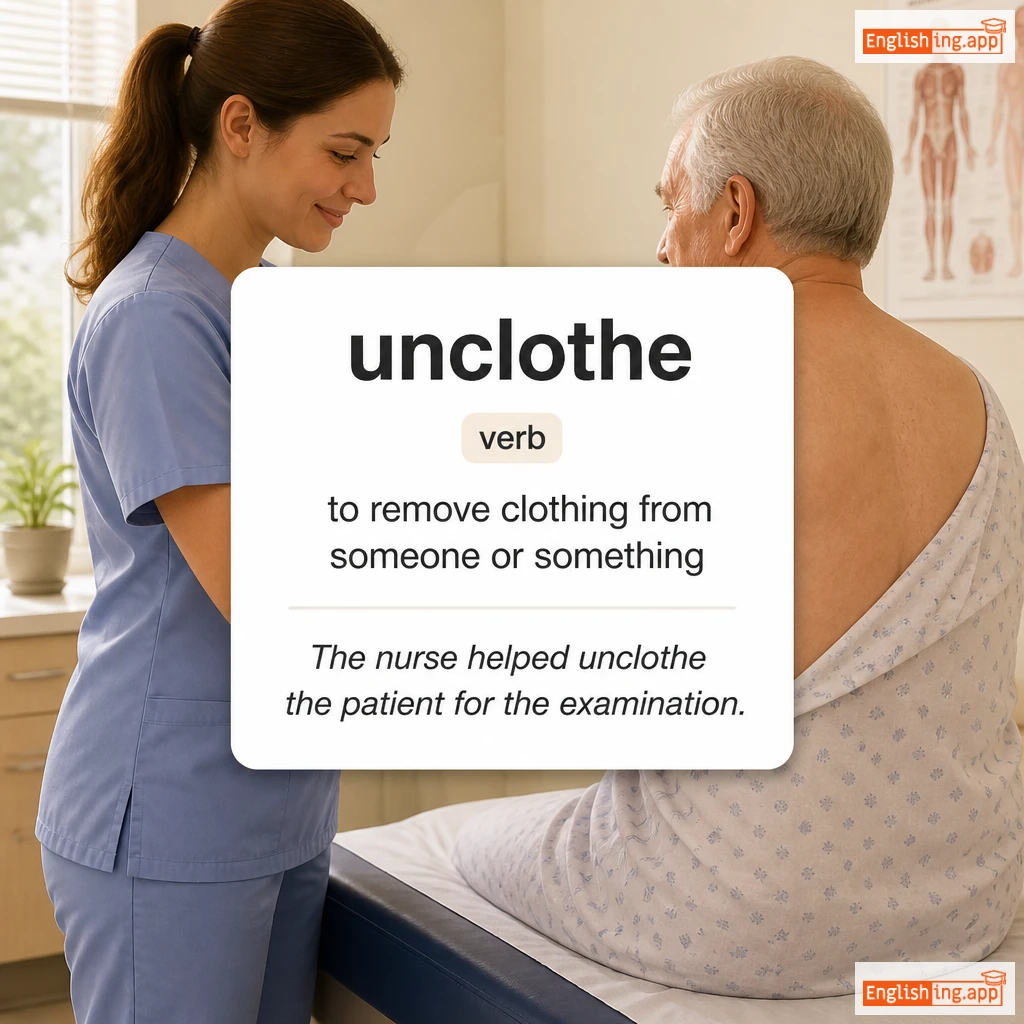
unclothe definition card — visual illustration of the meaning
verb C2
/ʌnˈkloʊð/
desvestir; quitar la ropa (desvestir; quitar la ropa)

to remove clothing from someone or something

"The nurse helped unclothe the patient for the examination."

"La enfermera ayudó a desvestir al paciente para el examen." (La enfermera ayudo a desvestir al paciente para el examen)
noun C2
/ʌnˈkloʊðɪŋ/
desvestirse (desvestirse)

the act or process of removing clothing

"The child quickly ran inside for unclothing after playing in the mud."

"El niño corrió rápidamente adentro para desvestirse después de jugar en el barro." (El nino corrio rapidamente adentro para desvestirse despues de jugar en el barro)
adjective C2
/ʌnˈkɒnʃənəbl/
injustificable (injustificable)

shockingly unfair or unreasonable

"The company made unconscionable profits from the crisis."

"La empresa hizo ganancias injustificables durante la crisis." (La empresa hizo ganancias injustificables durante la crisis.)
verb C2
/ʌnˈkaʊtʃ/
sacar del sofá (uso raro) (sacar del sofa)

to remove from a couch or to release from being laid down (rare/archaic usage)

"The surgeon attempted to uncouch the cataract."

"El cirujano intentó sacar la catarata." (El cirujano intentó sacar la catarata.)
noun C2
/ˈʌŋkʃən/
unción (uncion)

The act of anointing as part of a religious or ceremonial ritual; excessive or insincere flattery.

"The priest performed the holy unction with solemnity."

"El sacerdote realizó la santa unción con solemnidad." (El sacerdote realizo la santa uncion con solemnidad.)
adjective C2
/ˈʌŋk.tʃu.əs/
lisonjero (lisonjero)

Excessively flattering or ingratiating; oily in texture.

"His unctuous tone made everyone uncomfortable."

"Su tono lisonjero hizo que todos se sintieran incómodos." (Su tono lisonjero hizo que todos se sintieran incómodos.)
verb C2
/ˌʌn.dɪˈsiːv/
desengañar (desenganar)

To free someone from a misconception or false belief.

"She tried to undeceive him about the false rumors."

"Ella trató de desengañarlo sobre los rumores falsos." (Ella trato de desengañarlo sobre los rumores falsos.)
verb C2
/ˌʌndərˈɡɜːrd/
sustentar, reforzar (sustentar, reforzar)

to provide support or foundation for; to strengthen

"Strong values undergird a healthy society."

"Los valores fuertes sustentan una sociedad saludable." (Los valores fuertes sustentan una sociedad saludable.)
noun C2
/ˈʌndərlɪŋ/
subordinado (subordinado)

a person of low rank or importance; a subordinate

"The manager ordered his underlings to finish the task quickly."

"El gerente ordenó a sus subordinados terminar la tarea rápidamente." (El gerente ordenó a sus subordinados terminar la tarea rápidamente.)
verb C2
/ˈʌndərˌmæn/
quedarse sin personal (quedarse sin personal)

to supply with fewer workers or personnel than needed

"The hospital was undermanned during the flu outbreak."
"El hospital estuvo con poco personal durante el brote de gripe." (El hospital estuvo con poco personal durante el brote de gripe.)
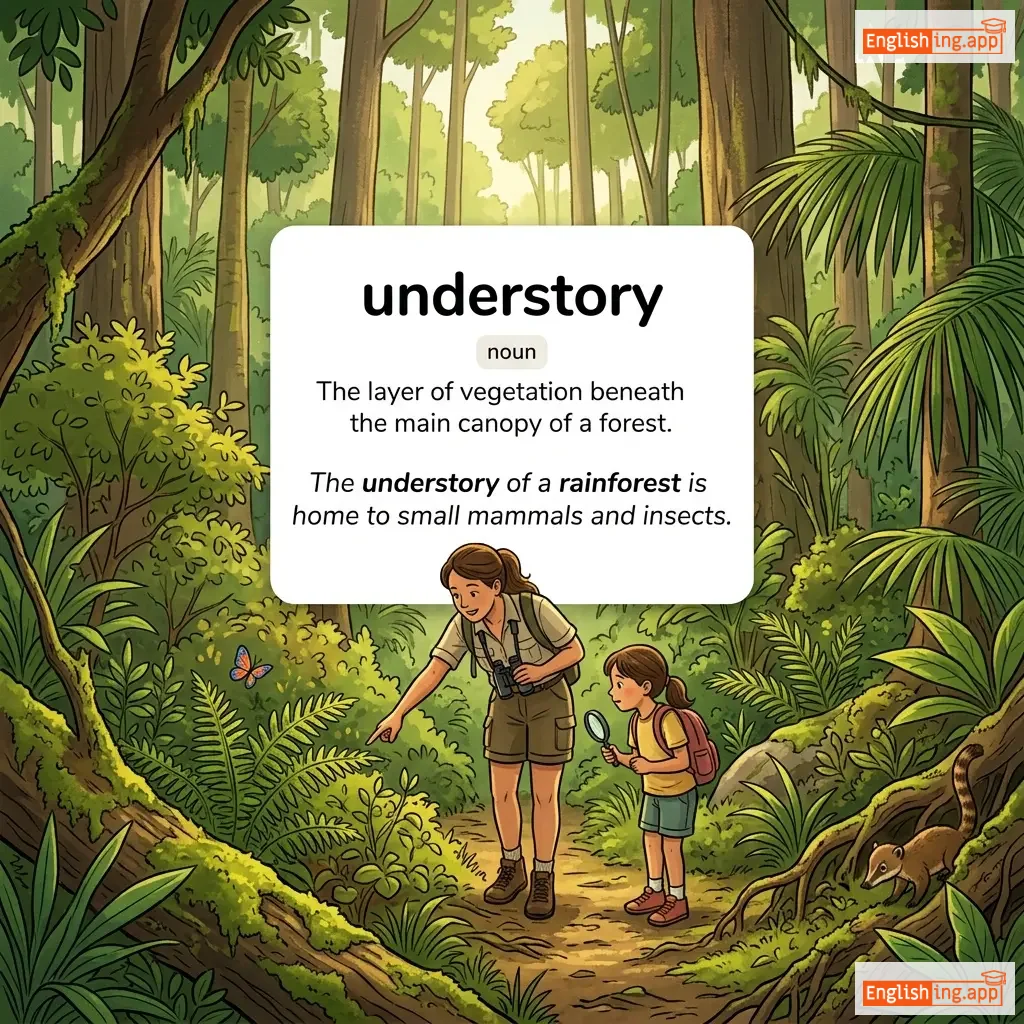
understory definition card — visual illustration of the meaning
noun C2
/ˈʌn.dɚˌstɔː.ri/
vegetación inferior (vegetacion inferior)

The layer of vegetation beneath the main canopy of a forest.

"The understory of a rainforest is home to small mammals and insects."

"La vegetación inferior de un bosque tropical es hogar de pequeños mamíferos e insectos." (La vegetacion inferior de un bosque tropical es hogar de pequenos mamiferos e insectos.)
verb C2
/ˈʌndərˌraɪt/
garantizar apoyo financiero (garantizar apoyo financiero)

To guarantee financial support, especially by agreeing to cover losses or risks; in insurance, to assess and accept risks.

"The bank agreed to underwrite the company's new bond issue."

"El banco acordó asegurar la nueva emisión de bonos de la empresa." (El banco acordó asegurar la nueva emisión de bonos de la empresa.)
verb C2
/ˈʌndjʊleɪt/
ondular (ondular)

To move with a smooth, wave-like motion.

"The snake undulated across the sand."
"La serpiente onduló a través de la arena." (La serpiente onduló a través de la arena.)
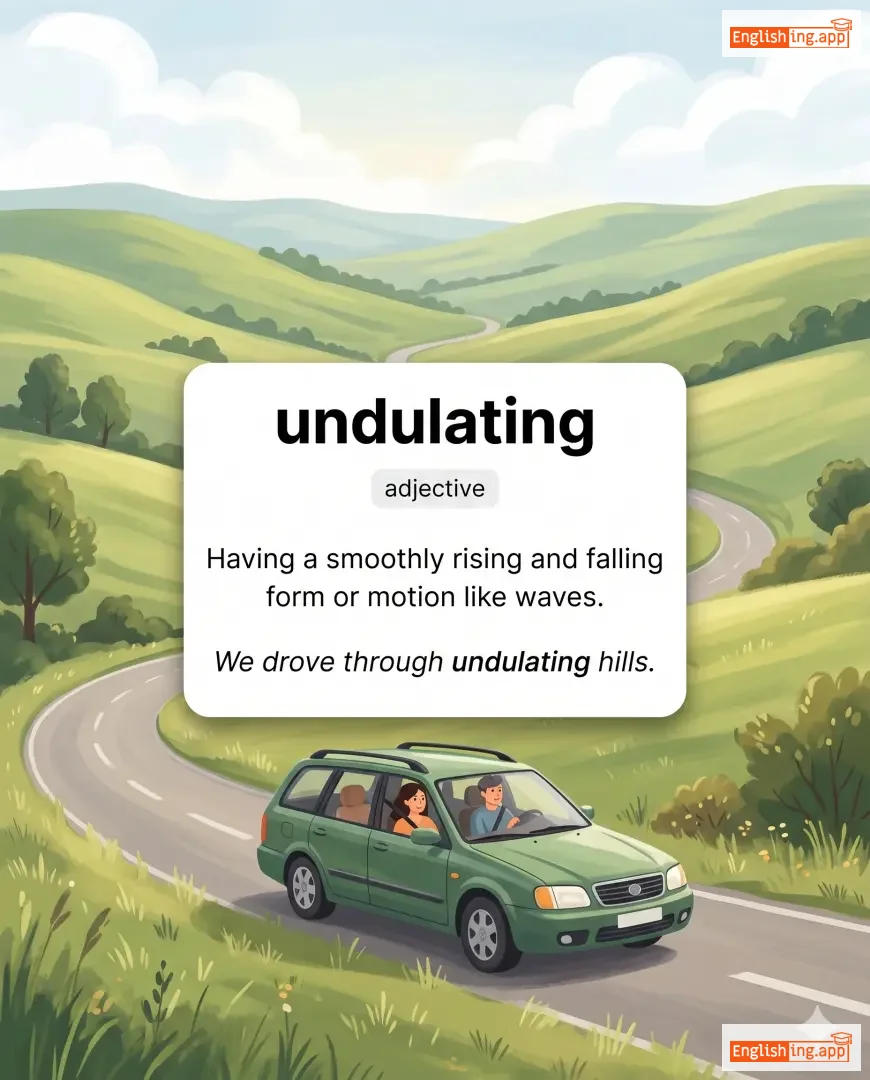
undulating definition card — visual illustration of the meaning
adjective C2
/ˈʌndjʊleɪtɪŋ/
ondulante (ondulante)

Having a smoothly rising and falling form or motion like waves.

"We drove through undulating hills."

"Condujimos por colinas onduladas." (Condujimos por colinas onduladas.)
adjective C2
/ˈʌndjʊləs/
ondulado (ondulado)

Having a wavy surface or form.

"The artist painted the undulous sea at sunset."

"El artista pintó el mar ondulado al atardecer." (El artista pintó el mar ondulado al atardecer.)
adverb C2
/ʌnˈɜːrɪŋli/
sin cometer errores (sin cometer errores)

Without making any mistakes; always accurate

"The archer aimed unerringly at the target."

"El arquero apuntó sin cometer errores al objetivo." (El arquero apunto sin cometer errores al objetivo.)
adjective C2
/ˌʌnɪkˈsɛpʃənəbl/
irreprochable (irreprochable)

Not open to objection; acceptable and unobjectionable

"His behavior was unexceptionable throughout the event."
"Su comportamiento fue irreprochable durante el evento." (Su comportamiento fue irreprochable durante el evento.)
unfeigned definition card — visual illustration of the meaning
adjective C2
/ʌnˈfeɪnd/
genuino (genuino)

genuine; not pretended or insincere

"She expressed unfeigned joy at her friend's success."

"Ella expresó una alegría genuina por el éxito de su amiga." (Ella expresó una alegría genuina por el éxito de su amiga.)
verb C2
/ʌnˈfɛtər/
desatar (desatar)

to release from restraint or restriction; to free

"The new law will unfetter small businesses from excessive regulations."

"La nueva ley liberará a las pequeñas empresas de regulaciones excesivas." (La nueva ley liberará a las pequeñas empresas de regulaciones excesivas.)
adjective C2
/ʌnˈflæpəbəl/
imperturbable (imperturbable)

calm and composed, especially in difficult situations

"Despite the crisis, he remained unflappable and confident."

"A pesar de la crisis, se mantuvo imperturbable y confiado." (A pesar de la crisis, se mantuvo imperturbable y confiado.)
adjective C2
/ʌnˈflɛdʒd/
inexperto (inexperto)

Inexperienced, immature, or not fully developed.

"The unfledged writer struggled to complete his first novel."

"El escritor inexperto luchó por completar su primera novela." (El escritor inexperto luchó por completar su primera novela.)
verb C2
/ʌnˈfrɒk/
despojar a un sacerdote de su rango (despojar a un sacerdote de su rango)

To remove a priest from his position or deprive someone of a rank.

"The corrupt priest was unfrocked after the investigation."

"El sacerdote corrupto fue despojado de su rango después de la investigación." (El sacerdote corrupto fue despojado de su rango después de la investigación.)
adjective C2
/ʌnˈɡeɪnli/
torpe (torpe)

Awkward, clumsy, or lacking grace in movement or appearance.

"The tall boy moved in an ungainly manner."

"El chico alto se movió de manera torpe." (El chico alto se movió de manera torpe.)
noun C2
/ˈʌŋɡwənt/
ungüento (ungüento)

A soothing or healing ointment applied to the skin.

"The doctor applied an unguent to heal the burn."

"El doctor aplicó un ungüento para sanar la quemadura." (El doctor aplicó un ungüento para sanar la quemadura.)
adjective C2
/ˌʌnɪmˈpiːtʃəbl/
impecable (impecable)

Not able to be doubted, questioned, or criticized; completely trustworthy.

"She is known for her unimpeachable honesty."

"Ella es conocida por su honestidad impecable." (Ella es conocida por su honestidad impecable.)
adjective C2
/juːˈnɪsənənt/
armonioso (armonioso)

Sounding together or in harmony.

"The unisonant voices created a powerful effect."

"Las voces armoniosas crearon un efecto poderoso." (Las voces armoniosas crearon un efecto poderoso.)
noun C2
/ˌjuːnɪˈtɛəriən/
unitario (unitario)

A person who believes that God exists as one entity rather than as a Trinity; a member of a religious denomination that emphasizes individual freedom of belief.

"The Unitarian church is known for its inclusive and open-minded approach."

"La iglesia unitaria es conocida por su enfoque inclusivo y de mente abierta." (La iglesia unitaria es conocida por su enfoque inclusivo y de mente abierta.)
noun C2
/ˈjuːnɪvəˌlɛns/
univalencia (univalencia)

The state of having a single valence or combining power, especially in chemistry.

"Hydrogen is characterized by its univalence in chemical reactions."

"El hidrógeno se caracteriza por su univalencia en las reacciones químicas." (El hidrógeno se caracteriza por su univalencia en las reacciones químicas.)
adjective C2
/ʌnˈlɛtəd/
analfabeto (analfabeto)

lacking education or the ability to read and write; illiterate

"The unlettered villagers relied on oral traditions to preserve their history."

"Los aldeanos analfabetos dependían de las tradiciones orales para preservar su historia." (Los aldeanos analfabetos dependian de las tradiciones orales para preservar su historia.)
adjective C2
/ʌnˈmɪtɪɡeɪtɪd/
completo (kompleto)

absolute; not lessened or moderated

"The meeting was an unmitigated disaster."

"La reunión fue un desastre completo." (La reunion fue un desastre completo.)
adjective C2
/ˌʌnpriːpəˈzɛsɪŋ/
poco atractivo (poco atractivo)

not attractive or appealing in appearance

"Despite his unprepossessing looks, he was very kind and intelligent."

"A pesar de sus poco atractivos rasgos, era muy amable e inteligente." (A pesar de sus poco atractivos rasgos, era muy amable e inteligente.)
adjective C2
/ˌʌnprəˈpɪʃəs/
desfavorable (desfavorable)

Not giving or indicating a good chance of success; unfavorable.

"The team began their journey under unpropitious weather conditions."

"El equipo comenzó su viaje bajo condiciones meteorológicas desfavorables." (El equipo comenzó su viaje bajo condiciones meteorológicas desfavorables.)
adjective C2
/ˌʌn.rɪˈdʒɛn.ər.ət/
intransigente (intransigente)

Not reformed or showing no signs of change; stubbornly refusing to reform or repent.

"He remained an unregenerate opponent of progress."

"Siguió siendo un oponente intransigente del progreso." (Siguiò siendo un oponente intransigente del progreso.)
adjective C2
/ˌʌnrɪˈmɪtɪŋ/
ininterrumpido (ininterrumpido)

Never relaxing or stopping; persistent.

"Her unremitting efforts finally paid off."

"Sus esfuerzos ininterrumpidos finalmente dieron fruto." (Sus esfuerzos ininterrumpidos finalmente dieron fruto.)