Словари

Словарь английского языка | Значения слов, определения и примеры

adjective C2
/ˌfoʊtoʊɪˈlɛktrɪk/
フォトエレクトリック (fotoerekutorikku)

relating to the emission of electrons or other free carriers when light shines on a material

"The photoelectric effect is fundamental in solar panels."

"光電効果は太陽光パネルにおいて基本的です。" (Kōden kōka wa taiyōkō paneru ni oite kihonteki desu.)
noun C2
/ˌfoʊˈtɑːmɪtər/
光度計 (kōdokē)

an instrument for measuring the intensity of light

"The scientist used a photometer to measure the light in the laboratory."

"科学者は実験室で光を測定するためにフォトメーターを使用しました。" (Kagakusha wa jikken-shitsu de hikari o sokutei suru tame ni fotomēta o shiyō shimashita.)
noun C2
/foʊˈtɑːmɪtri/
光測定学 (kou sokuteigaku)

the science of measuring visible light in terms of its perceived brightness to human eyes

"Photometry helps in designing efficient lighting systems."
"フォトメトリーは効率的な照明システムの設計に役立ちます。" (Fotometri wa kouritsuteki na shoumei shisutemu no sekkei ni yakudachimasu.)
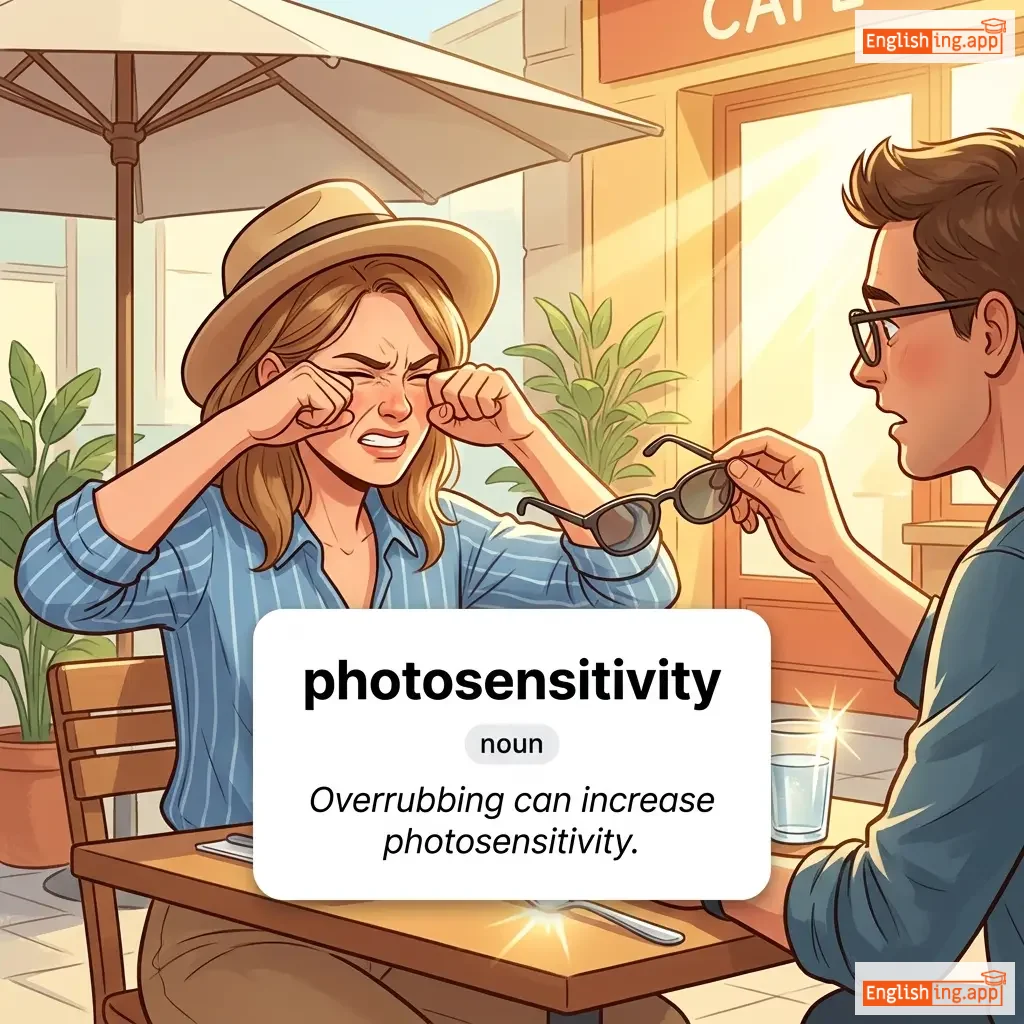
photosensitivity definition card — visual illustration of the meaning
noun C2
/ˌfəʊ.təʊ.sen.sɪˈtɪv.ɪ.ti/
光感受性 (kou kanshusei)

Sensitivity to light, especially abnormal sensitivity that may cause discomfort or damage.

"Overrubbing can increase photosensitivity."

"過度の摩擦は光感受性を増加させる可能性があります。" (Kadō no masatsu wa kō kanshusei o zōka saseru kanōsei ga arimasu.)
noun C2
/ˈfaɪləm/
生物分類における主要なカテゴリー、クラスの上、王国の下 (seibutsu bunrui ni okeru shuyou na kategorī, kurasu no ue, ōkoku no shita)

a primary category in the biological classification of organisms, above class and below kingdom

"Humans belong to the phylum Chordata."

"人間は脊索動物門に属しています。" (Ningen wa sekisaku dōbutsu mon ni zokushiteimasu.)
noun C2
/ˌfɪzɪˈɑːkrəsi/
土地主義 (tochi shugi)

an economic theory that land and its natural products are the source of wealth

"Physiocracy emphasized the importance of agriculture in national wealth."

"土地主義は国の富における農業の重要性を強調しました。" (Tochi shugi wa kuni no tomi ni okeru nōgyō no jūyō-sei o kyōchō shimashita.)
noun C2
/ˌfɪziˈɒnəmi/
顔の特徴の分析 (kao no tokuchō no bunseki)

the study of facial features to judge character or personality

"He believed in physiognomy and tried to read people's personalities from their faces."

"彼はフィジオノミーを信じて、顔から人々の性格を読み取ろうとしました。" (Kare wa fizionomī o shinjite, kao kara hitobito no seikaku o yomitorou to shimashita.)
noun C2
/ˌfɪziˈɑːɡrəfi/
地理学 (chirigaku)

the study of the physical features of the earth's surface

"He specialized in physiography to understand the landscape of the region."

"彼は地域の風景を理解するためにフィジオグラフィーを専門にしていました。" (Kare wa chiiki no fūkei o rikai suru tame ni fiziogurafī o senmon ni shite imashita.)
phytochemicals definition card — visual illustration of the meaning
noun C2
/ˌfaɪ.təʊˈkem.ɪ.kəlz/
フィトケミカル (fitokemikaru)

Natural chemical compounds produced by plants that provide health benefits beyond basic nutrition, often having antioxidant properties.

"Phytochemicals in green tea help reduce inflammation."
"緑茶に含まれるフィトケミカルは炎症を軽減するのに役立ちます。" (Ryokucha ni fukumareta fitokemikaru wa ensō o keigen suru no ni yakudachimasu.)
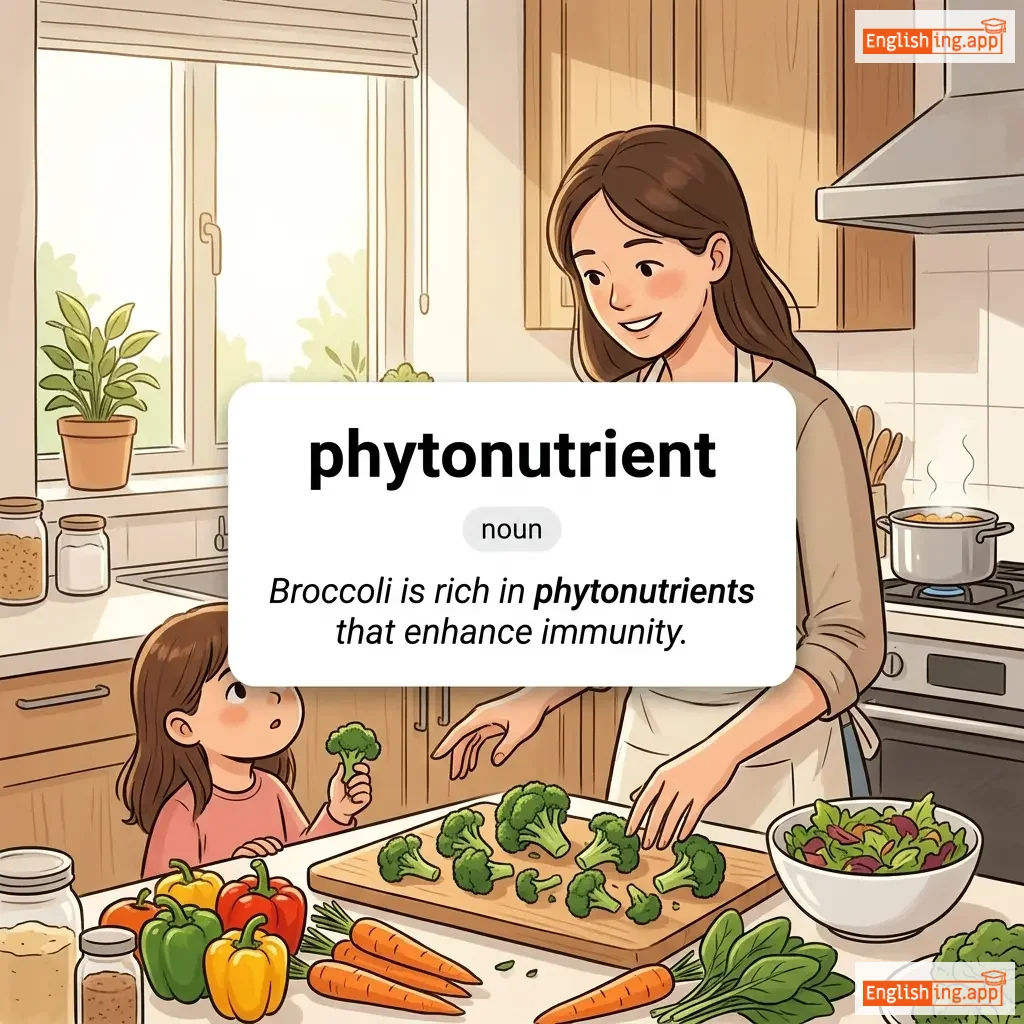
phytonutrient definition card — visual illustration of the meaning
noun C2
ˈfaɪ.təʊˌnjuː.tri.ənt
フィトニュートリエント (fitonyūtoriento)

Chemical compounds produced by plants that are beneficial to human health but not essential nutrients.

"Broccoli is rich in phytonutrients that enhance immunity."
"ブロッコリーは免疫力を高めるフィトニュートリエントを豊富に含んでいます。" (Burokkorī wa men'eki-ryoku o takameru fitonyūtoriento o hōfu ni fukundeimasu.)
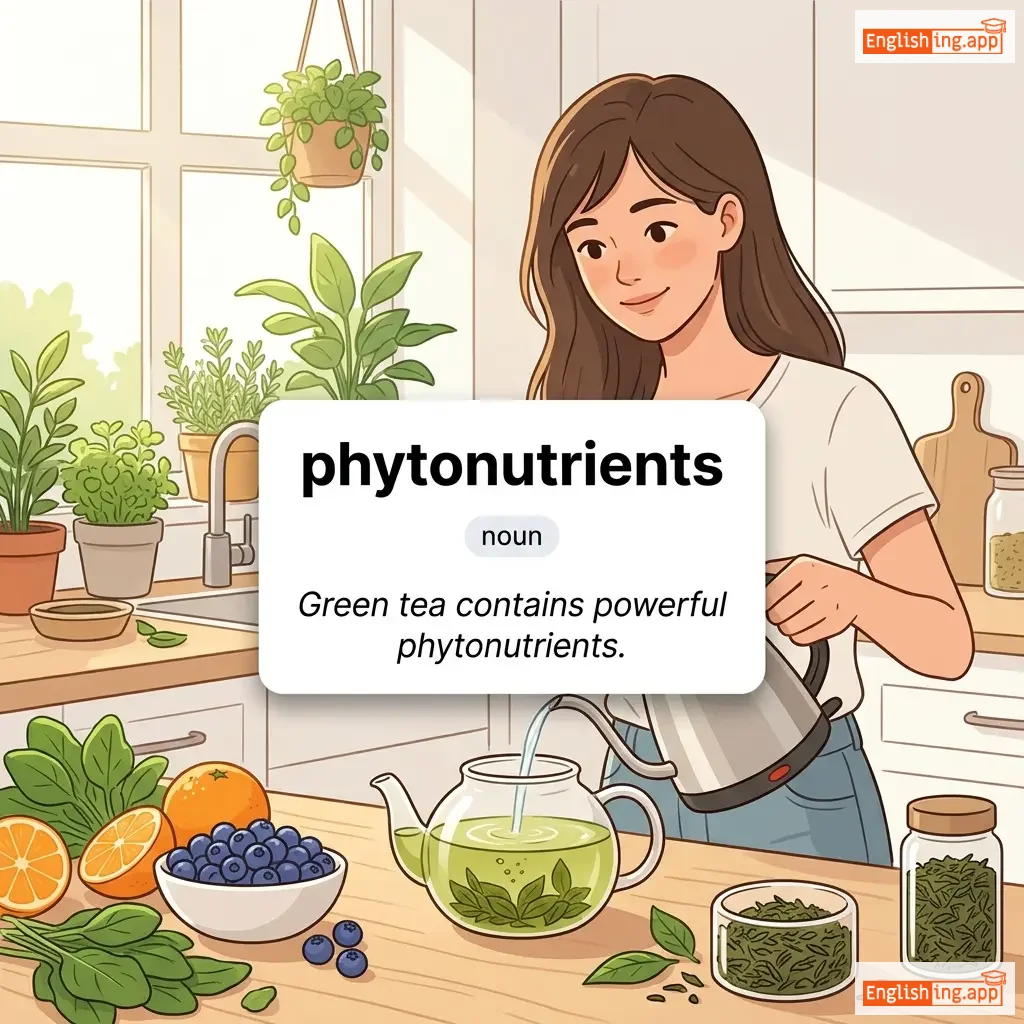
phytonutrients definition card — visual illustration of the meaning
noun C2
ˈfaɪ.təʊˌnjuː.tri.ənts
ファイトニュートリエント (faitonyūtoriento)

Bioactive compounds found in plants that have health benefits beyond basic nutrition.

"Green tea contains powerful phytonutrients."

"緑茶には強力なファイトニュートリエントが含まれています。" (Ryokucha ni wa kyōryoku na faitonyūtoriento ga fukumareteimasu.)
adjective C2
/ˌpɪkəˈrɛsk/
悪党の英雄の物語 (akuto no eiyu no monogatari)

relating to a style of fiction depicting the adventures of a roguish hero

"The novel is a picaresque tale of a clever vagabond."

"その小説は賢い浮浪者のピカレスクの物語です。" (Sono shousetsu wa kashikoi furousha no picaresque no monogatari desu.)
adjective C2
/ˌpɪkəˈjuːn/
ささいな, 些細な (sasaina, sasaina)

of little value or importance; trivial

"He complained about the picayune details of the contract."

"彼は契約の些細な詳細について不平を言っていました。" (Kare wa keiyaku no sasaina shōsai ni tsuite fuhei o itte imashita.)
noun C2
/ˈpɪkəloʊ/
小さなフルート (chiisana furuuto)

a small flute, higher in pitch than the regular flute

"She played a lively tune on the piccolo during the concert."

"彼女はコンサートでピッコロを使って活気のあるメロディを演奏しました。" (Kanojo wa konsaato de pikkoro o tsukatte kakki no aru merodi o ensou shimashita.)
adjective C2
/ˈpɪdlɪŋ/
取るに足らない, 些細な (toru ni tarranai, sasai na)

trivial or insignificant; very small

"He made a piddling amount of money from that deal."

"彼はその取引でわずかな金額しか稼げなかった。" (Kare wa sono torihiki de wazuka na kingaku shika kasegenakatta.)
adjective C2
/ˈpaɪbɔːld/
二色の斑点 (nishoku no hatten)

having irregular patches of two colors, especially black and white

"The farmer owns a piebald horse with black and white spots."
"農夫は黒と白の斑点があるパイボールドの馬を飼っています。" (Nōfu wa kuro to shiro no hatten ga aru paibōrudo no uma o katteimasu.)
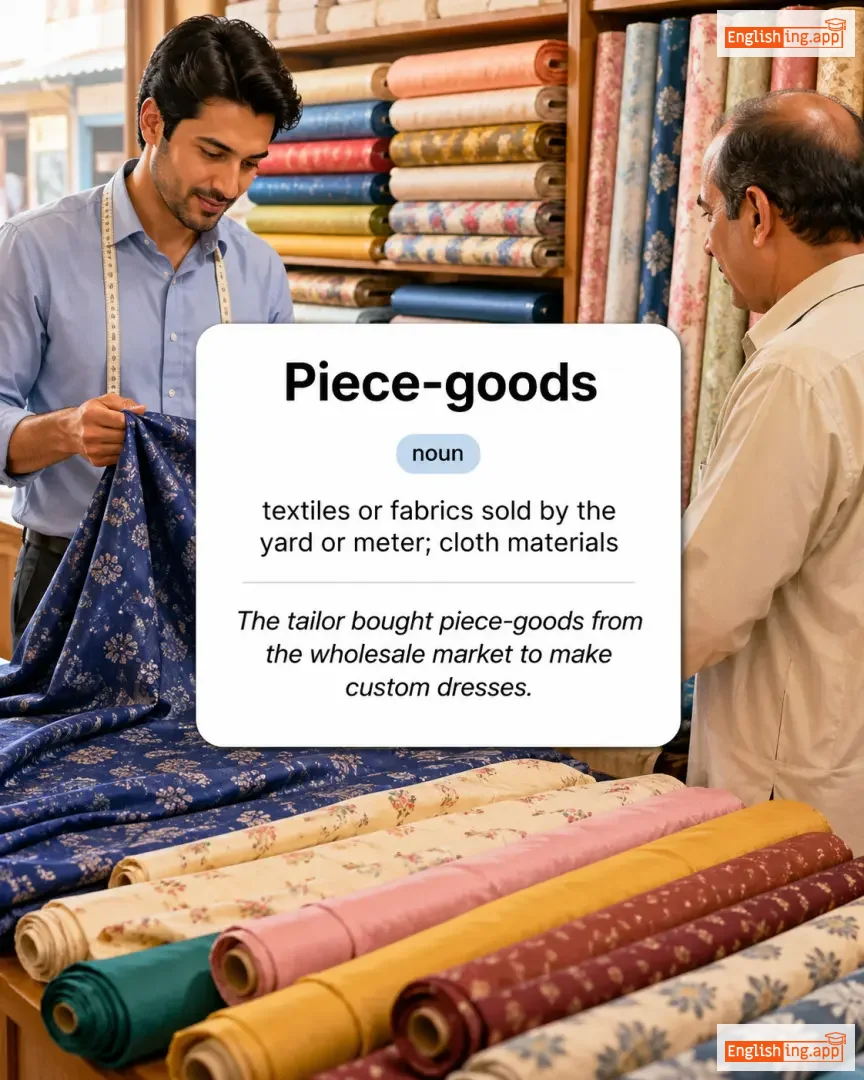
Piece-goods definition card — visual illustration of the meaning
noun C2
/ˈpiːs ɡʊdz/
布地 (nunoji)

textiles or fabrics sold by the yard or meter; cloth materials

"The tailor bought piece-goods from the wholesale market to make custom dresses."

"仕立屋は卸売市場から布地を購入してカスタムドレスを作りました。" (Shitateya wa oroshiuri shijō kara nunoji o kōnyū shite kasutamudoresu o tsukurimashita.)
adjective C2
/paɪd/
まだら模様の (madara moyou no)

having two or more different colors, typically in blotches

"The pied cat had black and white patches all over its body."
"その斑猫は体中に黒と白の斑点がありました。" (Sono madara neko wa karada juu ni kuro to shiro no hatten ga arimashita.)
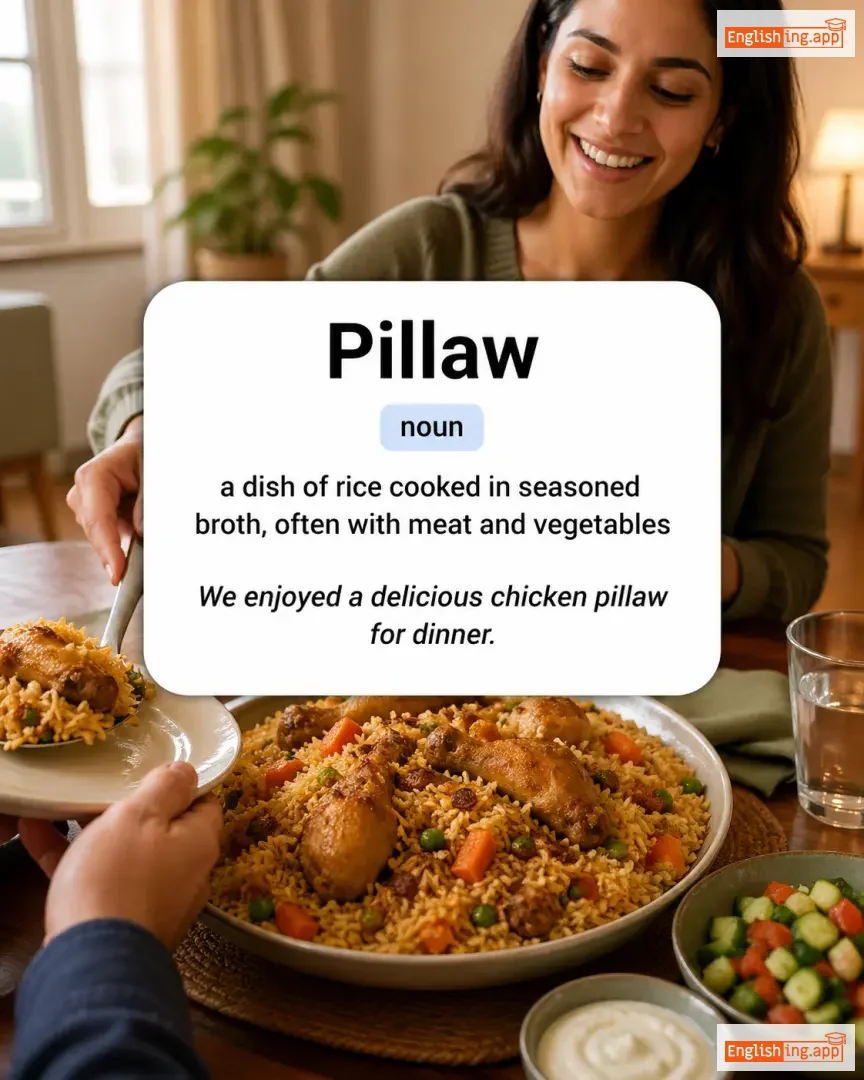
Pillaw definition card — visual illustration of the meaning
noun C2
/pɪˈlɑːf/
ピラフ (pirafu)

a dish of rice cooked in seasoned broth, often with meat and vegetables

"We enjoyed a delicious chicken pillaw for dinner."

"私たちは夕食に美味しいチキンピラフを楽しみました。" (watashitachi wa yūshoku ni oishī chikin pirafu o tanoshimimashita.)
noun/verb C2
/ˈpɪləri/
公開処罰装置 (kōkai shobatsu sōchi)

a device for publicly punishing someone / to expose to public ridicule

"The corrupt official was placed in the pillory for the town to jeer at."

"腐敗した役人は町の人々に嘲笑されるためにピロリーに置かれました。" (Fuhai shita yakunin wa machi no hitobito ni chōshō sareru tame ni pirorī ni okaremashita.)
noun C2
/ˈpɪnjən/
小さな歯車や鳥の翼の外側部分; 制限する、または動けなくする (chiisana haguruma ya tori no tsubasa no sotogawa bubun; seigen suru, matawa ugokenaku suru)

a small gear or the outer part of a bird's wing; to restrain or immobilize

"The bird's pinion was injured, preventing it from flying."

"鳥の翼が怪我をして飛べなかった。" (Tori no tsubasa ga kega o shite tobe nakatta.)
noun C2
/ˈpɪnəs/
小型の船 (kogata no fune)

a small boat, often carried by a larger ship

"The sailors used a pinnace to reach the shore."

"船員たちは岸に到達するために小型の船を使いました。" (Sen'in-tachi wa kishi ni tōtatsu suru tame ni kogata no fune o tsukaimashita.)
adjective C2
/pɪˈskætɔːrɪəl/
釣りに関する (tsuri ni kansuru)

relating to fishing or fishermen

"He has a deep knowledge of piscatorial techniques and fish species."

"彼は釣りの技術と魚種について深い知識を持っています。" (Kare wa tsuri no gijutsu to gyoshu ni tsuite fukai chishiki o motteimasu.)
noun C2
/pɪθ/
本質、要点 (honshitsu, youten)

the essential or central part of something

"The pith of his argument was that honesty matters most."

"彼の議論の本質は、誠実さが最も重要だということでした。" (Kare no giron no honshitsu wa, seijitsusa ga mottomo juuyou da to iu koto deshita.)
adjective C2
/ˈplændʒənt/
哀愁を帯びた、または響く音 (aishū o obita, matawa hibiku oto)

having a loud, mournful sound; resonant

"The plangent toll of the church bell echoed through the village."

"教会の鐘の哀愁を帯びた音が村中に響いた。" (Kyōkai no kane no aishū o obita oto ga murajū ni hibita.)
noun C2
/ˈplænɪsfɪr/
星図盤 (seizu ban)

a rotating star chart used to display the visible stars for any time and date

"The astronomer used a planisphere to identify the constellations."
"天文学者は星座を識別するために星図盤を使用しました。" (Tenmongakusha wa seiza o shikibetsu suru tame ni seizu ban o shiyō shimashita.)
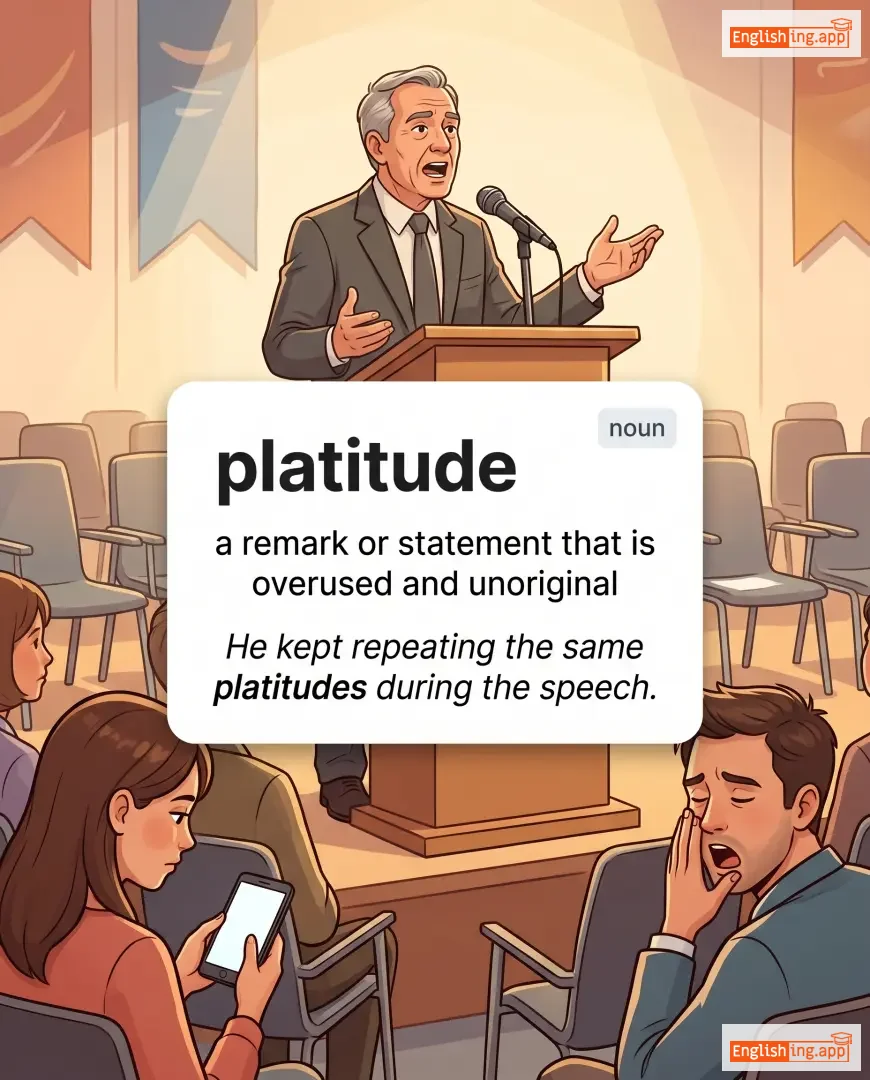
platitude definition card — visual illustration of the meaning
noun C2
/ˈplætɪtjuːd/
陳腐な言葉 (chinfu na kotoba)

a remark or statement that is overused and unoriginal

"He kept repeating the same platitudes during the speech."

"彼はスピーチの中で同じプレティチュードを繰り返し続けた。" (Kare wa supīchi no naka de onaji puretichūdo o kurikaeshi tsuzuketa.)
noun C2
/ˈplɔːdɪt/
賞賛 (shōsan)

an expression of praise or approval

"The actor received plaudit for his outstanding performance."

"俳優は彼の優れた演技に対して賞賛を受けました。" (Haiyū wa kare no sugureta enki ni taishite shōsan o ukemashita.)
noun C2
/ˈplɔːdɪts/
賛辞 (sanji)

expressions of praise or approval

"The scientist received plaudits from the international community."

"その科学者は国際社会から賛辞を受けました。" (Sono kagakusha wa kokusai shakai kara sanji o ukemashita.)
adjective, noun C2
/pləˈbiːən/
一般の人 (ippan no hito)

common, ordinary, or belonging to the lower social classes

"The festival was enjoyed by both plebeian and noble citizens."

"祭りは、平民と貴族市民の両方に楽しませられました。" (Matsuri wa, heimin to kizoku shimin no ryōhō ni tanoshima se raremashita.)
adjective, noun C2
/pləˈbiːən/
一般的な、平民の (ippantekina, heimin no)

alternate spelling of 'plebeian'; common or ordinary

"His tastes were rather plebian, favoring simple food and clothes."

"彼の趣味はかなり一般的で、シンプルな食べ物と服を好んでいました。" (Kare no shumi wa kanari ippanteki de, shinpuru na tabemono to fuku o kononde imashita.)
noun C2
/ˈplɛbɪsaɪt/
国民投票 (kokumin touhyou)

a direct vote by the electorate on an important public question

"The government held a plebiscite to decide on the new constitution."

"政府は新しい憲法について決定するために国民投票を実施しました。" (Seifu wa atarashii kenpou ni tsuite kettei suru tame ni kokumin touhyou wo jisshi shimashita.)
noun C2
/ˈplɛdʒiː/
担保として何かを譲渡された人物 (tābo toshite nanika o jōto sareta jinbutsu)

a person to whom something is pledged or given as security

"The bank is the pledgee of the collateral until the loan is repaid."

"銀行はローンが返済されるまで担保の債権者です。" (Ginkō wa rōn ga hensai sareru made tābo no saiken-sha desu.)
noun C2
/ˈplɛdʒɔːr/
保証人 (hoshonin)

a person who gives or offers a pledge or security

"The bank accepted the jewelry from the pledgeor as collateral for the loan."

"銀行は貸付の担保として保証人から宝石を受け入れました。" (Ginkou wa kashitsuke no tanpo toshite hoshonin kara houseki o ukeiremashita.)
adjective C2
/ˈpliːnəri/
全体の (zentai no)

complete in every way; fully attended or absolute

"The committee held a plenary session to discuss all matters of importance."

"委員会はすべての重要な問題について議論するために全体会議を開いた。" (Iinkai wa subete no jūyōna mondai ni tsuite giron suru tame ni zentai kaigi o hiraita.)
noun C2
/ˌpliːnɪpəˈtɛnʃəri/
全権大使 (zenken taishi)

a person invested with full power to act on behalf of another, especially in diplomacy

"The ambassador was a plenipotentiary sent to negotiate the treaty."

"大使は条約交渉のために派遣されたプレニポテンシャリーでした。" (Taishi wa jōyaku kōshō no tame ni haken sareta plenipotentiary deshita.)
noun C2
/ˈplɛnɪtjuːd/
充実 (jūjitsu)

the condition of being full or abundant; a great quantity

"The garden was a plenitude of flowers in spring."

"春に庭は花の充実でした。" (Haru ni niwa wa hana no jūjitsu deshita.)
adjective C2
/ˈplɛntɪəs/
豊富 (houfu)

existing in great quantity; abundant

"The harvest was plenteous, providing enough food for the entire village."

"収穫は豊富で、村全体に十分な食料を提供しました。" (Shuukaku wa houfu de, mura zentai ni juubun na shokuryou o teikyou shimashita.)
noun C2
/ˈplɛntɪtjuːd/
豊富さ (houfusa)

the condition of being full or abundant

"The garden offered a plentitude of flowers in spring."

"庭園は春に花の豊富さを提供しました。" (Teien wa haru ni hana no houfusa wo teikyou shimashita.)
adjective C2
/ˌpluːˈpɜːrfɪkt/
過去完了形 (kako kanryōkei)

a verb tense expressing an action completed before another past action

"By the time she arrived, he had finished his homework, showing the pluperfect tense."

"彼女が到着したとき、彼はすでに宿題を終わらせており、過去完了形を示しています。" (Kanojo ga tōchaku shita toki, kare wa sudeni shukudai o owarasete ori, kako kanryōkei o shimeshiteimasu.)
noun C2
/pluːˈtɒkrəsi/
富裕層による支配 (fuyūsō ni yoru shihai)

a system of government where the wealthy hold power

"The country was ruled as a plutocracy."

"その国はプルトクラシーとして支配されていた。" (Sono kuni wa purutokurashī toshite shihai sarete ita.)
adjective C2
/njuːˈmætɪk/
空気圧の (kuukiatsu no)

operated by air or gas under pressure

"The factory uses pneumatic tools for assembly."

"工場は組み立てのために空気圧工具を使用しています。" (Koujou wa kumitate no tame ni kuukiatsu kougu wo shiyou shiteimasu.)
noun C2
/ˈpoʊ.ə.si/
(shi)

poetry; the art or composition of poems

"The anthology was filled with romantic poesy."

"そのアンソロジーはロマンチックな詩で満たされていました。" (Sono anthorojī wa romanchikku na shi de mitasareteimashita.)
noun C2
/ˈpoʊ.ɪˌtæs.tər/
劣った詩人 (ototta shijin)

an inferior or trivial poet

"He was mocked as a poetaster by the literary critics."

"彼は文学評論家によってポエタスターとして嘲笑されました。" (Kare wa bungaku hyōronka ni yotte poetasutā to shite chōshō saremashita.)
noun C2
/pəˈlɛmɪk/
論争的な攻撃 (ronsōteki na kōgeki)

a strong verbal or written attack on someone or something

"The article was a fierce polemic against the government's policies."

"その記事は政府の政策に対する激しい論争的な攻撃でした。" (sono kiji wa seifu no seisaku ni taisuru hageshī ronsōteki na kōgeki deshita.)
adjective C2
/pəˈlɛmɪkəl/
論争的 (ronsou-teki)

relating to or involving strongly critical or controversial writing or speech

"She wrote a polemical article challenging traditional beliefs."

"彼女は伝統的な信念に挑戦する論争的な記事を書いた。" (Kanojo wa dentouteki na shin'nen ni chousen suru ronsou-teki na kiji o kaita.)
noun C2
/pəˈlɛmɪks/
論争 (ronzō)

the art or practice of engaging in controversial debate or dispute

"The conference was full of polemics on economic reforms."

"会議は経済改革についての論争で満ちていた。" (Kaigi wa keizai kaikaku ni tsuite no ronzō de michite ita.)
noun C2
/ˈpɒlɪti/
政治、政府の形態 (seiji, seifu no keitai)

an organized society or form of government

"The ancient Greek polity had a system of city-states."

"古代ギリシャの政治は都市国家のシステムを持っていました。" (Kodai Girisha no seiji wa toshikokka no shisutemu o motte imashita.)
adjective C2
/ˌpɒliˈæn.ɪ.ɪʃ/
過度に楽観的 (kado ni rakkan teki)

overly or blindly optimistic

"Her pollyannaish attitude ignored the obvious problems."

"彼女の過度に楽観的な態度は明らかな問題を無視していた。" (Kanojo no kado ni rakkan teki na taido wa akiraka na mondai o mushi shite ita.)
noun C2
/pəˈtruːn/
臆病者 (okubyou-sha)

a cowardly person

"He acted like a poltroon during the crisis."

"彼は危機の際、臆病者のように振る舞った。" (Kare wa kiki no sai, okubyou-sha no you ni furumatta.)