Словари

Словарь английского языка | Значения слов, определения и примеры

adjective C2
/ˈnɔɪsəm/
悪臭 (akushu)

Having an extremely unpleasant smell; offensive or harmful.

"The dump emitted a noisome odor that spread through the town."

"ゴミ捨て場から不快な臭いが広がって街中に広がった。" (Gomi suteba kara fukai na nioi ga hirogatte machi naka ni hirogatta.)
noun C2
/ˈnoʊmənˌkleɪtʃər/
命名法 (meimeiho)

A system of names or terms used in a particular science, art, or field.

"The chemical nomenclature can be difficult for beginners to understand."

"化学的命名法は初心者には理解するのが難しい場合があります。" (Kagakuteki meimeiho wa shoshinsha ni wa rikai suru no ga muzukashii baai ga arimasu.)
adjective C2
/ˈnɒmɪk/
法則に関連する (hōsoku ni kanren suru)

Relating to laws, rules, or systems.

"The philosopher discussed the nomic necessity of natural laws."

"哲学者は自然法則のノミックな必要性について議論しました。" (Tetsugakusha wa shizen hōsoku no nomikku na hitsuyō-sei ni tsuite giron shimashita.)
noun C2
/ˌnɒn ˈsɛkwɪtər/
論理的に関連しない発言 (ronriteki ni kanren shinai hatsugen)

a statement or conclusion that does not logically follow from the previous statement

"His comment about the weather was a complete non sequitur during the budget discussion."

"予算の議論中、彼の天気に関するコメントは完全に論理的に関連しない発言だった。" (Yosan no giron-chū, kare no tenki ni kansuru komento wa kanzen ni ronriteki ni kanren shinai hatsugen datta.)
noun, adjective C2
/nɒn ˈkɒmbətənt/
非戦闘員 (hisen tōin)

a person not engaged in fighting during a war, such as civilians or medical staff

"The Red Cross workers were treated as non-combatants in the conflict."
"赤十字のスタッフは紛争で非戦闘員として扱われました。" (Aka jūji no sutaffu wa funsō de hisentōin toshite atsukaware mashita.)
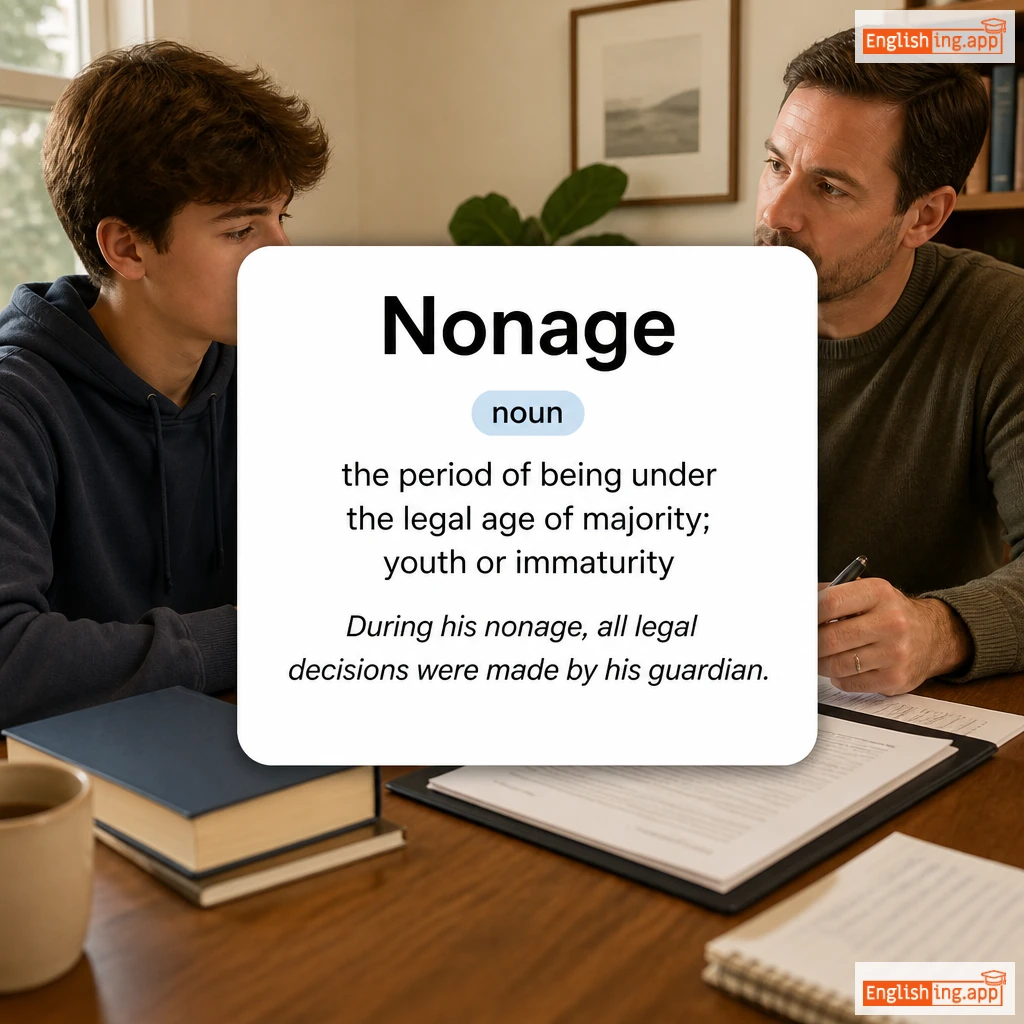
Nonage definition card — visual illustration of the meaning
noun C2
/ˈnɒn.ɪʤ/
未成年 (noneeji)

the period of being under the legal age of majority; youth or immaturity

"During his nonage, all legal decisions were made by his guardian."

"彼が未成年であった間、すべての法的決定は保護者によって下された。" (Kare ga miseinen deatta aida, subete no houteki kettei wa hogosha ni yotte kudasareta)
adjective C2
/ˌnɒnkəˈmɪtl̩/

Not expressing or showing a clear opinion, decision, or commitment.

"She gave a noncommittal reply when asked about her future plans."

adjective C2
/ˌnɒndɪˈskrɪpt/
特徴のない (tokuchou no nai)

Lacking distinctive or interesting features; dull and unremarkable.

"He lives in a nondescript apartment building on the edge of town."
"彼は町の外れにある特徴のないアパートに住んでいます。" (Kare wa machi no hazure ni aru tokuchou no nai apāto ni sundeimasu.)
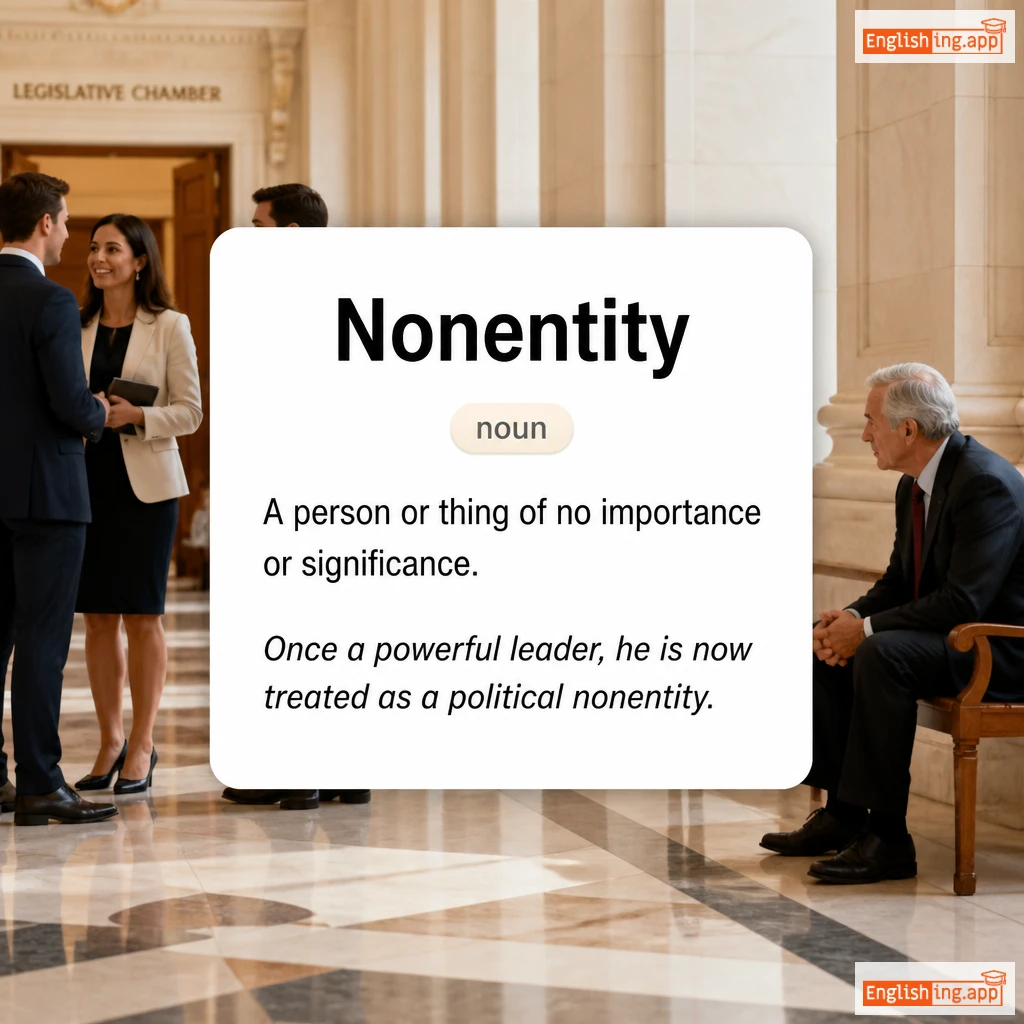
Nonentity definition card — visual illustration of the meaning
noun C2
/nɒnˈentəti/
重要でない人物 (jūyō de nai jinbutsu)

A person or thing of no importance or significance.

"Once a powerful leader, he is now treated as a political nonentity."

"かつては強力なリーダーだったが、今では政治的なノンエンティティとして扱われている。" (Katsute wa kyōryoku na rīdā datta ga, ima de wa seiji-teki na nonentity toshite atsukawarete iru.)
adjective C2
/ˌnɒnpəˈreɪl/
比類のない (hirui no nai)

Having no equal; unrivaled or matchless.

"Her beauty was considered nonpareil in the region."

"彼女の美しさはその地域で比類のないものと考えられていた。" (kanojo no utsukushisa wa sono chiiki de hirui no nai mono to kangaerarete ita)
verb C2
/ˌnɒnˈplʌs/
困惑させる (konwaku saseru)

To surprise and confuse someone so much that they are unsure how to react.

"The unexpected question seemed to nonplus the speaker."

"予期しない質問がスピーカーを困惑させたようだ。" (Yokishinai shitsumon ga supiikaa wo konwaku saseta you da.)
verb C2
/ˌnɒnˈplʌst/
困惑した (konwaku shita)

Past tense of nonplus; surprised and confused.

"She was completely nonplused by his sudden decision."

"彼女は彼の突然の決断に完全に困惑していました。" (Kanojo wa kare no totsuzen no ketsudan ni kanzen ni konwaku shite imashita.)
verb C2
/ˌnɒnˈplʌst/
困惑 (konwaku)

Past tense of nonplus; surprised and unsure how to react.

"He stood nonplussed at the strange remark."

"彼は奇妙なコメントに困惑して立ち尽くしていた。" (Kare wa kimyou na komento ni konwaku shite tachitsukushite ita.)
adjective C2
/ˌnɒnˈtrɪviəl/
非自明 (hi jimmyo)

Not simple or easy; requiring effort or significant thought.

"Solving the equation turned out to be a nontrivial task."

"方程式を解くことは非自明な作業であることが分かりました。" (Hōteishiki o toku koto wa hi jimmyo na sagyō de aru koto ga wakarimashita.)
noun C2
/ˈnoʊzˌɡeɪ/
花束 (hanataba)

a small bunch of flowers, typically given as a gift or carried for decoration

"She carried a nosegay of fresh roses to the ceremony."
"彼女は式典に新鮮なバラの花束を持って行った。" (Kanojo wa shikiten ni shinsen na bara no hanataba o motte itta.)
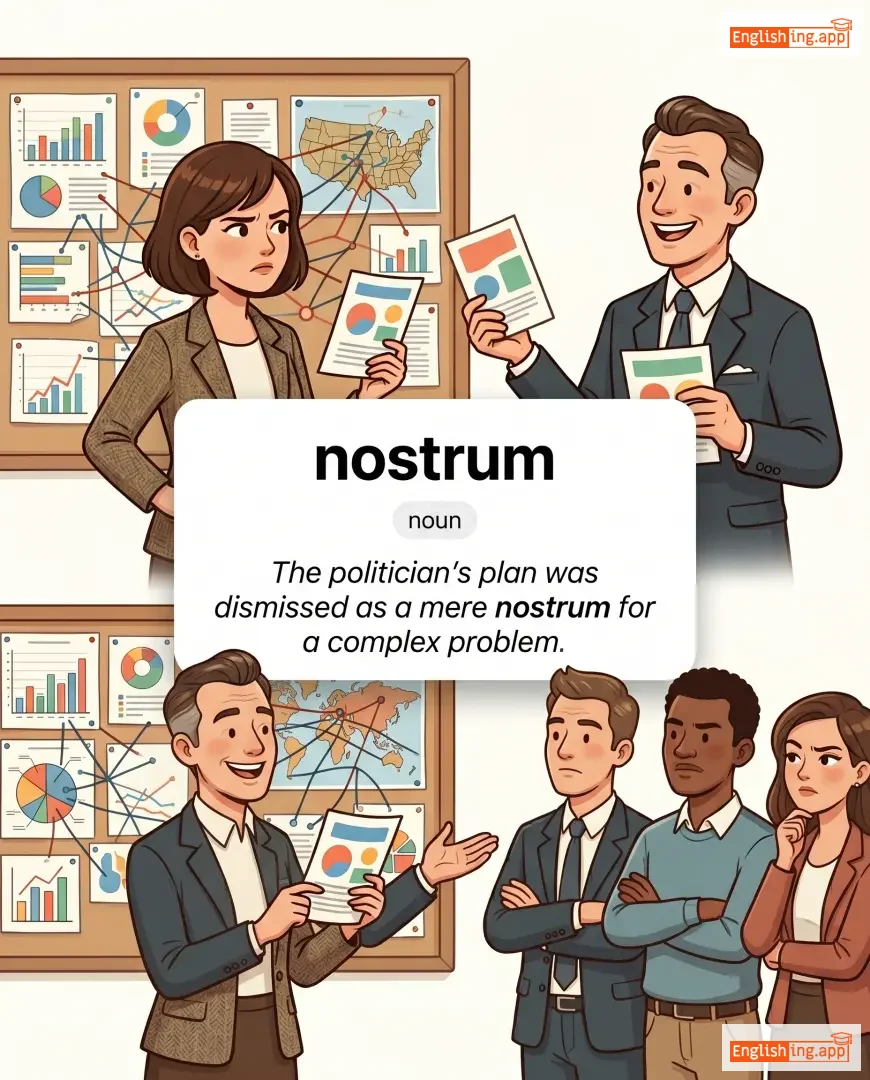
nostrum definition card — visual illustration of the meaning
noun C2
/ˈnɑːstrəm/
効果のない薬 (kouka no nai kusuri)

a medicine or remedy, especially one that is not considered effective; a questionable solution

"The politician’s plan was dismissed as a mere nostrum for a complex problem."

"政治家の計画は、複雑な問題に対する単なる効果のない薬として退けられました。" (Seijika no keikaku wa, fukuzatsu na mondai ni taisuru tannaru kouka no nai kusuri toshite shirizokemashita.)
noun C2
/ˌnɒvəˈlɛt/
小説 (shōsetsu)

A short novel or long short story.

"The author published a novellette as a preview of her upcoming series."

"作者は彼女の次のシリーズのプレビューとして小説を発表しました。" (Sakusha wa kanojo no tsugi no shirīzu no purabyū to shite shōsetsu o happyō shimashita.)
adjective C2
/ˈnjuːbaɪl/
未婚女性 (mikon josei)

of a young woman, sexually mature and suitable for marriage

"The village was celebrating the festival with its nubile maidens dancing."

"村はその未婚女性たちが踊る祭りを祝っていました。" (Mura wa sono mikon josei-tachi ga odoru matsuri o iwatte imashita.)
verb C2
/ˈnuːkliˌeɪt/
核形成 (kakukousei)

to form into a nucleus or bring together into a central part

"The droplets began to nucleate around tiny particles in the air."
"水滴は空気中の小さな粒子の周りで核を形成し始めました。" (Suiteki wa kūkī-chū no chiisana ryūshi no mawari de kaku wo keisei shihajimemashita.)
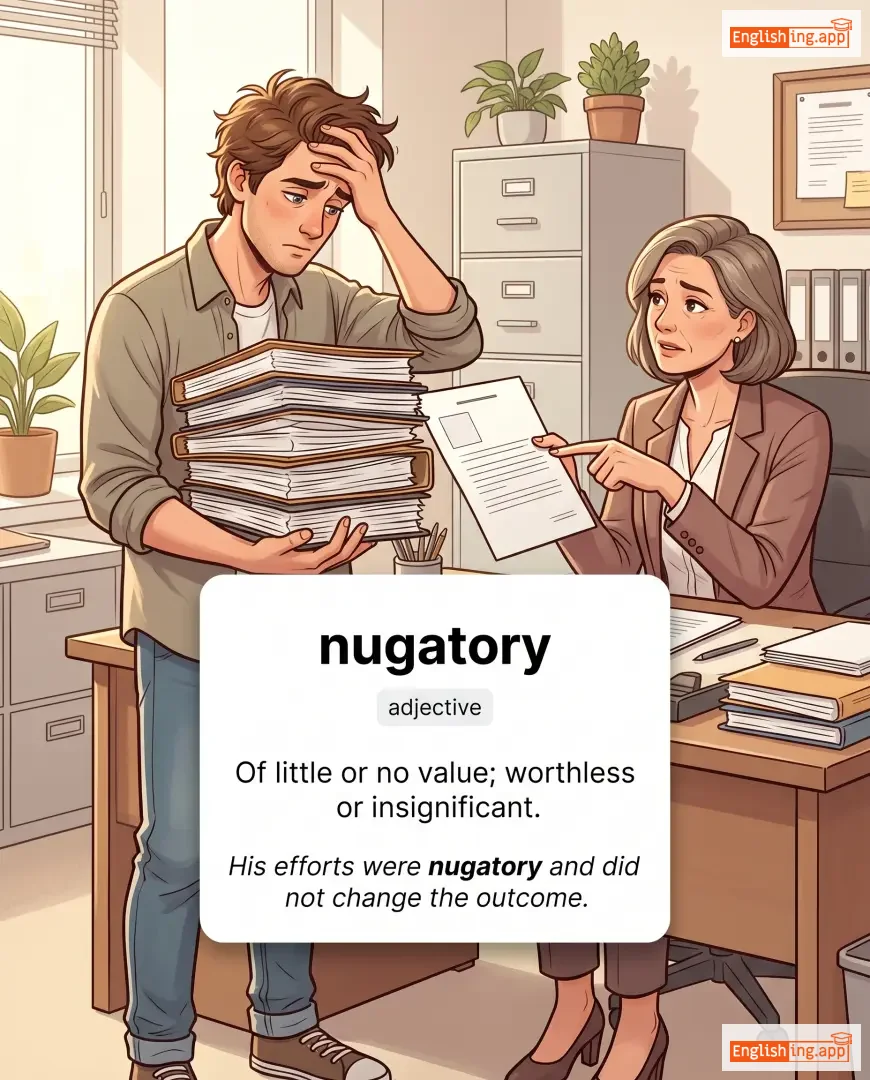
nugatory definition card — visual illustration of the meaning
adjective C2
/ˈnjuː.ɡə.tɔːr.i/
無価値 (mukachi)

Of little or no value; worthless or insignificant.

"His efforts were nugatory and did not change the outcome."

"彼の努力は無価値で、結果を変えることはなかった。" (Kare no doryoku wa mukachi de, kekka o kaeru koto wa nakatta.)
adjective C2
/ˈnjuː.mər.ə.bəl/
数えられる; 計算可能な (kazoerareru; keisannoukanou)

capable of being counted; countable

"The stars in the sky are not numerable."

"空の星は数えられません。" (Sora no hoshi wa kazoeraremasen.)
noun C2
/ˌnjuːməˈreɪʃən/
数え方 (kazoekata)

the action or process of counting or assigning numbers

"The teacher explained the basics of numeration to the students."

"先生は学生たちに数え方の基本を説明しました。" (Sensei wa gakusei tachi ni kazoekata no kihon wo setsumei shimashita.)
adjective C2
/ˈnjuːmɪnəs/
神秘的 (shinpiteki)

having a strong spiritual or mysterious quality

"The temple had a numinous atmosphere that inspired awe."

"その寺院は畏敬の念を抱かせる神秘的な雰囲気を持っていました。" (Sono jiin wa ikei no nen o idakaseru shinpiteki na fun'iki o motte imashita.)
adjective C2
/ˌnjuːmɪzˈmætɪk/
貨幣学の (kaheigaku no)

relating to the study or collection of coins, currency, and medals

"He has a numismatic collection of rare coins from around the world."

"彼は世界中からの珍しいコインの収集を持っています。" (Kare wa sekai jū kara no mezurashī koin no shūshū o motteimasu.)
noun C2
/njuːˈmɪzmətɪst/
貨幣学者 (kaheigakusha)

A person who studies or collects coins, paper currency, and medals.

"The numismatist displayed his rare coin collection at the exhibition."

"貨幣学者は展示会で彼の希少なコインコレクションを展示しました" (Kaheigakusha wa tenjikai de kare no kishō na koin korekushon o tenji shimashita)
noun C2
/ˈnʌnəri/
修道院 (shūdōin)

A convent or building where nuns live and work.

"She decided to join the nunnery to devote her life to spiritual practice."

"彼女は精神的な実践に人生を捧げるために修道院に参加することを決めました。" (Kanojo wa seishinteki na jissen ni jinsei o sasageru tame ni shūdōin ni sanka suru koto o kimemashita.)
adjective C2
/ˈnʌpʃəl/
結婚式の (kekkonshiki no)

Relating to marriage or weddings.

"The couple prepared for their nuptial ceremony with great joy."

"そのカップルは喜びと共に結婚式の準備をしました。" (Sono kappuru wa yorokobi to tomo ni kekkonshiki no junbi o shimashita.)
noun C2
/ˈnjuː.trɪ.mənt/
栄養 (eiyou)

Something that nourishes; sustenance or food.

"The soil provides nutriment to the plants."

"土壌は植物に栄養を提供します。" (Dojou wa shokubutsu ni eiyou wo teikyou shimasu.)
adjective C2
/ˈnjuː.trɪ.tɪv/
栄養のある (eiyou no aru)

Relating to nutrition; having nourishing qualities.

"The nutritive value of the fruit is very high."
"果物の栄養価は非常に高いです。" (Kudamono no eiyouka wa hijou ni takai desu.)
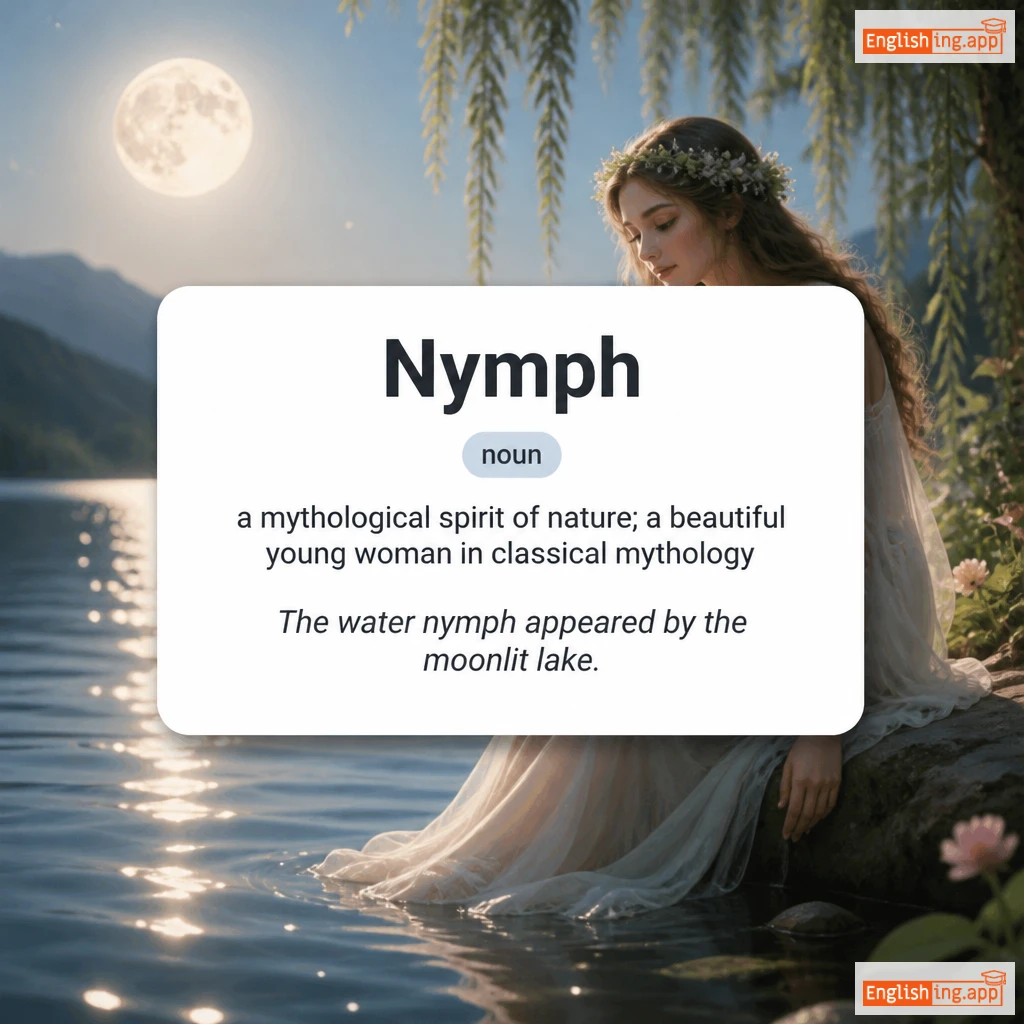
Nymph definition card — visual illustration of the meaning
🧚‍♀️

Nymph (ニンフ)

noun C2
/nɪmf/
ニンフ (ninfu)

a mythological spirit of nature; a beautiful young woman in classical mythology

"The water nymph appeared by the moonlit lake."

"水のニンフが月明かりの湖のそばに現れました。" (Mizu no ninfu ga tsukiakari no mizuumi no soba ni arawaremashita.)