Словари

Словарь английского языка | Значения слов, определения и примеры

verb C2
/lɪr/
いやらしい目つき (iyarashii metsuki)

To look at someone in an unpleasant, sly, or sexually suggestive way.

"He leered at her in a way that made her uncomfortable."

"彼は彼女を不快にさせるような見方をした。" (Kare wa kanojo o fukai ni saseru yōna mikata o shita.)
adjective C2
/ˈlɪəri/
疑わしい (utagawashii)

Cautious or wary due to suspicion or distrust.

"She was leery of investing in the new business."

"彼女は新しいビジネスへの投資に疑念を抱いていた。" (Kanojo wa atarashī bijinesu e no tōshi ni ginen o daite ita.)
adjective C2
/ˈliːwərd/
風下の側 (kazeshita no kawa)

On or toward the sheltered side away from the wind.

"They built their camp on the leeward side of the hill."

"彼らは丘の風下の側にキャンプを建てました。" (Karera wa oka no kazeshita no kawa ni kyanpu o tatemashita.)
adverb/adjective C2
/lɪˈɡɑːtoʊ/
音楽で、滑らかでつながりのある演奏または歌唱 (ongaku de, nameraka de tsunagari no aru ensou matawa kashou)

In music, played or sung smoothly and connectedly.

"The pianist played the passage legato, with each note flowing into the next."

"ピアニストはレガートでパッセージを弾き、各ノートが次に繋がっていった。" (Pianisuto wa regato de passeji o hiki, kaku nooto ga tsugi ni tsunagatte itta.)
noun C2
/ˌlɛdʒərdəˈmeɪn/
手品, 欺瞞 (tejina, giman)

skillful use of one's hands when performing tricks; deception or trickery

"The magician's legerdemain left the audience amazed."

"魔法使いの手品は観客を驚かせた。" (Mahōtsukai no tejina wa kankyaku o odorokaseta.)
noun C2
/ˈliːdʒənəri/
ローマ兵士 (rōma heishi)

a soldier in the Roman army

"Each legionary carried a shield and a short sword."

"各レギオナリーは盾と短い剣を持っていました。" (Kaku regionarii wa tate to mijikai ken o motte imashita.)
adjective C2
/ˈliːənaɪn/
ライオンのような (raion no yōna)

Of or resembling a lion.

"His leonine hair made him stand out in the crowd."
"彼のライオンのような髪は、群衆の中で目立たせた。" (Kare no raion no yōna kami wa, gunshū no naka de medataseta.)
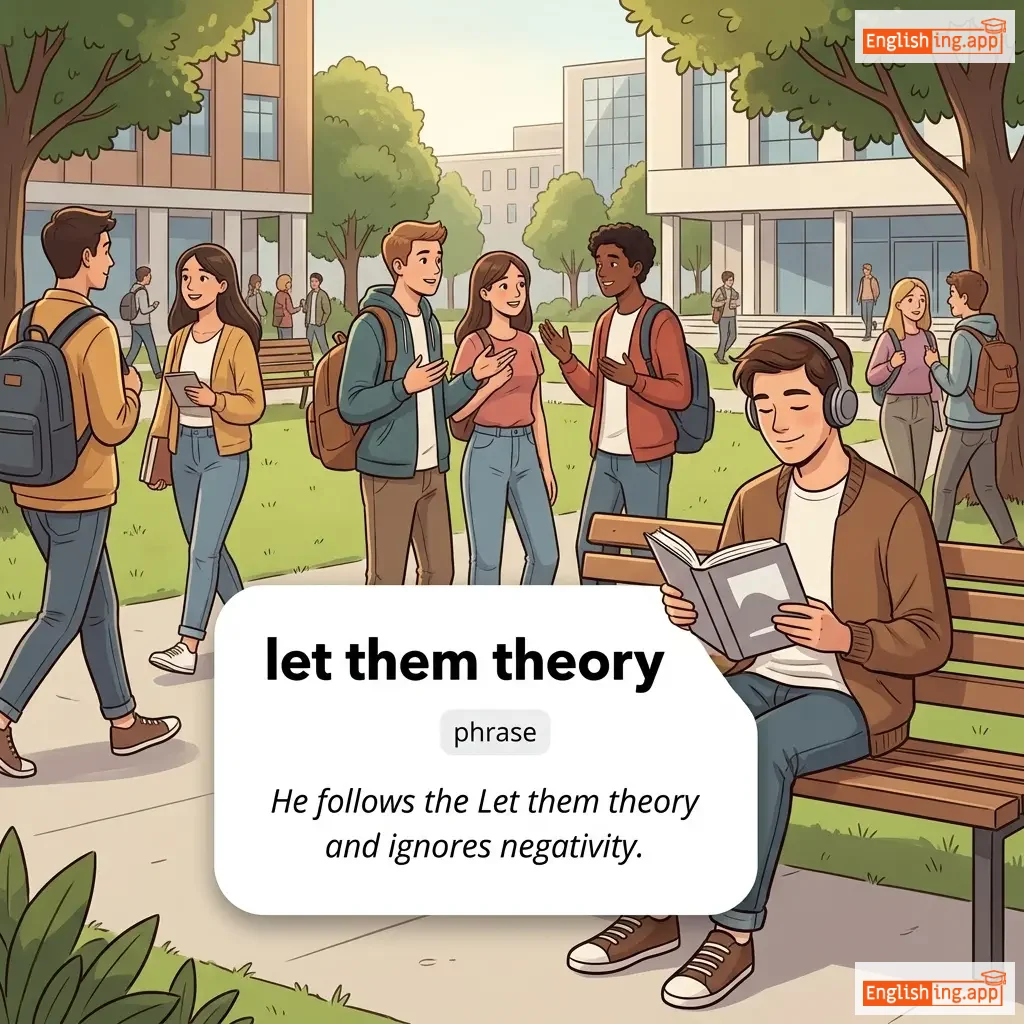
let them theory definition card — visual illustration of the meaning
phrase C2
/lɛt ðɛm ˈθɪə.ri/
彼らに好きなことを考えさせる理論 (karera ni sukina koto o kangaesaseru riron)

A philosophy of not trying to control others' actions or opinions and allowing them to be themselves.

"He follows the Let them theory and ignores negativity."
"彼は「彼らに好きなことを考えさせる理論」を実践し、否定的な考えを無視します。" (Kare wa 'karera ni sukina koto o kangaesaseru riron' o jissen shi, hiteiteki na kangae o mushi shimasu.)
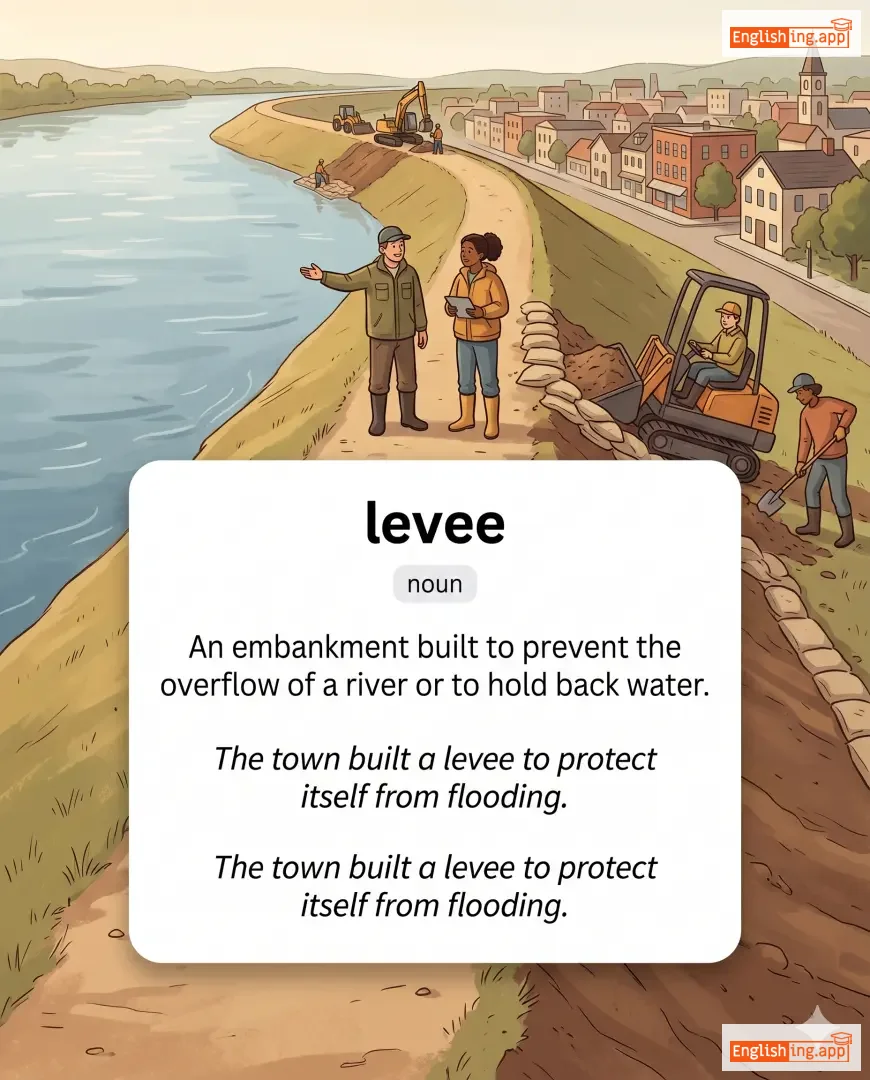
levee definition card — visual illustration of the meaning
noun C2
/ˈlɛvi/
堤防 (teibou)

An embankment built to prevent the overflow of a river or to hold back water.

"The town built a levee to protect itself from flooding."

"その町は洪水から守るために堤防を作った。" (Sono machi wa koudzui kara mamoru tame ni teibou wo tsukutta.)
adjective C2
/ˌlɛvəlˈhɛdɪd/
冷静で賢明 (reisei de kenmei)

calm and sensible; showing good judgment.

"She remained levelheaded during the crisis."

"彼女は危機の間冷静を保った。" (Kanojo wa kiki no aida reisei o tamotta.)
noun C2
/lɪˈvaɪəθən/
巨大な海の怪物 (kyodō na umi no kaibutsu)

a huge sea monster or something very large and powerful.

"The ship looked like a leviathan on the horizon."

"その船は地平線上で巨大な海の怪物のように見えました。" (Sono fune wa chiheisen-jō de kyodō na umi no kaibutsu no yō ni miemashita.)
verb C2
/ˈlɛvɪteɪt/
浮遊 (fuyu)

to rise or float in the air, usually without visible support.

"The magician made the table levitate during the show."
"魔法使いはショーの間にテーブルを浮かせた。" (Mahōtsukai wa shō no aida ni tēburu o ukaseta.)
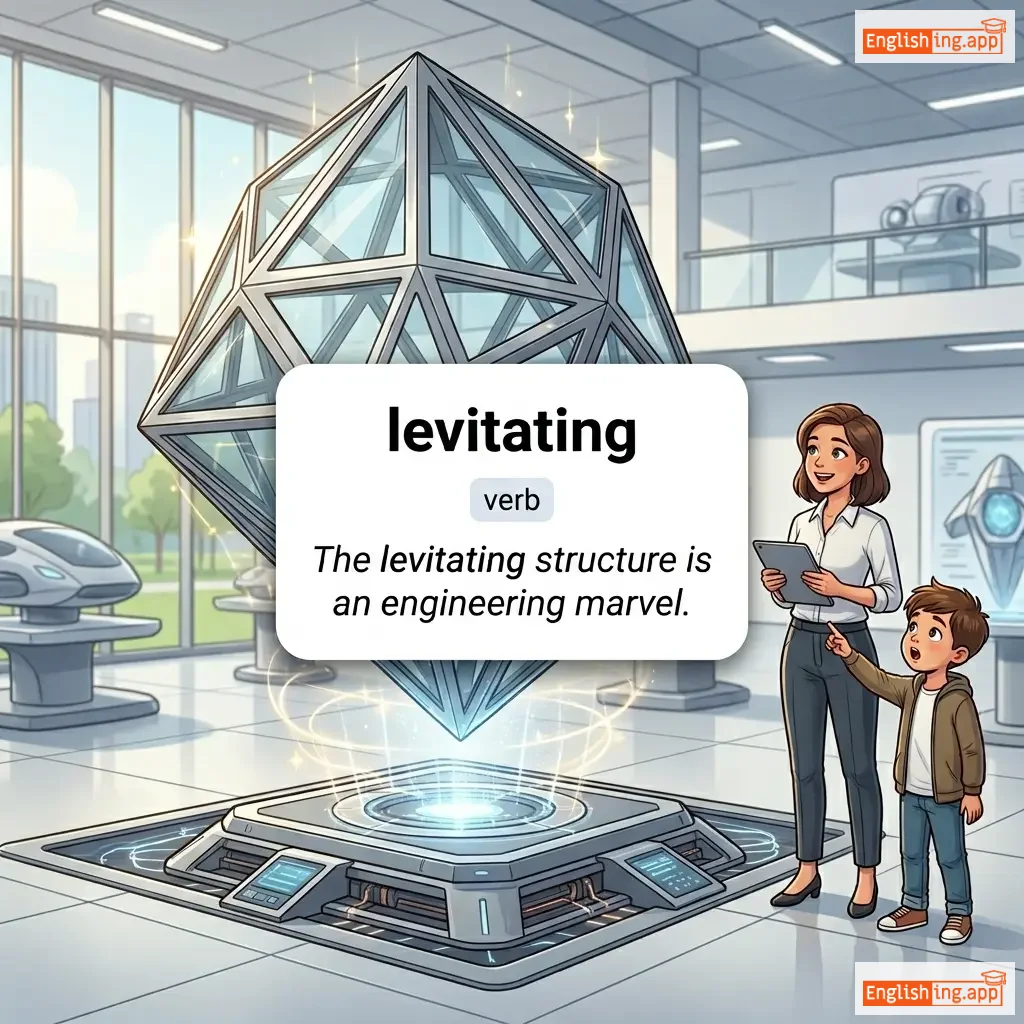
levitating definition card — visual illustration of the meaning
verb C2
ˈlev.ɪ.teɪ.tɪŋ
浮遊 (fuyu)

Rising and hovering in the air, especially as a result of supernatural or magical power.

"The levitating structure is an engineering marvel."

"その浮遊する構造は工学の驚異です。" (Sono fuyu suru kōzō wa kōgaku no kyōi desu.)
Levity definition card — visual illustration of the meaning
noun C2
/ˈlɛvɪti/

Lightness of manner or speech, especially when inappropriate; lack of seriousness.

"His attempt to bring levity to the tense meeting was appreciated."

adjective C2
/luːd/
下品な (gehin na)

Sexually offensive, obscene, or vulgar.

"He was arrested for making lewd remarks in public."

"彼は公共の場で下品な発言をしたため、逮捕された。" (Kare wa kōkyō no ba de gehin na hatsugen o shita tame, taiho sareta.)
noun C2
/ˌlɛksɪˈkɒɡrəfər/
辞書編纂者 (jisho hensan-sha)

A person who compiles, writes, or edits dictionaries.

"The lexicographer spent years compiling the dictionary."

"そのレキシコグラファーは辞書を編纂するのに数年を費やした。" (Sono rekishikogurafā wa jisho o hensan suru no ni sūnen o tsuiyashita.)
noun C2
/ˌlɛksɪˈkɒɡrəfi/
辞書学 (jishogaku)

The art or practice of compiling dictionaries.

"Lexicography requires both linguistic and cultural knowledge."

"辞書学は、言語学と文化的な知識の両方を必要とします。" (Jishogaku wa, gengogaku to bunkateki na chishiki no ryōhō wo hitsuyō to shimasu.)
adjective C2
/ˈlaɪbələs/
名誉毀損 (meiyo kison)

containing or constituting a false published statement that damages a person's reputation

"The article was found to be libelous and had to be retracted."

"その記事は名誉毀損であると見なされ、撤回する必要があった。" (Sono kiji wa meiyo kison de aru to minasa re, tetsukai suru hitsuyō ga atta)
noun C2
/ˈlɪbərəlɪst/
リベラリスト (riberarisuto)

a person who supports liberal ideas and principles

"He is a well-known liberalist advocating human rights."
"彼は人権を擁護することで知られるリベラリストです。" (Kare wa jinken o yōgo suru koto de shirareru riberarisuto desu.)
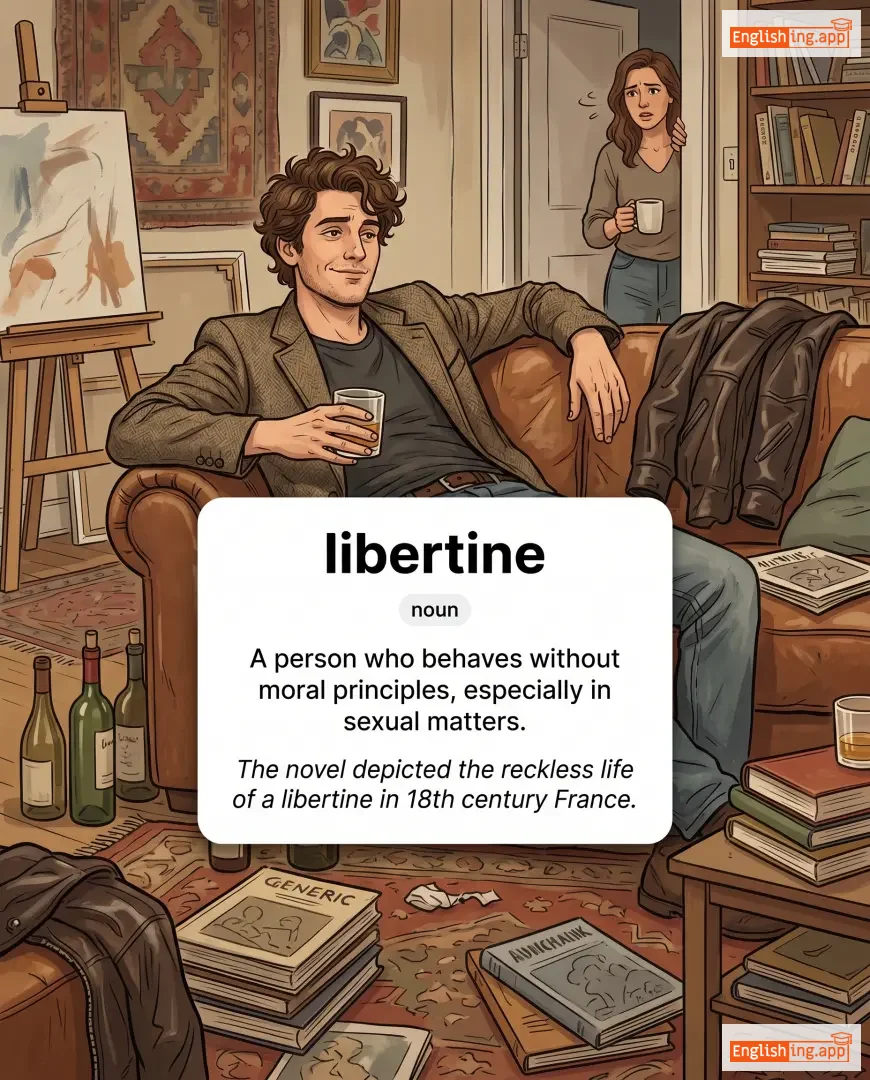
libertine definition card — visual illustration of the meaning
noun C2
/ˈlɪbərˌtiːn/

A person who behaves without moral principles, especially in sexual matters.

"The novel depicted the reckless life of a libertine in 18th century France."

adjective C2
/lɪˈbɪdənəs/
淫ら (midara)

Showing excessive sexual drive; lustful.

"The play was criticized for its libidinous characters."

"その劇は淫らなキャラクターで批判された。" (Sono geki wa midara na kyarakutā de hihan sareta.)
noun C2
/lɪˈbrɛtoʊ/
オペラの台本 (opera no daihon)

The text of an opera or other long vocal work.

"She studied the libretto before attending the opera performance."

"彼女はオペラの公演に行く前にリブレットを勉強しました。" (Kanojo wa opera no kouen ni iku mae ni riburetto o benkyou shimashita.)
adjective C2
/laɪˈsɛnʃəs/
放蕩 (hōtō)

Lacking moral restraint; disregarding accepted rules of conduct.

"The novel was criticized for its licentious themes."

"その小説は放蕩的なテーマで批判された。" (Sono shōsetsu wa hōtō-teki na tēma de hihan sareta.)
adjective C2
/ˈlɪsɪt/
合法 (gōhō)

Permitted by law or by rules; legal.

"The trade of certain goods is licit under international law."

"特定の商品の取引は国際法の下で合法です。" (Tokutei no shōhin no torihiki wa kokusaihō no moto de gōhō desu.)
noun C2
/liːdʒ/
領主 (ryoushu)

A feudal lord entitled to allegiance and service; a loyal subject.

"The knight pledged loyalty to his liege."

"騎士は彼の領主に忠誠を誓った。" (Kishi wa kare no ryoushu ni chūsei o chikatta.)
noun C2
/liːən/
留置権 (ryūchiken)

A legal right to keep possession of property until a debt is paid.

"The bank placed a lien on the house until the mortgage was cleared."
"銀行は住宅にリース権を設定しました、住宅ローンが清算されるまで。" (Ginkō wa jūtaku ni rīsu-ken o settei shimashita, jūtaku rōn ga seisan sareru made.)
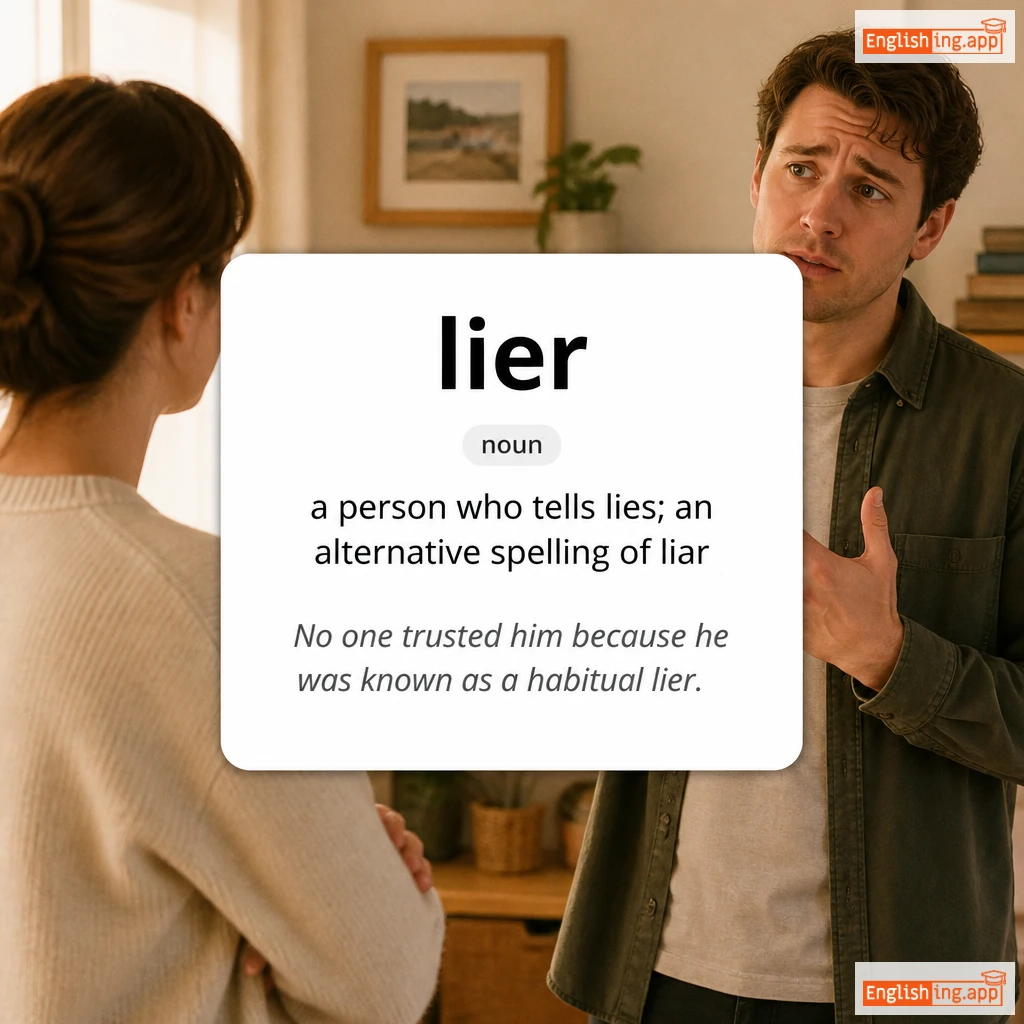
lier definition card — visual illustration of the meaning
noun C2
/ˈlaɪər/
嘘つき (usotsuki)

a person who tells lies; an alternative spelling of liar

"No one trusted him because he was known as a habitual lier."

"彼は常習的な嘘つきだったので、誰も彼を信用しなかった。" (kare wa shuushuuteki na usotsuki datta node dare mo kare o shinyou shinakatta)
noun C2
/ˈlɪɡ.ə.tʃər/
括弧 (kakko)

A thing used for tying or binding tightly; in music/printing, two or more notes or letters joined together.

"The doctor used a ligature to stop the bleeding."

"医者は出血を止めるためにリガチュアを使用しました。" (Isha wa shukketsu o tomeru tame ni rigachua o shiyō shimashita.)
adjective C2
/ˈlɪɡ.ni.əs/
木質の (mokushitsu no)

having the texture or appearance of wood; woody

"The ligneous stem supported the heavy flowers."
"木質の茎が重い花を支えました。" (Mokushitsu no kake ga omoi hana wo sasaemashita.)
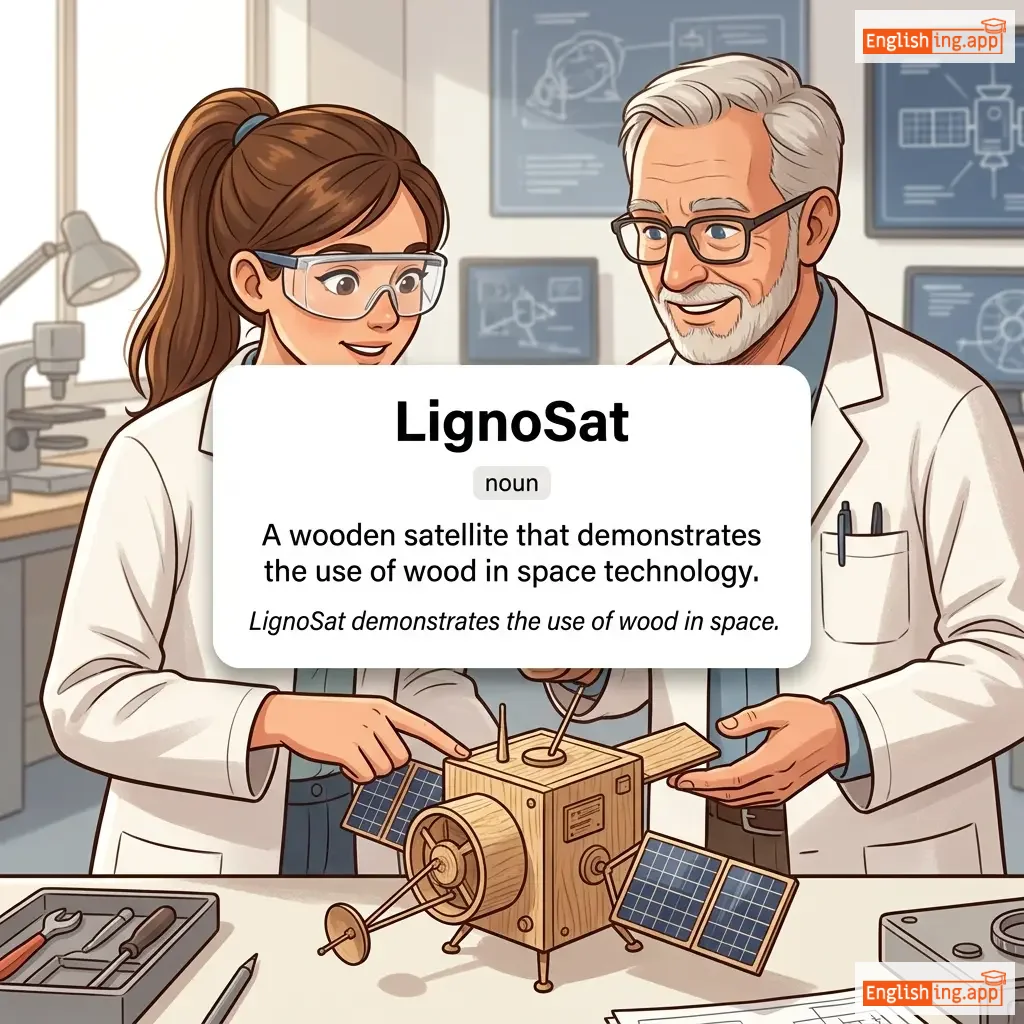
LignoSat definition card — visual illustration of the meaning
noun C2
ˈlɪɡ.nəʊˌsæt
木製衛星 (mokusei eisei)

A wooden satellite that demonstrates the use of wood in space technology.

"LignoSat demonstrates the use of wood in space."
"LignoSat は宇宙で木材の使用を示しています。" (LignoSat wa uchuu de mokuzai no shiyou wo shimeshiteimasu.)
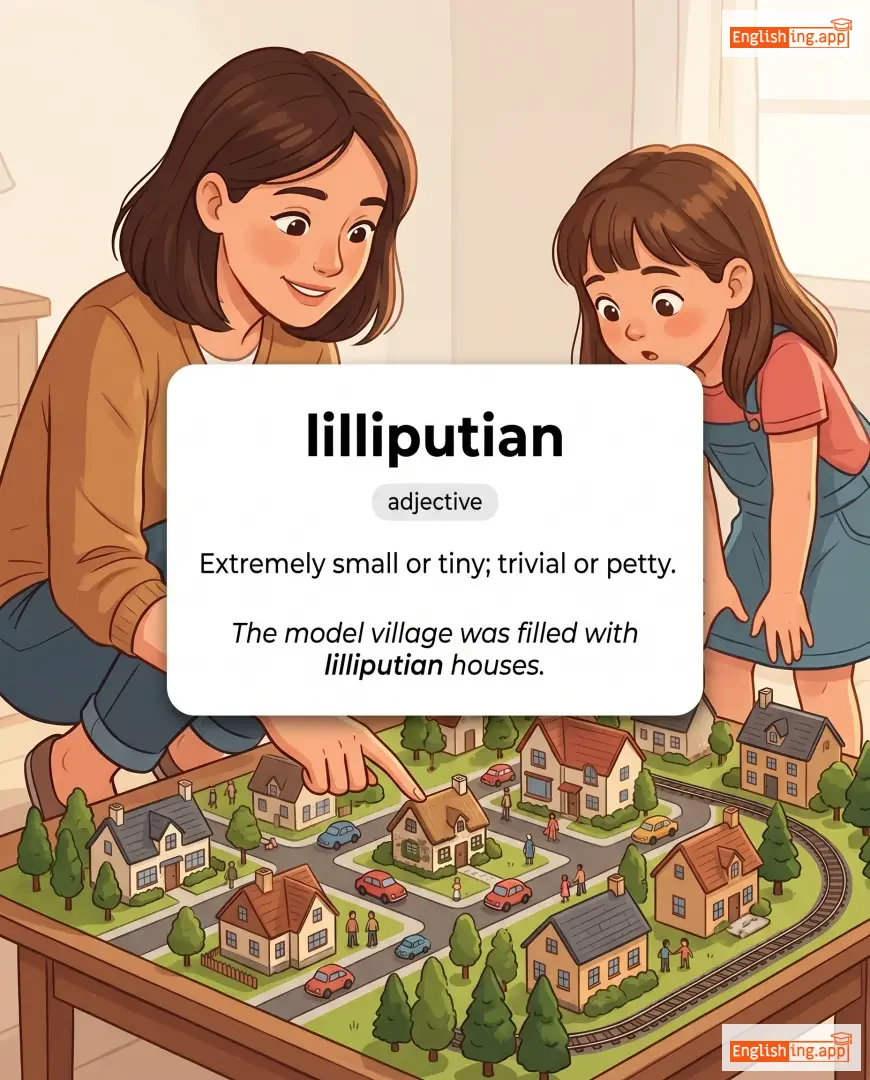
lilliputian definition card — visual illustration of the meaning
adjective C2
/ˌlɪlɪˈpjuːʃən/
非常に小さい (hijō ni chiisai)

Extremely small or tiny; trivial or petty.

"The model village was filled with lilliputian houses."

"モデル村は非常に小さな家で満たされていました。" (Moderu mura wa hijō ni chiisana ie de mitasarete imashita.)
adjective C2
/ˈlɪmbər/
柔軟で敏捷 (jūnan de binshō)

Flexible and agile in body or movement.

"Dancers need to stay limber to perform well."

"ダンサーはうまく演技するために柔軟でいる必要があります。" (Dansā wa umaku engi suru tame ni jūnan de iru hitsuyō ga arimasu.)
noun C2
/ˈlɪmərɪk/
ユーモラスな五行詩 (yu-morasu na go gyou shi)

a humorous five-line poem with a specific rhythm and rhyme scheme (AABBA).

"She recited a funny limerick at the party."

"彼女はパーティーで面白いリメリックを朗読しました。" (Kanojo wa pa-ti- de omoshiroi rimerikku o roudoku shimashita.)
limn definition card — visual illustration of the meaning
verb C2
/lɪm/
描写する / 表現する (byōsha suru / hyōgen suru)

to depict or describe something vividly in words or art.

"The author limned the beauty of the countryside."
"作者は田舎の美しさを生き生きと描写しました。" (Sakusha wa inaka no utsukushisa o ikigiki to byōsha shimashita.)
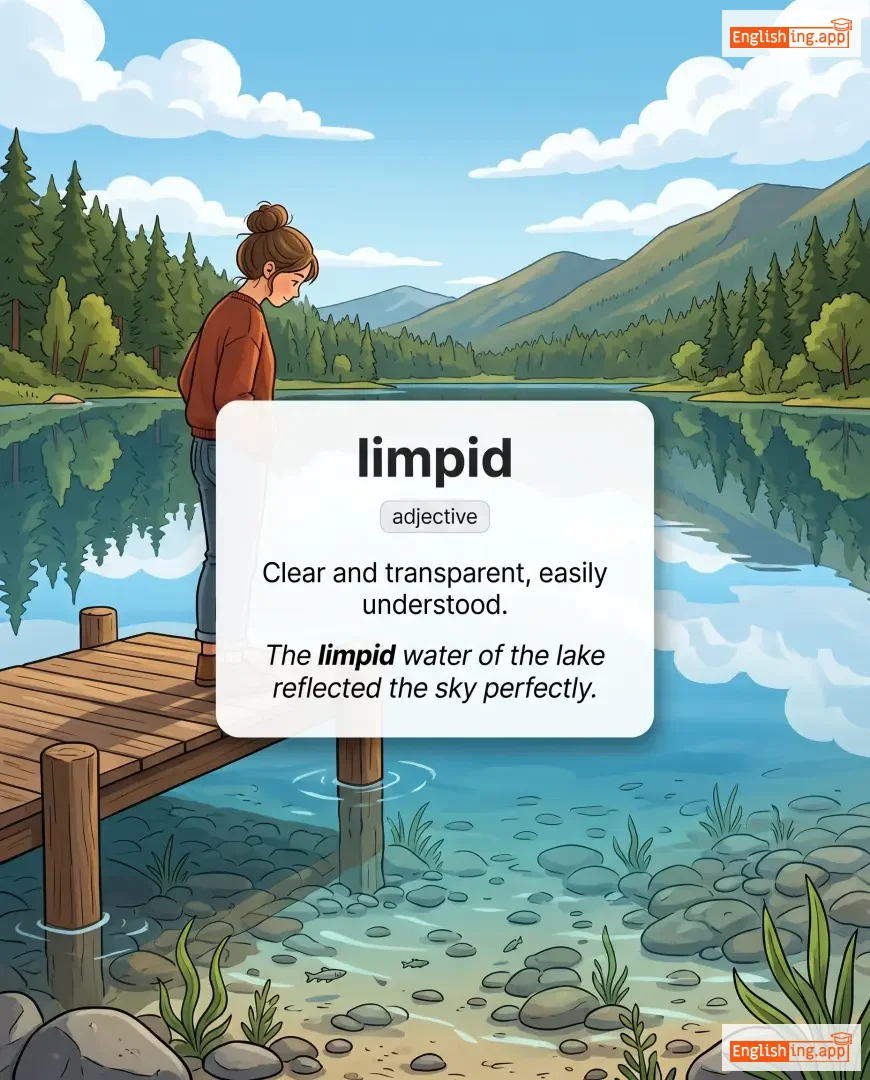
limpid definition card — visual illustration of the meaning
adjective C2
/ˈlɪmpɪd/
澄んだ (sunda)

Clear and transparent, easily understood.

"The limpid water of the lake reflected the sky perfectly."

"湖の澄んだ水は完璧に空を反映していました。" (Mizu no suna wa kanpeki ni sora o hanei shite imashita.)
noun C2
/ˈlɪniəmənt/
特徴 (tokuchou)

A distinctive feature or characteristic, especially of the face.

"Her delicate lineaments revealed her noble birth."

"彼女の繊細な特徴は彼女の高貴な誕生を明らかにしました。" (Kanojo no sensaina tokuchou wa kanojo no kouki na tanjou wo akiraka ni shimashita.)
noun (plural) C2
/ˈlɪniəmənts/
顔の特徴 (kao no tokuchou)

The features or distinctive characteristics of the face or body.

"The lineaments of his face were sharp and stern."

"彼の顔の特徴は鋭くて厳しかった。" (kare no kao no tokuchou wa surudakute kibishikatta.)
noun C2
/ˈlɪŋ.ɡoʊ/
専門用語 (senmon yōgo)

Specialized or informal language used by a particular group that is often difficult for outsiders to understand.

"The manual was written in technical lingo that confused the new employees."

"マニュアルは技術的な用語で書かれており、新しい従業員を混乱させました。" (Manyuaru wa gijutsuteki na yōgo de kakarete ori, atarashī jūgyōin o konran sasemashita.)
noun C2
/ˈlɪŋ.ɡwə/
言語 (gengo)

A language, especially one used for communication among people.

"English has become a global lingua for business and science."

"英語はビジネスと科学のためのグローバルな言語となっています。" (Eigo wa bijinesu to kagaku no tame no guroobaru na gengo to natteimasu.)
adjective C2
/ˈlɪŋɡwəl/
舌に関連する (shita ni kanren suru)

Relating to the tongue or speech.

"The dentist examined the patient's lingual surface of the teeth."

"歯科医は患者の歯の舌側面を調べました。" (Shika-i wa kanja no ha no shita sokumen o shirabemashita.)
noun C2
/ˈlɪnəmənt/
リニメント / ローション (rinimento / roshon)

A liquid or lotion applied to the skin to relieve pain or stiffness.

"He rubbed liniment on his sore muscles after the workout."

"彼はトレーニング後、痛んだ筋肉にリニメントを擦り込んだ。" (Kare wa toreeningu go, itanda kinniku ni rinimento o surikonda.)
noun C2
/lɪˈnoʊ.li.əm/
リノリウム (rinoriumu)

a durable, washable floor covering made from solidified linseed oil, wood flour, or cork dust on a canvas backing

"They decided to cover the kitchen floor with linoleum."

"彼らはキッチンの床をリノリウムで覆うことに決めました。" (karera wa kicchin no yuka o rinoriumu de oou koto ni kimemashita)
noun C2
/lɪnt/
繊維くず (sen'i kuzu)

small soft fibers that come off cloth, often found in dryers or on clothes

"There was lint all over his black shirt after the wash."

"洗濯後、彼の黒いシャツに繊維くずがついていました。" (Sentaku go, kare no kuroi shatsu ni sen'i kuzu ga tsuite imashita.)
verb C2
/ˈlaɪ.ə.naɪz/
賛美する (sanbisuru)

to treat someone as a celebrity or give a lot of public attention

"The press began to lionize the young scientist after his discovery."
"彼の発見の後、メディアは若い科学者をライオナイズし始めました。" (kare no hakken no ato, media wa wakai kagakusha o raionaisu shi hajimemashita.)
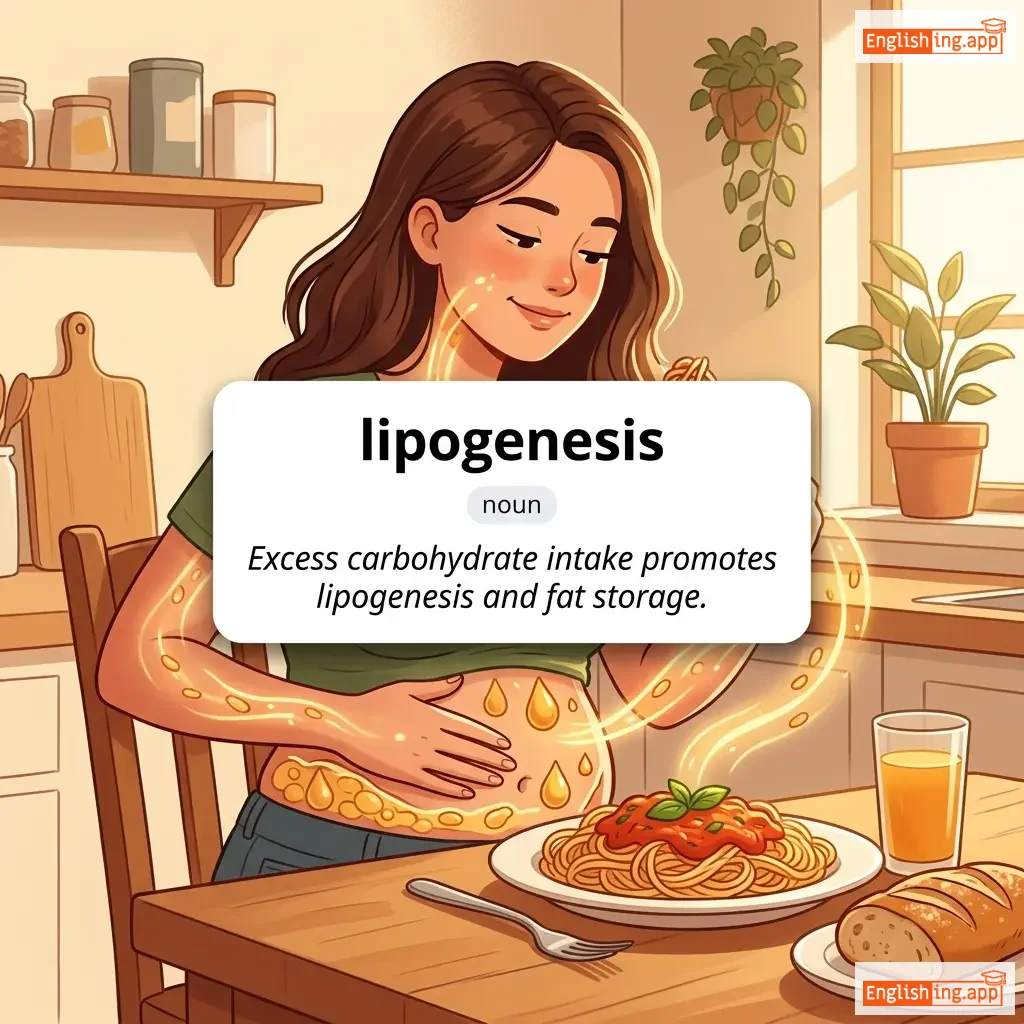
lipogenesis definition card — visual illustration of the meaning
noun C2
/ˌlaɪ.pəˈdʒen.ɪ.sɪs/
脂肪合成 (shibō gōsei)

The metabolic process of fat synthesis where excess carbohydrates are converted into fatty acids and stored as triglycerides.

"Excess carbohydrate intake promotes lipogenesis and fat storage."

"過剰な炭水化物の摂取は脂肪合成と脂肪の蓄積を促進します。" (Kajō na tansui kabutsu no sesshu wa shibō gōsei to shibō no chikuseki o sokushin shimasu.)
noun C2
/ˌlɪk.wəˈfeɪ.ʃənt/
液体化剤 (liquefacient)

a substance that causes something to become liquid

"The chemist explained how the liquefacient worked in the experiment."

"化学者は、実験で液体化剤がどのように機能するかを説明しました。" (Kagakusha wa, jikken de ekitaikazai ga dono yō ni kinō suru ka o setsumei shimashita.)
verb C2
/ˈlɪk.wɪ.faɪ/
液化する (liquefy)

to make or become liquid

"The heat will liquefy the butter in a few minutes."

"熱は数分でバターを液体に変えるでしょう。" (Netsu wa suū-fun de batā o ekitai ni kaeru deshō.)
adjective C2
/ˈlɪsəm/
細く、しなやかで優雅な動き (hosoku, shinayaka de yūga na ugoki)

Thin, supple, and graceful in movement.

"The dancer moved with a lissome elegance."
"ダンサーはリソムな優雅さで動いていました。" (Dansā wa risomu na yūgasa de ugoite imashita.)
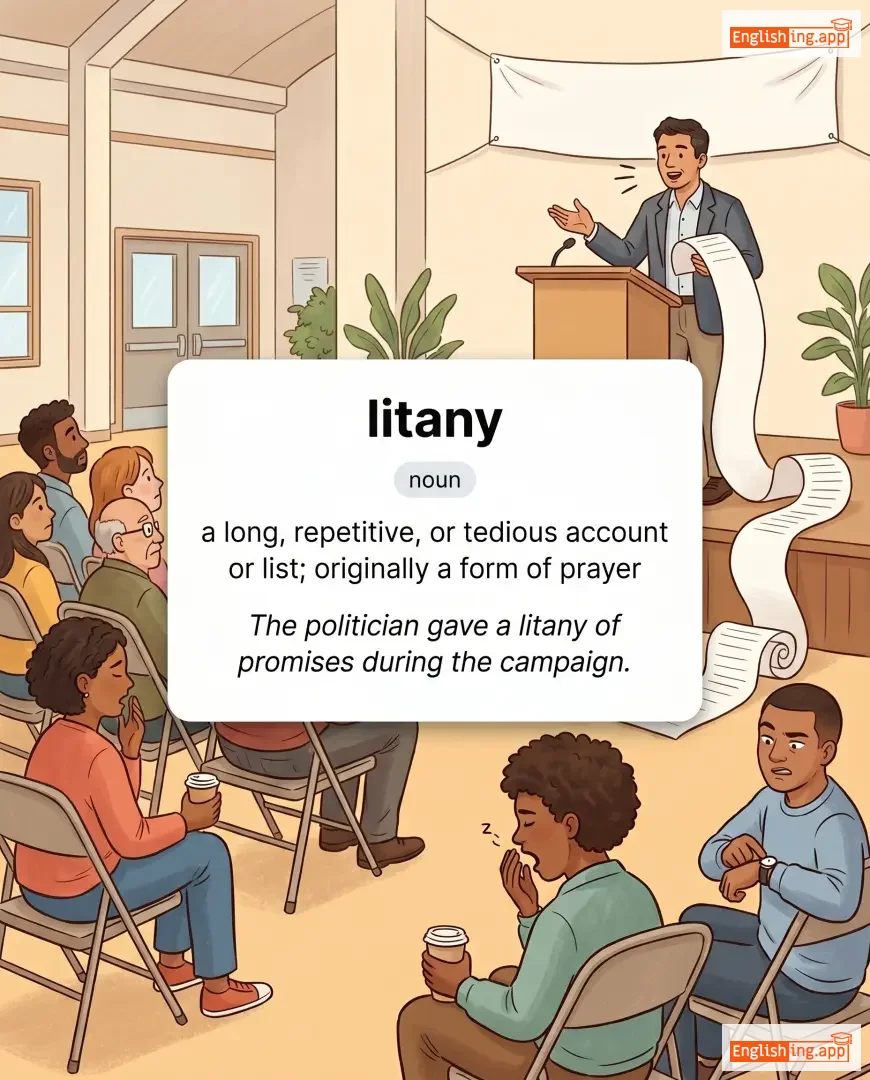
litany definition card — visual illustration of the meaning
noun C2
/ˈlɪtəni/

a long, repetitive, or tedious account or list; originally a form of prayer

"The politician gave a litany of promises during the campaign."
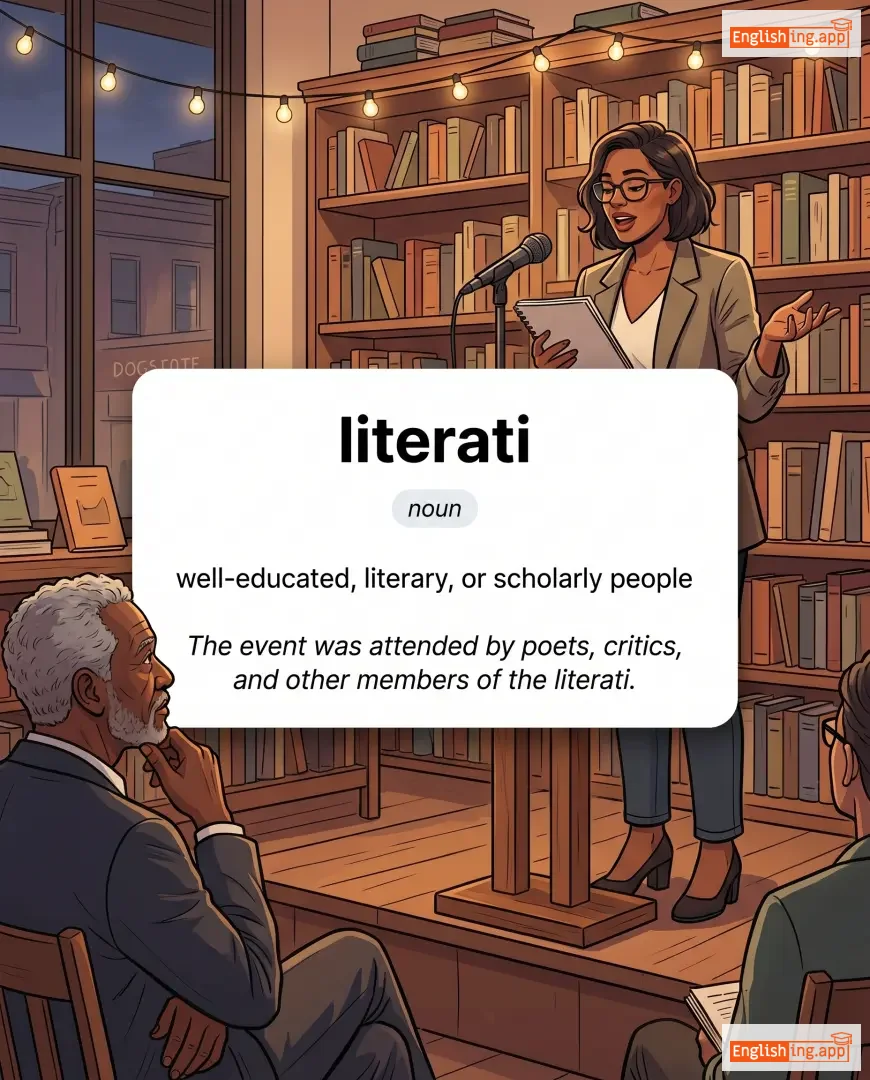
literati definition card — visual illustration of the meaning
noun C2
/ˌlɪt.əˈrɑː.ti/
文学者 (bungakusha)

well-educated, literary, or scholarly people

"The event was attended by poets, critics, and other members of the literati."

"そのイベントには詩人、批評家、その他の文学者が出席しました。" (Sono ibento niwa shijin, hihyōka, sono ta no bungakusha ga shusseki shimashita.)