Словари

Словарь английского языка | Значения слов, определения и примеры

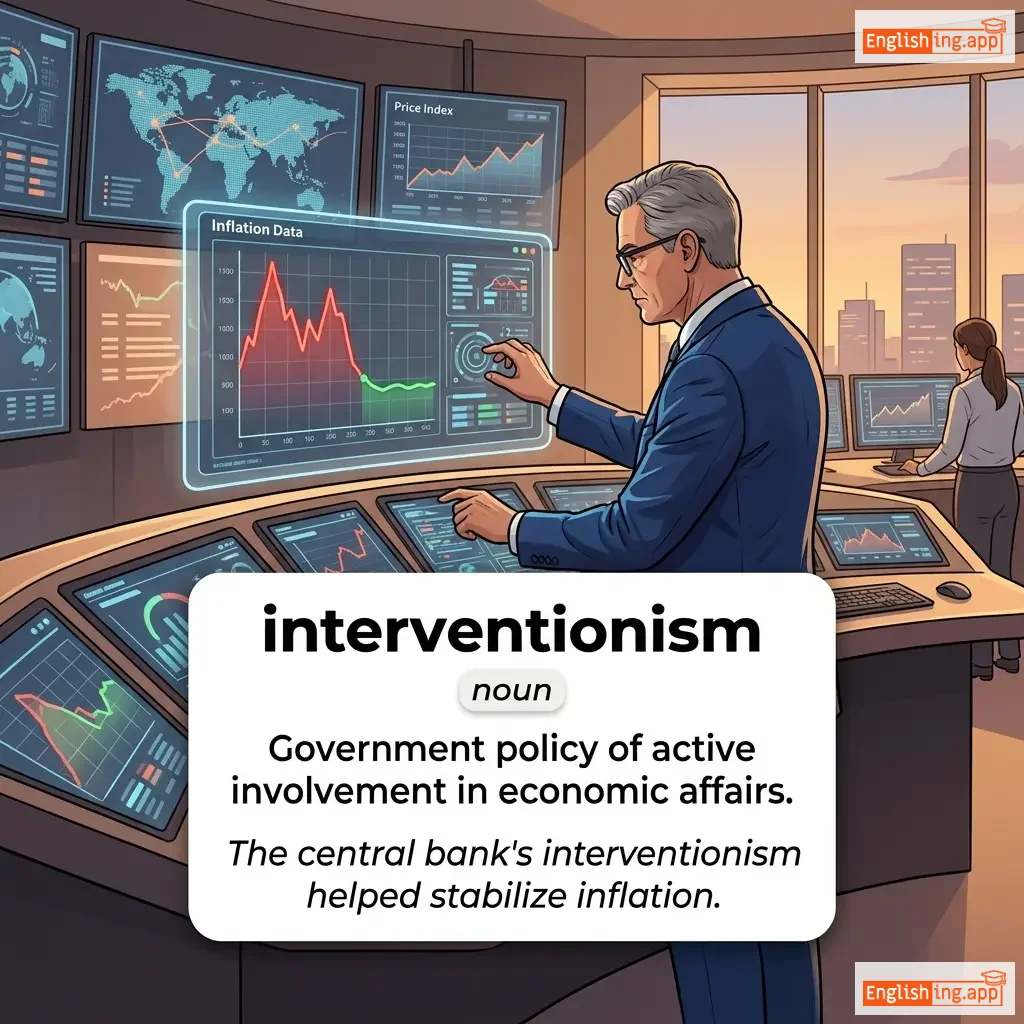
interventionism definition card — visual illustration of the meaning
noun C2
/ˌɪn.təˈvɛn.ʃə.nɪ.zəm/
हस्तक्षेपवाद (hastakshepvaad)

Government policy of active involvement in economic affairs.

"The central bank's interventionism helped stabilize inflation."

"केंद्रीय बैंक की हस्तक्षेपवाद ने महंगाई को स्थिर करने में मदद की।" (Kendriya bank ki hastakshepvaad ne mehngai ko sthir karne mein madad ki.)
noun C2
/ɪnˈtɛstəsi/
वसीयत के बिना मृत्यु (vasiayat ke bina mrityu)

The condition of dying without having made a valid will.

"His estate was divided according to the laws of intestacy."

"उनकी संपत्ति इंटेस्टेसी के कानूनों के अनुसार बाँटी गई थी।" (unki sampatti intestacy ke kanoonon ke anusar baanti gayi thi.)
adjective C2
/ɪnˈtɛsteɪt/
वसीयत के बिना मरा हुआ (vasiiyat ke bina mara hua)

Having died without leaving a valid will.

"She died intestate, so her assets were distributed by law."

"वह वसीयत के बिना मरी, इसलिए उसकी संपत्ति क़ानून के द्वारा वितरित की गई।" (vah vasiiyat ke bina mari, isliye uski sampatti kanun ke dwara vitrit ki gayi.)
noun C2
/ɪnˈtɒksɪkənt/
नशे की चीज़ (nashe ki cheez)

a substance, especially alcohol or a drug, that causes intoxication

"Alcohol is the most commonly used intoxicant in many cultures."

"शराब कई संस्कृतियों में सबसे सामान्य रूप से इस्तेमाल होने वाली नशे की चीज़ है।" (Sharab kai sanskritiyon mein sabse samanya roop se istemal hone wali nashe ki cheez hai.)
adjective C2
/ˌɪn.trəˈsɛl.jʊ.lər/
कोशिका के भीतर (koshika ke bhitar)

Located or occurring within a cell.

"The drug works by targeting intracellular bacteria."

"दवा कोशिका के भीतर बैक्टीरिया को लक्ष्य करके काम करती है।" (Dawa koshika ke bhitar bacteria ko lakshya karke kaam karti hai.)
adjective C2
/ˌɪn.trəˈmjʊə.rəl/
संस्था के भीतर (sanstha ke bhitar)

Occurring within the walls of a single institution, especially a school or college.

"The college organizes intramural sports competitions every semester."
"कॉलेज हर सेमेस्टर में इंट्राम्यूरल खेल प्रतियोगिताओं का आयोजन करता है।" (College har semester mein intramural khel pratiyogitaon ka aayojan karta hai.)
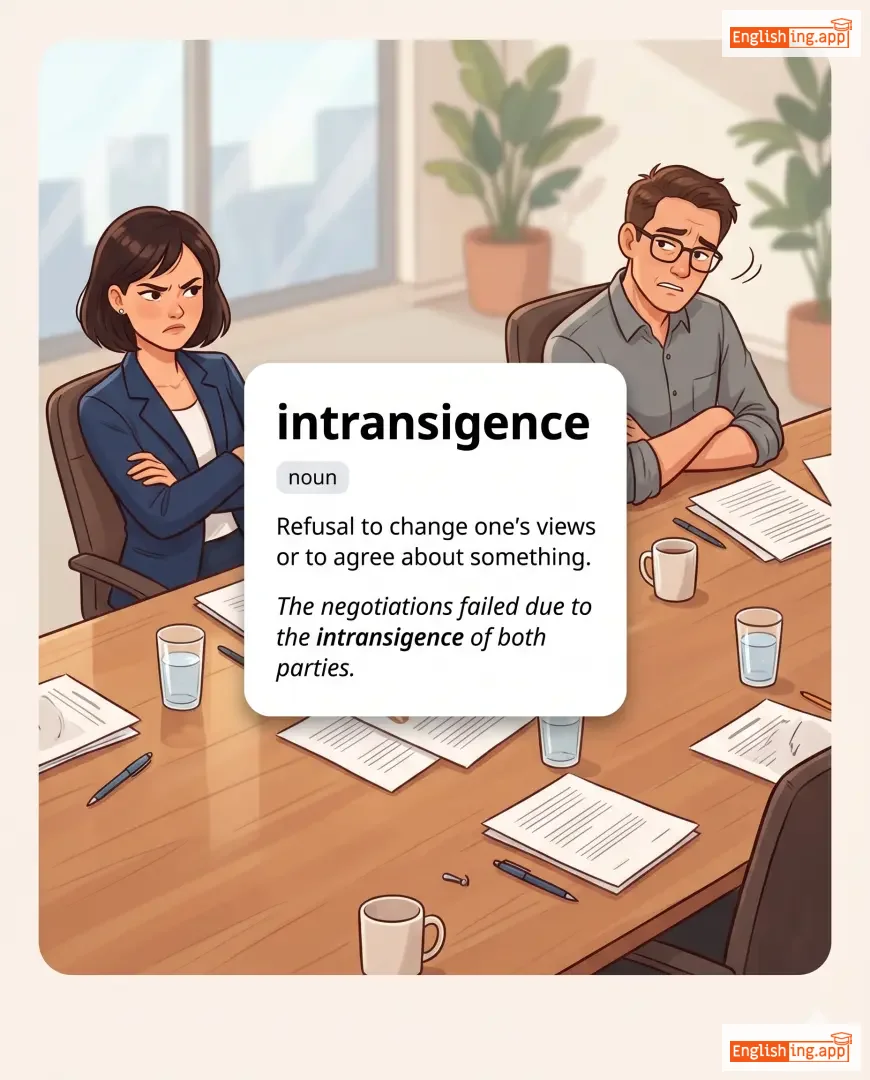
intransigence definition card — visual illustration of the meaning
noun C2
/ɪnˈtræn.sɪ.dʒəns/
अडिगता (adigta)

Refusal to change one's views or to agree about something.

"The negotiations failed due to the intransigence of both parties."
"दोनों पक्षों की अडिगता के कारण वार्ता विफल हो गई।" (Donon pakshon ki adigta ke kaaran vaarta viphal ho gayi.)
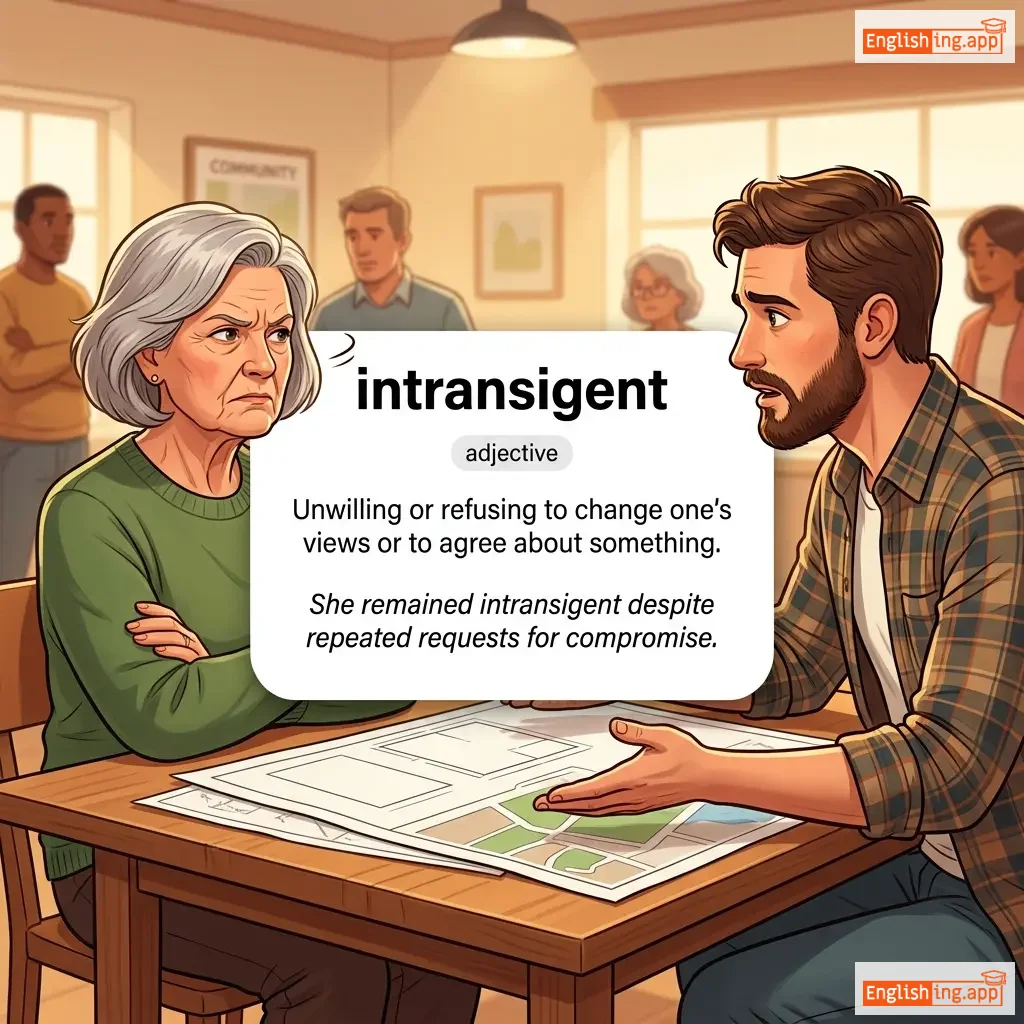
intransigent definition card — visual illustration of the meaning
adjective C2
/ɪnˈtræn.sɪ.dʒənt/
अडिग (adig)

Unwilling or refusing to change one's views or to agree about something.

"She remained intransigent despite repeated requests for compromise."

"वह समझौते के लिए बार-बार अनुरोध करने के बावजूद अडिग रही।" (vah samjhote ke liye bar-bar anurodh karne ke bawjood adig rahi.)
noun C2
/ˌɪn.trəˈɡreʃ.ən/
जीन हस्तांतरण (jeen hastantarann)

The transfer of genetic information from one species to another through repeated backcrossing.

"Introgression plays a significant role in plant breeding."

"इंट्रोग्रेशन पौधों की प्रजनन में महत्वपूर्ण भूमिका निभाता है।" (Introgression podhon ki prajanan mein mahatvapurn bhumika nibhata hai.)
verb C2
/ˌɪn.trəˈmɪt/
प्रवेश कराना (pravesh karana)

To insert or introduce something into a place or body.

"The doctor carefully intromitted the instrument into the wound."
"डॉक्टर ने सावधानी से उपकरण को घाव में डाला।" (Doktar ne saavdhaani se upkaran ko ghaav mein daala.)
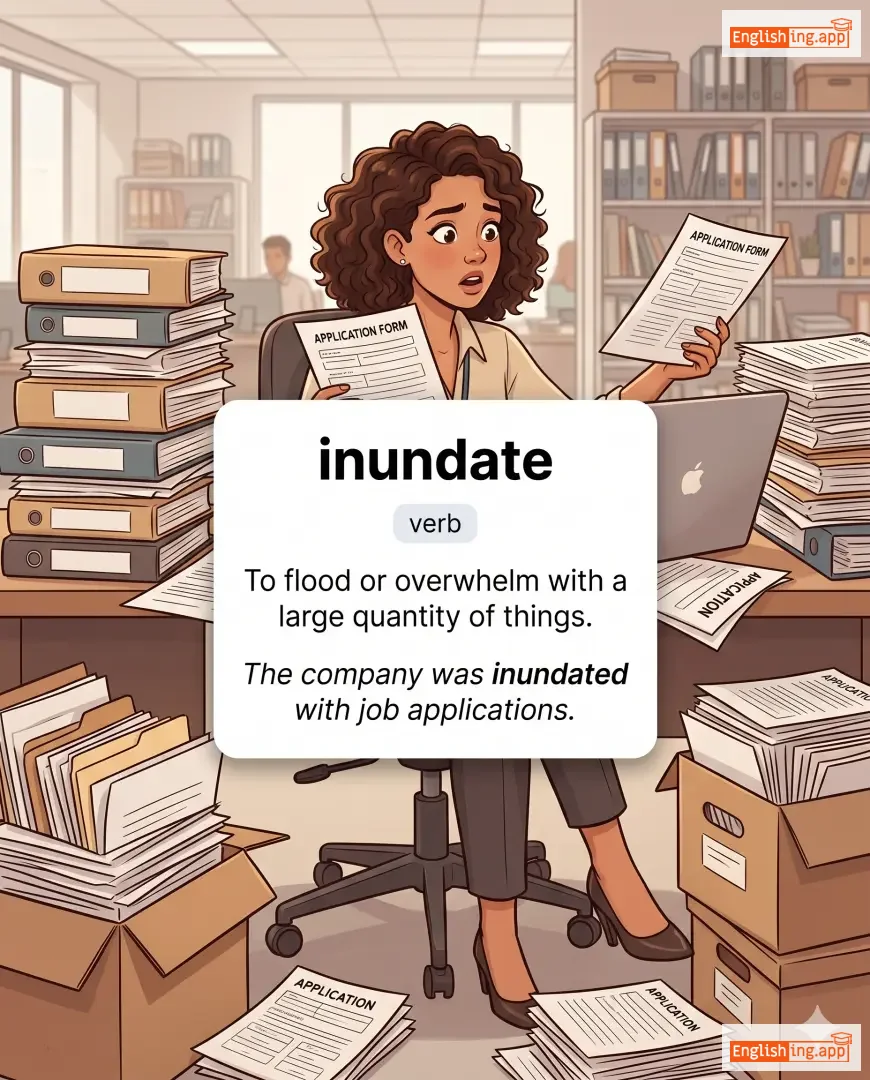
inundate definition card — visual illustration of the meaning
verb C2
/ˈɪn.ʌn.deɪt/
बाढ़ आना / अधिकता से भर देना (baadh aana / adhikta se bhar dena)

To flood or overwhelm with a large quantity of things.

"The company was inundated with job applications."

"कंपनी को नौकरी के आवेदन पत्रों से भर दिया गया था।" (company ko naukri ke avedan patron se bhar diya gaya tha.)
noun C2
/ˌɪn.ʌnˈdeɪ.ʃən/
प्रलय (pralay)

The act of flooding or overwhelming with water or things.

"The town suffered from a severe inundation after the heavy rains."

"भारी बारिश के बाद शहर को प्रलय का सामना करना पड़ा।" (bhari barish ke baad shahar ko pralay ka samna karna pada.)
verb C2
/ɪˈnjʊər/
आदत डालना (aadat daalna)

To become accustomed to something, especially something unpleasant.

"Soldiers quickly became inured to the harsh conditions."
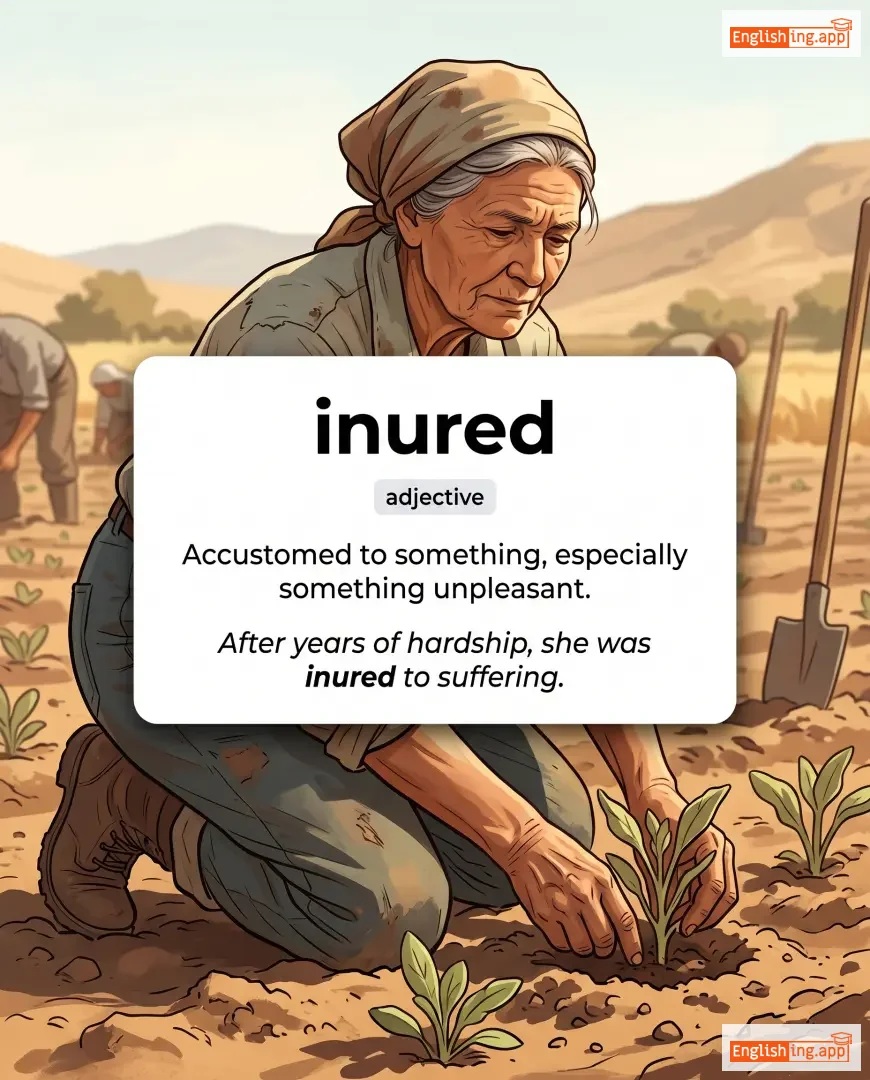
"सैनिकों ने जल्दी से कठोर परिस्थितियों में खुद को आदत डाल लिया।" (sainikon ne jaldi se kathor paristhitiyon mein khud ko aadat daal liya.)
inured definition card — visual illustration of the meaning
adjective C2
/ɪˈnjʊərd/
आदत डालना (adat daalna)

Accustomed to something, especially something unpleasant.

"After years of hardship, she was inured to suffering."
"सालों की कठिनाई के बाद, वह दुख को सहने की आदत डाल चुकी थी।" (Saalo ki kathinai ke baad, vah dukh ko sahne ki adat daal chuki thi.)
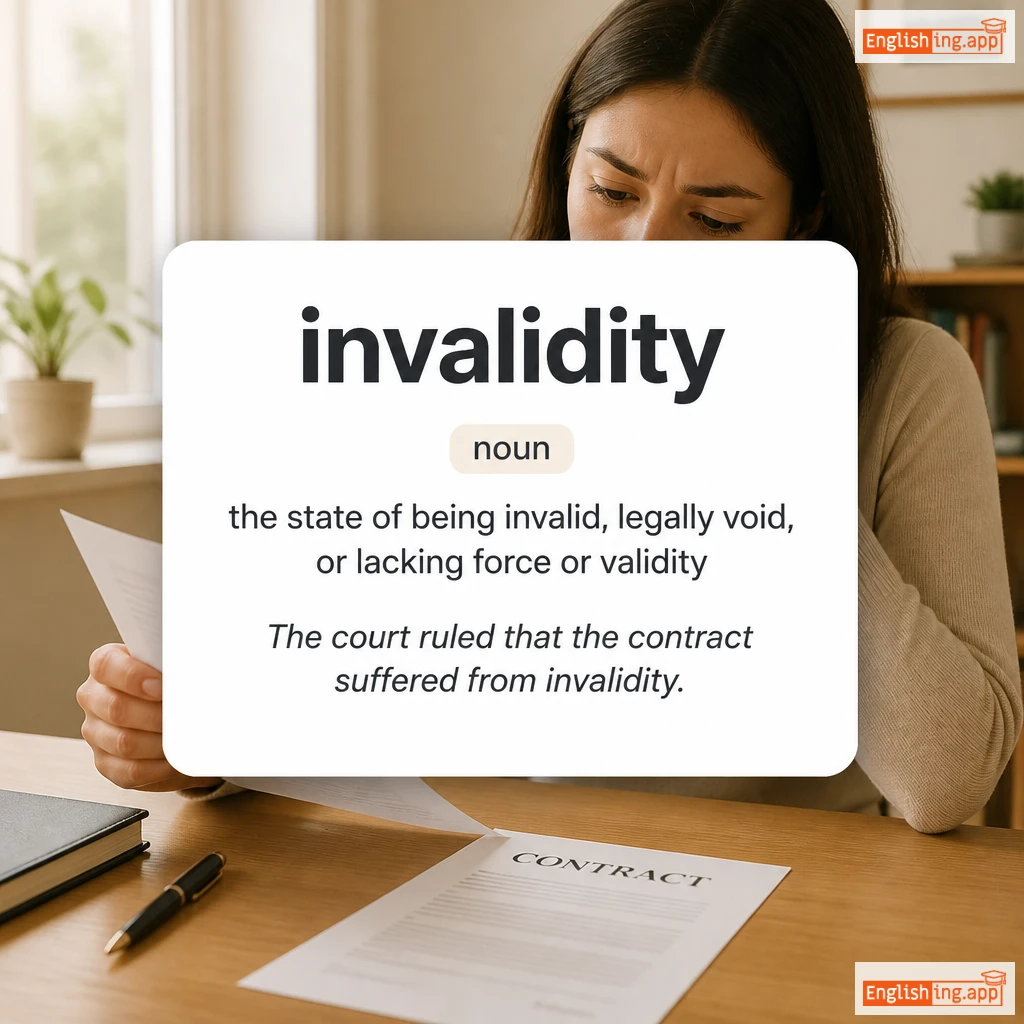
invalidity definition card — visual illustration of the meaning
noun C2
/ˌɪnvəˈlɪdɪti/
अवैधता (avaidhta)

the state of being invalid, legally void, or lacking force or validity

"The court ruled that the contract suffered from invalidity."
"अदालत ने फैसला दिया कि अनुबंध अवैधता से ग्रस्त था।" (adalat ne faisla diya ki anubandh avaidhta se grast tha)
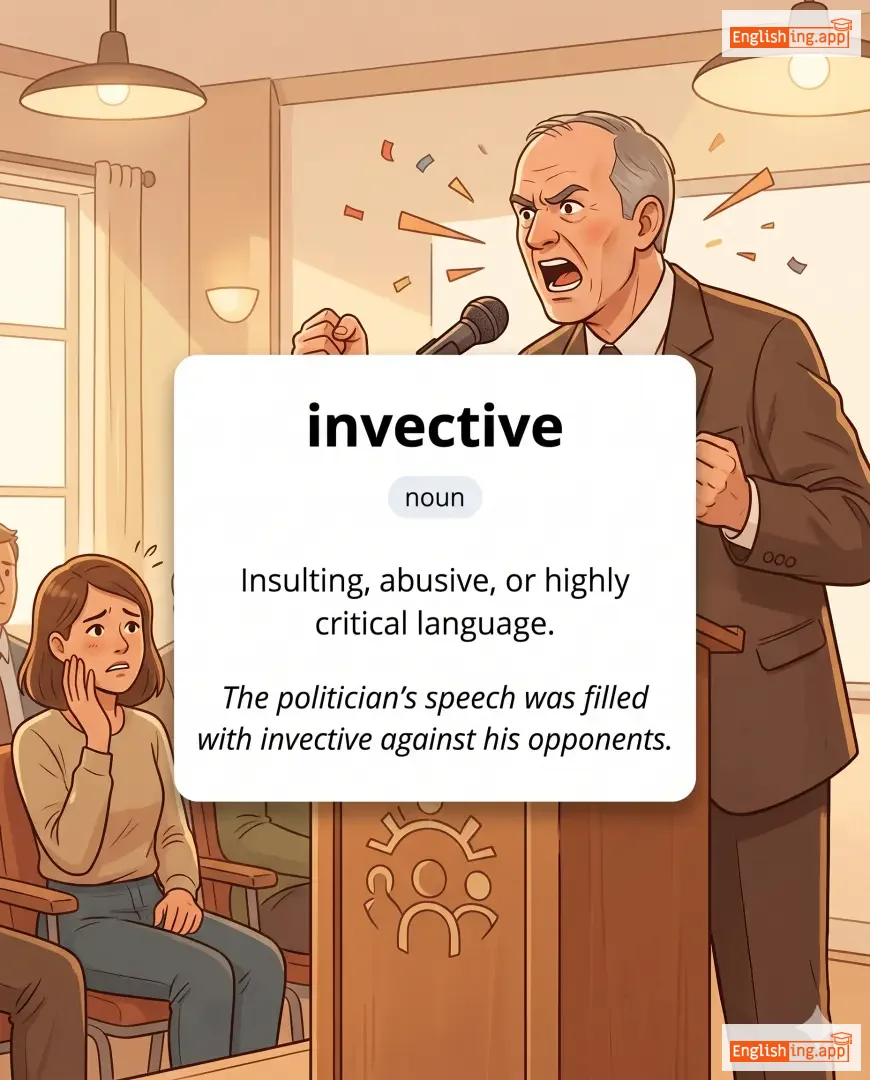
invective definition card — visual illustration of the meaning
noun C2
/ɪnˈvɛktɪv/
अपमानजनक भाषा (apmaanjanak bhaasha)

Insulting, abusive, or highly critical language.

"The politician’s speech was filled with invective against his opponents."

"राजनीतिक नेता का भाषण अपने विरोधियों के खिलाफ अपमानजनक भाषा से भरा था।" (Rajnaitik neta ka bhashan apne virodhiyon ke khilaf apmaanjanak bhaasha se bhara tha.)
verb C2
/ɪnˈveɪ/
कड़ी आलोचना करना (kadi alochana karna)

To speak or write about something with great hostility and criticism.

"He inveighed against the corruption in government."

"उसने सरकार में भ्रष्टाचार के खिलाफ कड़ी आलोचना की।" (Usne sarkar mein bhrashtachar ke khilaf kadi alochana ki.)
inveigle definition card — visual illustration of the meaning
verb C2
/ɪnˈveɪɡəl/
ललचाना (lalchana)

To persuade someone to do something by deception or flattery.

"She inveigled him into signing the contract."

"वह उसे अनुबंध पर हस्ताक्षर करने के लिए बहका लिया।" (Vah use anubandh par hastakshar karne ke liye bhadka liya.)
noun C2
/ɪnˈvɛstɪtʃər/
पदवी प्रदान समारोह (padvi pradan samaroha)

the formal ceremony of conferring authority, rank, or office

"The king held an investiture ceremony for the new knight."
"राजा ने नए नाइट के लिए पदवी प्रदान समारोह आयोजित किया।" (raja ne naye knight ke liye padvi pradan samaroha aayojit kiya.)
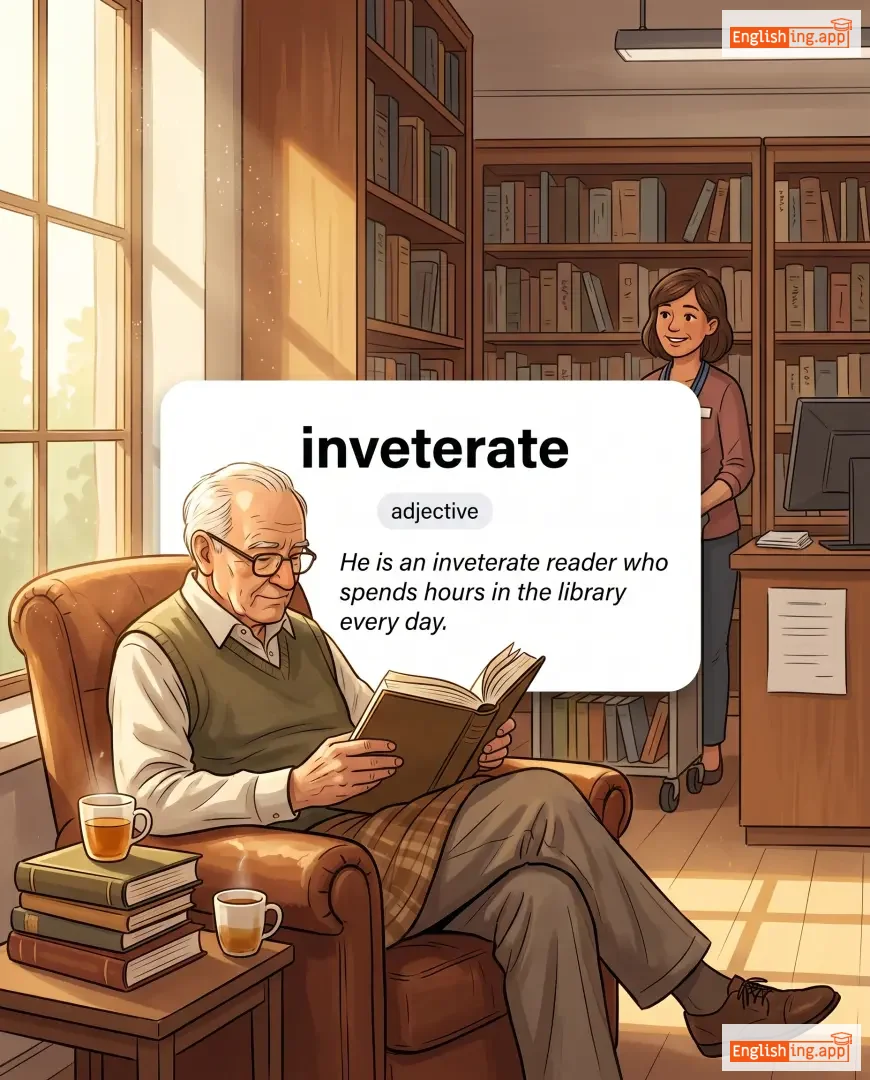
inveterate definition card — visual illustration of the meaning
adjective C2
/ɪnˈvɛtərət/
जड़वादी (jadvadi)

having a long-established habit, activity, or interest that is unlikely to change

"He is an inveterate reader who spends hours in the library every day."
"वह एक जड़वादी पाठक है जो हर दिन घंटों पुस्तकालय में बिताता है।" (vah ek jadvadi pathak hai jo har din ghanton pustakalay mein bitata hai)
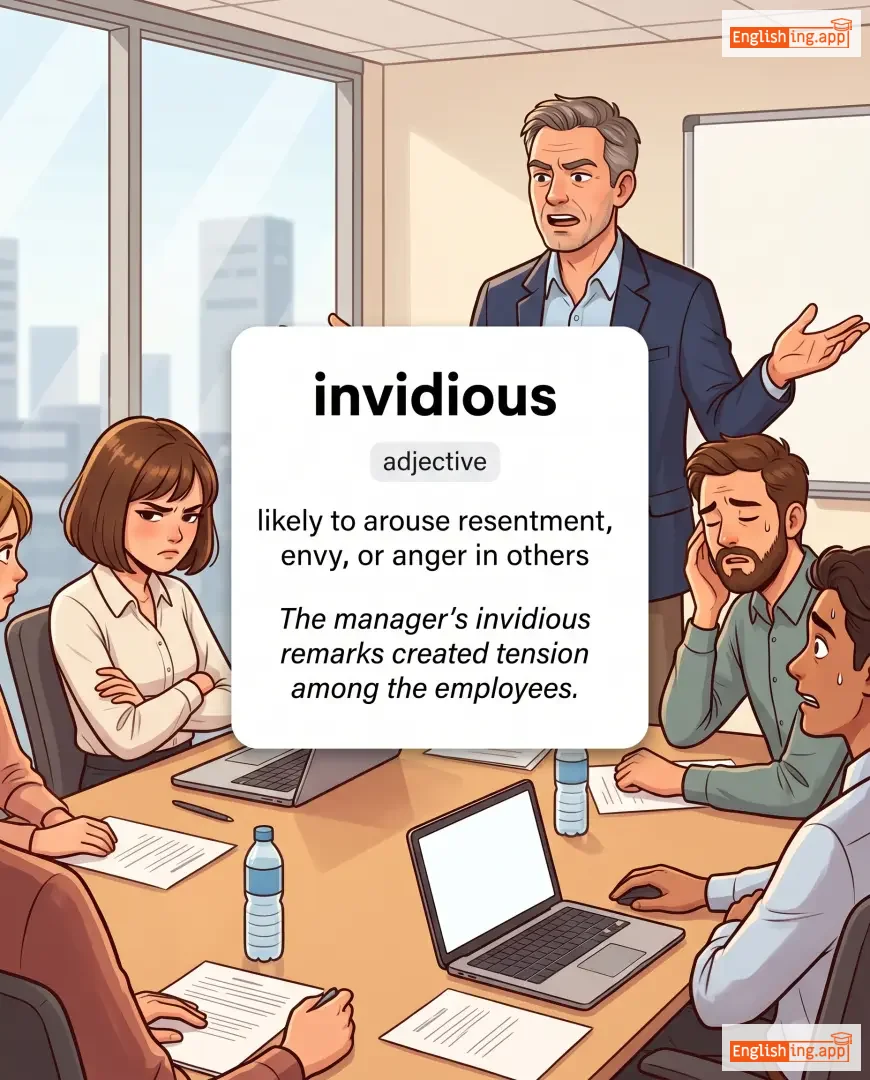
invidious definition card — visual illustration of the meaning
adjective C2
/ɪnˈvɪdiəs/
ईर्ष्यापूर्ण (irshyapurn)

likely to arouse resentment, envy, or anger in others

"The manager's invidious remarks created tension among the employees."

"मैनेजर की ईर्ष्यापूर्ण टिप्पणी ने कर्मचारियों के बीच तनाव पैदा किया।" (manager ki irshyapurn tippani ne karmachariyon ke beech tanav paida kiya.)
adjective C2
/ɪnˈvaɪələbl/
अपरिवर्तनीय (aparivartaniya)

never to be broken, dishonored, or violated

"Human rights are considered inviolable in modern democracies."

"मानव अधिकार आधुनिक लोकतंत्रों में अपरिवर्तनीय माने जाते हैं।" (Manav adhikar aadhunik loktantron mein aparivartaniya maane jaate hain.)
adjective C2
/ɪnˈvaɪələt/
अप्रभ्रष्ट (aprabhrasht)

free from violation, injury, or desecration; kept safe and untouched

"The ancient temple remained inviolate for centuries."

"प्राचीन मंदिर सदियों तक अप्रभ्रष्ट रहा।" (Prachin mandir sadiyon tak aprabhrasht raha.)
invitor definition card — visual illustration of the meaning
noun C2
/ɪnˈvaɪtər/
आमंत्रण देने वाला व्यक्ति (amantran dene wala vyakti)

a person who invites someone to an event, meeting, or place

"The invitor greeted all the guests warmly at the entrance."

"आमंत्रण देने वाले व्यक्ति ने प्रवेश द्वार पर मेहमानों का स्वागत किया।" (amantran dene wale vyakti ne pravesh dwar par mehmano ka swagat kiya)
noun C2
/ˌɪnvəˈkeɪʃən/
आह्वान (ahwan)

the act of calling upon a higher power for help, blessing, or inspiration

"The ceremony began with an invocation to the gods."

"समारोह की शुरुआत देवताओं से आह्वान से हुई।" (Samaroh ki shuruat devtaon se ahwan se hui.)
noun C2
/ˌɪnvəˈluːʃən/
जटिलता (jatilata)

a complicated or intricate form or state; in biology, the shrinking of an organ after its function has finished

"The story was full of involution, making it hard to follow."

"कहानी में जटिलता थी, जिससे इसे समझना मुश्किल हो गया था।" (Kahani mein jatilata thi, jisse ise samajhna mushkil ho gaya tha.)
adjective C2
/ɪnˈvʌlnərəbl/
अपराजेय (aparajey)

Impossible to harm, damage, or defeat.

"The fortress was thought to be invulnerable to attack."

"किला हमले से बचने के लिए अपराजेय माना जाता था।" (Kila hamle se bachne ke liye aparajey maana jaata tha.)
noun C2
/aɪˈoʊtə/
अत्यंत नगण्य (atyant nagny)

An extremely small amount.

"He did not show an iota of fear."
"उसने डर का एक भी अंश नहीं दिखाया।" (Usne dar ka ek bhi ansh nahi dikhaya.)
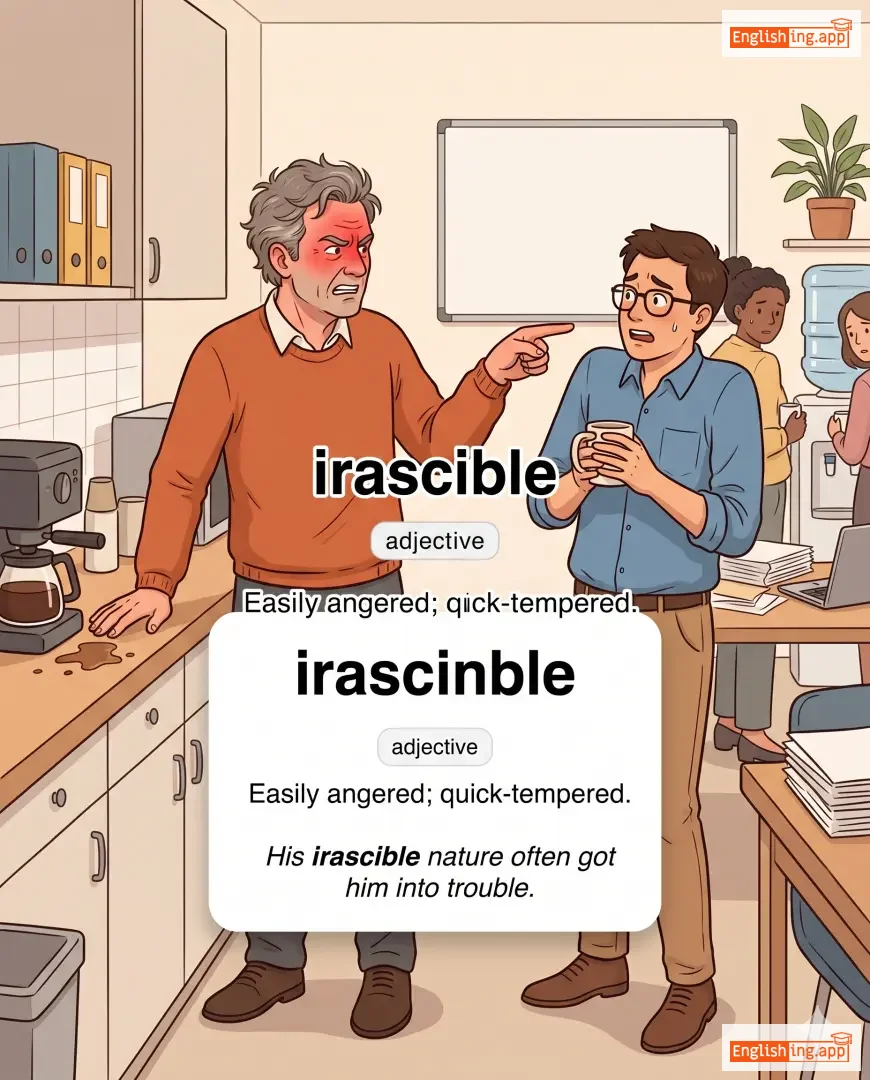
irascible definition card — visual illustration of the meaning
adjective C2
/ɪˈræsɪbl/
चिड़चिड़ा (chidhchidhā)

Easily angered; quick-tempered.

"His irascible nature often got him into trouble."

"उसका चिड़चिड़ा स्वभाव अक्सर उसे मुसीबत में डाल देता था।" (Uskā chidhchidhā svabhāv aksar use musībat mein ḍāl detā thā.)
noun C2
/aɪər/
गुस्सा, क्रोध (gussa, krodh)

intense anger or rage

"The new policy provoked the ire of the employees."

"नई नीति ने कर्मचारियों का गुस्सा बढ़ा दिया।" (Nayi neeti ne karyakartao ka gussa badha diya.)
noun C2
/ˌɪrɪˈdɛsəns/
इंद्रधनुषी चमक (indradhanushi chamak)

a play of lustrous, changing colors like those of a rainbow

"The butterfly's wings shimmered with iridescence."

"तितली के पंख इंद्रधनुषी चमक से चमक रहे थे।" (Titli ke pankh indradhanushi chamak se chamak rahe the.)
adjective C2
/ˌɪrɪˈdɛsənt/
इन्द्रधनुषी (indradhanushi)

showing luminous colors that seem to change when seen from different angles

"She wore an iridescent dress that sparkled in the light."

"उसने एक इन्द्रधनुषी पोशाक पहना जो रोशनी में झिलमिलाती थी।" (Usne ek indradhanushi poshak pehna jo roshni mein jhilmilati thi.)
verb C2
/ɜːrk/
परेशान करना (pareshan karna)

to annoy or irritate someone

"It irks me when people are late without calling."
"मुझे तब परेशान होता है जब लोग कॉल किए बिना देर करते हैं।" (Mujhe tab pareshan hota hai jab log call kiye bina der karte hain.)
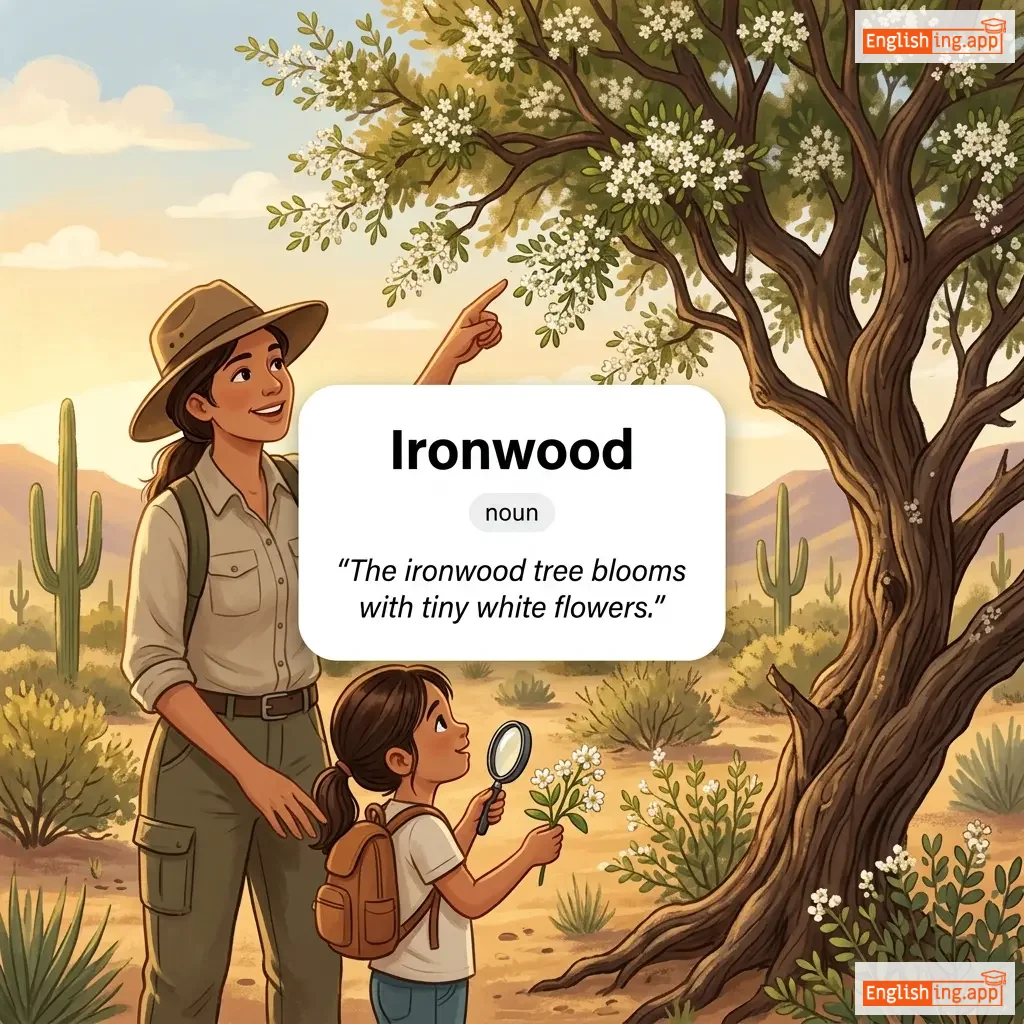
Ironwood definition card — visual illustration of the meaning
noun C2
/ˈaɪ.ərn.wʊd/
आयरनवुड (ironwood)

a hard, dense wood from various trees; also the tree itself that produces small flowers

"The ironwood tree blooms with tiny white flowers."

"आयरनवुड का पेड़ छोटे सफेद फूलों के साथ खिलता है।" (ironwood ka ped chhote safed phoolon ke saath khilta hai)
noun C2
/ɪˈreɪdiəns/
प्रकाशमानता (iradians)

the quality of shining brightly; the intensity of light falling on a surface

"The irradiance of the sun at noon was overwhelming."

"दोपहर में सूरज की प्रकाशमानता अत्यधिक थी।" (Dopahar mein suraj ki prakashmanata atyadhik thi.)
verb C2
/ɪˈreɪdieɪt/
प्रकाशित करना (prakashit karna)

to shine light on something; to expose to radiation; to illuminate or brighten

"The scientist used a lamp to irradiate the sample."

"वैज्ञानिक ने एक लैम्प का इस्तेमाल करके सैंपल को प्रकाशित किया।" (Vaigyanik ne ek lamp ka istemal karke sample ko prakashit kiya.)
adjective C2
/ɪˈrædɪkəbəl/
अविनाशी (avinashi)

not able to be eradicated; impossible to destroy or remove completely

"The love of a mother for her child is irradicable."

"एक माँ का अपने बच्चे के लिए प्यार अविनाशी है।" (Ek maa ka apne bachche ke liye pyaar avinashi hai.)
adjective C2
/ˌɪrɪˈkɒnsɪləbl/
असहमति से भरपूर (asahmati se bharpoor)

impossible to make compatible or bring into harmony; unable to resolve differences

"The couple separated due to irreconcilable differences."

"जोड़ी असहमति से भरपूर मतभेदों के कारण अलग हो गई।" (Jodi asahmati se bharpoor matbhedon ke kaaran alag ho gayi.)
adjective C2
/ˌɪrɪˈdjuːsəbl/
अविभाज्य (avibhajya)

impossible to reduce or simplify further

"The fraction 3/7 is irreducible."

"भिन्न ३/७ अविभाज्य है।" (Bhinna 3/7 avibhajya hai.)
adjective C2
/ɪˈrɛfrəɡəbəl/
अविचलित (avichalit)

Impossible to refute, deny, or break

"The lawyer presented irrefragable evidence that proved his client’s innocence."

"वकील ने अविचलित सबूत प्रस्तुत किया जिसने उसके मुवक्किल की निर्दोषिता साबित की।" (Vakeel ne avichalit saboot prastut kiya jisne uske muvakkil ki nirdoshita sabit ki.)
adjective C2
/ˌɪrɪˈfrændʒɪbəl/
अलंघनीय (alanghaniya)

Not to be broken, violated, or infringed

"The constitution guarantees certain irrefrangible rights to every citizen."

"संविधान प्रत्येक नागरिक को कुछ अलंघनीय अधिकार सुनिश्चित करता है।" (Sanvidhan pratyek nagrik ko kuch alanghaniya adhikar sunishchit karta hai.)
adjective C2
/ˌɪrɪˈlɪdʒəs/
अधर्मिक (adharmik)

Indifferent or hostile to religion

"Some people in the community consider him irreligious because he never attends religious services."

"कुछ लोग उसे अधर्मिक मानते हैं क्योंकि वह कभी धार्मिक सेवाओं में भाग नहीं लेता।" (Kuch log use adharmik mante hain kyunki wah kabhi dharmik sevaon mein bhag nahi leta.)
adjective C2
/ˌɪrɪˈmiːdiəbl̩/
अप्रसद्ध (aprasaddh)

Impossible to cure, repair, or remedy.

"The damage to the ancient manuscript was irremediable."

"प्राचीन पांडुलिपि को हुआ नुकसान अपरसद्ध था।" (prachin pandulipi ko hua nuksaan aprasaddh tha.)
adjective C2
/ˌɪrɪˈprəʊtʃəbl̩/
निर्दोष (nirdosh)

Beyond criticism; faultless.

"The judge was known for his irreproachable integrity."
"न्यायाधीश अपनी निर्दोष ईमानदारी के लिए प्रसिद्ध थे।" (nyayadhish apni nirdosh imandari ke liye prasiddh the.)
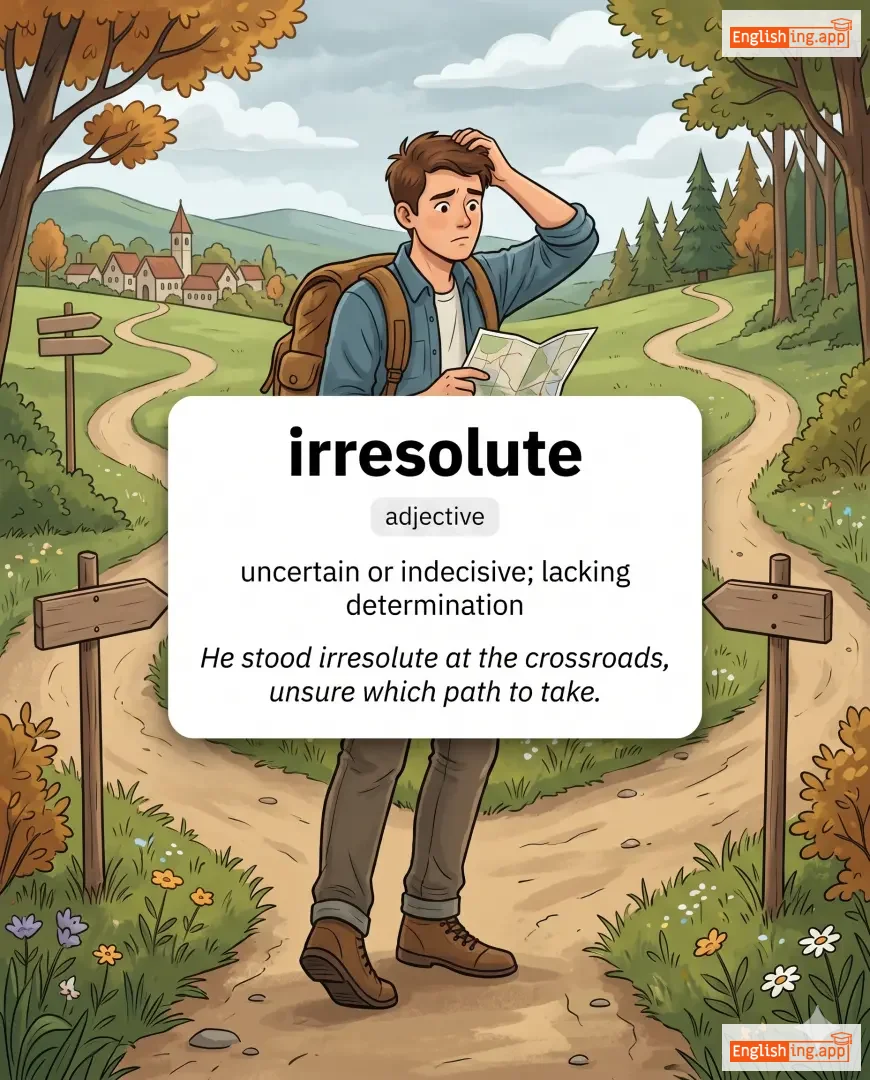
irresolute definition card — visual illustration of the meaning
adjective C2
/ɪˈrɛzəluːt/
अनिर्णायक (anirnayak)

uncertain or indecisive; lacking determination

"He stood irresolute at the crossroads, unsure which path to take."

"वह चौराहे पर अनिर्णायक खड़ा था, यह नहीं जानता था कि किस रास्ते पर जाएं।" (Vah chaurahen par anirnayak khada tha, yah nahin jaanta tha ki kis raaste par jayein.)
adjective C2
/ˌɪrɪˈtriːvəbl/
अप्रतियोग्य (apratigya)

impossible to recover or regain

"The documents were lost in an irretrievable way after the fire."

"आग के बाद दस्तावेज़ अवसादित तरीके से खो गए थे।" (Aag ke baad dastavez avsadit tareeke se kho gaye the.)
noun C2
/ɪˈrɛvərəns/
अश्रद्धा (ashraddha)

a lack of respect for people or things that are generally taken seriously

"His jokes about religion showed irreverence to the sacred traditions."

"उसकी मजाक धर्म के बारे में पवित्र परंपराओं के प्रति अश्रद्धा दिखाती थी।" (Uski mazaak dharm ke baare mein pavitra paramparaon ke prati ashraddha dikhati thi.)
adjective C2
/ˌɪrɛvəˈrɛnʃəl/
असहमति (asahmati)

Showing a lack of respect for things that are generally taken seriously.

"His irreverential humor often shocked traditional audiences."

"उसका असहमति हास्य अक्सर पारंपरिक दर्शकों को चौंका देता था।" (Uska asahmati haasya aksar paaramparik darshako ko chonka deta tha.)
noun C2
/ˈɪrɪɡənt/
सिंचाई तरल (sinchaai taral)

A liquid used for irrigation, especially in medical or agricultural contexts.

"The doctor used a sterile irrigant during the procedure."

"चिकित्सक ने प्रक्रिया के दौरान एकsterile सिंचाई तरल का उपयोग किया।" (Chikitsak ne prakriya ke dauran ek sterile sinchaai taral ka upyog kiya.)
noun C2
/ˈɪrɪtənsi/
चिढ़चिढ़ापन (chidhchidhapan)

the quality or state of causing irritation; legal or formal invalidation

"The constant noise became an irritancy to the neighbors."

"लगातार शोर पड़ोसियों के लिए चिढ़चिढ़ापन बन गया।" (Lagatār shor paṛosīyo ke liye chidhchidhapan ban gayā.)