Словари

Словарь английского языка | Значения слов, определения и примеры

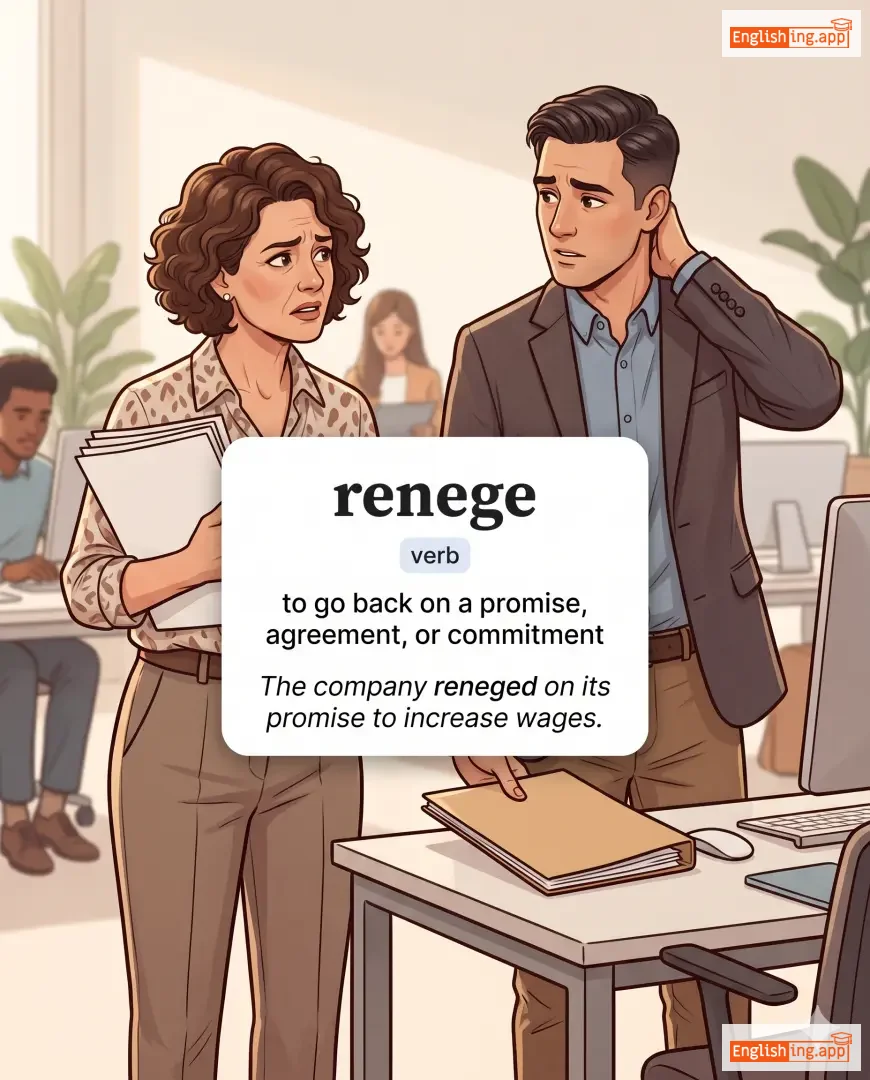
renege definition card — visual illustration of the meaning
verb C1
/rɪˈnɛɡ/
約束を破る (yakusoku wo yaburu)

to go back on a promise, agreement, or commitment

"The company reneged on its promise to increase wages."

"その会社は賃金を引き上げるという約束を破りました。" (Sono kaisha wa chingin wo hikiageru to iu yakusoku wo yaburimashita.)
verb C1
/rɪˈnaʊns/
放棄する (hōki suru)

to formally declare rejection of something, such as a claim, belief, or way of life

"She renounced her citizenship to move abroad permanently."

"彼女は永住権を得るために市民権を放棄しました。" (Kanojo wa eijūken o eru tame ni shimin ken o hōki shimashita.)
Renown definition card — visual illustration of the meaning
noun C1
/rɪˈnaʊn/
名声 (meisei)

the condition of being widely known and highly respected

"The scientist gained international renown for his groundbreaking research."

"その科学者は革新的な研究で国際的な名声を得ました。" (Sono kagakusha wa kakushinteki na kenkyuu de kokusai-teki na meisei o emashita.)
adjective C1
/rɪˈper.ə.bəl/
修理可能 (shūrikano)

able to be fixed or mended; capable of being repaired

"The broken phone is repairable with the right parts."
"壊れた電話は正しい部品で修理可能です。" (Kowareta denwa wa tadashii buhin de shūri kanō desu.)
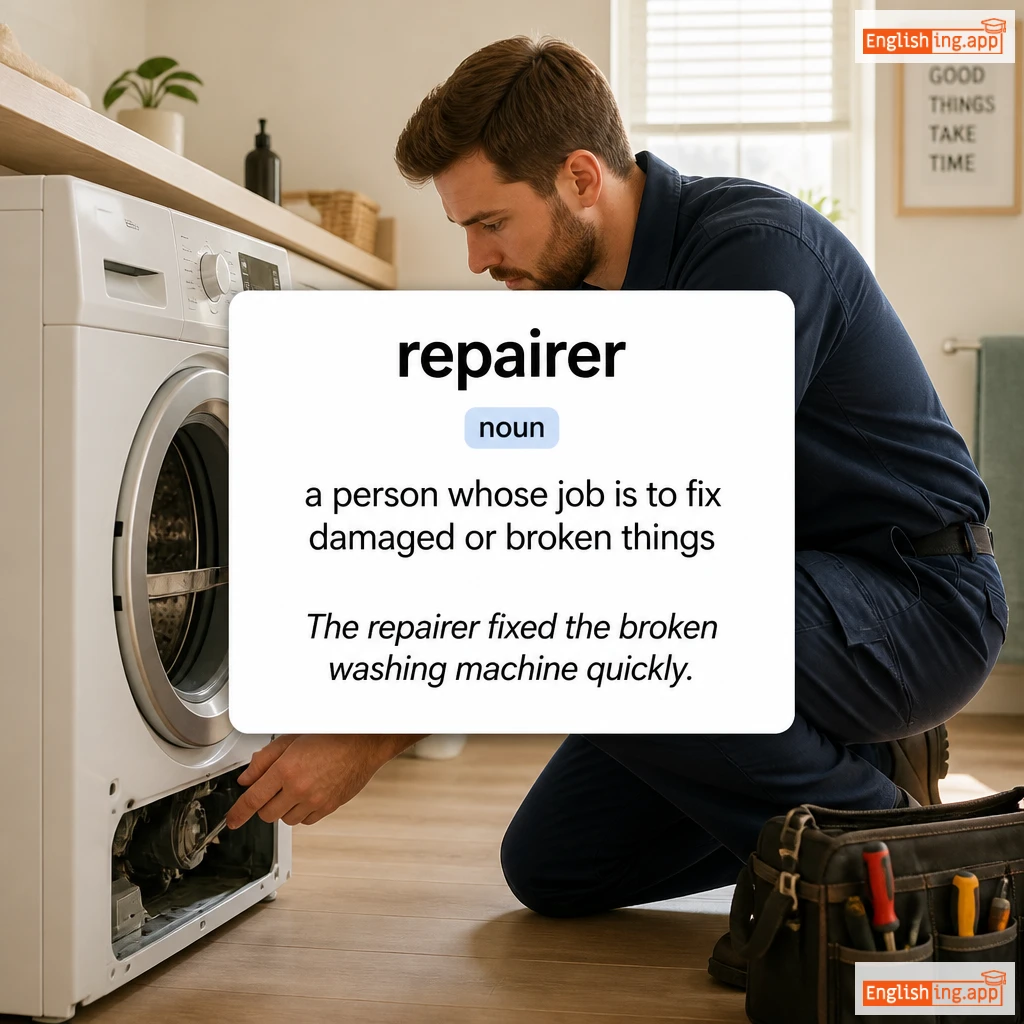
repairer definition card — visual illustration of the meaning
noun C1
/rɪˈpɛərə/
修理人 (shuurinin)

a person whose job is to fix damaged or broken things

"The repairer fixed the broken washing machine quickly."
"修理人は壊れた洗濯機をすぐに直した。" (shuurinin wa kowareta sentakuki o sugu ni naoshita)
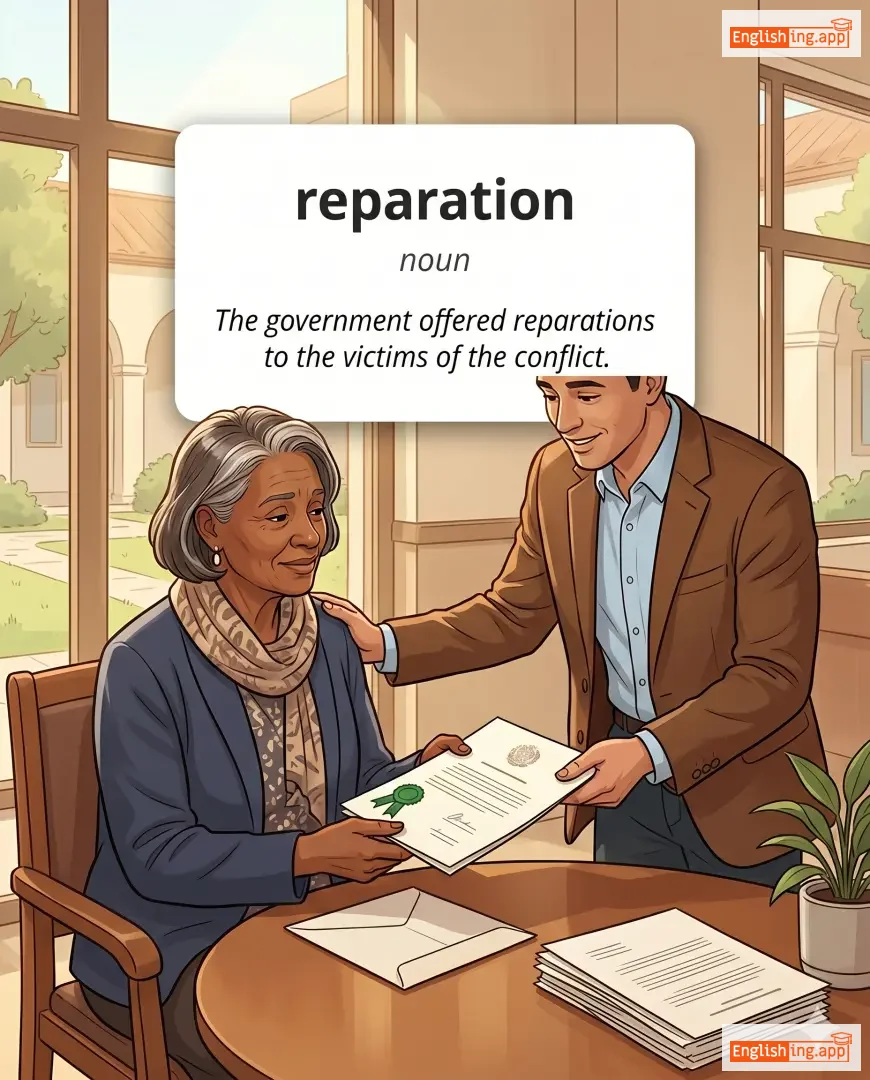
reparation definition card — visual illustration of the meaning
noun C1
/ˌrɛpəˈreɪʃən/
賠償 (baishou)

the making of amends for a wrong done by paying money or helping those who were wronged

"The government offered reparations to the victims of the conflict."

"政府は紛争の被害者に賠償を提供しました。" (Seifu wa funsou no higaisha ni baishou o teikyō shimashita.)
verb C1
/riːˈpeɪ.tri.eɪt/
帰還させる (kikan saseru)

To return someone to their own country, often after war or imprisonment.

"The government worked to repatriate the refugees safely."

"政府は難民を安全に帰国させるために尽力しました。" (Seifu wa nanmin o anzen ni kikoku saseru tame ni jinryoku shimashita.)
📜❌

repeal

verb C1
/rɪˈpiːl/

To officially cancel or revoke a law or decision.

"The government decided to repeal the outdated law."
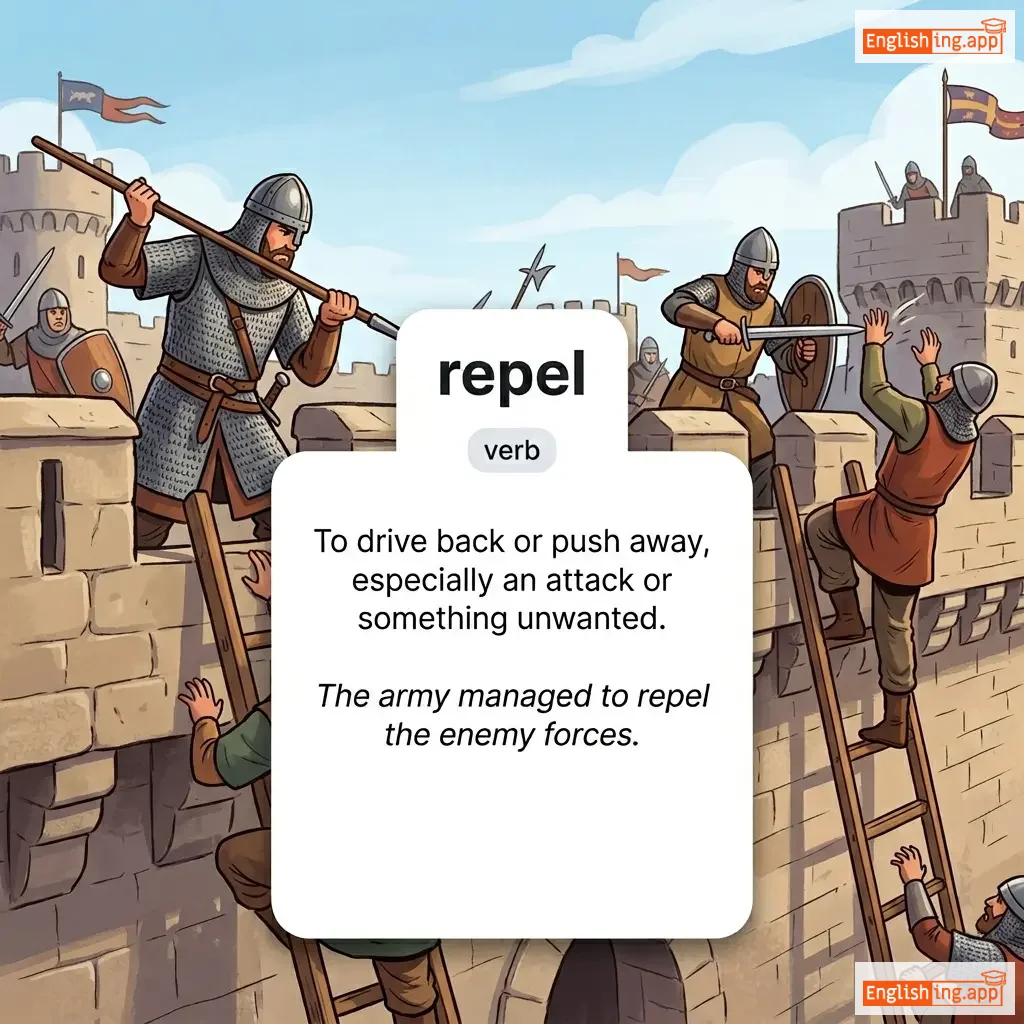
repel definition card — visual illustration of the meaning
verb C1
/rɪˈpɛl/
撃退する (gekitai suru)

To drive back or push away, especially an attack or something unwanted.

"The army managed to repel the enemy forces."

"軍隊は敵の軍隊を撃退することに成功した。" (Guntai wa teki no guntai o gekitai suru koto ni seikou shita.)
adjective C1
/rɪˈpɛlənt/
忌避剤 (kihi-zai)

Able to drive away something, especially insects or unpleasant things; causing disgust or distaste.

"This cream is highly effective as a mosquito repellent."
"このクリームは蚊除けとして非常に効果的です。" (Kono kurīmu wa ka-yoke to shite hijō ni kōkateki desu.)
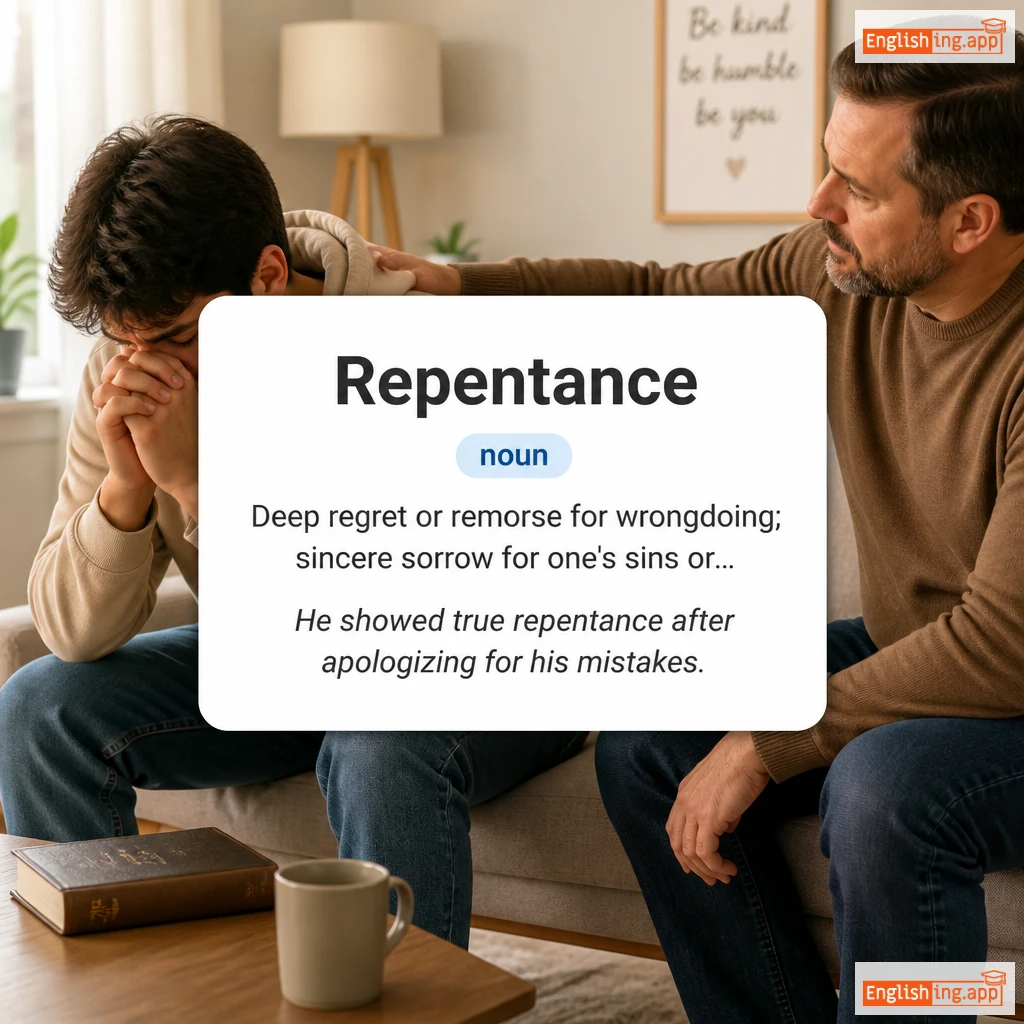
Repentance definition card — visual illustration of the meaning
noun C1
/rɪˈpɛntəns/
後悔 (kōkai)

Deep regret or remorse for wrongdoing; sincere sorrow for one's sins or mistakes.

"He showed true repentance after apologizing for his mistakes."

"彼は自分の過ちを謝罪した後、真の後悔を示しました。" (Kare wa jibun no ayamachi o shazai shita ato, shin no kōkai o shimeshimasita.)
adjective C1
/rɪˈpen.tənt/
後悔している; 反省している; 悔いている (kōkai shite iru; hansei shite iru; kuite iru)

feeling or expressing sincere regret and remorse; sorry for one's actions

"The repentant thief returned the stolen money."
"後悔している泥棒は盗んだお金を返しました。" (Kōkai shite iru dorobō wa nusunda okane o kaeshimashita.)
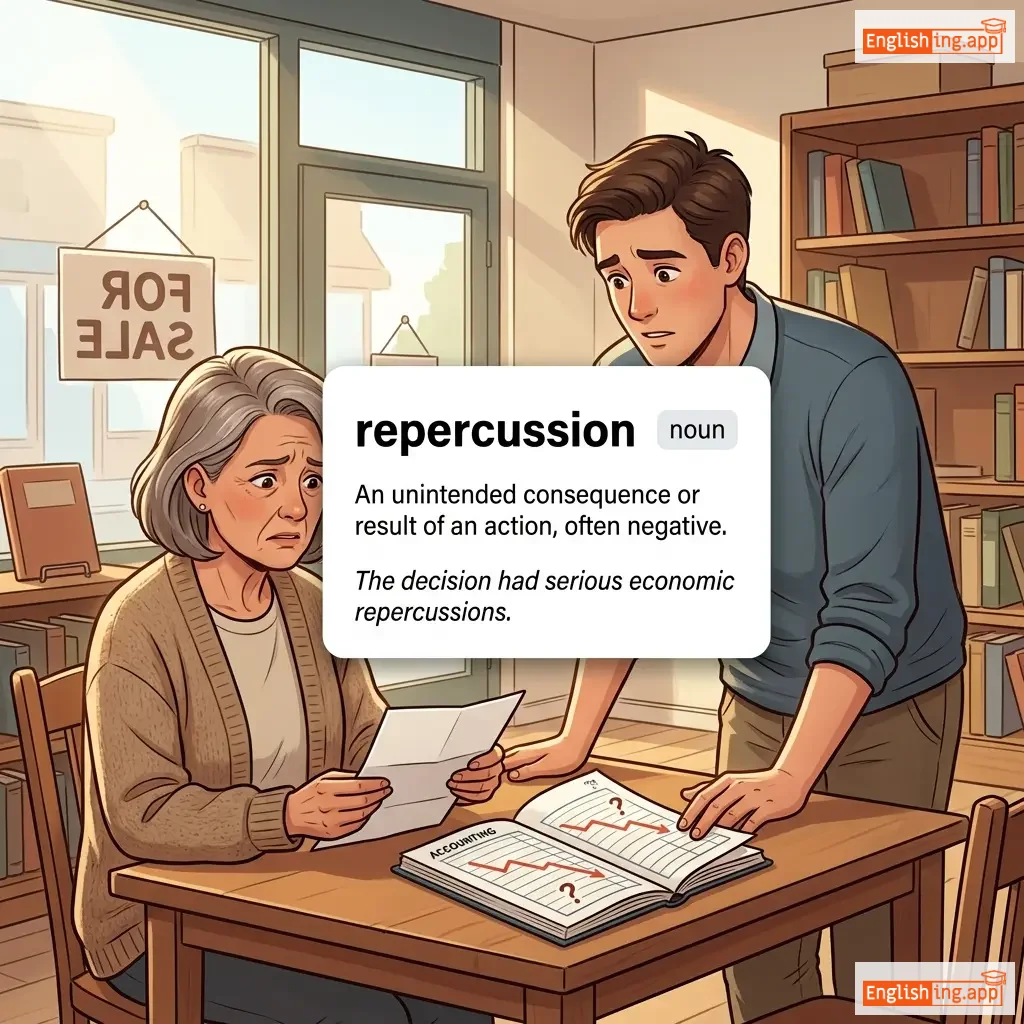
repercussion definition card — visual illustration of the meaning
noun C1
/ˌriːpərˈkʌʃən/

An unintended consequence or result of an action, often negative.

"The decision had serious economic repercussions."
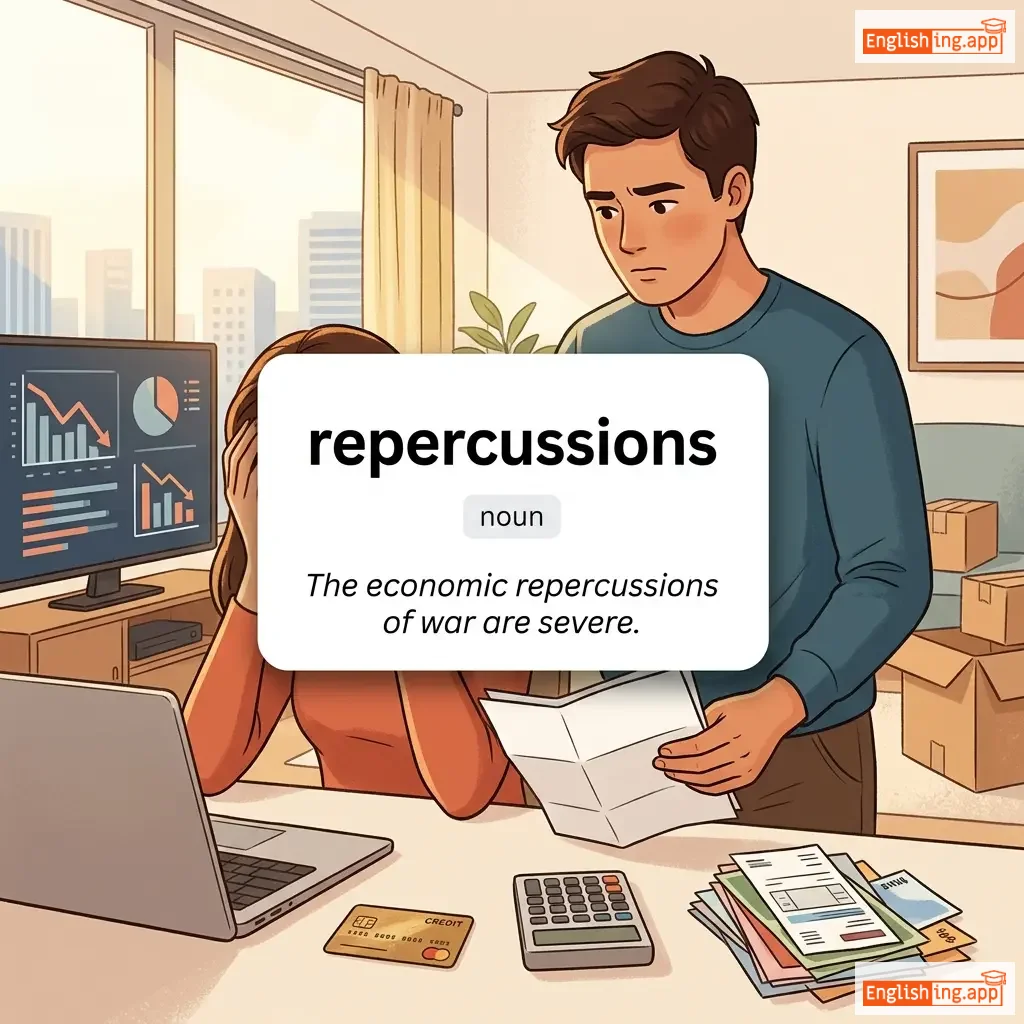
repercussions definition card — visual illustration of the meaning
noun C1
/ˌriː.pəˈkʌʃ.ənz/
影響 (eikyō)

An unintended consequence occurring some time after an event or action; the effects or results of something.

"The economic repercussions of war are severe."
"戦争の経済的影響は深刻です。" (Sensō no keizaiteki eikyō wa shinkoku desu.)
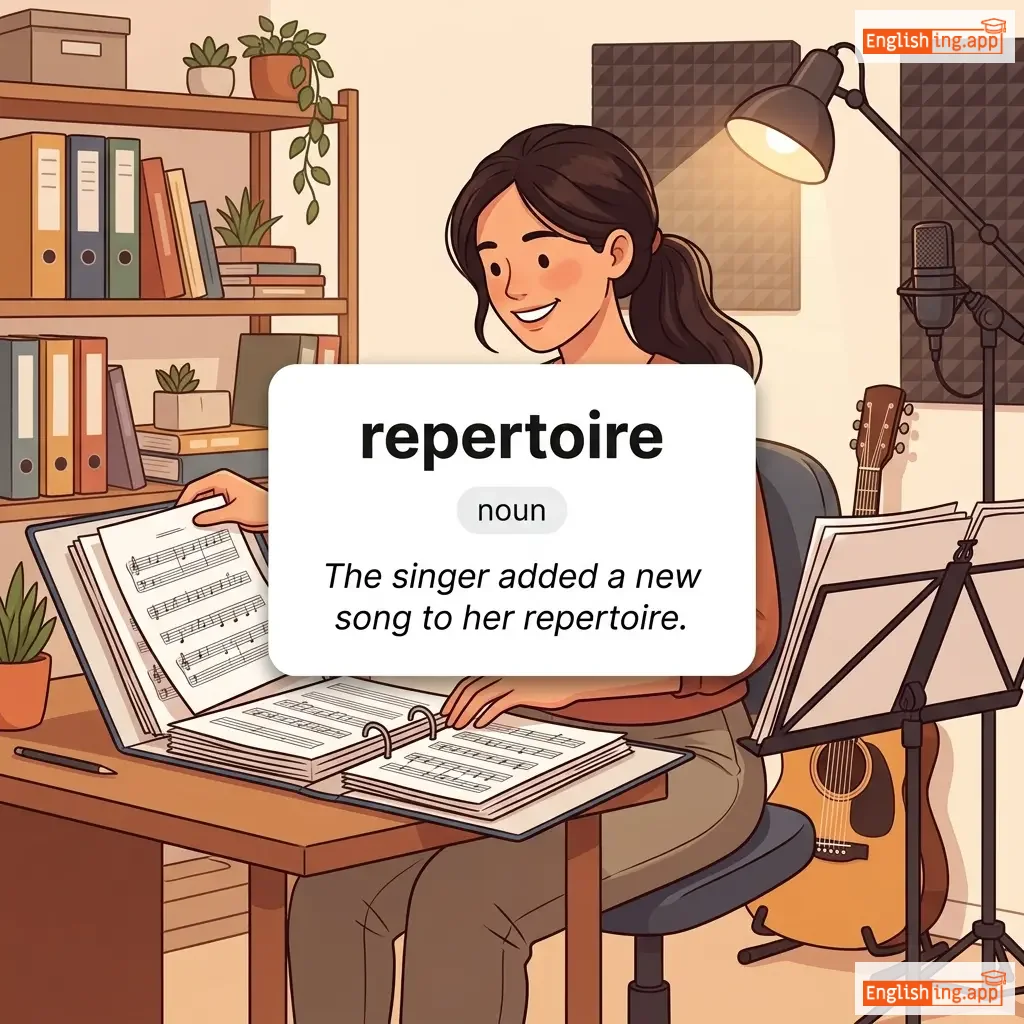
repertoire definition card — visual illustration of the meaning
noun C1
/ˈrɛpərˌtwɑːr/
レパートリー (repatorii)

The entire range of skills, works, or pieces that a person or group is prepared to perform or use.

"The singer added a new song to her repertoire."

"その歌手は自分のレパートリーに新しい歌を加えました。" (Sono kashu wa jibun no repatorii ni atarashī uta o kuwaemashita.)
noun C1
/ˈrɛpərˌtɔːri/
レパートリー (repaatoree)

A collection of works that a company, performer, or institution regularly performs; also a storehouse of information or skills.

"The theater has a repertory of classic plays."
"劇場にはクラシックな演劇のレパートリーがあります。" (Gekijou ni wa kurashikku na engeki no repaatoree ga arimasu.)
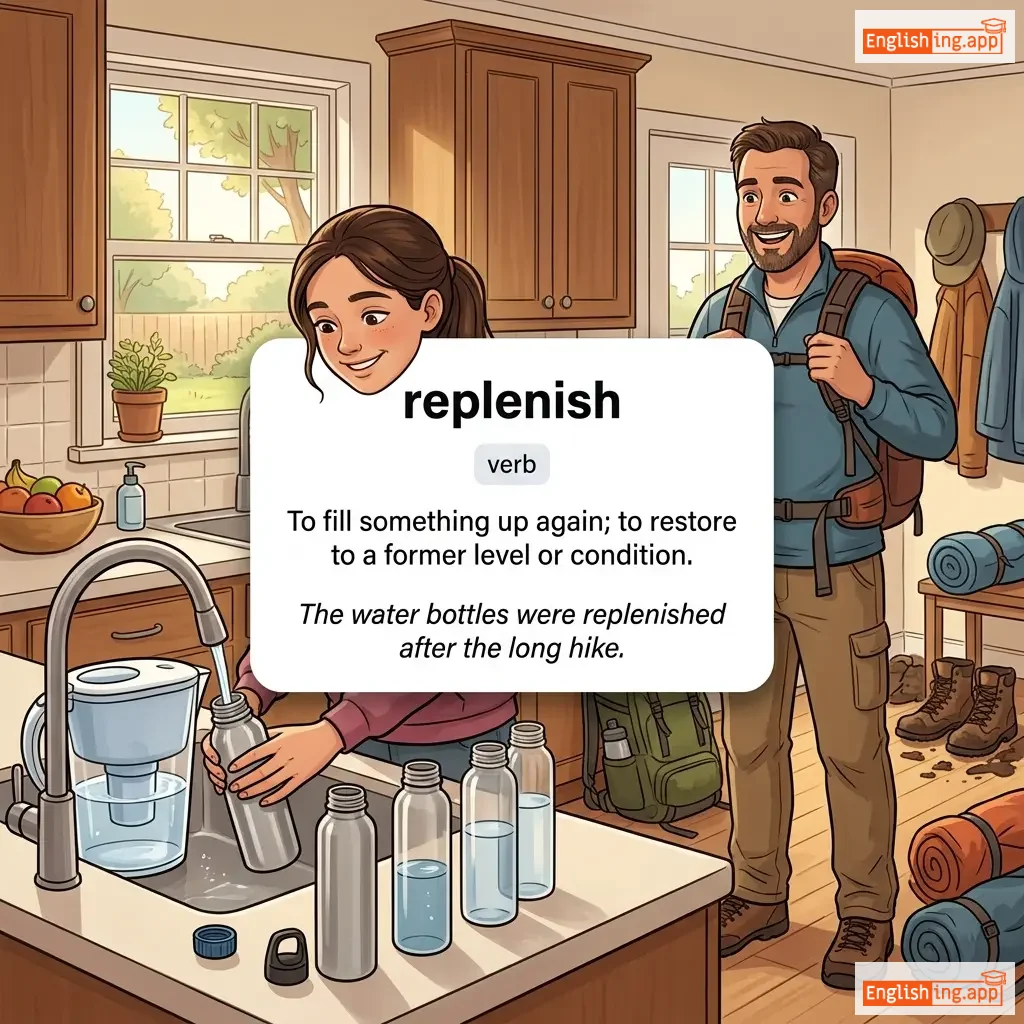
replenish definition card — visual illustration of the meaning
verb C1
/rɪˈplɛnɪʃ/
補充する (hojyu suru)

To fill something up again; to restore to a former level or condition.

"The water bottles were replenished after the long hike."

"長いハイキングの後、ウォーターボトルが補充されました。" (Nagai haikingu no ato, wotā botoru ga hojū saremashita.)
adjective C1
/rɪˈpliːt/
満ちた (michita)

Filled or well-supplied with something; abundantly full.

"The book is replete with fascinating historical details."
"その本は魅力的な歴史的詳細で満ちています。" (Sono hon wa miryokuteki na rekishiteki shousai de michiteimasu.)
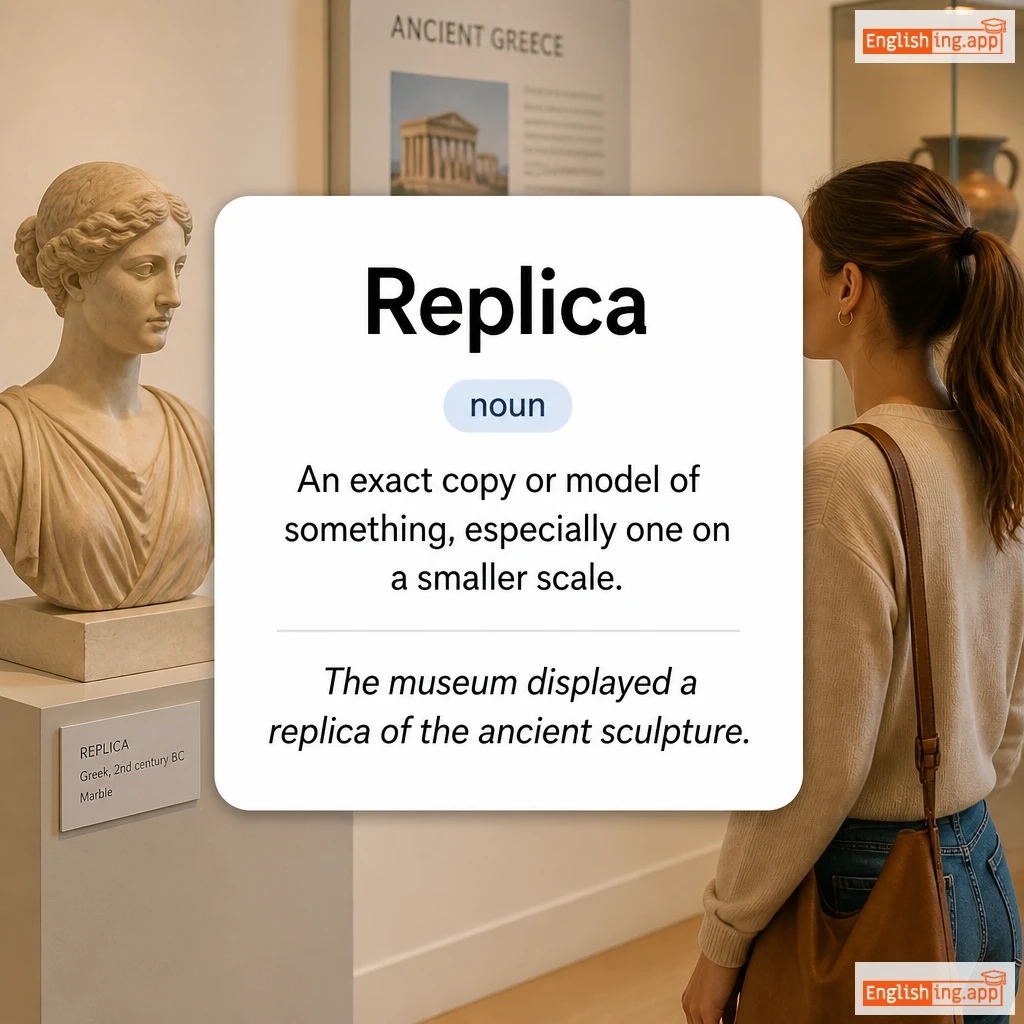
Replica definition card — visual illustration of the meaning
noun C1
/ˈrɛplɪkə/
複製品 (fukuseihin)

An exact copy or model of something, especially one on a smaller scale.

"The museum displayed a replica of the ancient sculpture."

"博物館は古代の彫刻の複製品を展示しました。" (Hakubutsukan wa kodai no chōkoku no fukuseihin o tenji shimashita.)
verb C1
/ˈrɛplɪkeɪt/
複製する (fukusei suru)

to copy, reproduce, or duplicate something exactly

"The scientist tried to replicate the experiment for accuracy."

"科学者は実験を正確に再現しようとしました。" (Kagakusha wa jikken o seikaku ni saigen shiyou to shimashita.)
noun C1
/rɪˈpɔːrtɪʒ/
報道 (houdou)

the act of reporting news or describing events in the media

"The magazine is known for its detailed reportage of political issues."

"その雑誌は政治問題に関する詳細な報道で知られています。" (Sono zasshi wa seiji mondai ni kansuru shōsai na hōdō de shirareteimasu.)
noun/verb C1
/rɪˈpoʊz/
休息 (kyūsoku)

a state of rest, sleep, or tranquility; to rest or lie in a peaceful position

"After the long journey, she sought repose in the quiet garden."

"長い旅の後、彼女は静かな庭で休息を求めた。" (Nagai tabi no ato, kanojo wa shizukana niwa de kyūsoku o motometa.)
noun C1
/rɪˈpɑːzɪtɔːri/
リポジトリ (ripojitori)

a place where things are stored or kept for safekeeping

"The library serves as a repository of knowledge."

"図書館は知識のリポジトリとして機能します。" (Toshokan wa chishiki no ripojitori toshite kinou shimasu.)
adjective C1
/ˌrɛprɪˈhɛnsəbl̩/
非難すべき (hinan subeki)

Deserving strong criticism or blame.

"His dishonest actions were truly reprehensible."

"彼の不誠実な行動は本当に非難すべきものでした。" (Kare no fuseijitsu na kōdō wa hontōni hinan subeki mono deshita.)
adjective C1
/ˌrɛprɪzɛnˈteɪʃənl̩/
表現的 (hyōgente-ki)

Relating to or depicting something in a realistic or symbolic way.

"The artist preferred a representational style of painting."

"アーティストは表現的な絵画スタイルを好んでいました。" (Ātisuto wa hyōgente-ki na kaiga sutairu o kononde imashita.)
verb C1
/rɪˈprɛs/

To restrain, suppress, or keep under control, especially emotions or desires.

"He tried to repress his anger during the meeting."
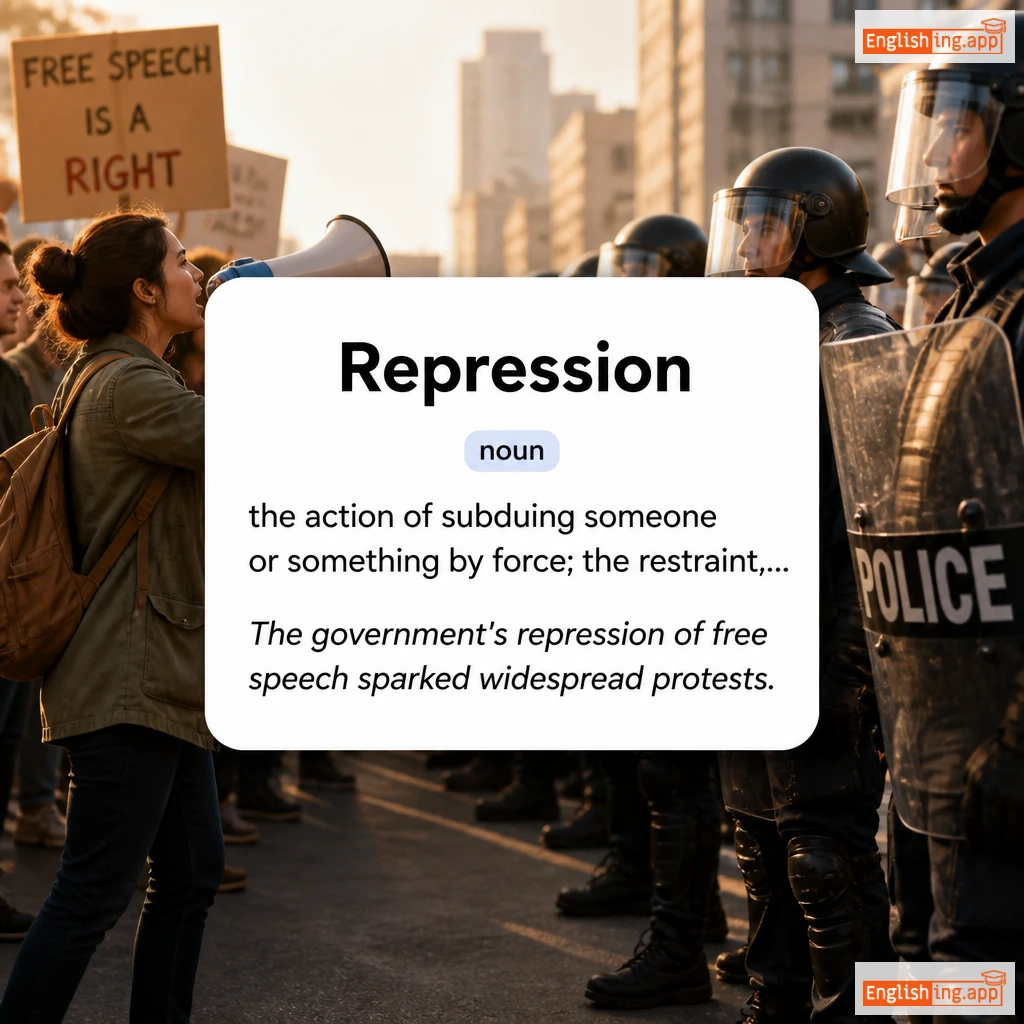
Repression definition card — visual illustration of the meaning
noun C1
/rɪˈpreʃən/
抑圧 (yokuatsu)

the action of subduing someone or something by force; the restraint, prevention, or inhibition of a feeling, impulse, etc.

"The government's repression of free speech sparked widespread protests."

"政府の表現の自由に対する抑圧は、広範な抗議を引き起こした。" (Seifu no hyougen no jiyuu ni taisuru yokuatsu wa kouhan na kougi wo hikiokoshita.)
adjective C1
/rɪˈpres.ɪv/
抑圧的な (yokuatsuteki na)

restraining freedom or preventing self-expression; oppressive

"The repressive government banned all forms of protest."

"抑圧的な政府はすべての抗議の形態を禁止しました。" (yokuatsuteki na seifu wa subete no kōgi no keitai o kinshi shimashita)
noun/verb C1
/rɪˈpriːv/

A temporary relief or delay from something unpleasant; to postpone or cancel punishment.

"The prisoner was granted a last-minute reprieve from execution."

noun/verb C1
/ˈrɛprɪˌmænd/

A formal expression of disapproval; to scold or criticize someone officially.

"The teacher reprimanded the student for being late."
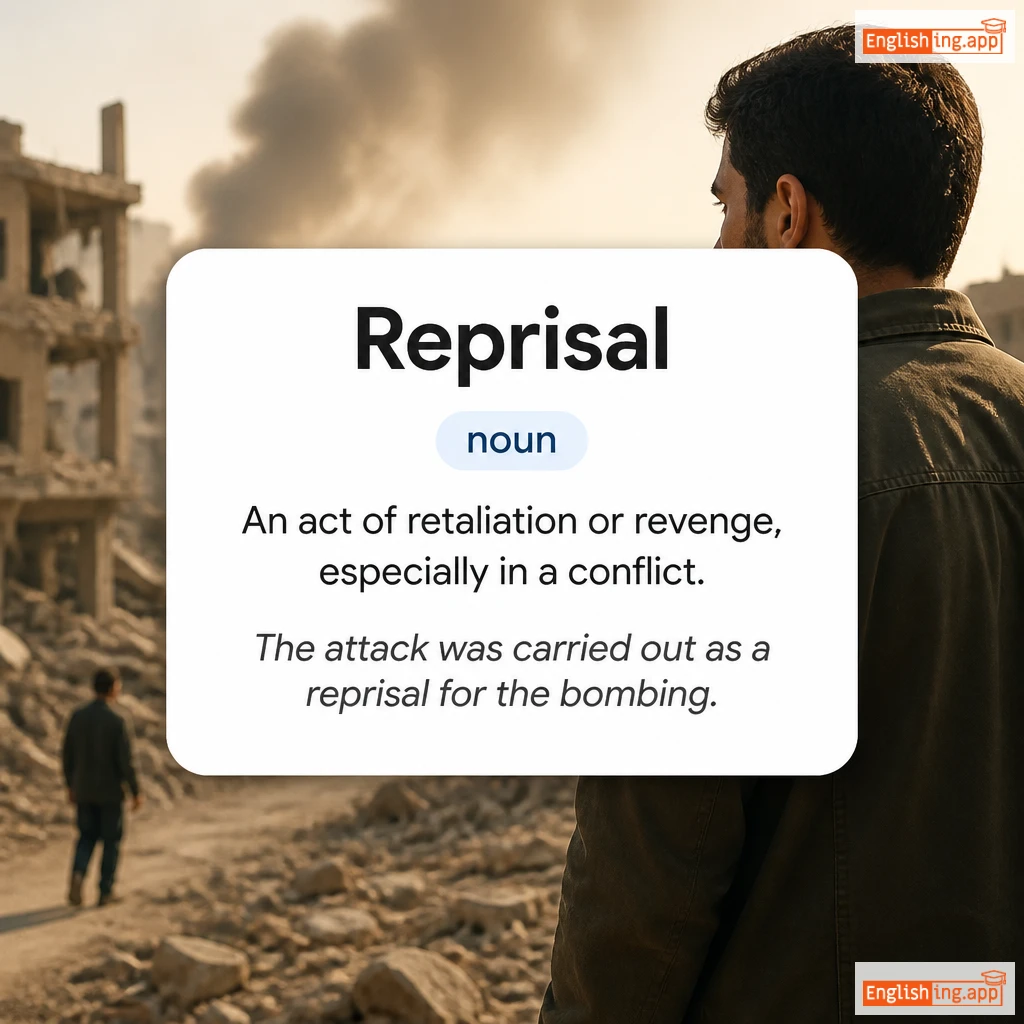
Reprisal definition card — visual illustration of the meaning
noun C1
/rɪˈpraɪzəl/
報復 (houfuku)

An act of retaliation or revenge, especially in a conflict.

"The attack was carried out as a reprisal for the bombing."
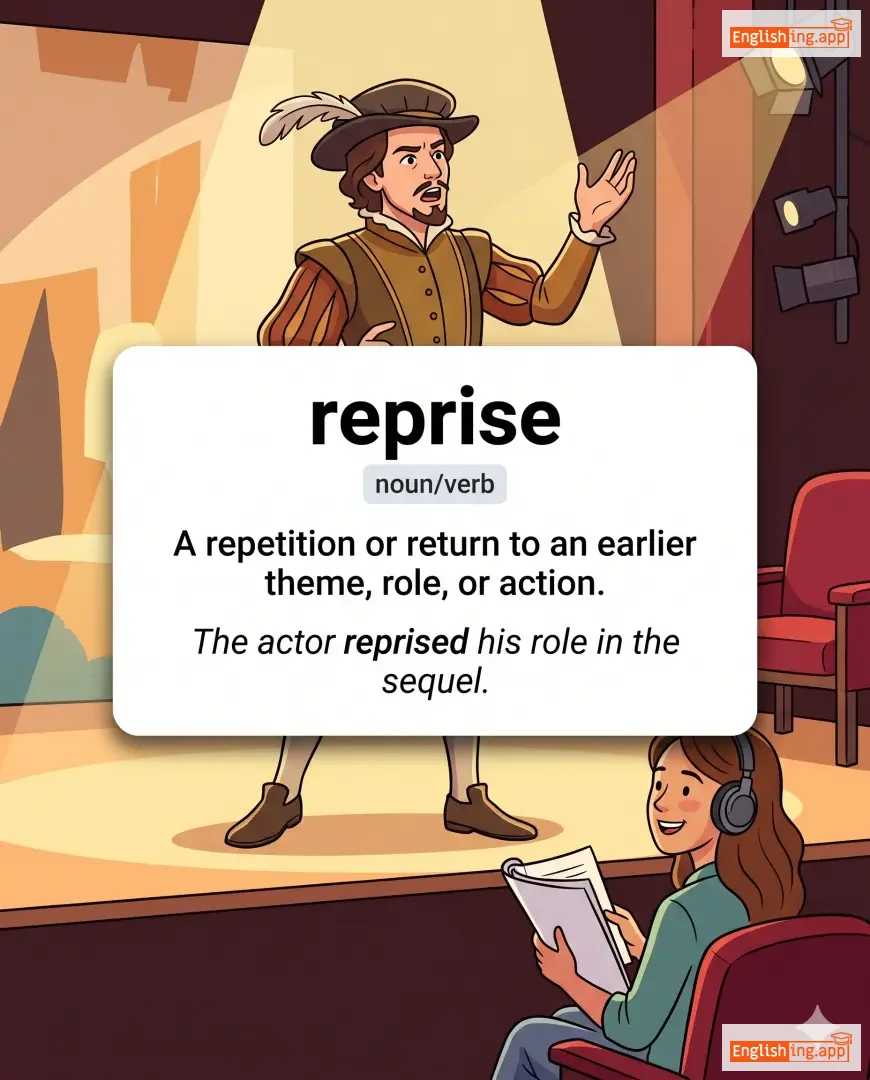
"攻撃は爆撃への報復として行われた。" (Kōgeki wa bakugeki e no hōfuku toshite okonawareta.)
reprise definition card — visual illustration of the meaning
noun/verb C1
/rɪˈpriːz/
繰り返し (kurikaeshi)

A repetition or return to an earlier theme, role, or action.

"The actor reprised his role in the sequel."
"俳優は続編で自分の役を再演しました。" (Haiyū wa zokuhen de jibun no yaku o saien shimashita.)
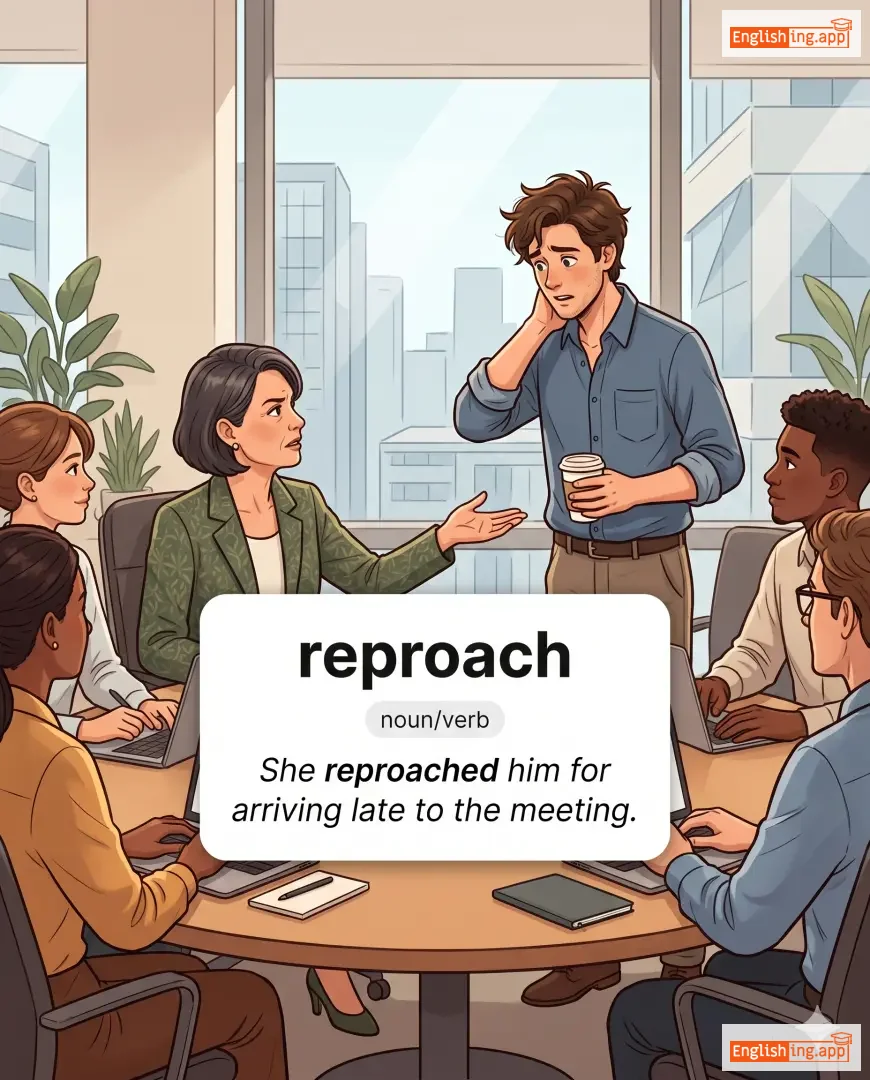
reproach definition card — visual illustration of the meaning
noun/verb C1
/rɪˈproʊtʃ/
非難 / 批判 (hinan / hihan)

An expression of disapproval or disappointment; to criticize someone for doing wrong.

"She reproached him for arriving late to the meeting."
"彼女は会議に遅れたことを彼に非難した。" (Kanojo wa kaigi ni okureta koto o kare ni hinan shita.)
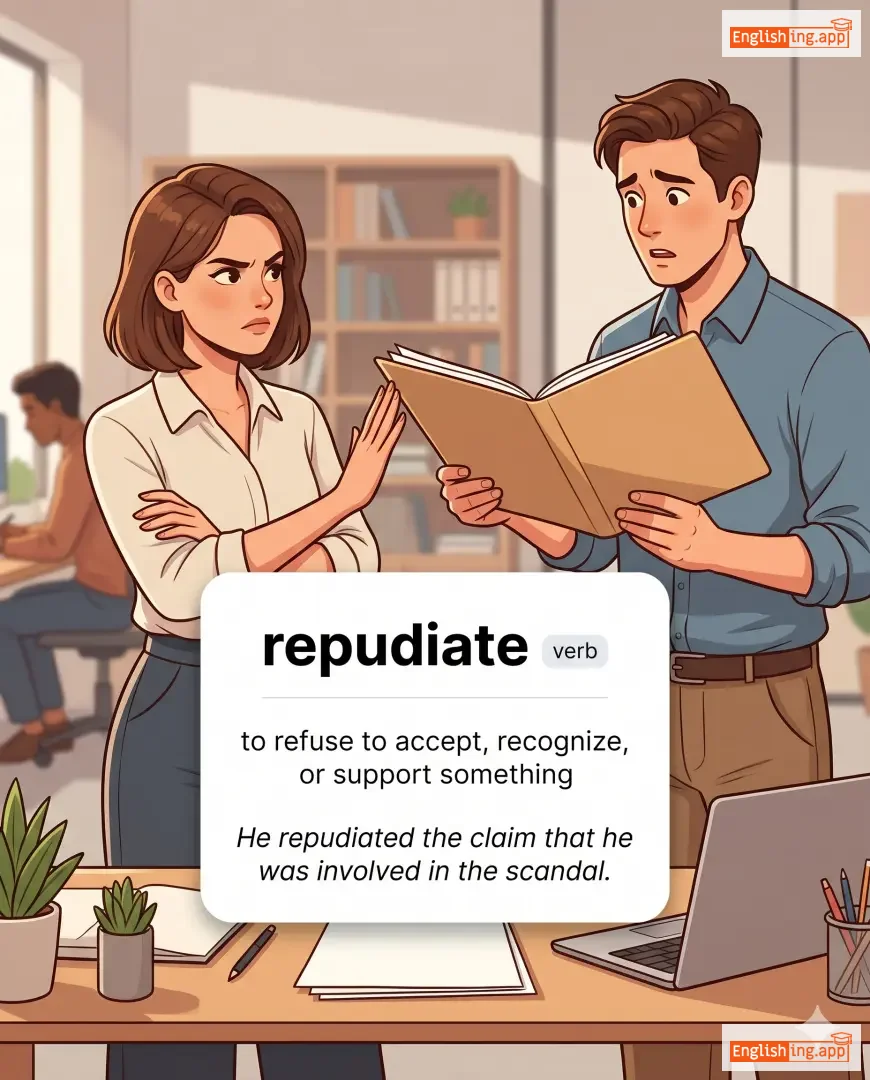
repudiate definition card — visual illustration of the meaning
verb C1
/rɪˈpjuː.di.eɪt/
否定する (hitei suru)

to refuse to accept, recognize, or support something

"He repudiated the claim that he was involved in the scandal."

"彼はそのスキャンダルに関与していたという主張を否定しました。" (Kare wa sono sukyandaru ni kan'yo shite ita to iu shuchou o hitei shimashita.)
adjective C1
/rɪˈpʌɡ.nənt/
嫌悪感を抱かせる (ken'okan o idakaseru)

causing strong dislike, disgust, or opposition

"The idea of cheating was repugnant to him."

"裏切りの考えは彼にとって嫌悪感を抱かせるものだった。" (uragiri no kangae wa kare ni totte ken'okan o idakaseru mono datta.)
verb C1
/rɪˈpʌls/
撃退する / 嫌悪感を引き起こす (gekitai suru / ken'o kan o hikiokosu)

to drive back an attack or attacker by force; to cause intense dislike or disgust

"The army managed to repulse the enemy attack."
"軍隊は敵の攻撃を撃退することに成功した。" (Guntai wa teki no kougeki o gekitai suru koto ni seikou shita.)
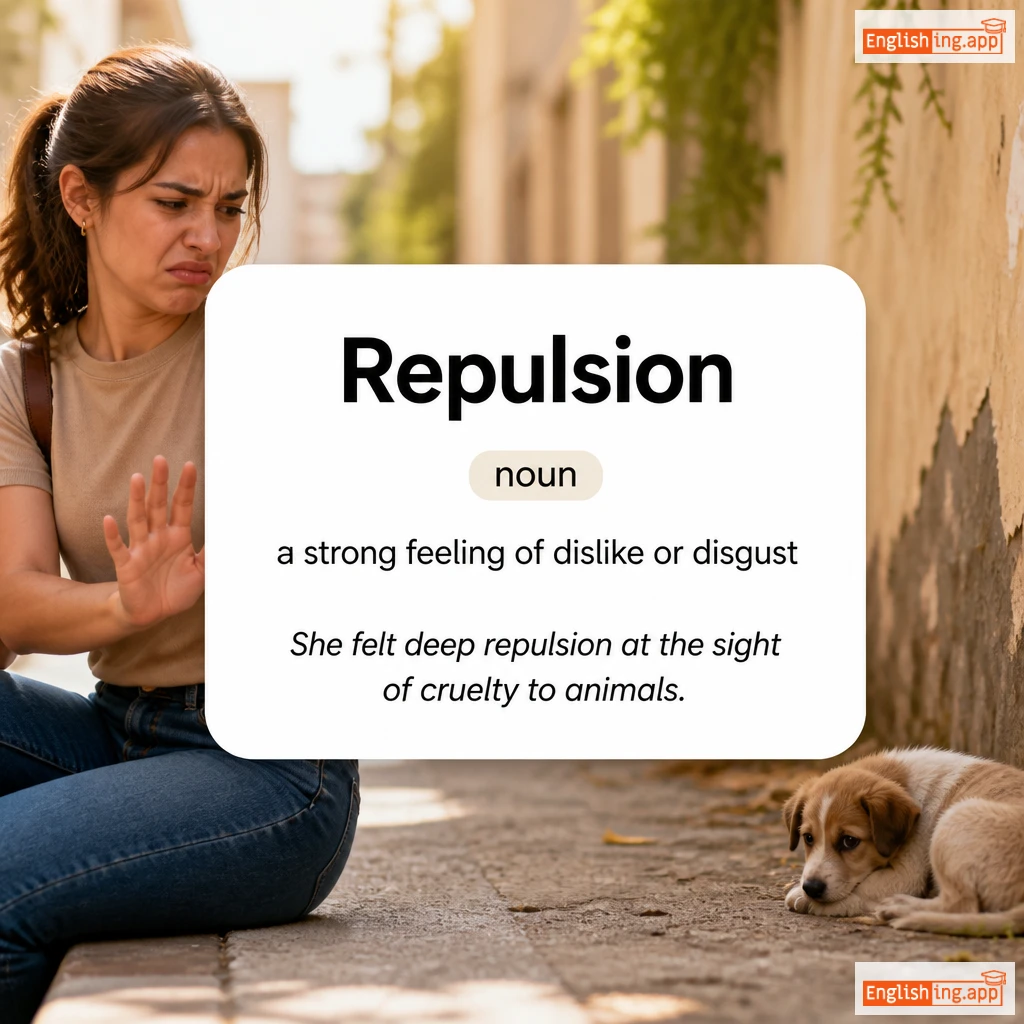
Repulsion definition card — visual illustration of the meaning
noun C1
/rɪˈpʌlʃən/

a strong feeling of dislike or disgust

"She felt deep repulsion at the sight of cruelty to animals."

adjective C1
/rɪˈpʌlsɪv/
不快な (fukai na)

arousing intense distaste or disgust

"The garbage gave off a repulsive smell."

"ゴミは不快な臭いを発していた。" (Gomi wa fukai na nioi o hasshite ita.)
adjective C1
/ˈrɛpjətəbəl/
評判の良い (hyōban no yoi)

having a good reputation; respected

"They chose a reputable company to handle their finances."

"彼らは財務を管理するために評判の良い会社を選びました。" (Karera wa zaimu o kanri suru tame ni hyōban no yoi kaisha o erabimashita.)
noun C1
/rɪˈpjuːt/
評判 (hyōban)

the opinion generally held of someone or something; reputation

"He is a scholar of great repute in his field."

"彼はその分野で大変な評判を持つ学者です。" (Kare wa sono bunya de taihen na hyōban o motsu gakusha desu.)
adjective C1
/rɪˈpjuːtɪd/
評判の良い (hyōban no yoi)

Generally considered or believed to be something, often based on reputation rather than certainty.

"He is a reputed expert in financial management."

"彼は財務管理の評判の良い専門家です。" (Kare wa zaimu kanri no hyōban no yoi senmonka desu.)
adjective C1
/ˈrɛkwɪzɪt/
必要な (hitsuyou na)

Made necessary by particular circumstances or regulations; required.

"A passport is a requisite document for international travel."

"パスポートは国際旅行に必要な書類です。" (Pasupooto wa kokusai ryokou ni hitsuyou na shorui desu.)
noun C1
/ˌrɛkwɪˈzɪʃən/
要求 (yōkyū)

An official order laying claim to the use of property or materials; a formal demand or request.

"The manager submitted a requisition for new office supplies."

"マネージャーは新しいオフィス用品のためのレクイジションを提出しました。" (Manējā wa atarashī ofisu yōhin no tame no rekuiyō o teishutsu shimashita.)
verb C1
/ˌriːˈsiːt/
再座席 (saizaseki)

to seat someone again or to fit something back into its place

"The usher had to reseat the guests after the interruption."
"接客係は中断後、ゲストを再座席させなければならなかった。" (Sekkyaku gakari wa chudan go, gesuto o saizaseki sasenakereba nakatta.)
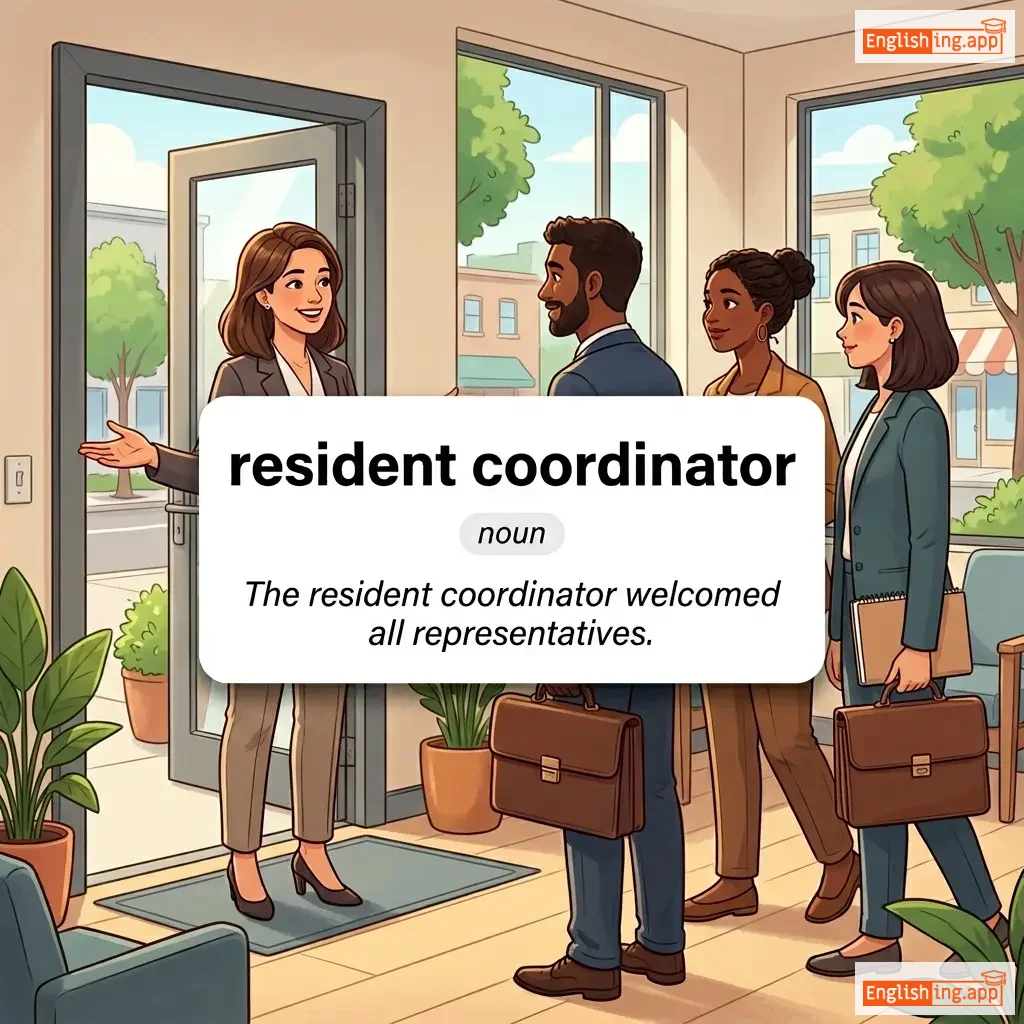
resident coordinator definition card — visual illustration of the meaning
noun C1
/ˈrez.ɪ.dənt ˈkəʊ.ɔː.dɪ.neɪ.tər/
居住者コーディネーター (kyojūsha kōdinētā)

A local administrator or official who coordinates activities in a specific region.

"The resident coordinator welcomed all representatives."

"居住者コーディネーターは全ての代表者を歓迎しました。" (Kyojūsha kōdinētā wa subete no daihyōsha o kangei shimashita.)
adjective C1
/rɪˈzɪdjuəl/
残余 (zan'yu)

Remaining after the greater part has gone.

"The patient experienced residual pain after the surgery."
"患者は手術後に残余の痛みを感じました。" (Kanja wa shujutsu go ni zan'yu no itami o kanjimashita.)
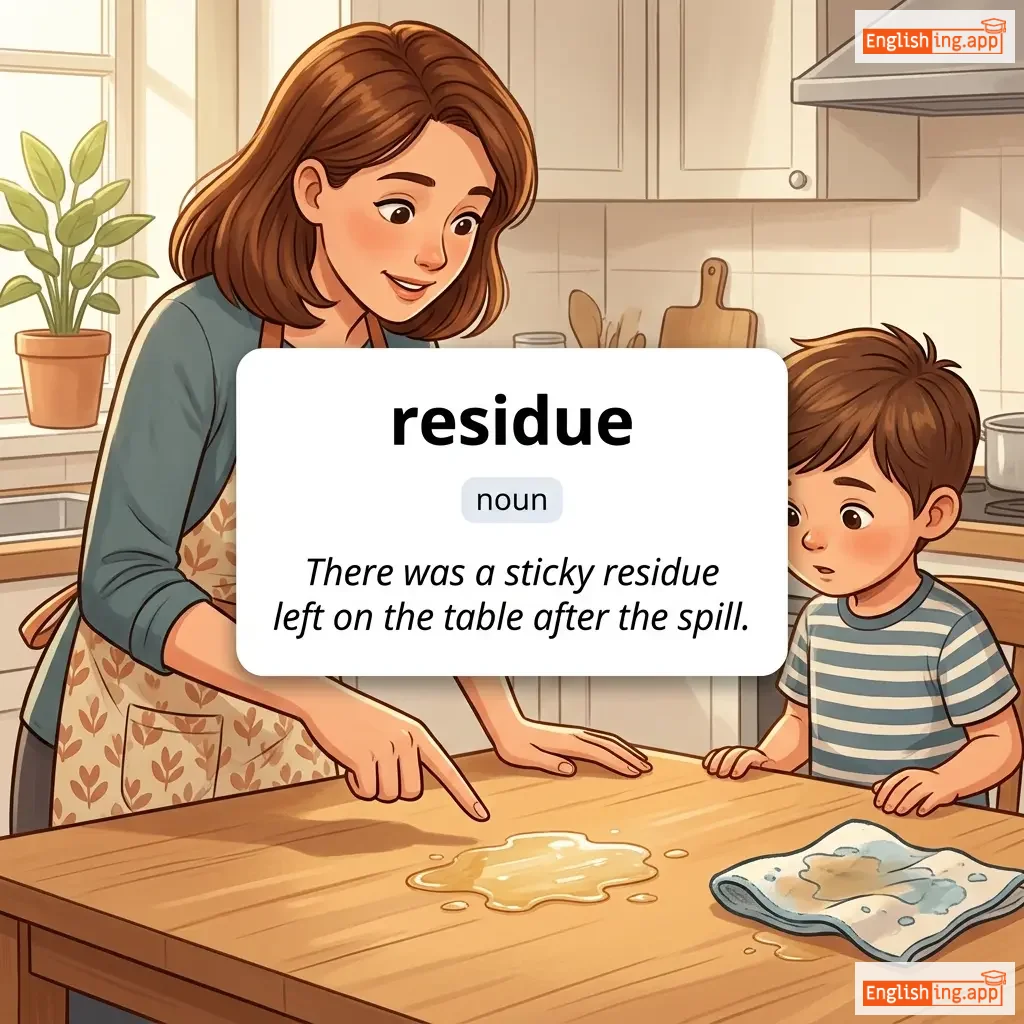
residue definition card — visual illustration of the meaning
noun C1
/ˈrɛzɪdjuː/
残留物 (zanryūbutsu)

A small amount of something that remains after the main part has been removed or used.

"There was a sticky residue left on the table after the spill."
"こぼれた後、テーブルに粘着性の残留物が残っていた。" (Koboreta ato, tēburu ni nenchakusei no zanryūbutsu ga nokotte ita.)
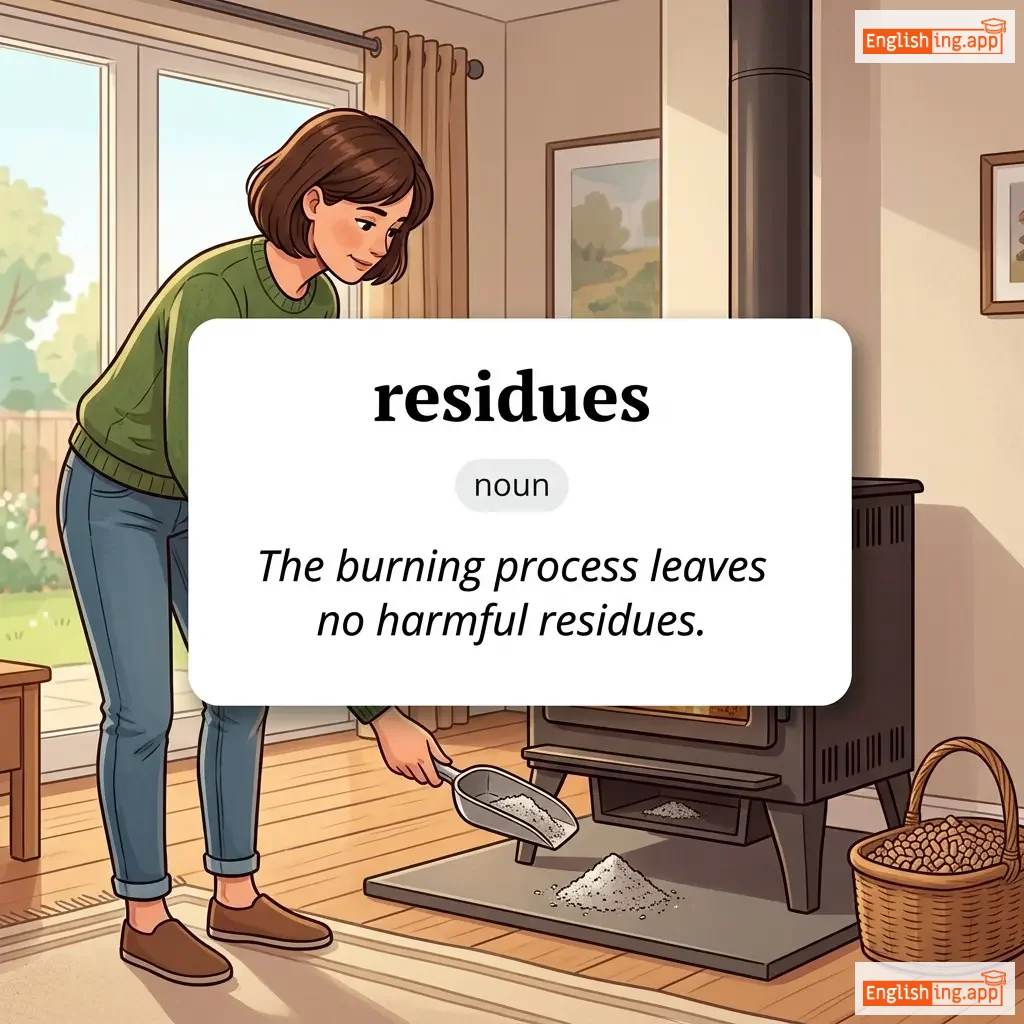
residues definition card — visual illustration of the meaning
noun C1
ˈrez.ɪ.djuːz
残留物 (zanryūbutsu)

A small amount of something that remains after the main part has gone or been taken or used.

"The burning process leaves no harmful residues."

"燃焼プロセスでは有害な残留物は残りません。" (Nenshō purosesu de wa yūgaina zanryūbutsu wa nokorimasen.)
noun C1
/ˈrɛzɪn/
樹脂 (jushi)

a sticky organic substance, usually secreted by plants, often used in varnishes or plastics

"The craftsman used natural resin to make the sculpture shine."

"職人は彫刻を輝かせるために天然の樹脂を使用しました。" (Shokunin wa chōkoku o kagayakaseru tame ni tennen no jushi o shiyō shimashita.)
adjective C1
/rɪˈzɪstɪv/
抵抗性 (teikousei)

tending to resist or oppose; in physics, relating to electrical resistance

"The material has resistive properties that slow down current flow."

"その材料は、電流の流れを遅くする抵抗性の特性を持っています。" (Sono zairyō wa, denryū no nagare o osoku suru teikō-sei no tokusei o motteimasu.)