Словари

Словарь английского языка | Значения слов, определения и примеры

verb C1
/præns/
誇らしげに歩く (hokorashige ni aruku)

To move with high, springy steps, often to show off or attract attention.

"The horse pranced around the field gracefully."

"その馬は誇らしげにフィールドを歩いていました。" (Sono uma wa hokorashige ni fiirudo o aruite imashita.)
verb C1
/priːˈɛmpt/

to act in advance to prevent an anticipated event from happening; forestall

"The government moved to pre-empt a crisis by introducing new policies."
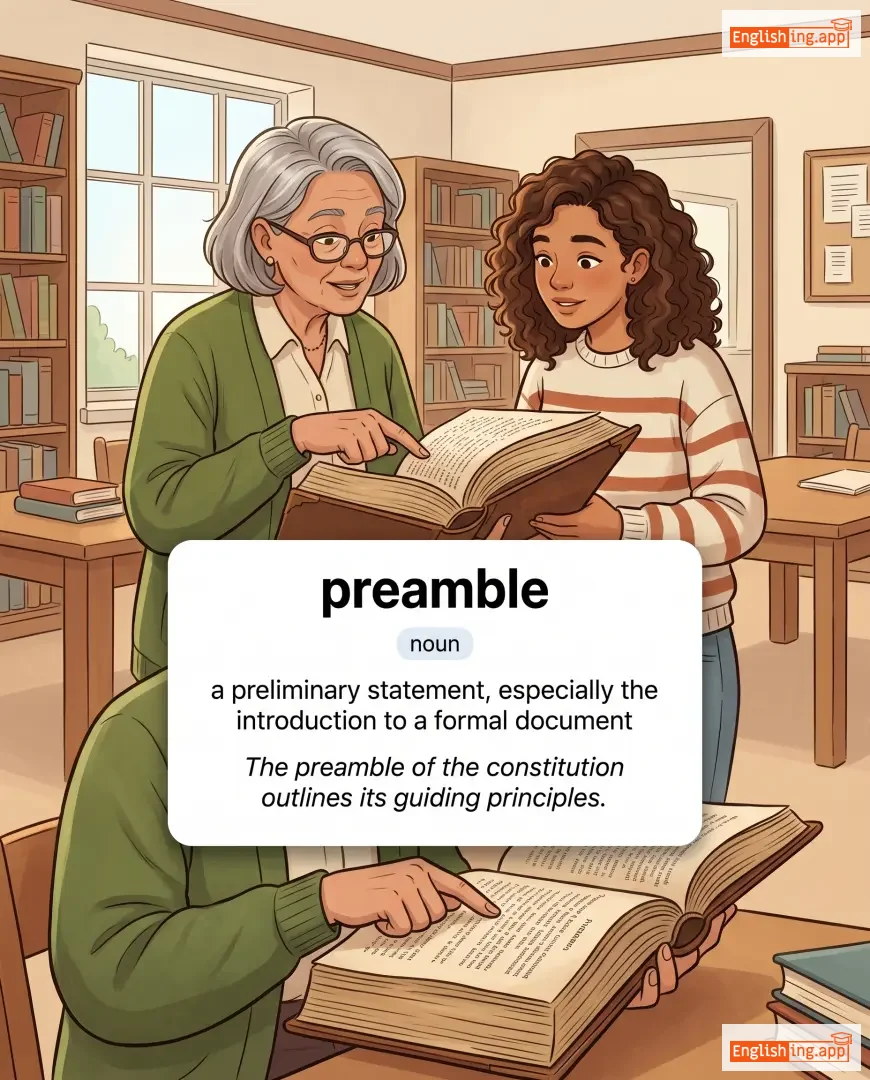
preamble definition card — visual illustration of the meaning
noun C1
/ˈpriːˌæmbəl/
前文 (zenbun)

a preliminary statement, especially the introduction to a formal document

"The preamble of the constitution outlines its guiding principles."
"憲法の前文はその基本的な原則を説明しています。" (Kenpo no zenbun wa sono kihonteki na gensoku o setsumei shiteimasu.)
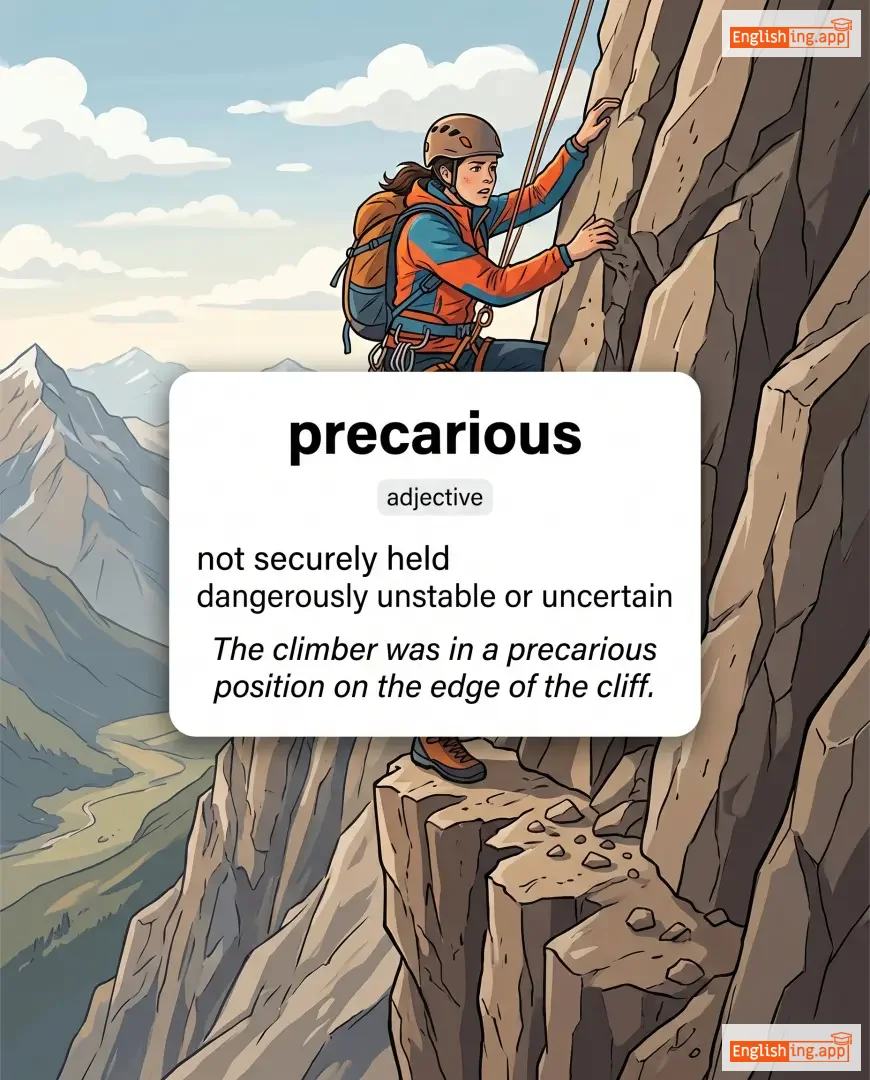
precarious definition card — visual illustration of the meaning
adjective C1
/prɪˈkɛəriəs/
不安定 / 危険 (fuantei / kiken)

not securely held; dangerously unstable or uncertain

"The climber was in a precarious position on the edge of the cliff."

"登山者は崖の端にある危険な位置にいました。" (Tōzansha wa gake no hashi ni aru kiken na ichi ni imashita.)
noun C1
/ˈprɛsɪdəns/ or /prɪˈsiːdəns/
優先 (yusen)

the condition of being considered more important than someone or something else; priority

"Safety takes precedence over speed in this factory."

"この工場では、安全が速度より優先されます。" (Kono koujou dewa, anzen ga sokudo yori yusen saremasu.)
noun C1
/ˈpriːsɪŋkt/
区域 (kuiki)

A district or area within the boundaries of a city, often for police or electoral purposes.

"She went to vote at her local precinct."

"彼女は地元の選挙区で投票に行った。" (Kanojo wa jimoto no senkyoku de tōhyō ni itta.)
noun C1
/ˈprɛsɪpɪs/
絶壁 (zetteki)

A very steep cliff or a situation of great danger.

"The hikers stood at the edge of the precipice, gazing into the valley below."
"ハイカーたちは絶壁の端に立ち、下の谷を見ていました。" (Haikātachi wa zetteki no hashi ni tachi, shita no tani o miteimashita.)
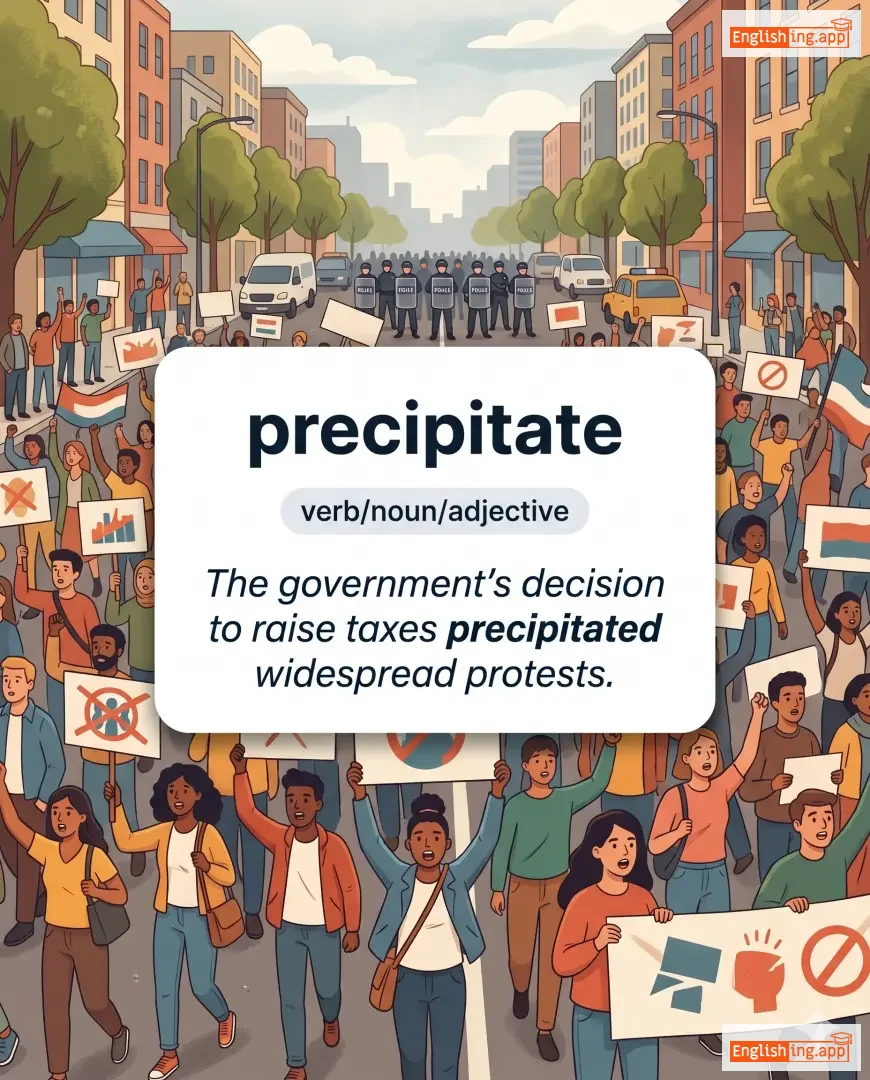
precipitate definition card — visual illustration of the meaning
verb/noun/adjective C1
/prɪˈsɪpɪteɪt/

As a verb: to cause an event or situation, often suddenly or prematurely; as a noun: a solid formed in a chemical solution; as an adjective: done hastily.

"The government's decision to raise taxes precipitated widespread protests."
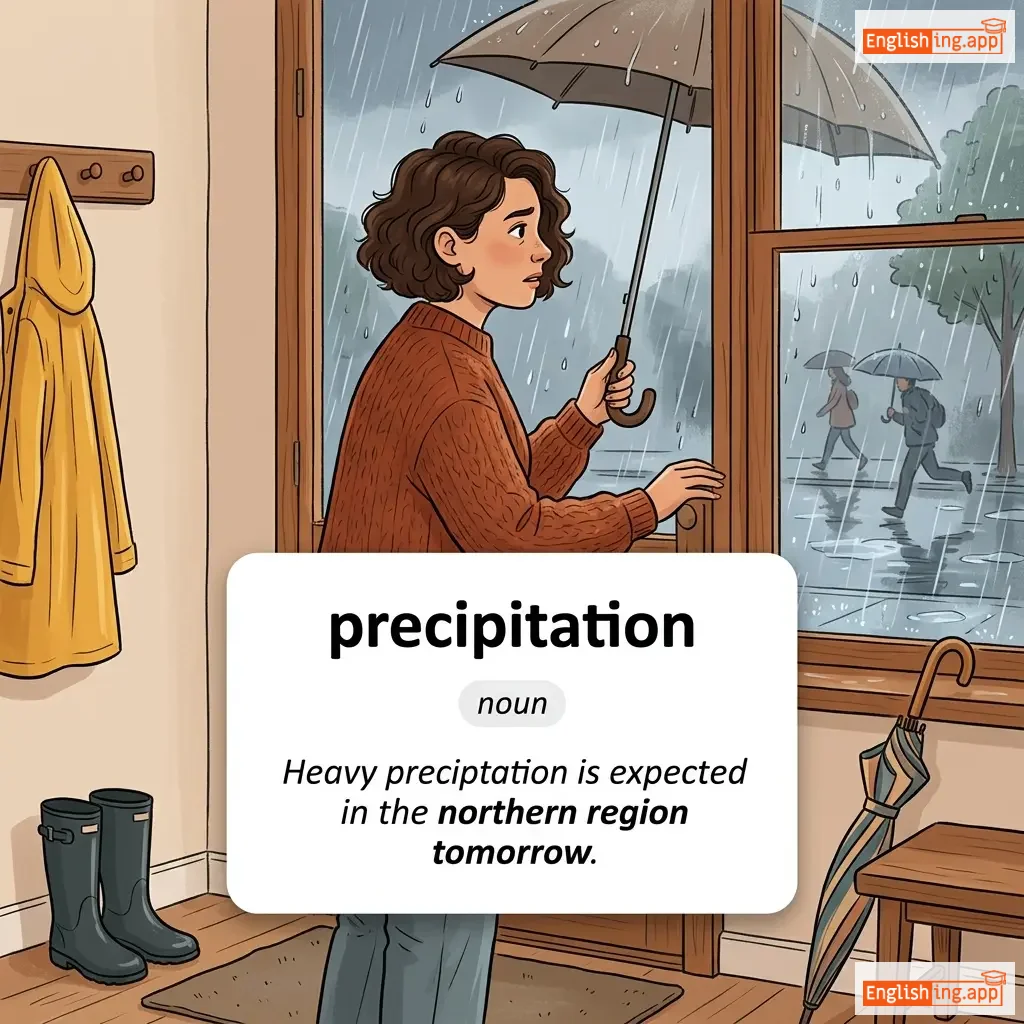
precipitation definition card — visual illustration of the meaning
noun C1
/prɪˌsɪpɪˈteɪʃən/
降水 (kōsui)

Moisture that falls from the atmosphere as rain, snow, sleet, or hail; or the process of being precipitated.

"Heavy precipitation is expected in the northern region tomorrow."

"明日、北部地域で激しい降水が予想されます。" (Ashita, hokubu chiiki de hageshī kōsui ga yosō saremasu.)
adjective C1
/prɪˈsɪpɪtəs/
急なまたは突然の (kyuu na mata wa totsuzen no)

Extremely steep or sudden; done quickly without careful consideration.

"The hikers struggled to climb the precipitous slope."

"ハイカーたちは急な坂道を登るのに苦労していました。" (Haikaa-tachi wa kyuu na sakamichi o noboru no ni kurou shite imashita.)
noun C1
/ˈpreɪsiː/
要約 (yōyaku)

a short summary of a text or speech

"She wrote a précis of the lecture for her classmates."
"彼女はクラスメートのために講義の要約を書きました。" (Kanojo wa kurasumēto no tame ni kōgi no yōyaku o kakimashita.)
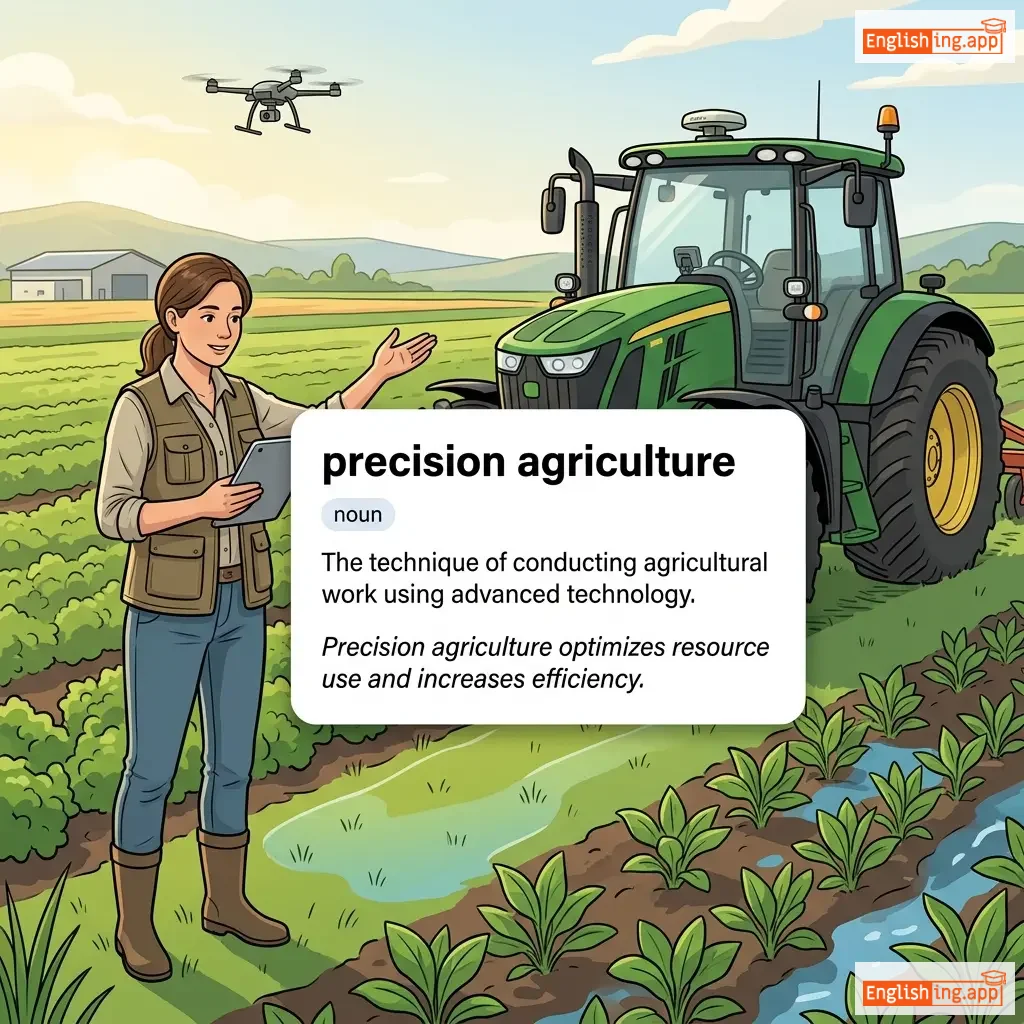
precision agriculture definition card — visual illustration of the meaning
noun C1
prɪˈsɪʒ.ən ˈæɡ.rɪ.kʌl.tʃər
精密農業 (seimitsu nogyo)

The technique of conducting agricultural work using advanced technology.

"Precision agriculture optimizes resource use and increases efficiency."

"精密農業は資源の使用を最適化し、効率を向上させます。" (Seimitsu nougyou wa shigen no shiyou o saitekika shi, kouritsu o koujou sasemasu.)
verb C1
/prɪˈkluːd/
排除する (haijo suru)

To prevent something from happening; to make impossible.

"Heavy rain precluded the possibility of a picnic."

"大雨がピクニックの可能性を排除した。" (Ōame ga pikunikku no kanōsei o haijo shita.)
adjective C1
/prɪˈkoʊʃəs/
早熟 (sōjuku)

Showing advanced development or maturity at an unusually early age.

"The precocious child was reading novels at the age of five."

"その早熟な子供は5歳で小説を読んでいました。" (Sono sōjuku na kodomo wa 5-sai de shōsetsu o yonde imashita.)
precursor definition card — visual illustration of the meaning
noun C1
/ˈpriːˌkɜrsər/
前兆 (zenchou)

Something or someone that comes before another and indicates the approach of something else.

"The steam engine was a precursor to modern trains."

"蒸気機関車は現代の列車の前兆でした。" (Jouki kikansha wa gendai no ressha no zenchou deshita.)
adjective C1
/ˈprɛdəˌtɔri/
捕食者/搾取者 (hossoku-sha/sakushu-sha)

Relating to animals that prey on others; exploiting or victimizing others for personal gain.

"The predatory bird swooped down on its prey."

"捕食性の鳥は獲物に向かって急降下した。" (Hossoku-sei no tori wa emono ni mukatte kyū kōka shita.)
verb C1
/ˌpriːdɪˈtɜːrmɪn/
予め決定する (あらかじめけっていする)

to establish or decide something in advance

"The outcome of the match seemed predetermined."
"試合の結果は予め決められていたようだった。" (Shiai no kekka wa arakajime kimerarete ita you datta.)
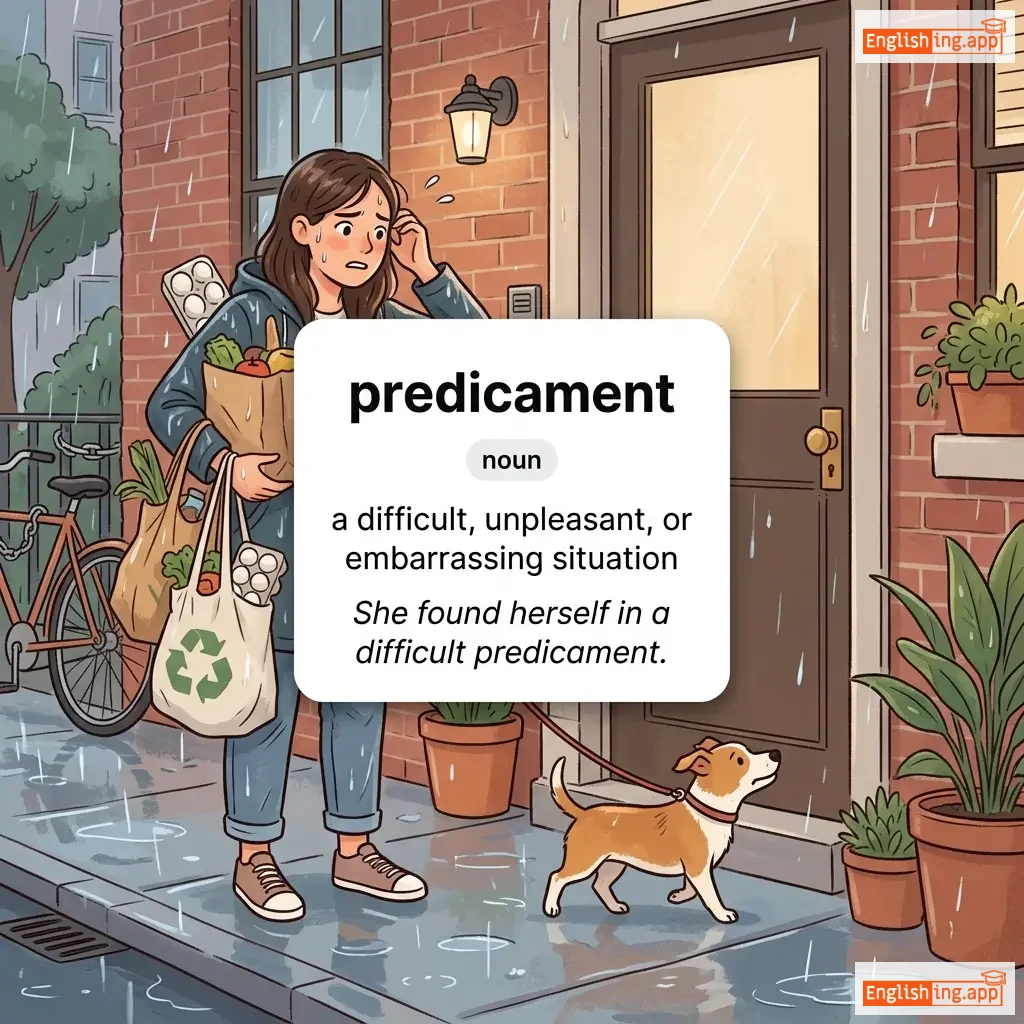
predicament definition card — visual illustration of the meaning
noun C1
/prɪˈdɪkəmənt/
窮地 (kyoudi)

a difficult, unpleasant, or embarrassing situation

"She found herself in a difficult predicament."

"彼女は困難な窮地に立たされました。" (Kanojo wa konnan na kyoudi ni tatasaremashita.)
noun/verb C1
/ˈprɛdɪkət/ (noun), /ˈprɛdɪkeɪt/ (verb)
述語 / 基づく (jutsugo / motozuku)

noun: the part of a sentence that tells something about the subject; verb: to base or establish something on a particular idea

"His theory is predicated on sound research."

"彼の理論は確かな研究に基づいています。" (Kare no riron wa tashikana kenkyuu ni motozuiteimasu.)
verb C1
/ˌpriːdɪˈspoʊz/
予備的にする (yobiteki ni suru)

To make someone more likely to behave in a certain way or be affected by something.

"His genetics may predispose him to diabetes."

"彼の遺伝子は、彼が糖尿病になる可能性を高めるかもしれません。" (Kare no idenshi wa, kare ga tōnyōbyō ni naru kanōsei o takameru kamoshiremasen.)
adjective C1
/ˌpriːdɪˈspoʊzd/
傾向 (keikou)

Likely or inclined to be affected by something in advance.

"She is predisposed to trust people easily."
"彼女は人々を簡単に信頼する傾向があります。" (Kanojo wa hitobito o kantan ni shinrai suru keikou ga arimasu.)
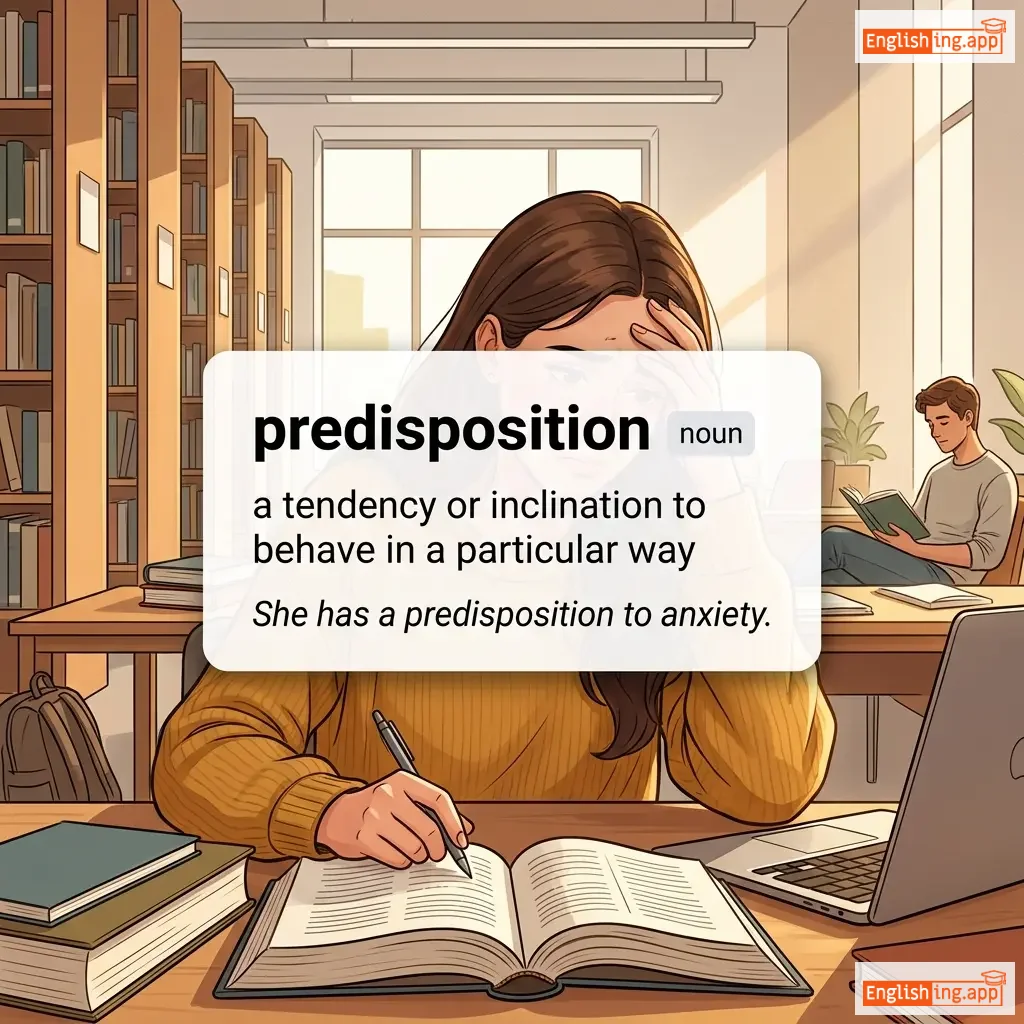
predisposition definition card — visual illustration of the meaning
noun C1
/ˌpriːdɪspəˈzɪʃən/
傾向 (keikou)

a tendency or inclination to behave in a particular way

"She has a predisposition to anxiety."

"彼女は不安に対する傾向があります。" (Kanojo wa fuan ni taisuru keikou ga arimasu.)
noun C1
/prɪˈdɒmɪnəns/
優越性 (yuetsusei)

The state of being greater in number, strength, or importance.

"The predominance of online shopping has changed retail forever."

"オンラインショッピングの優越性が小売業を永遠に変えました。" (Onrain shoppingu no yuetsusei ga kouri gyou wo eien ni kaemashita.)
verb C1
/prɪˈdɒmɪneɪt/
支配する (shihai suru)

To be the strongest, most common, or most influential element.

"Traditional values still predominate in the community."

"伝統的な価値観はコミュニティ内で依然として支配的です。" (Dentōteki na kachikan wa komyuniti nai de izen toshite shihaiteki desu.)
adjective C1
/priːˈɛmɪnənt/
卓越した (takuwesshita)

Surpassing all others; very distinguished in some way.

"She is a preeminent scientist in the field of genetics."

"彼女は遺伝学の分野で卓越した科学者です。" (Kanojo wa idengaku no bunya de takuwesshita kagakusha desu.)
verb C1
/priːˈɛmpt/
予防する (yobou suru)

To take action in order to prevent something from happening; to take the place of something.

"The government acted quickly to preempt a financial crisis."

"政府は迅速に行動し、金融危機を防ぎました。" (Seifu wa jinsoku ni koudou shi, kin'yuu kiki wo fusegimashita.)
adjective C1
/priˈɛmptɪv/
予防的 (yobōteki)

Serving or intended to prevent something by taking action first.

"The government took preemptive measures to control inflation."

"政府はインフレを抑制するために予防的措置を講じました。" (Seifu wa infure o yokusei suru tame ni yobōteki sochi o kōjimashita.)
verb C1
/priːn/
身だしなみを整える (midashinami wo totonoeru)

To groom or dress oneself with care; to show pride in one's appearance.

"She preened in front of the mirror before leaving for the party."

"彼女はパーティーに出かける前に鏡の前で身だしなみを整えていた。" (Kanojo wa pātī ni dekakeru mae ni kagami no mae de midashinami wo totonoete ita.)
adjective C1
/ˌprɛfəˈrɛnʃəl/
優遇 (yūgū)

showing or giving advantage to one over others

"Members receive preferential treatment at the club."

"メンバーはクラブで優遇されます。" (Menbā wa kurabu de yūgū saremasu.)
noun C1
/ˈprɛljuːd/
前奏 (zensou)

An action, event, or statement that serves as an introduction to something more important.

"The small fight was only a prelude to a bigger conflict."

"小さな喧嘩はもっと大きな争いの前奏に過ぎなかった。" (Chiisana kenka wa motto ookina arasoi no zensou ni suginakatta.)
verb C1
/ˌpriːˈmɛdɪteɪt/
事前に考える (jizen ni kangaeru)

to think about and plan something (especially a crime) beforehand

"The suspect was accused of premeditating the crime."

"容疑者は犯罪を事前に計画したとして非難されました。" (Yōgisha wa hanzai o jizen ni keikaku shita to shite hinan saremashita.)
adjective C1
/ˌpriːˈmɛdɪˌteɪtɪd/
計画的 (keikakuteki)

planned in advance; done deliberately

"The crime was clearly premeditated."

"その犯罪は明らかに計画的だった。" (Sono hanzai wa akiraka ni keikakuteki datta.)
noun C1
/ˌpriːməˈnɪʃən/ or /ˌprɛm-/
予感 (yokan)

a strong feeling that something is about to happen, often something negative

"She had a premonition of danger before the trip."
"旅行前に危険の予感があった。" (Ryokou mae ni kiken no yokan ga atta.)
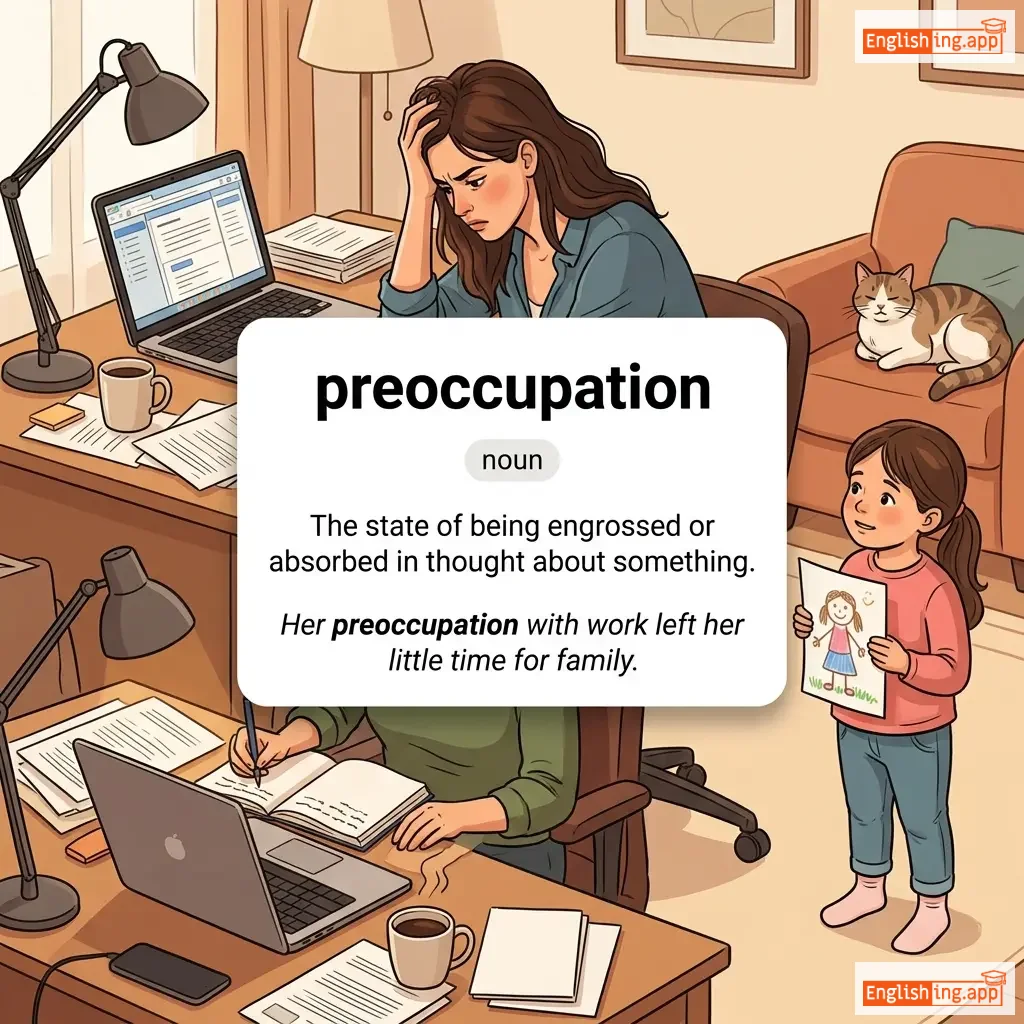
preoccupation definition card — visual illustration of the meaning
noun C1
/priːˌɒkjuˈpeɪʃən/
心配, 集中 (shinpai, shuuchuu)

The state of being engrossed or absorbed in thought about something.

"Her preoccupation with work left her little time for family."

"彼女は仕事のことで心配しすぎて、家族との時間がほとんどなかった。" (Kanojo wa shigoto no koto de shinpai shisugite, kazoku to no jikan ga hotondo nakatta.)
verb C1
/priːˈɒkjʊpaɪ/
占める, 心を占める (shimeru, kokoro o shimeru)

To dominate or engross the mind of someone to the exclusion of other thoughts.

"Worries about the future preoccupy him constantly."

"未来についての心配が彼を常に占めている。" (Mirai ni tsuite no shinpai ga kare o jōni shimetemasu.)
adjective C1
/prɪˈpɒstərəs/
馬鹿げた, 不合理な (bakageta, fu gorina)

completely ridiculous or absurd; contrary to reason or common sense

"The idea that pigs could fly is preposterous."

"豚が飛ぶことができるという考えは馬鹿げている。" (Buta ga tobu koto ga dekiru to iu kangae wa bakagete iru.)
noun C1
/prɪˈrɒɡətɪv/
特権 (tokken)

a special right or privilege exclusive to a particular person or group

"It is the manager’s prerogative to make the final decision."
"それはマネージャーの権限で最終決定を下すことです。" (Sore wa manējā no kenri de saishū kettei o kudasu koto desu.)
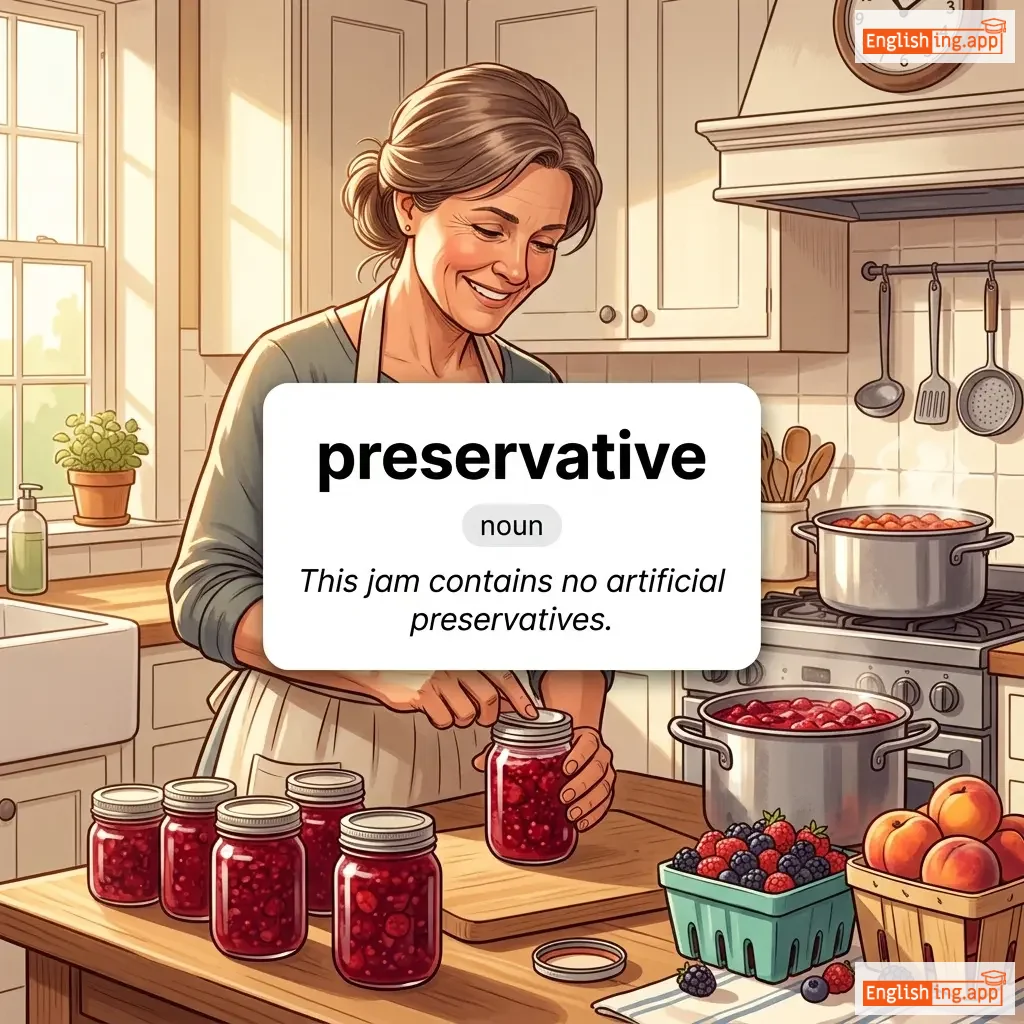
preservative definition card — visual illustration of the meaning
noun C1
/prɪˈzɜːrvətɪv/
防腐剤 (bōfuzai)

A substance used to prevent decay, spoilage, or deterioration in food or other materials.

"This jam contains no artificial preservatives."
"このジャムには人工的な防腐剤は含まれていません。" (Kono jamu ni wa jinkō-teki na bōfuzai wa fukumareteimasen.)
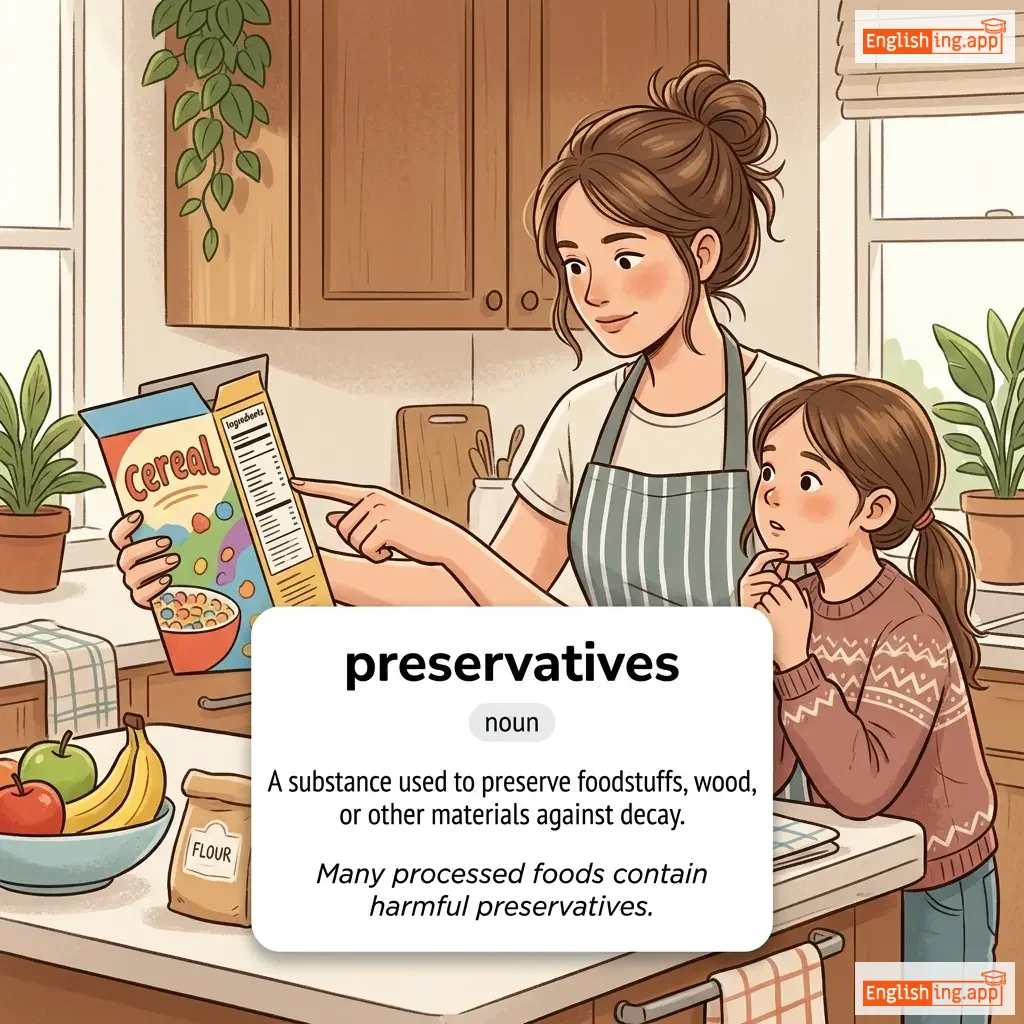
preservatives definition card — visual illustration of the meaning
noun C1
prɪˈzɜː.və.tɪvz
保存料 (hozonryou)

A substance used to preserve foodstuffs, wood, or other materials against decay.

"Many processed foods contain harmful preservatives."
"多くの加工食品には有害な保存料が含まれています。" (Ōku no kakō shokuhin ni wa yūgaina hozonryō ga fukumareteimasu.)
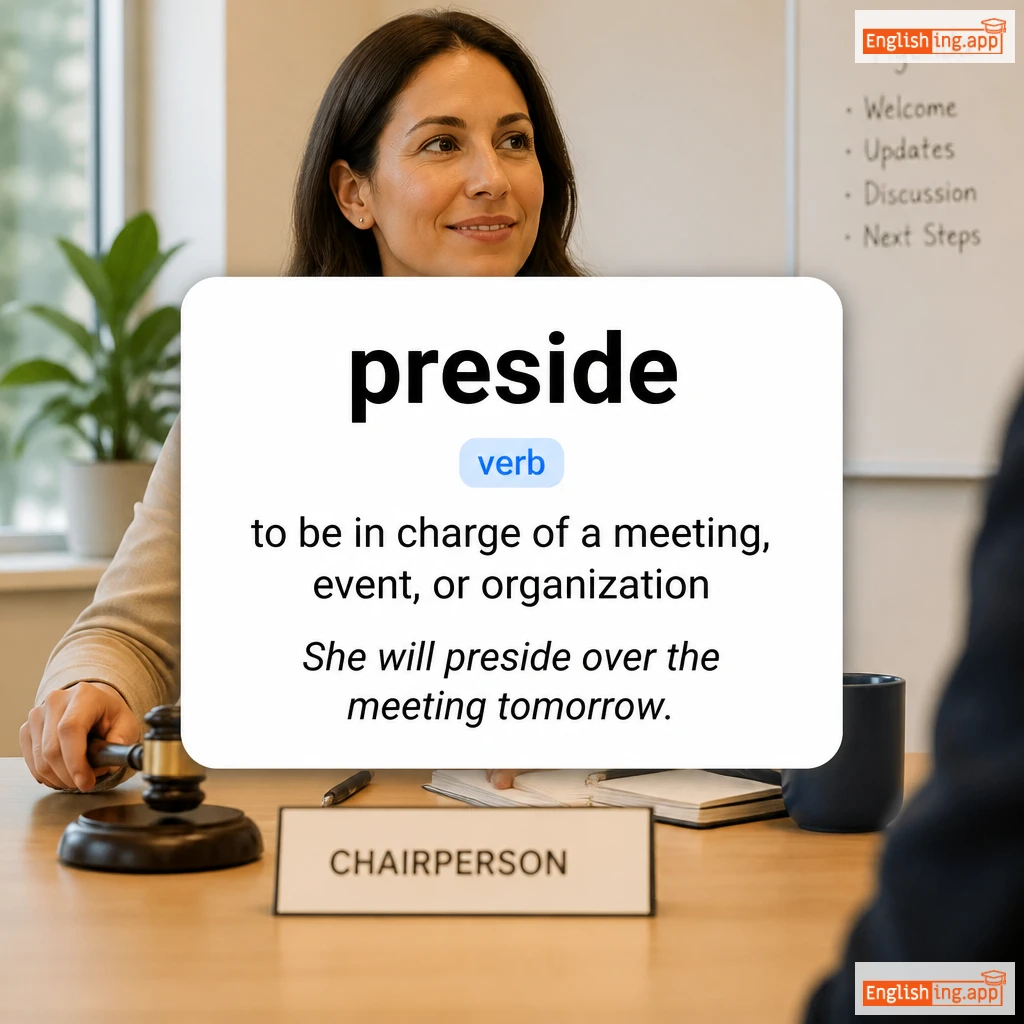
preside definition card — visual illustration of the meaning
verb C1
/prɪˈzaɪd/
主宰する (shusai suru)

to be in charge of a meeting, event, or organization

"She will preside over the meeting tomorrow."
"彼女は明日会議を主宰します。" (Kanojo wa ashita kaigi o shusai shimasu.)
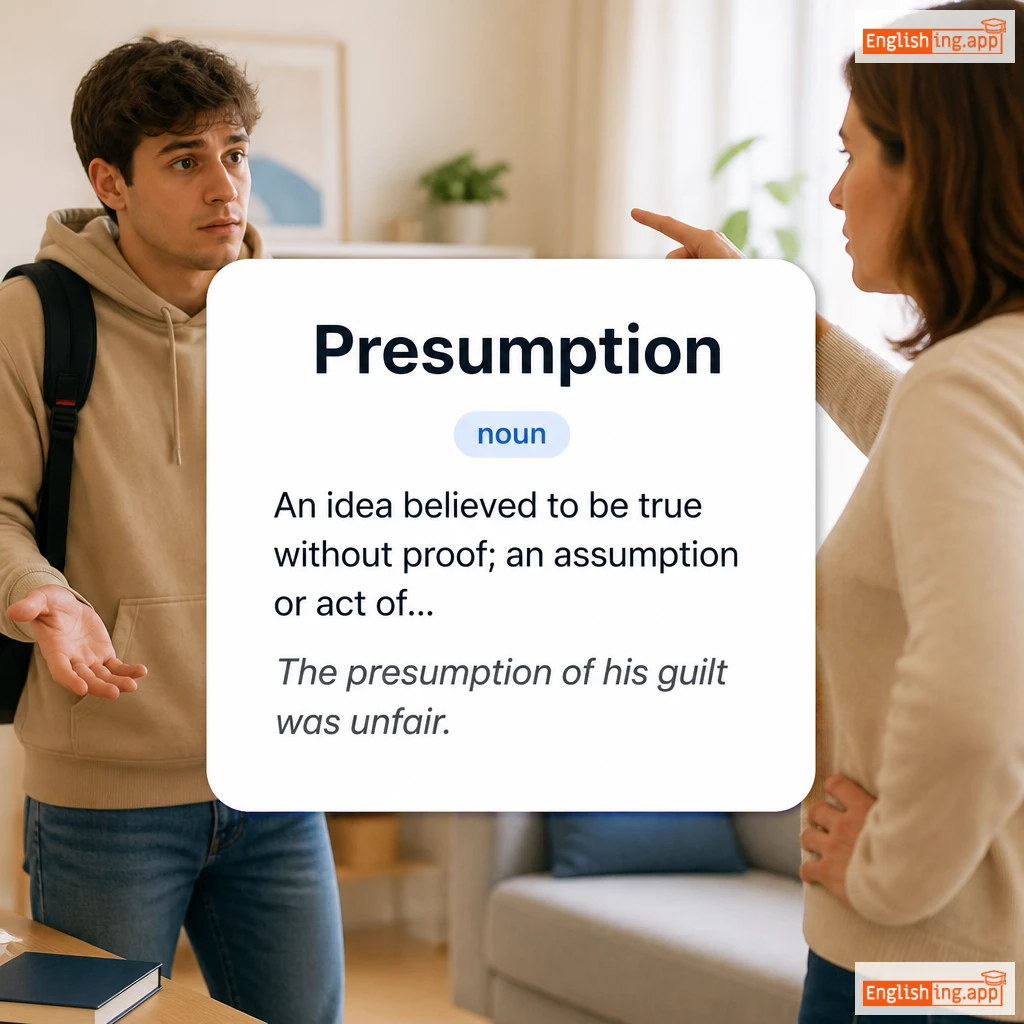
Presumption definition card — visual illustration of the meaning
noun C1
/prɪˈzʌmpʃən/
仮定 (katei)

An idea believed to be true without proof; an assumption or act of overconfidence.

"The presumption of his guilt was unfair."
"彼の有罪の仮定は不公平だった。" (Kare no yūzai no katei wa fukōhei datta.)
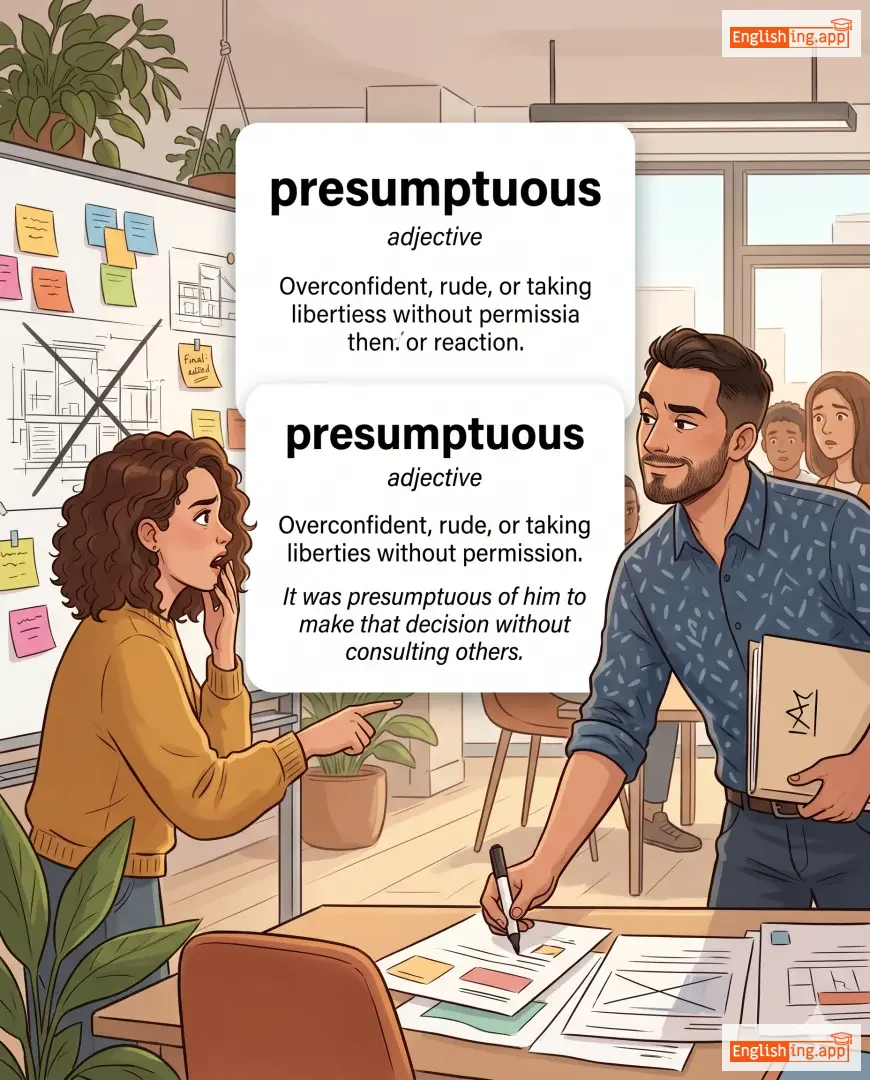
presumptuous definition card — visual illustration of the meaning
adjective C1
/prɪˈzʌmp.tʃu.əs/
生意気な (namaiki na)

Overconfident, rude, or taking liberties without permission.

"It was presumptuous of him to make that decision without consulting others."
"他が他の人と相談せずにその決定を下したのは生意気だった。" (Kare ga hoka no hito to sōdan sezu ni sono kettei o kudashita no wa namaiki datta.)
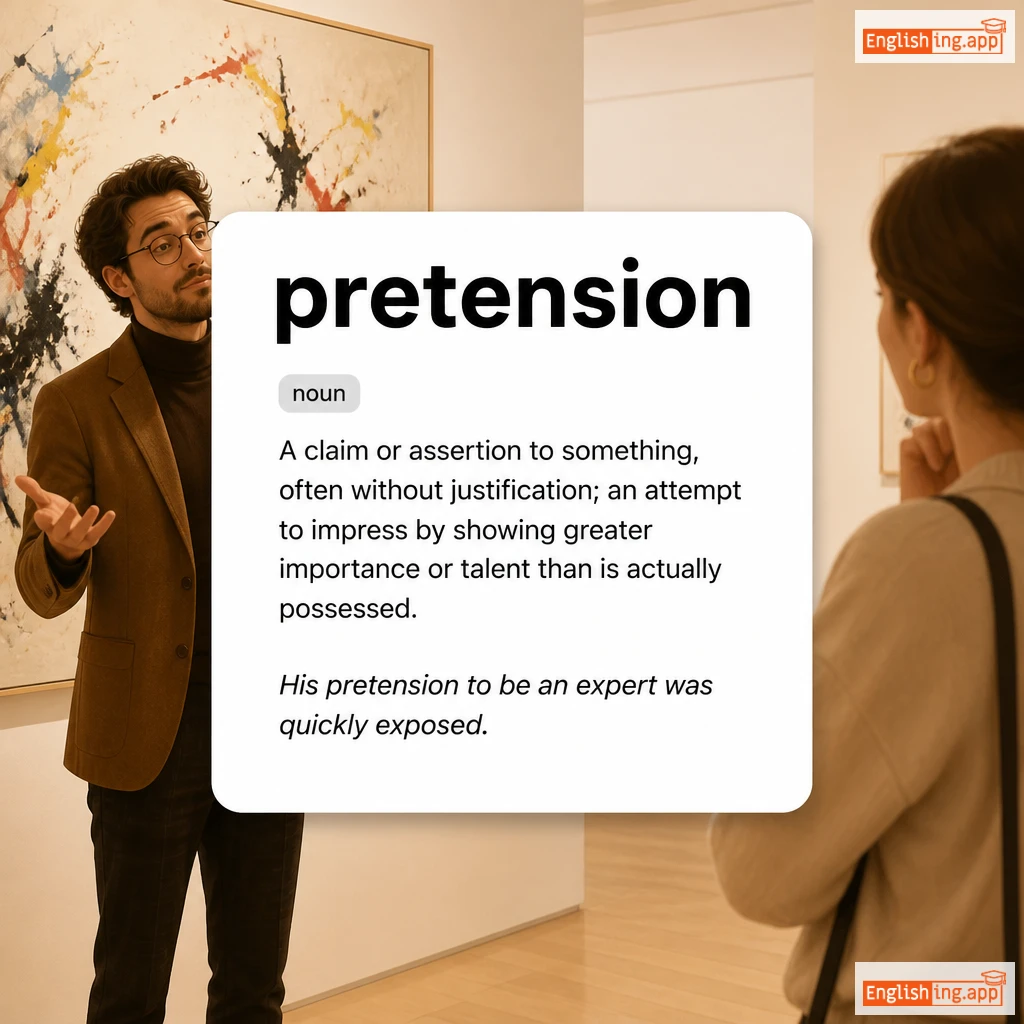
pretension definition card — visual illustration of the meaning
noun C1
/prɪˈtɛnʃən/
虚偽、見せかけ (kyogi, misekake)

A claim or assertion to something, often without justification; an attempt to impress by showing greater importance or talent than is actually possessed.

"His pretension to be an expert was quickly exposed."

"彼の専門家であるというプリテンションはすぐに暴かれた。" (kare no senmonka de aru to iu puritenshon wa sugu ni abakareta.)
adjective C1
/prɪˈtɛnʃəs/
偽善的な (gizen-tekina)

Attempting to impress by affecting greater importance, talent, culture, etc., than is actually possessed.

"The restaurant was stylish but far too pretentious for my taste."

"そのレストランはスタイリッシュだったが、私の好みにはあまりにも偽善的だった。" (Sono resutoran wa sutairisshu datta ga, watashi no konomi ni wa amari ni mo gizen-teki datta.)
Pretext definition card — visual illustration of the meaning
noun C1
/ˈpriːtɛkst/
口実、偽りの理由 (koujitsu, itsuwari no riyuu)

A false reason given to hide the real purpose or motive.

"He went out on the pretext of buying groceries."
"彼は食料品を買いに行くという口実で外出した。" (Kare wa shokuryouhin o kai ni iku to iu koujitsu de gaishutsu shita.)
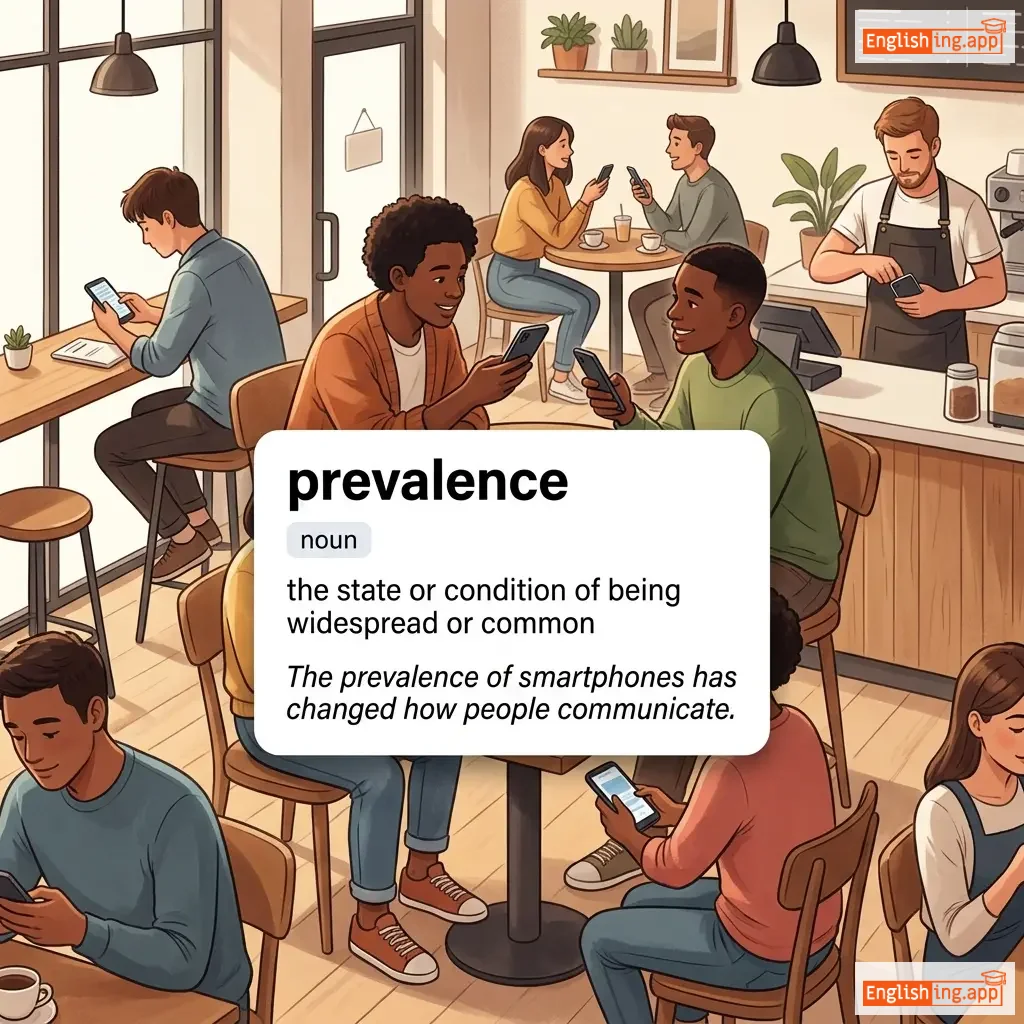
prevalence definition card — visual illustration of the meaning
noun C1
/ˈprɛvələns/
普及 (fukyū)

the state or condition of being widespread or common

"The prevalence of smartphones has changed how people communicate."

"スマートフォンの普及により、人々のコミュニケーション方法が変わった。" (Sumātofon no fukyū ni yori, hitobito no komyunikēshon hōhō ga kawatta.)
adjective C1
/ˈprɛvələnt/
広まっている (hiromatteiru)

widespread or commonly occurring

"Flu is prevalent during the winter season."

"インフルエンザは冬の季節に広く見られます。" (Infuruenza wa fuyu no kisetsu ni hiroku mirarimasu.)
verb C1
/ˈprɪkəl/

to cause a slight stinging or tingling sensation on the skin

"Her skin began to prickle in the cold wind."

adjective C1
/prɪm/
過度に正式または適切 (kadoni seishiki matawa tekisetsu)

stiffly formal and proper in appearance or behavior

"She looked prim in her neatly pressed dress."

"彼女はきちんとアイロンがかけられたドレスを着てプリムに見えた。" (Kanojo wa kichinto airon ga kakerareta doresu wo kite purimu ni mieta.)
adjective C1
/ˈpriːmə/
主要な, 優れた (shuyō na, sugureta)

first or most important; excellent

"She was treated as the prima ballerina of the troupe."

"彼女はグループのプリマバレリーナとして扱われました。" (Kanojo wa gurūpu no purima ballerina toshite atsukaware mashita.)