Словари

Словарь английского языка | Значения слов, определения и примеры

verb C1
/ɪmˈpɑːrt/
impartir (impartir)

to make information known; to bestow or communicate

"The teacher imparted valuable knowledge to her students."
"La maestra impartió valioso conocimiento a sus estudiantes." (La maestra impartió valioso conocimiento a sus estudiantes.)
Impartial definition card — visual illustration of the meaning
adjective C1
/ɪmˈpɑːrʃəl/
imparcial (imparcial)

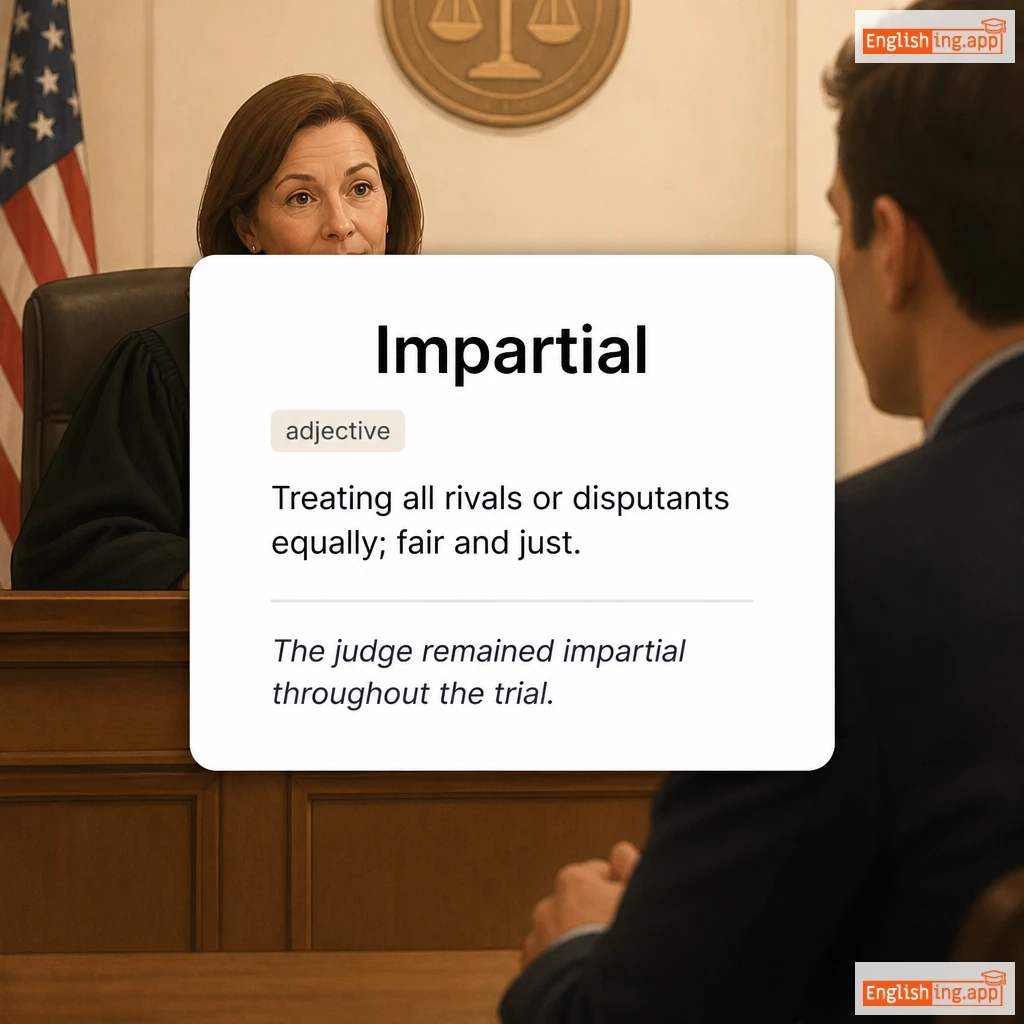
Treating all rivals or disputants equally; fair and just.

"The judge remained impartial throughout the trial."

"El juez permaneció imparcial durante el juicio." (El juez permaneció imparcial durante el juicio.)
adjective C1
/ɪmˈpæsəbəl/
intransitable (intransitable)

Impossible to travel along or over.

"The road became impassable after the heavy snowfall."
"La carretera se volvió intransitable después de la fuerte nevada." (La carretera se volvió intransitable después de la fuerte nevada.)
impasse definition card — visual illustration of the meaning
noun C1
/ˈɪmpæs/
bloqueo (bloqueo)

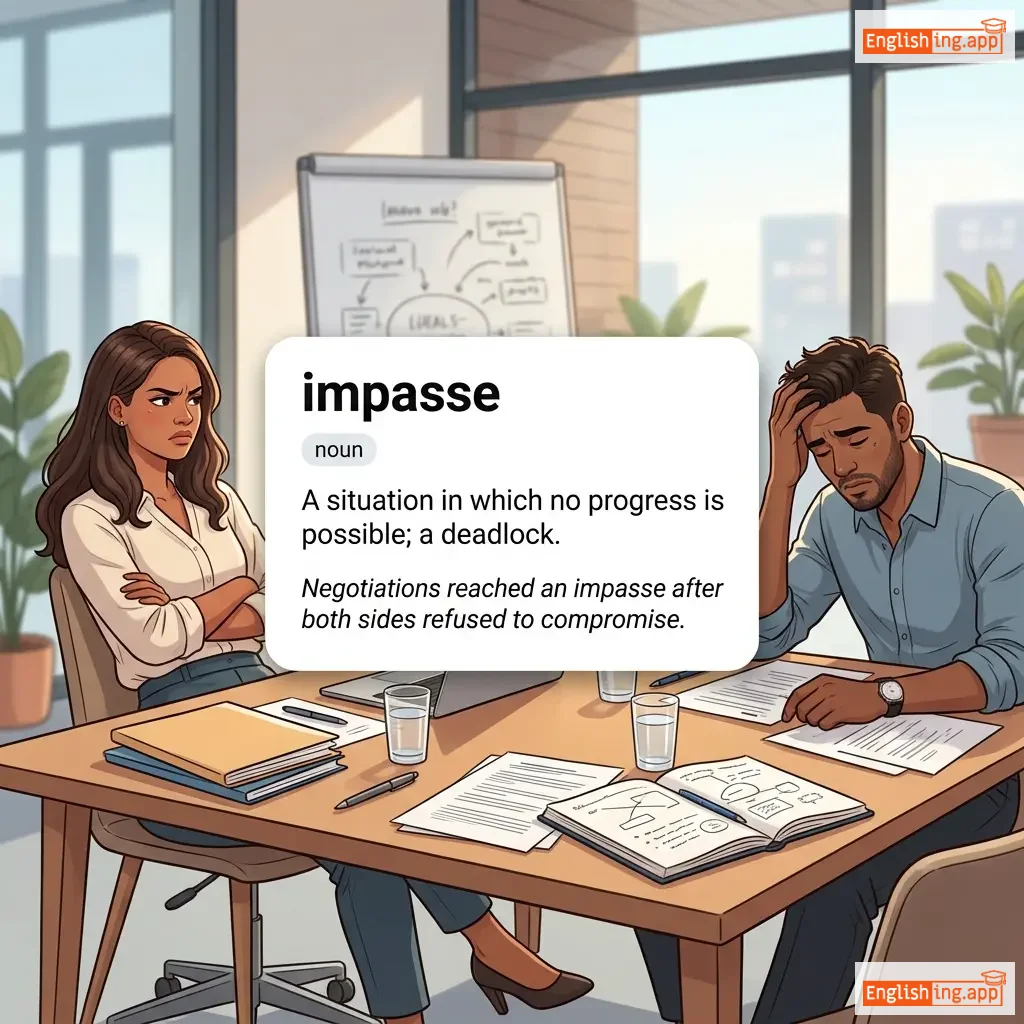
A situation in which no progress is possible; a deadlock.

"Negotiations reached an impasse after both sides refused to compromise."

"Las negociaciones llegaron a un bloqueo después de que ambas partes se negaran a comprometerse." (Las negociaciones llegaron a un bloqueo despues de que ambas partes se negaran a comprometerse.)
adjective C1
/ɪmˈpæʃənd/
apasionado (apasionado)

Filled with or showing great emotion.

"She gave an impassioned speech about human rights."
"Ella dio un discurso apasionado sobre los derechos humanos." (Ella dio un discurso apasionado sobre los derechos humanos.)
impassive definition card — visual illustration of the meaning
adjective C1
/ɪmˈpæsɪv/
impasible (impasible)

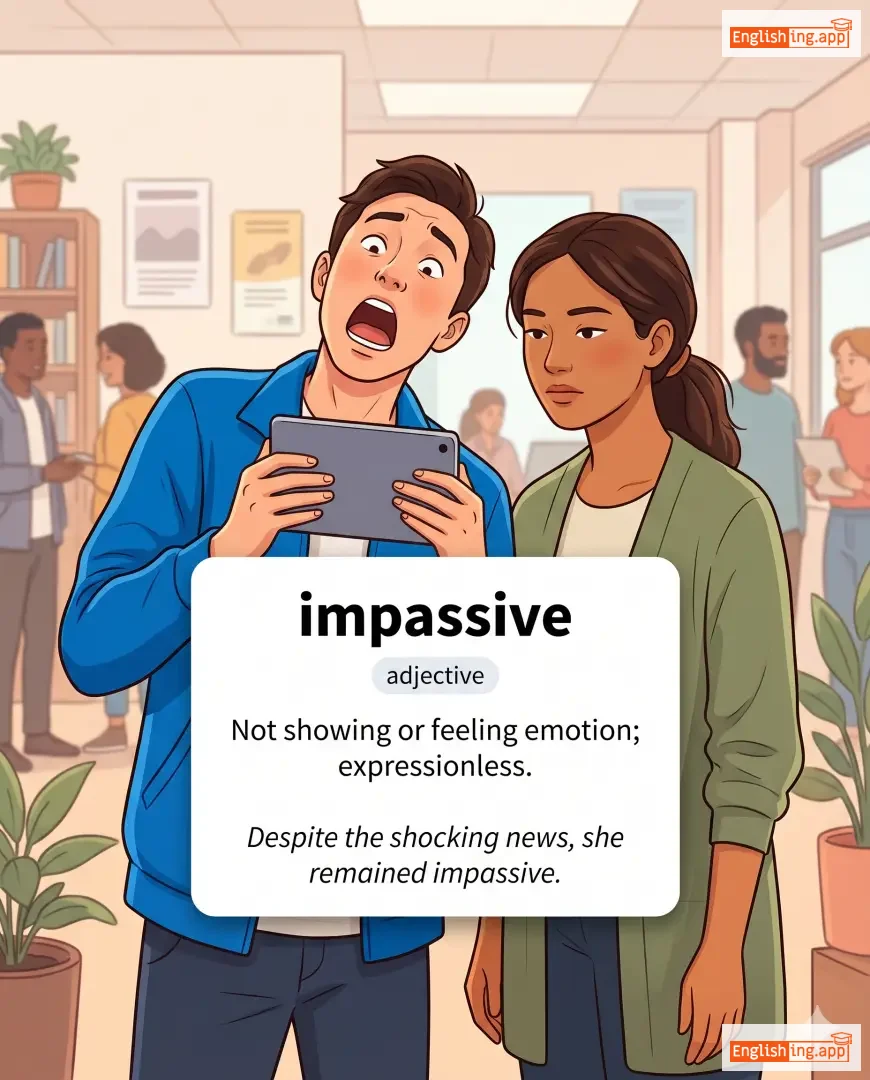
Not showing or feeling emotion; expressionless.

"Despite the shocking news, she remained impassive."

"A pesar de las noticias impactantes, ella permaneció impasible." (A pesar de las noticias impactantes, ella permaneció impasible.)
verb C1
/ɪmˈpiːtʃ/
impeachar (impeachar)

To charge a public official with misconduct while in office.

"The parliament voted to impeach the president."
"El parlamento votó para impugnar al presidente." (El parlamento votó para impugnar al presidente.)
impeccable definition card — visual illustration of the meaning
adjective C1
/ɪmˈpɛkəbl̩/
impecable (impecable)

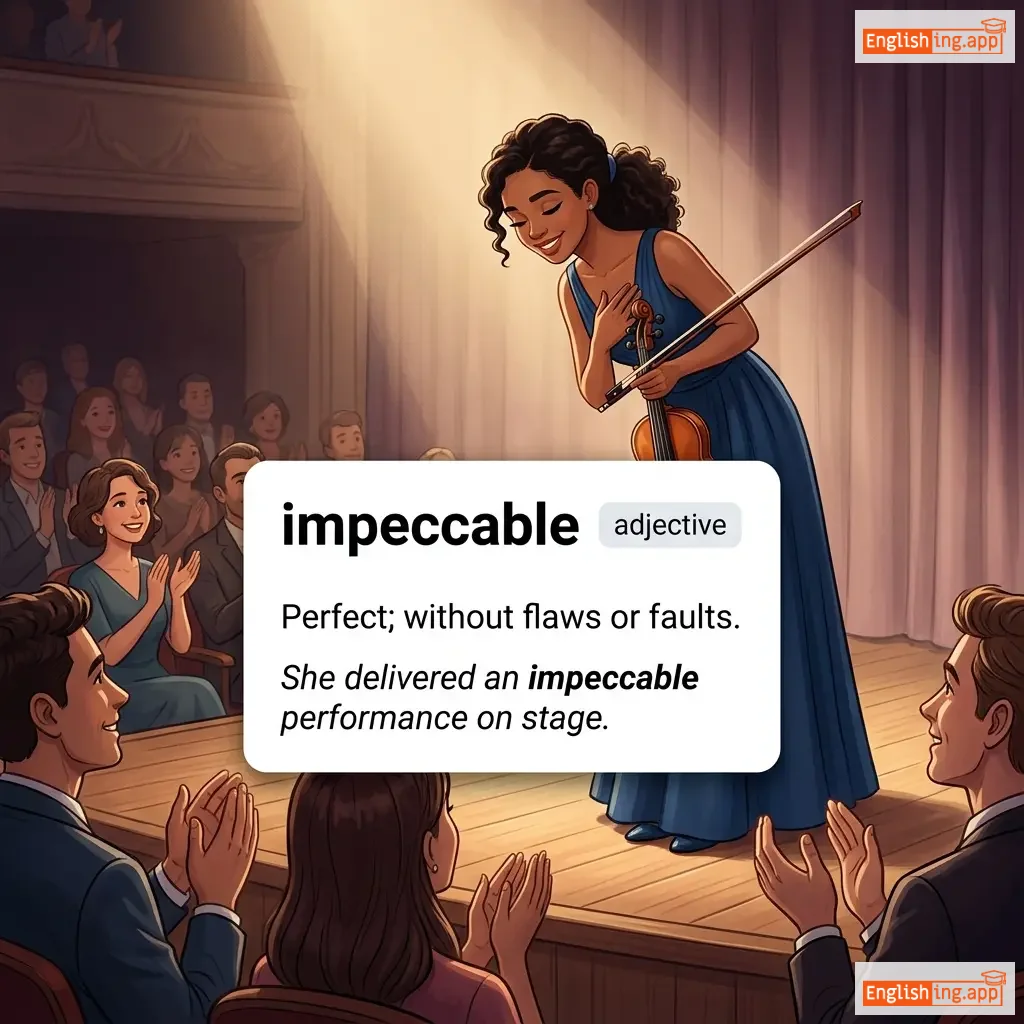
Perfect; without flaws or faults.

"She delivered an impeccable performance on stage."
"Ella dio una actuación impecable en el escenario." (Ella dio una actuacion impecable en el escenario.)
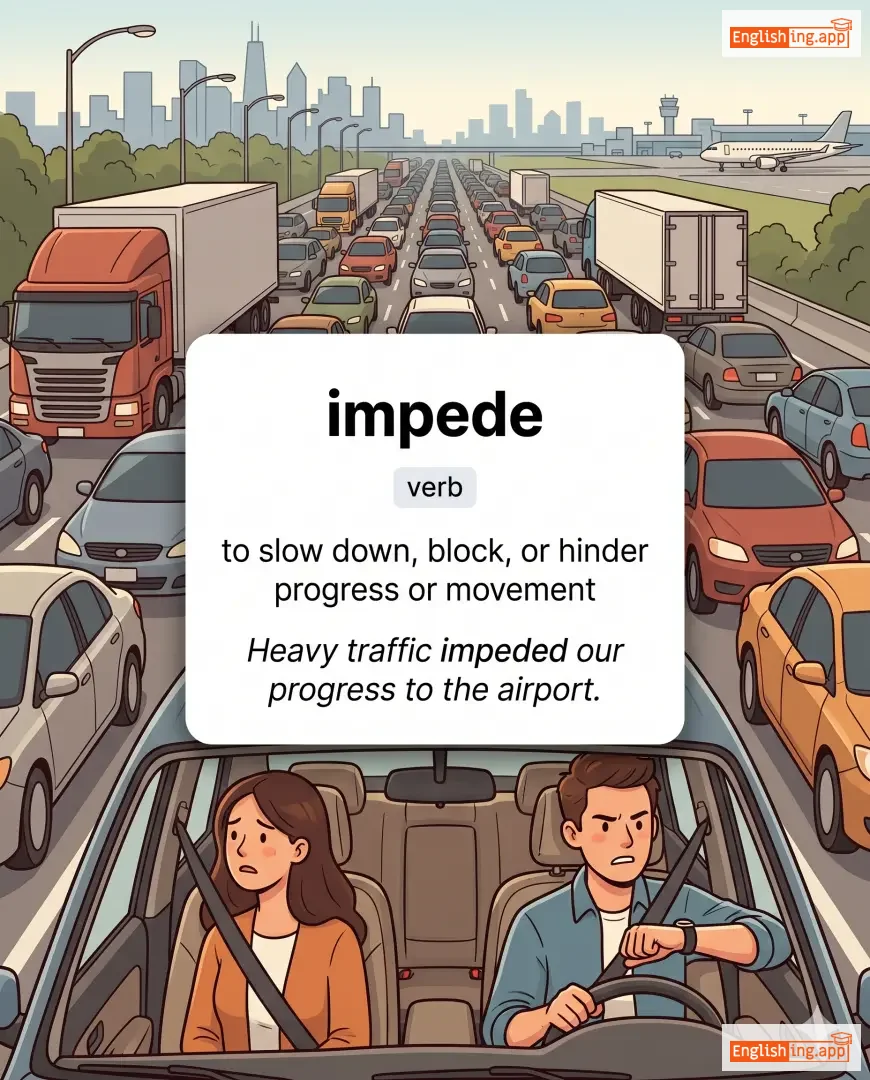
impede definition card — visual illustration of the meaning
verb C1
/ɪmˈpiːd/
impedir (impedir)

to slow down, block, or hinder progress or movement

"Heavy traffic impeded our progress to the airport."
"El tráfico pesado impidió nuestro progreso hacia el aeropuerto." (El trafico pesado impidió nuestro progreso hacia el aeropuerto.)
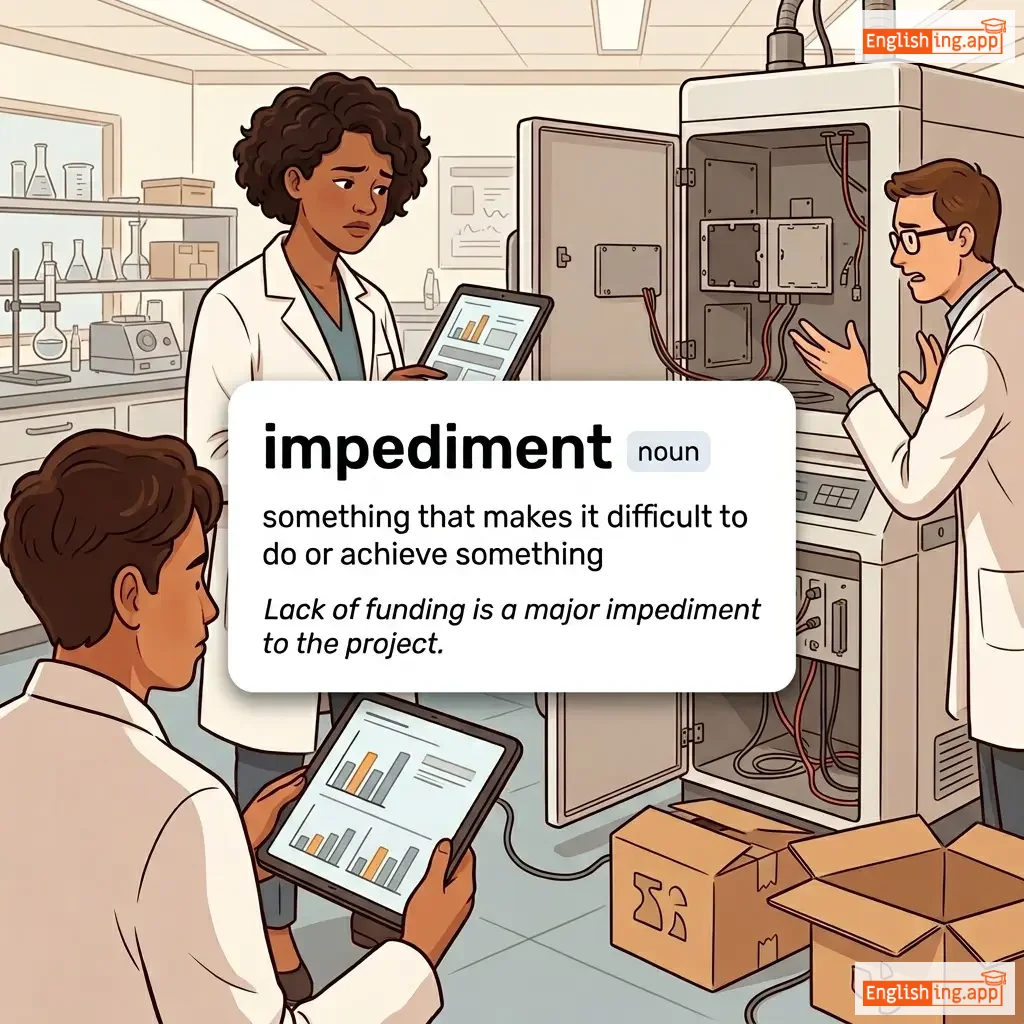
impediment definition card — visual illustration of the meaning
noun C1
/ɪmˈpɛdɪmənt/
impedimento (impedimento)

something that makes it difficult to do or achieve something

"Lack of funding is a major impediment to the project."
"La falta de financiación es un gran impedimento para el proyecto." (La falta de financiacion es un gran impedimento para el proyecto.)
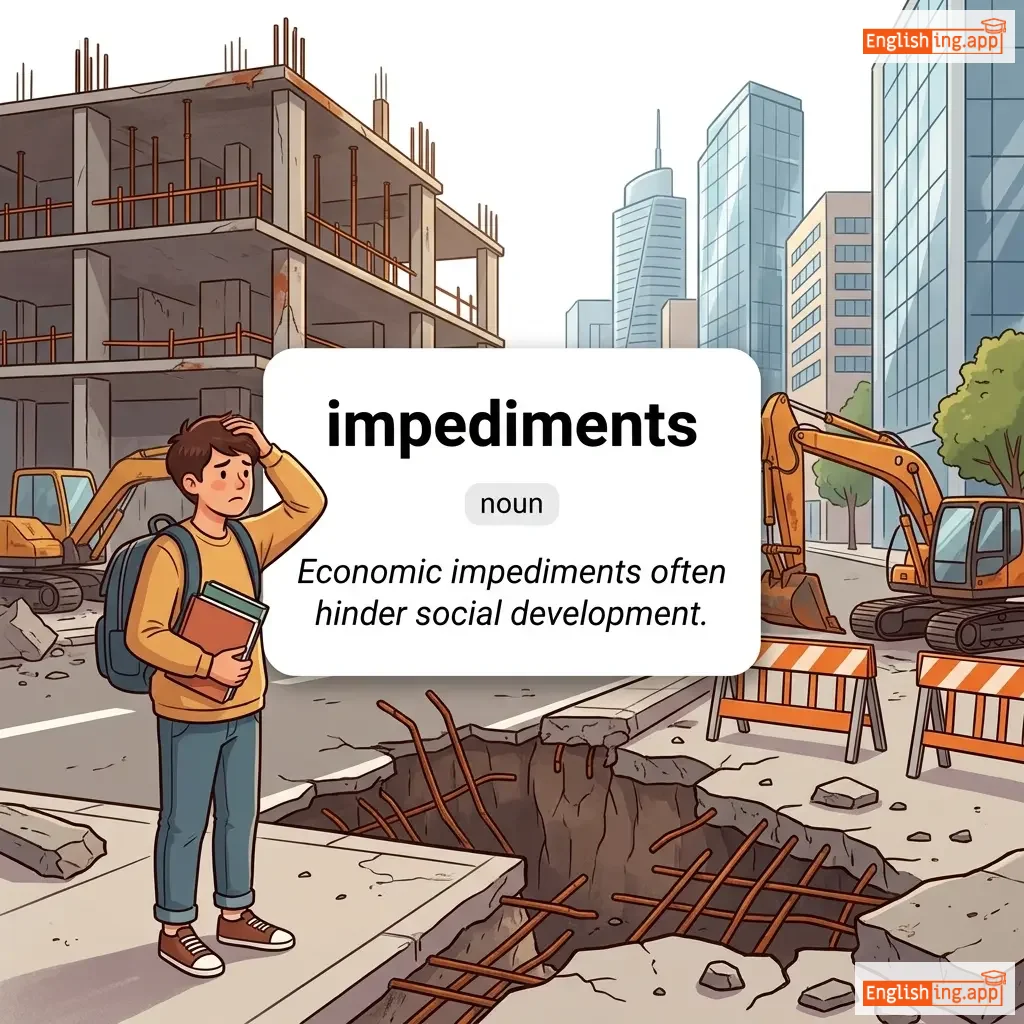
impediments definition card — visual illustration of the meaning
noun C1
/ɪmˈpɛdɪmənt/
obstáculos (obstaculos)

A hindrance or obstruction in doing something; things that prevent progress or achievement.

"Economic impediments often hinder social development."

"Los obstáculos económicos a menudo dificultan el desarrollo social." (Los obstaculos economicos a menudo dificultan el desarrollo social.)
verb C1
/ɪmˈpɛl/
impulsar (impulsar)

to drive, force, or urge someone to do something

"Her curiosity impelled her to open the mysterious box."

"Su curiosidad la impulsó a abrir la caja misteriosa." (Su curiosidad la impulsó a abrir la caja misteriosa.)
adjective C1
/ɪmˈpɛndɪŋ/
inminente (inminente)

about to happen soon, usually something unpleasant or threatening

"The villagers were worried about the impending flood."

"Los aldeanos estaban preocupados por la inundación inminente." (Los aldeanos estaban preocupados por la inundación inminente.)
adjective C1
/ɪmˈpɛn.ɪ.trə.bəl/
impenetrable (impenetrable)

Impossible to pass through or enter; impossible to understand.

"The dense forest was nearly impenetrable."
"El bosque denso era casi impenetrable." (El bosque denso era casi impenetrable.)
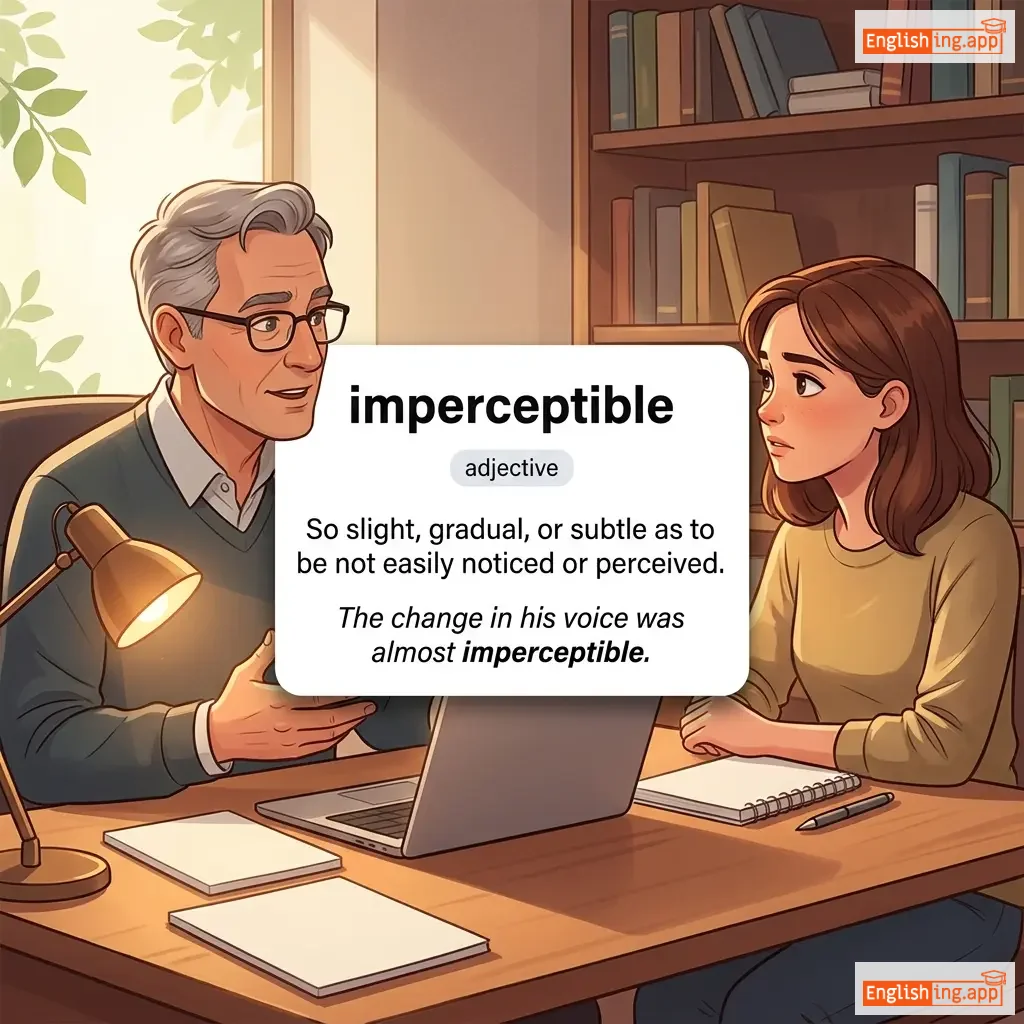
imperceptible definition card — visual illustration of the meaning
adjective C1
/ˌɪm.pəˈsɛp.tə.bəl/
imperceptible (imperceptible)

So slight, gradual, or subtle as to be not easily noticed or perceived.

"The change in his voice was almost imperceptible."

"El cambio en su voz fue casi imperceptible." (El cambio en su voz fue casi imperceptible.)
verb C1
/ɪmˈpɛrɪl/
poner en peligro (poner en peligro)

To put in danger or at risk.

"Reckless driving can imperil the lives of others."
"La conducción imprudente puede poner en peligro la vida de otros." (La conduccion imprudente puede poner en peligro la vida de otros.)
impermanence definition card — visual illustration of the meaning
noun C1
/ɪmˈpɜː.mə.nəns/
impermanencia (impermanencia)

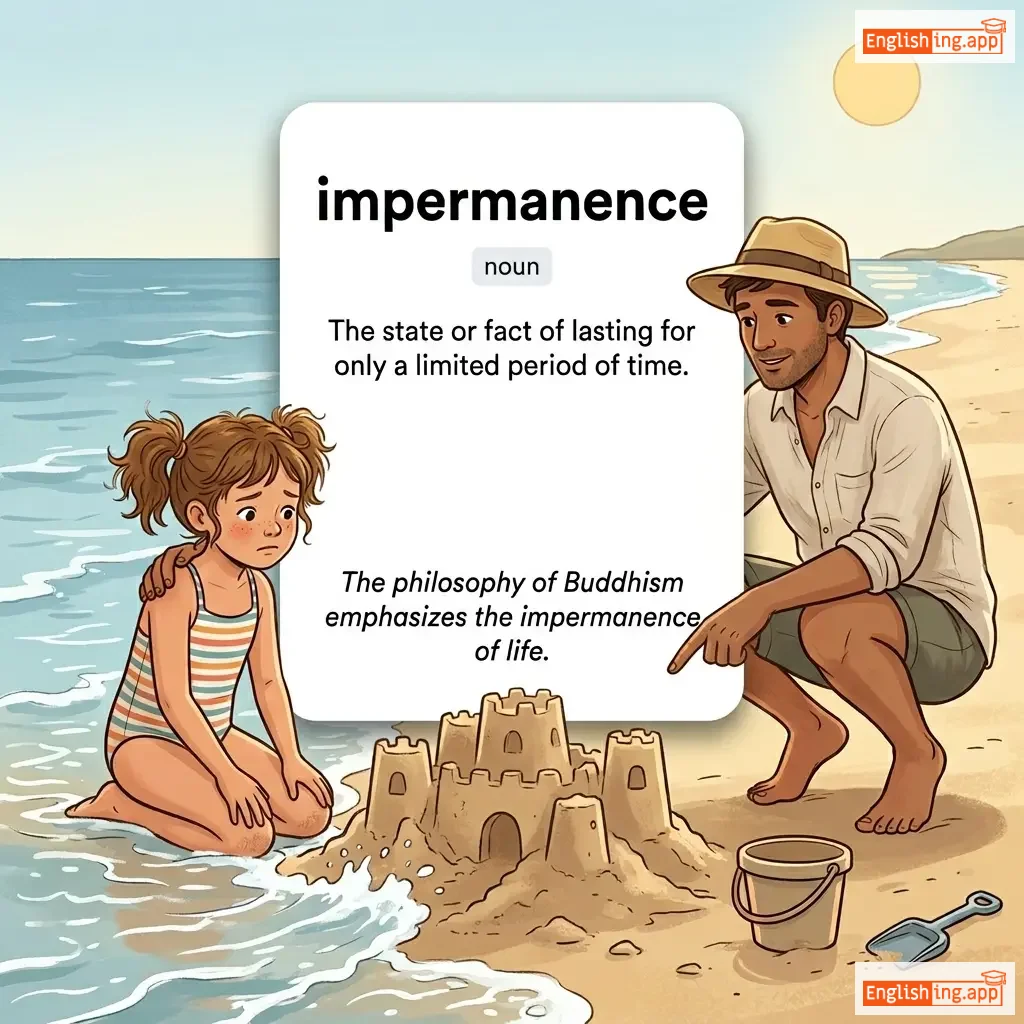
The state or fact of lasting for only a limited period of time.

"The philosophy of Buddhism emphasizes the impermanence of life."
"La filosofía del budismo enfatiza la impermanencia de la vida." (La filosofia del budismo enfatiza la impermanencia de la vida.)
impermeable definition card — visual illustration of the meaning
adjective C1
/ɪmˈpɜːmiəbl/
impermeable (impermeable)

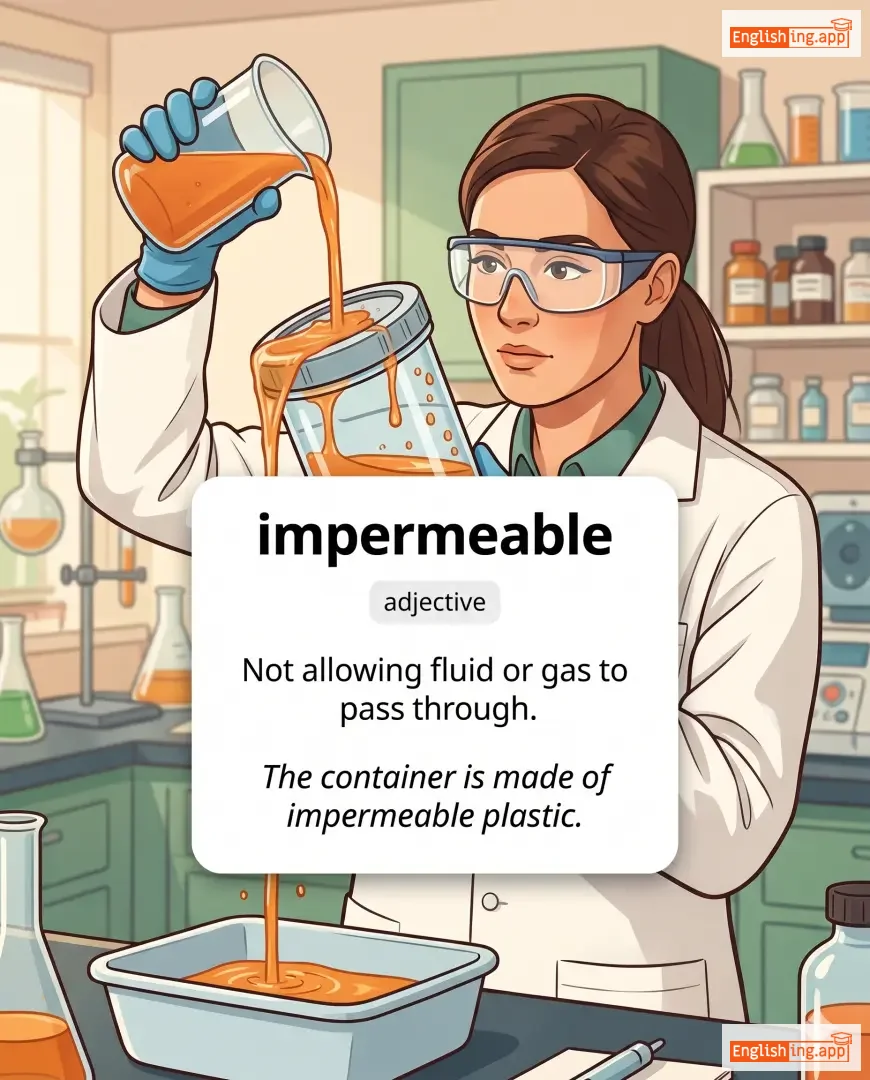
Not allowing fluid or gas to pass through.

"The container is made of impermeable plastic."

"El contenedor está hecho de plástico impermeable." (El contenedor esta hecho de plastico impermeable.)
adjective C1
/ɪmˈpɜːrsənl/
impersonal (impersonal)

not influenced by, showing, or involving personal feelings; lacking human warmth or emotion

"The letter was written in a very impersonal style."

"La carta fue escrita en un estilo muy impersonal." (La carta fue escrita en un estilo muy impersonal.)
verb C1
/ɪmˈpɜːrsəneɪt/
fingir ser alguien (fingir ser alguien)

to pretend to be another person in order to entertain or deceive

"He was arrested for trying to impersonate a police officer."
"Fue arrestado por intentar hacerse pasar por un oficial de policía." (Fue arrestado por intentar hacerse pasar por un oficial de policía.)
impersonation definition card — visual illustration of the meaning
noun C1
/ɪmˌpɜː.səˈneɪ.ʃən/
suplantación de identidad (suplantacion de identidad)

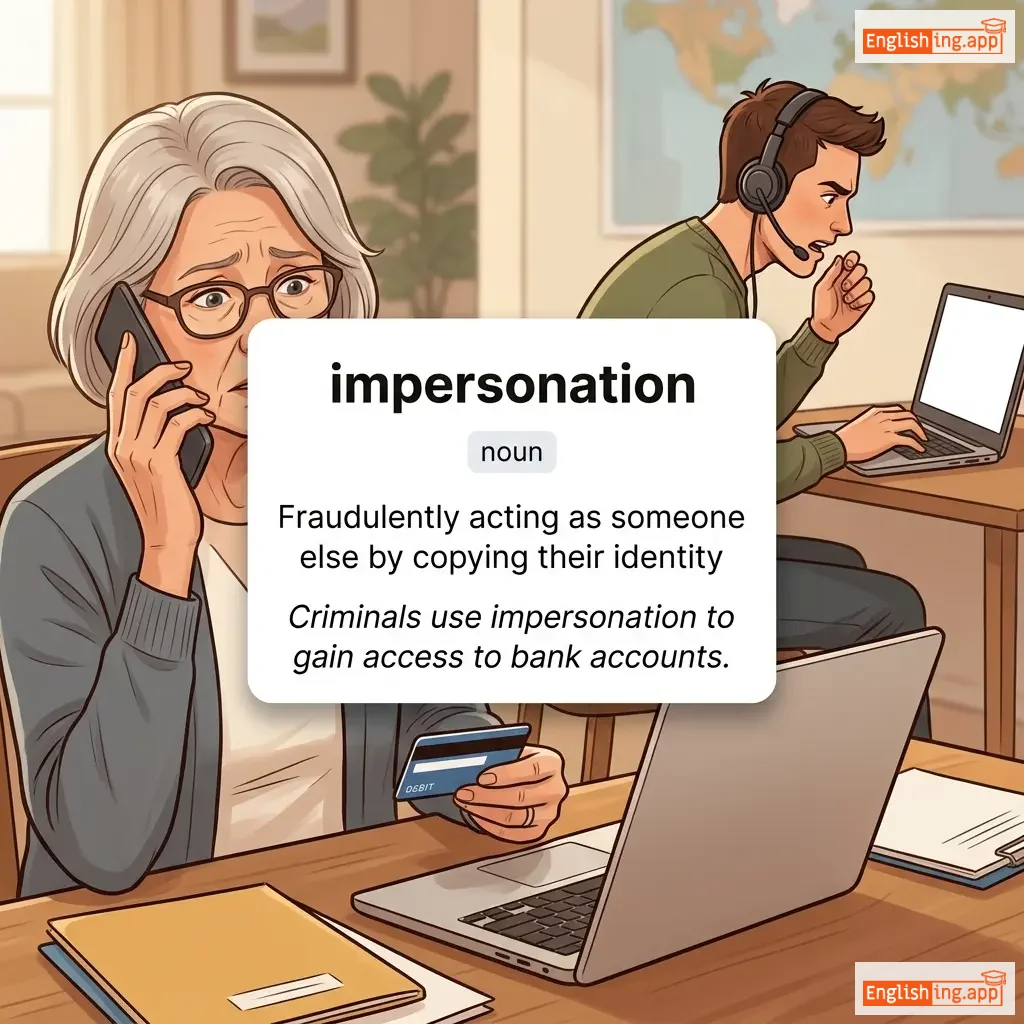
Fraudulently acting as someone else by copying their identity

"Criminals use impersonation to gain access to bank accounts."

"Los criminales usan suplantación de identidad para acceder a cuentas bancarias." (Los criminales usan suplantacion de identidad para acceder a cuentas bancarias.)
noun C1
/ɪmˈpɜːrtɪnəns/
impertinencia (impertinencia)

lack of respect; rudeness

"The teacher was shocked by the student's impertinence."

"El maestro se sorprendió por la impertinencia del estudiante." (El maestro se sorprendió por la impertinencia del estudiante.)
adjective C1
/ɪmˈpɜːrtɪnənt/
impertinente (impertinente)

rude and showing a lack of respect

"It was impertinent of him to question the manager's decision."
"Fue impertinente de su parte cuestionar la decisión del gerente." (Fue impertinente de su parte cuestionar la decisión del gerente.)
impervious definition card — visual illustration of the meaning
adjective C1
/ɪmˈpɜːrviəs/
impermeable (impermeable)

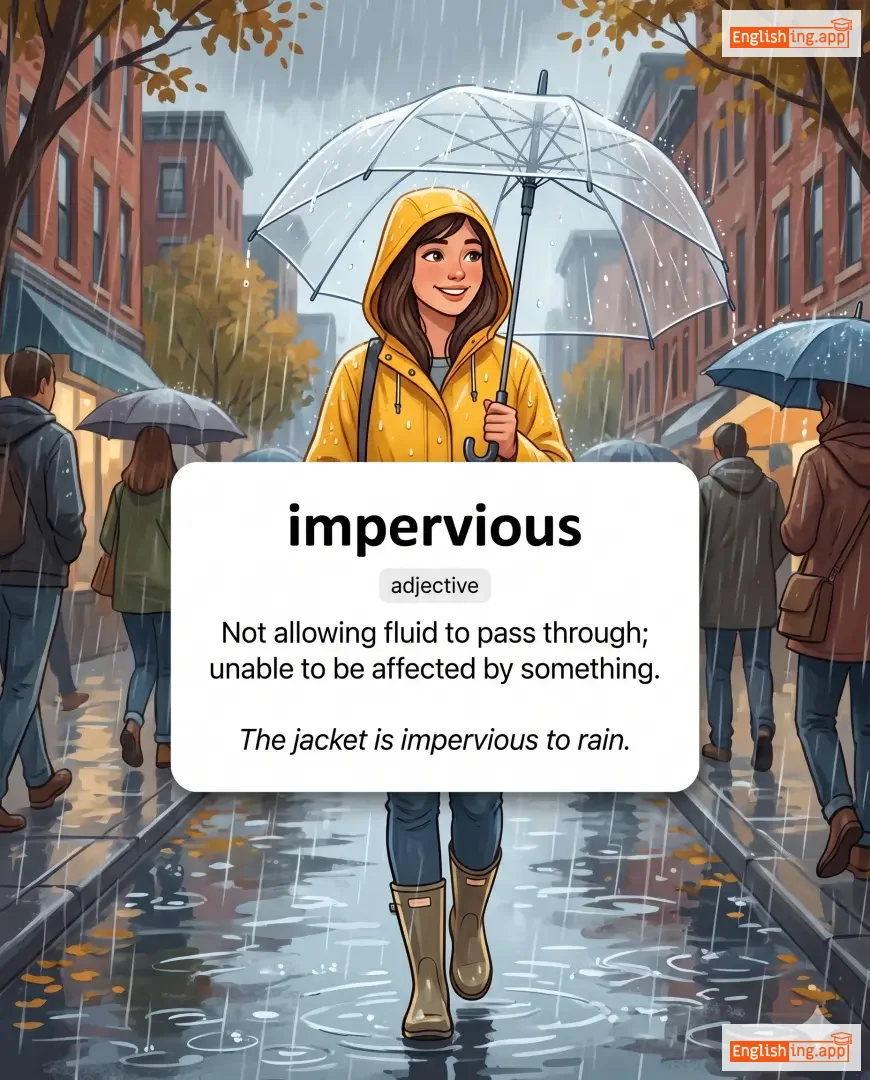
Not allowing fluid to pass through; unable to be affected by something.

"The jacket is impervious to rain."
"La chaqueta es impermeable a la lluvia." (La chaqueta es impermeable a la lluvia.)
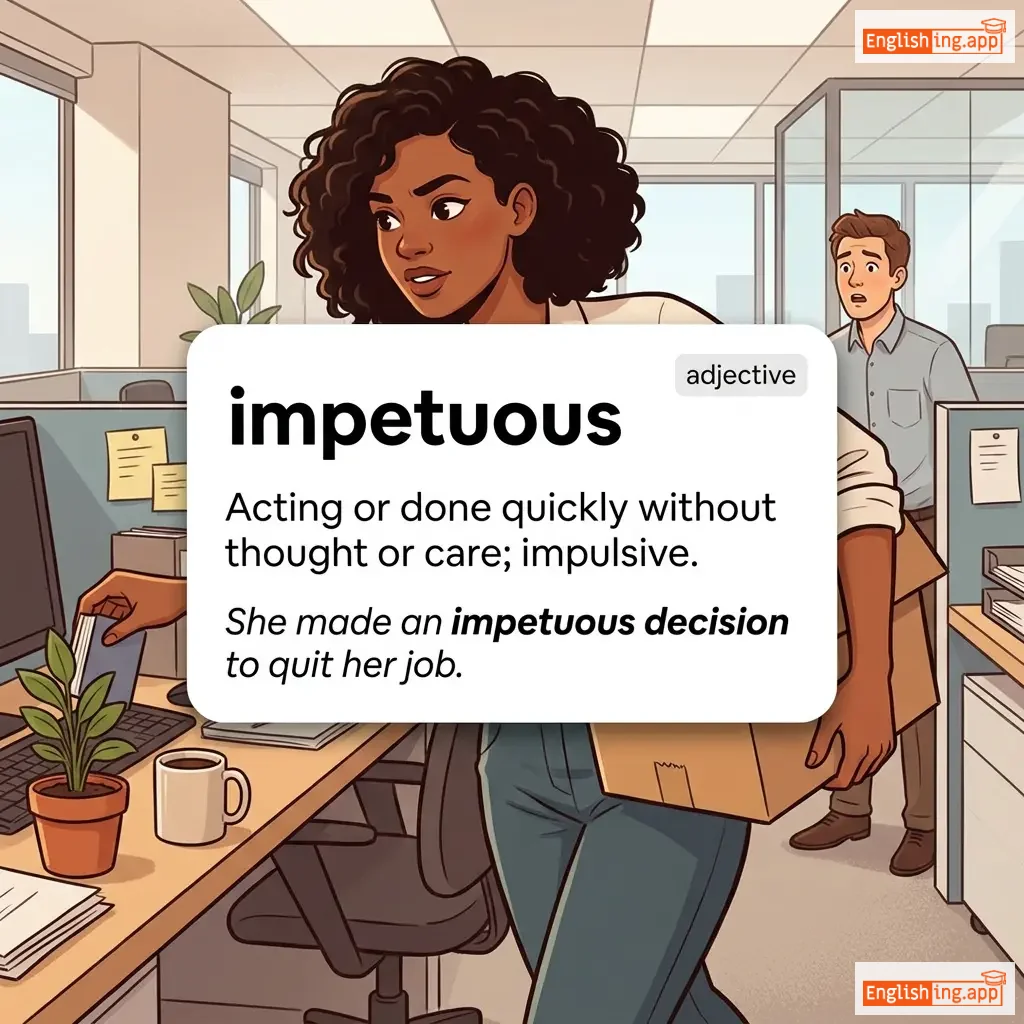
impetuous definition card — visual illustration of the meaning
adjective C1
/ɪmˈpetʃuəs/
impetuoso (impetuoso)

Acting or done quickly without thought or care; impulsive.

"She made an impetuous decision to quit her job."
"Ella tomó una decisión impetuosa de dejar su trabajo." (Ella tomo una decision impetuosa de dejar su trabajo.)
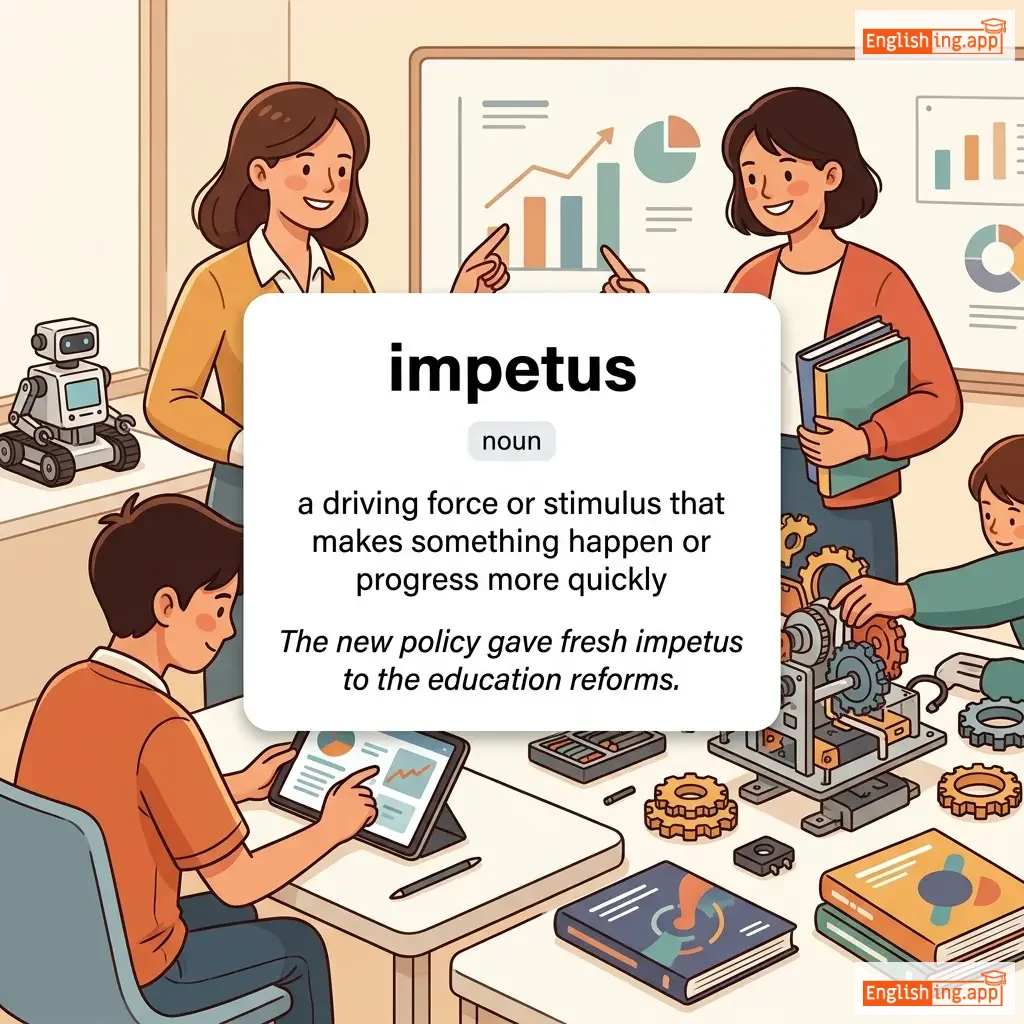
impetus definition card — visual illustration of the meaning
noun C1
/ˈɪmpɪtəs/
impulso (impulso)

a driving force or stimulus that makes something happen or progress more quickly

"The new policy gave fresh impetus to the education reforms."
"La nueva política dio un nuevo impulso a las reformas educativas." (La nueva politica dio un nuevo impulso a las reformas educativas.)
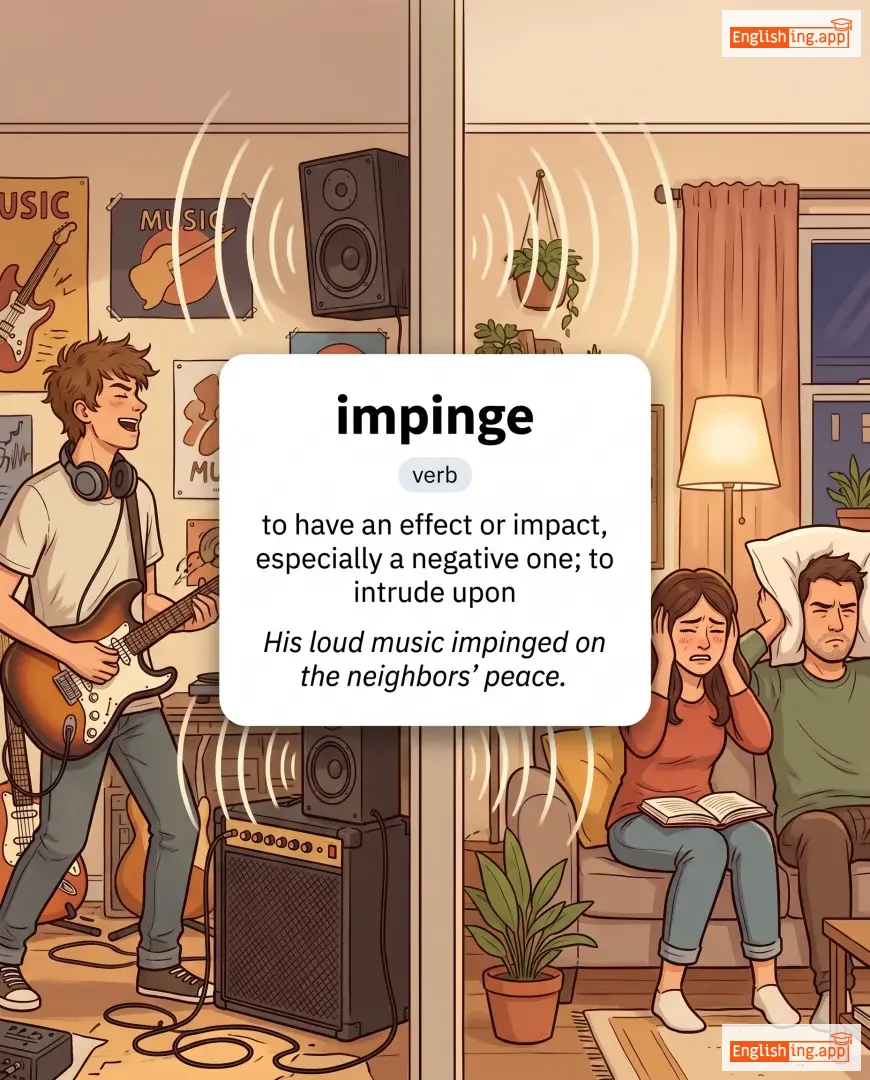
impinge definition card — visual illustration of the meaning
verb C1
/ɪmˈpɪndʒ/
afectar (afectar)

to have an effect or impact, especially a negative one; to intrude upon

"His loud music impinged on the neighbors’ peace."
"Su música alta afectó la paz de los vecinos." (Su musica alta afecto la paz de los vecinos.)
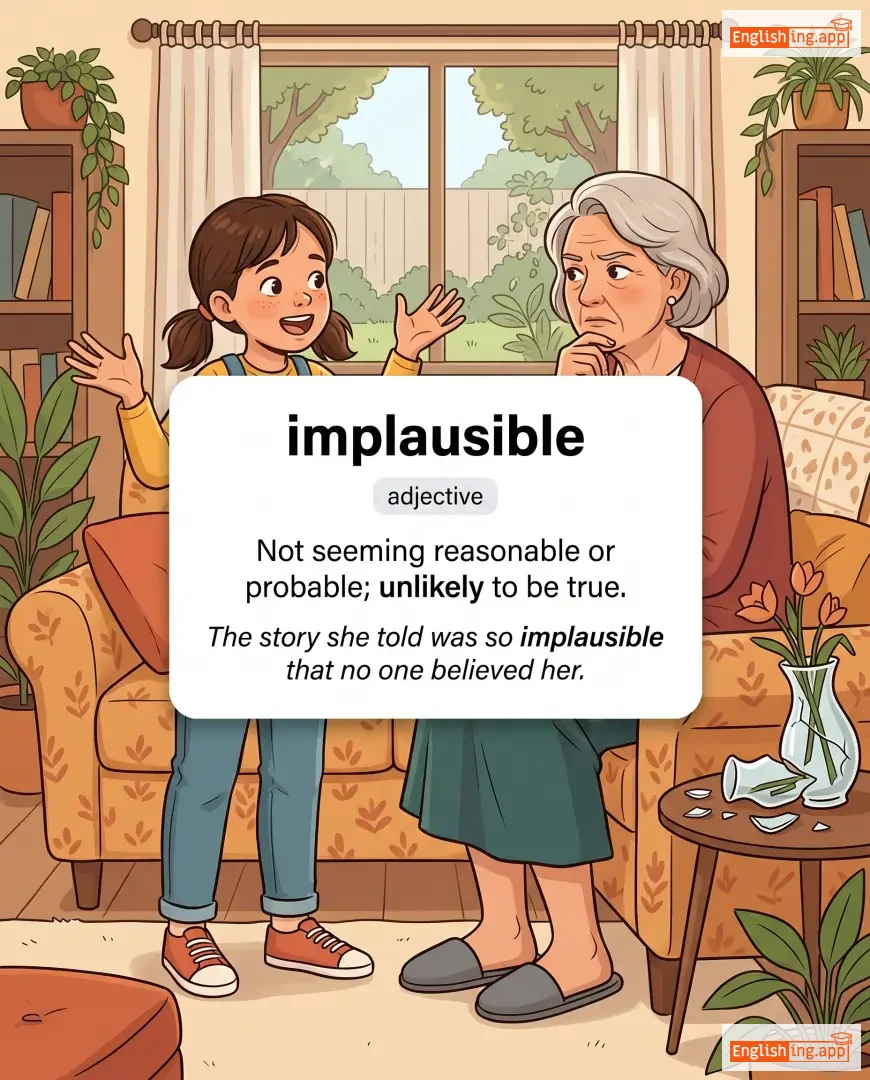
implausible definition card — visual illustration of the meaning
adjective C1
/ɪmˈplɔːzəbl/
implausible (implausible)

Not seeming reasonable or probable; unlikely to be true.

"The story she told was so implausible that no one believed her."

"La historia que ella contó era tan implausible que nadie le creyó." (La historia que ella contó era tan implausible que nadie le creyó.)
verb C1
/ˈɪmplɪˌkeɪt/
implicar (implicar)

To show someone’s involvement in a crime or wrongdoing.

"The evidence implicated several officials in the scandal."
"La evidencia implicó a varios funcionarios en el escándalo." (La evidencia implicó a varios funcionarios en el escándalo.)
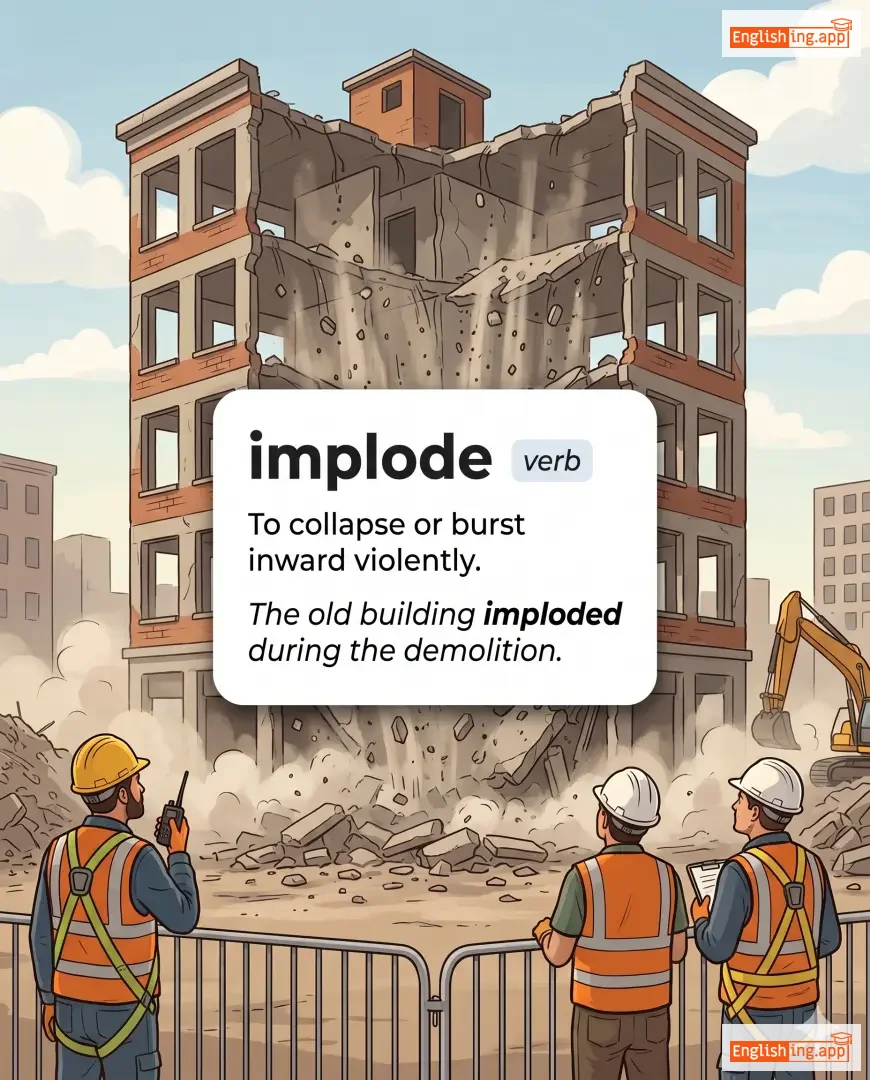
implode definition card — visual illustration of the meaning
verb C1
/ɪmˈploʊd/
implosionar (implosionar)

To collapse or burst inward violently.

"The old building imploded during the demolition."

"El viejo edificio implosionó durante la demolición." (El viejo edificio implosionó durante la demolición.)
verb C1
/ɪmˈplɔːr/
implorar (implorar)

To beg someone earnestly or desperately to do something.

"She implored him to stay with her."

"Ella le imploró que se quedara con ella." (Ella le imploró que se quedara con ella.)
noun C1
/ˌɪmpɔːrˈteɪʃən/
importación (importacion)

The act of bringing goods or services into a country from abroad

"The importation of luxury goods is strictly regulated."

"La importación de productos de lujo está estrictamente regulada." (La importacion de productos de lujo esta estrictamente regulada.)
adjective C1
/ɪmˈpoʊzɪŋ/
imponente (imponente)

having an appearance that is grand, impressive, or commanding

"The castle is an imposing structure overlooking the valley."
"El castillo es una estructura imponente que domina el valle." (El castillo es una estructura imponente que domina el valle.)
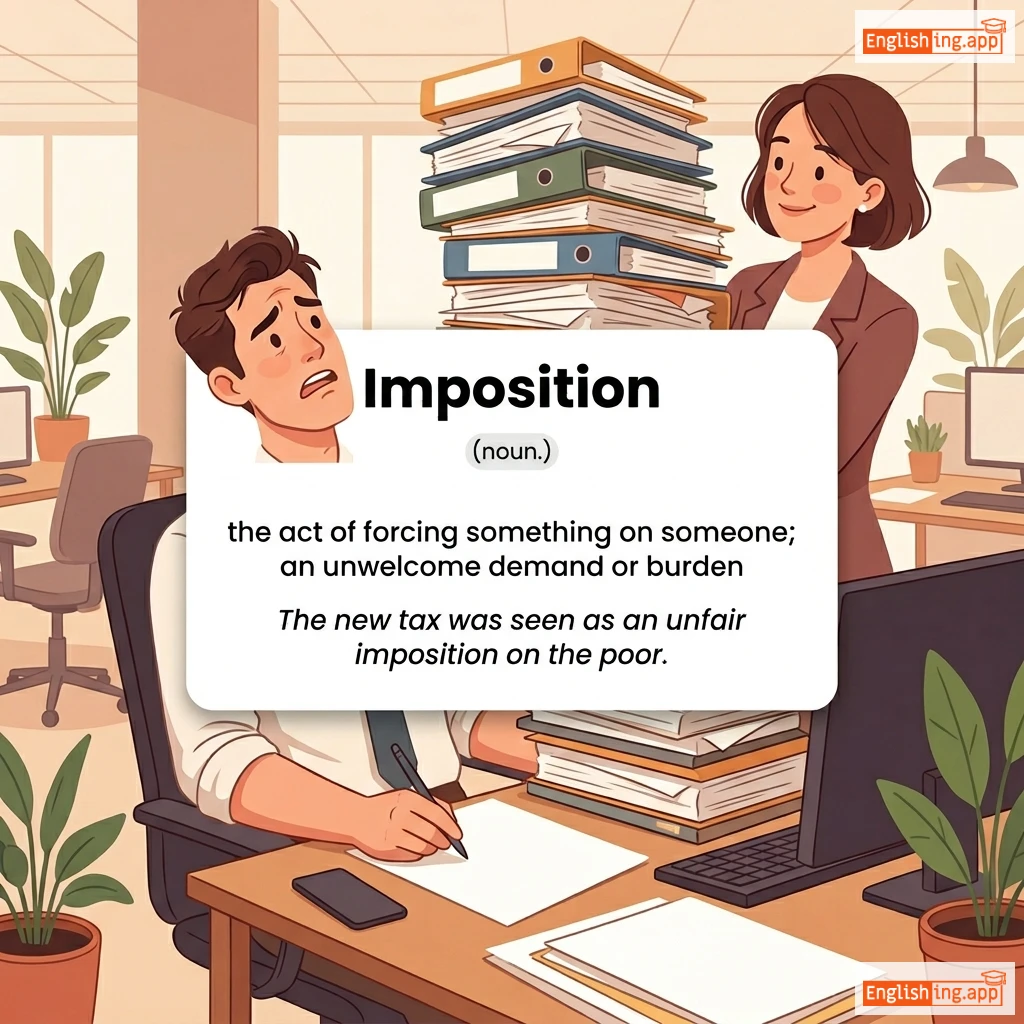
Imposition definition card — visual illustration of the meaning
noun C1
/ˌɪmpəˈzɪʃən/
imposición (imposicion)

the act of forcing something on someone; an unwelcome demand or burden

"The new tax was seen as an unfair imposition on the poor."
"El nuevo impuesto fue visto como una imposición injusta sobre los pobres." (El nuevo impuesto fue visto como una imposición injusta sobre los pobres.)
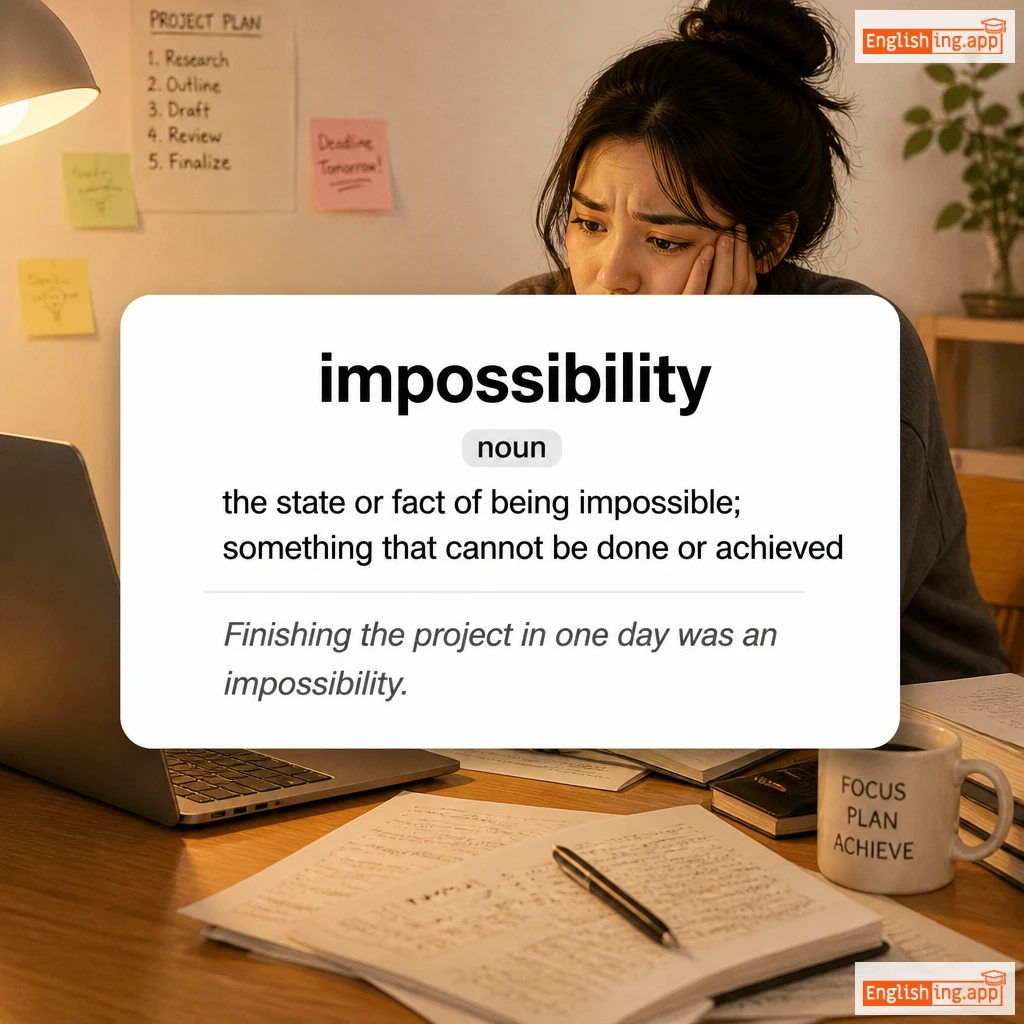
impossibility definition card — visual illustration of the meaning
noun C1
/ɪmˌpɒsəˈbɪlɪti/
imposibilidad (imposibilidad)

the state or fact of being impossible; something that cannot be done or achieved

"Finishing the project in one day was an impossibility."
"Terminar el proyecto en un día fue una imposibilidad." (terminar el proyecto en un dia fue una imposibilidad)
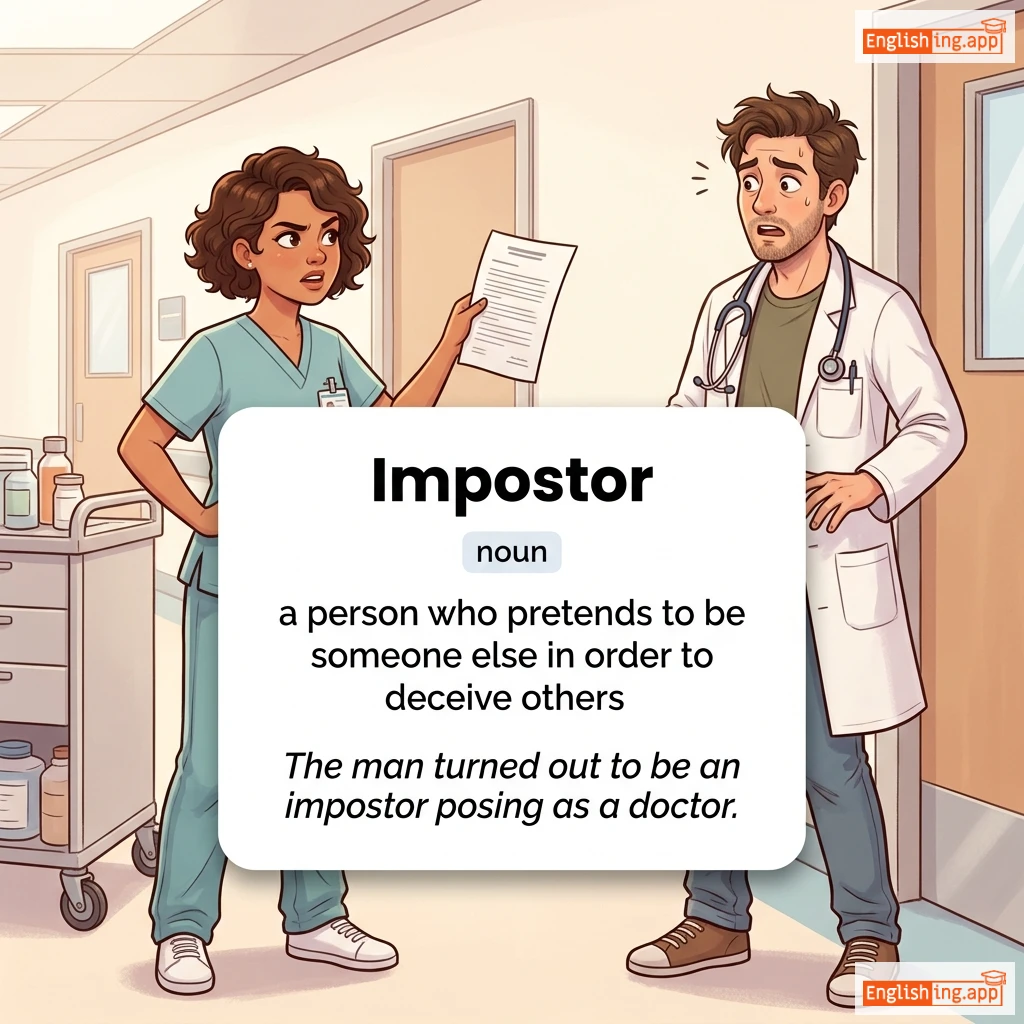
Impostor definition card — visual illustration of the meaning
noun C1
/ɪmˈpɑːstər/
impostor, fraude (impostor, fraude)

a person who pretends to be someone else in order to deceive others

"The man turned out to be an impostor posing as a doctor."

"El hombre resultó ser un impostor que se hacía pasar por doctor." (El hombre resultó ser un impostor que se hacía pasar por doctor.)
adjective C1
/ˈɪmpətənt/
impotente (impotente)

Lacking power, ability, or strength to take effective action.

"The citizens felt impotent against the corrupt system."

"Los ciudadanos se sintieron impotentes contra el sistema corrupto." (Los ciudadanos se sintieron impotentes contra el sistema corrupto.)
verb C1
/ɪmˈpɒvərɪʃ/
empobrecer (empobrecer)

To make someone poor or reduce the quality or richness of something.

"The long war impoverished the entire nation."

"La larga guerra empobreció a toda la nación." (La larga guerra empobreció a toda la nación.)
adjective C1
/ˌɪmprɪˈsaɪs/
impreciso (impreciso)

Not exact or accurate; vague.

"His explanation was too imprecise to be helpful."
"Su explicación era demasiado imprecisa para ser útil." (Su explicacion era demasiado imprecisa para ser util.)
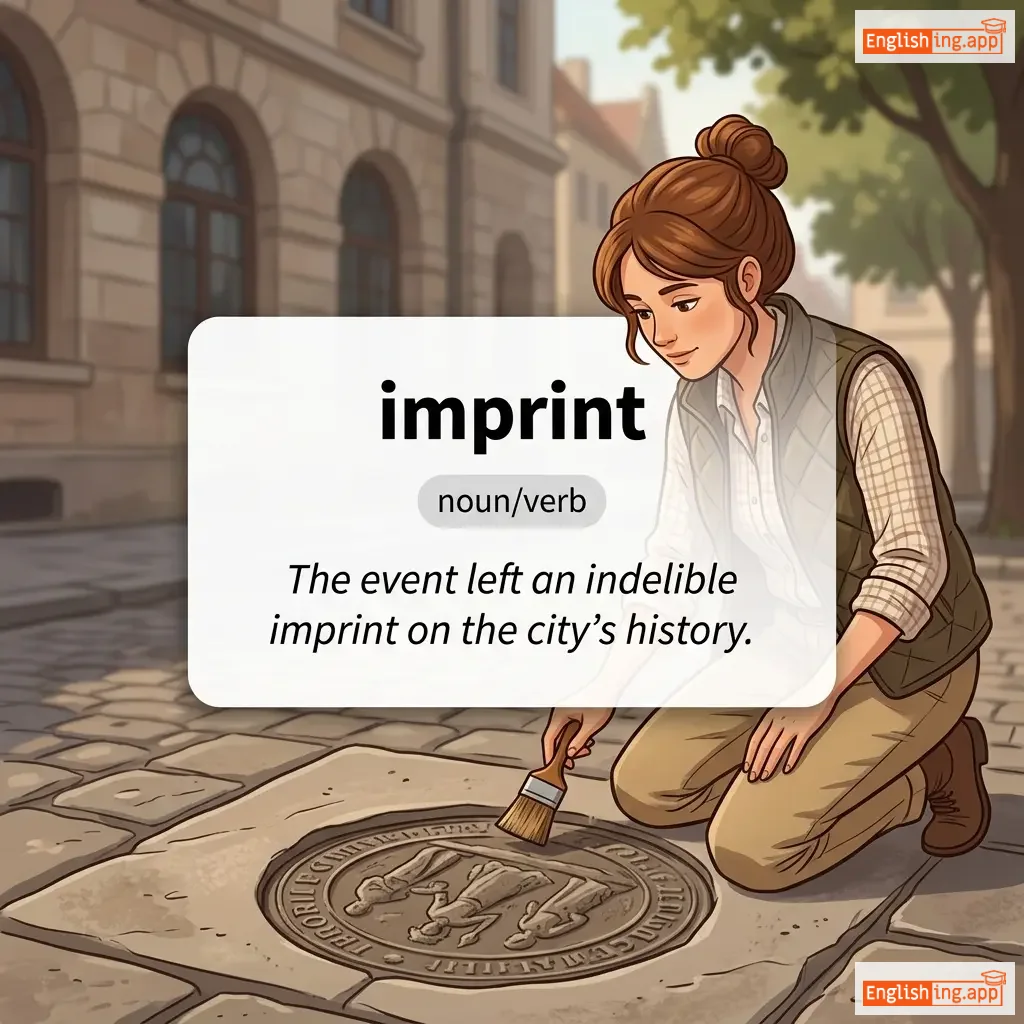
imprint definition card — visual illustration of the meaning
noun/verb C1
/ˈɪmprɪnt/
huella (imprint)

A mark or impression made by pressure; to establish or fix firmly in someone's mind.

"The event left an indelible imprint on the city's history."
"El evento dejó una huella indeleble en la historia de la ciudad." (El evento dejo una huella indeleble en la historia de la ciudad.)
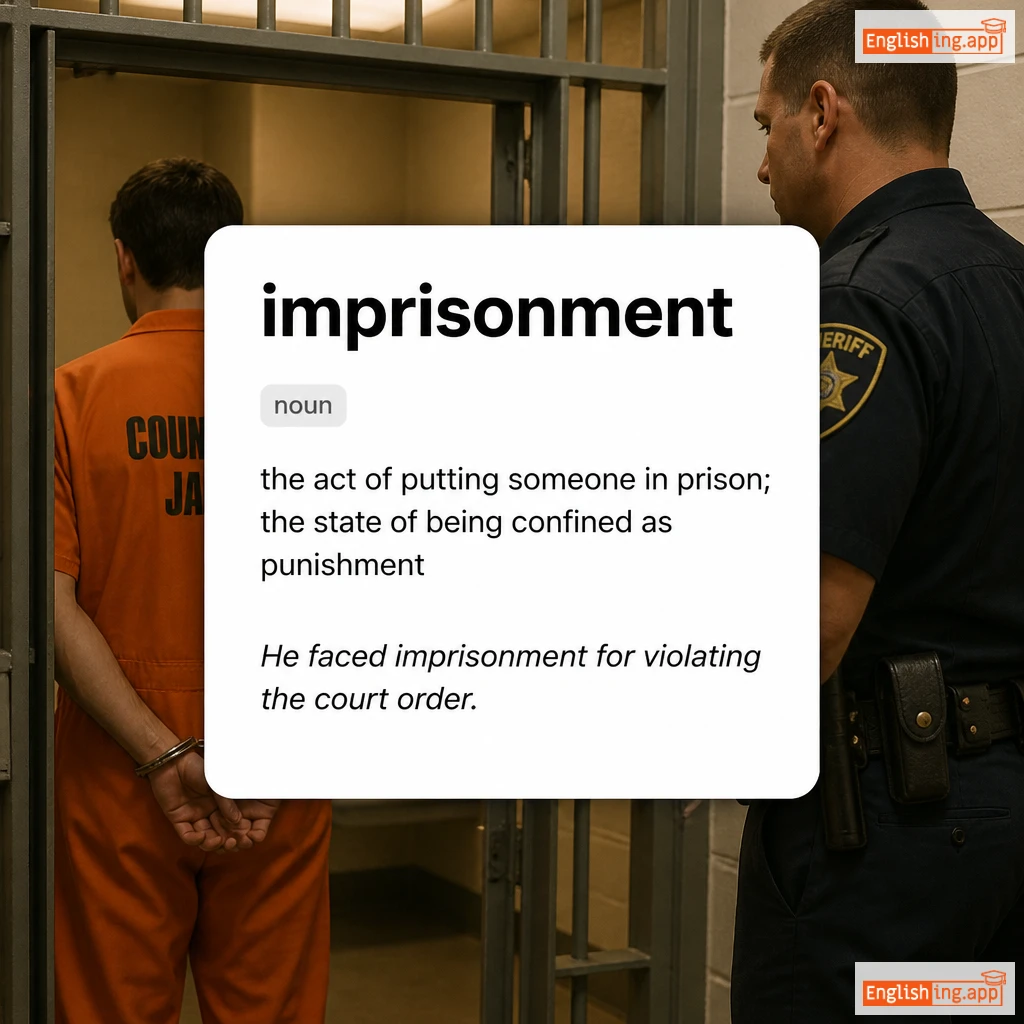
imprisonment definition card — visual illustration of the meaning
noun C1
/ɪmˈprɪzənmənt/
encarcelamiento (encarcelamiento)

the act of putting someone in prison; the state of being confined as punishment

"He faced imprisonment for violating the court order."

"Se enfrentó al encarcelamiento por violar la orden judicial." (Se enfrento al encarcelamiento por violar la orden judicial)
adjective C1
/ɪmˈprɒbəbl/
improbable (improbable)

Not likely to be true or to happen.

"It seems improbable that he will arrive on time."
"Parece improbable que llegue a tiempo." (Parece improbable que llegue a tiempo.)
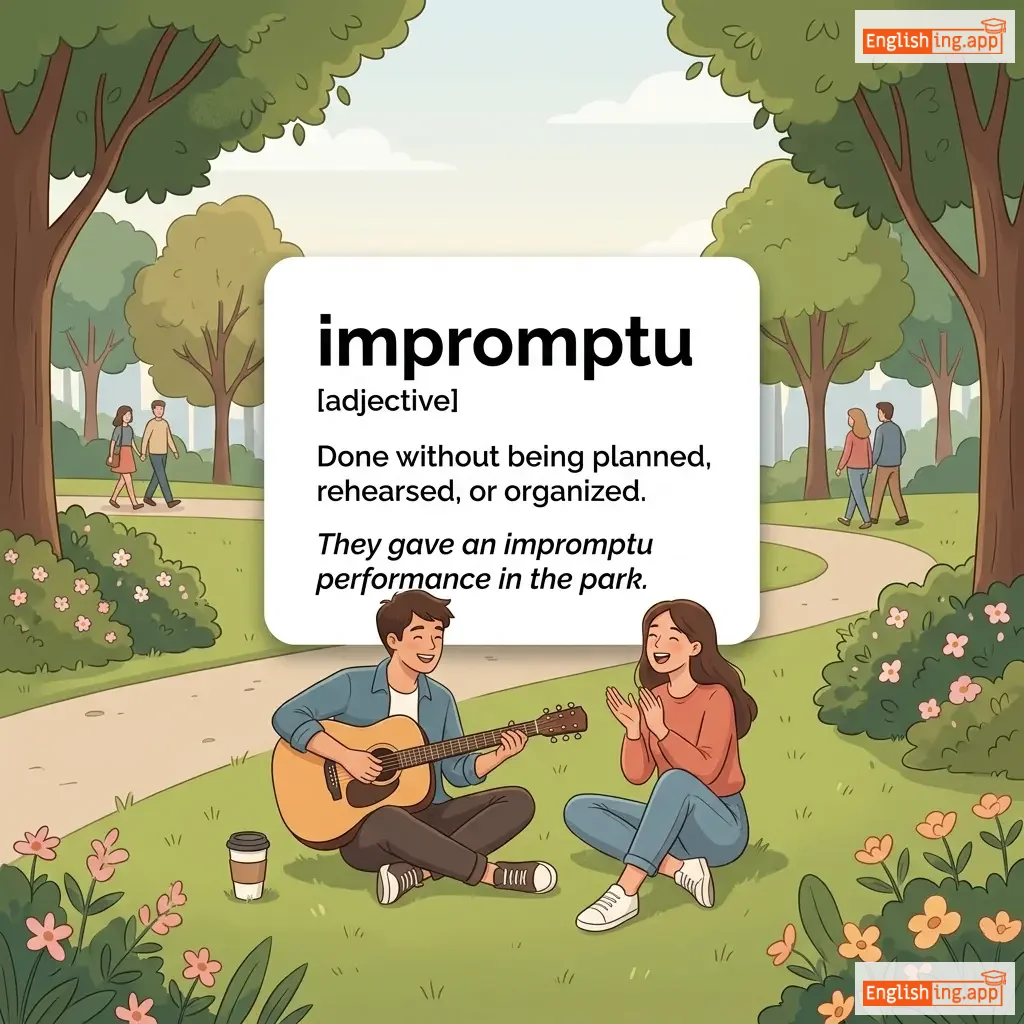
impromptu definition card — visual illustration of the meaning
adjective C1
/ɪmˈprɒmptjuː/
improvisado (improvisado)

Done without being planned, rehearsed, or organized.

"They gave an impromptu performance in the park."

"Ellos dieron una actuación improvisada en el parque." (Ellos dieron una actuacion improvisada en el parque.)
verb C1
/ˈɪmprəvaɪz/
improvisar (improvisar)

To create or perform something spontaneously without preparation.

"The actor had to improvise his lines when he forgot the script."

"El actor tuvo que improvisar sus líneas cuando olvidó el guion." (El actor tuvo que improvisar sus líneas cuando olvidó el guion.)
adjective C1
/ˈɪmpjəd(ə)nt/
descarado, insolente (descarado, insolente)

not showing due respect for another person; rude

"The impudent child talked back to the teacher."

"El niño descarado le contestó al maestro." (El niño descarado le contestó al maestro.)
adjective C1
/ɪmˈpʌlsɪv/
impulsivo, de impulso (impulsivo, de impulso)

acting suddenly without careful thought

"She made an impulsive decision to buy the car."
"Tomó una decisión impulsiva de comprar el coche." (Tomó una decisión impulsiva de comprar el coche.)
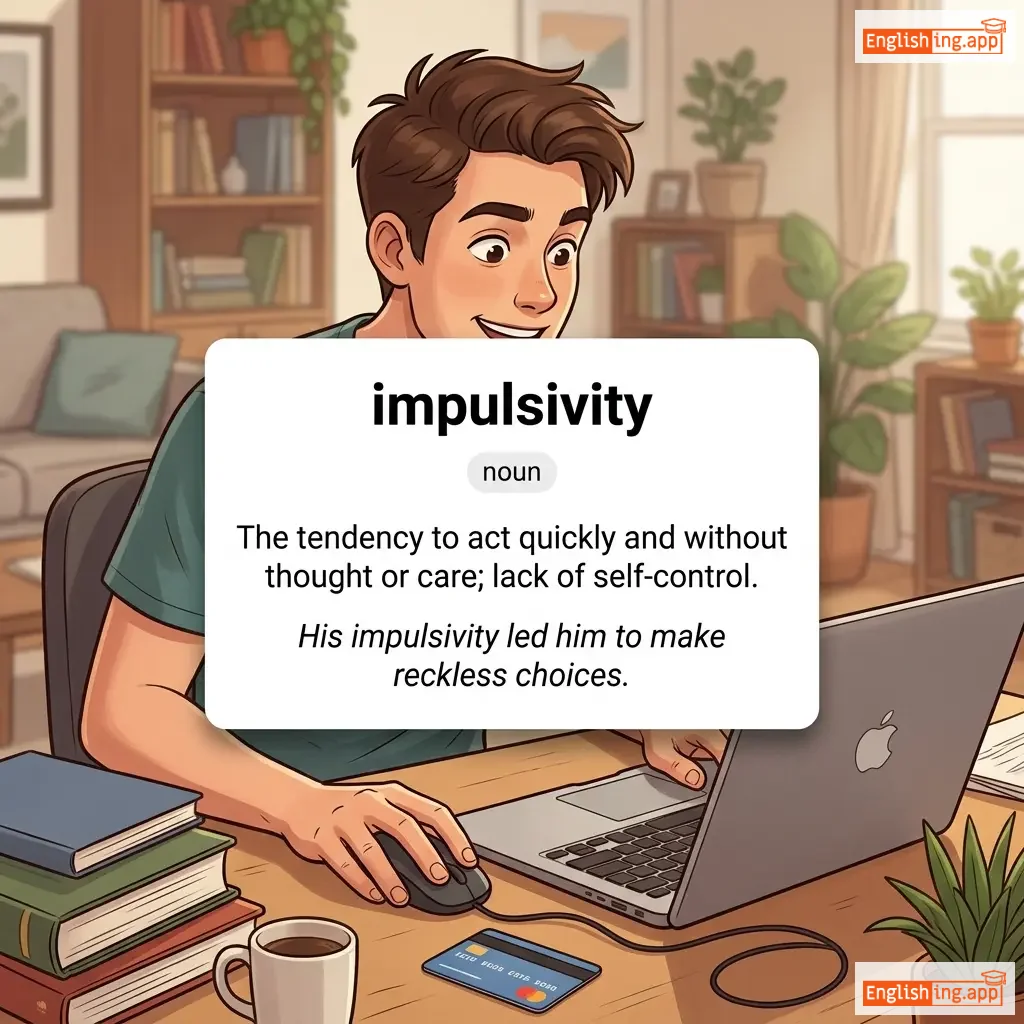
impulsivity definition card — visual illustration of the meaning
noun C1
ˌɪm.pʌlˈsɪv.ɪ.ti
impulsividad (impulsividad)

The tendency to act quickly and without thought or care; lack of self-control.

"His impulsivity led him to make reckless choices."
"Su impulsividad lo llevó a tomar decisiones imprudentes." (Su impulsividad lo llevó a tomar decisiones imprudentes.)
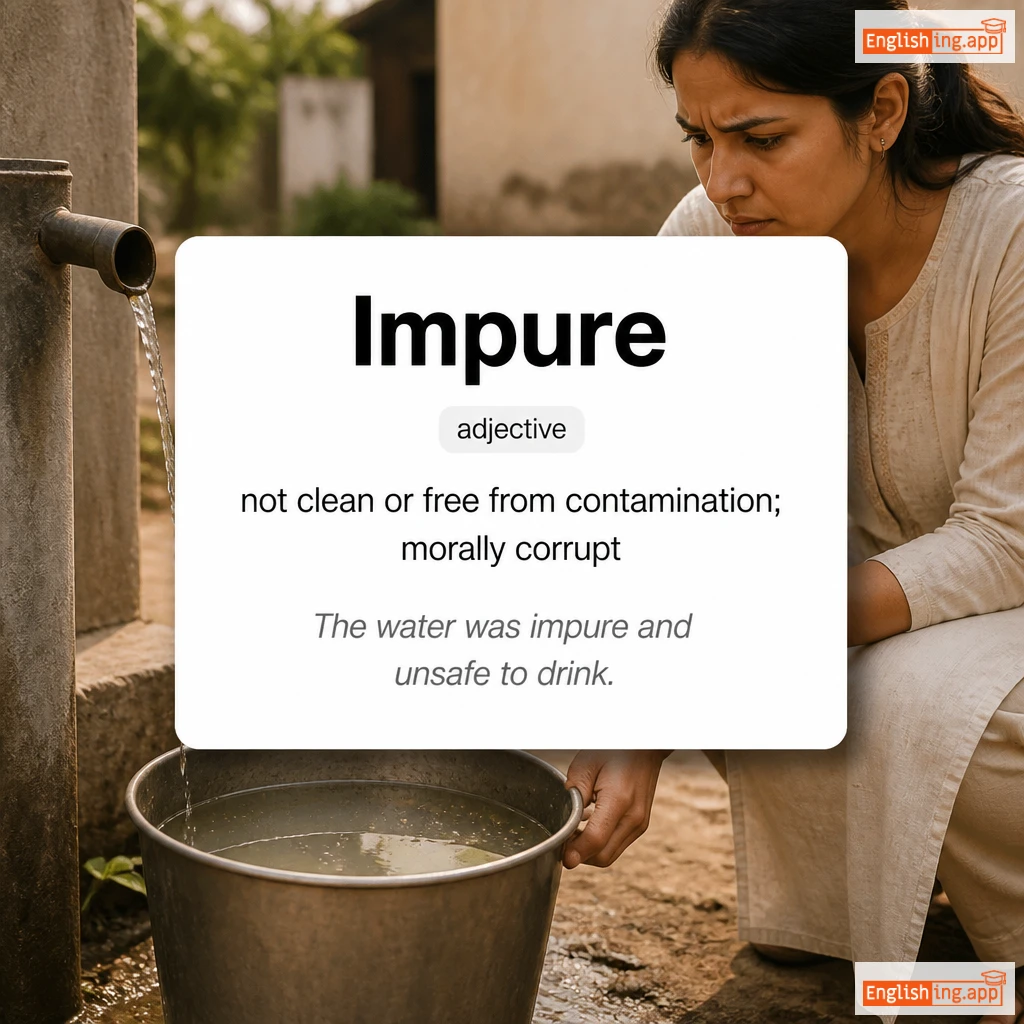
Impure definition card — visual illustration of the meaning
adjective C1
/ɪmˈpjʊər/
impuro (impuro)

not clean or free from contamination; morally corrupt

"The water was impure and unsafe to drink."
"El agua estaba impura y no era segura para beber." (El agua estaba impura y no era segura para beber.)
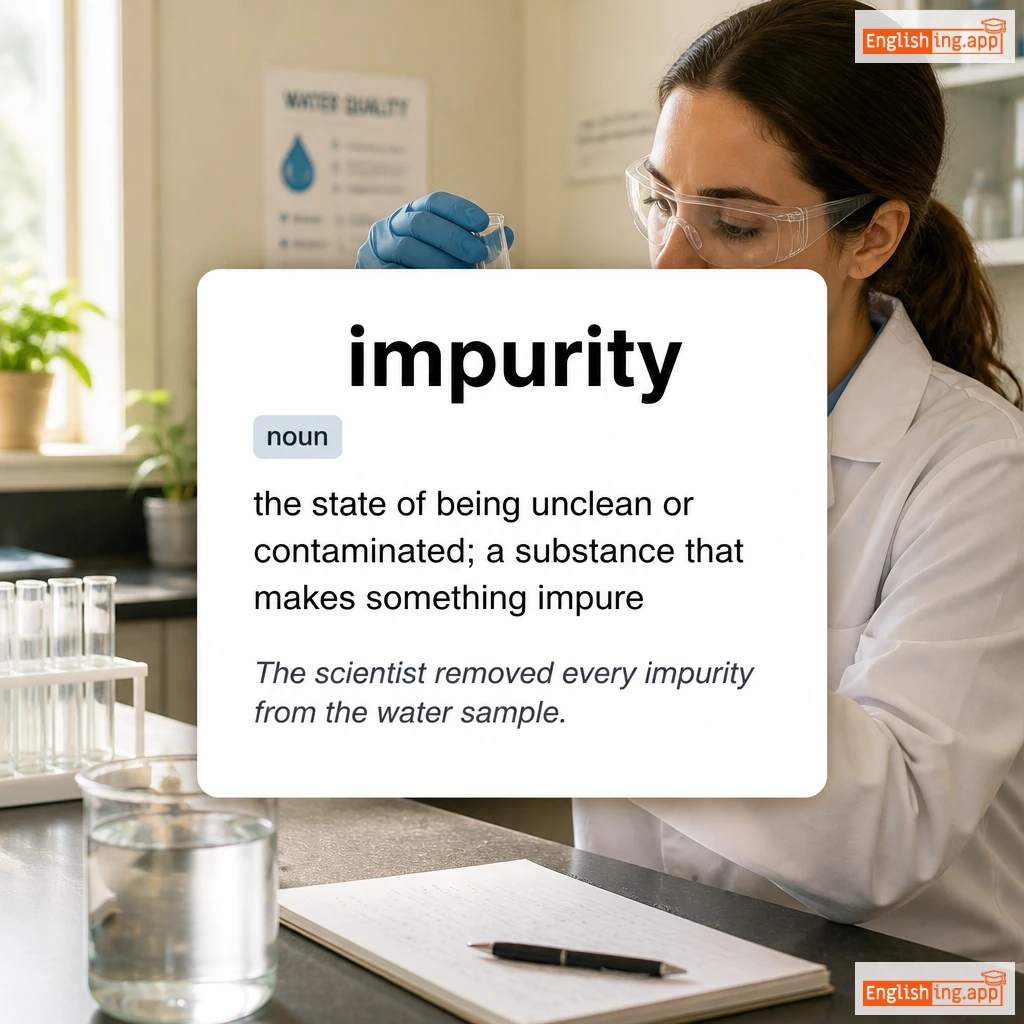
impurity definition card — visual illustration of the meaning
noun C1
/ɪmˈpjʊərəti/
impureza (impureza)

the state of being unclean or contaminated; a substance that makes something impure

"The scientist removed every impurity from the water sample."

"El científico eliminó toda impureza de la muestra de agua." (el cientifico elimino toda impureza de la muestra de agua)
adjective C1
/ˌɪnækˈsɛsəbl/
inaccesible (inaccesible)

unable to be reached, entered, or understood

"The remote village is almost inaccessible during the rainy season."

"El pueblo remoto es casi inaccesible durante la temporada de lluvias." (El pueblo remoto es casi inaccesible durante la temporada de lluvias.)