
Словари

Словарь английского языка | Значения слов, определения и примеры

Idealism definition card — visual illustration of the meaning
noun C1
/aɪˈdiː.ə.lɪ.zəm/
Идеализм (Idealizm)

the pursuit of high principles and noble goals; unrealistic pursuit of perfection

"His youthful idealism motivated him to join various social justice movements."

"Его юношеский идеализм мотивировал его присоединиться к различным движениям социальной справедливости." (Ego yunoshestkiy idealizm motiviroval ego prisoyedinit'sya k razlichnym dvizhheniyam sotsial'noy spravedlivosti.)
adjective C1
/ˌaɪdiəˈlɪstɪk/
идеалистичный (idealisticniy)

pursuing high principles or ideals; unrealistically optimistic

"She has an idealistic view of changing the world."

"У неё идеалистическое представление о том, как изменить мир." (U neyo idealisticheskoe predstavlenie o tom, kak izmenit' mir.)
verb C1
/aɪˈdiː.ə.laɪz/
идеализировать (idealizirovat')

To regard or represent something as perfect or better than it really is.

"Children often idealize their parents."
"Дети часто идеализируют своих родителей." (Deti chasto idealiziruyut svoikh roditeley.)
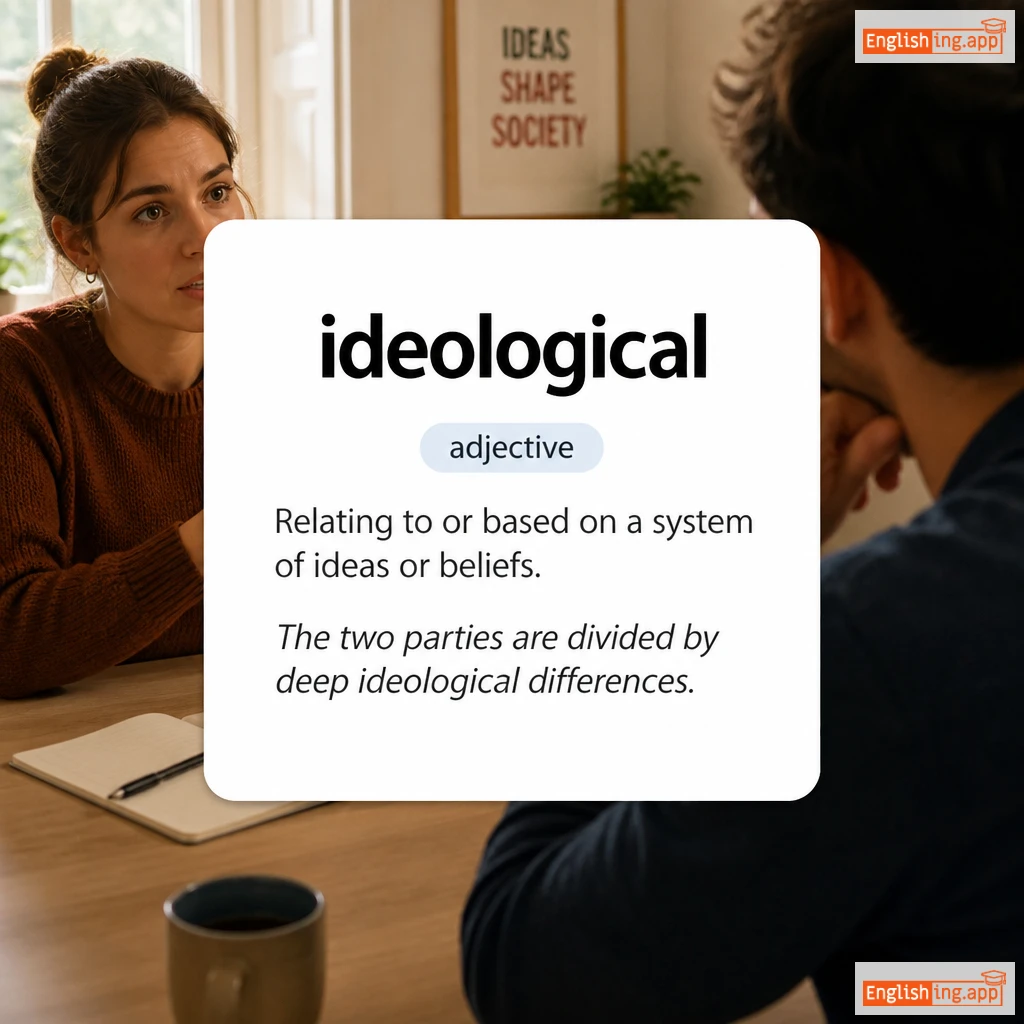
ideological definition card — visual illustration of the meaning
adjective C1
/ˌaɪ.di.əˈlɒdʒ.ɪ.kəl/
идеологический (ideologicheskiy)

Relating to or based on a system of ideas or beliefs.

"The two parties are divided by deep ideological differences."
"Обе партии разделены глубокими идеологическими разногласиями." (Obe partii razdeleny glubokimi ideologicheskimi raznoglasiya.)
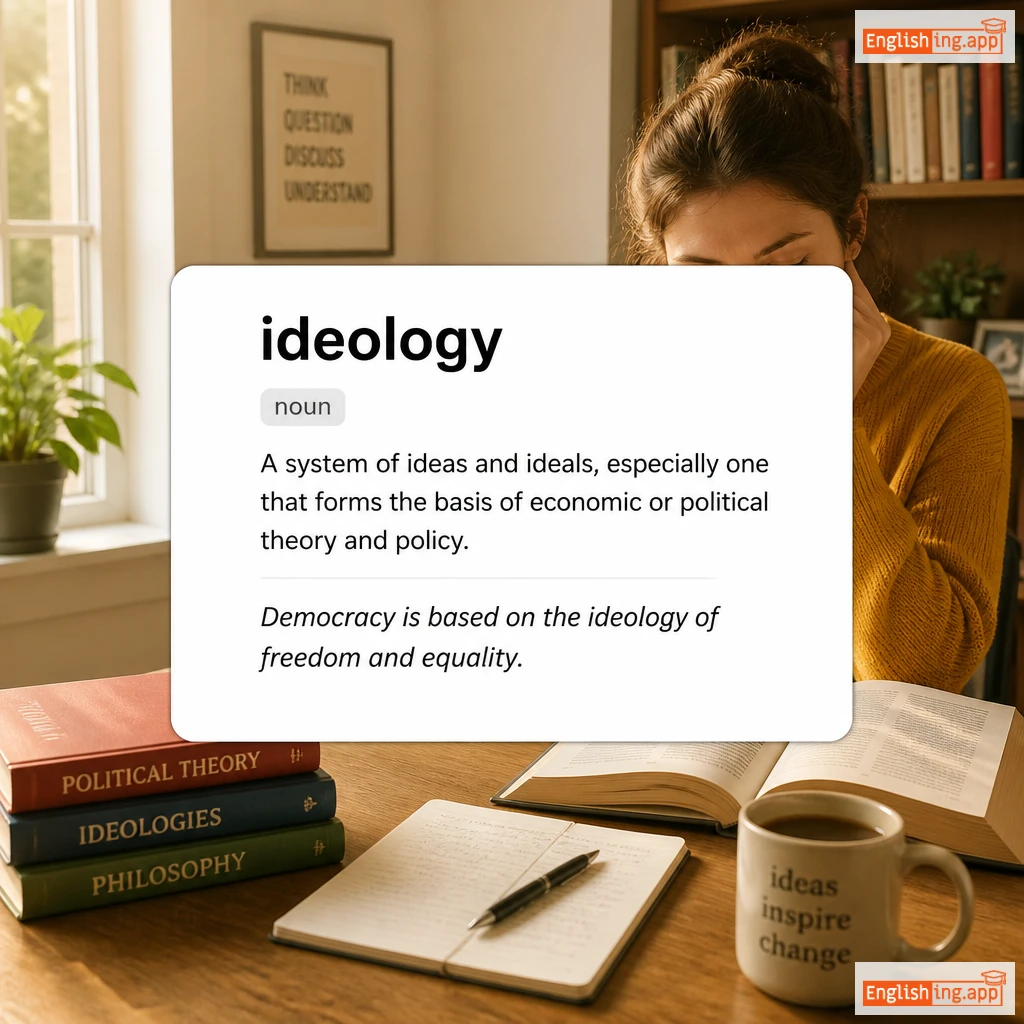
ideology definition card — visual illustration of the meaning
noun C1
/ˌaɪ.diˈɒl.ə.dʒi/
идеология (ideologiya)

A system of ideas and ideals, especially one that forms the basis of economic or political theory and policy.

"Democracy is based on the ideology of freedom and equality."

"Демократия основана на идеологии свободы и равенства." (Demokratiya osnova na ideologii svobody i ravenstva.)
noun C1
/ˈɪd.i.əm/
идиома (idioma)

A group of words whose meaning is different from the meanings of the individual words.

"The idiom 'break the ice' means to start a conversation in a friendly way."
"Идиома 'сломать лед' означает начать разговор дружелюбным способом." (Idiyoma 'slomat' led' oznachayet nachat' razgovor druzhelyubnym sposobom.)
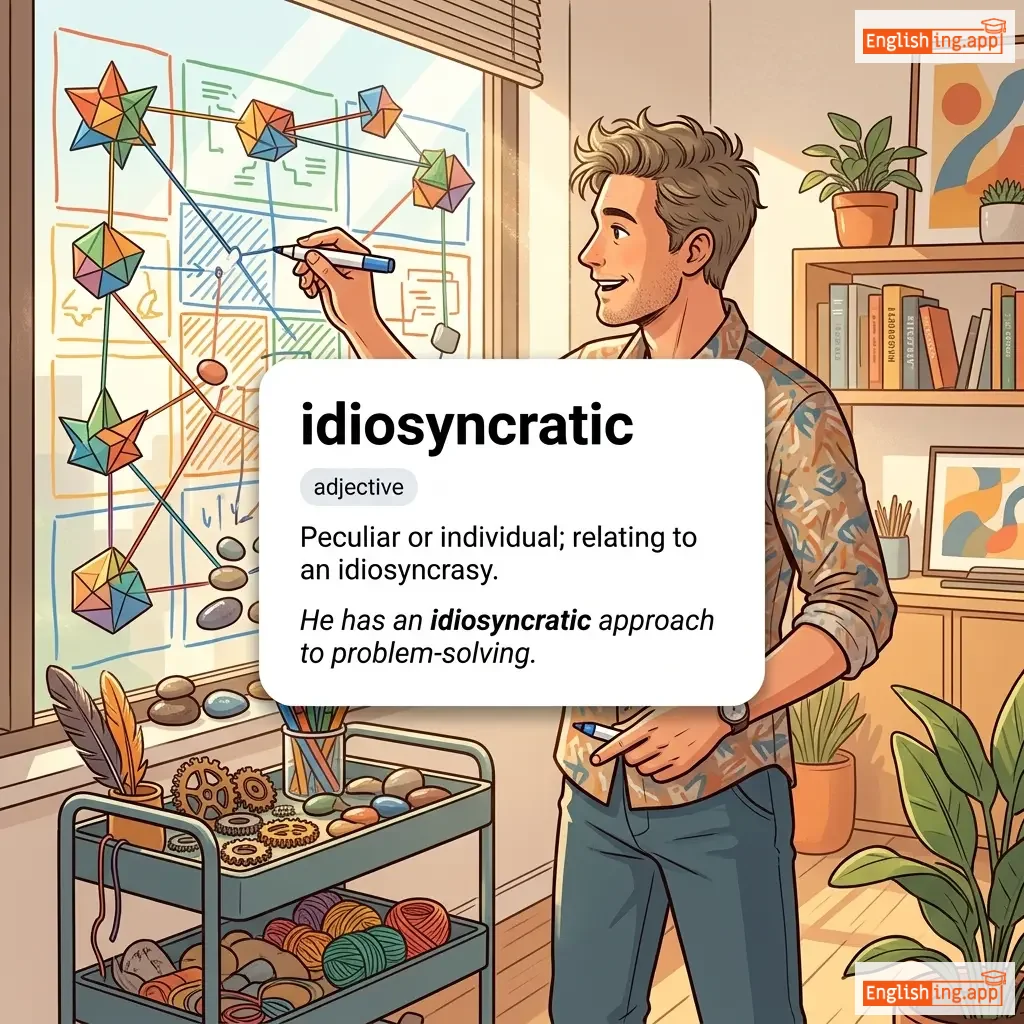
idiosyncratic definition card — visual illustration of the meaning
adjective C1
/ˌɪdiəsɪnˈkrætɪk/
эксцентричный (ekstsentrichnyj)

Peculiar or individual; relating to an idiosyncrasy.

"He has an idiosyncratic approach to problem-solving."

"У него эксцентричный подход к решению проблем." (U nego ekscentrichnyj podkhod k resheniyu problem.)
verb C1
/ˈaɪdəlaɪz/
идолизировать (idolizirovat')

To admire or worship someone excessively.

"Fans often idolize celebrities for their talent and lifestyle."

"Фанаты часто идеализируют знаменитостей за их талант и стиль жизни." (Fanaty chasto idealiziruyut znamenitostey za ikh talant i stil' zhizni.)
adjective C1
/aɪˈdɪlɪk/
идиллический и красивый (idilicheskiy i krasivyy)

Like an idyll; extremely happy, peaceful, or picturesque.

"They enjoyed an idyllic vacation by the sea."
"Они наслаждались идиллическим отдыхом у моря." (Oni naslazhdalis' idilicheskim otdykhom u morya.)
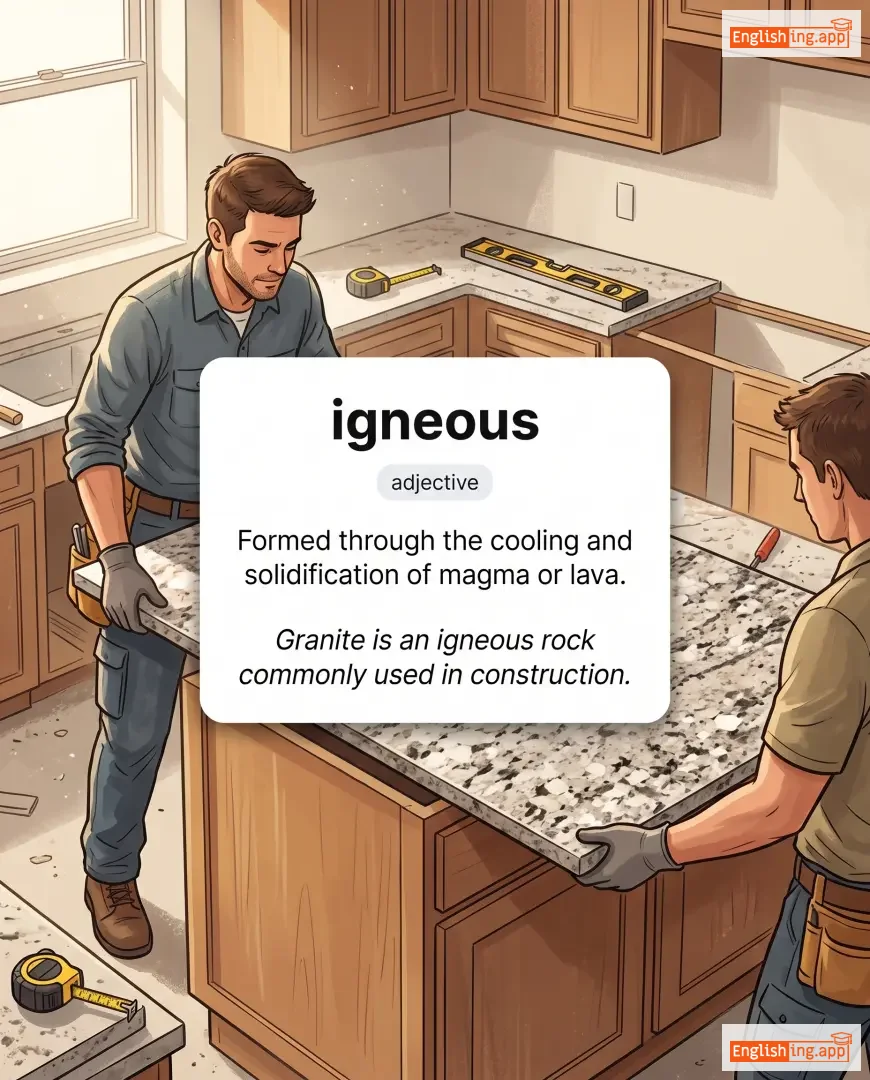
igneous definition card — visual illustration of the meaning
adjective C1
/ˈɪɡ.ni.əs/
магматический (magmaticheskiy)

Formed through the cooling and solidification of magma or lava.

"Granite is an igneous rock commonly used in construction."

"Гранит - это магматическая порода, которая часто используется в строительстве." (Granit - eto magmaticheskaya poroda, kotoraya chasto ispol'zuyetsya v stroitel'stve.)
verb C1
/ɪɡˈnaɪt/
зажигать (zazhigat')

To catch fire or cause to catch fire; to start or arouse.

"The sparks ignited the dry leaves in seconds."
"Искры воспламенили сухие листья за считанные секунды." (Iskry vosplamenili sukhie list'ya za schitannye sekundy.)
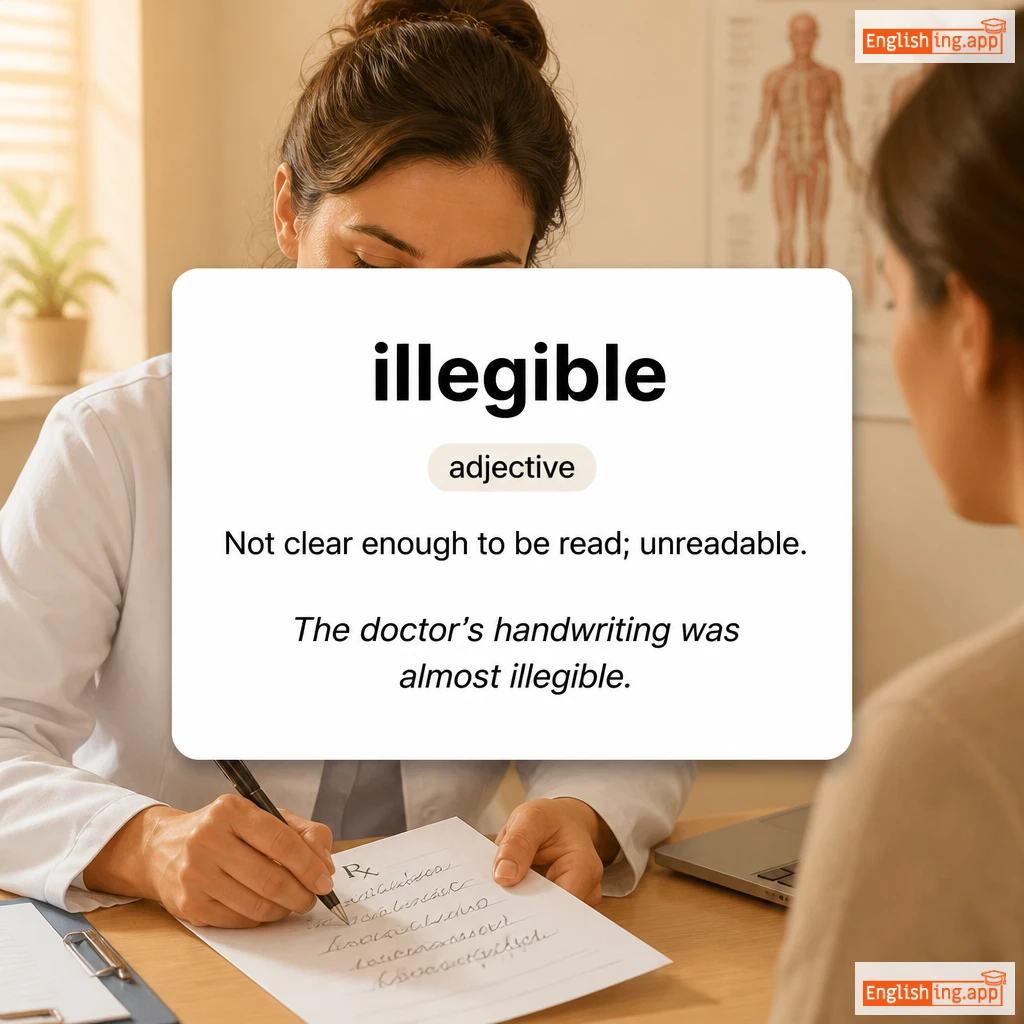
illegible definition card — visual illustration of the meaning
adjective C1
/ɪˈledʒ.ə.bəl/
неразборчивый (nerazborchivyy)

Not clear enough to be read; unreadable.

"The doctor’s handwriting was almost illegible."

"Рукопись врача была почти неразборчивой." (Rukopis' vracha byla pochti nerazborchivoy.)
adjective C1
/ˌɪlɪˈdʒɪtɪmət/
незаконный (nezakonny)

Not authorized by law, rules, or standards; not recognized as valid.

"The court ruled the contract to be illegitimate."

"Суд постановил, что контракт является незаконным." (Sud postanovil, chto kontrakt yavyalistsya nezakonny.)
adjective C1
/ɪˈlɪsɪt/
незаконный (nezakonny)

Forbidden by law, rules, or custom.

"The police shut down the illicit drug operation."
"Полиция закрыла незаконную операцию с наркотиками." (Politsiya zakryla nezakonnuu operatsiyu s narkotikami.)
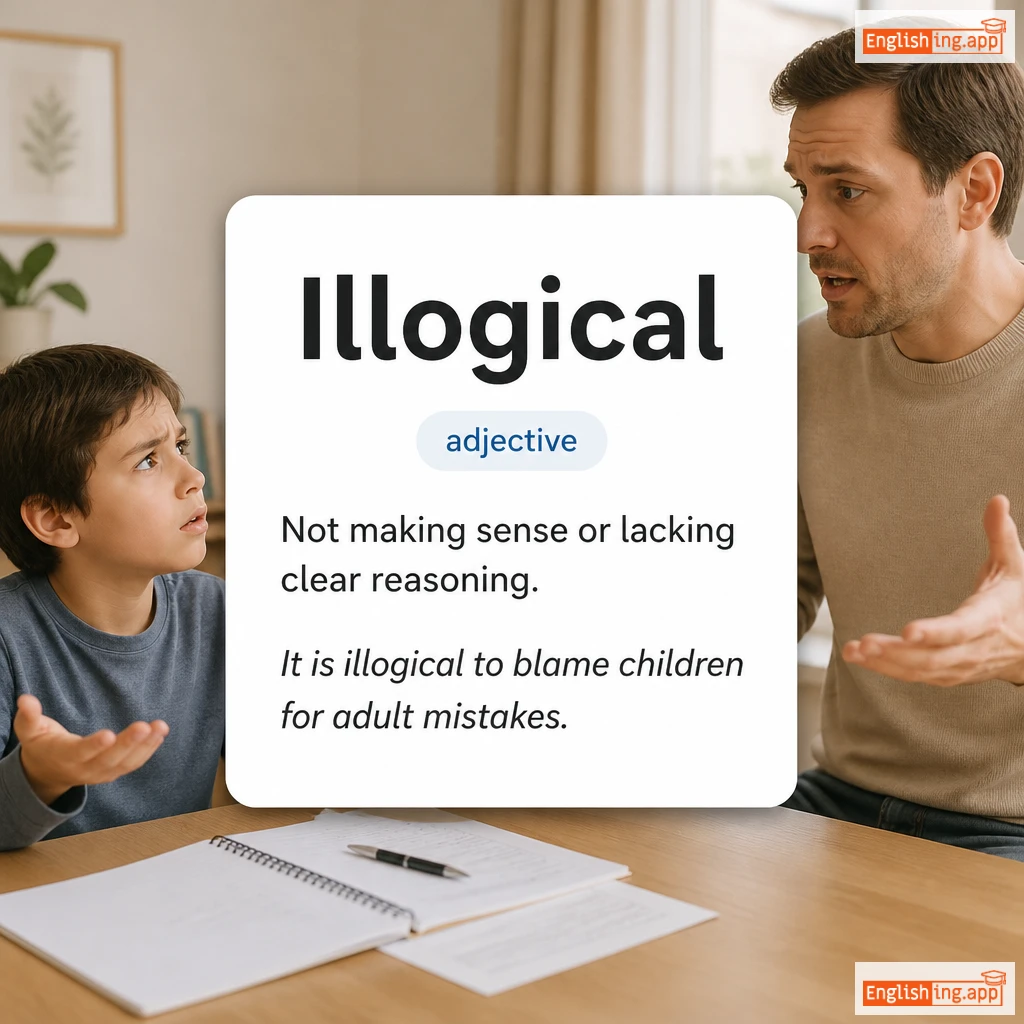
Illogical definition card — visual illustration of the meaning
adjective C1
/ɪˈlɒdʒɪkl/
иллогичный (illogichnyy)

Not making sense or lacking clear reasoning.

"It is illogical to blame children for adult mistakes."

"Нелогично винить детей за ошибки взрослых." (Nelogichno vinit' detey za oshibki vzroslykh.)
verb C1
/ɪˈluːmɪneɪt/
освещать (osveshchat)

To light up or make something clearer.

"Streetlights illuminate the road at night."

"Уличные фонари освещают дорогу ночью." (Ulichnye fonari osveshchayut dorogu noch'yu.)
noun C1
/ɪˌluːmɪˈneɪʃən/

the act of lighting something or making something clear

"The street was filled with bright illumination from the lamps."

adjective C1
/ɪˈluːsɪv/
иллюзорный (illyuzorny)

deceptive or misleading; based on illusion

"His hopes of sudden wealth proved to be illusive."
"Его надежды на внезапное богатство оказались иллюзорными." (Yego nadezhdy na vnezapnoe bogatstvo okazalis' illyuzornymi.)
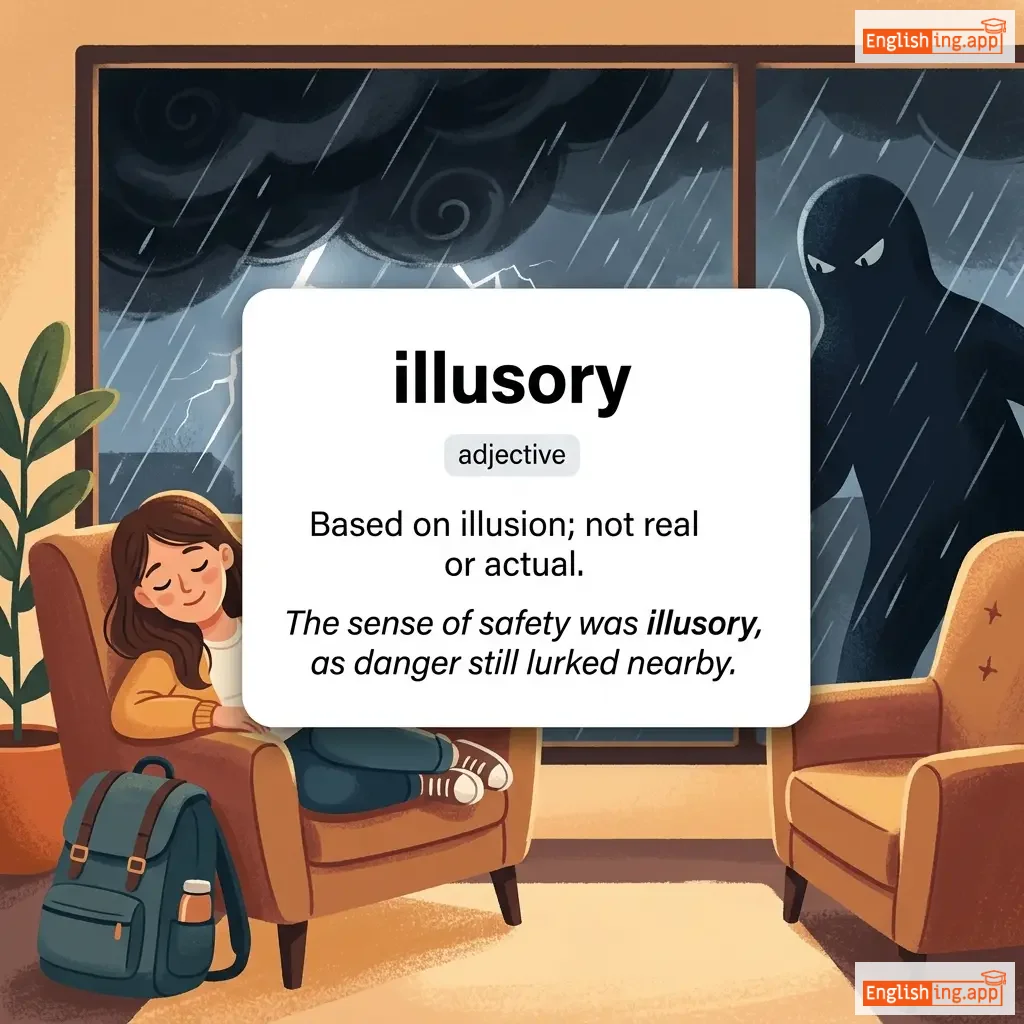
illusory definition card — visual illustration of the meaning
adjective C1
/ɪˈluːsəri/
иллюзорный (illyuzornyy)

Based on illusion; not real or actual.

"The sense of safety was illusory, as danger still lurked nearby."

"Чувство безопасности было иллюзорным, так как опасность все еще скрывалась рядом." (Chuvstvo bezopasnosti bylo illyuzornym, tak kak opasnost' vse yeshchyo skryvalas' ryadom.)
adjective C1
/ɪˈlʌstriəs/
знаменитый (znamenity)

Well known, respected, and admired for past achievements.

"She had an illustrious career in medicine."
"У неё была знаменита карьера в медицине." (U nee byla znamenita kariera v meditsine.)
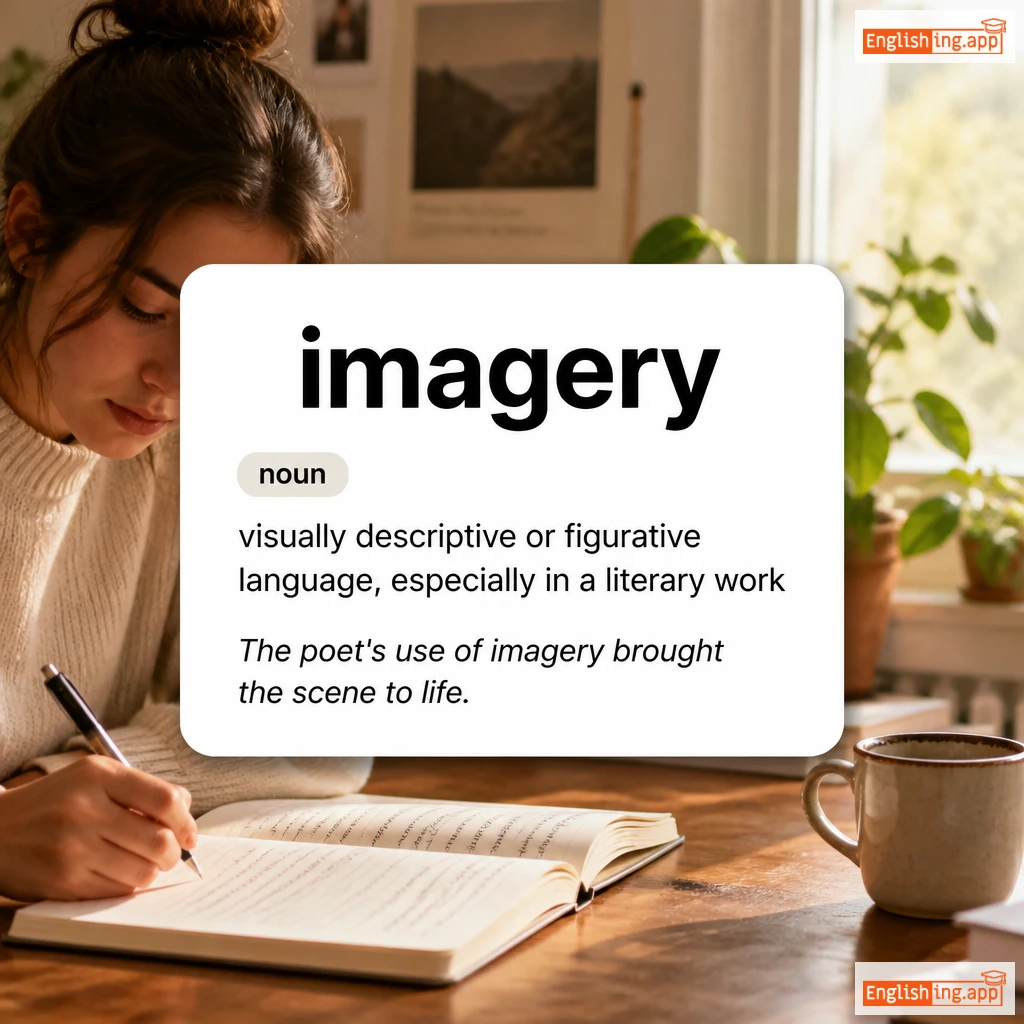
imagery definition card — visual illustration of the meaning
noun C1
/ˈɪmɪdʒəri/
образность (obraznost)

visually descriptive or figurative language, especially in a literary work

"The poet's use of imagery brought the scene to life."
"Использование образности поэтом оживило сцену." (Ispol'zovaniye obraznosti poetom ozhivilo stsenу.)
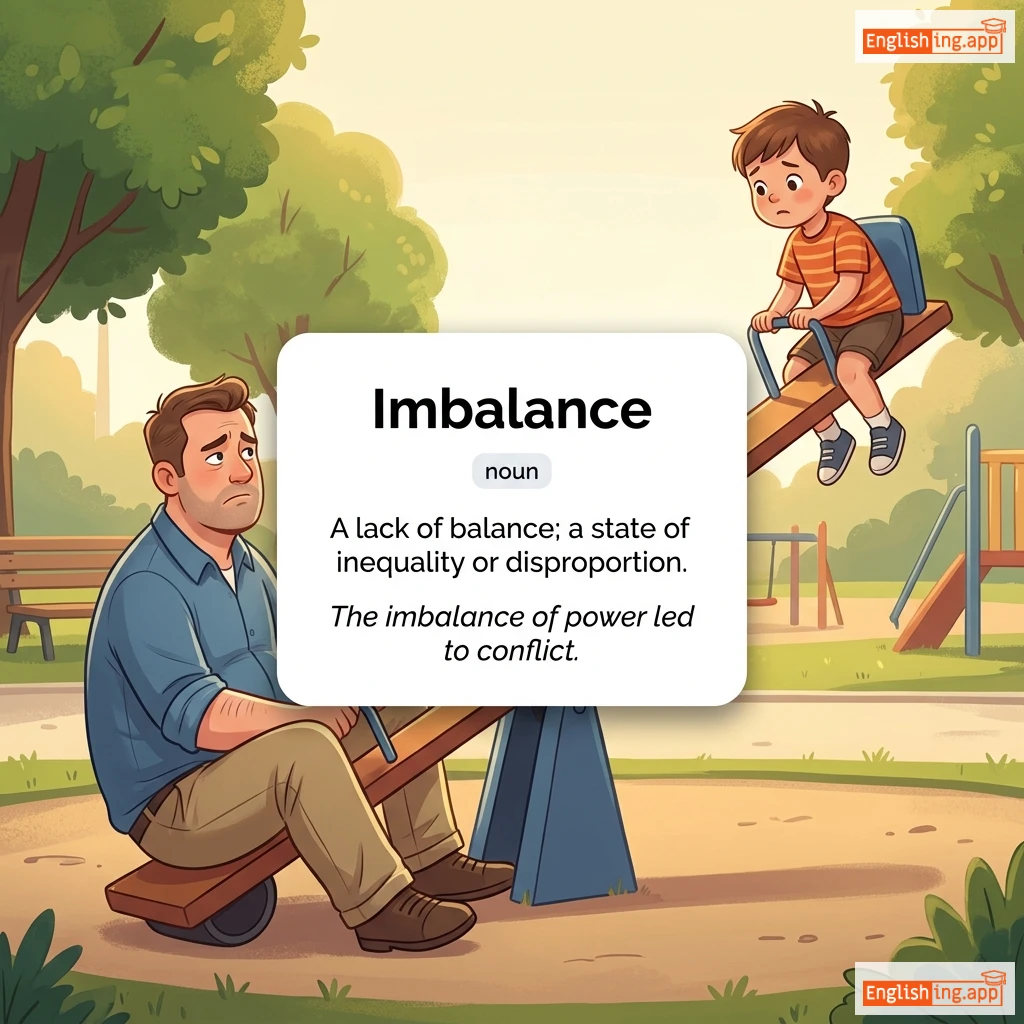
Imbalance definition card — visual illustration of the meaning
noun C1
/ɪmˈbæləns/
дисбаланс (disbalans)

A lack of balance; a state of inequality or disproportion.

"The imbalance of power led to conflict."

"Дисбаланс власти привел к конфликту." (Disbalans vlasti prived k konfliktiu.)
verb C1
/ɪmˈbɛd/
встраивать (vstrayivat)

To fix firmly or deeply in a surrounding mass.

"The journalist imbedded himself with the troops to report firsthand."
"Журналист встроил себя в ряды войск, чтобы сообщать с места событий." (Zhurnalist vstroil sebya v ryady voysk, chtoby soobshchat' s mesta sobytiy.)
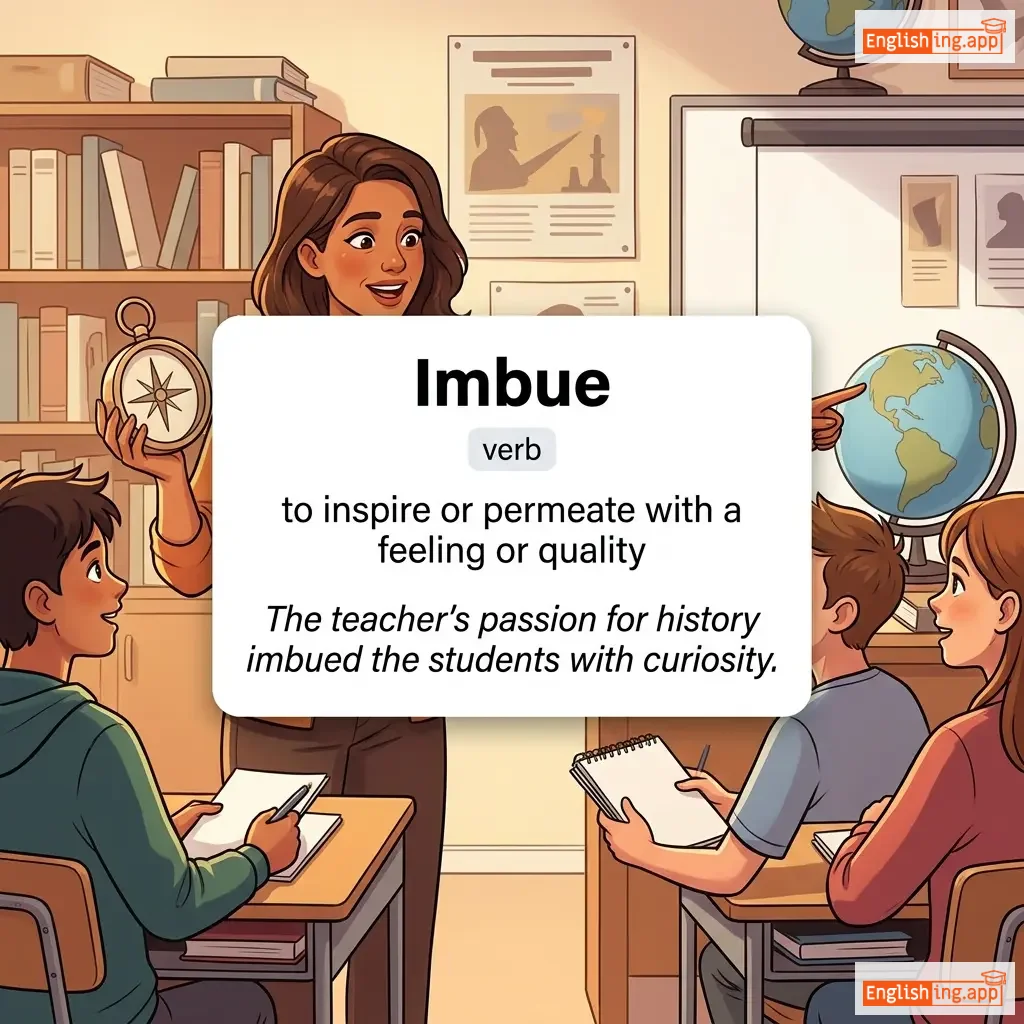
Imbue definition card — visual illustration of the meaning
verb C1
/ɪmˈbjuː/
проникать (pronikát)

to inspire or permeate with a feeling or quality

"The teacher's passion for history imbued the students with curiosity."

"Страсть учителя к истории наполнила студентов любопытством." (Strast' uchitelya k istorii napolnila studentov lyubopytstvom.)
adjective C1
/ɪˈmækjələt/
безупречный (bezuprichny)

perfectly clean, neat, or free from flaws

"Her room was immaculate, with everything in its place."
"Её комната была безупречной, всё было на своём месте." (Yeyo komnata byla bezuprechnoj, vsyo bylo na svoem meste.)
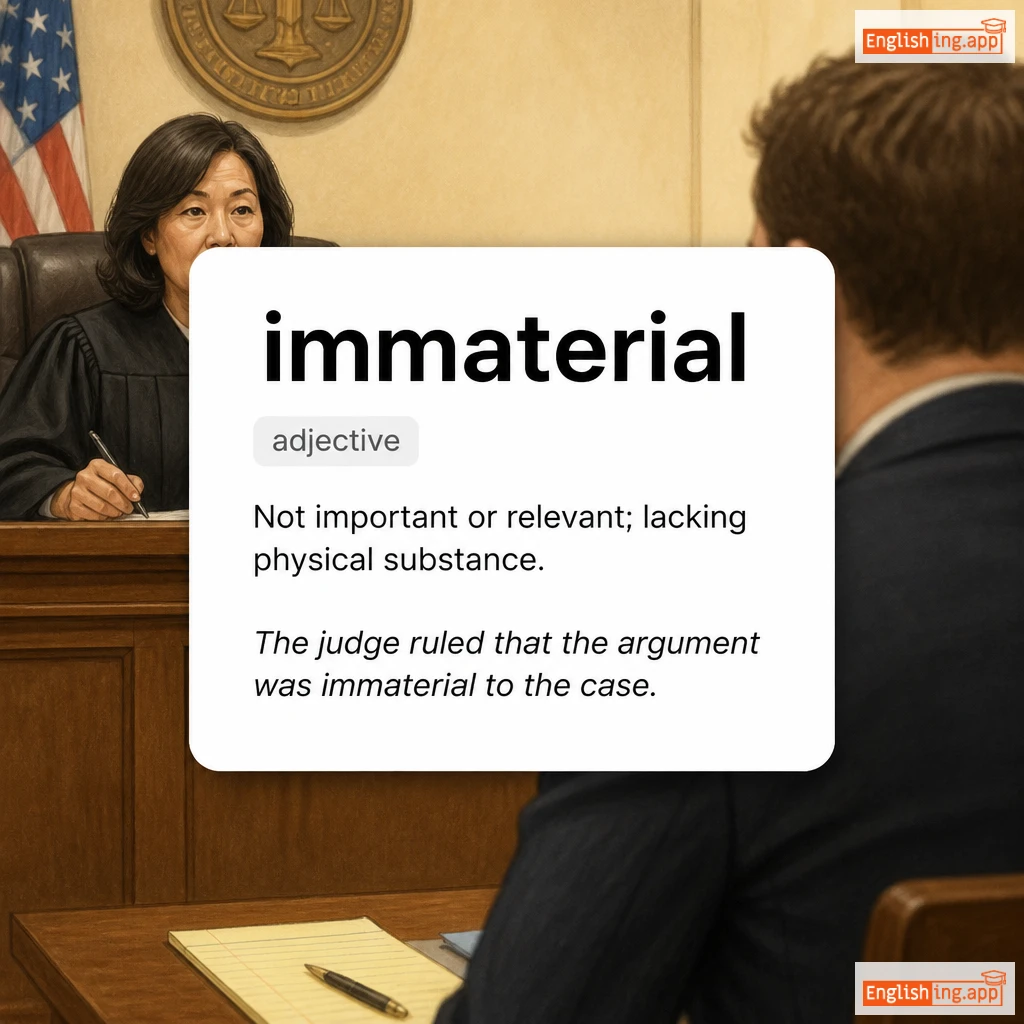
immaterial definition card — visual illustration of the meaning
adjective C1
/ˌɪməˈtɪəriəl/
неважный (nevajnyj)

Not important or relevant; lacking physical substance.

"The judge ruled that the argument was immaterial to the case."
"Судья постановил, что аргумент не имеет значения для дела." (Sud'ya postanovil, chto argument ne imeet znacheniya dlya dela.)
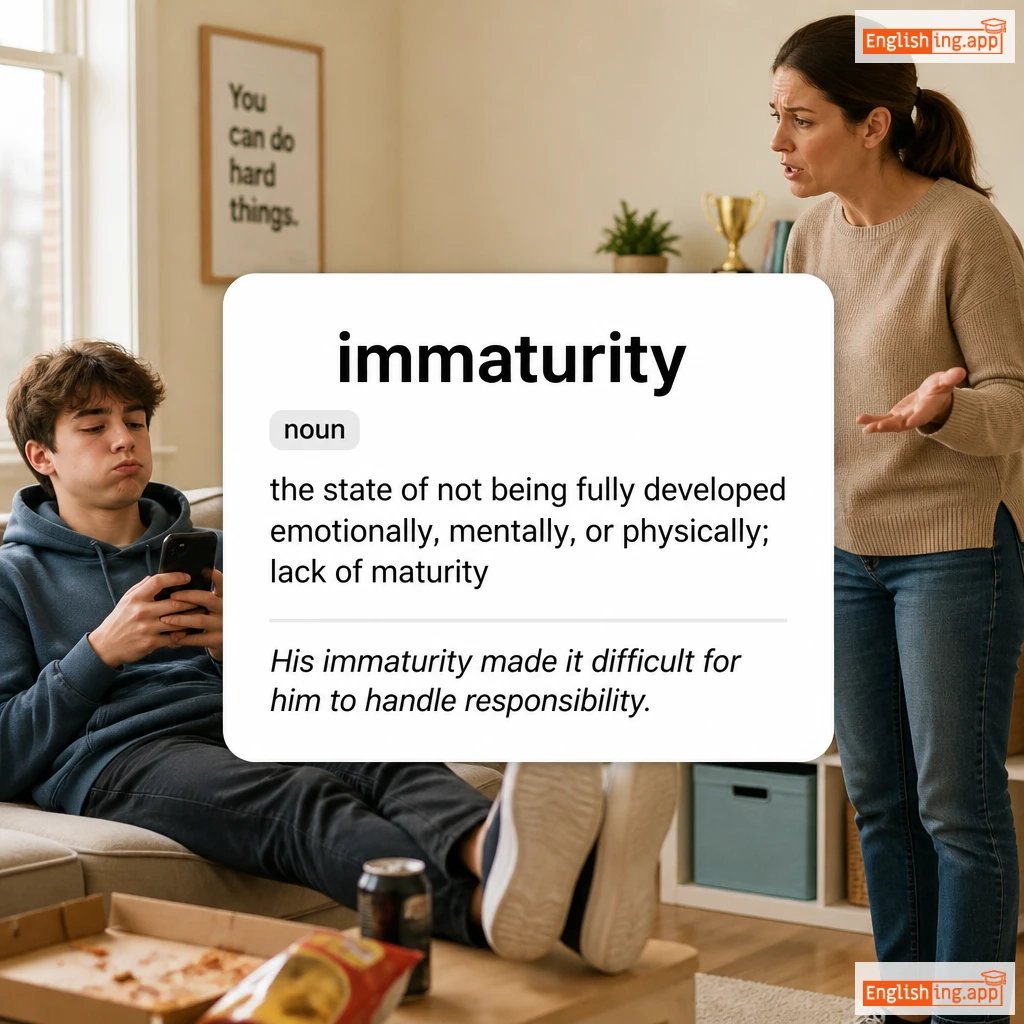
immaturity definition card — visual illustration of the meaning
noun C1
/ˌɪməˈtjʊərəti/
незрелость (nezrelost)

the state of not being fully developed emotionally, mentally, or physically; lack of maturity

"His immaturity made it difficult for him to handle responsibility."
"Его незрелость мешала ему справляться с ответственностью." (ego nezrelost meshala emu spravlyatsya s otvetstvennostyu)
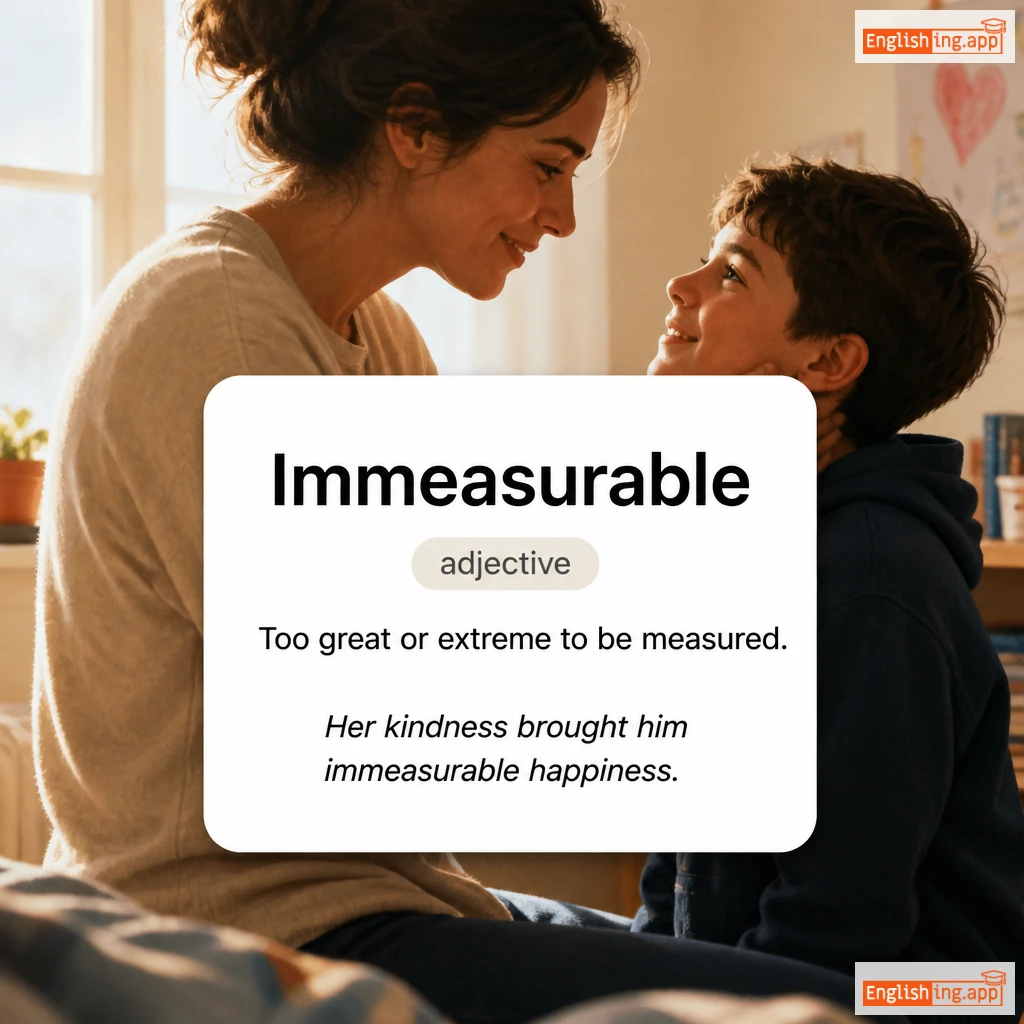
Immeasurable definition card — visual illustration of the meaning
adjective C1
/ɪˈmɛʒərəbl/
неизмеримый (neizmerimyj)

Too great or extreme to be measured.

"Her kindness brought him immeasurable happiness."

"Ее доброта принесла ему неизмеримое счастье." (Eyo dobrota prinesla emu neizmerymoe schast'ye.)
immediacy definition card — visual illustration of the meaning
noun C1
/ɪˈmiːdiəsi/
неотложность, срочность (neotlozhnost, srochnoct)

The quality of bringing one into direct and instant involvement with something, giving rise to a sense of urgency or excitement.

"The immediacy of digital communication has reshaped business operations."
"Неотложность цифровой коммуникации изменила бизнес-операции." (Neotlozhnost tsifrovoi kommunikacii izmenila biznes-operacii.)
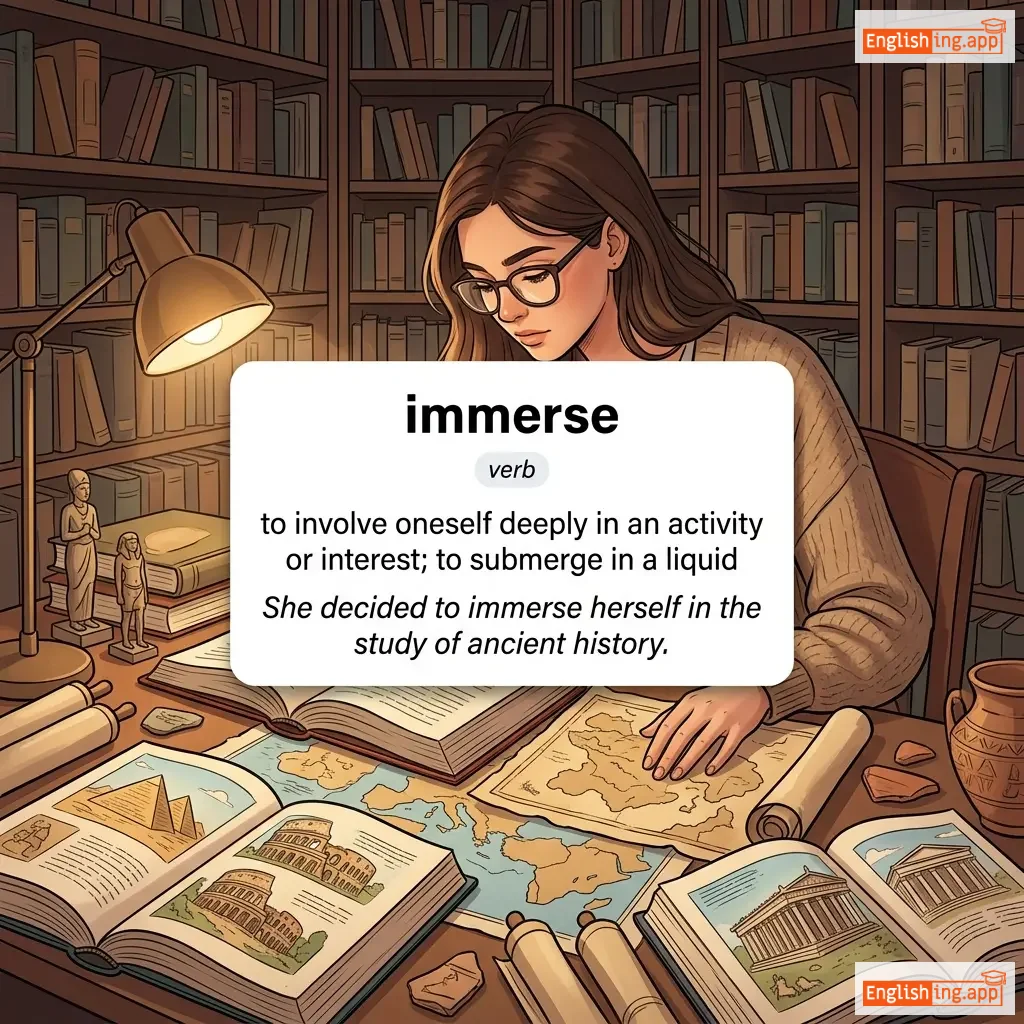
immerse definition card — visual illustration of the meaning
verb C1
/ɪˈmɜːrs/
погружать, углубляться (pogruzhat', uglubljatsya)

to involve oneself deeply in an activity or interest; to submerge in a liquid

"She decided to immerse herself in the study of ancient history."
"Она решила погрузиться в изучение древней истории." (Ona reshilas' pogruzit'sya v izuchenie drevney istorii.)
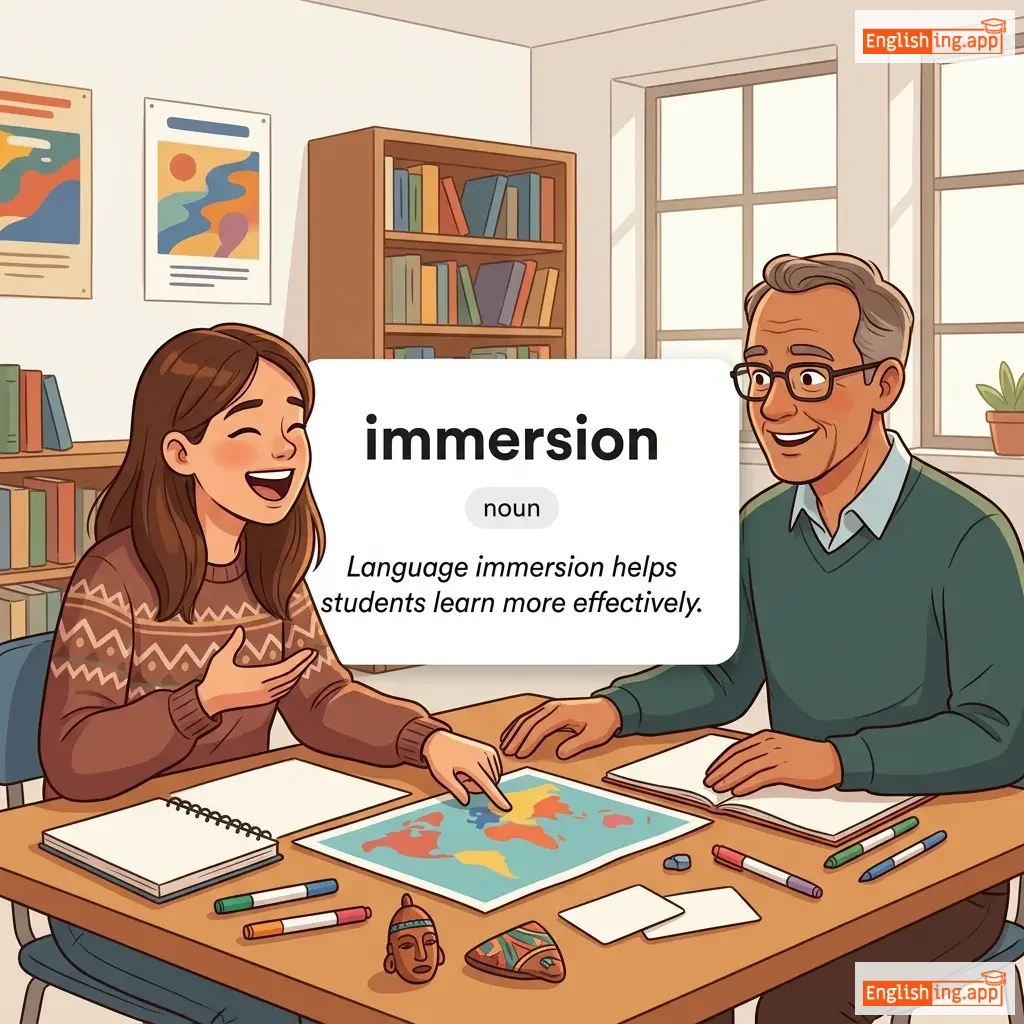
immersion definition card — visual illustration of the meaning
noun C1
/ɪˈmɜːrʒən/
погружение (pogruzhenie)

the act of deeply involving oneself in something; the state of being completely surrounded by liquid

"Language immersion helps students learn more effectively."

"Языковое погружение помогает студентам учиться более эффективно." (Yazykovoe pogruzhenie pomogaet studentam uchitsya boleye effektivno.)
noun C1
/ˈɪmɪnəns/
неотвратимость, близкое состояние (neotvratimosť, blizkoe sostoyanie)

the state of being about to happen

"The imminence of the storm forced people to take shelter."
"Неотвратимость шторма заставила людей искать укрытие." (Neotvratimosť shtorma zastavila lyudey iskat' ukrytiye.)
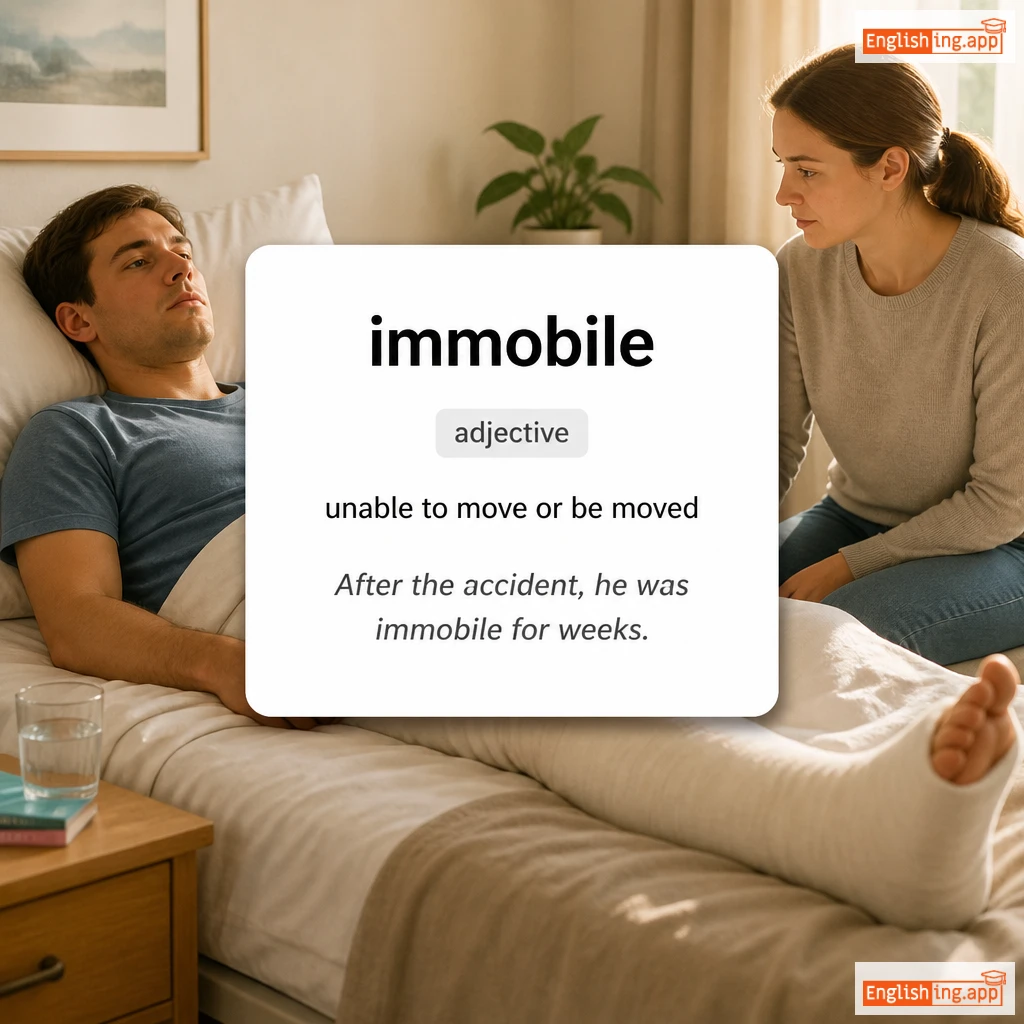
immobile definition card — visual illustration of the meaning
adjective C1
/ɪˈmoʊbəl/
неподвижный (nepodvizhny)

unable to move or be moved

"After the accident, he was immobile for weeks."
"После аварии он был неподвижен несколько недель." (Posle avarii on byl nepodvizhen neskol'ko nedeley.)
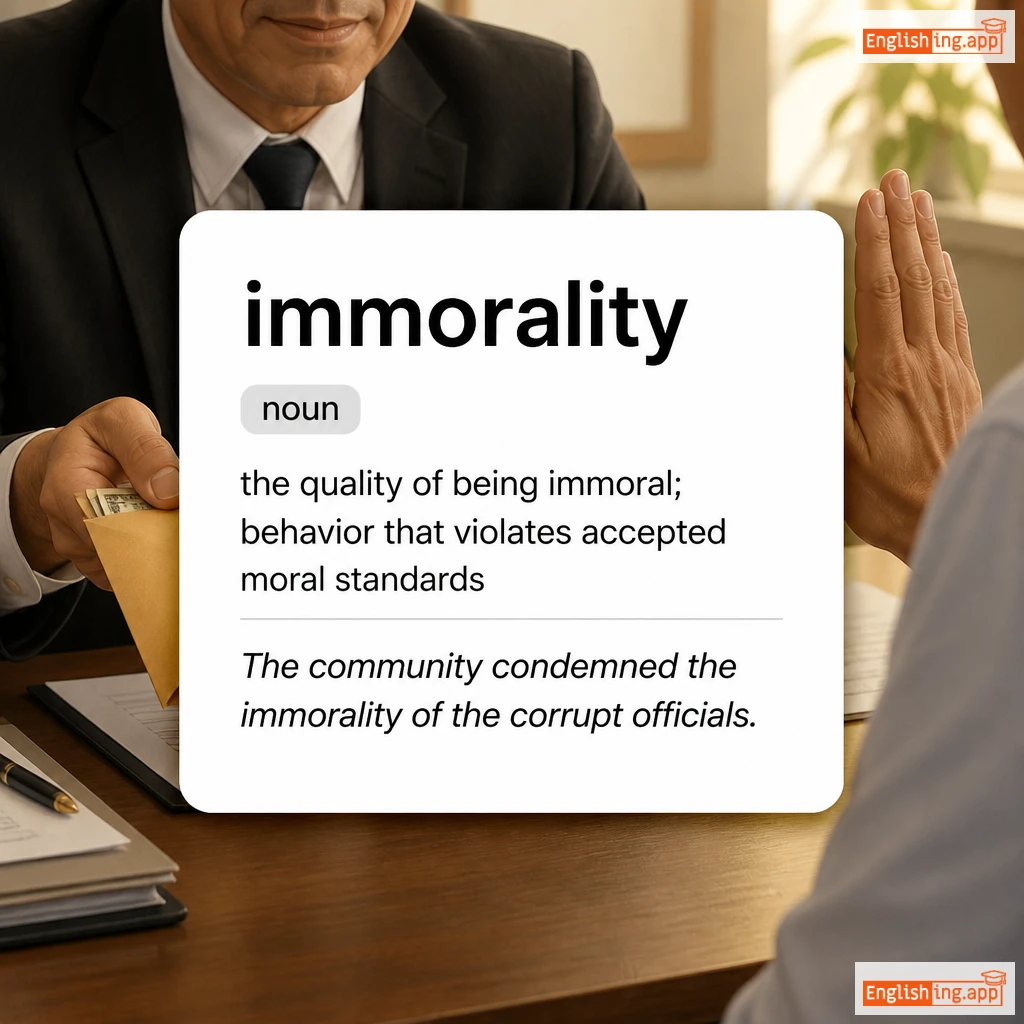
immorality definition card — visual illustration of the meaning
noun C1
/ˌɪməˈrælɪti/
безнравственность (beznravstvennost)

the quality of being immoral; behavior that violates accepted moral standards

"The community condemned the immorality of the corrupt officials."
"Сообщество осудило безнравственность коррумпированных чиновников." (Soobshchestvo osudilo beznravstvennost korrumpirovannykh chinovnikov)
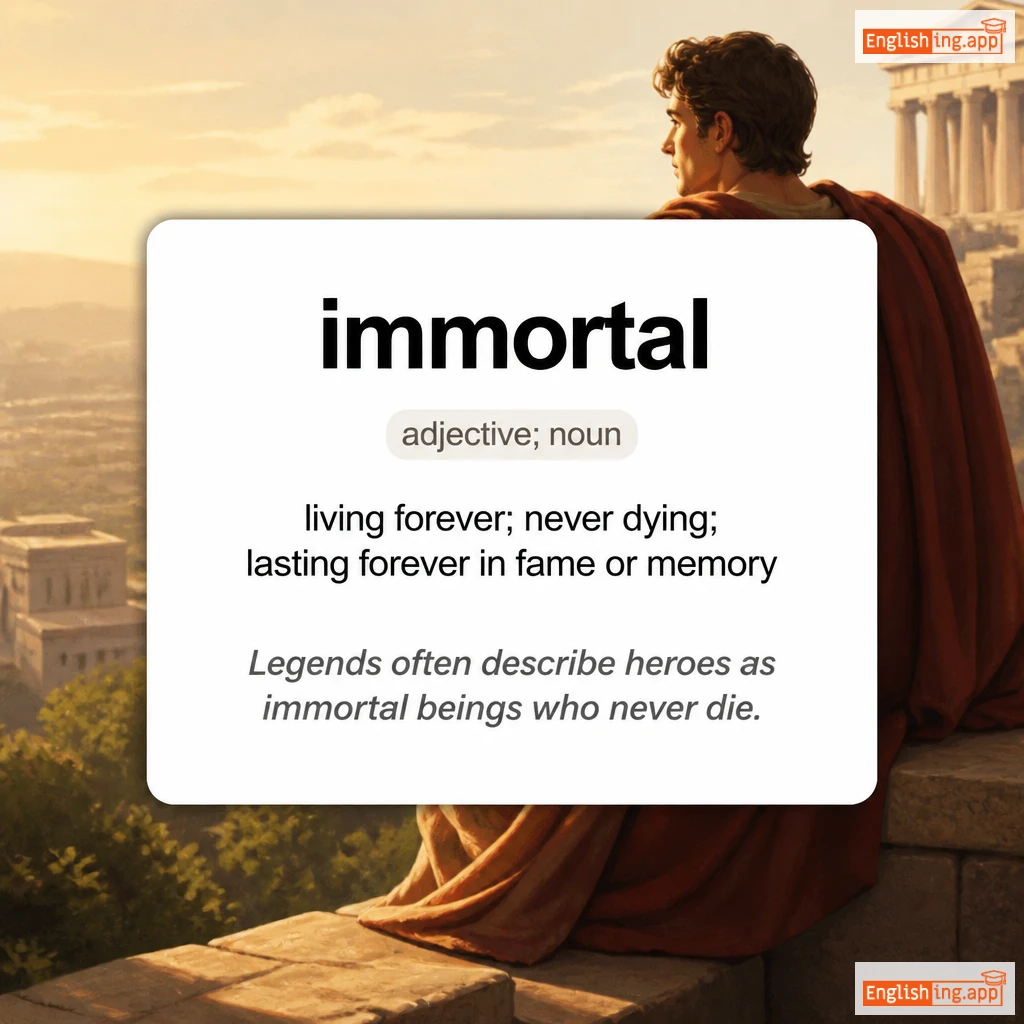
immortal definition card — visual illustration of the meaning
adjective; noun C1
/ɪˈmɔːrtl/
бессмертный (bessmertnyy)

living forever; never dying; lasting forever in fame or memory

"Legends often describe heroes as immortal beings who never die."
"Легенды описывают героев как бессмертных." (legendy opisyvayut geroev kak bessmertnykh)
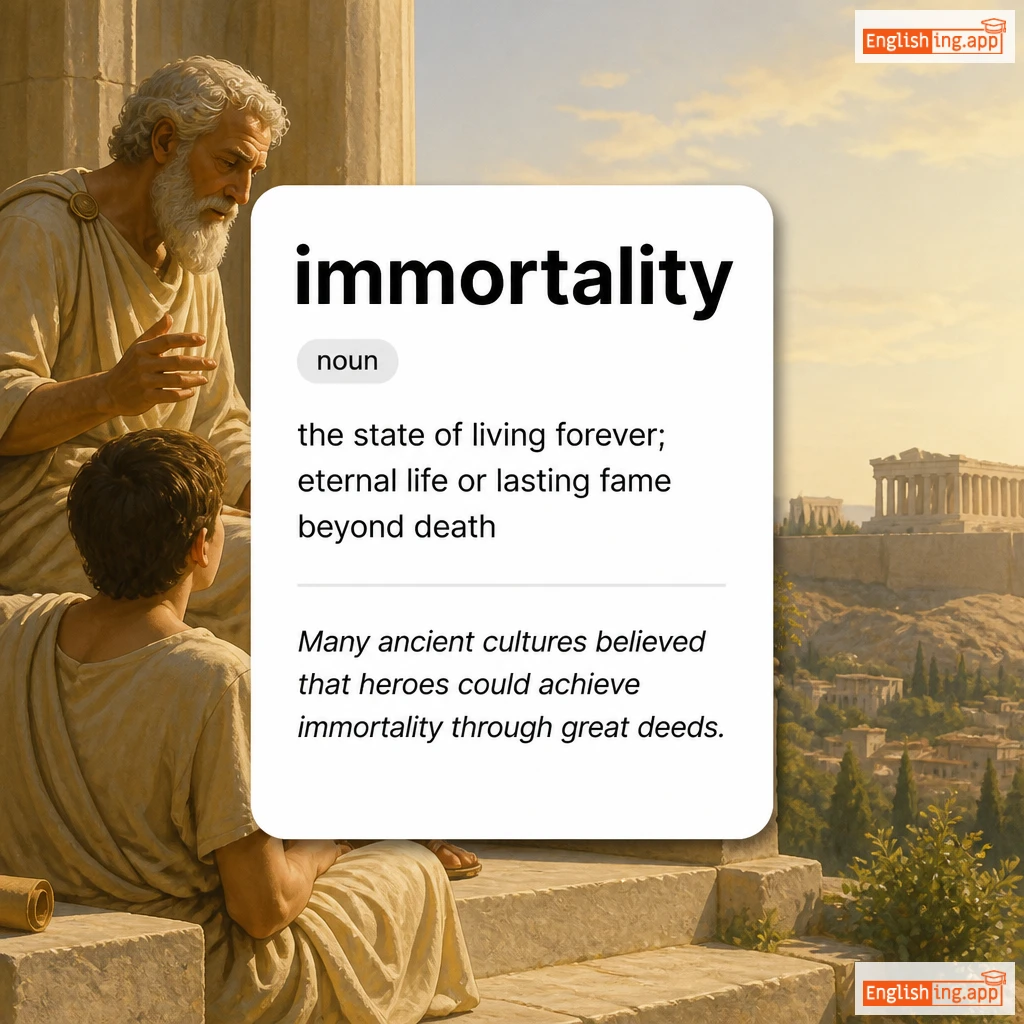
immortality definition card — visual illustration of the meaning
noun C1
/ˌɪmɔːrˈtæləti/
бессмертие (bessmertiye)

the state of living forever; eternal life or lasting fame beyond death

"Many ancient cultures believed that heroes could achieve immortality through great deeds."

"Многие древние культуры верили, что герои могут достичь бессмертия великими подвигами." (mnogiye drevniye kultury verili chto geroi mogut dostich bessmertiya velikimi podvigami)
verb C1
/ɪˈmɔːrtəlaɪz/
увековечить (uvekovechit)

to preserve the memory of someone or something forever

"The statue was built to immortalize the hero’s sacrifice."

"Статуя была построена, чтобы увековечить жертвенность героя." (Statuya byla postroena, chtoby uvekovechit' zhertvinnost' geroja.)
immovable definition card — visual illustration of the meaning
adjective C1
/ɪˈmuːvəbl/
неподвижный (nepodvizhny)

impossible to move or change

"The rock was too heavy and immovable."
"Камень был слишком тяжелым и неподвижным." (Kamen' byl slishkom tyazholym i nepodvizhnym.)
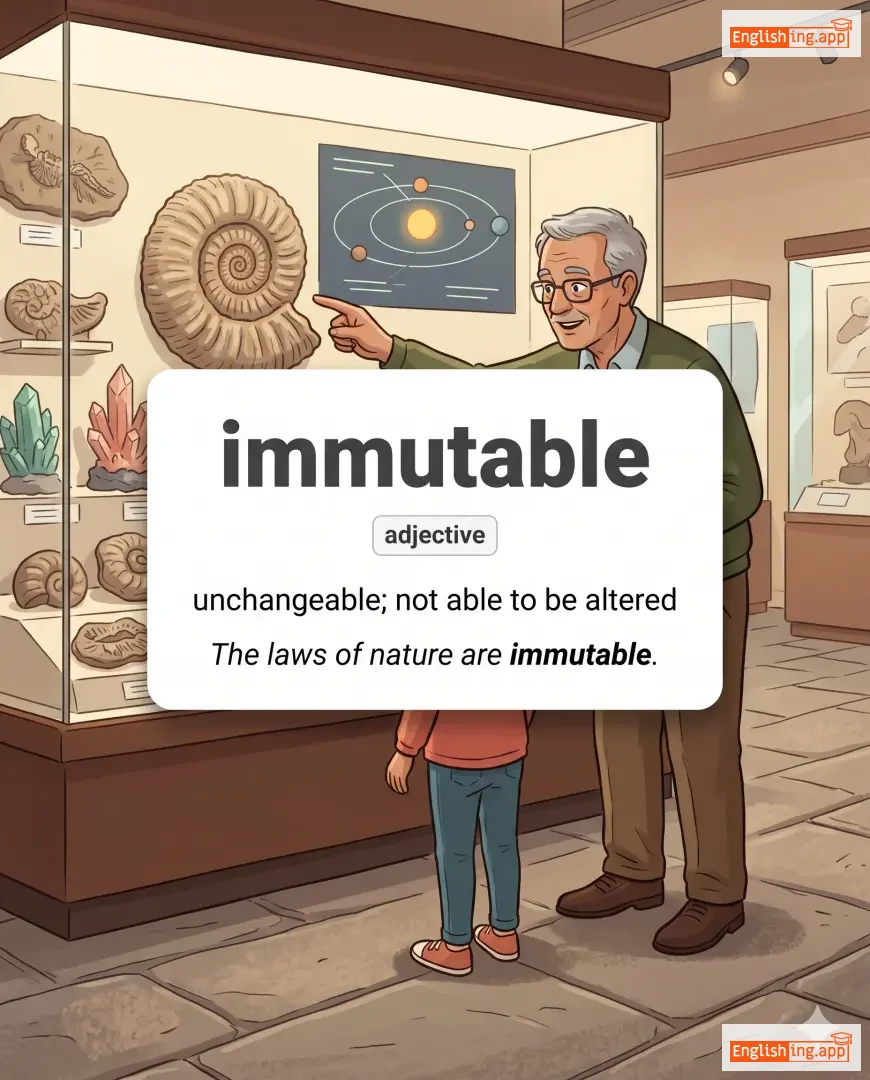
immutable definition card — visual illustration of the meaning
adjective C1
/ɪˈmjuːtəbl/
неизменный (neyizmenniy)

unchangeable; not able to be altered

"The laws of nature are immutable."
"Законы природы неизменны." (Zakony prirody neizmeny.)
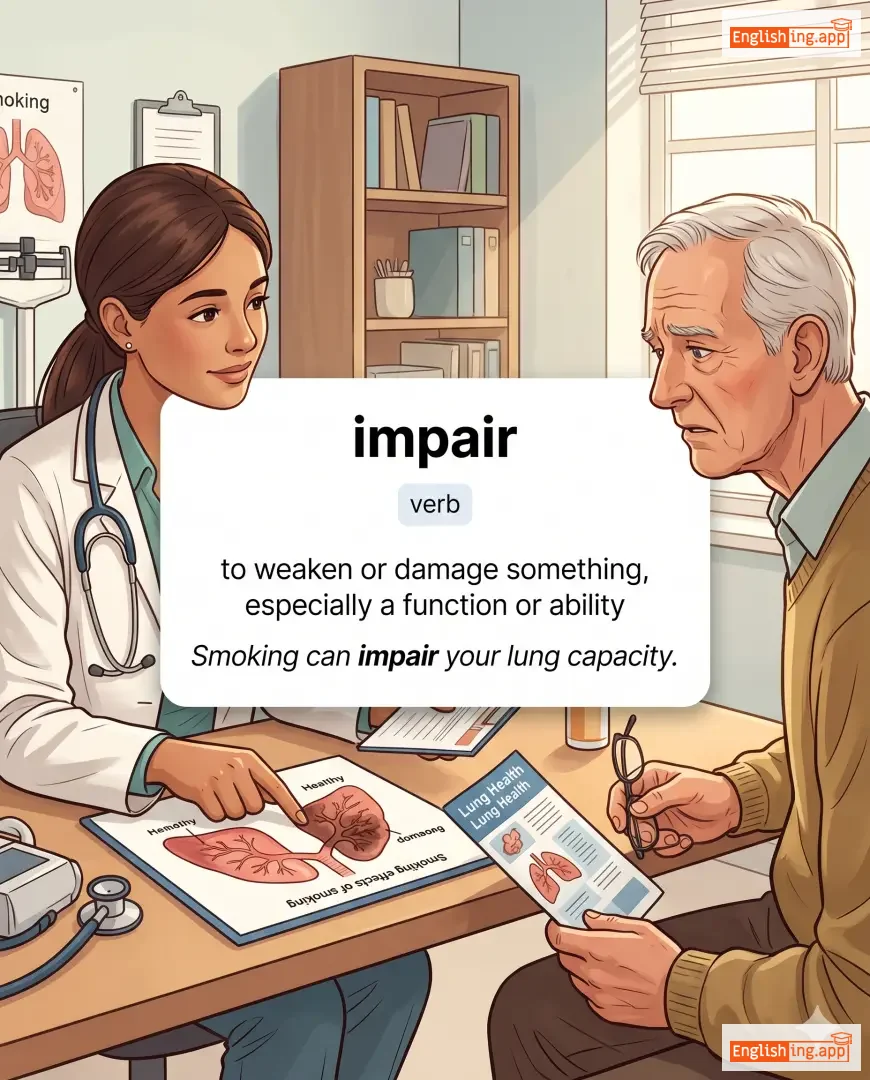
impair definition card — visual illustration of the meaning
verb C1
/ɪmˈpɛər/
повреждать (povrezhdat)

to weaken or damage something, especially a function or ability

"Smoking can impair your lung capacity."
"Курение может ухудшить ёмкость лёгких." (Kurenie mozhet ukhudshit yomkost' lyokhikh.)
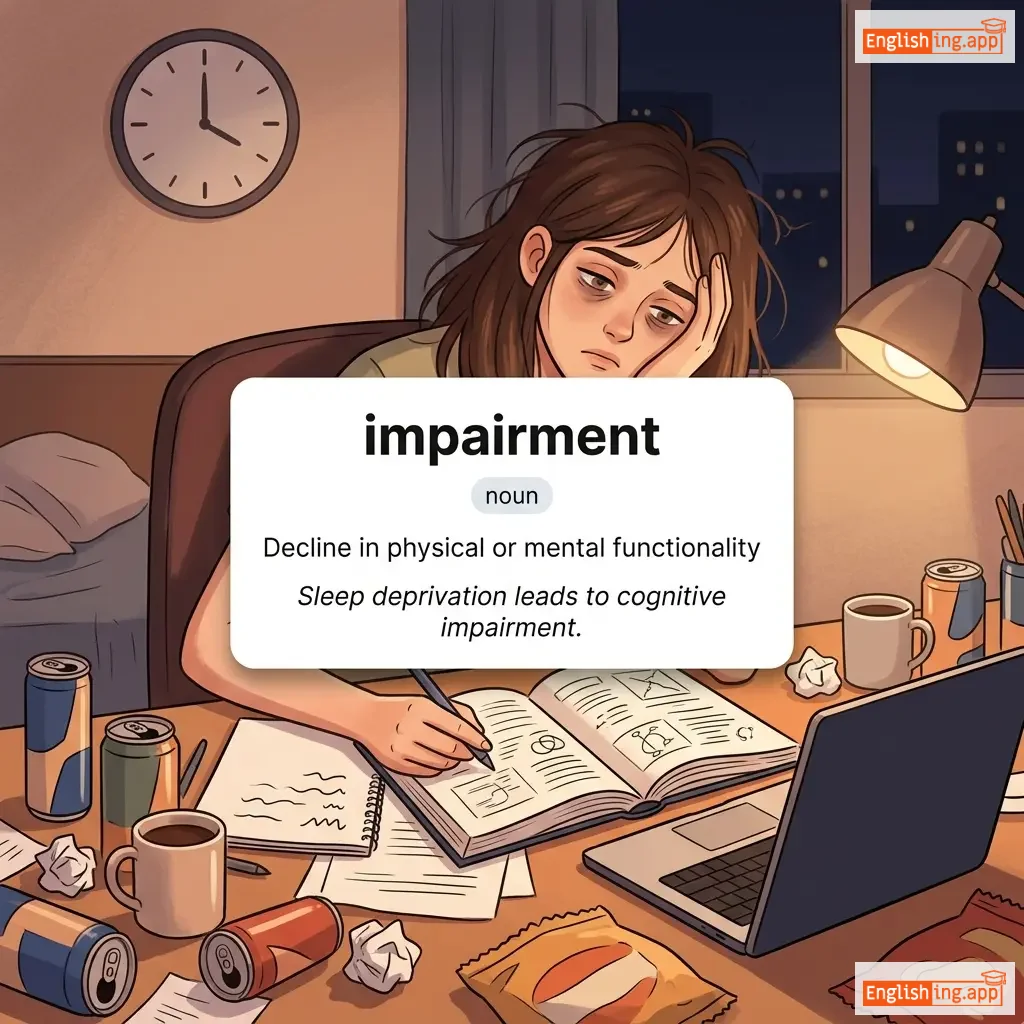
impairment definition card — visual illustration of the meaning
noun C1
ɪmˈpɛərmənt
нарушение (narushenie)

Decline in physical or mental functionality

"Sleep deprivation leads to cognitive impairment."

"Недосыпание приводит к когнитивным нарушениям." (Nedosypanie privodit k kognitivnym narusheniyam.)
verb C1
/ɪmˈpɑːrt/
передавать (peredavat')

to make information known; to bestow or communicate

"The teacher imparted valuable knowledge to her students."
"Учитель передал ценное знание своим ученикам." (Uchitel' peredal tsennoye znaniye svoim uchenikam.)
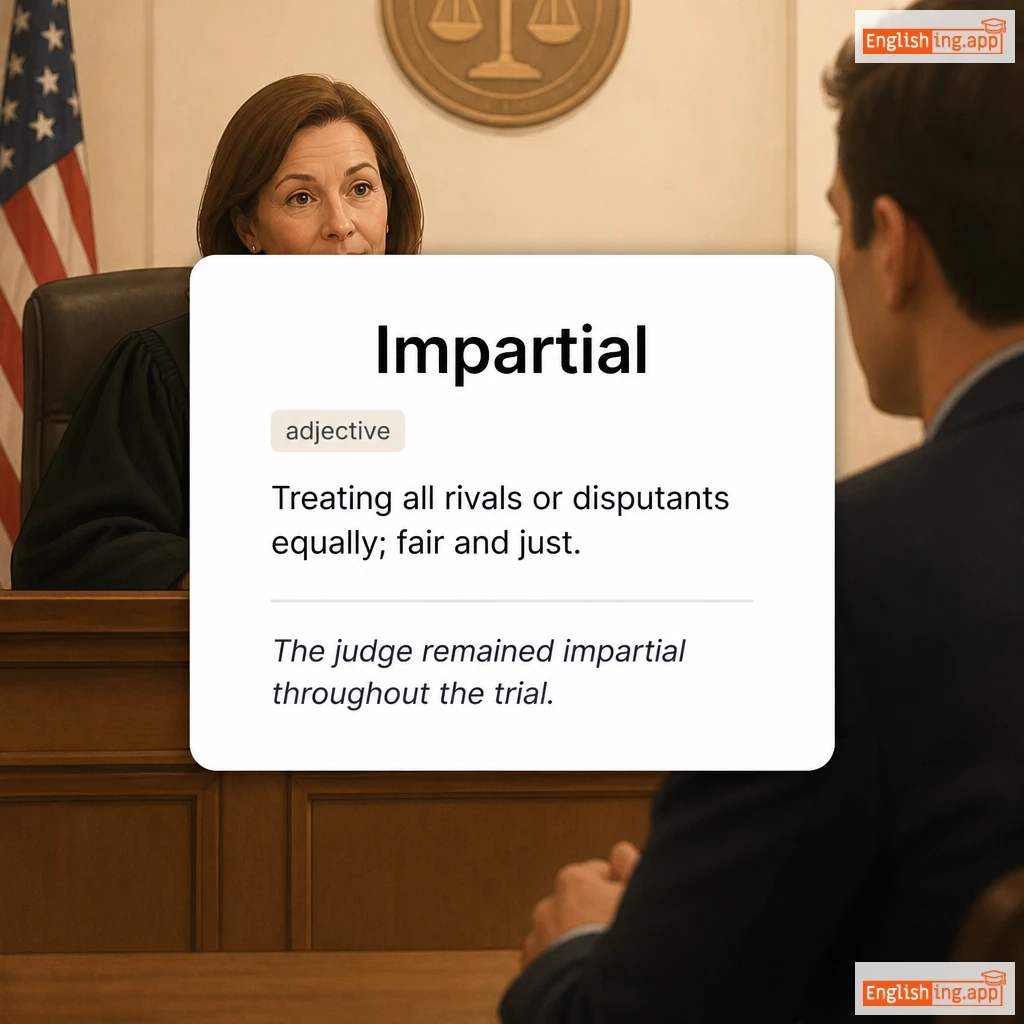
Impartial definition card — visual illustration of the meaning
adjective C1
/ɪmˈpɑːrʃəl/
беспристрастный (bespristrastny)

Treating all rivals or disputants equally; fair and just.

"The judge remained impartial throughout the trial."

"Судья оставался беспристрастным на протяжении всего процесса." (Sud'ya ostavalsya bespristrastnym na protyazhenii vsego protsessa.)
adjective C1
/ɪmˈpæsəbəl/
непроходимый (neprokhodimyy)

Impossible to travel along or over.

"The road became impassable after the heavy snowfall."

"Дорога стала непроходимой после сильного снегопада." (Doroga stala neprokhodimoy posle sil'nogo snegopada.)
impasse definition card — visual illustration of the meaning
noun C1
/ˈɪmpæs/
тупик (tupik)

A situation in which no progress is possible; a deadlock.

"Negotiations reached an impasse after both sides refused to compromise."

"Переговоры зашли в тупик, после того как обе стороны отказались идти на компромисс." (Peregovory zashli v tupik, posle togo kak obe storony otkazalis idti na kompromiss.)
adjective C1
/ɪmˈpæʃənd/
страстный (strastny)

Filled with or showing great emotion.

"She gave an impassioned speech about human rights."
"Она произнесла страстную речь о правах человека." (Ona proiznesla strastnuyu rech' o pravax cheloveka.)
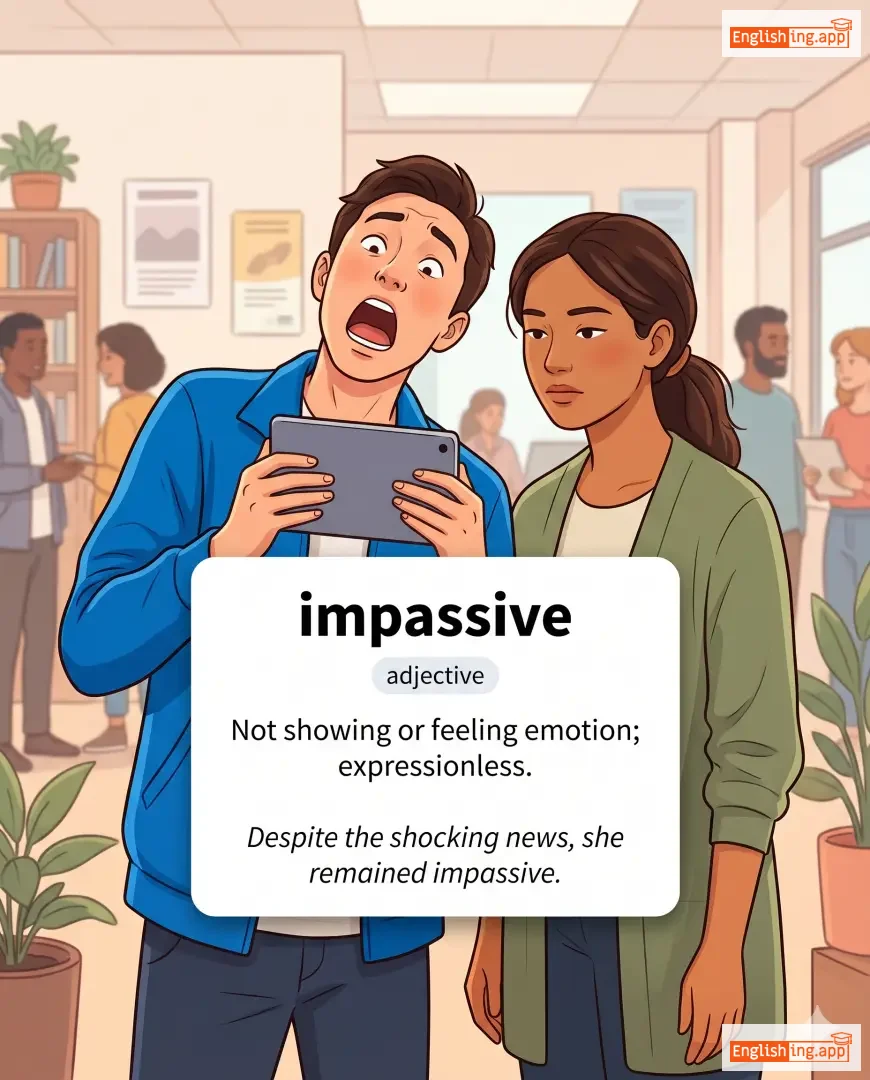
impassive definition card — visual illustration of the meaning
adjective C1
/ɪmˈpæsɪv/
безучастный (bezuchastny)

Not showing or feeling emotion; expressionless.

"Despite the shocking news, she remained impassive."

"Несмотря на шокирующие новости, она осталась безучастной." (Nesmotrya na shokiruyushchie novosti, ona ostalas' bezuchastnoj.)
verb C1
/ɪmˈpiːtʃ/
импичмент (impichment)

To charge a public official with misconduct while in office.

"The parliament voted to impeach the president."

"Парламент проголосовал за импичмент президента." (Parlament proglasoval za impeachament prezidenta.)
impeccable definition card — visual illustration of the meaning
adjective C1
/ɪmˈpɛkəbl̩/
безупречный (bezuprechniy)

Perfect; without flaws or faults.

"She delivered an impeccable performance on stage."
"Она выступила с безупречным выступлением на сцене." (Ona vystupila s bezuprechniy vystupleniyem na stsene.)
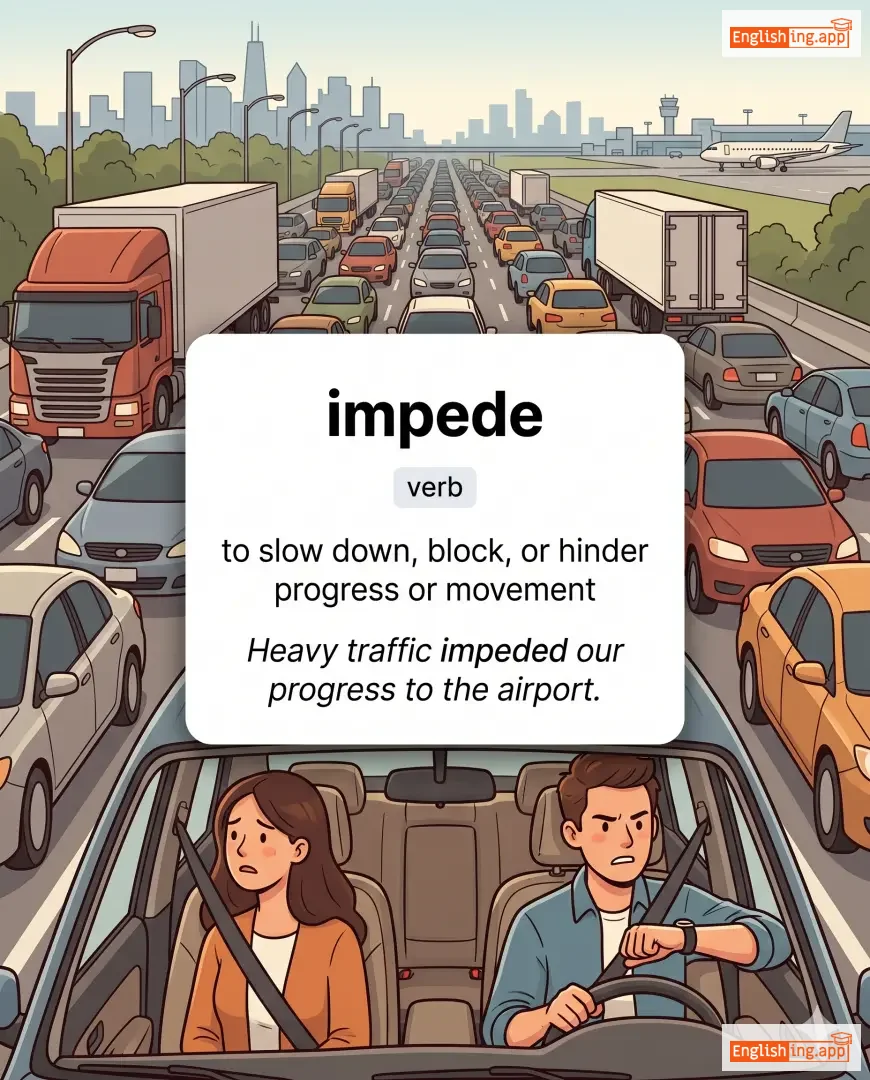
impede definition card — visual illustration of the meaning
verb C1
/ɪmˈpiːd/
препятствовать (prepyatstvovat')

to slow down, block, or hinder progress or movement

"Heavy traffic impeded our progress to the airport."

"Тяжелое движение замедлило наш прогресс к аэропорту." (Tyazheloe dvizhene zamedlilo nash progress k aeroportu.)