Получите неограниченный доступ ко всем словам с подпиской Pro
Обновить до ProПолучите неограниченный доступ ко всем предложениям с подпиской Pro
Обновить до Pro|
Эмодзи
|
Слово | Images | Перевод | Прошедшее | Причастие прошедшего времени | Третье лицо единственного числа | Герундий | Значение | Пример предложения | Перевод примера предложения | Пример выражения | Значение примера выражения | Перевод примера выражения | Синонимы | Антонимы | Коллокации | Мнемоника |
|---|---|---|---|---|---|---|---|---|---|---|---|---|---|---|---|---|---|
|
💊
••••••
|
/əˈliːvieɪt/
verb
(облегчить)
••••••
|

|
облегчить
oblegchit
••••••
|
alleviated
облегчил
••••••
|
alleviated
облегчил
••••••
|
alleviates
облегчает
••••••
|
alleviating
облегчающий
••••••
|
to make suffering, pain, or a problem less severe
••••••
|
The medicine helped alleviate her headache.
Медикамент помог облегчить ее головную боль.
••••••
|
Медикамент помог облегчить ее головную боль.
Medikament pomog oblegchit yeye golovnuyu bol'.
••••••
|
alleviate suffering
облегчить страдание
••••••
|
to reduce someone's suffering
••••••
|
облегчить страдание
oblegchit stradanie
••••••
|
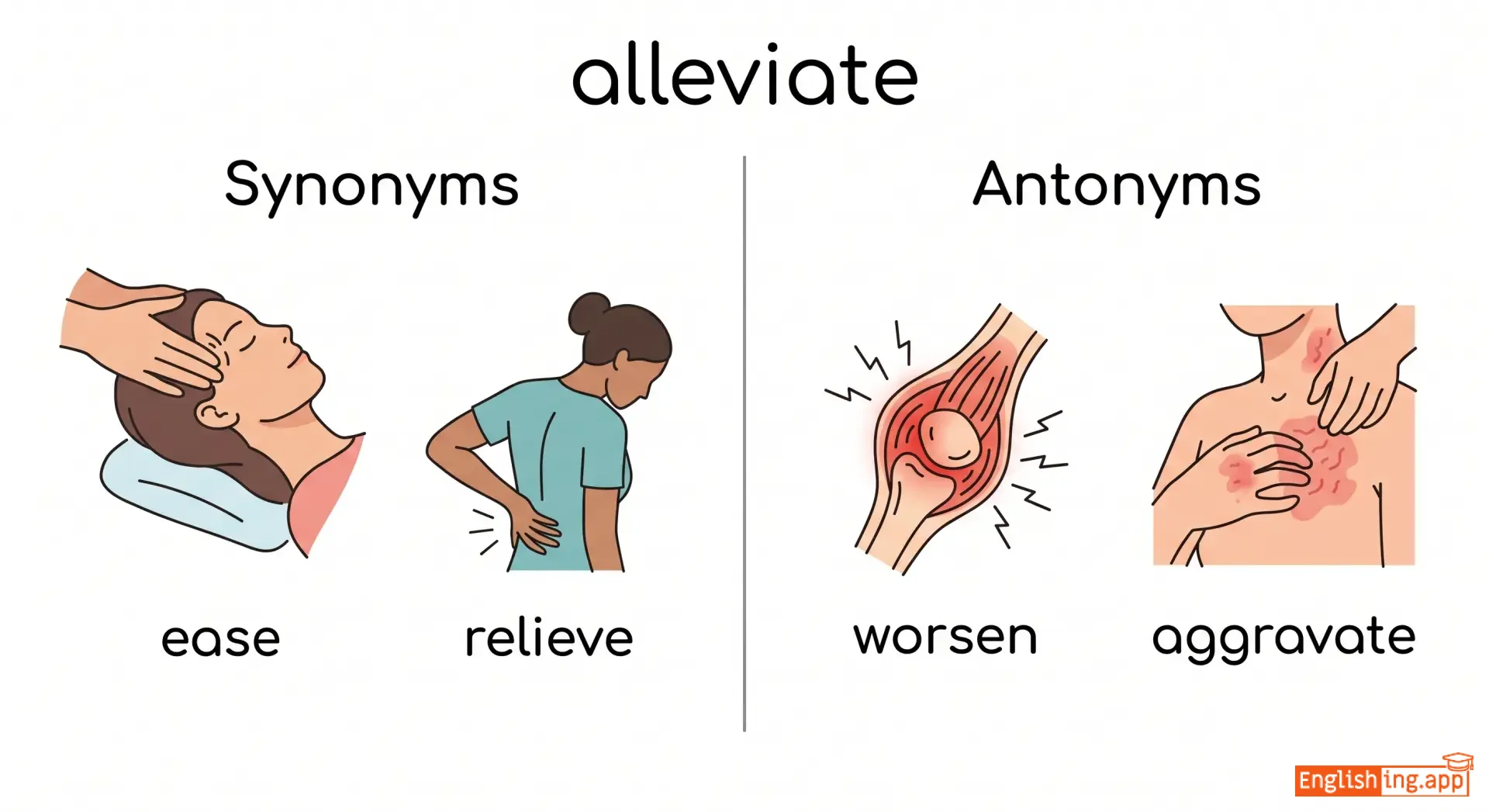
ease, relieve, lessen, mitigate, reduce
••••••
|
worsen, aggravate, intensify
••••••
|
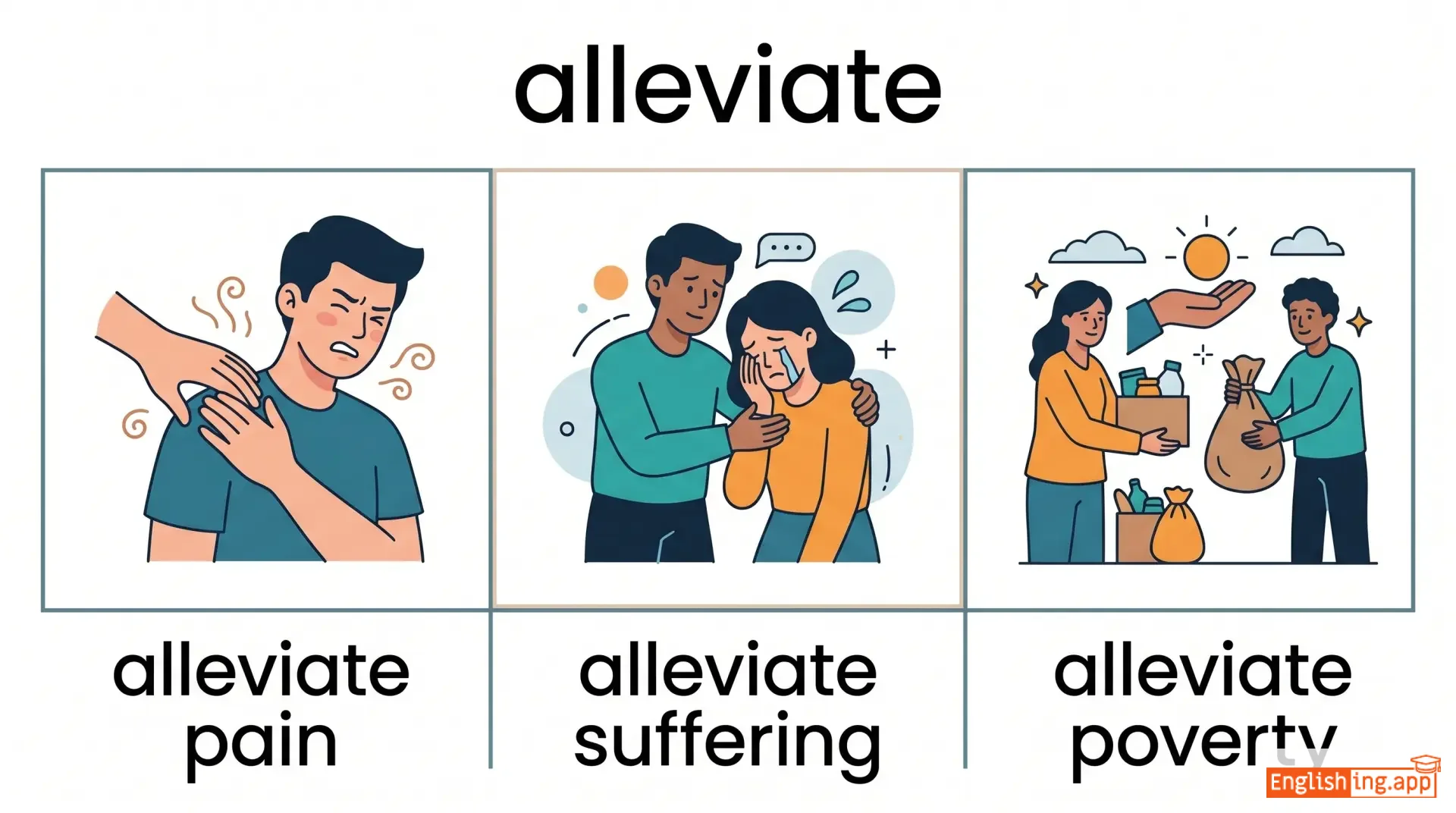
alleviate pain, alleviate suffering, alleviate poverty, alleviate symptoms
••••••
|
Oblegchit значит облегчить страдание (облегчить).
••••••
|
|
⚙️
••••••
|
/ˈælɔɪ/
noun
(алой)
••••••
|
|
сплав
splav
••••••
|
- •••••• | - •••••• | - •••••• | - •••••• |
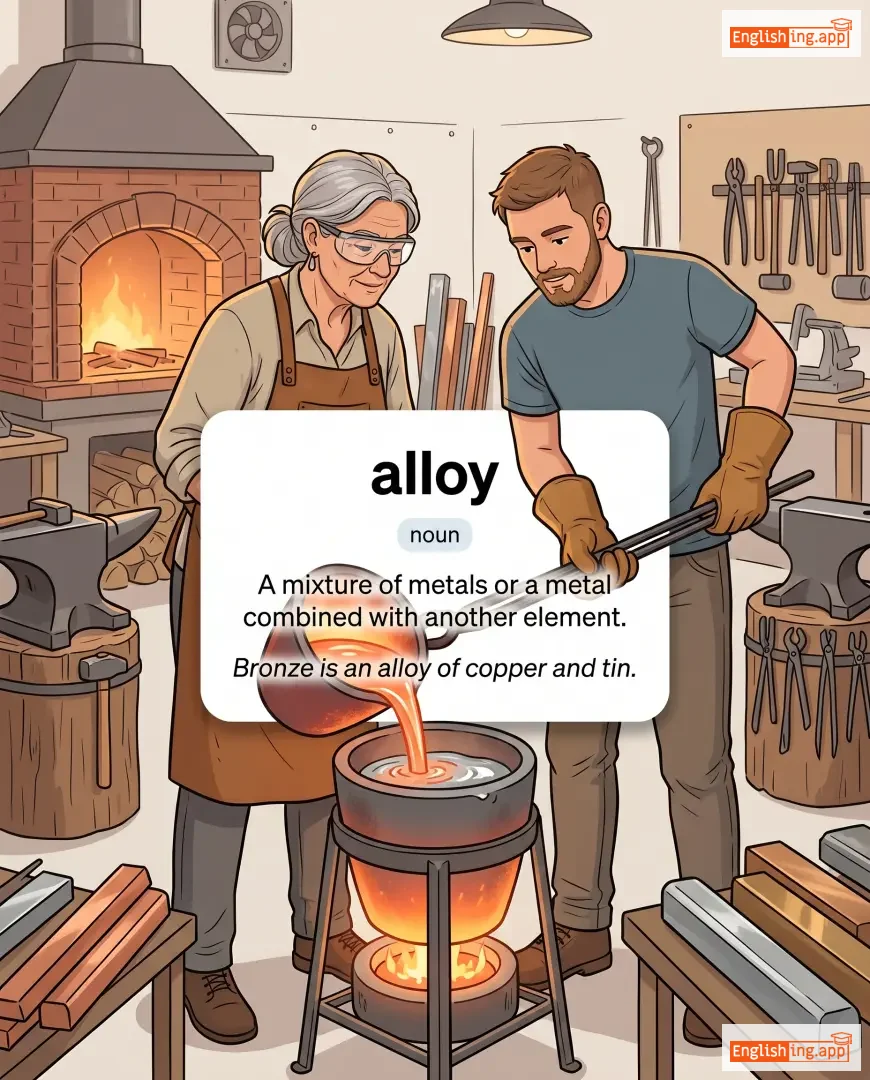
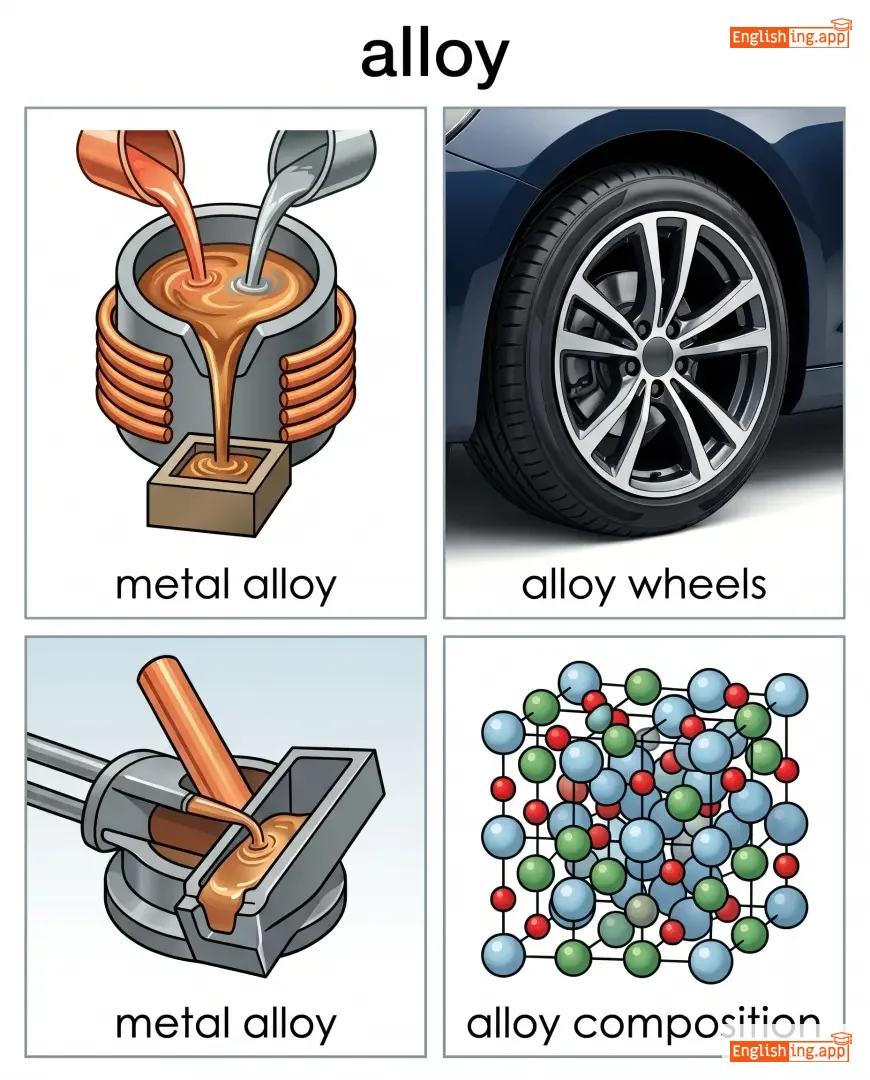
A mixture of metals or a metal combined with another element.
••••••
|
Bronze is an alloy of copper and tin. |
Бронза — это сплав меди и олова.
Bronza - eto splav medi i olova.
••••••
|
- •••••• | - •••••• | - •••••• |
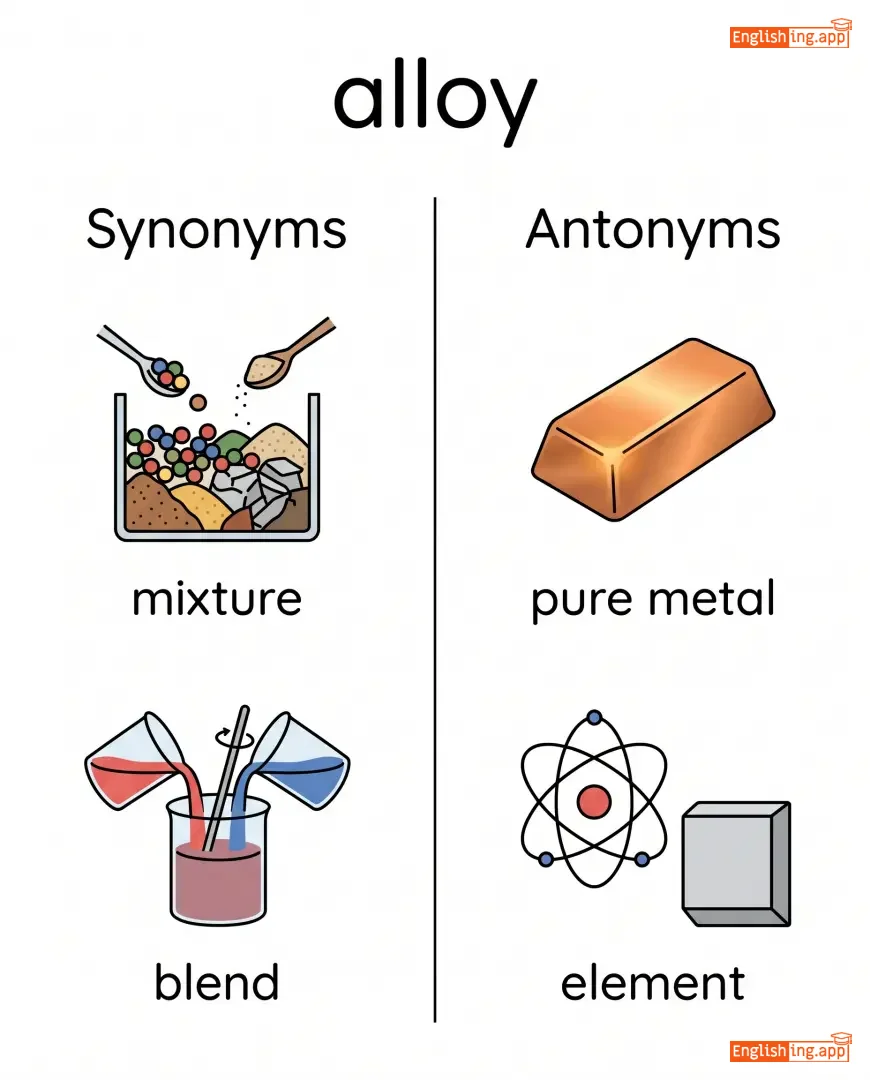
mixture, blend, composite, amalgam, fusion
••••••
|
pure metal, element
••••••
|
metal alloy, alloy wheels, alloy composition, alloy steel
••••••
|
Alloy - All+oy = смесь металлов
••••••
|
|
✨
••••••
|
/əˈlʊr/
verb
(алюр)
••••••
|
|
привлекательность
privelakatel'nost'
••••••
|
allured
алюрэд
••••••
|
allured
алюрэд
••••••
|
allures
алю́рес
••••••
|
alluring
алю́ринг
••••••
|
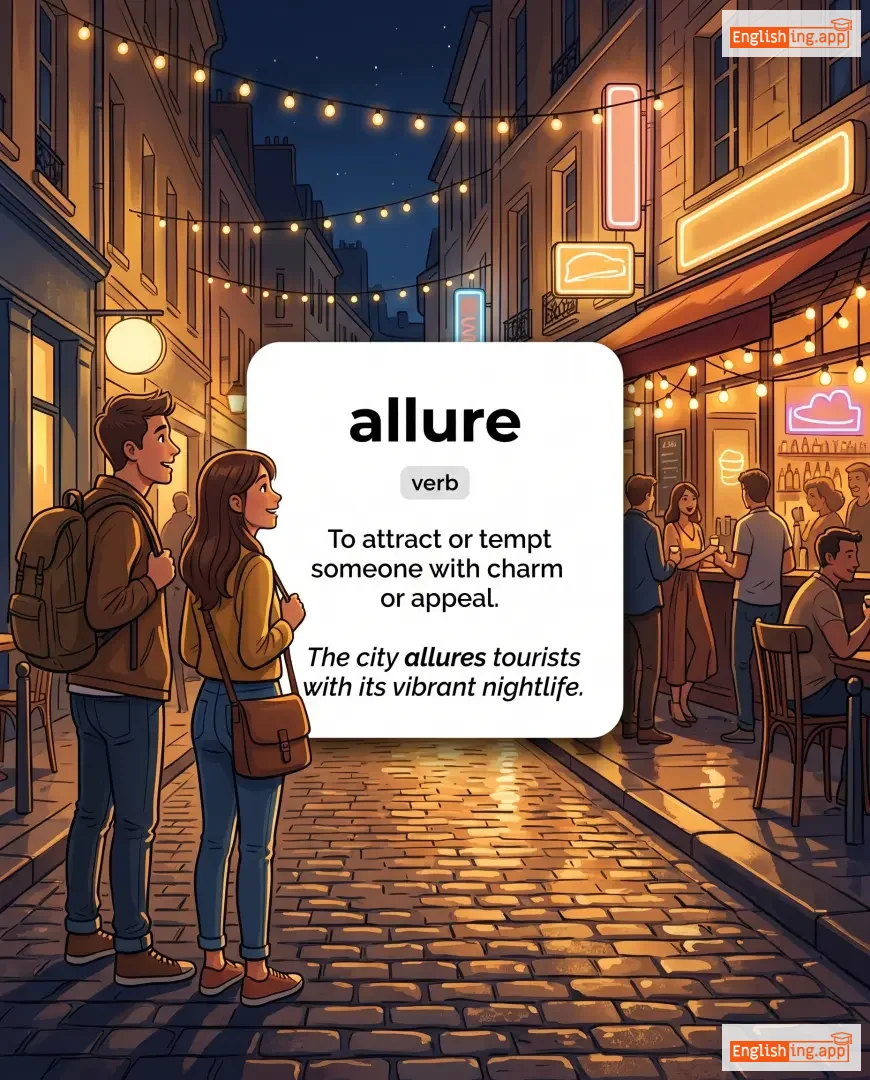
To attract or tempt someone with charm or appeal.
••••••
|
The city allures tourists with its vibrant nightlife.
Город привлекает туристов своим ярким ночным жизнью.
••••••
|
Город привлекает туристов своей яркой ночной жизнью.
Gorod privlekaet turistov svoey yarkoy noch'yu zhiznyu.
••••••
|
the allure of
привлекательность
••••••
|
the appeal or attraction of something
••••••
|
привлекательность
privelakatel'nost'
••••••
|
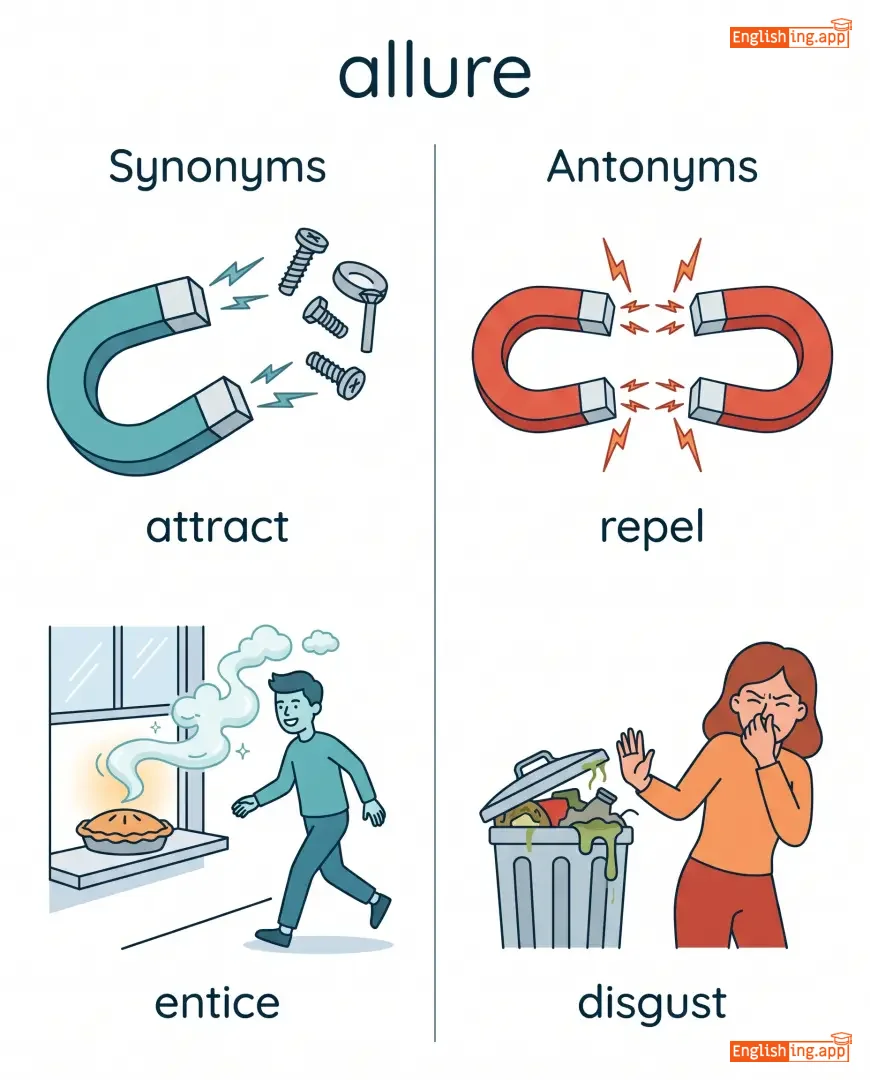
attract, entice, charm, fascinate, captivate
••••••
|
repel, disgust, deter
••••••
|
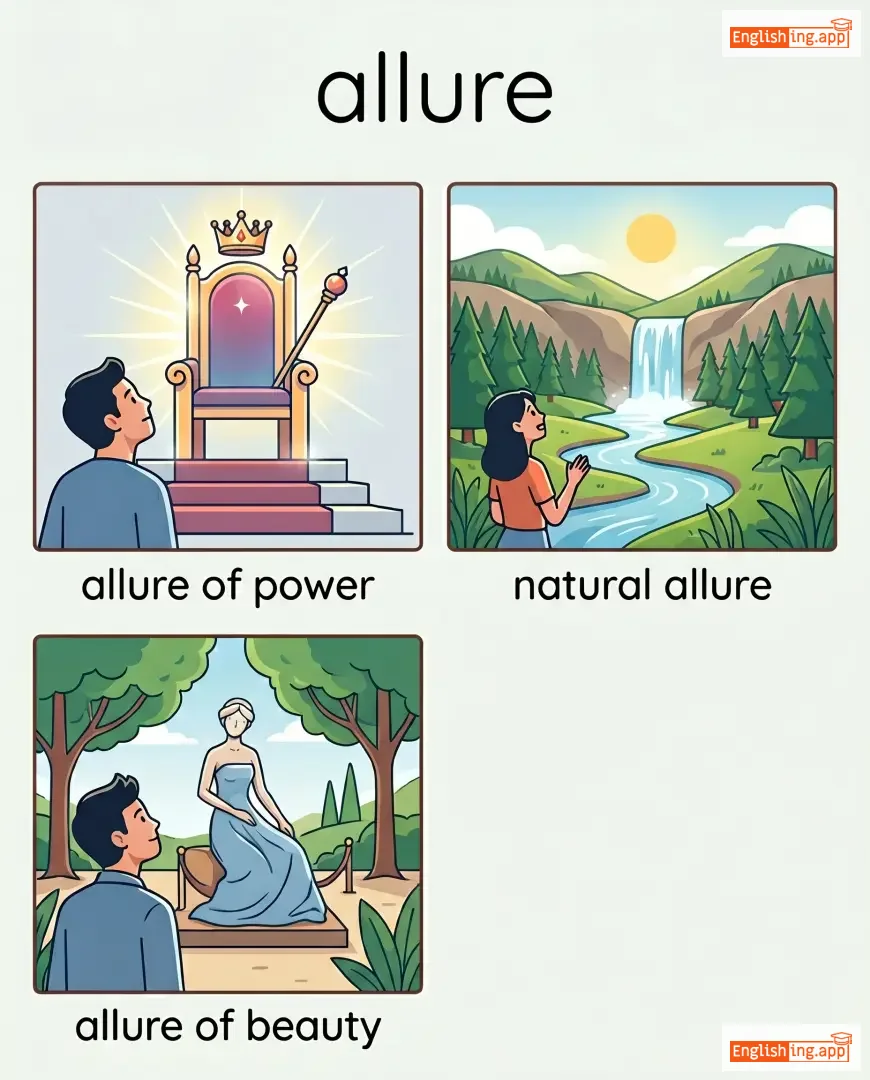
allure of power, natural allure, allure of beauty, allure tourists
••••••
|
Allure значит привлекательность, как свет, который привлекает всех.
••••••
|
|
🔗
••••••
|
/əˈmælɡəmeɪt/
verb
(амалгамет)
••••••
|

|
сливаться
slivat'sya
••••••
|
amalgamated
амалгамейтед
••••••
|
amalgamated
амалгамейтед
••••••
|
amalgamates
амалгамейтс
••••••
|
amalgamating
амалгамейтинг
••••••
|
to combine or unite to form one organization or structure; to merge
••••••
|
The two companies decided to amalgamate their operations.
Две компании решили объединить свои операции.
••••••
|
Две компании решили объединить свои операции.
Dve kompanii reshili obyedinit' svoi operatsii.
••••••
|
- •••••• | - •••••• | - •••••• |
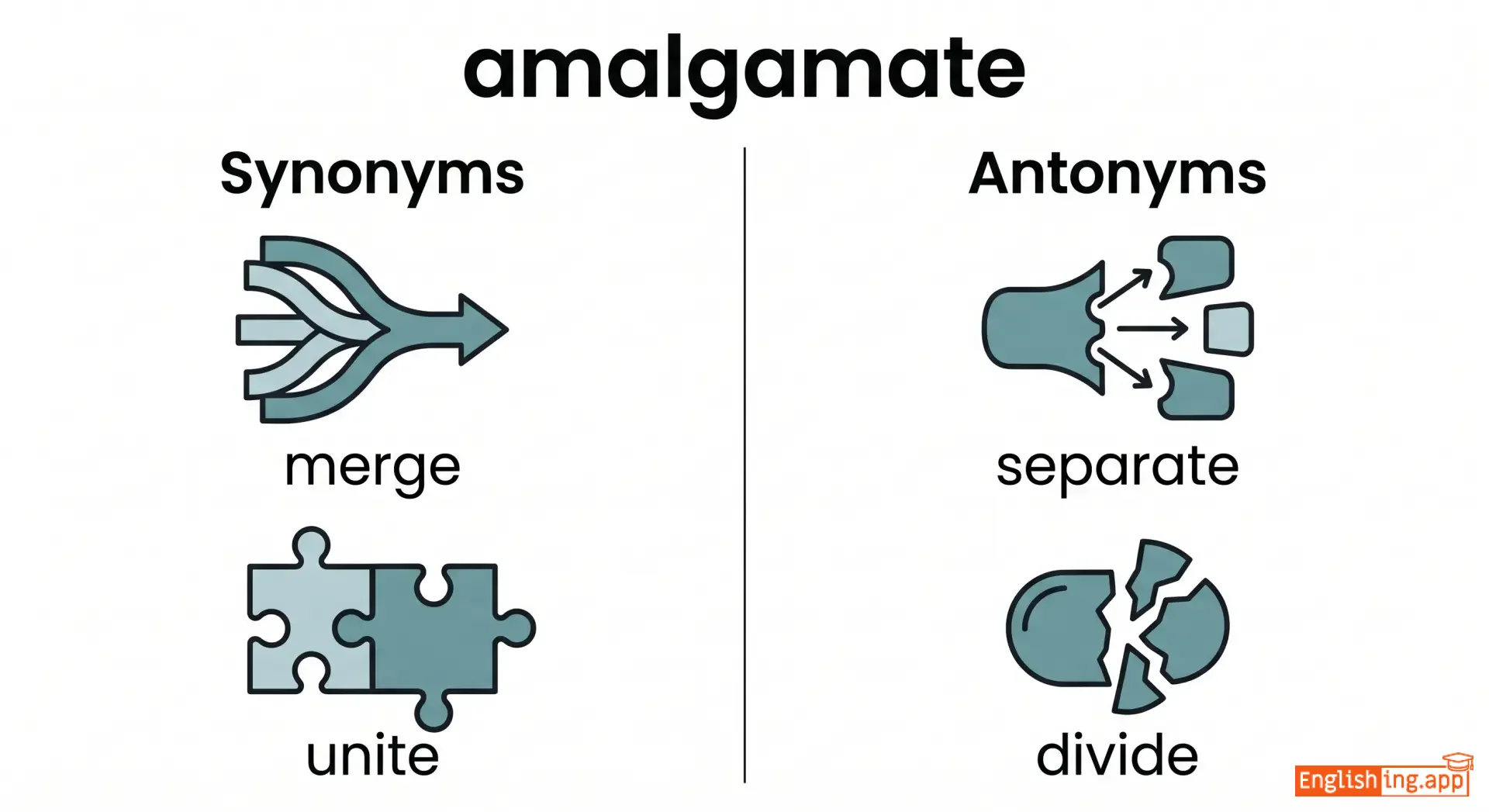
merge, combine, unite, blend
••••••
|
separate, divide, split, isolate
••••••
|
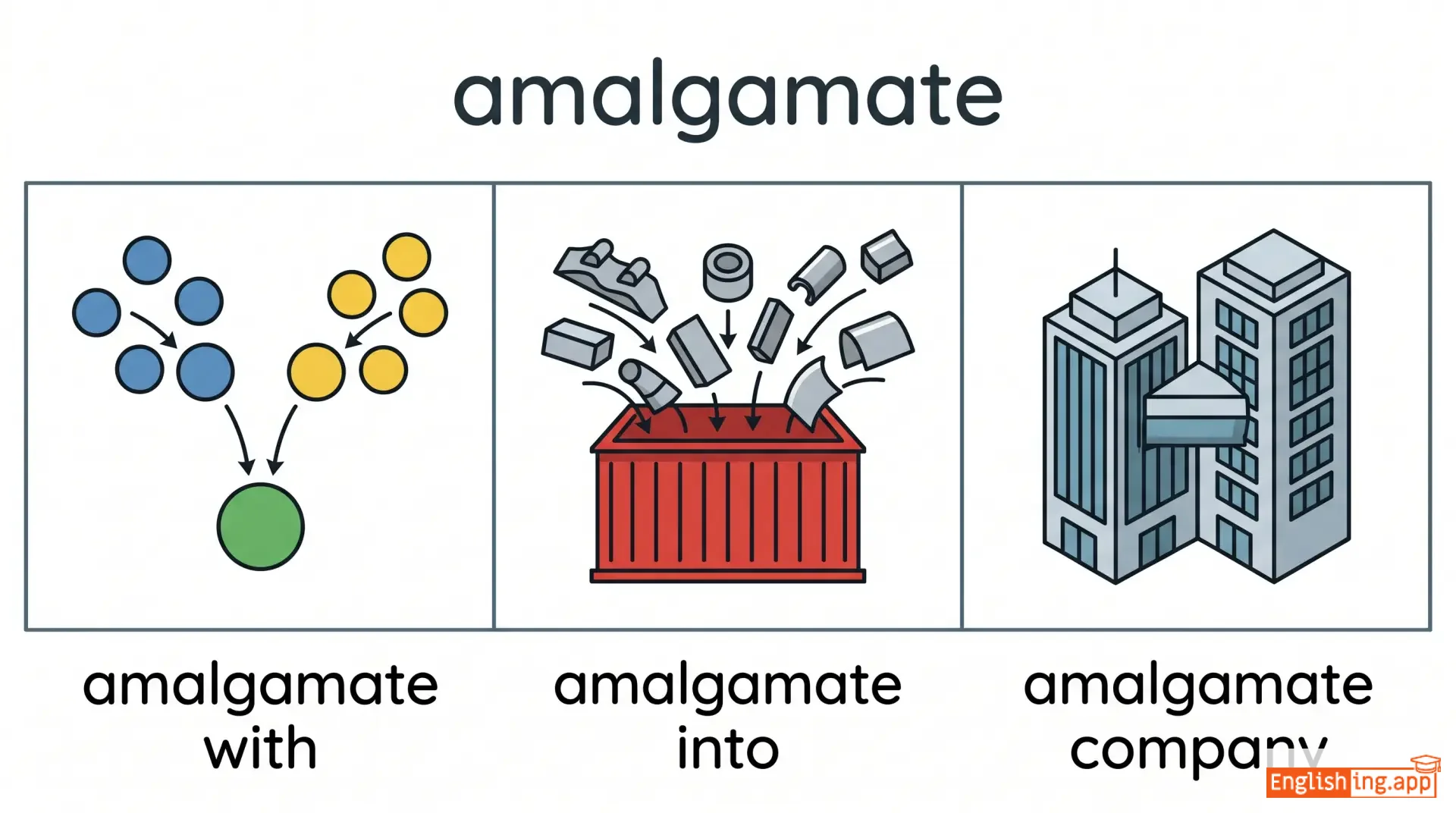
amalgamate companies, amalgamate operations, successfully amalgamate, amalgamate resources, amalgamate efforts
••••••
|
сливаться = объединять для создания
••••••
|
|
❓
••••••
|
/æmˈbɪɡjuəs/
adjective
(æmˈbɪɡjuəs)
••••••
|

|
неоднозначный
neodnoznachny
••••••
|
- •••••• | - •••••• | - •••••• | - •••••• |
Open to more than one interpretation; unclear or uncertain.
••••••
|
His answer was so ambiguous that no one understood his real opinion. |
Его ответ был настолько неоднозначным, что никто не понял его настоящее мнение.
Ego otvet byl nastol'ko neodnoznachnym, chto nikto ne ponyal ego nastoyashcheye mneniye.
••••••
|
ambiguous statement |
a statement that can be interpreted in more than one way
••••••
|
неоднозначное заявление
neodnoznachnoye zayavleniye
••••••
|
unclear, vague, uncertain, equivocal, obscure
••••••
|
clear, definite, explicit
••••••
|
ambiguous statement, ambiguous meaning, ambiguous situation, ambiguous terms
••••••
|
Ambulance — это как неоднозначный звук сирены, создающий путаницу.
••••••
|
|
⚖️
••••••
|
/æmˈbɪvələns/
noun
(амби́вэленс)
••••••
|

|
амбивалентность
ambivalentnost
••••••
|
- •••••• | - •••••• | - •••••• | - •••••• |
The state of having mixed feelings or contradictory ideas about something.
••••••
|
He felt ambivalence about moving to a new city. |
Он почувствовал амбивалентность по поводу переезда в новый город.
On pochuvstvoval ambivalentnost' po povodu pereyezda v novyy gorod.
••••••
|
- •••••• | - •••••• | - •••••• |
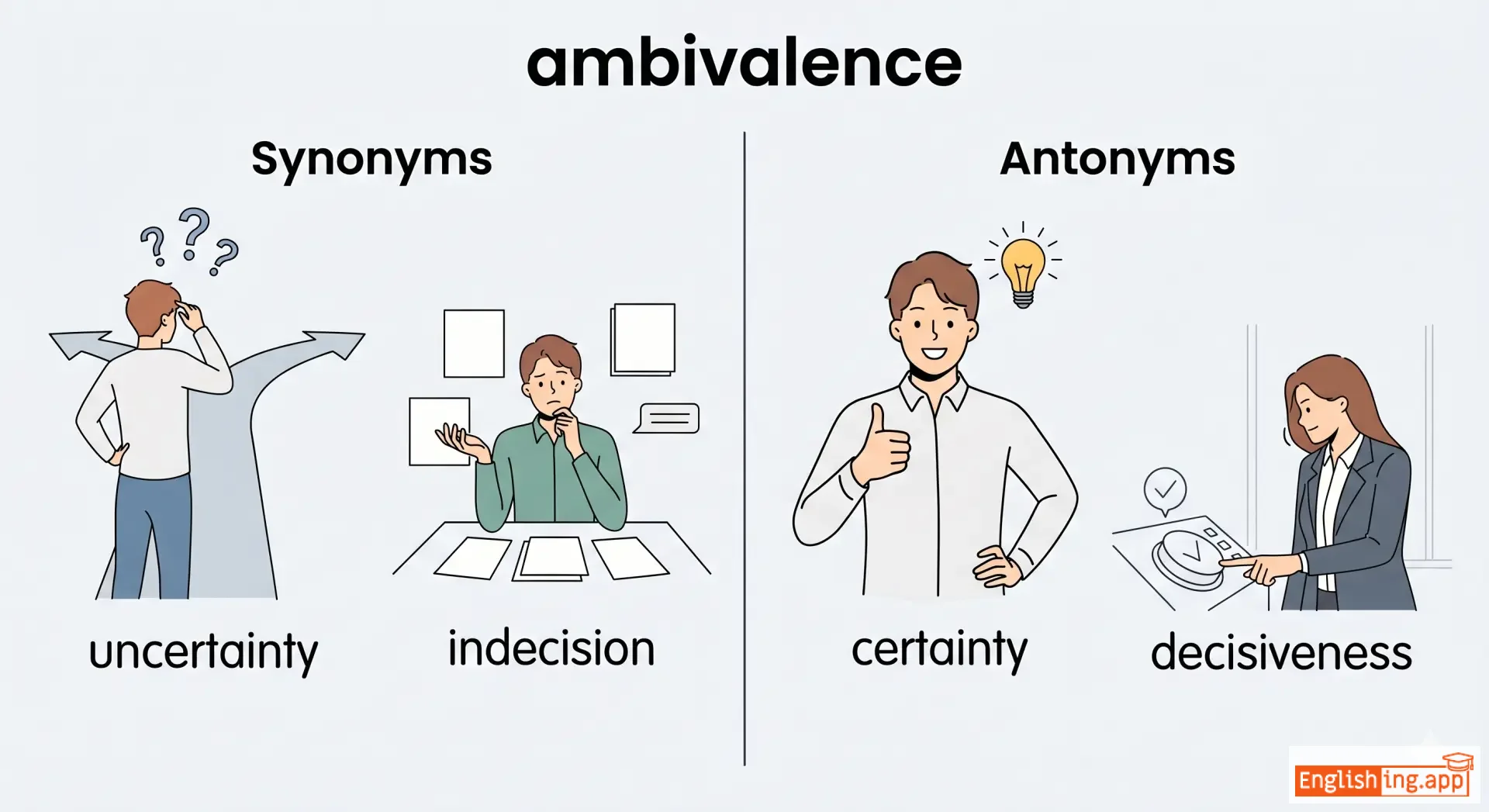
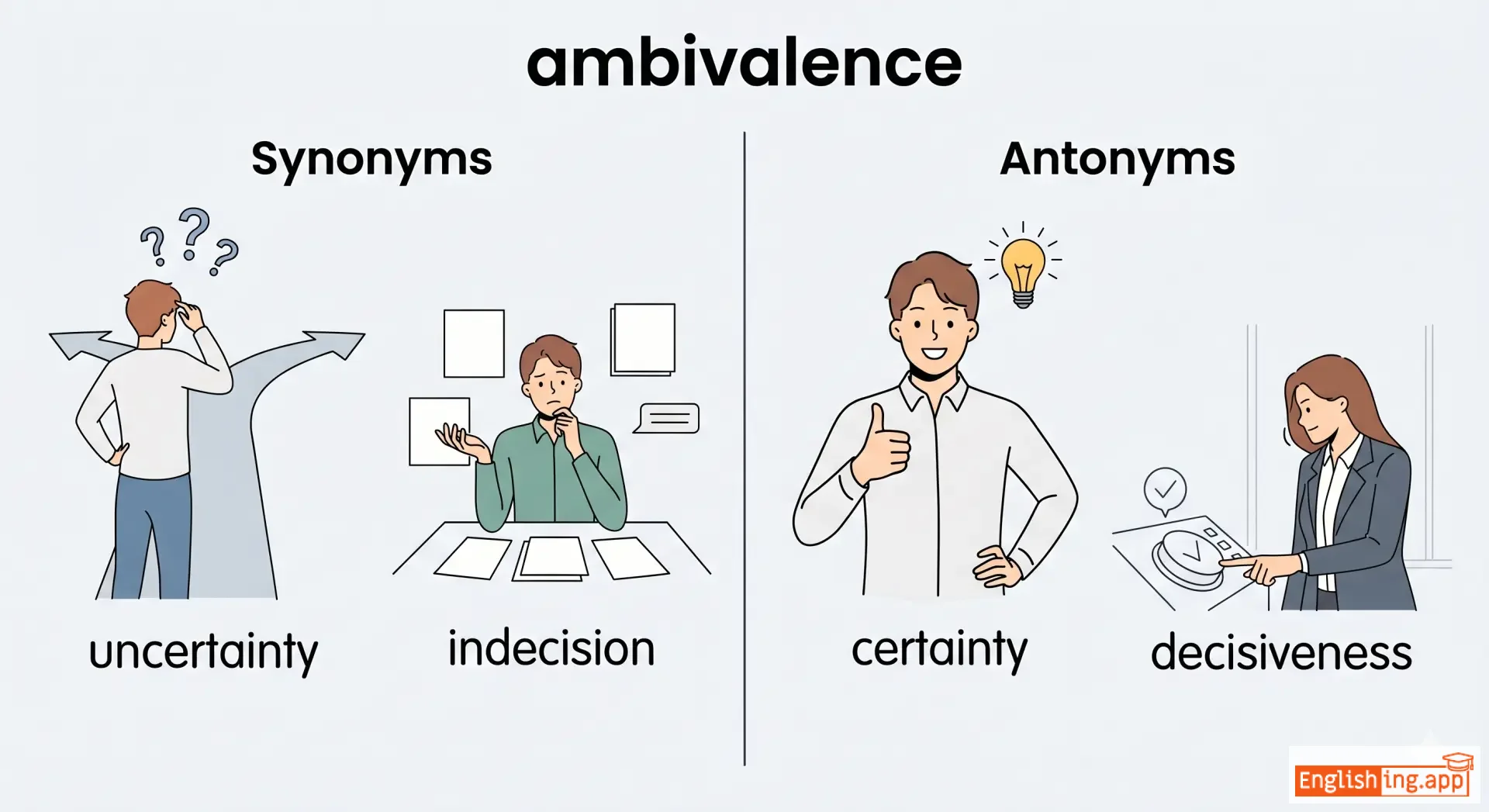
uncertainty, indecision, doubt, hesitation
••••••
|
certainty, decisiveness, clarity
••••••
|
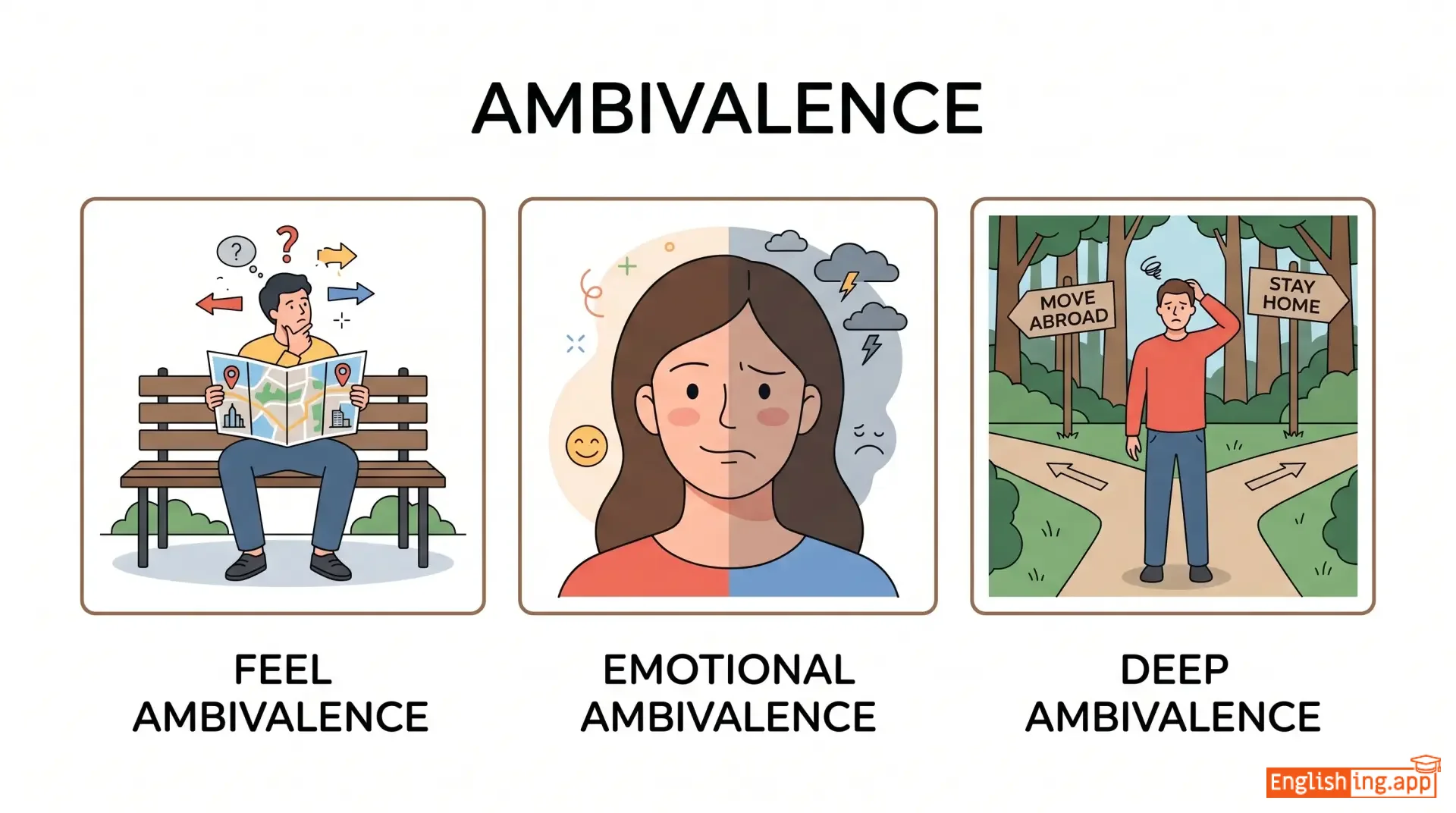
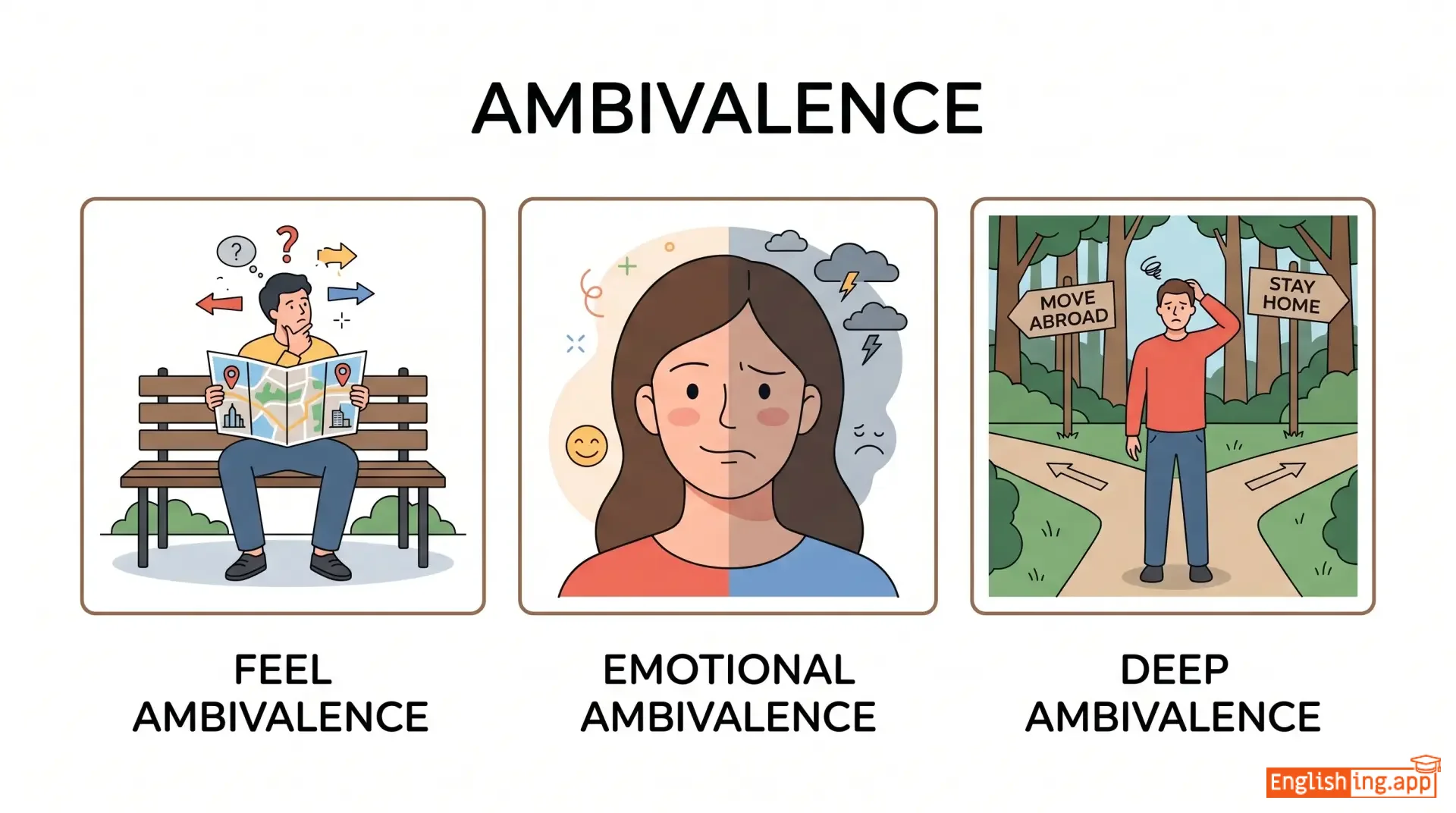
feel ambivalence, emotional ambivalence, deep ambivalence
••••••
|
В амбулансе амбивалентность выражается в страхе и надежде.
••••••
|
|
🍯
••••••
|
/æmˈbroʊʒə/
noun
(амбро́зия)
••••••
|
|
амброзия
ambroziya
••••••
|
- •••••• | - •••••• | - •••••• | - •••••• |
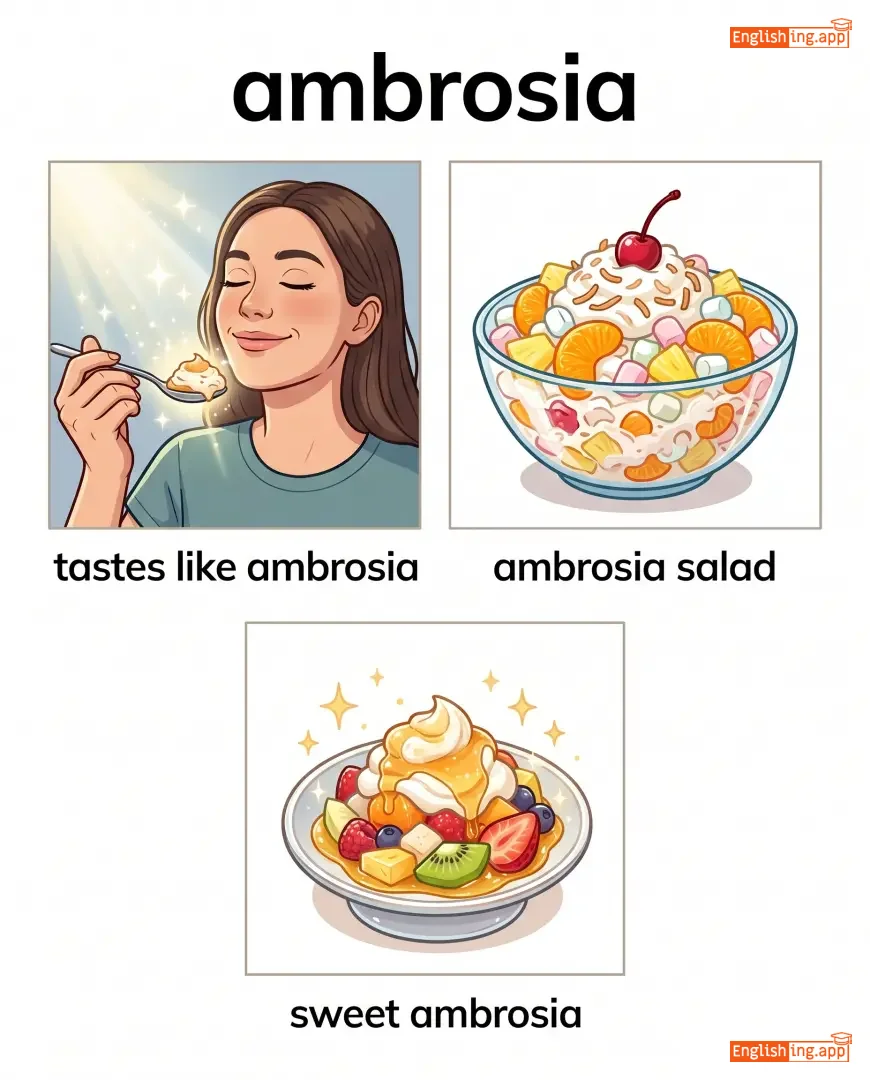
The food of the gods in classical mythology; something extremely pleasing to taste or smell.
••••••
|
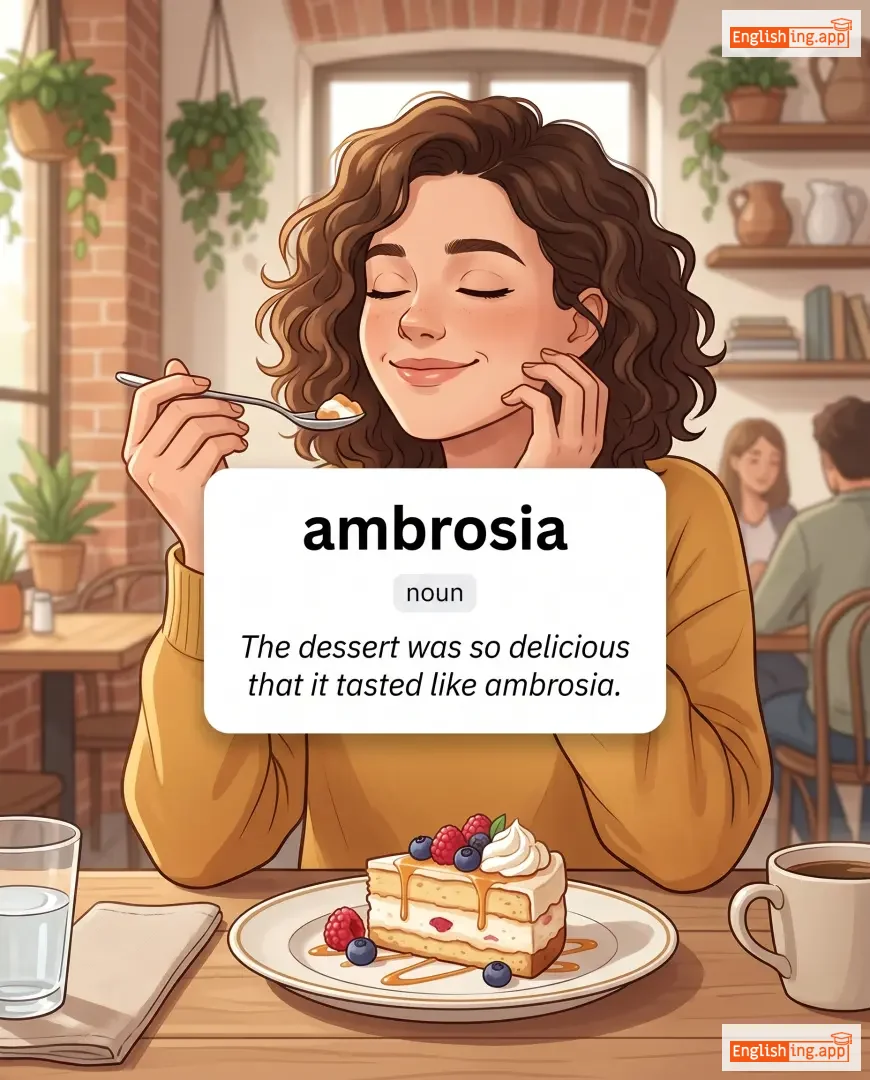
The dessert was so delicious that it tasted like ambrosia.
Десерт был настолько вкусным, что он напоминал амброзию.
••••••
|
Десерт был настолько вкусным, что он напоминал амброзию.
Desert byl nastol'ko vkusnym, chto on napominal ambroziyu.
••••••
|
- •••••• | - •••••• | - •••••• |
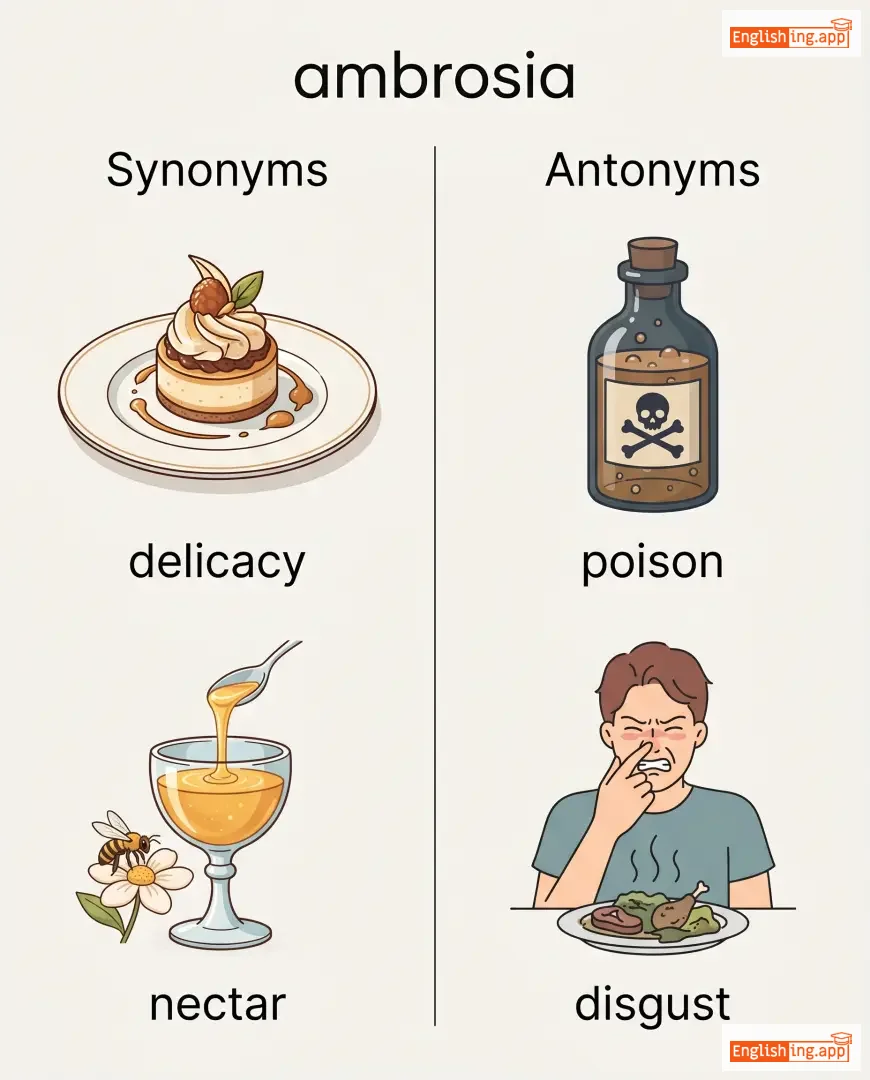
delicacy, nectar, delight, treat, luxury
••••••
|
poison, disgust, repulsion
••••••
|
tastes like ambrosia, ambrosia salad, sweet ambrosia, ambrosia dessert
••••••
|
Амброзия - пища богов, представьте себе божественный вкус, как сладкий нектар из рая.
••••••
|
|
🔧
••••••
|
/əˈmiːliəreɪt/
verb
(хэппинесс)
••••••
|
|
счастье
schastye
••••••
|
ameliorated
••••••
|
ameliorated
••••••
|
ameliorates
••••••
|
ameliorating
••••••
|
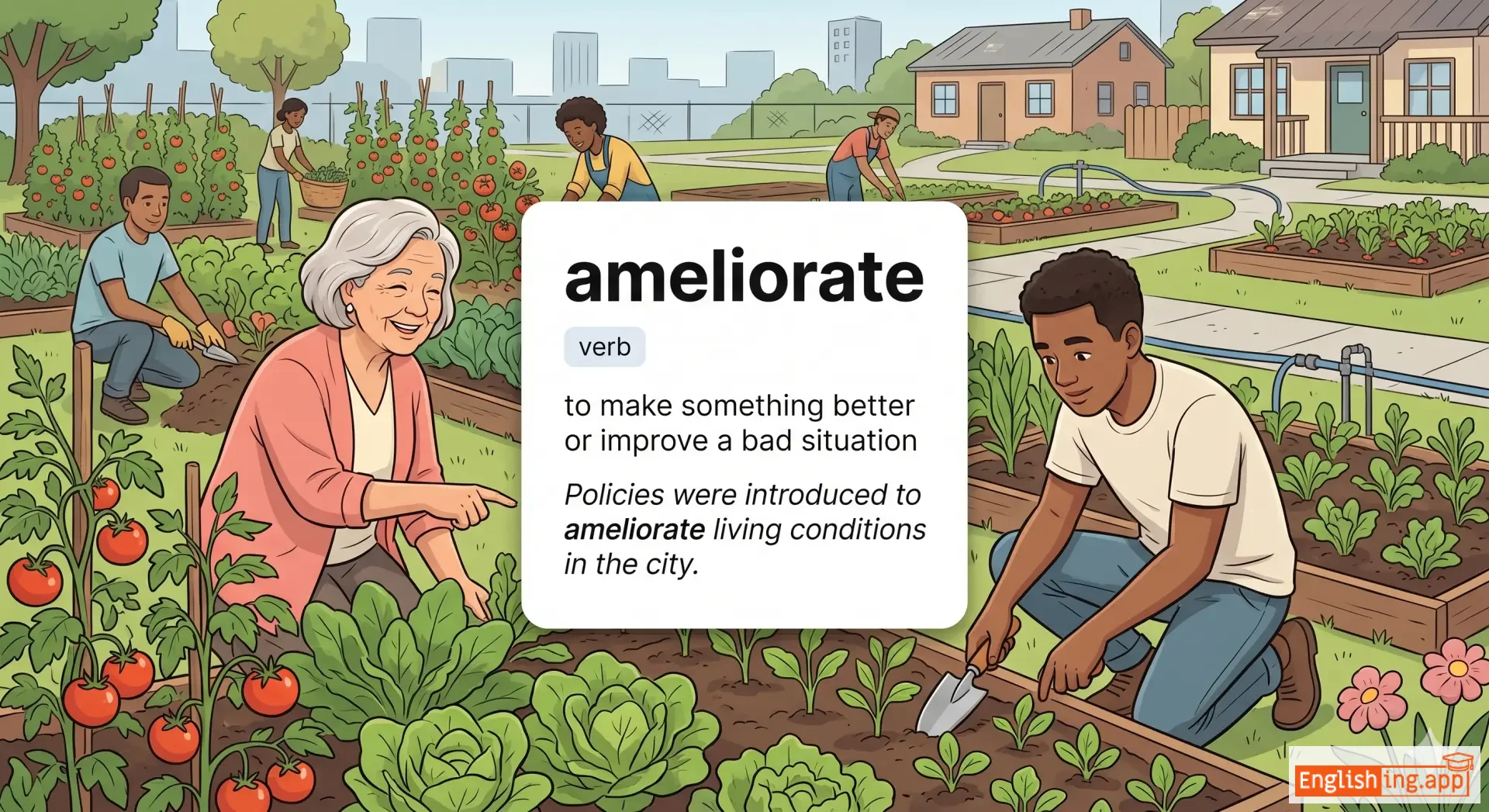
to make something better or improve a bad situation
••••••
|
Policies were introduced to ameliorate living conditions in the city. |
Были введены меры для улучшения условий жизни в городе.
Byli vvedeny mery dlya uluchsheniya usloviy zhizni v gorode.
••••••
|
ameliorate the situation |
to improve a problematic or difficult condition
••••••
|
улучшить ситуацию
uluchshit' situatsiyu
••••••
|
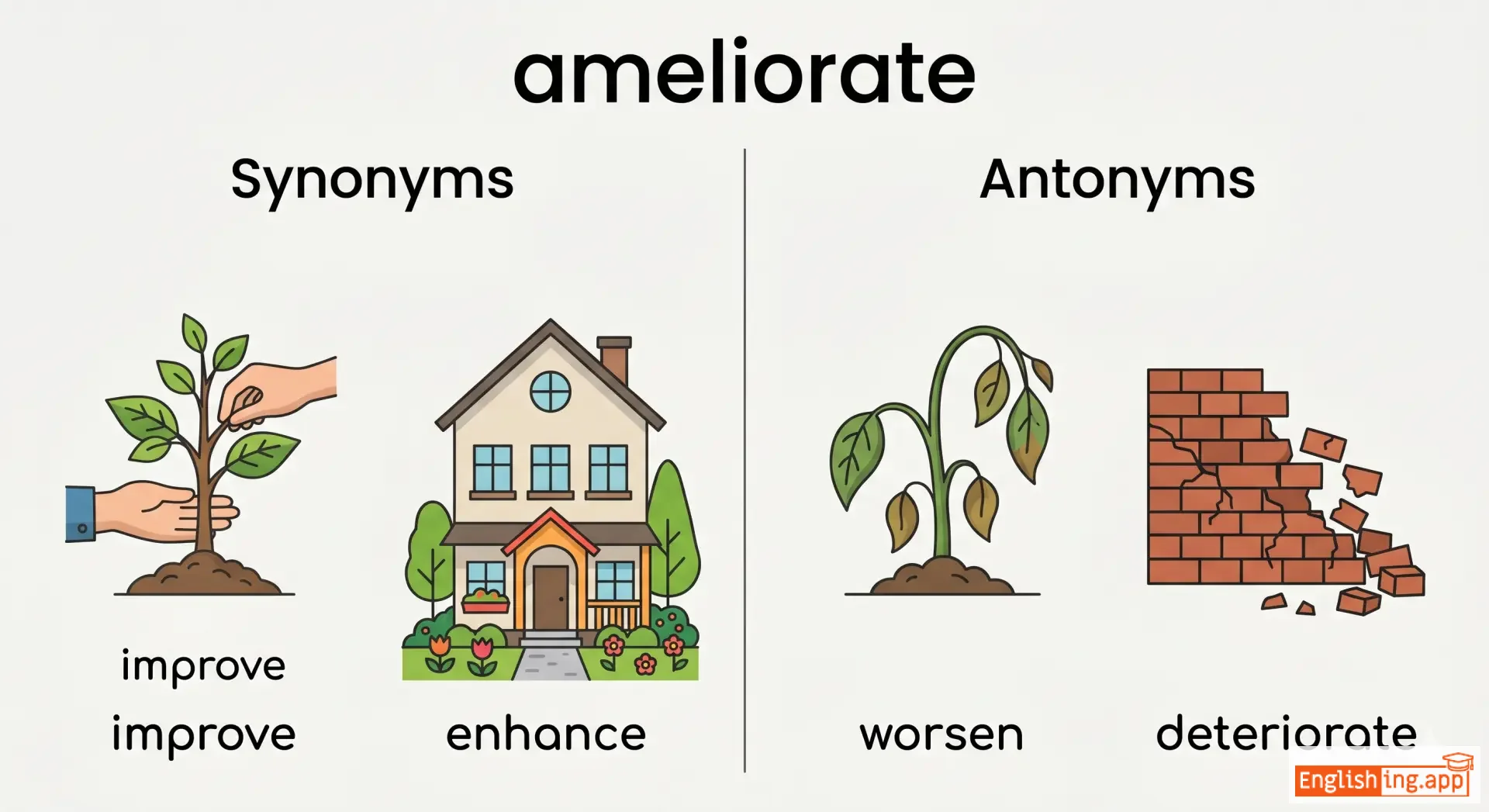
improve, enhance, upgrade, better, reform
••••••
|
worsen, deteriorate, aggravate
••••••
|
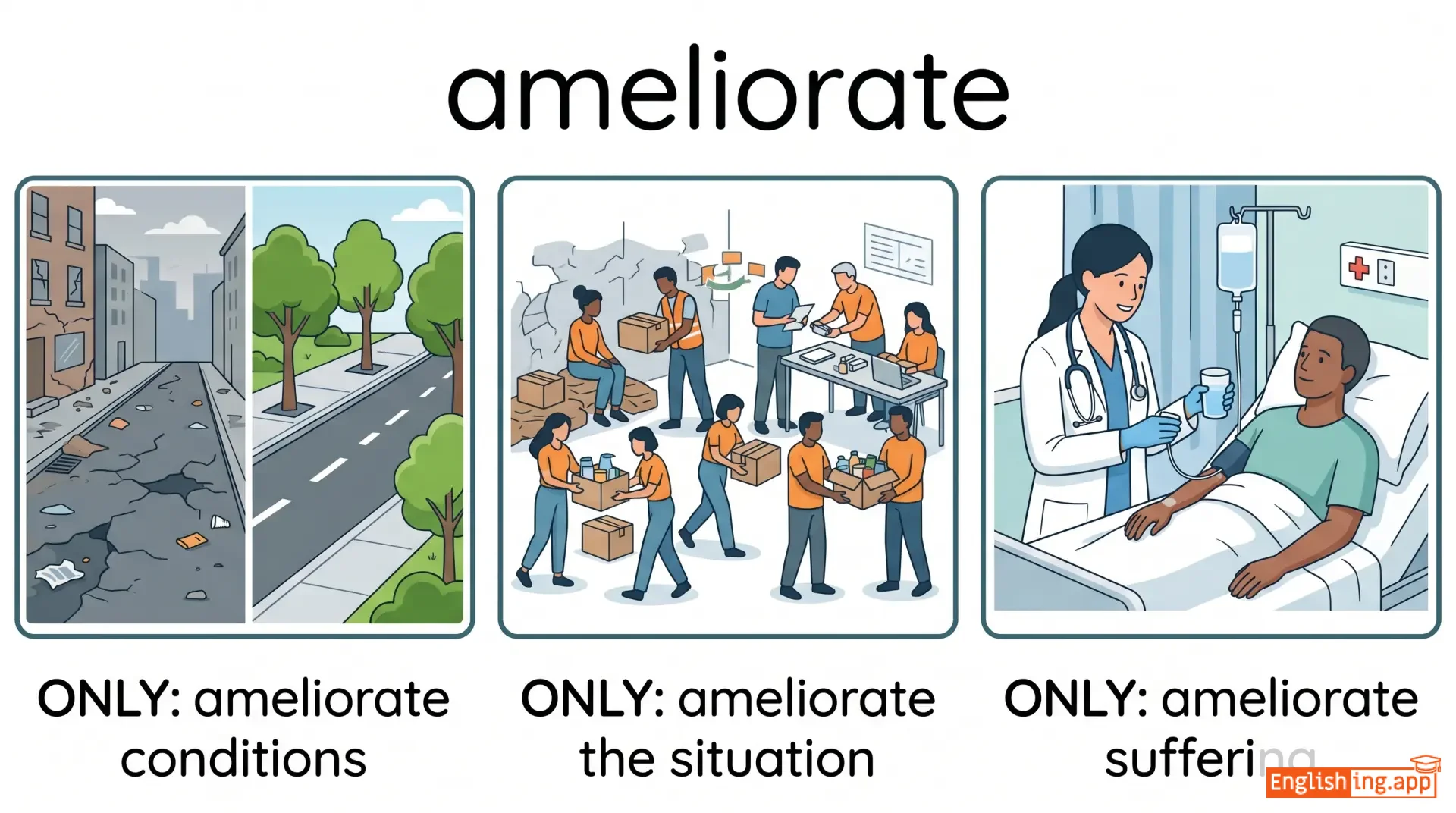
ameliorate conditions, ameliorate the situation, ameliorate suffering, ameliorate poverty
••••••
|
Счастье (счастье) приходит, когда ситуация улучшается.
••••••
|
|
😊
••••••
|
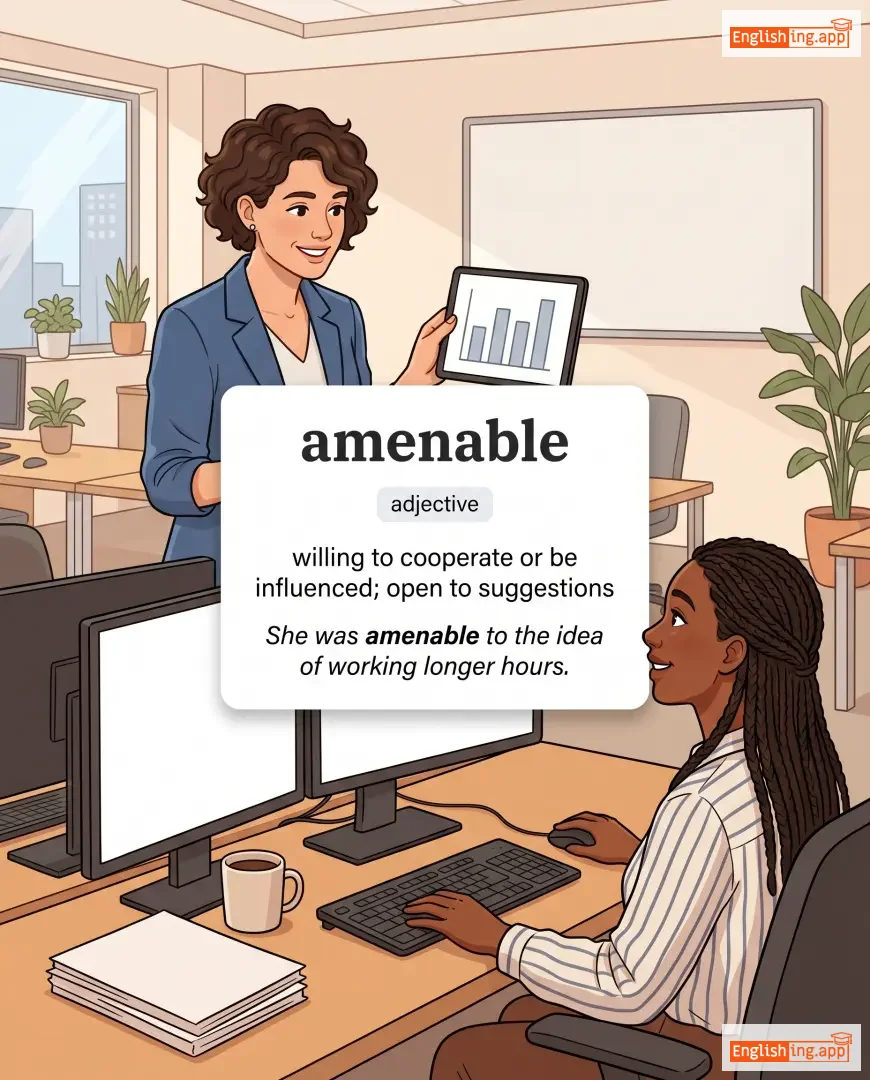
/əˈmiːnəbl/
adjective
(аменебл)
••••••
|
|
отзывчивый
otzyvchivyy
••••••
|
- •••••• | - •••••• | - •••••• | - •••••• |
willing to cooperate or be influenced; open to suggestions
••••••
|
She was amenable to the idea of working longer hours.
Она была готова к идее работать больше часов.
••••••
|
Она была готова к идее работать больше часов.
Ona byla gotova k ideye rabotat' bol'she chasov.
••••••
|
- •••••• | - •••••• | - •••••• |
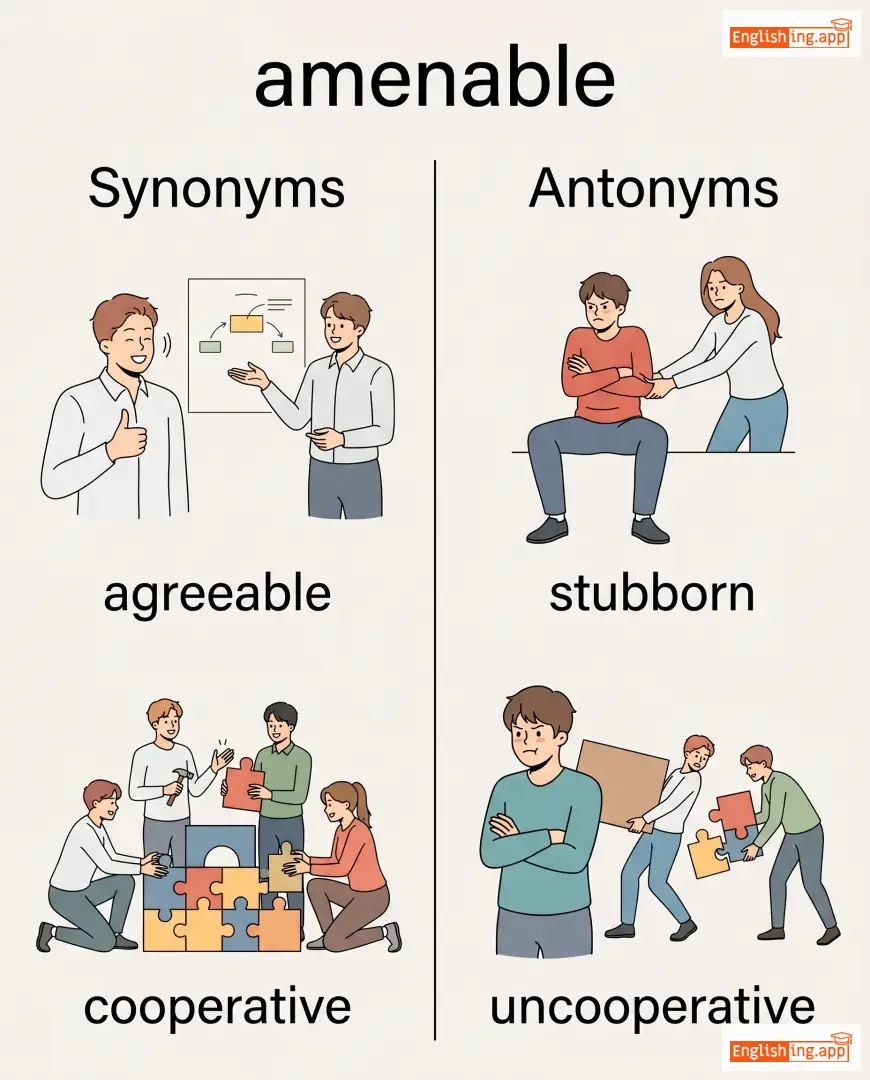
agreeable, cooperative, responsive, compliant
••••••
|
stubborn, uncooperative, resistant
••••••
|
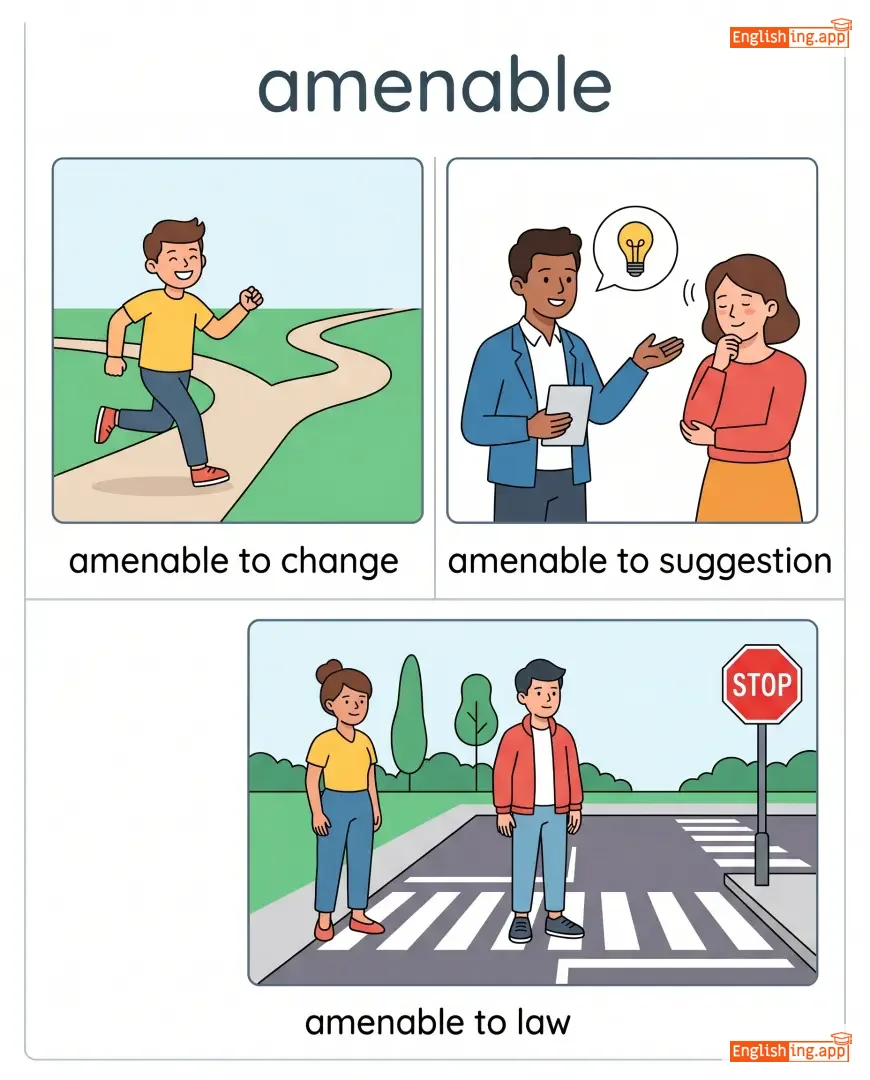
amenable to change, amenable to suggestion, amenable to law
••••••
|
Отзывчивый как человек, который готов работать с другими
••••••
|
|
🏘️
••••••
|
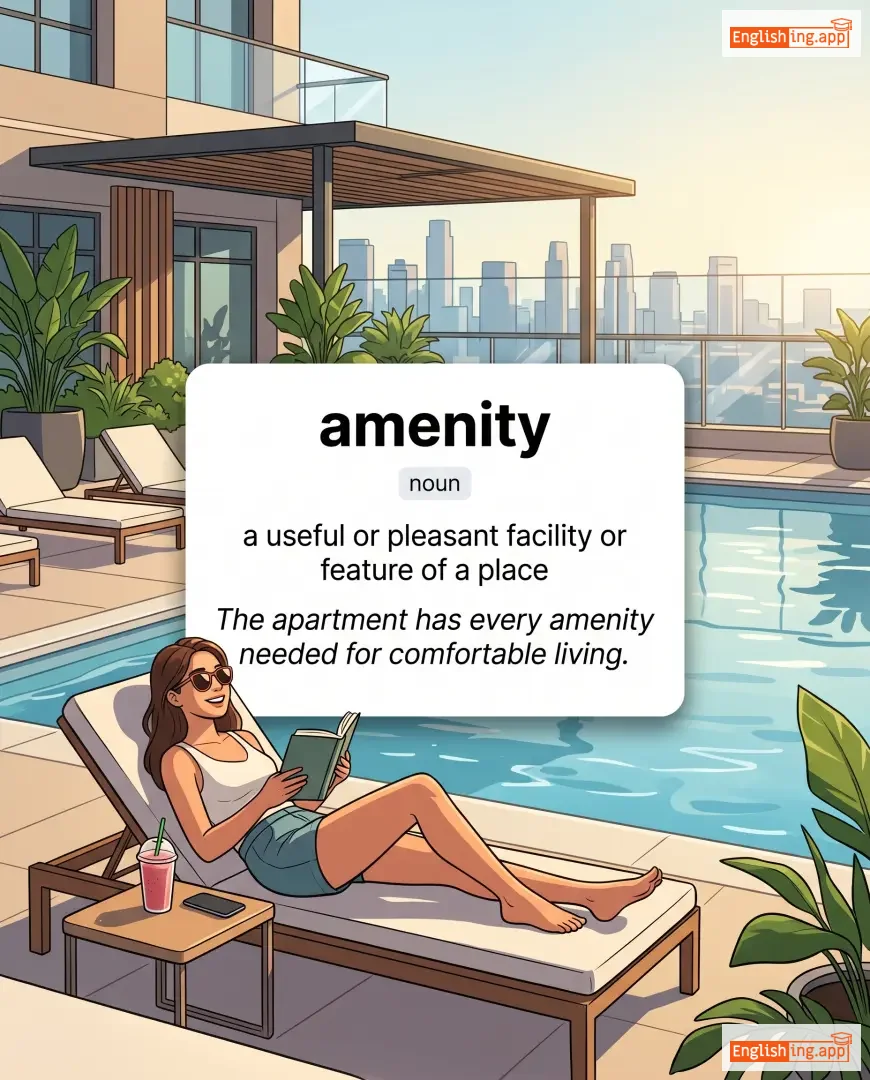
/əˈmɛnəti/
noun
(a-me-ni-ti)
••••••
|
|
удобство
udobstvo
••••••
|
- •••••• | - •••••• | - •••••• | - •••••• |
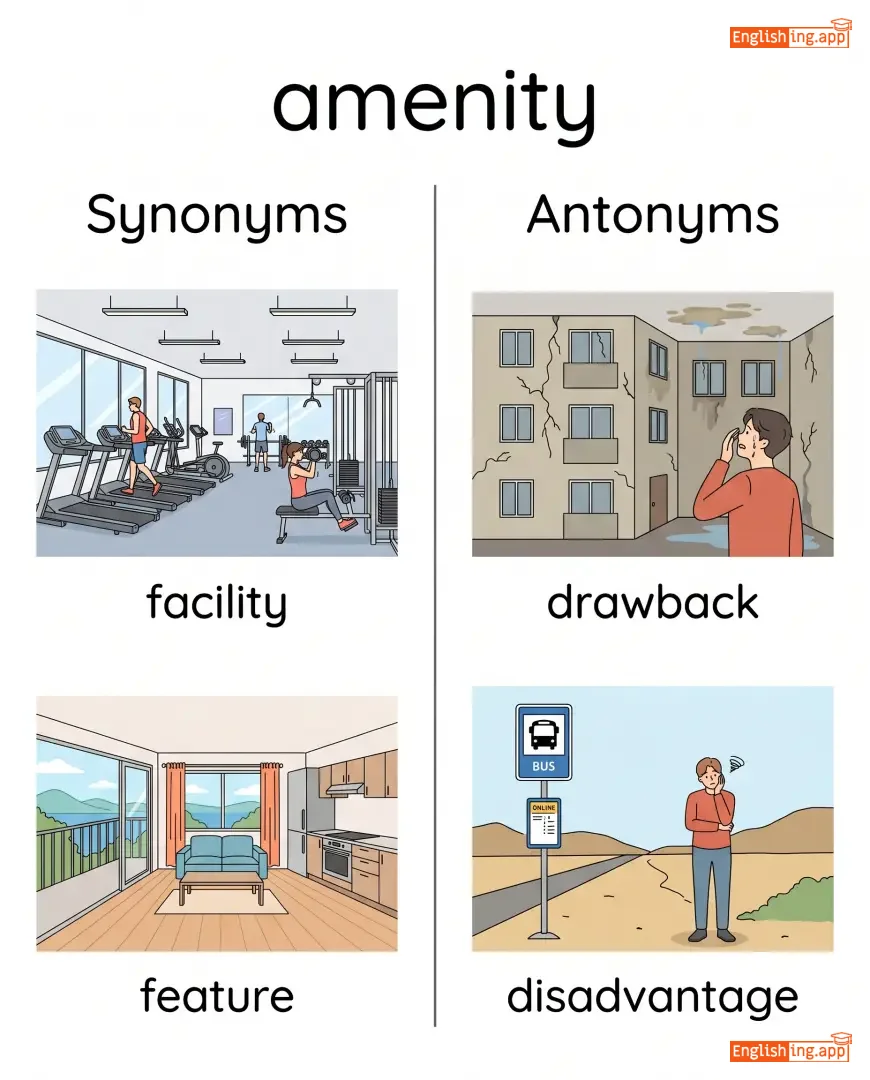
a useful or pleasant facility or feature of a place
••••••
|
The apartment has every amenity needed for comfortable living. |
В квартире есть все удобства, необходимые для комфортной жизни.
V kvartire est' vse udobstva, neobkhodimye dlya komfortnoy zhizni.
••••••
|
- •••••• | - •••••• | - •••••• |
facility, feature, service, convenience
••••••
|
drawback, disadvantage
••••••
|
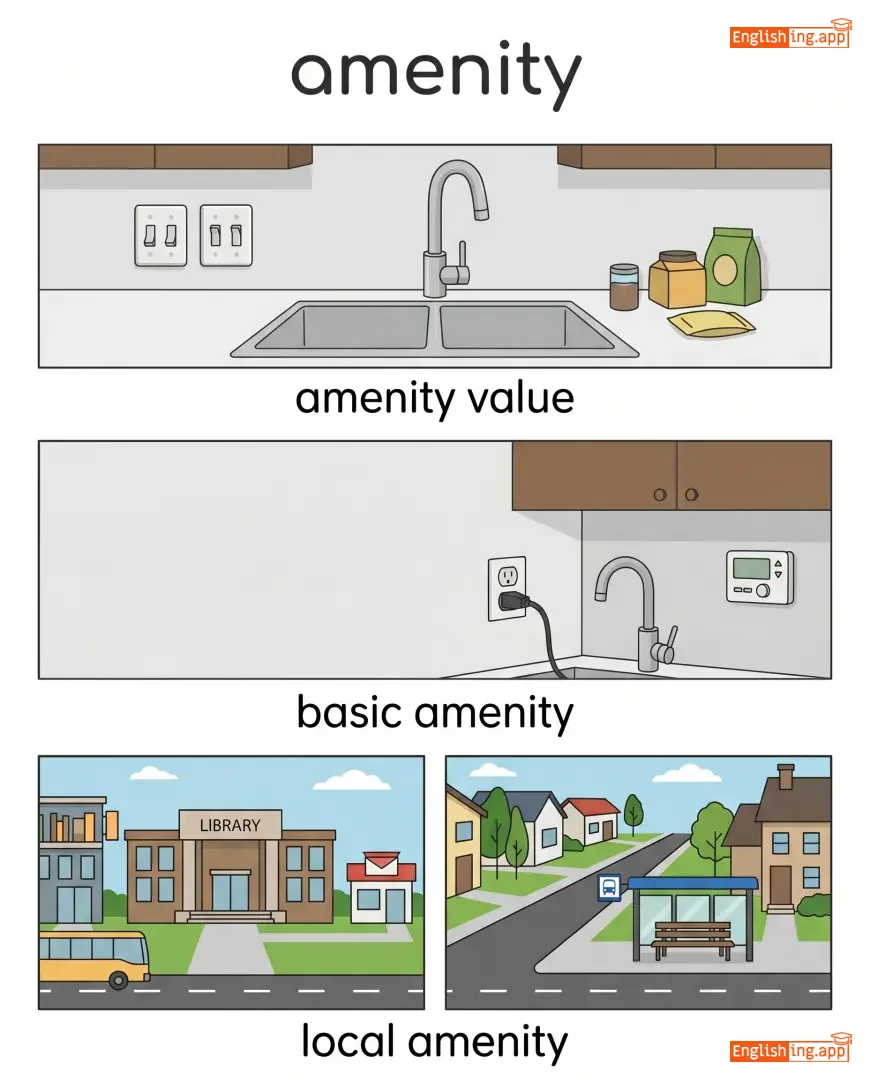
amenity value, basic amenity, local amenity
••••••
|
Amenity похоже на Ami + необходимость — вещи, необходимые для комфорта
••••••
|
|
🧿
••••••
|
/ˈæmjʊlət/
noun
(амулет)
••••••
|
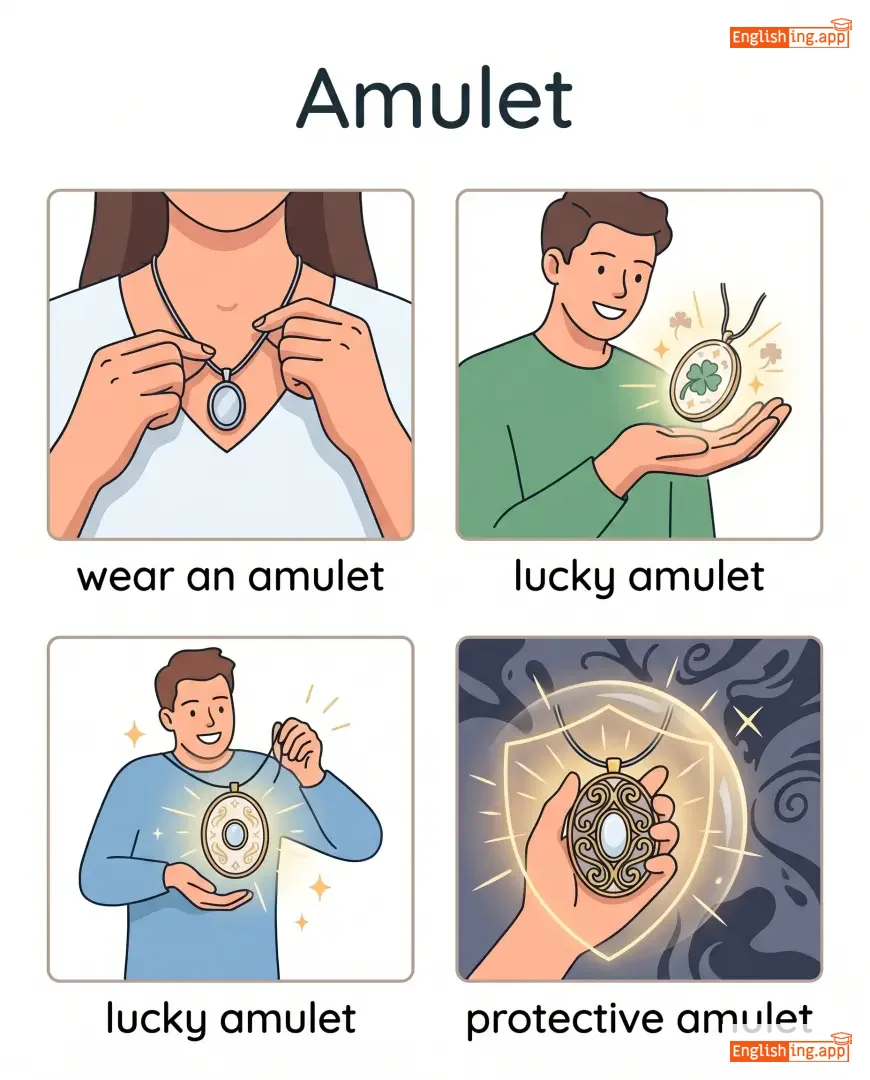
|
амулет
amulet
••••••
|
- •••••• | - •••••• | - •••••• | - •••••• |
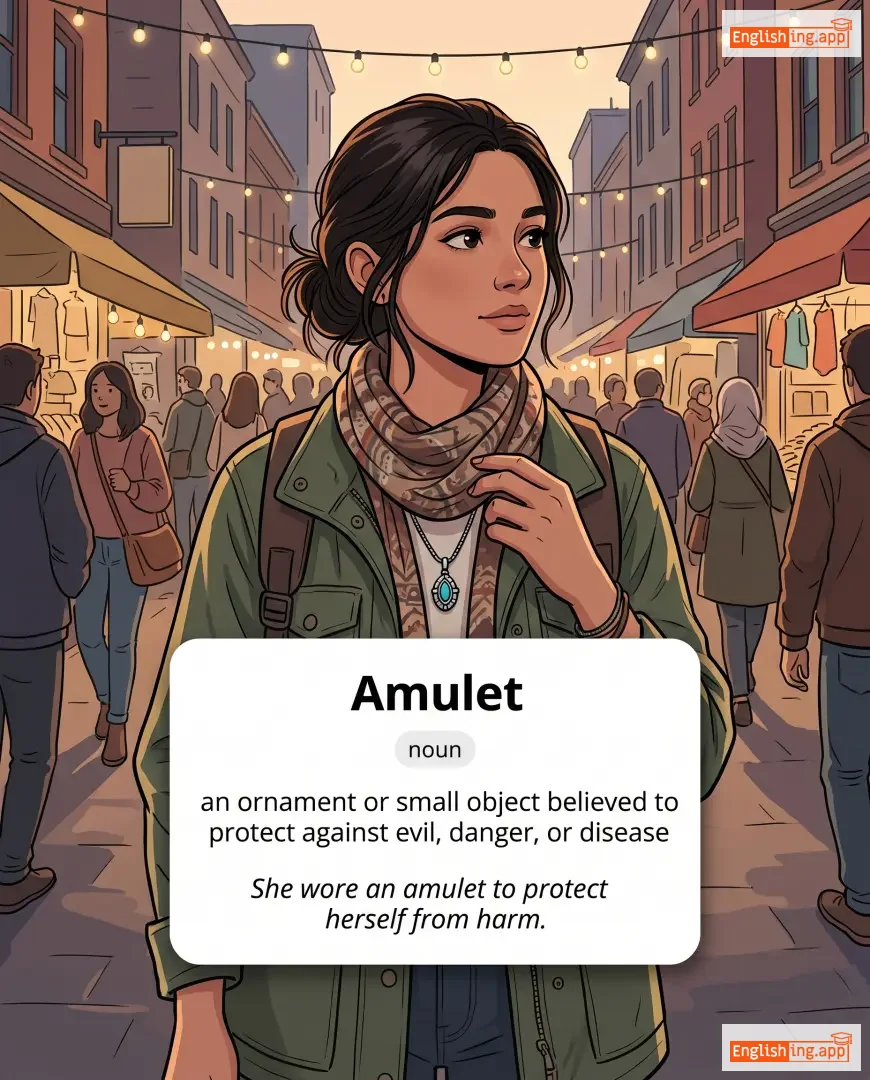
an ornament or small object believed to protect against evil, danger, or disease
••••••
|
She wore an amulet to protect herself from harm.
Она носила амулет, чтобы защитить себя от вреда.
••••••
|
Она носила амулет, чтобы защитить себя от вреда.
Ona nosila amulet, chtoby zashchitit' sebya ot vreda.
••••••
|
- •••••• | - •••••• | - •••••• |
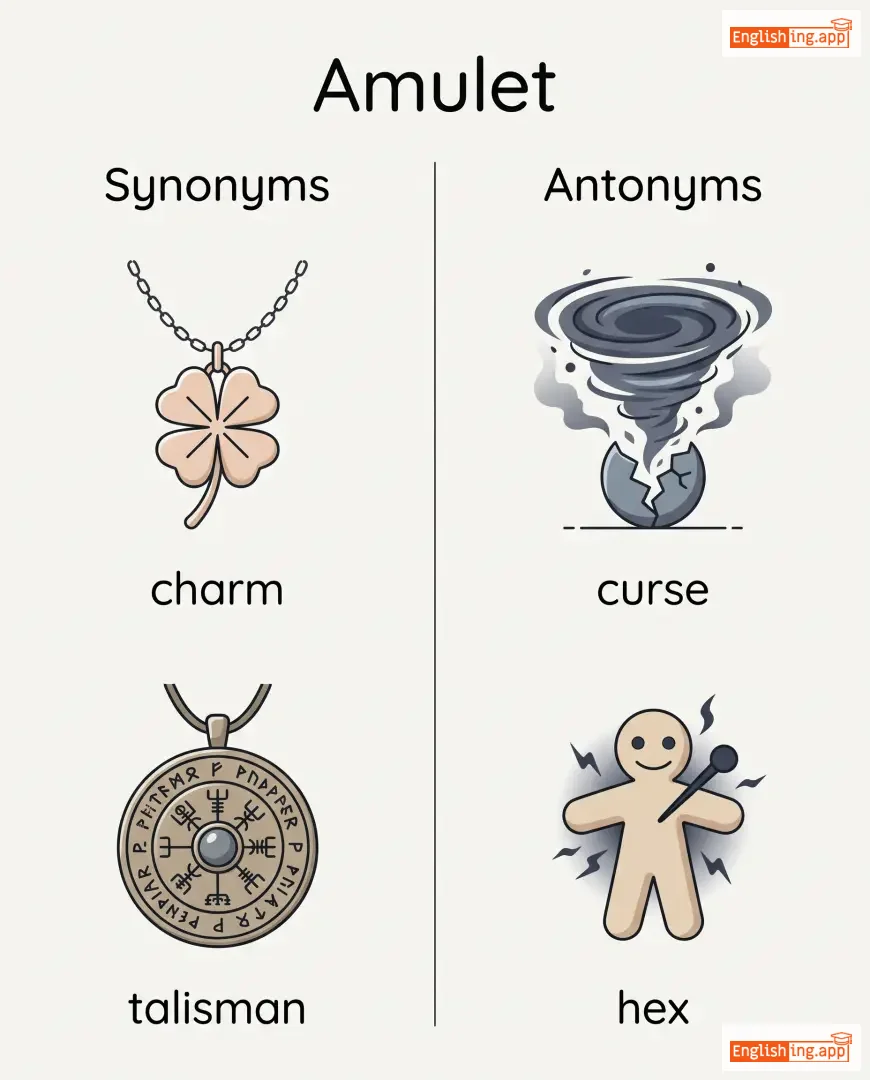
charm, talisman, pendant, token
••••••
|
curse, hex, bane
••••••
|
wear an amulet, lucky amulet, protective amulet
••••••
|
Амулет означает амулет—'Аму' напомнит о защите с помощью амулета.
••••••
|
|
⌛
••••••
|
/əˈnækrəˌnɪzəm/
noun
••••••
|
|
- •••••• | - •••••• | - •••••• | - •••••• | - •••••• |
something that is out of its proper time period, especially something old-fashioned in a modern context
••••••
|
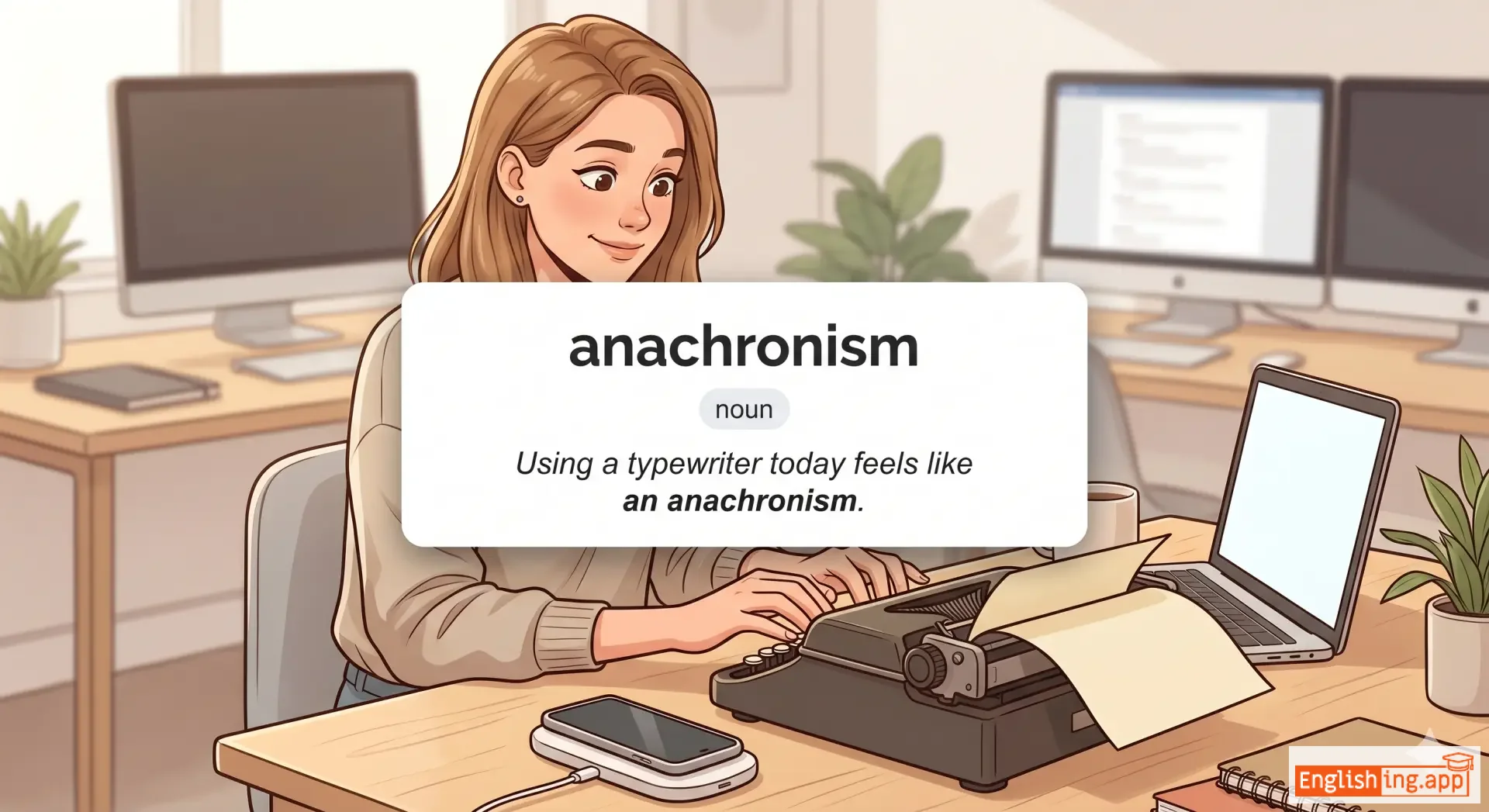
Using a typewriter today feels like an anachronism. |
- •••••• | - •••••• | - •••••• | - •••••• |
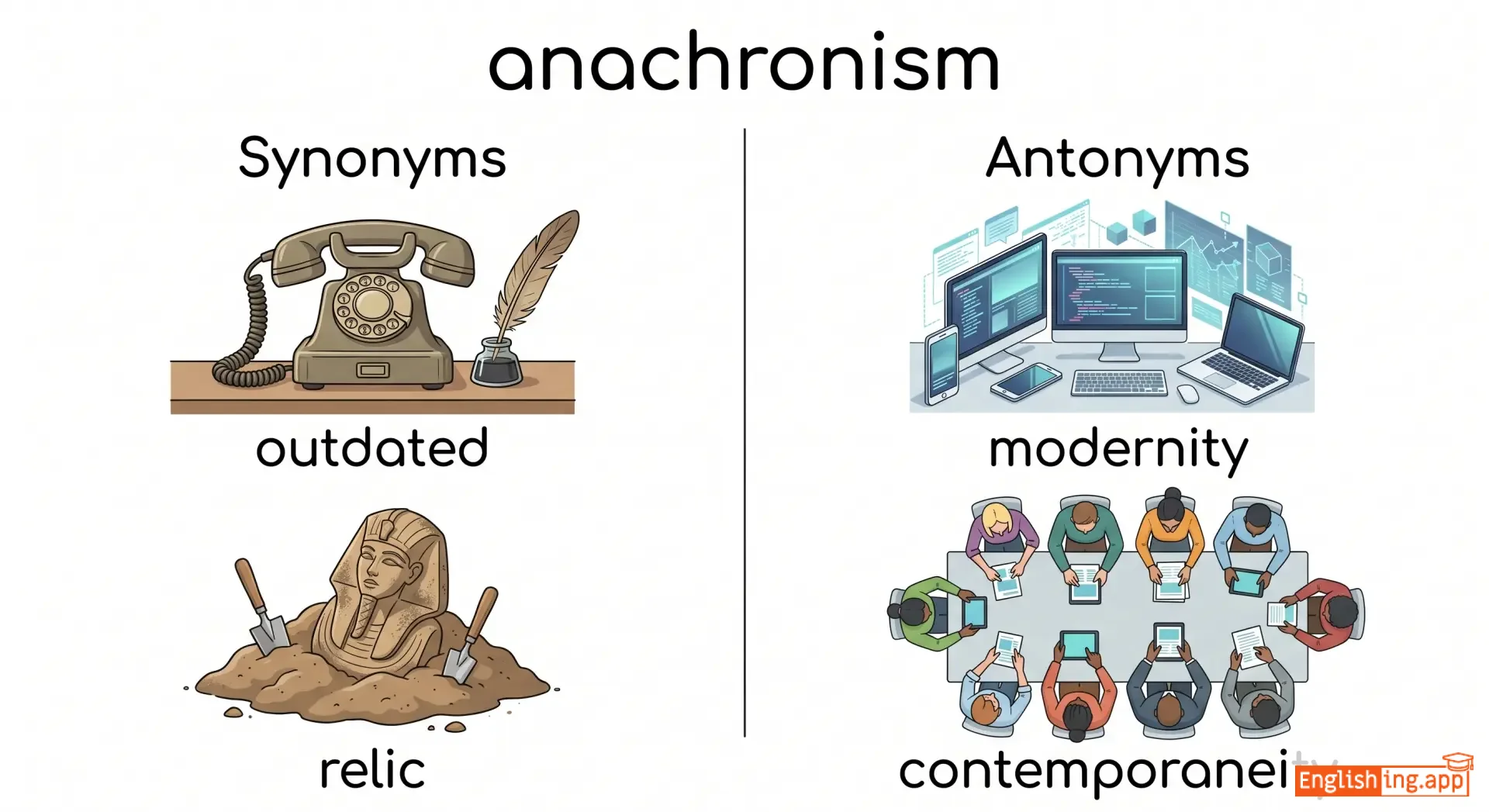
outdated, relic, antiquated, obsolete
••••••
|
modernity, contemporaneity, relevance
••••••
|
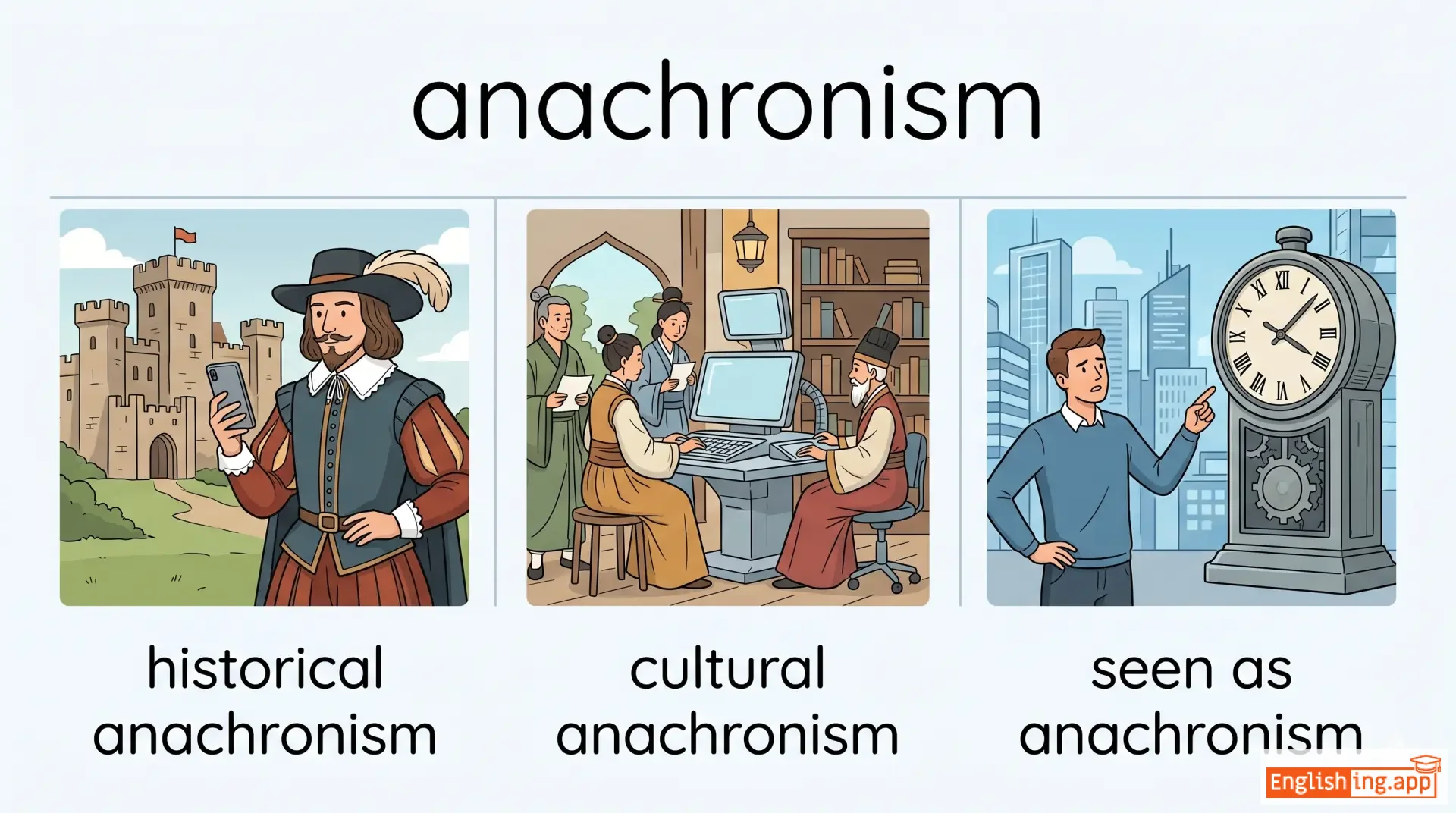
historical anachronism, cultural anachronism, seen as anachronism
••••••
|
No •••••• |
|
💊
••••••
|
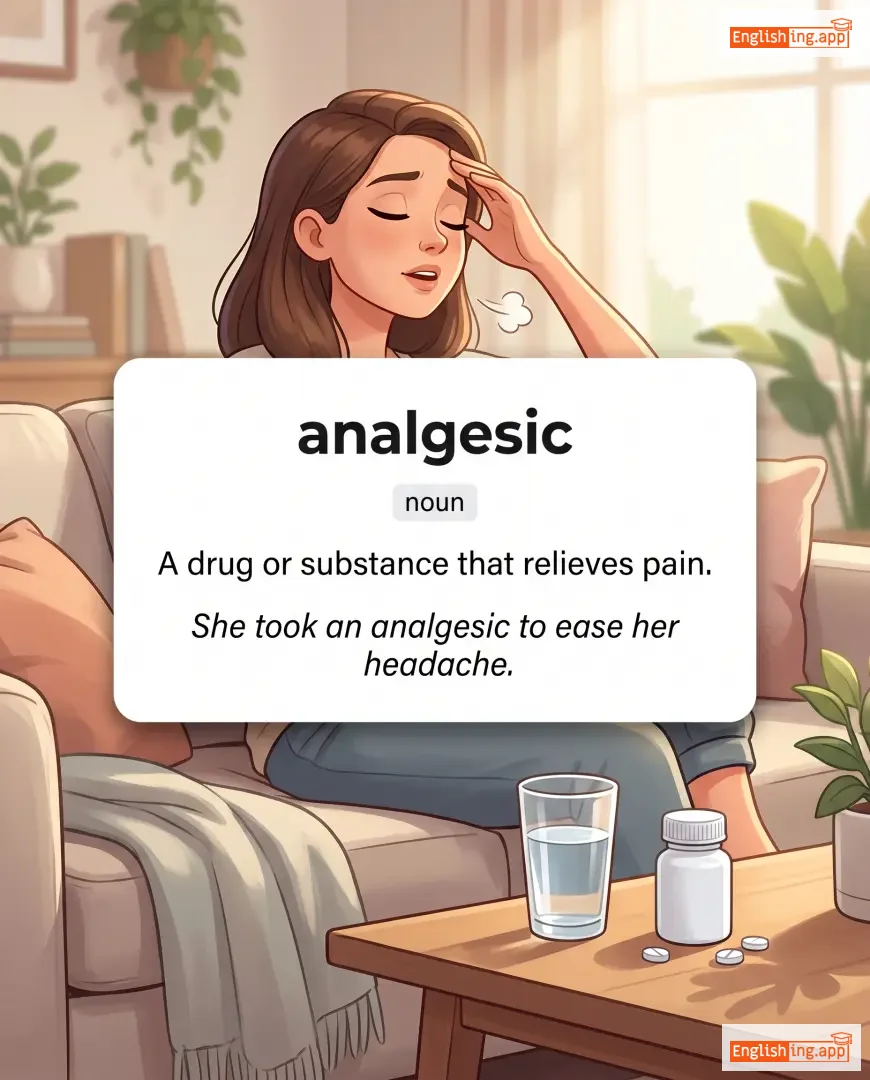
/ˌænəlˈdʒiːzɪk/
noun
(анальгезик)
••••••
|
|
обезболивающее средство
obezbolivayushchee sredstvo
••••••
|
- •••••• | - •••••• | - •••••• | - •••••• |
A drug or substance that relieves pain.
••••••
|
She took an analgesic to ease her headache.
Она приняла анальгезик, чтобы облегчить головную боль.
••••••
|
Она приняла обезболивающее средство, чтобы облегчить головную боль.
Ona prinjala obezbolivayushchee sredstvo, chtoby oblegchit' golovnuyu bol'.
••••••
|
- •••••• | - •••••• | - •••••• |
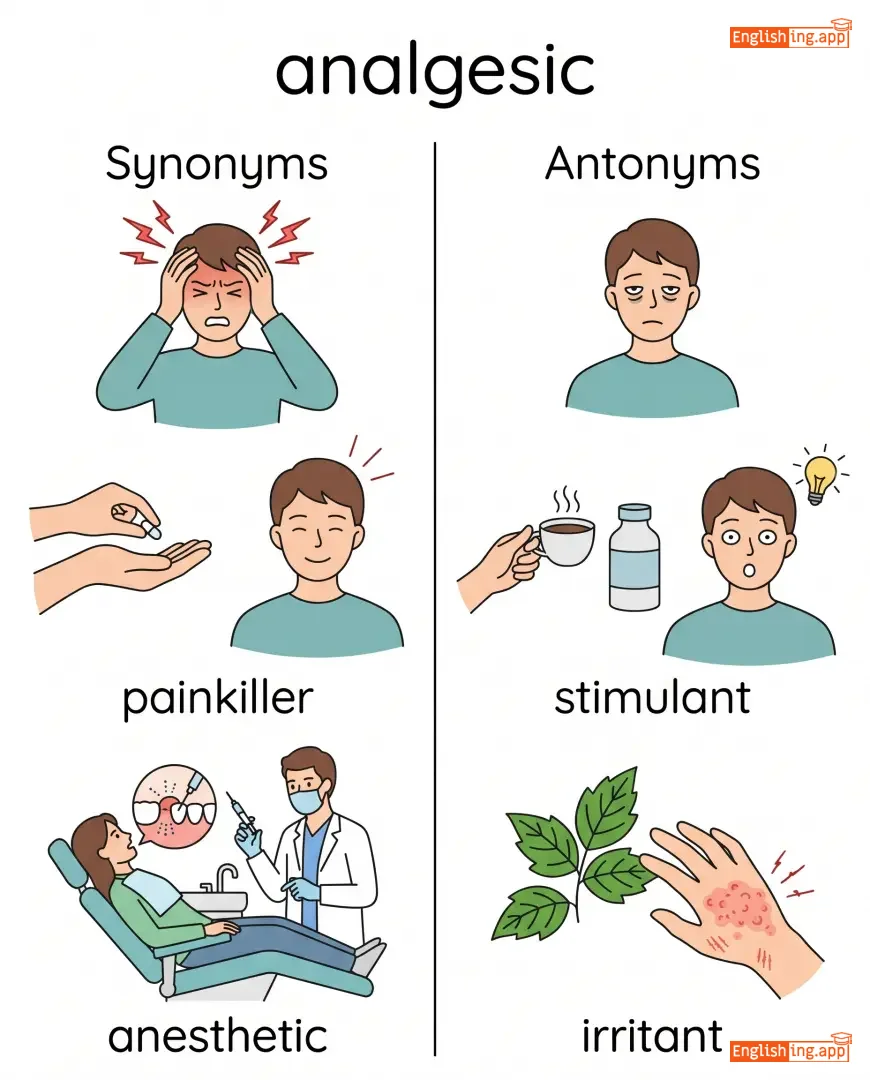
painkiller, anesthetic, sedative, remedy
••••••
|
stimulant, irritant
••••••
|
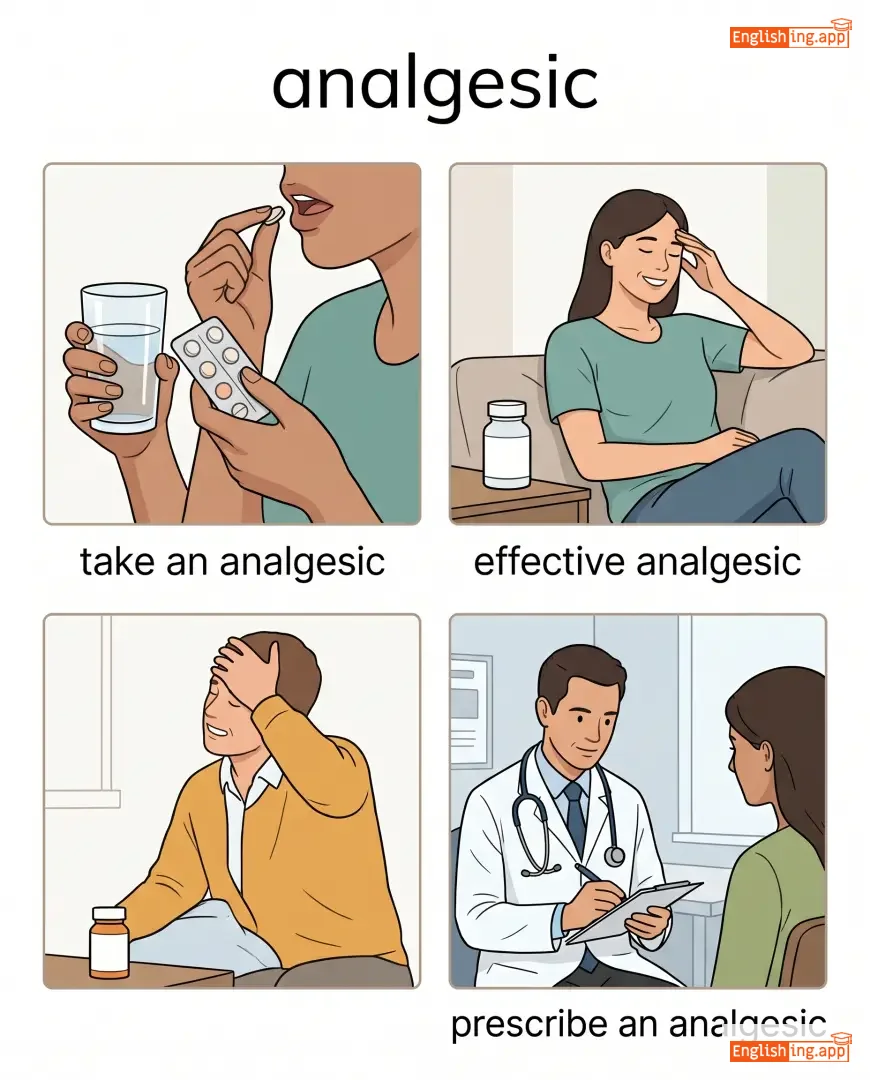
take an analgesic, effective analgesic, prescribe an analgesic
••••••
|
Analgesic - это pain killer, по-русски обезболивающее средство.
••••••
|
|
🔗
••••••
|
/əˈnæləɡəs/
adjective
••••••
|
|
- •••••• | - •••••• | - •••••• | - •••••• | - •••••• |
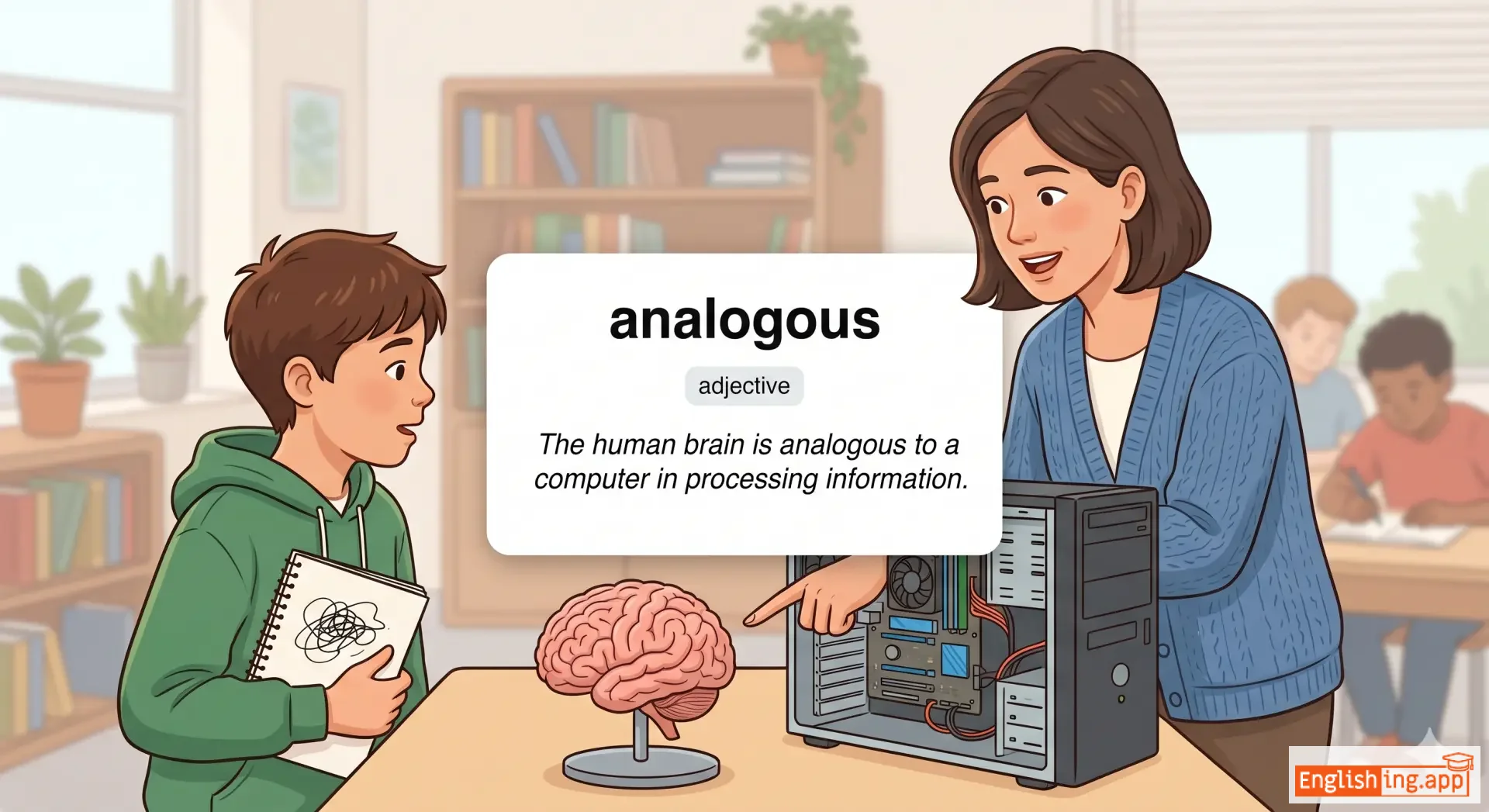
Comparable in certain respects, typically in a way that makes clearer the nature of the things compared.
••••••
|
The human brain is analogous to a computer in processing information. |
- •••••• | - •••••• | - •••••• | - •••••• |
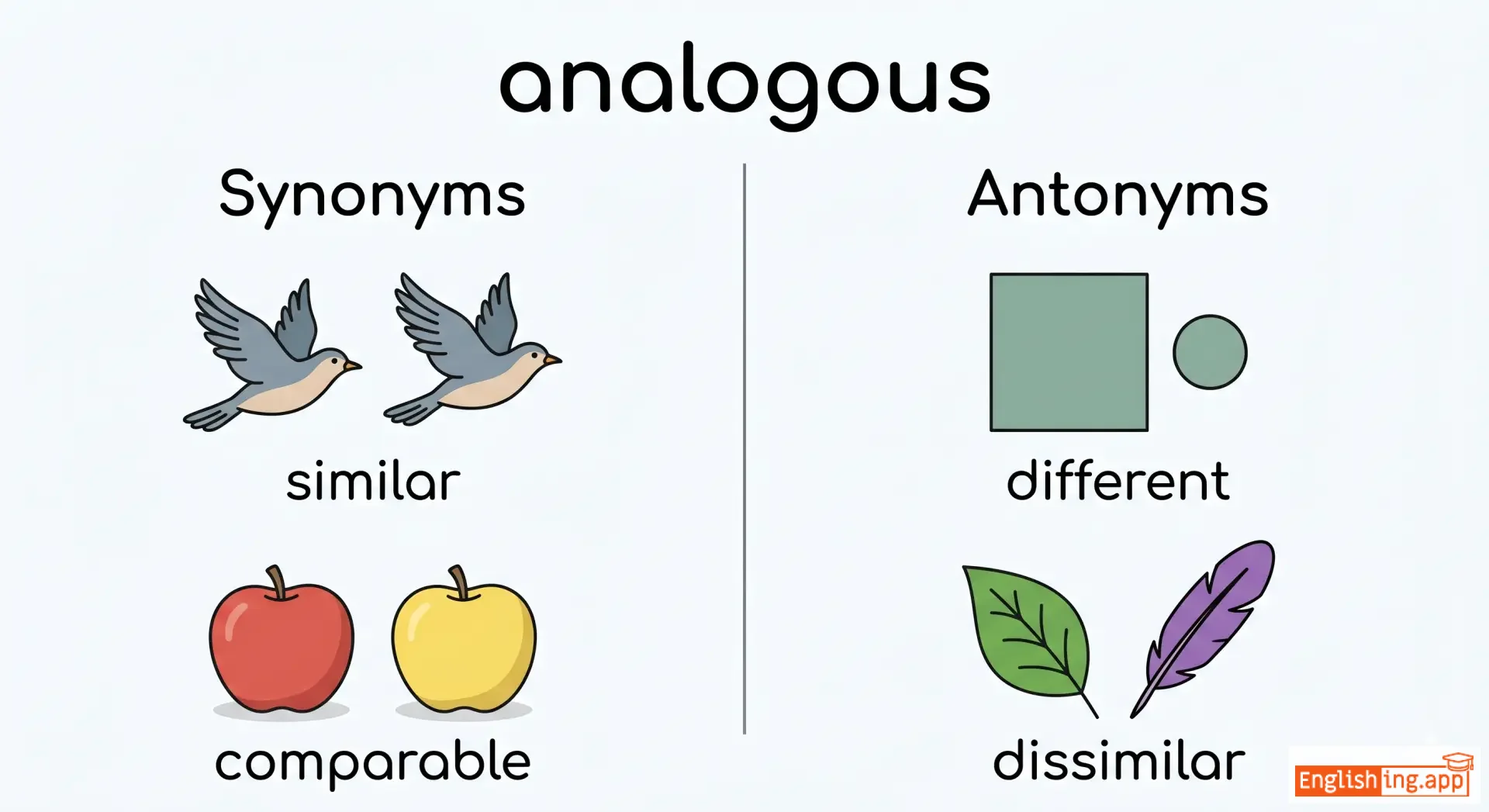
similar, comparable, alike, equivalent
••••••
|
different, dissimilar, unrelated
••••••
|
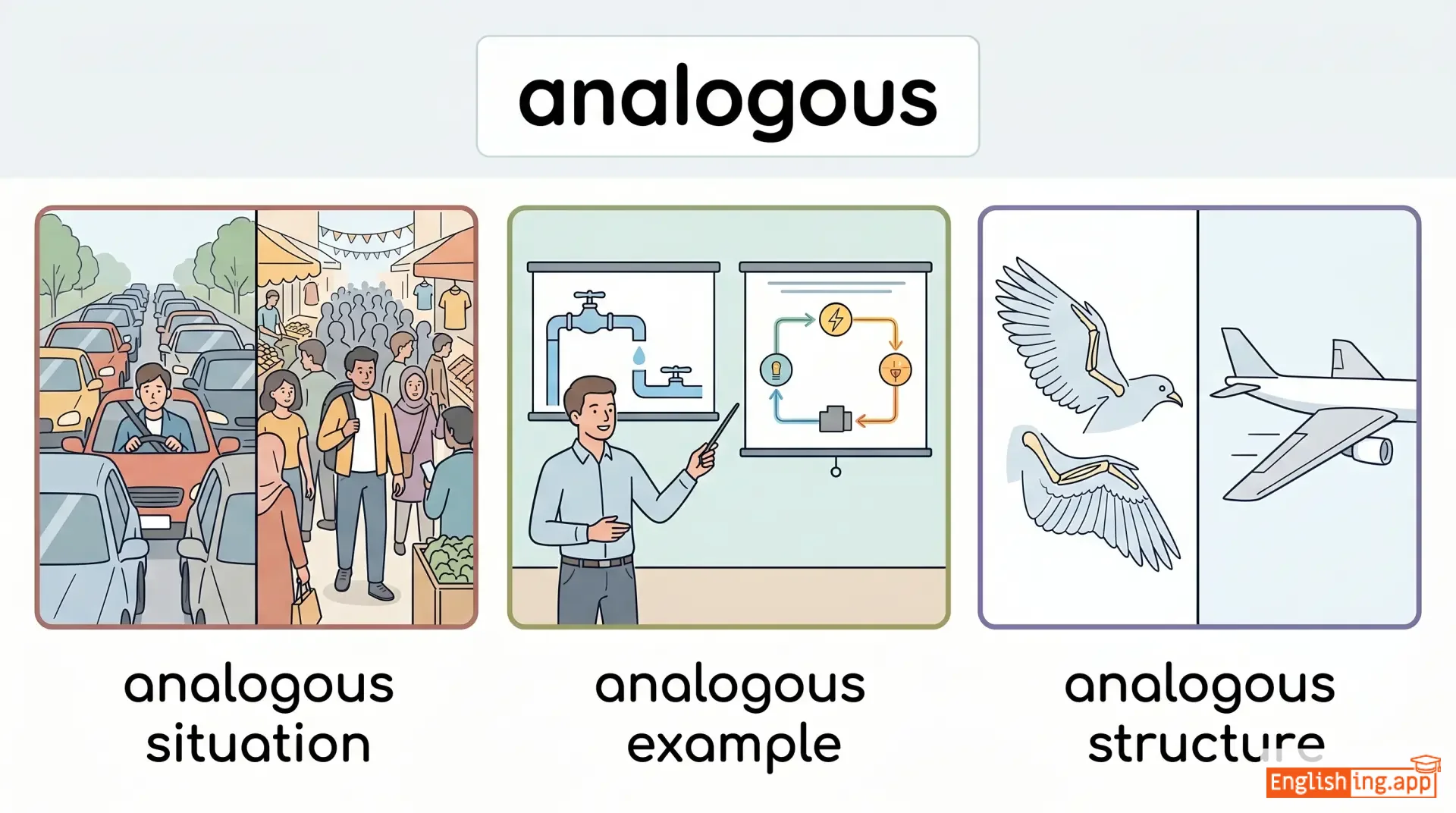
analogous situation, analogous example, analogous structure
••••••
|
No •••••• |
|
⚠️
••••••
|
/ˈænərki/
noun
(anarkiya)
••••••
|
|
анархия
anarkhiya
••••••
|
- •••••• | - •••••• | - •••••• | - •••••• |
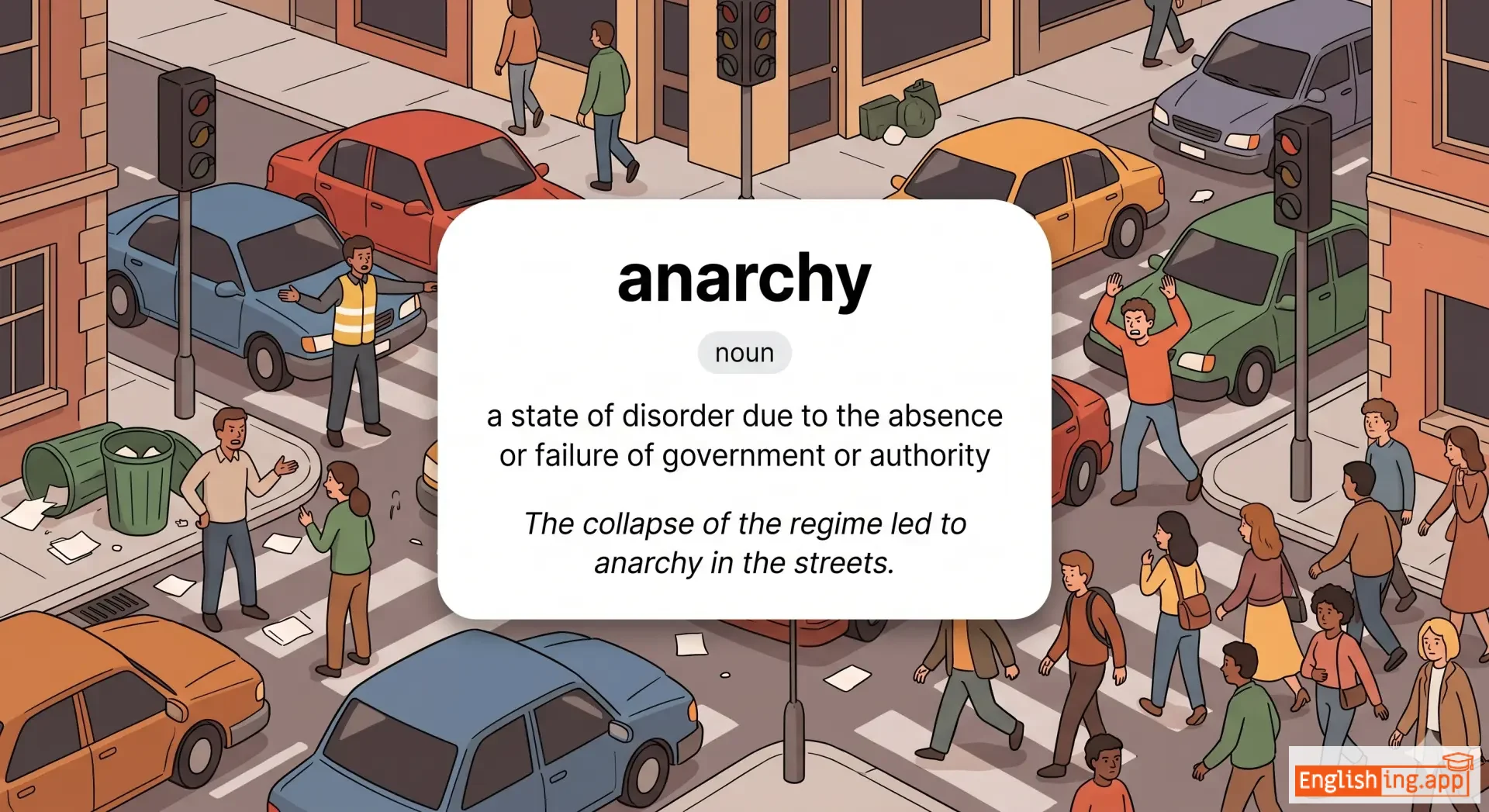
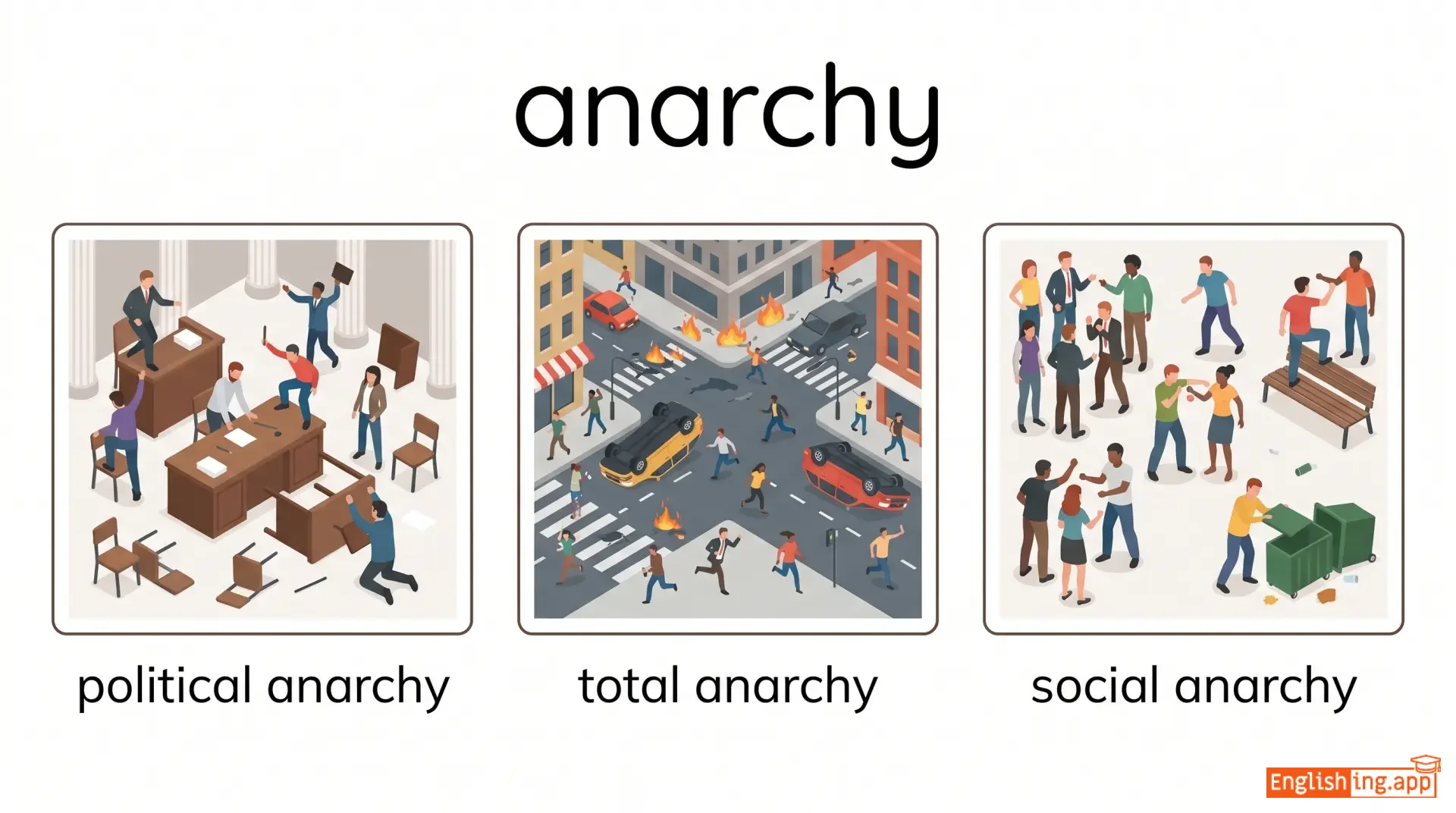
a state of disorder due to the absence or failure of government or authority
••••••
|
The collapse of the regime led to anarchy in the streets. |
Крах режима привел к анархии на улицах.
Krah rezhima privyol k anarkhii na ulitsakh.
••••••
|
- •••••• | - •••••• | - •••••• |
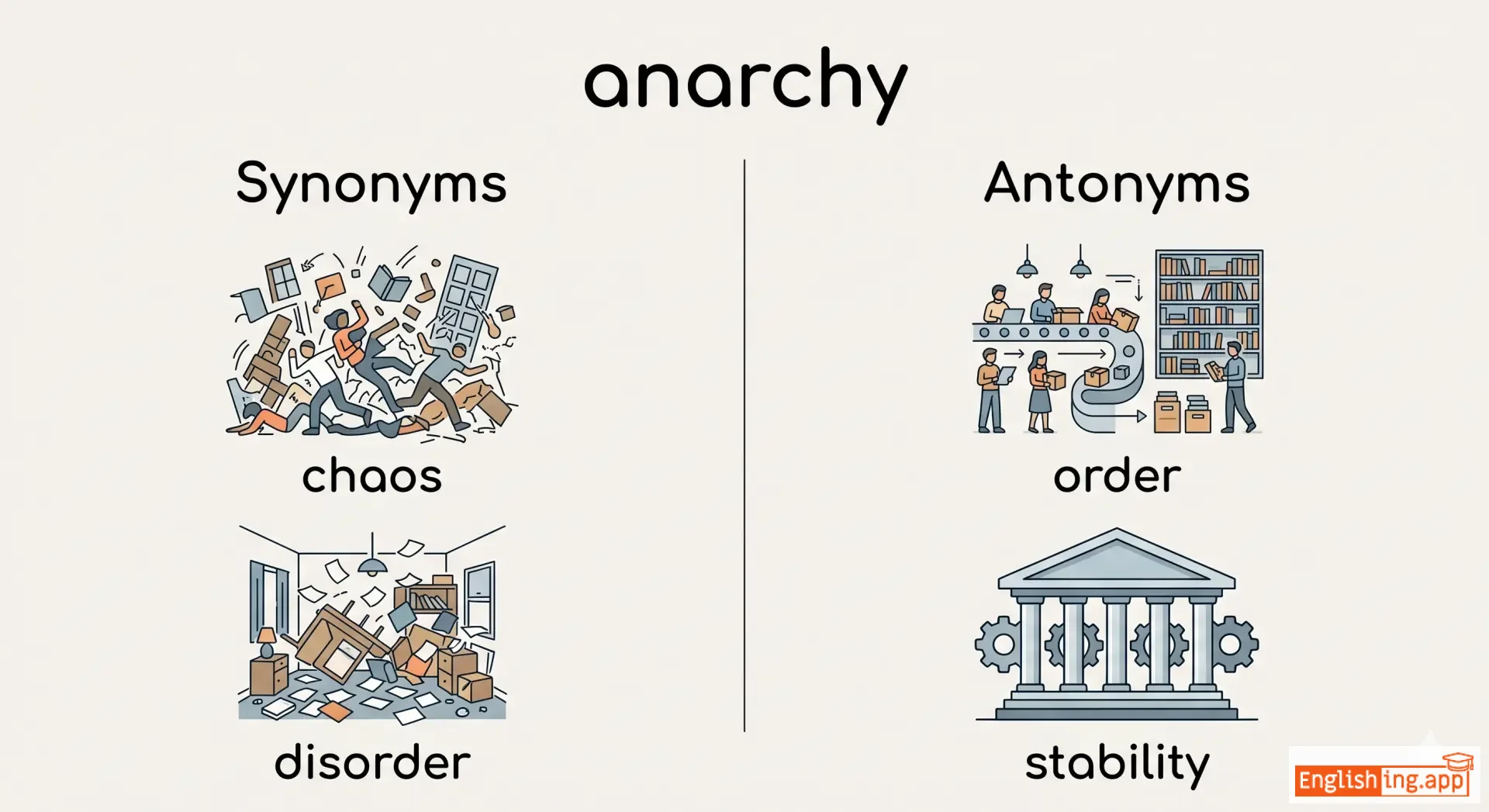
chaos, disorder, lawlessness, turmoil
••••••
|
order, stability, control
••••••
|
political anarchy, total anarchy, social anarchy
••••••
|
Anarchy = 'Anarkhiya' - нет власти, все в хаосе.
••••••
|
|
💊
••••••
|
/ˈæn.ə.daɪn/
adjective
(анодайн)
••••••
|
|
безвредный, обезболивающий
bezvredny, obezbolivayushchiy
••••••
|
- •••••• | - •••••• | - •••••• | - •••••• |
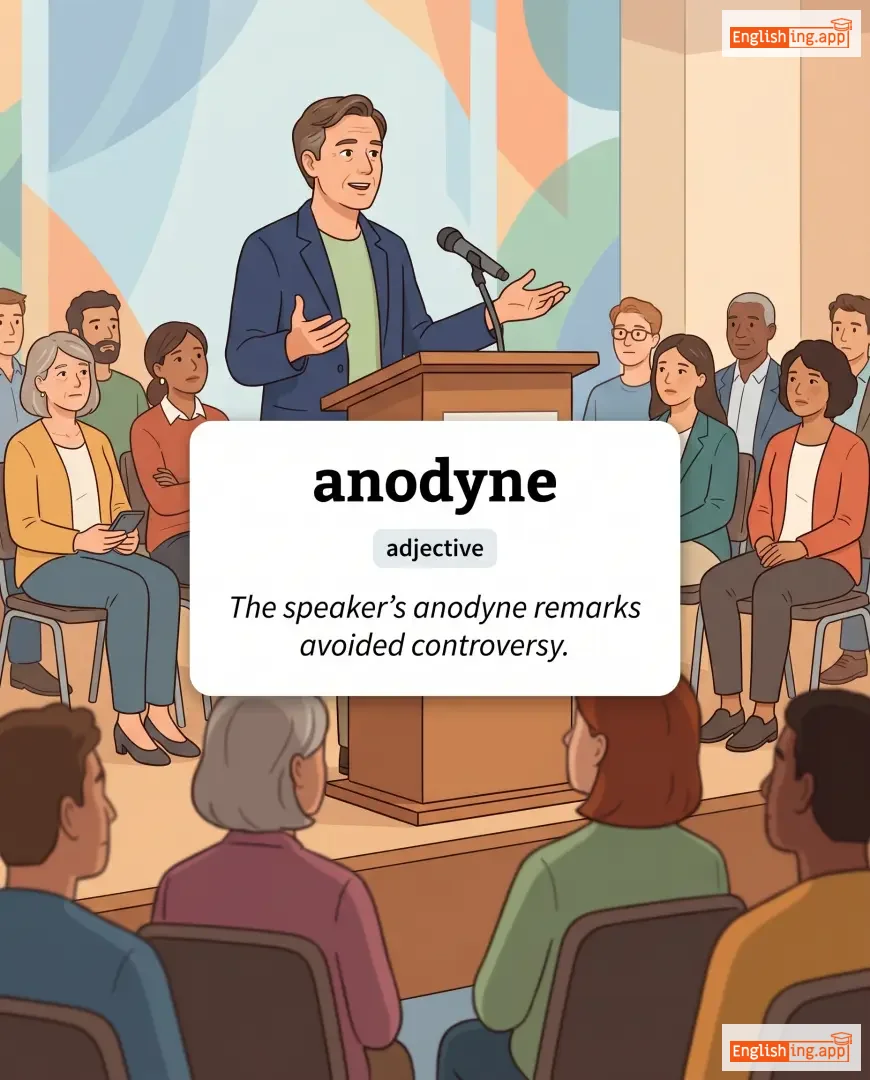
Not likely to cause offense; bland or harmless. Also refers to something that relieves pain.
••••••
|
The speaker’s anodyne remarks avoided controversy. |
Беспристрастные замечания оратора избегали контроверсий.
Bespristrastnye zamechaniya oratora izbegali kontroversiy.
••••••
|
- •••••• | - •••••• | - •••••• |
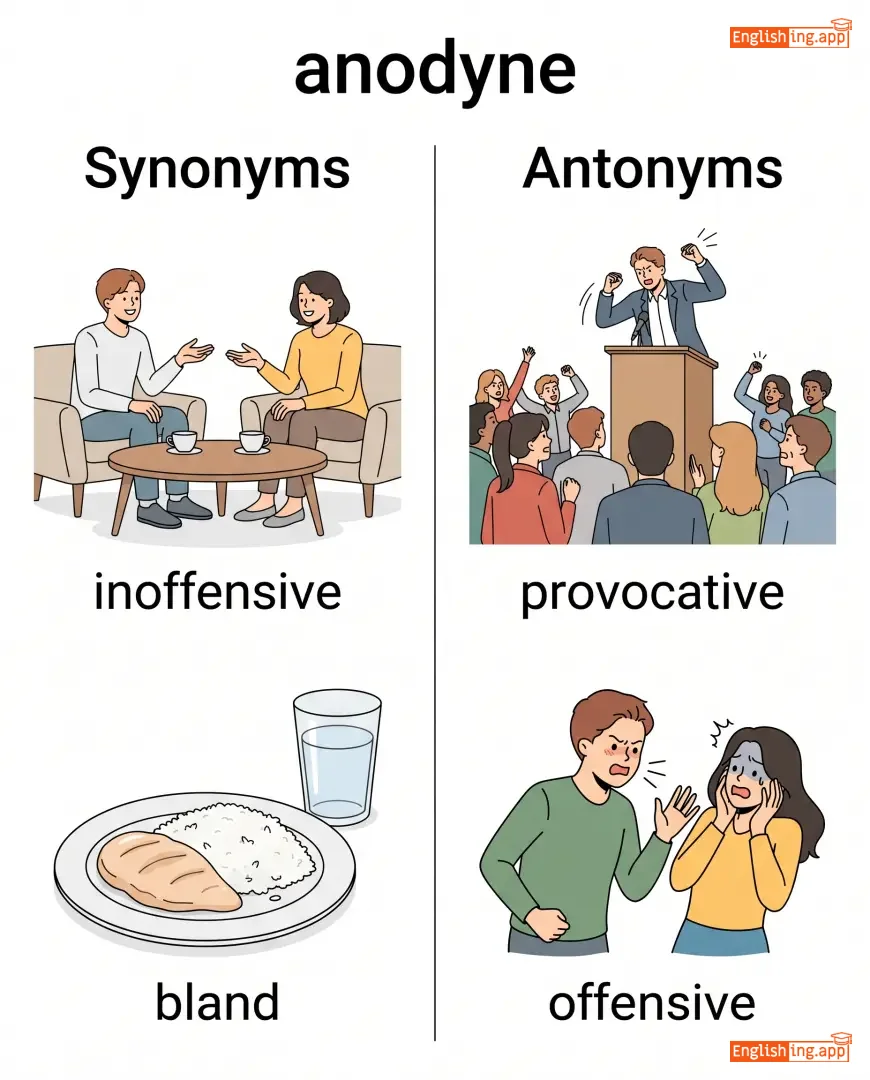
inoffensive, bland, harmless, soothing, palliative
••••••
|
provocative, offensive, harmful
••••••
|
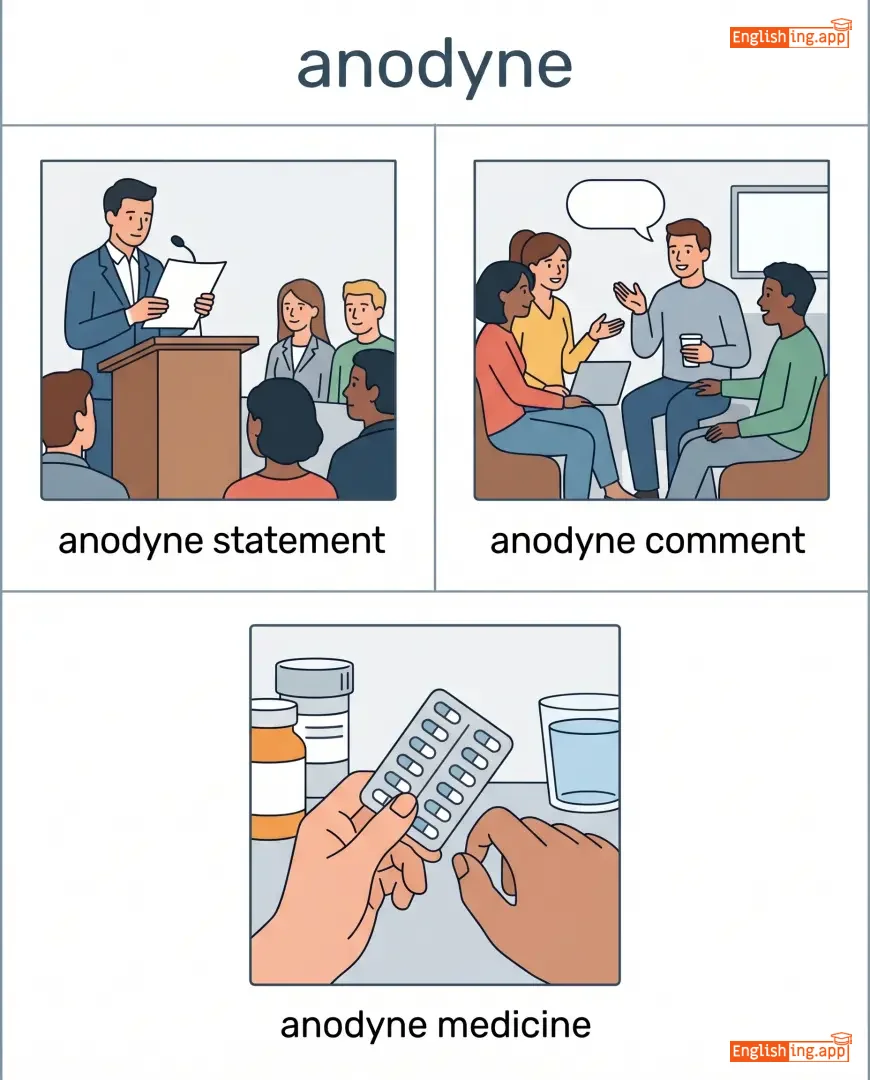
anodyne statement, anodyne comment, anodyne medicine
••••••
|
Anodyne = ‘No dyne’ → нет силы или вреда, только безвредное или болеутоляющее.
••••••
|
|
⚠️
••••••
|
/əˈnɒmələs/
adjective
(аноматический)
••••••
|
|
аномальный
anomalny
••••••
|
- •••••• | - •••••• | - •••••• | - •••••• |
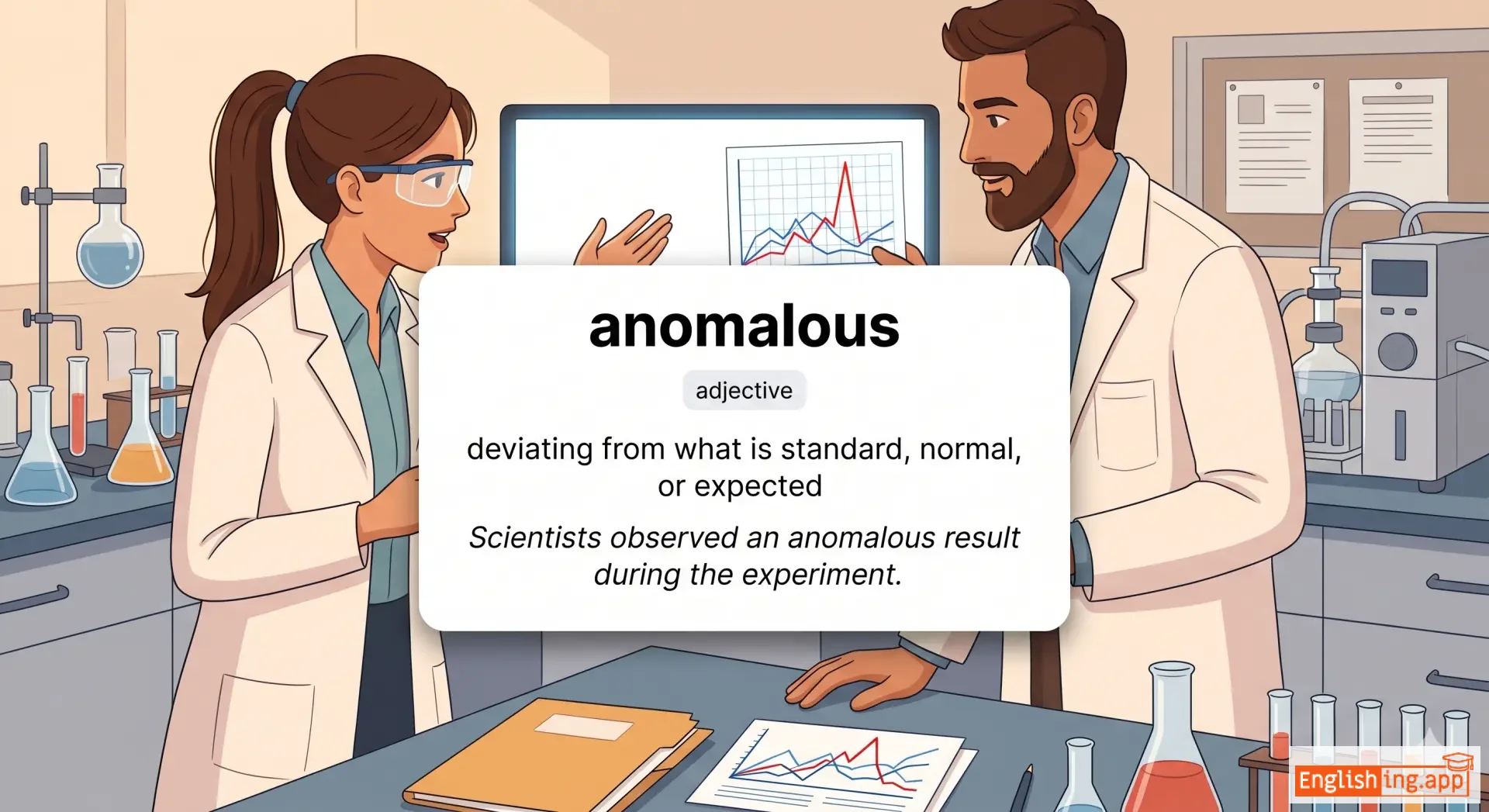
deviating from what is standard, normal, or expected
••••••
|
Scientists observed an anomalous result during the experiment.
Учёные наблюдали аномальный результат в ходе эксперимента.
••••••
|
Учёные наблюдали аномальный результат в ходе эксперимента.
Uchyonye nablyudali anomal'nyy rezul'tat v khode eksperimenta.
••••••
|
- •••••• | - •••••• | - •••••• |
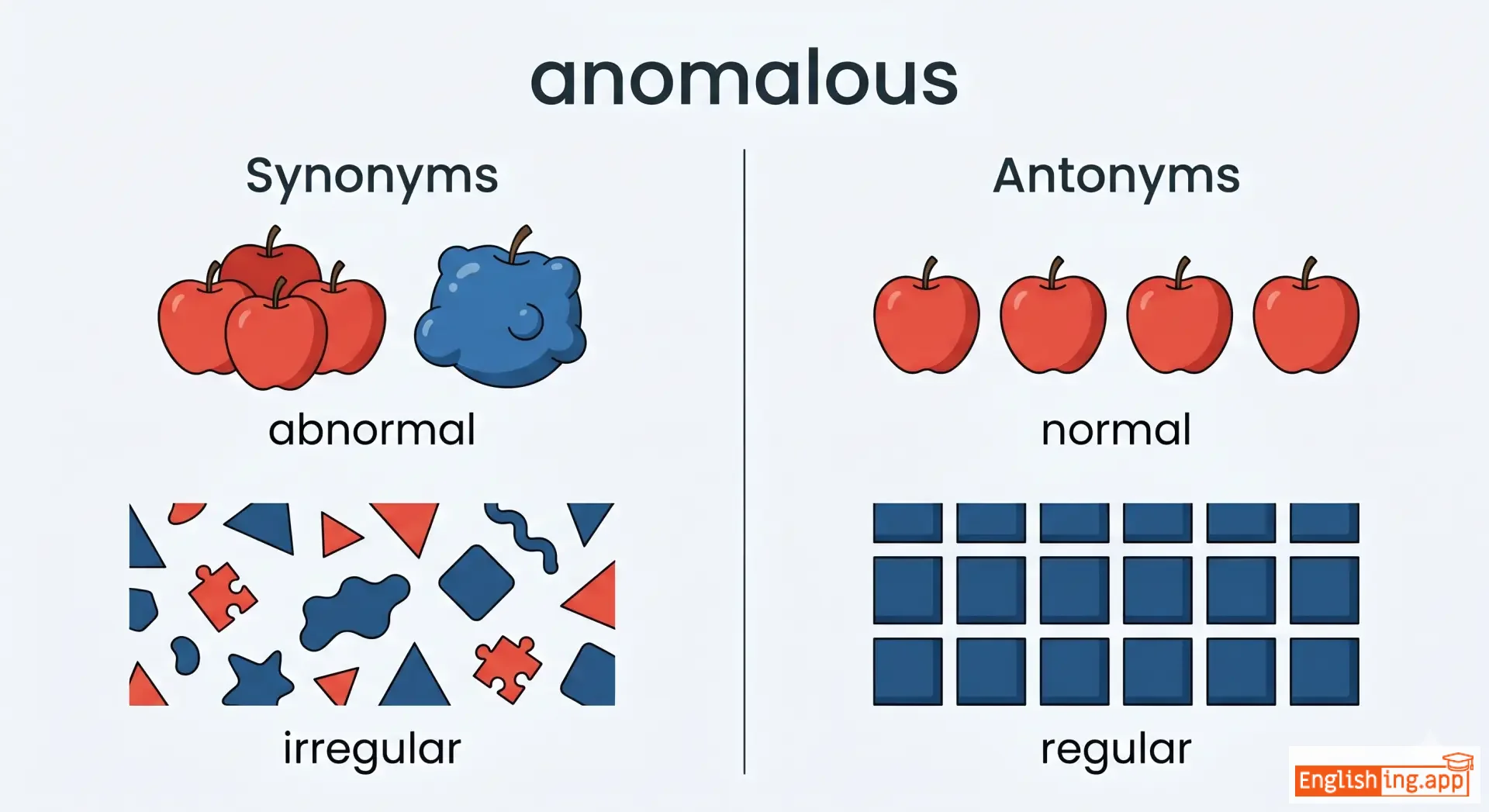
abnormal, irregular, unusual, atypical, deviant
••••••
|
normal, regular, standard
••••••
|
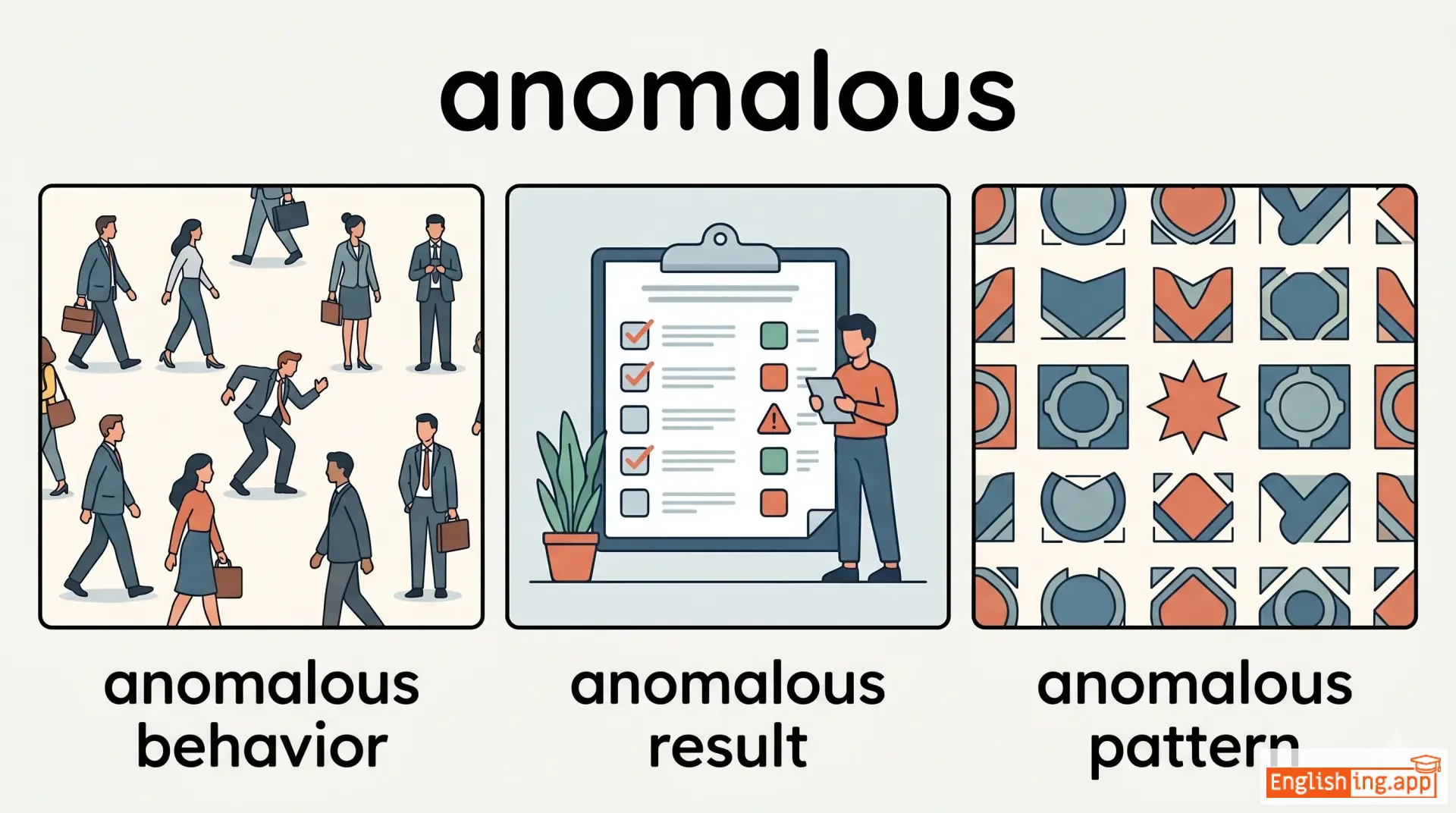
anomalous behavior, anomalous result, anomalous pattern, anomalous situation
••••••
|
Anomalous означает аномальный—Think 'A normal' to know it's different.
••••••
|
|
📜
••••••
|
/ˌæntɪˈsiːdənt/
noun
(антиисидент)
••••••
|
|
предшественник
predshestvennik
••••••
|
- •••••• | - •••••• | - •••••• | - •••••• |
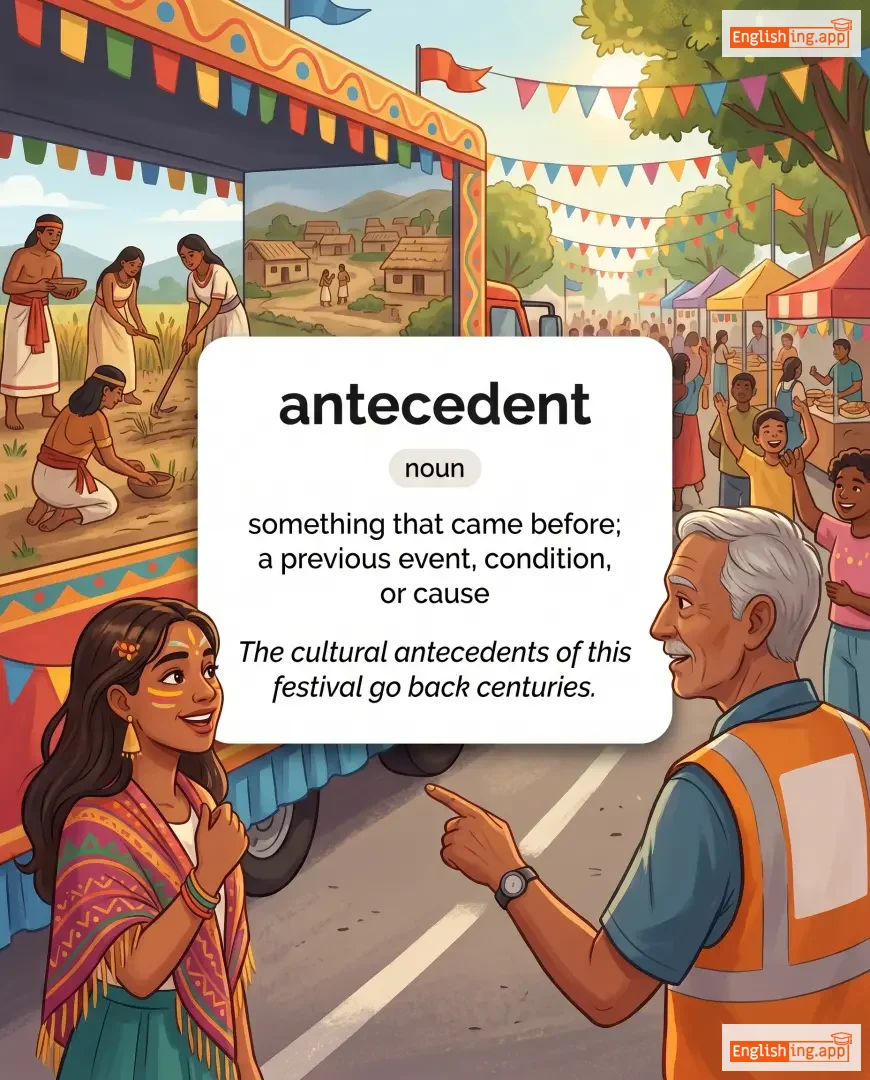
something that came before; a previous event, condition, or cause
••••••
|
The cultural antecedents of this festival go back centuries.
культурные предшественники этого праздника уходят корнями в века.
••••••
|
Культурные предшественники этого праздника уходят корнями в века.
Kul'turnye predshestvenniki etogo prazdnika ukhodyat kornyami v veka.
••••••
|
grammatical antecedent
грамматическое предшествие
••••••
|
a word or phrase that a pronoun refers back to
••••••
|
грамматическое предшествие
grammaticheskoe predshestvie
••••••
|
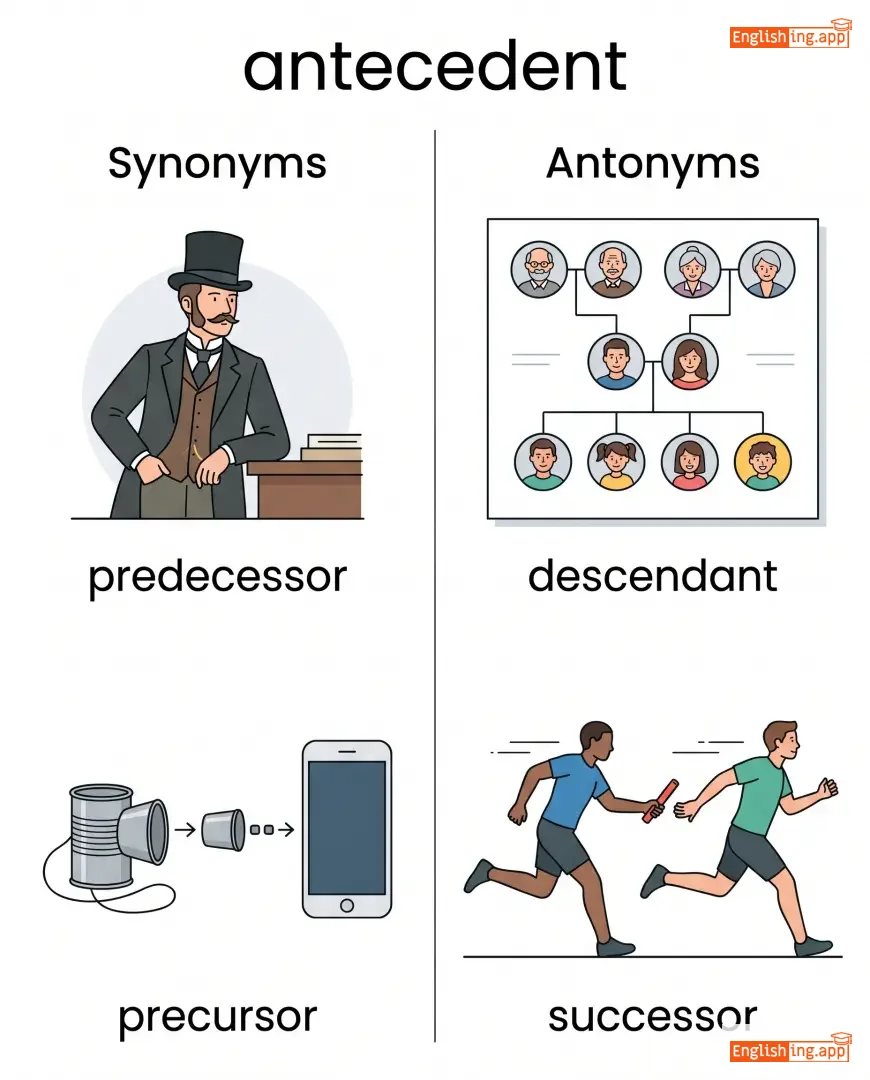
predecessor, precursor, forerunner, precedent
••••••
|
descendant, successor
••••••
|
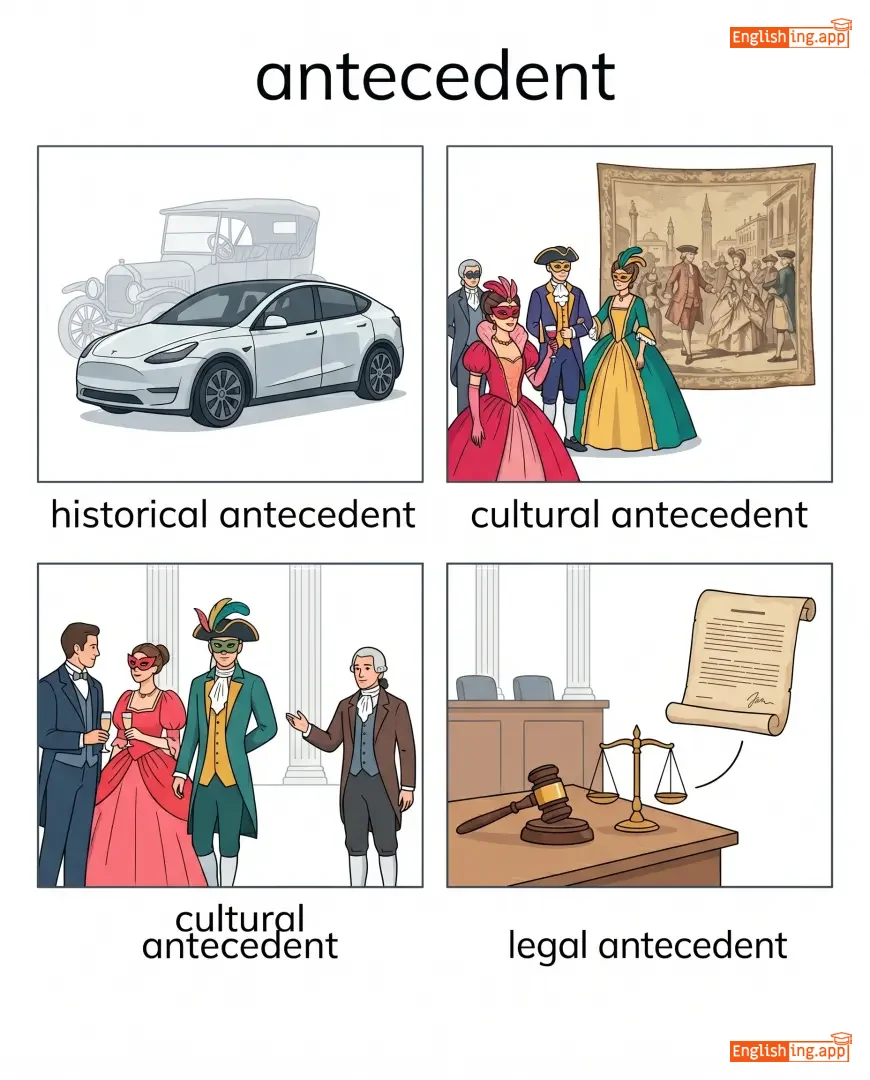
historical antecedent, cultural antecedent, legal antecedent
••••••
|
Antecedent: Ante (до) + событие → что-то, что случилось до.
••••••
|
|
🦕
••••••
|
/ˌæntɪdəˈluːviən/
adjective
(антидилувиан)
••••••
|
|
архаичный
arkhaichny
••••••
|
- •••••• | - •••••• | - •••••• | - •••••• |
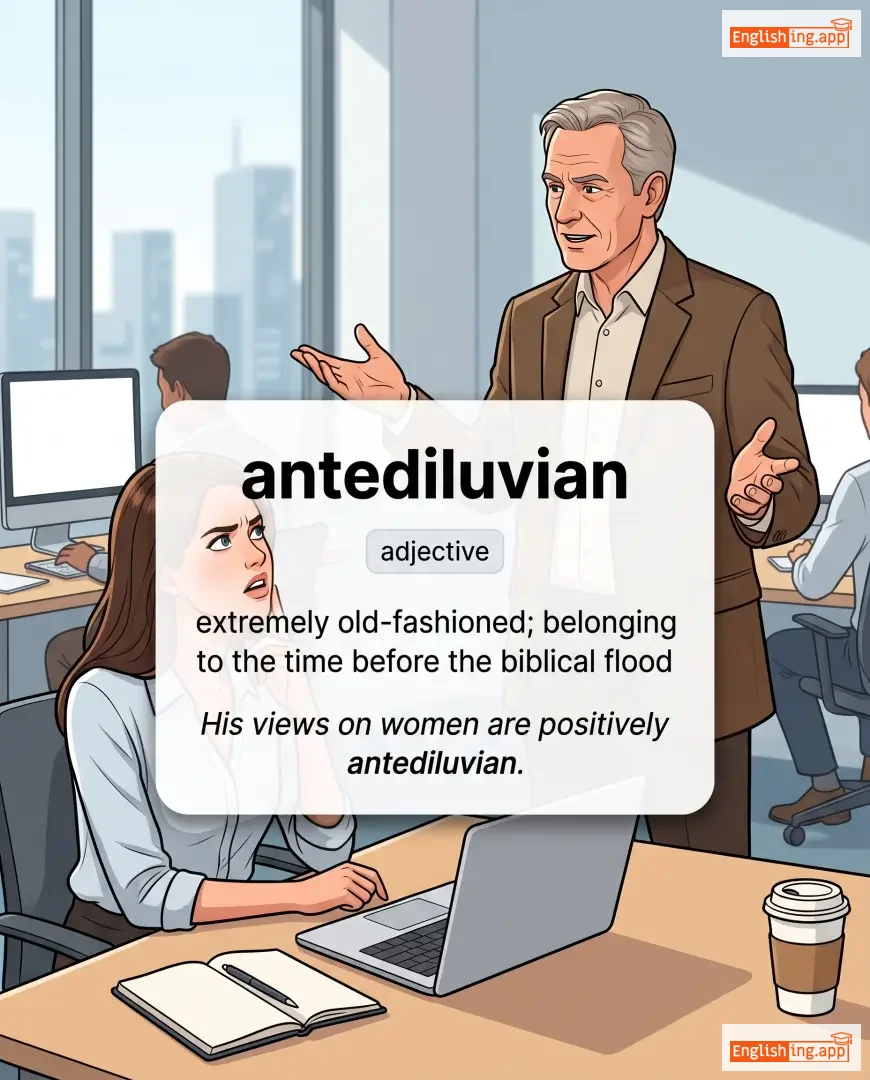
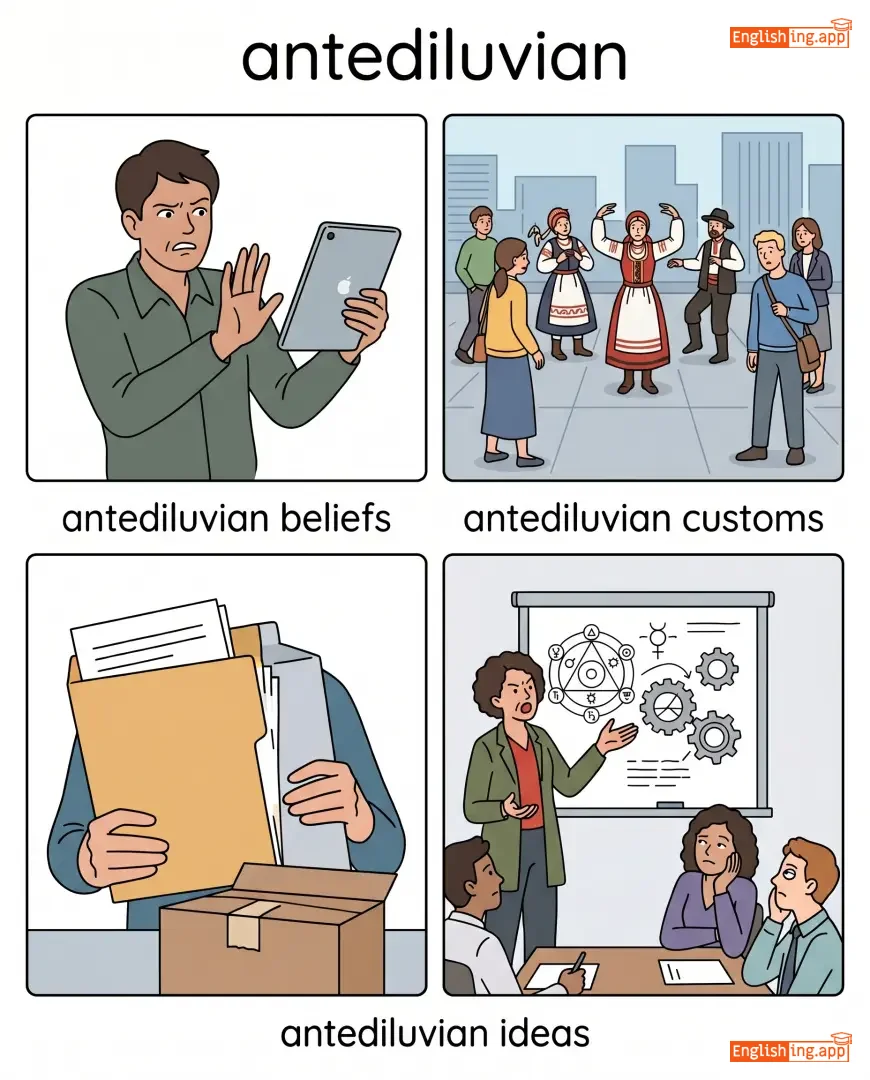
extremely old-fashioned; belonging to the time before the biblical flood
••••••
|
His views on women are positively antediluvian. |
Его взгляды на женщин совершенно архаичны.
Ego vzglyady na zhenshchin sovsem arkhaichny.
••••••
|
- •••••• | - •••••• | - •••••• |
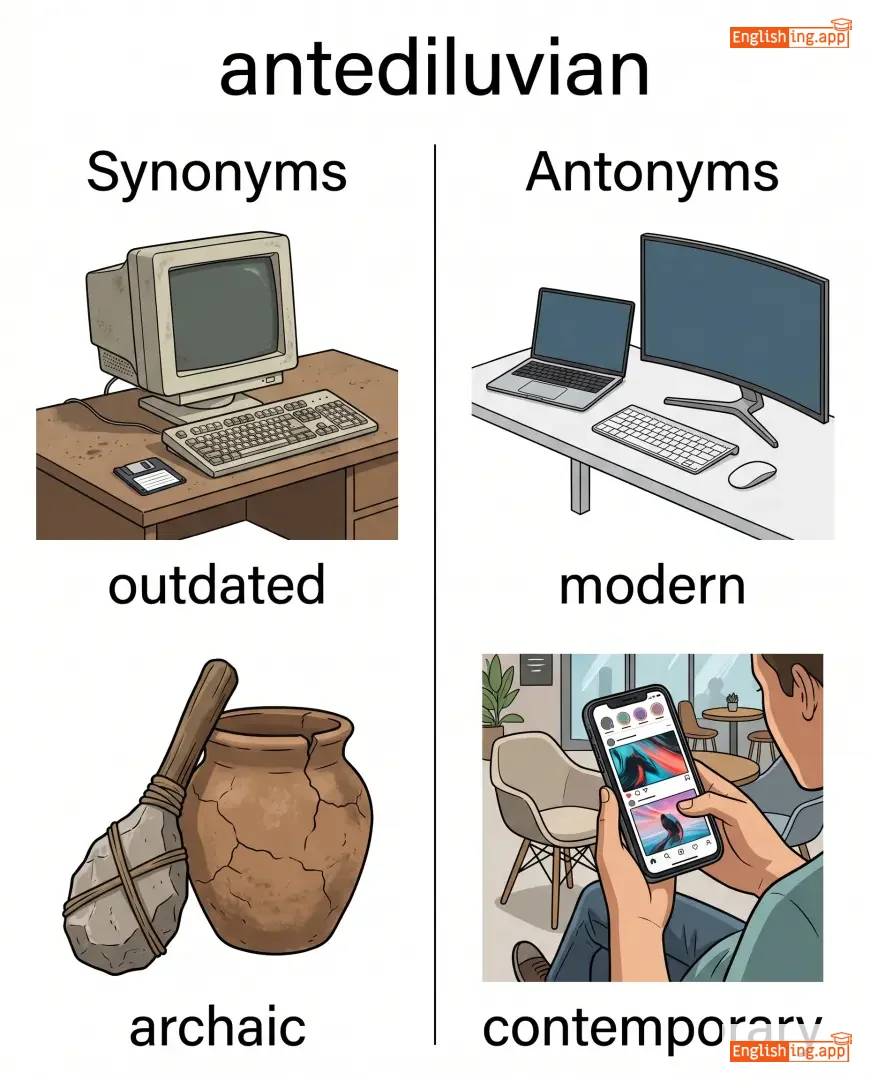
outdated, archaic, obsolete, primitive, ancient
••••••
|
modern, contemporary, current
••••••
|
antediluvian beliefs, antediluvian customs, antediluvian ideas
••••••
|
Antediluvian значит до потопа, архаичный.
••••••
|
|
😤
••••••
|
/ænˈtɪpəθi/
noun
(антипатия)
••••••
|
|
антипатия
antipatiya
••••••
|
- •••••• | - •••••• | - •••••• | - •••••• |
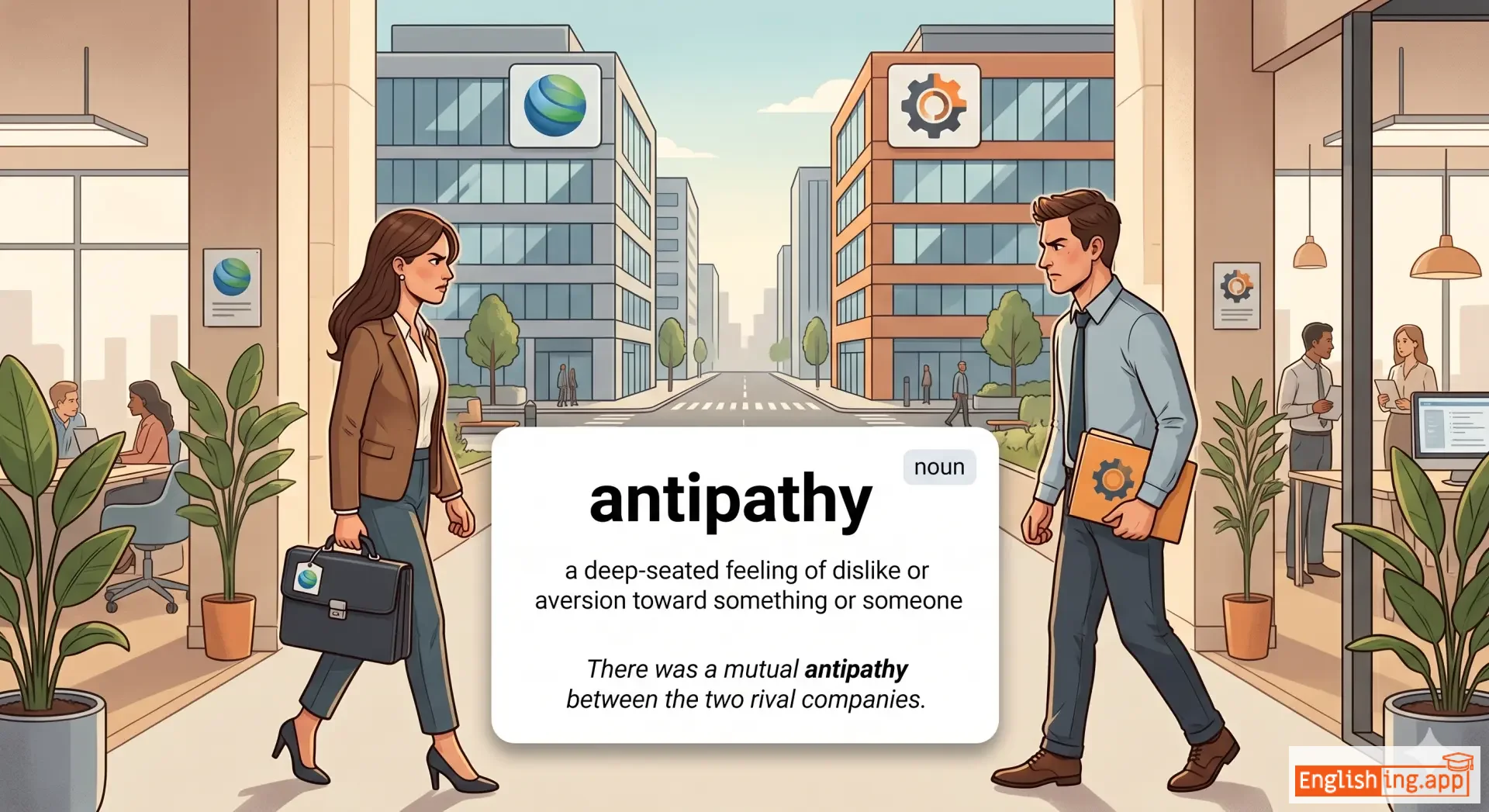
a deep-seated feeling of dislike or aversion toward something or someone
••••••
|
There was a mutual antipathy between the two rival companies. |
Между двумя конкурентами была взаимная антипатия.
Mezhdu dvumya konkurentami byla vzaimnaya antipatiya.
••••••
|
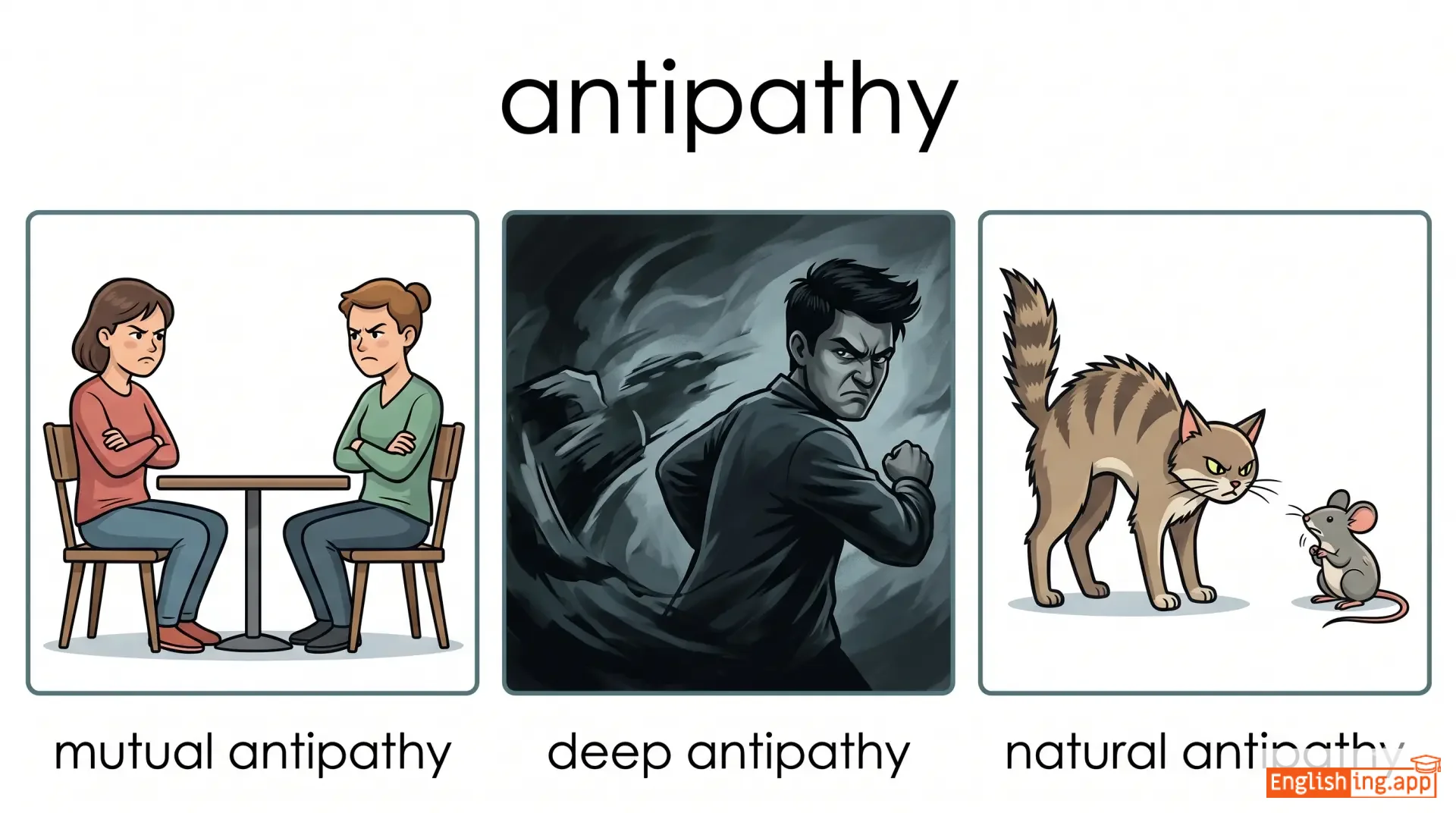
natural antipathy |
an inherent or instinctive dislike
••••••
|
естественная антипатия
yestestvennaya antipatiya
••••••
|
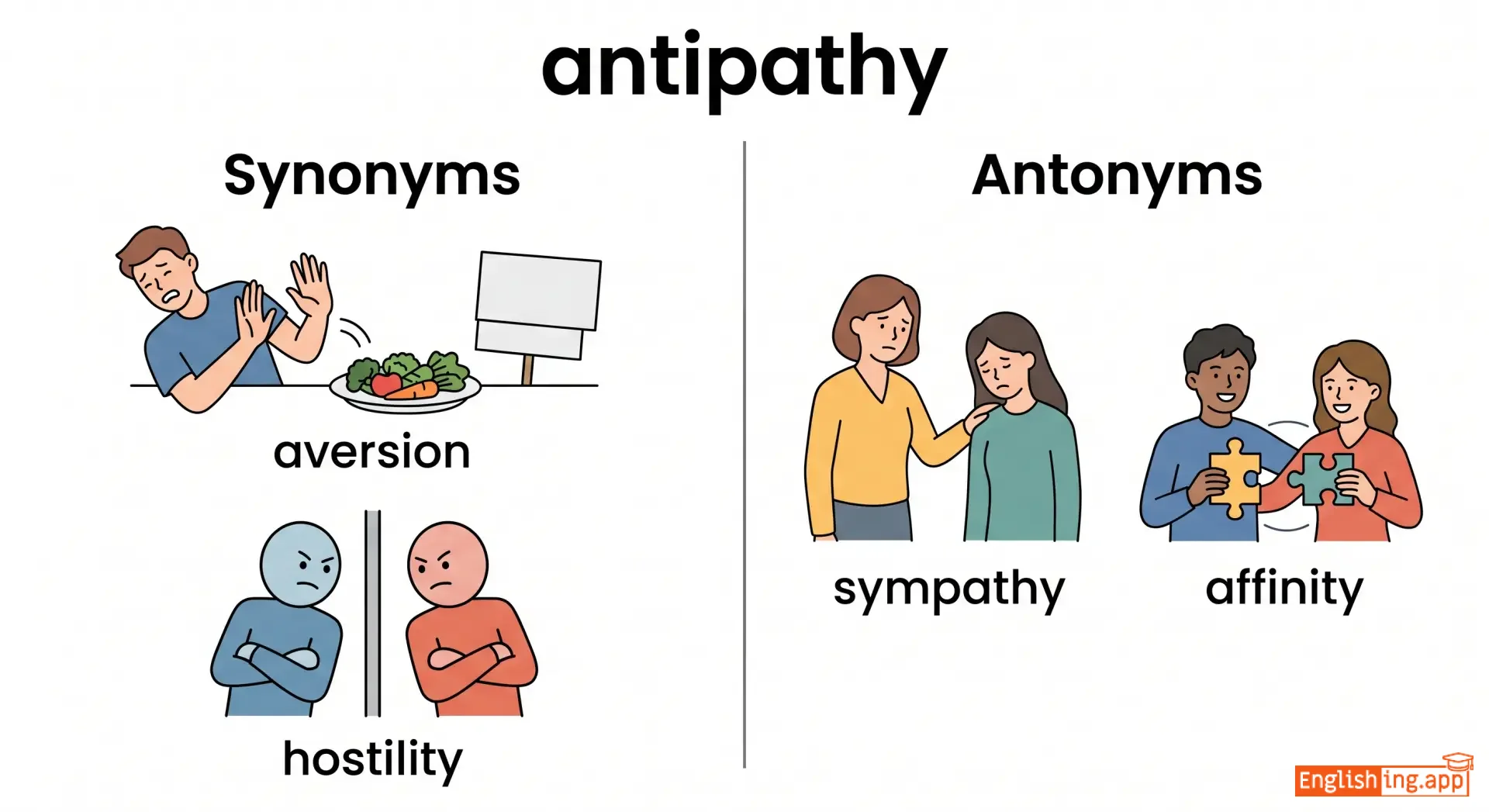
aversion, hostility, dislike, animosity, repugnance
••••••
|
sympathy, affinity, fondness
••••••
|
mutual antipathy, deep antipathy, natural antipathy, feel antipathy, antipathy toward
••••••
|
ANTI-PATHY означает ANTI путь - Антипатия (antipatiya) означает идти против направления!
••••••
|
|
😑
••••••
|
/ˈæpəθi/
noun
(апафия)
••••••
|
|
апатия
apatia
••••••
|
- •••••• | - •••••• | - •••••• | - •••••• |
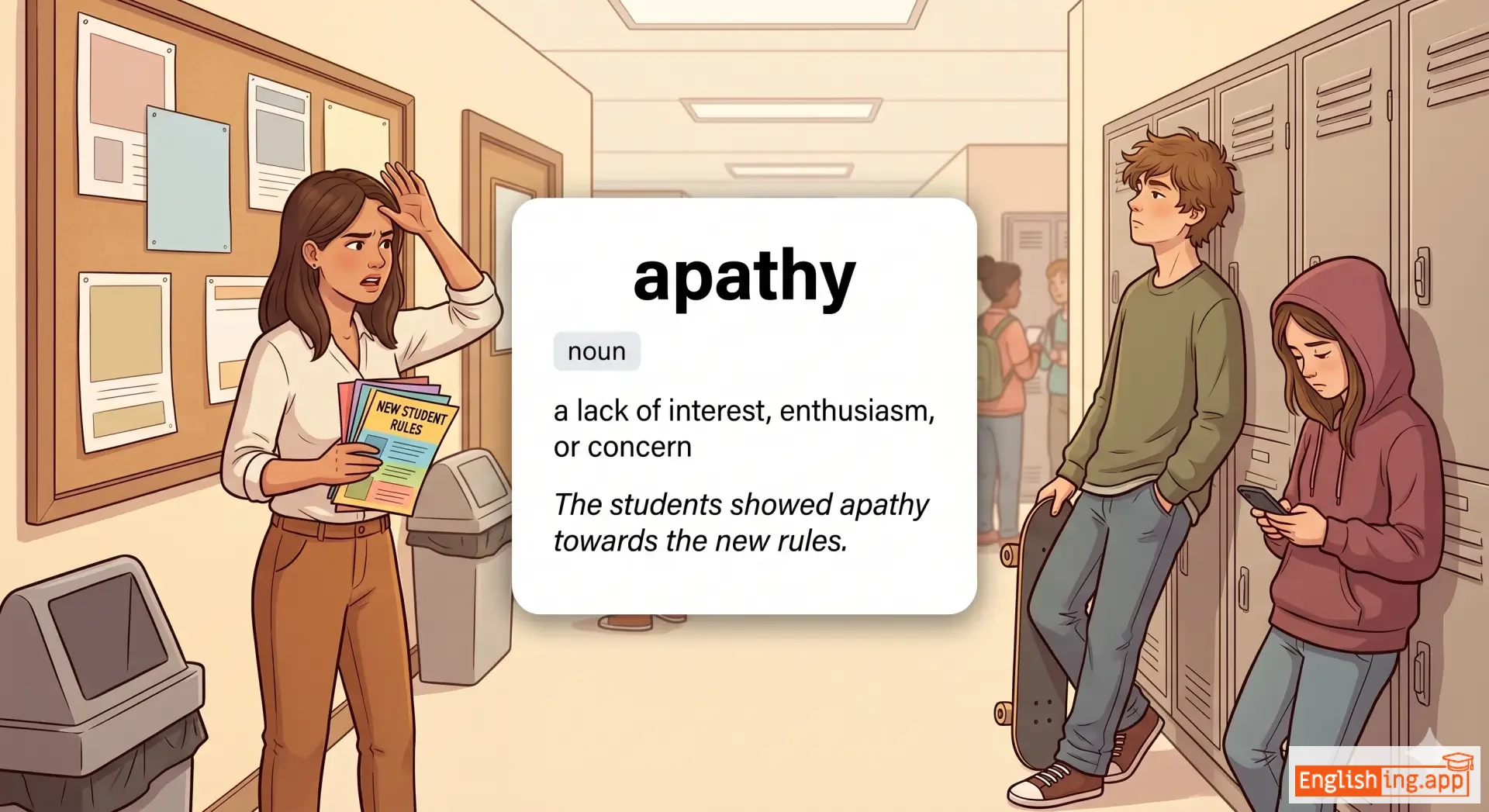
a lack of interest, enthusiasm, or concern
••••••
|
The students showed apathy towards the new rules. |
Студенты показали апатию к новым правилам.
Studenty pokazali apatiyu k novym pravilam.
••••••
|
- •••••• | - •••••• | - •••••• |
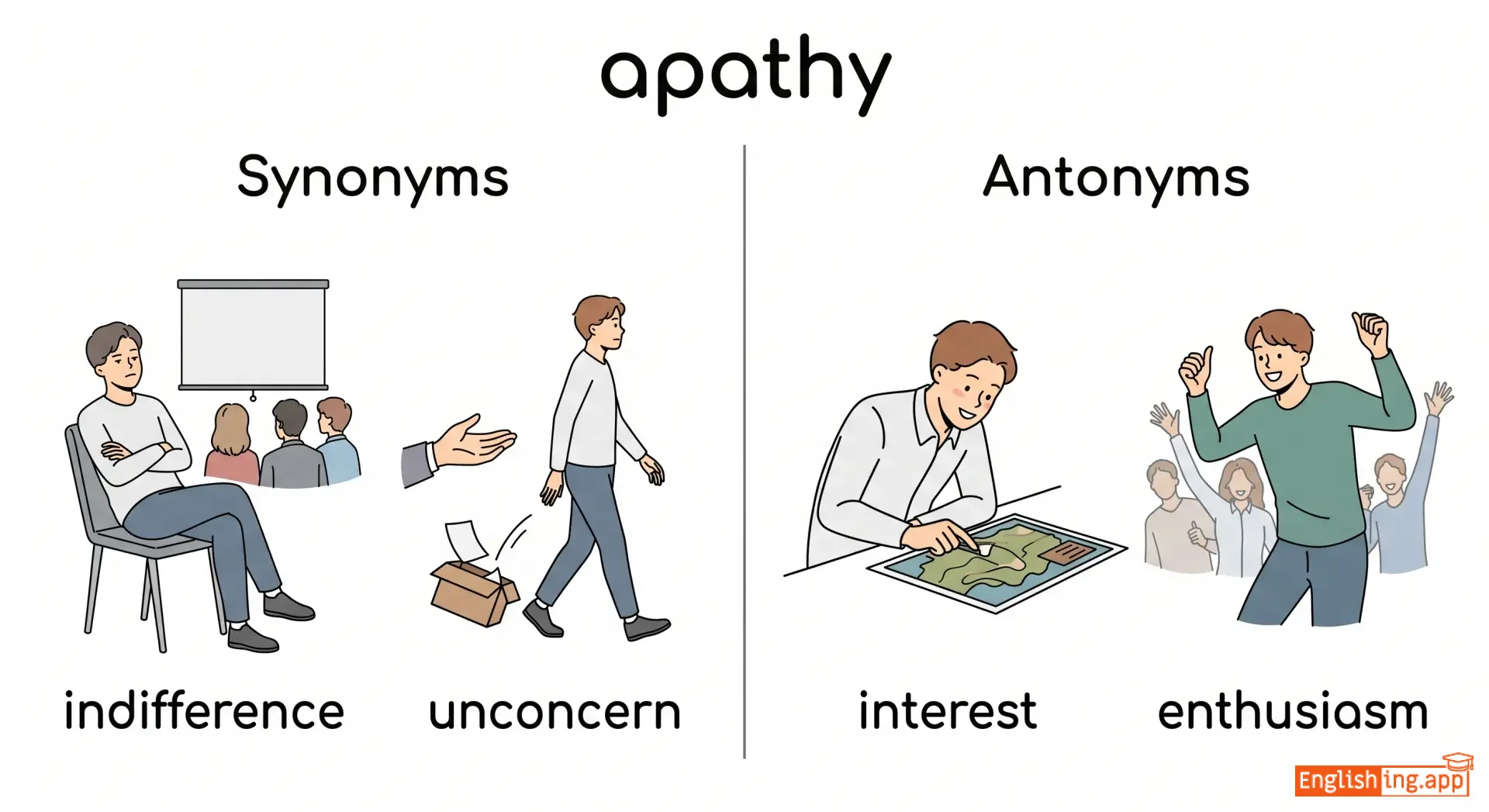
indifference, unconcern, detachment, passivity
••••••
|
interest, enthusiasm, passion
••••••
|
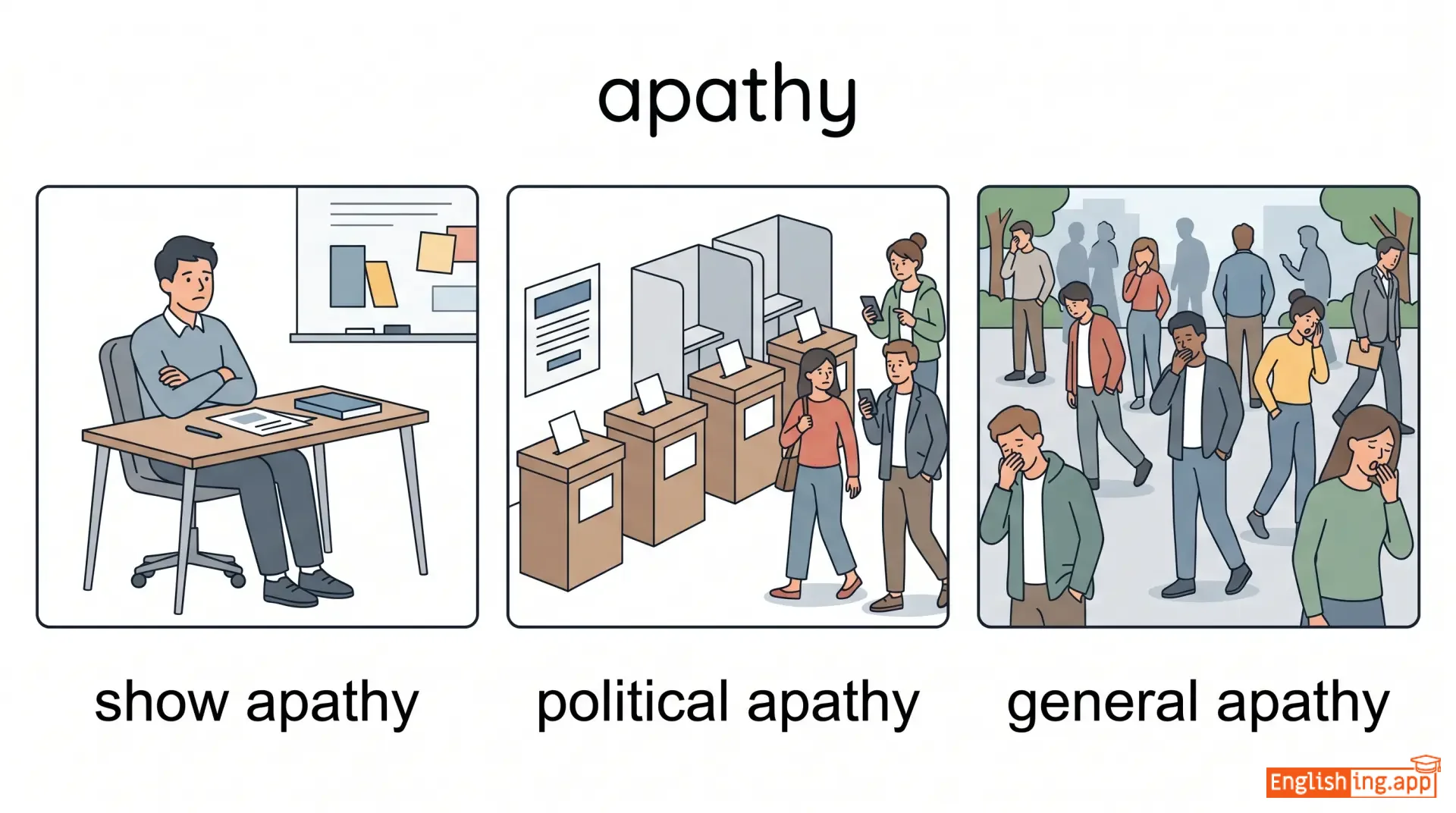
show apathy, political apathy, general apathy, apathy towards
••••••
|
Apathy означает апатия, когда тебе всё равно.
••••••
|
|
⛰️
••••••
|
/ˈeɪ.pɛks/
noun
(apeks)
••••••
|
|
пик
pik
••••••
|
- •••••• | - •••••• | - •••••• | - •••••• |
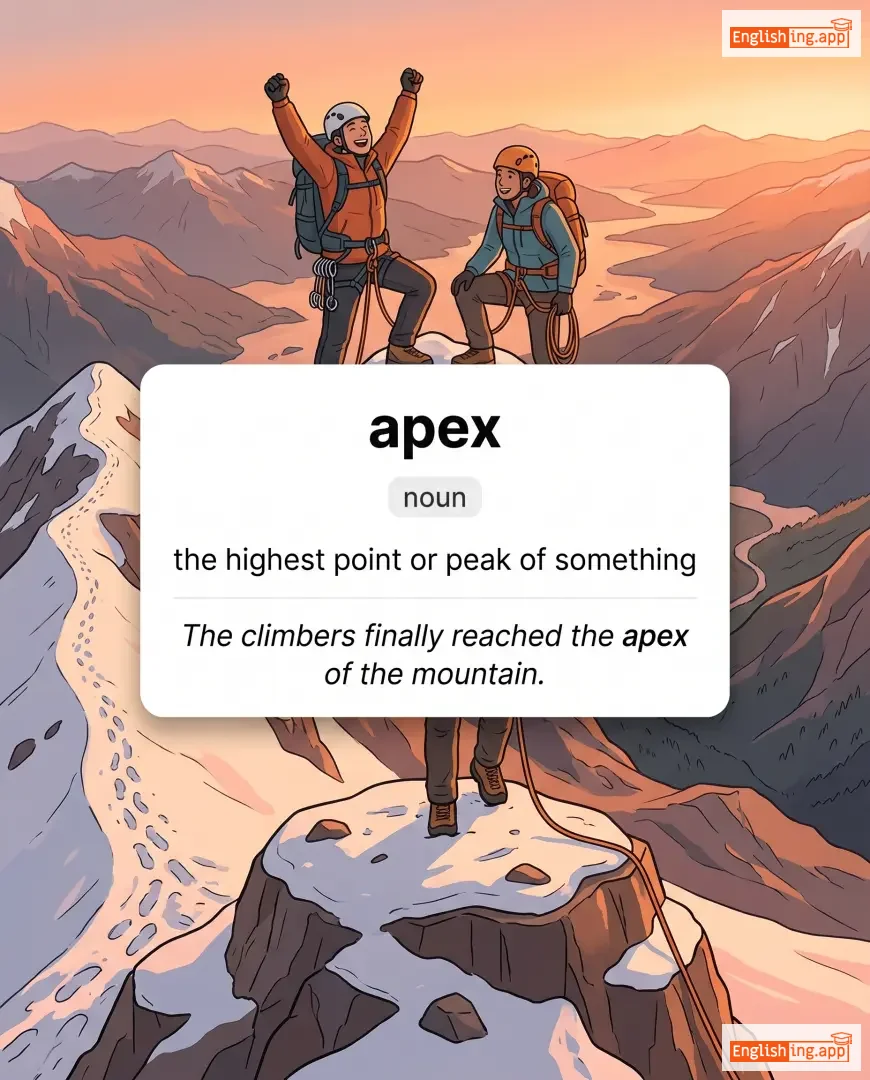
the highest point or peak of something
••••••
|
The climbers finally reached the apex of the mountain. |
Альпинисты наконец достигли пика горы.
Al'pinisty nakonechno dostigli pika gory.
••••••
|
at the apex of |
at the highest or most successful point
••••••
|
на пике
na pike
••••••
|
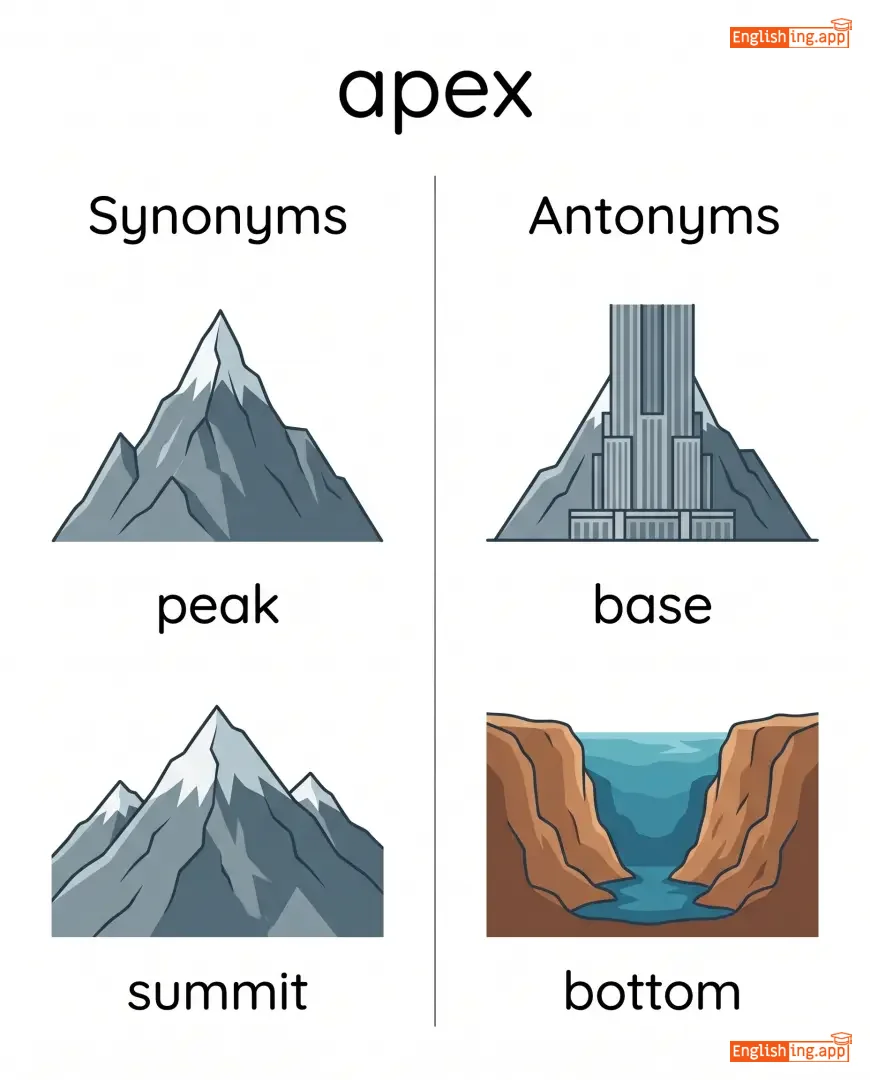
peak, summit, pinnacle, climax, acme
••••••
|
base, bottom, nadir
••••••
|
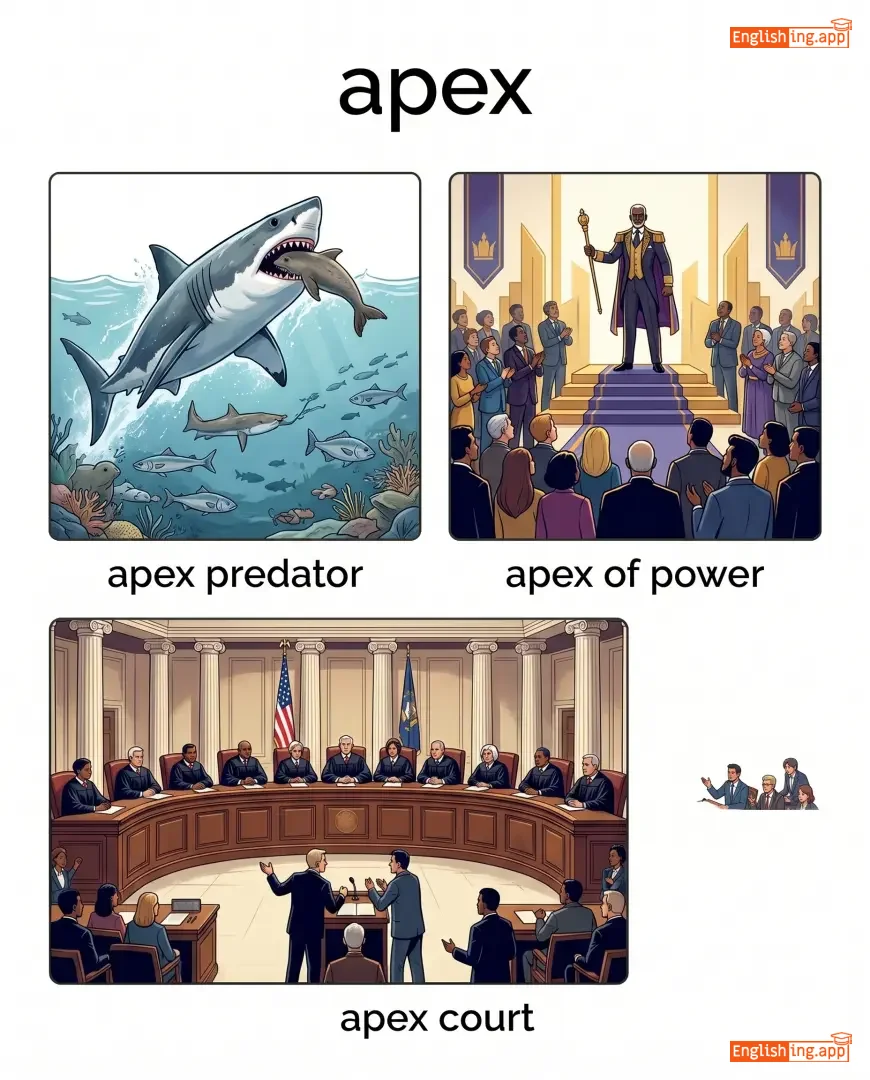
apex predator, apex of power, apex court, apex of success
••••••
|
Apex значит вершина, как пик пирамиды.
••••••
|
|
🌌
••••••
|
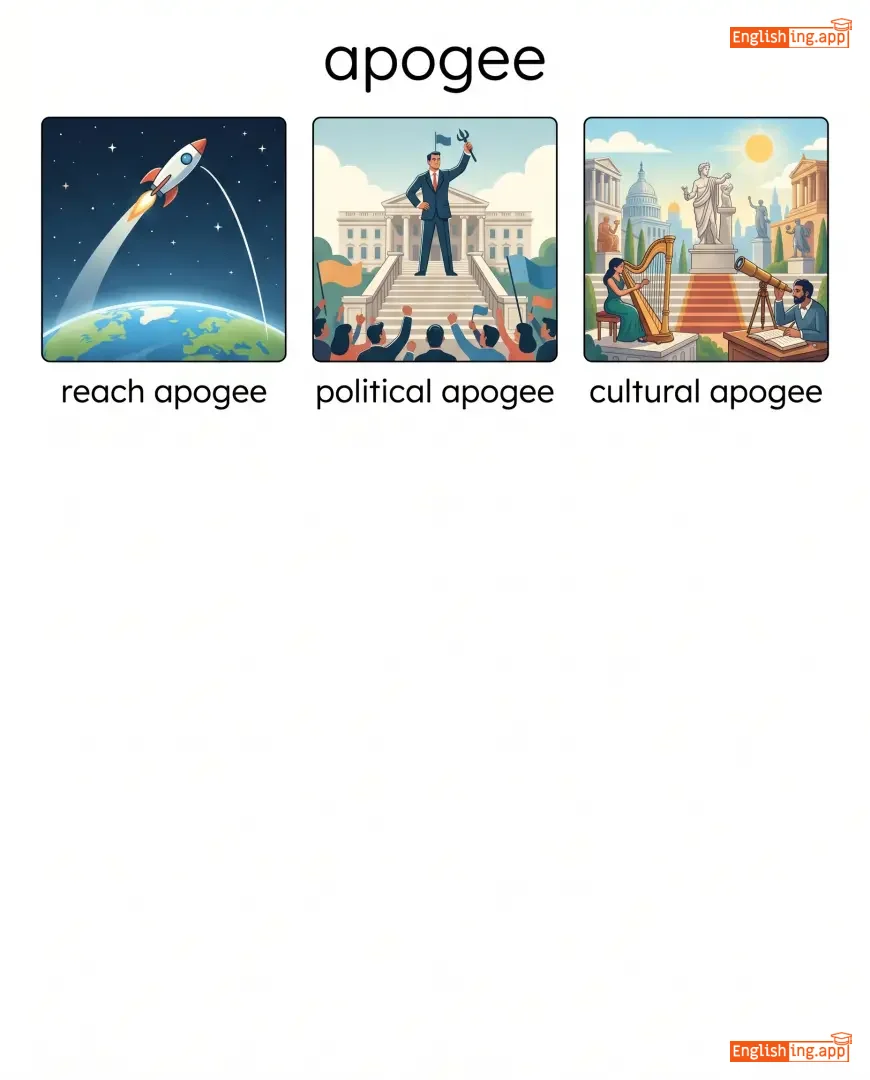
/ˈæpədʒiː/
noun
(апоʒи)
••••••
|
|
апогей
apogey
••••••
|
- •••••• | - •••••• | - •••••• | - •••••• |
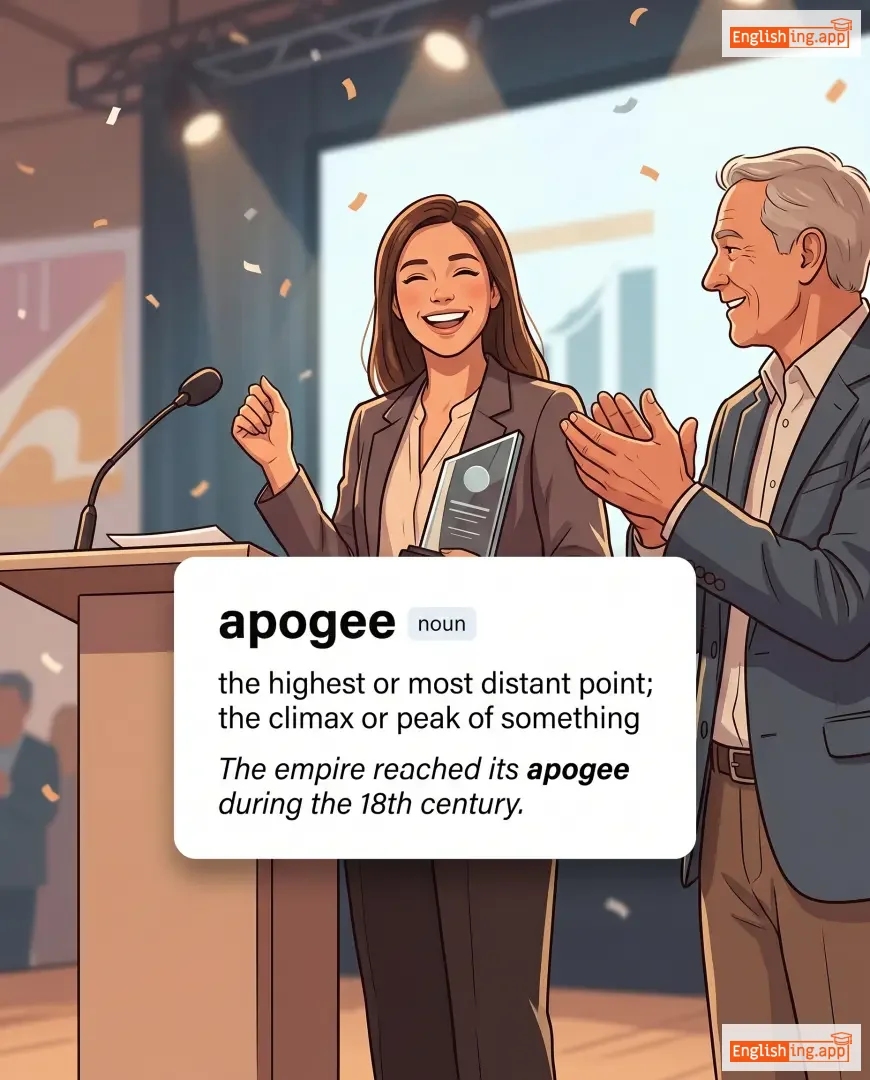
the highest or most distant point; the climax or peak of something
••••••
|
The empire reached its apogee during the 18th century. |
Империя достигла своего апогея в 18 веке.
Imperiya dostigla svoego apogeya v 18 veke.
••••••
|
- •••••• | - •••••• | - •••••• |
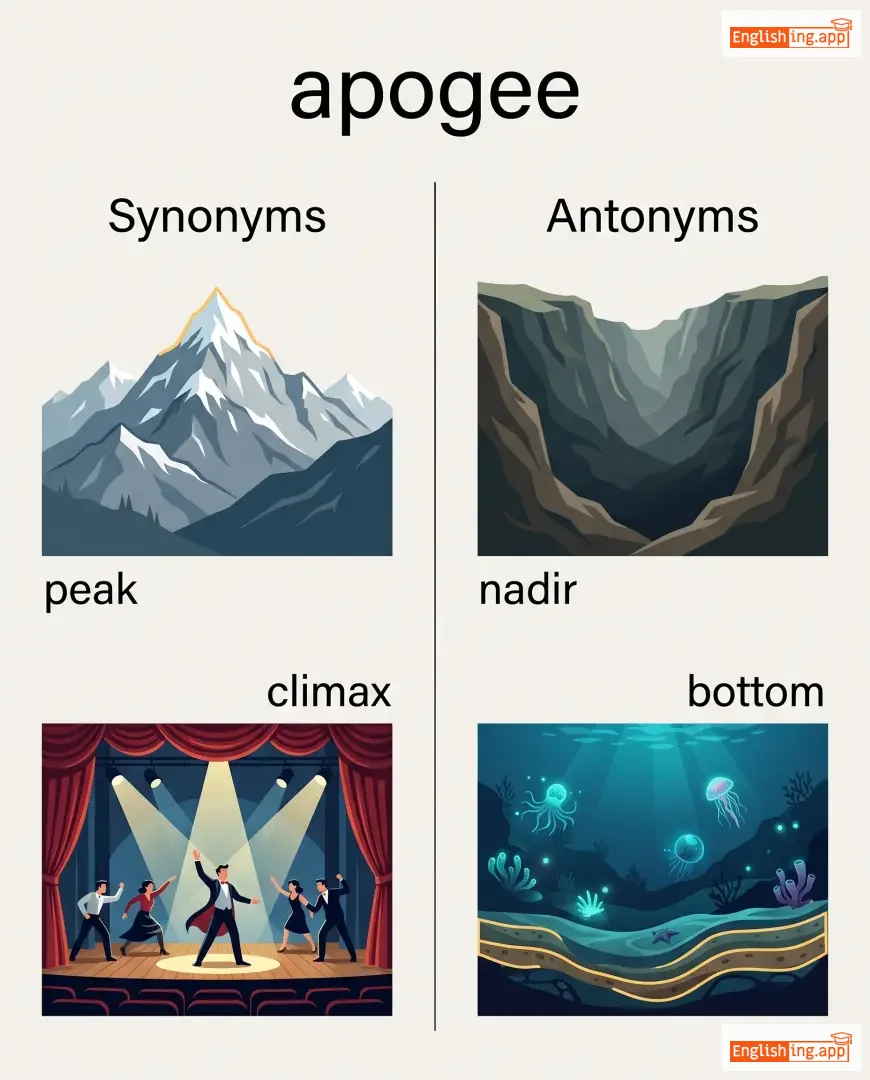
peak, climax, pinnacle, zenith, summit
••••••
|
nadir, bottom, base
••••••
|
reach apogee, political apogee, cultural apogee, apogee of power
••••••
|
Апогей - это как вершина, высший момент.
••••••
|
|
💡
••••••
|
/ˈæpəˌθɛm/
noun
(апотегма)
••••••
|
|
максима, изречение
maksima, izrechenie
••••••
|
- •••••• | - •••••• | - •••••• | - •••••• |
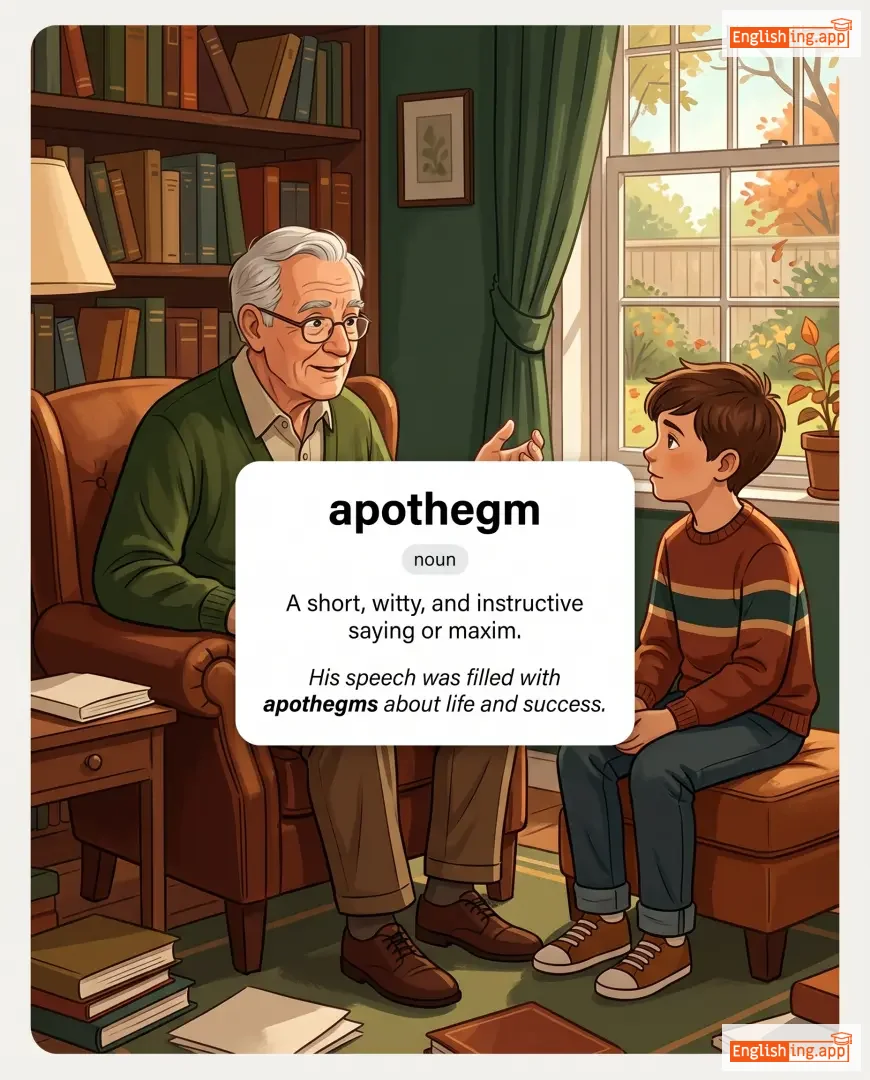
A short, witty, and instructive saying or maxim.
••••••
|
His speech was filled with apothegms about life and success. |
Его речь была полна максим о жизни и успехе.
Ego rech' byla polna maksym o zhizni i uspekhe.
••••••
|
- •••••• | - •••••• | - •••••• |
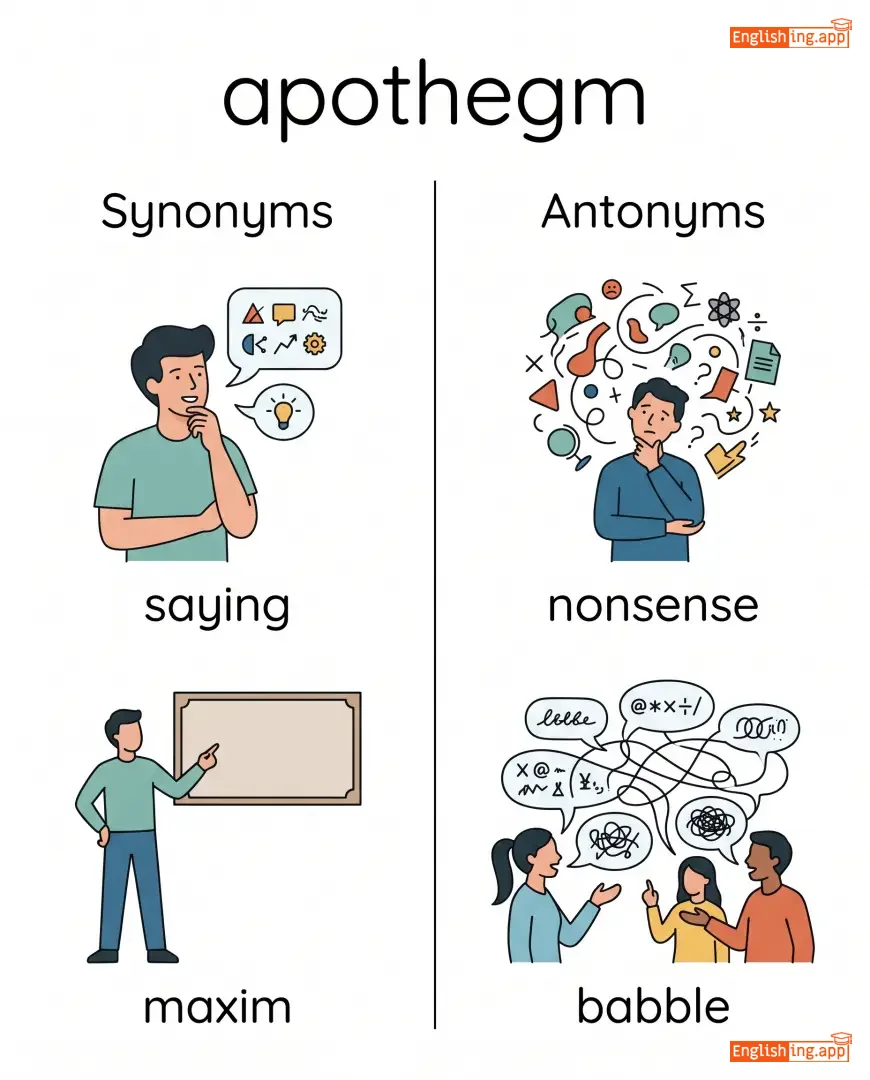
saying, maxim, aphorism, proverb, adage
••••••
|
nonsense, babble
••••••
|
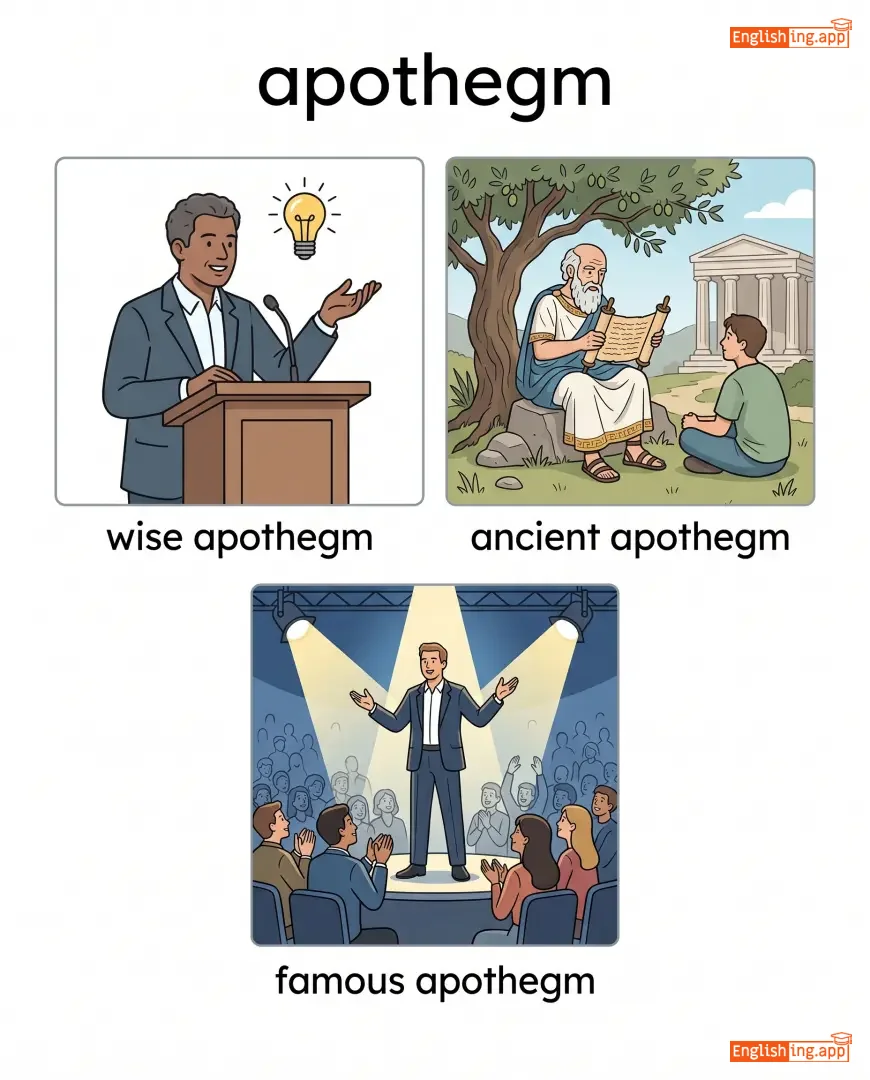
wise apothegm, ancient apothegm, famous apothegm
••••••
|
Apothegm означает короткую и остроумную поговорку, помни 'theme' жизни.
••••••
|
|
🤲
••••••
|
/əˈpiːz/
verb
(apiz)
••••••
|
|
успокаивать / удовлетворять
uspokaivat' / udovletvorjat'
••••••
|
appeased
apizd
••••••
|
appeased
apizd
••••••
|
appeases
apizes
••••••
|
appeasing
apizing
••••••
|
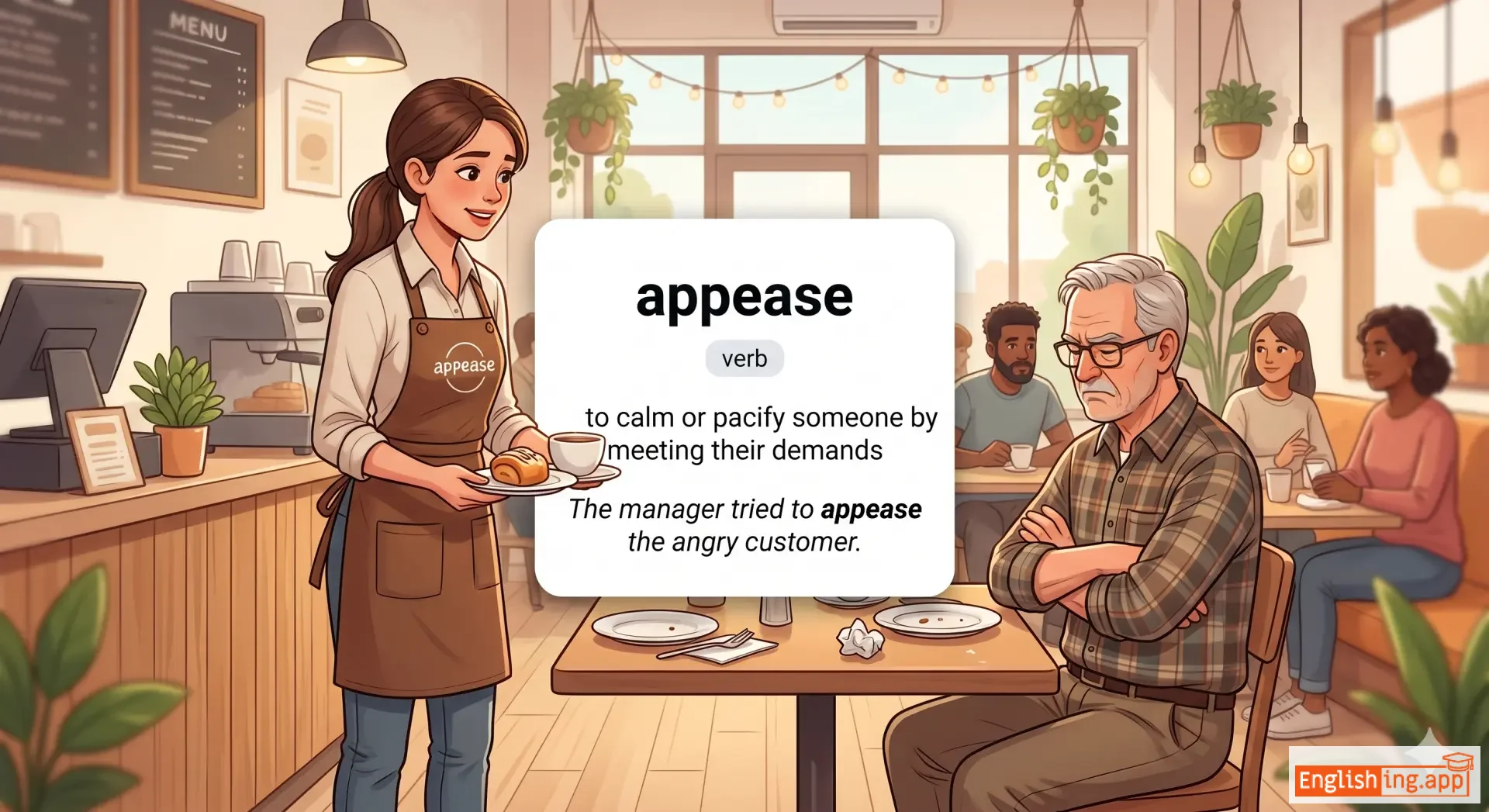
to calm or pacify someone by meeting their demands
••••••
|
The manager tried to appease the angry customer.
Менеджер пытался успокоить сердитого клиента.
••••••
|
Менеджер пытался успокоить сердитого клиента.
Menedzher pytalsya uspokoit' serditogo klienta.
••••••
|
appease someone's anger
успокоить чью-то злость
••••••
|
to reduce someone's anger by satisfying them
••••••
|
успокоить чью-то злость
uspokoit' ch'yu-to zlost'
••••••
|
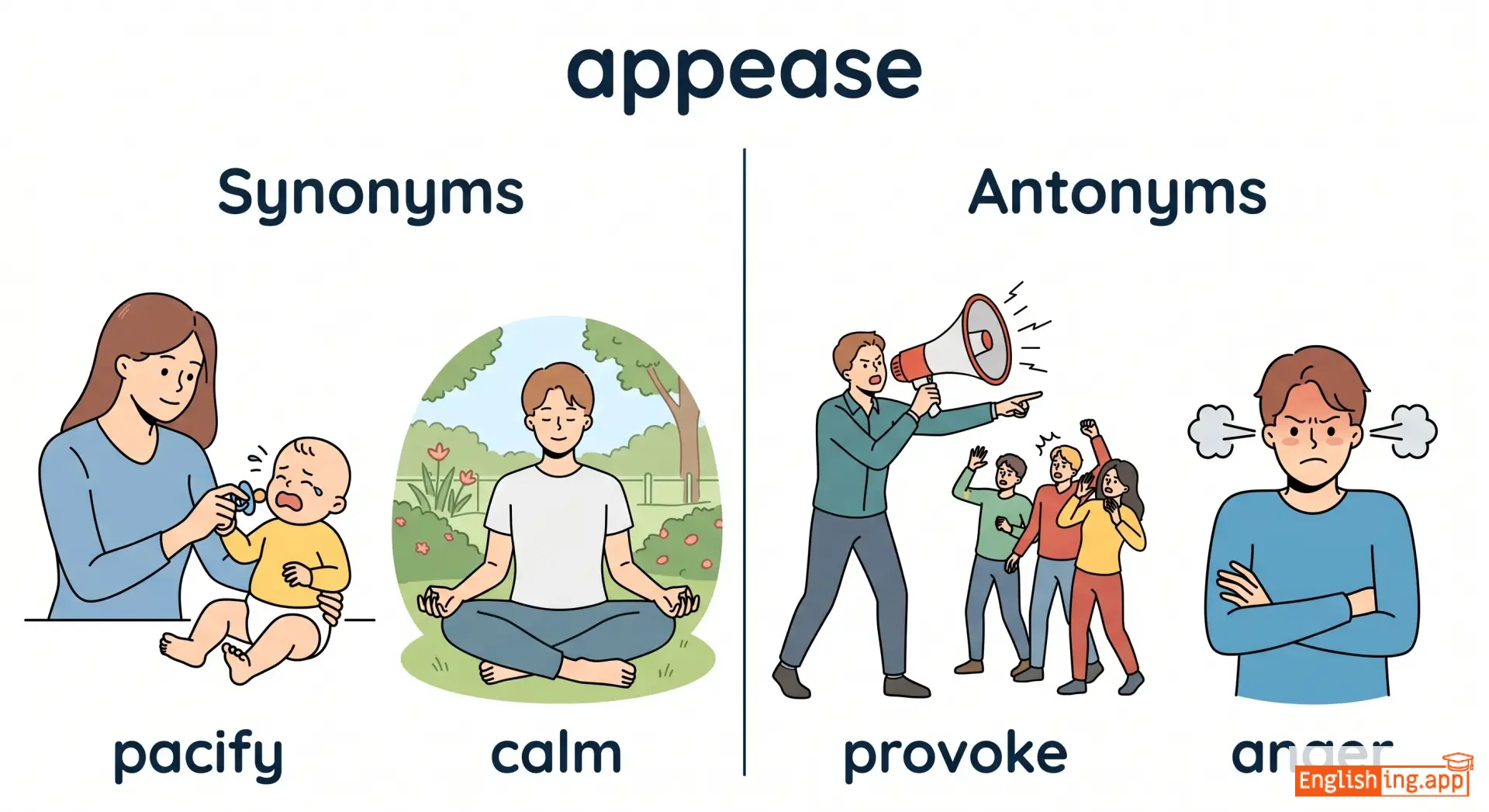
pacify, calm, satisfy, placate, soothe
••••••
|
provoke, anger, agitate
••••••
|
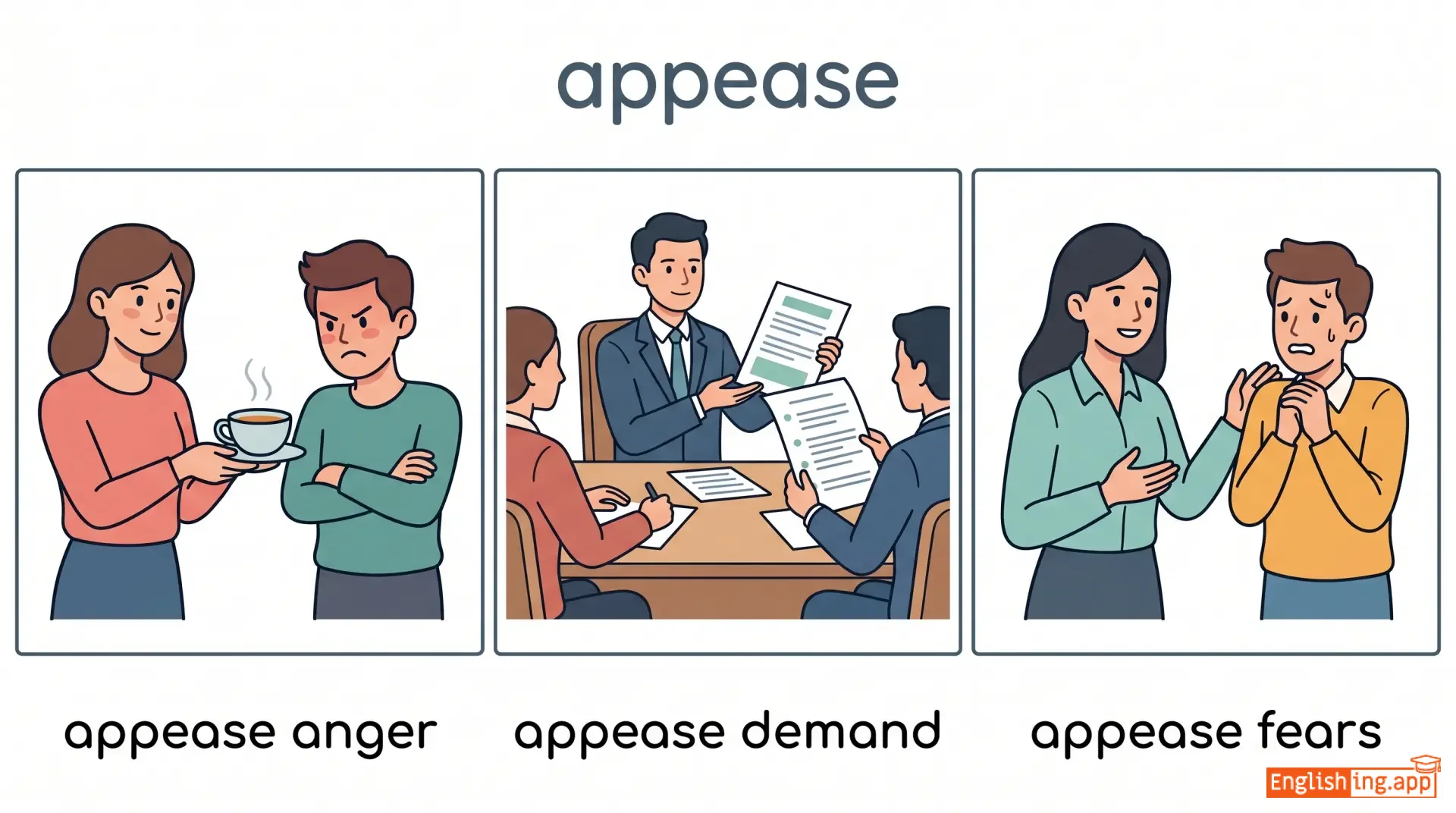
appease anger, appease demand, appease fears
••••••
|
Appease означает успокоить, представьте, что вам нужно успокоить, чтобы принести ‘Peace’.
••••••
|

