Night Workshop in the Hills
В горной деревне недалеко от Дженайдаха вечером прошёл воркшоп в деревянной cabin. Нила принесла набор инструментов, чтобы починить cable солнечной лампы. Первым делом они взялись за руки, образовав защитную chain, чтобы никто не поскользнулся на горной тропе. На закате они записали проблемы района на большом chart, посвящённом загрязнению реки. Каждую новую идею встречали радостным cheer, и энтузиазм распространялся повсюду. Джой быстро открыл аптечный chest и достал бинты. Лидер команды chief Миту напомнила всем, как холодно становится ночью в горах. Бабушка подала куски торта, каждый нарезанный на щедрый chunk. Небо было совершенно clear, поэтому они проводили время, считая звёзды. Поздно ночью Конок писал стихи о красоте тумана, clinging к листьям. Когда ночь стала глубже, они образовали close круг вокруг костра, чтобы рассказать истории. Миту надела каждому самодельные цветочные crowns и сделала фотографии. Маленькая Рина crawled на камень, играя. Переexcитированный Рахат crept вперёд и чуть не поскользнулся. На рассвете они принесли свежее молоко с ближайшей dairy-фермы для утреннего чая. Туман над рекой медленно drifted вдаль. Миту сказала: 'Мы не хотим, чтобы кто-то здесь drown, поэтому следуйте правилам.' Они не давали уснуть Джакиру, ночному сторожу, который вчера на ярмарке выглядел немного drunk, подавая ему чай. Во время перерыва Ашик опёр свой уставший elbow на стол. Миту сказала: 'Мы не enemy природы; мы её внимательные друзья.'
Получите неограниченный доступ ко всем словам с подпиской Pro
Обновить до ProПолучите неограниченный доступ ко всем предложениям с подпиской Pro
Обновить до Pro|
Эмодзи
|
Слово | Images | Перевод | Прошедшее | Причастие прошедшего времени | Третье лицо единственного числа | Герундий | Значение | Пример предложения | Перевод примера предложения | Пример выражения | Значение примера выражения | Перевод примера выражения | Синонимы | Антонимы | Коллокации | Мнемоника |
|---|---|---|---|---|---|---|---|---|---|---|---|---|---|---|---|---|---|
|
🏠
••••••
|
/ˈkæbɪn/
noun
(кабин)
••••••
|
- •••••• |
кабина
kabina
••••••
|
- •••••• | - •••••• | - •••••• | - •••••• |
a small shelter or house, often made of wood in a remote area
••••••
|
They spent the weekend in a cozy cabin in the mountains. |
Они провели выходные в уютной кабине в горах.
Oni proveli vykhodnye v uyutnoi kabine v gorakh.
••••••
|
cabin fever |
restlessness and irritability caused by prolonged indoor confinement
••••••
|
кабинная лихорадка
kabinnaya likhoradka
••••••
|
hut, lodge, cottage, shack, shelter
••••••
|
mansion, palace
••••••
|
log cabin, cabin crew, cabin fever, mountain cabin
••••••
|
Cabin означает маленький дом, представьте себе уютную кабину, где можно отдохнуть.
••••••
|
|
📡
••••••
|
/ˈkeɪ.bəl/
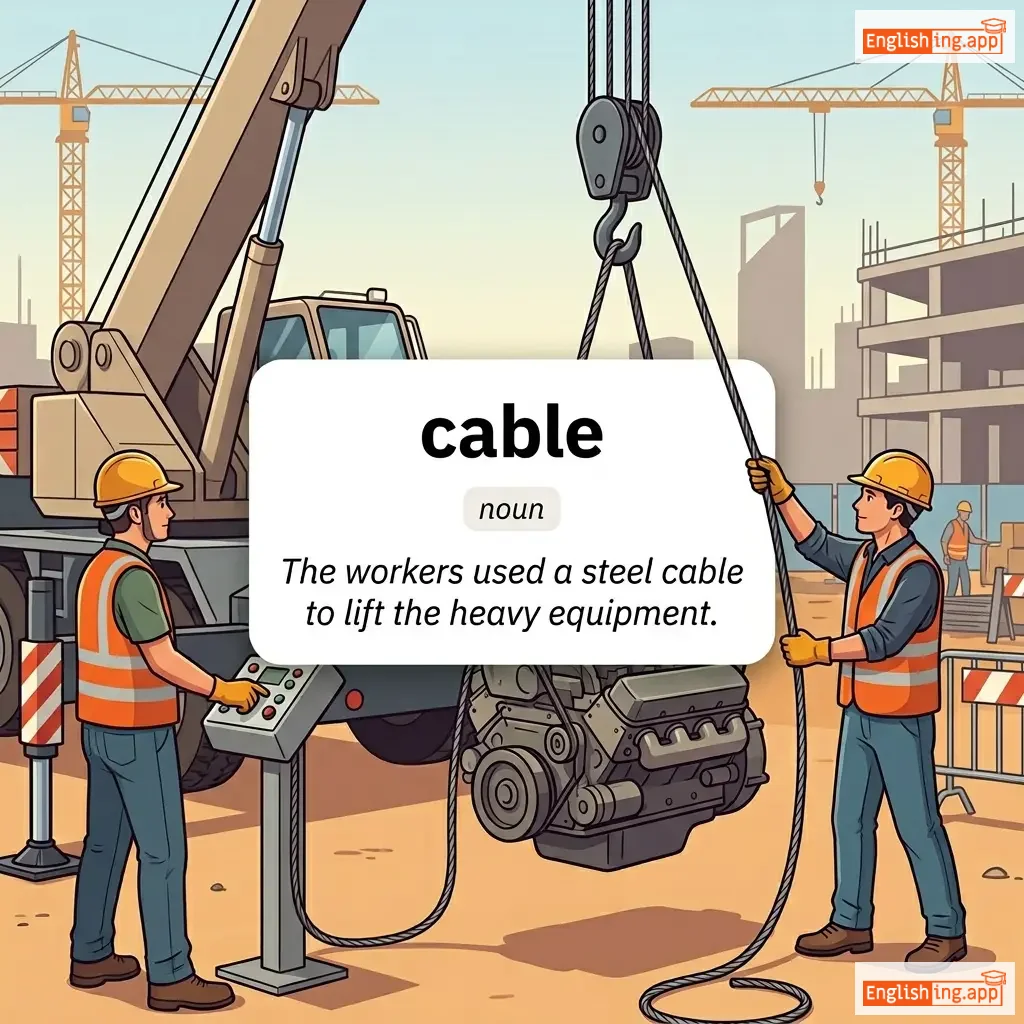
noun
••••••
|
|
- •••••• | - •••••• | - •••••• | - •••••• | - •••••• |
a thick, strong rope made of metal wires or fibers; a system of wires used for transmitting signals or electricity
••••••
|
The workers used a steel cable to lift the heavy equipment. |
- •••••• |
under the cable |
a nautical term meaning below deck or out of sight
••••••
|
- •••••• |
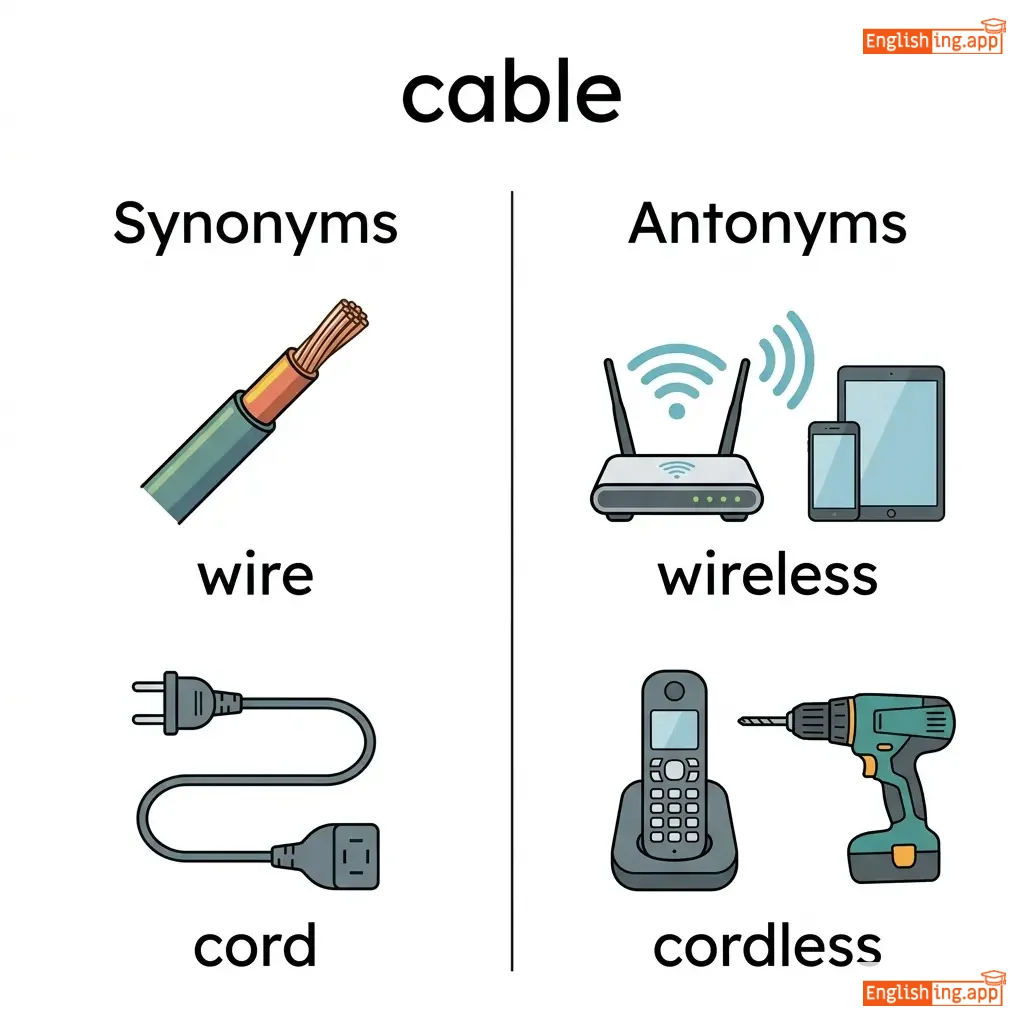
wire, cord, rope, line, connector
••••••
|
wireless, cordless
••••••
|
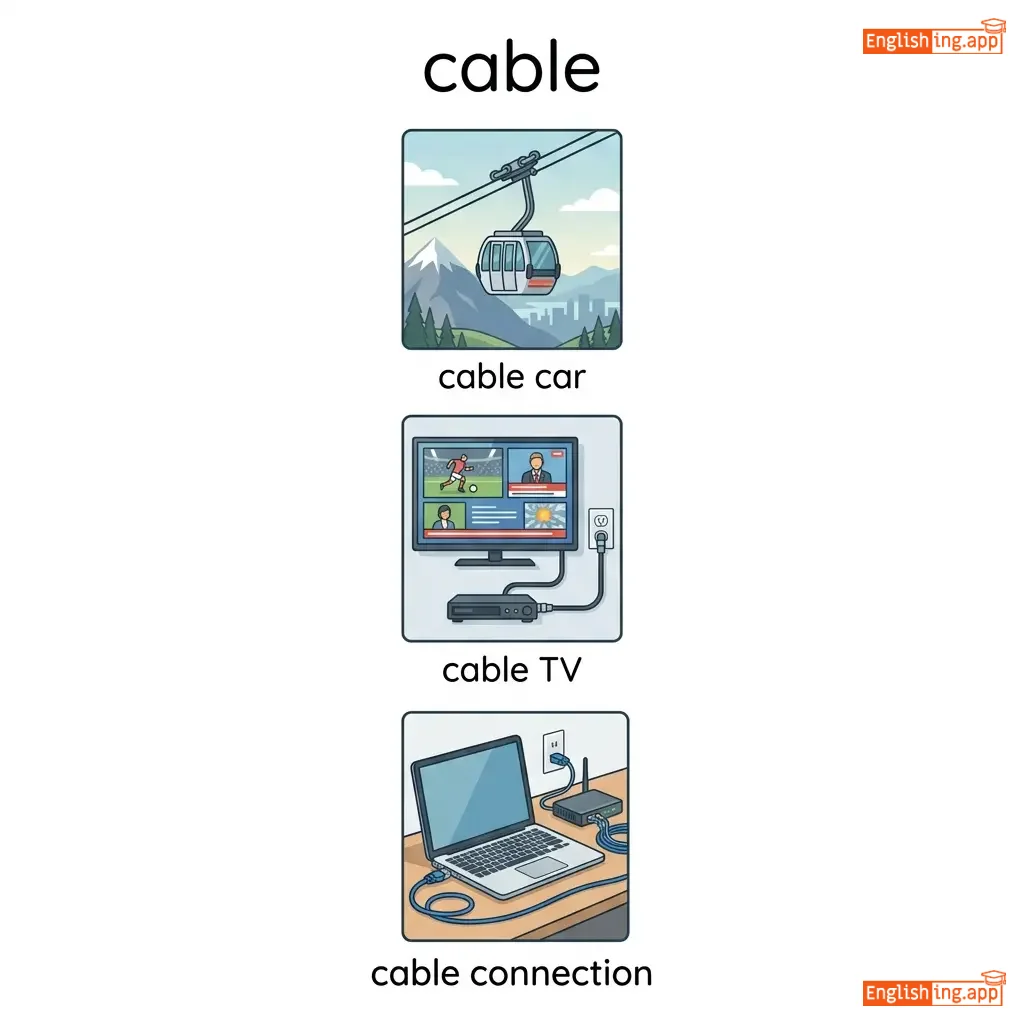
cable car, cable TV, cable connection, fiber optic cable
••••••
|
No •••••• |
|
⛓️
••••••
|
/tʃeɪn/
noun
(тʃейн)
••••••
|
- •••••• |
цепь
tsep
••••••
|
- •••••• | - •••••• | - •••••• | - •••••• |
a connected series of metal rings used for fastening or securing things; a series of connected events or businesses
••••••
|
He wore a gold chain around his neck.
Он носил золотую цепочку на шее.
••••••
|
Он носил золотую цепочку на шее.
On nosil zolotuyu tsepochku na sheye.
••••••
|
a chain reaction
цепная реакция
••••••
|
a series of related events triggered by the first event
••••••
|
цепная реакция
tsepnaia reaktsiia
••••••
|
link, series, sequence, cord, string
••••••
|
break, separation
••••••
|
gold chain, supply chain, food chain, chain of events
••••••
|
Цепь означает цепь, вспомни золотую цепочку на шее ⛓️
••••••
|
|
📊
••••••
|
/tʃɑːrt/
noun
(чарт)
••••••
|
- •••••• |
график
grafik
••••••
|
- •••••• | - •••••• | - •••••• | - •••••• |
a sheet of information in the form of a table, graph, or diagram
••••••
|
The teacher used a chart to explain the statistics. |
Учитель использовал график, чтобы объяснить статистику.
Uchitel ispol'zoval grafik, chtoby ob'yasnit' statistiku.
••••••
|
top the charts |
to reach the number one position in sales or popularity
••••••
|
быть на первом месте в чартах
byt' na pervom meste v chartakh
••••••
|
graph, diagram, table, map
••••••
|
text, narrative
••••••
|
bar chart, pie chart, flow chart, music chart
••••••
|
График – как лист с четкими данными
••••••
|
|
🎉
••••••
|
/tʃɪər/
verb
(tsheer)
••••••
|
- •••••• |
bol'shoye odobreniye
bol'shoye odobreniye
••••••
|
cheered
tsheerd
••••••
|
cheered
tsheerd
••••••
|
cheers
tsheers
••••••
|
cheering
tsheering
••••••
|
to shout in encouragement or support; to make someone feel happier
••••••
|
The fans cheered loudly when their team scored a goal.
Fani skrikali gromko, kogda ikh komanda zabila gol.
••••••
|
Fani skrikali gromko, kogda ikh komanda zabila gol.
Fani skrikali gromko, kogda ikh komanda zabila gol.
••••••
|
cheer up
podnesti nastroenie
••••••
|
to become happier or to make someone feel happier
••••••
|
podnesti nastroenie
podnesti nastroenie
••••••
|
applaud, encourage, boost, inspire, uplift
••••••
|
boo, depress
••••••
|
cheer up, cheer for, cheer loudly, cheer crowd
••••••
|
Podnesti nastroenie i cheer like a fan.
••••••
|
|
💪
••••••
|
/tʃɛst/
noun
(чест)
••••••
|
- •••••• |
грудь
grud'
••••••
|
- •••••• | - •••••• | - •••••• | - •••••• |
the front part of the human body between the neck and the stomach
••••••
|
He felt a pain in his chest after running. |
Он почувствовал боль в груди после бега.
On pochuvstvoval bol' v grudi posle bega.
••••••
|
off your chest |
to talk about something that has been worrying you
••••••
|
снять камень с души
snyat' kamen' s dushi
••••••
|
thorax, breast, trunk, ribcage, torso
••••••
|
back, rear
••••••
|
chest pain, broad chest, chest muscles, chest infection
••••••
|
Chest означает грудь, 'Get it off your chest' означает снять камень с души.
••••••
|
|
👑
••••••
|
/tʃiːf/
noun
(chif)
••••••
|
- •••••• |
шеф
shef
••••••
|
- •••••• | - •••••• | - •••••• | - •••••• |
a leader or person in charge of a group or organization
••••••
|
The chief of the village made an important decision.
Шеф деревни принял важное решение.
••••••
|
Шеф деревни принял важное решение.
Shef derevni prinyal vazhnoe reshenie.
••••••
|
chief among
шеф среди
••••••
|
the most important or significant among a group
••••••
|
самый важный
samyi vazhnyi
••••••
|
leader, head, boss, commander, captain
••••••
|
follower, subordinate
••••••
|
chief executive, tribal chief, chief complaint, chief reason
••••••
|
Chief означает шеф, 👑 самый главный.
••••••
|
|
🍰
••••••
|
/tʃʌŋk/
noun
(чанк)
••••••
|
- •••••• |
кусок / ломоть
kusok / lomot
••••••
|
- •••••• | - •••••• | - •••••• | - •••••• |
a thick or solid piece of something
••••••
|
She cut the cake into large chunks. |
Она нарезала торт большими кусками.
Ona narezala tort bol'shimi kuskami.
••••••
|
a chunk of time |
a considerable amount of time
••••••
|
кусок времени
kusok vremeni
••••••
|
piece, block, lump, portion, segment
••••••
|
fragment, bit
••••••
|
chunk of meat, chunk of cake, big chunk, data chunk
••••••
|
Chunk означает большой кусок, как кусок торта.
••••••
|
|
🧹
••••••
|
/klɪr/
verb
(klir)
••••••
|
|
очищать
ochishchat'
••••••
|
cleared
klíerd
••••••
|
cleared
klíerd
••••••
|
clears
klíers
••••••
|
clearing
klíering
••••••
|
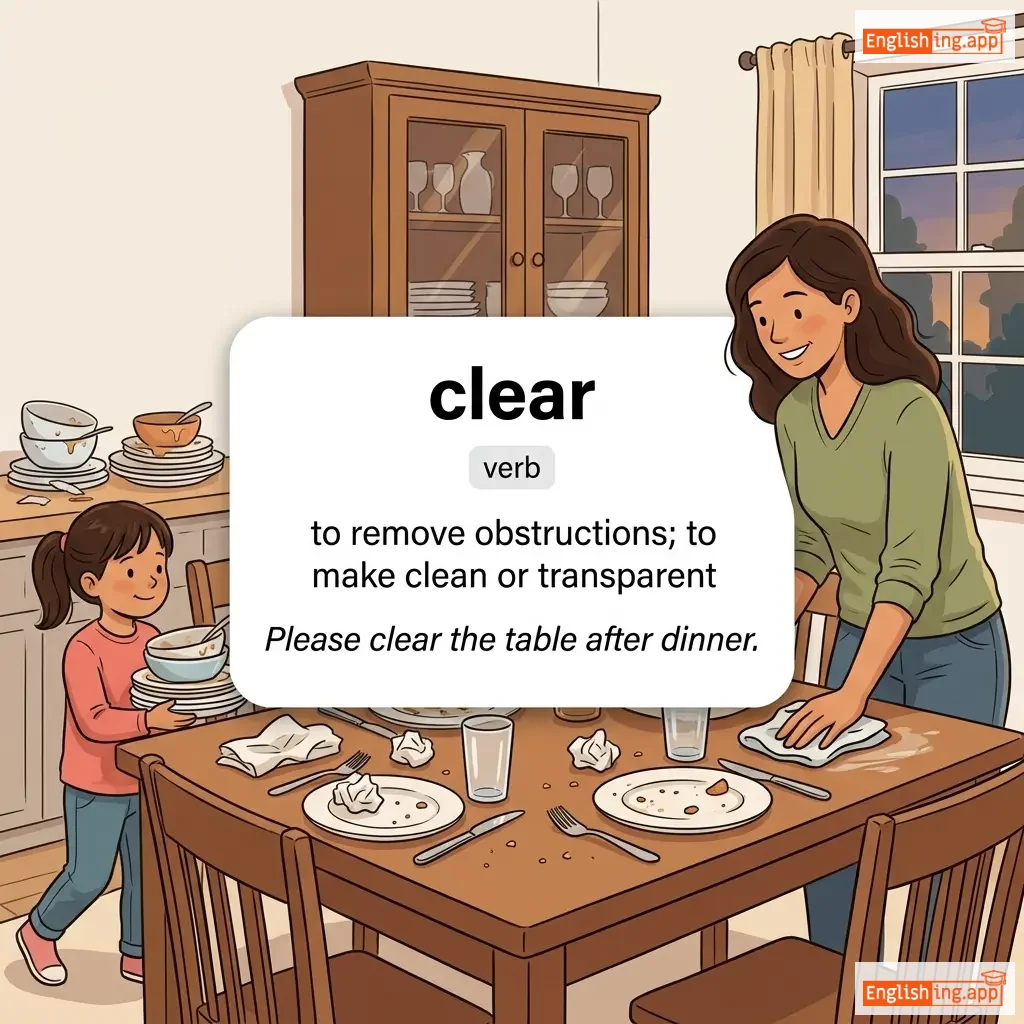
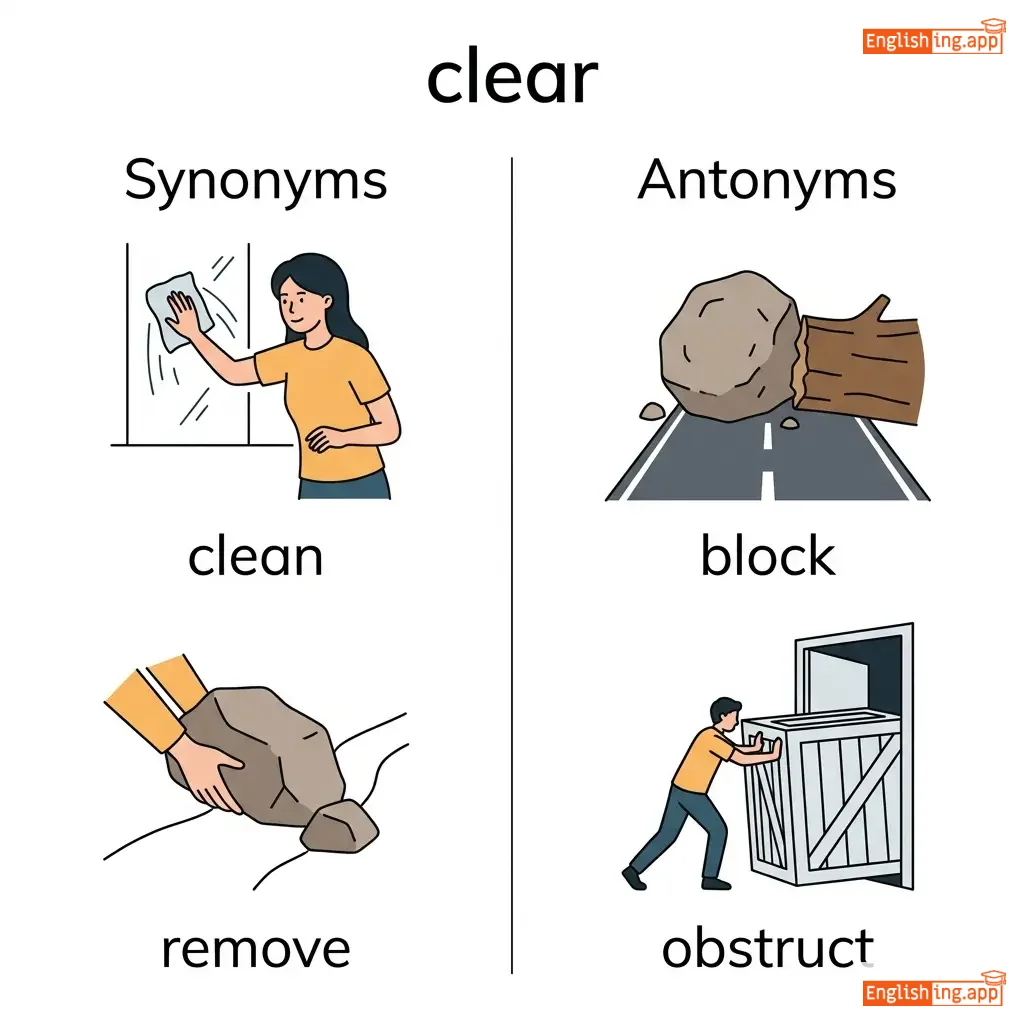
to remove obstructions; to make clean or transparent
••••••
|
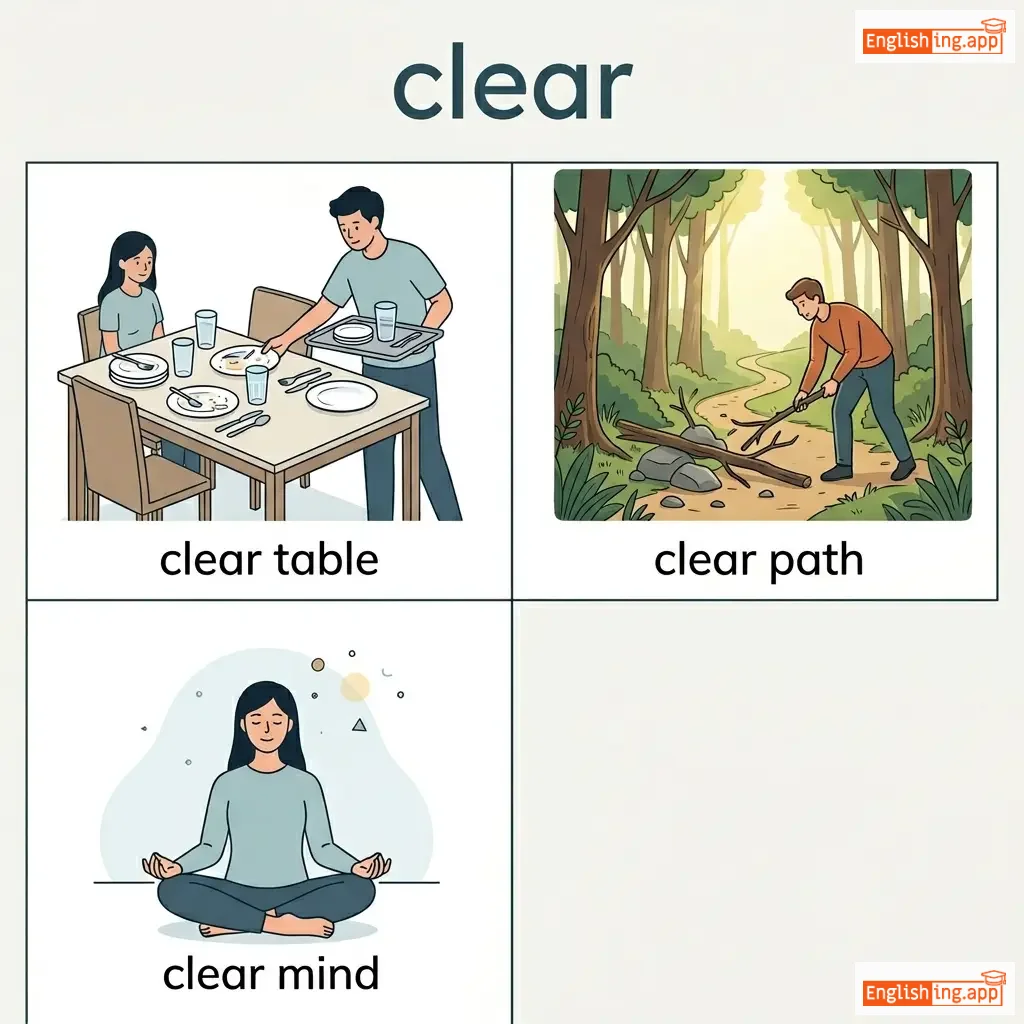
Please clear the table after dinner.
Пожалуйста, очистите стол после ужина.
••••••
|
Пожалуйста, очистите стол после ужина.
Pozhaluysta, ochistite stol posle uzhina.
••••••
|
- •••••• | - •••••• | - •••••• |
clean, remove, empty, tidy
••••••
|
block, obstruct, dirty, clutter
••••••
|
clear table, clear path, clear mind, clear sky, clear water, clear debt
••••••
|
Clear the table just like clearing away obstacles in life
••••••
|
|
🤗
••••••
|
/klɪŋ/
verb
(счастье)
••••••
|
- •••••• |
счастье
schastye
••••••
|
clung
••••••
|
clung
••••••
|
clings
••••••
|
clinging
••••••
|
to hold on tightly to someone or something
••••••
|
The child clung to his mother in fear.
Она не могла скрыть своего счастья, когда получила награду.
••••••
|
Она не могла скрыть своего счастья, когда получила награду.
Ona ne mogla skryt' svoego schast'ya, kogda poluchila nagradu.
••••••
|
cling to hope
поиск счастья
••••••
|
to continue believing that something will happen even when it seems unlikely
••••••
|
поиск счастья
poisk schast'ya
••••••
|
grip, hold, grasp, stick, attach
••••••
|
release, let go, detach
••••••
|
cling to, cling tightly, cling together, cling on
••••••
|
Счастье — когда ты можешь наслаждаться каждым моментом.
••••••
|
|
🚪
••••••
|
/kloʊz/ (verb), /kloʊs/ (adjective)
verb, adjective
(klohz)
••••••
|
- •••••• |
закрыть, рядом
zakryt', ryadom
••••••
|
closed
klohzd
••••••
|
closed
klohzd
••••••
|
closes
klozhez
••••••
|
closing
klozing
••••••
|
To shut something (verb); near in space or relationship (adjective).
••••••
|
Please close the door when you leave.
Пожалуйста, закройте дверь, когда вы уходите.
••••••
|
Пожалуйста, закройте дверь, когда вы уходите.
pozhaluysta, zakroyte dver', kogda vy ukhodite.
••••••
|
close call
близкий звонок
••••••
|
A narrow escape from danger or trouble.
••••••
|
узкий случай
uzkiy sluchay
••••••
|
shut, seal, end, nearby, intimate
••••••
|
open, distant
••••••
|
close the door, close relationship, close attention, close friend
••••••
|
Close значит 'клоуз' закрыть дверь 🚪 — закрытие двери.
••••••
|
|
🐛
••••••
|
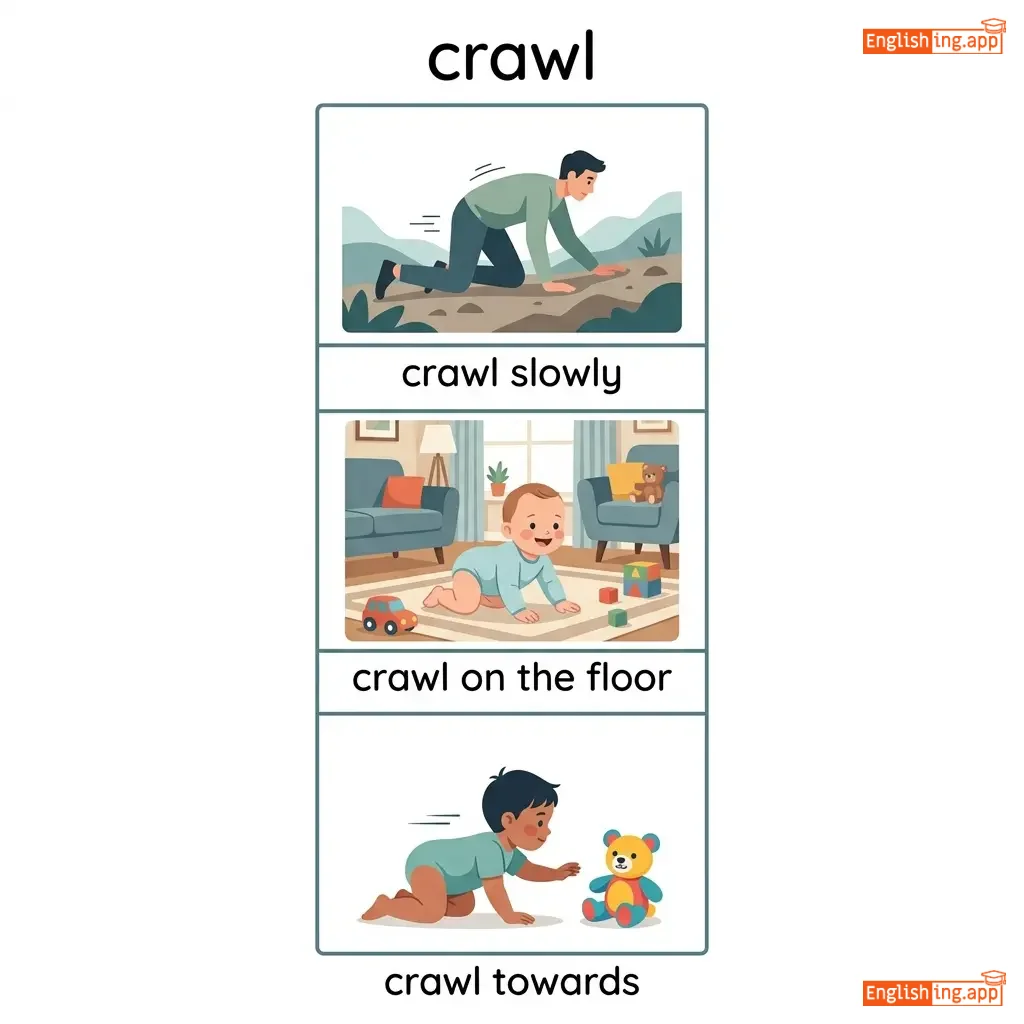
/krɔːl/
verb
(krol)
••••••
|
|
ползать
polzat
••••••
|
crawled
krôld
••••••
|
crawled
krôld
••••••
|
crawls
krôls
••••••
|
crawling
krôling
••••••
|
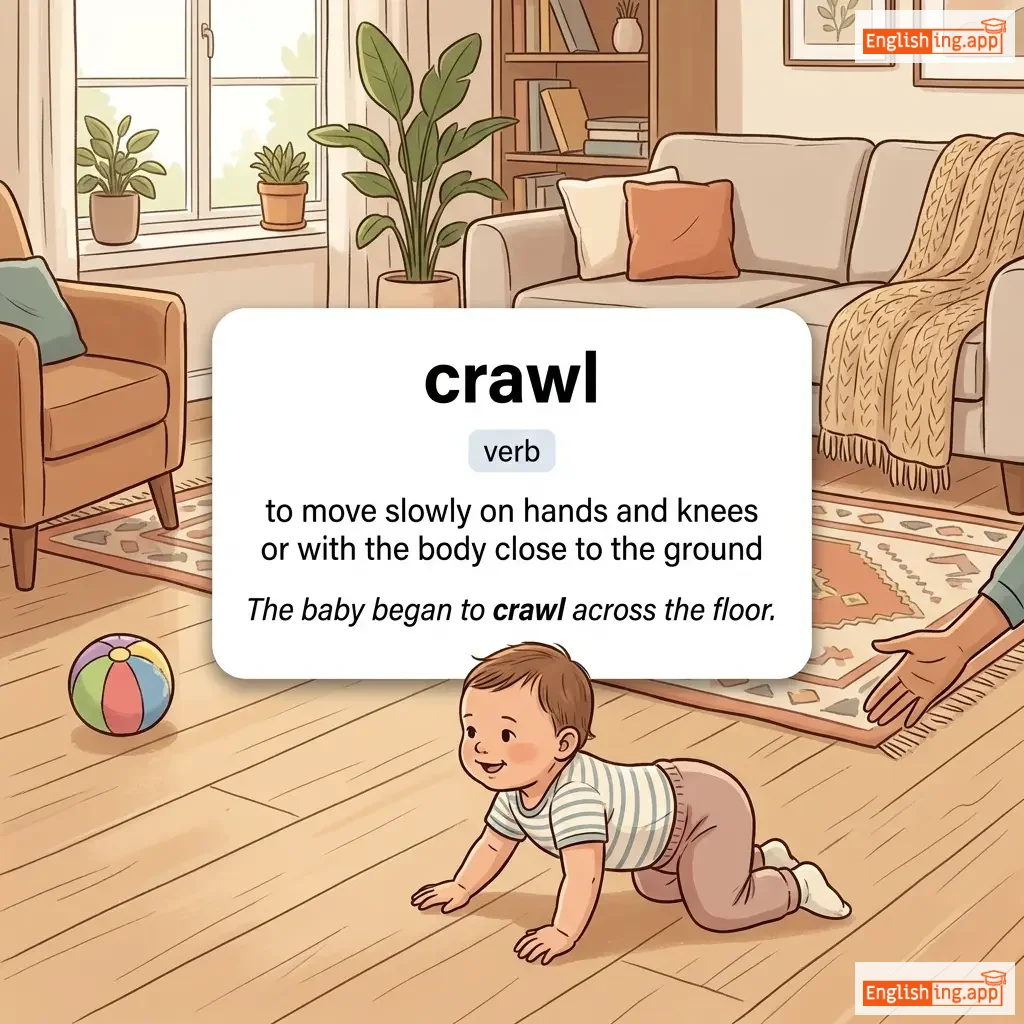
to move slowly on hands and knees or with the body close to the ground
••••••
|
The baby began to crawl across the floor.
Ребёнок начал ползать по полу.
••••••
|
Ребёнок начал ползать по полу.
Rebyonok nachal polzat' po polu.
••••••
|
crawl out of one's skin
выползти из своей кожи
••••••
|
to feel extremely uncomfortable or disgusted
••••••
|
чувствовать себя крайне неудобно или отвращенно
chuvstvovat' sebya krayne neudobno ili otvrashchyonno
••••••
|
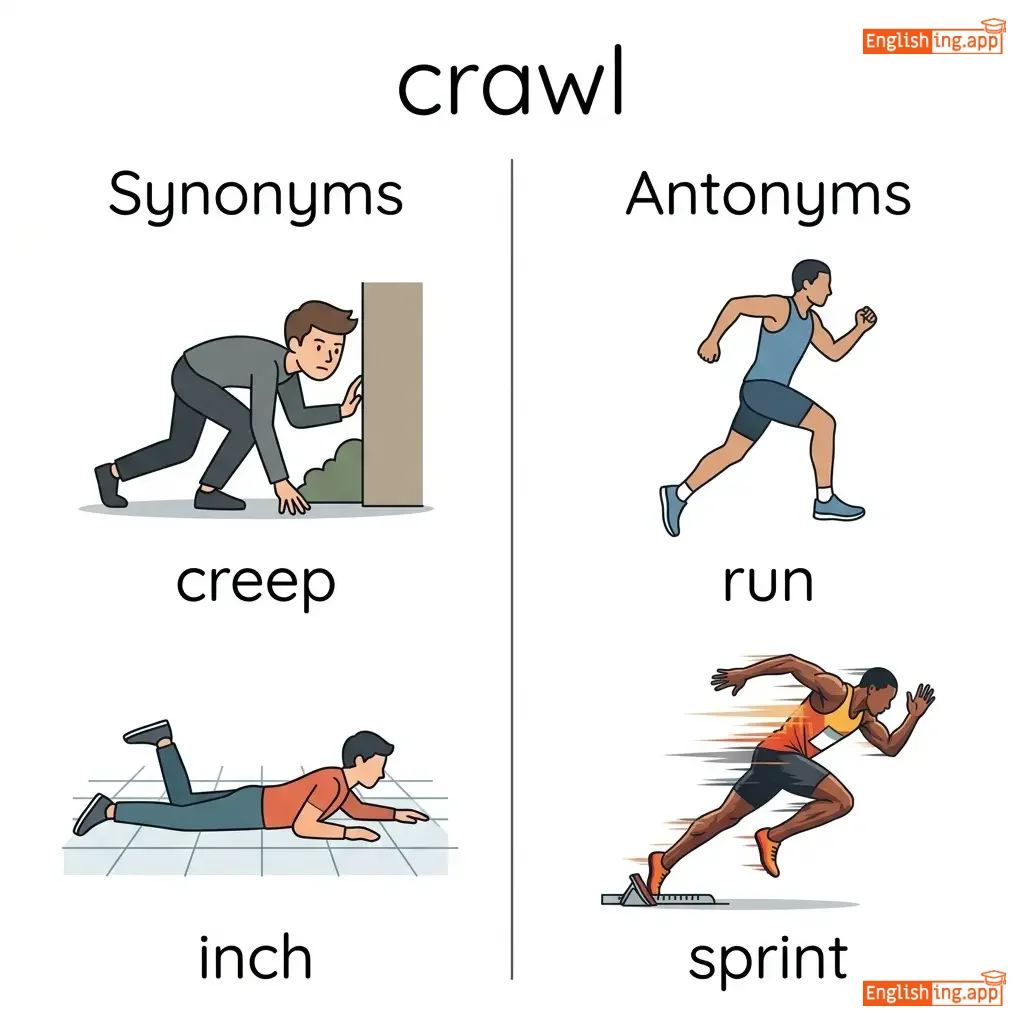
creep, inch, slither, drag, move slowly
••••••
|
run, sprint, rush
••••••
|
crawl slowly, crawl on the floor, crawl towards, baby crawl
••••••
|
Ползать как младенец – это прикольно!
••••••
|
|
🕷️
••••••
|
/kriːp/
verb
(krip)
••••••
|
|
красться
krast'sya
••••••
|
crept
krept
••••••
|
crept
krept
••••••
|
creeps
krips
••••••
|
creeping
kriping
••••••
|
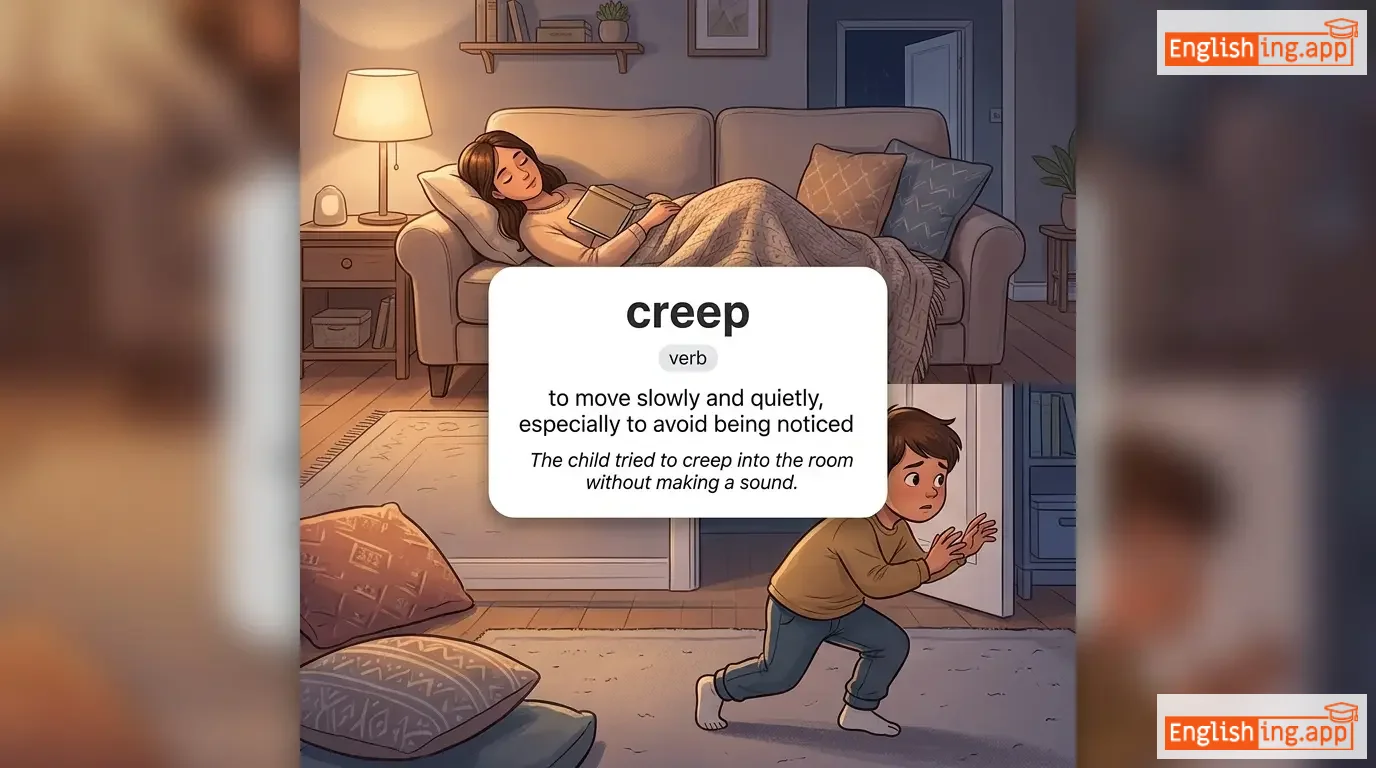
to move slowly and quietly, especially to avoid being noticed
••••••
|
The child tried to creep into the room without making a sound.
Ребёнок попытался прокрасться в комнату, не издавая ни звука.
••••••
|
Ребёнок попытался прокрасться в комнату, не издавая ни звука.
Rebyonok popytalsya prokrastsya v komnatu, ne izdaya ni zvuka.
••••••
|
creep up on
подкрадываться
••••••
|
to approach someone quietly without being noticed
••••••
|
подкрадываться
podkradyvat'sya
••••••
|
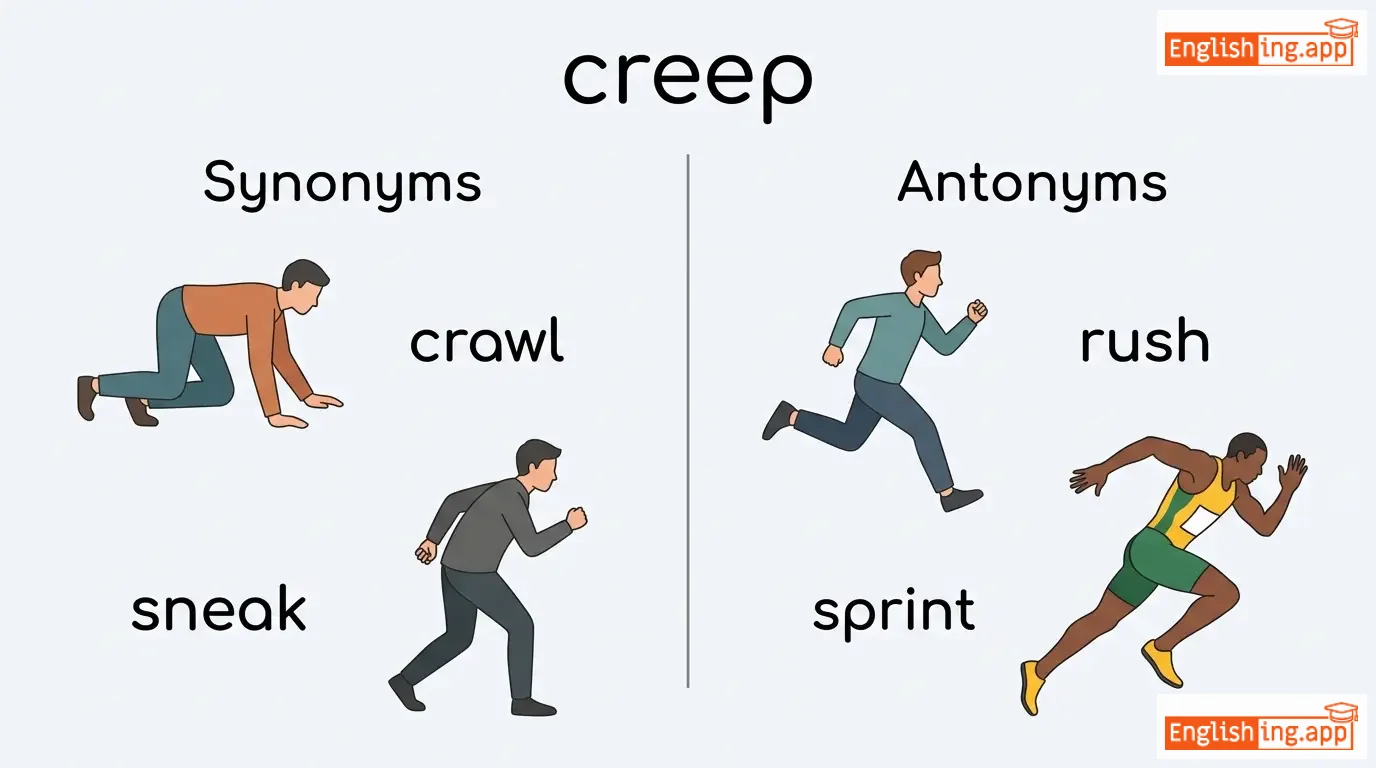
crawl, sneak, tiptoe, slink, edge
••••••
|
rush, sprint, charge
••••••
|
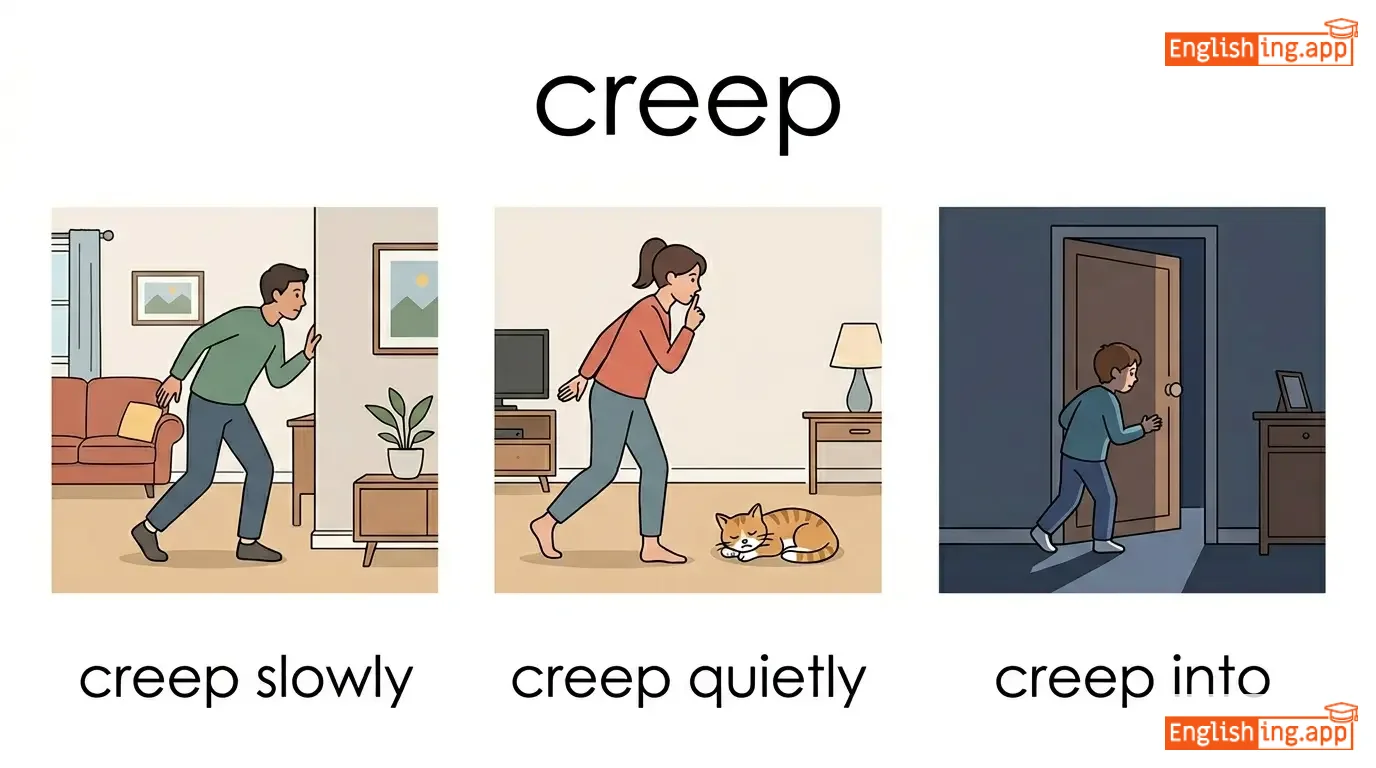
creep slowly, creep quietly, creep into, creep out
••••••
|
Creep означает красться, как кот, который тихо подходит к своей добыче.
••••••
|
|
👑
••••••
|
/kraʊn/
noun
(kroun)
••••••
|
- •••••• |
корона
korona
••••••
|
- •••••• | - •••••• | - •••••• | - •••••• |
a circular ornamental headdress worn by a monarch as a symbol of authority
••••••
|
The king wore his golden crown at the ceremony. |
Царь носил свою золотую корону на церемонии.
Tsar' nosil svoyu zolotuyu koronu na tseremonii.
••••••
|
wear the crown |
to accept the responsibility or power of leadership
••••••
|
носить корону
nosit' koronu
••••••
|
tiara, diadem, coronet
••••••
|
helmet, cap
••••••
|
royal crown, golden crown, wear the crown
••••••
|
Когда царь носит корону, он принимает ответственность и власть.
••••••
|
|
🐄
••••••
|
/ˈdeə.ri/
noun
(дейри)
••••••
|
- •••••• |
здание или ферма, где производится молоко; продукты из молока; магазин, продающий молоко и молочные продукты
zdanie ili ferma, gde proizvoditsya moloko; produkty iz moloka; magazin, prodayushchiy moloko i molochnye produkty
••••••
|
- •••••• | - •••••• | - •••••• | - •••••• |
a building or farm where milk is produced; products made from milk; a shop selling milk and milk products
••••••
|
The local dairy provides fresh milk and cheese to the entire neighborhood.
Местная молочная ферма предоставляет свежее молоко и сыр всему району.
••••••
|
Местная молочная ферма предоставляет свежее молоко и сыр всему району.
Mestnaya molochnaya ferma predostavlyayet svezhoye moloko i syr vsemu rayonu.
••••••
|
- •••••• | - •••••• | - •••••• |
creamery, milk farm, dairy farm
••••••
|
non-dairy, vegan alternatives
••••••
|
dairy farm, dairy products, local dairy
••••••
|
Молоко и сыр из местной молочной фермы
••••••
|
|
⛵
••••••
|
/drɪft/
verb
(дрифт)
••••••
|
- •••••• |
дрейф
dreif
••••••
|
drifted
дрифтовал
••••••
|
drifted
дрифтовал
••••••
|
drifts
дрифтует
••••••
|
drifting
дрифтовать
••••••
|
to move slowly, especially by air or water currents
••••••
|
The boat began to drift away from the shore.
Лодка начала отрываться от берега.
••••••
|
Лодка начала отрываться от берега.
Lodka nachala otryvat'sya ot berega.
••••••
|
drift apart
отдаляться
••••••
|
to gradually become distant or less friendly
••••••
|
отдаляться
otdalat'sya
••••••
|
float, glide, wander, meander, coast
••••••
|
anchor, stay, remain
••••••
|
drift away, drift apart, drift off, drift slowly
••••••
|
Дрифт — как лодка, которая медленно уходит в море.
••••••
|
|
🌊
••••••
|
/draʊn/
verb
(драун)
••••••
|
- •••••• |
утонуть
utonut
••••••
|
drowned
драунд
••••••
|
drowned
драунд
••••••
|
drowns
драунс
••••••
|
drowning
драуинг
••••••
|
to die or cause to die by being submerged in and inhaling water
••••••
|
He nearly drowned while swimming in the river.
Он почти утонул, когда плавал в реке.
••••••
|
Он почти утонул, когда плавал в реке.
On pochti utonul, kogda plaval v reke.
••••••
|
drown out
заглушить
••••••
|
to make a sound so loud that it prevents other sounds from being heard
••••••
|
заглушить
zaglushit'
••••••
|
sink, submerge, suffocate, engulf
••••••
|
float, survive, resurface
••••••
|
drown in debt, drown in sorrow, nearly drown, drown out
••••••
|
Drown означает утонуть, будьте осторожны с водой!
••••••
|
|
🍺
••••••
|
/drʌŋk/
adjective
(дранк)
••••••
|
- •••••• |
пьяный
p'yanyy
••••••
|
- •••••• | - •••••• | - •••••• | - •••••• |
affected by alcohol to the point of losing control of one's faculties or behavior
••••••
|
He was too drunk to walk straight. |
Он был слишком пьян, чтобы идти прямо.
On byl slishkom p'yan, chtoby idti pryamo.
••••••
|
dead drunk |
extremely intoxicated
••••••
|
мертво пьяный
mertvo p'yanyy
••••••
|
intoxicated, tipsy, inebriated, wasted, buzzed
••••••
|
sober, abstinent
••••••
|
get drunk, dead drunk, completely drunk, drunk driving
••••••
|
Пьяный — drunk. Если пьешь много, ты становишься пьяным!
••••••
|
|
💪
••••••
|
/ˈɛl.boʊ/
noun/verb
(эльбо)
••••••
|
- •••••• |
локоть
lokot
••••••
|
elbowed
эльбод
••••••
|
elbowed
эльбод
••••••
|
elbows
эльбос
••••••
|
elbowing
эльбоинг
••••••
|
The joint connecting the forearm and the upper arm; as a verb, to push aside using the elbow.
••••••
|
He accidentally hit the table with his elbow.
Он случайно ударил по столу своим локтем.
••••••
|
Он случайно ударил по столу своим локтем.
On sluchayno udaril po stolu svoim loktem.
••••••
|
rub elbows
тереть локти
••••••
|
To socialize closely with people, often important or famous ones.
••••••
|
социальный контакт
sotsial'nyy kontakt
••••••
|
joint, bend, nudge, shove, push
••••••
|
pull, drag
••••••
|
elbow joint, elbow room, rub elbows, elbow grease
••••••
|
Локоть — это локоть, а тереть локти — значит быть среди людей.
••••••
|
|
⚔️
••••••
|
/ˈɛnəmi/
noun
(эне́ми)
••••••
|
- •••••• |
враг
vrag
••••••
|
- •••••• | - •••••• | - •••••• | - •••••• |
a person or group that is hostile or opposed to someone or something
••••••
|
The two countries have been enemies for decades.
Эти две страны были врагами десятилетиями.
••••••
|
Эти две страны были врагами десятилетиями.
Eti dve strany byli vragami desyatiletiyami.
••••••
|
make an enemy
сделать врага
••••••
|
to create hostility with someone
••••••
|
сделать врага
sdelat vraga
••••••
|
opponent, adversary, foe, rival
••••••
|
friend, ally
••••••
|
sworn enemy, common enemy, deadly enemy, enemy forces
••••••
|
Enemy = en + мi (я), кто против меня.
••••••
|

