語彙集

英単語辞書 | 単語の意味、定義、例文

adjective C2
/ˈræŋ.kər.əs/
злопамятный (zlopamyatny)

Characterized by bitterness or resentment.

"Their rancorous debate lasted for hours."
"Их злопамятные дебаты продолжались часами." (Ikh zlopamyatnye debaty prodolzhalis' chasami.)
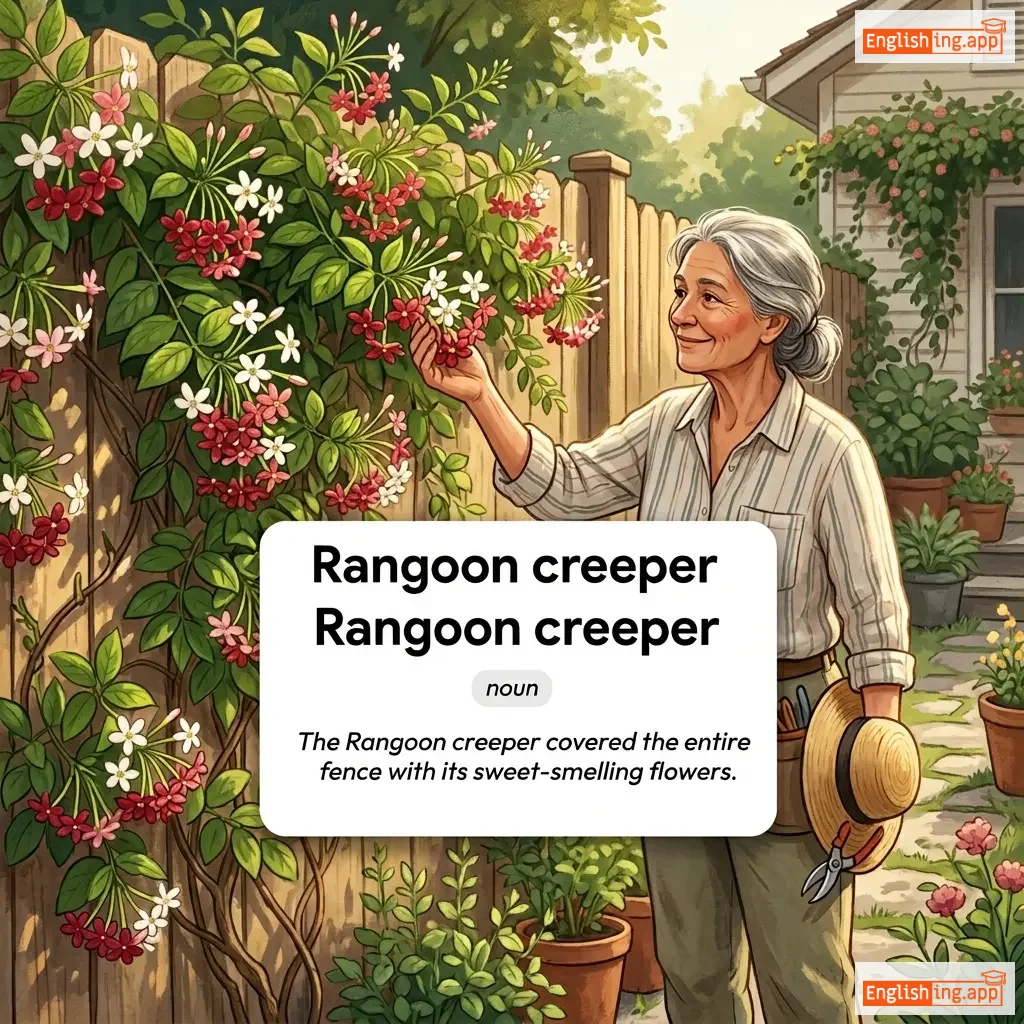
Rangoon creeper definition card — visual illustration of the meaning
noun C2
/ræŋˈɡuːn ˈkriːpər/
Рангон Крипер (Rangon Kriper)

A climbing vine with fragrant flowers that change color from white to pink to red

"The Rangoon creeper covered the entire fence with its sweet-smelling flowers."

"Рангон Крипер покрывал весь забор своими сладко пахнущими цветами." (Rangon Kriper pokryval ves' zabor svoimi sladko pakhnushchimi tsvetami.)
verb C2
/ˈræŋ.kəl/
досаждать (dosazhdat')

To cause continuing annoyance or resentment.

"His unfair criticism continued to rankle her for days."

"Его несправедливая критика продолжала раздражать её в течение нескольких дней." (Ego nespravedlivaya kritika prodolzhala razdrazhat' yejo v techeniye neskol'kikh dney.)
adjective C2
/rəˈpeɪ.ʃəs/
жадный (zhadny)

having an extreme desire to take things for oneself, greedy

"The rapacious landlord raised the rent without reason."

"Жадный арендодатель поднял аренду без причины." (Zhadny arendodatel' podnyal arendu bez prichiny.)
noun C2
/ˈræp.aɪn/
разбой (razboy)

the violent seizure of someone's property

"The war was marked by rapine and destruction."

"Война была отмечена разбоем и разрушениями." (Voyna byla otmechena razboem i razrusheniyami.)
noun C2
/ˌræproʊʃˈmɑːn/
приближение (priblizhenie)

The establishment or resumption of harmonious relations.

"The two countries signed an agreement that marked a new rapprochement."

"Две страны подписали соглашение, которое ознаменовало новое приближение." (Dve strany podpisali soglashenie, kotoroe oznamenovalo novoe priblizhenie.)
noun C2
/ræpˈskæliən/
озорной человек (ozornoy chelovek)

A mischievous or cheeky person; a rascal.

"The little rapscallion hid his brother’s shoes as a prank."

"Маленький рапскалион спрятал туфли своего брата, устроив розыгрыш." (Malen'kiy rapscallion spryatal tufli svoego brata, ustroiv rozygrysh.)
adjective C2
/ræpˈtɔːriəl/
хищный (khishchnyy)

Relating to birds of prey or predatory behavior.

"The eagle is a raptorial bird with sharp talons."
"Орёл — это хищная птица с острыми когтями." (Oryol – eto khishchnaya ptitsa s ostryimi kogtyami.)
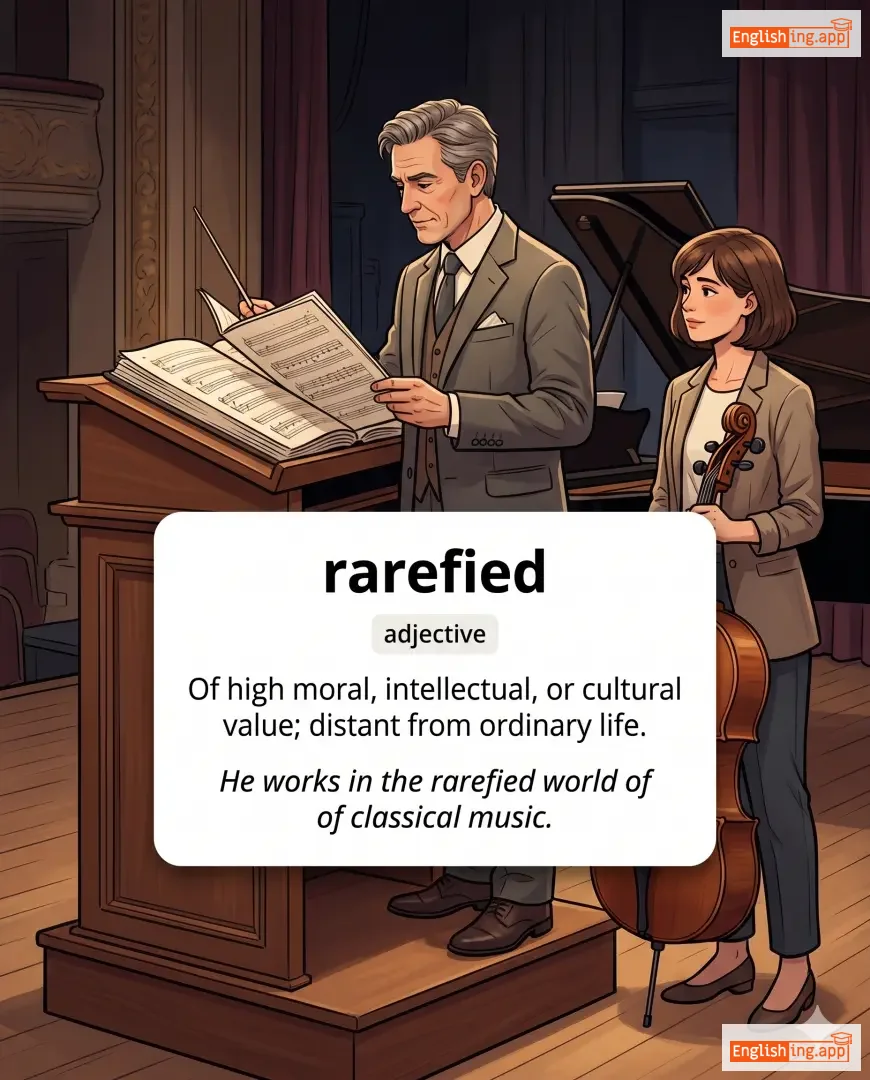
rarefied definition card — visual illustration of the meaning
adjective C2
/ˈreə.rɪ.faɪd/
возвышенный (rarefied)

Of high moral, intellectual, or cultural value; distant from ordinary life.

"He works in the rarefied world of classical music."

"Он работает в возвышенном мире классической музыки." (On rabotaet v vozvyshennom mire klassicheskoy muzyki.)
verb C2
/ˈreə.rɪ.faɪ/
разжижать, очищать (razhizhat', ochishchat')

To make something less dense or more refined.

"The air rarefies as you climb higher into the mountains."

"Воздух разжижается по мере того, как вы поднимаетесь выше в горах." (Vozdukh razhizhaetsya po mere togo, kak vy podnimayetes' vyshe v gorakh.)
noun C2
/ˌræʃioʊsɪˈneɪʃən/
рационализация (ratsionalizatsiya)

the process of reasoning or logical thinking

"His ratiocination impressed the judges during the debate."

"Его рационализация впечатлила судей во время дебатов." (Yego ratsionalizatsiya vpechatlila sudey vo vremya debatov.)
noun C2
/ˈræʃənəlɪzəm/
рационализм (ratsionalizm)

a belief or theory that opinions and actions should be based on reason and knowledge rather than religious belief or emotion

"Rationalism emphasizes logic and reasoning over faith."

"Рационализм подчеркивает логику и рассуждения, а не веру." (Ratsionalizm podcherkivayet logiku i rassuzhdeniya, a ne veru.)
verb C2
/ˈrævəl/
запутывать / распутывать (zaputyvat' / rasputyvat')

to tangle or complicate; to untangle or unravel depending on context

"She began to ravel the loose threads of the sweater."

"Она начала развязывать свободные нити свитера." (Ona nachala razvyazyvat' svobodnye niti svitera.)
adjective C2
/ˈrævənɪŋ/
голодный и жадный (golodnyy i zhadnyy)

Extremely hungry and greedy; voracious.

"The ravening wolves circled the camp."

"Голодные волки окружили лагерь." (Golodnye volki okruzili lagery.)
verb C2
/ˈrævɪʃ/
очаровывать (ocharovyvat)

To fill with intense delight; to captivate or enchant.

"The beauty of the sunset ravished the travelers."

"Красота заката очаровала путешественников." (Krasota zakata ocharovala puteshestvinnikov.)
noun C2
/riːm/
пачка (pachka)

A large quantity of paper (typically 500 sheets); informally, a large amount of something.

"The office ordered ten reams of paper."

"Офис заказал десять пачек бумаги." (Ofis zakazal desyat' pachek bumagi.)
noun C2
/ˈriːbəs/
ребус (rebus)

a puzzle in which words are represented by pictures, symbols, or letters

"The children enjoyed solving the rebus puzzles in the magazine."
"Дети наслаждались разгадыванием ребусов в журнале." (Deti naslazhdalis' razgadyvaniem rebusov v zhurnale.)
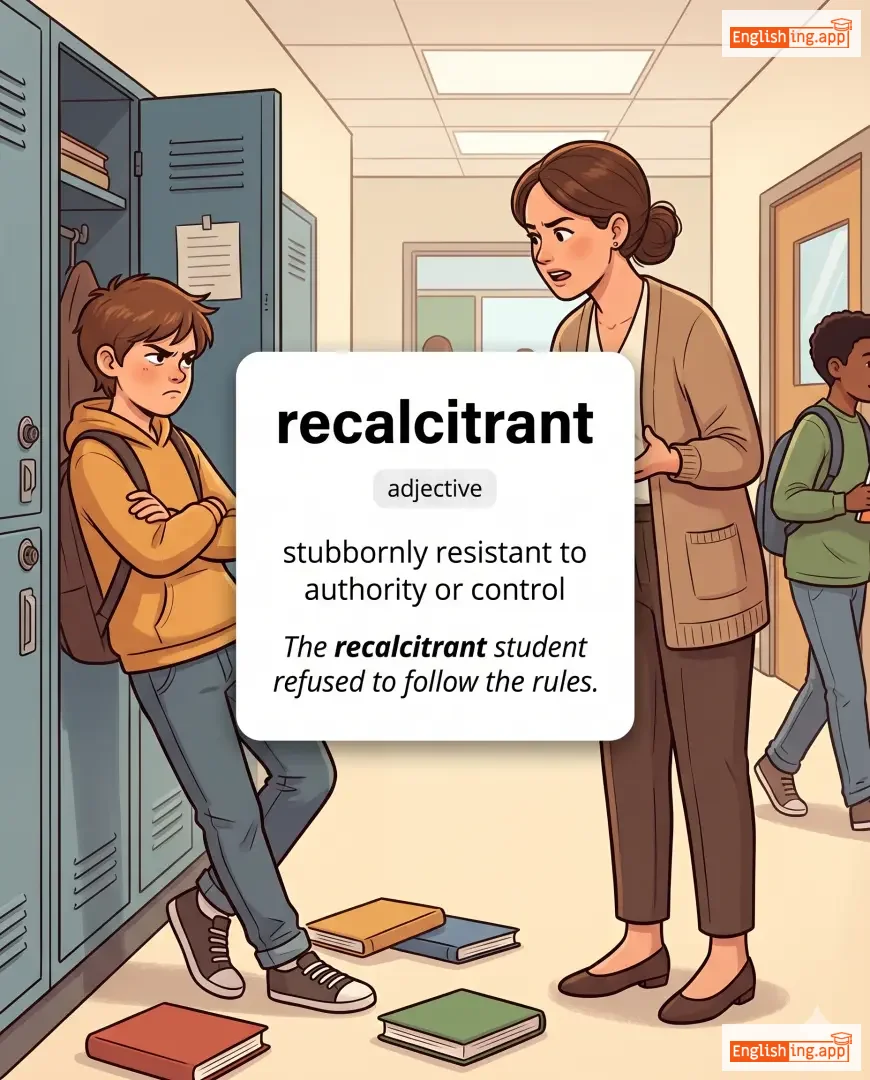
recalcitrant definition card — visual illustration of the meaning
adjective C2
/rɪˈkælsɪtrənt/

stubbornly resistant to authority or control

"The recalcitrant student refused to follow the rules."

recant definition card — visual illustration of the meaning
verb C2
/rɪˈkænt/
отрекаться (otrekat'sya)

to withdraw or renounce a statement or belief formally

"He recanted his previous statement in court."
"Он отрекся от своего предыдущего заявления в суде." (On otreksya ot svoego predydushchego zayavleniya v sude.)
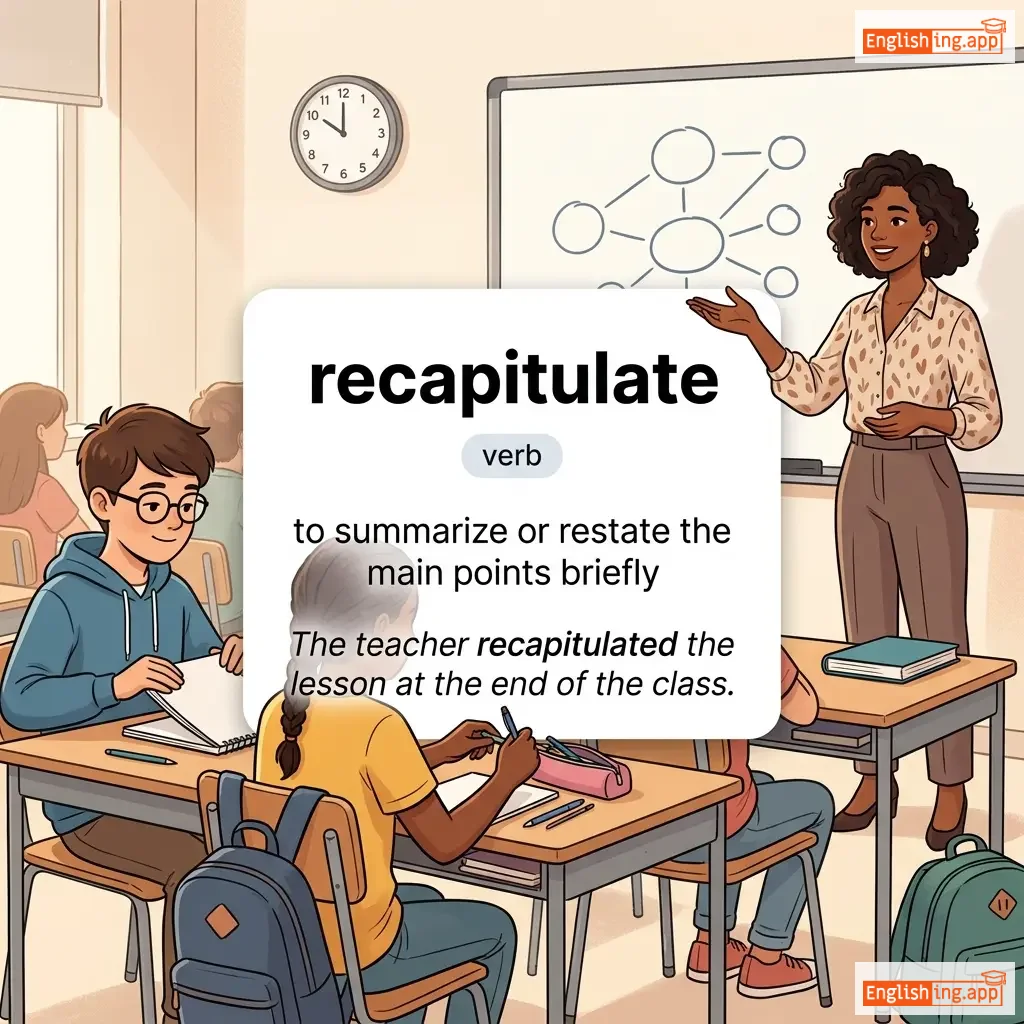
recapitulate definition card — visual illustration of the meaning
verb C2
/ˌriːkəˈpɪtjʊleɪt/
резюмировать (rezumirovat')

to summarize or restate the main points briefly

"The teacher recapitulated the lesson at the end of the class."

"Учитель рекэпитулировал урок в конце класса." (Uchitel' rekeptuliroval urok v kontse klassa.)
noun C2
/ˌriːkəˌpɪtjʊˈleɪʃən/
рекапитуляция (rekapitulyatsiya)

The act of summarizing or repeating the main points of something.

"The professor gave a brief recapitulation of the lecture before ending the class."

"Профессор дал краткое резюме лекции перед тем, как закончить занятие." (Professor dal kratkoye rezyume lektsii pered tem, kak zakonchit' zanyatiye.)
adjective C2
/rəˈʃɛrʃ/
редкий (redkiy)

Rare, exotic, or obscure, often in a sophisticated or refined way.

"The gallery displayed many recherche artworks from unknown artists."

"Галерея представила много редких произведений искусства неизвестных художников." (Galereya predstavila mnogo redkikh proizvedeniy iskusstva neizvestnykh khudozhnikov.)
noun C2
/rɪˈsɪdɪˌvɪzəm/
рецидивизм (retsidivizm)

The tendency of a convicted criminal to reoffend or relapse into criminal behavior.

"The government introduced new programs to reduce recidivism among former inmates."

"Правительство внедрило новые программы по снижению рецидивизма среди бывших заключённых." (Pravitelstvo vnedrilo novye programmy po snizheniyu retsidivizma sredi byvshikh zaklyuchennykh.)
noun C2
/rɪˈsɪdɪvɪst/
рецидивист (retsidivist)

A person who repeatedly commits crimes, especially after having been punished.

"The police identified him as a recidivist who had been arrested several times before."

"Полиция идентифицировала его как рецидивиста, которого арестовывали несколько раз ранее." (Politsiya identifitsirovala ego kak retsidivista, kotorogo arestovyvali neskol'ko raz ranee.)
verb (archaic/rare) C2
/rɛk/
заботиться (zabotitsya)

To care about or be concerned with (something); to have regard for.

"He does not reck the dangers of his actions."

"Он не заботится о опасностях своих действий." (On ne zabotitsya o opasnostyakh svoikh deystviy.)
noun C2
/ˈrɛkluːsəri/
место уединения (mesto uedineniya)

A place for seclusion or retreat, especially for a recluse or hermit.

"The monk spent years in the reclusory away from society."

"Монах провел годы в уединении вдали от общества." (Monakh provel gody v uedineniya vdali ot obshchestva.)
noun C2
/rɪˈkɒɡnɪzəns/
юридическое обязательство (yuridicheskoe obyazatelstvo)

A legal obligation or bond entered into before a court, especially to ensure future appearance.

"He was released on his own recognizance."

"Его освободили под его собственное юридическое обязательство." (Ego osvobodili pod ego sobstvennoe yuridicheskoe obyazatelstvo.)
noun/verb C2
/ˈrɛkəmˌpɛns/
компенсация (kompensatsiya)

to compensate someone for loss or harm suffered; compensation given for damage or injury

"The company offered financial recompense to the injured worker."

"Компания предложила финансовую компенсацию пострадавшему работнику." (Kompaniya predlozhila finansovuyu kompensatsiyu postradavshhemu rabotniku.)
adjective C2
/ˈrɛkənˌsaɪləbl̩/
примиримый (rekonsilabl)

Capable of being resolved or made consistent.

"Their differences are reconcilable with honest communication."
"Их различия примиримы при честном общении." (ikh razlichiya primirimy pri chestnom obshchenii)
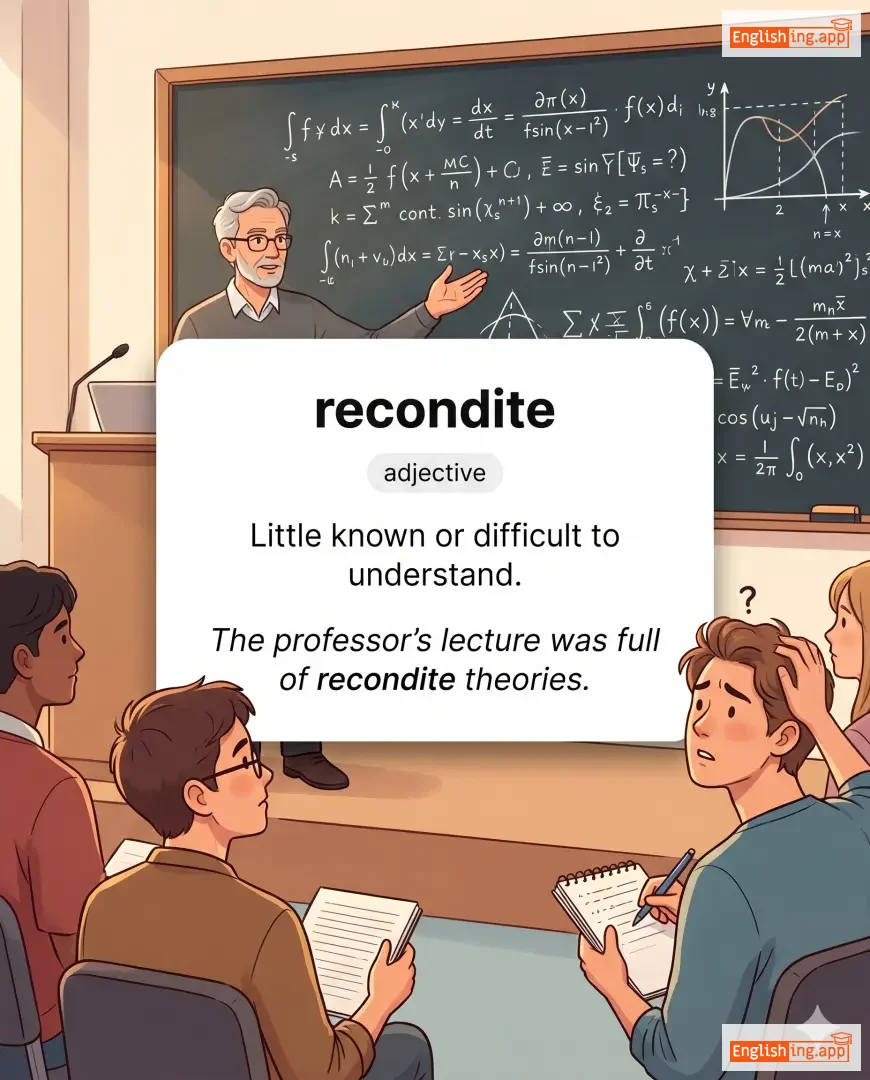
recondite definition card — visual illustration of the meaning
adjective C2
/ˈrɛkənˌdaɪt/ or /ˈrɛkəndaɪt/
малоизвестный или трудный для понимания (maloizvestnyy ili trudnyy dlya ponimaniya)

Little known or difficult to understand.

"The professor’s lecture was full of recondite theories."

"Лекция профессора была полна трудных для понимания теорий." (Lektsiya professora byla polna trudnykh dlya ponimaniya teory.)
verb C2
/ˌriː.kəˈnɔɪ.tər/
разведка (razvedka)

to make a preliminary inspection or survey, especially of an area for military or strategic purposes

"The soldiers reconnoitered the area before advancing."

"Солдаты осмотрели территорию перед наступлением." (Soldaty osmotreli teritoriyu pered nastupleniem.)
adjective C2
/ˈrɛkriənt/
трус, предатель (trus, predatel')

cowardly or unfaithful to duty

"The recreant soldier abandoned his post in fear."

"Трус солдат покинул свой пост из страха." (Trus soldat pokinul svoy post iz strakha.)
noun C2
/rɪˌkrɪmɪˈneɪʃən/
взаимные обвинения (vzaimnye obvinenija)

an accusation made in response to an accusation; mutual blaming

"The debate quickly descended into mutual recriminations."

"Дебаты быстро перешли в взаимные обвинения." (Debaty bystro pereshli v vzaimnye obvinenija.)
verb C2
/ˌriːkruːˈdɛs/
вспыхнуть снова (vspykhnut' snova)

to break out or appear again after a period of dormancy or decline

"After months of calm, violence recrudesced in the region."

"После месяцев спокойствия насилие снова проявилось в регионе." (Posle mesyatsev spokoystviya nasiliye snova proyavilos' v regione.)
noun C2
/ˌriːkruːˈdɛsəns/
рекрудесценция (rekrudesentsiya)

a new outbreak or revival of something that had subsided, especially an undesirable condition

"Health officials warned of a recrudescence of measles in several districts."

"Сотрудники здравоохранения предупредили о повторном всплеске кори в нескольких районах." (Sotrudniki zdravookhraneniya predupredili o povtornom vspleske kori v neskol'kikh rayonakh.)
adjective C2
/ˌriːkruːˈdɛsənt/
рецидивирующий (retsidiviruyushchiy)

reviving or breaking out again after a period of abatement

"Recrudescent tensions threatened the fragile ceasefire."
"Рецидивирующие напряжения угрожали хрупкому перемирию." (Retsidiviruyushchiesya napryazheniya ugrozhali khrupkomu peremiriyu.)
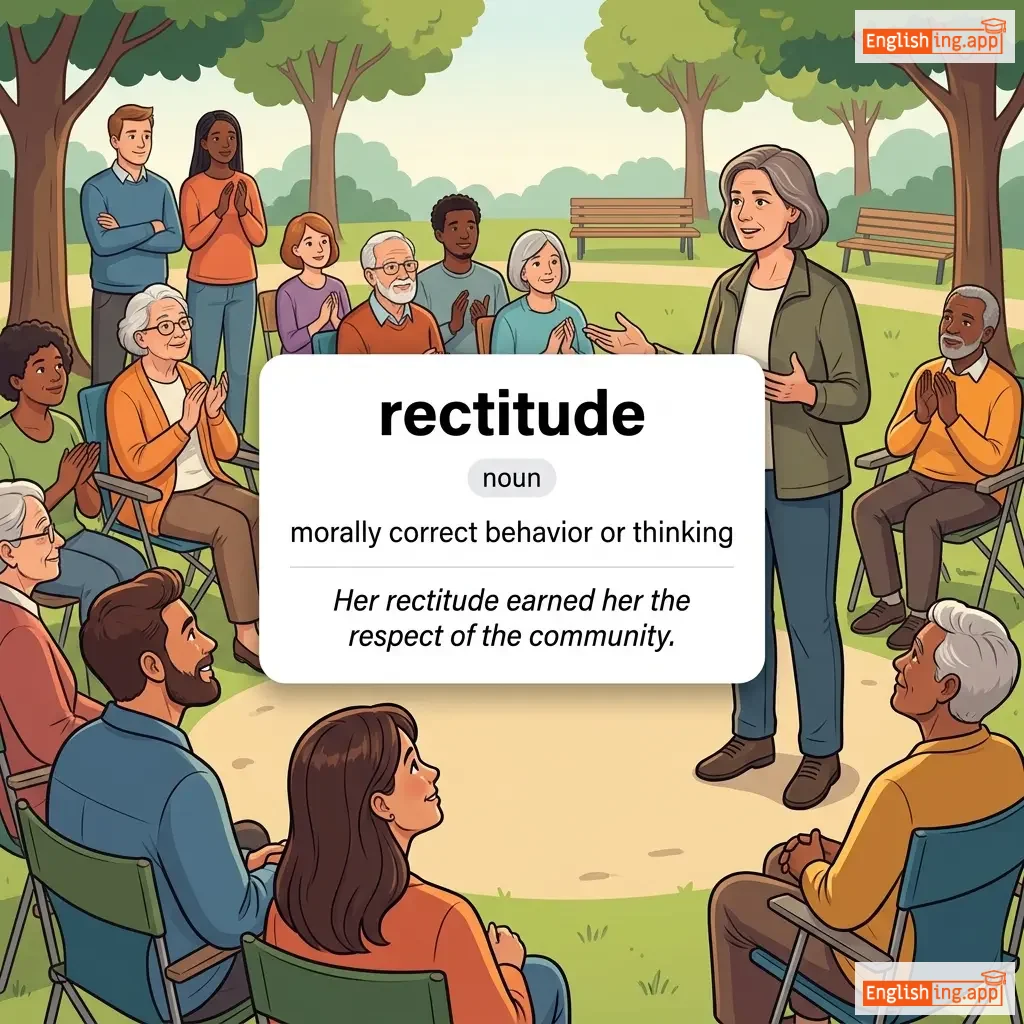
rectitude definition card — visual illustration of the meaning
noun C2
/ˈrɛktɪtjuːd/
добродетель (dobrodetel)

morally correct behavior or thinking

"Her rectitude earned her the respect of the community."

"Её добродетель принесла ей уважение в сообществе." (Yeyo dobrodetel' prinesla yey uvaženie v soobshchestve.)
adjective C2
/rɪˈkʌmbənt/
лежащий (lezhashchiy)

lying down or in a resting position

"He was found recumbent on the sofa after a long day."

"Он был найден лежащим на диване после долгого дня." (On byl nayden lezhashchim na divane posle dolgogo dnya.)
verb C2
/rɪˈkjʊə/
лечить снова (lechit' snova)

to cure again; to remedy a second time

"The doctor had to recure the wound after it reopened."

"Доктору нужно было снова вылечить рану, когда она снова открылась." (Doktoru nuzhno bylo snova vylechit' ranu, kogda ona snova otkrylas'.)
noun C2
/ˈrɛkjʊzənt/
непокорный (nepokornyj)

a person who refuses to submit to authority or comply with rules

"The recusant opposed the new law."
"Непокорный выступил против нового закона." (Nepokornyj vystupil protiv novogo zakona.)
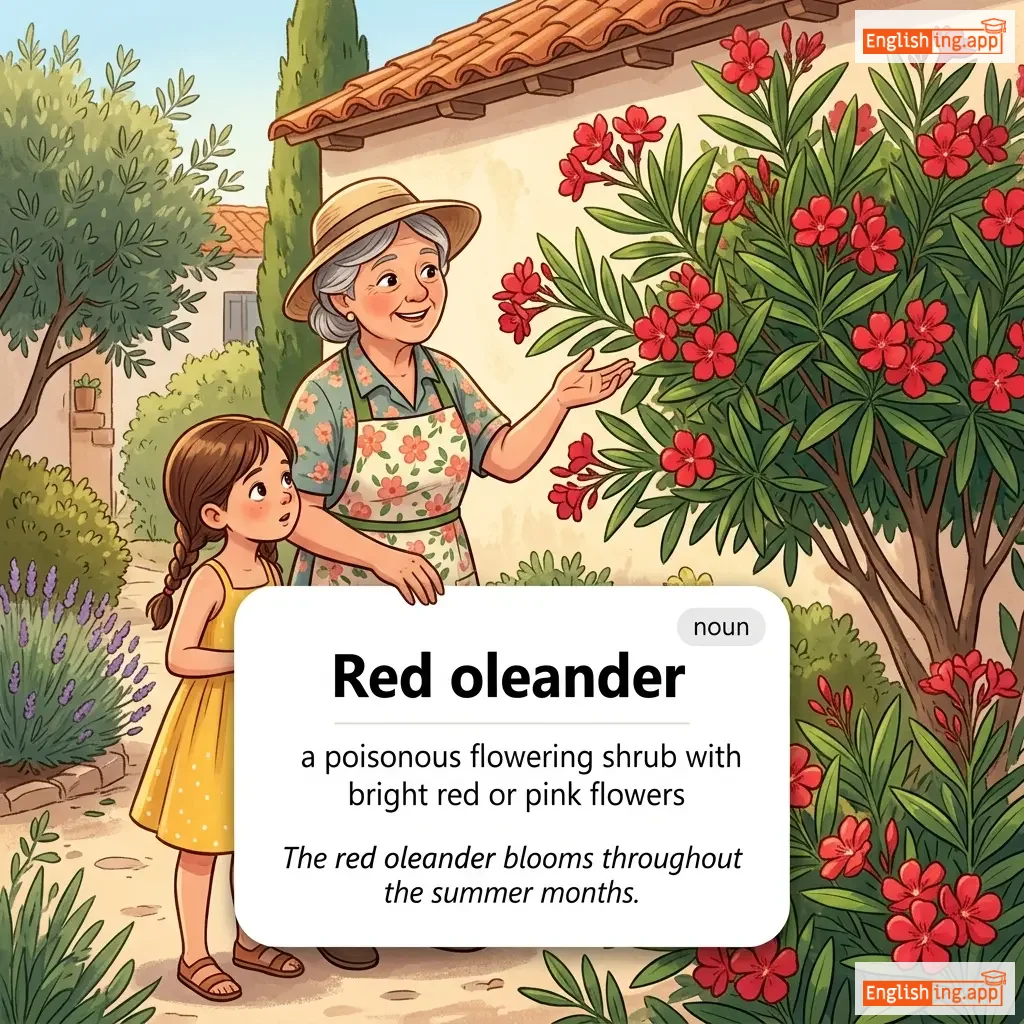
Red oleander definition card — visual illustration of the meaning
noun C2
/red ˌəʊ.liˈæn.dər/
красный олеандр (krasnyy oleandr)

a poisonous flowering shrub with bright red or pink flowers

"The red oleander blooms throughout the summer months."

"Красный олеандр цветет все лето." (Krasnyy oleandr tsvetet vse leto.)
noun C2
/ˈrɛd.ə.ləns/
аромат (aromat)

a pleasant smell or the quality of suggesting something strongly

"The redolence of jasmine filled the evening air."

"Аромат жасмина наполнил вечерний воздух." (Aromat zhasmina napolnil vecherniy vozdukh.)
adjective C2
/ˈrɛd.ələnt/

having a strong pleasant smell; strongly reminiscent or suggestive of something

"The kitchen was redolent of spices and fresh herbs."

adjective C2
/rɪˈdaʊ.tə.bəl/
ужасный/внушающий уважение (uzhasnyj/vnushayushchij uvazhenie)

formidable, especially as an opponent; inspiring fear or respect

"She was a redoubtable leader who commanded respect from all."

"Она была ужасным лидером, который пользовался уважением всех." (Ona byla uzhasnym liderom, kotoryj pol'zovalsya uvaženiem vsekh.)
verb C2
/rɪˈdaʊnd/
способствовать (sposobstvovat')

to contribute greatly to a result or consequence, usually beneficial

"His hard work will redound to the success of the company."

"Его усердная работа принесет успех компании." (Yego usyerdnaya rabota prinesyot uspekhi kompaniyi.)
adjective C2
/rɪˈdjuːsəbl̩/

capable of being simplified, lessened, or made smaller

"The problem is complex but reducible to a few basic principles."

noun C2
/rɪˈfɛkʃən/
прием пищи / еда (priem pishchi / yeda)

a meal or the act of taking food and drink

"The monks gathered for their evening refection."

"Монахи собрались для вечернего приема пищи." (Monakhi sobralis dlya vechernyego priema pishchi.)
noun C2
/rɪˈfɛktəri/
столовая (stolovaya)

a dining hall, especially in a monastery, convent, or school

"Students had lunch in the refectory."

"Студенты обедали в столовой." (Studenty obedali v stolovoy.)
adjective C2
/rɪˈfɛrəbəl/
реферируемый (referiruemyj)

able to be related or directed to something

"The issue is referable to the new policy changes."

"Этот вопрос можно отнести к изменениям в новой политике." (Eto vopros mozhno otnesti k izmeneniyam v novoj politike.)
adjective C2
/rɪˈflɛktɪbəl/
отражаемый (otrazhaemyy)

capable of being reflected, as light or an image

"The surface of the lake is highly reflectible in the morning sun."

"Поверхность озера сильно отражается на утреннем солнце." (Poverkhnost' ozera sil'no otrezhayetsya na utrehnem solntse.)