語彙集

英単語辞書 | 単語の意味、定義、例文

adjective C2
/ˈɒfɪʃ/
अलहदा (alhda)

Unfriendly, distant, or reserved in manner.

"He seemed offish at the party and avoided most conversations."

"वह पार्टी में अलहदा सा लग रहा था और अधिकांश बातचीत से बच रहा था।" (Vah party mein alhda sa lag raha tha aur adhikansh baatcheet se bach raha tha.)
verb C2
/ˈoʊɡəl/
घूरना (ghurna)

To look at someone with obvious sexual interest.

"He kept ogling the models on the runway."

"वह रनवे पर मॉडल्स को घूरता रहा।" (Wah runway par models ko ghoorta raha.)
noun C2
/ˈoʊɡər/
दानव (ohgr)

A mythical monster, often depicted as large, hideous, and cruel; metaphorically, a cruel or terrifying person.

"The villagers feared the ogre who lived in the dark forest."
"गांव के लोग अंधेरे जंगल में रहने वाले ओग्रे से डरते थे." (gaanv ke log andhere jangal me rehne wale ogre se dar te the)
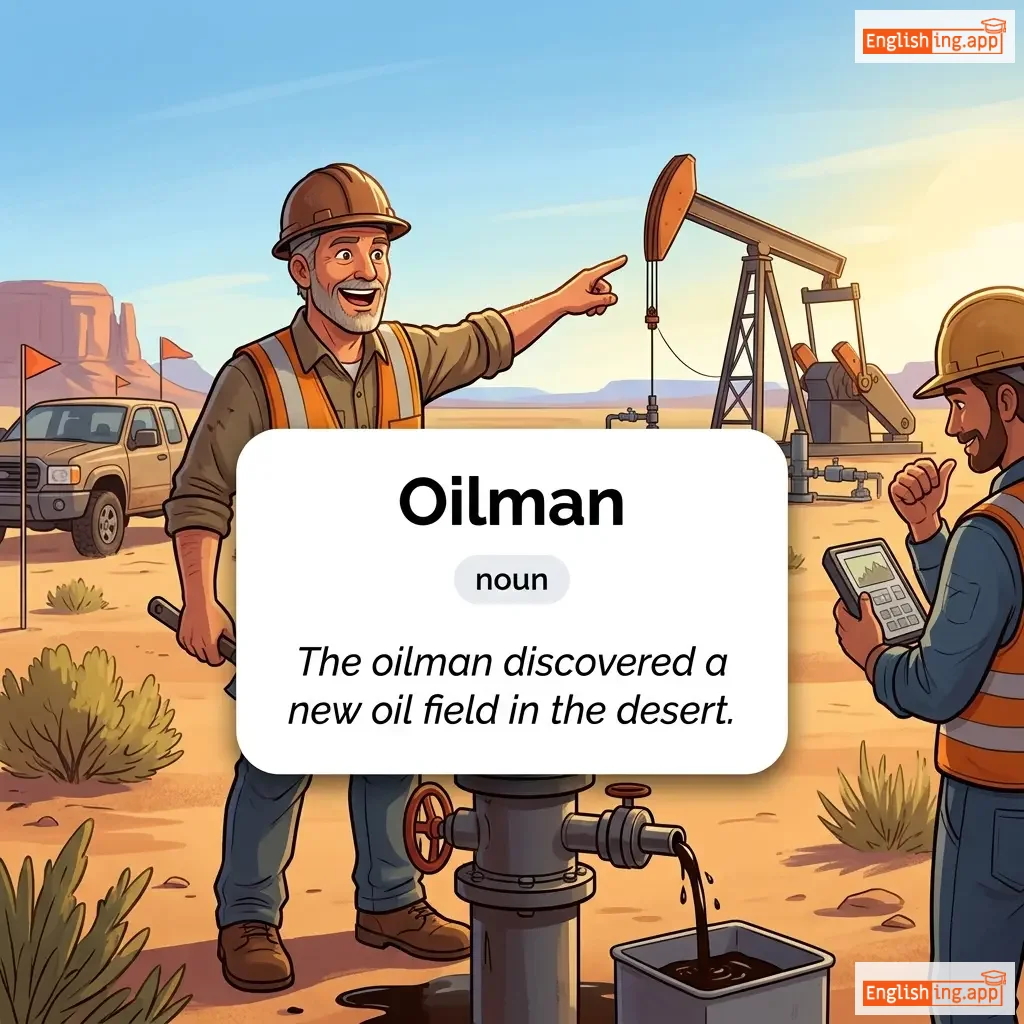
Oilman definition card — visual illustration of the meaning
noun C2
/ˈɔɪl.mən/
तेलवाला (telwala)

a person who works in the oil industry; someone who sells oil or petroleum products

"The oilman discovered a new oil field in the desert."
"तेलवाले ने रेगिस्तान में एक नया तेल क्षेत्र खोजा।" (telwale ne registan mein ek naya tel kshetra khoja.)
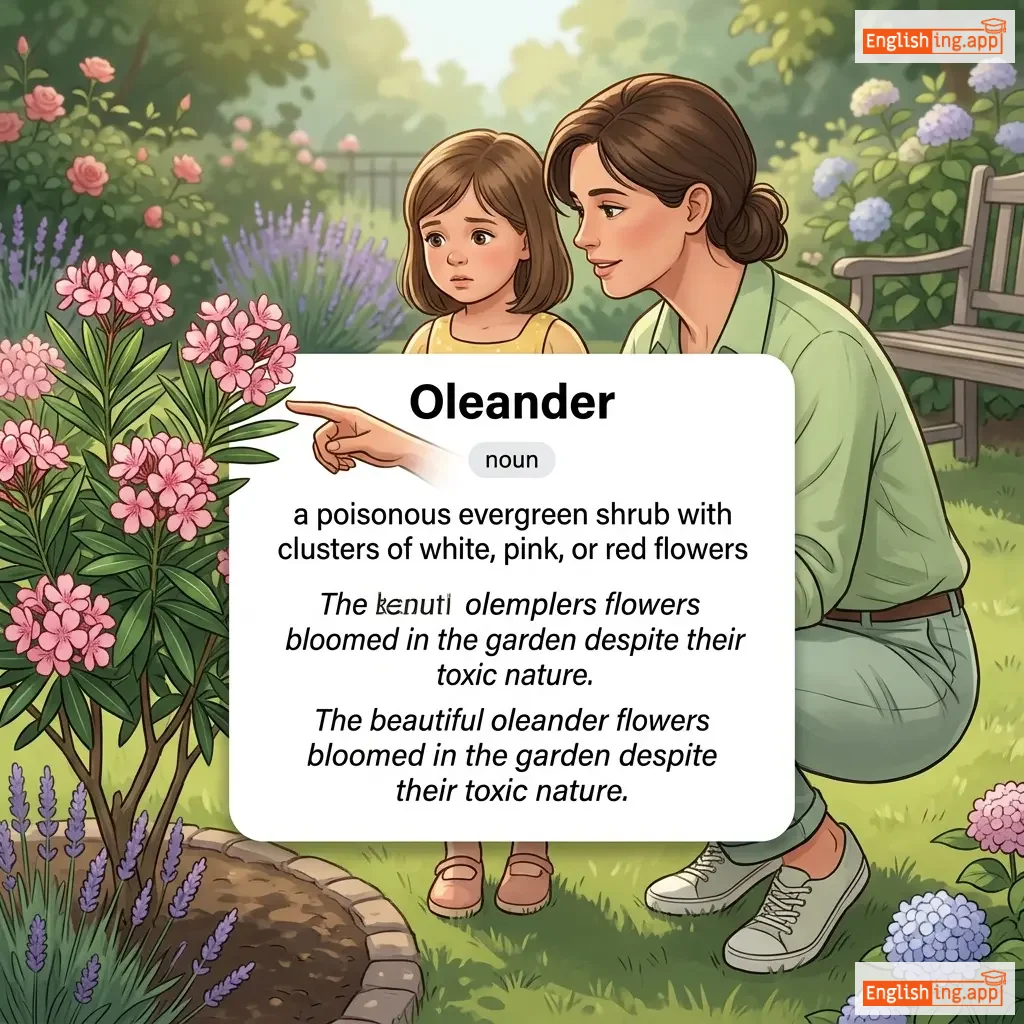
Oleander definition card — visual illustration of the meaning
noun C2
/oʊliˈændər/
ओलियंडर (oliyandar)

a poisonous evergreen shrub with clusters of white, pink, or red flowers

"The beautiful oleander flowers bloomed in the garden despite their toxic nature."

"सुंदर ओलियंडर फूल बगिया में खिल रहे थे, बावजूद इसके कि उनका जहरीला स्वभाव था।" (sundar olijandar phool bagiya mein khil rahe the, bajood iske ki unka jahreela swabhav tha)
noun C2
/ɑːlˈfækʃən/
घ्राण (ghran)

The sense of smell; the process of detecting and perceiving odors.

"Dogs have a highly developed sense of olfaction."
"कुत्तों का घ्राण बहुत विकसित होता है।" (Kutton ka ghran bahut viksit hota hai.)
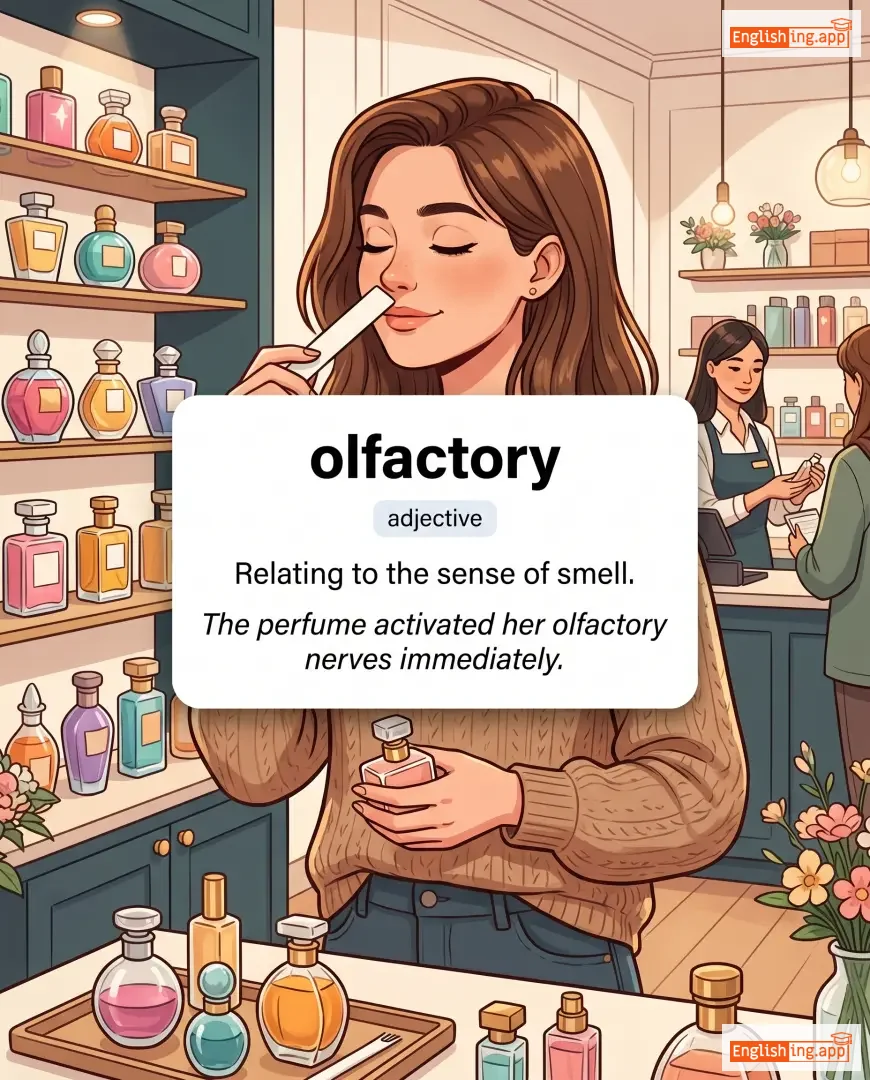
olfactory definition card — visual illustration of the meaning
adjective C2
/ɑːlˈfæktəri/
घ्राण-संबंधी (olfactory)

Relating to the sense of smell.

"The perfume activated her olfactory nerves immediately."
"खुशबू ने उसकी घ्राण-तंत्रिकाओं को तुरंत सक्रिय कर दिया।" (khushboo ne uski ghraan-tantrikaon ko turant sakriya kar diya.)
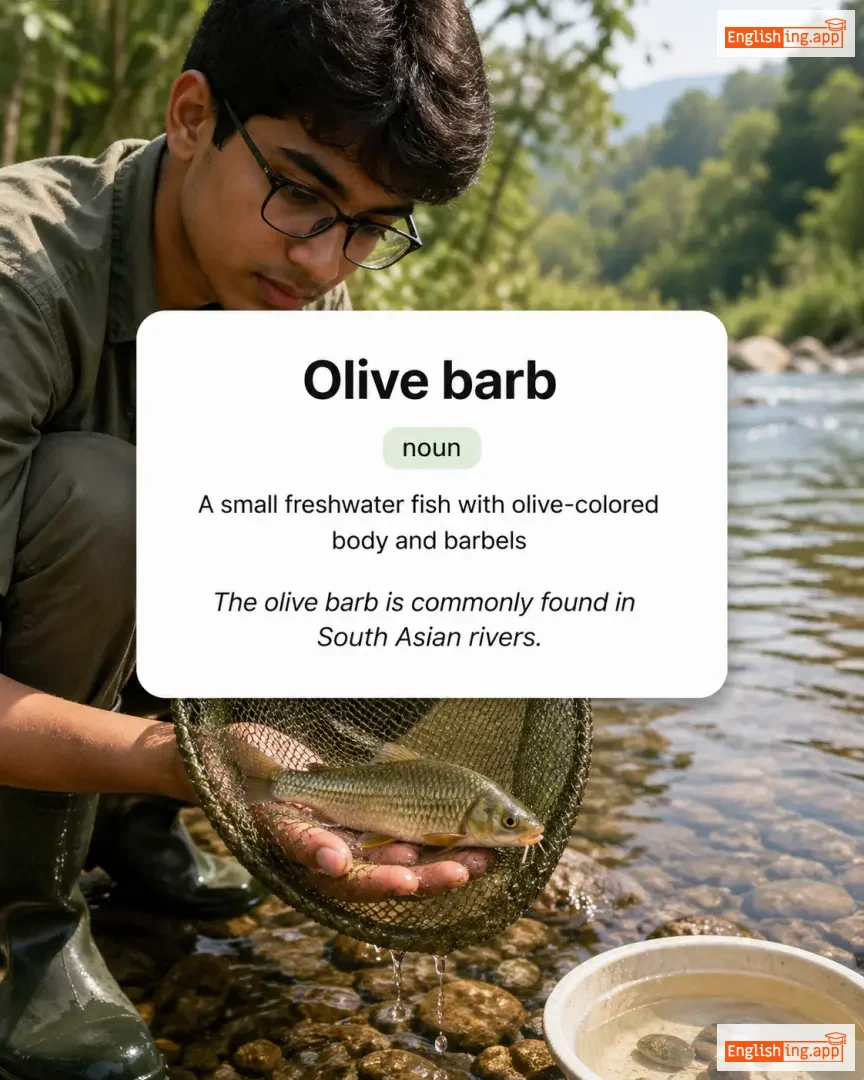
Olive barb definition card — visual illustration of the meaning
noun C2
/ˈɒlɪv bɑːb/
सारपुती मछली (saraputi machhli)

A small freshwater fish with olive-colored body and barbels

"The olive barb is commonly found in South Asian rivers."

"सारपुती मछली आमतौर पर दक्षिण एशियाई नदियों में पाई जाती है।" (saraputi machhli aamtaur par dakshin ashiyaai nadiyon mein pai jaati hai)
noun C2
/ˈɒlɪv brɑːntʃ/
ऑलिव ब्रांच (olive branch)

A symbol of peace or reconciliation; an offer to end conflict.

"He extended an olive-branch to his rival after years of hostility."

"वह सालों की शत्रुता के बाद अपने प्रतिद्वंद्वी को ऑलिव ब्रांच बढ़ाकर शांति का प्रस्ताव करता है।" (Vah salon ki shatruta ke baad apne pratidvandi ko olive branch badhakar shanti ka prastav karta hai.)
noun C2
/ɒmˈnɪpətəns/
असीम शक्ति (aseem shakti)

The quality of having unlimited power or authority.

"Many religions describe God’s omnipotence as absolute."
"कई धर्मों में भगवान की असीम शक्ति को पूर्ण रूप से निरूपित किया गया है।" (Kai dharmon mein bhagwan ki aseem shakti ko poorn roop se nirupit kiya gaya hai.)
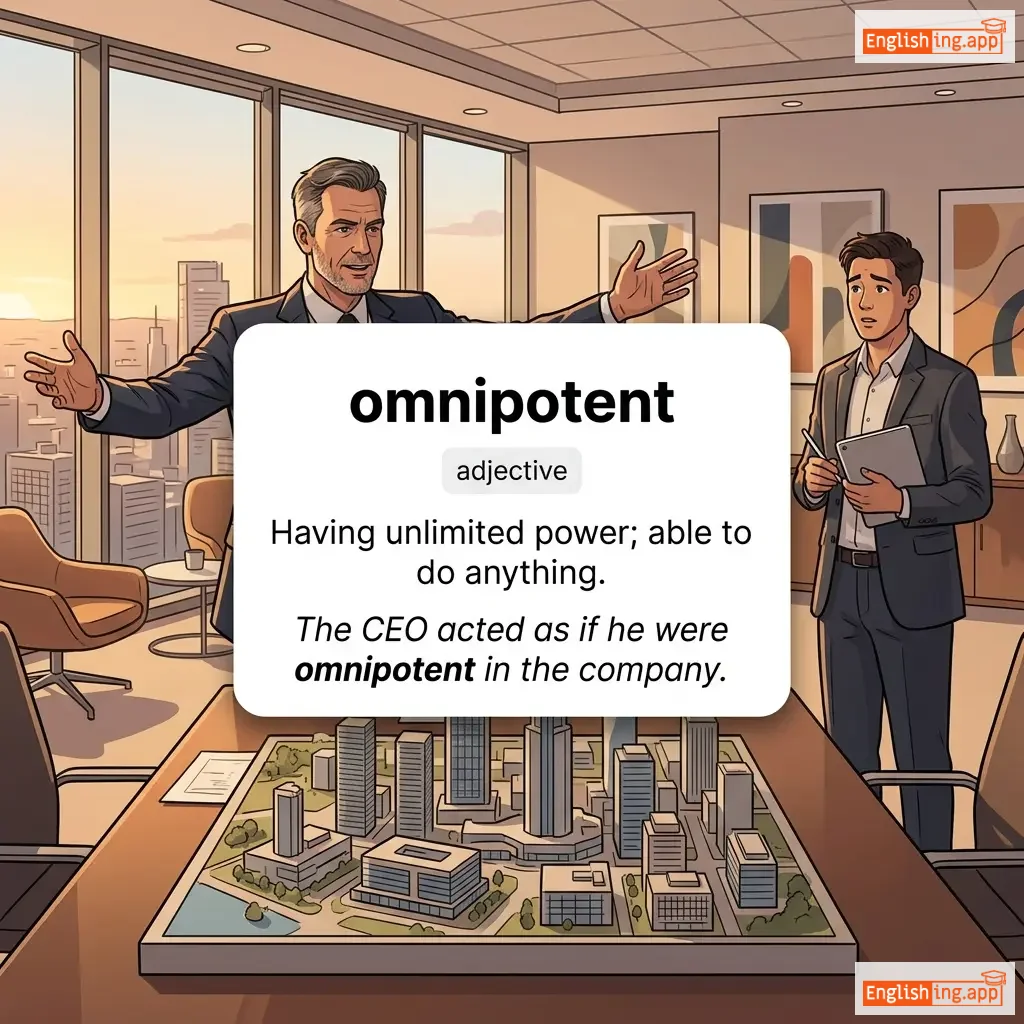
omnipotent definition card — visual illustration of the meaning
adjective C2
/ɒmˈnɪpətənt/
सर्वशक्तिमान (sarvashaktimaan)

Having unlimited power; able to do anything.

"The CEO acted as if he were omnipotent in the company."

"सीईओ ने ऐसा व्यवहार किया जैसे वह कंपनी में सर्वशक्तिमान हों।" (CEO ne aisa vyavhaar kiya jaise woh company mein sarvashaktimaan hon.)
noun C2
/ɒmˈnɪʃəns/
सर्वज्ञता (sarvagyata)

the state of knowing everything

"The novel's narrator has an air of omniscience, revealing every character's thoughts."

"उपन्यास का वर्णनकर्ता सर्वज्ञता रखता है, जो हर चरित्र के विचार दिखाता है।" (upanyas ka varnanakartaa sarvagyata rakhta hai, jo har charitra ke vichar dikhaata hai.)
adjective C2
/ɒmˈnɪʃənt/
सर्वज्ञ (sarvagya)

having complete or unlimited knowledge and awareness

"Some religions describe God as omniscient and all-powerful."
"कुछ धर्म ईश्वर को सर्वज्ञ और सर्वशक्तिमान के रूप में वर्णित करते हैं।" (Kuch dharm Ishwar ko sarvagya aur sarvashaktimaan ke roop mein varnit karte hain.)
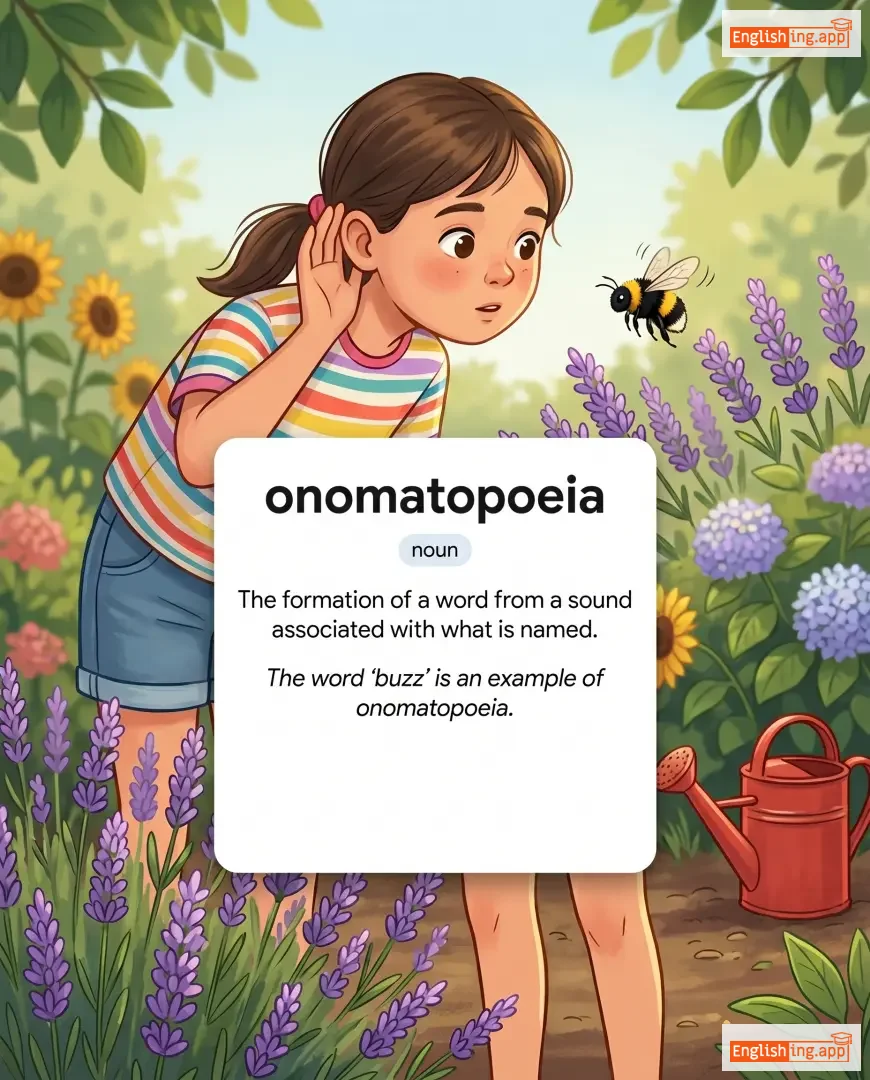
onomatopoeia definition card — visual illustration of the meaning
noun C2
/ˌɒn.əˌmæt.əˈpiː.ə/
ध्वन्यात्मक अनुकरण (dhvanyatmak anukaran)

The formation of a word from a sound associated with what is named.

"The word 'buzz' is an example of onomatopoeia."

"'बज़' शब्द ऑनॉमेटोपोइया का एक उदाहरण है।" ('baj' shabd onomatopoiya ka ek udaharan hai.)
noun C2
/ˈɒn.rʌʃ/
सहज प्रवाह (sahaj prabaha)

A sudden powerful forward or downward rush or flow.

"The onrush of water swept away the bridge."

"पानी का अचानक प्रवाह पुल को बहा ले गया।" (Pani ka achanak prabaha pul ko baha le gaya.)
noun C2
/ˌoʊpəˈlɛsəns/
दूधिया चमक (doodhiya chamak)

a milky or pearly appearance of a surface like that of an opal

"The pearl had a gentle opalescence under the light."

"मुक्ता के नीचे एक हल्की दूधिया चमक थी।" (Muktā ke neeche ek halki doodhiya chamak thi.)
adjective C2
/ˌoʊpəˈlɛsənt/
दूध जैसा चमकदार (doodh jaisa chamakdaar)

showing or reflecting a milky, iridescent light like an opal

"The opalescent sky glowed with shades of pink and blue."

"दूध जैसा चमकदार आकाश गुलाबी और नीले रंगों में चमक रहा था।" (Doodh jaisa chamakdaar aakash gulaabi aur neele rangon mein chamak raha tha.)
adjective C2
/ˈoʊ.pən ˈhæn.dɪd/
उदार; उदारवादी; (udar; udarvadi)

Generous; liberal; giving freely;

"He is very open-handed with his money and always helps those in need."

"वह अपने पैसों के मामले में बहुत उदार है और हमेशा जरूरतमंदों की मदद करता है।" (vah apne paison ke mamle mein bahut udar hai aur hamesha zaruratmandon ki madad karta hai。)
adjective C2
/ˈoʊ.pən ˈhɑrt.ɪd/
उदार; सच्चा और ईमानदार; गर्मजोशी से स्वागत करने वाला; (udar; sachcha aur imaandaar; garmjoshi se swaagat karne wala;)

Kind and generous; sincere and honest; warmly receptive;

"She welcomed the strangers with an open-hearted smile and invited them for dinner."

"उसने अजनबियों का खुले दिल से स्वागत किया और उन्हें रात के खाने के लिए आमंत्रित किया।" (usne ajnabiyon ka khule dil se swaagat kiya aur unhe raat ke khane ke liye aamntrit kiya.)
noun C2
/ˌɒpəˈrɛtə/
हल्का प्रकार का ओपेरा (halkā prakār kā operā)

a short opera with light and humorous themes

"The theater staged a famous operetta by Gilbert and Sullivan."

"थिएटर ने गिल्बर्ट और सुलिवान का एक प्रसिद्ध हल्का ओपेरा मंचित किया।" (Thīyēṭar nē Gilbert aur Sullivan kā ēk prasiddh halkā operā manchit kiyā.)
noun C2
/ˈoʊpiət/

a drug containing opium or its derivatives, used to relieve pain or cause sleep

"The doctor prescribed an opiate to relieve the patient's pain."

verb C2
/oʊˈpaɪn/
राय व्यक्त करना (raay vyakt karna)

to express an opinion or belief

"The professor opined that the policy would fail."

"प्रोफेसर ने कहा कि नीति विफल हो जाएगी।" (Professor ne kaha ki neeti viphal ho jaayegi.)
noun C2
/ˌɑːpərˈtuːnɪzəm/
अवसरवाद (avsarvad)

The practice of taking advantage of opportunities regardless of principles or ethics.

"His decision was driven by opportunism, not values."

"उसका निर्णय अवसरवाद द्वारा प्रेरित था, मूल्यों द्वारा नहीं।" (Uska nirnay avsarvad dwara prerit tha, mulyon dwara nahi.)
adjective C2
/əˈprəʊ.bri.əs/
अपमानजनक (apmanjanak)

Expressing strong criticism or scorn.

"He made opprobrious remarks about his opponent."
"उसने अपने प्रतिद्वंद्वी के बारे में अपमानजनक टिप्पणी की।" (Usne apne pratidwandi ke baare mein apmanjanak tippani ki.)
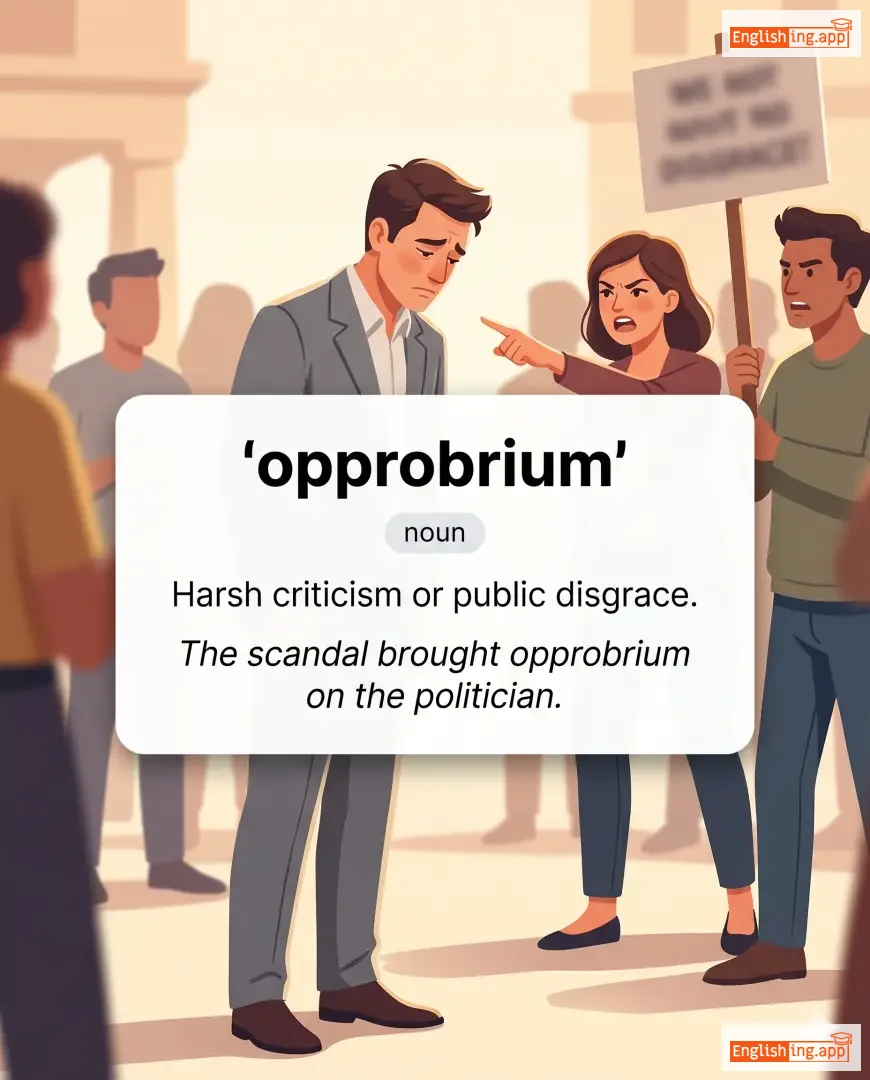
opprobrium definition card — visual illustration of the meaning
noun C2
/əˈprəʊ.bri.əm/
निंदा, अपमान (ninda, apmaan)

Harsh criticism or public disgrace.

"The scandal brought opprobrium on the politician."
"घोटाले ने राजनेता पर निंदा का ठप्पा लगा दिया।" (Ghotale ne raajneeta par ninda ka thappa laga diya.)
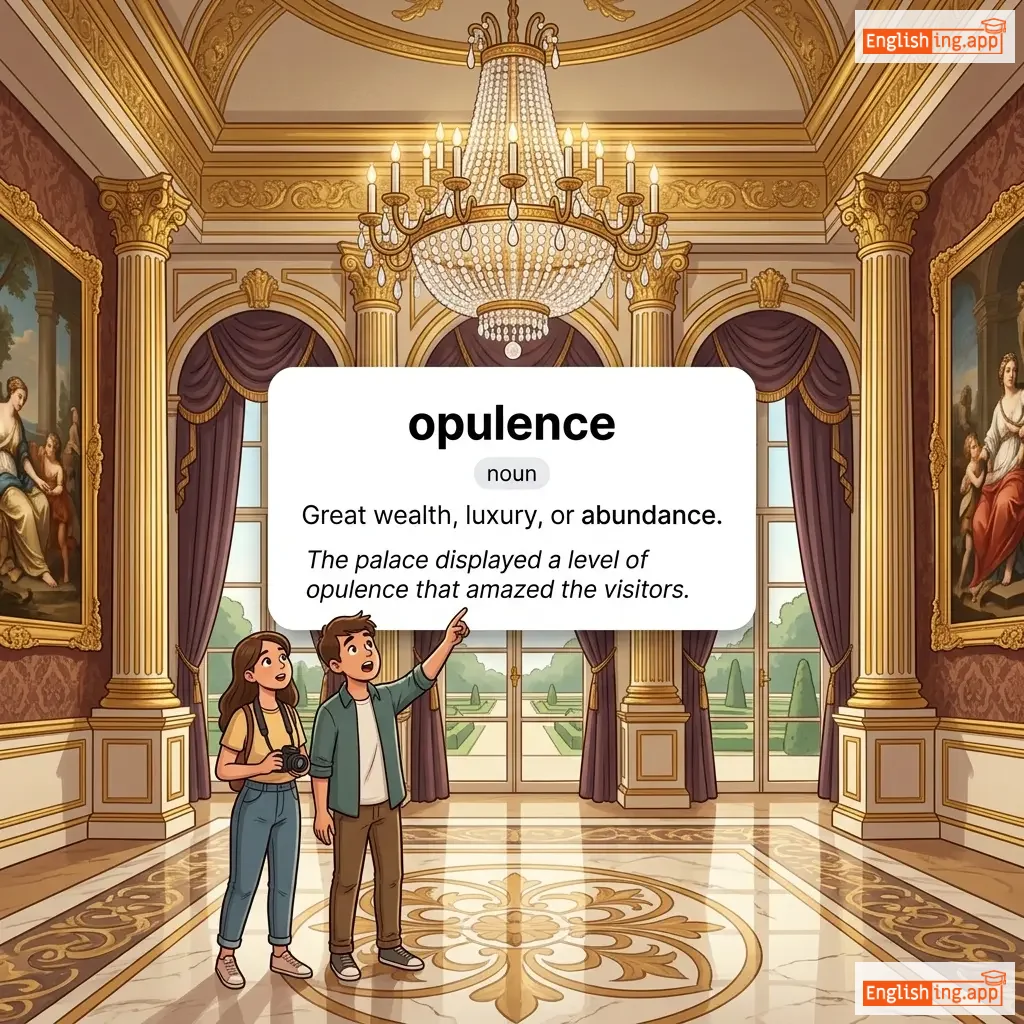
opulence definition card — visual illustration of the meaning
noun C2
/ˈɒpjʊləns/
वैभव (vaibhav)

Great wealth, luxury, or abundance.

"The palace displayed a level of opulence that amazed the visitors."

"महल में एक ऐसा स्तर था वैभव का जिसने आगंतुकों को आश्चर्यचकित कर दिया।" (mahal mein ek aisa sttar tha vaibhav ka jisne aagantukon ko aashcharyachakit kar diya.)
adjective C2
/ˈɒpjʊlənt/
विलासी (vilaasee)

Ostentatiously rich, luxurious, or lavish.

"They hosted an opulent wedding with gold decorations."

"उन्होंने सुनहरे सजावट के साथ एक विलासी शादी का आयोजन किया।" (Unhone sunahare saajavat ke saath ek vilaasee shaadi ka aayojan kiya.)
noun C2
/ˈəʊpəs/
रचनात्मक कार्य (rachnatmak karya)

A creative work, especially a large and important piece of music or art.

"The composer considered the symphony his greatest opus."

"संगीतकार ने अपनी सिम्फनी को अपनी सबसे बड़ी रचनात्मक कार्य माना।" (Sangeetkar ne apni simphani ko apni sabse badi rachnatmak karya mana.)
adjective C2
/əˈrækjələr/
ओराकुलर (oracular)

Resembling an oracle; giving wise, mysterious, or prophetic statements

"Her oracular words left the audience deep in thought."
"उसके ओराकुलर शब्दों ने दर्शकों को गहरे विचार में डाल दिया।" (uske oracular shabdon ne darshako ko gahare vichar mein daal diya.)
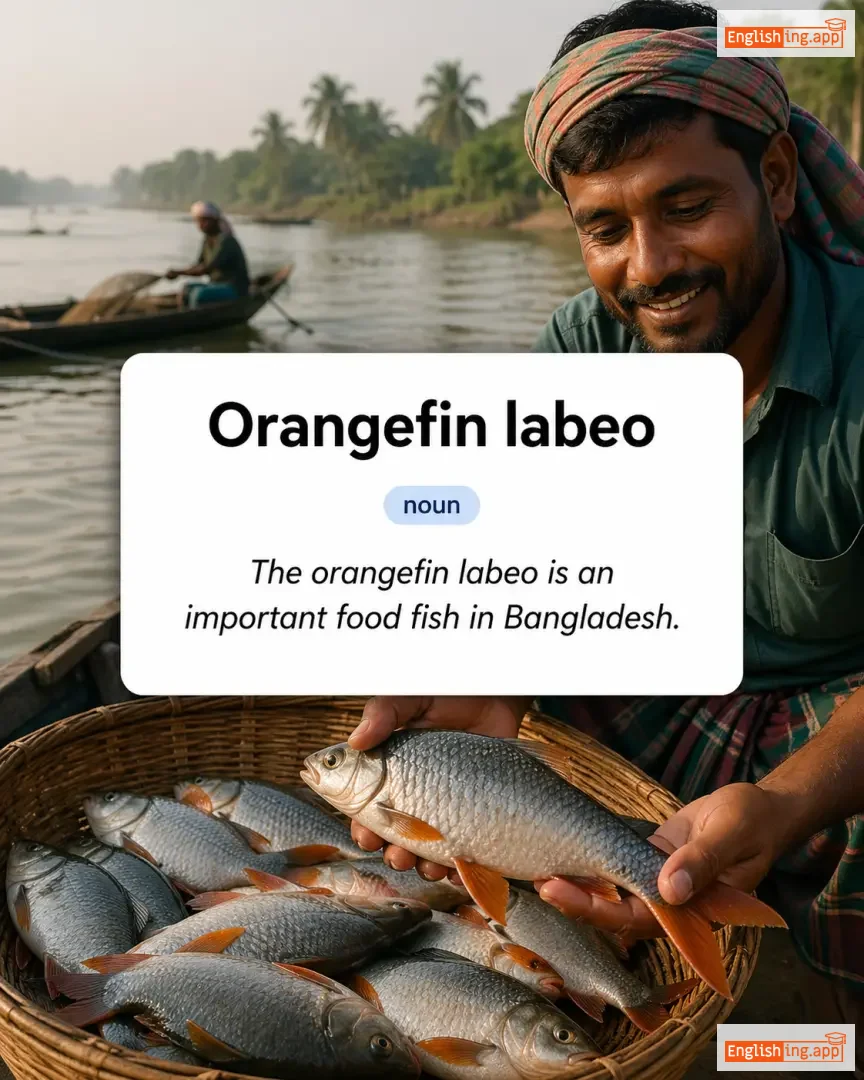
Orangefin labeo definition card — visual illustration of the meaning
noun C2
/ˈɔːrɪndʒfɪn ˈleɪbiːoʊ/
कालबाउस मछली (kalbaus machhli)

a freshwater fish species native to South Asian rivers, commonly found in Bangladesh and India

"The orangefin labeo is an important food fish in Bangladesh."

"ऑरेंजफिन लेबियो बांग्लादेश में एक महत्वपूर्ण खाद्य मछली है।" (orenjfin lebio bangladesh mein ek mahatvapurn khadya machhli hai)
verb C2
/ˈɔːreɪt/
भाषण देना (bhashan dena)

To speak in a formal, often pompous manner

"He began to orate at the ceremony."

"उसने समारोह में भाषण देना शुरू किया।" (usne samaroah mein bhashan dena shuru kiya.)
noun C2
/ɔːˈreɪʃən/
भाषण (bhashan)

A formal speech, especially one given on a ceremonial occasion

"The president delivered an inspiring oration."

"राष्ट्रपति ने एक प्रेरणादायक भाषण दिया।" (rashtrapati ne ek preranaadayak bhashan diya.)
noun C2
/ˌɔːrəˈtɔːri.oʊ/
धार्मिक संगीत रचना (dharmik sangeet rachna)

A large-scale musical composition for orchestra, choir, and soloists, usually on a sacred theme, performed without costumes or scenery.

"Handel's 'Messiah' is one of the most famous oratorios ever written."

"हैंडल के 'मसीहा' को लिखा गया सबसे प्रसिद्ध ओरटोरियो है।" (Handel ke 'Masihah' ko likha gaya sabse prasiddh oratorio hai.)
noun C2
/ˌɔːrdɪˈneɪʃən/
दीक्षा (diksha)

The ceremony of conferring holy orders or official religious authority.

"The church held a special service for the ordination of new priests."

"गिरजाघर ने नए पुरोहितों के अभिषेक के लिए एक विशेष सेवा आयोजित की।" (Girjahar ne naye purohiton ke abhishhek ke liye ek vishesh seva aayojit ki.)
noun C2
/ˈɔːrdnəns/
सामरिक आपूर्ति (saamrik aapoorti)

Military supplies including weapons, ammunition, and combat equipment.

"The army stored ordnance in a secure facility outside the city."

"सेना ने शहर के बाहर एक सुरक्षित स्थान पर सैन्य सामग्री संग्रहित की" (Sena ne shahar ke baahar ek surakshit sthan par sainya samaagri sangrahit ki)
noun (plural) C2
/ˈɔːrdʒiːz/
अत्यधिक विलासिता (atyadhik vilasita)

Wild gatherings involving excessive indulgence in food, drink, or sexual activity.

"The ancient Romans were infamous for their lavish feasts and orgies."

"प्राचीन रोमनों को उनके शानदार भोज और अत्यधिक विलासिता के लिए कुख्यात था।" (Prachin Romans ko unke shandaar bhoj aur atyadhik vilasita ke liye kukhyat tha.)
noun C2
/ˈɔːrdʒi/
मदिरा और कामुकता से भरी पार्टी (madhira aur kaamukta se bhari party)

A wild party involving excessive indulgence, especially of a sexual nature.

"The novel described a scandalous orgy in a wealthy mansion."

"उपन्यास ने एक संपन्न हवेली में एक कांडपूर्ण आर्गी का वर्णन किया।" (Upanyas ne ek sampann haveli mein ek kandpurn orgi ka varnan kiya.)
noun C2
/ˈɔː.rɪ.fɪs/
छिद्र (chhidra)

an opening or hole, especially in the body or a device

"The medicine was applied through a small orifice in the device."

"दवा उपकरण में एक छोटे छिद्र से लागू की गई थी।" (Dawa upkaran mein ek chhote chhidra se lagu ki gayi thi.)
noun C2
/ˈɒrɪz(ə)n/
प्रार्थना (prarthana)

a prayer, especially a devout or formal one

"He whispered a quiet orison before going to sleep."

"सोने से पहले उसने एक शांत प्रार्थना फुसफुसाई।" (sone se pehle usne ek shant prarthana fufusai.)
adjective C2
/ˈɔːrnəri/
चिड़चिड़ा (chidhchidhā)

bad-tempered and combative; stubborn

"The ornery old man refused to leave his chair."

"चिड़चिड़े बुजुर्ग आदमी ने अपनी कुर्सी छोड़ने से इंकार कर दिया।" (Chidhchidhā bujurg ādmī ne apnī kursī chhodne se inkār kar diyā.)
noun C2
/ˌɔːrnɪˈθɒlədʒɪst/
पक्षीविज्ञानी (pakshivigyani)

a scientist who studies birds

"The ornithologist spent years studying migratory birds."

"ऑर्निथोलॉजिस्ट ने वर्षों तक प्रवासी पक्षियों का अध्ययन किया।" (Ornithologist ne varsho tak pravasi pakshiyon ka adhyayan kiya.)
noun C2
/ˌɔːrnɪˈθɑːlədʒi/
पक्षी विज्ञान (pakshi vigyan)

the scientific study of birds

"She pursued ornithology to understand the migration patterns of birds."

"उसने पक्षियों के प्रवासन पैटर्न को समझने के लिए ऑर्निथोलॉजी का अध्ययन किया।" (Usne pakshiyon ke pravasan pattern ko samjhne ke liye ornithology ka adhyayan kiya.)
adjective C2
/ˈɔːrəˌtʌnd/
गंभीर और स्पष्ट स्वर (gambhir aur spashth swar)

full, rich, and clear in sound; pompous in style

"The actor's orotund voice filled the theater."

"अभिनेता की गंभीर आवाज़ ने थिएटर को भर दिया।" (Abhineta ki gambhir aawaaz ne theater ko bhar diya.)
adjective C2
/ɔːrˈθɑːɡənl/
ऑर्थोगोनल (orthogonal)

at right angles; independent or unrelated

"In mathematics, two vectors are orthogonal if their dot product is zero."

"गणित में, दो वेक्टर ऑर्थोगोनल होते हैं यदि उनका डॉट उत्पाद शून्य होता है।" (Ganit mein, do vector orthogonal hote hain yadi unka dot utpad shunya hota hai.)
noun C2
/ɔːrˈθɑːɡrəfi/
वर्तनी (vartani)

The conventional spelling system of a language.

"English orthography can be confusing for learners."

"अंग्रेजी वर्तनी शिक्षार्थियों के लिए उलझन भरी हो सकती है।" (Angreji vartani shiksharthiyon ke liye uljhan bhari ho sakti hai.)
verb C2
/ˈɑːskjʊleɪt/
चुम्बन करना (chumban karna)

To kiss.

"They osculated under the mistletoe during the party."

"उन्होंने पार्टी के दौरान मिस्टलेटो के नीचे चुंबन किया।" (Unhone party ke dauran mistletoe ke neeche chumban kiya.)
adjective C2
/ˈɒsiəs/
हड्डी से संबंधित (haddi se sambandhit)

consisting of or turned into bone; bony

"The fossil showed osseous structures of the ancient creature."

"फॉसिल ने प्राचीन प्राणी की हड्डी जैसी संरचनाएँ दिखाई।" (Fossil ne prachin prani ki haddi jaisi sanrachnaen dikhayi.)
adjective C2
/ˈɑːsɪˌfaɪd/
हड्डी में बदलना, कठोर (haddi mein badalna, kathor)

Turned into bone or become rigid; unwilling to change.

"The company had an ossified management structure that resisted innovation."

"कंपनी का एक कठोर प्रबंधन ढांचा था जो नवाचार का विरोध करता था।" (Kampani ka ek kathor prabandhan dhancha tha jo navaachar ka virodh karta tha.)
verb C2
/ˈɒsɪfaɪ/
हड्डी में बदलना (haddi mein badalna)

to turn into bone or become rigid and inflexible

"With age, some tissues tend to ossify."

"वृद्धावस्था में, कुछ ऊतक ऑसिफ़ाई होने लगते हैं।" (Vruddhavastha mein, kuch ootak ossify hone lagte hain.)
adjective C2
/ɒˈstɛnsɪv/
स्पष्ट रूप से दिखाने वाला (spasht roop se dikhane wala)

clearly demonstrative or pointing out; explicitly shown

"The teacher gave an ostensive example to clarify the concept."

"शिक्षक ने अवधारणा को स्पष्ट करने के लिए एक स्पष्ट रूप से दिखाने वाला उदाहरण दिया।" (Shikshak ne avdharana ko spasht karne ke liye ek spasht roop se dikhane wala udaharan diya.)