語彙集

英単語辞書 | 単語の意味、定義、例文

noun C2
/ˌɪntərˈsɛsər/
посредник (posrednik)

a person who intervenes or pleads on behalf of another

"He acted as an intercessor to resolve the conflict between the two families."
"Он выступил посредником, чтобы разрешить конфликт между двумя семьями." (On vystupil posrednikom, chtoby razreshit' konflikt mezhdu dvyma sem'yami.)
intercropping definition card — visual illustration of the meaning
noun C2
/ˈɪntəˌkrɒpɪŋ/
межкультурное земледелие (mezhkul'turnoe zemledelie)

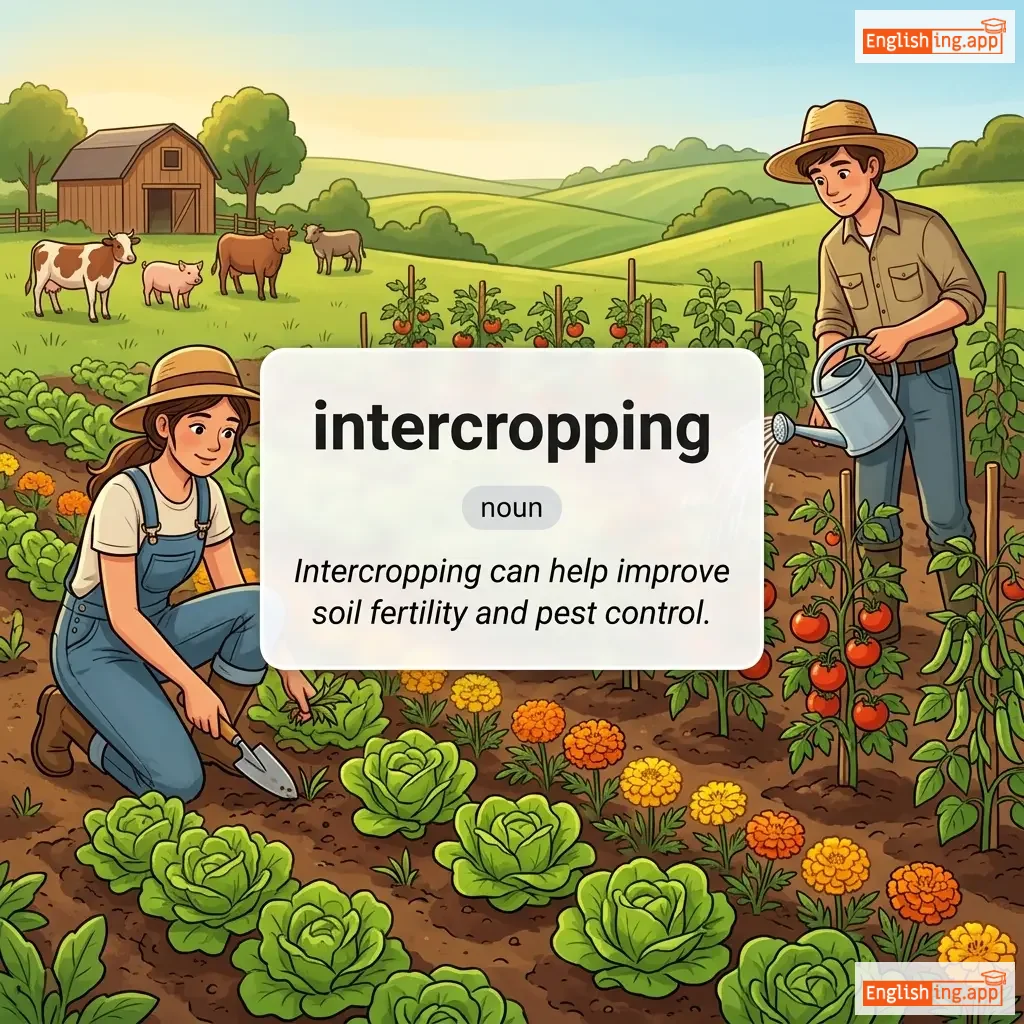
The agricultural practice of cultivating two or more crops simultaneously in the same field to maximize land use efficiency and improve soil health.

"Intercropping can help improve soil fertility and pest control."
"Межкультурное земледелие может помочь улучшить плодородие почвы и контроль над вредителями." (Mezhkul'turnoe zemledelie mozhet pomoch' uluchshit' plodorodie pochvy i kontrol' nad vreditelyami.)
interdict definition card — visual illustration of the meaning
verb C2
/ˈɪntərˌdɪkt/
запрещать (zapreshchat)

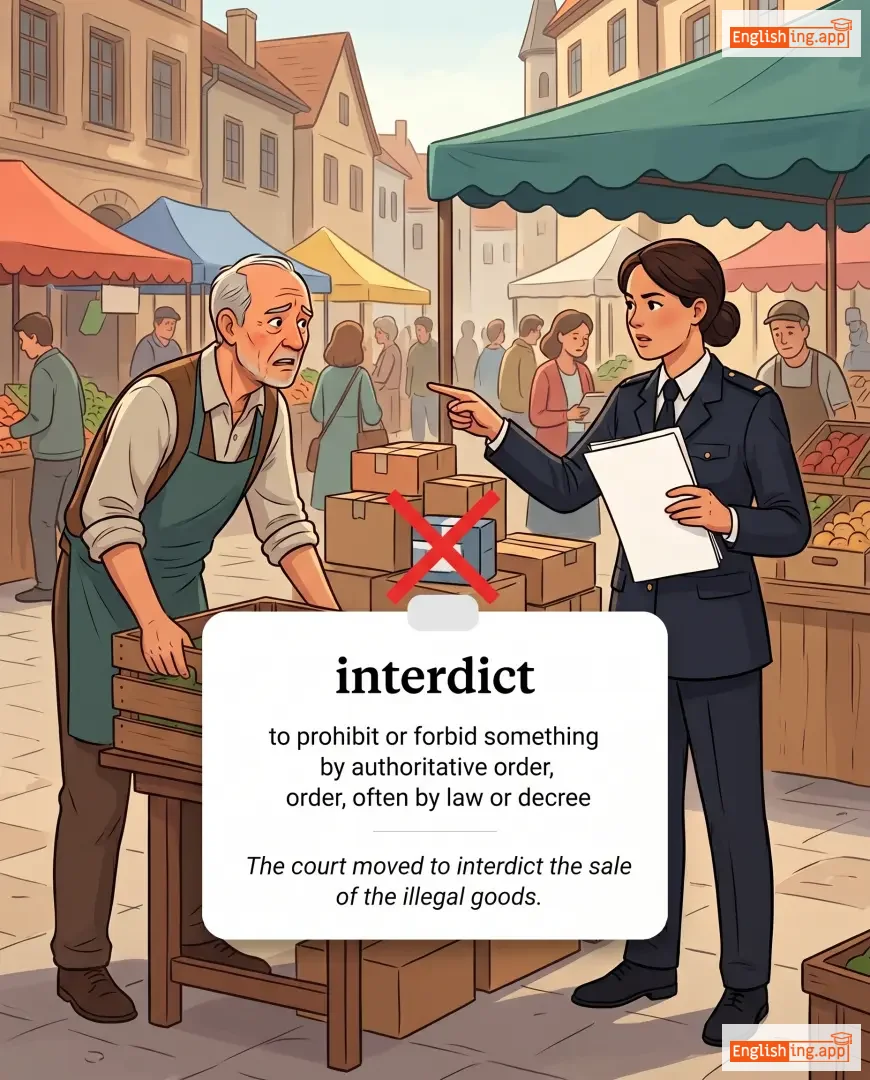
to prohibit or forbid something by authoritative order, often by law or decree

"The court moved to interdict the sale of the illegal goods."

"Суд решил запретить продажу незаконных товаров." (Sud reshilsya zapretit' prodazhu nezakonnykh tovarov.)
verb C2
/ˌɪntərˈlɒk/
взаимно сцепляться (vzaimno stseplyatsya)

to fit or connect together securely so that two or more things are joined

"The gears interlock to ensure smooth movement of the machine."

"Зубчатые колеса сцепляются, чтобы обеспечить плавное движение машины." (Zubchatye kolesa stseplyayutsya, chtoby obespechit' plavnoe dvizhene dlya mashiny.)
noun C2
/ˌɪntərˈlɒkjətər/
собеседник (sobesednik)

a person who takes part in a conversation or dialogue

"She was a skilled interlocutor during the debate."

"Она была опытным собеседником в ходе дебатов." (Ona byla opytnym sobesednikom v khode debata.)
adjective C2
/ˌɪntərˈlɒkjətəri/
временный (vremennyy)

Given during the course of a legal action, not final but temporary or provisional.

"The judge issued an interlocutory order to maintain the status quo until the hearing."

"Судья вынес временное постановление, чтобы сохранить статус-кво до слушания." (Sud'ya vynes vremennoye postanovleniye, chtoby sokhranit' status-kvo do slushaniya.)
noun C2
/ˈɪntərˌloʊpər/
нарушитель (narushitel)

A person who becomes involved in a situation or place where they are not wanted.

"He felt like an interloper at the private family gathering."

"Он чувствовал себя нарушителем на частном семейном собрании." (On chuvstvoval sebya narushitelem na chastnom semeynom sobranii.)
noun C2
/ɪnˈtɜːrmənt/
погребение (pogrebenie)

The act of burying a dead body in a grave or tomb.

"The interment took place at the family cemetery."

"Погребение состоялось на семейном кладбище." (Pogrebeniye sostoyalos' na semeynom kladbishche.)
verb C2
/ˌɪntərˈmɪt/
прерывать (preryvat)

To suspend or stop for a time; to pause intermittently.

"The rain would intermit and then start again."

"Дождь будет прерываться, а затем снова начинаться." (Dozhd' budet preryvatsya, a zatem snova nachinatsya.)
internecine definition card — visual illustration of the meaning
adjective C2
/ˌɪntərˈniːsaɪn/
внутренний конфликт (vnutrenniy konflikt)

Relating to conflict within a group, often causing mutual destruction.

"The internecine conflict weakened the organization from within."

"Внутренний конфликт ослабил организацию изнутри" (Vnutrenniy konflikt oslabil organizatsiyu iznutri)
interpolate definition card — visual illustration of the meaning
verb C2
/ɪnˈtɜːrpəˌleɪt/
интерполировать (interpolirovat')

To insert something, often words, into a text or conversation; to estimate values between known data points.

"The editor interpolated a missing paragraph into the manuscript."

"Редактор интерполировал отсутствующий абзац в манускрипт." (Redaktor interpoliroval otsutstvuyushchiy abzat v manuskript.)
noun C2
/ɪnˌtɜːrpəˈleɪʃən/
интерполяция (interpolatsiya)

The act of inserting something into a text or estimating values within a sequence of data.

"The scientist used interpolation to predict the missing data points."

"Учёный использовал интерполяцию для прогнозирования недостающих точек данных." (Uchyonnyy ispol'zoval interpolyatsiyu dlya prognozirovaniya nedostayushchikh tochek dannykh.)
verb C2
/ˌɪntərˈpoʊz/

To place or insert between one thing and another; to intervene in a situation.

"He quickly interposed himself between the fighters to stop the quarrel."

noun C2
/ˌɪntərpəˈzɪʃən/
вмешательство (vmeshatel'stvo)

The act of intervening or coming between two things, often to influence or prevent an outcome.

"The manager’s interposition prevented a heated argument from escalating."
"Вмешательство менеджера предотвратило эскалацию оживленного спора." (Vmeshatel'stvo menedzhera predotvratilo eskalatsiyu ozhivlennogo spora.)
interregnum definition card — visual illustration of the meaning
noun C2
/ˌɪntərˈrɛɡnəm/
интеррегнум (interregnum)

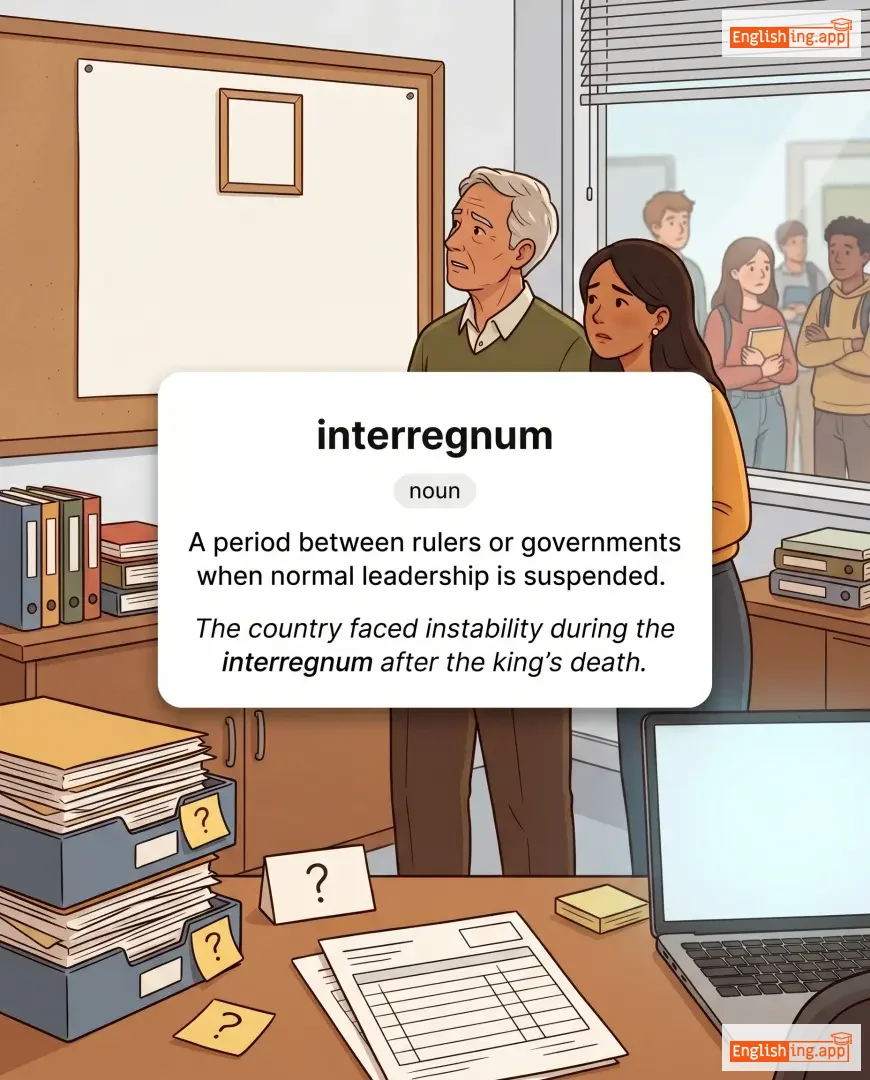
A period between rulers or governments when normal leadership is suspended.

"The country faced instability during the interregnum after the king’s death."

"Страна столкнулась с нестабильностью в период интеррегнума после смерти короля." (Strana stolknulas' s nestabil'nost'yu v period interregnuma posle smerti korolya.)
adjective C2
/ˌɪntəˈrɒɡətəri/
допросный (doprosny)

expressed in the form of a question; relating to questioning

"The lawyer’s interrogatory tone made the witness uncomfortable."

"Допросный тон адвоката заставил свидетеля чувствовать себя неудобно." (Doprosny ton advokata zastavil svidetelya chuvstvovat' sebya neudobno.)
noun C2
/ɪnˈtɜːrstɪs/
щель (shchel)

a small space that lies between things

"Light filtered through the narrow interstices of the wall."

"Свет просочился через узкие щели стены." (Svet prosochelis' cherez uzkiye shcheli steny.)
noun C2
/ˈɪntərˌveɪl/
низменная земля вдоль реки, обычно плодородная и ровная (nizmennaya zemlya vdol' reki, obychno plodorodnaya i rovная)

A low-lying tract of land along a river, usually fertile and flat.

"The farmers cultivated crops on the lush intervale by the river."
"Фермеры выращивали урожай на плодородной низменной земле вдоль реки." (Fermery vyrashchivali urozhay na plodorodnoy nizmennoy zemle vdol' reki.)
interventionism definition card — visual illustration of the meaning
noun C2
/ˌɪn.təˈvɛn.ʃə.nɪ.zəm/
интервенционизм (intervencionizm)

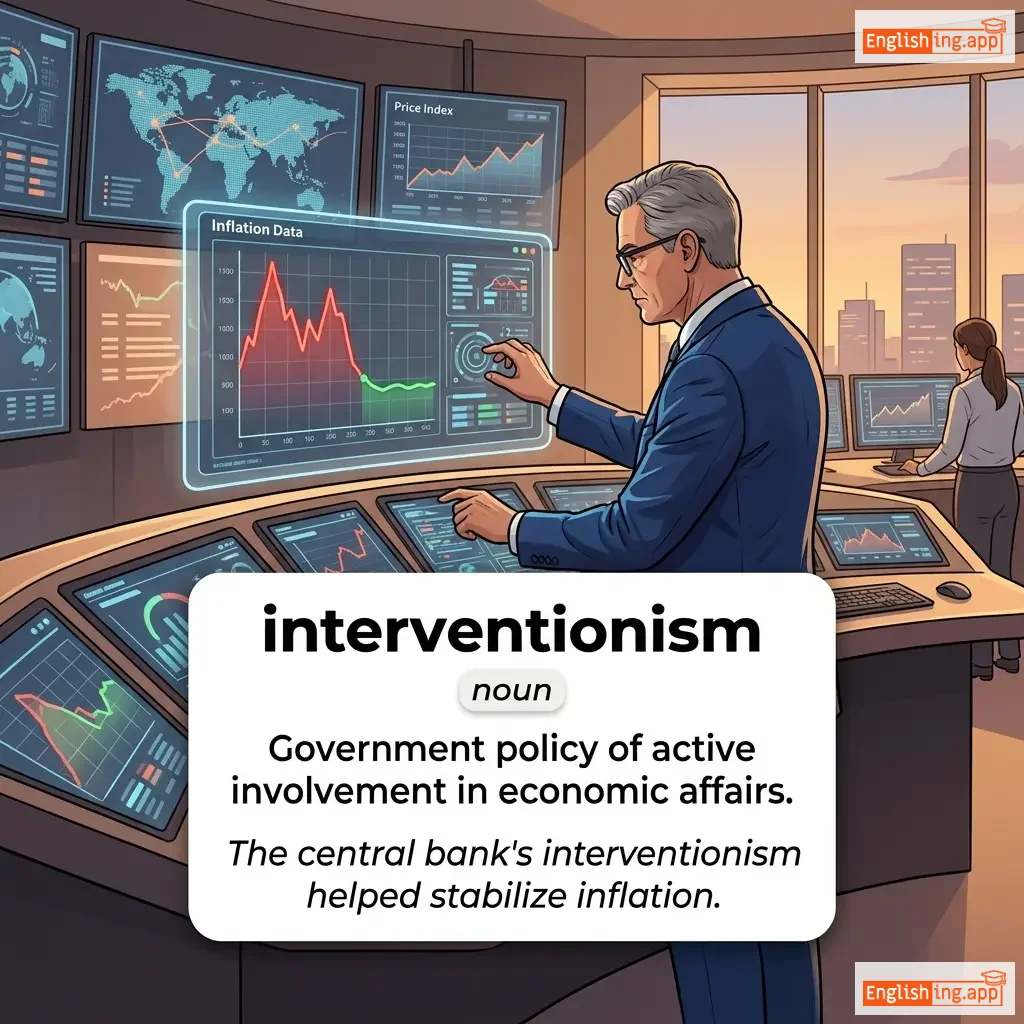
Government policy of active involvement in economic affairs.

"The central bank's interventionism helped stabilize inflation."

"Интервенционизм центрального банка помог стабилизировать инфляцию." (Intervencionizm tsentral'nogo banka pomog stabilizirovat' inflyatsiyu.)
noun C2
/ɪnˈtɛstəsi/
смерть без завещания (smert' bez zaveshchaniya)

The condition of dying without having made a valid will.

"His estate was divided according to the laws of intestacy."

"Его имущество было разделено в соответствии с законами инстатаси." (Ego imushchestvo bylo razdeleno v sootvetstvii s zakonami intestatsii.)
adjective C2
/ɪnˈtɛsteɪt/
умер без завещания (umer bez zaveshchaniya)

Having died without leaving a valid will.

"She died intestate, so her assets were distributed by law."

"Она умерла без завещания, поэтому её имущество было распределено по закону." (Ona umerla bez zaveshchaniya, poetomu yeyu imushchestvo bylo raspredeleno po zakonu.)
noun C2
/ɪnˈtɒksɪkənt/
интоксикант (intoksikant)

a substance, especially alcohol or a drug, that causes intoxication

"Alcohol is the most commonly used intoxicant in many cultures."

"Алкоголь - самый распространенный интоксикант в многих культурах." (Alkohol' - samyy raspredelennyy intoksikant v mnogikh kulturakh.)
adjective C2
/ˌɪn.trəˈsɛl.jʊ.lər/
внутри клетки (vnutri kletki)

Located or occurring within a cell.

"The drug works by targeting intracellular bacteria."

"Лекарство действует, нацеливаясь на внутриклеточные бактерии." (Lekarstvo deystvuet, natselivayas' na vnutrikletochnye bakterii.)
adjective C2
/ˌɪn.trəˈmjʊə.rəl/
внутри института (vnutri instituta)

Occurring within the walls of a single institution, especially a school or college.

"The college organizes intramural sports competitions every semester."
"Университет организует внутривузовские спортивные соревнования каждый семестр." (Universitet organizuyet vnutrivuzovskie sportivnye sorevnovaniya kazhdyy semestr.)
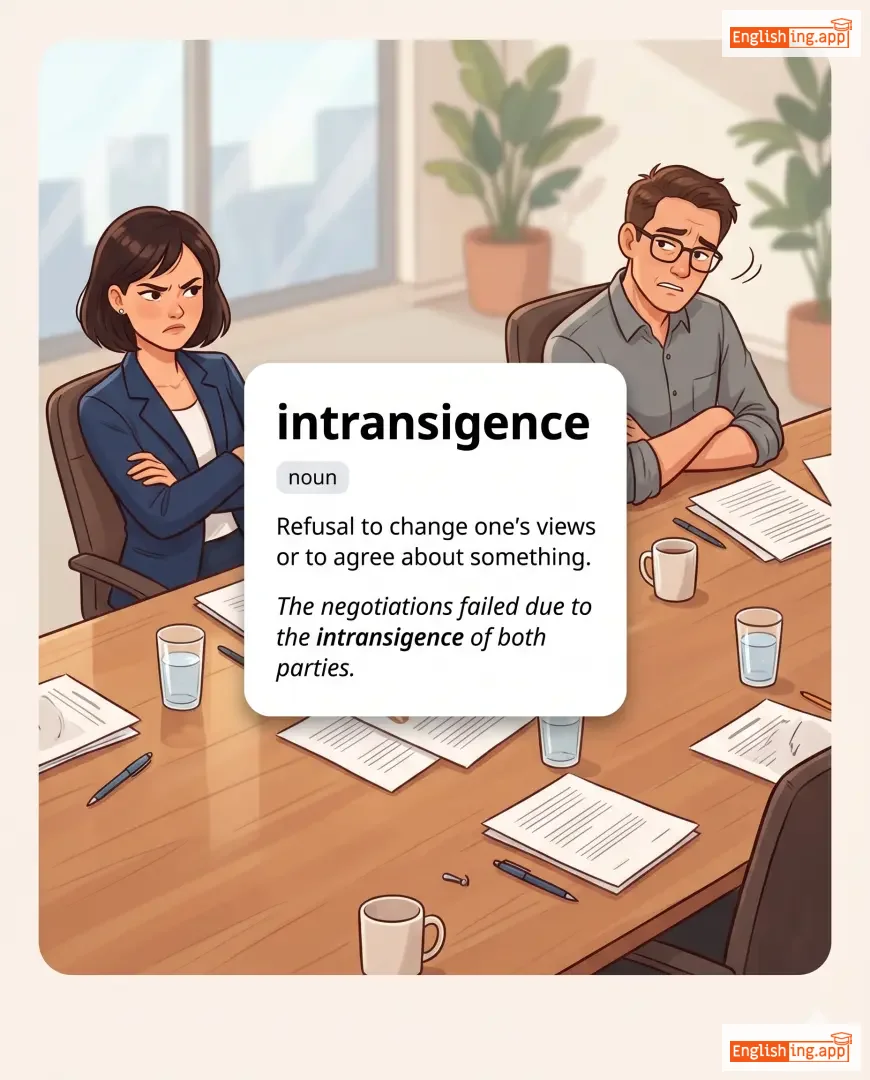
intransigence definition card — visual illustration of the meaning
noun C2
/ɪnˈtræn.sɪ.dʒəns/
неприклонность (nepriklonnost)

Refusal to change one's views or to agree about something.

"The negotiations failed due to the intransigence of both parties."
"Переговоры провалились из-за неприклонности обеих сторон." (Peregovory provalilis' iz-za nepriklonnosti obikh storon.)
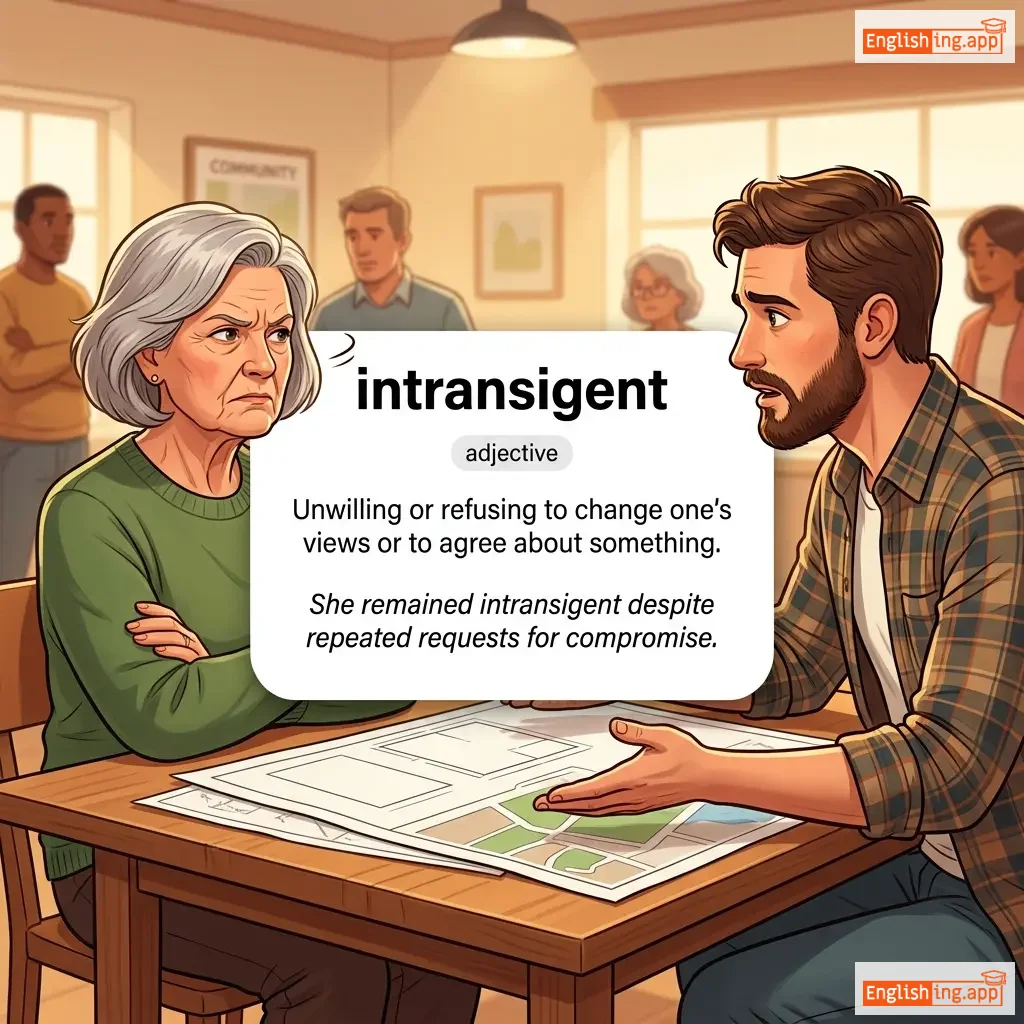
intransigent definition card — visual illustration of the meaning
adjective C2
/ɪnˈtræn.sɪ.dʒənt/
непоколебимый (nepokolebimy)

Unwilling or refusing to change one's views or to agree about something.

"She remained intransigent despite repeated requests for compromise."

"Она осталась непоколебимой, несмотря на многочисленные просьбы о компромиссе." (Ona ostalas' nepokolebimoy, nesmotrya na mnogochislennyye pros'by o kompromisse.)
noun C2
/ˌɪn.trəˈɡreʃ.ən/
генетическая интрогрессия (geneticheskaya introgressiya)

The transfer of genetic information from one species to another through repeated backcrossing.

"Introgression plays a significant role in plant breeding."

"Интроцессия играет важную роль в селекции растений." (Introcessiya igraet vazhnuyu rol' v selektsii rasteniy.)
verb C2
/ˌɪn.trəˈmɪt/
вводить (vvodit)

To insert or introduce something into a place or body.

"The doctor carefully intromitted the instrument into the wound."
"Доктор аккуратно ввел инструмент в рану." (Doktor akkuratno vvel instrument v ranu.)
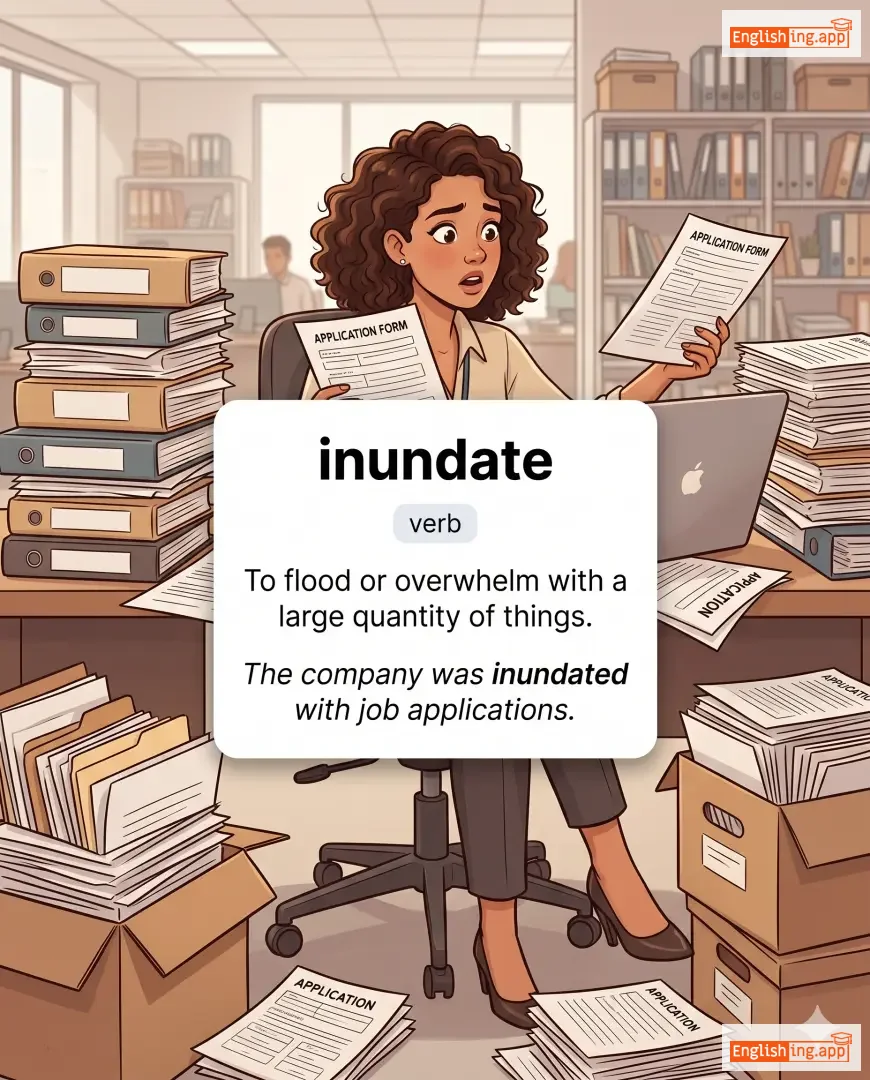
inundate definition card — visual illustration of the meaning
verb C2
/ˈɪn.ʌn.deɪt/
наводнять / переполнять (navodnyat' / perepolnyat')

To flood or overwhelm with a large quantity of things.

"The company was inundated with job applications."

"Компания была затоплена заявками на работу." (Kompaniya byla zatoplen a zayavkami na rabotu.)
noun C2
/ˌɪn.ʌnˈdeɪ.ʃən/
наводнение (navodnenie)

The act of flooding or overwhelming with water or things.

"The town suffered from a severe inundation after the heavy rains."

"Город пострадал от сильного наводнения после сильных дождей." (Gorod postradal ot sil'nogo navodneniya posle sil'nykh dozhdey.)
verb C2
/ɪˈnjʊər/
привыкать (privykat)

To become accustomed to something, especially something unpleasant.

"Soldiers quickly became inured to the harsh conditions."
"Солдаты быстро привыкли к суровым условиям." (Soldaty bystro privykli k surovym usloviyam.)
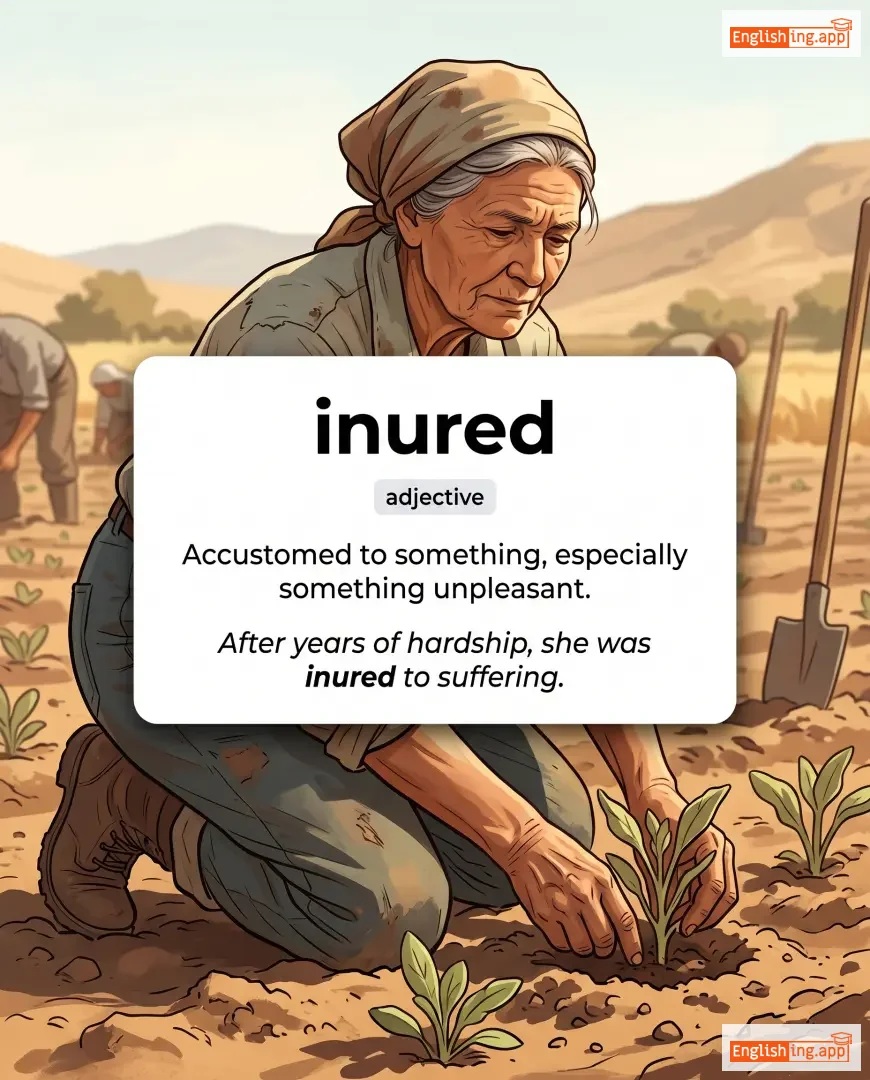
inured definition card — visual illustration of the meaning
adjective C2
/ɪˈnjʊərd/
привыкший (privikshiy)

Accustomed to something, especially something unpleasant.

"After years of hardship, she was inured to suffering."
"После лет страданий она привыкла к боли." (Posle let stradaniy ona privykla k boli.)
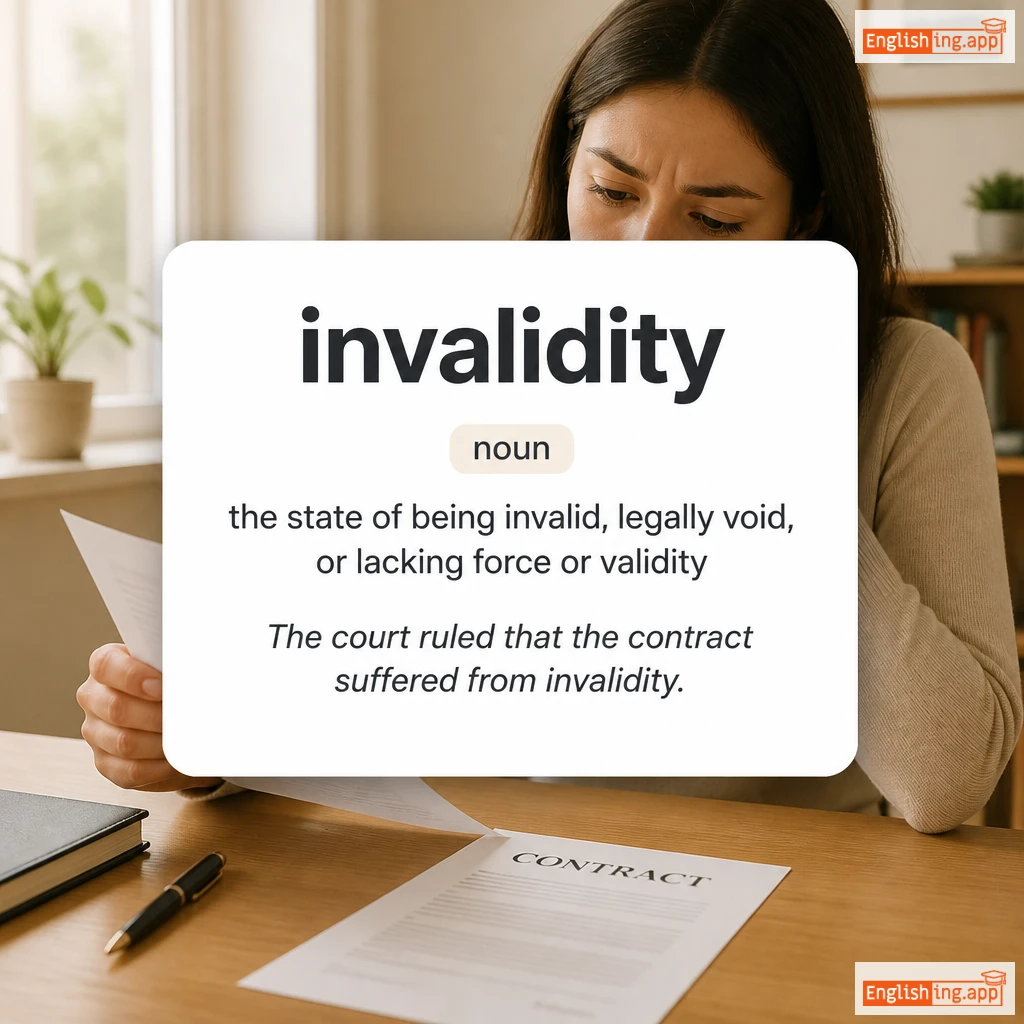
invalidity definition card — visual illustration of the meaning
noun C2
/ˌɪnvəˈlɪdɪti/
недействительность (nedeistvitelnost)

the state of being invalid, legally void, or lacking force or validity

"The court ruled that the contract suffered from invalidity."

"Суд постановил, что договор был недействительным." (sud postanovil chto dogovor byl nedeistvitelnym)
invective definition card — visual illustration of the meaning
noun C2
/ɪnˈvɛktɪv/
оскорбительный язык (oskorbitel'nyy yazyk)

Insulting, abusive, or highly critical language.

"The politician’s speech was filled with invective against his opponents."

"Речь политика была полна оскорбительного языка против его оппонентов." (Rech' politika byla polna oskorbitelnogo yazyka protiv yego opponentov.)
verb C2
/ɪnˈveɪ/
жестоко критиковать (zhestoko kritikovat')

To speak or write about something with great hostility and criticism.

"He inveighed against the corruption in government."

"Он жестоко критиковал коррупцию в правительстве." (On zhestoko kritikoval korrupciyu v pravitel'stve.)
inveigle definition card — visual illustration of the meaning
verb C2
/ɪnˈveɪɡəl/
завлекать (zavlekat)

To persuade someone to do something by deception or flattery.

"She inveigled him into signing the contract."

"Она уговорила его подписать контракт." (Ona ugovorila ego podpisat' kontrakt.)
noun C2
/ɪnˈvɛstɪtʃər/
церемония посвящения (tseremoniya posvyashcheniya)

the formal ceremony of conferring authority, rank, or office

"The king held an investiture ceremony for the new knight."

"Король провел церемонию посвящения для нового рыцаря." (Korol' provel tseremoniya posvyashcheniya dlya novogo rytsarya.)
inveterate definition card — visual illustration of the meaning
adjective C2
/ɪnˈvɛtərət/
закоренелый (zakorenely)

having a long-established habit, activity, or interest that is unlikely to change

"He is an inveterate reader who spends hours in the library every day."
"Он закоренелый читатель, который проводит часы в библиотеке каждый день." (On zakorennelyy chitatel', kotoryy provodit chasy v biblioteke kazhdyy den'.)
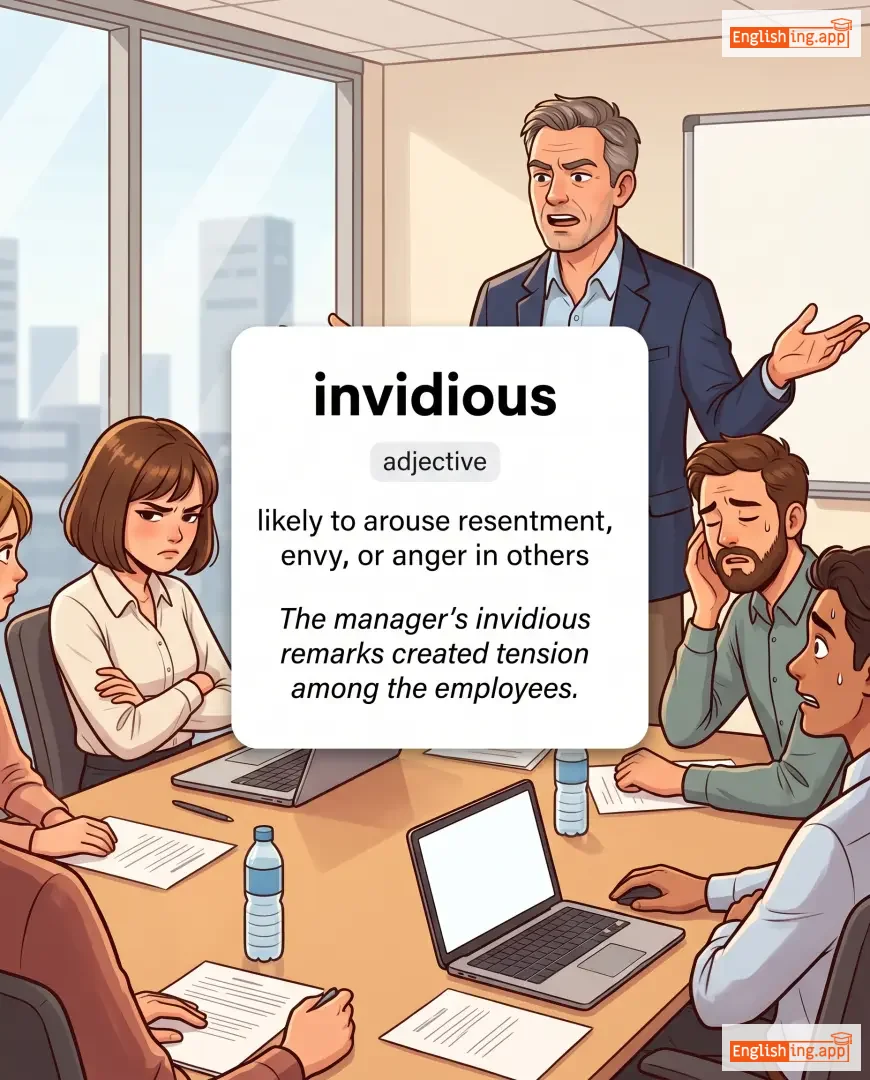
invidious definition card — visual illustration of the meaning
adjective C2
/ɪnˈvɪdiəs/
завистливый (zavistlivyy)

likely to arouse resentment, envy, or anger in others

"The manager's invidious remarks created tension among the employees."

"Завистливые замечания менеджера создали напряженность среди сотрудников." (Zavistlivye zamechaniya menedzhera sozdayut napryazhennost' sredi sotrudnikov.)
adjective C2
/ɪnˈvaɪələbl/
неприкосновенный (neprikosnovennyy)

never to be broken, dishonored, or violated

"Human rights are considered inviolable in modern democracies."

"Права человека считаются неприкосновенными в современных демократиях." (Prava cheloveka schitayutsya neprikosnovennymi v sovremennykh demokratikh.)
adjective C2
/ɪnˈvaɪələt/
неприкосновенный (neprikosnovennyi)

free from violation, injury, or desecration; kept safe and untouched

"The ancient temple remained inviolate for centuries."
"Древний храм оставался неприкосновенным веками." (Drevniy khram ostavalsya neprikosnovennym vekami.)
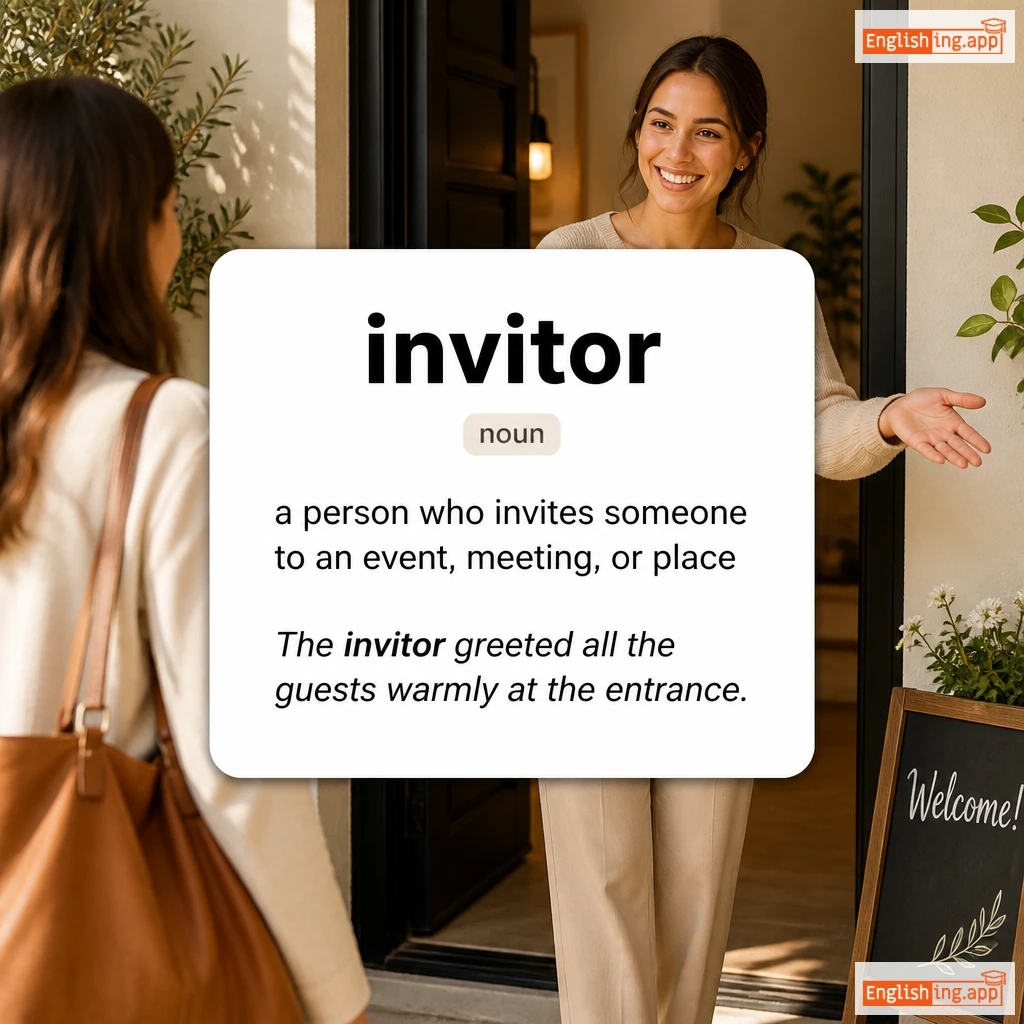
invitor definition card — visual illustration of the meaning
noun C2
/ɪnˈvaɪtər/
приглашающий (priglashayushchiy)

a person who invites someone to an event, meeting, or place

"The invitor greeted all the guests warmly at the entrance."

"Приглашающий тепло встретил гостей у входа." (Priglashayushchiy teplo vstretil gostey u vhoda)
noun C2
/ˌɪnvəˈkeɪʃən/
молитва (molitva)

the act of calling upon a higher power for help, blessing, or inspiration

"The ceremony began with an invocation to the gods."

"Церемония началась с молитвы к богам." (Tseremoniya nachalas' s molitvy k bogam.)
noun C2
/ˌɪnvəˈluːʃən/
инволюция (involyutsiya)

a complicated or intricate form or state; in biology, the shrinking of an organ after its function has finished

"The story was full of involution, making it hard to follow."

"История была полна инволюции, что делало её трудно понимаемой." (Istoriya byla polna involyutsii, chto delalo yeye trudno ponimayemoy.)
adjective C2
/ɪnˈvʌlnərəbl/
неуязвимый (neuyazvimy)

Impossible to harm, damage, or defeat.

"The fortress was thought to be invulnerable to attack."

"Крепость считалась неуязвимой к атакам." (Krepost' schitalas' neuyazvimoy k atakam.)
noun C2
/aɪˈoʊtə/
малое количество (maloe kolichestvo)

An extremely small amount.

"He did not show an iota of fear."
"Он не показал ни малейшего страха." (On ne pokazal ni malejshego straha.)
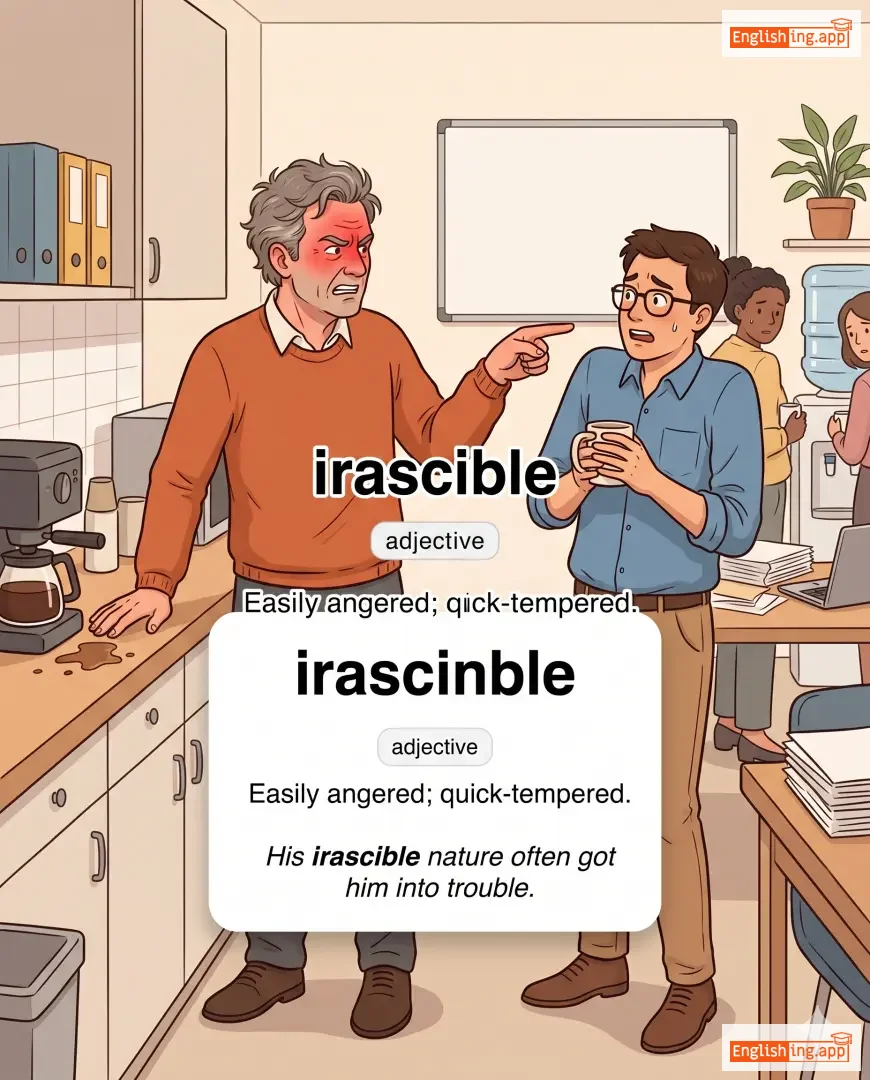
irascible definition card — visual illustration of the meaning
adjective C2
/ɪˈræsɪbl/
раздражительный (razdrazhitel'nyy)

Easily angered; quick-tempered.

"His irascible nature often got him into trouble."

"Его раздражительный характер часто приводил его в неприятности." (Yego razdrazhitel'nyy kharakter chasto privodil yego v nepriyatnosti.)
noun C2
/aɪər/
гнев, ярость (gnev, yarost')

intense anger or rage

"The new policy provoked the ire of the employees."

"Новая политика вызвала гнев сотрудников." (Novaya politika vyzvala gnev sotrudnikov.)
noun C2
/ˌɪrɪˈdɛsəns/
играющие цвета (igrayushchie tsveta)

a play of lustrous, changing colors like those of a rainbow

"The butterfly's wings shimmered with iridescence."

"Крылья бабочки мерцали с игрой цветов." (Krylya babochki mertsali s igroy tsvetov.)
adjective C2
/ˌɪrɪˈdɛsənt/
переливчатый (perelivchatyy)

showing luminous colors that seem to change when seen from different angles

"She wore an iridescent dress that sparkled in the light."

"Она носила переливчатое платье, которое искрилось при свете." (Ona nosila perelivchatoe plat'ye, kotoroye iskrilos' pri svete.)