語彙集

英単語辞書 | 単語の意味、定義、例文

verb C2
/dɪˈspɒnd/
落ち込む (ochikomu)

to lose confidence or hope; to become dejected

"After repeated failures, he began to despond."

"繰り返しの失敗の後、彼は落ち込むようになった。" (Kurikaeshi no shippai no ato, kare wa ochikomu you ni natta.)
adjective C2
/dɛˈspɒtɪk/
専制的な (sensetekina)

exercising power in a cruel, oppressive, or authoritarian way

"The king’s despotic rule left the people in misery."
"王の専制的な支配は人々を苦しめた。" (Ō no sensetekina shihai wa hitobito o kurushimeta.)
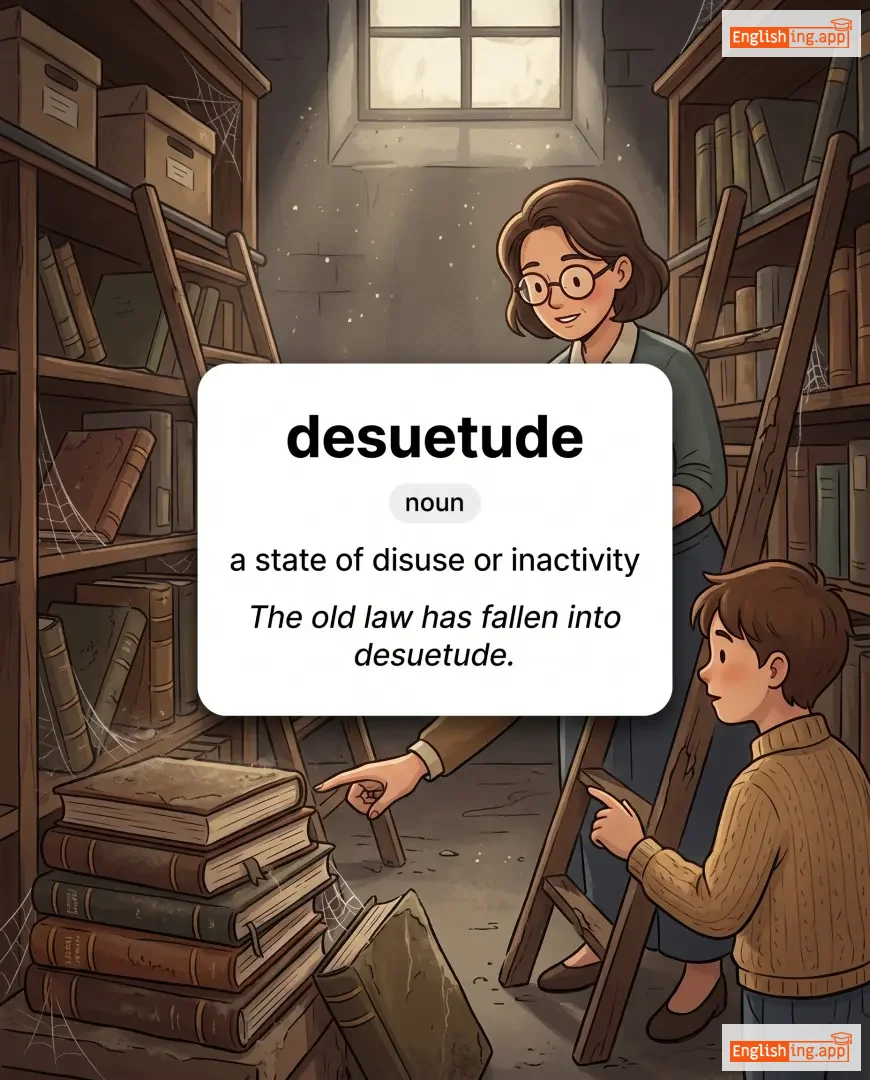
desuetude definition card — visual illustration of the meaning
noun C2
/ˈdɛswɪˌtuːd/
廃止 (haishi)

a state of disuse or inactivity

"The old law has fallen into desuetude."
"古い法律は廃止されました。" (Furui houritsu wa haishi saremashita.)
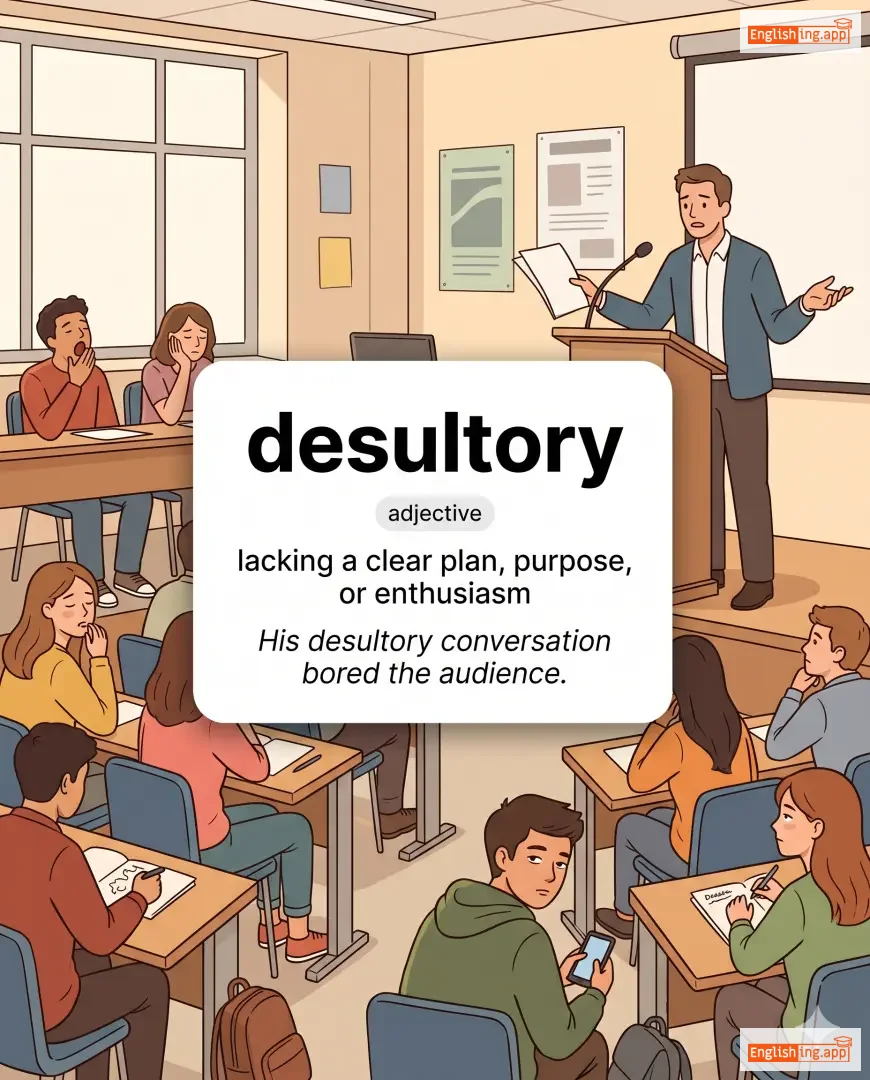
desultory definition card — visual illustration of the meaning
adjective C2
/ˈdɛsəlˌtɔːri/
無秩序な (muchi-tsujona)

lacking a clear plan, purpose, or enthusiasm

"His desultory conversation bored the audience."

"彼の無秩序な会話は観客を退屈させた。" (Kare no muchitsujona kaiwa wa kankyaku o taikutsu saseta.)
determinate definition card — visual illustration of the meaning
adjective C2
/dɪˈtɜːrmɪnət/
確定的 (kakutei-teki)

having exact and definite limits or form

"The contract is for a determinate period of two years."
"契約は2年間の確定した期間です。" (Keiyaku wa 2 nenkan no kakutei shita kikan desu.)
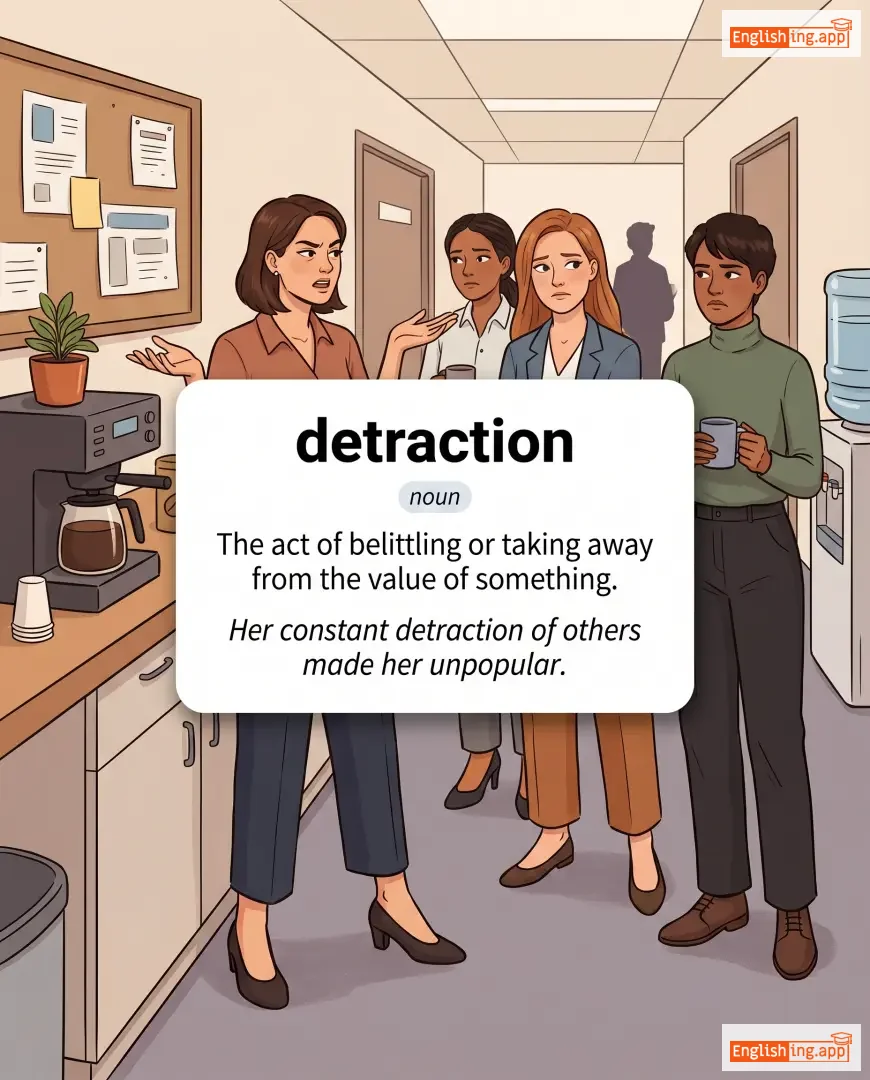
detraction definition card — visual illustration of the meaning
noun C2
/dɪˈtrækʃən/
非難 (hinan)

The act of belittling or taking away from the value of something.

"Her constant detraction of others made her unpopular."
"他人に対する彼女の絶え間ない非難は、彼女を不人気にした。" (Tanin ni taisuru kanojo no taemai nai hinan wa, kanojo o funinki ni shita.)
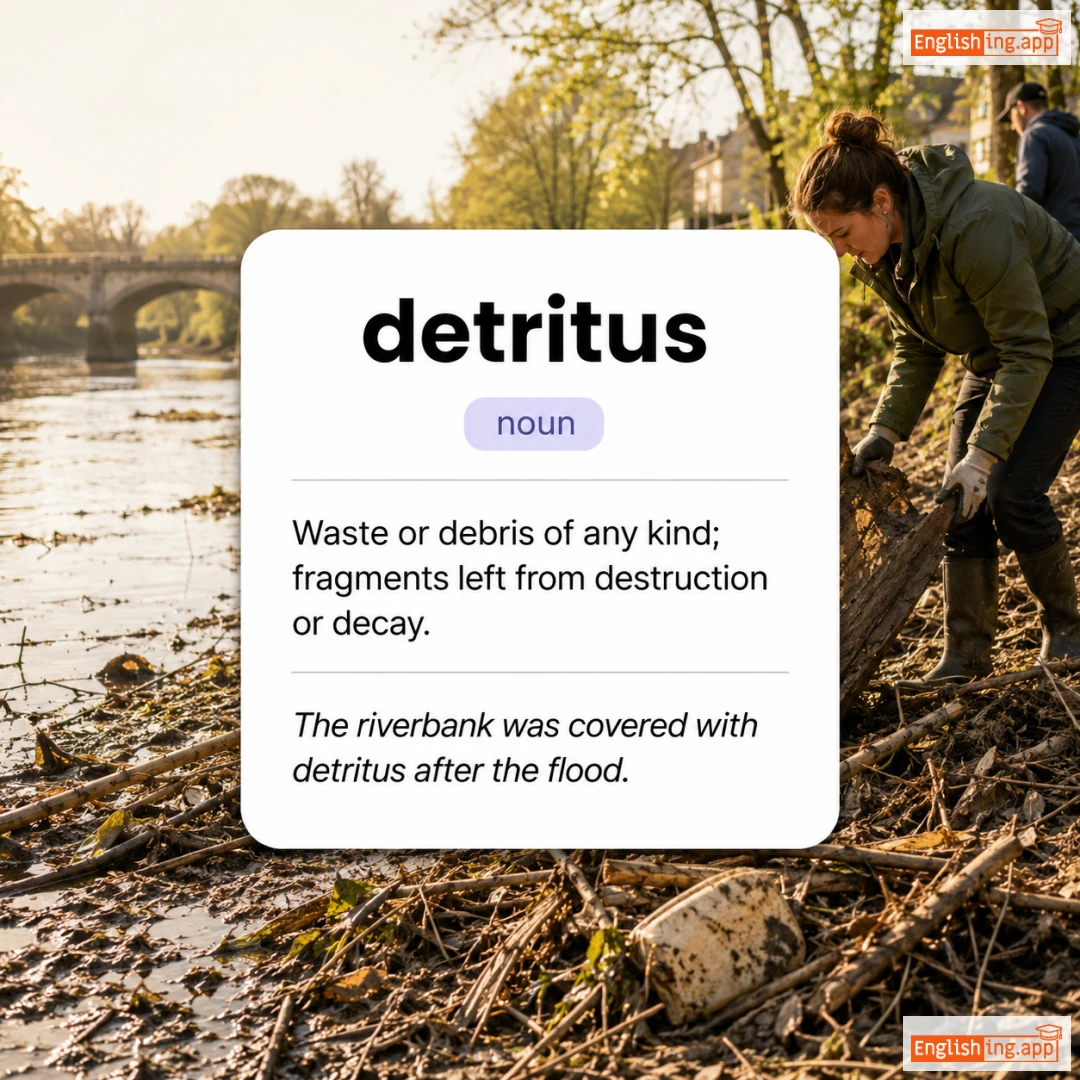
detritus definition card — visual illustration of the meaning
noun C2
/dɪˈtraɪtəs/
デトリタス (detoritasu)

Waste or debris of any kind; fragments left from destruction or decay.

"The riverbank was covered with detritus after the flood."
"洪水後、川岸はデトリタスで覆われていました。" (Kōsui-go, kawagishi wa detoritasu de ōwarete imashita.)
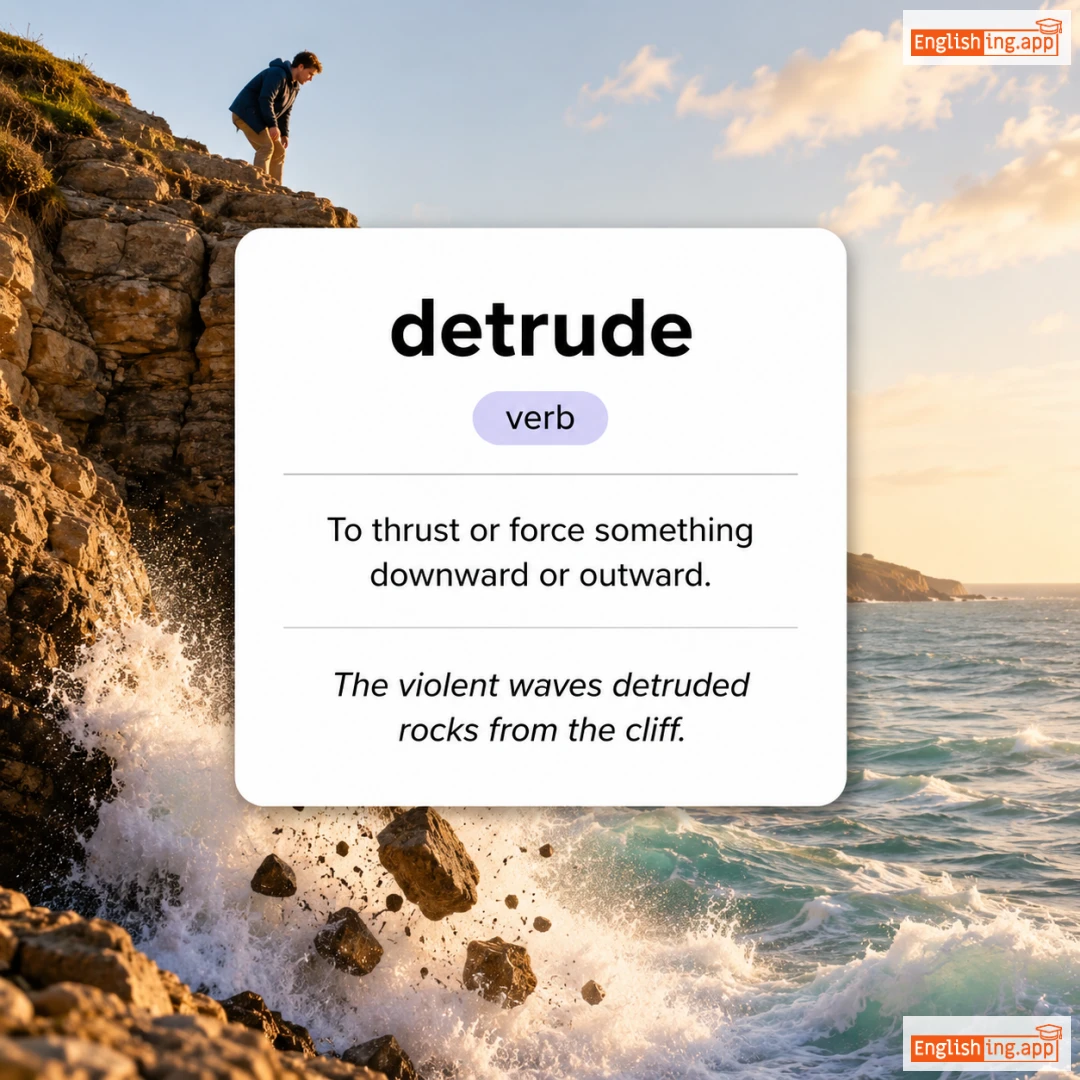
detrude definition card — visual illustration of the meaning
verb C2
/dɪˈtruːd/
下または外に押し出す (shita mata wa soto ni oshidasu)

To thrust or force something downward or outward.

"The violent waves detruded rocks from the cliff."
"激しい波は崖から岩を押し出しました。" (Hageshī nami wa gake kara iwa o oshidashimashita.)
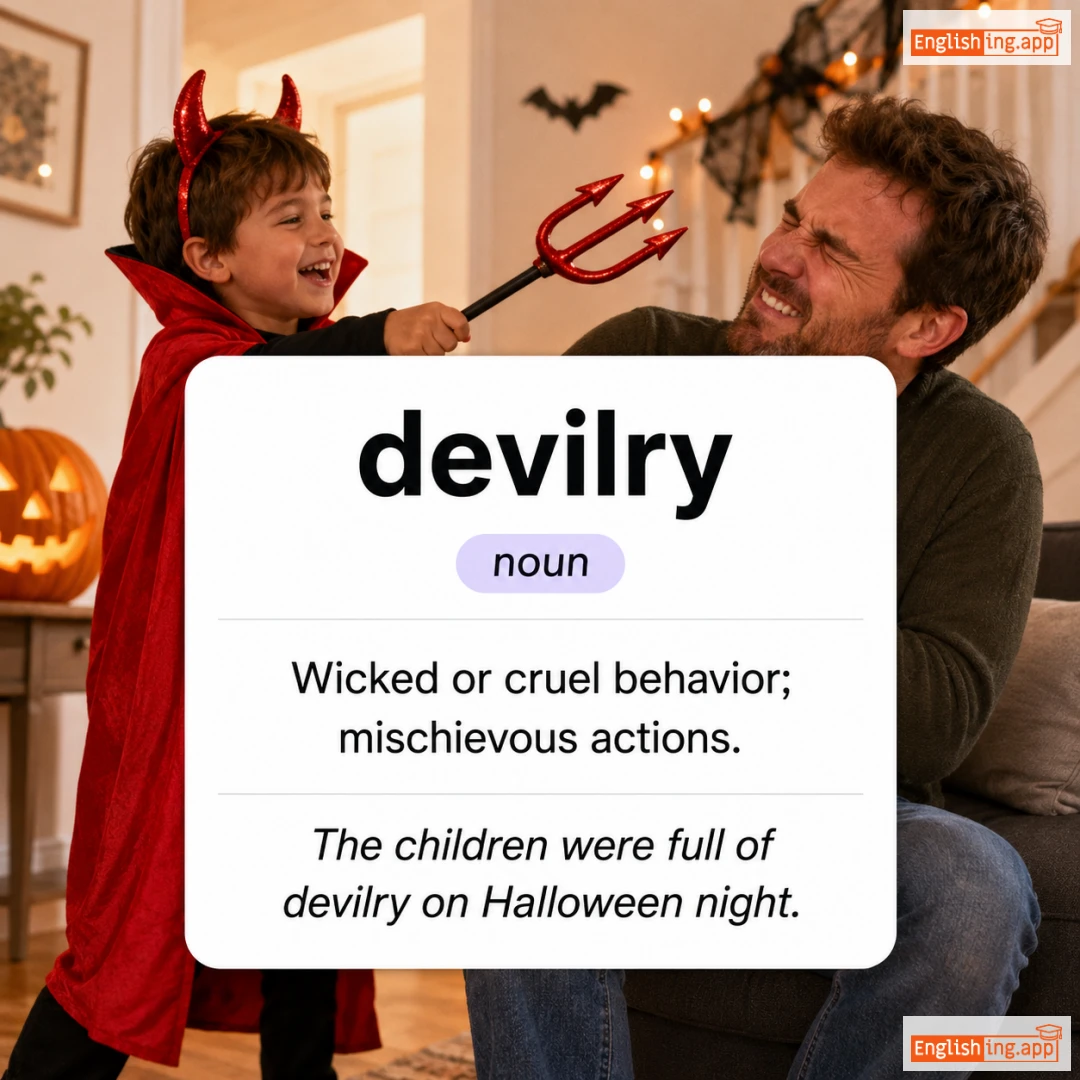
devilry definition card — visual illustration of the meaning
noun C2
/ˈdɛvɪlri/
悪戯 (itazura)

Wicked or cruel behavior; mischievous actions.

"The children were full of devilry on Halloween night."
"ハロウィンの夜、子供たちは悪戯でいっぱいだった。" (Harouin no yoru, kodomotachi wa itazura de ippai datta.)
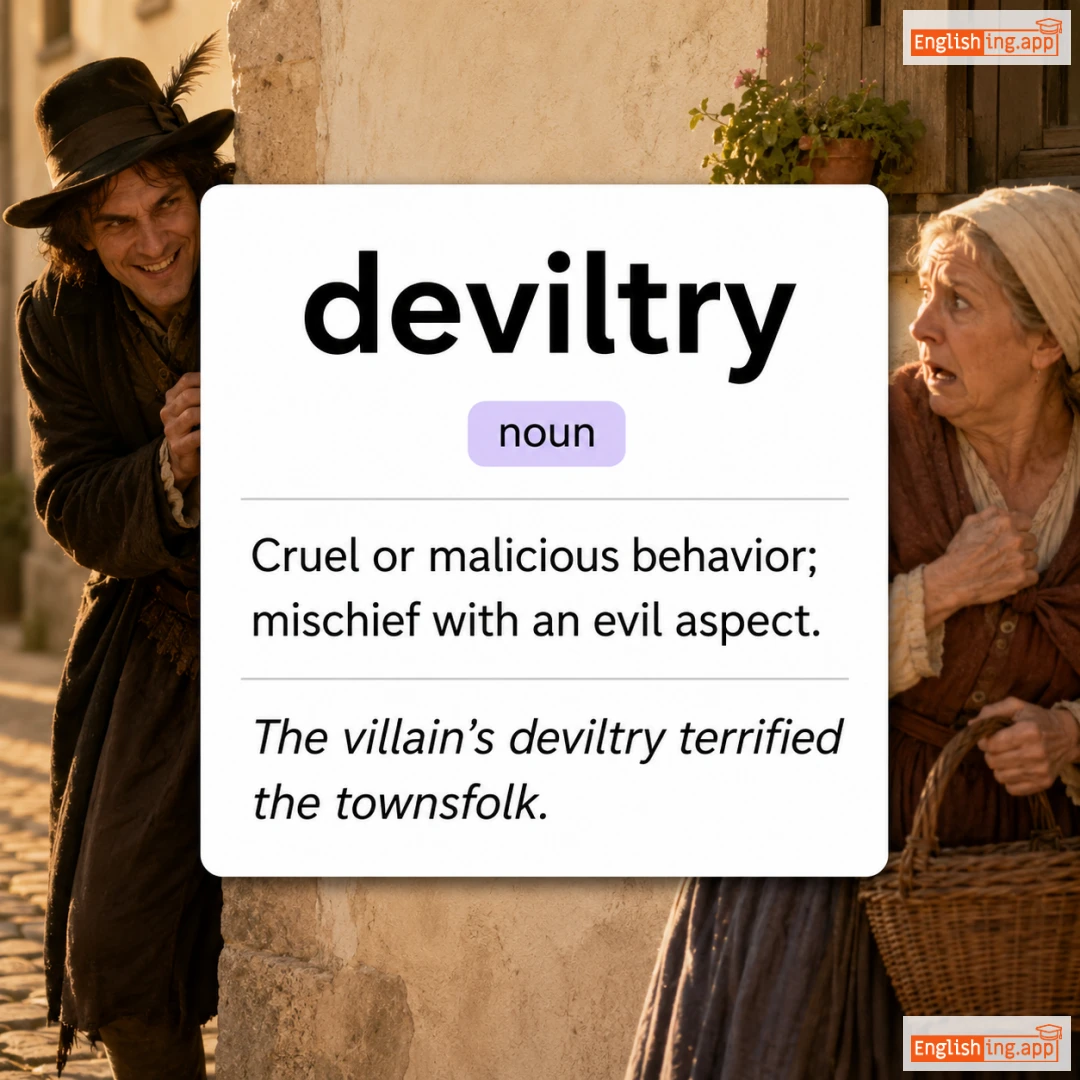
deviltry definition card — visual illustration of the meaning
noun C2
/ˈdɛvɪltrɪ/
悪魔的な行為 (akumateki na koui)

Cruel or malicious behavior; mischief with an evil aspect.

"The villain’s deviltry terrified the townsfolk."
"悪党の悪魔的な行為は町の人々を恐れさせました。" (Akutou no akumateki na koui wa machi no hitobito wo osore saremashita.)
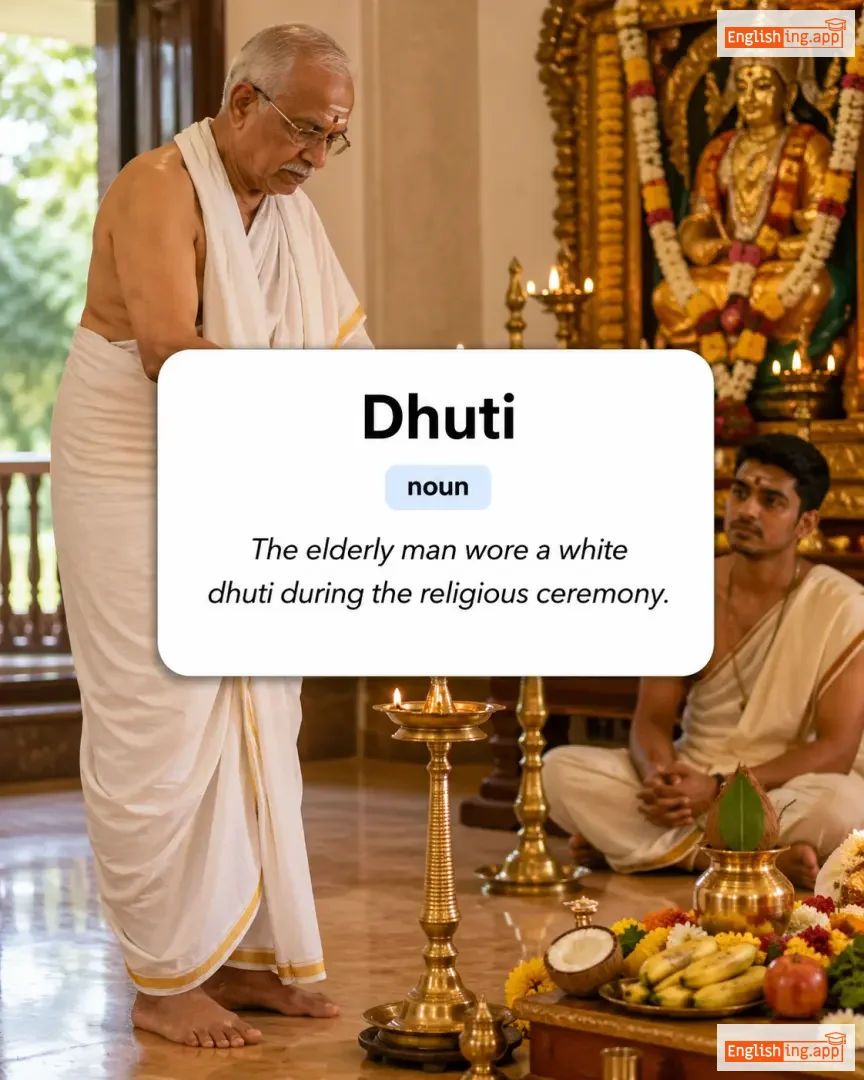
Dhuti definition card — visual illustration of the meaning
noun C2
/ˈduːti/
ドゥティ (dhuti)

a traditional Indian garment for men consisting of a piece of unstitched cloth worn around the waist and legs

"The elderly man wore a white dhuti during the religious ceremony."
"年配の男性は宗教的な儀式で白いドゥティを着ていた。" (Nempai no dansei wa shūkyō-teki na gishiki de shiroi duti o kite ita.)
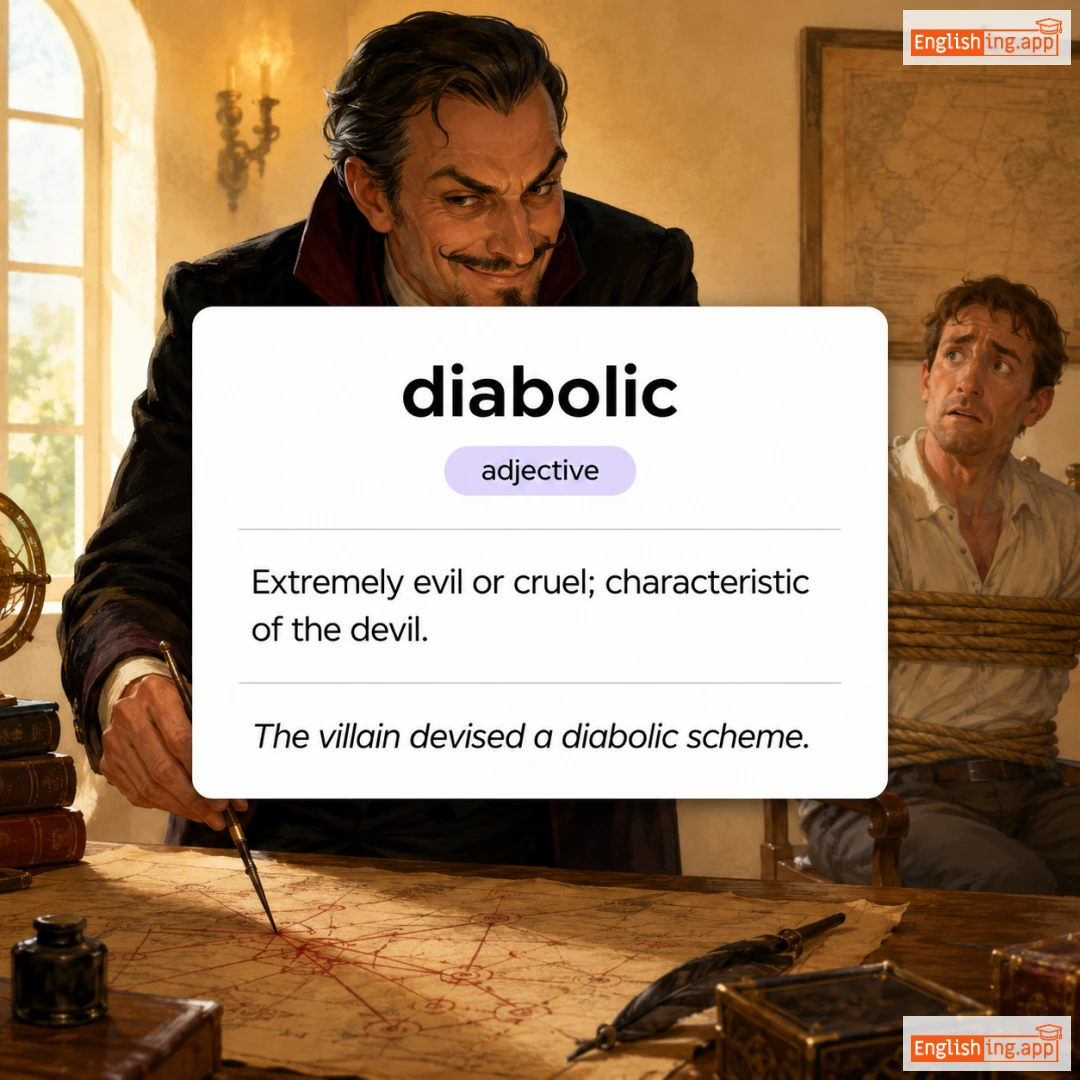
diabolic definition card — visual illustration of the meaning
adjective C2
/ˌdaɪəˈbɒlɪk/
悪魔的 (akumateki)

Extremely evil or cruel; characteristic of the devil.

"The villain devised a diabolic scheme."
"悪役は悪魔的な計画を立てた。" (Akuyaku wa akumateki na keikaku o tateta.)
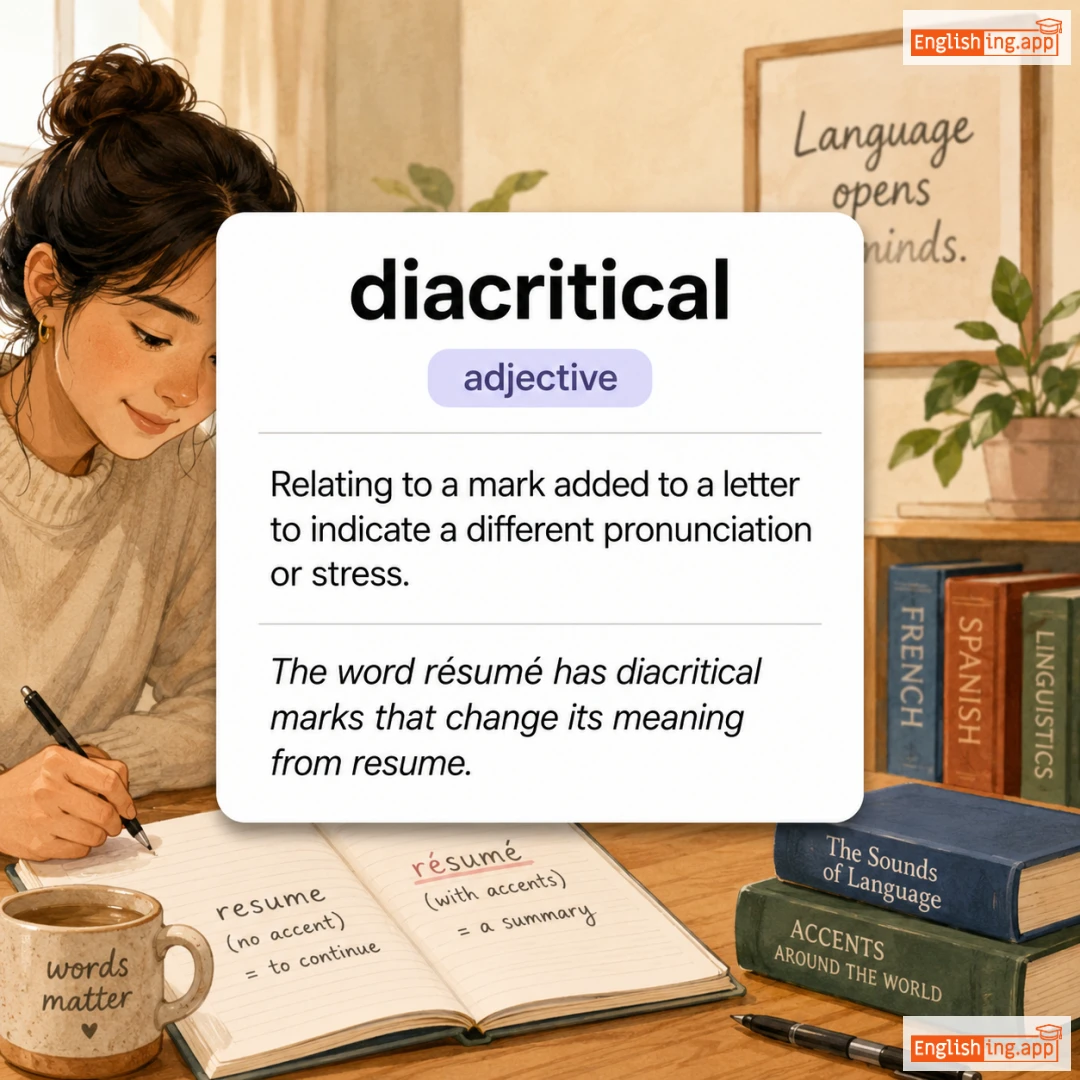
diacritical definition card — visual illustration of the meaning
adjective C2
/ˌdaɪəˈkrɪtɪkəl/
ダイアクリティカル (diakuritikar)

Relating to a mark added to a letter to indicate a different pronunciation or stress.

"The word résumé has diacritical marks that change its meaning from resume."

"‘レジュメ’という言葉には、意味を変えるダイアクリティカルマークがあります。" ('Rejume' to iu kotoba ni wa, imi o kaeru daiakuritikaru maaku ga arimasu.)
noun C2
/ˈdaɪəˌdɛm/
王冠 (ōkan)

A crown or headband worn as a symbol of royalty or authority.

"The queen wore a glittering diadem at the coronation."
"女王は戴冠式で輝く王冠を身に着けていました。" (Joō wa taikan-shiki de kagayaku ōkan o mi ni tsukete imashita.)
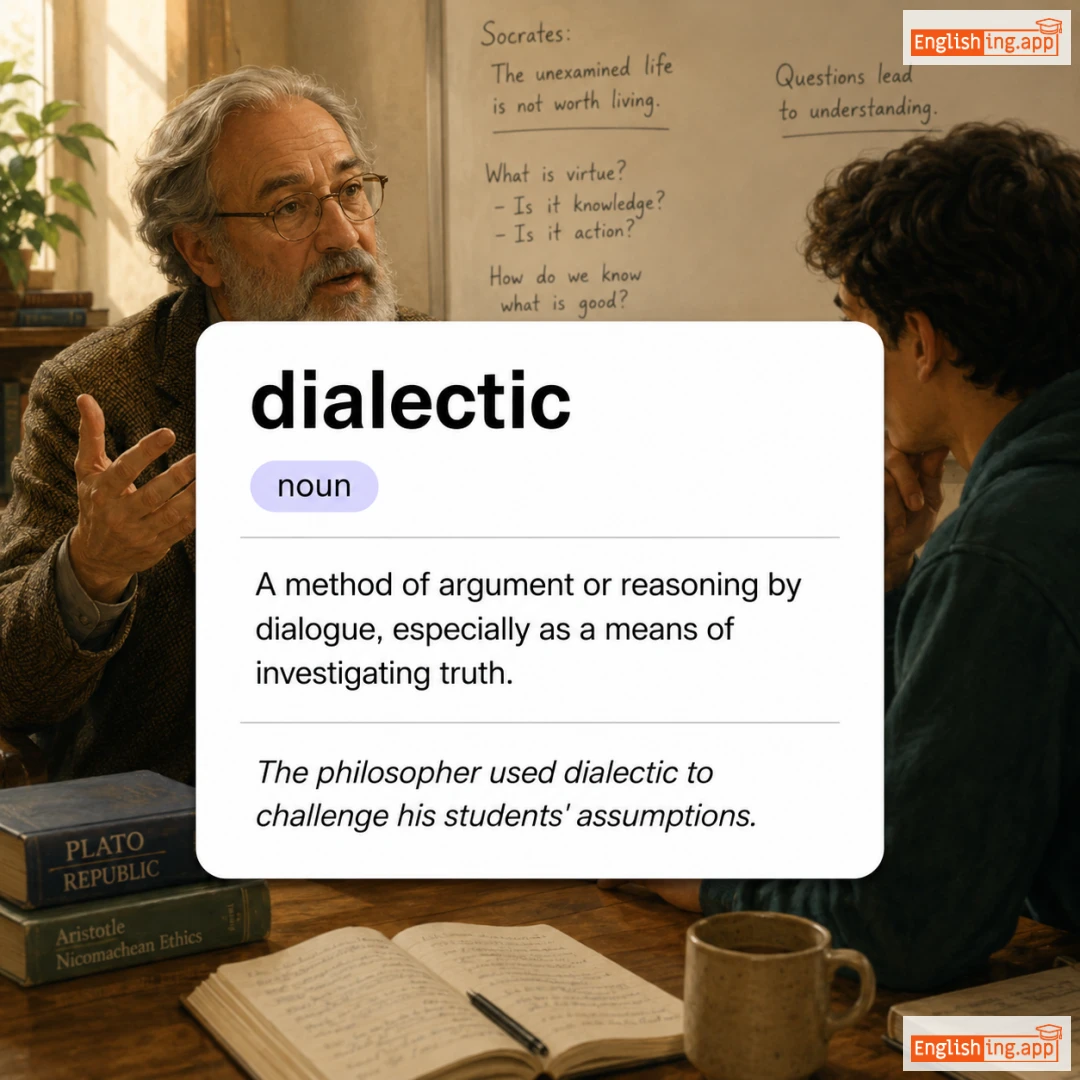
dialectic definition card — visual illustration of the meaning
noun C2
/ˌdaɪəˈlɛktɪk/

A method of argument or reasoning by dialogue, especially as a means of investigating truth.

"The philosopher used dialectic to challenge his students' assumptions."

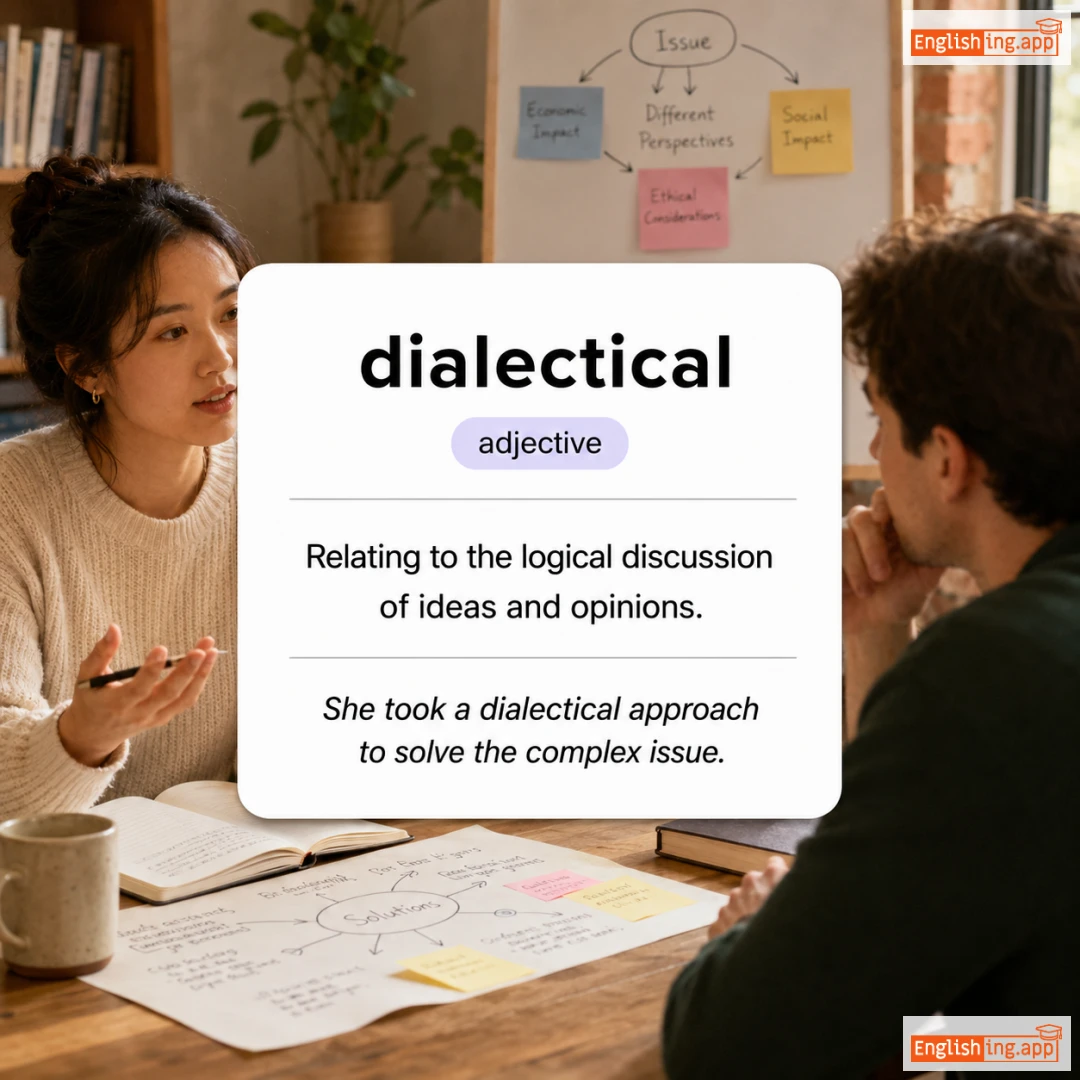
dialectical definition card — visual illustration of the meaning
adjective C2
/ˌdaɪəˈlɛktɪkəl/
弁証法的 (benshōhōteki)

Relating to the logical discussion of ideas and opinions.

"She took a dialectical approach to solve the complex issue."
"彼女は複雑な問題を解決するために弁証法的なアプローチを取りました。" (Kanojo wa fukuzatsu na mondai o kaiketsu suru tame ni benshōhōteki na apurōchi o torimashita.)
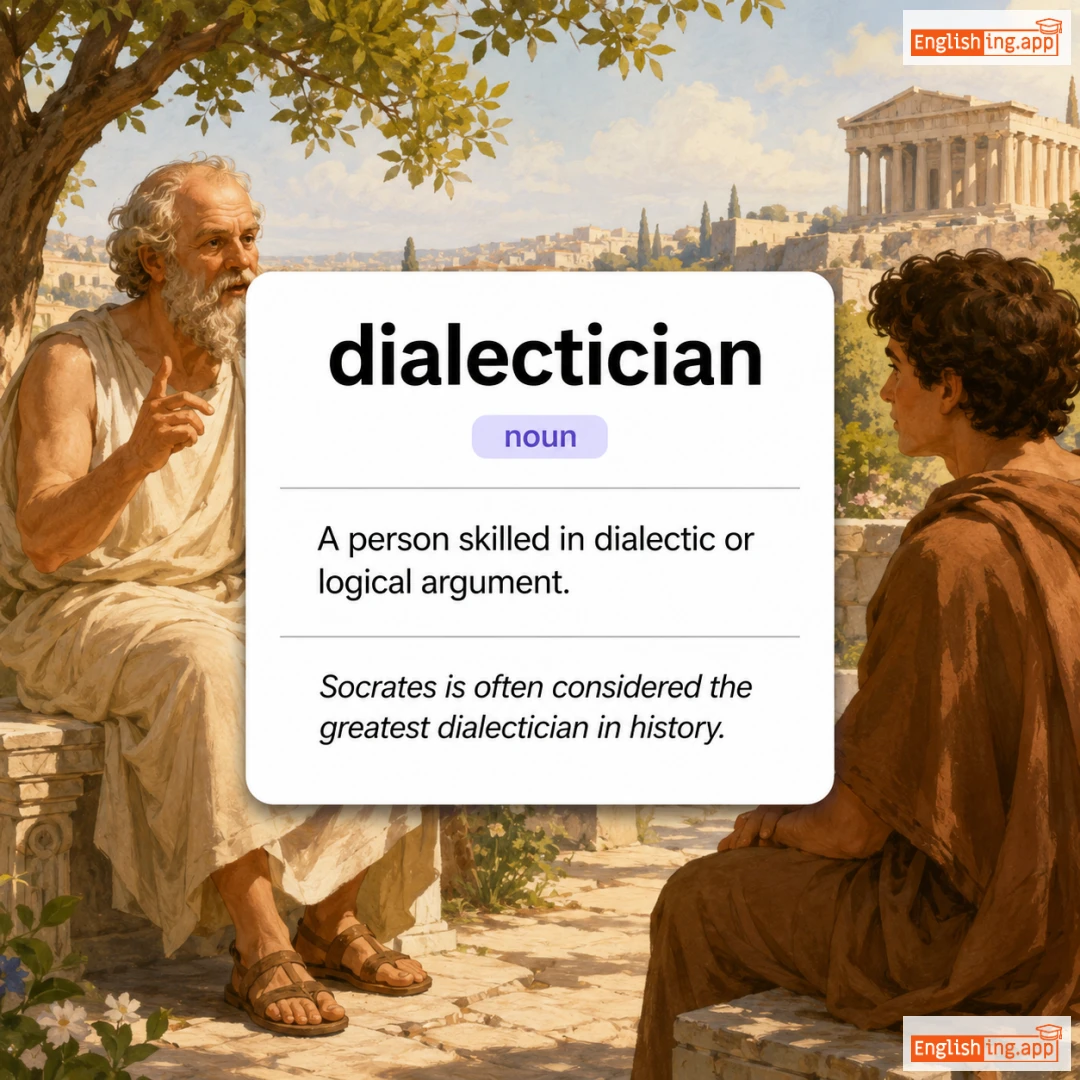
dialectician definition card — visual illustration of the meaning
noun C2
/ˌdaɪələˈtɪʃən/
弁証法の専門家 (benshōhō no senmonka)

A person skilled in dialectic or logical argument.

"Socrates is often considered the greatest dialectician in history."
"ソクラテスはしばしば歴史上最も偉大な弁証法の専門家と見なされます。" (Sokuratesu wa shibashiba rekishijō mottomo idaina benshōhō no senmonka to minasarerumasu.)
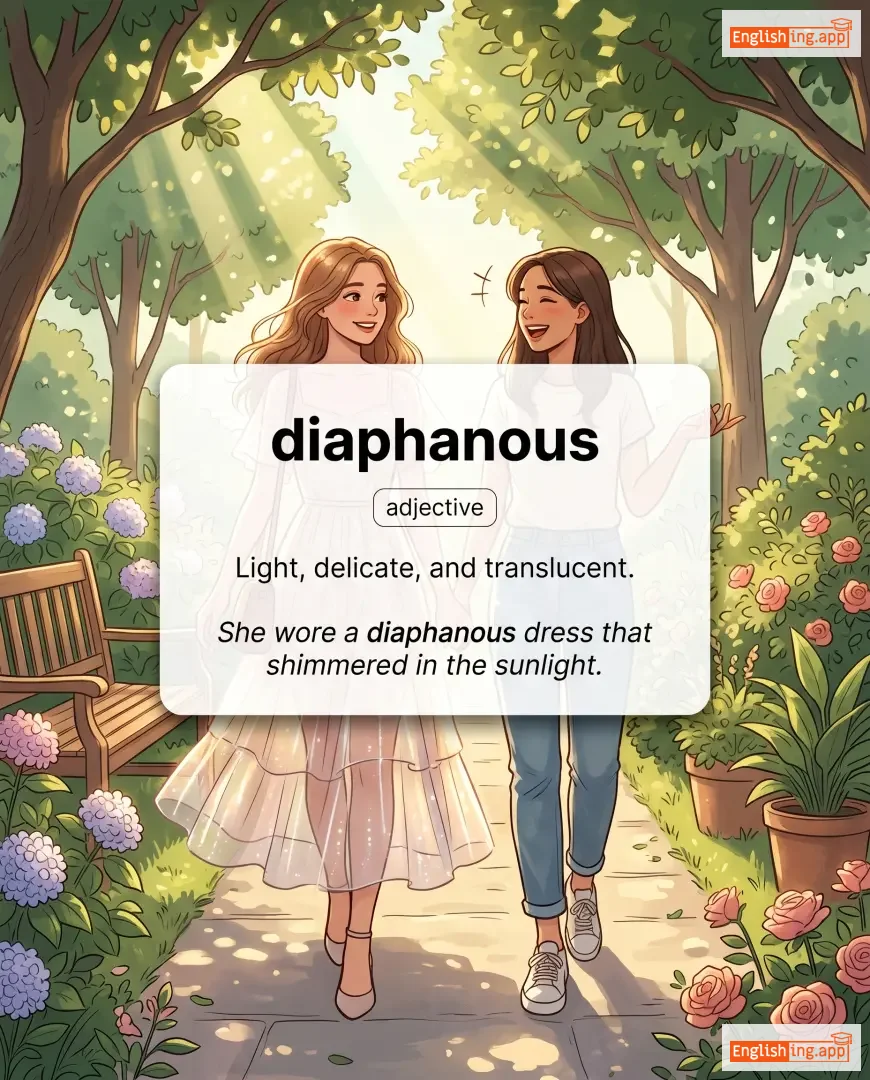
diaphanous definition card — visual illustration of the meaning
adjective C2
/daɪˈæfənəs/
透けている (suketeiru)

Light, delicate, and translucent.

"She wore a diaphanous dress that shimmered in the sunlight."
"彼女は太陽の光の中で輝く透けているドレスを着ていた。" (Kanojo wa taiyou no hikari no naka de kagayaku suketeiru doresu o kiteita.)
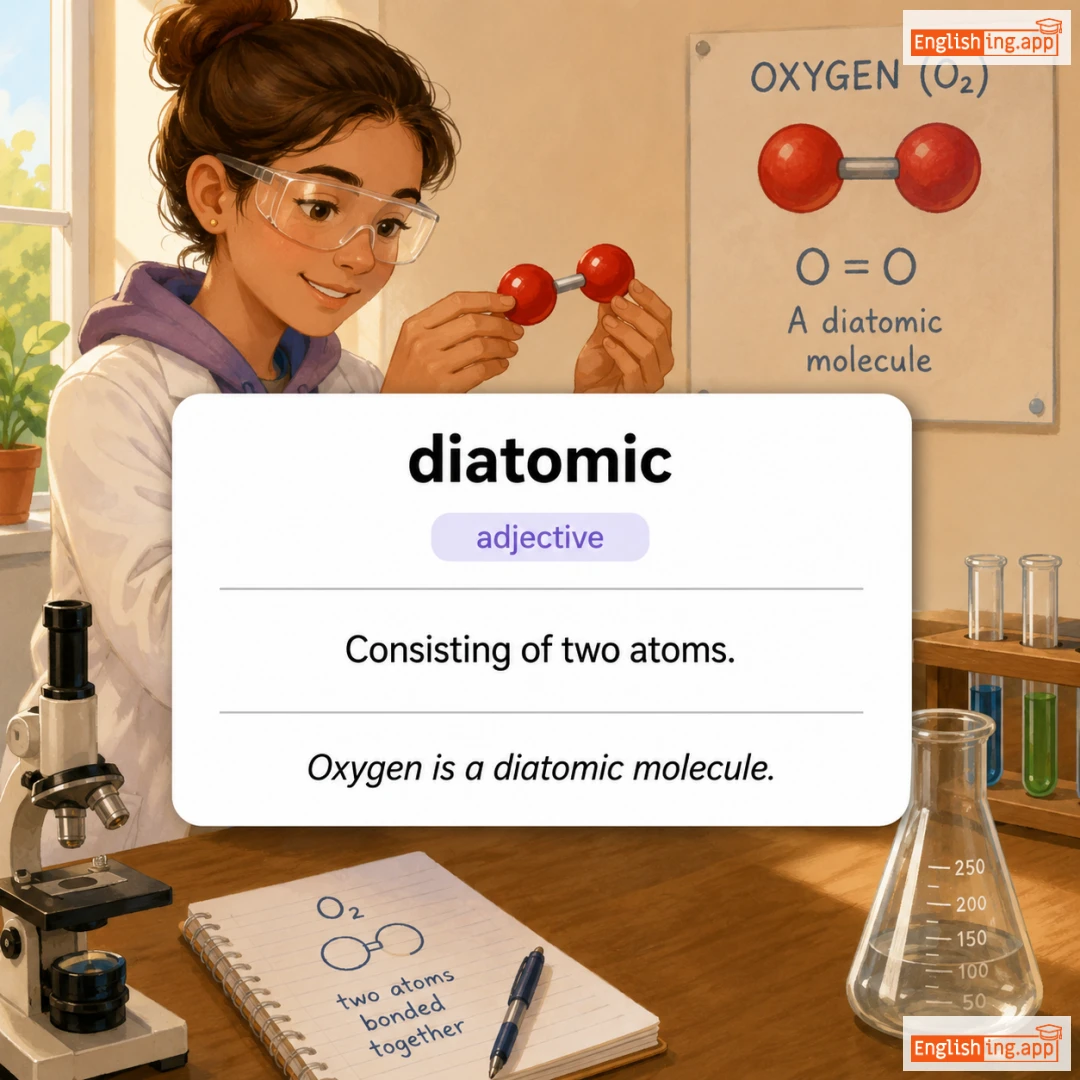
diatomic definition card — visual illustration of the meaning
adjective C2
/ˌdaɪəˈtɒmɪk/
二原子 (ni gen-shi)

Consisting of two atoms.

"Oxygen is a diatomic molecule."
"酸素は二原子分子です。" (Sanso wa ni gen-shi bunshi desu.)
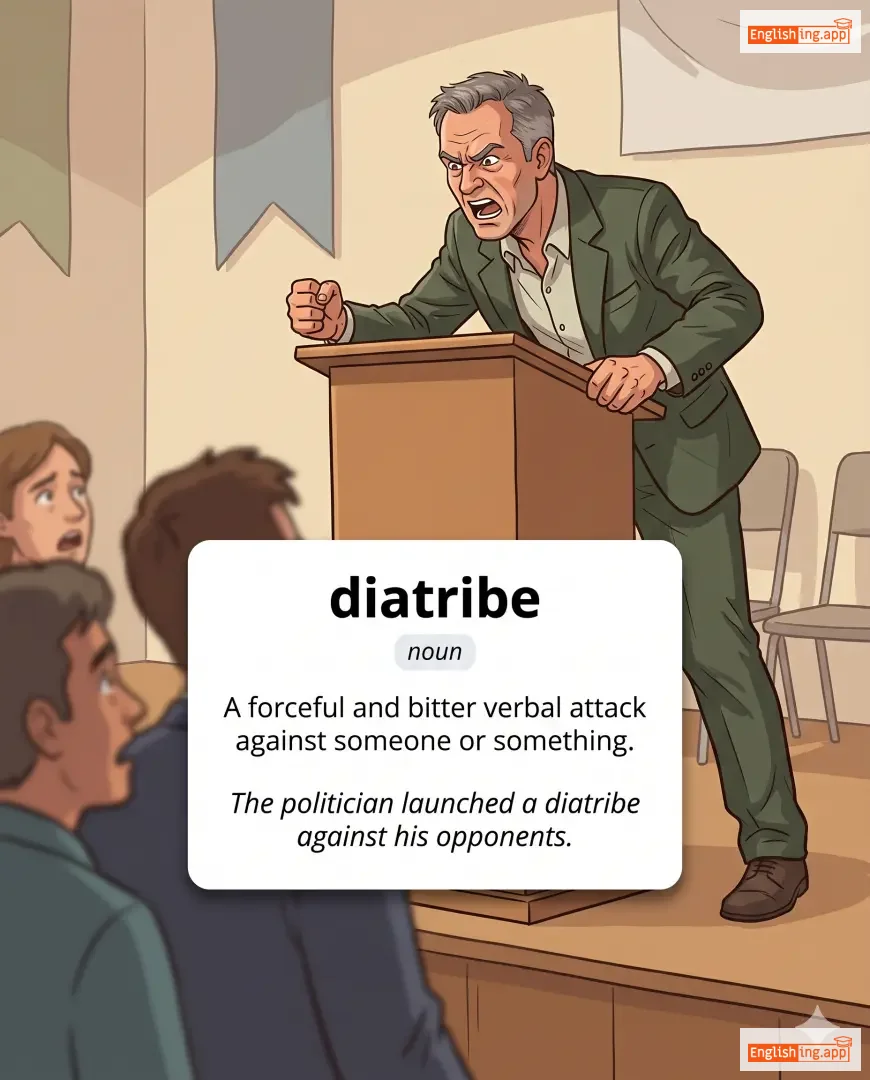
diatribe definition card — visual illustration of the meaning
noun C2
/ˈdaɪətraɪb/
激しい非難 (hageshī hinan)

A forceful and bitter verbal attack against someone or something.

"The politician launched a diatribe against his opponents."

"政治家は自分の対戦相手に対して激しい非難を始めた。" (Seijika wa jibun no taisen aite ni taishite hageshī hinan o hajimeta.)
noun C2
/ˈdɪktəm/
格言 (kakugen)

A formal pronouncement, authoritative statement, or maxim.

"The judge’s dictum clarified the principle of equality before the law."

"裁判官の格言は法の前での平等の原則を明確にしました。" (Saibankan no kakugen wa hō no mae de no byōdō no gensoku o meikaku ni shimashita.)
adjective C2
/daɪˈdæktɪk/
教育的な (kyoikuteki na)

Intended to teach, often with a moral lesson.

"The novel is not just entertaining but also didactic in nature."
"その小説はただの娯楽ではなく、教育的な性質も持っている。" (Sono shōsetsu wa tada no goraku de wa naku, kyoikuteki na seishitsu mo motte iru.)
differentia definition card — visual illustration of the meaning
noun C2
/ˌdɪfəˈrɛnʃə/
区別する特徴 (kubetsu suru tokuchou)

A distinguishing characteristic that sets one thing apart from another.

"The differentia of humans is their ability to reason abstractly."
"人間の区別する特徴は抽象的に考える能力です。" (Ningen no kubetsu suru tokuchou wa choushouteki ni kangaeru nouryoku desu.)
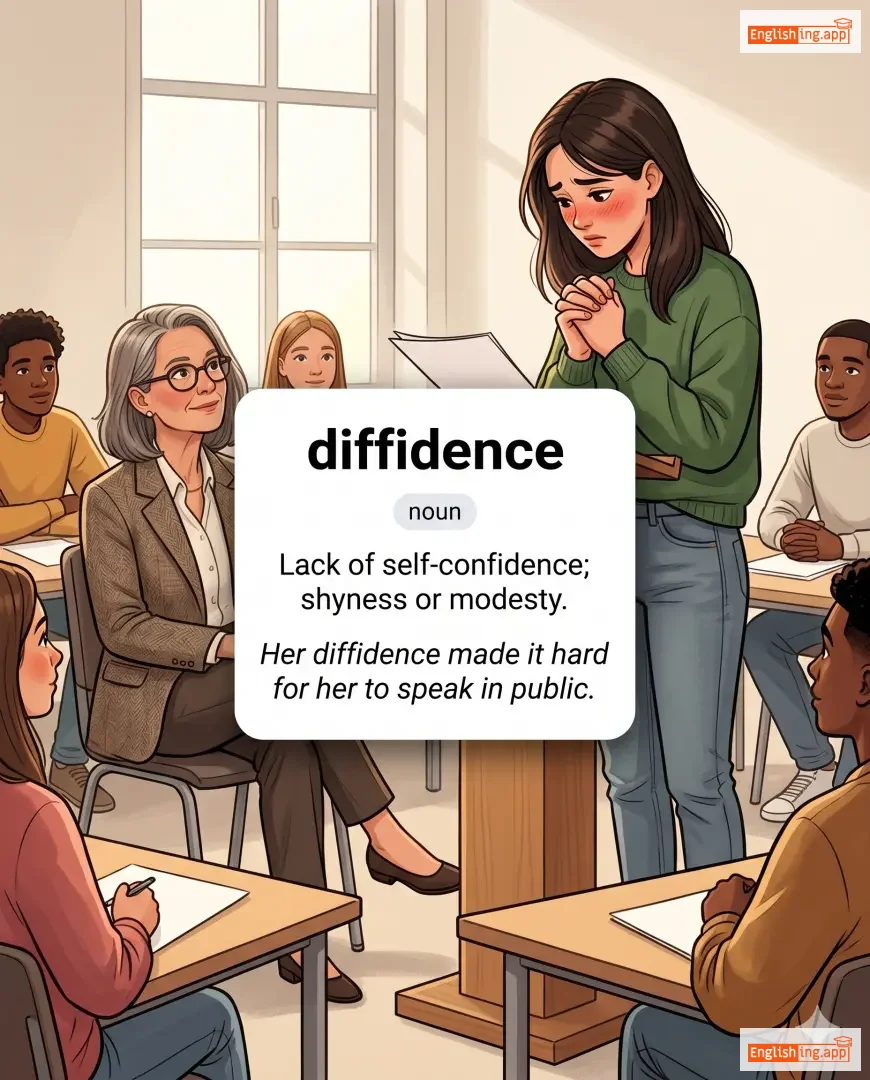
diffidence definition card — visual illustration of the meaning
noun C2
/ˈdɪfɪdəns/
自信の欠如 (jishin no ketsujo)

Lack of self-confidence; shyness or modesty.

"Her diffidence made it hard for her to speak in public."

"彼女の自信の欠如は、公衆の前で話すのを難しくした。" (Kanojo no jishin no ketsujo wa, koushuu no mae de hanasu no o muzukashiku shita.)
adjective C2
/ˈdɪfɪdənt/

Shy or lacking confidence in one's own abilities.

"He was too diffident to ask a question in class."

adjective C2
/dɪˈfjuːzəbl/
拡散可能な (kassan kanou na)

able to spread or be spread through a medium

"Oxygen is diffusible through cell membranes."

"酸素は細胞膜を通じて拡散することができます。" (Sanso wa saiboumaku wo toshite kassan suru koto ga dekimasu.)
noun C2
/ˈdaɪɡræf/
二重音字 (nijuonji)

A pair of letters representing a single sound, such as 'sh' in 'ship'.

"In the word 'phone', the letters 'ph' form a digraph."
"'電話'という言葉では、'ph'の文字が二重音字を形成します。" ('denwa' to iu kotoba de wa, 'ph' no moji ga nijuonji o keisei shimasu.)
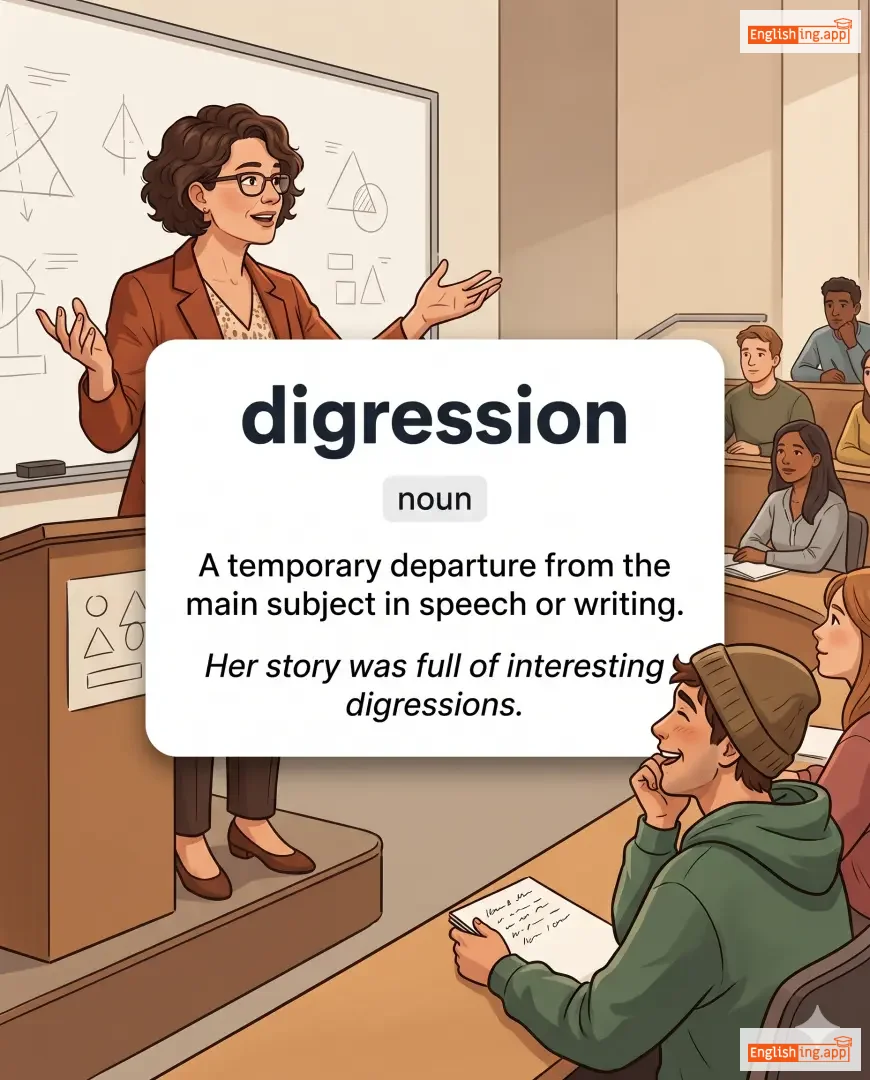
digression definition card — visual illustration of the meaning
noun C2
/daɪˈɡrɛʃən/
逸脱 (itsudatsu)

A temporary departure from the main subject in speech or writing.

"Her story was full of interesting digressions."

"彼女の話は面白い逸脱で満ちていました。" (Kanojo no hanashi wa omoshiroi itsudatsu de michite imashita.)
adjective C2
/daɪˈɡrɛsɪv/
主題から外れる傾向 (shudai kara hazureru keikou)

Tending to depart from the main subject in speech or writing.

"The speaker's digressive style made the lecture difficult to follow."

"話者のダイグレッシブなスタイルは講義を追いかけるのを難しくした。" (Wakushi no daigureshibu na sutairu wa kougi wo oikakeru no wo muzukashiku shita.)
verb C2
/dɪˈlæpɪdeɪt/
荒廃する (kōhai suru)

To cause something, especially a building, to fall into ruin or disrepair.

"The abandoned house began to dilapidate over the years."

"廃墟になった家は年月を経て崩壊し始めました。" (Haikyo ni natta ie wa toshi o hete hōkai shi hajimemashita.)
noun C2
/dɪˌlæpɪˈdeɪʃən/
荒廃 (kouhai)

The state of disrepair or ruin as a result of neglect.

"The old temple was in a state of dilapidation."

"その古い寺院は廃墟の状態にありました。" (Sono furui jiin wa haikyo no joutai ni arimashita.)
adjective C2
/ˈdɪlətɔːri/
遅延の (chien no)

Tending to cause delay; slow to act.

"The committee was criticized for its dilatory response to the crisis."

"委員会は危機に対するその遅延反応で批判されました。" (Iinkai wa kiki ni taisuru sono chien hannō de hihan saremashita.)
noun C2
/ˌdɪləˈtænt/
愛好家 (aikouka)

A person who takes up an art, activity, or subject merely for amusement, especially in a superficial way.

"He was dismissed as a dilettante in the art world because he lacked formal training."

"彼は芸術界で愛好家として退けられました、なぜなら正式な訓練が不足していたからです。" (Kare wa geijutsu-kai de aikouka toshite shirizokeraremashita, nazenara seishiki na kunren ga fusokushiteita kara desu.)
noun C2
/dɪnt/
努力、衝撃の跡 (doryoku, shōgeki no ato)

an impression or hollow made by a blow; force or power

"By dint of hard work, he achieved success."

"努力のおかげで、彼は成功を収めました。" (Doryoku no okage de, kare wa seikō o osamemashita.)
adjective C2
/daɪˈɒsɪsən/
教区に関する (kyouku ni kansuru)

relating to a diocese or the district under the supervision of a bishop in the Christian Church

"The diocesan council met to discuss church affairs."

"教区評議会は教会の問題を話し合うために集まりました。" (Kyouku hyougikai wa kyoukai no mondai wo hanashiau tame ni atsumarimashita.)
noun C2
/ˈdɪfθɒŋ/
二重母音 (nijuuboin)

A complex vowel sound that begins with one vowel and glides into another within the same syllable.

"The word 'coin' contains a diphthong."

"'コイン'という単語には二重母音が含まれています。" ('Koin' to iu tango ni wa nijuuboin ga fukuma reteimasu.)
noun C2
/dɪˈpləʊmətɪst/
外交官 (gaikoukan)

A person skilled in diplomacy; another word for diplomat.

"The diplomatist handled the negotiations with great tact."

"外交官は交渉を巧みに取り扱いました。" (Gaikoukan wa koushou o takumi ni toriatsukaimashita.)
noun C2
/ˌdɪpsəˈmeɪniæk/
アルコール中毒者 (arukōru chūdokusha)

A person with an uncontrollable craving for alcoholic drinks.

"The novel portrayed the tragic downfall of a dipsomaniac who lost everything to alcohol."
"その小説はアルコールに全てを失ったアルコール中毒者の悲劇的な転落を描いています。" (Sono shōsetsu wa arukōru ni subete o ushinatta arukōru chūdokusha no higekiteki na tenraku o egaiteimasu.)
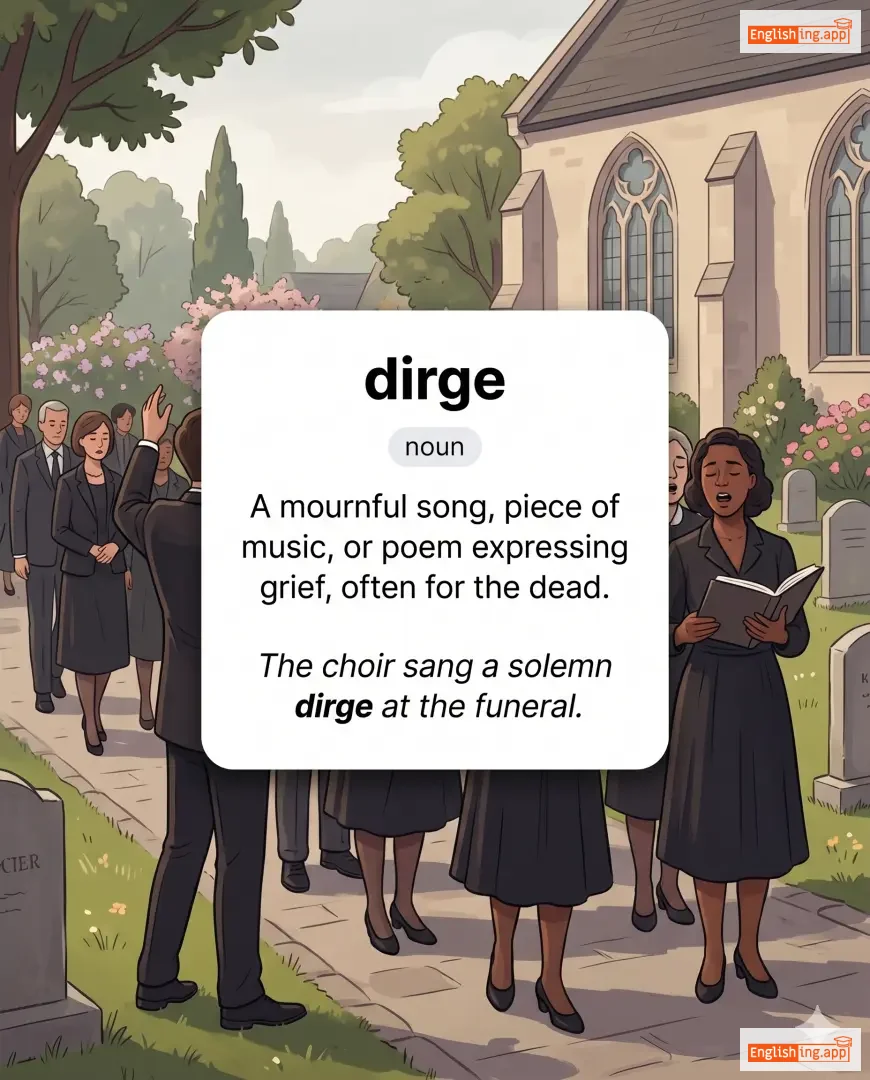
dirge definition card — visual illustration of the meaning
noun C2
/dɜːrdʒ/
哀歌 (aika)

A mournful song, piece of music, or poem expressing grief, often for the dead.

"The choir sang a solemn dirge at the funeral."
"コーラスは葬式で厳粛な哀歌を歌いました。" (Kōrasu wa sōshiki de genshuku na aika o utaimashita.)
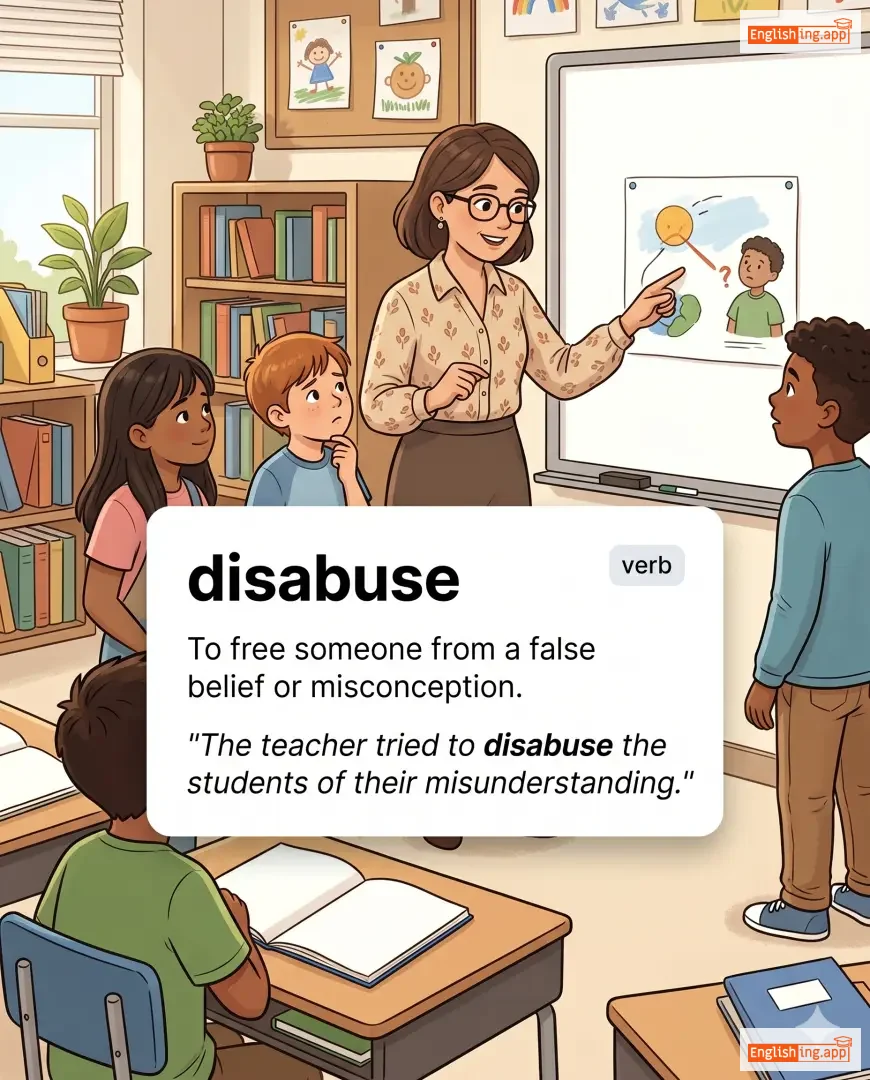
disabuse definition card — visual illustration of the meaning
verb C2
/ˌdɪsəˈbjuːz/
誤解を解く (gokai wo toku)

To free someone from a false belief or misconception.

"The teacher tried to disabuse the students of their misunderstanding."

"先生は生徒たちの誤解を解こうとしました。" (Sensei wa seito-tachi no gokai wo tokou to shimashita.)
adjective C2
/ˌdɪsəˈfɛktɪd/
不満な (fuman na)

Dissatisfied and rebellious, especially against authority or leadership.

"The reforms were introduced to calm the disaffected youth."

"改革は不満な若者を落ち着かせるために導入されました。" (Kaizen wa fuman na wakamono o ochitsukase ru tame ni dounyuu saremashita.)
noun C2
/ˌdɪsæprəˈbeɪʃən/
強い非難 (tsuyoi hinan)

strong disapproval, typically on moral grounds

"The policy was met with widespread disapprobation."

"その政策は広範な非難を受けました。" (Sono seisaku wa kōhan na hinan o ukemashita.)
verb C2
/ˌdɪsəˈreɪndʒ/
乱す (midasu)

to disturb the order or arrangement of something

"The wind disarranged her hair."

"風が彼女の髪を乱した。" (Kaze ga kanojo no kami wo midashita.)
verb C2
/ˌdɪsəˈvaʊ/
否定する (hitei suru)

to deny responsibility for or connection with something

"He disavowed any involvement in the scandal."

"彼はスキャンダルへの関与を否定した。" (Kare wa sukyandaru e no kan'yo o hitei shita.)
noun C2
/ˌdɪsəˈvaʊəl/
拒否 (kyohi)

the denial of any responsibility, connection, or support

"The politician issued a firm disavowal of the controversial remarks."

"その政治家は物議を醸す発言に対して強い拒否を表明した。" (Sono seijika wa butsugi o kamasu hatsugen ni taishite tsuyoi kyohi o hyōmei shita.)
verb C2
/dɪsˈbɑːr/
弁護士を法曹界から正式に除外する (bengoshi o hōsōkai kara seishiki ni jogai suru)

to officially remove a lawyer from the legal profession

"The corrupt lawyer was disbarred for unethical conduct."

"腐敗した弁護士は非倫理的な行動により除外されました。" (Fuhai shita bengoshi wa hinritsutekina kōdō ni yori jogai saremashita.)
verb C2
/dɪsˈbɜːrdən/
負担を軽減する (futan o keigen suru)

to relieve someone of a burden or load

"She disburdened herself of worries by sharing them with her friend."

"彼女は心配を友達と共有することで自分を負担から解放した。" (Kanojo wa shinpai o tomodachi to kyōyū suru koto de jibun o futan kara kaihō shita.)
verb C2
/dɪsˈbɜːrs/
分配する (bunpai suru)

to pay out money, especially from a fund

"The organization will disburse the funds to the affected families."
"その団体は影響を受けた家族に資金を分配します。" (Sono dantai wa eikyō o uketa kazoku ni shikin o bunpai shimasu.)
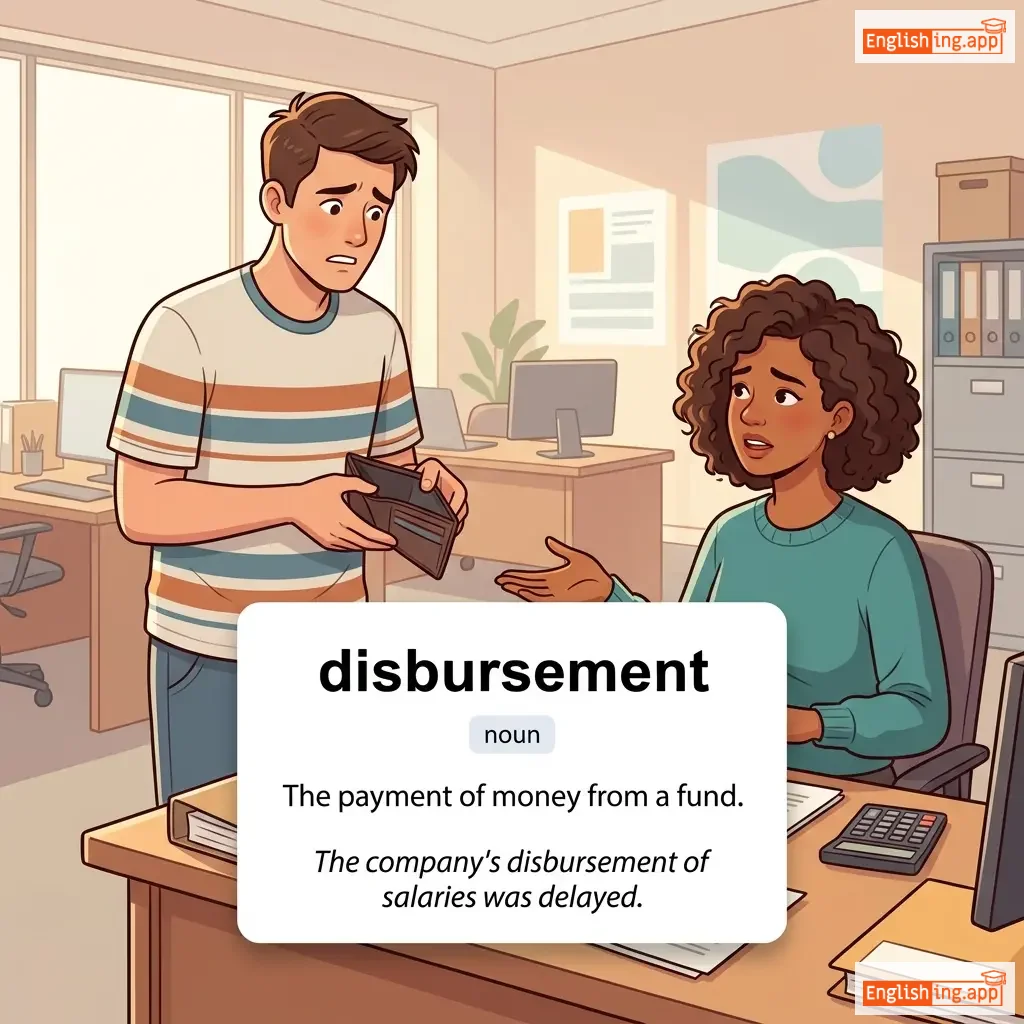
disbursement definition card — visual illustration of the meaning
noun C2
dɪsˈbɜːs.mənt
支払い (shiharai)

The payment of money from a fund.

"The company's disbursement of salaries was delayed."

"会社の給与の支払いが遅れました。" (Kaisha no kyūyo no shiharai ga okuremashita.)
verb C2
/ˌdɪskəmˈbɑːbjuleɪt/
混乱させる (konran saseru)

to confuse or disconcert; to upset the normal order

"The sudden question seemed to discombobulate him."

"突然の質問が彼を混乱させたようだ。" (Totsuzen no shitsumon ga kare o konran saseta you da.)