語彙集

英単語辞書 | 単語の意味、定義、例文

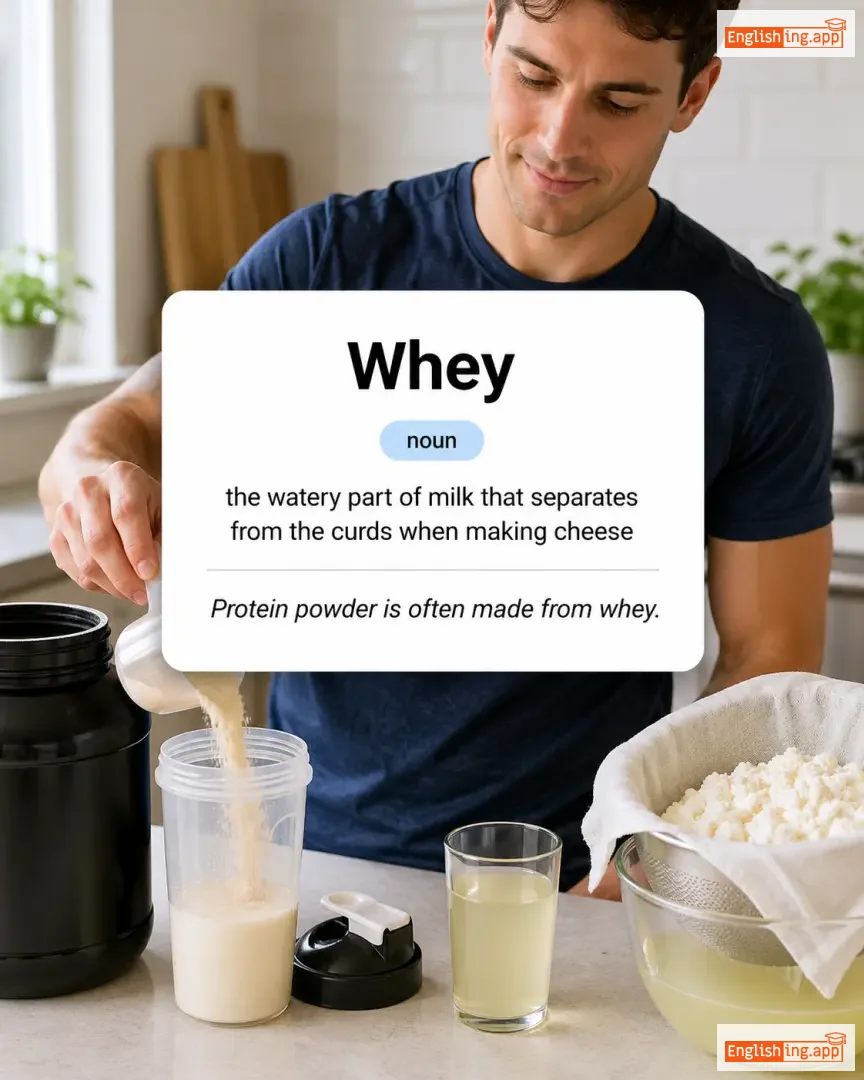
Whey definition card — visual illustration of the meaning
noun C1
/weɪ/
ホエイ (hoe)

the watery part of milk that separates from the curds when making cheese

"Protein powder is often made from whey."

"プロテインパウダーは通常、ホエイから作られます。" (Purotein paudā wa tsūjō, hoei kara tsukuraremasu.)
👃

whiff

noun, verb C1
/wɪf/

A brief, faint smell or puff of air; to get a quick smell of something.

"I caught a whiff of perfume as she passed by."

noun C1
/wɪm/
気まぐれ (kimagure)

a sudden or unpredictable idea, desire, or decision

"She bought the dress on a whim."
"彼女は気まぐれでそのドレスを買いました。" (Kanojo wa kimagure de sono doresu o kaimashita.)
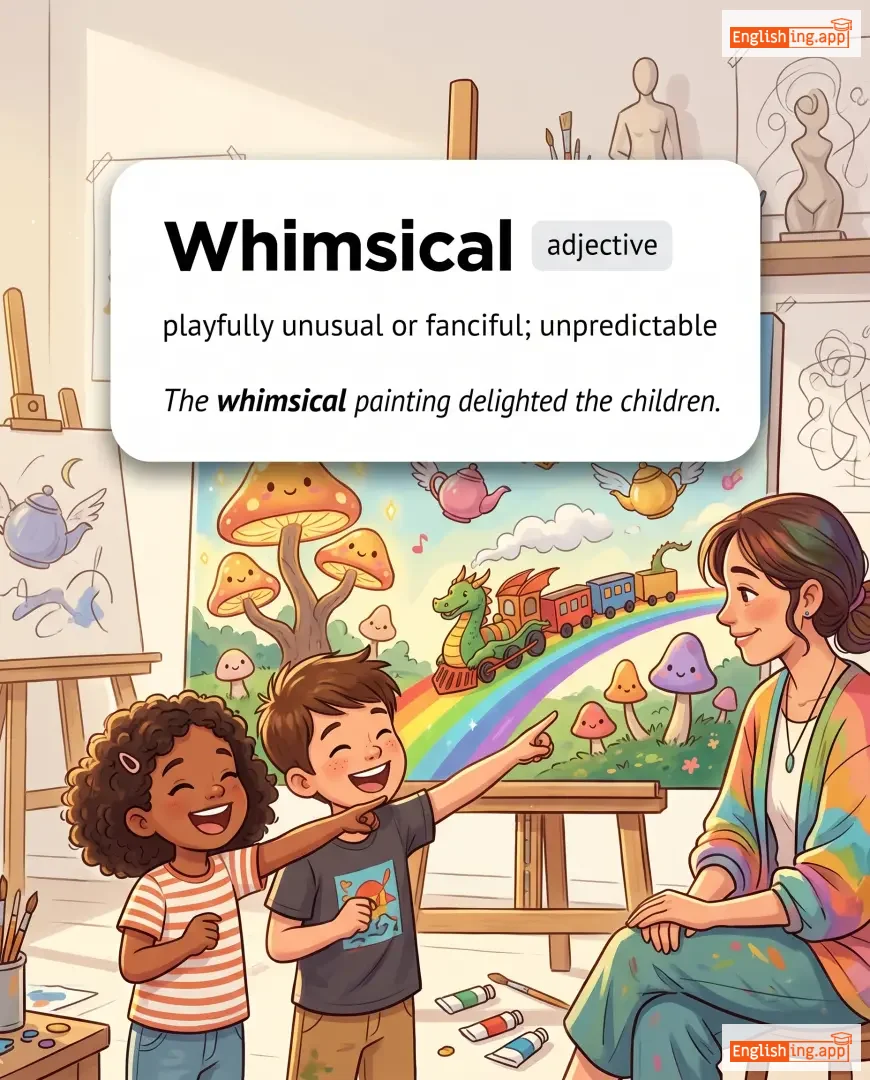
Whimsical definition card — visual illustration of the meaning
adjective C1
/ˈwɪmzɪkəl/
奇想天外 (kisō tengai)

playfully unusual or fanciful; unpredictable

"The whimsical painting delighted the children."

"その奇想天外な絵画は子供たちを喜ばせました。" (Sono kisō tengai na kaiga wa kodomotachi o yorokobasemashita.)
adverb C1
/ˈwɪmzɪkli/
遊び心いっぱいに (uimuzikarii)

In a playful, fanciful, or capricious manner; with sudden changes of mind

"She decorated her room whimsically with colorful balloons."

"彼女は部屋をカラフルな風船で遊び心いっぱいに飾った。" (Kanojo wa heya o karafuru na fuusen de asobigokoro ippai ni kazatta.)
noun C1
/ˈwɪmzi/
奇抜さ (kibatsusa)

playful or fanciful behavior or humor

"Her stories were full of whimsy and imagination."

"彼女の話は奇抜さと想像力にあふれていました。" (Kanojo no hanashi wa kibatsusa to sōzōryoku ni afurete imashita.)
whitelisting definition card — visual illustration of the meaning
noun C1
/ˈwaɪt.lɪst.ɪŋ/
特定のユーザー、ソフトウェア、またはIPアドレスを安全で信頼できるものとして識別する (Tokutei no yūzā, sofutowea, matawa IP adoresu o anzen de shinrai dekiru mono toshite shikibetsu suru)

Identifying specific users, software, or IP addresses as safe and trusted

"Only verified applications are allowed through whitelisting."

"認証済みのアプリケーションのみがホワイトリストを通過できます。" (Ninshouzumino apurikeeshon nomi ga howaitorisuto o tsuuka dekimasu.)
verb C1
/ˈwaɪtˌwɑːʃ/

to cover up faults, errors, or unpleasant facts; to paint with white paint or lime

"The report was criticized for trying to whitewash the company's failures."

verb C1
/ˈwɪtl/

to carve or shape something by cutting off small pieces; to gradually reduce

"He spent the afternoon whittling a piece of wood into a toy."

adjective C1
/ˌhoʊlˈhɑːrtɪd/
全力で (zenryoku de)

showing complete sincerity and commitment; fully enthusiastic

"She gave her wholehearted support to the project."
"彼女はそのプロジェクトに全力でサポートを与えた。" (Kanojo wa sono purojekuto ni zenryoku de sapōto o ataeta.)
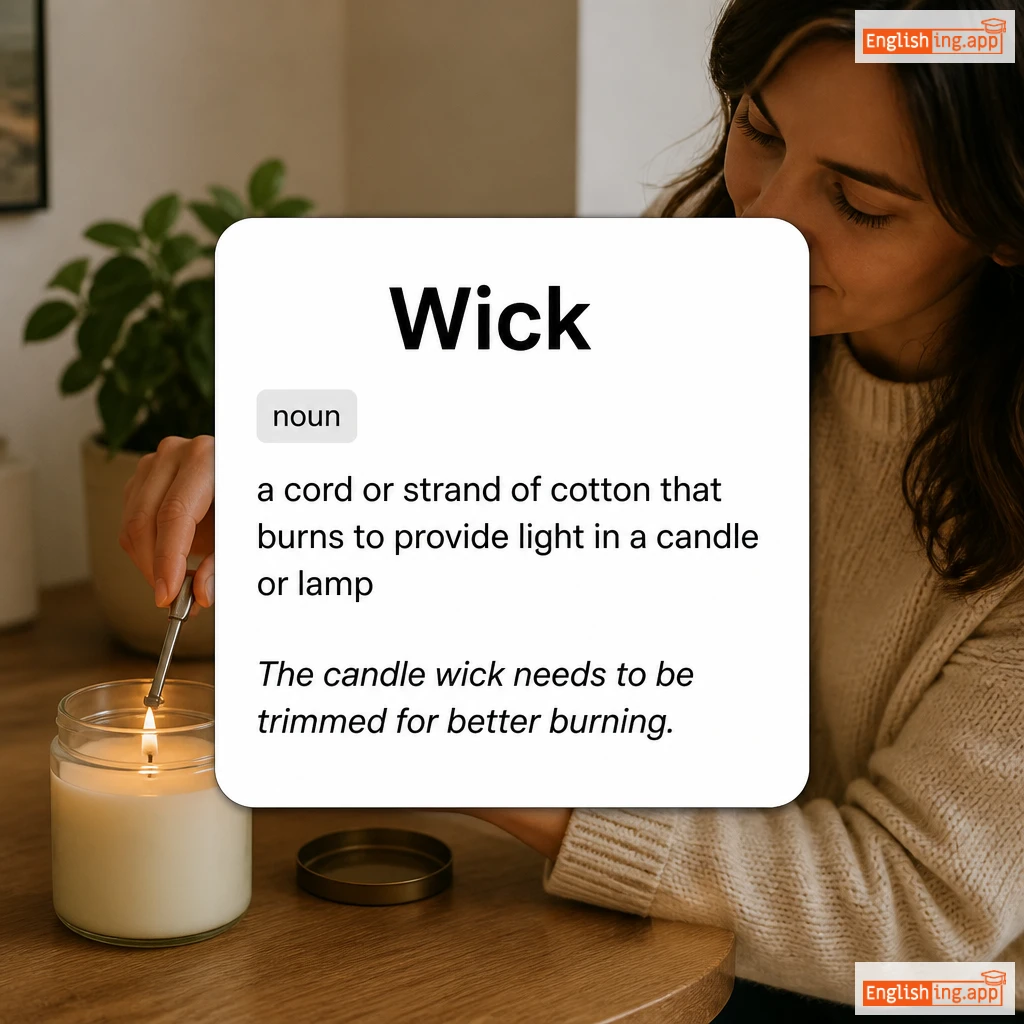
Wick definition card — visual illustration of the meaning
noun C1
/wɪk/
キャンドルの芯 (kyandoru no shin)

a cord or strand of cotton that burns to provide light in a candle or lamp

"The candle wick needs to be trimmed for better burning."

"キャンドルの芯は、より良く燃えるために切る必要があります。" (Kyandoru no shin wa, yori yoku moeru tame ni kiru hitsuyō ga arimasu.)
verb C1
/wiːld/
持つ、使う (motsu, tsukau)

To hold and use a weapon, tool, or power effectively.

"The warrior wielded his sword with great skill."
"戦士はその剣を大きな技術で使いました。" (Senshi wa sono ken o ōkina gijutsu de tsukaimashita.)
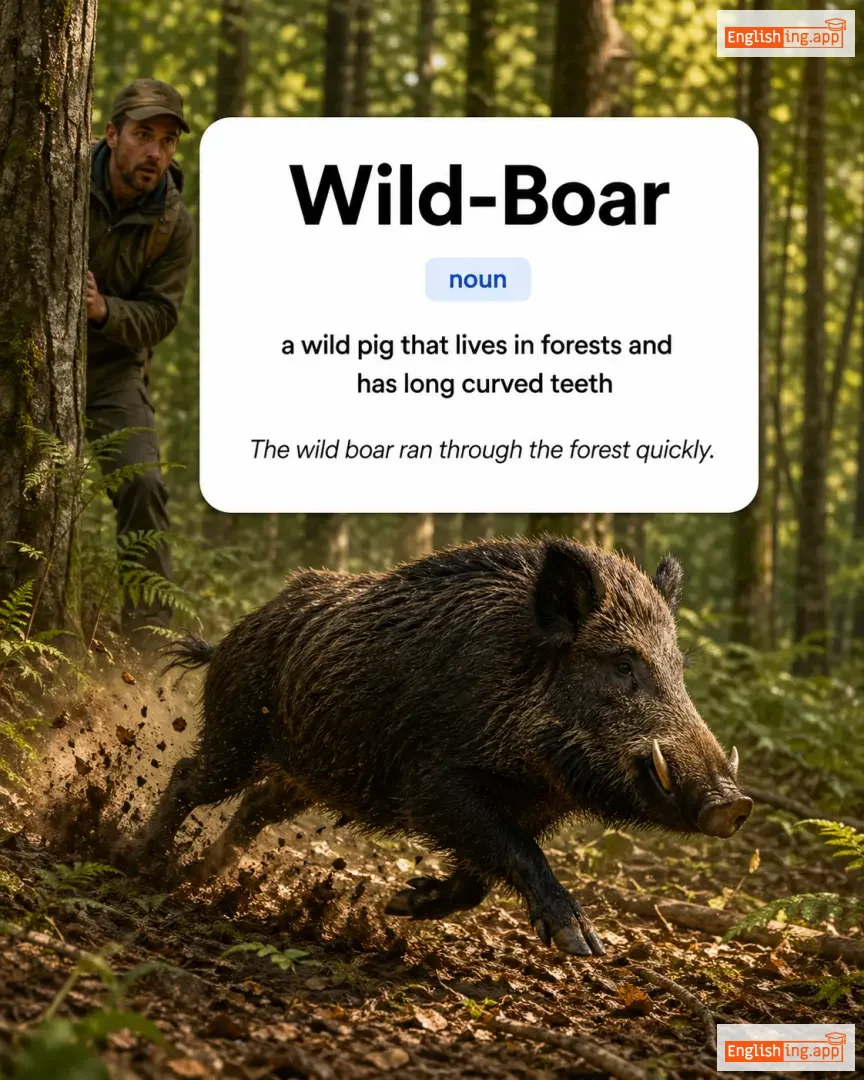
Wild-Boar definition card — visual illustration of the meaning
noun C1
/waɪld bɔːr/
野生のイノシシ (yasei no inosishi)

a wild pig that lives in forests and has long curved teeth

"The wild boar ran through the forest quickly."
"ワイルドボアは森を速く駆け抜けた。" (wairudo boa wa mori wo hayaku kakenuketa)
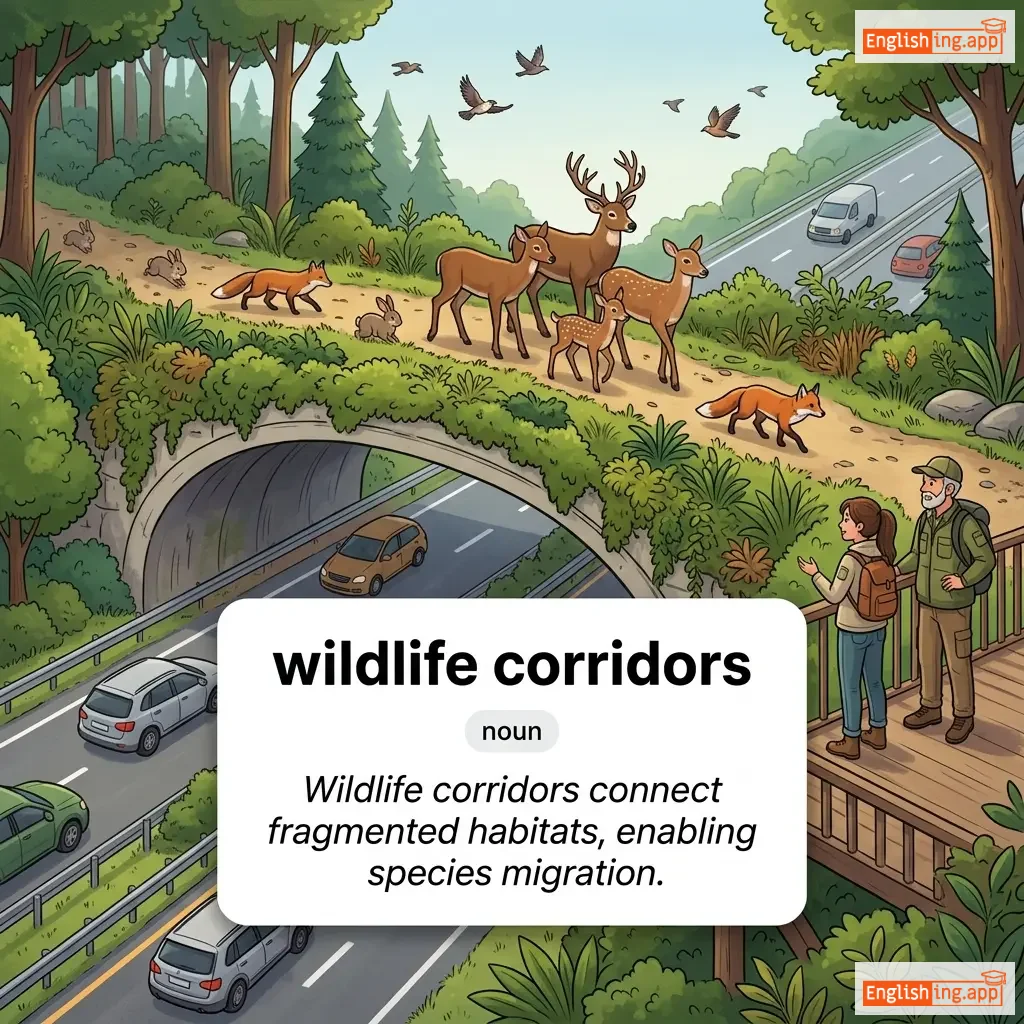
wildlife corridors definition card — visual illustration of the meaning
noun C1
ˈwaɪldlaɪf ˈkɔːrɪdɔːrz
野生動物の回廊 (yasei dōbutsu no kairō)

Areas of habitat connecting wildlife populations separated by human activities or structures.

"Wildlife corridors connect fragmented habitats, enabling species migration."

"野生動物の回廊は断片化した生息地を繋ぎ、種の移動を可能にします。" (Yasei dōbutsu no kairō wa danpenka shita seisokuchi o tsunagi, shū no idō o kanō ni shimasu.)
adjective C1
/ˈwɪl.fəl/
頑固な; 意図的な (ganko na; itotekina)

deliberately stubborn; done on purpose; intentional

"His wilful disobedience led to punishment."

"彼の意図的な不服従は罰に繋がった。" (Kare no itoteki na fufukujuu wa batsu ni tsunagatta.)
adjective C1
/ˈwɪlfəl/
意図的 (itoteki)

Deliberate, intentional, or stubbornly determined to do as one wants.

"Her willful disregard for the rules got her into trouble."

"彼女の意図的なルール無視は、彼女をトラブルに巻き込んだ。" (Kanojo no itotekina rūru mushi wa, kanojo o toraburu ni makikonda.)
verb C1
/wɪlt/
しおれる (shioreru)

To become limp, weak, or drooping, often due to lack of water or energy.

"The flowers wilted in the heat of the sun."

"花は太陽の熱でしおれた。" (Hana wa taiyō no netsu de shioreta.)
adjective C1
/ˈwaɪli/
ずるい (zurui)

Skilled at gaining an advantage, especially by being clever or deceitful.

"The wily fox outsmarted the hunters."

"ずるいキツネは狩人を出し抜いた。" (Zurui kitsune wa kariudo o dashinuita.)
😣

wince

verb C1
/wɪns/

To make an involuntary movement of the face or body as a result of pain or distress.

"He winced when the doctor touched his injured arm."

noun C1
/ˈwɪndfɔːl/
思いがけない利益 (omoigakenai rieki)

an unexpected piece of good fortune, typically a large amount of money

"The startup received a windfall when a major client paid for a full year in advance."

"スタートアップは重要な顧客が1年分前払いした際に思いがけない利益を得ました。" (Sutātopu wa jūyōna kokyaku ga 1 nenbun maebarai shita sai ni omoigakenai rieki o emashita.)
noun C1
/ˈwɪŋˌspæn/
翼幅 (yokuhaba)

the distance from the tip of one wing to the tip of the other wing

"The eagle has an impressive wingspan of over two meters."

"ワシの翼幅は2メートル以上です。" (Washi no yokuhaba wa 2 meetoru ijou desu.)
adjective C1
/ˈwɪntri/
冬の (fuyu no)

Characteristic of or suitable for winter; cold and bleak.

"The wintry wind made everyone shiver as they walked outside."

"冬の風は、外を歩いているときにみんなを震えさせた。" (Fuyu no kaze wa, soto o aruite iru toki ni minna o furu eshita.)
adjective C1
/ˈwaɪəri/
細くて強く、丈夫な (hosokute tsuyokute, joubu na)

Lean, tough, and strong, often with sinewy muscles.

"The wiry athlete moved with remarkable speed and agility."

"その細いアスリートは驚くべき速度と敏捷性で動いた。" (Sono hosoi asurīto wa odorokubeki sokudo to binshōsei de ugoita.)
noun C1
/wɪsp/
小さな束や部分 (chiisana taba ya bubun)

A small thin or twisted bunch, piece, or amount of something.

"A wisp of smoke rose from the chimney."
"煙のウィスプが煙突から上がった。" (Kemuri no wisupu ga entotsu kara agatta.)
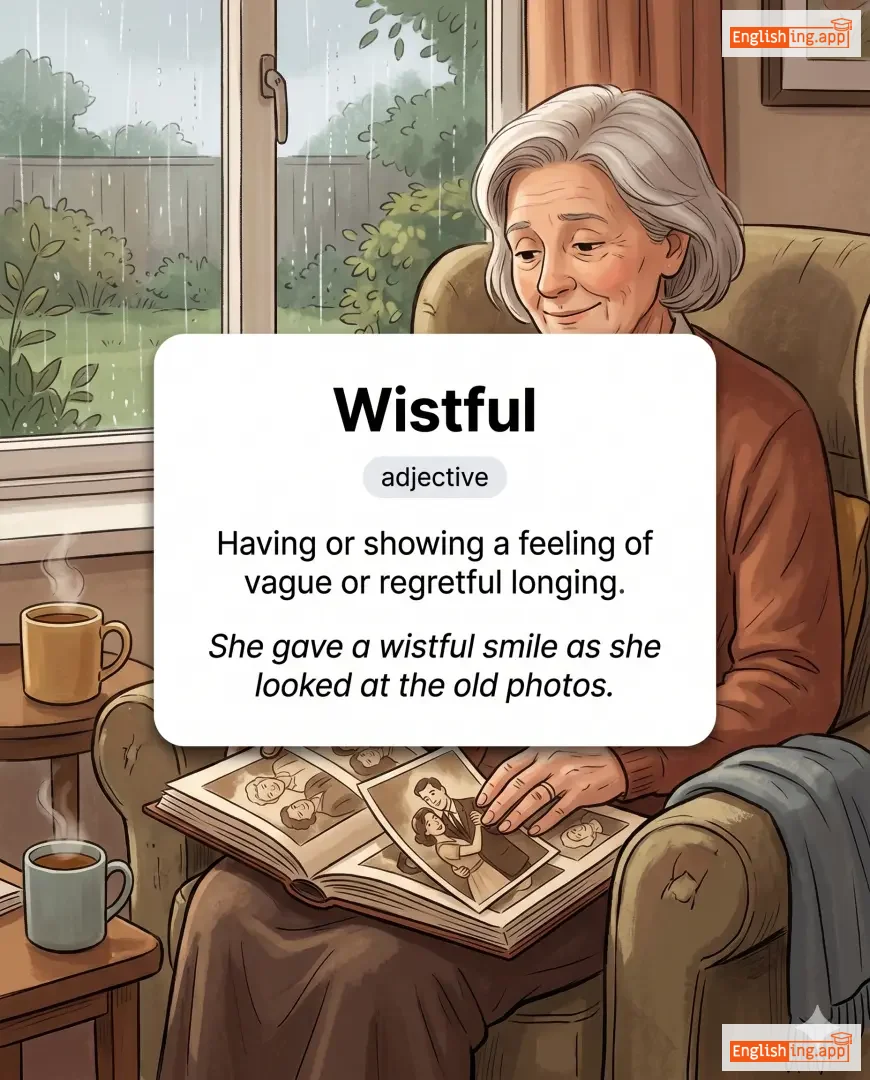
Wistful definition card — visual illustration of the meaning
adjective C1
/ˈwɪstfəl/
切ない (setsunai)

Having or showing a feeling of vague or regretful longing.

"She gave a wistful smile as she looked at the old photos."

"彼女は古い写真を見ながら切なげな笑顔を浮かべた。" (Kanojo wa furui shashin o minagara setsunage na egao o ukabeta.)
noun C1
/ˈwɪtʃ.krɑːft/
魔女術 (majutsu)

the practice of magical skills, spells, and abilities

"In old times, many people believed in witchcraft."

"古代には、多くの人々が魔女術を信じていました。" (Kodai ni wa, ōku no hitobito ga majutsu o shinjite imashita.)
adjective C1
/wɪðˈdrɔːn/
内向的 (naikouteki)

quiet and shy; not wanting to talk to others

"After the incident, he became withdrawn and avoided his friends."

"その事件の後、彼は内向的になり、友達を避けるようになった。" (Sono jiken no ato, kare wa naikouteki ni nari, tomodachi wo sakeru you ni natta.)
verb C1
/ˈwɪð.ər/
枯れる (kareru)

to dry up and die, typically used for plants

"The flowers will wither without enough water."

"花は十分な水がないと枯れてしまう。" (Hana wa jūbun na mizu ga nai to karete shimau.)
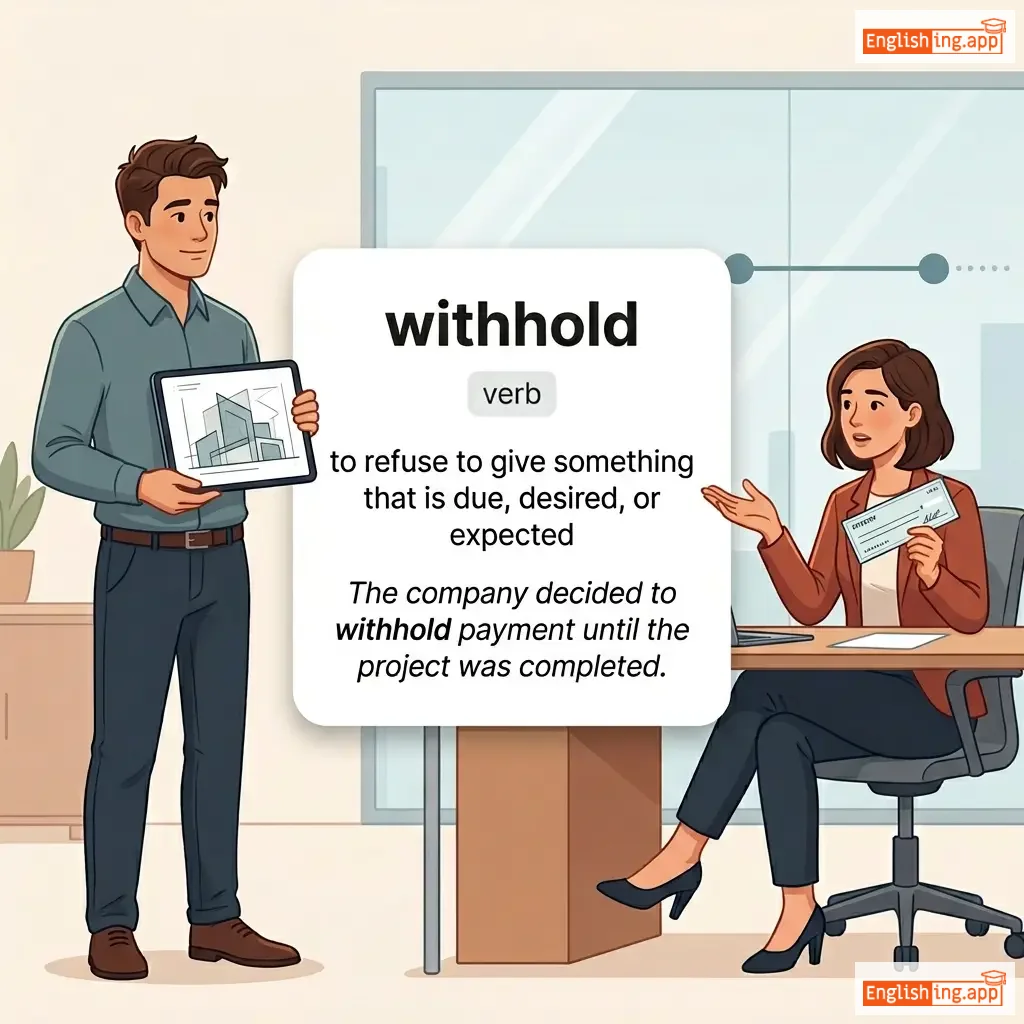
withhold definition card — visual illustration of the meaning
verb C1
/wɪðˈhoʊld/

to refuse to give something that is due, desired, or expected

"The company decided to withhold payment until the project was completed."

noun C1
/ˈwɪzərdri/
魔法の技術 (mahō no gijutsu)

The art or practice of magic; great skill or expertise in something.

"The programmer's wizardry amazed everyone in the room."

"プログラマーの魔法の技術は部屋の中の全員を驚かせました。" (Puroguramā no mahō no gijutsu wa heya no naka no zen'in o odorokasemashita.)
verb C1
/ˈwɒb.l̩/
揺れる (yureru)

to move unsteadily from side to side; to shake or tremble slightly

"The table began to wobble when he leaned on it."

"彼がそれに寄りかかったとき、テーブルは揺れ始めました。" (Kare ga sore ni yorikakatta toki, teeburu wa yurehajimemashita.)
noun C1
/woʊ/
悲哀 (hiai)

great sorrow, distress, or trouble

"Her heart was filled with woe after hearing the sad news."

"悲しいニュースを聞いて、彼女の心は悲哀でいっぱいでした。" (Kanashii nyuusu wo kiite, kanojo no kokoro wa hiai de ippai deshita.)
adjective C1
/ˈwoʊ.fəl/
悲惨な (hisan na)

full of woe; very sad or miserable; also used to mean very bad or deplorable

"He gave me a woeful look when he lost the match."

"彼は試合に負けたとき、悲惨な顔をして僕を見た。" (Kare wa shiai ni maketa toki, hisan na kao o shite boku o mita.)
noun C1
/woʊz/
悩み (nayami)

great sorrow or distress; troubles

"The company faced financial woes after the market crash."

"市場の崩壊後、会社は財政的な問題に直面しました。" (Shijō no hōkai go, kaisha wa zaisei-teki na mondai ni chokumen shimashita.)
adjective C1
/ˈwɒŋki/
不安定な; 信頼できない; 正常に動作しない (wonki)

unstable; unreliable; not working properly

"The old chair was wonky and wobbled every time someone sat on it."
"古い椅子は不安定で、誰かが座るたびに揺れていました。" (Furui isu wa fuantei de, dareka ga suwaru tabi ni yurete imashita)
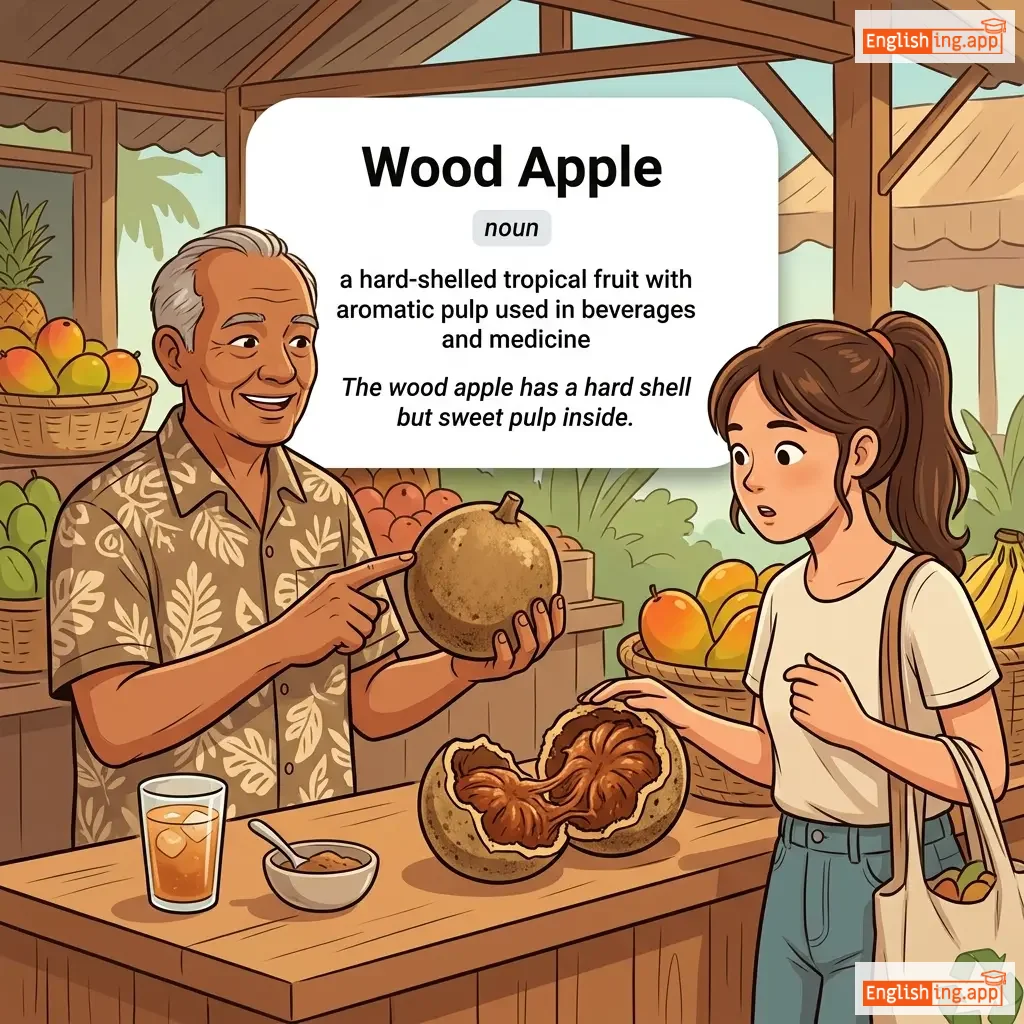
Wood Apple definition card — visual illustration of the meaning
noun C1
/wʊd ˈæp.əl/
ウッドアップル (uddo appuru)

a hard-shelled tropical fruit with aromatic pulp used in beverages and medicine

"The wood apple has a hard shell but sweet pulp inside."

"ウッドアップルは硬い殻を持っていますが、内部には甘い果肉があります" (Uddo appuru wa katai kara wo motteimasu ga, naibu ni wa amai kaniku ga arimasu)
noun C1
/ˈwʊd.ən ˈsæn.dəl/
木製サンダル (mokusei sandaru)

a type of footwear made of wood, typically worn as traditional shoes

"She wore wooden sandals to the traditional ceremony."

"彼女は伝統的な儀式で木製サンダルを履いていた。" (Kanojo wa dentō-teki na gishiki de mokusei sandaru o haite ita.)
adjective C1
/ˈwɜːrkəbəl/
実行可能な; 実用的な (jikkou kanou na; jitsuyouteki na)

capable of being done or put into effect; practical

"We need a workable solution to solve this problem quickly."
"この問題を迅速に解決するために、実行可能な解決策が必要です。" (Kono mondai o jinsoku ni kaiketsu suru tame ni, jikkou kanou na kaiketsu saku ga hitsuyou desu.)
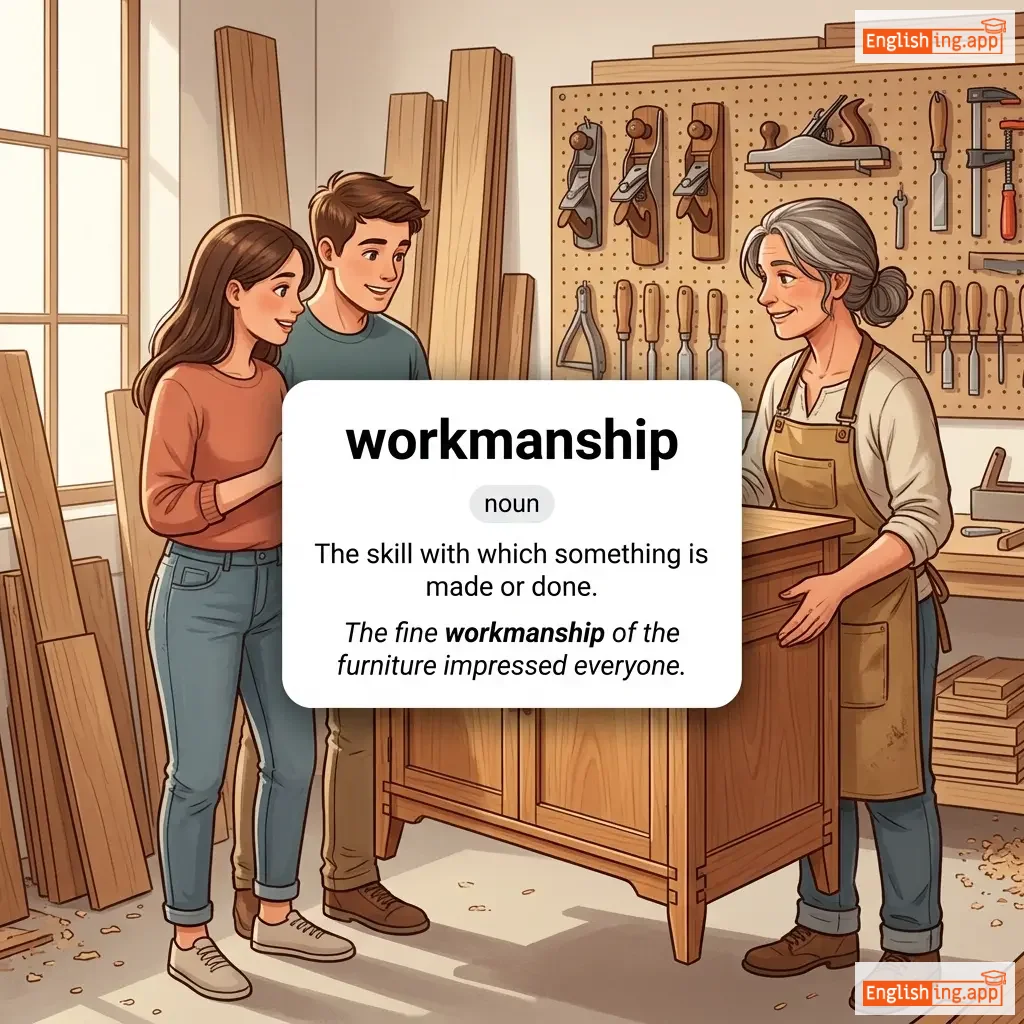
workmanship definition card — visual illustration of the meaning
noun C1
/ˈwɜːkmənˌʃɪp/
職人技 (shokuninwaza)

The skill with which something is made or done.

"The fine workmanship of the furniture impressed everyone."

"家具の優れた職人技は、皆に感銘を与えました。" (Kagu no sugureta shokuninwaza wa, mina ni kanmei o ataemashita.)
verb C1
/ˈræŋɡl̩/
議論する (giron suru)

to argue or dispute noisily or angrily

"The two neighbors wrangled over the property line for hours."
"二人の隣人は、敷地の境界について何時間も議論しました。" (Futari no rinjin wa, shikichi no kyōkai ni tsuite nan-jikan mo giron shimashita.)
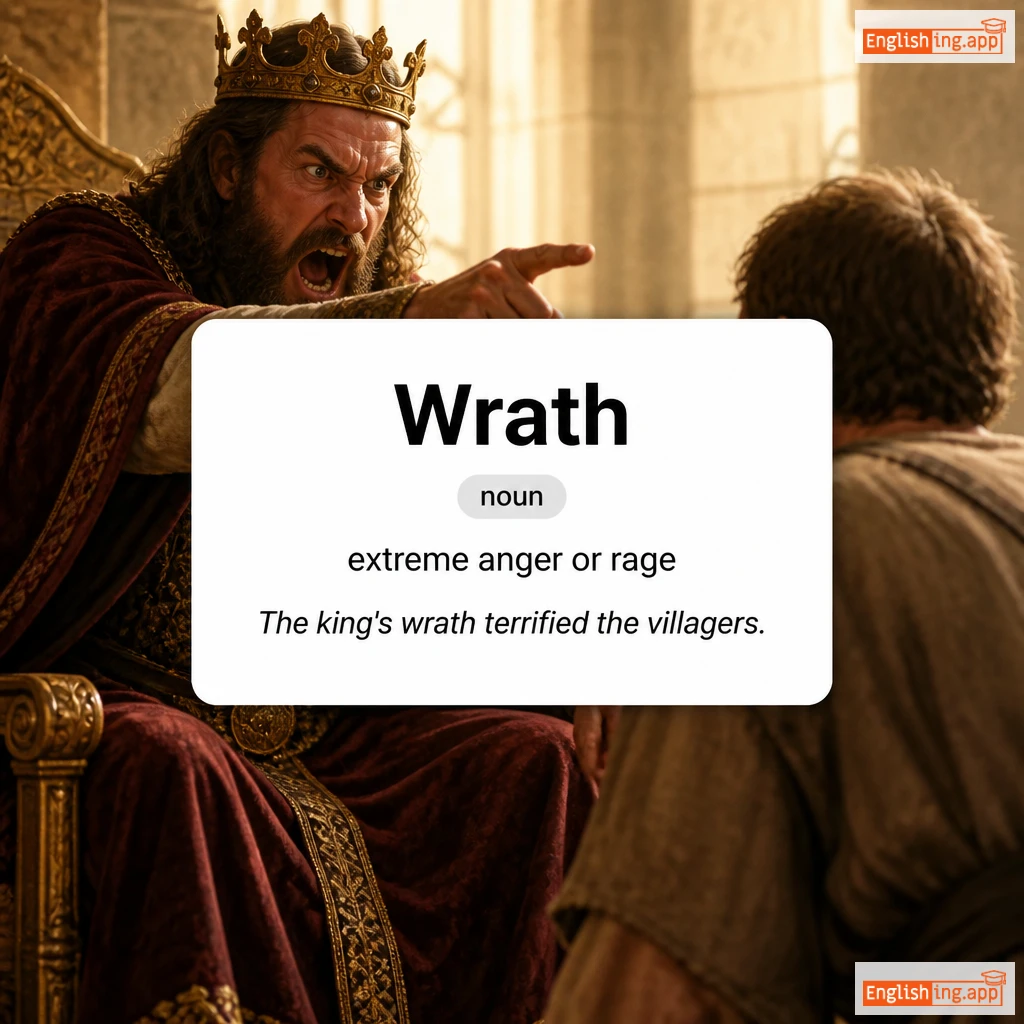
Wrath definition card — visual illustration of the meaning
noun C1
/ræθ/
怒り (ikari)

extreme anger or rage

"The king's wrath terrified the villagers."

"王の怒りは村人たちを恐れさせた。" (Ō no ikari wa murabito-tachi o osore saseta.)
verb C1
/riːk/
被害を与える (higai o ataeru)

to cause or inflict something, especially damage or harm

"The storm wreaked havoc on the coastal villages."
"嵐は沿岸の村に大きな被害をもたらしました。" (Arashi wa engan no mura ni ōkina higai o motarashimashita.)
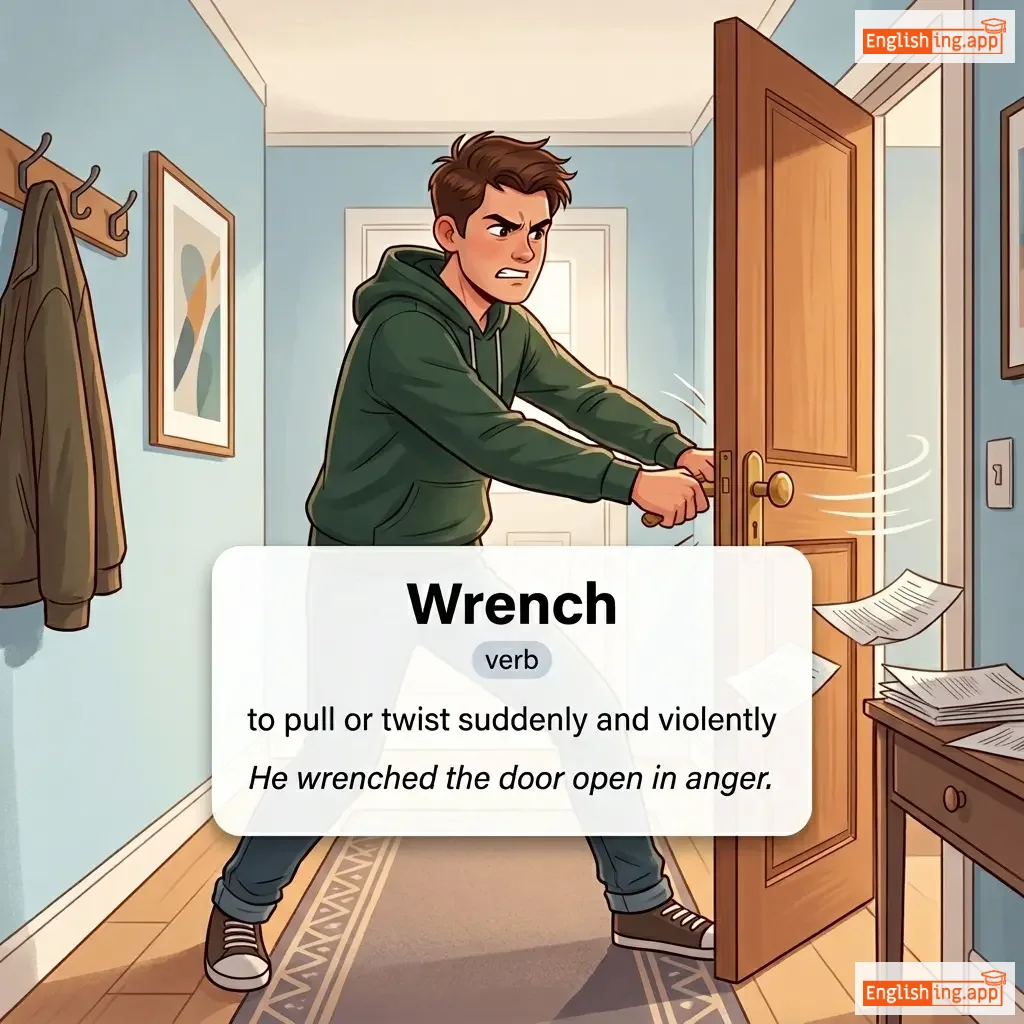
Wrench definition card — visual illustration of the meaning
verb C1
/rɛntʃ/
強く引っ張る (tsuyoku hipparu)

to pull or twist suddenly and violently

"He wrenched the door open in anger."

"彼は怒りでドアを引っ張って開けた。" (Kare wa ikari de doa wo hippatte aketa.)
adjective C1
/ˈrɛtʃɪd/
悲惨 (hisan)

in a very unhappy, miserable, or poor condition

"They lived in a wretched hut with no clean water."

"彼らは清潔な水がない悲惨な小屋に住んでいた。" (Karera wa seiketsuna mizu ga nai hisan na koya ni sunde ita.)
noun C1
/ˈrɛtʃɪdnəs/
悲惨 (hisan)

a state of misery, unhappiness, or poor condition

"The novel depicts the wretchedness of war victims."

"その小説は戦争の犠牲者の悲惨さを描いています。" (Sono shousetsu wa sensou no giseisha no hisansa o egaki masu.)
verb C1
/rɪŋ/
幸せ (shiawase)

to squeeze and twist something to force liquid out; to extract with effort

"She had to wring the towel after washing it."

"彼女は賞を受け取ったとき、幸せを隠すことができませんでした。" (Kanojo wa shō o uketotta toki, shiawase o kakusu koto ga dekimasen deshita.)
noun C1
/rɪt/
裁判所命令 (saibansho meirei)

A formal written order issued by a court.

"The judge issued a writ of habeas corpus."

"裁判官はハベアス・コーパス命令を発行しました。" (Saibankan wa habeasu kōpasu meirei o hakkō shimashita.)
verb C1
/raɪð/
身をよじる (mi o yojiru)

To twist or squirm in pain or discomfort.

"He writhed in pain after twisting his ankle."

"彼は足首を捻った後、痛みで身をよじっていた。" (Kare wa ashi kubi o nenatta ato, itami de mi o yojiteta.)
adjective C1
/raɪ/
歪んだ、皮肉な (yuganda, hinikuna)

twisted or distorted in expression; showing dry, mocking humor

"He gave a wry smile after hearing the sarcastic remark."

"彼は皮肉なコメントを聞いた後、歪んだ笑顔を見せた。" (Kare wa hinikuna komento o kiita ato, yuganda egao o miseta.)
noun C1
/ˈzɛnəˌfoʊb/
外国人恐怖症者 (gaikokujin kyōfu shōsha)

a person who dislikes or fears people from other countries or cultures

"The politician was criticized as a xenophobe due to his anti-immigrant policies."

"その政治家は反移民政策のため、外国人恐怖症者として批判されました。" (Sono seijika wa han imin seisaku no tame, gaikokujin kyōfu shōsha to shite hihan saremashita.)