語彙集

英単語辞書 | 単語の意味、定義、例文

verb C1
/smɛlt/
溶かす (tokasu)

to extract metal from its ore by heating and melting

"The workers smelt iron from its ore in the factory."

"作業員は工場で鉱石から鉄を溶かして取り出します。" (Sagyouin wa koujou de kouseki kara tetsu wo tokashite toridashimasu.)
verb C1
/smɜrk/
自己満足の笑顔 (jikomanzoku no egao)

to smile in a self-satisfied, smug, or silly way

"He smirked when he won the argument."

"彼は議論に勝ったとき、ニヤリと笑った。" (Kare wa giron ni katta toki, niyari to waratta.)
verb C1
/ˈsmoʊldər/
ゆっくり燃える (yukkuri moeru)

to burn slowly with smoke but no flame; to show suppressed anger or emotion

"The fire smoldered for hours before it went out."

"火は何時間もゆっくり燃えた後に消えました。" (Hi wa nan jikan mo yukkuri moeta ato ni kiemashita.)
verb C1
/ˈsmʌðər/
窒息させる / 覆う (chissoku saseru / ōu)

to kill someone by covering their nose and mouth to prevent breathing; to cover something completely; to overwhelm with excessive attention or affection

"She smothered the fire with a blanket."

"彼女は毛布で火を覆った。" (Kanojo wa mōfu de hi o ōtta.)
noun/verb C1
/smʌdʒ/
汚れ, スマッジ (yogore, sumajji)

a dirty mark or smear; to make something dirty or unclear by rubbing or touching

"She accidentally smudged her lipstick on the napkin."

"彼女はうっかりナプキンにリップスティックをつけてしまった。" (Kanojo waukkari napukin ni rippusutikku o tsukete shimatta.)
adjective C1
/smʌɡ/
自惚れた (uniboreta)

having or showing an excessive pride in oneself or one's achievements

"He wore a smug smile after winning the debate."

"彼は議論に勝った後、自惚れた笑顔を見せた。" (Kare wa giron ni katta ato, uniboreta egao o miseta.)
noun/verb C1
/snɛər/
(wana)

a trap for catching animals; to catch or trap

"The hunter set a snare to catch rabbits."

"ハンターはウサギを捕まえるために罠を仕掛けました。" (Hantaa wa usagi o tsukamaeru tame ni wana o shikakemashita.)
verb/noun C1
/snɑːrl/
唸り声、渋滞 (unari goe, jūtai)

to growl aggressively with bared teeth; a tangle or mess

"The dog snarled at the stranger near the gate."

"犬はゲート近くの見知らぬ人に唸った。" (Inu wa geeto chikaku no mishiranu hito ni unatta.)
verb C1
/snɪər/
冷笑する (reishou suru)

to smile or speak in a mocking or contemptuous way

"She sneered at his attempt to sing."

"彼女は彼の歌おうとしたことを嘲笑した。" (Kanojo wa kare no utaou to shita koto o choushou shita.)
verb C1
/ˈsnɪkər/
ひそかに笑う (hisokani warau)

to laugh quietly in a disrespectful or mocking way

"The students snickered when the teacher made a mistake."

"先生が間違えたとき、生徒たちはこっそり笑いました。" (Sensei ga machigaeta toki, seito-tachi wa kossori waraimashita.)
adjective C1
/snaɪd/
皮肉な (hinikuna)

mocking or insulting in an indirect way

"He couldn’t resist making a snide comment about her dress."

"彼は彼女のドレスについて皮肉なコメントをするのをやめられなかった。" (Kare wa kanojo no doresu ni tsuite hinikuna komento o suru no o yamerarenakatta.)
verb C1
/snɪp/
切る (kiru)

to cut something quickly with scissors or a sharp tool

"She snipped the loose thread from her dress."

"彼女はドレスの緩んだ糸を切りました。" (Kanojo wa doresu no yurunda ito wo kirimashita.)
adjective C1
/ˈsnɒbɪʃ/
高慢 (kōman)

having or showing the attitude of people who think they are better than others

"She seemed snobbish because she avoided talking to the waiters."

"彼女はウェイターと話すのを避けたので、高慢に見えました。" (Kanojo wa weitaa to hanasu no o sake ta node, kōman ni miemashita.)
verb C1
/snʌb/
無視する (mushi suru)

to insult or ignore someone by treating them rudely

"He felt hurt when his invitation was snubbed."

"彼は招待状が無視されたとき、傷ついたと感じた。" (Kare wa shoutaijou ga mushi sareta toki, kizutsuita to kanjita.)
sobriety definition card — visual illustration of the meaning
noun C1
/səˈbraɪəti/
節制 (sessē)

the state of being sober; self-restraint and seriousness

"He has maintained his sobriety for five years."
"彼は5年間その節制を保っています。" (Kare wa go-nenkan sono sessē o tamotteimasu.)
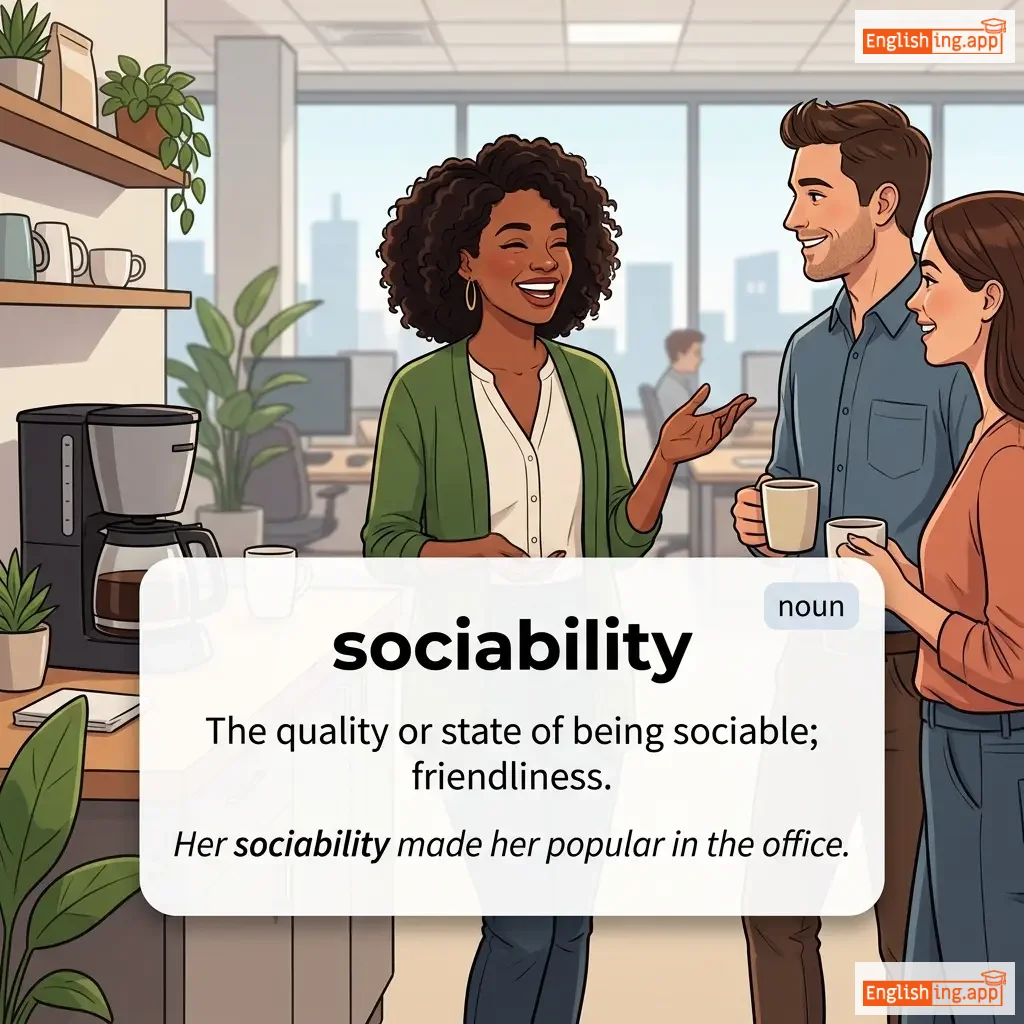
sociability definition card — visual illustration of the meaning
noun C1
/ˌsəʊʃəˈbɪləti/
社交性 (shakousei)

The quality or state of being sociable; friendliness.

"Her sociability made her popular in the office."
"彼女の社交性はオフィスで人気を集めました。" (Kanojo no shakousei wa ofisu de ninki o atsume mashita.)
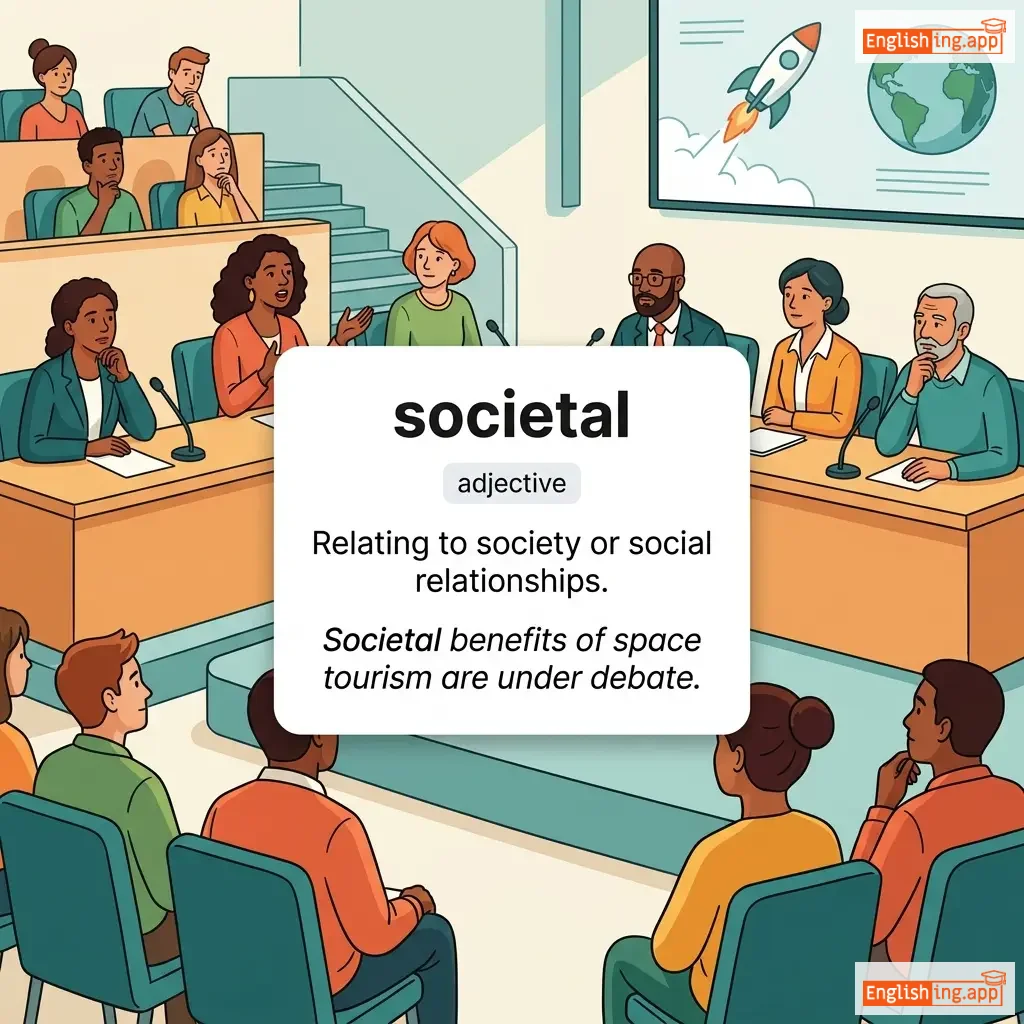
societal definition card — visual illustration of the meaning
adjective C1
səˈsaɪ.ə.təl
社会的 (shakaiteki)

Relating to society or social relationships.

"Societal benefits of space tourism are under debate."
"宇宙観光の社会的利点が議論されています。" (Uchū kankō no shakaiteki riten ga giron sareteimasu.)
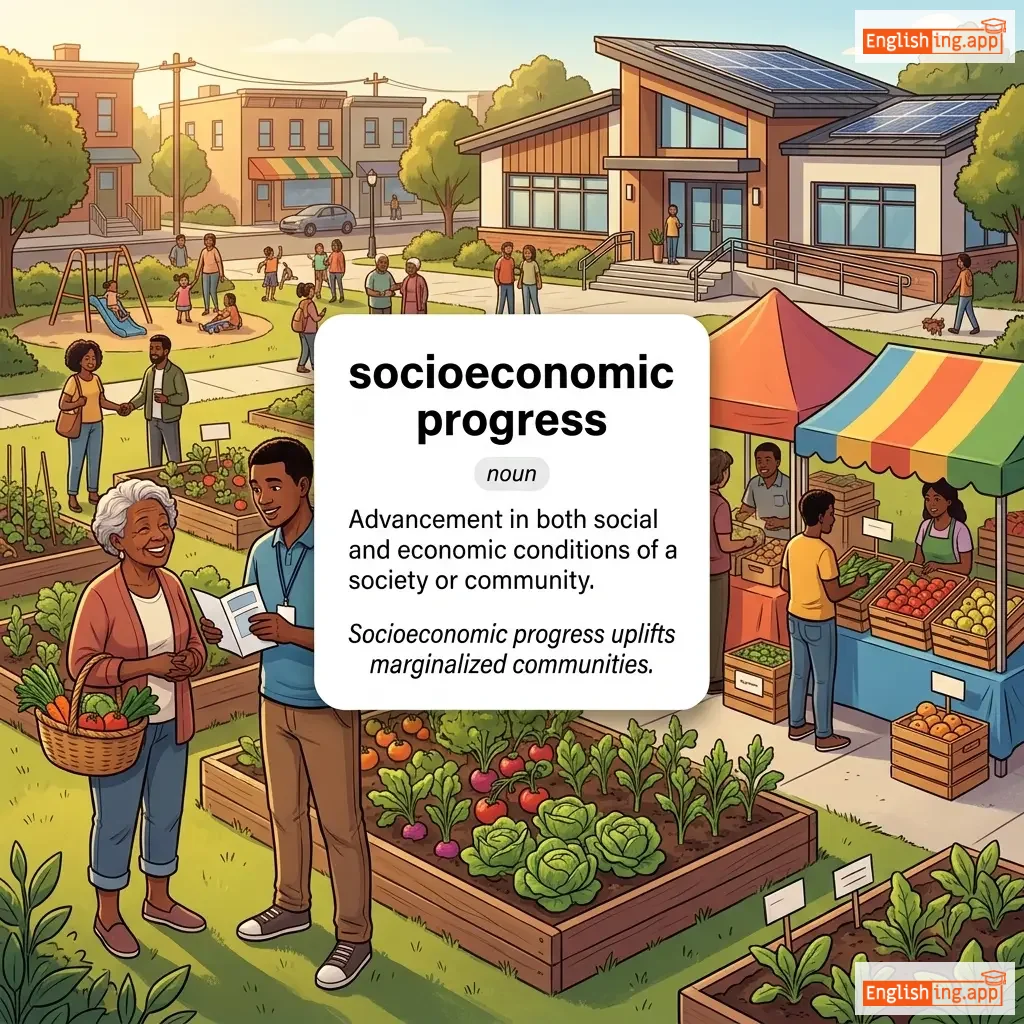
socioeconomic progress definition card — visual illustration of the meaning
noun C1
/ˌsəʊ.ʃi.əʊˈek.ə.nɒm.ɪk ˈprɒɡ.res/
社会経済的進歩 (shakai keizaiteki shinpo)

Advancement in both social and economic conditions of a society or community.

"Socioeconomic progress uplifts marginalized communities."
"社会経済的進歩は、疎外されたコミュニティを引き上げます。" (Shakai keizaiteki shinpo wa, sogai sareta komyuniti o hikiagemasu.)
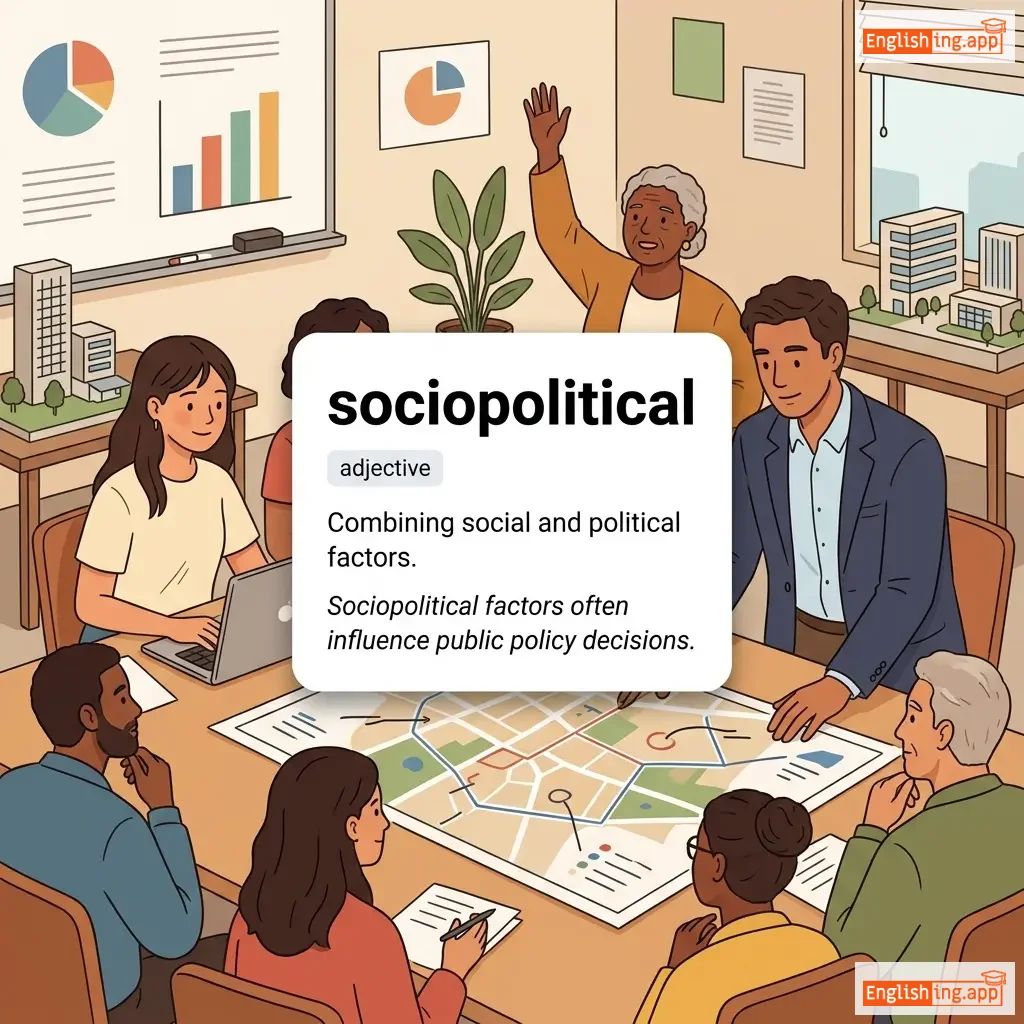
sociopolitical definition card — visual illustration of the meaning
adjective C1
ˌsəʊsɪəʊpəˈlɪtɪkəl
社会政治的 (shakai seiji teki)

Combining social and political factors.

"Sociopolitical factors often influence public policy decisions."
"社会政治的要因はしばしば公共政策決定に影響を与えます。" (Shakai seiji teki yoin wa shibashiba koukyou seisaku kettei ni eikyou o ataemasu.)
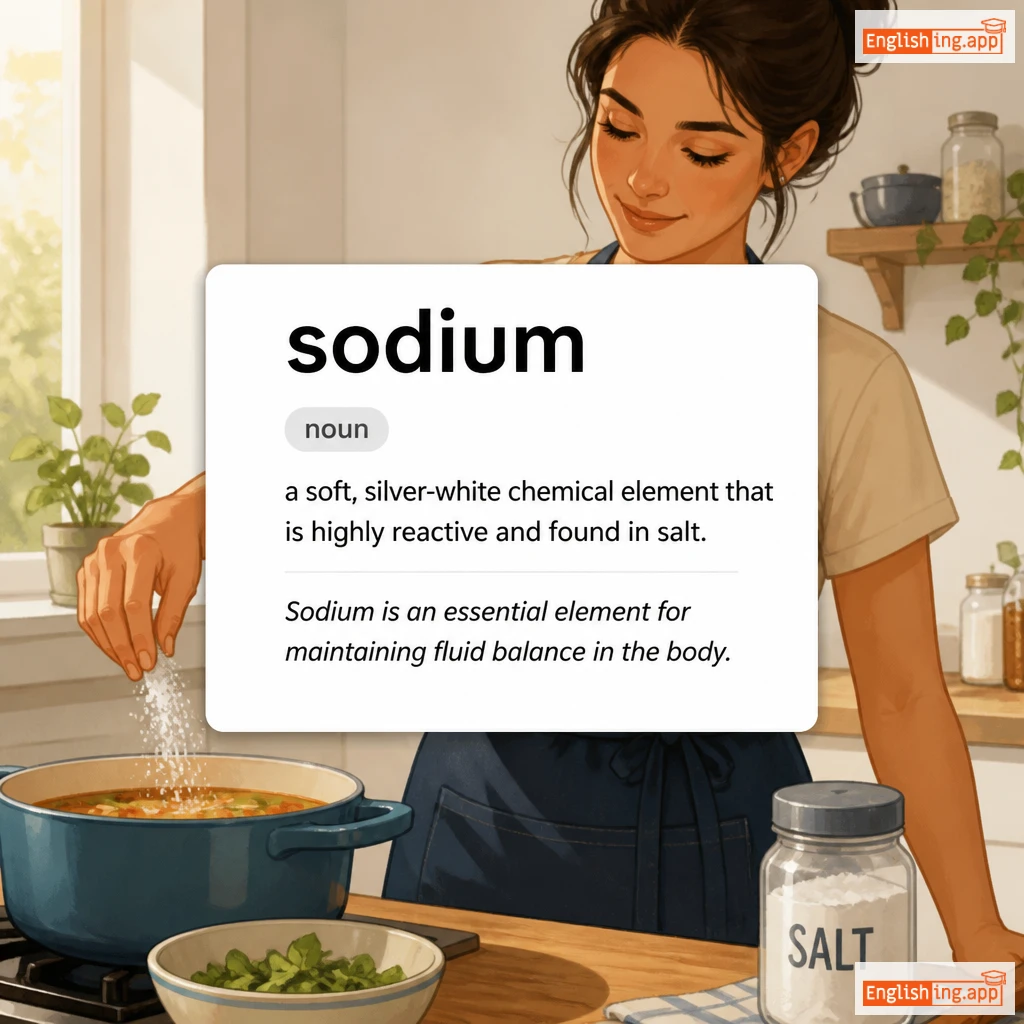
sodium definition card — visual illustration of the meaning
noun C1
/ˈsəʊdiəm/
ナトリウム (natoriumu)

a soft, silver-white chemical element that is highly reactive and found in salt.

"Sodium is an essential element for maintaining fluid balance in the body."

"ナトリウムは体内の液体バランスを維持するために不可欠な元素です。" (Natoriumu wa tainai no ekitai baransu o iji suru tame ni fukaketsu na gensu desu.)
soil management definition card — visual illustration of the meaning
noun C1
/sɔɪl ˈmæn.ɪdʒ.mənt/
土壌管理 (dojō kanri)

The application of operations, practices, and treatments to protect soil and enhance its performance.

"Proper soil management improves long-term agricultural productivity."

"適切な土壌管理は、長期的な農業生産性を向上させます。" (Tekisetsu na dojō kanri wa, chōkiteki na nōgyō seisansei o kōjōsasemasu.)
adjective C1
/sɔɪld/
汚れた (yogoreta)

dirty or stained; not clean

"His clothes were soiled after playing in the mud."
"泥遊びをした後、彼の服は汚れていた。" (Doro asobi wo shita ato, kare no fuku wa yogorete ita.)
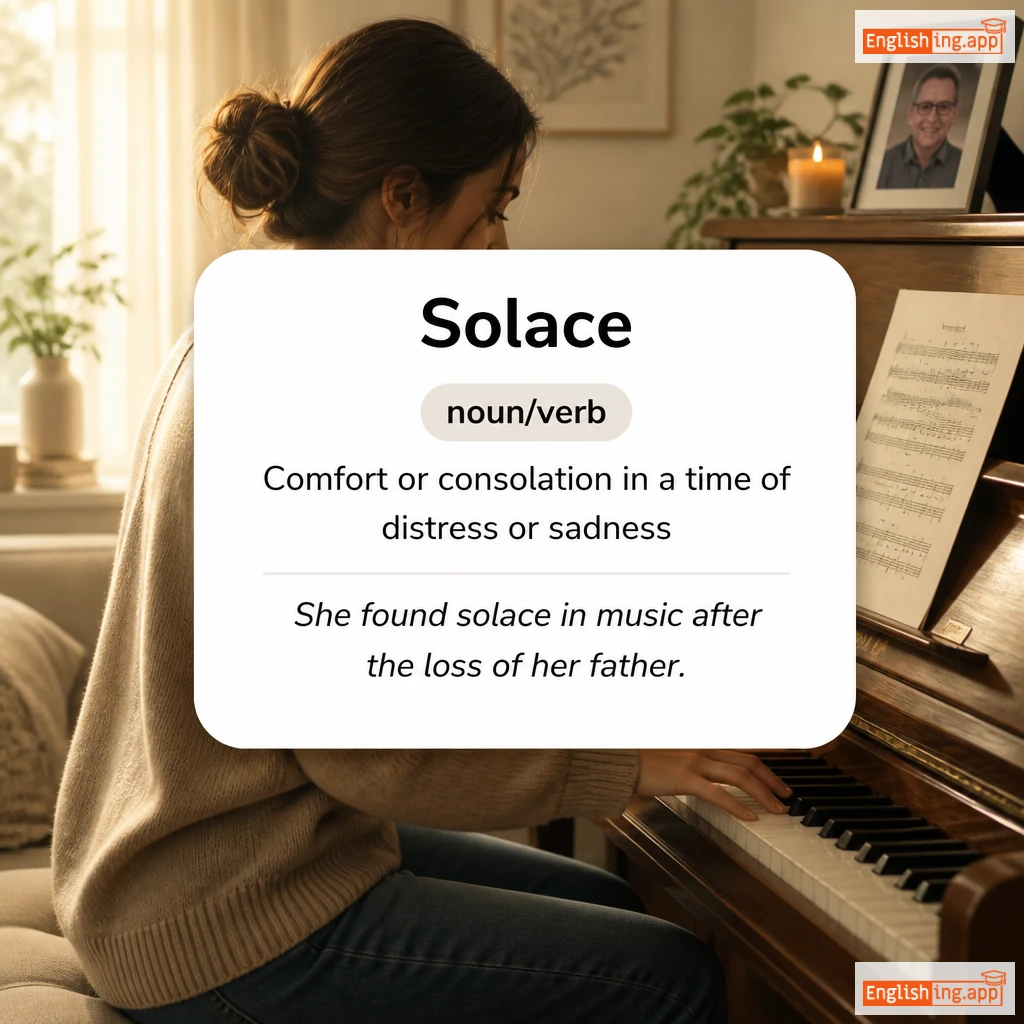
Solace definition card — visual illustration of the meaning
noun/verb C1
/ˈsɒləs/
慰め (nagusame)

Comfort or consolation in a time of distress or sadness

"She found solace in music after the loss of her father."

"彼女は父親を失った後、音楽の中で慰めを見つけました。" (Kanojo wa chichi o ushinatta ato, ongaku no naka de nagusame o mitsukemashita.)
verb/noun C1
/ˈsɒldər/
はんだ付け (handazuke)

To join metal parts together by melting and putting a filler metal into the joint

"He soldered the broken wires back together."

"彼は壊れた配線を再びはんだ付けしました。" (Kare wa kowareta haisen o futatabi handazuke shimashita.)
noun C1
/səˈlɛmnɪti/
厳粛 (genshuku)

the state or quality of being serious and dignified

"The ceremony was conducted with great solemnity."

"式典は厳粛な雰囲気の中で行われました。" (Shikiten wa genshuku na fun'iki no naka de okonawaremashita.)
verb C1
/səˈlɪsɪt/
お願いする (onegai suru)

to ask for or try to obtain something from someone

"The charity is soliciting donations for flood victims."

"チャリティは洪水の被害者のために寄付を募っています。" (Charity wa kousui no higaisha no tame ni kifu o tsunotteimasu.)
verb C1
/səˈlɪdəˌfaɪ/
強化する (kyouka suru)

To make something firm, strong, or more certain.

"The company solidified its position in the market."

"その会社は市場での位置を固めました。" (Sono kaisha wa shijou de no ichi wo katamemashita.)
soliloquy definition card — visual illustration of the meaning
noun C1
/səˈlɪləkwi/
独白 (dohaku)

a speech in which a character talks to themselves, often used in drama to reveal inner thoughts

"Hamlet's soliloquy is one of the most famous passages in Shakespearean drama."

"ハムレットの独白はシェイクスピアのドラマの中で最も有名なパッセージの一つです。" (Hamuretto no dohaku wa Sheikusupia no dorama no naka de mottomo yūmei na passēji no hitotsu desu.)
noun C1
/ˈsɒlstɪs/
至点 (shiten)

the two times in the year when the sun is at its greatest distance from the equator (summer and winter solstice)

"People celebrate the summer solstice with festivals and rituals."
"人々は夏至を祝うために祭りや儀式を行います。" (Hitobito wa geshi o iwau tame ni matsuri ya gishiki o okonai masu.)
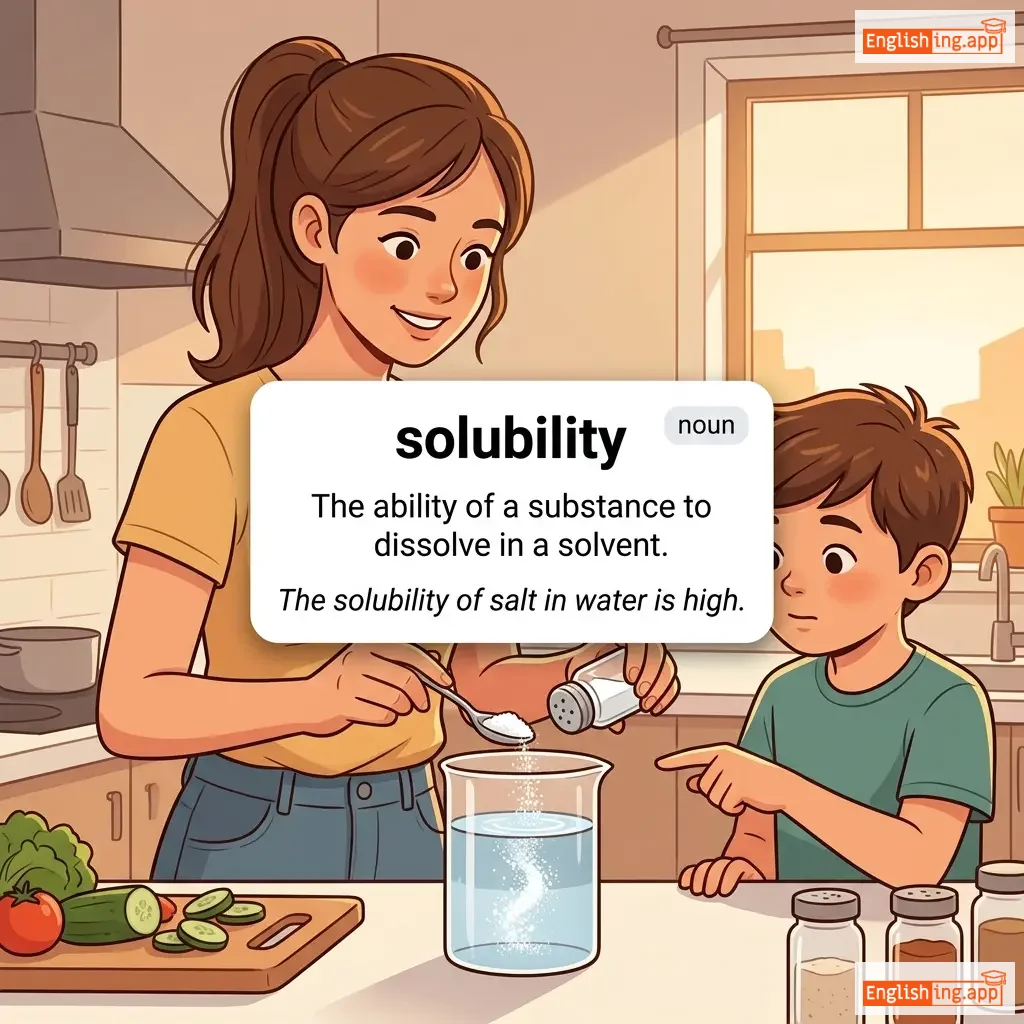
solubility definition card — visual illustration of the meaning
noun C1
/ˌsɒl.jʊˈbɪləti/
溶解度 (yōkaido)

The ability of a substance to dissolve in a solvent.

"The solubility of salt in water is high."

"塩の水における溶解度は高い。" (shio no mizu ni okeru yōkaido wa takai.)
adjective C1
/ˈsɒljʊbəl/
可溶性 (koyosei)

able to be dissolved, especially in water

"Sugar is soluble in water."

"砂糖は水に溶けやすい。" (Satou wa mizu ni tokeyasui.)
solvency definition card — visual illustration of the meaning
noun C1
/ˈsɒl.vən.si/
資産が負債を上回る状態; 借金を返済する能力 (shisan ga fusai o uwamawaru jōtai; shakkin o hensai suru nōryoku)

The possession of assets in excess of liabilities; ability to pay debts.

"The company's solvency determines its financial health."
"企業のソルベンシーはその財務健全性を決定します。" (Kigyō no sorubenshī wa sono zaimu kenzen-sei o kettei shimasu.)
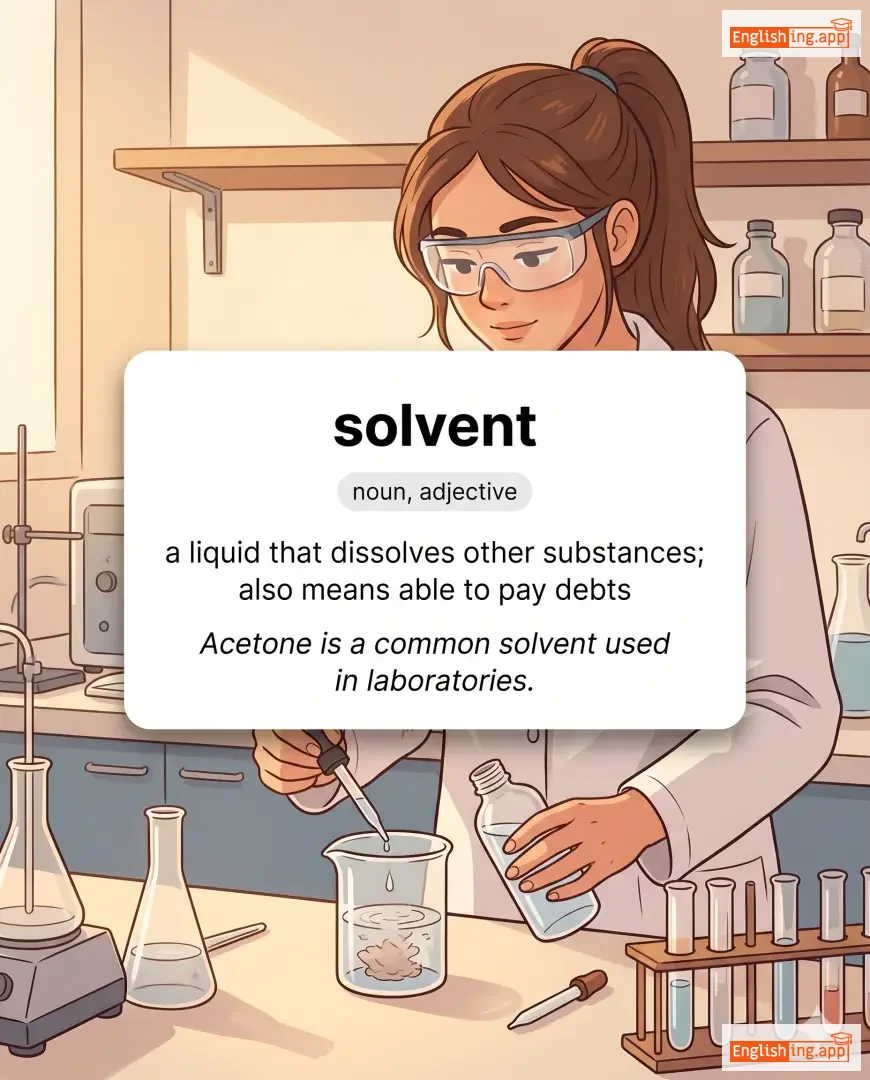
solvent definition card — visual illustration of the meaning
noun, adjective C1
/ˈsɒlvənt/
溶剤, 債務を支払う能力 (yōzai, saimu o shiharau nōryoku)

a liquid that dissolves other substances; also means able to pay debts

"Acetone is a common solvent used in laboratories."

"アセトンは実験室でよく使われる溶剤です。" (Aseton wa jikken-shitsu de yoku tsukawareru yōzai desu.)
adjective C1
/ˈsɒmbər/
陰気 (inki)

Dark or dull in color or tone; gloomy or serious.

"The funeral had a somber atmosphere."

"葬式には暗い雰囲気がありました。" (Sōshiki ni wa kurai fun'iki ga arimashita.)
noun C1
/səˈnɑːtə/
音楽作品 (ソナタ) (ongaku sakuhin (sonata))

A musical composition for one or more instruments, typically in several movements.

"She performed a beautiful Beethoven sonata on the piano."

"彼女はピアノで美しいベートーヴェンのソナタを演奏しました。" (Kanojo wa piano de utsukushī Beethoven no sonata o ensō shimashita.)
adjective C1
/ˈsɒnɪk/
音速の (onsoku no)

Relating to or involving sound waves or speed of sound.

"The jet created a loud boom when it broke the sonic barrier."

"ジェット機は音速の壁を越えたとき、大きな爆発音を作り出しました。" (Jettoki wa onsoku no kabe wo koeta toki, ookina bakuhatsuon wo tsukuridashimashita.)
noun C1
/ˈsɒnɪt/
ソネット (sonetto)

A poem of 14 lines using formal rhyme schemes, often about love.

"Shakespeare wrote many famous sonnets about love and beauty."

"シェイクスピアは愛と美について多くの有名なソネットを書きました。" (Sheikusupia wa ai to bi ni tsuite ōku no yūmei na sonetto o kakimashita.)
adjective C1
/səˈnɔːrəs/
深い音 (fukai oto)

Deep, full, and rich in sound.

"The actor's sonorous voice filled the entire theater."
"俳優のソノラスな声が劇場全体に響き渡った。" (Haiyū no sonorasu na koe ga gekijō zentai ni hibikiwatta.)
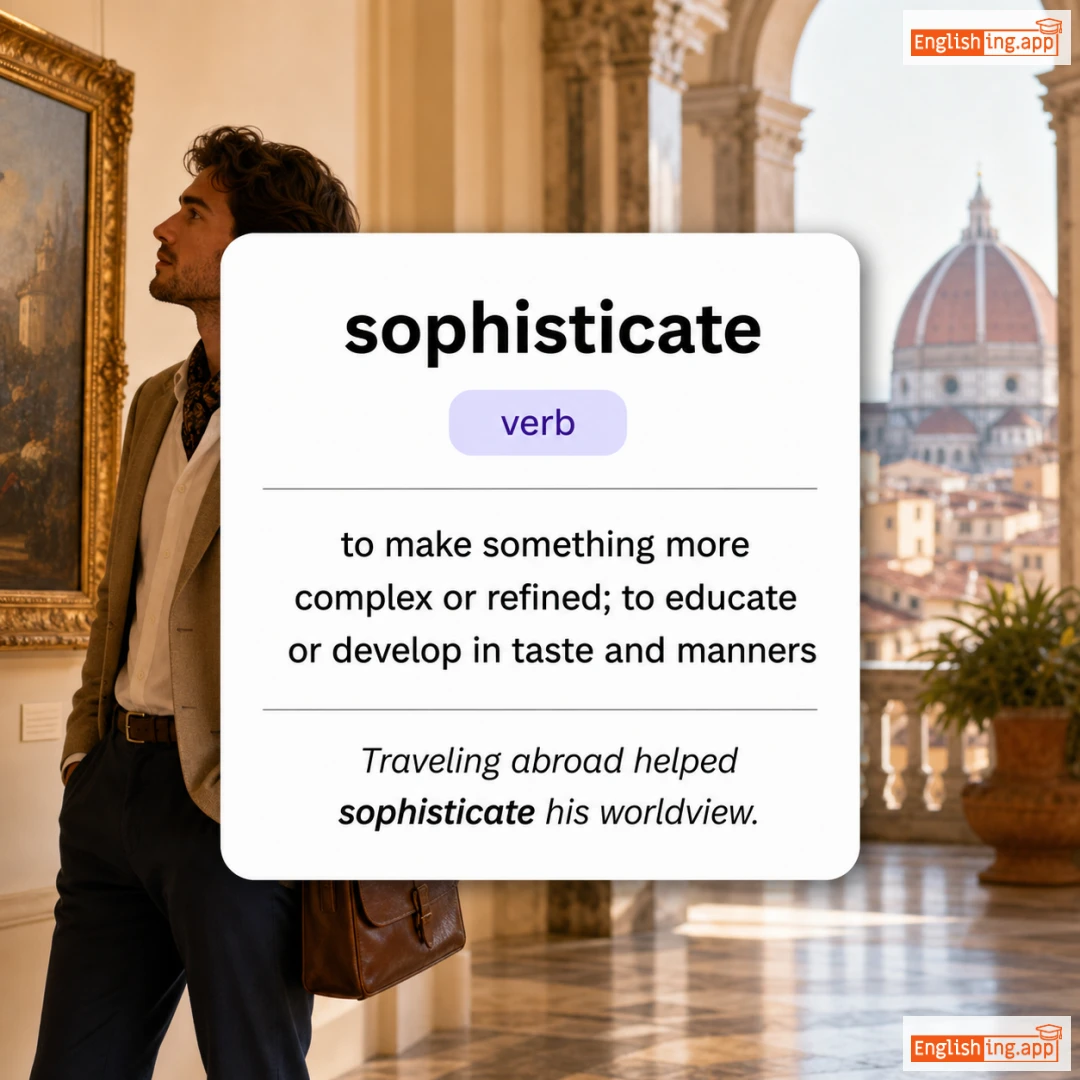
sophisticate definition card — visual illustration of the meaning
verb C1
/səˈfɪstɪkeɪt/
洗練する (senren suru)

to make something more complex or refined; to educate or develop in taste and manners

"Traveling abroad helped sophisticate his worldview."

"海外旅行は彼の世界観を洗練させる手助けとなった。" (Kaigai ryokō wa kare no sekaikan o senren saseru tedasuke to natta.)
sophistication definition card — visual illustration of the meaning
noun C1
/səˌfɪstɪˈkeɪʃən/
洗練 (senren)

the quality of being refined, cultured, or complex

"Her sophistication impressed everyone at the party."

"彼女の洗練はパーティーで皆を感動させました。" (Kanojo no senren wa pātī de mina o kandō sasemashita.)
noun C1
/səˈprɑːnoʊ/
女性または子供の最も高い歌声 (josei matawa kodomo no mottomo takai utagoe)

the highest female or boy’s singing voice

"She sang beautifully in the soprano range during the concert."

"彼女はコンサートでソプラノの範囲で美しく歌いました。" (Kanojo wa konsaato de soprano no han'i de utsukushiku utaimashita.)
noun C1
/ˈsɔːrsəri/
魔法 (mahou)

the use of magical powers, especially through spells and enchantments

"The villagers believed the illness was caused by sorcery."
"村人たちは病気が魔法によって引き起こされたと信じていました。" (Murabito-tachi wa byouki ga mahou ni yotte hikiokosareta to shinjiteimashita.)
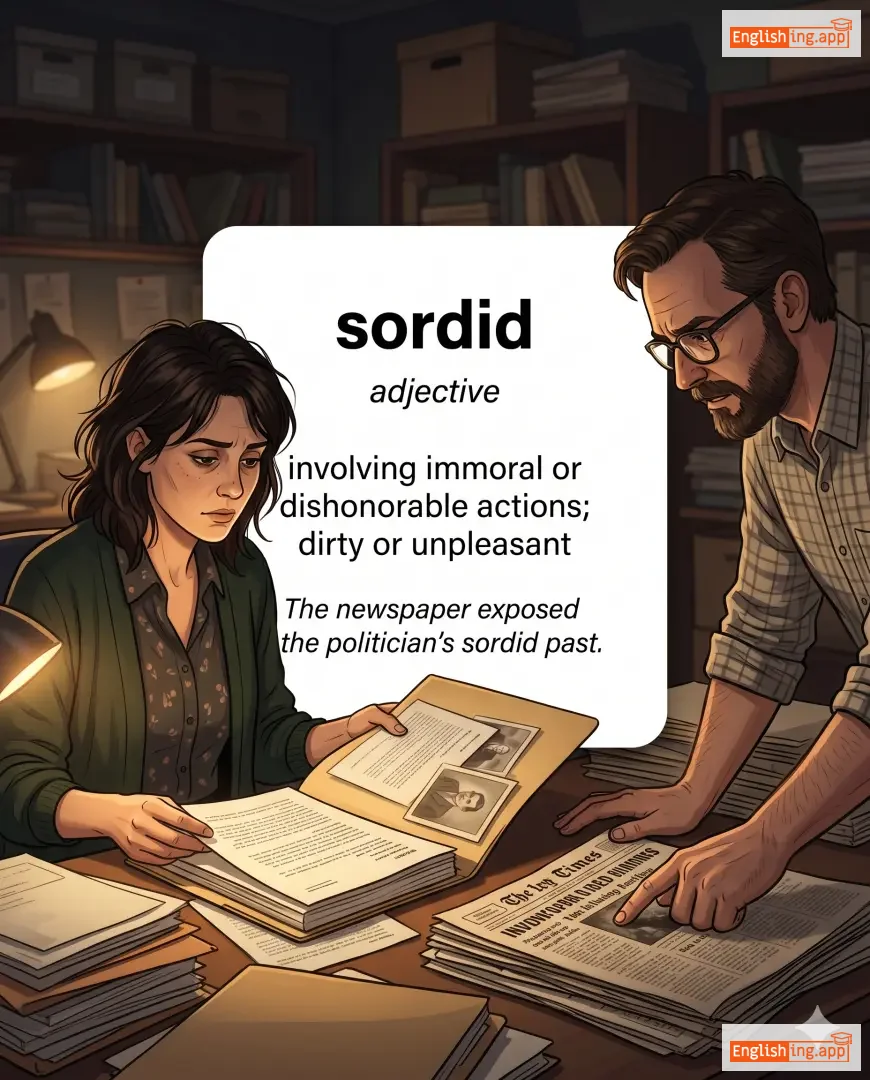
sordid definition card — visual illustration of the meaning
adjective C1
/ˈsɔːrdɪd/
卑劣な (hiretsuna)

involving immoral or dishonorable actions; dirty or unpleasant

"The newspaper exposed the politician's sordid past."

"新聞は政治家の卑劣な過去を暴露した。" (Shimbun wa seijika no hiretsuna kako o bakuro shita.)
adjective C1
/ˈsaʊnd.pruːf/
防音; 音の出入りを防ぐ (bōon)

impervious to sound; preventing sound from entering or leaving

"The recording studio has sound-proof walls."
"レコーディングスタジオには防音壁があります。" (rekōdingu sutajio ni wa bōon kabe ga arimasu.)
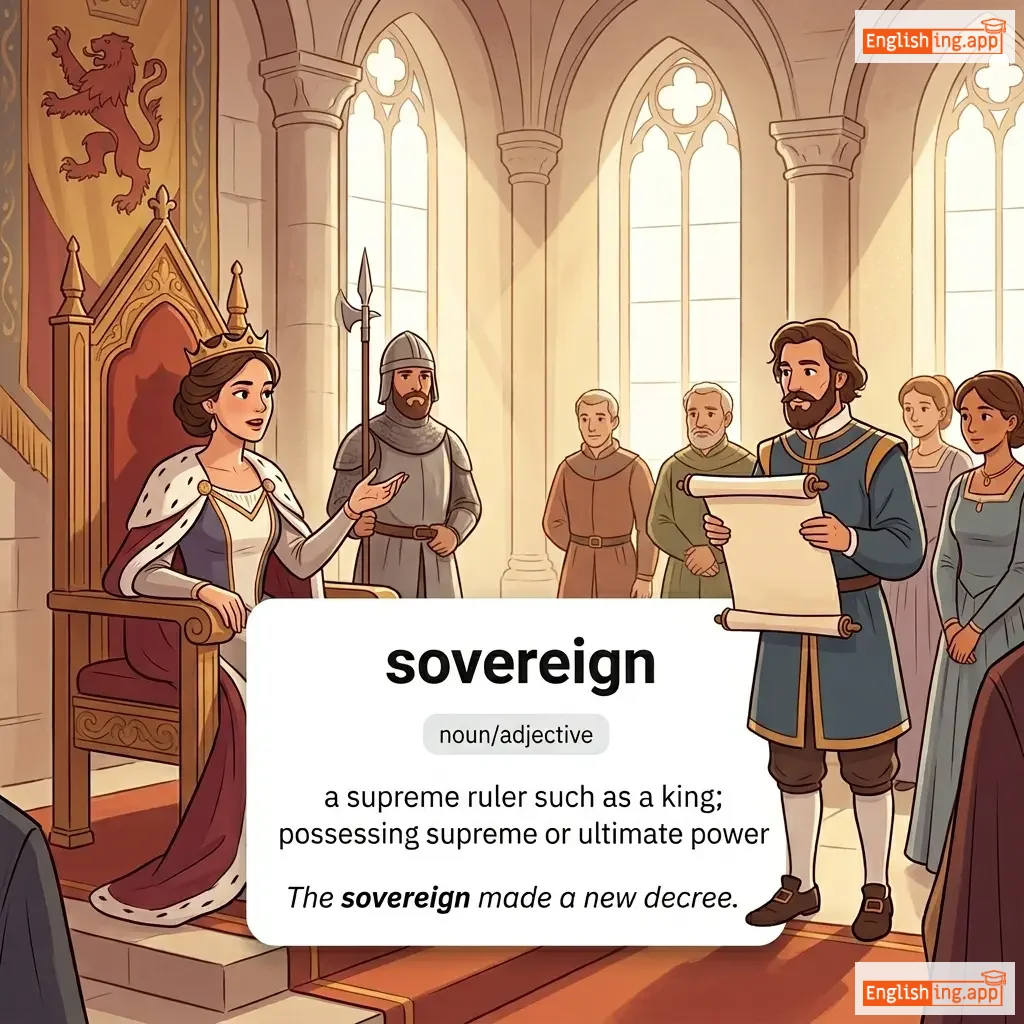
sovereign definition card — visual illustration of the meaning
noun/adjective C1
/ˈsɒvərɪn/
主権 (shuken)

a supreme ruler such as a king; possessing supreme or ultimate power

"The sovereign made a new decree."
"主権者は新しい命令を出しました。" (Shuken-sha wa atarashī meirei o dashimashita.)
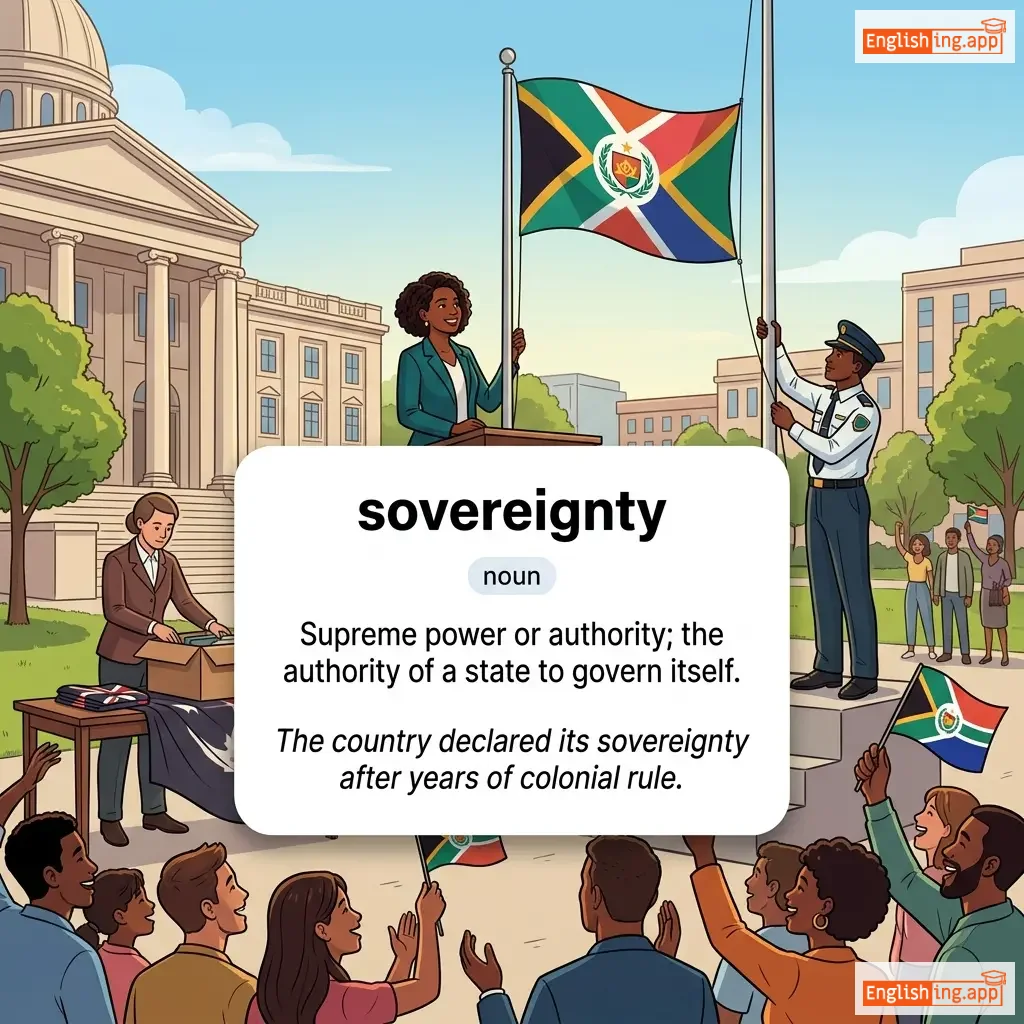
sovereignty definition card — visual illustration of the meaning
noun C1
/ˈsɒvrənti/
主権 (shuken)

Supreme power or authority; the authority of a state to govern itself.

"The country declared its sovereignty after years of colonial rule."

"その国は植民地支配の後、主権を宣言した。" (Sono kuni wa shokuminchi shihai no ato, shuken o sengen shita.)
spaced repetition definition card — visual illustration of the meaning
noun C1
speɪst ˌrep.ɪˈtɪʃ.ən
間隔反復 (kankaku hanfuku)

A learning technique that involves reviewing information at increasing intervals to improve long-term retention.

"Spaced repetition helps in long-term memory retention."

"スペースド・リピティションは長期記憶を保持するのに役立ちます。" (Supesudo ripitishon wa chouki kioku wo hoji suru no ni yakudachimasu.)
adjective C1
/ˈspɛərɪŋ/
控えめ / 節約 (hikaeme / setsuyaku)

Using or giving only a little of something; economical.

"She is sparing in her use of words."

"彼女は言葉を使うのを控えめにしています。" (Kanojo wa kotoba o tsukau no o hikaeme ni shiteimasu.)
adjective C1
/spɑːrs/
まばら (mabara)

thinly scattered or distributed; not dense or abundant

"Vegetation was sparse in the desert."

"砂漠では植生がまばらだった。" (Sabaku de wa shokusei ga mabara datta.)
adjective C1
/ˈspɑːrtn/
スパルタン (suparutan)

showing simplicity and lack of luxury; austere

"He lived in a spartan room with just a bed and a chair."

"彼はスパルタンな部屋に住んでいて、ベッドと椅子だけがありました。" (Kare wa suparutan na heya ni sunde ite, beddo to isu dake ga arimashita.)