語彙集

英単語辞書 | 単語の意味、定義、例文

adjective C1
/ˌmɪsəˈleɪniəs/
разнообразный (razoobraznyy)

Consisting of a variety of different items or types.

"The drawer was filled with miscellaneous objects."
"Ящик был заполнен разнообразными предметами." (Yashchik byl zapolnen raznoobraznymi predmetami.)
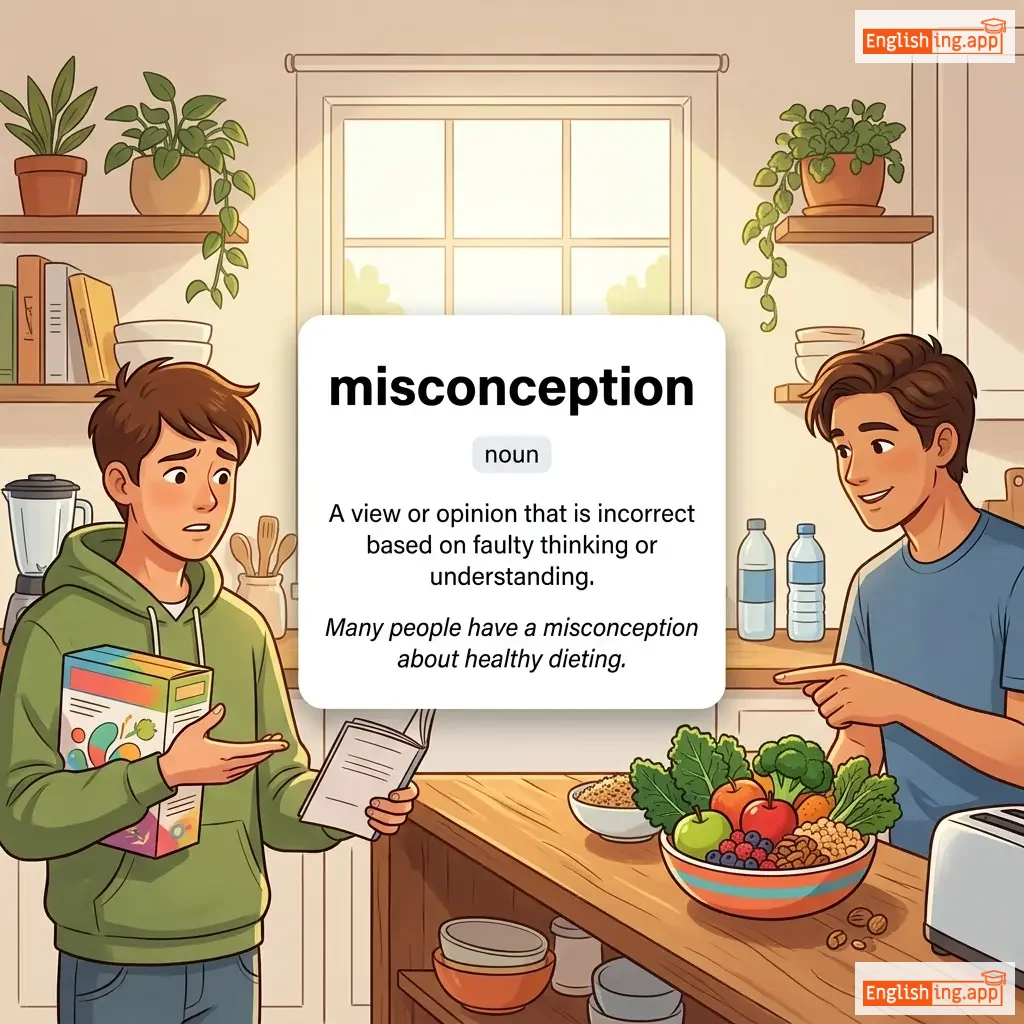
misconception definition card — visual illustration of the meaning
noun C1
/ˌmɪs.kənˈsep.ʃən/
неправильное представление, заблуждение (nepravil'noe predstavlenie, zabluzhdenie)

A view or opinion that is incorrect based on faulty thinking or understanding.

"Many people have a misconception about healthy dieting."
"Многие люди имеют неправильное представление о здоровом питании." (Mnogie lyudi imeyut nepravil'noe predstavlenie o zdorovom pitanii.)
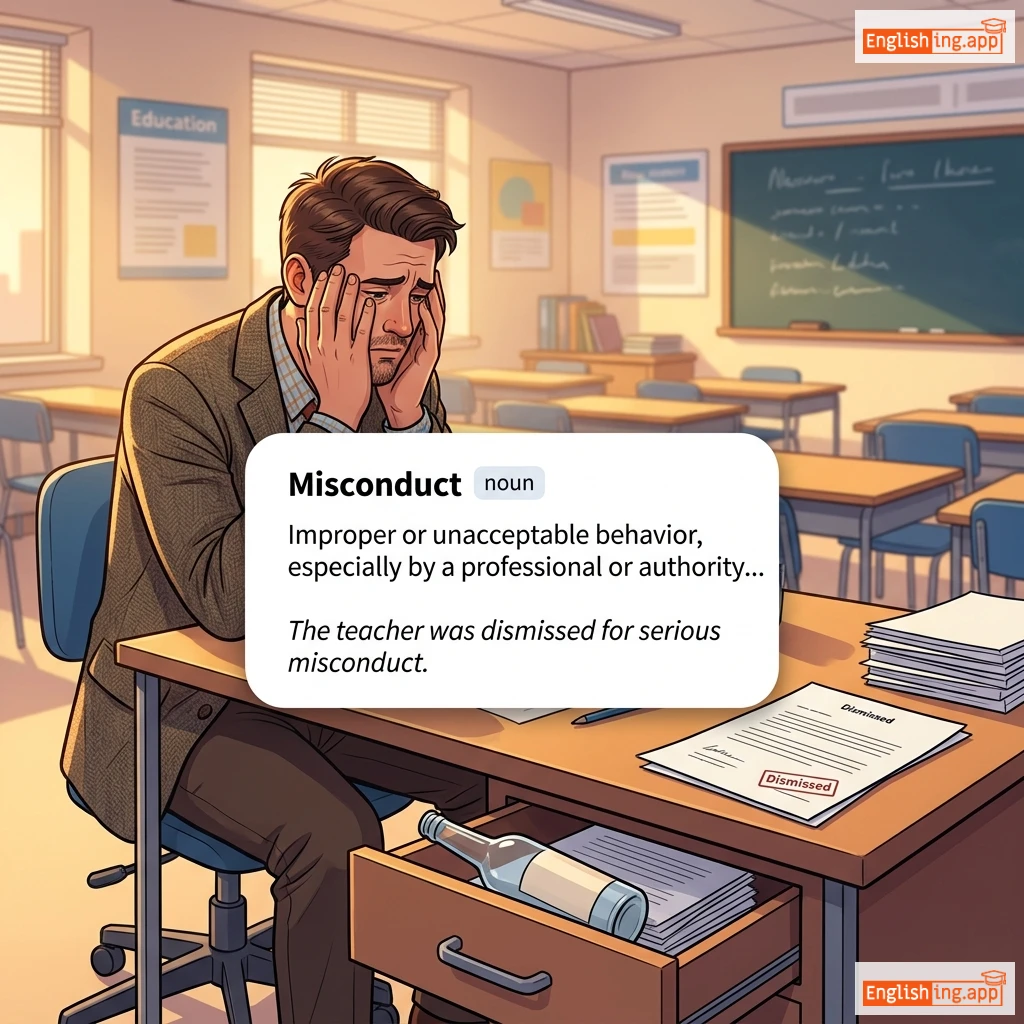
Misconduct definition card — visual illustration of the meaning
noun C1
/ˌmɪsˈkɒndʌkt/
неповадок (nepovadok)

Improper or unacceptable behavior, especially by a professional or authority figure.

"The teacher was dismissed for serious misconduct."

"Учитель был уволен за серьезные проступки." (Uchitel' byl uvolen za seryoznyye prostupki.)
verb C1
/ˌmɪsˈkaʊnt/
ошибочно подсчитывать (oshibochno podschityvat)

To count wrongly or inaccurately.

"He miscounted the number of chairs in the hall."
"Он ошибся в подсчете количества стульев в зале." (On oshibsya v podschete kolichestva stul'ev v zale.)
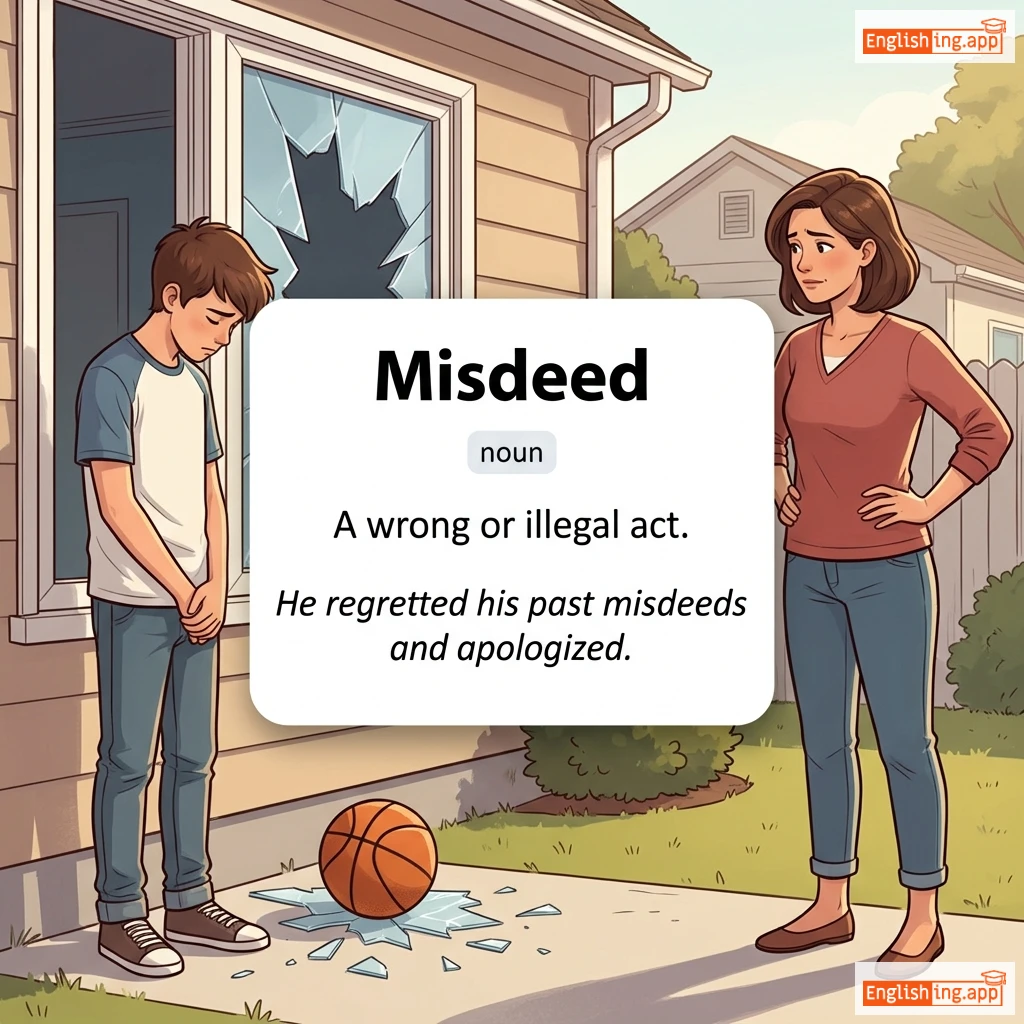
Misdeed definition card — visual illustration of the meaning
noun C1
/ˌmɪsˈdiːd/
проступок (prostoopok)

A wrong or illegal act.

"He regretted his past misdeeds and apologized."

"Он пожалел о своих прошлых проступках и извинился." (On pozhalel o svoikh proshlykh prostupkakh i izvinilsya.)
noun C1
/ˌmɪsdɪˈmiːnər/
мелкое правонарушение (melkoe pravonarushenie)

A minor wrongdoing or criminal offense that is less serious than a felony.

"He was fined for a misdemeanor involving public disturbance."

"Его оштрафовали за мелкое правонарушение, связанное с общественными беспорядками." (Ego oshtrafovali za melkoe pravonarushenie, svyazannoe s obshchestvennymi besporyadkami.)
noun C1
/ˈmaɪzər/
скряга (skryaga)

A person who hoards wealth and spends as little money as possible.

"The old miser refused to donate even a penny to charity."

"Старый скряга отказался пожертвовать даже копейку на благотворительность." (Staryy skryaga otkazalsya pozhertvovat' dazhe kopeyku na blagotvoritel'nost'.)
adjective C1
/ˈmaɪzərli/
скупой (skupoy)

Unwilling to spend money; stingy.

"She lived a miserly life, refusing to buy anything new."
"Она вела скупую жизнь, отказываясь покупать что-то новое." (Ona vела skupuyu zhizn', otkazyvayas' pokupat' chto-to novoe.)
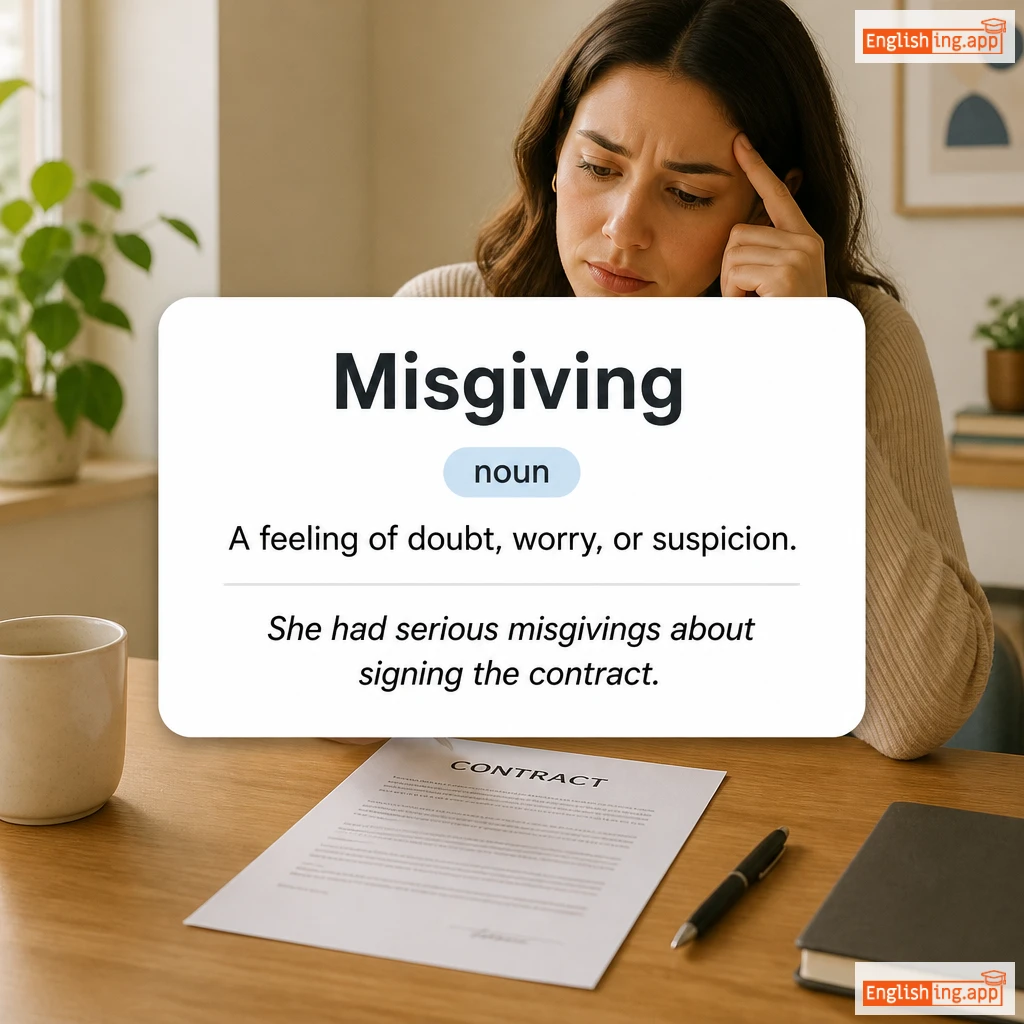
Misgiving definition card — visual illustration of the meaning
noun C1
/ˌmɪsˈɡɪvɪŋ/
сомнение (somnenie)

A feeling of doubt, worry, or suspicion.

"She had serious misgivings about signing the contract."

"У неё были серьёзные сомнения по поводу подписания контракта." (U nee byli seryoznye somneniya po povodu podpisaniya kontrakta.)
noun C1
/mɪsˈɡɪvɪŋz/
сомнения, беспокойства (somneniya, bespokoystva)

feelings of doubt or concern about the outcome or propriety of something

"She had serious misgivings about signing the contract."
"У неё были серьёзные сомнения по поводу подписания контракта." (U nee byli seryoznye somneniya po povodu podpisaniya kontrakta.)
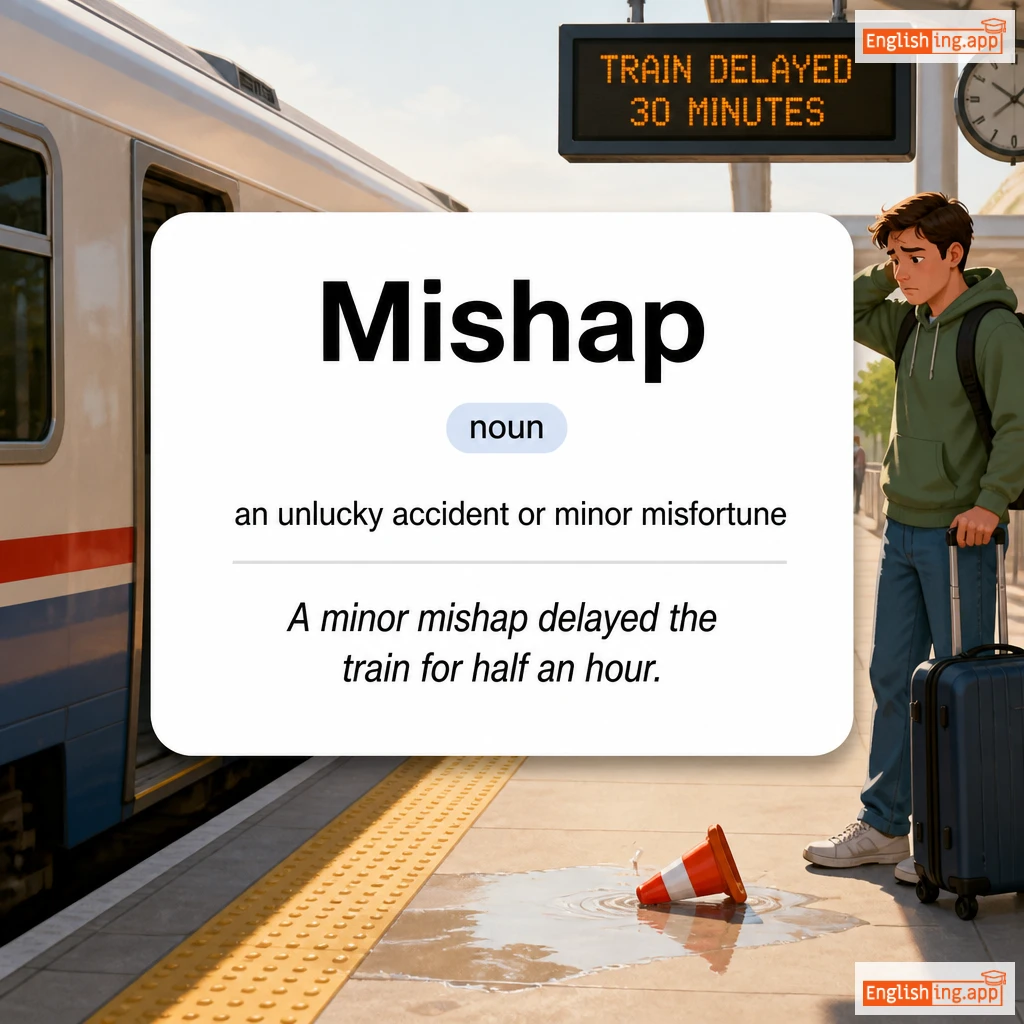
Mishap definition card — visual illustration of the meaning
noun C1
/ˈmɪshæp/
неудача, происшествие (neudacha, proisshestvie)

an unlucky accident or minor misfortune

"A minor mishap delayed the train for half an hour."

"Небольшое происшествие задержало поезд на полчаса." (Neboĺ'shoe proisshestvie zaderzhalo poyezd na polchasa.)
verb C1
/ˌmɪsɪnˈtɜːrprɪt/
неправильно понять (nepravil'no ponyat')

to understand or explain something wrongly

"He misinterpreted her silence as agreement."
"Он неправильно понял её молчание как согласие." (On nepravil'no ponyal yeye molchaniye kak soglasiye.)
verb C1
/ˌmɪsˈmænɪdʒ/

to handle or control something badly or inefficiently

"The company went bankrupt because it was mismanaged for years."

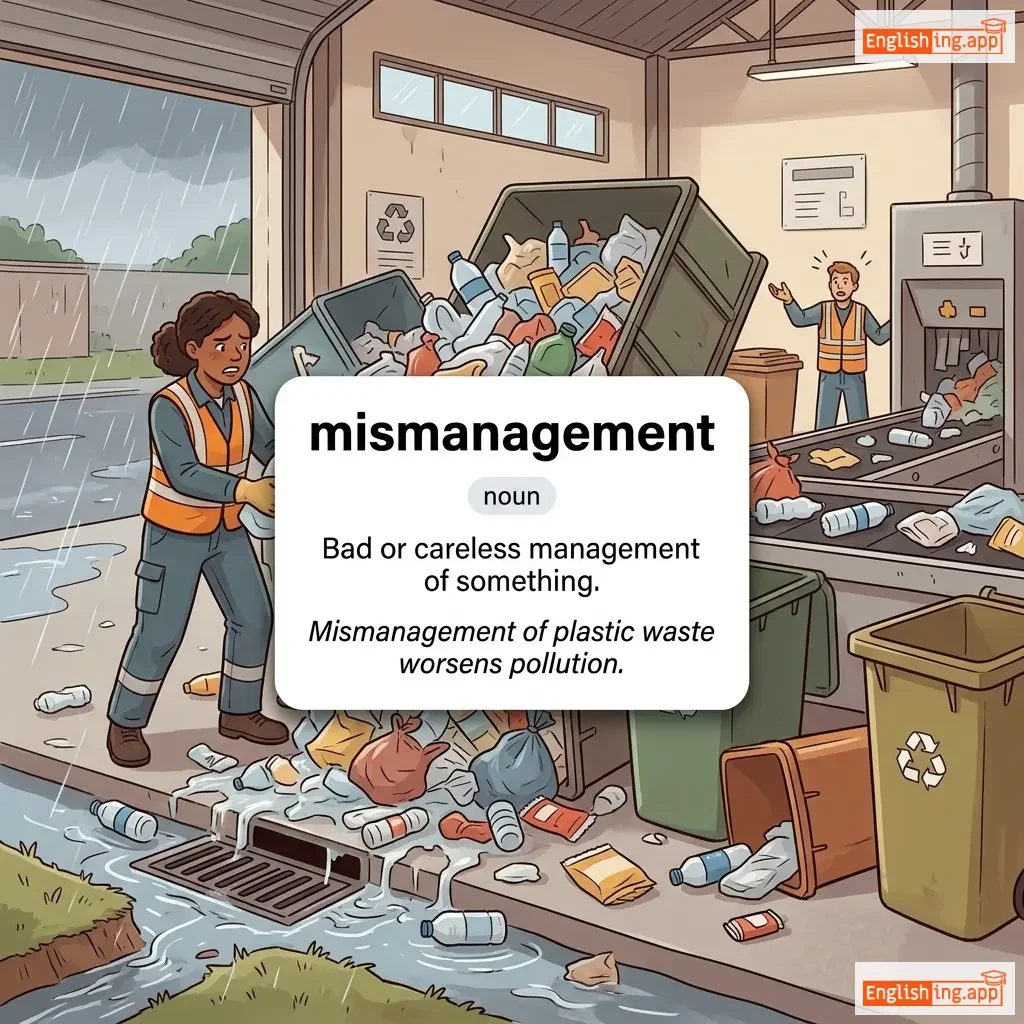
mismanagement definition card — visual illustration of the meaning
noun C1
ˌmɪsˈmænɪdʒmənt
неэффективное управление (neeffektivnoe upravlenie)

Bad or careless management of something.

"Mismanagement of plastic waste worsens pollution."

"Неэффективное управление пластиковыми отходами усугубляет загрязнение." (Neeffektivnoe upravlenie plastikovymi otdkhodami usugublyayet zagryazneniye.)
noun C1
/mɪˈsɑːdʒəni/
мизогиния (mizoginiya)

Hatred of, contempt for, or prejudice against women.

"The novel has been criticized for promoting misogyny."

"Роман был раскритикован за пропаганду мизогинии." (Roman byl raskritikovan za propagandu mizoginii.)
verb C1
/ˌmɪsˈpleɪs/
положить не на место (polozhit' ne na mesto)

To put something in the wrong location and temporarily lose it.

"I often misplace my keys when I am in a hurry."

"Я часто теряю свои ключи, когда спешу." (Ya chasto teryayu svoi klyuchi, kogda speshyu.)
verb C1
/ˌmɪsˈriːd/
неправильно читать (nepravil'no chitat')

to read something incorrectly or interpret wrongly

"He misread the instructions and built the shelf incorrectly."

"Он неправильно прочитал инструкции и собрал полку неправильно." (On nepravil'no prochital instruktsii i sobral polku nepravil'no.)
verb C1
/ˌmɪsˌrɛprɪˈzɛnt/

to give a false or misleading account of something

"The lawyer accused the witness of trying to misrepresent the facts."
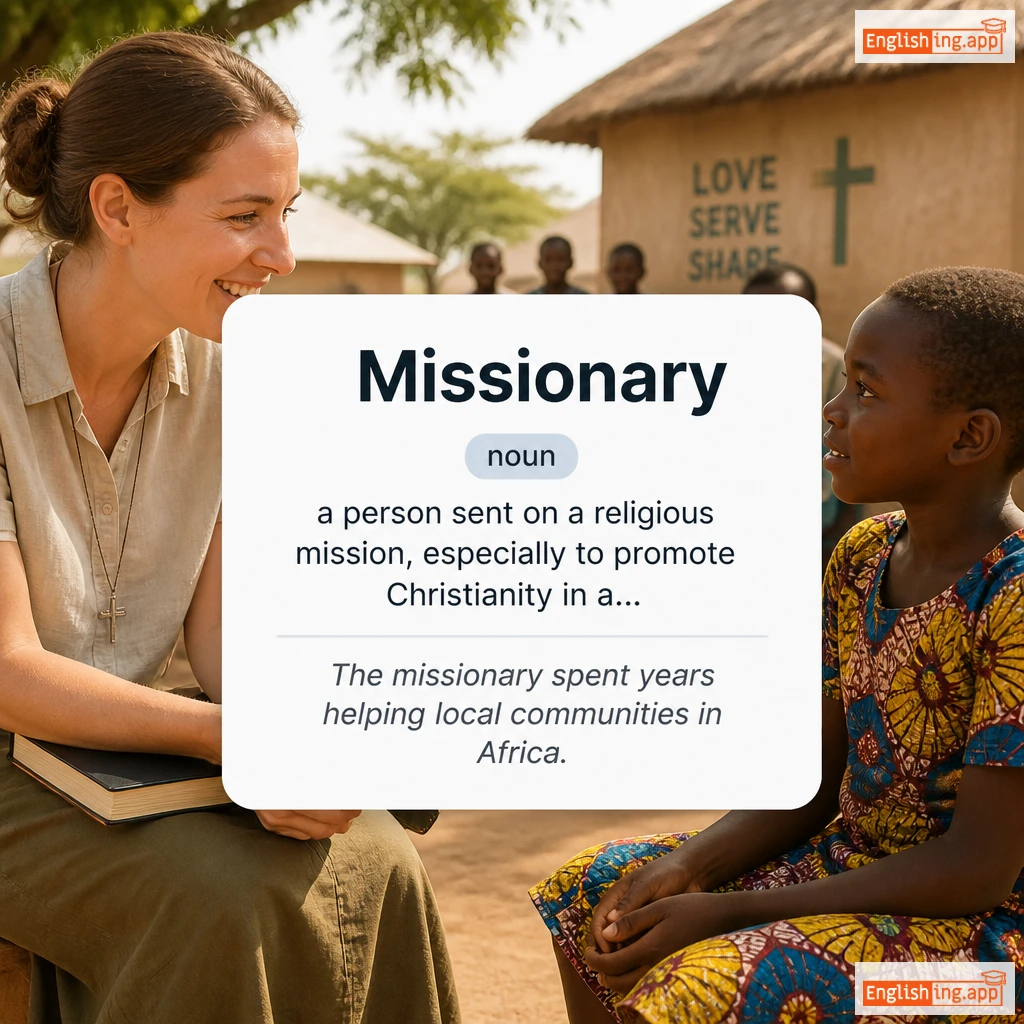
Missionary definition card — visual illustration of the meaning
noun C1
/ˈmɪʃəneri/
миссионер (missiyoner)

a person sent on a religious mission, especially to promote Christianity in a foreign country

"The missionary spent years helping local communities in Africa."
"Миссионер провел годы, помогая местным сообществам в Африке." (Missiyoner provel gody, pomogaya mestnym soobshchestvam v Afrike.)
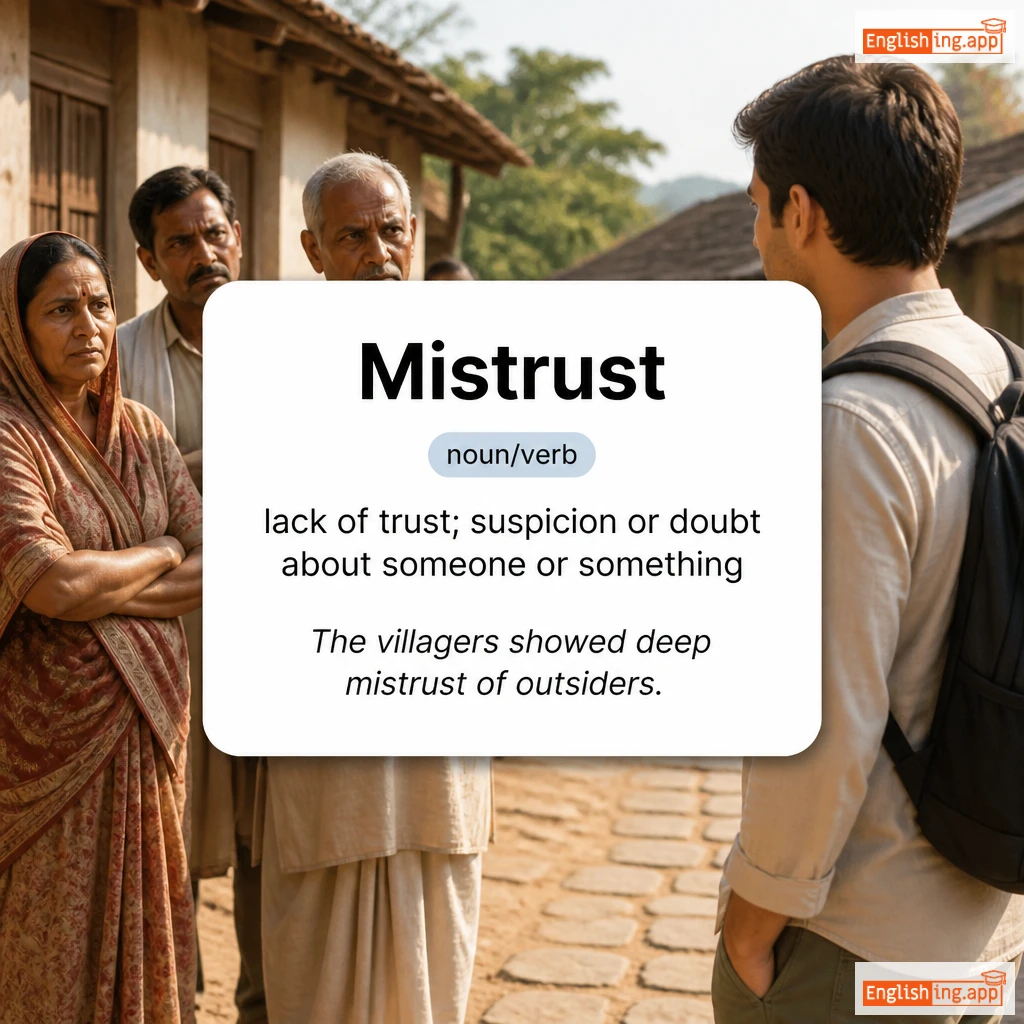
Mistrust definition card — visual illustration of the meaning
noun/verb C1
/ˌmɪsˈtrʌst/
недоверие (nedeverie)

lack of trust; suspicion or doubt about someone or something

"The villagers showed deep mistrust of outsiders."

"Жители деревни проявили глубокое недоверие к чужакам." (Zhiteli derevni proyavili glubokoye nedeveriye k chuzhakam.)
noun C1
/maɪt/
паука-клещ (pauka-klesh)

a very small creature, often a tiny arachnid; also used to mean a very small amount

"The mattress was infested with dust mites."
"Матрас был заражен пылевыми клещами." (Matras byl zarazhen pyl'evymi kleshchami.)
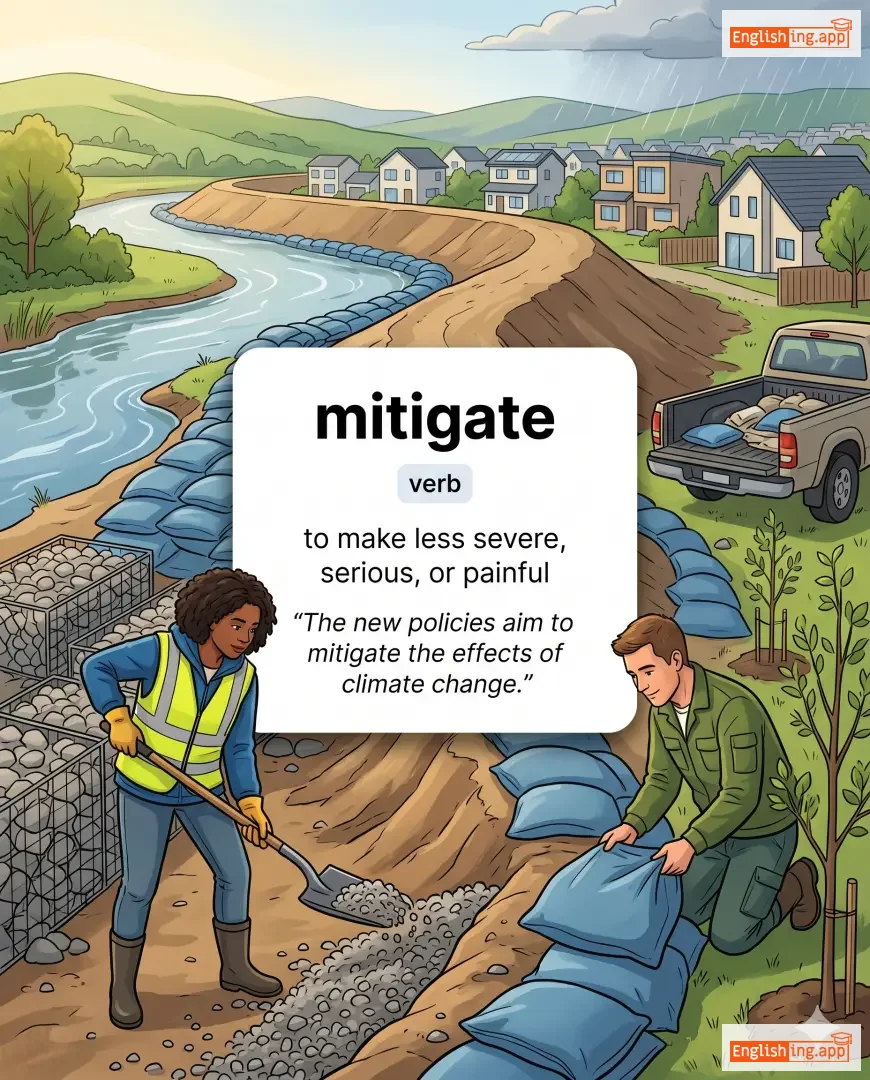
mitigate definition card — visual illustration of the meaning
verb C1
/ˈmɪtɪˌɡeɪt/
смягчать (smyagchat)

to make less severe, serious, or painful

"The new policies aim to mitigate the effects of climate change."
"Новые политические меры направлены на смягчение последствий изменения климата." (Novye politicheskie mery napravleny na smyagchenie posledstviy izmeneniya klimata.)
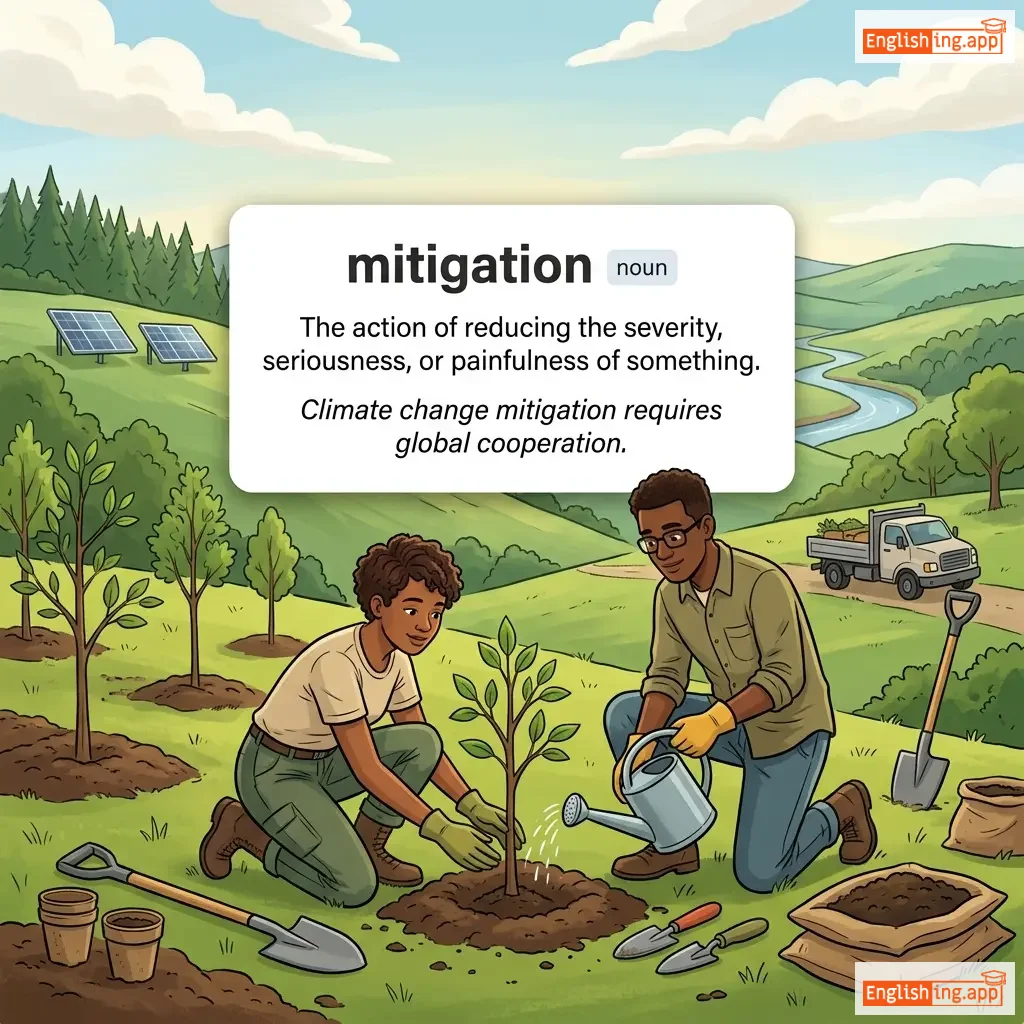
mitigation definition card — visual illustration of the meaning
noun C1
ˌmɪt.ɪˈɡeɪ.ʃən
смягчение (smyagchenie)

The action of reducing the severity, seriousness, or painfulness of something.

"Climate change mitigation requires global cooperation."
"Снижение воздействия изменения климата требует глобального сотрудничества." (Snizhenie vozdeystviya izmeneniya klimata trebuyet global'nogo sotrudnichestva.)
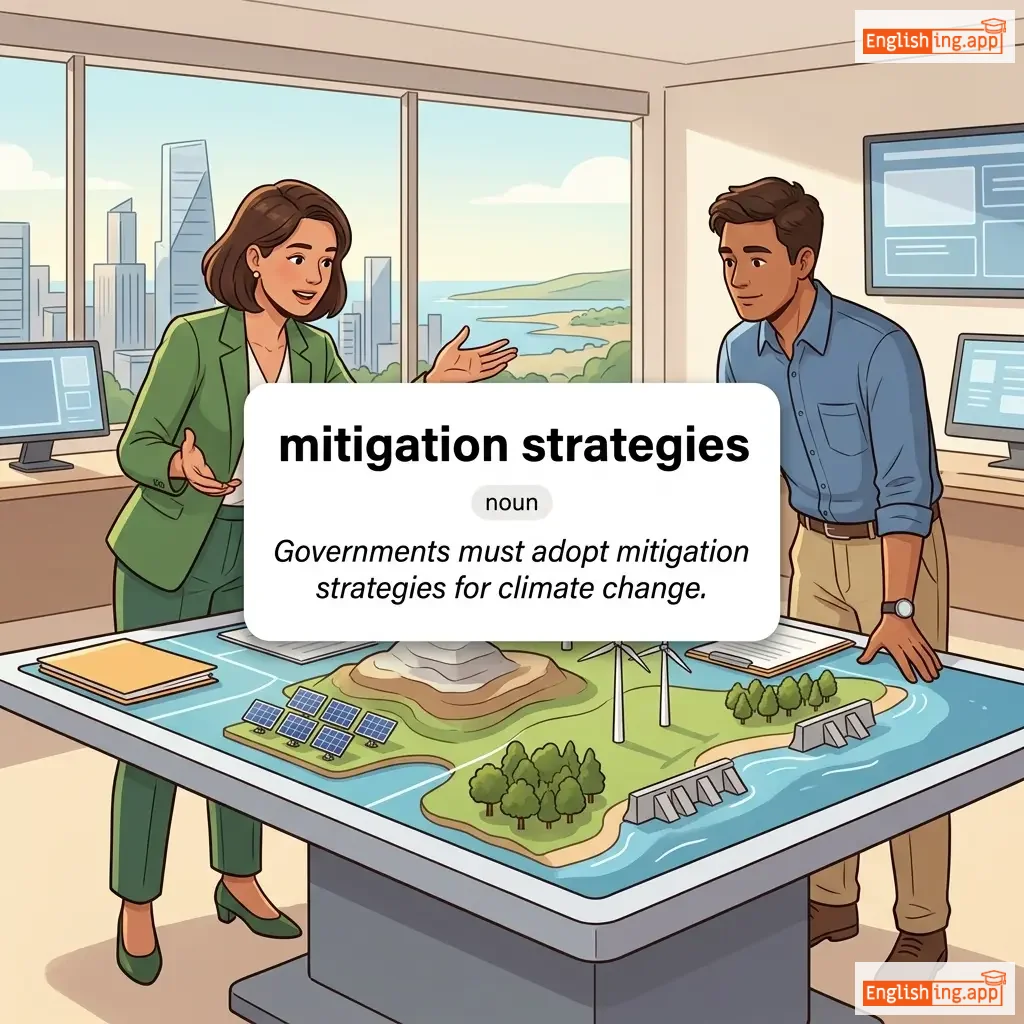
mitigation strategies definition card — visual illustration of the meaning
noun C1
ˌmɪtɪˈɡeɪʃən ˈstrætədʒiz
стратегии смягчения (strategii smyagcheniya)

Plans and actions designed to reduce the severity or impact of problems or risks.

"Governments must adopt mitigation strategies for climate change."
"Правительства должны принять стратегии смягчения для борьбы с изменением климата." (Pravitel'stva dolzhny prinyat' strategii smyagcheniya dlya bor'by s izmeneniem klimata.)
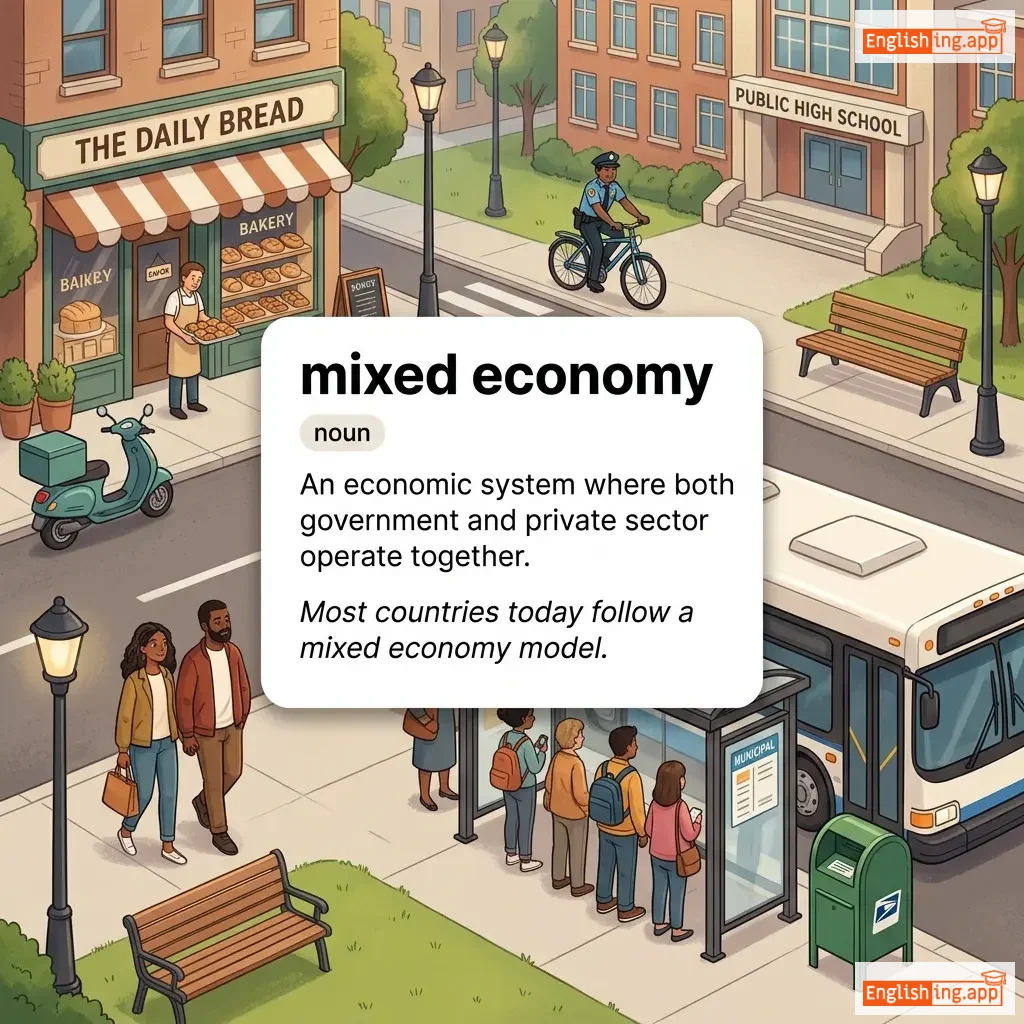
mixed economy definition card — visual illustration of the meaning
noun C1
/mɪkst ɪˈkɒn.ə.mi/
смешанная экономика (smeshannaya ekonomika)

An economic system where both government and private sector operate together.

"Most countries today follow a mixed economy model."
"Сегодня большинство стран придерживаются модели смешанной экономики." (Segodnya bol'shinstvo stran prideryvayutsya modeli smeshannoy ekonomiki.)
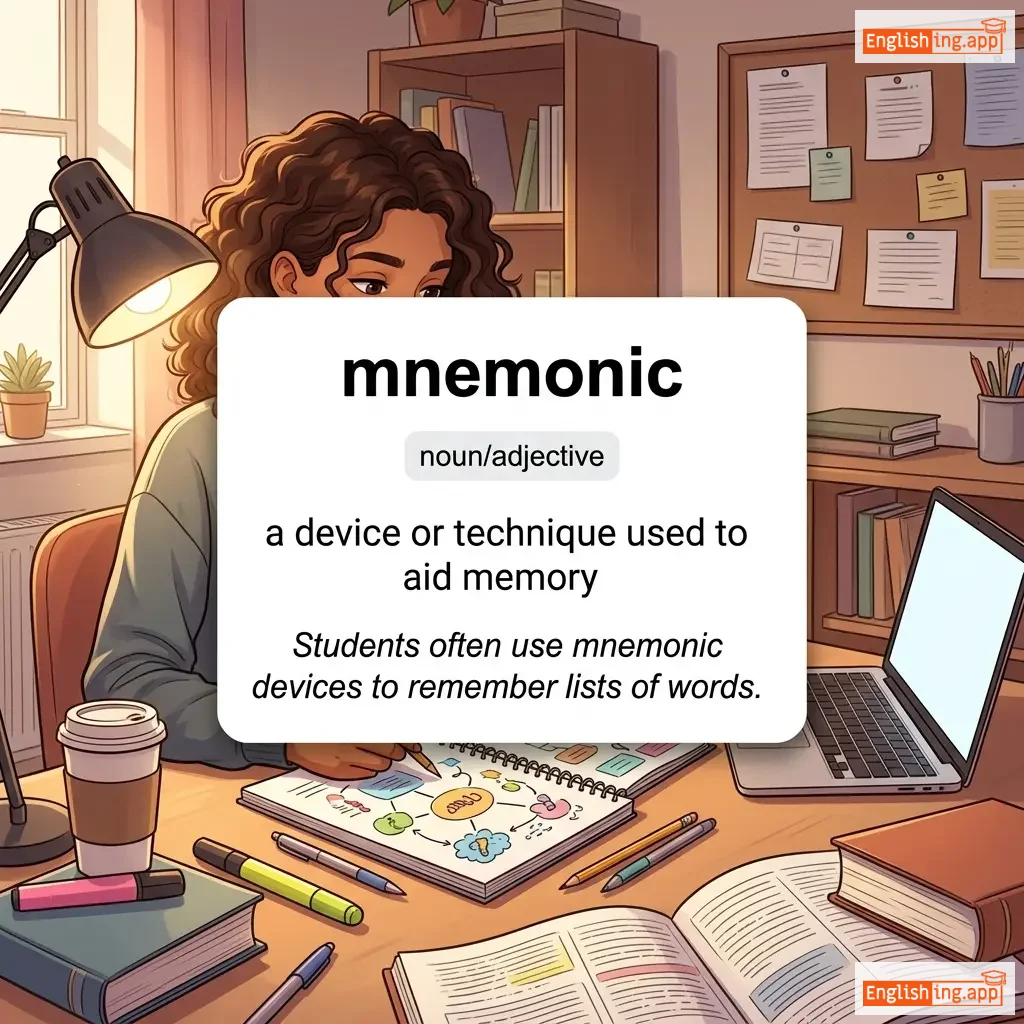
mnemonic definition card — visual illustration of the meaning
noun/adjective C1
/nɪˈmɒnɪk/

a device or technique used to aid memory

"Students often use mnemonic devices to remember lists of words."

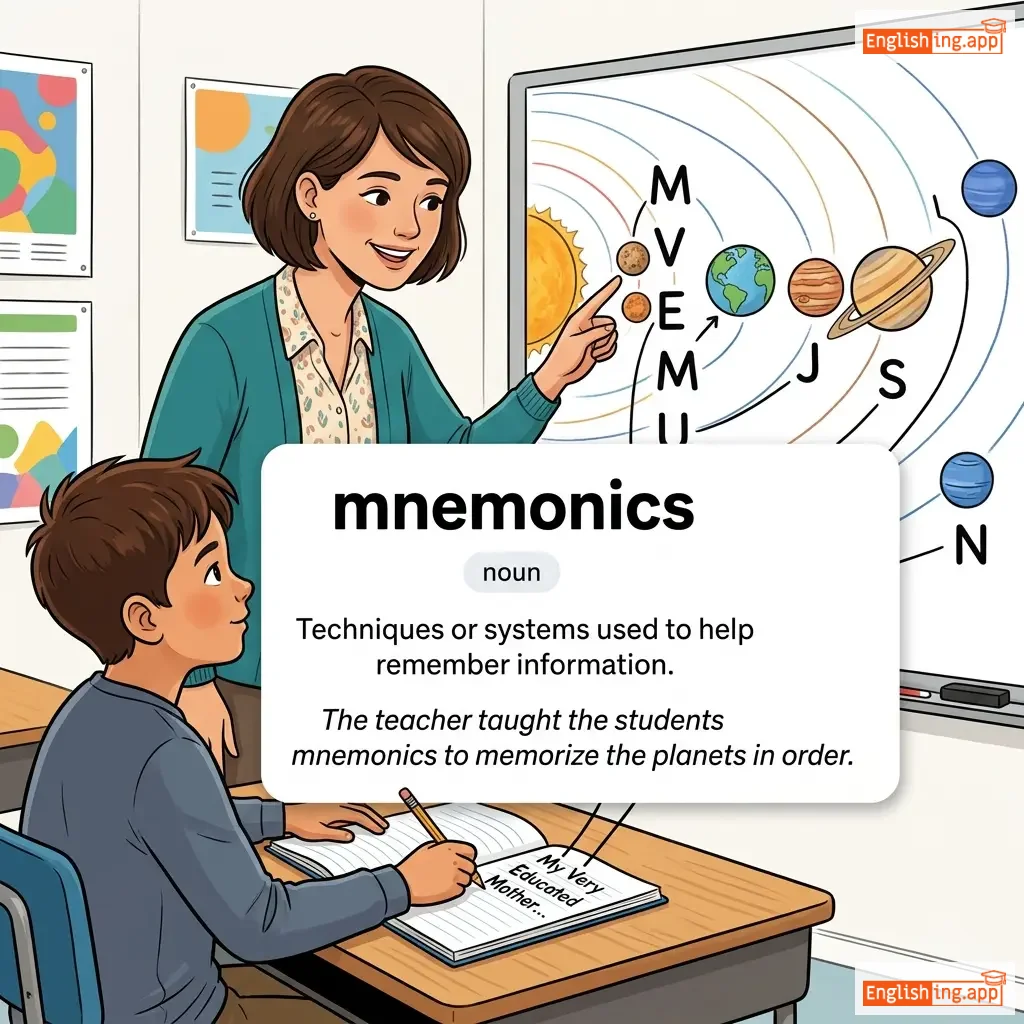
mnemonics definition card — visual illustration of the meaning
noun C1
/nɪˈmɒnɪks/
мнемотехника (mnemotekhnika)

Techniques or systems used to help remember information.

"The teacher taught the students mnemonics to memorize the planets in order."

"Учитель научил студентов мнемоническим приемам для запоминания планет по порядку." (Uchitel' nauchil studentov mnemoničeskim prijemam dlya zapominaniya planet po poryadku.)
noun C1
/moʊt/
ров (rov)

A deep, wide ditch surrounding a castle or town, often filled with water, for defense.

"The castle was protected by a wide moat filled with water."
"Замок был защищен широким рвом, заполненным водой." (Zamok byl zashchishchen shirokim rvom, zapolnennym vodoy.)
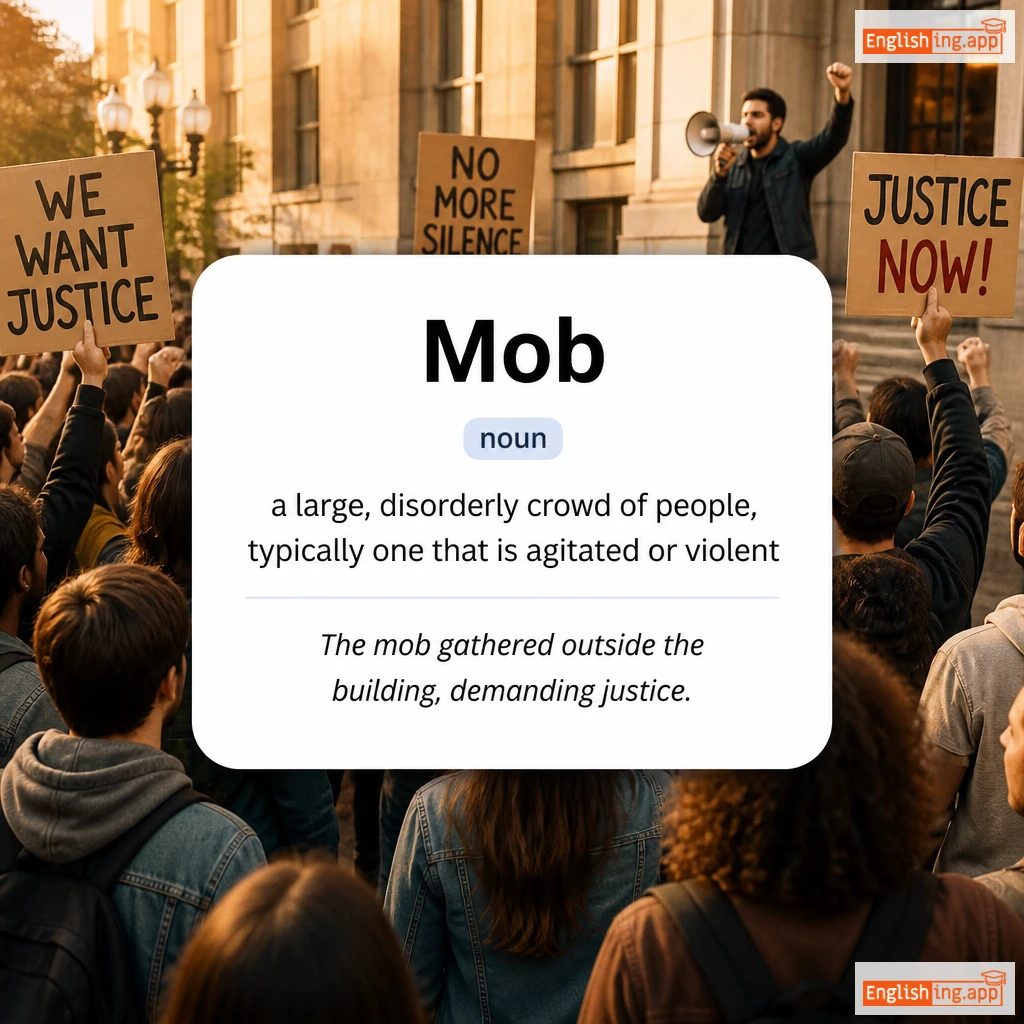
Mob definition card — visual illustration of the meaning
noun C1
/mɒb/
толпа (tolpa)

a large, disorderly crowd of people, typically one that is agitated or violent

"The mob gathered outside the building, demanding justice."

"Толпа собралась у здания, требуя справедливости." (Tolpa sobrala's' u zdaniya, trebuyaya spravedlivosti.)
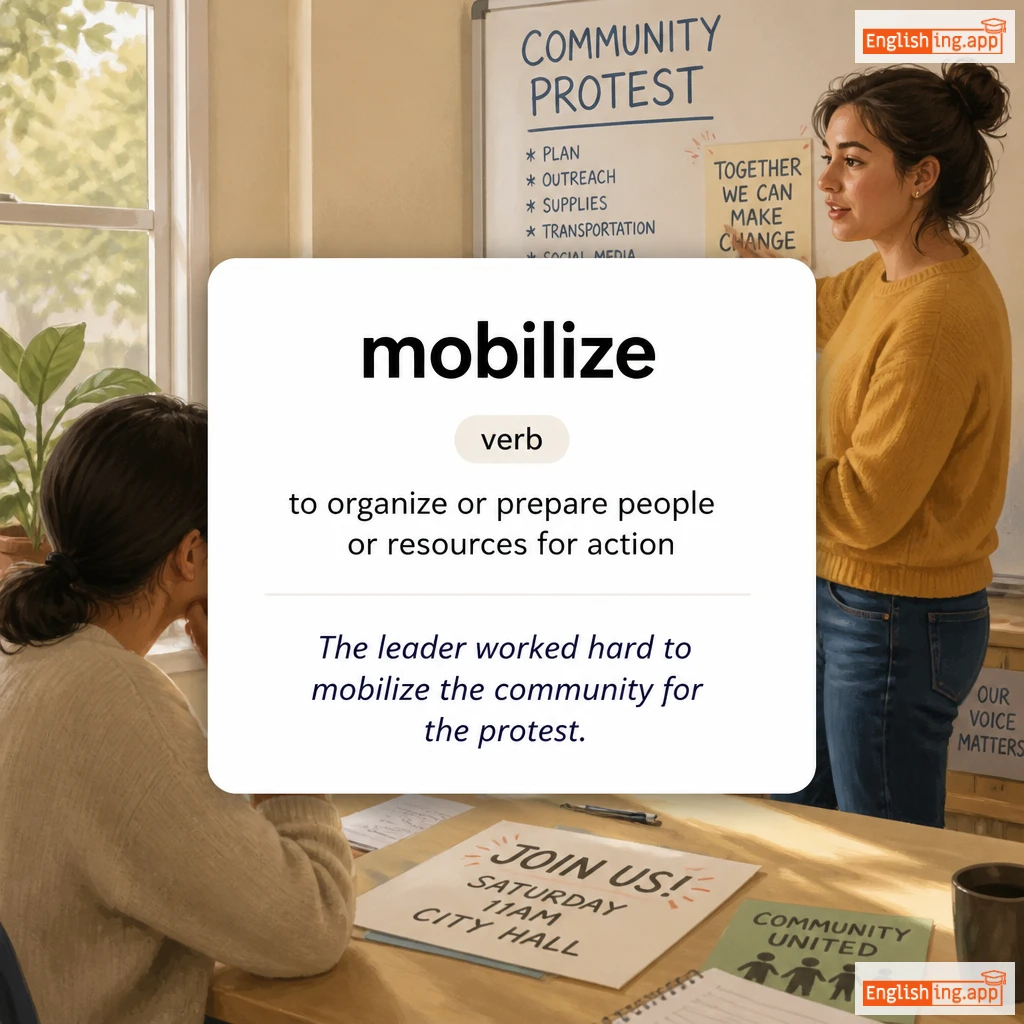
mobilize definition card — visual illustration of the meaning
verb C1
/ˈməʊbɪlaɪz/
мобилизовать (mobilizovat)

to organize or prepare people or resources for action

"The leader worked hard to mobilize the community for the protest."
"Лидер усердно работал, чтобы мобилизовать сообщество для протеста." (Lider userdno rabotal, chtoby mobilizovat soobshchestvo dlya protesta.)
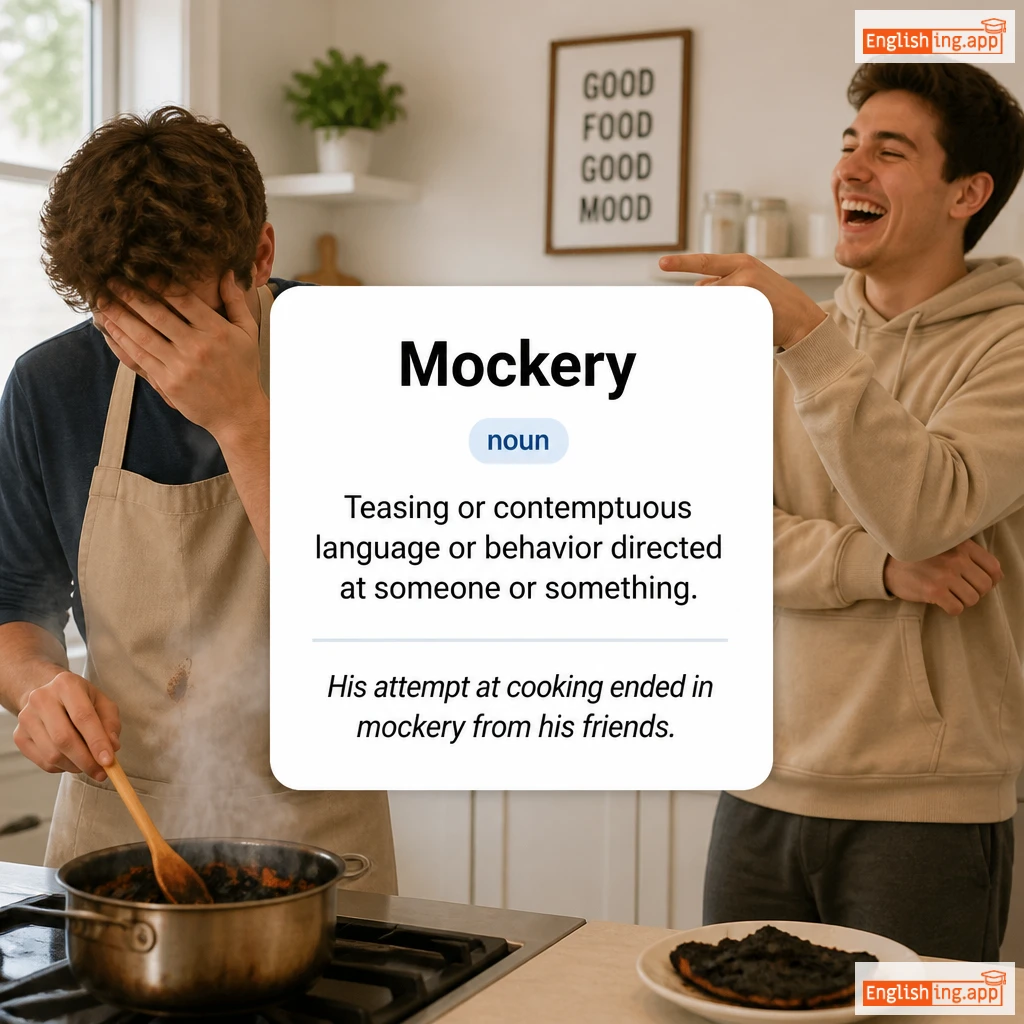
Mockery definition card — visual illustration of the meaning
noun C1
/ˈmɒkəri/
насмешка, издевательство (nasmeshka, izdevatel'stvo)

Teasing or contemptuous language or behavior directed at someone or something.

"His attempt at cooking ended in mockery from his friends."

"Его попытка готовить закончилась насмешками со стороны его друзей." (Ego popytka gotovit' zakonchilas' nasmeshkami so storony ego druz'yev.)
noun C1
/məˈdɜːrnəti/
современность (sovremennost')

The quality or condition of being modern; up-to-date ideas, practices, or style.

"The city’s architecture reflects both tradition and modernity."

"Архитектура города отражает как традицию, так и современность." (Arhitektura goroda otrazhaet kak traditsiyu, tak i sovremennost'.)
Modesty definition card — visual illustration of the meaning
noun C1
/ˈmɒd.ə.sti/
скромность; смирение (skromnost'; smirenie)

the quality of being humble and not boastful about achievements

"Despite his success, he showed great modesty."
"Несмотря на успех, он проявил великую скромность." (Nesmotrya na uspekh, on proyavil velikuyu skromnost'.)
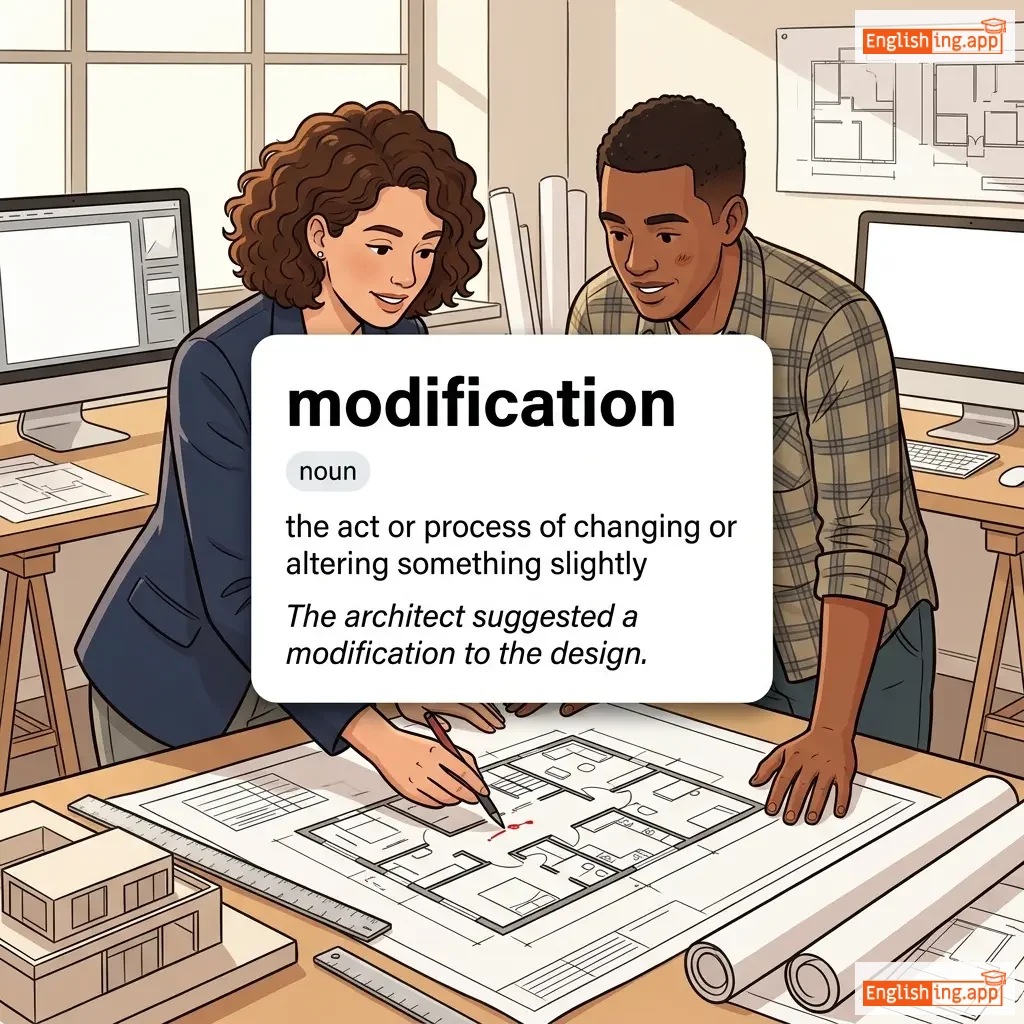
modification definition card — visual illustration of the meaning
noun C1
/ˌmɒdɪfɪˈkeɪʃən/
модификация (modifikatsiya)

the act or process of changing or altering something slightly

"The architect suggested a modification to the design."
"Архитектор предложил модификацию дизайна." (Arkhitektor predlozhil modifikatsiyu dizayna.)
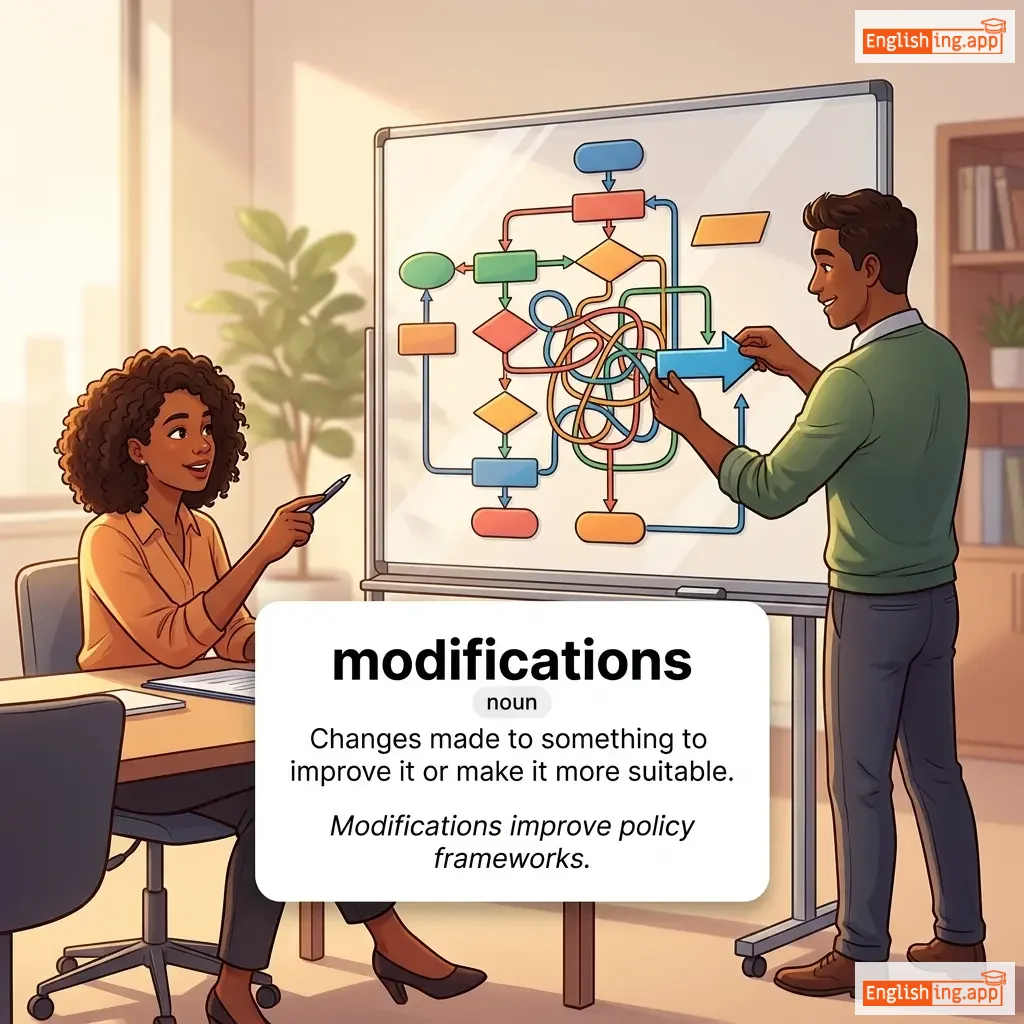
modifications definition card — visual illustration of the meaning
noun C1
ˌmɒd.ɪ.fɪˈkeɪ.ʃənz
модификации (modifikatsii)

Changes made to something to improve it or make it more suitable.

"Modifications improve policy frameworks."
"Модификации улучшают политические структуры." (Modifikatsii uluchshayut politicheskie struktury.)
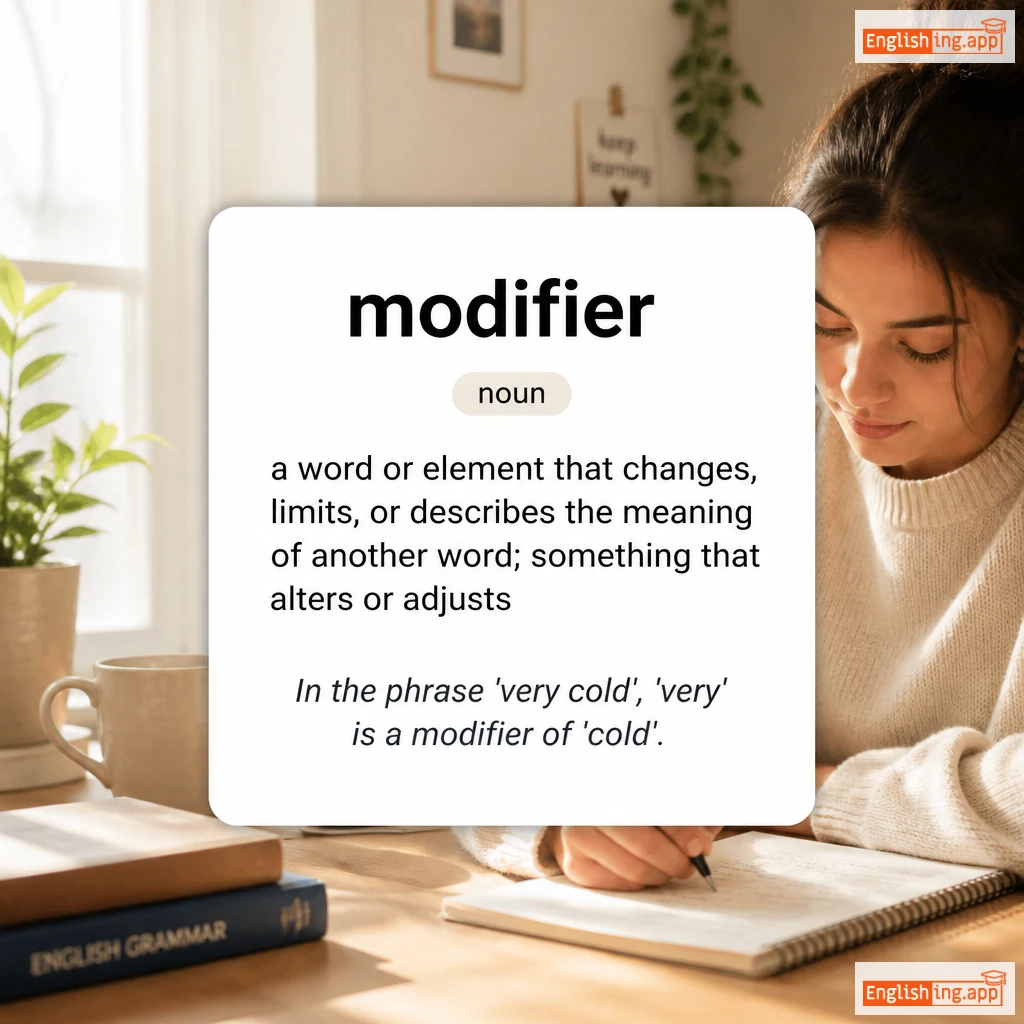
modifier definition card — visual illustration of the meaning
noun C1
/ˈmɒdɪfaɪər/
модификатор (modifikator)

a word or element that changes, limits, or describes the meaning of another word; something that alters or adjusts

"In the phrase 'very cold', 'very' is a modifier of 'cold'."
"В выражении «very cold» слово «very» является модификатором слова «cold»." (V vyrazhenii very cold slovo very yavlyaetsya modifikatorom slova cold)
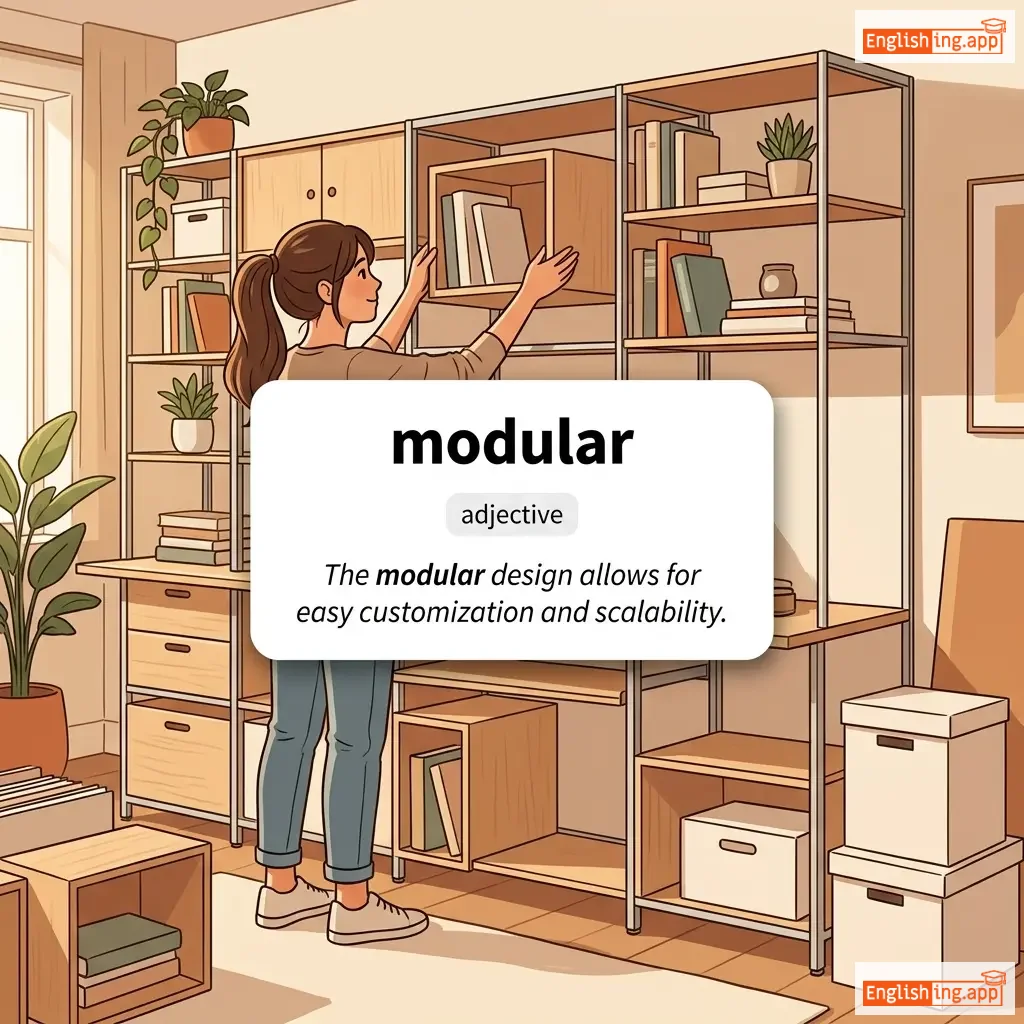
modular definition card — visual illustration of the meaning
adjective C1
/ˈmɒdʒʊlər/
модульный (modul'nyi)

Employing or involving a module or modules as the basis of design or construction.

"The modular design allows for easy customization and scalability."
"Модульный дизайн позволяет легко настраивать и масштабировать." (Modul'nyi dizain pozvolyaet legko nastroivat' i masshtabirovat'.)
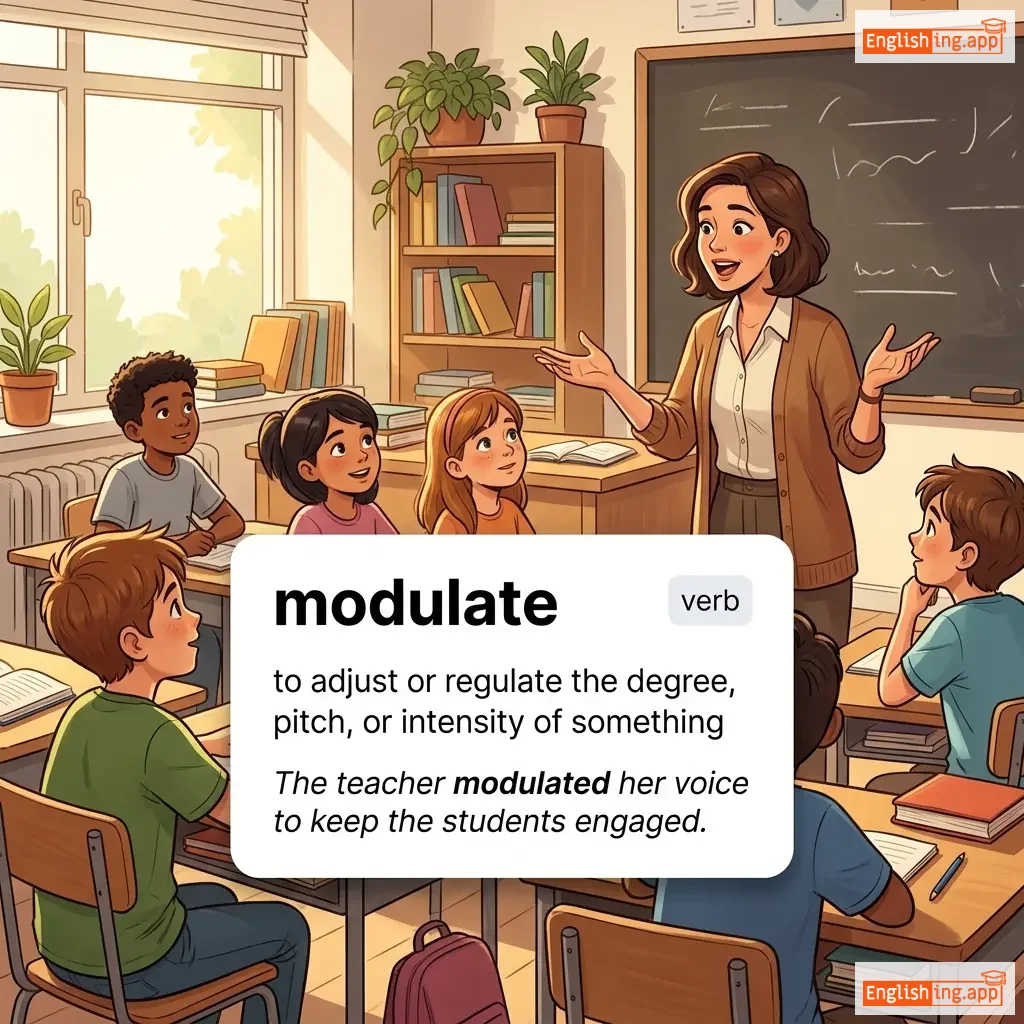
modulate definition card — visual illustration of the meaning
verb C1
/ˈmɒdjʊleɪt/
модулировать (modulirovat)

to adjust or regulate the degree, pitch, or intensity of something

"The teacher modulated her voice to keep the students engaged."
"Учитель отрегулировал свой голос, чтобы удержать студентов вовлеченными." (Uchitel' otreguliroval svoy golos, chtoby uderzhat' studentov vovlechenными.)
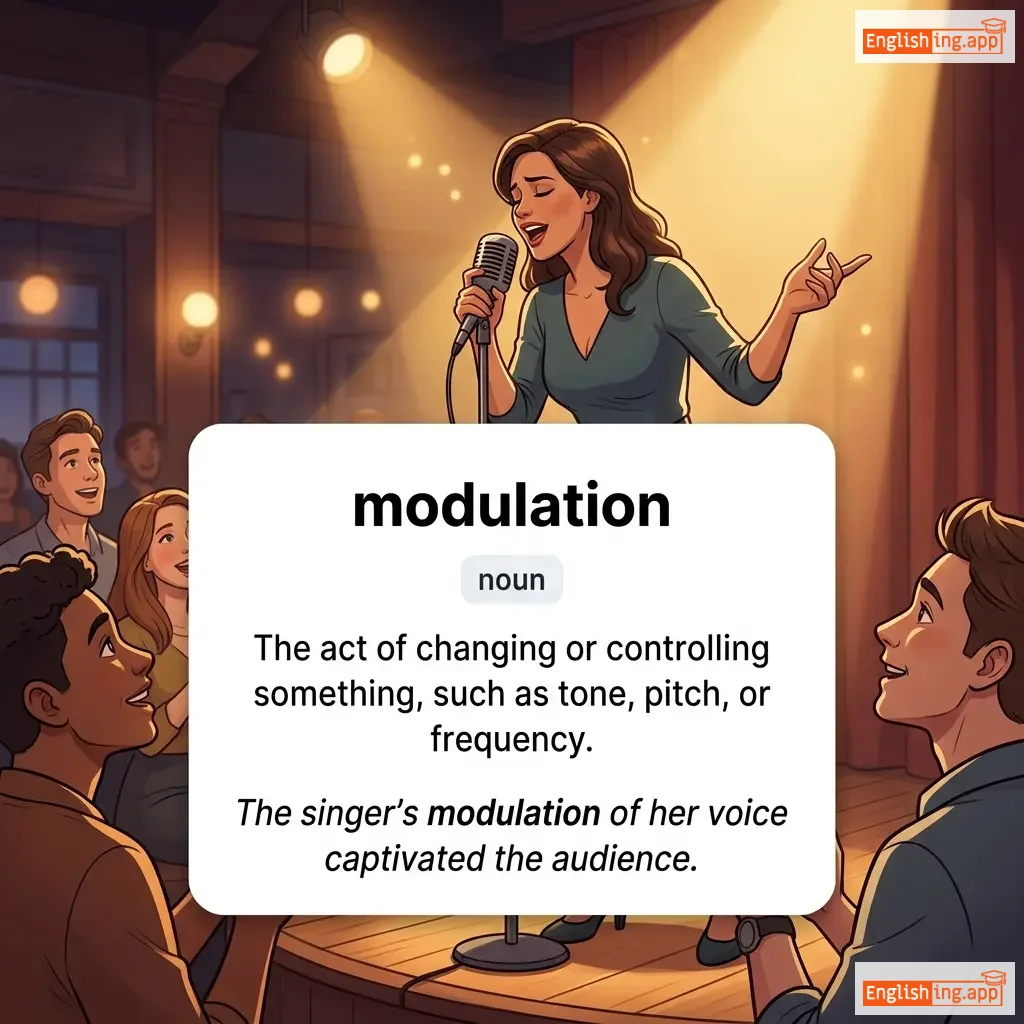
modulation definition card — visual illustration of the meaning
noun C1
/ˌmɒdjʊˈleɪʃən/
управление тоном или частотой (upravlenie tonom ili chastotoy)

The act of changing or controlling something, such as tone, pitch, or frequency.

"The singer’s modulation of her voice captivated the audience."

"Модуляция ее голоса захватила аудиторию." (Modulyatsiya yevo golosa zakhvatila auditoriyu.)
noun C1
/ˈmoʊɡəl/
магнат (magnat)

A powerful or influential person, especially in business or media.

"He became a tech mogul by founding a billion-dollar company."

"Он стал технологическим магнатом, основав миллиардную компанию." (On stal tekhnologicheskim magnatom, osnovav milliardnuyu kompaniyu.)
noun C1
/ˈmoʊldɪŋ/
декоративная накладка (dekorativnaya nakladka)

A decorative strip or design, often used on walls, ceilings, or furniture.

"The wooden molding gave the room a classic look."
"Деревянный молдинг придал комнате классический вид." (Derevyannyy molding pridalsya komnate klassicheskiy vid.)
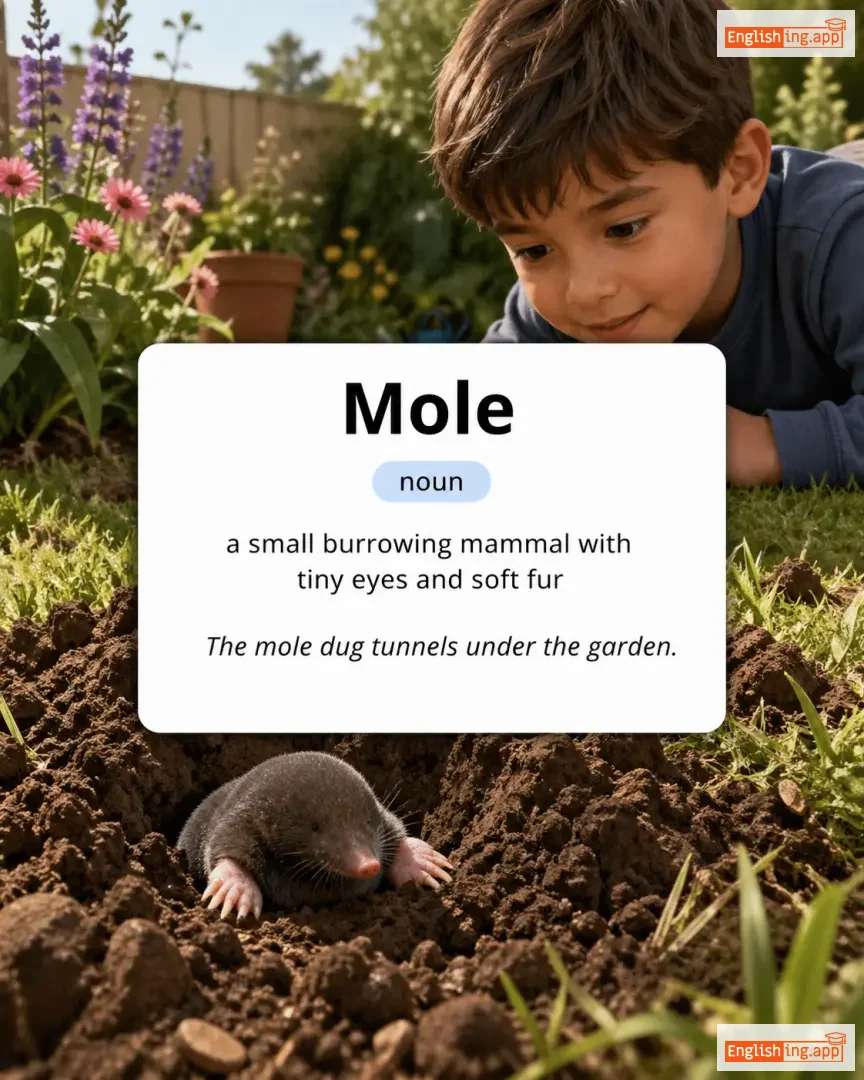
Mole definition card — visual illustration of the meaning
noun C1
/moʊl/
крот (krot)

a small burrowing mammal with tiny eyes and soft fur

"The mole dug tunnels under the garden."

"Крот вырыл туннели под садом." (Krot vyryl tunneli pod sadom.)
verb C1
/məˈlɛst/
домогаться / подвергать сексуальному насилию (domogatsya / podvergat' seksual'nomu nasiliyu)

to assault or abuse someone, especially in a sexual or physical way

"The criminal was arrested for attempting to molest a child."

"Преступник был арестован за попытку домогаться до ребенка." (Prestuponnik byl arestovan za popytku domogatsya do rebenka.)
adjective C1
/ˈməʊltən/
расплавленный (rasplavlennyy)

Made into liquid by heat; melted.

"The blacksmith poured molten metal into the mold."

"Кузнец налил расплавленный металл в форму." (Kuznets nalil raspavlennyy metall v formu.)
adjective C1
/ˈmoʊmənˌteri/
кратковременный (kratkovremenny)

Lasting for only a short time.

"There was a momentary silence in the room."

"В комнате была кратковременная тишина." (V komnate byla kratkovremennaya tishina.)
adjective C1
/moʊˈmɛntəs/
значительный (znachitel'nyy)

Of great importance or significance, especially in its effect on the future.

"The signing of the agreement was a momentous event."
"Подписание соглашения было значительным событием." (Podpisaniye soglasheniya bylo znachitel'nym sobytiyem.)
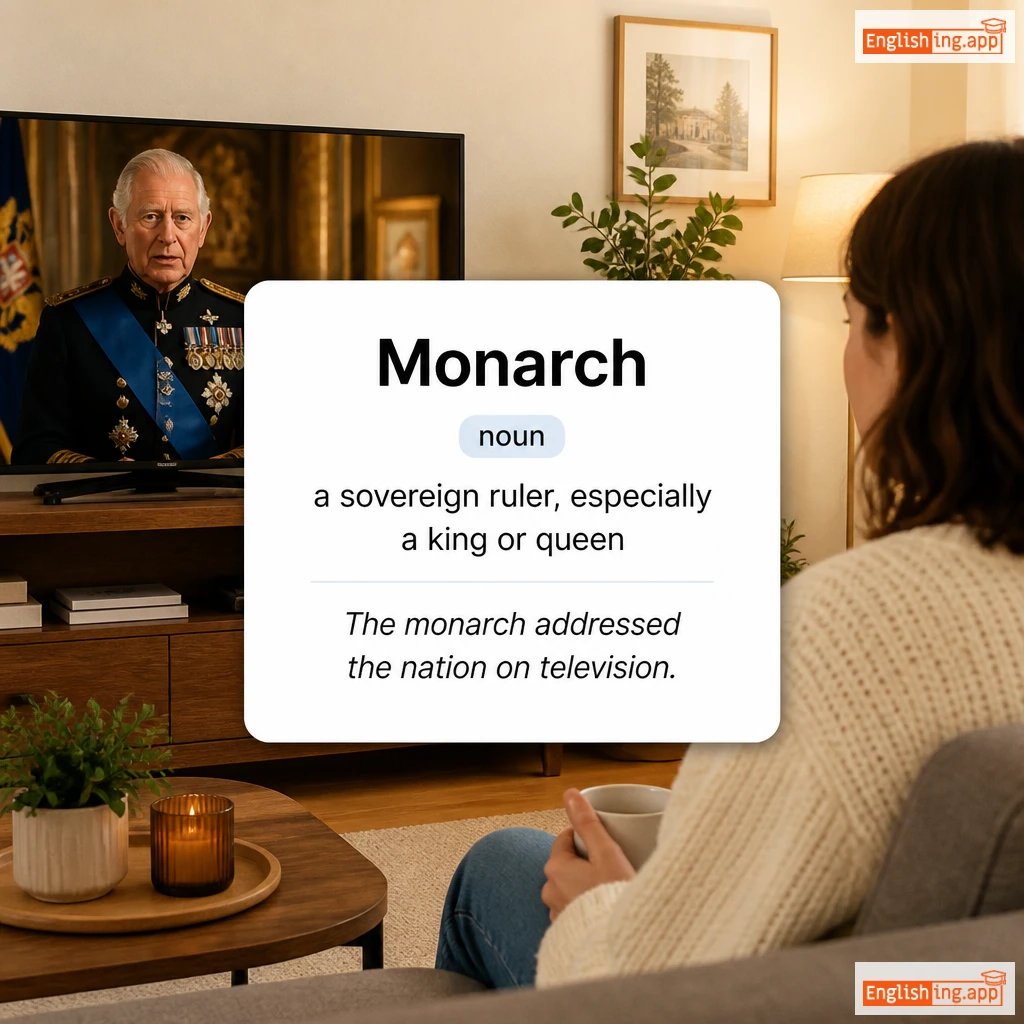
Monarch definition card — visual illustration of the meaning
noun C1
/ˈmɒn.ɑːk/
монарх (monarh)

a sovereign ruler, especially a king or queen

"The monarch addressed the nation on television."

"Монарх обратился к нации по телевидению." (Monarh obratilsya k natsii po televizii.)
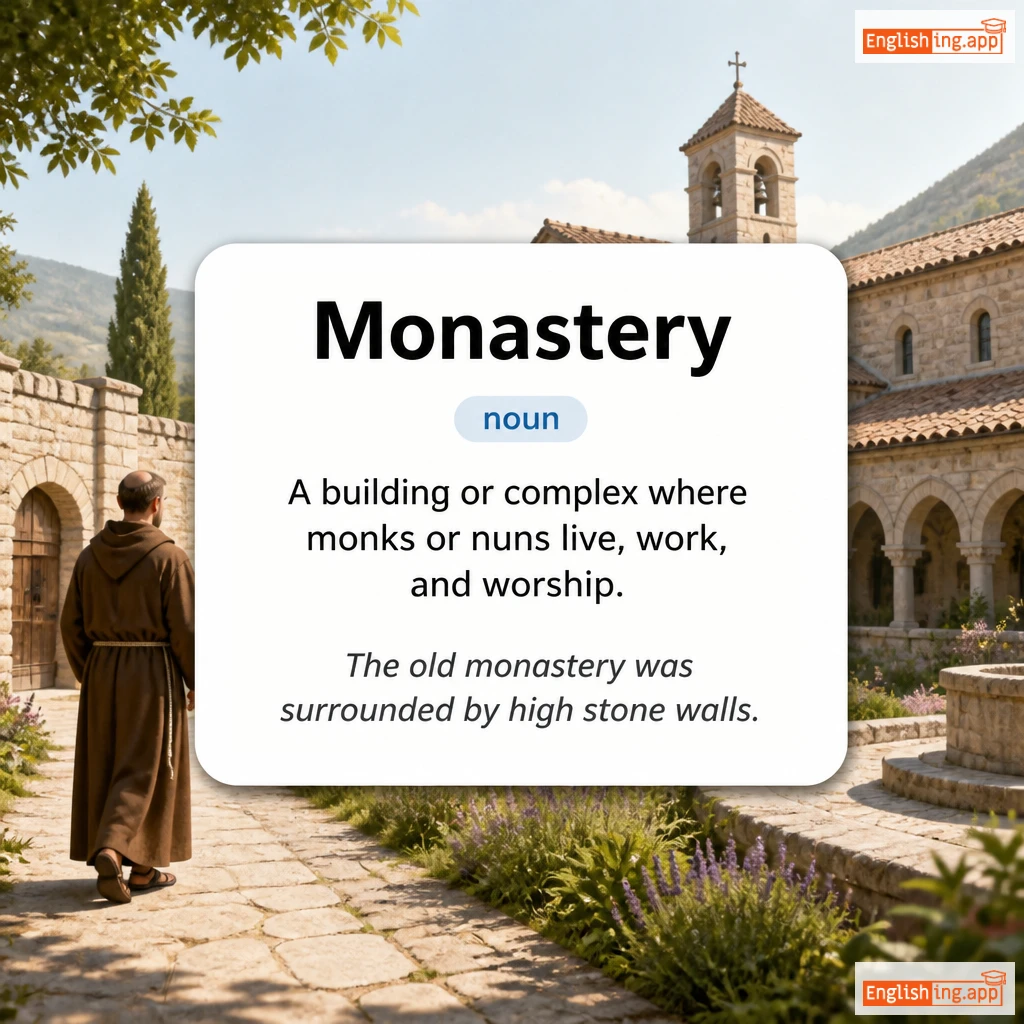
Monastery definition card — visual illustration of the meaning
noun C1
/ˈmɒnəstɛri/

A building or complex where monks or nuns live, work, and worship.

"The old monastery was surrounded by high stone walls."

adjective C1
/məˈnæstɪk/
монашеский (monasheskij)

Relating to monks, monasteries, or a life of religious seclusion.

"He chose to live a monastic life away from the city."

"Он выбрал монашескую жизнь вдали от города." (On vybral monasheskuyu zhizn' vdali ot goroda.)
monetization definition card — visual illustration of the meaning
noun C1
/ˌmɒn.ɪ.taɪˈzeɪ.ʃən/
монетизация (monetizatsiya)

The process of converting assets or services into money, involving commercialization, profit generation, and revenue creation.

"The monetization of digital content has created new income streams."

"Монетизация цифрового контента создала новые потоки дохода." (Monetizatsiya tsifrovogo kontenta sozdala novye potoki dokhoda.)