Vocabulary Videos
129 videos available.
 ja
ja
Corroborate: English vocabulary meaning and example
Learn the English word "Corroborate".
Meaning: to confirm or support a statement, theory, or finding with evidence.
Example: The witness's testimony helped to corroborate the detective's account of the events.
Japanese: 裏付ける、確証する
Japanese example: その目撃者の証言は、刑事の事件の説明を裏付けるのに役立ちました。
#LearnEnglish #EnglishVocabulary #Englishing
 ja
ja
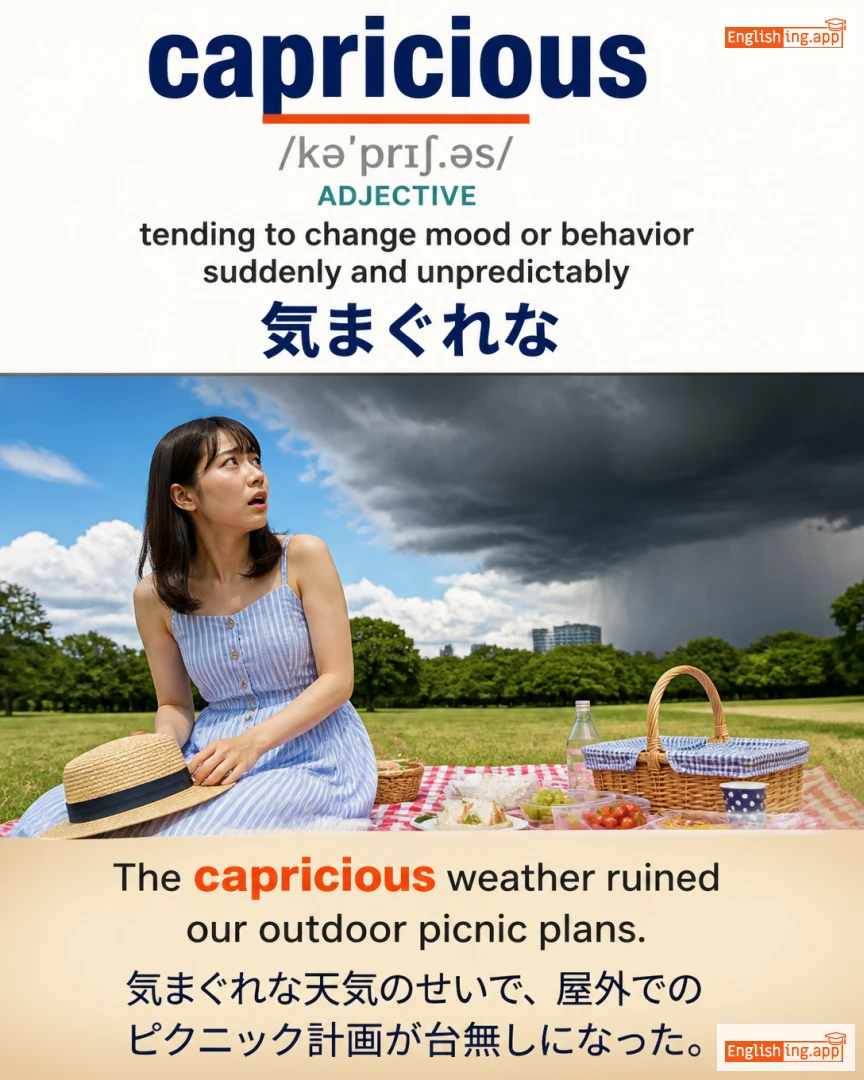
Capricious: English vocabulary meaning and example
Learn the English word "Capricious".
Meaning: tending to change mood or behavior suddenly and unpredictably.
Example: The capricious weather ruined our outdoor picnic plans.
Japanese: 気まぐれな、予測できないほど急に気分や行動が変わる様子。
Japanese example: 気まぐれな天気のせいで、屋外でのピクニック計画が台無しになった。
#LearnEnglish #EnglishVocabulary #Englishing
 ja
ja
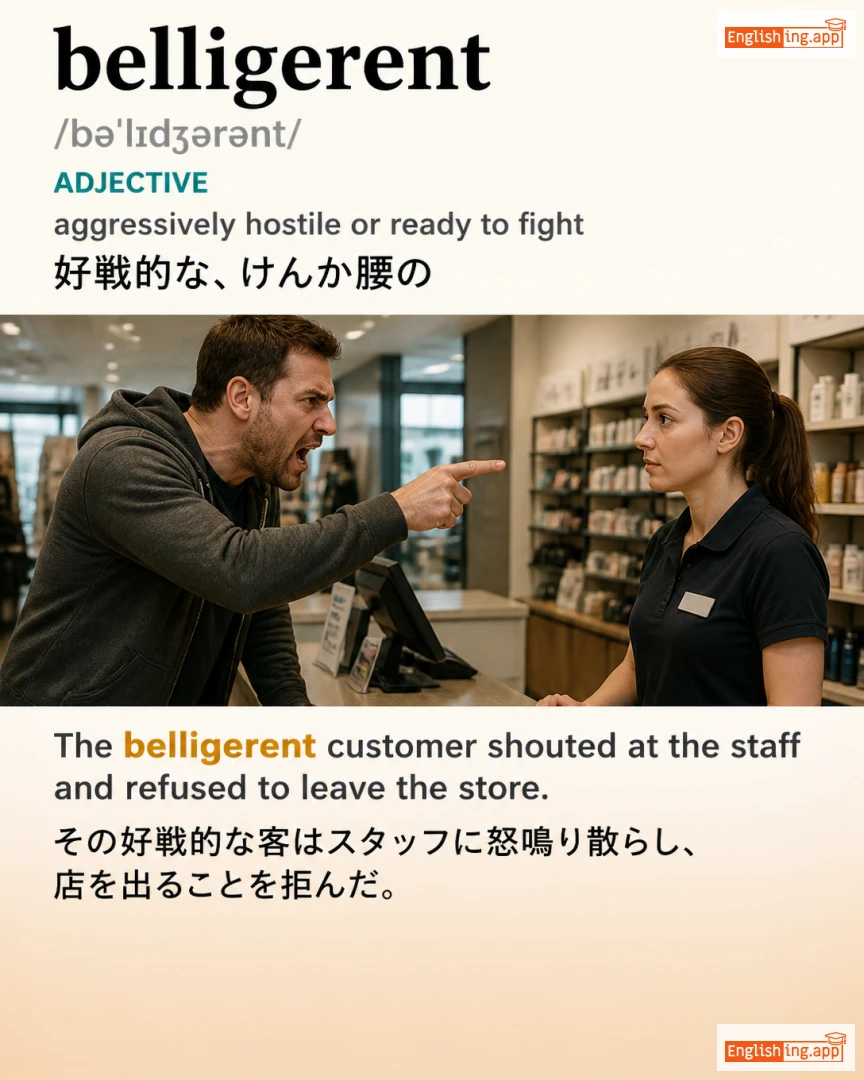
Belligerent: English vocabulary meaning and example
Learn the English word "Belligerent".
Meaning: aggressively hostile or ready to fight.
Example: The belligerent customer shouted at the staff and refused to leave the store.
Japanese: 好戦的な、けんか腰の。
Japanese example: その好戦的な客はスタッフに怒鳴り散らし、店を出ることを拒んだ。
#LearnEnglish #EnglishVocabulary #Englishing
 ja
ja
Ambivalent: English vocabulary meaning and example
Learn the English word "Ambivalent".
Meaning: having mixed or contradictory feelings about something.
Example: She felt ambivalent about accepting the job offer, excited about the opportunity but worried about leaving her hometown.
Japanese: 相反する気持ちを同時に持っている、どちらとも言えない気持ちの。
Japanese example: 彼女はその仕事のオファーを受けることについて複雑な気持ちを抱いていた。チャンスにわくわくしながらも、故郷を離れることを心配していた。
#LearnEnglish #EnglishVocabulary #Englishing
 ja
ja
Auspicious: English vocabulary meaning and example
Learn the English word "Auspicious".
Meaning: Showing signs that future success is likely.
Example: A bright sunny morning was an auspicious start to our journey.
Japanese: 縁起の良い
Japanese example: よく晴れた朝は、私たちの旅の縁起の良いスタートでした。
#LearnEnglish #EnglishVocabulary #Englishing
 ja
ja
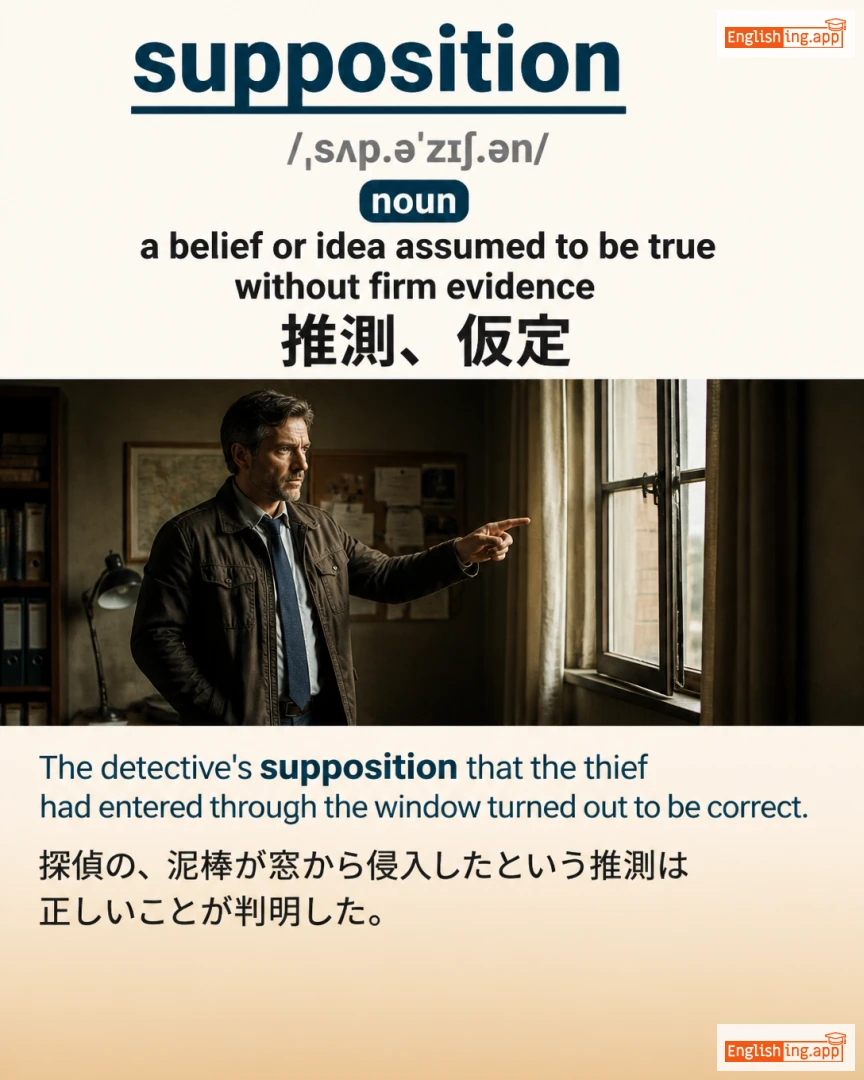
Supposition: English vocabulary meaning and example
Learn the English word "Supposition".
Meaning: a belief or idea that is assumed to be true without firm evidence.
Example: The detective's supposition that the thief had entered through the window turned out to be correct.
Japanese: 推測、仮定。
Japanese example: 探偵の、泥棒が窓から侵入したという推測は正しいことが判明した。
#LearnEnglish #EnglishVocabulary #Englishing
 ja
ja
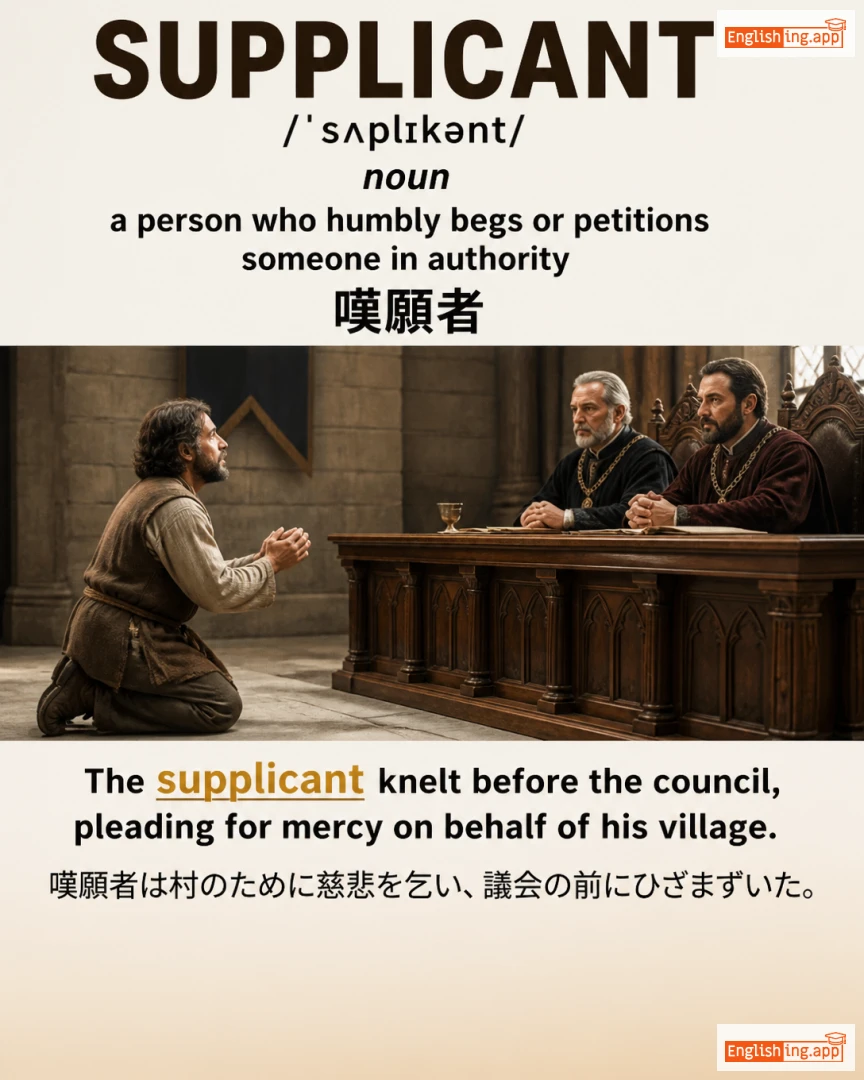
Supplicant: English vocabulary meaning and example
Learn the English word "Supplicant".
Meaning: a person who humbly asks or begs for something, especially from someone with authority.
Example: The supplicant knelt before the council, pleading for mercy on behalf of his village.
Japanese: 嘆願者(たんがんしゃ)— 権威ある人物に謙虚にお願いや懇願をする人。
Japanese example: 嘆願者は村のために慈悲を乞い、議会の前にひざまずいた。
#LearnEnglish #EnglishVocabulary #Englishing
 ja
ja
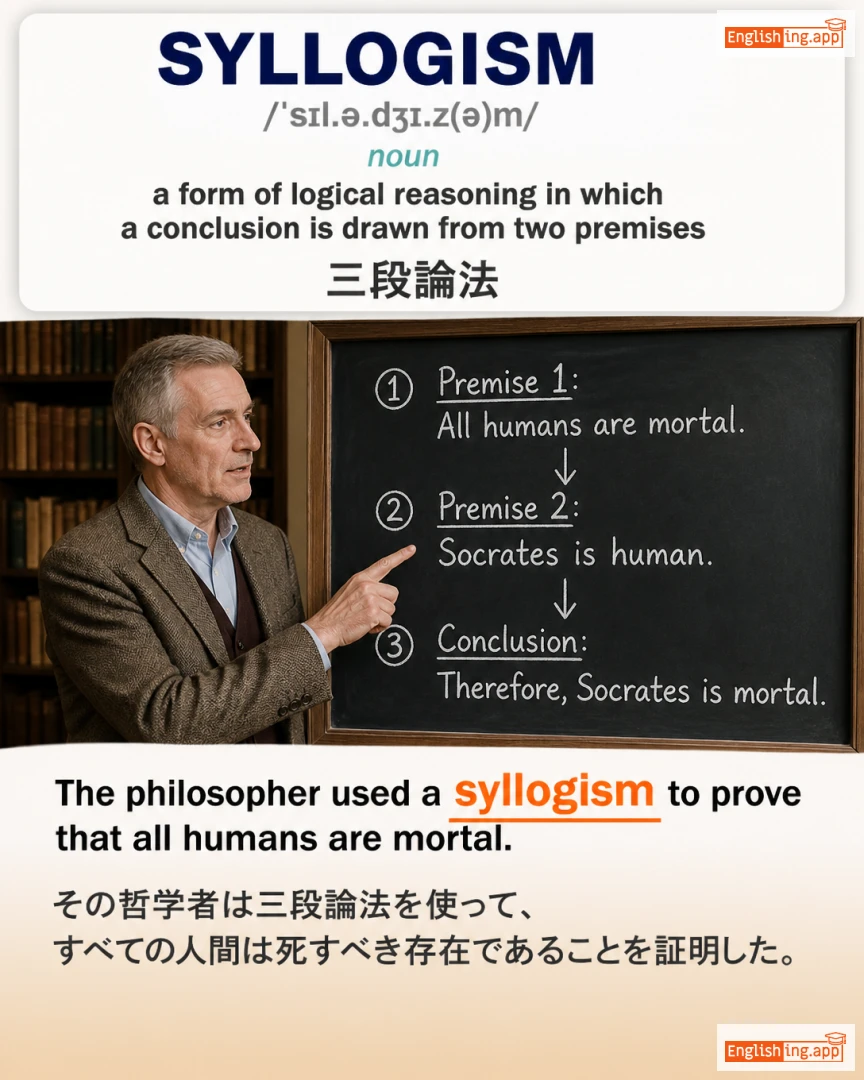
Syllogism: English vocabulary meaning and example
Learn the English word "Syllogism".
Meaning: a form of logical reasoning that reaches a conclusion from two premises.
Example: The philosopher used a syllogism to prove that all humans are mortal.
Japanese: 三段論法。
Japanese example: その哲学者は三段論法を使って、すべての人間は死すべき存在であることを証明した。
#LearnEnglish #EnglishVocabulary #Englishing
 ja
ja
Acquire: English vocabulary meaning and example
Learn the English word "Acquire".
Meaning: to get or gain something, especially through effort or experience.
Example: She worked hard to acquire the skills needed for her new job.
Japanese: 獲得する、身につける
Japanese example: 彼女は新しい仕事に必要なスキルを身につけるために、懸命に努力した。
#LearnEnglish #EnglishVocabulary #Englishing