Vocabulary Videos
129 videos available.
 ja
ja
Exacerbate: English vocabulary meaning and example
Learn the English word "Exacerbate".
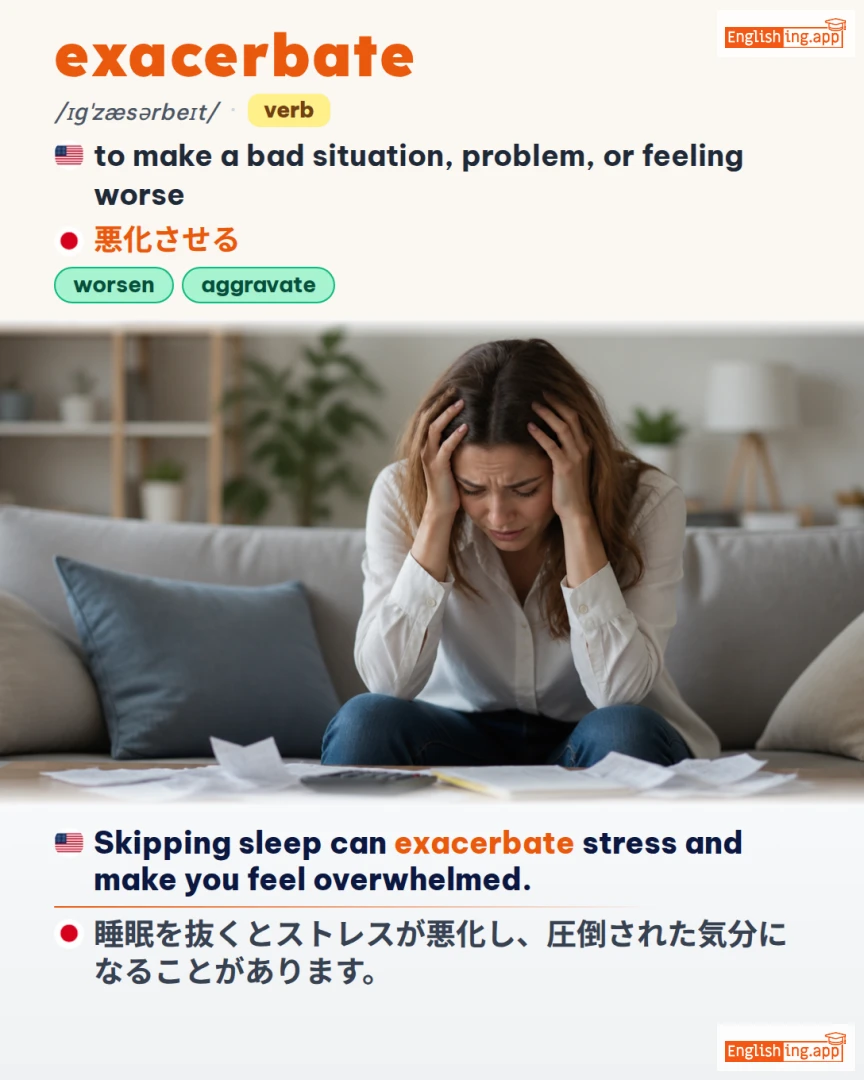
Meaning: Exacerbate, verb. It means to make a bad situation, problem, or feeling worse. Synonyms: worsen, aggravate.
Example: Skipping sleep can exacerbate stress and make you feel overwhelmed.
Japanese: Exacerbate は、悪い状況や感情をさらに悪くすることです。
Japanese example: 睡眠を抜くとストレスが悪化し、圧倒された気分になることがあります。
#LearnEnglish #EnglishVocabulary #Englishing
 ja
ja
Esoteric: English vocabulary meaning and example
Learn the English word "Esoteric".
Meaning: Esoteric, adjective. It means understood by only a small, specialized group of people. Synonyms: obscure, arcane.
Example: The professor's lecture was so esoteric that only a few experts in the room could follow it.
Japanese: Esoteric は、小さな専門家集団だけが理解できるという意味です。
Japanese example: 教授の講義は非常に難解で、部屋の数人の専門家だけが理解できました。
#LearnEnglish #EnglishVocabulary #Englishing
 ja
ja
Erudite: English vocabulary meaning and example
Learn the English word "Erudite".
Meaning: Erudite, adjective. It means having or showing deep, wide knowledge from study. Synonyms: scholarly, learned.
Example: The erudite professor could discuss ancient history, physics, and poetry with equal ease.
Japanese: Erudite は、学習による深く広い知識を持つことです。
Japanese example: 博識な教授は古代史、物理学、詩について同じように楽に語れました。
#LearnEnglish #EnglishVocabulary #Englishing
 ja
ja
Equanimity: English vocabulary meaning and example
Learn the English word "Equanimity".
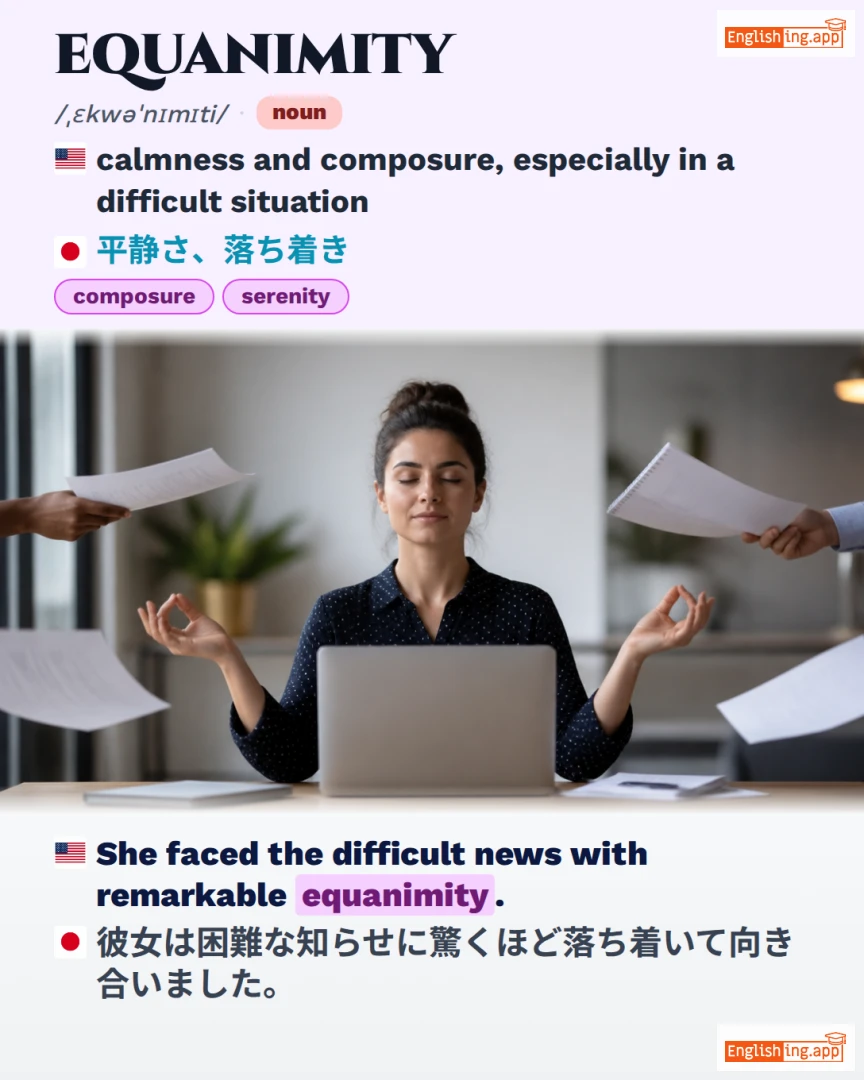
Meaning: Equanimity, noun. It means calmness and composure, especially in a difficult situation. Synonyms: composure, serenity.
Example: She faced the difficult news with remarkable equanimity.
Japanese: Equanimity は、困難な状況でも保つ落ち着きと平静さです。
Japanese example: 彼女は困難な知らせに驚くほど落ち着いて向き合いました。
#LearnEnglish #EnglishVocabulary #Englishing
 ja
ja
Enigmatic: English vocabulary meaning and example
Learn the English word "Enigmatic".
Meaning: Enigmatic, adjective. It means mysterious and difficult to understand. Synonyms: mysterious, puzzling.
Example: Her enigmatic smile made everyone wonder what she was thinking.
Japanese: Enigmatic は、神秘的で理解しにくいという意味です。
Japanese example: 彼女の謎めいた笑顔で、皆は彼女が何を考えているのか気になりました。
#LearnEnglish #EnglishVocabulary #Englishing
 ja
ja
Elucidate: English vocabulary meaning and example
Learn the English word "Elucidate".
Meaning: Elucidate, verb. It means to make something clear by explaining it in detail. Synonyms: clarify, explain.
Example: The teacher used a simple diagram to elucidate the complex theory.
Japanese: Elucidate は、詳しく説明して分かりやすくすることです。
Japanese example: 先生は簡単な図を使って複雑な理論を明らかにしました。
#LearnEnglish #EnglishVocabulary #Englishing
 ja
ja
Egregious: English vocabulary meaning and example
Learn the English word "Egregious".
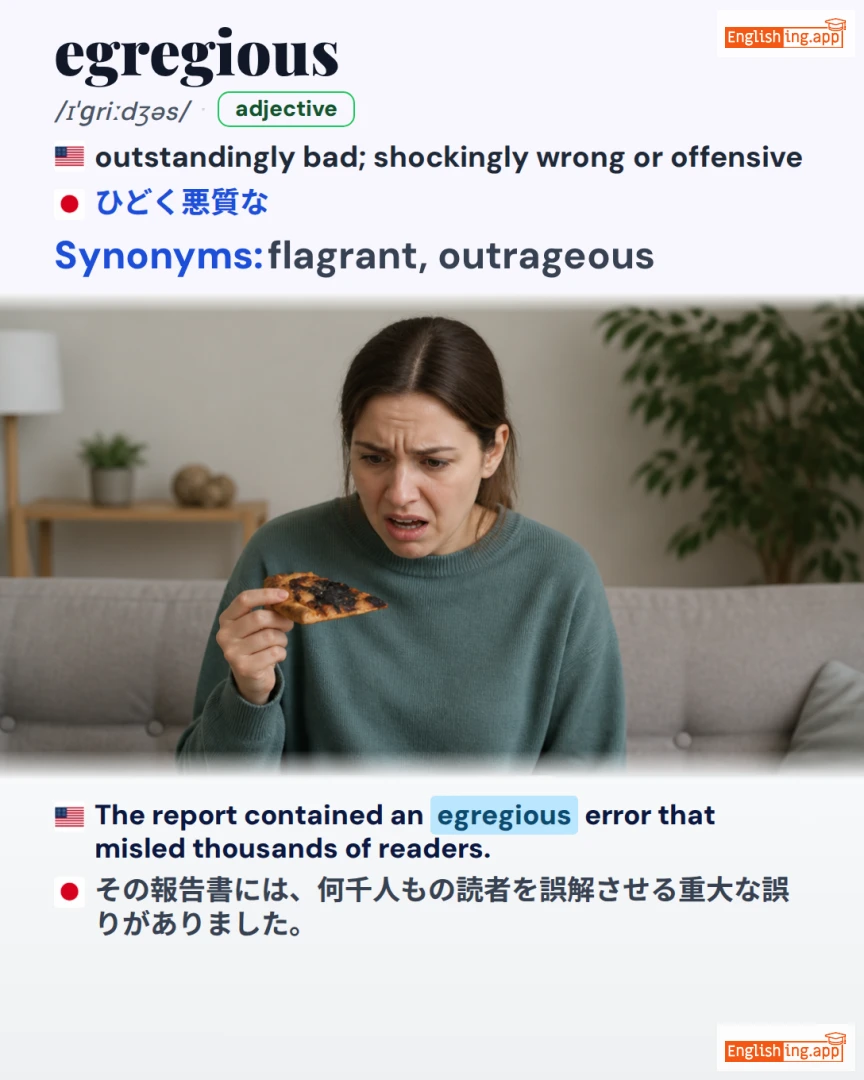
Meaning: Egregious, adjective. It means outstandingly bad; shockingly wrong or offensive. Synonyms: flagrant, outrageous.
Example: The report contained an egregious error that misled thousands of readers.
Japanese: Egregious は、非常に悪く、明らかにひどいという意味です。
Japanese example: その報告書には、何千人もの読者を誤解させる重大な誤りがありました。
#LearnEnglish #EnglishVocabulary #Englishing
 ja
ja
Ebullient: English vocabulary meaning and example
Learn the English word "Ebullient".
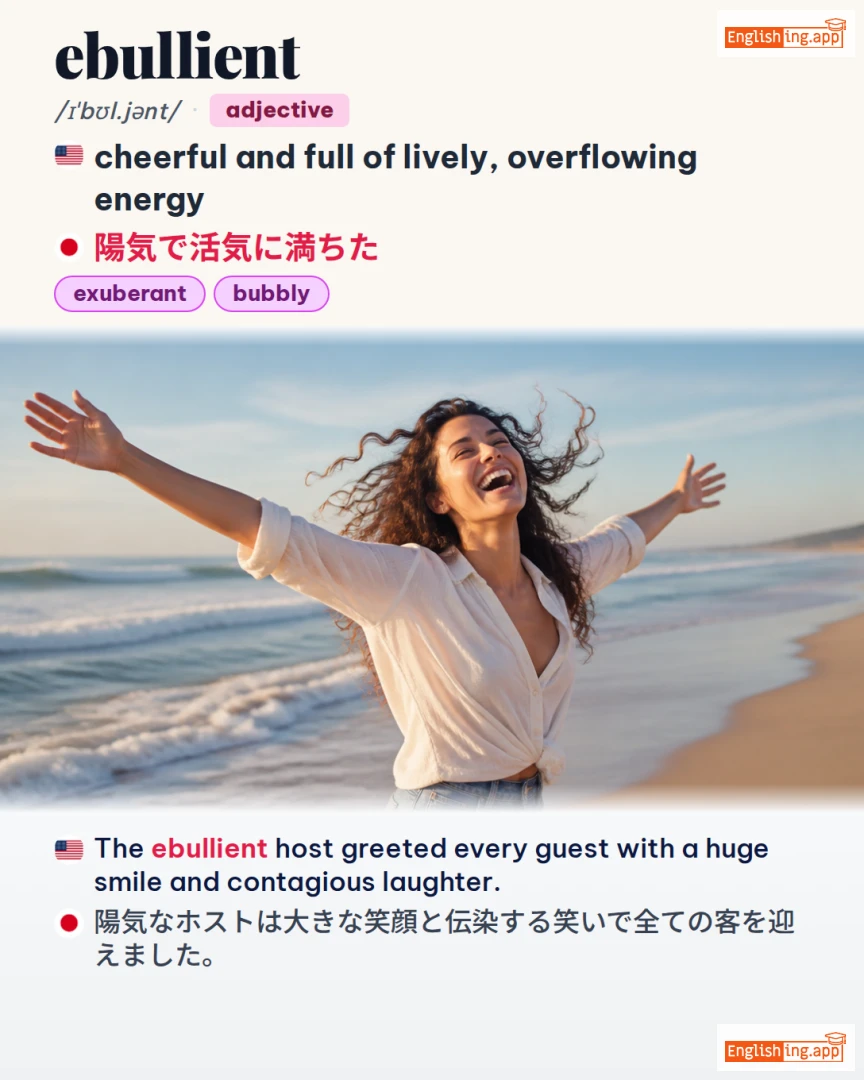
Meaning: Ebullient, adjective. It means cheerful and full of lively, overflowing energy. Synonyms: exuberant, bubbly.
Example: The ebullient host greeted every guest with a huge smile and contagious laughter.
Japanese: Ebullient は、明るく活気に満ち、喜びがあふれる様子です。
Japanese example: 陽気なホストは大きな笑顔と伝染する笑いで全ての客を迎えました。
#LearnEnglish #EnglishVocabulary #Englishing
 ja
ja
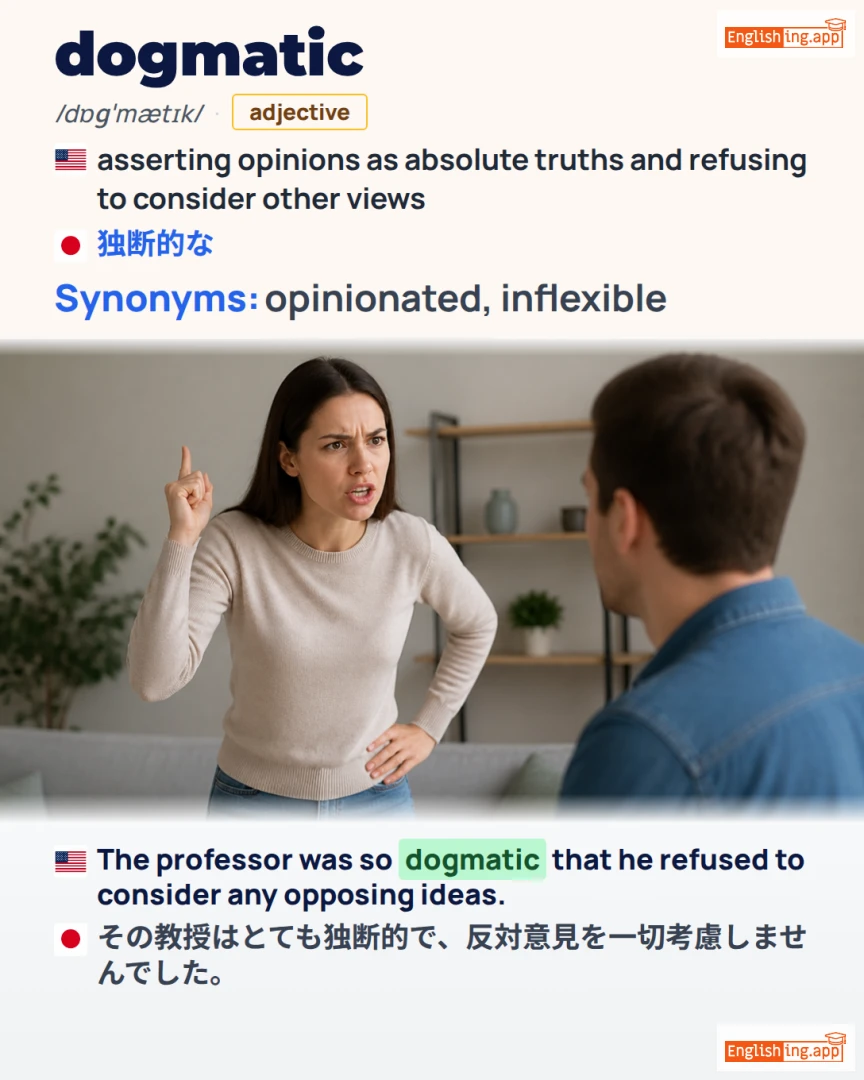
Dogmatic: English vocabulary meaning and example
Learn the English word "Dogmatic".
Meaning: Dogmatic, adjective. It means asserting opinions as absolute truths and refusing to consider other views. Synonyms: opinionated, inflexible.
Example: The professor was so dogmatic that he refused to consider any opposing ideas.
Japanese: Dogmatic は、自分の意見を絶対の真実として主張し、他の考えを拒むことです。
Japanese example: その教授はとても独断的で、反対意見を一切考慮しませんでした。
#LearnEnglish #EnglishVocabulary #Englishing
 ja
ja
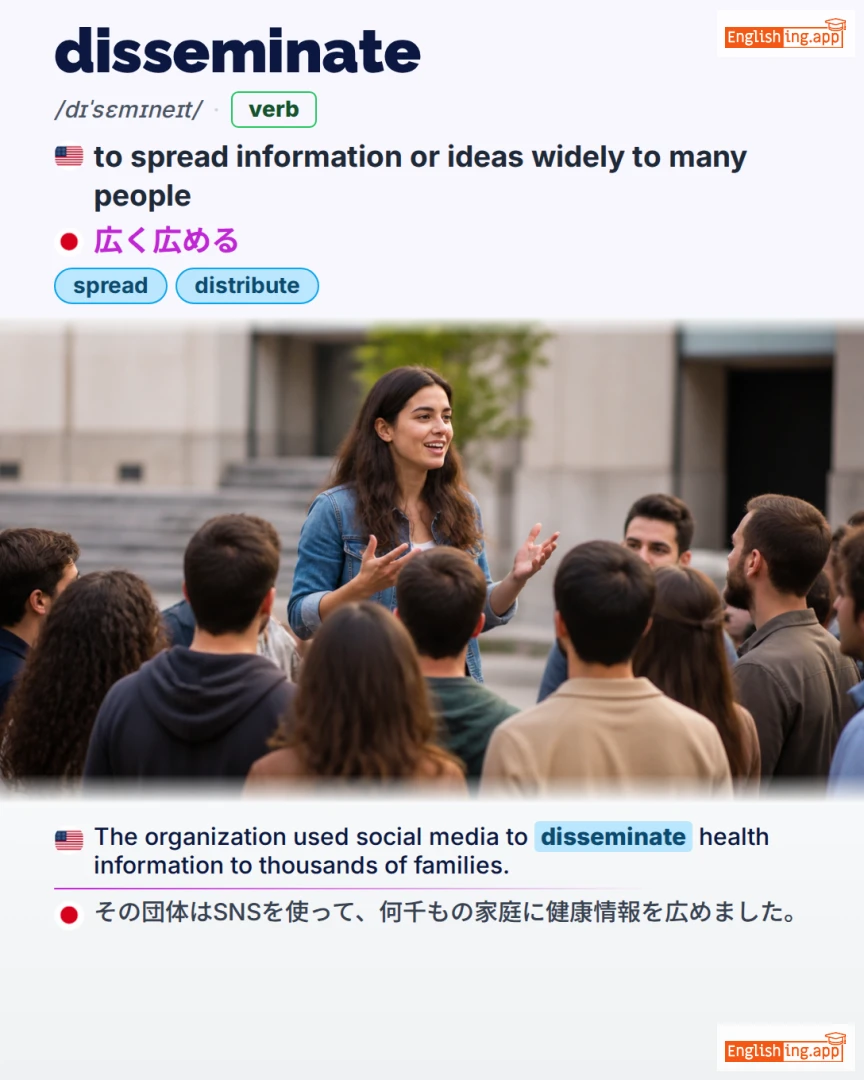
Disseminate: English vocabulary meaning and example
Learn the English word "Disseminate".
Meaning: Disseminate, verb. It means to spread information or ideas widely to many people. Synonyms: spread, distribute.
Example: The organization used social media to disseminate health information to thousands of families.
Japanese: Disseminate は、情報や考えを多くの人に広く広めることです。
Japanese example: その団体はSNSを使って、何千もの家庭に健康情報を広めました。
#LearnEnglish #EnglishVocabulary #Englishing
 ja
ja
Disparate: English vocabulary meaning and example
Learn the English word "Disparate".
Meaning: Disparate, adjective. It means fundamentally different from one another; not able to be easily compared or combined. Synonyms: contrasting, dissimilar.
Example: The committee struggled to combine the disparate opinions of its members.
Japanese: Disparate は、根本的に異なり、簡単に比べたり組み合わせたりできないことです。
Japanese example: 委員会はメンバーのばらばらな意見をまとめるのに苦労しました。
#LearnEnglish #EnglishVocabulary #Englishing
 ja
ja
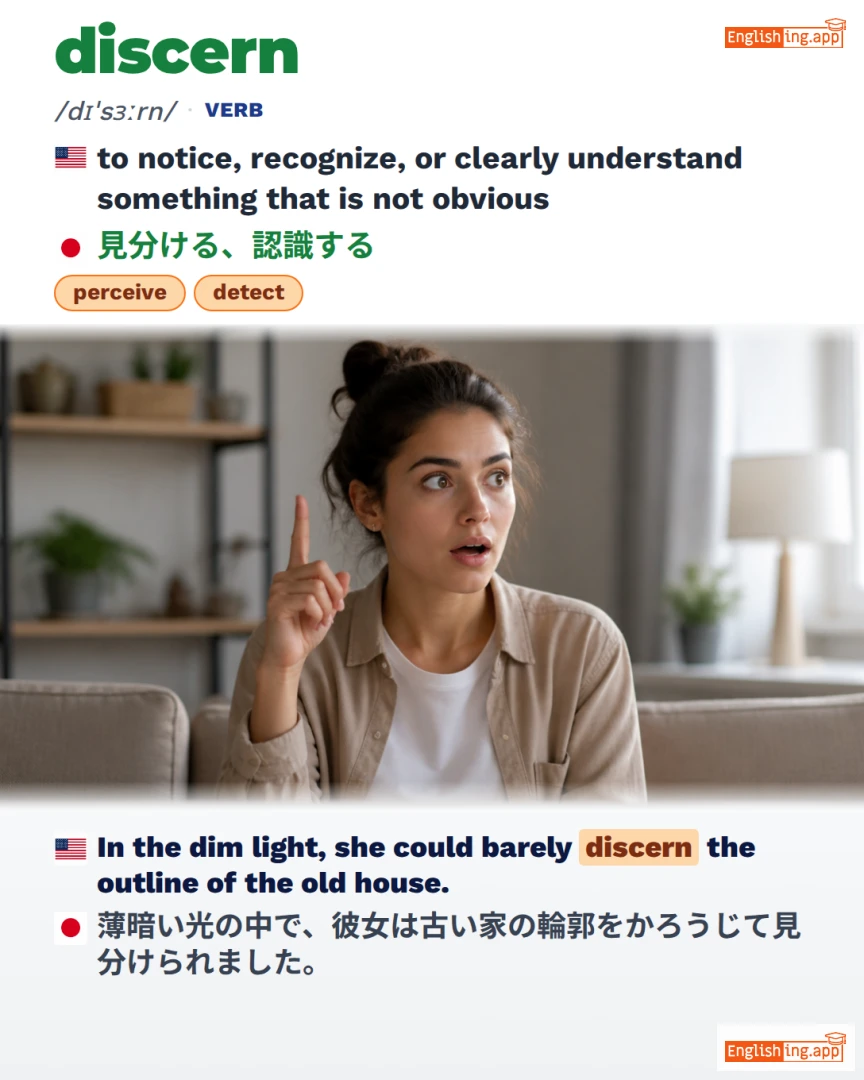
Discern: English vocabulary meaning and example
Learn the English word "Discern".
Meaning: Discern, verb. It means to notice, recognize, or clearly understand something that is not obvious. Synonyms: perceive, detect.
Example: In the dim light, she could barely discern the outline of the old house.
Japanese: Discern は、はっきりしないものを注意深く認識する意味です。
Japanese example: 薄暗い光の中で、彼女は古い家の輪郭をかろうじて見分けられました。
#LearnEnglish #EnglishVocabulary #Englishing
 ja
ja
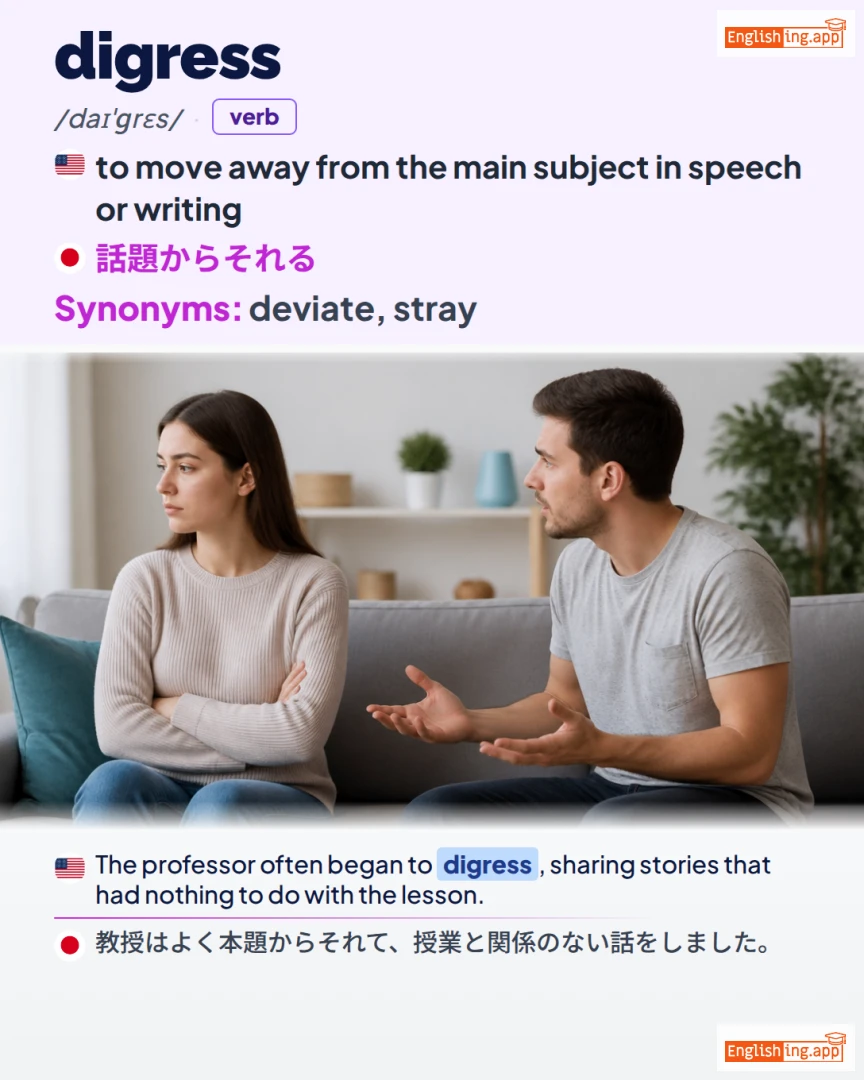
Digress: English vocabulary meaning and example
Learn the English word "Digress".
Meaning: Digress, verb. It means to move away from the main subject in speech or writing. Synonyms: deviate, stray.
Example: The professor often began to digress, sharing stories that had nothing to do with the lesson.
Japanese: Digress は、話したり書いたりするときに本題からそれることです。
Japanese example: 教授はよく本題からそれて、授業と関係のない話をしました。
#LearnEnglish #EnglishVocabulary #Englishing
 ja
ja
Diffident: English vocabulary meaning and example
Learn the English word "Diffident".
Meaning: Diffident, adjective. It means lacking self-confidence; shy and hesitant. Synonyms: timid, self-doubting.
Example: The diffident intern hesitated before sharing her brilliant idea.
Japanese: Diffident は、自信がなく、内気でためらいがちな様子です。
Japanese example: 自信のないインターンは、素晴らしいアイデアを共有する前にためらいました。
#LearnEnglish #EnglishVocabulary #Englishing
 ja
ja
Derivative: English vocabulary meaning and example
Learn the English word "Derivative".
Meaning: Derivative, adjective / noun. It means copied or borrowed from something else; not original. Synonyms: unoriginal, imitative.
Example: Critics called the new film derivative of older superhero movies.
Japanese: Derivative は、他のものから借りたようで独創性がないという意味です。
Japanese example: 批評家たちはその新作映画を古いスーパーヒーロー映画の焼き直しだと言いました。
#LearnEnglish #EnglishVocabulary #Englishing
 ja
ja
Denigrate: English vocabulary meaning and example
Learn the English word "Denigrate".
Meaning: Denigrate, verb. It means to criticize unfairly and make someone or something seem worthless. Synonyms: belittle, disparage.
Example: He tried to denigrate her achievements in front of the whole team.
Japanese: Denigrate は、不当に批判して価値がないように見せることです。
Japanese example: 彼はチーム全員の前で彼女の成果をけなそうとしました。
#LearnEnglish #EnglishVocabulary #Englishing
 ja
ja
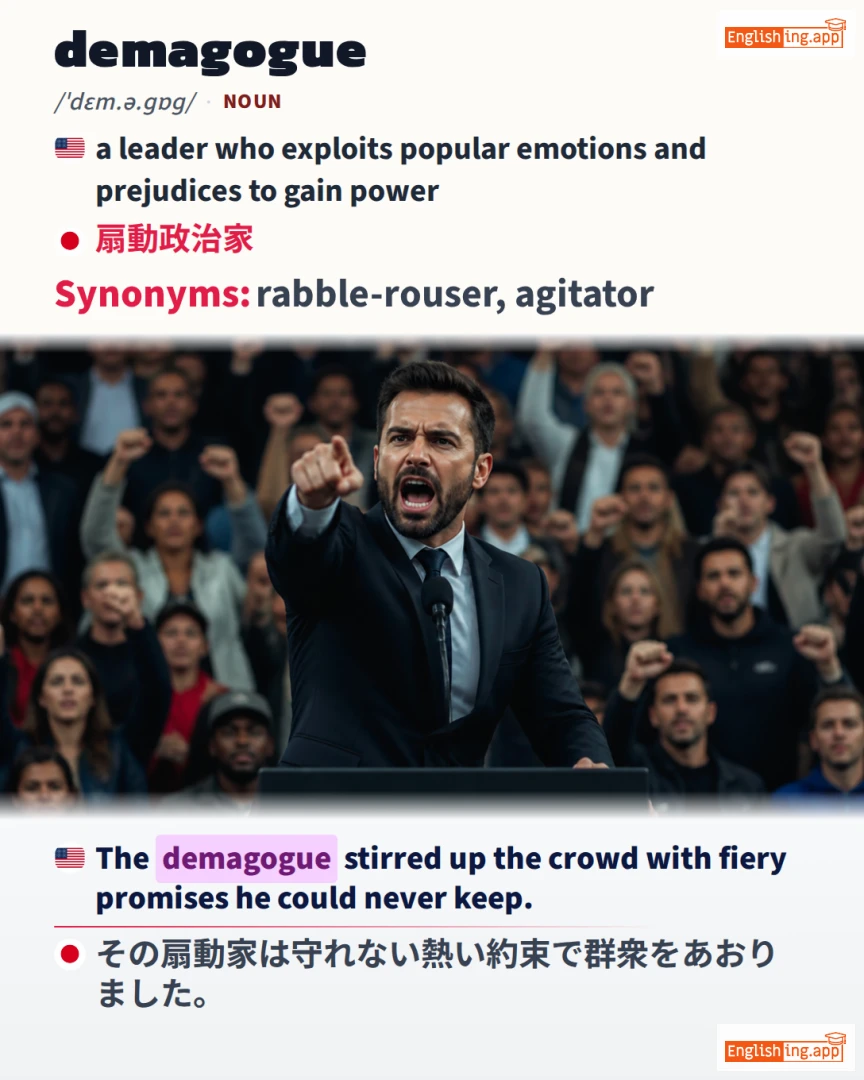
Demagogue: English vocabulary meaning and example
Learn the English word "Demagogue".
Meaning: Demagogue, noun. It means a leader who exploits popular emotions and prejudices to gain power. Synonyms: rabble-rouser, agitator.
Example: The demagogue stirred up the crowd with fiery promises he could never keep.
Japanese: Demagogue は、人々の感情や偏見を利用して権力を得ようとする指導者です。
Japanese example: その扇動家は守れない熱い約束で群衆をあおりました。
#LearnEnglish #EnglishVocabulary #Englishing
 ja
ja
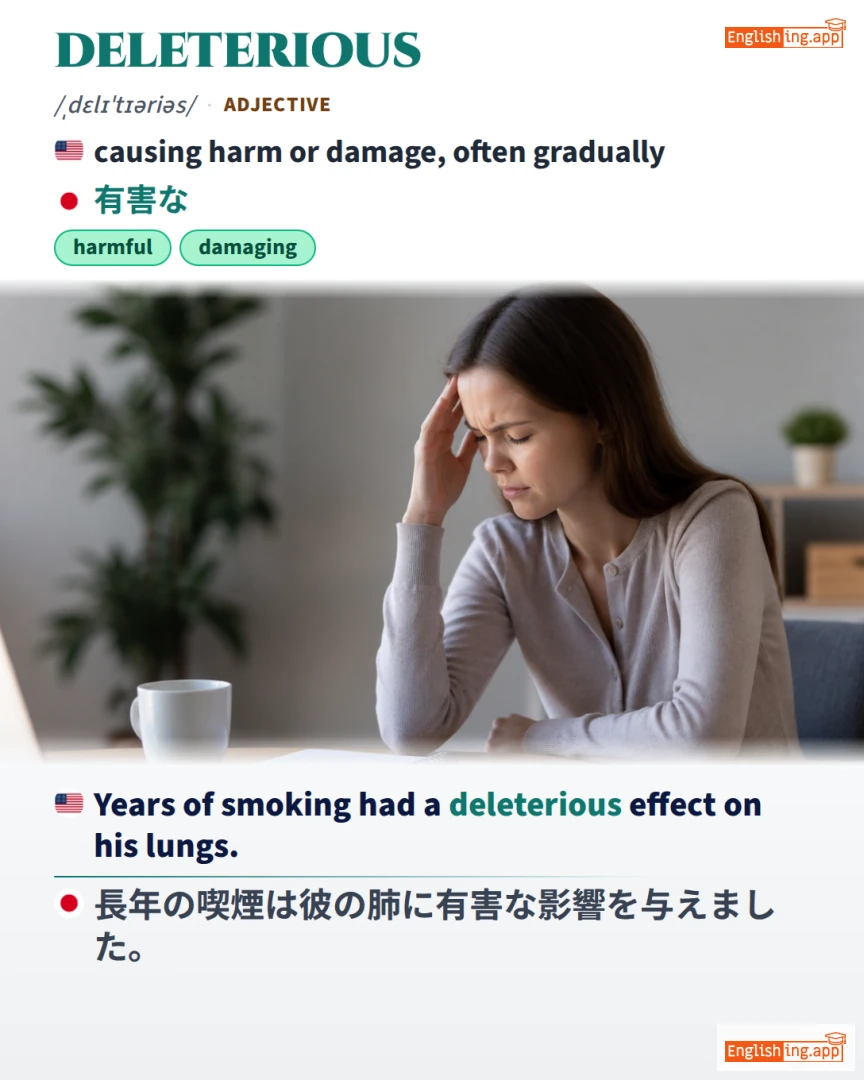
Deleterious: English vocabulary meaning and example
Learn the English word "Deleterious".
Meaning: Deleterious, adjective. It means causing harm or damage, often gradually. Synonyms: harmful, damaging.
Example: Years of smoking had a deleterious effect on his lungs.
Japanese: Deleterious は、しばしば徐々に害や損傷を引き起こすという意味です。
Japanese example: 長年の喫煙は彼の肺に有害な影響を与えました。
#LearnEnglish #EnglishVocabulary #Englishing
 ja
ja
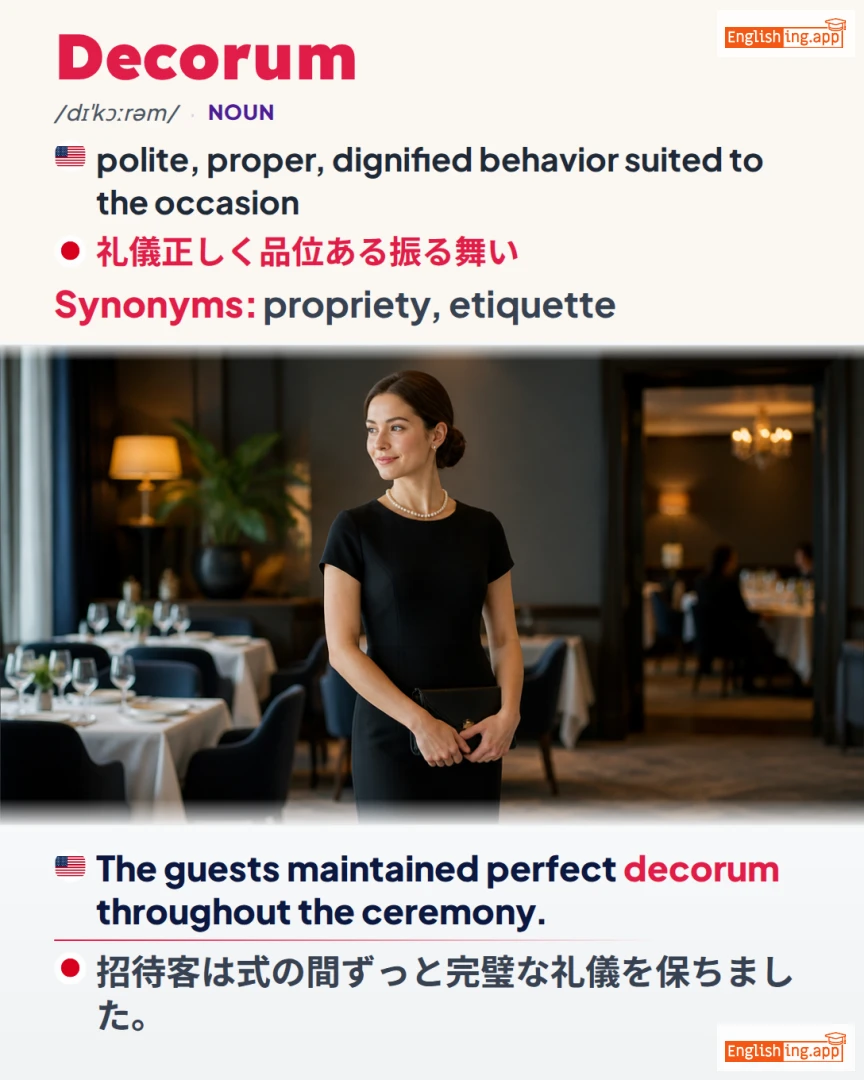
Decorum: English vocabulary meaning and example
Learn the English word "Decorum".
Meaning: Decorum, noun. It means polite, proper, dignified behavior suited to the occasion. Synonyms: propriety, etiquette.
Example: The guests maintained perfect decorum throughout the ceremony.
Japanese: Decorum は、その場に合った礼儀正しく品位ある振る舞いです。
Japanese example: 招待客は式の間ずっと完璧な礼儀を保ちました。
#LearnEnglish #EnglishVocabulary #Englishing
 ja
ja
Debunk: English vocabulary meaning and example
Learn the English word "Debunk".
Meaning: Debunk, verb. It means to prove that a belief, myth, or claim is false or exaggerated. Synonyms: disprove, expose.
Example: Scientists worked hard to debunk the myth that humans only use ten percent of their brains.
Japanese: Debunk は、神話や主張が false または exaggerated だと証明する意味です。
Japanese example: 科学者たちは、人間は脳の十パーセントしか使わないという神話を否定するために努力しました。
#LearnEnglish #EnglishVocabulary #Englishing
 ja
ja
Cursory: English vocabulary meaning and example
Learn the English word "Cursory".
Meaning: Cursory, adjective. It means done quickly with little attention to detail. Synonyms: hasty, superficial.
Example: She gave the report only a cursory glance before signing it.
Japanese: Cursory は、細部に注意せず素早く表面的に行うことです。
Japanese example: 彼女は署名する前に報告書をざっと見ただけでした。
#LearnEnglish #EnglishVocabulary #Englishing
 ja
ja
Credulous: English vocabulary meaning and example
Learn the English word "Credulous".
Meaning: Credulous, adjective. It means too ready to believe things without real proof; easily fooled. Synonyms: gullible, naive.
Example: The credulous investor handed over his savings after hearing one smooth promise.
Japanese: Credulous は、証拠なしにすぐ信じてしまい、騙されやすいという意味です。
Japanese example: その信じやすい投資家は、うまい約束を聞いただけで貯金を渡しました。
#LearnEnglish #EnglishVocabulary #Englishing
 ja
ja
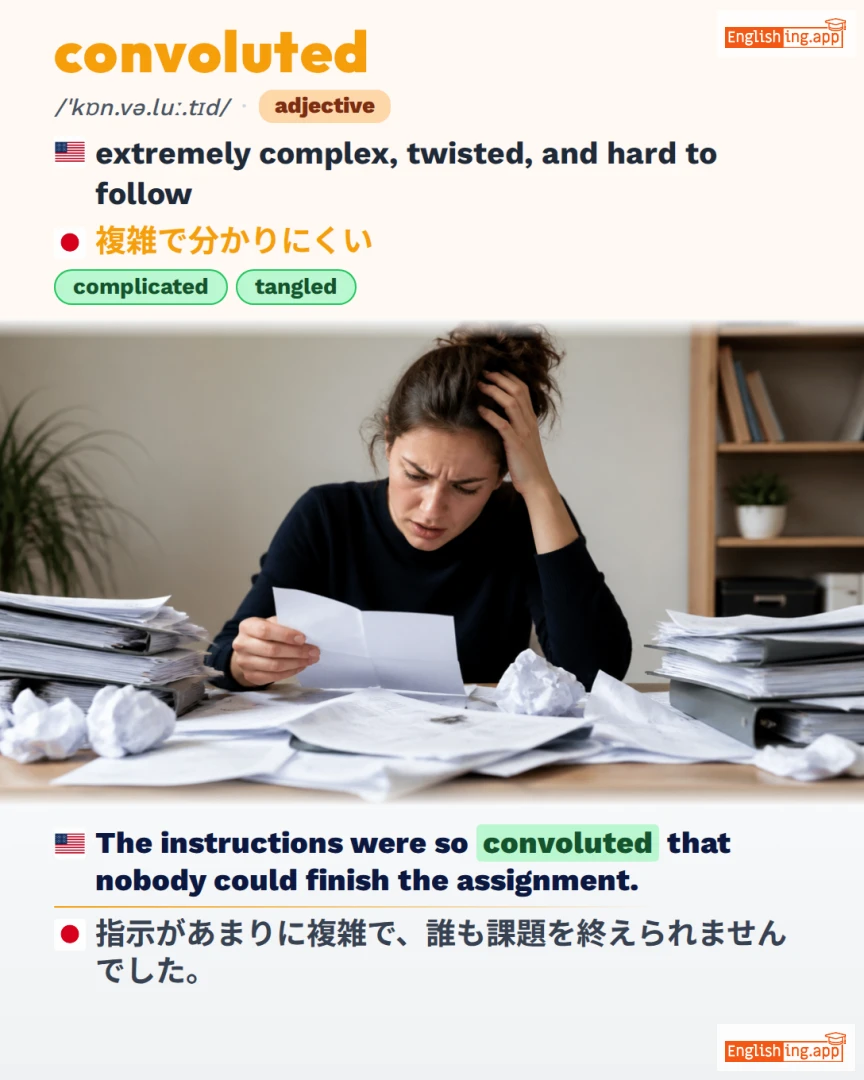
Convoluted: English vocabulary meaning and example
Learn the English word "Convoluted".
Meaning: Convoluted, adjective. It means extremely complex, twisted, and hard to follow. Synonyms: complicated, tangled.
Example: The instructions were so convoluted that nobody could finish the assignment.
Japanese: Convoluted は、とても複雑で入り組んでいて、理解しにくいという意味です。
Japanese example: 指示があまりに複雑で、誰も課題を終えられませんでした。
#LearnEnglish #EnglishVocabulary #Englishing
 ja
ja
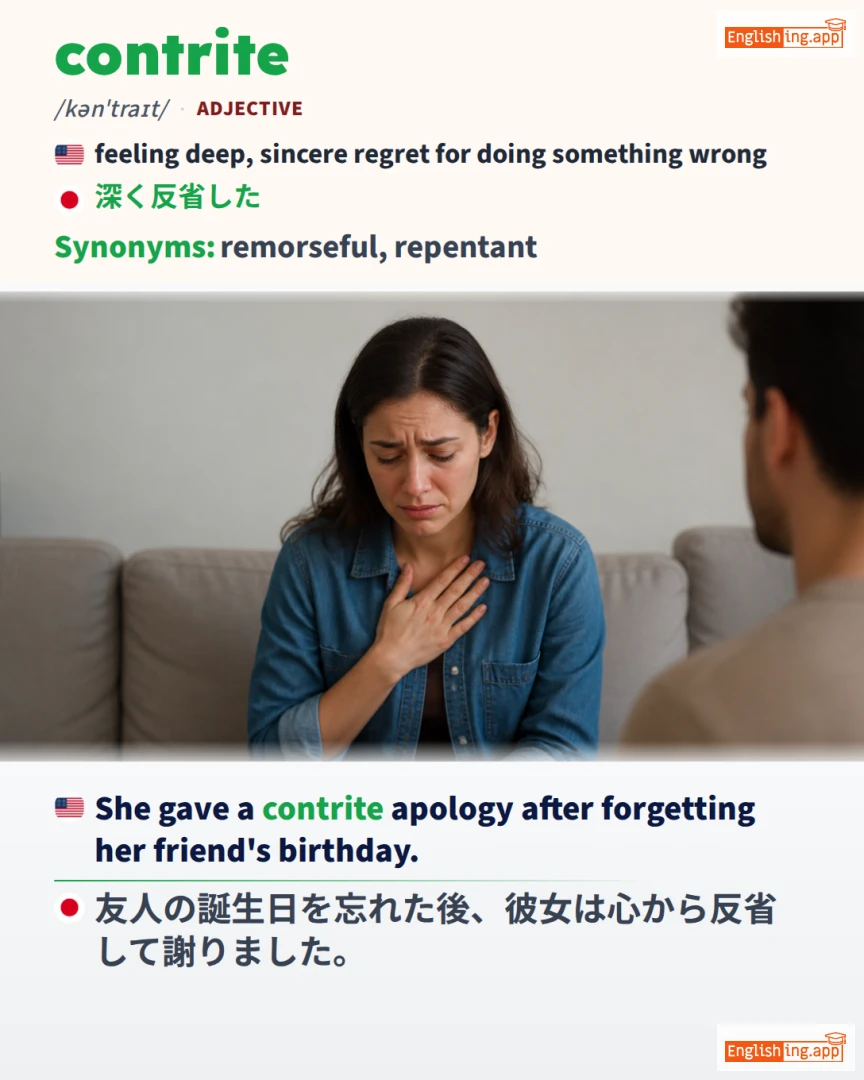
Contrite: English vocabulary meaning and example
Learn the English word "Contrite".
Meaning: Contrite, adjective. It means feeling deep, sincere regret for doing something wrong. Synonyms: remorseful, repentant.
Example: She gave a contrite apology after forgetting her friend's birthday.
Japanese: Contrite は、間違いを深く本気で後悔している状態です。
Japanese example: 友人の誕生日を忘れた後、彼女は心から反省して謝りました。
#LearnEnglish #EnglishVocabulary #Englishing